Green Post-Corona Talks with Leonore Gewessler, William Todts, and Elke van den Brandt

By
The Green Post-Corona Talks with Leonore Gewessler, William Todts, and Elke van den Brandt is another event from a series of participatory online talks with inspiring guests offering an analysis on what is at stake in this crisis and what positive ideas and concepts there are for a green post-corona vision.

Join our Facebook event to stay alert for the live stream.


About the event


The ongoing Covid-19 pandemic is having a grip on societies worldwide and will impact our lives long after the crisis is overcome. It is clear that we cannot continue with “business as usual,” but that we need to discuss positive ideas and concepts for a better, greener future and resilient societies now.

GEF is therefore hosting the Green Post-Corona Talks, a series of participatory online discussions with high-level experts, thinkers, and policy-makers, and the opportunity for participants to pose their most pressing questions to them live.

The talks will highlight what is currently at stake in the Corona crisis but also look beyond the period of the pandemic, and what possible solutions are already out there and can lend themselves to design the post-corona world.

The series will cover different themes from economy, over migration to gender, and bring in inspiring perspectives from all across Europe.

The project is implemented in cooperation with Oikos.


You can help us advancing forward-looking green ideas

to shape the Europe that we want! 


We rely on your generous contribution to continue putting together new, exciting Green Post-Corona Talks made extensively available to the general European public! So, please consider making a donation today, by clicking on this link.

Growing out of Growth: A New Future after the Crisis (Webinar)

By

About the Event:

The second webinar on digital technology in cities will explore how the current crisis is exposing the systemic shortcomings of our economies and impacting our urban structures. A discussion will be made on the position of technology and its role in shifting growth led urban strategies to more resilient, socially inclusive, and green cities.

Context:

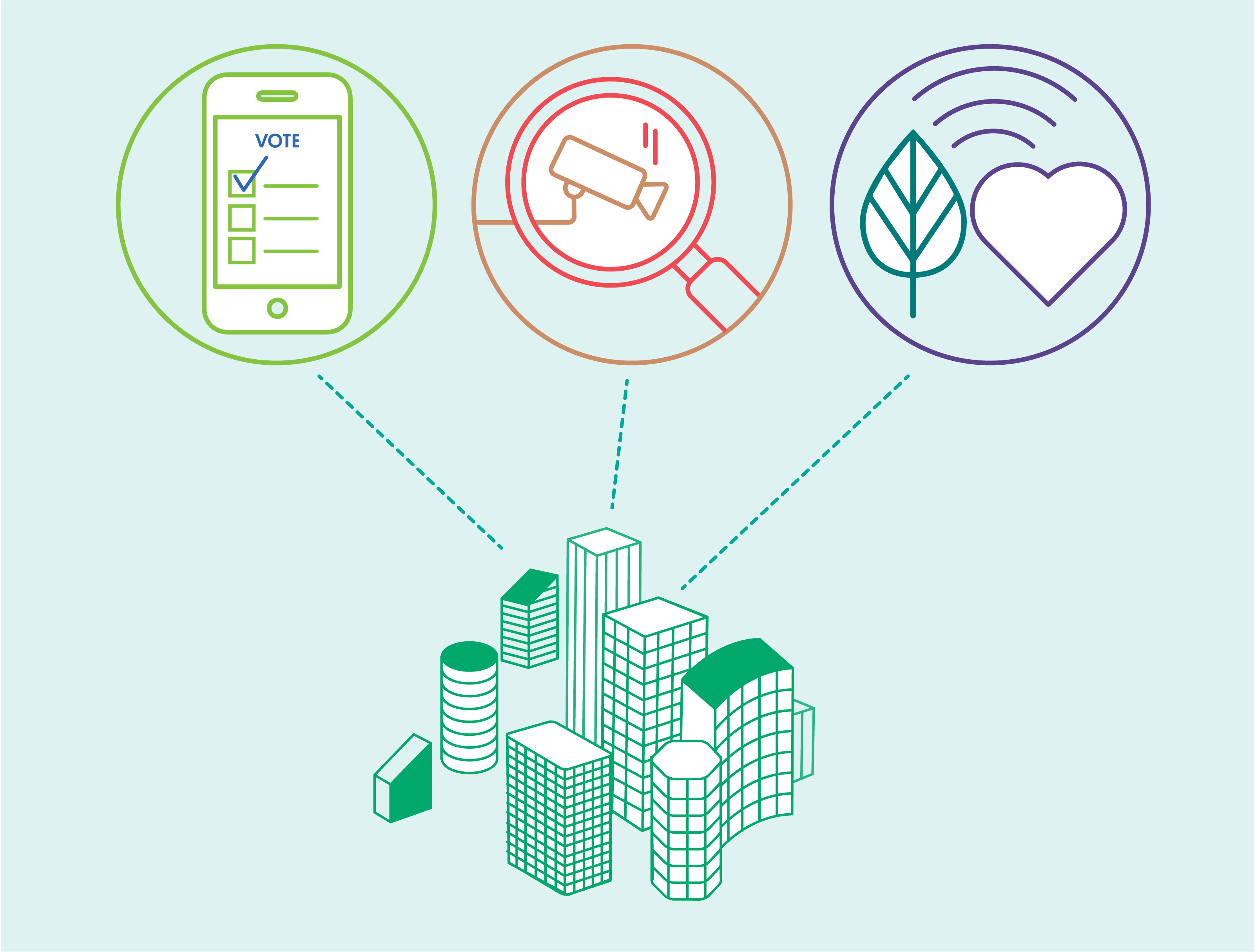
All over Europe, so-called ‘smart cities’ are the testing grounds for new technologies that affect how we live, how we organise our societies and what our ethical foundation is. These technologies often involve the use of big data and devices that can act with a degree of autonomy. The development of new technologies therefore cannot be left to engineers and managers; it requires public debate and democratic control.

To this end, GEF developed, with the support of its partners, a Charter for the Smart City, consisting of guiding principles that will make it easier for green European politicians and activists to assess and steer technological innovations in their cities. Many of the issues that the Charter deals with, such as algorithmic discrimination, automated facial recognition and smart mobility, will rise in prominence in the coming years.

In 2020, this transnational project is devoted to the dissemination of the Charter and its contents, available in multiple languages, through a series of events across Europe.

Programme:

18:00-18:15 Introduction: Links of the corona crisis and the economy

18:15-19:00 Smart cities as instruments to achieve priorities: case studies with speakers

Discussion: Redefining priorities of smart cities

Speakers:

Kim van Sparrentak, Member of the European Parliament for GroenLinks (Greens/EFA)

Lisa Gutu, former member of CDN’s Executive committee and Head of Business at Salt Edge

Registration:

This webinar will be taking place on the open source meeting platform Jitsi. No prior account or download is necessary. A link to join the meeting will be posted on the Facebook event page shortly before the start.

Hacking the Narratives of Smart Cities

By

About the Event:

In the first of the two webinars on digital technology in cities, young activists interested in digital and urban topics will get the opportunity to discuss the different narratives connected with smart cities. They will observe what stands behind the utopistic, critical and realistic storytelling on technology in cities. This will be done through the exploration of smart cities from the perspectives of pop culture, journalism and business, referring to actors such as New York Times, IBM, and the different series such as Black Mirror.

Context:

All over Europe, so-called ‘smart cities’ are the testing grounds for new technologies that affect how we live, how we organise our societies and what our ethical foundation is. These technologies often involve the use of big data and devices that can act with a degree of autonomy. The development of new technologies therefore cannot be left to engineers and managers; it requires public debate and democratic control.

To this end, GEF developed, with the support of its partners, a Charter for the Smart City, consisting of guiding principles that will make it easier for green European politicians and activists to assess and steer technological innovations in their cities. Many of the issues that the Charter deals with, such as algorithmic discrimination, automated facial recognition and smart mobility, will rise in prominence in the coming years.

In 2020, this transnational project is devoted to the dissemination of the Charter and its contents, available in multiple languages, through a series of events across Europe.

Programme:

18:00-18:10 Introduction: Evolution of the discourse on smart cities

18:10-18:40 Reflections on smart cities by different stakeholders: pop-culture, business, media

18:40-19:00 Discussion: Who defines the way we talk about smart cities?

Registration:

This webinar will be taking place on the open source meeting platform Jitsi. No prior account or download is necessary. A link to join the meeting will be posted on the Facebook event page shortly before the start.

Public values in smart grids (Webinar)

By

About this webinar

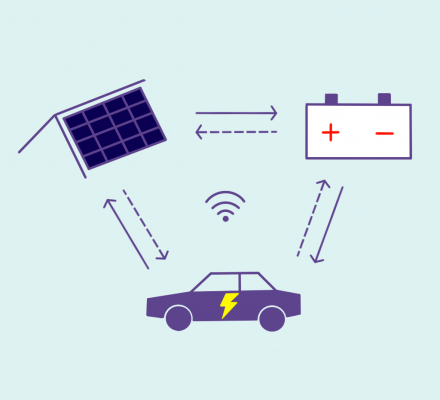
A fully renewable electricity system is largely powered by wind and solar. These are intermittent energy sources. How do we keep supply and demand in balance? Data and artificial intelligence will play a major role in this balancing act. Smart electricity grids help adjusting supply and demand, using data on the forecasted weather, the available power storage and conversion capacity, and the willingness of companies and households to make their electricity consumption dependent on supply and price.

A smart grid is not necessarily fair, transparent, and privacy-friendly. It doesn’t necessarily allow for human control over algorithms and democratic participation.  How can we integrate these public values into the design of smart grids, from local microgrids to centralised macrogrids?

The Green European Foundation, Wetenschappelijk Bureau GroenLinks, and Oikos will try to find answers to this question in a webinar. It will gather (local) politicians, practitioners, activists and members of energy cooperatives from various European countries, in a coronavirus-proof way.

The webinar will start with two presentations:

Fabian Reetz (100 prozent erneuerbar stiftung, Berlin) will explain the basics of a smart electricity grid and its importance for speeding up the transition towards a 100% renewable energy system.

Christine Milchram (Delft University of Technology) will speak about smart grids and energy justice. How can fairness, data privacy and other public values be integrated into smart grids?

The first comments to the presentations will be delivered by Yvonne van Sark, president of homeowner’s association Schoon Schip, which runs a smart microgrid in Amsterdam.

The webinar will be facilitated by Dirk Holemans (Oikos).

This is a joint event of the GEF projects A Charter for the Smart City and Cities as Places of Hope.

Timetable

14:00  Welcome by Dirk Holemans

14:15  Presentation on smart grids and the energy transition by Fabian Reetz

14.35  Q&A

14:50  Short break

15:00  Presentation on smart grids and energy justice by Christine Milchram

15:20  First comments by Yvonne van Sark

15:25  Q&A

15:40  Group discussion

16:00 Closing words by Dirk Holemans

Language

The webinar will be conducted in English.

Platform

We will use the Zoom video conferencing platform. It is recommended to join the webinar via a PC. You don’t need to install additional software. However, for the best user experience and full participation features, we recommend to install the Zoom Desktop App, which is free.

Registration

Required. Please note that the number of participants is limited, so register soon following this link.

——

Background information

Energinet, Smart Grid Denmark (video), 2011
Fabian Reetz & Céline Göhlich, Prinzipien für die Energiepolitik der Zukunft, policy brief Stiftung Neue Verantwortung (in German), 2020
Marten Boekelo, ‘Full interview with Christine Milchram on energy justice in smart grids’, The Social Life of Energy blog, 2020
Christine Milchram & al., ‘Energy Justice and Smart Grid Systems: Evidence from the Netherlands and the United Kingdom’, Applied Energy, 2018
Otto Barten, ‘Smart grids in de slimme stad’, Handvest voor de Slimme Stad, pp. 85-112 (in Dutch), 2019
European Data Protection Supervisor, TechDispatch #2: Smart Meters in Smart Homes, 2019
Green European Foundation, A Charter for the Smart City, 2019


Social Scoring

Citizen scoring – towards a surveillance state for the poor? (Webinar)

By

About this webinar

What’s your opinion on ‘citizen scoring’? Big data analytics is gaining traction among local and national governments. By feeding large swaths of personal data into algorithms, they try to predict which social benefit recipients are most likely to commit fraud or which children are most at risk of abuse or neglect, for instance. Does the ‘scoring’ of citizens by algorithms boost government efficiency or is it a threat to privacy, social justice and the transparency of government? Which legal restrictions apply to citizen scoring and which ethical boundaries should we set?

The Green European Foundation and Wetenschappelijk Bureau GroenLinks will try to find answers to these questions in a webinar. It will gather people who are active in (local) politics from various European countries, in a coronavirus-proof way.

The webinar will start with three presentations:

Richard Wouters (Wetenschappelijk Bureau GroenLinks, NL) will introduce the Charter for the Smart City that the Green European Foundation published in 2019. The Charter contains the warning that the use of big data to combat benefit fraud may lead to ‘class injustice’.

Lina Dencik (co-director of the Data Justice Lab, Cardiff School of Journalism, UK) will present the results of an extensive investigation into the use of citizen scoring by local authorities and police forces in the UK.

Ronald Huissen (Bij Voorbaat Verdacht, NL) will explain the ground-breaking verdict against the Dutch fraud detection algorithm SyRI. In February, a court ordered the immediate halt of SyRI because it violated the right to privacy. Huissen represents the NGO coalition which filed the lawsuit against SyRI.

The first comments to the presentations will be delivered by Kathalijne Buitenweg (MP for GroenLinks, NL) and Martin Fodor (local councillor for the Green Party in Bristol, UK; rapporteur on smart cities for the Congress of Local and Regional Authorities of the Council of Europe).

The webinar will be facilitated by Carlotta Weber (Green European Foundation).

Timetable

14:00 Welcome by Carlotta Weber

14:20 Presentation of the Charter for the Smart City by Richard Wouters

14:25 Presentation on citizen scoring in the UK by Lina Dencik

14:45 First comments by Martin Fodor

14:50 Q&A

15:05 Presentation on the SyRI court case in NL by Ronald Huissen

15:25 First comments by Kathalijne Buitenweg

15:30 Q&A

15:45 Break

15:55 Group discussion

16:55 Closing words by Carlotta Weber

Language

The webinar will be conducted in English.

Platform

We will use the Zoom video conferencing platform. It is recommend to join the webinar via a PC. You don’t need to install additional software. However, for the best user experience and full participation features, we recommend to install the Zoom Desktop App, which is for free.

Registration

Required. Please note that the number of participants is limited, so register soon following this link.

Background information

Green European Foundation, A Charter for the Smart City, 2019
Data Justice Lab, Data Scores as Governance. Investigating uses of citizen scoring in public services, 2018
The Guardian, Automating Poverty series, 2019
AlgorithmWatch, Automating Society. Taking stock of automated decision-making in the EU, 2019
UN Special Rapporteur on Extreme Poverty and Human Rights, Report on the digital welfare state, 2019
The Hague District Court, SyRI legislation in breach of European Convention on Human Rights, 2020


Can’t attend? Follow us on Facebook and Twitter  to keep up-to-date with the discussions at the webinar.

Public Values in Smart Cities (Webinar for the Euregio)

By

About this event

All over Europe, municipalities want to become ‘smart cities’, front-runners in the use of sensors, big data, algorithms, and apps. Smart technologies offer opportunities for improving the quality of life in cities, for reducing their ecological footprint, and for creating new urban commons. But they may also present threats to civil liberties and to social justice. The smart city should not be an end in itself. A smart city is only really smart if data collection and artificial intelligence are steered by values. How do we ensure that public values such as democracy, human dignity, privacy, equality, and sustainability are put at the heart of smart cities?

This webinar will gather politicians, experts, practitioners, and activists from the Euregio, comprising cities such as Münster and Enschede. They will explain about specific technological innovations in their municipalities, discuss conflicting values, and identify best practices. The conclusions may feed into the online version of the Charter for the Smart City.

The event will be chaired by Tom van den Nieuwenhuijzen (member of the Dutch parliament). It will feature Christoph Almering (director Euroregio), Gerdien Looman (coordinator Smart Enschede), Thomas Terstiege (project leader digitalisation Smart City Münster), Kirsten Fiedler (policy advisor to Alexandra Geese in the European Parliament, winner Felipe Rodriguez Award 2018), Richard Wouters (Wetenschappelijk Bureau GroenLinks), and other speakers.

The webinar is organised by the Green European Foundation and Wetenschappelijk Bureau GroenLinks. It replaces the workshop in Glanerbrug that was announced earlier.

Date & time

Friday 5 June, 14:00 – 16:00 CEST

Timetable

14:00  Opening by Tom van den Nieuwenhuijzen

14:10  Welcome by Christoph Almering

14:15  Introduction of the Charter for the Smart City by Richard Wouters

14:20  Presentation on the European Union and smart cities by Kirsten Fiedler

14:40  Q&A

14:50  Presentation on Enschede as a smart city by Gerdien Looman

15:00  Break

15:10  Presentation on Münster as a smart city by Thomas Terstiege

15:20  Q&A

15:30 Group discussion on (conflicting) public values in smart cities, on the basis of local examples introduced by participants

16:00 Closing words by Tom van den Nieuwenhuijzen

Languages

Participants may use German, Dutch, and English interchangeably. No interpretation is provided.

Platform

We will use the Webex videoconferencing platform. Registered participants will receive a link and a password that give them access to the webinar. It is recommended to join the webinar via a computer.

Registration

Send an e-mail to Richard Wouters at Wetenschappelijk Bureau GroenLinks.

Preparation

The Charter for the Smart City is available in German, Dutch, English, French, and Czech on the website of the Green European Foundation. Click here to download.

Call for Prep-team: Outsmarting the Paradigm

By

We are announcing a call for Prep-Team members for the international training “Outsmarting the paradigm: Implementation of new technologies in cities”. The seminar will take place between 26th and 30th May in Riga (25th and 31th are travel dates). The event is implemented as a part of the transnational project “A Charter for the Smart City II”.

Objectives:

  • Train 25 young people in critical assessment of technology in cities and re-evaluate its role in the urban environment;
  • Assess the Charter for the Smart Cities through the Central and Eastern European lens;
  • Create a platform for exchange of best practices for young people interested in exploring the connection between Urbanism and/or Technology;
  • Create a set of outputs relevant and useful for the young people in the Central and Eastern Europe tackling the connection between the Cities and Technology.

If you are young (till 30) person from Eastern and Central Europe (Albania, Armenia, Azerbaijan, Belarus, Bosnia and Herzegovina, Bulgaria, Croatia, Cyprus, Czech Republic, Estonia, Georgia, Greece, Kosovo*, Latvia, Lithuania, Hungary, Moldova, Montenegro, North Macedonia, Poland, Romania, Russia, Slovenia, Slovakia, Serbia, Turkey and Ukraine) interested in how the integration of new technologies in cities can affect the democracy, social and economic influences on youth, this project will be very much relevant.

In order to achieve these objectives, we are looking for young activists to join the preparatory team. Prep-team members should speak English, be available during the preparation period, be responsible about fulfilling their tasks, have good organisational skills, be good team players and committed to the aims of the project and CDN’s values and be familiar with non-formal education methods.

Main responsibilities of the prep-team:

  • Active participation in the regular online meetings prior to the event (March-May/ 2-3 h a week);
  • Participation in a live prep team meeting in Riga: 14-15 March (2 full working days), arrival day 13th, departure 16th.
  • Dissemination of the call and selection of participants, preparation of participants for the event and providing them with all the necessary information regarding the program;
  • Preparation and facilitation of the programme of the Training; designing and preparing sessions based on non-formal education methodology, invitation and communication with speakers, experts, trainers and partners in accordance with the project aims (4-6 h a week);
  • Helping with the promotion of the event and ensuring media visibility;
  • Taking care of practicalities and of the general well-being of the participants;
  • Full participation during the entire event and prep team meeting before and after: Arrival 23rd of May, departure 1st of June;
  • Supporting the finalisation of the outputs;
  • Helping with the reporting of the seminar.

Being a prep-team member at CDN event would offer you:

  • Working in a lively international urban activist environment;
  • Experience in managing youth projects – preparation, implementation and reporting;
  • Getting familiar with Green values and CDN work;
  • Getting to know local activists and Alternative Urbanisation activists and their work;
  • A possibility to develop your leadership and group work skills;
  • A lot of work and a lot of fun!

Practicalities: 

Accommodation, food, working space, travel and visa costs for preparatory team will be fully covered. For selection of travel means the condition is to combine the most economic and environmentally friendly way (lowest price + travel time + CO2 emissions).

DEADLINE for submitting online applications is 5th of February, Midnight CEST. 

You will be informed by e-mail approximately in 2 weeks time after the deadline. Please add project.coordinator@cdnee.org to your contacts, so that you do not receive our reply in spam folder.

Apply here.

This project is organised by the Green European Foundation with the support of CDNEE and Wetenschappelijk Bureau GroenLinks with the financial support of the European Parliament to the Green European Foundation.


For a new territorial perspective – imagining post-urban alternatives (Paris)

By

Event background

This event is part of the transnational project Cities as Places of Hope in the European Union which explores progressive city networks and their potential to foster real change – may it be on food, energy or migration policies. Cities are organising themselves increasingly in trans-local networks and are pushing the boundaries of traditional governance structures.

About the event

This conference, organised with the support of Guillaume Gontard, French Senator, and Fondation de l’Écologie Politique will delve into the subject of post-urbanism and its implications on municipal politics.

Our landscapes are undergoing major changes, first and foremost the concentration of human settlement in major metropolitan areas. Promoted by governments for decades, these concentrations and densities appear less and less ecologically habitable, sociologically fair, economically viable and democratically constituted. In response to this socio-ecological excess, a different territorial perspective opens up, initiated by alternatives that offer other places
to live and forms of life, more respectful relationships to environment and other living beings, forms of cooperative economies and more functional direct forms of political action.

Such ideas and practices can highlight new paths towards a ecological, post-urban society.

Draft Programme

13:30 Registration

14:00 Opening – Guillaume Gontard, French Senator, and Alice Canabate, Vice-president of Fondation de l’Écologie Politique

14:15 First Roundtable – Saturated European metropolises or the need for a future of post-urban territories (and policies)

With: Guillaume Faburel (Lyon University 2), Mathilde Girault (Lyon University), Sébastien Marot (École d’architecture Paris-Est)

15:30 Presentation of “Bioregion 2050”, a report from the from the Momentum Institute and the Forum Vies Mobiles

With: Yves Cochet, Agnès SinaÏ and BenoÎt Thévart

16:15 Second Roundtable –  Alternative socio-ecological formats and perspectives for the bio-region in Italy and France

With: Ilaria Agostini (Bologna University), Christophe Laurens (Master Alternatives urbaines de Vitry sur Seine), Daniela Poli (Florence University)

17:45 Conclusion and synthesis – Guillaume Gontard and Guillaume Faburel

Practicalities

The event will be held in French. To register, please write to b.monange@fondationecolo.org.

The Leading Role of Cities in Fighting Against Climate Change (Madrid)

By

Event Background

The role of cities is gaining prominence in the fight against climate change. The extreme severity of the environmental crisis would require urgent and courageous decision taking and action by government institutions at national, European and global levels, in the short, medium and long term, but on the contrary, the interference of economic powers is making this decision-making extremely slow and with little ambitious goals.

The municipalities, as institutions closer to citizenship, and citizen movements are getting many cities to take measures that are making them the forefront of the fight against climate change in the face of the paralysis of other institutions.

About the Event

This round table discussion will take place as part of the GEF transnational project Cities as Places of Hope in the European Union.

It will allow the speakers and guests to listen to and exchange on the different experiences of European cities and analyse the role that citizens can play in fighting a global crisis that threatens us all.

Speakers

  • Inés Sabanés, Councilor for More Madrid at the Madrid City Council
  • Júlia López Ventura, European Regional Director in C40
  • Rosa Fraga, Architect. Administrative Coordinator of the Platform for a New Energy Model (Px1NME)
  • Dirk Holemans, former Councilor of Ghent (Belgium), Director of the Think Tank Oikos, member of the board of the Green European Foundation.

Practicalities

This roundtable discussion is an open event. If you like to attend, please register your interest by contacting our partner at info@fundacionequo.es.


Round table organized by the Green European Foundation (GEF) with the support of Fundación EQUO and the collaboration of La Casa Encendida. 


Global Trends, Local Challenges: The Green Answers (El Prat de Llobregat)

By

Event background

Despite increasing divisions and the rise of right-wing forces on the European and national scenes, many European cities are pursuing a progressive, positive and transnationally networked vision.

Cities are organising themselves increasingly in trans-local networks, such as Energy Cities, Fearless Cities, and Food Cities. As such, this type of governance is becoming all the more relevant at a transnational level in Europe. To this end, this upcoming GEF conference will look at global issues, how they translate into local challenges but also what the local Green answers to these challenges are.

About the event

In the framework of the transnational project Cities as Places of Hope, this event will examine global trends in their local contexts and how the emerging challenges are approached on a municipal level across Europe and what can be learned from each other. To this end, the conference will bring together local green councillors from Catalonia with their counterparts from Germany, France, the Netherlands and other countries to exchange ideas and best practices.

Programme

09.30-10.00 Registration

10.00-10.15 Welcome by Lluís Mijoler (Mayor of El Prat de Llobregat)


10.15-10.30
Presentation of the event by Sergi Alegre (Fundació Nous Horitzons)


10.30-11.00
Presentation of the project Fearless Cities by Merlijn De Rijcke (Oikos Foundation)

11-00-11.30 Migrations: past, present and future, Ricard Fernández (Coordinator Social Ares, Barcelona)


11.30-12.00
Coffee break


12.00-12.45
Digitalisation: opportunity or risk?, Florentius Kist (Local councillor, Rotterdam)


12,45-13.30
Climate change: are we in the proper track?, Anna Marti (Local councillor, El Prat de Llobregat)


13.30-14.00
The EU approach to globalization, Lluis Camprubi (responsible of ICV international committee)


14.00-15.00
Networking lunch with local food

Registration

The event will be held in Catalan with English interpretation. To find out more and participate in the event, send an email to Project Coordinator carlotta.weber@gef.eu.


Further details of this event are to be confirmed. Please check back later for more information. 

Roundtable on Smart Cities (Oslo)

By

Event Background

This round table discussion is to be held as part of the transnational project A Charter for the Smart City, which aims to formulate guiding principles that help politicians to assess and steer technological innovations in European cities.

About the Event

Taking place as part of the European Green Party’s Local Councillors Conference “Cities for the Future – The Green Way” , the roundtable will draw upon the expertise of politicians and representatives from NGOs, trade unions, and technology sectors to collect examples of best practices from across Europe.

This will contribute to the development of a Charter, one which addresses the opportunities that new technologies offer for reducing the ecological footprint of cities and creating new urban commons, while also addressing the threats they might present to civil liberties and social justice.

The roundtable is an invitation-only event.

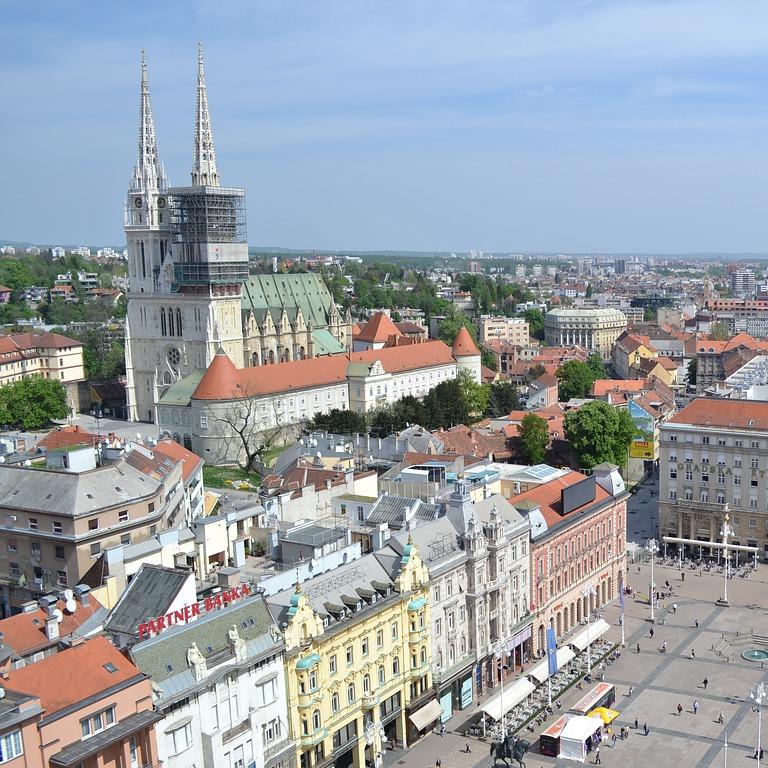
The Right to Housing (Zagreb)

By

Event Background

Under the title “City (Un)Defeated. Streams of struggle” the 29th edition of the International Network for Urban Research and Action annual conference will take place in Zagreb, Croatia, from 30th June to 3rd July. INURA 19 will bring together members of its network – consisting of activists and researchers from community and environmental groups, universities, and local administrations, who wish to share experiences and to participate in common research.

Focusing on the topic of transformative cities as one of its thematic priorities, the Green European Foundation aims to support the emergence of trans-local networks and urban spaces as breeding ground for progressive policies, and will be present at the conference to this end.

About the event

Besides being present throughout the conference with an info stand, GEF will host, together with the support of the Institute for Political Ecology, a public panel in the evening of Monday, 1st July, to address one of the most pressing issues among urban activists all over Europe: the right to housing.

In the framework of the transnational project on Cities as Places of Hope in the European Union, challenges around urban housing as well as possible alternative pathways for the future will be addressed with experts and activists from all over Europe.

Speakers

Marko Aksentijević, Roof over one’s head, Belgrade

Philipp Klaus, Kraftwerk 1, Zurich

Petra Rodik, Faculty of humanities and Social sciences, Zagreb

Ulrike Hamman, Kotti&Co, Berlin

Iva Marčetić, Right to the city, Zagreb

Moderator: Tomislav Tomašević, Institute for Political Ecology, Zagreb


For updates on the programme and practicalities, watch this space or check the INURA 19 website.

Roundtable on Smart Cities (Oxford)

By

Event Background

This round table discussion is to be held as part of the transnational project A Charter for the Smart City, which aims to formulate guiding principles that help politicians to assess and steer technological innovations in European cities.

About the Event

Drawing upon the expertise politicians and representatives from NGOs, trade unions, and technology sectors, the event will collect examples of best practices from across Europe to contribute to the development of a Charter, one which addresses the opportunities that new technologies offer for reducing the ecological footprint of cities and creating new urban commons, while also addressing the threats they might present to civil liberties and social justice.

Programme

11.00-11.40:  Welcome and introduction by Richard Wouters (Wetenschappelijk Bureau GroenLinks – De Helling)

11.40-13.00: Group discussions on smart cities: Which values are at stake? Do we need new rules? If so, which ones?

13.00-14.00: Lunch

14.00-14.30: Panel discussion on the draft Charter for the Smart City with Martin Fodor (green councillor Bristol, rapporteur on smart cities of the Congress of Local and Regional Authorities, Council of Europe), Richard Wouters, and others

14.30-15.55: Roundtable discussion on principles of the charter, identification of gaps, local implementation, green character, practical examples

15.55-16.00: Closing remarks

After the roundtable there will be space for informal networking.

Registration

Registration is open to all, but spaces are limited to approx. 30 people. Please register via the registration form found on this website page.