
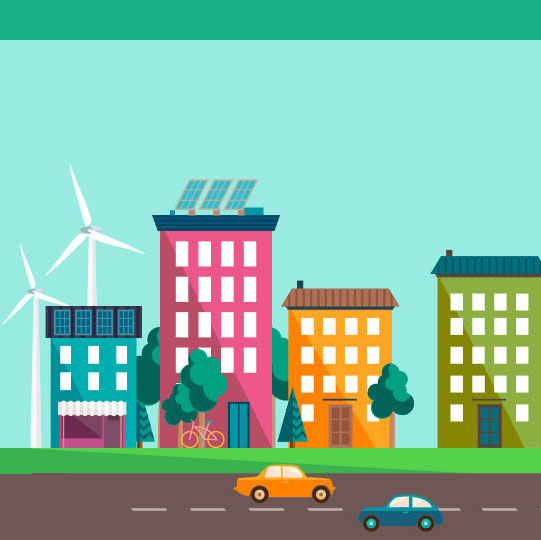
Transforming the society from the City of the Commons (Vitoria-Gasteiz)

By

Context: European cities as the key element of transnational governance

More and more cities across Europe and worldwide are organising themselves through initiatives such as Eurocities, Fearless Cities, Fabcities and many more, to work together in areas such as climate policy, renewable energy or urban economy.

Especially cities with progressive governments are spearheading this development and are becoming the key factor of transnational governance.  Oftentimes the respective initiatives start from the bottom up and there must then be a fertile ground provided by local administrations so they can flourish. Those new types of relationships between the public sphere and the commons can become the key drivers within a transformative city model that will ultimately help us achieve more just and ecological societies.

About the event

This conference aims to serve as a collective reflection on the urban governance of cities and the limits and functions of the cooperation between administration and an active citizenry across Europe. Experts from Italy, Belgium and Spain will share their experiences and best practices that are implemented in other cities. It will be organised in conjunction with a conference of the New Economic and Social Innovation Forum (NESI), that will be held the following day, on 9 May, at the same venue.

Draft Programme

17:30 – 17:40 OPENING Óscar Fernández, Member of EQUO and Councillor of Vitoria-Gasteiz

17:40 – 18:30 KEYNOTE “OSTROM IN THE CITY: PRINCIPLES AND DESIGN PRACTICES FOR URBAN COMMONS” Christian Iaione, Associate professor of public law at Guglielmo Marconi University of Rome, visiting professor of governance of the commons at LUISS Guido Carli where he directs LabGov.

18:30 – 20:45 ROUNDTABLES: THE NEW EUROPEAN CITIES OF COOPERATION BETWEEN THE PUBLIC AND THE COMMON SPHERE

1. Citizens’ initiatives

  • Culture and political thought in Madrid, Iñaki Alonso, vice-president of the Teatro del Barrio cooperative
  • Urban gardens in Zabalortu, Susana Cantero, activist and member of Zabalortu Association
  • Energy cooperatives, Erika Martínez, Communication Manager of GoiEner

Moderated by: Borja Izaola, architect, anthropologist and consultant

19:30 – 19:45 BREAK

2. Initiatives of local administrations

  • The experience of Ghent, Dirk Holemans, councillor of Ghent and member of the board of the
    Green European Foundation
  • B-MINCOME project (Barcelona), Lluis Torrens, Director of Planning and Innovation of the Social Rights
    Area of the Barcelona City Council
  • Manage waste creating citizen value (Madrid), Reyes Montiel, Director of the Environment and Mobility Department of the Barcelona City Council

Moderated by: Maritxu Díez, journalist

20:45 – 21:00 CLOSING AND CONCLUSIONS Xabi Marrero, spokesperson of EQUO Araba

This conference will be simultaneous interpretation Spanish-English throughout the conference.


Register now by following this link and stay tuned for updates by following us on Facebook or Twitter to learn about our other activities. 
Urban Steps for Resilient Future (Istanbul)

By

Context

This training for trainers includes several stages aiming at young  and motivated people who are eager to improve Eastern European cities through alternative ways of urbanisation, as well as in mastering their skills in advocacy and project management.

The objective is to empower them to shape and improve their urban communities, and to ultimately create more sustainable green cities based on the principles of inclusion and democracy.

First step: Online Course “Urban Steps for a Resilient Future

Prior to their attendance of the training, the course introduces the training participants to different concepts concerning public spaces and urban commons, explores various examples of urban activism as well as grassroots and entrepreneurial initiatives, illustrates urban problems and propose good practices. The course Urban Steps for a Resilient Future shows ways to turn ideas into concrete action and how urban activism can serve as a connection point for collaboration between different stakeholders on a local level in reaching common solutions.  

Second step: Face-to-face training

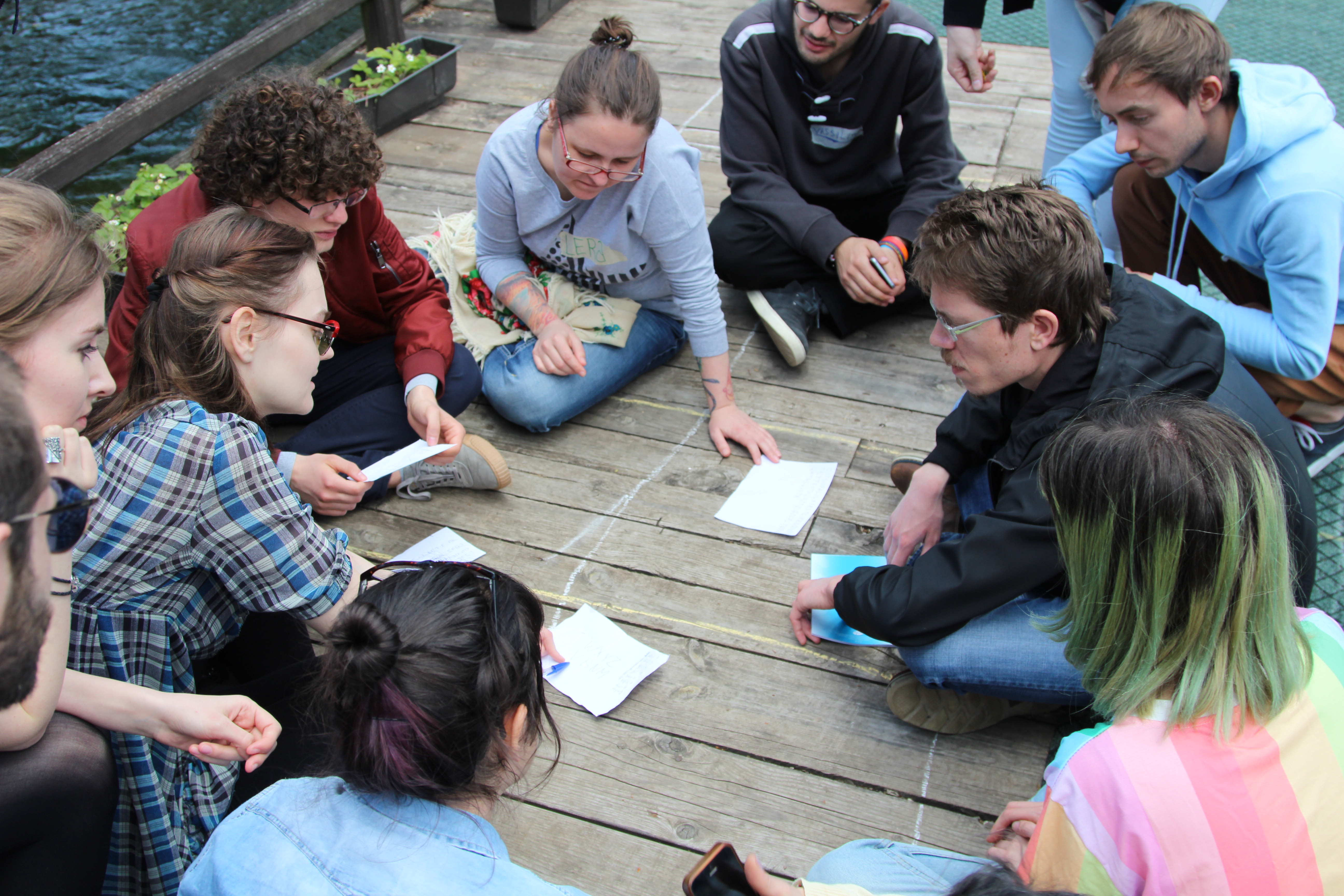
During an intensive one-week face-to-face training, the participants consolidate the knowledge gained while going through the online course, they receive insights from external speakers and receive in-depth and hands-on training on a variety of topics. Among those are a session on “City and Economy” by Dirk Holemans (Director of the Flemish Green Think Tank Oikos, GEF Board member and city councillor in Gent, Belgium), an introduction to useful tools of project management by Vesna Jusup (European Green Party), as well as a hands-on training on effective communication by Pinar Ilkiz  (Co-Founder and Communications Director at Pikan Ajans, an NGO social media consultancy).

Third step: Fortify

Participants of the Training for Trainers will have an opportunity to implement one of four Regional Trainings that they designed and planned themselves. These activities are targeting young people from the regions respectively. Young people will both be able to practice their trainer and project management skills as well as to map decision-makers and existing urban initiatives in their local communities/regions and exchange experiences and practices among themselves. At the end of this phase, every group from each country will have a completed action plan.

About the event

The international activity will take place from 24-29 April near Istanbul, Turkey, in the framework of this year’s transnational project “Creating Socio-Ecological Societies through Urban Commons Transitions”. Both urban activists with experience and people who are new to this topic but keen to develop an expertise in this field were invited to answer the call for participants.

The training is going to enable young people to analyse their cities (think global) as well as equip them with capabilities to conduct local activities on the spot with the goal to improve their communities (act local), and will include, among others, sessions on “City and Inclusion”, “City and Environment”, Manifesto Writing, and more.

All the materials produced during the project: Manifesto, Regional Action plans, impressions, recommendations and other materials will be summed up into a publication that will be translated into four different languages, so stay tuned for the follow up!


Call for Participants: Urban Steps for Resilient Future

By

We are happy to announce the call for participants for the International Activity (Training for Trainiers) that will take place from 24-29 April near Istanbul, Turkey.

We are looking for young  and motivated people who are eager to improve Eastern European cities through alternative ways of urbanisation, as well as in mastering their skills in advocacy and project management. Participants are expected to come from one of the following 16 countries of Eastern Europe: Albania, Armenia, Azerbaijan, Belarus, Bosnia and Herzegovina, Bulgaria, Croatia, Georgia, Kosovo*, Macedonia, Moldova, Montenegro, Serbia, Turkey, Ukraine, Russian Federation.

Both urban activists with experience and people who are new to this topic but keen to develop an expertise in this field are welcome to apply. The team will select participants respecting the criteria of gender, geographical and regional balance and taking into consideration the diversity of participants’ backgrounds regarding the event’s topic. We encourage applications reflecting diversity in all forms, especially gender and sexual identity.

All sessions of the international activity will be conducted in English.

DEADLINE for submitting the application is Sunday 4th March, 2018.

You can apply using this application form.

Go to PROJECT PAGE to read more information about the full project.

*All reference to Kosovo, whether to the territory, institutions or population, in this text shall be understood in full compliance with the United Nations Security Council Resolutions 1244 and without prejudice to the status of Kosovo.

The commons: (co)managing commonly owned resources

By Uncategorized

The term “commons” is gaining increasing currency in political debates today, as thinkers and activists look for alternatives to what appears to be the failing model of the market economy. While many people have a broad idea of what the commons are – a means of co-managing a resource for the community as a whole – what does it mean in practice? And where and when can the idea of a commons be applied?

Many of these issues were discussed at the GEF seminar earlier this year. Since the idea of the commons was reintroduced to the public debate by the likes of Elinor Ostrom, many new forms of commons have become viable. An example discussed at the seminar was the idea of genetics and DNA as a type of commons.