ECOPRO Seminar in Ireland: “A Community Approach to Sustainable Work in the Circular Economy”

By

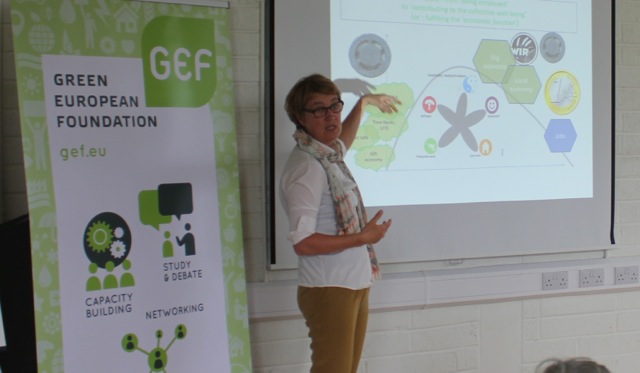
The theme of this seminar was “FULL CIRCLE: A Community Approach to Sustainable Work in the Circular Economy”. With this focus, the seminar in Ireland aspired to reflect further on the current topics of our ECOPRO project.

Therefore, some of the most relevant questions which were addressed during the event were:

  • What role do community groups, co-operatives and local enterprises have in the circular economy? 
  • Under what conditions can the circular economy help us accelerate the transition to a resilient and low carbon society?

This seminar was based on a participatory format, blending presentations with facilitated conversations. The list of speakers included Dr. Anne Snick (KU Leuven, Belgium) and Clare Downey (Community Reuse Network, Ireland).

TIME: Seminar was held between 14h00 and 16h30 on the 10th of June.

LOCATION: WeCreate Workspace, located in Cloughjordan Ecovillage in Tipperary, Ireland.

“Green Values, Religion and Secularism” Debate in Belfast

By

This event was a chance to continue the fruitful discussions about the topics featured in the book “Green Values, Religion and Secularism”. With this publication, the Green European Foundation aspires to foster the debate within the Greens towards a more coherent stance on the changing role of religion in European society.

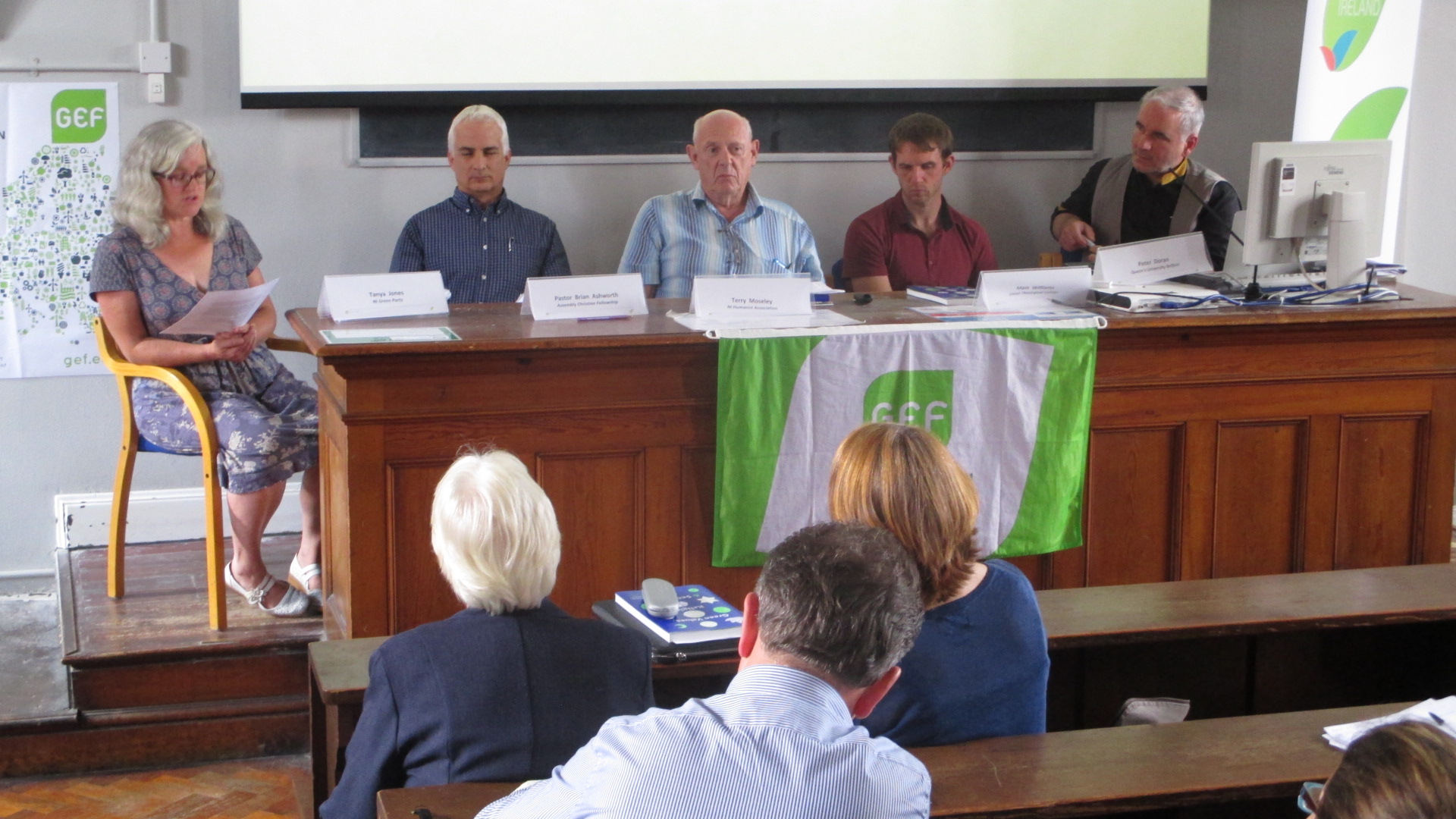
The debate in Belfast was entitled “Green values and progressive politics: religion, humanism and the ethical basis for political activism”. It featured Erica Meijers (Co-Editor, Bureau de Helling) who will speak about “Marx, Religion and Politics” and a discussion about the book, with Nuala Ahern (Co-Editor, Green Foundation Ireland), John Barry (Professor of Green Political Economy at Queen’s University Belfast) and Erica Meijers.

The debate was organised with the help of the Centre for Sustainability and Environmental Governance in Queen’s University Belfast.

TIME AND LOCATION: Saturday the 9th of July, between 11h00 and 16h00, at Queen’s University Belfast.

“Green Values, Religion and Secularism” Debate in Dublin

By
Green European Foundation, with the the support of Green Foundation Ireland and in partnership with the Irish School of Ecumenics, hosted a seminar on the 10th of November in Dublin.

This seminar is part of our project “Green Values, Religion and Secularism”, which promotes and serves as a space for the debate within the Greens towards a more coherent stance on the changing role of religion in European society. The project is based on the book with the same name, published by the Green European Foundation together with six national Green foundations in 2015.

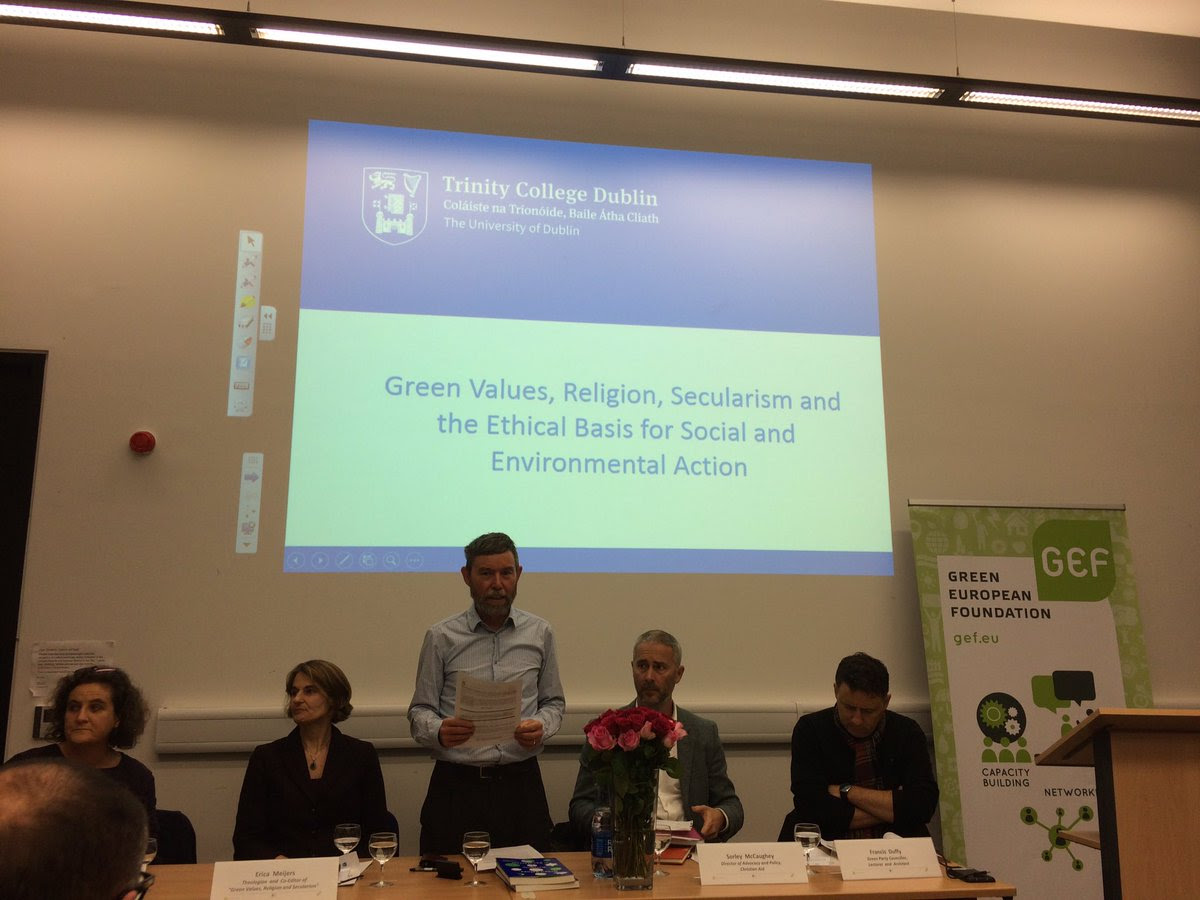
The seminar in Dublin was entitled “Religion, Secularism and the ethical basic for social and environmental justice”. It featured a debate with relevant speakers, which was followed by a Q&A session. The list of speakers included:

  • Erica Meijers, Co-editor of the book “Green Values, Religion and Secularism” and Editor-in-chief of the Journal De Helling, published by the Dutch Green Foundation Bureau De Helling;
  • Sorley McCaughey, Director of Advocacy and Policy at Christian Aid;
  • Francis Duffy, Green Party Councillor, Lecturer and Architect;
  • Catriona Russell, Lecturer in Environmental Ethics at TCD, formerly Director M.Phil in Ecology and Ethics at All Hallows College, Dublin

The text of Erica Meijers’ lecture during the debate can be found here.

Registration: Admission to this Seminar is FREE,but advance registration is required at ecumsec@tcd.ie

This event is made possible with the financial support of the European Parliament to Green European Foundation.

Green Values, Religion and Secularism

By Uncategorized

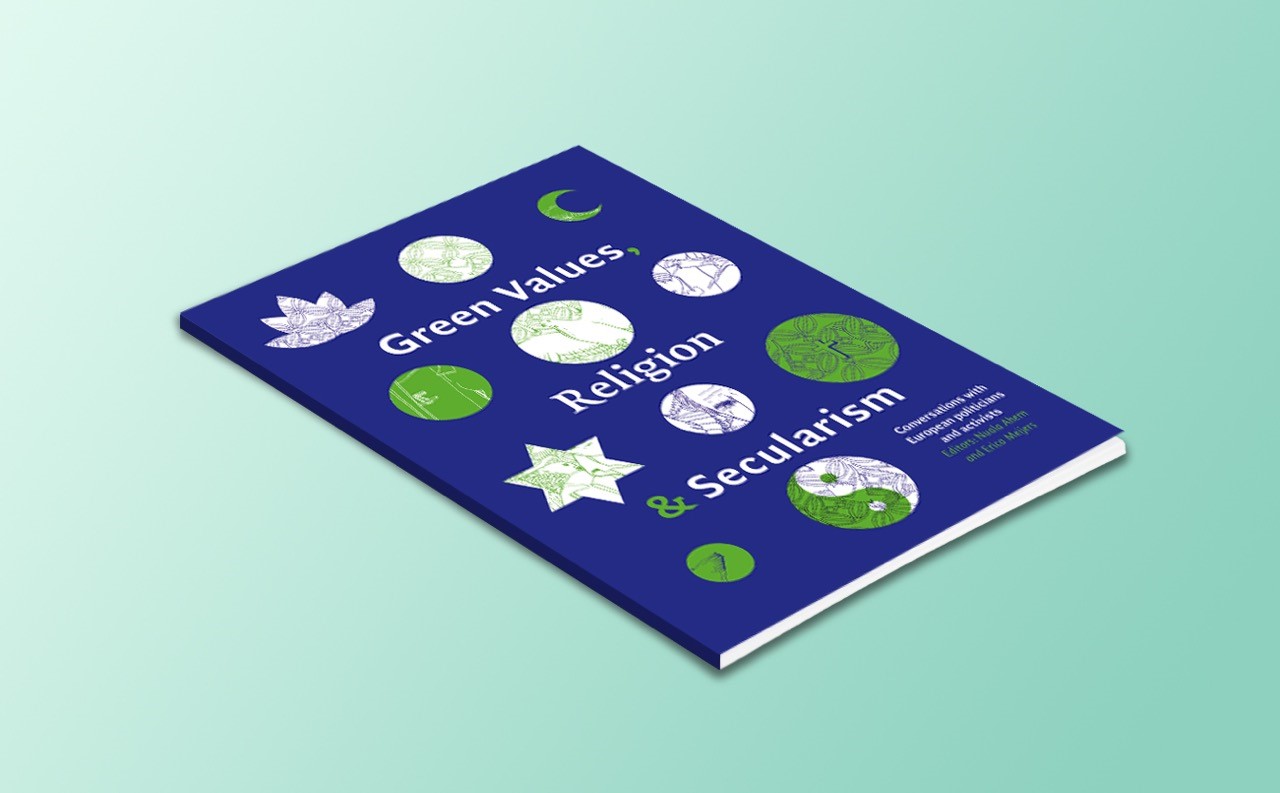
In the last decades, the relationship between religion and modern society has shifted. As a consequence, there have been fierce debates on issues such as ritual slaughtering, homosexual teachers in schools, the wearing of the headscarf in public institutions and the relationship between Islam and terrorism. In a new publication titled ‘Green Values, Religion and Secularism’, Green politicians from different European contexts reflect on the way their own religious or secular values influence their political attitude; the role of religion in the public forum; conflicts between fundamental rights, such as the freedom of religion and the principle of sexual and gender equality; the role of Islam in Europe and the question of whether religion is a source of inspiration or an obstacle for Green politics.

Religion and politics have much in common. They share the longing for another world, one in which peace and justice will reign. They also share the dangers of this desire: the temptation to force their own imaginative order onto others. Both religion and politics have to find a way to deal with the tension between the actual world and the world as they imagine it should be. The fact that they do this in very different ways is part of the explanation why religion and politics, by definition, have a difficult relationship. Modern political movements have roots that go back one or two centuries at most, whereas religious traditions have much older sources. However, this doesn’t discharge either of them from the task of interrogating and reinterpreting their traditions in the light of new challenges.

Although Green parties often have an uneasy relationship with religion, the debate about values, religious or secular, cannot be escaped within a Europe haunted by many different crises at the same time. This publication is an invitation to work towards a more coherent debate within the Greens on the changing role of religion in society.

The book is edited by Erica Meijers (De Helling) and Nuala Ahern (Green Foundation Ireland). It features conversations with politicians and activists from France, Turkey, Poland, Ireland, Greece, Belgium, and the Netherlands.

You can ready the publication by downloading the pdf below or order your own hard copy and support the project.

French version

The French translation of the book is available for download here.

Polish Version

The Polish translation of the book is available for download here.

Brochures in Polish

Agnieszka Kościańska: Poszukując kościoła otwartego

Bettina Jarasch: Jak Zieloni debatują o religii

Nil Mutluer: Świeckość w Turcji. Kontrolowanie wiary zamiast wolności

Yannis Paraskevopoulos:  Religie zmieniają się razem ze społeczeństwem

Sustainable Democratic Energy for Ireland and Europe

By Uncategorized

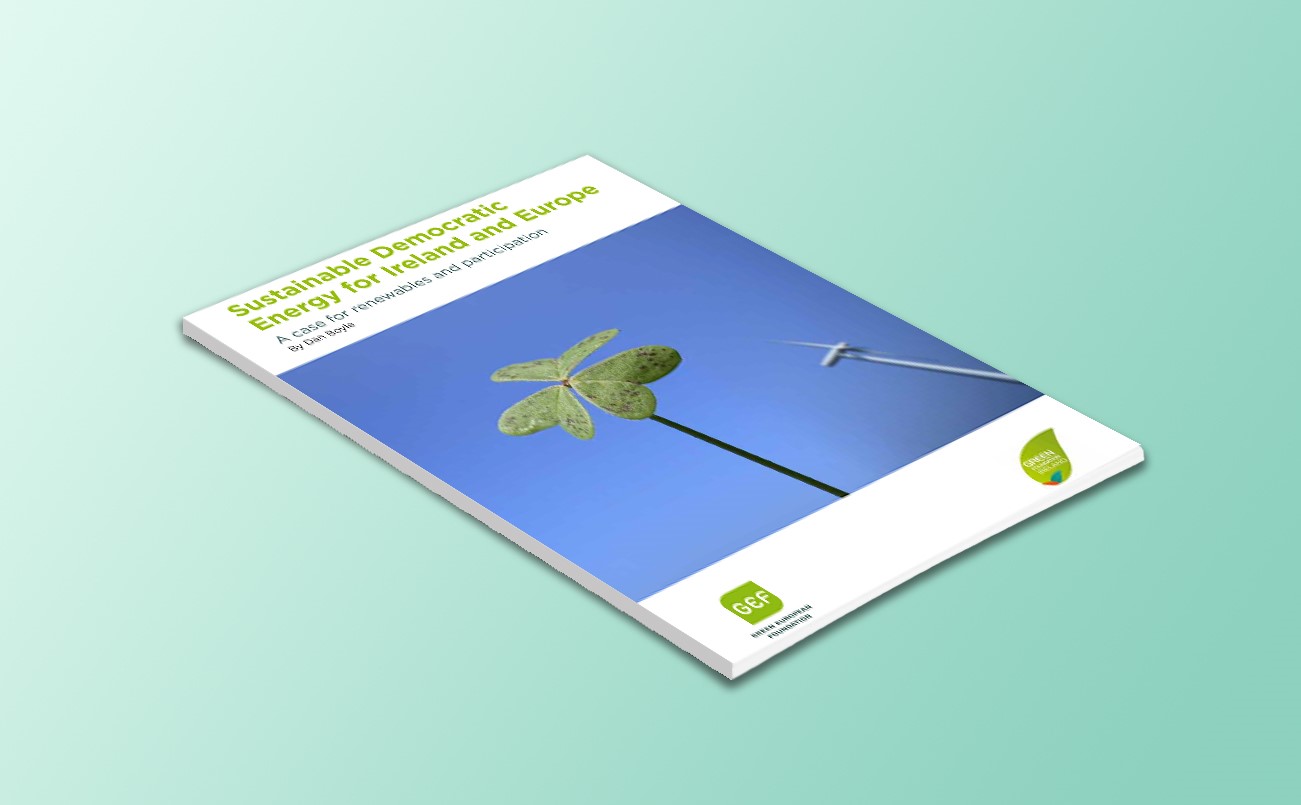
The European Union is committed to reducing greenhouse gas emissions to 80 – 95% below 1990 levels by 2050. Given the many reasons for public concern about the technological and infrastructural developments required to achieve this ambitious target — threats to landscapes and habitats, public safety fears, etc. — citizens themselves must be informed and engaged in the decision-making process.

Using case studies from citizen’s initiatives and renewable energy projects specifically in Ireland, and contrasting them with similar experiences in Denmark and Germany, Dan Boyle makes the case for the desirability of participative renewable energy projects across Europe as a whole. He also provides an overview of some of the key democratic models for effective public participation, examining key lessons learnt from environmental campaigns which have questioned and opposed renewable energy projects on the basis of the potential environmental damage caused by the infrastructure.

Ireland has had one of the highest levels of fossil fuel dependence in the European Union but, with relatively abundant wind and water power opportunities, combined with the entrance into government of the Irish Green Party for the first time in 2007, Ireland is racing towards its renewable energy targets. In 2012, for example, its target of 40% renewable energy generation was achieved 103 days early. According to Boyle, part of the reason for the comparatively swift development of renewables in Ireland was the level of public participation and buy-in — concepts which are explored in depth in this report.