From Sustainability to Sufficiency – The Next Step for Cities

By

Join us in Stockholm for a one-day workshop on urban sufficiency – the next step for cities beyond sustainability.

Many European cities have made real progress on sustainability – cleaner air, greener streets, better mobility. But staying within planetary boundaries while ensuring a good life for all requires a deeper shift. Cities still consume too many resources, and overconsumption by some creates scarcity for others.

Taking place in Stockholm, this one-day workshop will explore urban sufficiency*: a practical, forward-looking approach to healthier, more resilient and socially just cities. We’ll look at how cities can make bold choices on energy, land, water and resource use, strengthen sharing and repair, support citizen initiatives, and address challenges like excessive tourism.

* The IPCC defines in its Climate Report AR6 sufficiency as: “a set of policies, measures, and everyday practices that avoid or reduce demand for energy, materials, water, and land, while delivering human well-being for all within planetary boundaries”.

Why join?

Gain a new language and mindset beyond sustainability, learn how sufficiency works in practice for housing, consumption, circular economy and public space, and get inspired by concrete examples from across Europe. Connect with peers, exchange ideas, and leave with insights you can apply in your work, city or community.

Provisional programme 

(more info to follow)

09.30 – 09.45Welcome
09.45 – 10.15Who’s in the room
10.15 – 10.35Crash course on sufficiency

·       Dirk Holemans, Coordinator, Oikos ThinkTank

10.35 – 10.50Break
10.50 – 11.20Sufficiency in Sweden: why it matters & what’s on the table

·       Ann-Charlotte Mellquist, RISE research institute

11.20 – 12.30WORKSHOP 1: Horizontal system change – addressing the advertising industry that drives consumption

·       Gustav Martner, Greenpeace

12.30 – 13.30Lunch
13.30 – 14.00Examples of sufficiency in European Cities

·       Vedran Horvat, GEF

14.00 – 15.30WORKSHOP 2: Exploring concrete sufficiency dimensions

·       Dirk Holemans, Coordinator, Oikos ThinkTank

15.30 – 16.00Wrap up, next steps, thank you


This event is organised by the Green European Foundation with financial support of the European Parliament to the Green European Foundation. 
 

Public values in smart grids (Webinar)

By

About this webinar

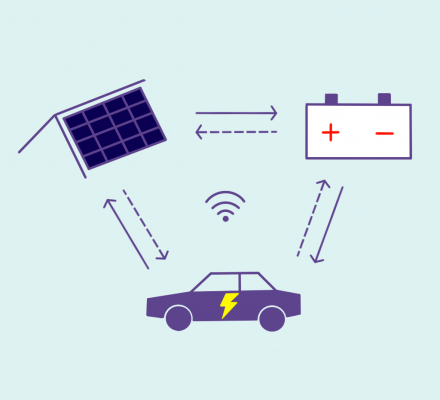
A fully renewable electricity system is largely powered by wind and solar. These are intermittent energy sources. How do we keep supply and demand in balance? Data and artificial intelligence will play a major role in this balancing act. Smart electricity grids help adjusting supply and demand, using data on the forecasted weather, the available power storage and conversion capacity, and the willingness of companies and households to make their electricity consumption dependent on supply and price.

A smart grid is not necessarily fair, transparent, and privacy-friendly. It doesn’t necessarily allow for human control over algorithms and democratic participation.  How can we integrate these public values into the design of smart grids, from local microgrids to centralised macrogrids?

The Green European Foundation, Wetenschappelijk Bureau GroenLinks, and Oikos will try to find answers to this question in a webinar. It will gather (local) politicians, practitioners, activists and members of energy cooperatives from various European countries, in a coronavirus-proof way.

The webinar will start with two presentations:

Fabian Reetz (100 prozent erneuerbar stiftung, Berlin) will explain the basics of a smart electricity grid and its importance for speeding up the transition towards a 100% renewable energy system.

Christine Milchram (Delft University of Technology) will speak about smart grids and energy justice. How can fairness, data privacy and other public values be integrated into smart grids?

The first comments to the presentations will be delivered by Yvonne van Sark, president of homeowner’s association Schoon Schip, which runs a smart microgrid in Amsterdam.

The webinar will be facilitated by Dirk Holemans (Oikos).

This is a joint event of the GEF projects A Charter for the Smart City and Cities as Places of Hope.

Timetable

14:00  Welcome by Dirk Holemans

14:15  Presentation on smart grids and the energy transition by Fabian Reetz

14.35  Q&A

14:50  Short break

15:00  Presentation on smart grids and energy justice by Christine Milchram

15:20  First comments by Yvonne van Sark

15:25  Q&A

15:40  Group discussion

16:00 Closing words by Dirk Holemans

Language

The webinar will be conducted in English.

Platform

We will use the Zoom video conferencing platform. It is recommended to join the webinar via a PC. You don’t need to install additional software. However, for the best user experience and full participation features, we recommend to install the Zoom Desktop App, which is free.

Registration

Required. Please note that the number of participants is limited, so register soon following this link.

——

Background information

Energinet, Smart Grid Denmark (video), 2011
Fabian Reetz & Céline Göhlich, Prinzipien für die Energiepolitik der Zukunft, policy brief Stiftung Neue Verantwortung (in German), 2020
Marten Boekelo, ‘Full interview with Christine Milchram on energy justice in smart grids’, The Social Life of Energy blog, 2020
Christine Milchram & al., ‘Energy Justice and Smart Grid Systems: Evidence from the Netherlands and the United Kingdom’, Applied Energy, 2018
Otto Barten, ‘Smart grids in de slimme stad’, Handvest voor de Slimme Stad, pp. 85-112 (in Dutch), 2019
European Data Protection Supervisor, TechDispatch #2: Smart Meters in Smart Homes, 2019
Green European Foundation, A Charter for the Smart City, 2019

Social Scoring

Citizen scoring – towards a surveillance state for the poor? (Webinar)

By

About this webinar

What’s your opinion on ‘citizen scoring’? Big data analytics is gaining traction among local and national governments. By feeding large swaths of personal data into algorithms, they try to predict which social benefit recipients are most likely to commit fraud or which children are most at risk of abuse or neglect, for instance. Does the ‘scoring’ of citizens by algorithms boost government efficiency or is it a threat to privacy, social justice and the transparency of government? Which legal restrictions apply to citizen scoring and which ethical boundaries should we set?

The Green European Foundation and Wetenschappelijk Bureau GroenLinks will try to find answers to these questions in a webinar. It will gather people who are active in (local) politics from various European countries, in a coronavirus-proof way.

The webinar will start with three presentations:

Richard Wouters (Wetenschappelijk Bureau GroenLinks, NL) will introduce the Charter for the Smart City that the Green European Foundation published in 2019. The Charter contains the warning that the use of big data to combat benefit fraud may lead to ‘class injustice’.

Lina Dencik (co-director of the Data Justice Lab, Cardiff School of Journalism, UK) will present the results of an extensive investigation into the use of citizen scoring by local authorities and police forces in the UK.

Ronald Huissen (Bij Voorbaat Verdacht, NL) will explain the ground-breaking verdict against the Dutch fraud detection algorithm SyRI. In February, a court ordered the immediate halt of SyRI because it violated the right to privacy. Huissen represents the NGO coalition which filed the lawsuit against SyRI.

The first comments to the presentations will be delivered by Kathalijne Buitenweg (MP for GroenLinks, NL) and Martin Fodor (local councillor for the Green Party in Bristol, UK; rapporteur on smart cities for the Congress of Local and Regional Authorities of the Council of Europe).

The webinar will be facilitated by Carlotta Weber (Green European Foundation).

Timetable

14:00 Welcome by Carlotta Weber

14:20 Presentation of the Charter for the Smart City by Richard Wouters

14:25 Presentation on citizen scoring in the UK by Lina Dencik

14:45 First comments by Martin Fodor

14:50 Q&A

15:05 Presentation on the SyRI court case in NL by Ronald Huissen

15:25 First comments by Kathalijne Buitenweg

15:30 Q&A

15:45 Break

15:55 Group discussion

16:55 Closing words by Carlotta Weber

Language

The webinar will be conducted in English.

Platform

We will use the Zoom video conferencing platform. It is recommend to join the webinar via a PC. You don’t need to install additional software. However, for the best user experience and full participation features, we recommend to install the Zoom Desktop App, which is for free.

Registration

Required. Please note that the number of participants is limited, so register soon following this link.

Background information

Green European Foundation, A Charter for the Smart City, 2019
Data Justice Lab, Data Scores as Governance. Investigating uses of citizen scoring in public services, 2018
The Guardian, Automating Poverty series, 2019
AlgorithmWatch, Automating Society. Taking stock of automated decision-making in the EU, 2019
UN Special Rapporteur on Extreme Poverty and Human Rights, Report on the digital welfare state, 2019
The Hague District Court, SyRI legislation in breach of European Convention on Human Rights, 2020


Can’t attend? Follow us on Facebook and Twitter  to keep up-to-date with the discussions at the webinar.

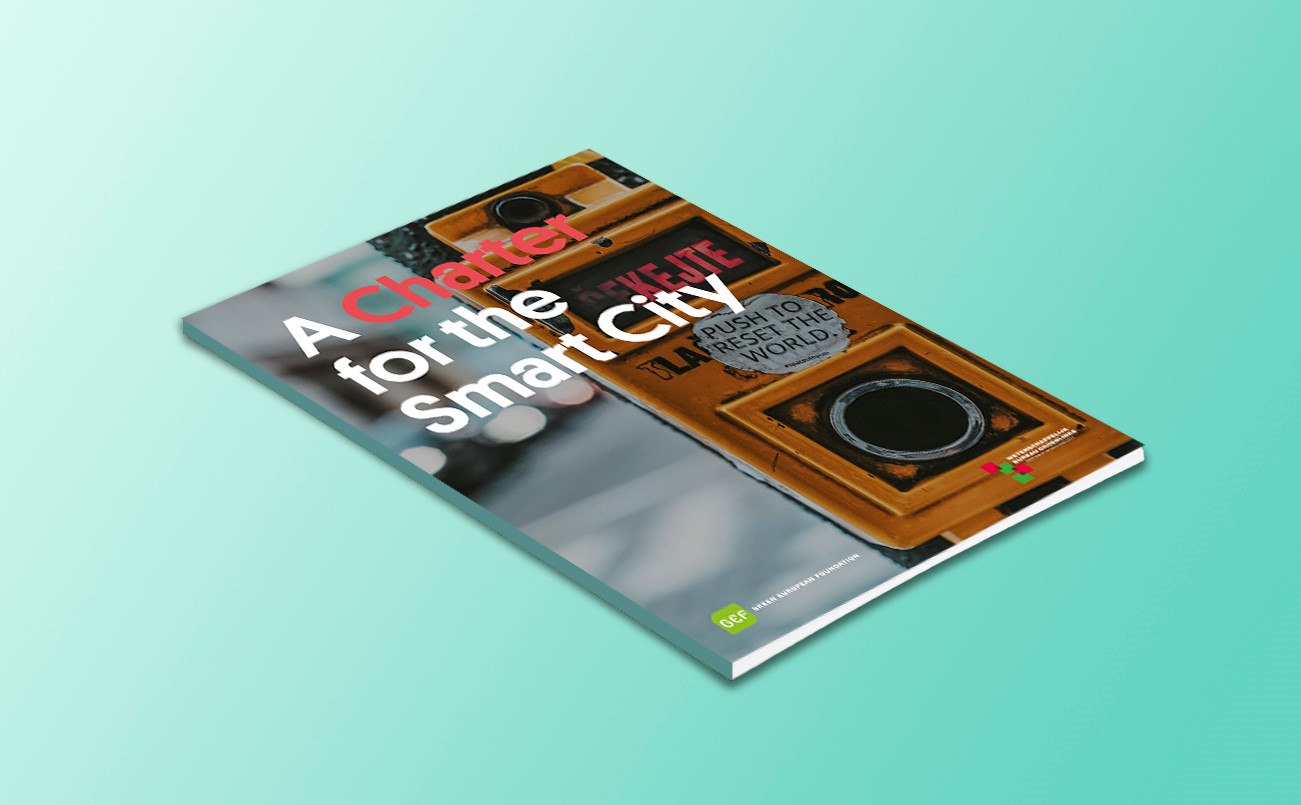
A Charter for the Smart City

By Uncategorized

People make technology, but technology in turn influences our lives, our societies and even our ethics. The development of new technologies therefore cannot be left to engineers and managers; it requires public debate and democratic control.

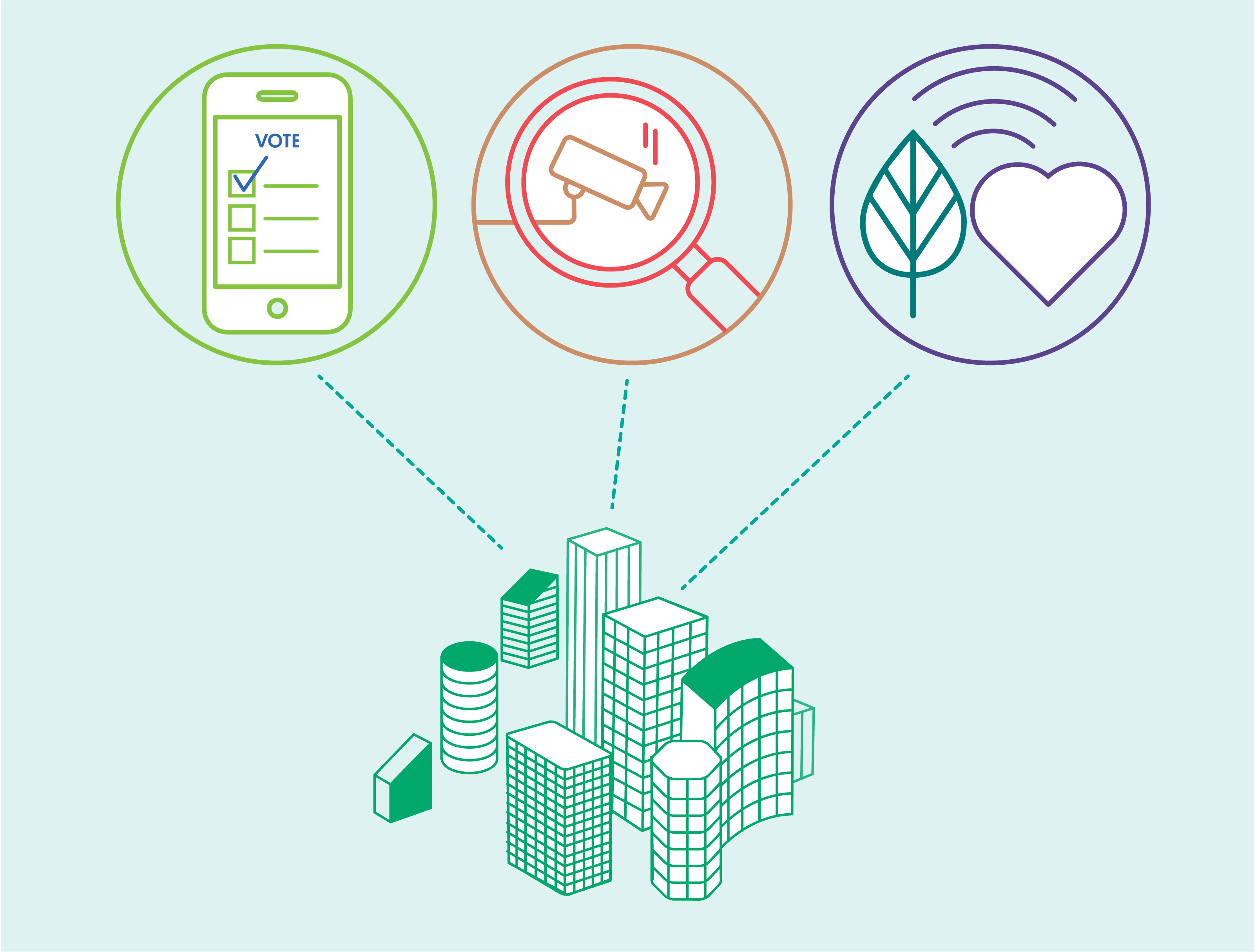
This Charter for the Smart City was produced as part of the project of the same name, and puts the values of democracy, connectedness, human dignity, privacy,  sustainability, and equality at the heart of smart cities. Local politicians and active citizens who share these values may use the principles in this Charter as starting points for democratic debate and informed moral judgment on technological innovations in their communities.

The Charter was developed through a series of roundtable discussions that took place in cities across Europe, as well as from online consultation, involving over 100 experts, (local) politicians and activists who shared their ideas.


Please find the Dutch version of this publication available to read here

Please find the French version of this publication available to read here

Please find the German version of this publication available to read here

Please find the Czech version of this publication available to read here

Roundtable on Smart Cities (Oslo)

By

Event Background

This round table discussion is to be held as part of the transnational project A Charter for the Smart City, which aims to formulate guiding principles that help politicians to assess and steer technological innovations in European cities.

About the Event

Taking place as part of the European Green Party’s Local Councillors Conference “Cities for the Future – The Green Way” , the roundtable will draw upon the expertise of politicians and representatives from NGOs, trade unions, and technology sectors to collect examples of best practices from across Europe.

This will contribute to the development of a Charter, one which addresses the opportunities that new technologies offer for reducing the ecological footprint of cities and creating new urban commons, while also addressing the threats they might present to civil liberties and social justice.

The roundtable is an invitation-only event.

Roundtable on Smart Cities (Utrecht)

By

Event Background

This workshop is to be held as part of the transnational project A Charter for the Smart City, which aims to formulate guiding principles that help politicians to assess and steer technological innovations in European cities.

About the Event

This workshop will draw from examples of best practices from across Europe to contribute to the development of a Charter, one which addresses the opportunities that new technologies offer for reducing the ecological footprint of cities and creating new urban commons, while also addressing the threats they might present to civil liberties and social justice.

The workshop will be chaired by former Dutch Member of the European Parliament Judith Sargentini and feature Jules van Hal, online campaigner of GroenLinks and former journalist, as rapporteur.

Programme

12.00-12.15: Welcome

12.15-12.30: Opening and introduction

12.30-14.30: First round of discussion – all participants get the chance to give their input on the draft charter

14.30-15.00: Break

15.00-16.55: Second round of discussion – In-depth discussion of crucial or controversial issues in the draft charter

16.55-17.00: Closing remarks

The event will be followed by networking drinks and dinner for the participants,


This event is closed and for invited participants only. For more information on the draft charter, visit www.smartcitycharter.eu 

Roundtable on Smart Cities (Oxford)

By

Event Background

This round table discussion is to be held as part of the transnational project A Charter for the Smart City, which aims to formulate guiding principles that help politicians to assess and steer technological innovations in European cities.

About the Event

Drawing upon the expertise politicians and representatives from NGOs, trade unions, and technology sectors, the event will collect examples of best practices from across Europe to contribute to the development of a Charter, one which addresses the opportunities that new technologies offer for reducing the ecological footprint of cities and creating new urban commons, while also addressing the threats they might present to civil liberties and social justice.

Programme

11.00-11.40:  Welcome and introduction by Richard Wouters (Wetenschappelijk Bureau GroenLinks – De Helling)

11.40-13.00: Group discussions on smart cities: Which values are at stake? Do we need new rules? If so, which ones?

13.00-14.00: Lunch

14.00-14.30: Panel discussion on the draft Charter for the Smart City with Martin Fodor (green councillor Bristol, rapporteur on smart cities of the Congress of Local and Regional Authorities, Council of Europe), Richard Wouters, and others

14.30-15.55: Roundtable discussion on principles of the charter, identification of gaps, local implementation, green character, practical examples

15.55-16.00: Closing remarks

After the roundtable there will be space for informal networking.

Registration

Registration is open to all, but spaces are limited to approx. 30 people. Please register via the registration form found on this website page. 

Roundtable on Smart Cities (Brno)

By

Event Background

This invitation-only workshop is the second event to be be held as part of the 2019 transnational project A Charter for the Smart Citywhich aims to create a charter to assess and steer technological innovations in European cities.

About the Event

Following on from the first workshop held in Brussels in March, in which EU-level actors contributed to the drafting of the proposed charter, this closed workshop will take place in Brno, Czech Republic and will focus on the input of contributors from Central and Eastern Europe. It will be chaired by GEF board member Michal Berg.

Invitees will include experts from academic fields and technology sectors, as well as politicians, from the Czech Republic, Slovakia, Austria, and other parts of the region.

The aim is to draw upon the invitees’ expertise to eventually develop a Charter, which addresses the opportunities that new technologies offer for reducing the ecological footprint of cities and creating new urban commons, but also the threats they may present to civil liberties and social justice.

The event will be divided into two main sessions:

  • Firstly, all experts will have the opportunity to comment on the draft version of the charter and feed into it.
  • In a second session, the workshop will focus on the most controversial issues identified in the first part and provide space for more in-depth discussions.


Organised by the Green European Foundation, with the support of Institute for Active Citizenship.

Roundtable on Smart Cities (Brussels)

By

Event Background

This invitation-only workshop is the first event to be be held as part of the 2019 transnational project A Charter for the Smart Citywhich aims to create a charter to assess and steer technological innovations in European cities.

 About the Event

Bringing together politicians and representatives from NGOs, trade unions, and technology sectors, this closed workshop in Brussels, Belgium, will act as a starting point for the project by exploring the opportunities and challenges of Smart Cities.

Chaired by GEF board member & Oikos coordinator Dirk Holemans, the workshop will draw upon the expertise of the attendees to identify what is needed on an EU level, build a network of contacts and inform the drafting process of the charter.

The event will be divided into two main sessions:

  • Firstly, all experts will have the opportunity to comment on the draft version of the charter and feed into it.
  • In a second session, the workshop will focus on the most controversial issues identified in the first part and provide space for more in-depth discussions.

Organised by the Green European Foundation, with the support of Bureau de Helling and the logisitical support of Oikos.