The Right to Sustainable Mobility: Connecting the Regions as a Way to Fight Poverty

By

Context

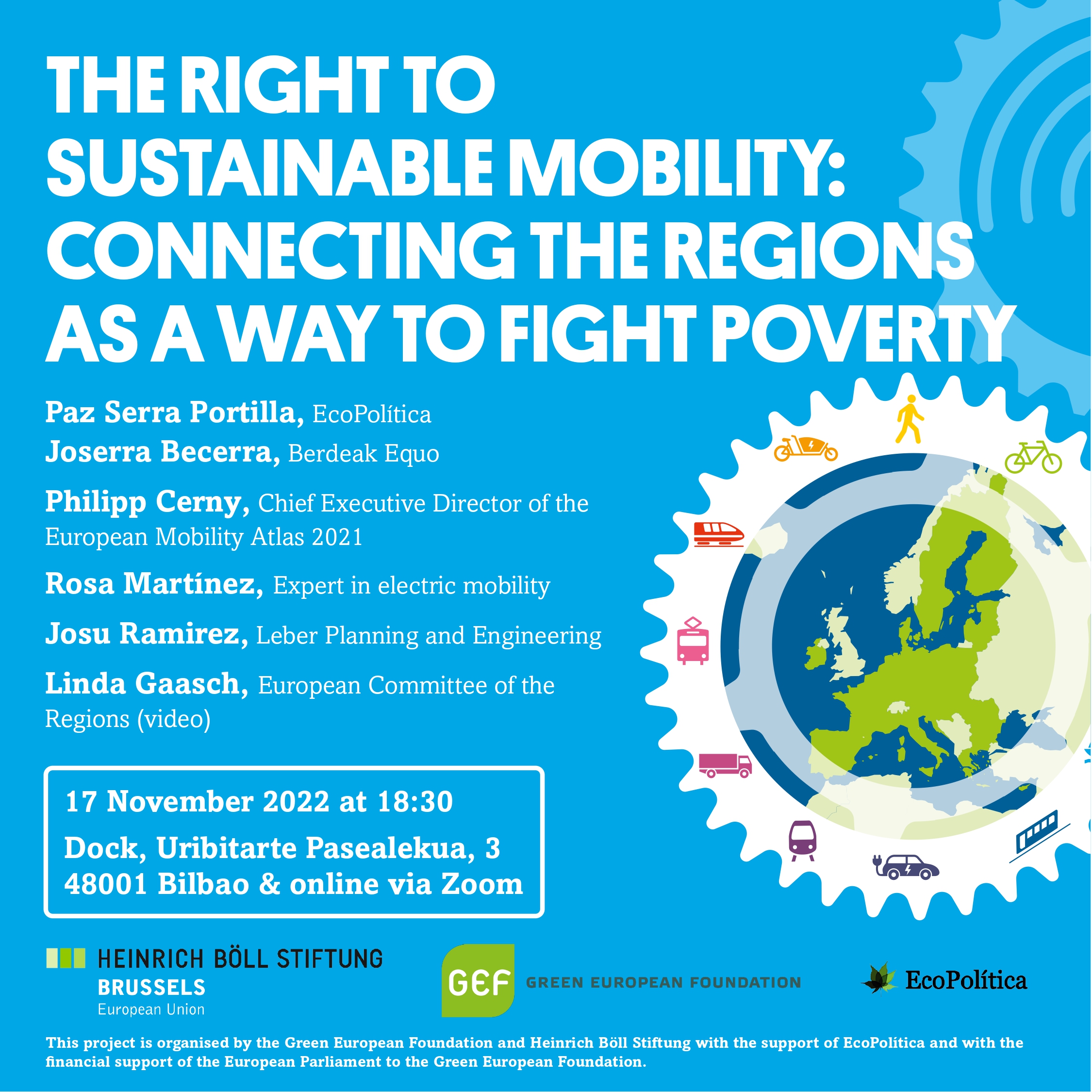
Mobility plays a fundamental role in people’s lives. The ease of movement not only favours the freedom to choose the place of residence and the exercise the right to work, but it is also essential to access basic public services such as education and health, as well as leisure and enjoyment of free time. It is, in short, a determining element of people’s well-being and their quality of life.

In this sense, the articulation of the subjective right to mobility in our societies, which guarantees all citizens equal conditions of access and use of mobility services, is becoming increasingly important. If mobility determines people’s quality of life, the impossibility of accessing sufficient mobility (due to physical or mental conditions, insufficient economic resources, or other factors) supposes not only a personal impediment, but also a breach of the constitutional principle of equality.

Throughout the 20th century, the economic system has linked this right with the use and enjoyment of the private car through an unprecedented cultural transformation. This has caused our towns and cities – and, ultimately, the geography in which we live – to be configured around the use and service of the private motor vehicle. No country in Europe has recognised the “right” to circulate and reach anywhere by car, and yet the car has usurped the routes traditionally used by pedestrians and other means of transport.

In fact, driving in a private car in a public space is a privilege rather than a right. Greenhouse gas emissions caused by automobiles, energy inefficiency, air and water pollution, noise, congestion of public space, accidents or the appropriation of the land are privileges associated with the enjoyment of the automobile, which are unaffordable and unsustainable for the planet, and harmful for people’s health and for society as a whole.

The war in Ukraine has accelerated the energy crisis caused by the progressive depletion of fossil fuels. However, the speed with which it has progressed has hit millions of people who use private vehicles for their daily commutes hard. According to official statistics from summer 2022, in Spain, 60% of drivers have limited the use of private vehicles, and 5% have stopped using them all together.

In this context, sustainable mobility is no longer simply a necessity to advance decarbonisation, it has now become the main alternative to tackle poverty linked to dependence on the private combustion car.

It is the obligation of local institutions to facilitate active mobility. Before the crisis, almost half of daily trips in the Basque Country were made on foot or by bicycle. However, facilitating the transfer of 40% of trips that are made by private vehicles requires adequate mobility planning at the municipal and regional levels to ensure minimum standards of safety, comfort, and accessibility. This situation turns non-motorised mobility into a high-risk exercise, instead of a routine habit.

On the other hand, public transport continues to be the main tool to guarantee everyone the right to move without distinction of physical, intellectual, economic capacity, or place of residence. In this sense, it is the obligation of local and regional authorities to act in a coordinated manner to ensure sufficient public transport coverage with minimum quality and sustainability standards, and with prices in line with the level of disposable income of users.

Lastly, we cannot forget the role that public policies will play in the coming decades, especially when it comes to reducing the demand for mobility, such as 15-minute city urban planning or land reuse policies. These will need to be combined with increased attention to rising property prices (which drive those with lower incomes to the periphery of cities), as well as addressing the social and cultural reconstruction of our way of life on a fairer and more sustainable basis.

Speakers

  • Paz Serra, EcoPolítica.
  • Joserra Becerra, Berdeak EQUO.
  • Philipp Cerny, Chief Executive Editor of the European Mobility Atlas 2021.
  • Rosa Martínez, Expert in electric mobility.
  • Josu Ramirez, Leber Planning and Engineering.
  • Linda Gaasch, European Committee of the Regions (video).

Practicalities

Date and Time:  Thursday 17 November, from 18:30 to 20:00 (CET).

Location: Hybrid event, Dock (Uribitarte Pasealekua, 3 Bilbao) and Zoom.

Language: The main language of the debate will be Spanish. Simultaneous interpretation will be provided ES<>EN.

The event is hybrid, open and free with prior registration through this form. Once registration has been completed, a confirmation email will be sent with the access details for joining the meeting.

Reading material

The event relates to the European Mobility Atlas, corresponding Spanish translation, and associated booklet, Present and Future of Mobility in Spain.


This project is organised by the Green European Foundation and Heinrich Boll Stiftung with the support of EcoPolítica and with the financial support of the European Parliament to the Green European Foundation.  

A Green New Deal for Leeds City Region

By Uncategorized

GALBA’s Vision for a Sustainable Local Economy (Group for Action on Leeds Bradford Airport)

Context

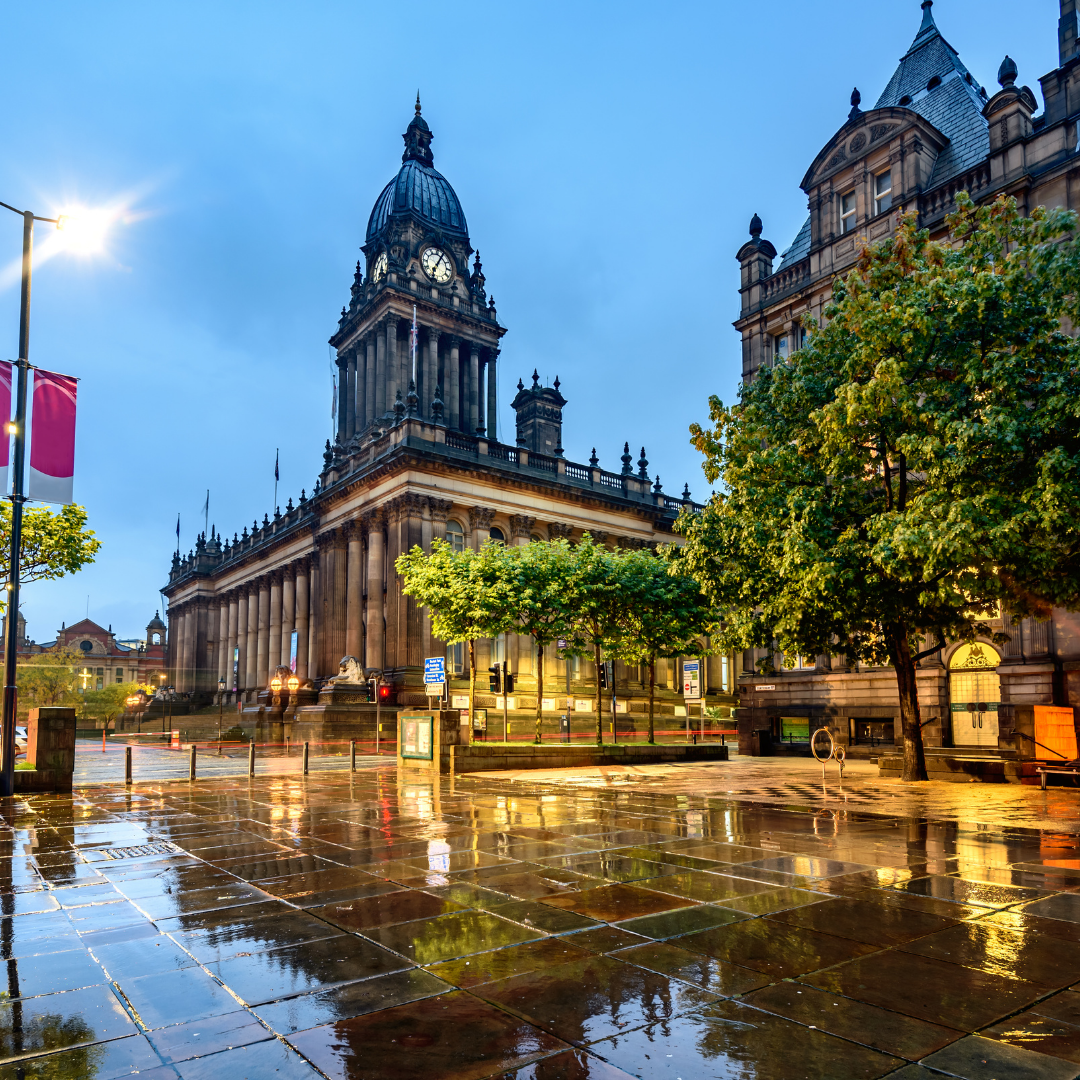
The Group for Action on Leeds Bradford Airport (GALBA) is a group of concerned citizens in West Yorkshire. They came together from a range of backgrounds and across the political spectrum to stop the proposed expansion of Leeds Bradford Airport (LBA), which they managed to do in 2022.  Learn more here.

Following the COP26 Climate Conference in Glasgow, the Group for Action on Leeds Bradford Airport (GALBA) launched their new report: ‘A Green New Deal for Leeds City Region: GALBA’s Vision for a Sustainable Local Economy’.

We believe that local jobs and our fragile climate are best safeguarded by investing in a new green economy that supports sustainability whilst making sure our communities are employed in secure, productive and meaningful work.

Objectives

This report sets out concerns about the claims being made by Leeds Bradford Airport (LBA) around job creation.  GALBA propose a more forward-looking, ambitious and achievable economy that reduces reliance on aviation and encourages investment in local communities, whilst addressing the other key challenges faced around transport, energy and food supply. “Our generation has seen the emergence of a human-created climate emergency. We must also be the generation to fix this, by making best use of our most precious resource–our people”.

Download

Also available in Spanish.


This report is published by the Green European Foundation with the support of Green House Think Tank and the financial support of the European Parliament. The European Parliament is not responsible for the content of this project.

The Potential of Railways

By

About the Event

The event is open to all those interested in mobility, especially members of organisations and platforms working on the issue, government officials, politicians and civil society associations.

Our aim is to publicise more sustainable alternatives when choosing a means of transport and to raise awareness of the need to change our mobility habits.

The events will be held via zoom and will have simultaneous translation from Spanish-English. Prior registration is required.

Context

This is the third event of the series of conferences entitled “The Future of European Mobility”

One of the key factors in the economic development in our global society has been the ease of mobility for people and goods due to the abundance of cheap oil. But we can already witness the consequences of this irrational mobility in the form of the climate crisis and air pollution.

In order to achieve Europe’s decarbonisation goals, the transport sector is a priority. That is why the German Heinrich Böll Foundation launched last year the European Mobility Atlas, a comprehensive analysis of the situation of the sector in Europe. The Green European Foundation and the Fundació Nous Horitzons have translated the Atlas into Spanish and, together with Transición Verde, have prepared a specific annex on the situation in Spain. For its launch, we have organised three online events on some modes of transport whose future is key to move towards low-emission mobility.

The last session of the series will focus on the railway. The most efficient means of motorised transport which, beyond the AVE (high-speed rail line), has been losing its condition as the backbone of the Spanish geography. Should it recover that condition? Can a large part of freight be transferred to the railway?

Speakers

  • Juantxo López de Uralde, national Deputy and president of the Commission for Ecological Transition and Demographic Challenge of the Spanish Congress.
  • José Luis Ordóñez, spokesperson of the State Coordination for a Public, Social and Sustainable Train.
  • Tilly Metz, MEP in the Greens/EFA group and member of the Committee on Transport and Tourism.
  • Manel Ferri , Spanish Sustainable Mobility Foundation)

Moderation: Lidia Ucher, environmental journalist.

Practicalities

Date ant Time: 8th February 18:00-19:30

Language: The events will be held in Spanish via zoom, and will have simultaneous translation in English.

Registration: Prior registration is required- Please register here.

The day before each session we will send a message to the registered persons with the access link.

The sessions will be recorded and made available on YouTube.


This event is organised by the Green European Foundation with the support of Transición Verde and Fundació Nous Horitzons, and with the financial support of the European Parliament to the Green European Foundation.
Cycling and new public space

By

About the Event

The event is open to all those interested in mobility, especially members of organisations and platforms working on the issue, government officials, politicians and civil society associations.

Our aim is to publicise more sustainable alternatives when choosing a means of transport and to raise awareness of the need to change our mobility habits.

The events will be held via zoom and will have simultaneous translation from Spanish-English. Prior registration is required.

Context

This is the second event of the series of conferences entitled “The Future of European Mobility”

One of the key factors in the economic development in our global society has been the ease of mobility for people and goods due to the abundance of cheap oil. But we can already witness the consequences of this irrational mobility in the form of the climate crisis and air pollution.

In order to achieve Europe’s decarbonisation goals, the transport sector is a priority. That is why the German Heinrich Böll Foundation launched last year the European Mobility Atlas, a comprehensive analysis of the situation of the sector in Europe. The Green European Foundation and the Fundació Nous Horitzons have translated the Atlas into Spanish and, together with Transición Verde, have prepared a specific annex on the situation in Spain. For its launch, we have organised three online events on some modes of transport whose future is key to move towards low-emission mobility.

This second session will focus on public space and urban mobility and, in particular, cycling. We will discuss the process of urban transformation in favour of the car and to the detriment of the use of public space as a space for coexistence; urban mobility strategies; and the transformative role of the bicycle.

Speakers

  •  Pilar Vega Pindado, geographer and expert in territorial and environmental planning. Professor at the Complutense University of Madrid. Consultant at gea21
  •  Laura Vergara, President of ConBici and Vice-President of Mujeres en Movimiento (Women on the Move).
  • Jaime Caballero, Councillor for Sustainable Urban Development at Logroño City Council.

Moderation: Raúl Gómez, director of Transición Verde Foundation.

Practicalities

Date ant Time: 8th February 18:00-19:30

Language: The events will be held in Spanish via zoom, and will have simultaneous translation in English.

Registration: Prior registration is required- Please register here.

The day before each session we will send a message to the registered persons with the access link.

The sessions will be recorded and made available on YouTube.


This event is organised by the Green European Foundation with the support of Transición Verde and Fundació Nous Horitzons, and with the financial support of the European Parliament to the Green European Foundation.
A Green New Deal for Leeds City Region

By

About the event

GEF, with the support of GreenHouse ThinkTank is implementing a presentation of the report on Green New Deal for the Leeds City Region, in order to explore the effect of airport expansions on city economies across Europe. The event will serve to gather experts on sustainable economy and transport in the local experts. Furthermore, the event will be a platform to exchange positive examples from cities across Europe.

Context

Following the COP26 Climate Conference in Glasgow, the Group for Action on Leeds Bradford Airport (GALBA) is launching their new report: ‘A Green New Deal for Leeds City Region: GALBA’s Vision for a Sustainable Local Economy’.

The Group for Action on Leeds Bradford Airport (GALBA) is a group of concerned citizens in West Yorkshire. We come from a range of backgrounds and from across the political spectrum to stop the proposed expansion of Leeds Bradford Airport (LBA).

Speakers:

  • Chris Foren, GALBA Chair
  • Alex Sobel MP, Leeds North West
  • Nick Hodgkinson, GALBA (report co-author)
  • Robert Magowan, Green House think tank (report co-author)
  • Pauline Bailey, Leeds TUC

Practicalities:

Date and Time: Friday 3rd December, 2pm

Registration: You can register for participation at this link.


This event has been realised with the support of Green House Think Tank,  financial support of the European Parliament. The European Parliament is not responsible for the content of this project.

European Mobility Atlas

By Uncategorized

Context

Europe is the continent where multiple forms of transportation have been invented or brought to technological maturity. The free movement of persons has made Europe grow together and led to an ever-stronger sense of cohesion. Cross-border mobility is a prerequisite for a united EU and the experience of inter-connectedness on all levels. However, the Covid-19 pandemic has limited the freedom of movement extensively and shows the vulnerability of Europe as a place of constant movement. While air traffic decreased and the use of bicycles increased, there has also been a strong negative shift from shared transport to individual transport. If this change prevails, a great deal of earlier efforts to reduce GHG emissions in the transport sector will be nullified. If one thing is clear is that recovery packages to overcome the effects of the Covid-19 pandemic must be accompanied by a commitment to a sustainable transformation that avoids further carbon lock-in with a transport sector still largely powered by fossil fuels.

Objectives

Our European Mobility Atlas seeks to contribute to the efforts towards sustainable and just mobility in Europe. Thus, it covers a multitude of transport-related aspects relying on evidence-based research and highlighting concrete, tangible mobility solutions from across our continent. GEF is working together with Heinrich Böll Stiftung to Europeanise the debate on sustainable mobility on our continent. We are doing this by translating the English language version of the European Mobility Atlas to Spanish and Italian, as well as providing a series of infosheets on the mobility context in Spain.

With more and more people being mobile, Europe is a continent that needs to remain innovative in order to achieve the relevant climate goals. We need new technologies to align our mobility infrastructure and behaviour with the pressing challenges of the upcoming years. To save our climate, the European Green Deal has to be Europe’s first priority.

Download

Digital version in Spanish is available here.

Digital version in Italian is available here.

Digital version in Portuguese available here.

Complementary resources

Present and Future of Mobility in Spain (ES): available here.


These publications have been realised by the Green European Foundation in cooperation with Heinrich Böll Stiftung, and the financial support of the European Parliament to the Green European Foundation. The European Parliament is not responsible for the content of this publication