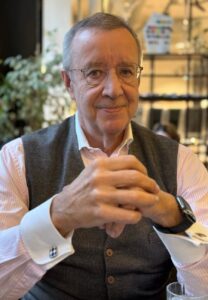
Mariia Mezentseva. Photo by Elke Wetzig. CC BY-SA 4.0
Interview with Mariia Mezentseva by Sofiia Shevchuk,
11 June, 2025
A country that is attacked by a larger neighbour cannot do without allies and partners. We discuss Ukraine’s diplomatic outreach with Mariia Mezentseva, a Ukrainian Member of Parliament who heads Ukraine’s delegation to the Parliamentary Assembly of the Council of Europe. She is actively engaged in strengthening Ukraine’s ties with Europe and beyond.
Diplomatic efforts are more crucial than ever as global support for Ukraine shows signs of erosion. In February 2025, the UN General Assembly adopted the resolution Advancing a comprehensive, just and lasting peace in Ukraine, which passed with 93 votes in favour, 18 against, and 65 abstentions – a significant decline from previous votes such as in February 2023, when 141 countries supported a similar resolution. Meanwhile, Russia continues to strengthen ties across Africa, Asia, and Latin America and to exploit sanctions evasion mechanisms. Ukraine’s diplomatic strategy, championed by politicians like Mezentseva, aims to counter these trends, rebuild consensus, and position the war as a broader global struggle for sovereignty, justice, and international law.
Sofiia Shevchuk: In light of Russia’s full-scale invasion, how have the EU and NATO security visions evolved from your perspective, and what role can Ukraine as a candidate country and a frontline democracy play in shaping the future architecture of European security?
Mariia Mezentseva: I think Ukraine has definitely helped to reduce bureaucratic hurdles within the EU and NATO. Take the example of the SWIFT sanctions. After the first Russian invasion of Ukraine, in 2014, I was targeting the audience of the European Parliament and the European Commission, together with like-minded colleagues from NGOs – so not just the government of Ukraine – to push for the expulsion of all Russian banks from the international SWIFT payment system. That didn’t happen at the time. But once the full-scale aggression occurred, in 2022, one of the first suggestions was to return to the idea of expelling Russia from SWIFT – and this time it did happen. Now we are approaching the 18th package of sanctions against Russia by the EU, and many things that once seemed unfeasible are now realistic and functioning. And I will be the toughest defender of the fact that sanctions are working – they are effective, they are damaging Russia. So I think point number one in which the EU changed its approach is: less bureaucracy.
The second point is the EU’s historic decision to provide lethal military assistance to Ukraine through the European Peace Facility (EPF). As of mid-2025, over 11 billion euros have been allocated to Ukraine under this mechanism for military equipment, training, and logistics. This marks a major shift in EU foreign policy, as the EPF had not previously been used on such a scale for a non-EU state.
Military aid, logistics and strategy for Ukraine are coordinated on a broader scale in the Ramstein format, officially known as the Ukraine Defence Contact Group (UDCG). Launched in April 2022 at the Ramstein Air Base in Germany, the format brings together over 50 countries, both NATO and non-NATO states. It meets regularly to streamline support and respond rapidly to Ukraine’s evolving defence needs. Ukraine’s active participation and initiative in shaping such multilateral forums demonstrate its emerging leadership in rethinking security cooperation beyond traditional institutional boundaries.
Until recently, the EU lacked a military security component. Maybe it’s time to revisit the idea from 1952 – from the founding fathers – that there should be a European army. Security and defence at the core of the European project, we might now see a return to that vision.
Even within NATO, there are positive developments despite the fact the US currently is against formal Ukrainian membership. NATO’s most recent enlargement happened because of the Russian aggression against Ukraine. Countries that never saw themselves joining NATO – Finland and Sweden – have now done so. We lobbied Turkey for them when Turkey was blocking their accession.
So it’s very interesting how Ukraine has stepped onto the global stage not as a victim, but as a decisive, solid partner. Ukraine is also a country that will, I’m 100% sure, lead in the future of warfare: drones, anti-drone systems, surveillance. We only need to look at the recent operations carried out by Ukrainian security forces.
In general, I see this all very positively. Extremely unbelievable things have started to happen. Not by breaking the rules, but by accelerating processes that have been in motion over the past 11 years of war.
Does Ukraine’s diplomacy embody the ‘neo-idealism‘ that security analyst Benjamin Tallis sees emerging in Central and Eastern Europe? An approach to geopolitics grounded in the power of values such as democracy, human rights, and the right to self-determination, by his definition.
The dialogue that’s been ongoing around idealism emphasises that the rules should be changed. The EU can’t keep using the same methods that have been in place for over 75 years of this project’s existence. For instance, enlargement policy, neighbourhood policy, and security and defence policies are falling into the trap of unanimity. It’s time to reconsider that.
We’ve seen that both the European Commission and the European Parliament are aware of this. They have found ways to stand up for European values by allocating fewer funds to offenders – and the financial language is often understood much better than the institutional rules. Of course, I am referring to Hungary.
So yes, I do believe that idealism in international relations is still winning over realpolitik. Because otherwise, we wouldn’t even be having this conversation – we would probably all be abroad, involved in exile activities.
I remember one of our first trips to the Parliamentary Assembly of the Council of Europe (PACE) – nine women MPs arrived in Strasbourg. We voted to expel Russia from the Council and passed a very strong resolution addressing human rights, accountability, and aggression. Our partners there offered us apartments and offices because they assumed we were staying. They were shocked we were going back to Ukraine. That shows the difference in our perspective – our sense of duty and responsibility to our country. This, I think, is something the EU and other partners can learn from Ukraine: it’s not just about courage and bravery as empty words – it’s bravery rooted in our capacity and our actions.
In many Western policy circles, Ukraine was historically viewed through a realist lens: as a buffer state rather than an agent of change. What has Ukraine done to challenge this view?
We’re still doing our homework – the work that has not been done for decades. In the context of the 20th and 21st centuries, there are so many untold stories and tragedies. Take the Holodomor, for example – a word that many of our partners had never heard before. When I became a member of PACE, I made it a personal mission to raise awareness.
I had made a promise to my great-grandmother, who survived all waves of the Holodomor, that I would do something about it. I was only five, six, seven years old at the time, and didn’t know what it would be. But last year I managed to get a resolution passed in PACE to commemorate the 90th anniversary of the Holodomor. This resolution was an act of historical justice. It meant so much to hear colleagues from Canada, Israel, Morocco, and Mexico – countries far from our own – speak about our tragedy. It is important to stress that similar tragedies are happening or have happened elsewhere: in parts of Africa, in the Middle East.
And then there’s the issue of food security – the way Russia has stolen our grain, relabelled it, and tricked global markets. This is about ensuring basic provisions for children, families. It’s part of the same conversation.
So when I talk about “homework”, I mean it’s our mission to make people rediscover Ukraine. We can’t expect someone in Texas to know that the first written constitution in the 18th century was created by Ukrainians – unless we tell them. Now, thanks to efforts by Timothy Snyder and others, Ukrainian studies are taught in major American universities. And we need native speakers of all languages – Spanish, Chinese, Arabic – to help share this story.
The cultural effort is just as important. There’s the Culture Forces initiative, made up of former wounded soldiers, who are now sharing Ukrainian music, poetry, and tradition with the world.
I was in Vienna when Austria was opposing our candidate status because they were focused on the Balkans. So I brought up some historical trivia. “Do you know the coffee you drink in Vienna was introduced by a Ukrainian Kozak? That monument you walk past every day is dedicated to him.” They were surprised. These little stories, these connections, they matter.
This rediscovery of Ukraine isn’t just for others; it’s for us too. We’re rediscovering our true history and place in the world. We’re proving that we’re not a buffer zone, not just a transfer route, not just a gas pipeline crossing. We’re the largest country in Europe. We have resources. We have people, and those people are now filling workforce gaps across Europe and beyond.
This is why I think it’s crucial to explain ourselves. In every training I attend, whether organised by European, American, or Australian partners, the question always comes up: Who are we? What’s our national motto? What’s our mission? What’s our vision for the next 30 years?
These are existential questions. We need a plan. Many partners are asking us for that plan. In 2023 and 2024, the pressure was intense. “What’s the plan for victory?”, they asked. “What’s your roadmap?” And of course, there’s the 10-point peace plan from President Zelenskyy. But it’s often criticised. Why can’t this be the victory plan? No one gives a clear answer – maybe because it’s too idealistic, too aligned with international law, which Russia cannot and will not fulfil.
So yes, we still have a big gap to fill. But I don’t see it as the world accusing us: “How come we didn’t know?” It’s about mutual learning. How much do we know about, say, the indigenous peoples of different continents? About the genocides committed against them?
To conclude: we must continue proving that we are not a buffer state, not a periphery to Russia. Thankfully, that perception is already fading. People now understand that Ukraine is not ‘somewhere near Russia’. That narrative is gone. And while it’s tragic that it took a war of aggression to make the world rediscover Ukraine – it’s also our opportunity.
Now moving beyond Europe and turning to the Global South, how do you, in your work with European and international parliamentary institutions, respond to criticism from actors in the South who perceive the West’s support for Ukraine as selective or even hypocritical, given their own histories of neglected crises? And what role has Ukraine played in building more inclusive international solidarity?
First of all, if we want to even begin approaching partners in what we call the “Global South”, we need to stop calling them that. The issue isn’t just geographical – sometimes these countries are in the North, not the South. It’s about denying diversity and distinctiveness. Many countries rightly object to being lumped together in one category.
This reflects deeper post-colonial attitudes that we need to acknowledge and challenge. Let me give you a personal example. I was recently at a stylish French restaurant in Kyiv, just grabbing a coffee, and I noticed a decorative lamp held by a statue of an African woman. It was deeply disturbing to me. I would never put something like that in my own home or office, yet here it was, in the capital of a country at war for freedom and dignity.
These symbols of coloniality still surround us. Just a few decades ago, in the 1950s, there were human zoos in Brussels where African people were exhibited in cages. This was the heart of what is now the European Union. So if we want to engage in meaningful solidarity, we must first acknowledge these colonial legacies. For instance, we’ve never shied away from speaking openly about Belgium’s atrocities in Congo – the exploitation, the genocide. Iconic Belgian palaces were built with revenue from Congolese resources.
Ukraine’s approach is not to lecture, but to connect. We build bridges by recognising shared experiences. In Indonesia, for instance, we spoke about the indigenous Crimean Tatars, Karaims, and Krymchaks – recognised as indigenous peoples both under Ukrainian and international law. By explaining how Russia’s war began with the attempted annexation of Crimea – and what that meant for these communities: deportations, loss of language and education, imprisonment – we were able to foster understanding from our Indonesian counterparts. Suddenly, our war wasn’t distant; it resonated with their own struggles.
We’re also actively cooperating with countries like South Africa. Despite being attacked, Ukraine has been advocating for green humanitarian corridors in Africa and the Middle East. This wasn’t just talk; it was action.
Before the full-scale invasion, Ukraine was already building real international connections. Kharkiv alone – just one city – hosted 88,000 international students, many from Africa and Asia. These students became our informal ambassadors, bringing their experience of Ukraine home. It was true people-to-people diplomacy. And now, we’ve lost much of that – and we feel it.
The key is: every partnership must be context-specific. You can’t just walk into a meeting and push your agenda. That’s not diplomacy; it’s arrogance. I think our Ministry of Foreign Affairs and our parliamentary diplomacy has understood that. We’re reopening embassies across Asia, Africa, and Latin America.
I was recently in Berlin, where I met representatives from South America. Their world is vastly different, and deeply inspiring. I’m now in regular contact with ambassadors from Brazil, Mexico, and Argentina. We’re building ties through events, cultural exchanges, and thematic cooperation. Maybe they can’t openly support everything, but almost no one can oppose the safe return of Ukrainian children illegally deported by Russia. These are shared humanitarian values.
And we have to go further – not just in policy, but in cultural literacy. In Indonesia, our Crimean Tatar colleague helped us explain how Russia is destroying churches, mosques, and cultural heritage. Talking about Muslim heritage in a Muslim-majority country matters. And during our visit, we even saw local activists wearing vyshyvankas, Ukrainian embroidered shirts. That’s cultural diplomacy at its best – storytelling that leaves a trace.
It’s through these stories, these human connections, that I now receive messages from people all over the world when Ukraine is under attack. That kind of solidarity is priceless. And it shows how much we’ve lost by previously ignoring these regions. It’s time to rebalance.
What could the EU learn from Ukraine’s approach in this regard?
One example I often share relates to discussions around Russia’s internal colonisation. Ukraine has long called out the oppression of indigenous peoples within Russia – like the peoples of Ichkeria or Bashkortostan. When we included the word “decolonisation” in a parliamentary document, some European partners – including members of the British Parliament – were uncomfortable. But we stood by it. A British Lord, an international lawyer, objected at first, but ultimately couldn’t oppose it because it was a human rights issue. The amendment passed in PACE.
This shows the importance of naming things clearly. Russia wants to “invite us home”, as if Ukraine belongs in its imperial framework. That’s precisely what we must reject. And by framing Russia as a neo-imperial power, we help others – especially those who’ve experienced colonisation – understand our position.
Ukraine, I believe, offers a model of how to engage with history responsibly, without being provocative or self-righteous. We don’t walk into meetings with French or British colleagues and say, “Remember what you did in your colonies?” That would be unproductive. What matters now is that these countries aren’t trying to impose power. Russia is. That’s the difference.
As Ukraine rebuilds, there’s growing international interest in a recovery process that integrates environmental resilience, social justice, and security. Based on your experience, what can Greens and other progressive forces in Western Europe learn from Ukraine’s approach?
That’s a big and important question, and I’d say the key is justice through accessibility. How do we rebuild our country in a way that doesn’t just replicate old systems? How do we make our recovery inclusive, socially just, and ecologically resilient, while still recognizing that we need an army, we need defence, we need security?
And that, I think, is the Ukrainian lesson for many progressive actors in Europe: these aren’t opposing goals. You don’t have to choose between tanks and trees, between social welfare and national defence. You can – and must – pursue all of them together.
Mariia Mezentseva has been a Member of the Verkhovna Rada (Ukrainian parliament) for the ‘Servant of the People Party’ since 2019. She is Deputy Chairperson of the Committee on Ukraine’s Integration into the European Union and Chairperson of the Ukrainian delegation to the Parliamentary Assembly of the Council of Europe.
Sofiia Shevchuk is a Ukrainian researcher based in Brussels, founder of educational and consultancy platform VONA.





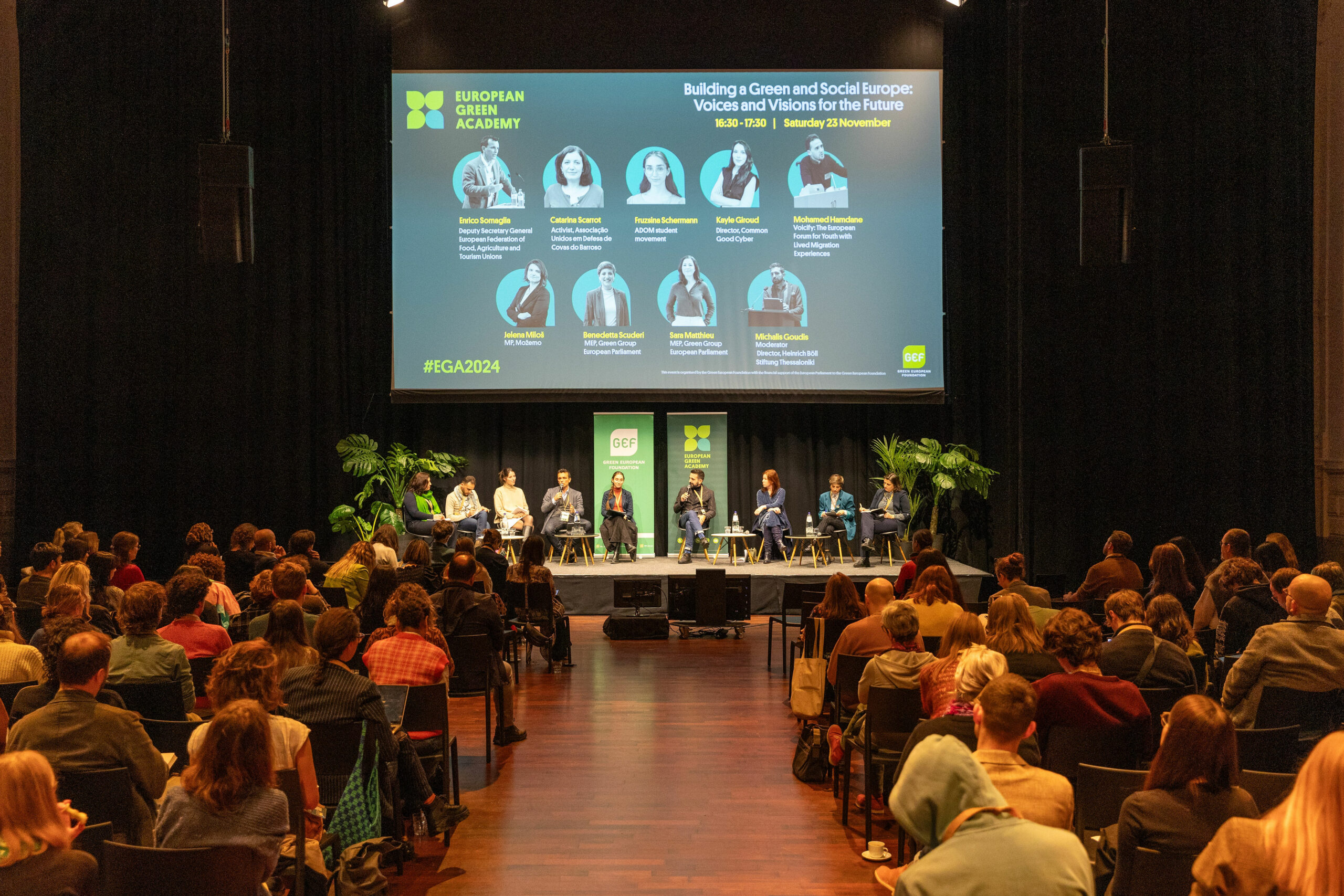
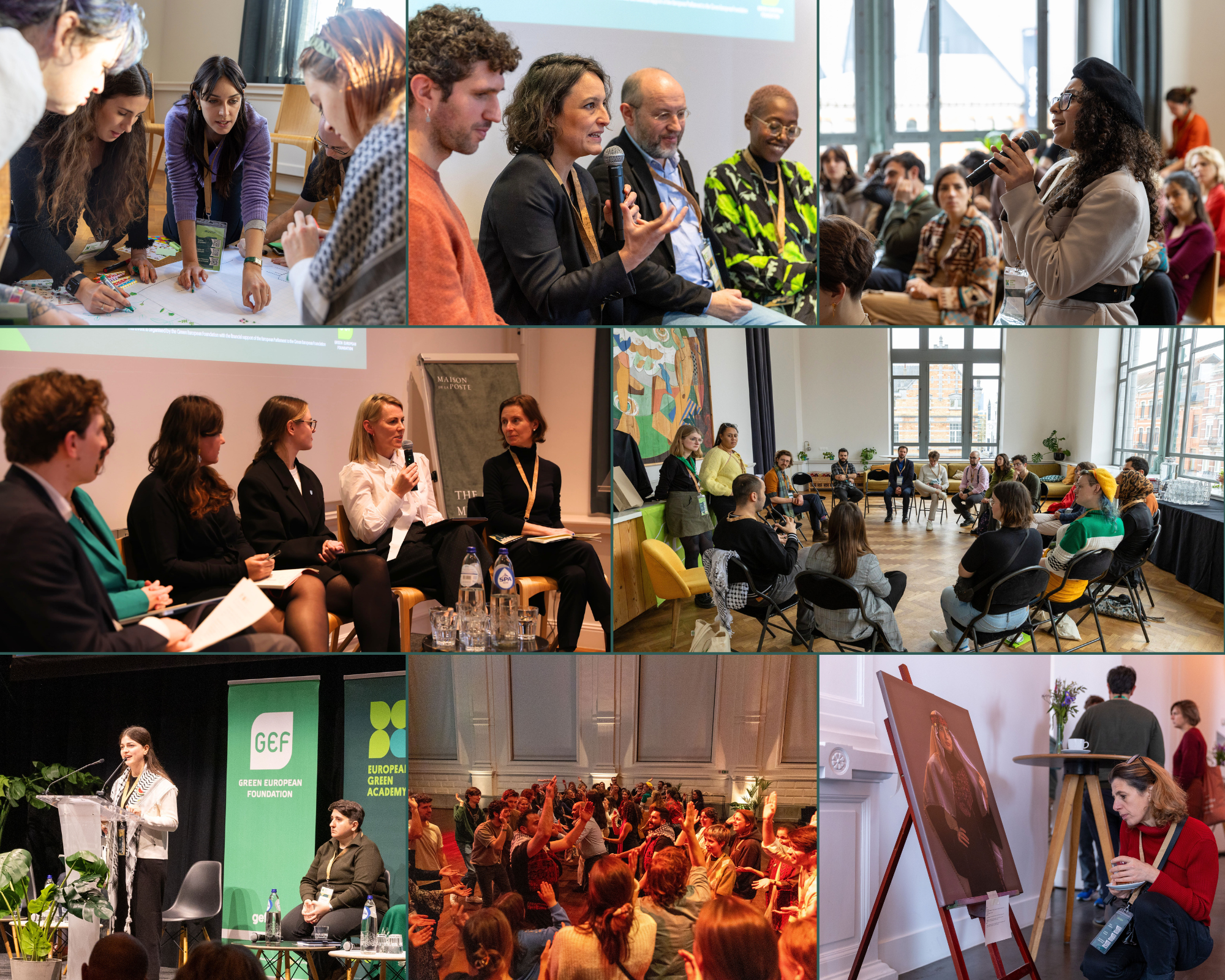









 Future of Eastern Europe Conference (Riga)
 We are the Future, but we are here NOW (Riga)
 Ecotransformation Summer School (Litomyšl)
 This Oppressive System and Our Mental Health – summer school sessions (France)