ECOPRO Seminar in Zagreb

By

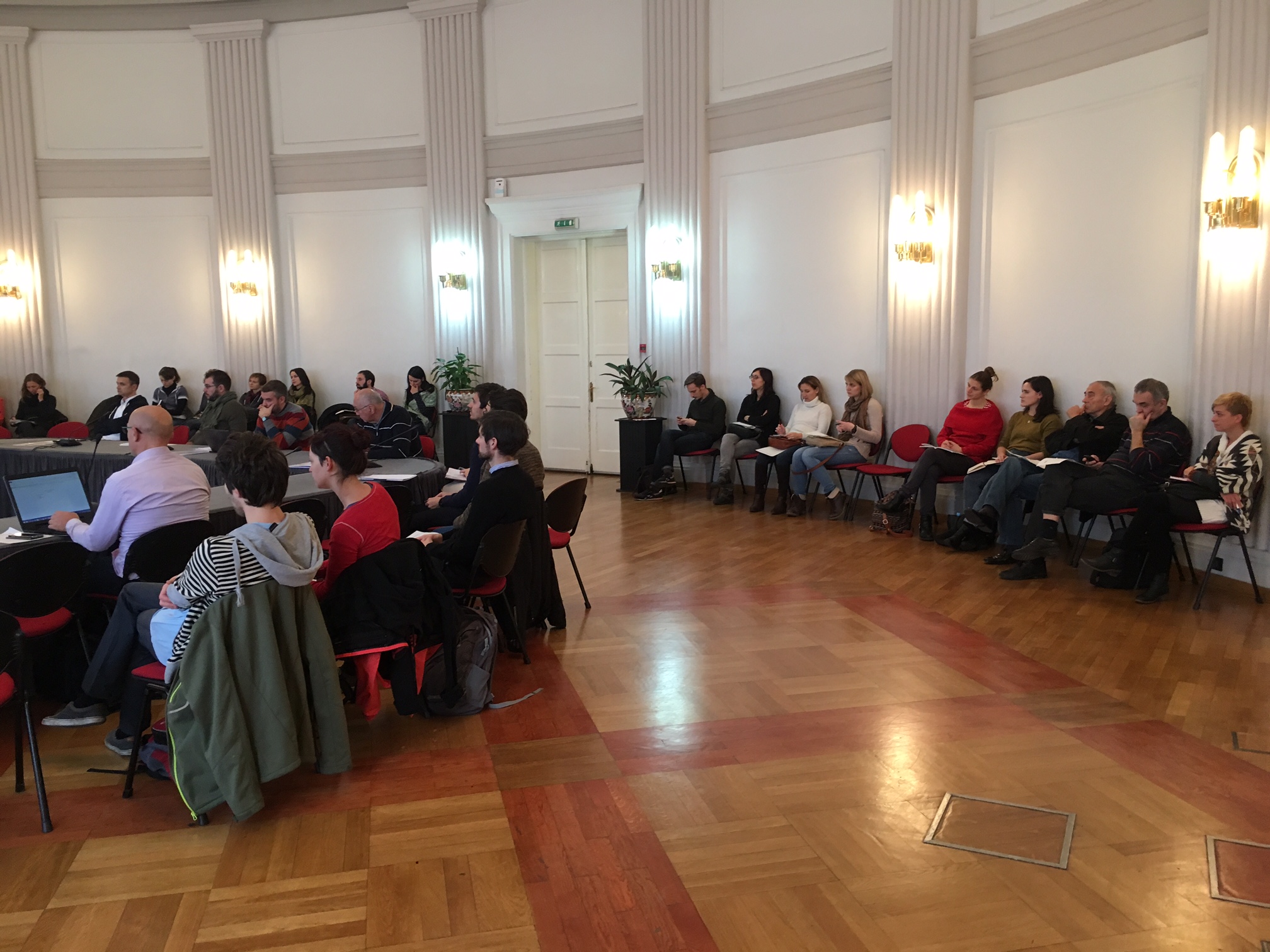
This event is a part of our transnational project ECOPRO (“Ecological Production in a Post-Growth Society”), which this year has a particular focus on the sustainable work. The seminar was entitled “Future of Work in Ecological Transition”, as it provided an analysis of impacts of the ecological transition on work, working conditions and generally transformation of labour that are generated by environmental challenges.

Transition of both economy and industry to (more) ecological, just and sustainable modes of production is already – with more or less success – taking place globally and in Europe. In some cases it takes forms of technological revolution, in other it relates to slower transformatory processes that deserve adaptation of societies, citizens, workers. As this change generates irreversible impacts on work conditions, quality of work, job security, time, education system it is also opportunity for new ecology of work that will improve quality of life, social equity and work conditions. Taking into account new impetus for industrial policy in Croatia, this seminar will aim to present different views on conditions for creating sustainable work in Croatia.

Furthermore, this event had a strong focus on exploring directions in which work conditions can be improved throughout ecological and just transition; ecologists, trade unionists, politicians and experts from different will share their insights and experiences about ways in which work conditions, quality of work and social criteria can be improved alongside with fundamental changes in the systems of production and consumption.

PROGRAMME:

11h30 – 13h00 Introduction

  • Vedran Horvat, Institute for Political Ecology, Zagreb
  • Beate Littig, Institute for Human Sciences, Vienna
  • Toni Vidan, European Economic and Social Committee, Brussels/Green Action/FoE Croatia, Zagreb
  • Ana Maria Boromisa, Institute for Development and International Relations, Zagreb
  • Bojana Percan, Croatian Union of Independent Trade Unions, Croatia

13h00 – 14h00 Lunch break

14h00 – 16h00 Debate

  • Branko Ančić, Institute for Social Research, Zagreb
  • Karolina Leaković,  International Secretary, Socialdemocratic party of Croatia
  • Siniša Vinković, European Trade Union Confederation

This event was open to public and free of charge.
Another ageing for Europe

By Uncategorized

This document covers a range of topics, such as the concept of HAI (Happy Ageing Indicators), the politics of ageing, the pyschology of ageing and a discussion around ‘best practice’ in ageing policy.

The contributors come from a varied background, and the publication is introduced by GEF General Secretary Claude Weinber, EGP Co-Chair Philippe Lambert and ENGS Co-Chair Tony Cooreman.

The publication was supported by GEF.

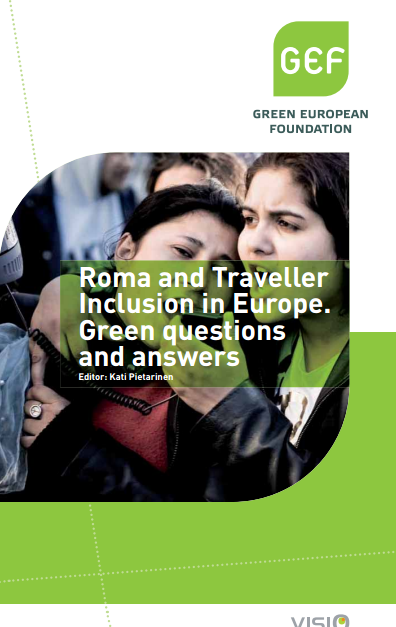
Roma and Traveller Inclusion in Europe: Green Questions and Answers

By Uncategorized

The book deals with questions related to Roma inclusion from a local, national and European perspective. In doing so, it identifies six key areas that need policy-making attention: living conditions, housing and health; employment; education; culture and language; racism and extremist aggression; and migration. For each of these topics, several good practices and solutions that make concrete steps towards greater inclusion are presented. When showcasing those good practices, we also point to those who have implemented them, in the hope to network these initiatives.

If multiplied, small steps in a good direction as those indicated in this publication could ultimately lead to a long-lasting solution to the current precarious situation of the European Roma. We hope you can take inspiration from these examples into your work!

Green New Deal in Poland: The Social Dimension

By Uncategorized

The crisis, as well as the proposed mainstream solutions which focus on fiscal austerity exclusively, don’t come without a social cost. This is illustrated by numbers, such as 50% youth unemployment in Spain; the cost of third level education, rising by 127% in Ireland; or a horizontal 15% pensions’ cut in Romania. Notwithstanding Greece, where consecutive adjustment packages to tackle the budgetary imbalances resulted in an increase in the already high numbers of people living below the poverty line and brought about a situation of imminent collapse of basic social infrastructure, such as health care. Over the last years, we have seen unemployment and social inequality on the rise in Europe, while the standards of the European model of social protection, labour law, collective bargaining rights or working conditions have seen frequent set-backs.

In the common market  of the EU, social policy has largely remained a competence of individual Member States, despite the Treaty of Lisbon and the Europe 2020 strategy detailing social policy objectives and concrete goals related to employment and poverty eradication. It is Member States who make the major policy decisions influencing the achievement of these goals. Embedded in this context, Zielony Instytut and the Heinrich-Böll-Stiftung Warsaw office initiated this Green European Foundation publication, attempting to link the European level trends, discussions and social policy goals to a concrete national example: Poland.


Social policy trends in Poland

In Poland, the developments in social policy seem largely unaffected by the crisis. As the European Trade Union Institute in its Policy Brief 2/2012 points out, “The crisis is essentially perceived and described as resulting from external factors, and in itself there exists no reason, therefore, to call into question existing national social arrangements.” Nevertheless, Poland has also seen a significant rise in economic inequalities in the last years, with a widening gap between those being able to harvest the benefits of Poland’s steady economic growth and the growing numbers of people who are left behind and feel the fruits of transformation are not available to them. This stratification of Polish society has effects in the radicalisation of the political scene, as we witnessed during the “Independence March” on November 11, 2012. The fierce political debate over the Polish pension reform (raising retirement age to 67 years) is another example of tensions in society. The hundreds of thousands of young people who already live abroad or are considering leaving the country cannot be seen as a sustainable solution for unemployment among the young generation in Poland.  The growing number of immigrants in Poland requires better access to the social system and integration programs, in order to create an open society of equal chances.

These are among the key topics this publication tackles in an attempt to give answers to what a Green social model for Europe could be: a model that preserves 20th century achievements, but sets out to innovate for the 21st century.

We have translated two of the contributions to this publication (“Social Policy – An Introduction” by Ryszard Szarfenberg and “Social Policy – Green debates” by Bartłomiej Kozek) in English, as well. You can download these below, alongside the publication in Polish.

Icon

Social policy - an introduction 0.00 KB 37 downloads

...
No file attached
Icon

Social policy - Green debates 172.64 KB 54 downloads

...

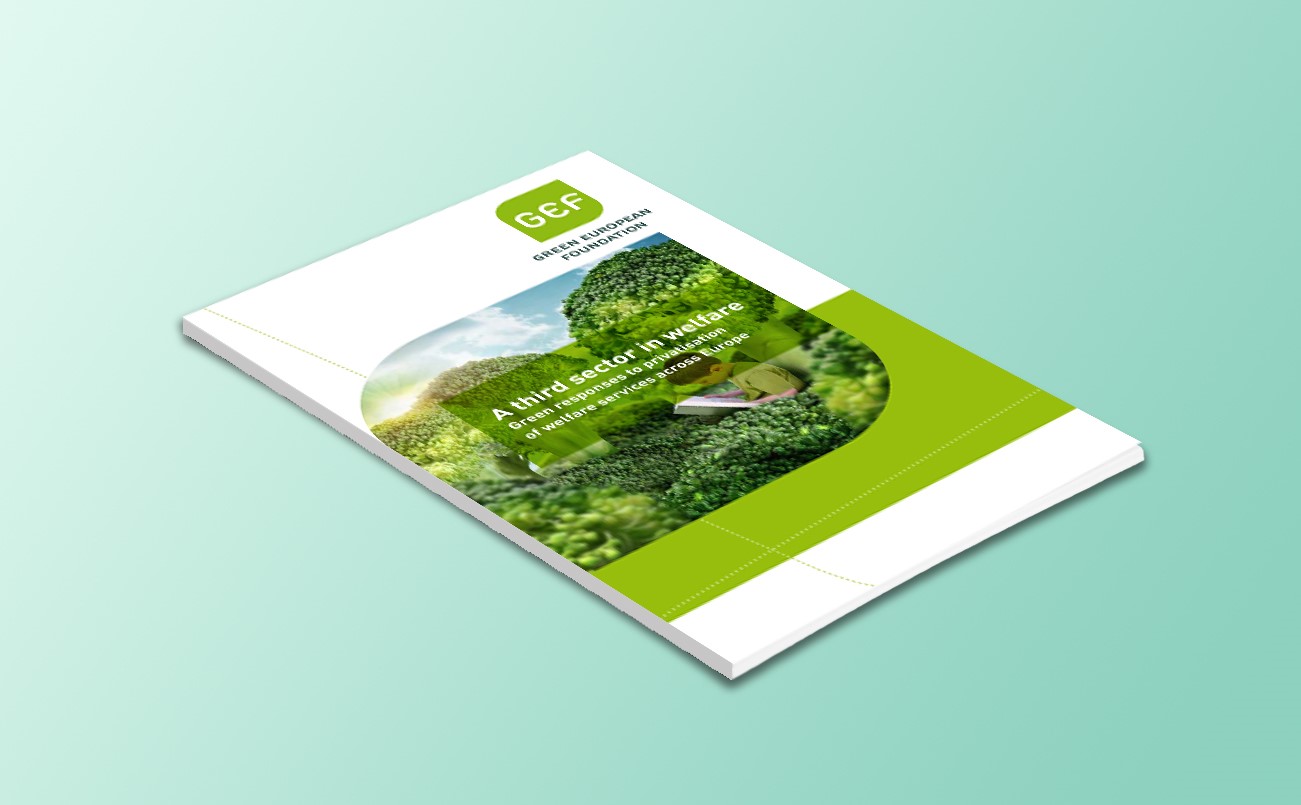
A Third Sector in Welfare

By Uncategorized

The Euro crisis has shown that the organisation and financing of welfare is of overwhelming importance for the development of European cooperation. Demographical changes, low efficiency, rigid bureaucracies, old traditions and strained public finances are creating new challenges. In many countries, thousands of small decisions have resulted in a paradigm shift from public to private ownership in the welfare sector, without a democratically legitimised general policy.

Public opinion has been taken by surprise and a counter-reaction has emerged in many countries. However, this counter-reaction has several different political colours, some being progressive and left-wing, and others being populist and right-wing.

The report, ‘A third sector in welfare: Green responses to privatisation of welfare services across Europe’, provides an overview of developments related to privatisation of the public welfare sector and the policies of Greens in five countries – United Kingdom, Germany, Hungary, Spain and Sweden – in response to this transformation.

Karl Palmas describes how the UK has always exerted a strong influence on other European countries with its social policies, while Frida Johnsson explains how a new wave of privatisation in Sweden is affecting the country’s social model, and how Germany has traditionally been seen to occupy a middle ground on private sector involvement. Erzsébet Gergely and Zoltán Zarándy highlight the difficulties faced by Hungary in overcoming its history of strong state involvement under communism, while Reyes Montiel gives an overview of the challenges facing Spain, where the welfare state remains in a weak position.

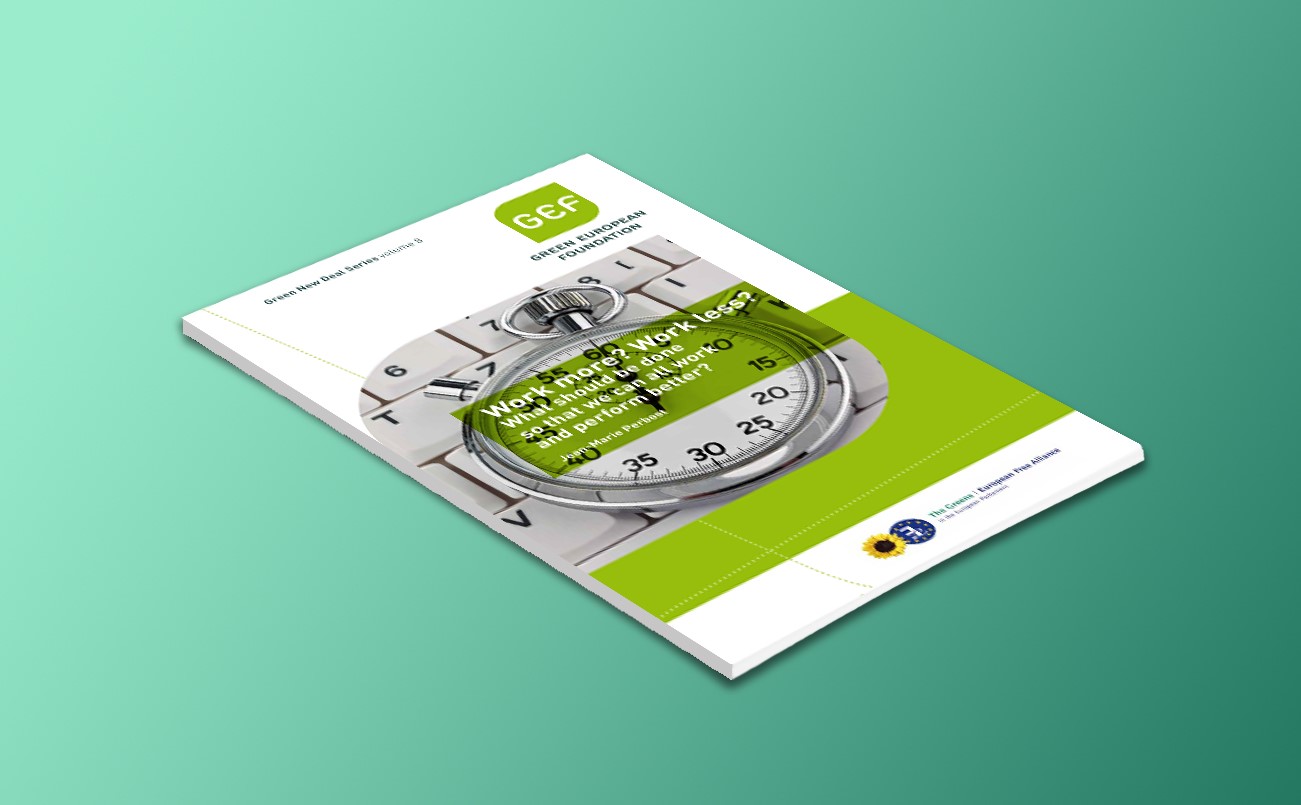
Work more? Work less? A report on working time

By Uncategorized

There are numerous reasons to assess “work” in the context of the Green New Deal. Clearly, a central goal of the sustainable transformation of our economy is to create quality green jobs. However, if we want to ensure prosperity and a decent quality of life for all, within the physical limits of our planet, old recipes will not work.

Working time could play an important role in the system change that is required. Working less is likely to improve the quality of life for all, ensuring a better balance between work and leisure or family time. By giving priority to free time over productivity and consumerism, a collective reduction of working time could promote more sustainable consumption patterns, increase community involvement, and achieve a better distribution of roles between women and men.

This publication addresses the multiple issues that are involved when considering changes to working times. It also looks at some of the challenges when considering this policy instrument. For example, what vocational training is needed to avoid skill shortage; how to finance such changes; and how flexibility should be organised at the micro and macro level in order to ensure collective as well as individual benefits? This publication aims to start a debate on what changes should be introduced to working time in Europe.

Read the publication in English here. 

Read the publication in German here.

Read the publication in French here.