Materials, (De)Growth and Geopolitics (Utrecht)

By

About the event

European demand for materials has impacts all over the world. Our consumption, far greater than the global average, contributes to the destruction of ecosystems near and far. For some materials and goods, we depend on autocratic regimes. So there is an ecological and a geopolitical need to reduce our resource consumption. To do so, should we abandon the pursuit of economic growth, as advocated by the degrowth movement? Could we still meet everyone’s needs and grow our well-being? 

Many of the materials that we use, including for the energy transition, are extracted in the Global South. There, mining often comes at the expense of the environment, nature and local communities. At the same time, millions of people depend on mining for their livelihoods. Can the EU assist developing countries in earning more with less mining? Can we break with neo-colonial exploitation and build new partnerships with the Global South? After all, we need partners in a time of mounting geopolitical conflicts and a deepening ecological crisis. 

The questions we discuss in this seminar are inspired by GEF’s report Geopolitics of a Post-Growth Europe and a (forthcoming) report by the Dutch Young Climate Movement on what young people need to live sustainably. We will discuss them with experts, in plenary and break-out sessions, and formulate political action points together. 


Programme and Speakers

13:00 Arrivals and registration 

13:30 Welcome by moderator Erika van der Linden (young climate activist) 

13:35 Short introductions 

  • Ecology and geopolitics – Richard Wouters (Wetenschappelijk Bureau GroenLinks) 
  • Resource hunger and the Global South – Marius Troost (Both Ends) 

13:55 Interactive discussion 

14:30 Break 

14:40 Breakout sessions 

  • Circularity and post-growth 
  • Sustainable and just mobility 
  • Resource partnership with the Global South  
  • Technology and geopolitics 

15:40 Break 

16:00 Closing panel with Erika van der Linden, Richard Wouters, Trineke Palm (Wetenschappelijk Instituut ChristenUnie), Tishana Martijn (Jonge Klimaatbeweging), René Kleijn (University Leiden), and others 

17:00 Closing and drinks 


Practicalities

Date and time: Friday, 14 June, from 13:30 to 17:00 CEST 

Location: De Kargadoor, Oudegracht 36, Utrecht 

Language: Dutch 

Registration: This event is open to the general public, but prior registration is required. Please sign up here. 


This project is organised by the Green European Foundation with the support of Wetenschappelijk Bureau GroenLinks and young climate activists, and with the financial support of the European Parliament to the Green European Foundation. The European Parliament is not responsible for the content of this event. 

Green Thinking on Defence and Security (Brussels)

By


About the event

This event will feature the launch of two brand-new GEF publications. We will discuss their content with the authors alongside two expert panels, leaving  ample time for questions and networking.  

LAUNCH: Credible yet Critical? Green Approaches to Defence (upcoming) – with GRIP

In a shifting geopolitical landscape, Greens are grappling with the interplay between their traditional pacifist roots and the post-February 2022 security challenges. This report delves into their evolving stances on key defence issues, from EU military cooperation to disarmament, offering insights into the varied approaches adopted by Green parties from eight EU countries. Expert viewpoints featured throughout provide further feedback and inputs as to what a Green defence policy could (or should) look like. As Europe navigates turbulent waters, the report calls for renewed commitment to progressive and principled approaches to security and defence.

LAUNCH: Geopolitics of a Post-Growth Europe

It is unlikely that we will be able to defuse the climate time bomb, let alone other ecological threats, as long as our economy continues to grow. But what would the end of economic growth mean for geopolitics? Could a European Union that is the first to embrace post-growth still be a global actor? Would it be able to defend itself, its allies, democracy, human rights, and the international rule of law at a time when aggressive autocracies are invading or threatening their democratic neighbours? By igniting a conversation between critics of economic growth and progressive thinkers on foreign and security policy, this report addresses uneasy questions that few have dared to ask.  


Project background

This event is part of the Green European Foundation’s thematic focus on geopolitics, peace, and security. In a complex, fractured, and volatile geopolitical environment, GEF works to bring together CSOs, activists, academics, and other experts for open and multi-faceted discussions on Europe’s security challenges. With a clear eye on the future, the foundation aims to cultivate green thinking and European policy proposals that address not just the crises of today, but can build resilience in a more just and sustainable world.  


Speakers

  • Agatha Verdebout – Groupe de recherche et d’information sur la paix et la sécurité 
  • Antoine Oger – Institute for European Environmental Policy
  • Laëtitia Sédou – European Network Against the Arms Trade 
  • Nicoletta Pirozzi – Istituto Affari Internazionali 
  • Olivia Lazard – Carnegie Europe
  • Richard Wouters – Wetenschappelijk Bureau GroenLinks
  • Roderick Kefferpütz – Heinrich-Böll-Stiftung EU

And more to be announced! 


Programme

15:00 – 15:15 Opening words 

15:15 – 16:30 Presentation and panel discussion on Green Visions on European Security  

16:30 – 16:45 Coffee break 

16:45 – 18:00 Presentation and panel discussion on Geopolitics of a Post-Growth Europe 

18:00 – 19:00 Closing remarks and networking drinks 


Practicalities

Date and Time: Wednesday, March 6th (15:00 – 19:00 CET)

Location: Press Club Brussels Europe

Language: English

Registration: This event is taking place in person with limited spots. Please register in advance via this link.

A coffee break and networking drinks will be provided.   


This launch event is organised by the Green European Foundation with the support of Wetenschappelijk Bureau GroenLinks and Etopia and with the financial support of the European Parliament to the Green European Foundation.   

Geopolitics of a Post-Growth Europe

By Uncategorized

Context

As it stands, degrowth fails to resonate with experts in foreign and security policy. It is easy to see why. In geopolitics, many determinants of power – trade, aid, tech nology, defence – are closely linked to GDP. If they do not ignore planetary boundaries altogether, geopolitical pundits trumpet the ‘green growth’ narrative so as to reconcile ecological and geopolitical security. It is this very narrative that degrowthers aim to refute.

It is better to manage the end of growth through democratic deliberation than to have it imposed on us by ecological breakdown.


Objectives

It is unlikely that we will be able to defuse the climate time bomb, let alone other ecological threats, as long as our economy continues to grow. But what would the end of economic growth mean for geopolitics? Could a European Union that is the first to embrace post-growth still be a global actor? Would it be able to defend itself, its allies, democracy, human rights, and the international rule of law at a time when aggressive autocracies are invading or threatening their democratic neighbours? This report addresses uneasy questions that few have dared to ask.


Project Background

This report is produced by the Green European Foundation. It is part of the project Geopolitics of a Post-Growth Europe. The project is led by Wetenschappelijk Bureau GroenLinks (NL) and supported by BlueLink (BG), Center for Green Politics (RS), Etopia (BE), Fondation de l’Écologie Politique (FR), Green House Think Tank (UK), and Transición Verde (ES). Check out www.geopoliticspostgrowth.eu for more interviews, videos, and other project outputs.


Available Translations

Dutch

Spanish

Serbian

French

Bulgarian

Czech

Portuguese


This report has been realised by the Green European Foundation with the support of  Wetenschappelijk Bureau GroenLinks and the financial support of the European Parliament to the Green European Foundation. The European Parliament is not responsible for the content of this publication.

Ontgroei, Coöperaties En De Stad (UTRECHT)

By

About the event

Post-growth is about much more than just greening economies. It is a new way of understanding society, also understood as an ambitious, science-based, values-driven, social and realistic way of thinking. Post-growth is about shifting the focus from quantitative growth (consumption and GDP growth) to qualitative growth (quality of life growth).

In his book, Paul Schenderling highlights the importance of cooperatives in the transition to post-growth and he describes what is possible at the local level. After a short lecture by Schenderling, we will further explore the link between de-growth and cooperatives in a panel discussion. We will focus on the city, in particular Utrecht. Cooperatives will participate in the panel discussion to contribute to the discussion from their practical experience. Besides Paul Schenderling, Laura van Oers (Ontgroei Nederland), Joost Brinkman (energy cooperative Rijne Energie) and Maud van den Bercken (BuurtWerkKamerCoöperatie) will take part in the panel.


Speakers

  • Paul Schenderling, author of Er is leven na de groei
  • Laura van Oers (Ontgroei [Degrowth] Netherlands)
  • Joost Brinkman (energy cooperative Rijne Energie)
  • Maud van den Bercken (social cooperative BuurtWerkKamerCoöperatie)

Moderator: Hans Rodeburg, Wetenschappelijk Bureau GroenLinks.


Practicalities

Date and Time: 25th January 2023, 8PM – 9:30PM

Location: De Kargadoor, Oudegracht 36, Utrecht, The Netherlands.

Language:  The main languages of the event will be in Dutch.

Registration: The event is public and free of charge.


This project is organised by the Green European Foundation with the support of Wetenschappelijk Bureau GroenLinks and with the financial support of the European Parliament to the Green European Foundation. The European Parliament is not responsible for the content of this event. 

Green Growth vs. Degrowth (Utrecht)

By

About the event

Can our economy continue to grow if we want to respect planetary boundaries and give developing countries room to meet the needs of their inhabitants?  

Yes, say proponents of ‘green growth’. To do so, we need strict climate and environmental policies that drive technological innovation and reduce the most polluting forms of consumption. The drive for green growth underpins the European Green Deal.  

No, say the advocates of ‘de-growth’. Decoupling economic growth from ecological damage is an illusion. Therefore, rich countries must abandon the growth imperative, scale back overproduction and overconsumption and focus on collective well-being. The degrowth movement is gaining popularity among scientists and activists.  

In this seminar, we explore the differences and similarities between ‘green growth’ and ‘degrowth’ with proponents of both schools of thought as well as Green and Labour politicians. What facts and trends do the two movements invoke? What are the underlying visions of society? Is there any overlap between the political agendas? 

Project background

This event is part of GEF’s Geopolitics of Post-Growth project, which explores the tensions between degrowth/post-growth and geopolitics. The project aims to ignite a conversation between critics of economic growth and progressive thinkers on foreign and security policy, who now often operate in separate circuits. It aims to find solutions beyond naïve anti-militarism and convenient belief in green growth.  

The geopolitical ramifications of (de)growth will be discussed in a follow-up seminar. 

Speakers and Programme

14:00 – 14:10 Opening by moderator Suzanne Kröger (MP GroenLinks) 

14:10 – 14:20 Presentation by Diederik Samsom (head of cabinet of European Commission VP Frans Timmermans) 

14:20 – 14:30 Presentation by Karolien van Teijlingen (social geographer Radboud University Nijmegen) 

14:30 – 14:40 Audience Q&A 

14:40 – 14:50 Presentation by Wim Naudé (professor technology & innovation management RWTH Aachen University) 

14:50 – 15:00 Presentation by Hans Stegeman (chief economist Triodos Bank, columnist) 

15:00 – 15:10 Audience Q&A 

15:10 – 15:50 Discussion 

15:50 – 16:00  Closing words 

Practicalities: 

Date and Time: Friday 19 May, from 14:00 to 16:00 CEST

Location: De Kargadoor, Oudegracht 36, Utrecht, Netherlands

Language:  Dutch  

Registration: Participation is free of charge. Registration in advance is required, via this link .

If you have any questions or suggestions, you can contact Richard Wouters – rwouters@groenlinks.nl. 


This event is organised by the Green European Foundation with the support of Wetenschappelijk Bureau GroenLinks and the financial support of the European Parliament to the Green European Foundation. 

About Degrowth and Geopolitics

By

About the event

Stopping the climate and ecological crisis would be unlikely as long as our economy continues growing. In fact, the degrowth movement, which is rapidly gaining popularity among activists and scientists, advocates for the deliberate scaling back of overproduction and overconsumption to bring the economy back into balance with the living world in a way that reduces inequality and improves human well-being.
But what would a farewell to economic growth mean for geopolitics? Can a European Union that is the first to enter the post-growth era still remain (or become) a global player? Will it be able to defend itself, its allies, democracy, and the international rule of law against aggressive autocrats?
The transition to a post-growth society must be a democratic one. But that is far from obvious at a time when authoritarian regimes are invading or threatening their democratic neighbours.

Context

The new transnational project Geopolitics of a post-growth Europe will explore the tensions between degrowth/post-growth and geopolitics. The project aims to ignite a conversation between critics of economic growth and progressive thinkers on foreign and security policy, who now often operate in separate circuits. What are the points of contention? Can we find or develop commonalities?

Practicalities

The online expert meeting will be moderated by Suzanne Kröger, MP for GroenLinks, Netherlands. 

Date and time: Friday 20 January, from 10:00 to 12:00 CET 

Language: Dutch 

Audience: This event is invitation-only. 

Contact: Richard Wouters, rwouters@groenlinks.nl   


This project is organised by the Green European Foundation with the support of Wetenschappelijk Bureau GroenLinks and with the financial support of the European Parliament to the Green European Foundation. The European Parliament is not responsible for the content of this event. 

Cities as Places of Hope: Expert Meeting (Utrecht)

By

About

Cities all around the world have the potential to be the primary drivers behind the transition towards a sustainable and just society. At the moment, however, cities cannot provide a good life for all within planetary boundaries. They are still part of an economic system that depends on hyper consumption and extractivism. In this context, a foundational shift is needed, starting with a transformation in our world view. A shift that departs from the view of humans as homo economicus, towards a mode of living that recognises the fundamental vulnerability of human and non-human life. A world view based on the ethics of care as the founding principle for a new city. The question is how we can make this world view a reality. Whit what reforms can local politicians start working today? This expert meeting will focus on the reforms that local politicians can start working on today and explore the contours of a framework for an ecologically and socially just city.

Context

This expert meeting is part of the Green European Foundations project Cities as Places of Hope, in which we highlight inspiring examples of progressive cities across Europe which are the frontrunners of the social-ecological transition.

Organizers

Dirk Holemans, Coordinator of Oikos Think Tank, Co-president of the Green European Foundation
Hans Rodenburg, Wetenschappelijk Bureau GroenLinks, Project Coordinator

Practicalities

Date and time: Tuesday, 18th October from 15.00 to 17.00 CET.

Audience: This expert meeting will take place in Dutch and is invitation only.


This project is organised by the Green European Foundation with the support of Wetenschappelijk Bureau GroenLinks and Oikos Think Tank with the financial support of the European Parliament to the Green European Foundation. The European Parliament is not responsible for the content of this event.

Hydrogen and the Green Transition

By

About the Event

Green hydrogen is produced from water and renewable energy. It can be used as an energy carrier and as a raw material, replacing fossil fuels. But its production requires a lot of green electricity, and green hydrogen will remain scarce well into the next decade.  

This webinar will run through oft-proposed solutions for green hydrogen scarcity, including the risks they carry and criteria that should be considered. These potential options include the production of blue hydrogen, prioritisation via a hydrogen ladder, and importing hydrogen from countries with sun, wind, and physical space to produce renewable energy.  

We will also discuss broader questions around the role of hydrogen in the green transition.  Does ditching Russian gas require a revision of the hydrogen strategy, with even less of a role for blue hydrogen? Which industries have a future in a sustainable Netherlands and how big is their demand for hydrogen? What infrastructure is needed to transport hydrogen and its derivatives? How will the costs of scaling up hydrogen production be divided between government and industry? 


Context

This webinar is part of the project Climate Emergency Economy – organised by GEF with the support of Green House Think Tank, Wetenschappelijk Bureau GroenLinks, and Green Foundation Ireland. The project explores what an economy fit for the climate emergency looks like, focusing particularly on the policies required in ‘hard-to-reach’ sectors for Europe to reach zero carbon.  

The webinar will begin with an overview of key project findings and proposals. This will be followed by political reactions from the MEPs and MPs, and then room for questions and discussions between all of the participants.  


Speakers

  • Bas Eickhout (MEP, Greens/EFA) 
  • Suzanne Kröger (MP, GroenLinks) 
  • Mohammed Chahim (MEP, S&D) 
  • Joris Thijssen (MP, PvdA) 
  • Evert Nieuwenhuis and Richard Wouters (Wetenschappelijk Bureau GroenLinks) 
  • Paul Apeldoorn (PvdA Duurzaam) 
  • Nienke Homan (Sustainable Hydrogen Club)
  • Titia van Leeuwen (Milieunetwerk GroenLinks) – Chair 

Programme

10:00 – Opening by Titia van Leeuwen
10:05 – Presentation: hydrogen in a European perspectives, followed by Q&A
10:30 – Presentation: role of the Netherlands in the hydrogen economy, followed by Q&A
10:45 – Political responses
11:15 – Expert responses
11:30 –  Discussion with politicians and participants
11:55 – Closing remarks

Practicalities

Date and time: 18 March, 10:00 – 12:00 CET 

Location: Online, via Zoom 

Language: Dutch 

Registration: via this link 

Diving in:

Dive into this topic and prepare for the webinar by checking out some of our work on this topic: 

Green European Journal article: The Limits of Europe’s Corporate-Led Hydrogen Project 

Project Publication: Greening Hydrogen – Big issues around a small molecule 


Summary Video: Greening Hydrogen 


This webinar is organised by the Green European Foundation, with the support of Wetenschappelijk Bureau GroenLinks and the financial support of the European Parliament to the Green European Foundation.  

Greening Hydrogen- Big issues around a small molecule

By Uncategorized

Context

Europe is heading towards the Green Age, an era defined by climate neutrality and the circular economy. There is broad agreement on the need for this transition, reflected by the global Paris Agreement, the European Green Deal, or COP26. The EU aims to be carbon-neutral by 2050. Decarbonising the production of an element like hydrogen is key to achieve such climate goals as this element is currently responsible for over 2% of total global CO2 emissions.

“ Europe should lead the way into the Green Age, but must take care that no one is left behind…”


About the project:

This report is part of a project led by the Green European Foundation exploring what a climate emergency economy would look like through a rethinking of trade, industry and infrastructure investment. The project is supported by Green House Think Tank in the UK alongside green foundations in the Netherlands, Ireland, Bulgaria, Poland and Finland. It is organised with the financial support of the European Parliament to the Green European Foundation.


Objectives

Introducing hydrogen to our energy and materials systems clearly raises several pressing questions that are of relevance to the work of Green parties in Europe. This report aims to give a brief overview of the most controversial issues surrounding hydrogen from a green perspective in order to facilitate debate on this matter.


Download

Available in Spanish


This publication has been realised with the support of the Wetenschappelijk Bureau GroenLinks, and the financial support of the European Parliament to the Green European Foundation. The European Parliament is not responsible for the content of this publication.

Metals in the Energy Transition

By

About the event

This Dutch-language webinar is for you if you are interested in circularity and the energy transition.

Context

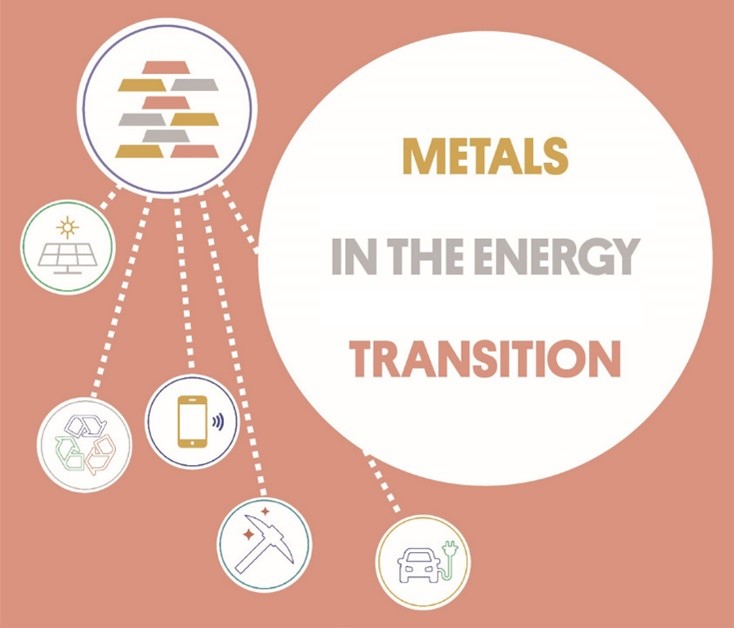
All solar panels, wind turbines, electric cars and power cables contain metals. The energy transition increases the demand for ‘energy metals’, such as lithium, cobalt, neodymium, and copper. These metals have to be dug up from the ground and mining often carries social and geopolitical risks, especially because of metal scarcity.

We can’t keep postponing action against the climate emergency. We need to prevent metal scarcity from slowing down the energy transition while protecting the environment and human rights from destructive mining.

In this webinar, we will discuss several circular strategies and solutions that can contribute to a more sparing use of metals–and may also offer economic opportunities. We will follow the circularity ladder: from refuse via reduce to recycle.

With the help of expert speakers, we will focus on three solutions:

  • Smarter mobility: from private cars to bicycles, public transport and shared e-cars (refuse, rethink)
  • A more efficient use of the (tight) power grid by combining wind and solar energy, putting generation near consumption and making demand more flexible (rethink, reduce).
  • Circular solar panels (reuse, refurbish, re-manufacture, recycle).

How can politicians, from the European to the local level, work on solutions for metal scarcity? Together with speakers and participants, we will map out the political instruments.

Speakers

Pieter van Exter (@pvanexter), lead Circular Industries at Metabolic

Mariet de Haas (@lepus2), co-ordinator Shared Mobility and Mobility Hubs for the City of Rotterdam

Roebyem Anders (@roebyem), co-founder of Sungevity International

Berend Potjer (@berendpotjer), regional minister for Energy, Nature and Biodiversity in the province of Zuid-Holland

Richard Wouters @richardwouters, project leader ‘Metals for a Green and Digital Europe’ for the Green European Foundation and Wetenschappelijk Bureau GroenLinks

Practicalities

Date and time: Friday 7 January, from 14:00 to 16:00 CET

Audience: This webinar will take place in Dutch and is open to the general public.

Registrations: here

This event will be organised through the Zoom platform.

Inspiration: You can prepare for this webinar by reading our publication ‘Metals for a Green and Digital Europe’. Download it for free in English, Dutch, French, Spanish or Czech.


This project is organised by the Green European Foundation with the support of Wetenschappelijk Bureau GroenLinks and with the financial support of the European Parliament to the Green European Foundation. The European Parliament is not responsible for the content of this event.

Climate Emergency Economy at the Green Hub

By

About the Event

Alongside several partners, GEF has been investigating the requirements of a so-called Climate Emergency Economy. We’ve focused on the questions and sectors that pose a particular challenges such as agriculture, transport infrastructure and trade, and hydrogen for the green transition.

Which sectors should be prioritised for limited “green hydrogen” and what are the geopolitical implications of hydrogen imports? How does zero carbon relate to food sovereignty and the EU’s Farm to fork strategy? And what needs to change in transport infrastructure investments in Europe and overseas (e.g. through foreign aid) to ensure a zero-carbon future?

Join our sessions at the COP26 Green Hub to engage in this debate and learn more about our findings!

Context

This webinar is part of the project Climate Emergency Economy–organised by GEF with the support of Green House Think Tank, Wetenschappelijk Bureau GroenLinks, Green Foundation Ireland, and the Foundation for Environment and Agriculture. The project explores policies required in the most difficult sectors to decarbonise for Europe to reach net-zero emissions.

Practicalities

These sessions will all take place at GEF’s COP26 Green Hub. They are open to the general public and you can join both in person or online. To learn more and register in advance, please check out this link.

Programme


Wed 3rd Nov 11:00am-12:30 pm: Hydrogen in the Climate Emergency Economy 

The Scottish Green Party (SGP) is hosting the Hydrogen in the Climate Emergency Economy (hybrid) panel discussion in collaboration with GEF and Wetenschappelijk Bureau GroenLink to make space for a global conversation on the role of hydrogen in achieving net-zero by 2050 through a just transition. We will be joined by an inspiring panel of experts and decision-makers to hear about the debate on hydrogen followed by an in-person & digital audience-led Q&A. 

Location: Garnethill Room, Green Hub at Renfield Centre, 260 Bath St, Glasgow G2 4JP

Speakers:

  • Evert Nieuwenhuis (Wetenschappelijk Bureau Groenlinks)
  • Alex Lee (FoES)
  • Dominic Eagleton (Global Witness)

Chair: Mark Ruskell, member of the Scottish Parliament.

With the support of Scottish Greens and Wetenschappelijk Bureau GroenLinks

Thurs 4th Nov 4:30-6pm: ​Reshaping our global economies for the Climate Emergency ​

Location: Chapel – Green Hub – 260 Bath St – Glasgow

Recording: Can be accessed after the event via this link.

Speakers:

With the support of Green House Think Tank

Sun 7th Nov 3-5pm: ​Climate Emergency Economy — What’s missing from the agenda at COP26?​

Location: Blythswood Room – Green Hub – 260 Bath St – Glasgow
Recording: Can be accessed after the event via this link.

Speakers:

  • Carla Denyer – Co-leader of Green Party of England and Wales
  • Professor Julian Allwood, Professor of Engineering and the Environment at the University of Cambridge, and Head of the Use Less Group and UK FIRES
  • Laline Paul – Author, playwright, screenwriter
  • Jean Blaylock – Global Justice Now
  • Frank Habineza – MP Democratic Green Party of Rwanda
  • Natalie Bennett – Green Peer

With the support of Green House Think Tank


This event is organised by the Green European Foundation with the support of Green House Think Tank, Wetenschappelijk Bureau GroenLinks, and Green Foundation Ireland, and with the financial support of the European Parliament to the Green European Foundation

Mining for Metals in a Post-Cop Intersectional World: Can It Be Fair?

By

PROGRAMME

14.00-14.30 CET Introductory Session 

  • Miriam Kennet (Green Economics Institute) – Introduction to the event
  • Ewa Sufin  (Poland) (Fundacja Strefa Zieleni/GEF Member of the Board) – Introduction to GEF and the Metals for a Green and Digital Europe project

14:30 – 15:30 CET – Session 1: Mining metals for the energy transition – can it be fair? 

The role of the internet in driving social justice in 2022: The Potential for the Internet in Driving Social Justice-Can it be fair- ? Challenges for a Just Transition- an issue for our times

The internet is a powerful tool. The wide potential for democratisation and social justice it holds are evident. However, many online initiatives have failed to develop into real social change. To effectively utilise the power of the internet for social justice, we must navigate these problems and understand how detrimental outcomes materialise. This session will explore the conflicting realities of the nature of the internet and offer solutions for reclaiming it as a tool for social justice.

 Exploring the life cycle (procurement, use and recycling) and the practical situation

Speakers include:

  • Liljana Popovska (North Macedonia ) – Former MEP expert in Mining Issues and impacts
  • Hans Kåre Flø (Norway )Master of science in physics and master of management. Special adviser at Tekna which is a trade union for Engineers and scientists”. -Metals and their importance in European jobs and industry and the transition in Technology and climate challenges: Norway has important rare earths but has not exploited them yet- what are the issues? “Rare earths from Norway and challenges connected to producing them”
  • Rasa Tumaševičiūtė (Lithuania) – Europe’s Recycling of Aluminium, circular economy consultant and government sustainability strategist. Aluminium sector. How critical is situation in Europe?
  • Zaklina Zivkovic, Polekol (Serbia) – Green Economy Expert, Serbia and Executive director of Organization for Political Ecology, Polekol. The mass mobilization of citizens and environmental organizations in Serbia against extractivism that our country is currently facing. On one hand, we are aware of the need for metals for the green transition, but on another planning 40 new mines in the next 15 years in Serbia is nowhere near just the transition that we are also advocating for.

Moderated by: Bianca Madison (Croatia, Italy, Denmark, UK) & Marlyn Hughes (UK)


15:30 – 15:40 CET Short Break

15:40 – 16:10 CET Session 2: Break Out Rooms

In this section we will share knowledge and evidence  about how metals are brought into Europe and the new supply chain realities within the globalisation context.  We’ll also explore new commodity flows and power bases in the global economy and the challenges for the green transition. What should the main priorities be to start to address these challenges?

Moderated by: Liljana Popovska, North Macedonia – Former MEP expert in Mining Issues and impacts

  • Bianca-Madison – Vuleta (Croatia, Italy, Denmark and UK)
  • Hans Kare Flo ( Norway)
  • Rasa Tumaševičiūtė (Lithuania)

16:10-16:40 CET Presentations, feedback and discussions in Plenary 

16:40 -17:40 CET Session 3: Diverse perspectives and issues for different social outcomes.

Since its inception, the internet has been recognised for its potential in driving social justice in a variety of ways. A space to bring together new or marginalised communities despite geographical boundaries; a public sphere for debate and deliberation; a means to spread information and a platform for the organisation and mobilisation of incipient social movements.  In this session we’ll explore perspectives from different groups impacted including indigenous perspectives and views and voices from around Europe and beyond.

  • Ewa Sufin (Fundacja Strefa Zieleni) European Impacts of Metals Mining-No more BAU Energy Efficiency
  • Baghadadi Mahrouz – Berber Indigenous speaker and engineer (Algeria) – intervention in French
  • Professor Alexandra Harrington: (University of Lancaster) Just transitions for mining sector activities and energy transitions in Europe, the SDGs and mining.
  • Asia Mohamed – (Sudan) – IPBES Africa Lead for United Nations Biodiversity. The impact of gold mining on biodiversity (tbc)Moderated by: Bianca Madison – Vuleta – (Croatia, Denmark, Italy and UK) and Marlyn Hughes


17.40 – 18.10 CET – Conclusions : Session 4Mining for metals can it ever be fair?  Can supply chains ever be fair in 2022 in Europe? 

Conclusions from the Metals for a Green and Digital Europe transnational project.

  • Speakers: Richard Wouters, Project leader ‘Metals for a green and digital Europe’ for the Green European Foundation & Weternschappelijk Bureau GroenLinks
  • Miriam Kennet (Green Economics Institute) – Climate change and metals- the implications for social and environmental justice with the work of GEIClimate.org and the latest scientific information from the UNFCCC.


Practicalities

Date and time: 2nd April, 2-6pm.

Audience: This event is open to the general public.

Registration: Please register via this link


Recommended reading

Where We Mine: Resource Politics in Latin America, an article from the Green European Journal.


The following session is organised by the Green European Foundation, supported by the Green Economics Institute and Wetenschappelijk Bureau and with the financial support of the European Parliament to the Green European Foundation.

Metals for a Green and Digital Europe- An Agenda for Action

By Uncategorized

Context

The climate crisis leaves us no choice but to make a swift transition from fossil fuels to renewable energies. However, while energy from renewable sources such as solar and wind is nearly infinite, the resources we need to capture it are not. Solar panels, wind turbines, batteries, and power cables all contain metals. Their various properties, including toughness and conductivity, make metals uniquely suitable for renewable energy technologies. But first they must be extracted from ores that are dug up from the ground. Because of its decentralised nature, a renewable energy system requires far larger quantities of metals than a fossil energy system.


The more energy we harvest from the skies above our heads, the deeper we will have to dig for the metals beneath our feet.


Objectives

Both the energy transition and the digital transition require large quantities of metals, such as lithium, cobalt, and rare earth. As a result, Europe must face up to various types of scarcity. This Agenda for Action sets out how we can achieve the sparing, circular use of metals and the responsible sourcing of the virgin metals that we really need.


Download

Available in Dutch

Available in Spanish

Available in Czech 

Available in French

Available in Polish

Available in Swedish

Available in Serbian

Available in Portuguese


This publication is part of the Metals for a Green and Digital Europe project. The project is led by Wetenschappelijk Bureau GroenLinks and supported by Fundacja Strefa Zieleni, Institut Aktivního Občanství, the Green Economics Institute, Etopia, Visio, and Transición Verde, with Cogito from Sweden providing additional expertise.

How do we build Community Wealth?

By

Context

A new model of economic development, called Community Wealth Building (CWB), is emerging in cities and communities all over Europe. These cities are challenging the dominant economic system that puts private capital accumulation above the basic needs of people. Local policymakers are building collaborative, inclusive, and locally controlled economies.

During this event, we will explore the concept of CWB and discuss how local authorities can implement these ideas in their own cities. This webinar is part of the project Cities as Places of Hope, that highlights inspiring examples of progressive cities across Europe which are the frontrunners of the social-ecological transition.

Speakers

  • Tom Lloyd Goodwin, Associate Director of the Centre for Local Economic Strategies: Tom is one of the drivers of Community Wealth Building movement in the United Kingdom and will tell us about the ideas of CWB and the way it is being developed in the UK.
  • Simion Blom, Councilor of GroenLinks in Amsterdam: Simion will talk about their plans to implement the CWB model in Amsterdam.


Programme

19:00 – 19:05: Welcome and introduction by Hans Rodenburg

19:05 – 19:20: Presentation by Tom Lloyd Goodwin

19:20 – 19:35: Presentation by Simion Blom

19:35 – 20:00: Questions and discussion


Practicalities

Date and time: Thursday, 28th October from 19:30 to 20:30 CET.

Audience: This webinar will take place in English and is open to the general public

Registrations: Please register through this link.

This event will be organised through the ZOOM platform.

Audiovisual material

Additional GEF reading material: 


This project is organised by the Green European Foundation with the support of Wetenschappelijk Bureau GroenLinks and with the financial support of the European Parliament to the Green European Foundation. The European Parliament is not responsible for the content of this event.

The Green Hydrogen Transition

By

About the Event

Hydrogen produced from renewable electricity will play a crucial role in the transition to a climate-neutral Europe, but its adoption raises several issues. These stem from the fact that green hydrogen will be scarce well into the next decade.

Does the European Union need a ‘hydrogen ladder’ that puts forward green hydrogen for the industries that are more difficult to decarbonise? Or would this actually slow down the breakthrough of green hydrogen?

Produced from natural gas, ‘Blue hydrogen’ has most of its CO2 emissions captured and stored. According to its proponents, it can pave the way for green hydrogen. What role can blue hydrogen play as a transition fuel and feedstock?

A growing number of companies and governments, including the European Commission, want to invest in the production of green hydrogen in Africa, the Middle East and other parts of the world that are rich in sun or wind. Will the import of green hydrogen create new geopolitical and ethical risks for the European Union?

This roundtable will be moderated by Suzanne Kröger, former MP for GroenLinks (Netherlands).

Context:

This webinar is part of the project Climate Emergency Economy–organised by GEF with the support of Green House Think Tank, Wetenschappelijk Bureau GroenLinks, Green Foundation Ireland, and the Foundation for Environment and Agriculture. The project explores policies required in ‘hard-to-reach’ sectors for Europe to reach zero carbon. In 2021, activities revolve around three key pillars: agriculture, hydrogen, and transport infrastructure and trade.

Practicalities

Date and time: Friday 15 October, from 14:00 to 16:00 CEST 

Audience: This roundtable is invitation-only. 

Contact: Richard Wouters, rwouters (at) groenlinks.nl   


This project is organised by the Green European Foundation with the support of Wetenschappelijk Bureau GroenLinks and with the financial support of the European Parliament to the Green European Foundation. The European Parliament is not responsible for the content of this event. 

Budapest Forum – Building Sustainable Democracies

By

The past decade witnessed the emergence of several high-profile international events in the CEE region. The upcoming Budapest Forum is similar in aspiration to its regional counterparts, with its first edition focusing on the role of cities and local initiatives in building livable and sustainable democracies. Within this context, the Budapest Forum will also serve as a hub for the Pact of Free Cities city network, bringing together mayors and civic leaders from around Europe and beyond. Ideally, participants will leave the conference not only inspired and eager to create positive change in their respective fields, but also as parts of a new and vibrant network connecting prominent local stakeholders and experts across disciplines. You can find more information on the programme and speakers here.

About the event

Date: 16th September 

Time: 12:30-13:30 PM CET

Despite the rise of authoritarian forces on national scenes, many European cities are pursuing a green-progressive vision. For the Green European Foundation, these cities are a substantial source of inspiration for developing a positive narrative on the future of Europe. In this event, we take you on a small tour highlighting a few frontrunner cities that show that a transformation towards a socio-ecological society is possible and happening.

*part of GEF’s Cities as Places of Hope project

This 2021 project aims to bring together progressive and transformative trans-local city networks, to connect them and facilitate their exchanges, ultimately contributing to a positive narrative for the future of Europe. In autumn the project will continue with an inspiring public event in each country with a title ‘Talking about a Green City’ bringing together the broader green family of activists, civil society, new urban actors and the broader public. 

Visit the Green European Foundation’s stand during the three days of the Forum and interact with our GEF Staff Members. 


Budapest Forum programme

To learn more about the full programme of the Forum click here <<<


Speakers:

Dirk Holemans – Oikos Think Tank, Co-President Green European Foundation

Lana Pukanić– Institute for Political Ecology IPE

*further speakers will be announced shortly


Practicalities:

Where: In person (Central European University) & online

Time and date: 16th September

12:30-13:30 PM CET

Audience: attendees of the Budapest Forum & online participants

Registrations: Registrations are now open <<<


This event is organised by the Green European Foundation with the support of City of Budapest, Political Capital Institute, CEU Democracy Institute and with the financial support of the European Parliament to the Green European Foundation. The European Parliament is not responsible for the content of this event.

Metals for a green and digital Europe

By

About the event:

This online roundtable is invitation-only. You can still contribute to this project by commenting on the online draft text: http://www.metalsforeurope.eu

Context:

While the energy from the sun and wind is nearly infinite, the resources we need to capture this energy are not. Solar panels, wind turbines, batteries, and power cables all contain metals. These have to be extracted from ores that are dug up from the ground. Some metals are rare or becoming depleted. Most mining is dirty business.

The climate crisis leaves us no choice but to make a swift transition from fossil fuels to renewable energies. Already, solar and wind power have entered the phase of exponential growth, as have electric vehicles and the batteries that power them. The European Union will need up to 18 times more lithium and 5 times more cobalt in 2030 than it consumes today in total, for electric car batteries and energy storage alone, according to the European Commission. By 2050, we would need almost 60 times more lithium and 15 times more cobalt.

The digital transition, a second spearhead of the EU, also relies on metals. Digitalisation can enhance our quality of life. But all digital technologies require energy and materials. Despite the ethereal metaphor of ‘the cloud’, the data economy has a heavy material footprint, which includes a wide array of metals. Gains in the energy and material efficiency of devices and networks are outpaced by the exponential growth of data use, which doubles every two to three years. European demand for rare earth metals for digital technologies, and for electric cars and wind turbines, could increase tenfold by 2050.

The EU is between 75 and 100 percent dependent on imports for most metals. This creates risks for Europe’s security of supply and for its strategic autonomy. It also raises the issue of climate justice since the greatest burdens of metal mining are falling on the Global South. Therefore, metals might well become the Achilles heel of the energy and digital transitions.

Should we make a more sparing use of joules and bytes to save metals? How do we stop valuable metals from ending up as waste? Can we procure those metals that we really need in a way that is equitable for developing countries and future generations? This project aims to develop an Agenda for Action at all political levels, which charts a course towards a responsible sourcing of metals for a green and digital Europe.

The roundtable will be moderated by Suzanne Kröger, former MP for GroenLinks, Netherlands.

Date and time: Friday 18 June, from 14:00 to 16:00 CEST

Audience: This roundtable is invitation-only.

Contact: Richard Wouters, rwouters (at) groenlinks.nl


This project is organised by the Green European Foundation with the support of Wetenschappelijk Bureau GroenLinks and with the financial support of the European Parliament to the Green European Foundation. The European Parliament is not responsible for the content of this event.


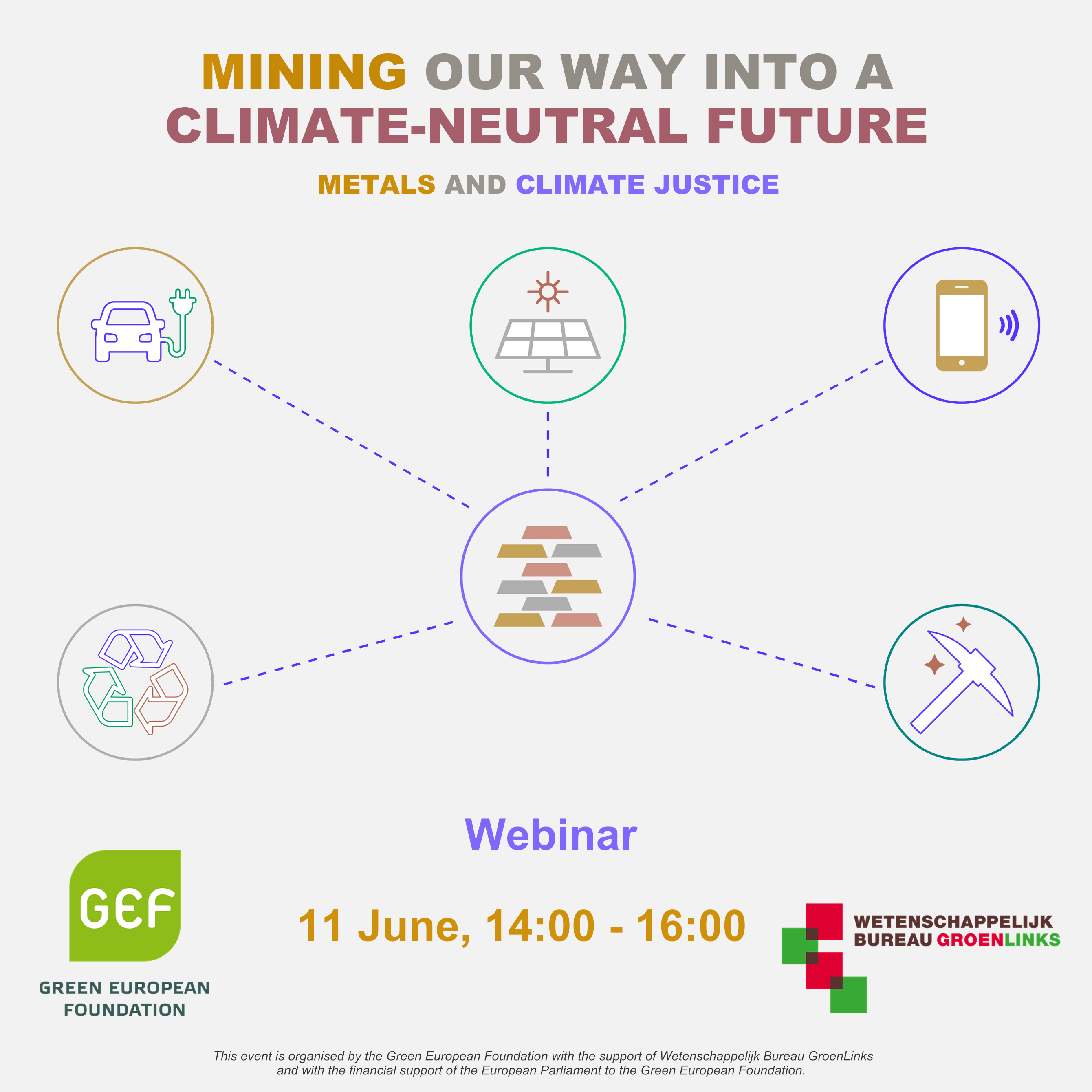
Mining our way into a climate-neutral future – Metals & climate justice

By

About the event:

This webinar is for you if you are interested in learning more about the international and intersectional approach to climate justice.

Context:

The wind turbines, solar panels and electric vehicles that Europe needs to become climate-neutral require plenty of metals. We usually take for granted that these metals will be available. However, they have to be dug up from the ground and some of them are scarce. The EU countries have largely outsourced metal mining to the Global South. This creates supply risks, but also a responsibility for the social and environmental abuses associated with mining in countries such as the Democratic Republic of Congo (cobalt), Chile (lithium) and China (rare earths).

Do local and indigenous communities in mining regions in the Global South pay the price for our green ambitions? Are women disproportionately affected? Where is the climate justice in that? Do the supply chain due diligence and the recycling initiatives that the EU is promoting represent a break with neo-colonial extractivism? What if developing countries decide to make their own cleantech instead of selling their raw materials to us?

We will tackle these questions in a webinar with experts and activists. The insights gathered at the webinar will be used for the upcoming GEF publication Metals for a green and digital Europe – an Agenda for Action. You can already contribute to this publication by commenting on the online draft: www.metalsforeurope.eu

Speakers include:

Jojo Nem Singh (@jnemsingh), Assistant Professor of International Development, International Institute of Social Studies, The Hague

Shivant Jhagroe, Assistant Professor of Public Administration, Leiden University

Benito Walker (@benito_wlkr), chair of Youth for Climate Netherlands

Richard Wouters (@richardwouters), Project leader ‘Metals for a green and digital Europe’ for the Green European Foundation & Weternschappelijk Bureau GroenLinks

Matlhogonolo Mochware – Provincial coordinator Northern Cape for Women Affected by Mining United in Action (WAMUA), South Africa

Nicola Soekoe – Paralegal and researcher at MACUA WAMUA Advice Office, South Africa

The webinar will be moderated by Kauthar Bouchallikht (@kauthar_), MP for GroenLinks, Netherlands.

Practicalities:

Date and time: Friday 11 June, from 14:00 to 16:00 CEST

Audience: This webinar will take place in English and is open to the general public.

Registrations: Click here

This event will be organised through the Zoom platform.


This project is organised by the Green European Foundation with the support of Wetenschappelijk Bureau GroenLinks and with the financial support of the European Parliament to the Green European Foundation. The European Parliament is not responsible for the content of this event.

Mining for metals – can it be fair?

By

About the Event:

The energy transition has been placed at the top of the European political agenda, with the digital transition closely following suit. But to successfully implement these two priorities, the EU needs to examine and adjust its supply and use of metals.

Should we press mining companies to clean up their act and negotiate a fair trade in metals, or is time to nearshore the extraction of metal ores? Is it even possible for Europe or the UK to become self-sufficient in metals, by reviving metal mining within their borders and/or by drastically improving recycling from the urban mine? One thing is clear: the dilemmas around metals make it all the more urgent to rethink our consumption patterns, from mobility to data use.

This is the third of nine public webinars as part of the project ”Metals for a green and digital Europe” organised by GEF with the support of Wetenschappelijk Bureau GroenLinks (Lead partner), Green Economics Institute, Institute for Active Citizenship, Etopia, Transición Verde, Visio, Fundacja Strefa Zieleni.


Speakers:


Miriam Kennet (The Green Economics Institute, UK ) – Director CEO

Richard Wouters (Wetenschappelijk Bureau GroenLinks, NL) – Metals for a green and digital Europe  project leader

Francisco Ruiz and Mark Driver- (Mining in Chile)

Dr Freddie Tshibumbu Shamwana ( DRC)

Sophie Kwizera – Just Transition, Actionaid (NL)

Karen Alvarenga Windham-Bellord, (UK and Brazil) PhD Cantab,Natural Resrouces Law specialist, Doctor of Philosophy from the University of Cambridge

Agneta Granstroem Indigenous Sami and former MP, (Sweden)

Dr Liliana Poposkova-  Macedonia Former MP and specialist in Mining

Professor Peter Yang- USA and China- Renewable Energy. Case University

Michael Oghia from the Sustainable Digital Infrastructure Alliance.

Kim Than (University of Alberta, Canada)

Dr Enkhbaya Shagdar, Erina- (Japan) Senior Research Fellow and COP Climate Expert specialist in energy issues and sustainable development

Baroness Natalie Bennett- UK House of Lords

Coal Mining-Speaker- Ewa Sufin –

Professor Asia Mohammed IPBES (Sudan)


To be confirmed:

Dr Hend Ahmed Saldedin (Egypt) Steel Economics and mining and the environment.


Programme:


9.30-10.00 CEST Introduction

Presentation of the Green European Foundation’s transnational project Metals for a green and digital Europe by project leader Richard Wouters (Wetenschappelijk Bureau GroenLinks, NL).

10.00 -11.20 Session 1 – Mining in the Global South

A) Overview: The extraction of metal ores often causes major damage to nature and the environment, as well as human rights violations, conflicts and corruption.Examples include DRC and Chile. The mining of cobalt and coltan in the Democratic Republic of Congo (DRC) is a case at hand. Is a more responsible sourcing of metals from developing countries possible? Is the European Union on the right track by extending mandatory due diligence in supply chains?

Speaker: Sophie Kwizera – Just Transition, Actionaid (NL)Confirmed,

A) The situation in Africa and the DRC

Speaker: Dr Freddie Tshibumbu Shamwana ( DRC), Confirmed

B) Mining in Latin America

1)Mining in Chile- Speaker: Francisco Ruiz (Chile) Mining in Chile ,Confirmed

2) Stakeholder participation in dam safety plans in the mining sector-

Speaker: Karen Alvarenga Windham-Bellord, (UK and Brazil) PhD Cantab,Natural Resrouces Law specialist, Doctor of Philosophy from the University of Cambridge, . GEI Author and Editor. Confirmed-

She says”“The United Nations’ Awareness and Preparedness for Emergencies at Local Level (APELL) for the mining sector sets a 10-step plan for drafting and implementing actions with stakeholders’ participation at its centre. The APELL places special emphasis on representatives of local communities, making the plan more inclusive and effective in saving lives and the environment. This is because when people participate in the decision-making process from an early stage, they are more likely to implement what is planned. In times of emergency, knowledge of the plan and the will to follow it are crucial to save lives and minimize negative consequences of accidents.”

C) Discussion scene setting and Q and A (20minutes)

11.20-11.30 Short Break

11.30- 12.45 CEST Session 2 – Fair trade in metals: The Situation in Europe : Speaker Debate Panel.

Chair Professor Simon Mouatt, Co-Chair Ewa Sufin, Tech: Marlyn Hughes: Tech Miriam Kennet

The EU is eager to strengthen its industry for energy and digital technology, for

instance by building battery factories. If a developing country restricts the export of

metal ores in because it wants to make and export semi-finished metal products

instead, that might lead to a WTO complaint by the EU, as happened in the case of

Indonesia. Does the EU’s scramble for metal ores undermine the global South’s right

to earn more from their raw materials by building their own industry around it? What

would a fair trade arrangement look like?

A) -Mining in Europe: –

Cases

1) Dr Krzysztof Dudek a presentation on the mining of metals in Poland, especially copper. (Poland)

2) The just transition in Poland -Coal Mining-Speaker GEI UN COP Delegate Ewa Sufin -(Poland)

3) Mining conflicts in Norway- Hans Kare Flo- (Tekna-Technical Trade Union, Norway)


11.55-12.05 Mid session quick break


4) N Macedonia. Speaker: Liljana Popovska (N. Macedonia), Former MP and specialist in Mining, GEI Author.

5) Mining in Serbia: Zaklina Zivkovic, PolEkol (Serbia)

6) Indigenous Perspectives -Mining in Traditional SAMI areas in Sweden

Speaker- Agneta Granstroem Indigenous Sami Gov Councillor and Former MP (Sweden)

Q and A


12.45-13.00 Short Break


B) 13.00-13.15 Exploiting the urban mine

To what extent can a better recycling of metals reduce the need for virgin metals? At

present, it is the rarest metals that are worst recycled. How much research and what

kind of legislation do we need to fully exploit the urban mine? Can some metals that

are critical for green energy and digitalisation, such as the rare earths that we

currently source from China, be substituted by more common materials?

Speaker:

Dr Liljana Popovska-( N Macedonia )Former MP and specialist in Mining. ‘Liljana Popovska: Mining can not be in the neighbourhood of agriculture and tourism, definitely.’

13.00-13.30 CEST Lunch Break and Break Outs


13.30-14.20  Session 2d) Mining and The SDGs

The UN Sustainable Development Goals, impacts and ethics of mining -near shoring -can we justify bringing mining effects into the EU? If not- what is the alternative? (All speakers invited to be confirmed)

14.20-14.30 Short Break

14.30- 15.30 Session 3 –Contemporary Metal mining

A) 14.30-15.15 CEST : By importing most of their metals, both the European Union and the UK shift the burden of environmental damage to poorer countries. Mining in Europe would

probably be less destructive because of our environmental rules. Moreover,

perpetuating Europe’s dependence on metal imports, especially from China, creates

geopolitical risks. Is it time to revive metal mining within Europe’s borders? On what

conditions would that be acceptable to local communities and green activists, if at

all?

B) Sustainable digitalisation 15.10-15.30 20 minutes

Digital technologies can help us make a more sparing use of natural resources – from smart energy grids to sensors and algorithms that sort out metal scrap. However, not all forms of digitalisation are a blessing to the environment. The exploding use of data for online video, gaming, advertising, surveillance and training artificial intelligence requires more and more energy and metals. How can we put the digital transition on a sustainable path?


15.30- 15.45 – CEST Break


15.45 – 16.45  Session 4 –From Glasgow COP21 to Kunmin COP15 – 2021 a watershed year. The importance of mining and how to incorporate its future as a sustainable part of human activity.

At the end of 2021, the global community hopes to gather for the UN Biodiversity onference (COP15) in Kunming, China, and for the UN Climate Change Conference (COP26) in Glasgow, UK. If the coronavirus crisis has not driven home the urgency of protecting natural habitats and respecting planetary boundaries, then what will? However, whereas metal mining might be seen as a curse for biodiversity in Kunming, it may be seen as a blessing for climate solutions in Glasgow. Where metal mining takes place in the remaining habitats of wildlife, the risk of new zoonoses is lurking. But we cannot do without metals for carbon-free energy. How to reconcile the objectives of Kunming and Glasgow?

16.45 -17.00 CEST Break


17.00- 17.45 CEST Session 5–Concluding session- and next steps. Rethinking our hunger for metals

The dilemmas around metals prompt us to question a western way of life that is

consuming more and more kilowatt-hours and megabytes. Should we replace every

fossil fuel car with an electric one, or is it better to share cars and promote cycling?

Can our growing data consumption be justified and do we need an even more

versatile smartphone every two years? Are our politicians willing to confront these

questions, even if it might spook their voters?

Practicalities:

Date and time: Saturday, May 15th from 09:00 to 18:00 CET

Audience: This webinar will be in English and is open to the general public.

Registration: Click Here


Please note all times are Central European Time for this event.


This event is organised by the Green European Foundation with the support of  Green Economics Institute and with the financial support of the European Parliament to the Green European Foundation.

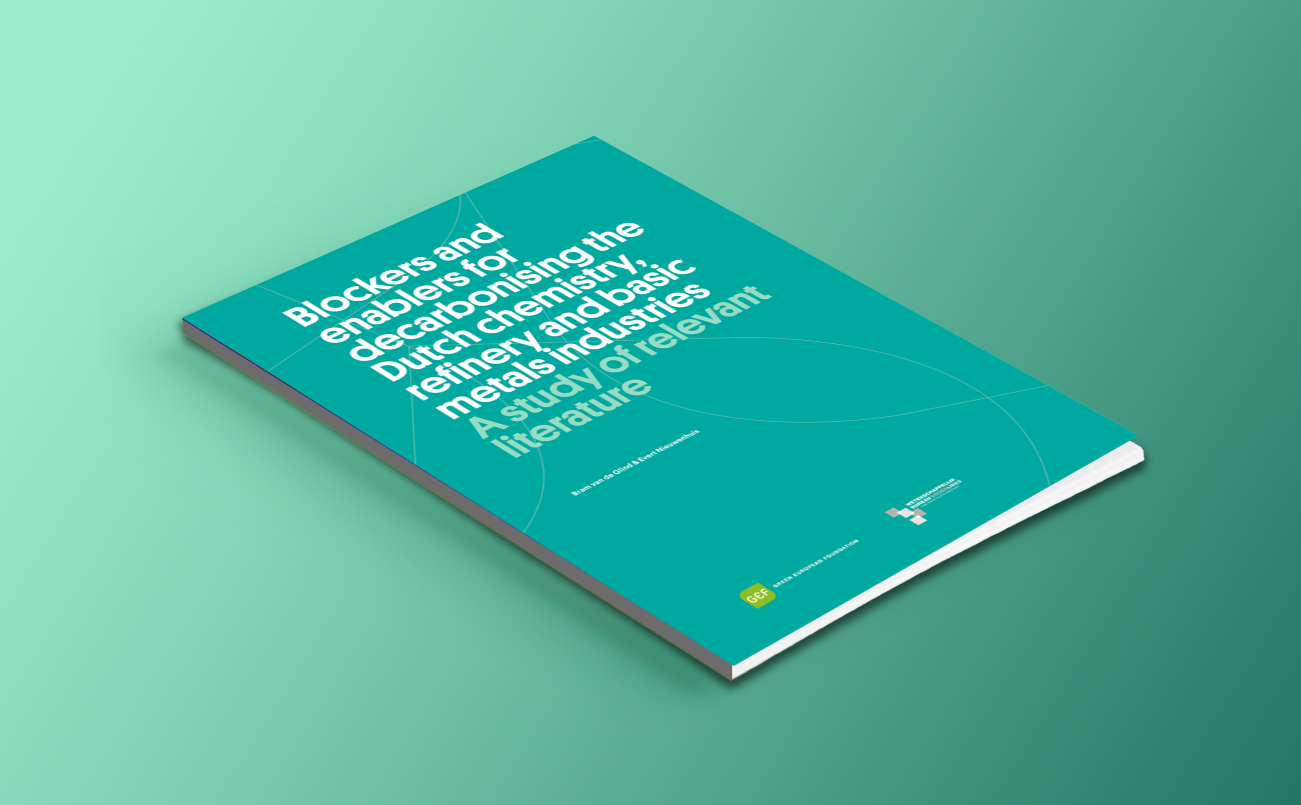
Blockers and Enablers for Decarbonising the Dutch Chemistry, Refinery and Basic Metals Industries

By Uncategorized

This report is part of the Green European Foundation’s Transnational Climate Emergency Economy project. The project explores the challenge of decarbonising ‘harder to abate’ sectors, such as the chemistry, basic metals and refinery industries and international trade. Wetenschappelijk Bureau GroenLinks, Green House Think Tank and Green Foundation Ireland each focus on a specific part of a climate emergency economy. This particular report was written by WBGL and focuses on Dutch energy-intensive industries.