Radical Humanism and Ecological Conversion: Ivan Illich and Alexander Langer

By

About the Event

Is Europe ready for the ecological conversion that scientific evidence stresses on us?

Ivan Illich and Alexander Langer are influential interpreters of the economic critique of consumer society. Their work and practice offer many stimuli for reflection and action in the contemporary context.

This conference will offer the opportunity to compare Illich’s and Langer’s views and proposals, and to examine not only their freshness and relevance but also their critical aspects.

The seminar will dedicate sessions to the translation of theoretical thinking into practical choices as they emerge from the different programs and practices of the Green political sphere, in order to design and develop new humanistic approaches and environmental strategies.

Context

Ivan Illich and Alexander Langer are two of the most authoritative interpreters of a critique of the consumer society based on the theory of market self-regulation.

Illich’s importance in representing a critical voice towards the Western social model, by now of global dimension, is well known. We aim to venture further and discuss the personal trajectory and new message that he wanted to propose without coming to terms with the corruptive logics of a consumerist society, and how can this apply to the present generations.

Langer spoke of the social desirability of an ecological conversion even before Pope Francis did so in his Encyclical. This can only succeed when it is socially desirable. What we need is a ritual passage which has the allure of solemnity: an “ecological constituent,” and a widespread commitment to reconsider our ways of living, producing, consuming in order to make our life-styles compatible with the limited amount of resources the world can provide.

The various conference contributions will study the religious aspects, those linked to agricultural and territorial choices, the theme of the frontier, and the economic and political aspects measured by the real goods and needs of the civil communities throughout Europe.


Programme and Speakers

Friday, 22/10 

17:00 Conference opening 

  • Mauro Bozzetti & Franz Tutzer 

17:30 “In the sign of the flying fish:” Ivan and Alexander 

  • Barbara Duden, Hannover University 

Saturday, 23/10 

9:00 It is not enough to be indignant. The concrete utopia of Illich and Langer. 

  • Mauro Bozzetti, University of Urbino 

10:00 Interculturality: from Illich to Langer 

  • Fabio Milana  

11:30 When the frontiers fall, all is the same – the disappearance of the ability-to-be-different 

  • Marianne Gronemeyer  

14:30 Not developing the production of goods, but the art of life 

  • Peter Kamerer  

15:30 The regeneration of the common good as an integral revolution 

  • Giannozzo Pucci  

17:00 Wolfgang Sachs: Memories, impressions, analysis 

  • Wuppertal Institute for Climate 

18:00 Brief interventions and reflections 

  • Fridays for Future, Lupus in Fabula, … 

Evening: eco-acoustic intervention by David Monacchi  

Sunday, 24/10 

9:00 Rethinking along with Alexander Langer and Ivan Illich 

  • Franz Tutzer 

9:45 Round table: Towards a European ecological conversion 

  • Moderated by Franz Tutzer & Mauro Bozzetti 

12:00 Conclusion 


Practicalities

Dates: 22-24 October 

Location: Monastery of Montebello, Italy 

Language: Italian (some sessions in German with guiding translation) 

Registration and further information: info@alexanderlanger.net (deadline – October 15th) 

Audience: The event is addressed both to persons interested in the work in Illich and Langer and more broadly to citizens with an interest in climate change and ecological policies, to students, scholars, and activists.

A brochure containing the conference contributions will be made available after the event, which will be beneficial in promoting, design and developing new humanistic approaches and environmental strategies for a desirable future, a “futuro amico”.


This conference is organised by the Green European Foundation with the support of Fondazione Alexander Langer and the financial support of the European Parliament to the Green European Foundation.  
 

Handbook on Organising European Green Activists Training Programmes

By Uncategorized

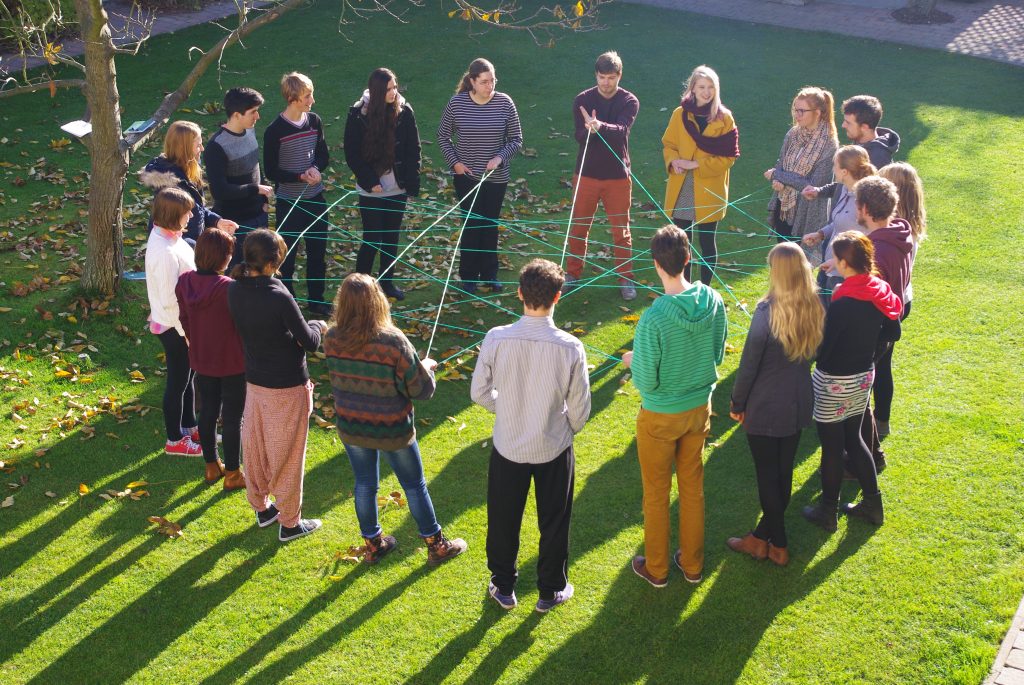
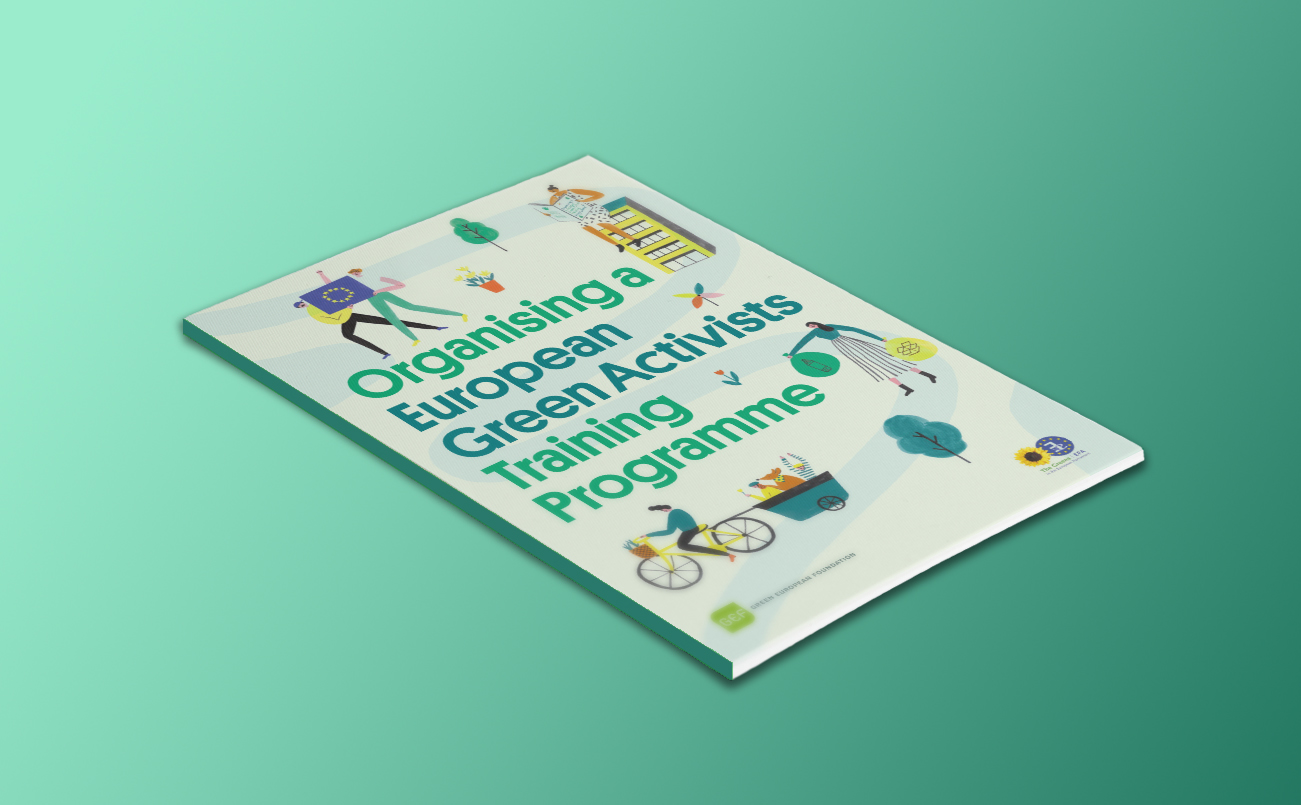
In 2015, GEF and its partner Green foundations from Hungary, Austria, Czech Republic and Finland organised for the first time a project entitled “European Green Activists Training”. In the course of the project, the five partner organisations planned and organised trainings which explored the history, functioning and institutions of the European Union in a Green context. The training programme at the national level was complemented by a common European study tour to Brussels in spring 2016.

Considering the unique character of the European Green Activists Training programme, the project coordinators have decided to develop this handbook, disseminating good practice for future editions of the training within their own foundations, as well as among other organisations interested in training programmes for young activists. This publication is aimed at all organisations involved in educational activities for Green actors, such as Green foundations, Green parties, Green youth organisations and Green study centres in European countries, who are interested in discovering practical tools and tips on organising trainings which empower young people with the ambition to change Europe for the better.

The handbook has been updated in 2018, with a new design, and now features testimonials from previous participants on their experiences. It also includes tips from course coordinators on how to keep participants engaged after the training and on developing an alumni network to exchange ideas and knowledge.

Through this instrument, we mainly address those organisations which have little or no prior experience of organising European activist trainings, but we think that more experienced organisations can also find useful tips and tricks that may inspire their future educational projects.

Download your copy here!

Democracy

Good Governance, Good Practices (Valletta)

By

Context

During recent years, examples of bad governance, such as the Panama Papers, the Luxleaks, Dieselgate as well as the Paradise Papers, and so forth, have emerged and raised questions about the rule of law, and fueled the rise of populism and EU scepticism. Not the least, Malta, the smallest of the European Member states, has come to the fore as a prominent journalist, who was investigating the Panama papers, was murdered in 2017.

An exchange on best practices of good governance on a European level is therefore urgently needed.

About the event

The one-day conference will discuss good governance in Malta and in the EU. Amongst other topics, the role of public services in Malta and the current state of play of governance in the European Union will be addressed. This project will enable participants to discuss issues and the way forward both on a local and EU level.

This public event will gather Green politicians and activists, civil society activists and journalists to discuss these matters while providing a platform for networking among Greens and civil society organisations active in the field.

Programme

9:00 – 9:30 REGISTRATION

9:30 – 9:40 WELCOME:

Danika Formosa, Project Co-ordinator, Ceratonia Foundation

09:40 – 09:50 INTRODUCTORY REMARKS: THE EUROPEAN GREEN MOVEMENT AND GOOD GOVERNANCE 

Aurélie Maréchal, Director Green European Foundation

09:50 – 10:10 THE ROLE OF THE PUBLIC SERVICE IN ENSURING GOOD GOVERNANCE 

Dr George Vital Zammit, Deputy Dean (FEMA), Lecturer, Department of Public Policy

10:10 – 10:40 CLIENTELISM AND GOOD GOVERNANCE: IS CO-EXISTENCE POSSIBLE?

Prof Godfrey Pirotta, Professor at the Department of Public Policy, University of Malta

10:40 – 11:00 SPEAKERS DISCUSSION WITH PARTICIPANTS 

Chaired by Mario Mallia, Deputy leader of Alternattiva Demokratika

10:45 – 11:00 COFFEE BREAK 

11:00-12:00 THE CURRENT STATE OF PLAY OF GOVERNANCE IN THE EUROPEAN UNION

Nóra Köves, Human Rights Activist, Fundamentum

Ioana Banach, Deputy Director Green European Foundation

Ewa Sufin-Jacquemart, Director Fundacja Strefa Zieleni

12:00 – 12:20 GOOD GOVERNANCE AN ESSENTIAL BUILDING BLOCK FOR MALTA’S REPUTATION

Dr Harry Vassallo, Former Chairman Alternattiva Demokratika

12:20 – 12:50 SPEAKERS DISCUSSION WITH PARTICIPANTS 

Chaired by Mario Mallia, Deputy leader of Alternattiva Demokratika

12:50 – 13:00  CLOSING REMARKS

Carmel Cacopardo, leader of the Green Party

Registration

The registration for the this event can be found here
If more information is required, feel free to contact us on: ceratonia@alternattiva.org.mt


To stay tuned for GEF updates, follow us on Facebook or Twitter to learn about our other activities.


EGAT session on EU politics in Czech Republic

By

Training in Czech Republic for green-minded, young and curious minds

As part of our transnational project “European Green Activists Training”, which this year consists of training sessions for young Green activists from Czech Republic, Finland, Hungary, Croatia and Malta, we are organising a special training weekend with a focus on the European dimension between 15 and 17 December 2017 in Czech Republic.

During this weekend, we will discuss how political processes at the national and European levels can be realistically influenced. The participants will gain a critical insight into how the EU works and we will provide space for discussion about ongoing challenges and specific policies together with relevant guests and experts.

As a special element of this training, the participants will gain an exclusive access to our online course IMPACT EUROPE – which will enhance their critical understanding of the European Union, provide them with an analytical overview of the Green movement in the context of contemporary politics at the European level, as well as with insights into ways of generating political impact as a European citizen.

Application process closed

The deadline for applications was 08 September 2017. Stay tuned for similar opportunities next year and shorten the wait by going through our online course!  For more information about this opportunity, please visit Akumulátor webpage.

Greens in Negotiations, EGP Council Karlstad

By

Join the Green European Foundation and the Heinrich Böll Foundation European Union for a new workshop in their “Greens in government” series!  This event will take place at the upcoming EGP Council in Karlstad, on Saturday, 25 November 18h45-20h30. During this workshop we will dive in the preliminary stage of governing and discuss first-hand insight with Green parties’ representatives who are or have recently been in a negotiation process to enter a coalition government. The participants will get useful insights into relevant questions, such as:

  • What makes a deal (un)acceptable?
  • Should Greens engage with everyone? 
  • What are reasonable conditions for a coalition government? 


Reinforce the Green Network through Digital Learning, EGP Council Karlstad

By

Context

The Green European Foundation promotes education and training and provides opportunities for building capacity and encouraging networking amongst Green actors across Europe. To this end, we have developed, together with the Greens/EFA Group in the European Parliament, an e-learning programme, which uses information and communication technologies as a platform for sharing best practices and learning activities.

Workshop at EGP Council in Karlstad

This workshop will discuss the potential of online learning programmes as a means to empower green activists, parties, foundations and ultimately citizens. A particular focus will be placed on assessing the resources available and training needs ahead of the 2019 elections. This event will take place on Friday, 24 November, 13h30 – 15h15.

More information available on our Facebook page.

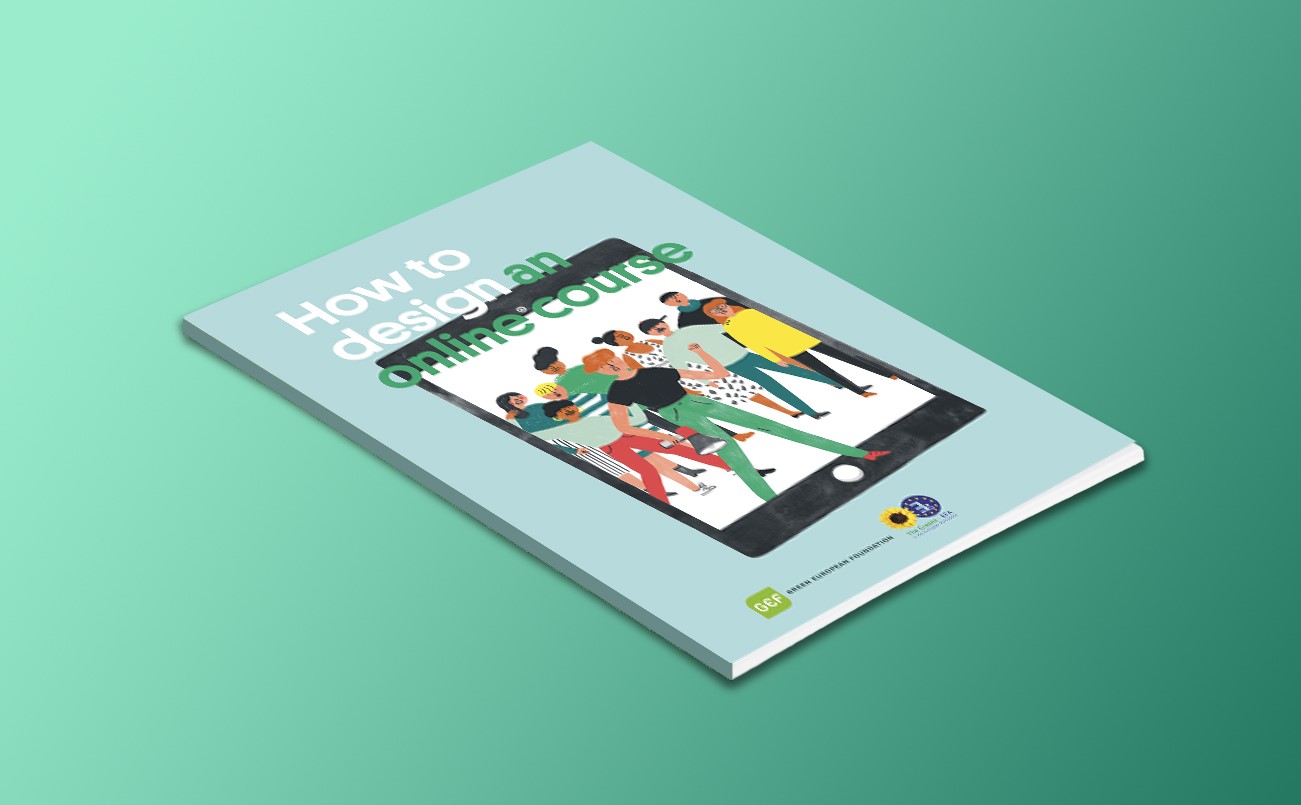
Participants will receive a copy of the GEF & Greens/EFA publication “How to develop an online course”, which is aimed at Green organisations, Green parties, civil society initiatives, educational institutions or any other actors interested in developing online courses as tools for political education.

Impact Europe: Online Course for Green Activists

By

Within the framework of the Capacity Building programme, the Green European Foundation, together with the Green Group in the European Parliament, developed an online educational platform, which is currently hosting the Impact Europe module – an online course, primarily for young, green-minded citizens, who want to influence the decisions made at European level and shape their own future. Throughout this course, we analyse the past, present and future of the EU, the battles Greens carry continuously at European level and why they matter, as well as ways in which you can become engaged in order to shape the future of Europe – the Europe you want to live in.

WHAT IS THE COURSE ABOUT?

Based on unique content, this course serves as a stimulating learning environment which provides a critical understanding of the EU and the functioning of its institutions. Impact Europe addresses some of the most pressing issues in Europe: the Future of the European Union, Trade, Environment and Food Safety, Migration etc. as well as giving insights into Green political movement and an opportunity to discover ways to be part of a European network of activists. You can watch our campaign video below.

WHO CAN TAKE PART?

The course is free and open to everyone. All participants who complete the course will be rewarded with a certificate co-signed by the Green European Foundation and the Greens/EFA in the European Parliament. Furthermore, they will get a chance to become a part of the Alumni Network with access to other exciting opportunities, such as internships, traineeships and vacancies.

Teaming up with the European Green Party to make the course more accessible, Impact Europe is available in English, French, Spanish, and Polish.

HOW TO SIGN UP?

It’s easy – sign up on this page: www.gef-learning.eu! In case you have any questions, feel free to get in touch with us at learning@gef.eu.

How to Design an Online Course

By Uncategorized

The Green European Foundation (GEF) and Green Group in the European Parliament (Greens/EFA) promote education and training and provide opportunities for building capacity and encouraging networking among Green actors across Europe.

Our aim is to raise awareness among citizens about Green solutions to the challenges Europe faces, and to enhance the ability of activists, politicians and citizens to work on issues with a European dimension.

To this end, we have initiated an online learning programme which complements our face-to-face trainings and uses the potential of digital tools to bring together European actors to learn, discuss and expand their networks.

Objective

After a successful experience in implementing an online learning programme – “Impact Europe: Online Course for Green Activists”, we have developed this guide to empower other organisations interested in online education to develop their own courses.

Methodology

The structure of the guide follows the entire process of developing an online course – preparation, production, testing, launch and follow up. Each chapter of this guide is dedicated to one of the main stages in the process of developing an online course and contains:

  • Practical information on the main elements to keep in mind during the respective stage of developing your course;
  • Case studies in which we share best practice based on the GEF-Greens/EFA online course “Impact Europe: Online Course for Green Activists” as the example;
  • Tip boxes as additional advice from our team on implementing specific aspects of the course;
  • Expert advice provided by online learning experts, content managers and audio-visual specialists.

What impact will Brexit have on the ecological transition in Europe? (Paris)

By

On March 29, 2017, Theresa May, Prime Minister of the United Kingdom, triggered article 50 of the Treaty on the European Union and thereby activated the procedure of withdrawal from the European Union, which the country had joined in 1973.  Amongst all the controversies around Brexit, there is also the question on the impact of the UK’s withdrawal on ecological policies in Europe. Climate, energy, protection of biodiversity, agriculture and environmental standards are the range of policy fields concerned and not all domains are affected in the same way.

How will ecological policies evolve in an EU without the United Kingdom? Will Brexit change the European civil society that is mobilising on environmental issues?

The language of the event was French. Speakers were Viviane Gravey (PhD and Lecturer at Queen’s University Belfast) and Claude Turmes (MEP in the Greens/EFA). Debate was facilitated by Benoit Monange, director of FEP.


More Information

Registration: Please sign up for the event here

Date/Time : 27 June 2017, 18:30-20:00

Venue: Maison de l’Europe,  29 Avenue de Villiers, 75017 Paris, France

ECOPOLIS 2017: Digital Together – For a Just Society

By

The main theme of Ecopolis 2017 is the impact of the digital era on relationships between people, between people and organisations as well as between people and politics. In spite of the insecurity of the modern world, the rapid speed of advancing technologies will not slow down or go away. On the contrary, our reliance on these technologies will only increase in our daily lives. Therefore, it will be crucial to empower people to work together, share ideas, and connect with politicians in new ways.

What is Ecopolis?

Ecopolis is a full day event incorporating several key note speeches, high-level panel discussions and round table workshops, which will converge around the possibilities of digital technologies to unite people in different ways. The panels, among others, will for instance be entitled ‘Tools for democracy’, and ‘Individual autonomy and digital commons’. A core question will be how we can build political communities in the digital era and what policies can be developed on the EU level to facilitate this goal?

The aim of Ecopolis is to set up a fruitful dialogue between different sectors of society on the socio-ecological challenges, to provide a platform for exchange of innovative ideas and perspectives. The Green European Foundation will contribute to the European dimension of this event and interpretation in English, French, and Dutch will guarantee broad accessibility to the event.

Programme

The full programme of Ecopolis 2017 can be found here.

Speakers

Speakers will be Yochai Benkler (Harvard University Professor and co-director Berkman Center for Internet & Society), Ana Naomi de Sousa (Filmmaker and journalist), Kate Raworth (Economist and author), Aral Balkan (European Cyborg Rights Activist and designer and developer ), Jeroen Olyslaegers (Novelist and playwright), and many more. See the full list here.

Registration: Tickets can be purchased here.
Date: 8 October 2017
Venue: Kaaitheater, Brussels
Time: 11-19h

Green Debating Room

By

The year 2017 will witness several European parliamentary and presidential elections, whose turnout are not only of major importance to the respective countries, but are also expected to have great influence on the overall political direction of the European Union. In this context, GEF hosted the ‘Green Debating Room’.

In accordance with GEF’s mission to contribute to the development of a European public sphere, where European citizens can engage in a political dialogue to shape decisions taken at European level, this event gathered Members of the European Parliament, diplomatic representatives from France and Germany, think-tanks, as well as representatives of Green foundations from all over Europe, the European Green Party, and guests from other political families.

A panel debate took place followed by questions from the audience. Speakers at the event included:

  • Daniela Vincenti, Editor-in-Chief of Euractiv;
  • Marc Olivier Padis, Director of Studies, Terra Nova think tank; 
  • Reinhard Bütikofer, Member  of  the  European  Parliament (Greens/EFA)  and  the  Co‐Chair  of  the  European  Green  Party  (EGP).

Location: Renaissance Hotel, Brussels
Date: 7th March 2017
Time: 
11:00 – 13:00

Green Foundations and Institutes World Cafe

By

On Friday 31st March 2017, GEF hosted a stimulating workshop at the Global Greens and European Green Party Congress 2017 in Liverpool for actors involved in Green foundations and institutes.

11:00 – Capacity building and networking

This session focused on welcome and introductions between participants and provided a space for foundations’ representatives, both staff and board members, to get to know each other. It was organised as an interactive working session, where foundations could learn about each other and exchange concrete experiences, best practices, achievements and challenges on several aspects of their work (e.g. fundraising, relations with parties, organisational tips, strategic development).

14:30 – Identification of common political goals & operational cooperation

The second session of the workshop allowed for political discourse between the participants on specific topics (which were determined by the participants), with the intention of exploring the role of institutes and foundations in such issues as well as the potential for transnational collaboration in the future. This involved a “World Café” format to enable a high level of interaction and participation. The participants experienced working with each other and had an opportunity to develop common political campaigns/programmes and to establish increased levels of cooperation.
Time: Friday 31st March 2017, 11:00 – 16:00
Venue: Arena and Convention Centre Liverpool Kings Dock, Liverpool L3 4FP, United Kingdom
Room: 4A

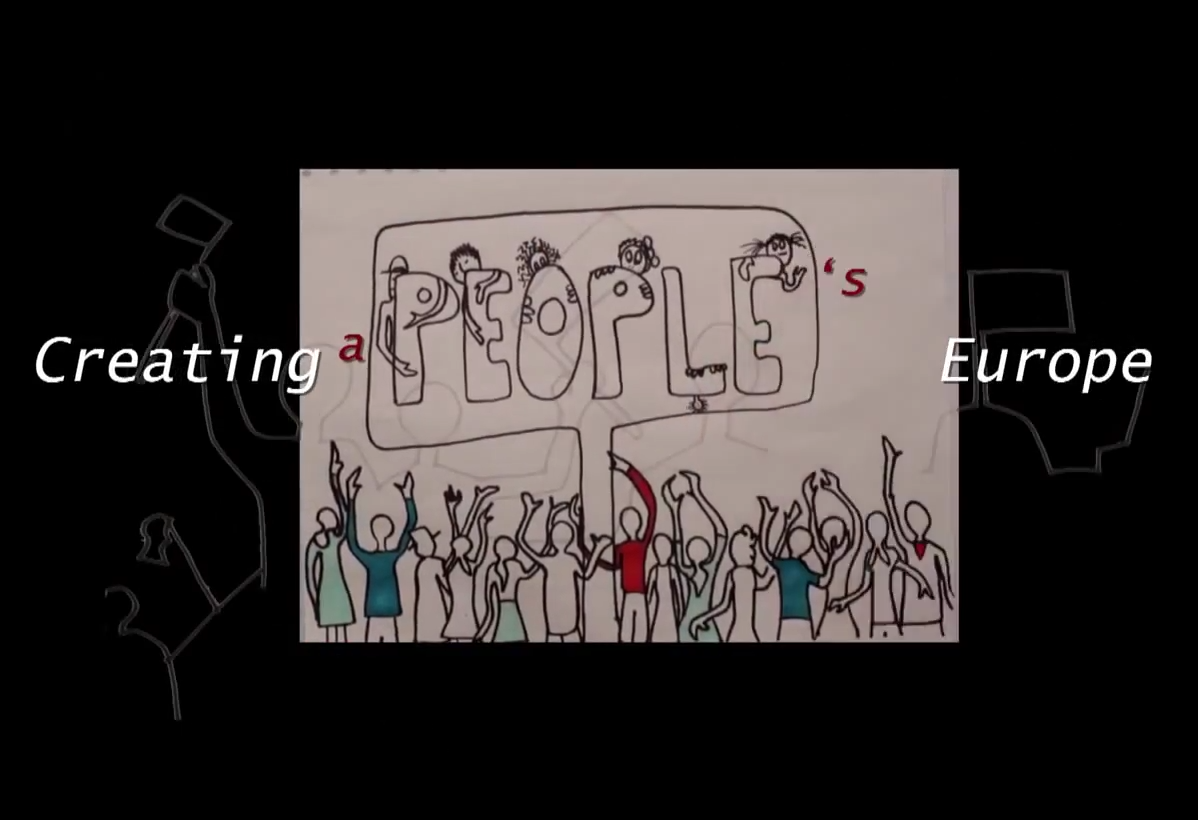
Creating a Peoples’ Europe [VIDEO]

By Uncategorized

“Creating a People’s Europe” was produced and scripted by John Gormley, Irish Minister for the Environment (2007 – 2011).

The film is a project of the Green European Foundation for the Greens/EFA Group in the European Parliament. It was realised in cooperation with the Heinrich Boell Foundation and with the financial support of the European Parliament.

Subtitles available in Catalan, Czech, English, French, German, Greek, Hungarian, Polish, and Spanish.

My Data – My Choice! [VIDEO]

By Uncategorized

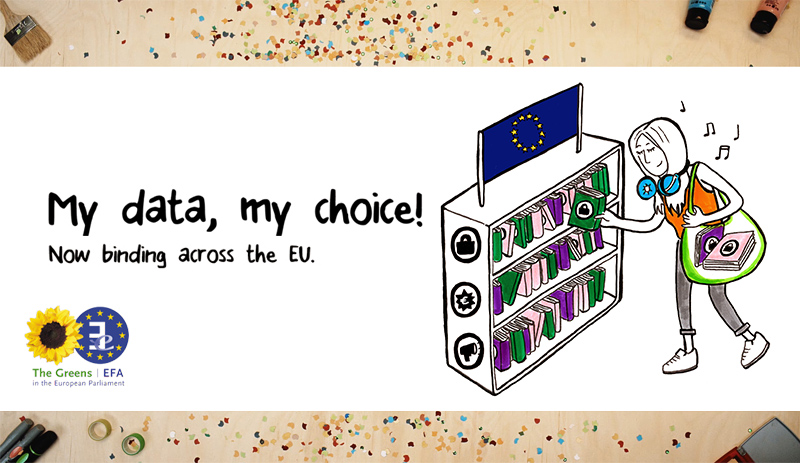
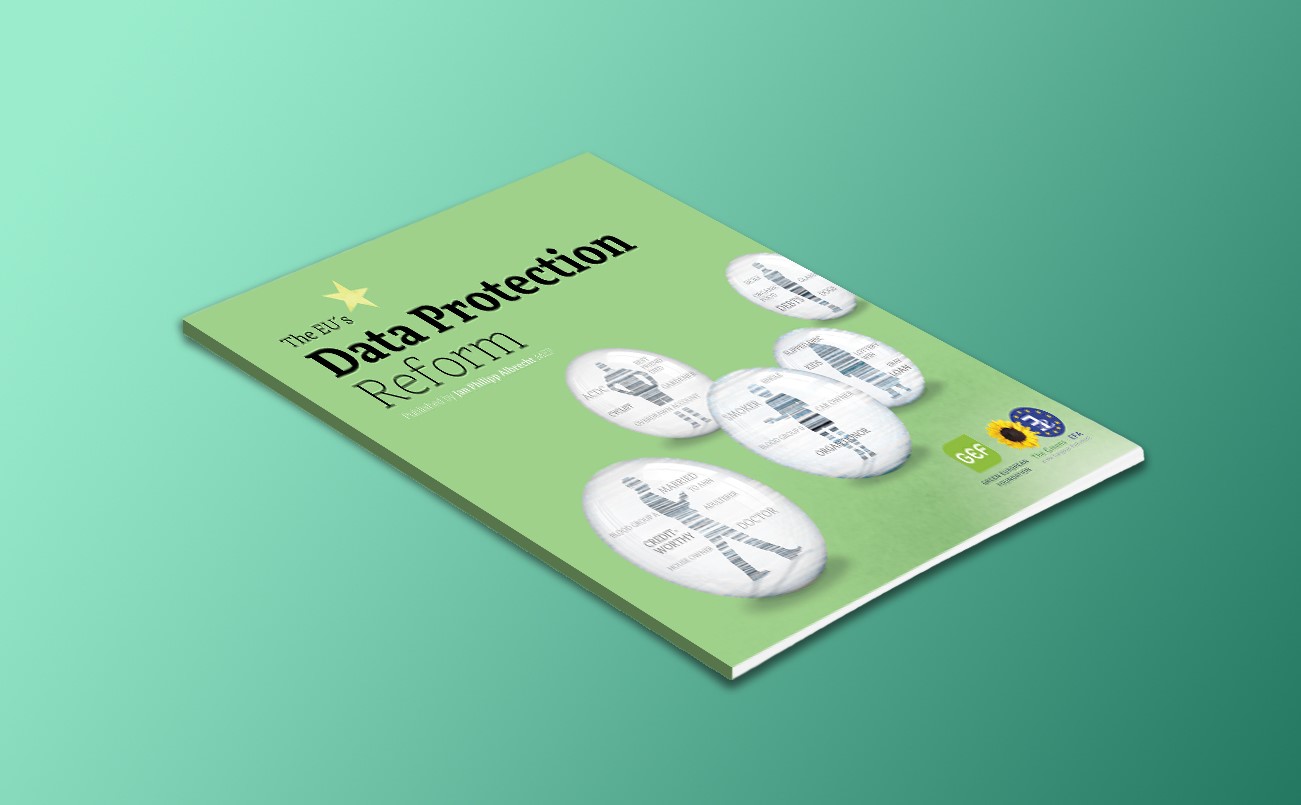
New data protection laws, contrary to the 1995 Data Protection Directive that allowed member states to individualise laws, have now been enacted across the European Union. The new data protection levels enacted will protect all 500 million EU citizens.

The new laws have been revised to protect citizens from the potential perils of the digital age; in particular for the EU Single Digital Market. New rights like data portability, principles such as data protection by design and high sanctions in the case of infringements are enshrined in the text, allowing citizens to browse the digital market freely, safely, and in knowledge of their protected rights.

GEF and The Greens/EFA have provided you with some tools: a cool educational video in English and German about what enhanced data protection laws mean for you; and a PDF outlining the study behind the reforms.

For more information you can also visit Jan Philip Albrecht’s website or see The Greens/EFA press release.

‘Civilisation’ of the EU. A way for the EU to do more for world peace?

By Uncategorized

The study points out the difficulties that arise from the role of the EU as a promoter of world peace and the EU’s progressive investments in military activities. To give but one example, already in 1999, the European Parliament took initial steps towards establishing a European Civilian Peace Corps (ECPC). To date, no tangible results have been obtained and in the spring of 2009 the EP reiterated its demand that the ECPC be set-up. On the other hand, during the same ten-year period, the EU established a military apparatus in Brussels and has dispatched EU soldiers on a number of EU military missions. This seems to convey the message that the European Union gives priority to military actions over peace promotion missions. Confronted with the reality of European peace missions, do we have to conclude that there is a serious lack of support for the civilian option in reality?

Civilian oriented peace operations

The report aims to provide a factual picture of the European Union’s contributions to peace, with an emphasis on its civilian aspects (the status of these contributions, their impact and the possibilities for their further development). The ambition is to spark a debate on the role of the EU and its potential impact in the area of civilian peace operations. In other words, the report recommends bringing the ‘civilisation’ of EU peace missions to the core of the discussions on the EU’s role in peace-keeping and peace-building around the globe.

Populism in Europe

By Uncategorized

The rise of the populist-right and why it matters 

The publication of this book coincides with the rise of populist right-wing parties in a number of European countries. The most recent is the True Finns in Finland, but there are similar examples in Hungary, Sweden, France and elsewhere. While the book acknowledges the sometimes crucial differences that can exist between these individual parties, it is also true that they share many attributes. These include focusing their grievances on minorities, railing against so-called “elites”, and  an always high level of euroscepticism.

How should the Green movement confront such a challenge? And does this challenge present an opportunity to put forth a positive, Green message on Europe, immigration and the socio-economic challenges that we face in the 21st Century? This book attempts to answer these questions, and its contributors offer varying and diverse opinions on the origins of this trend, and what an effective response should be.

As Erica Meijers states in her introduction, the reader will at times find contradicting opinions and analyses in this book. This underlines the complexity of this issue, and shows it to be fertile ground for debate and discussion.

Table of contents

  • Introduction (Erica Meijers)
  • The Temptation to Over-Simplify: Why Populism Poses a Danger to Europe (Daniel Cohn-Bendit & Edouard Gaudot)
  • The New National Individualism: Populism is Here to Stay (Dick Pels)
  • Adversaries or Competitors: The Rise of Green and Radical Right-wing Populist Parties (Sarah L. de Lange, Wouter van der Brug & Inger Baller)
  • European Dreams, Nationalist Ambitions: Internationalism in Populist Movements (Oyvind Strommen)
  • The Quality and Future of Democracy: Two Decades of Free Elections in Central Europe (Sona Szomolanyi)
  • Lifting the Veil: Populists and Women’s Rights (Olga Pietruchova)
  • Populist Realism: Vox Populi and the Postpolitical (Merijn Oudenampsen)
  • The Spiral of Noise and Attention Seeking: Right-wing Populism and the Media (Robert Misk)
  • Imagination in Power: The Social-political Conditions of Italian Media Populism (Marco Jacquemet)
  • The Politics of Fear and Belonging: The Socio-Economic Breeding Ground of Populism (Barbara Hoheneder)
  • Freedom and Security in the Twenty-first Century: Green Alternatives (Dirk Holemans)

You can download the introduction to the book for free, which will give you an insight into the book’s chapters and what the authors discuss and propose.

Please email info@gef.eu if you are interested in purchasing a copy.

German translation now available

A German translation is now available to purchase online, with a foreword by Heinrich Böll Stiftung Co-President Ralf Fücks, GEF Co-President Heidi Hautala and Andrea Novy of Grüne Bildungswerkstatt. The foreword is available to download below. This translation is a cooperation project of GEF, the Heinrich Böll Stiftung, Grüne Bildungswerkstatt and Bureau de Helling. More information is available on the Heinrich Böll Stiftung website.

Icon

Foreword DE 36.98 KB 114 downloads

...
Icon

Book Review - Andreas Novy 94.10 KB 78 downloads

...

European Citizens’ Initiative – updated edition

By Uncategorized

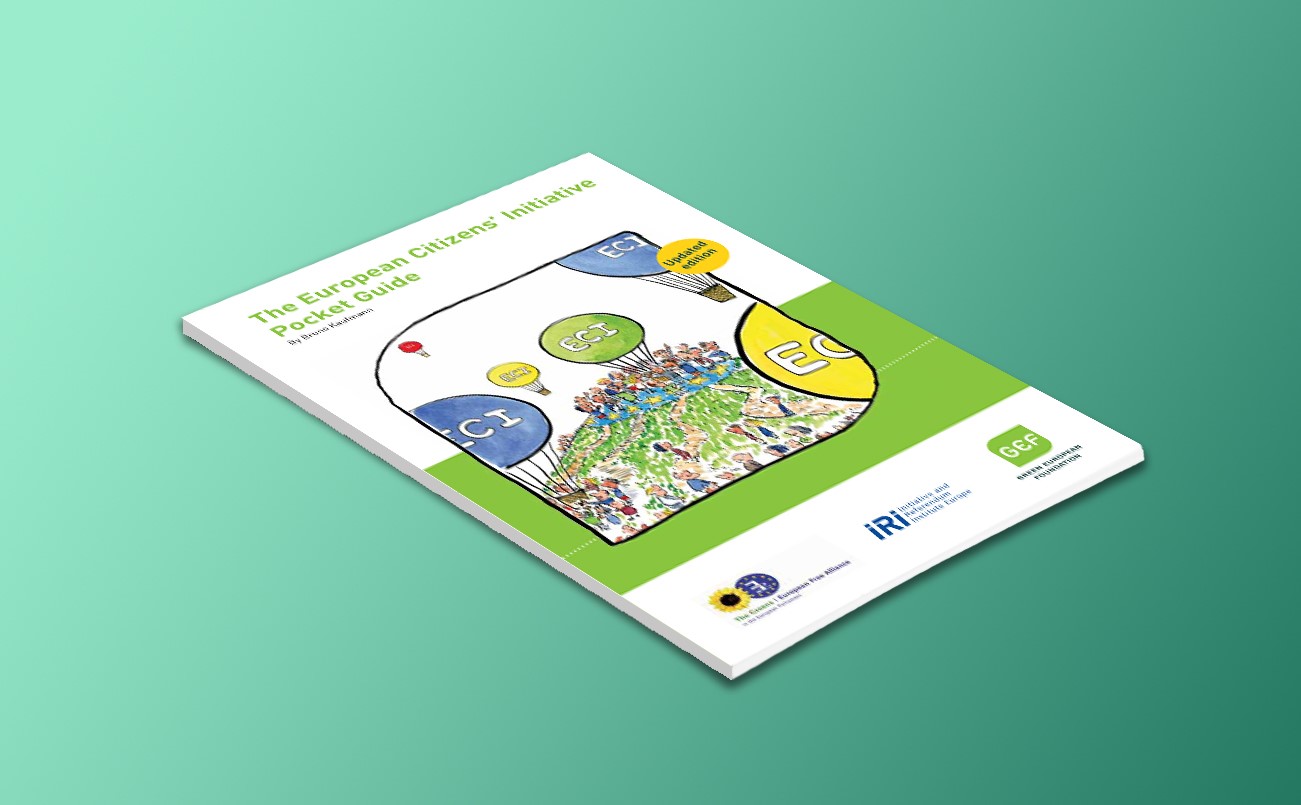
The European Citizens’ Initiative gives citizens the right to set the agenda of the European Union and establishes a truly multifunctional means of providing checks and balances for what happens in the EU. This Pocket Guide offers readers the knowledge and insights necessary to make effective use of this new instrument.

In the six months that passed from the launch of the ECI instrument, 25 European Citizens’ Initiatives have been filed. Of these, 14 were registered by the European Commission, while others were rejected or withdrawn. The main challenge these first initiatives faced was related to the establishing a functional Online Collection System of signatures. In order to support the first initiatives, the European Commission offered organisers free servers in Luxembourg and decided to postpone the official start for the collection of signatures to August 2012, to make up for these initial set-backs. Even so, to date, only one of fourteen registered ECI’s is able to collect signatures online.

With this new edition of the ECI Pocket Guide, updated with the latest news and links to further sources of information and support, GEF aims to assist ECI organisers in their difficult challenge of pioneering European participatory democracy.

This updated edition has been produced by GEF for the Greens/EFA Group in the European Parliament.

How to use this Pocket Guide?

The Pocket Guide is divided in 3 sections which address the following questions, respectively: how can you use the ECI? What are the requirements you have to fulfil to successfully complete an ECI? Where can you find assistance for your ECI?

The ECI KEYCHAIN helps organiser identify the most suitable approach to an ECI. It details the various goals that an ECI can serve, such as introducing new ideas on the European legislative agenda, stopping existing legislation or acting as a platform that mediates between different legislative approaches.

The ECI PATHFINDER is a manual to assist ECI organisers or potential signatories to find their way through the often lengthy and sometimes cumbersome procedure of an initiative. The manual develops the 10 step approach to a European Citizens’ Initiative, already detailed in GEF’s earlier publications: The European Citizens’ Initiative Handbook and the flyer 10 Steps to the European Citizens’ Initiative.

The ECI RESOURCE CENTRE provides a wealth of details on the constitutional foundations, legal statutes and procedural regulations of the ECI. This chapter has been completely updated.

Order your copy now!

Would you like an own copy of the Pocket Guide? Then send us e-mail at info@gef.eu and we’ll send you one.

Successful pilot ECIs

GEF’s Campaign Handbook covered a number of successful ‘pilot ECIs’. These were efforts by NGOs and civil society groups to gather 1 million signatures in order to influence the EU’s agenda. They were inspired by the ECI, but took place before the ECI comes into effect on April 1st 2012.

1 million European Citizens for better animal welfare
Europeans unite for fair roaming
European Disability Forum and their ground-breaking ECI

4450 template=”link-template-calltoaction3.php”]

Campaign Handbook: A users’ guide to campaigning

By Uncategorized

Participation in politics is not only about good policies and exciting new ideas, but also about having the skills to make these visions heard and embraced by others. This is even more relevant in European politics, where the distance between citizens and decision making can be better bridged with efficient communication and campaigning.
The Green European Foundation first developed the Campaign Handbook in 2010 as an online platform that was both a manual on campaigning for Green activists, as well as a platform of exchange of knowledge and experience for Green campaigners. The website has been constantly updated with interesting examples from Green campaigns.

The print edition of the handbook guides the reader through a coherent political campaign: from the strategic vision of what should be accomplished, to how to manage a campaign team in order to achieve the set goals; how to target the audience with the right messaging; and how to assess the gains and losses of the campaign.

This edition of the Campaign Handbook is updated to respond to the latest shifts in campaigning practices. It brings together the “musts” of successful campaigning, from the point of view of experienced Green campaign managers. We therefore hope it will be a useful guide, accompanying the reader in exciting and efficient campaigns.

Check out the Campaign handbook online platform

Class of 2014: New Green Voices in the European Parliament

By Uncategorized

Back in 2009, when the Green European Foundation and the Heinrich Böll Foundation gathered, for the first time, the ambitions of newly elected Green Members of the European Parliament (MEPs) in a yearbook, the European Union was a different type of affair. The effects of the financial and economic crises were not yet in full swing, austerity measures had not yet become the buzz-word of the political agenda, and the climate summit in Copenhagen was still preserving the hope that the European Union would deliver on its promises to be the world’s climate champion. Although clouds were on the horizon, the general mood in European circles was still very much business as usual.

Five years later, we are faced with a different scenario. The effects of the economic and financial crises, as well as the social impact of the austerity-driven response to these crises, had raised existential questions about the future of the European Union. Euro-scepticism reached unprecedented levels, and parties campaigning on explicitly anti-European platforms made gains across the Union. Citizens’ movements reacting to austerity measures imposed by “Brussels” made clear the popular disenchantment with a political establishment that seemed keener on bailing out banks than safeguarding jobs and welfare. There were times as recent as two years ago when the European Union seemed to be facing “make it or break it” types of challenges.

Even though this urgency has passed for now, the crisis is far from over. This is the background in which the newly-elected Green MEPs will be working over the next years.

New challenges, new voices

In a context where anti-European debates are likely to be placed in the spot-light, the challenge for the new Green Group will be to articulate their criticisms to the various EU policy approaches that venture off the paths of sustainability, equity, democracy and respect for fundamental rights, while keeping an overall pro-European narrative. Among this new Green group, there are many new, first-time parliamentarians. They will need dedication, imagination and an understanding of the need to reach out to civil society and grassroots movements to come up with successful policy approaches to the difficult tasks ahead: setting ambitious climate targets; tackling energy security and energy poverty; bringing prosperity back to the EU; ensuring a humane migration policy, and responding to new geopolitical realities.

The articles that make up this collection detail the new MEPs’ ambitions, expectations and analyses of the opportunities and challenges lying ahead in their specific policy fields. The articles discuss both the visions of the EU that they are bringing to Brussels, by reflecting on the messages picked up during the elections’ campaigns, as well as how these visions translate in a Green working project in the European Parliament. The contributions describe the biggest challenges for the upcoming years on topics such as greening the economy, transforming energy policy, building a democratic EU, creating a human-rights based migration policy, positioning the EU as a strong and fair global player in areas of trade, agriculture, foreign affairs – to mention but a few. Finally, the authors reflect on their ambitions from the various policies they’ll be focusing on and note their expectations for their parliamentary mandate.


Icon

Class of 2014 EN 1.75 MB 45 downloads

...
Icon

Class of 2014 FR 2.39 MB 140 downloads

...
Icon

Class of 2014 DE 2.41 MB 49 downloads

...

Read articles in other languages

Parts of the articles are available also in the respective native languages of the authors: Catalan, Croatian, HungarianSwedish and Spanish.

My data – my choice! Giving citizens tools to better understand their rights on data protection

By Uncategorized

New data protection laws, contrary to the 1995 Data Protection Directive that allowed Member States to individualise laws, have now been enacted across the European Union. The new data protection levels enacted will protect all 500 million EU citizens.

The new laws have been revised to protect citizens from the potential perils of the digital age; in particular for the EU Single Digital Market. New rights like data portability, principles such as data protection by design and high sanctions in the case of infringements are enshrined in the text, allowing citizens to browse the digital market freely, safely, and in knowledge of their protected rights.

GEF and The Greens/EFA have provided you with some tools: a cool educational video in English and German about what enhanced data protection laws mean for you; and a PDF outlining the study behind the reforms. The PDF is available also to read in French – both of which you may download below.

For more information you can also visit Jan Philip Albrecht’s website or see The Greens/EFA press release.

Icon

My data – my choice! EN 3.19 MB 55 downloads

...
 
Icon

My data – my choice! FR 2.84 MB 40 downloads

...