Migration

Exploring the Economic Impact of Migration (Oxford)

By

Context

Europe seems stuck and appears to be paralysed by the latest inward migratory processes. This is affecting democracy itself as people are unable to find a party which expresses their fears and politicians are unable to find solutions and scenarios that they can relate to. As a result, core values of the European Union and green values are jeopardised whereas populist and right-wing forces are still on a winning streak in large parts of the EU and anti-migration rhetoric has not least also played a role during the EU referendum in the United Kingdom.

About the event

The transboundary need for a change of narrative to disseminate the reality of migrants among society and their impact on the society in return is evident. Hence, the conference, while building on experiences and findings of GEF’s transnational project of the past two years on migration and asylum policies in the EU, aims to put progressive political forces back ahead of the game to drive a positive approach to international migration.

One aspect will be to showcase, how the Thames Valley, Oxford University and other European hubs are a success – not only economically – specifically due to their inward migrations. Moreover, the event will also look at the growing impact of climate change and how that aspect can be channelled for the green family to offer its unique solutions as a force for positive change.

The conference will feature speakers from Europe, for instance the United Kingdom, Italy, Norway, Malta, etc. but also experiences from Nigeria and other parts of the world.

Draft Programme

10:00 – 11:00 INTRODUCTION TO THE GREEN EUROPEAN FOUNDATION PROJECT “CHANGING THE NARRATIVE OF MIGRATION”

11:00 – 11:30 COFFEE BREAK

11:30 – 13:00 CONTEMPORARY CHANGES TO THE LABOUR MARKET

13:00 – 14:00 LUNCH

14:00 – 15:00 HI-TECH SOLUTIONS; THE VALUE AND IMPACT OF MIGRATION

15:00 – 16:00 EXAMPLES OF INWARD MIGRATION AND BEST PRACTICES

16:00 – 16:30 TEA BREAK

16:30 – 17:00 CLOSING PANEL AND DISCUSSION:  Migration of the future – Choices and pathways


Register and purchase your tickets now by following this link and stay tuned for updates by  following us on Facebook or Twitter .

Migration and Asylum Policies on EU/Local Levels

By

Theme

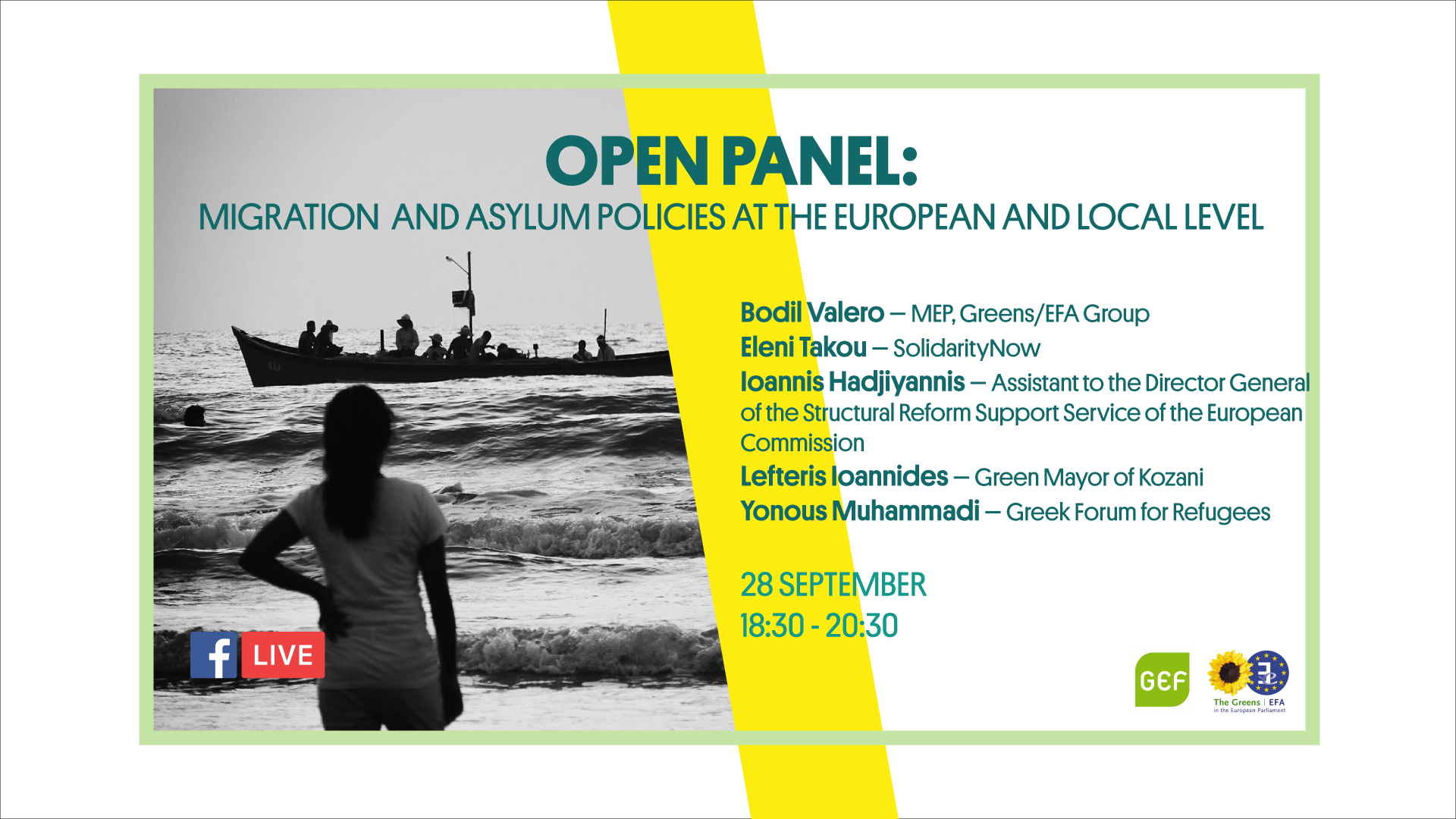
This panel debate aspires to enable civil society, policy-makers as well as refugees and migrants to discuss the key developments in Europe which affect refugees, migrants and asylum seekers. The discussion shall provide an overview of the latest decisions on the European Union level as well as look into the implementation by the Member States, and especially focus on challenges and best practices of local authorities. The exchange can provide a platform to formulate clear recommendations towards the national as well as the EU level, and thereby set the political frame for the coming days of the training. A networking reception will be organised after the event.

Moderation:

  • Maria Giovanna Manieri – Advisor on Civil Liberties, Justice and Home Affairs, former employee of PICUM (Platform for International Cooperation on Undocumented Migrants)

Speakers:

  • Bodil Valero – Member of the European Parliament, Greens/EFA Group
  • Eleni Takou – Head of Advocacy, SolidarityNow
  • Ioannis Hadjiyannis – Assistant to the Director General of the Structural Reform Support Service of the European Commission
  • Lefteris Ioannides – Green Mayor of Kozani  
  • Yonous Muhammadi – President, Greek Forum for Refugees

This event is open to public and free of charge. Sign you up to the Facebook event!

Registration

The debate will take place on Thursday, 28 September from 18h30 to 20h30 in Athens, at the European Parliament Information Office. The registration for this event is now closed.

Livestream

If you cannot join In Athens, please follow the live stream on our Facebook page.

Fundraising Training:

This public debate is a part of our upcoming training in Athens which aims to empower grassroots organisations all over Europe, who are working on topics around migration, refugees or asylum seekers, with practical skills and innovative fundraising techniques.

Fundraising Training: Projects on Migration, Refugees & Asylum

By

In 2016, GEF and Greens-EFA collaborated on the ‘Guide to EU Funding on Migration and Asylum’, a publication available in 16 languages, which showcases EU funds available to local activists and organisations across Europe. In 2017, the need was identified to organise a training which allows organisations working on these topics to exchange best practices, at the same time with reinforcing their fundraising capacities.

Training in Athens

This training is targeting grassroots organisations all over Europe who are working on topics around migration, refugees or asylum seekers, and who oftentimes lack the capacities to obtain the necessary funding for their important work. With this opportunity we want to empower the participating organisations to apply for EU funds, namely the Asylum, Migration and Integration Fund (AMIF), or determine alternative funding possibilities and exchange their experiences and best practices. We will share practical experience on innovative fundraising techniques available to organisations with reduced means, such as crowdfunding, experiential fundraising, etc.

We also want to enable the participants to network and shape future project ideas together. Last but not least, we aim to enable exchange with policy-makers as well as with refugees and asylum seekers themselves.

Venue, timing and duration

The training will last 3 full days, starting on Thursday, 28 September 2017, in the afternoon and ending on Sunday, 1 October 2017, in the afternoon. The training will be organised in Athens, Greece.

Applications for participation in this event are closed. For more information, please contact the Project Coordinator, Carlotta.Weber@gef.eu.

Fundraising Training: Migration, Refugees & Asylum Seekers Projects

By

In 2016, GEF and Greens-EFA collaborated on the ‘Guide to EU Funding on Migration and Asylum’, a publication available in 16 languages, which showcases EU funds available to local activists and organisations across Europe. In 2017, the need was identified to organise a training which allows organisations working on these topics to exchange best practices, at the same time with reinforcing their fundraising capacities.

The training will provide information on European Commission funds such as the Asylum, Migration and Integration Fund (AMIF), as well as a solid background and practical experience on innovative fundraising techniques available to organisations with reduced means, such as crowdfunding, experiential fundraising, etc.

Last but not least, this training will be an opportunity for foundations, movements and NGOs working on topics around migration, refugees and asylum seekers to exchange and gain insights into the political dimension of migration, looking at the local, national and European level. Participants will get the chance to exchange with policy-makers and with refugees and asylum seekers themselves (one of the training days will be organised in a refugee centre in Athens).

Participants’ profile

The training is addressed to staff working in European foundations, organisations, NGOs and movements who work on migration, refugees and asylum seekers projects and who are looking to expand their skills-set and contacts in order to do successful fundraising. It is targeting all organisations working to provide solutions for the arrival and integration of refugees, asylum seekers and migrants.

There will be maximum 25 places on the training and the applicants should fulfil the following conditions. They should:

  • Have experience in working on projects with migrants/ asylum seekers/ refugees or the clear interest in initiating such projects.
  • Ideally be responsible for fundraising within their organisation.
  • Have the ability to use English as the working language throughout the training.
  • Have the availability to attend the full duration of the training.
  • Show interest and motivation to fulfil an active role during the training and to explore possibilities to collaborate with other organisations active in the field.
  • Represent an organisation based in a European country.

Objectives

By the end of the training, participants will:

  • Expand their knowledge on the political dimension of this topic.
  • Strengthen and broaden their network of actors and organisations engaged in work on the topics of migration, refugees and asylum seekers.
  • Gain practical skills on fundraising for their projects in this field.

Working methods

The training will combine formal and non-formal learning methods, with a clear focus on the latter as all sessions are focused on group formation to provide space for exchange of experiences and best practices among participants, and allow them to develop project ideas together. To be successful, this will require participants to have an active input in sharing their own knowledge, and to be willing to learn new skills from their trainers and from each other. The working methods will include:

  • Small group discussions
  • Verbal and visual presentations
  • Plenary debates
  • Reflection periods
  • A study visit and other joint activities

Venue, timing and duration

The training will last 3 full days, starting on Thursday, 28 September 2017, in the afternoon and ending on Sunday, 1 October 2017, in the afternoon. The training will be organised in Athens, Greece.

Financial information

The expenses in relation to the training will be covered by GEF and the Greens-EFA. This includes food and accommodation, as well as all training costs.

Travel expenses (home-to-home) shall be made by each participant individually and will be reimbursed afterwards in accordance to the GEF guidelines on travel reimbursement, which will be communicated to the selected participants in advance.

Application and selection of participants

The application is now closed!

Participants will be selected on the basis of:

  • The profile of participants as described above;
  • The experience, expectations and training needs of applicants;
  • The desire to create a balance in the range of geographical areas represented (while taking into account that there is more activity and hence need for funding in particular geographic areas), as well as a gender balance.

Successful applicants will receive confirmation of their participation, followed by more detailed information.

This training is realised with the financial support of the European Parliament to the Green European Foundation.

For more information, please contact the Project Coordinator, Carlotta.Weber@gef.eu.

Paving the way for a Green debate on Refugee, Asylum & Migration Policies

By Uncategorized

This analysis is based on an overview of public documents, such as European Green Party resolutions and public positions of the Greens in the European Parliament, and a summary of the study commissioned by the Green European Foundation at the end of 2015.

The study provides an overarching assessment of where the Green parties across Europe stand on migration, asylum and refugee policies. It is based on a questionnaire answered by representatives from several Green political parties across Europe between October and December 2015, and is titled, “Towards a Common Green Response: Points of agreement, disagreement and issues for further internal debate among European Green parties on refugee and migration policies”. The purpose here is neither to name and shame, nor to reveal a ’silver bullet’ solution. The objective is rather to provide the groundwork for a wider debate within the European Green political family to ultimately come forward with common proposals to face the challenges ahead.

In this brochure, you can find the main findings of the study summarised in three themes: common ground amongst national Green parties; points of divergence; and open questions.

A PDF version of the document is available for download here!

The Guide to EU Funding on Migration and Asylum

By Uncategorized

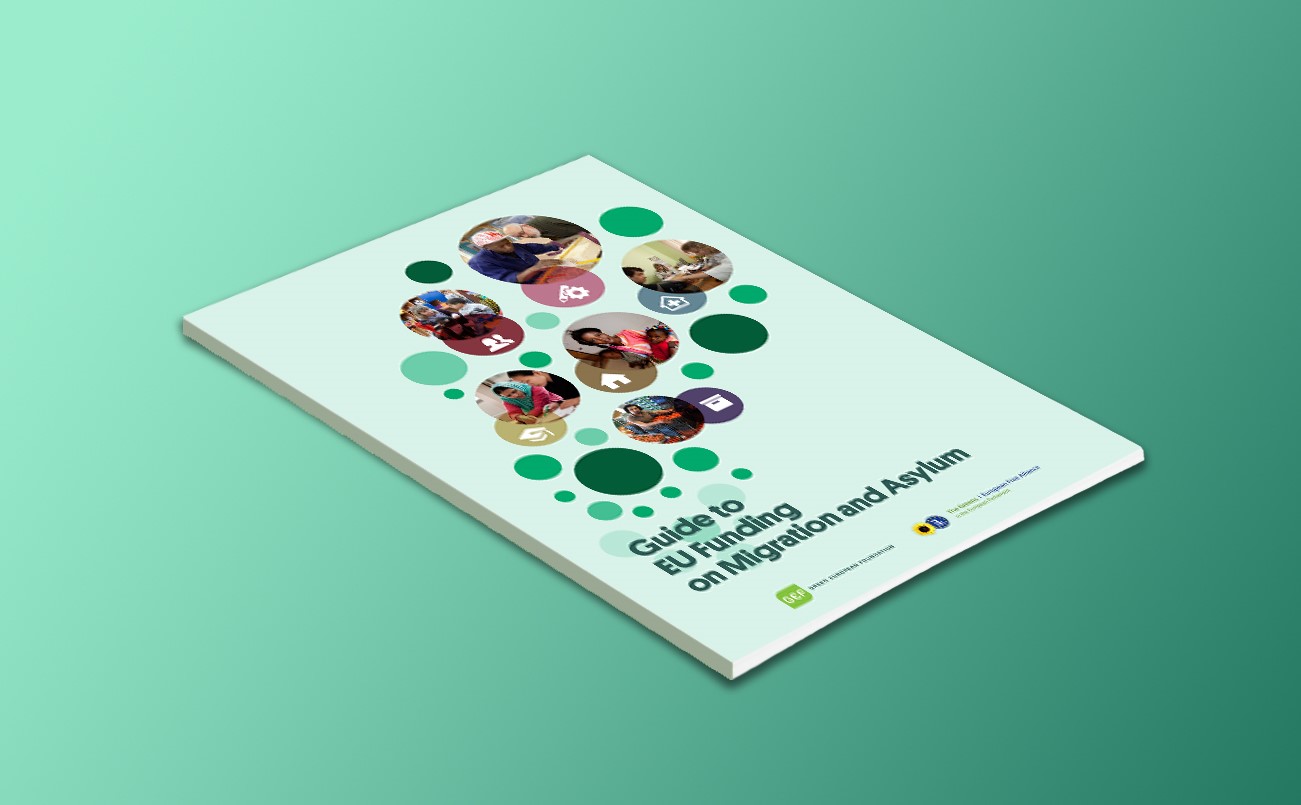
In the absence of a common European response that treats migration as a human phenomenon and manages it as such, the task of welcoming and accommodating migrants and acting as their first personal contacts has mainly been taken on by local and regional authorities, non-governmental organisations and activists, who continue to play a key role in providing initial reception and access to services and fundamental rights for migrants and refugees. In this context, this guide builds on the idea that the best practices of how to welcome refugees and asylum seekers and work towards successful integration can be found in local communities and initiatives throughout Europe.

Therefore, the objective of this guide is to actively support the work of these local actors, organisations and institutions with a one-stop source of information on additional financial assistance offered by the EU. This guide provides a quick and easy overview of the relevant EU funding opportunities, with key information and practical inputs in regards to accessing them. Special attention is given to projects that foster integration, social inclusion and a better quality of life for migrants, refugees and asylum seekers.

A hard copy of this guide can be ordered by sending an email to: info@gef.eu

This publication as a PDF file is available for download in following versions: