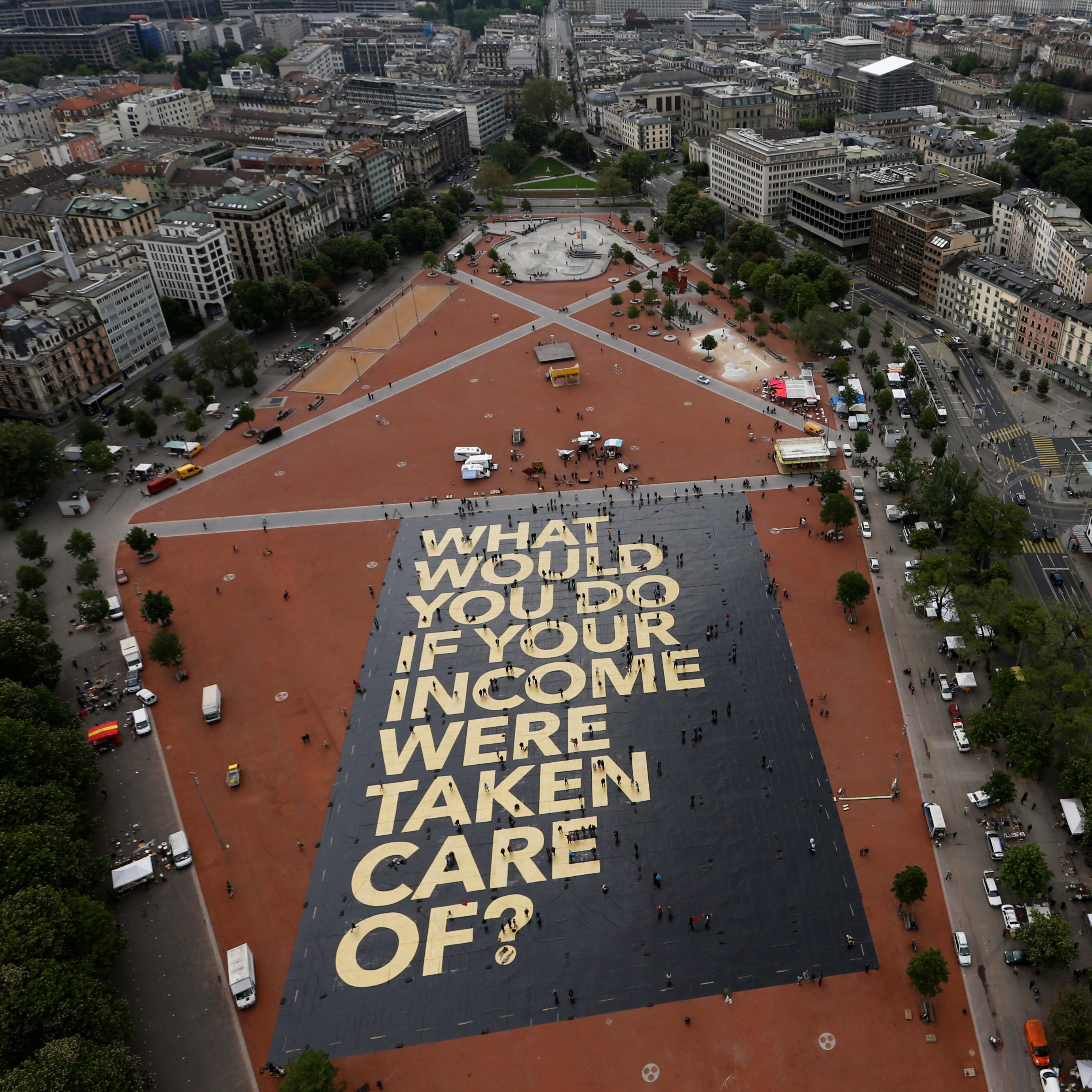
UBI - Basic Income

Universal Basic Income – a Green Answer to the Future Challenges of the Labour Market? (Antwerp)

By

Context

In 2017, the Green European Foundation started, with the support of different national partner foundations a transnational project on basic income with the objective to refine the concepts behind Universal Basic Income and contribute to the Europeanisation of the debate while taking into consideration the huge differences of social security systems across Europe. To this end, we formed a basic income expert group with representatives of Spain, Catalonia, Switzerland, Germany, Serbia, Belgium and Greece. In 2018, the focus of the ‘Basic Income for all EU Citizens?project lies on the financial concepts and on formulating first ideas for a European pilot project on basic income that can deliver comparable results for different European countries.

About the event

During this session, we aim to make the link of those discussions to the broader debate on the future of work and whether basic income can become part of the Green answer to the challenges the labour market is currently facing. At the same time, the session shall serve as an opportunity to exchange on examples and different ideas of Green parties across Europe.

We will organise an interactive session, using the “fish bowl” method: the discussion starts in a semi-circle with one moderator and the three panelists and two empty chairs; after the  first input by the moderator and the three panelists, the audience is invited to fill the empty chairs and take the role of panelists themselves; after the input the chairs have to be left to other participants.

Finally, the workshop will provide an opportunity to present the results of a planned survey we launched on the state of play of the UBI debate within the different Green parties across Europe as well as in the national public discourses.

Moderators
Ville Ylikahri, GEF Board Member, Secretary General in the Green Cultural and Education Centre – Visio in Finland, representative of project expert group for Finland;


Susanne Rieger, GEF Co-President, responsible for European issues and European relations in the Catalan Green foundation Fundació Nous Horitzons (FNH), Project coordinator of the GEF transnational project on Basic Income.


Speakers

  • Wolfgang Strengmann-Kuhn, Member of Parliament, Germany
  • Julen Bollain, Member of the Basque Parliament, economist & researcher specialised in unconditional basic income, Spain
  • Predrag Momcilovic, Executive Committee Member Federation of Young European Greens, journalist, PhD student on political ecology and degrowth, Serbia
  • Irina Studhalter, Local Councillor Lucerne & political campaigner, Switzerland
  • Natalie Bennett, politician and journalist, former leader of Green Party of England and Wales, United Kingdom


Stay tuned for updates

Subscribe to our Facebook event, where you will receive reminders and the latest news on content. Follow us on Facebook or Twitter to learn about our other activities.


Freedom and Society seminar (Zagreb)

By

The seminar will address the changing societies in the European Union and the interplay of freedom and security, and in particular look at the local perspective in Croatia. The aim is to stimulate the debate among activists, the political community as well as academia to discuss new concepts for fundamental changes needed in our complex world.

This is a closed event on invitation only.

GEF at the Zero Carbon Yorkshire: Make it Happen! weekend

By

The weekend conference will explore energy, food, transport and buildings solutions and change for a climate safe future.

GEF Session

Following the publication of a study outlining a sustainable local economic strategy based on more green enterprises and employment, the Green European Foundation will organise a workshop on Saturday, 28 October, from 12h15 to 13h15,  with the support of Green House Think Tank and present this year’s further research as well as proposals on how to apply the model to the Sheffield City Region.

In this workshop we will provide space for debate about future of work – what type of jobs would be created locally by tackling climate change – including in energy, buildings, waste, food production in Sheffield City Region as case study. Furthermore, we will discuss the key ideas about zero carbon together with Aaron Thierry from Sheffield Climate Alliance.

Registration

To register for the conference at the Interdisciplinary Centre of the Social Sciences at the Sheffield University, please fill in this form.

ECOPOLIS 2017: Digital Together – For a Just Society

By

The main theme of Ecopolis 2017 is the impact of the digital era on relationships between people, between people and organisations as well as between people and politics. In spite of the insecurity of the modern world, the rapid speed of advancing technologies will not slow down or go away. On the contrary, our reliance on these technologies will only increase in our daily lives. Therefore, it will be crucial to empower people to work together, share ideas, and connect with politicians in new ways.

What is Ecopolis?

Ecopolis is a full day event incorporating several key note speeches, high-level panel discussions and round table workshops, which will converge around the possibilities of digital technologies to unite people in different ways. The panels, among others, will for instance be entitled ‘Tools for democracy’, and ‘Individual autonomy and digital commons’. A core question will be how we can build political communities in the digital era and what policies can be developed on the EU level to facilitate this goal?

The aim of Ecopolis is to set up a fruitful dialogue between different sectors of society on the socio-ecological challenges, to provide a platform for exchange of innovative ideas and perspectives. The Green European Foundation will contribute to the European dimension of this event and interpretation in English, French, and Dutch will guarantee broad accessibility to the event.

Programme

The full programme of Ecopolis 2017 can be found here.

Speakers

Speakers will be Yochai Benkler (Harvard University Professor and co-director Berkman Center for Internet & Society), Ana Naomi de Sousa (Filmmaker and journalist), Kate Raworth (Economist and author), Aral Balkan (European Cyborg Rights Activist and designer and developer ), Jeroen Olyslaegers (Novelist and playwright), and many more. See the full list here.

Registration: Tickets can be purchased here.
Date: 8 October 2017
Venue: Kaaitheater, Brussels
Time: 11-19h

Another ageing for Europe

By Uncategorized

This document covers a range of topics, such as the concept of HAI (Happy Ageing Indicators), the politics of ageing, the pyschology of ageing and a discussion around ‘best practice’ in ageing policy.

The contributors come from a varied background, and the publication is introduced by GEF General Secretary Claude Weinber, EGP Co-Chair Philippe Lambert and ENGS Co-Chair Tony Cooreman.

The publication was supported by GEF.

Roma and Traveller Inclusion in Europe: Green Questions and Answers

By Uncategorized

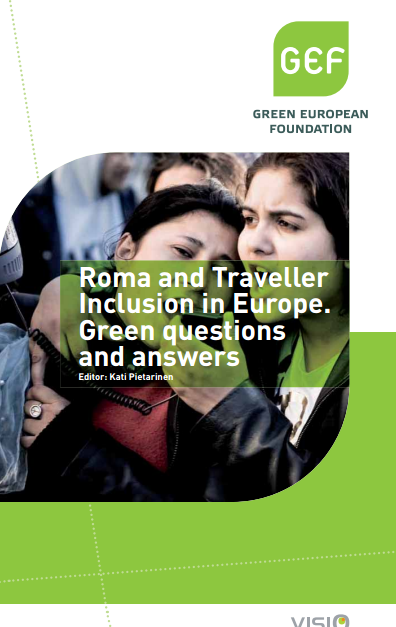
The book deals with questions related to Roma inclusion from a local, national and European perspective. In doing so, it identifies six key areas that need policy-making attention: living conditions, housing and health; employment; education; culture and language; racism and extremist aggression; and migration. For each of these topics, several good practices and solutions that make concrete steps towards greater inclusion are presented. When showcasing those good practices, we also point to those who have implemented them, in the hope to network these initiatives.

If multiplied, small steps in a good direction as those indicated in this publication could ultimately lead to a long-lasting solution to the current precarious situation of the European Roma. We hope you can take inspiration from these examples into your work!

Green New Deal in Poland: The Social Dimension

By Uncategorized

The crisis, as well as the proposed mainstream solutions which focus on fiscal austerity exclusively, don’t come without a social cost. This is illustrated by numbers, such as 50% youth unemployment in Spain; the cost of third level education, rising by 127% in Ireland; or a horizontal 15% pensions’ cut in Romania. Notwithstanding Greece, where consecutive adjustment packages to tackle the budgetary imbalances resulted in an increase in the already high numbers of people living below the poverty line and brought about a situation of imminent collapse of basic social infrastructure, such as health care. Over the last years, we have seen unemployment and social inequality on the rise in Europe, while the standards of the European model of social protection, labour law, collective bargaining rights or working conditions have seen frequent set-backs.

In the common market  of the EU, social policy has largely remained a competence of individual Member States, despite the Treaty of Lisbon and the Europe 2020 strategy detailing social policy objectives and concrete goals related to employment and poverty eradication. It is Member States who make the major policy decisions influencing the achievement of these goals. Embedded in this context, Zielony Instytut and the Heinrich-Böll-Stiftung Warsaw office initiated this Green European Foundation publication, attempting to link the European level trends, discussions and social policy goals to a concrete national example: Poland.


Social policy trends in Poland

In Poland, the developments in social policy seem largely unaffected by the crisis. As the European Trade Union Institute in its Policy Brief 2/2012 points out, “The crisis is essentially perceived and described as resulting from external factors, and in itself there exists no reason, therefore, to call into question existing national social arrangements.” Nevertheless, Poland has also seen a significant rise in economic inequalities in the last years, with a widening gap between those being able to harvest the benefits of Poland’s steady economic growth and the growing numbers of people who are left behind and feel the fruits of transformation are not available to them. This stratification of Polish society has effects in the radicalisation of the political scene, as we witnessed during the “Independence March” on November 11, 2012. The fierce political debate over the Polish pension reform (raising retirement age to 67 years) is another example of tensions in society. The hundreds of thousands of young people who already live abroad or are considering leaving the country cannot be seen as a sustainable solution for unemployment among the young generation in Poland.  The growing number of immigrants in Poland requires better access to the social system and integration programs, in order to create an open society of equal chances.

These are among the key topics this publication tackles in an attempt to give answers to what a Green social model for Europe could be: a model that preserves 20th century achievements, but sets out to innovate for the 21st century.

We have translated two of the contributions to this publication (“Social Policy – An Introduction” by Ryszard Szarfenberg and “Social Policy – Green debates” by Bartłomiej Kozek) in English, as well. You can download these below, alongside the publication in Polish.

Icon

Social policy - an introduction 0.00 KB 37 downloads

...
No file attached
Icon

Social policy - Green debates 172.64 KB 47 downloads

...

A Third Sector in Welfare

By Uncategorized

The Euro crisis has shown that the organisation and financing of welfare is of overwhelming importance for the development of European cooperation. Demographical changes, low efficiency, rigid bureaucracies, old traditions and strained public finances are creating new challenges. In many countries, thousands of small decisions have resulted in a paradigm shift from public to private ownership in the welfare sector, without a democratically legitimised general policy.

Public opinion has been taken by surprise and a counter-reaction has emerged in many countries. However, this counter-reaction has several different political colours, some being progressive and left-wing, and others being populist and right-wing.

The report, ‘A third sector in welfare: Green responses to privatisation of welfare services across Europe’, provides an overview of developments related to privatisation of the public welfare sector and the policies of Greens in five countries – United Kingdom, Germany, Hungary, Spain and Sweden – in response to this transformation.

Karl Palmas describes how the UK has always exerted a strong influence on other European countries with its social policies, while Frida Johnsson explains how a new wave of privatisation in Sweden is affecting the country’s social model, and how Germany has traditionally been seen to occupy a middle ground on private sector involvement. Erzsébet Gergely and Zoltán Zarándy highlight the difficulties faced by Hungary in overcoming its history of strong state involvement under communism, while Reyes Montiel gives an overview of the challenges facing Spain, where the welfare state remains in a weak position.

Work more? Work less? A report on working time

By Uncategorized

There are numerous reasons to assess “work” in the context of the Green New Deal. Clearly, a central goal of the sustainable transformation of our economy is to create quality green jobs. However, if we want to ensure prosperity and a decent quality of life for all, within the physical limits of our planet, old recipes will not work.

Working time could play an important role in the system change that is required. Working less is likely to improve the quality of life for all, ensuring a better balance between work and leisure or family time. By giving priority to free time over productivity and consumerism, a collective reduction of working time could promote more sustainable consumption patterns, increase community involvement, and achieve a better distribution of roles between women and men.

This publication addresses the multiple issues that are involved when considering changes to working times. It also looks at some of the challenges when considering this policy instrument. For example, what vocational training is needed to avoid skill shortage; how to finance such changes; and how flexibility should be organised at the micro and macro level in order to ensure collective as well as individual benefits? This publication aims to start a debate on what changes should be introduced to working time in Europe.

Read the publication in English here. 

Read the publication in German here.

Read the publication in French here.