Migration Workshop at FYEG Summer Camp

By

This event is a part of our ongoing transnational project “My Life According to me”: A New Narrative on Migration in Europe which aims to provide new positive narratives for migration in Europe and to counter the negative perception of migratory processes.

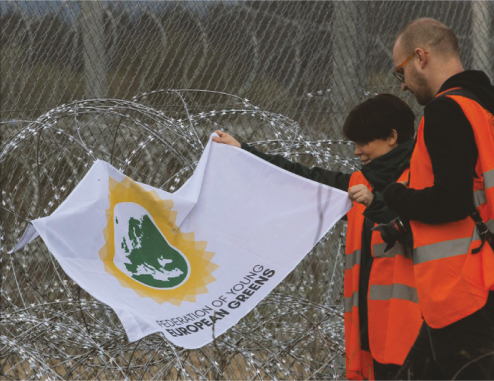
Therefore, our workshops at the FYEG Summer Camp aimed to empower young Greens to contribute to the creation of more welcoming and inclusive societies for migrants and refugees. A group of experts provided insights and practical skills for the participants on how to successfully shape positive narratives on migration and generate impact.

Date: 30 July 2017


refugees

Human Mobility & Borders at Univerde

By

PLENARY SESSION

This session will provide an analysis of the current situation and a space for debate about future perspectives for migration in Europe, tackling specific topics, such as xenophobia, protection of the Universal Declaration of Human Rights, the European policy on migration and asylum, etc.

This workshop is part of our ongoing transnational project “My Life According to me”: A New Narrative on Migration in Europe.

SPEAKERS

  • Joaquín Nieto – director of the OIT office in Spain;
  • Sami Naïr – political scientist, philosopher, sociologist and French professor;
  • Antonio Campillo – dean of the Faculty of Philosophy of the University of Murcia and president of the Spanish Network of Philosophy;
  • Claire Rodier – author of the book The Business of Xenophobia.

Moderator: Manuela Mesa, director of the Center for Education and Research for Peace (CEIPAZ).

Univerde IX

The ninth edition of Univerde is entitled “The Future of Europe: Democracy & Borders in the Era of Global Society”. Find more information on our webpage.

Video Training

Video Training in Madrid

By

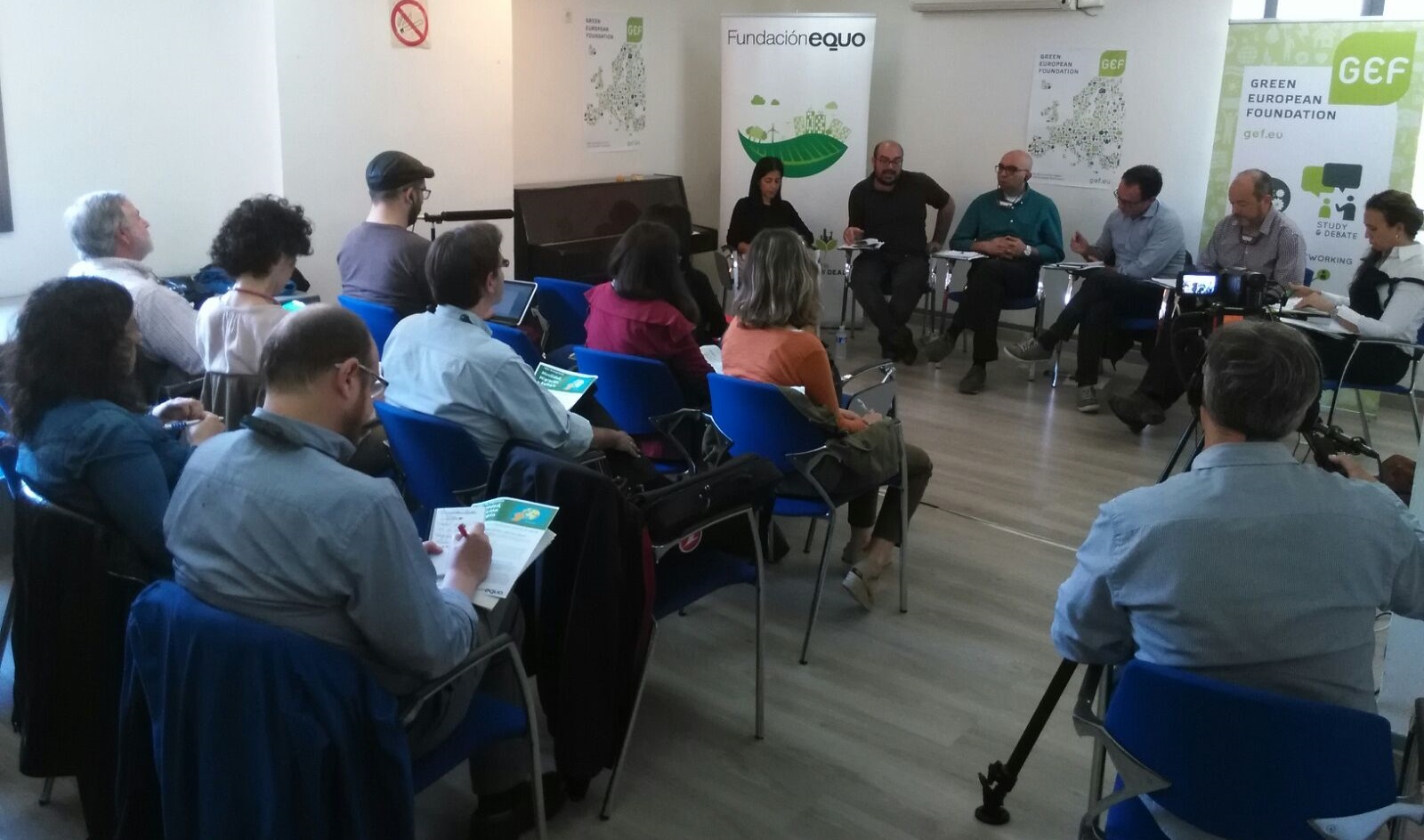
This training was organised together with Fundación EQUO as a part of the transnational project  “My Life According to Me: A New Narrative on Migration in Europe“, which empowers young migrants to tell their own stories by organising educational workshops in different European countries.

Training:

The training took place in Madrid between 15-16 July and it included free workshops on video making and video editing, which enabled the participants to produce their own story-telling materials.

Video Festival:

The results of the training  will be featured in the upcoming video festival, which aims to  provide an opportunity for migrants to show through images their daily lives and their contribution to European society in different areas, offering a new positive narrative on migration.

To find out more, visit the project platform: http://mylifeaccordingtome.eu/

Registration:

To take part in the training, please send an email to mylife@fundacionequo.es!

Photo Training

Photo Training and Exhibition in Thessaloniki

By

The photo training and exhibition of our partner Green Institute Greece is a part of the transnational project  “My Life According to Me: A New Narrative on Migration in Europe“, which empowers young migrants in different European countries to tell their own stories by organising educational workshops in the different countries.

Workshop

This event was hosted with the support of community organisation and media center MediaTerraNea. Under the guidance of trainers, the participants learned about photography, using photoshop and photo editing, along with other relevant practical skills necessary to prepare a successful exhibition. Training was facilitated by Athina Mourtiadou, the founder of Mediaterranea, Filippos Polyzoidis , a self-taught photographer and storyteller,  and Saleh Spyridon Darwish a volunteer providing translating services from Greek and English to and from Arabic.

Exhibition

Following this educational workshop, the photo exhibition was organised between 1 and 8 July 2017 in a public space in the city center of Thessaloniki. The aim was to provide space to  share stories of migrants directly with the the public through photography.

Location: 29A Plataion Str. Thessalonki

Dates: Exhibition opening is on 1 July at 20:00! The duration of exhibition is until 8 July, daily from 18:00 until 22:00.

To Migrate Is Human

By

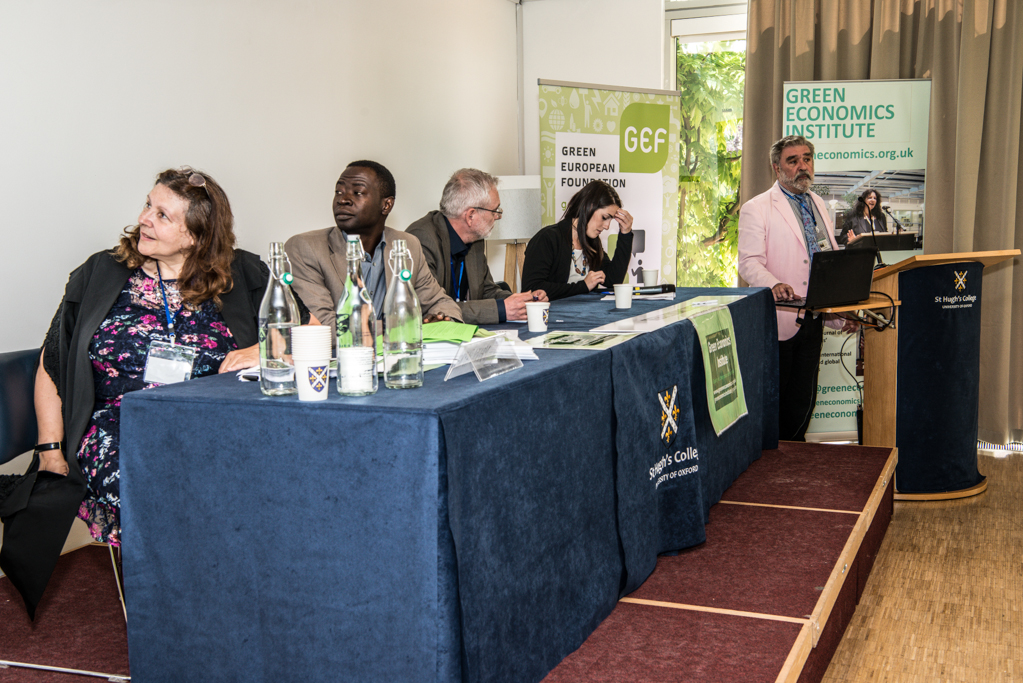
The debate provided a temporal and spatial tour of the facts around migration beyond the current primarily negative narrative.

Although migration is a human phenomenon and has always taken place, the global crises, such as the Syrian civil war, and migratory movements over the last decades have led to a revitalisation of the Nation State and to the return of borders.

The event aimed to explore historical examples and lessons of integration to highlight a way forward by proposing a constructive way to deal with migratory movements. By hearing the stories of migrants, the benefits for society were made clear. The event is a part of GEF’s transnational project in 2017, which wants to contribute to the development of a New Narrative on Migration for Europe.


More Information

Registration:  by sending an email to: greeneconomicsinstitute@yahoo.com

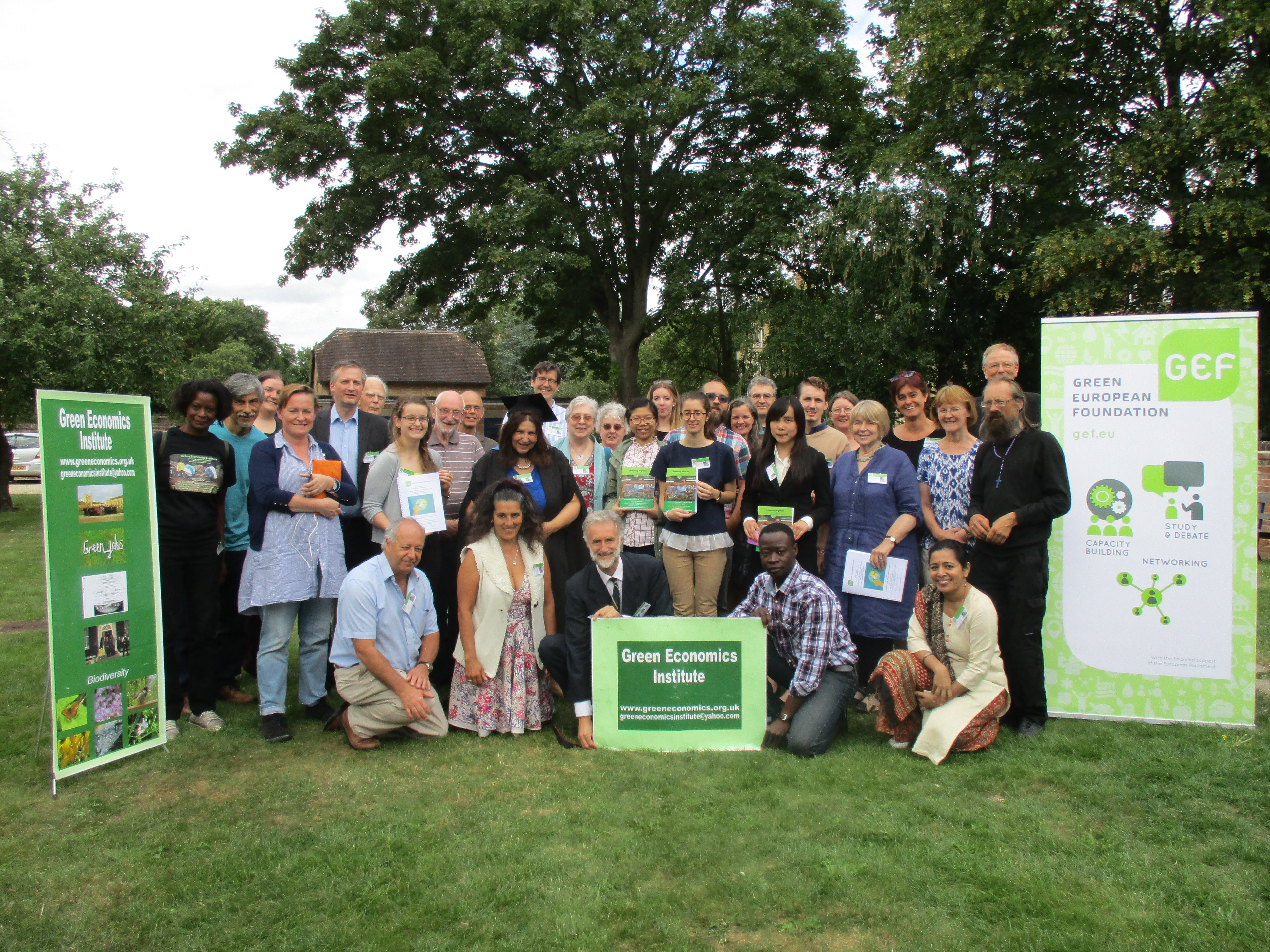
Date: 12 June 2017 (The event is taking place as part of the Green Economics Institute’s Annual Conference from 10 to 12 June)

Venue: St Hugh’s College, University of Oxford, United Kingdom

“Next To Us’’ A New Narrative on Migration in Europe

By Uncategorized

The project consisted of a set of events, organised by the above-mentioned institutions, aimed at identifying the main challenges in ensuring the wellbeing of migrants and asylum seekers in Europe. This report, which included the participation of the author in the 6 events organised in 5 countries between May and September 2016 in Spain (Barcelona and Madrid), Germany (Berlin and Munich), United Kingdom (Oxford) and Greece (Athens), was developed as part of this project with a twofold objective:

Firstly, it summarises the main findings from debates held within the GEF transnational migration project involving a wide range of actors, from policy-makers, civil society and refugees themselves;

Secondly, it provides an analytical view of the divergent trajectories of the debate to identify a solid common ground and to build a narrative that would precede new policy proposals offered by the Green political family.

You can read the report by accessing it below.

Workshop in Barcelona: EU Borders Management and Migration Policies

By

The programme of the workshop enabled a discussion on dismantling the European Fortress and the possibilities of alternative refugee and migration policies.

The first day of the event included a round-table debate on the role of the city in reception and social integration of refuges. Therefore, the focus here was on the situation occurring on the local level, with representatives from Austria, Germany and Barcelona.

During the second day, the workshop provided space for examining the context of the European refugee crisis and the externalisation of EU borders. These panels led to important conclusions about the impacts of the inner European policies that simultaneously affect the situation on an international level. Furthermore, the speakers provided interesting and different insights about the conditions in Libanon, Mellila and Italy, together with an overview of the development of general issues related to the refugees in recent years.

Finally, an additional topic was the question of the responsibility of European Union and its member states, along with the challenges of the Dublin Regulation. Here, Ernest Urtasun presented the Dublin Reform paper of the Greens at the European Parliament. This session evoked many questions and comments from the participants who valuated and criticized the Green position.

PROGRAMME:

  • DAY 1 (Friday, 6th of May)

18:00 -19:30  Welcome by Susanne Rieger (Co-President of GEF) and RoundTable: Refugee-City:  From reception to social integration moderated by Blanca Garcés (Resercher at Barcelona Centre for International Affairs)

  • DAY 2 (Saturday, 7th of May)

10:30 – 12-30 Welcome and opening remarks by Dolors Comas d’Argemir (Fundació Nous Horitzons), who will moderate Session I: The European Refugee Crisis and the Externalization of EU Borders.

13:00 – 14:30 Session II: European and States Members Responsibility. Challenges to the Dublin Regulation moderated by Gemma Pinyol (GRITIM-UPF)

14:30 Closing Session by Susanne Rieger

LOCATION: Centre Cívic Convent de Sant Agustí (Carrer del Comerç, 36) Barcelona

RELATED CONTENT: Debate videos from the second day of the event are available for streaming in Spanish.

Video 1 | Video 2

Conference on Migration and Refugees Policy in Madrid

By

This event offered important insights into the current migration policy crisis in Europe, and more specifically about systematic problems affecting the refugees and asylum seekers. It provided a multitude of perspectives on the situation coming from experts working in immigration services, NGO professionals active in this field, along with local and regional politicians. The programme of this one-day event includde workshops and discussions, with topics detailed below.

PROGRAMME

11:30 to 14:00 Workshop (Invitation Only)

It served as a meeting place where the experts responsible for immigration and refugees told about their experiences in this field and the problems they come across in order to carry out the work of reception and integration of refugees. Through these shared experiences we tried to find channels of practical action that can be implemented within the competence of governments on national, regional and local levels.

Moderated by: Marta Carballo

Speakers:

  • Ione Belarra (Podemos national MP) who exposed  the role of the Spanish government in this crisis, focusing on the management and implementation of their commitments, along with the analysis of reception and access to asylum in Spain.
  • Estrella Galán (CEAR Secretary General) who made a summary of the current refugee situation in Spain, and the role of NGOs;
  • Manuel Soria (Activist and Member of EQUO political party) who reflected on the aspects of integration policies and immigrant and refugee reception from his experience in the cities of Ceuta and Melilla.

17:00 to 19:00 The European Dis-unity on Refugees

This roundtable dealt with the shift of European policy in regards to the asylum and refugees. Furthermore, it provided a discussion amongst prominent NGO experts on the agreements with developing countries, with particular relevance of the EU-Turkey deal and its consequences.

Moderated by: Cecilia Carballo (President of EQUO Foundation)

Speakers:

  • Maria Giovanna Manieri (Political Advisor on Migration and Asylum for the Greens/EFA group in the European Parliament);
  • Sagrario Martín (President of Doctors of the World Spain)
  • Joaquín Nieto (Director of the International Labour Organisation in Spain).

19:00 to 20:00 Fortress Europe or Open Europe?

This session presented the experiences and perceptions of society towards migration and refugees, the treatment by the media and its influence within society. The campaign “Do not be entangled” was also presented.

Moderated by: Reyes Montiel (EQUO Foundation)

Speakers:

  • Sergio de Otto (Communication Expert);
  • Manolo Soria (Activist and EQUO Melilla Spokesman);
  • Rosabel Argote (CEAR Euskadi) who will presentation of the campaign “Do not be entangled”.

LOCATION: Centro Cultural Galileo – C/Galileo 39, Madrid, Spain 

For further information head over to EQUO event page.

“Green Perspectives on Migration, From Global to Local” Conference in Oxford

By

This conference is a part of our transnational Refugees and Migration Policies project. It aimed to provide a space for debate about the implications of the Refugee and Asylum Policies crisis in Europe, and to foster Green alternatives in terms of solutions and best practices of integration. Furthermore, this was an opportunity to bring forward the cases of Green activism with successful outcomes in enabling integration in the European context.

The programme of the conference included lessons of contemporary integration models from Green professionals in the field, research inputs from relevant academics and debates on practical proposals for Green policies towards migration.

PROGRAMME:

11h00 – 12h00 Framing the Debate & Introducing the Issues;

12h00 – 13h00 Framing the Debate at the European Level;

14:00 – 15:00 Experts in Practise and Policy: Integration?;

15h00 – 16h00 Experiences, Policies and Solutions around Migration in European Union;

16h00 – 17h00 Refugee Journeys through time and space: Green Solutions at the Local Level.


SPEAKERS:

  • Professor Marie Louise Seeberg,  Professor of Migration Studies;
  • Sushilla Dall, Manager at The Refugee Resource Centre;
  • In addition to Speakers and Professional Economists from Norway, Turkey & Egypt and Sicily with Green Experts & Policy Makers.


LOCATION: Kellogg College, University of Oxford, UK

TIME: 31st of July 2016, from 11h00 to 17h00

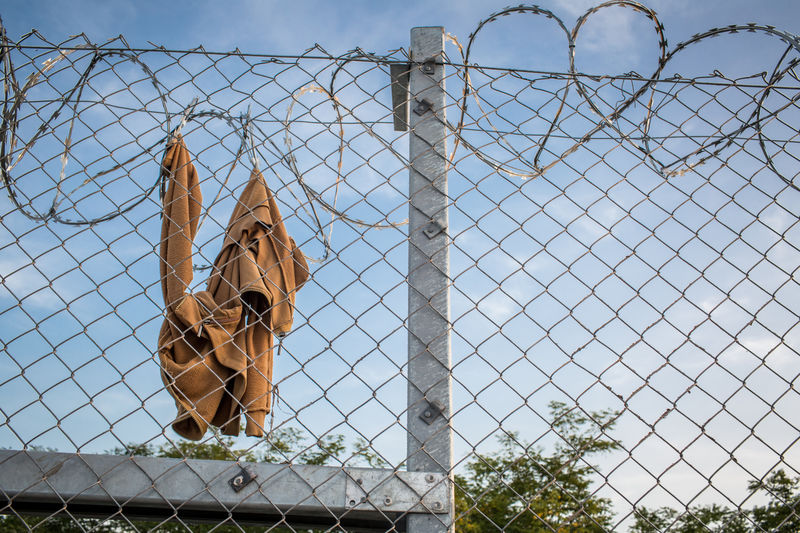
“Universal Human Rights in Europe’s closed borders” Conference in Greece

By

This event is a part of our Refugees and Migration Policies project, which highlights the local context as a space in which the European and national realities intersect in their impact on the situation with refugees and asylum seekers.

The conference provided analysis of human rights in the context of closed European borders. The first part of the event focused on the political direction of the European Union and it addressed the latest EU policies, EU-Turkey deal and relocation schemes. The second part focused on the societal dimension with insights into the role of civil society, integration and education.

PROGRAMME:

09h30 Registration Opens

10h00 – 10h45 Welcome by Susanne Rieger, co-Chair of GEF and Olga Kikou, President of the Green Institute

PART 1: Is Europe’s migration policy headed in the right direction?

10h15-11h00 Is the EU-Turkey Agreement a necessary compromise or a retreat at the expense of human rights? Following the latest developments, does Turkey constitute a reliable partner for the EU? The “Visegrad” countries are “fortified” against the refugee flow. Are there any alternative policies?

Moderator:  Alexandros Georgopoulos, Member of the Board, Green Institute Greece

Speakers:

  • I. Mouzalas, Alternate Minister of Migration
  • K. Tsitselikis, President of the Greek Association for Human Rights, professor at AUTH
  • J. Lambert, MEP, European Green Party, UK
  • G. Dimaras, MP elected by SYRIZA, member of Ecologists Greens, Greece

11h15-12h00 Relocation and Resettlement Plan: an effective political tool or EU’s double talk? Which initiatives should be adopted at national and European level? Turkey and Treaty of Geneva. Greece: Reconsideration of the framework of the Treaty of Dublin. A Common European Asylum Service. An evaluation of the European peace initiative.

Speakers:

  • N. Syrmos, Asylum Service, Independent Relocation Unit
  • Μ. Tremopoulos, former MEP of Ecologists Greens, Greece
  • D. Kapetanaki, Representative of the UN Refugee agency (U.N.H.C.R.)
  • G. Spyropoulou, Representative of Amnesty International

PART 2: The social dimensions of the refugee issue:  European and Greek policy towards the refugees

12h30-13h30 Europe’s approach towards the refugees. What is the potential of Europe and Greece to host refugees? Examples of self-organized refugee care structures. Relocation prospects for refugees in EU countries.

Moderator:  Vedran Horvat, Institute for Political Ecology, Croatia

Speakers:

  • M. Peteinaki, co-spokesperson of Ecologists Greens, Greece
  • P. Konstantinou, Movement United Against Racism and Fascism Threat (Κ.Ε.Ε.R.F.Α.)
  • T. Katerini, President of  Architects’ Society (S.A.D.A.S)
  • E. Papagiannakis, Deputy Mayor, Chair of Immigrants’ Integration Council

13h45-14h45 NGOs and volunteer groups and the «disabled» Greek State. Challenges and recommendations for a more effective coordination.

Speakers:

  • G. Charitakis, Volunteer doctor, NGO ‘Doctors of the World’
  • S. Alexopoulos, Representative of the group «Pampeiraiki Initiative»
  • M. Kloka, Human rights sector, NGO PRAKSIS
  • P. Dragatis, Social Worker, Representative of the Greek Red Cross

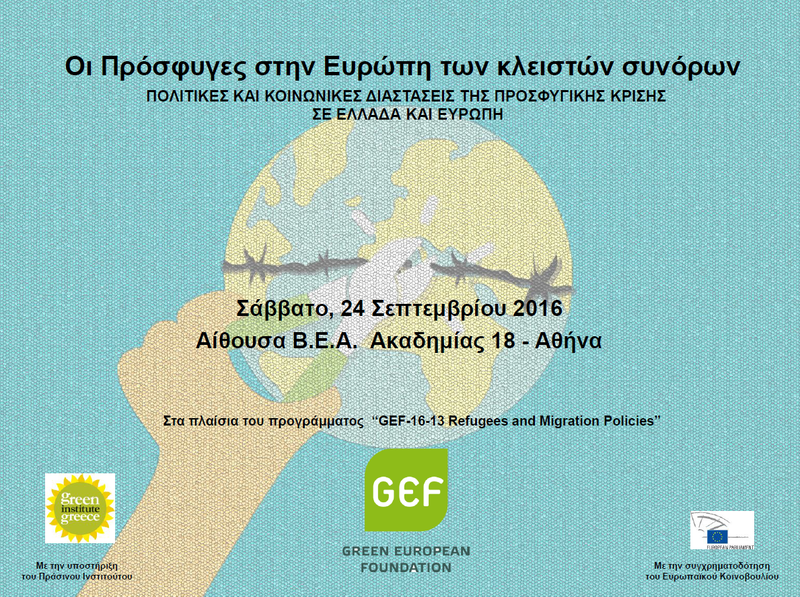
TIME & VENUE: Saturday, 24th of September 2016, from 9h30 until 15h00 at B.E.A Hall, 18 Akadimias & Voukourestiou Street, Athens

MORE INFO: Event announcement is available in Greek on this webpage.

Migration & Refugees: A New Narrative for Europe

By

The workshop addressed the need to develop a new and positive narrative on migration and refugees to create public interest and counter the anti-immigration and xenophobic rhetoric in European countries. The event was held on Friday, the 2nd of December, between 19h00 and 20h30 at the 25th Council Meeting of the EGP in Glasgow. It featured an insightful debate with relevant speakers, listed here:

  • Noureddine Erradi, Chairman, Integration for All
  • Maria Giovanna Manieri, Advisor on Civil Liberties, Justice and Home Affairs, Greens-EFA Group in the European Parliament
  • Olga Kikou, Director of Green Institute Greece and GEF Board Member

The debate will be moderated by Susanne Rieger, Europe representative, Foundacio Nous Horitzons & GEF Co-President.

BACKGROUND:

In 2016, the majority of European citizens see the “migration crisis” as the biggest threat to the EU, ahead of the threat of terrorism. While the majority of EU citizens are in favor of an EU policy on migration, just above a third of Europeans say that immigration of people from outside the EU evokes a positive feeling while a majority of citizens have negative views. This development in public opinion goes hand-in-hand with the emergence of right-wing populist movements and parties who propose a narrative around migration based on feelings of fear and uncertainty.

Throughout 2016, the Green European Foundation, together with Fondacio Nous Horitzons (Catalonia), Green Foundation Greece, EQUO (Spain), Green Economics Institute (UK) and Institute for Political Ecology (Croatia) developed a project to highlight the local context as a space in which the European and national realities intersect in their impact on the well-being of refugees and asylum seekers. As a result of this project, the need to develop a new narrative on migration was identified as a means to counter the current negative sentiments on the topic.


Paving the way for a Green debate on Refugee, Asylum & Migration Policies

By Uncategorized

This analysis is based on an overview of public documents, such as European Green Party resolutions and public positions of the Greens in the European Parliament, and a summary of the study commissioned by the Green European Foundation at the end of 2015.

The study provides an overarching assessment of where the Green parties across Europe stand on migration, asylum and refugee policies. It is based on a questionnaire answered by representatives from several Green political parties across Europe between October and December 2015, and is titled, “Towards a Common Green Response: Points of agreement, disagreement and issues for further internal debate among European Green parties on refugee and migration policies”. The purpose here is neither to name and shame, nor to reveal a ’silver bullet’ solution. The objective is rather to provide the groundwork for a wider debate within the European Green political family to ultimately come forward with common proposals to face the challenges ahead.

In this brochure, you can find the main findings of the study summarised in three themes: common ground amongst national Green parties; points of divergence; and open questions.

A PDF version of the document is available for download here!

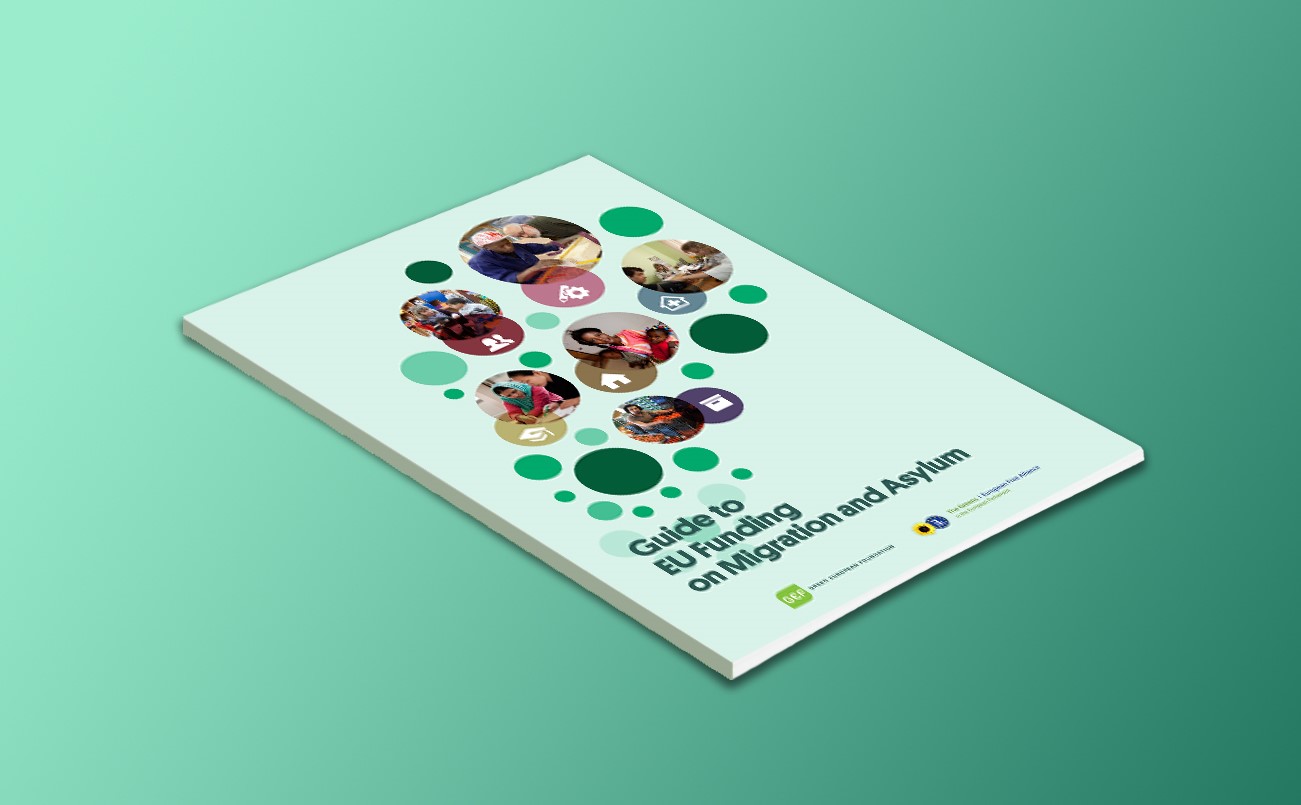
The Guide to EU Funding on Migration and Asylum

By Uncategorized

In the absence of a common European response that treats migration as a human phenomenon and manages it as such, the task of welcoming and accommodating migrants and acting as their first personal contacts has mainly been taken on by local and regional authorities, non-governmental organisations and activists, who continue to play a key role in providing initial reception and access to services and fundamental rights for migrants and refugees. In this context, this guide builds on the idea that the best practices of how to welcome refugees and asylum seekers and work towards successful integration can be found in local communities and initiatives throughout Europe.

Therefore, the objective of this guide is to actively support the work of these local actors, organisations and institutions with a one-stop source of information on additional financial assistance offered by the EU. This guide provides a quick and easy overview of the relevant EU funding opportunities, with key information and practical inputs in regards to accessing them. Special attention is given to projects that foster integration, social inclusion and a better quality of life for migrants, refugees and asylum seekers.

A hard copy of this guide can be ordered by sending an email to: info@gef.eu

This publication as a PDF file is available for download in following versions: