The Tilting City

By Uncategorized

Context

Three out of four Europeans live in a city. Therefore, cities are essential to lead the transformation to a socially and ecologically just society. This radical change is more urgent than ever, as IPCC reports remind us: already 3.5 billion people are highly vulnerable to climate impacts. Different cities suffer from diverse ecological impacts and will be differently affected by climate change. And within cities, certain groups are more exposed to the effects of air pollution, noise, and extreme temperatures than others. Without thoughtful politics and policies, the most vulnerable will suffer the consequences. In this context, ecological justice is vital. Taking inequalities into account and repairing the damage to these people’s lives but also holding those most responsible for the climate crisis to account.

‘’When imagining cities, we for instance cannot lose sight of the farmer in rural areas feeding urban mouths, or the homeless person at the city centre bus station.’’

Objectives

This publication aims to draw an image of what the city of the future could look like. The authors show alternatives to the current urban models and how they can be future-proof. This text will hopefully serve as a valuable source of information and bring up new thoughts among citizens activist, policymakers and everyone interested in exploring ethical and ecological ways of living in cities in the 21st century.


Project Background

This publication is part of Cities as a Place of Hope project of the Green European Foundation. With this project, we aim to create a strong communication network and solidarity network that will enable access to information and policies by compiling experiences and needs on sustainable and green city governments and related policies together with green associations in different cities in Europe. In this study, making the city’s actors effective and visible in city policies is one of our biggest goals.


Dowload

Available in Turkish

Available in Polish

Available in Greek


This report has been realised by the Green European Foundation with the support of  Oikos, Green Though Association and the financial support of the European Parliament to the Green European Foundation. The European Parliament is not responsible for the content of this publication.
Sketches of a New City

By Uncategorized

Context

While no city is the same, one thing all have in common is the challenge of creating a society that is fit for the future. Some of the most present problems citizens living in cities are experiencing are the effects of climate change–such as rising heat or lack of water. On a political level, cities often lack opportunities for citizens to actively engage and be part of decision-making processes on citie’s future.

Far too often, big and ambitious projects end with failures. We want to start in the opposite way – with small sketches; with working material that can in time develop into something durable and resilient’’

Objectives

In this publication, researchers, scholars, practitioners and activists share their insights gained through the direct experience and empirical evidence on the daily struggle of key changemakers at the municipal level aiming to inspire and educate citizens all over the world.


Project Background

This publication is one of the results of IPE’s participation in the GEF transnational project “Cities as Places of Hope – Resilient Cities”, where we aimed to vividly illustrate the most recent developments in some European cities and trace the pathways through which they can develop resilience, increase the well-being of citizens, reach ecological sustainability, and achieve more social justice.

Available in

Translations

Available in Macedonian

Available in Greek


This report has been realised by the Green European Foundation with the support of the Institute for Political Ecology, and the financial support of the European Parliament to the Green European Foundation. The European Parliament is not responsible for the content of this publication.

Diversity and Inclusion (DEI): A Starting Guide

By Uncategorized

Context

There is no quick fix to the dangers democratic systems are facing, but one thing is certain: building an open and inclusive society will take consolidated efforts to restore civic participation and dialogue which goes way beyond election day.

Diversity and inclusion start at the organisational level, by adopting adequate policies that helps attract and retain a diverse set of talent.


Objectives

With this short pocket-guide, you are invited to dive into the topic of diversity and inclusion, a mental framework which invites for self- and organisational- reflection. While not pursuing the ambition of an all-encompassing guide, it aims to pose the question: “Are you, your team and your organisation ready to engage in open, respectful, and inclusive dialogue with diverse groups in society?”


This publication has been realized with the financial support of the European Parliament and the Robert Bosch Stiftung. The European Parliament and the Robert Bosch Stiftung are not responsible for the content of this publication.

Regional Responses to Climate Change Through Regional Adaptations

By Uncategorized

Context

In its European Adaption to Climate Change, the EU presents the objective suggested to support 150 European regions and communities  working on climate resilience measures until 2023. It particularly takes into account the different ways that regions all over European are affected by Climate Change and how the European Union can support regions and local communities in the process of adjusting to the already existing and predicted effects of climate change on the daily lives of different communities.

The European Union should orient its climate change policy towards a policy mix that includes both Adaptation and Resilience to Climate Change. The former implies a more passive and reactive approach to mitigating the effects of Climate Change, while the latter indicates an active mitigation response.

Objectives

Based on the outcomes of the project Regional Responses to Climate Change,  this study offers insights on the implementation and response to the Regional Climate Change Adaptation Plans in the context of Greece and proposes a potential regional and local response to the predicted impacts of climate change .

Project Background

The “Regional Responses to Climate Change” project explores what a regional climate adaptation-resilience Plan would look like through a rethinking of policies for a new concept of infrastructure investments.

The creation of the publication has been possible thanks to the input from a large number of contributors, including: Panagiotis Panagos, Stavros Solomos, Demosthenes Sarigiannis, Rigas Tsiakiris, Panagiotis Vouros, Ilias Gianniris,  Elias Gianniris, Mirto Garis, Rigas Tsiakiris, Michael Bakas, Philippos Ganoulis, Nikos Poutsiakas and Costas Papakonstantinou.


This Publication is also available in Greek


This report has been realised by the Green European Foundation with the support of the Greek Green Institute, and the financial support of the European Parliament to the Green European Foundation. The European Parliament is not responsible for the content of this publication.
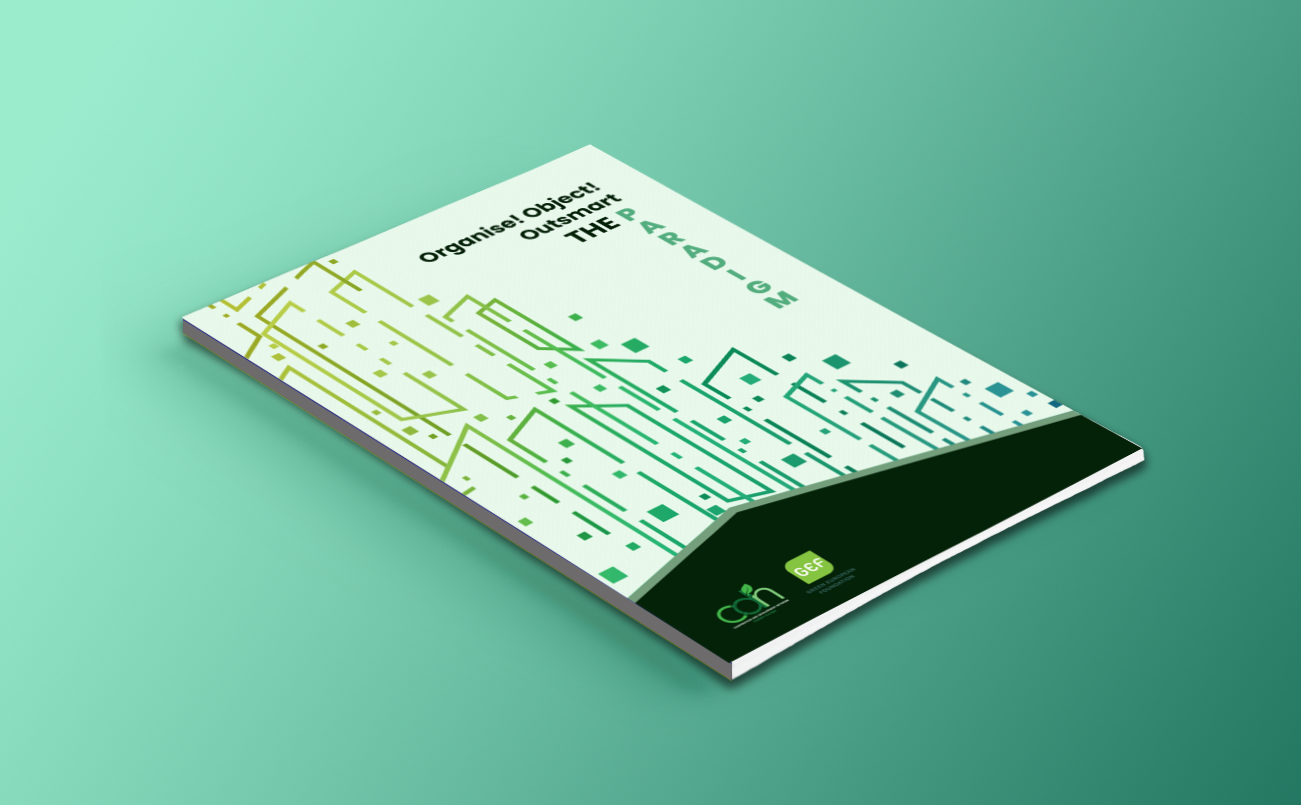
Organise! Object! Outsmart the Paradigm!

By Uncategorized

Read this publication and use it to learn about smart cities with an added Eastern European perspective, have some fun along the way and feel empowered enough to promote the critical solutions for smart city implementation in your city!

The Charter for the Smart City was produced as part of the project of the same name, and puts the values of democracy, connectedness, human dignity, privacy,  sustainability, and equality at the heart of smart cities. Local politicians and active citizens who share these values may use the principles in the Charter as starting points for democratic debate and informed moral judgment on technological innovations in their communities.


Also available in Albanian, Croatian, Russian and Turkish.


This publication was produced within the project “Charter for the Smart City II” organised by the Green European Foundation (GEF) with the support of Cooperation and Development Network Eastern Europe (CDN) and Wetenschapellijk Bureau Groen Links. It has been realised with the financial support of the European Parliament.

Hold Your Local Hackathon on Social Rights

By Uncategorized

This guide has been created for those who wish to organise a hackathon on social rights, based both upon best practices from the world of tech and the experiences of the authors in running the more rights-based hackathon that took place in Serbia, Summer 2019.

Hackathon on Social Rights is published by the Federation of Young European Greens and is a result
of the Reclaim Your Social Rights! project.

The project is supported by the European Youth Foundation of Council of Europe . The Summer Hackathon is organised by the Green European Foundation with the support of the Federation of Young European Greens and with the financial support of the European Parliament to the Green European Foundation. The Council of Europe or the European Parliament are not responsible for the content of this project.


Download

Available in Greek

How to Design an Online Course

By Uncategorized

The Green European Foundation (GEF) and Green Group in the European Parliament (Greens/EFA) promote education and training and provide opportunities for building capacity and encouraging networking among Green actors across Europe.

Our aim is to raise awareness among citizens about Green solutions to the challenges Europe faces, and to enhance the ability of activists, politicians and citizens to work on issues with a European dimension.

To this end, we have initiated an online learning programme which complements our face-to-face trainings and uses the potential of digital tools to bring together European actors to learn, discuss and expand their networks.

Objective

After a successful experience in implementing an online learning programme – “Impact Europe: Online Course for Green Activists”, we have developed this guide to empower other organisations interested in online education to develop their own courses.

Methodology

The structure of the guide follows the entire process of developing an online course – preparation, production, testing, launch and follow up. Each chapter of this guide is dedicated to one of the main stages in the process of developing an online course and contains:

  • Practical information on the main elements to keep in mind during the respective stage of developing your course;
  • Case studies in which we share best practice based on the GEF-Greens/EFA online course “Impact Europe: Online Course for Green Activists” as the example;
  • Tip boxes as additional advice from our team on implementing specific aspects of the course;
  • Expert advice provided by online learning experts, content managers and audio-visual specialists.

The Guide to EU Funding on Migration and Asylum

By Uncategorized

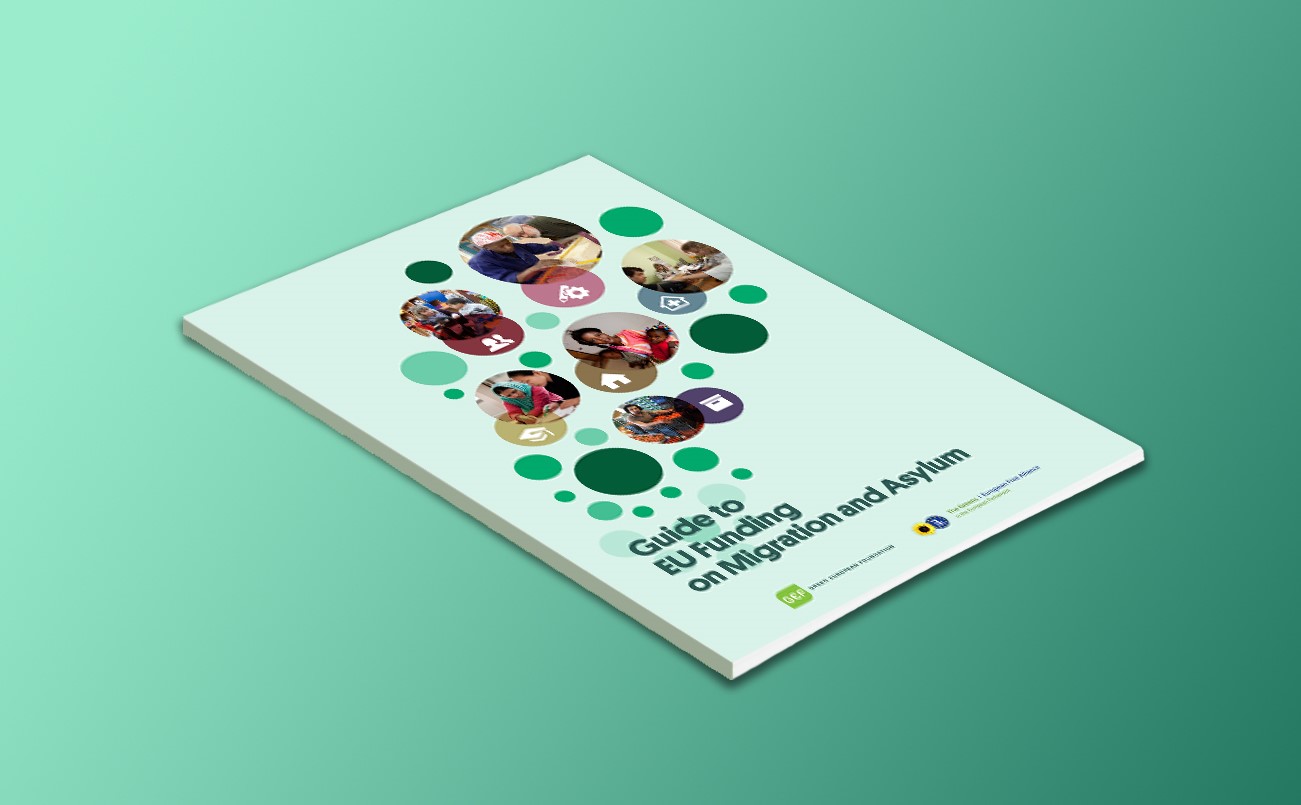
In the absence of a common European response that treats migration as a human phenomenon and manages it as such, the task of welcoming and accommodating migrants and acting as their first personal contacts has mainly been taken on by local and regional authorities, non-governmental organisations and activists, who continue to play a key role in providing initial reception and access to services and fundamental rights for migrants and refugees. In this context, this guide builds on the idea that the best practices of how to welcome refugees and asylum seekers and work towards successful integration can be found in local communities and initiatives throughout Europe.

Therefore, the objective of this guide is to actively support the work of these local actors, organisations and institutions with a one-stop source of information on additional financial assistance offered by the EU. This guide provides a quick and easy overview of the relevant EU funding opportunities, with key information and practical inputs in regards to accessing them. Special attention is given to projects that foster integration, social inclusion and a better quality of life for migrants, refugees and asylum seekers.

A hard copy of this guide can be ordered by sending an email to: info@gef.eu

This publication as a PDF file is available for download in following versions:

European Citizens’ Initiative – updated edition

By Uncategorized

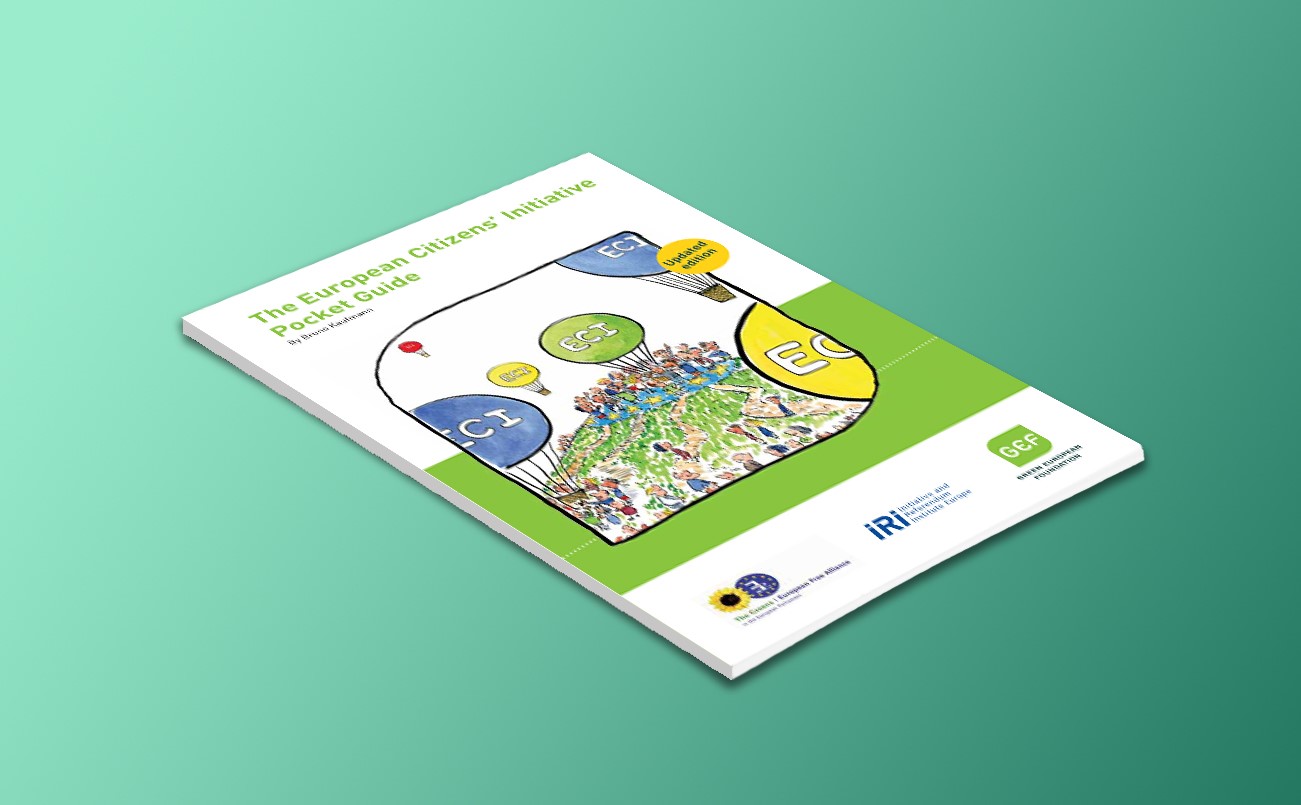
The European Citizens’ Initiative gives citizens the right to set the agenda of the European Union and establishes a truly multifunctional means of providing checks and balances for what happens in the EU. This Pocket Guide offers readers the knowledge and insights necessary to make effective use of this new instrument.

In the six months that passed from the launch of the ECI instrument, 25 European Citizens’ Initiatives have been filed. Of these, 14 were registered by the European Commission, while others were rejected or withdrawn. The main challenge these first initiatives faced was related to the establishing a functional Online Collection System of signatures. In order to support the first initiatives, the European Commission offered organisers free servers in Luxembourg and decided to postpone the official start for the collection of signatures to August 2012, to make up for these initial set-backs. Even so, to date, only one of fourteen registered ECI’s is able to collect signatures online.

With this new edition of the ECI Pocket Guide, updated with the latest news and links to further sources of information and support, GEF aims to assist ECI organisers in their difficult challenge of pioneering European participatory democracy.

This updated edition has been produced by GEF for the Greens/EFA Group in the European Parliament.

How to use this Pocket Guide?

The Pocket Guide is divided in 3 sections which address the following questions, respectively: how can you use the ECI? What are the requirements you have to fulfil to successfully complete an ECI? Where can you find assistance for your ECI?

The ECI KEYCHAIN helps organiser identify the most suitable approach to an ECI. It details the various goals that an ECI can serve, such as introducing new ideas on the European legislative agenda, stopping existing legislation or acting as a platform that mediates between different legislative approaches.

The ECI PATHFINDER is a manual to assist ECI organisers or potential signatories to find their way through the often lengthy and sometimes cumbersome procedure of an initiative. The manual develops the 10 step approach to a European Citizens’ Initiative, already detailed in GEF’s earlier publications: The European Citizens’ Initiative Handbook and the flyer 10 Steps to the European Citizens’ Initiative.

The ECI RESOURCE CENTRE provides a wealth of details on the constitutional foundations, legal statutes and procedural regulations of the ECI. This chapter has been completely updated.

Order your copy now!

Would you like an own copy of the Pocket Guide? Then send us e-mail at info@gef.eu and we’ll send you one.

Successful pilot ECIs

GEF’s Campaign Handbook covered a number of successful ‘pilot ECIs’. These were efforts by NGOs and civil society groups to gather 1 million signatures in order to influence the EU’s agenda. They were inspired by the ECI, but took place before the ECI comes into effect on April 1st 2012.

1 million European Citizens for better animal welfare
Europeans unite for fair roaming
European Disability Forum and their ground-breaking ECI

4450 template=”link-template-calltoaction3.php”]

Europe for Beginners: A Green Guide to the EU

By Uncategorized

It is more evident than ever that politics at a national level alone cannot provide the solutions for the most challenging issues of our time. In this sense, a true European response is fundamental in ensuring a success of the causes the Greens are fighting for: environmental protection, an efficient use and a safe and sustainable production of energy, a reorientation of our economy to guarantee social inclusion and social security and – on the world stage – peace, development and the consolidation of democracy and fundamental rights.

But all of this cannot be achieved without genuine conversation and participation of both European politicians and the citizens they serve. In order to inspire them to engage with the European Union and work with colleagues across borders, this book aims to change the perception of the EU as a complex institution, which is hard for citizens to interact with.

Through an accessible and reader-friendly format, Europe for Beginners presents some of the most useful information on how the EU operates: what the different institutions do, how decisions are made, how EU law is enforced and how the EU is funded. It also includes a discussion of the role of democracy, the rights of European citizens and the challenges for a true European democracy, such as the power of lobbies.

Downloads this manual in English, French, Spanish, Czech or German below.

Icon

Europe for Beginners EN 3.22 MB 277 downloads

...
 
Icon

Europe for Beginners FR 5.85 MB 201 downloads

...
 
Icon

Europe for Beginners ES 3.24 MB 603 downloads

...
 
Icon

Europe for Beginners DE 3.25 MB 119 downloads

...
 
Icon

Evropa pro začátečníky 3.49 MB 134 downloads

...