GEF

The Greenhouse Training – March 2025 Edition: Taking Stock

By Greenhouse

About The Greenhouse: Training for Activists 

The Greenhouse Training is an intensive residential training for activists, thinkers, organisers, and anyone committed to shaping a vibrant, sustainable, and democratic Europe. Rooted in political ecology education, the training combines participatory methods, community-building, and expert-led workshops and debates.During the training, participants deepen their understanding of the roots and trajectories of the Green movement, explore pressing societal challenges through a European lens, strengthen core competences in areas like rhetoric and debating, and become part of the Greenhouse Community – giving them access to further opportunities for training, networking, and mentorship. 


Key Takeaways 

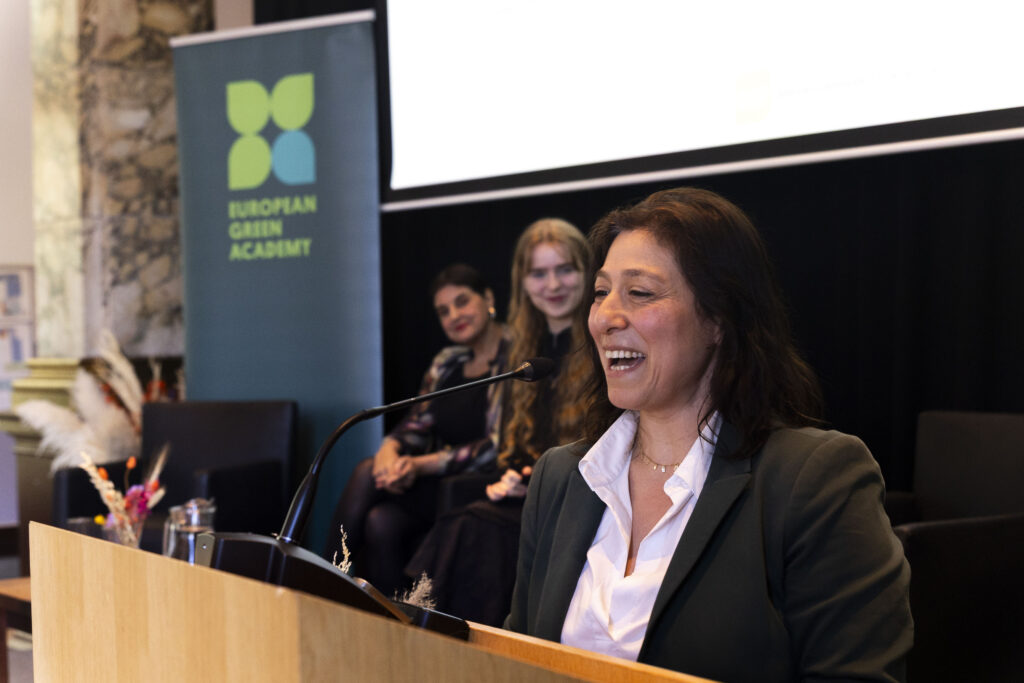
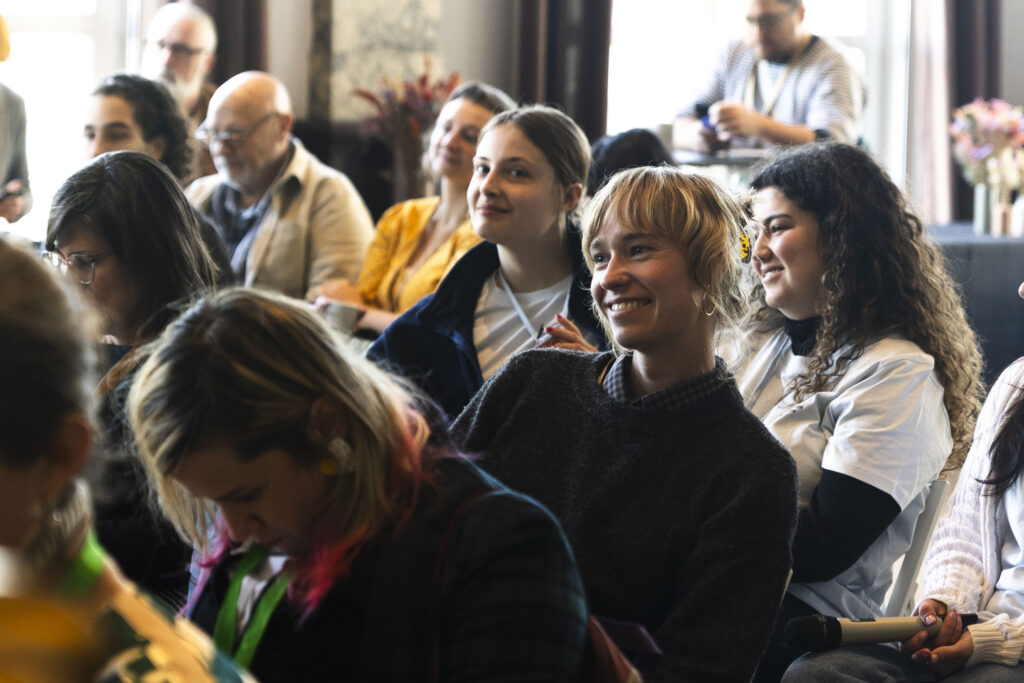
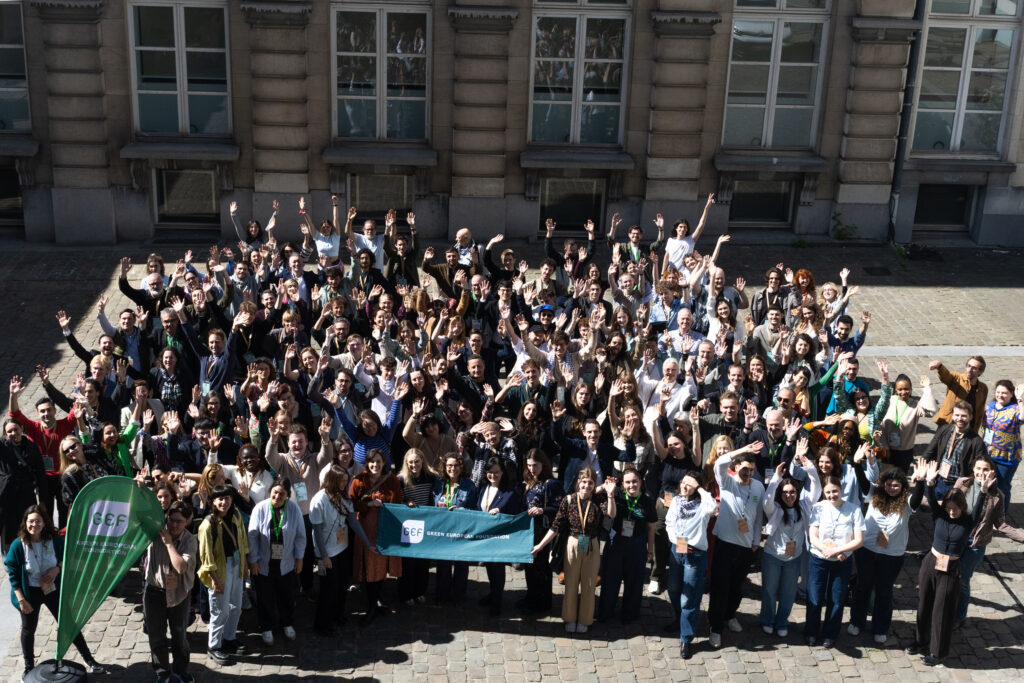
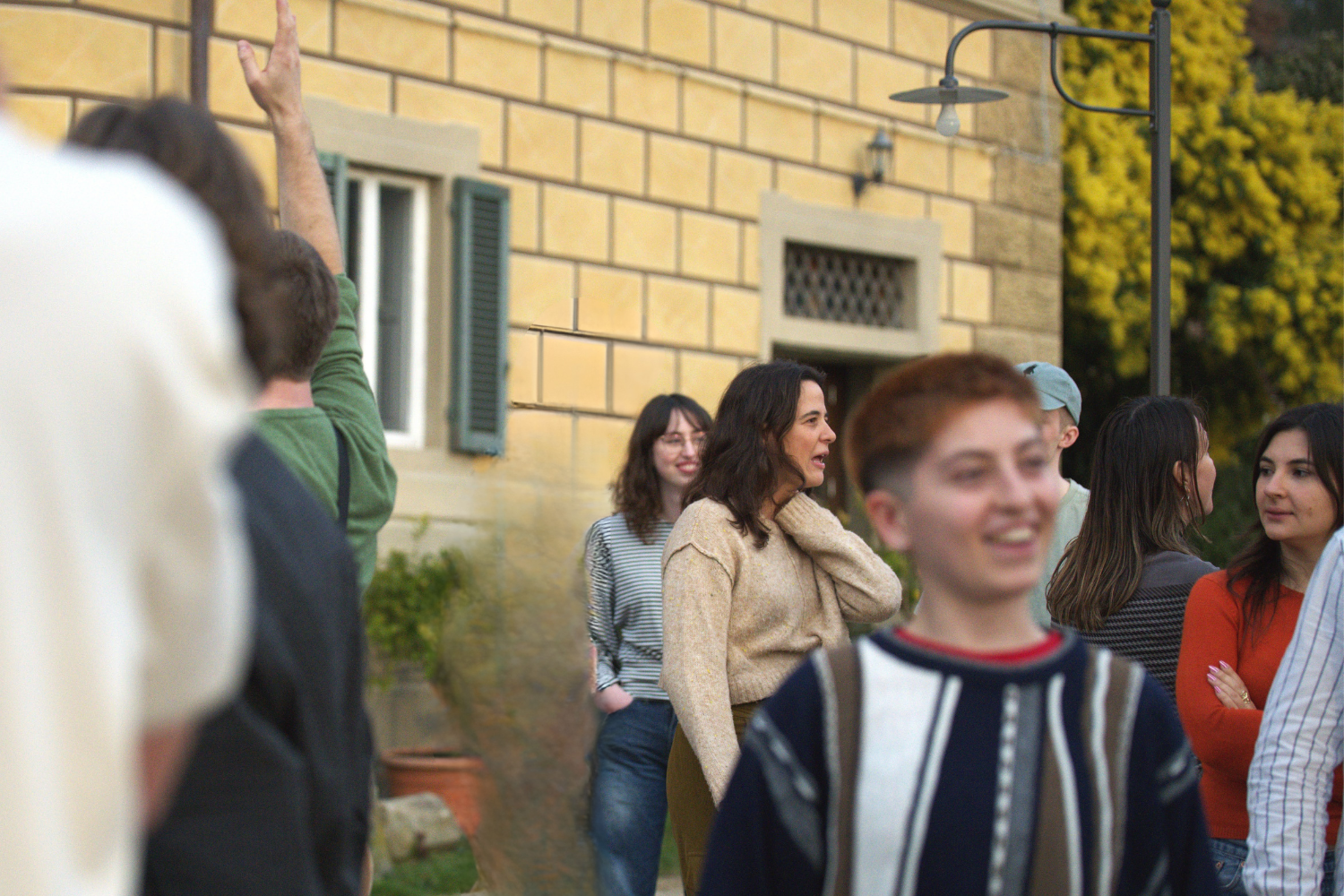
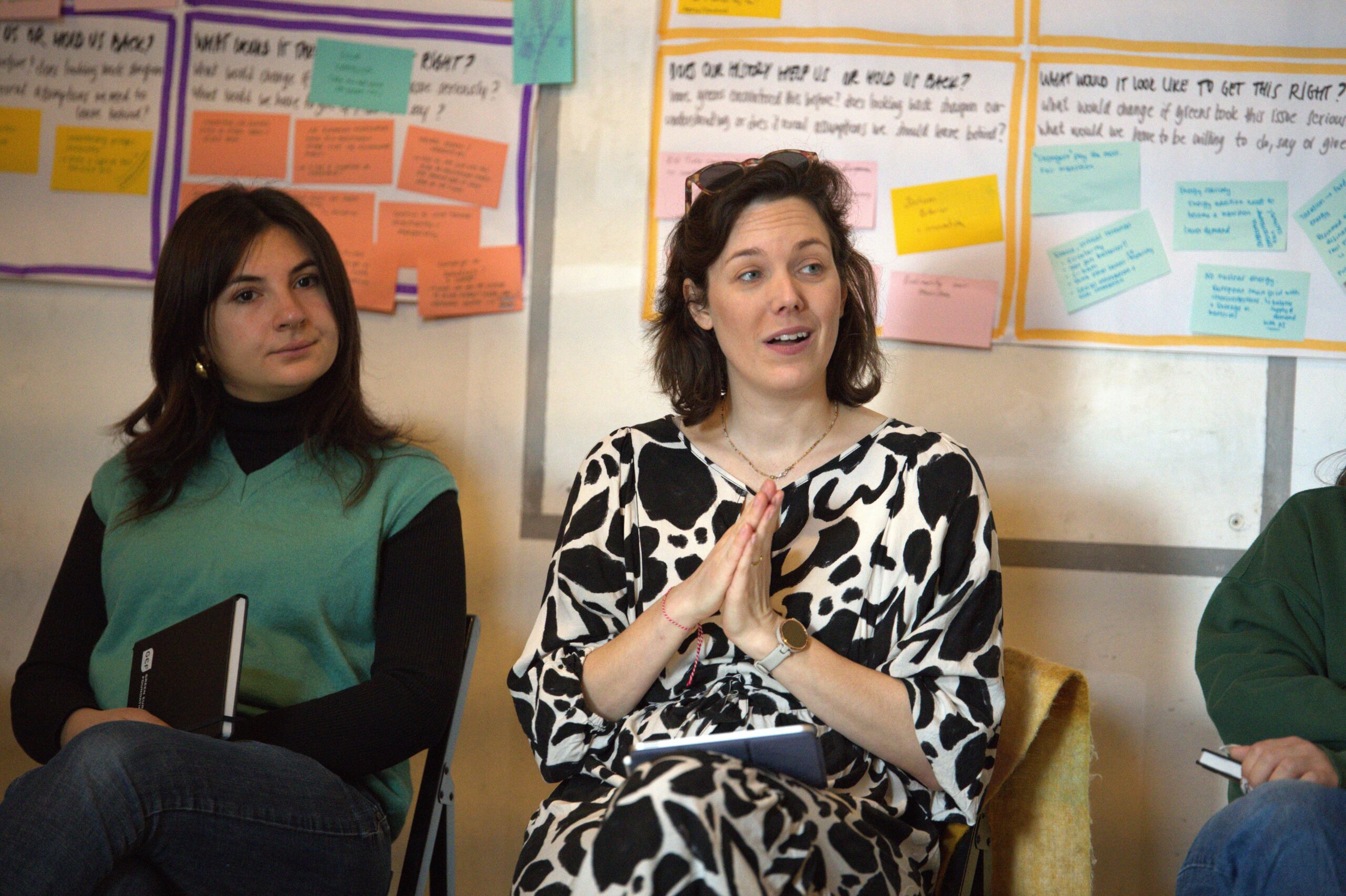
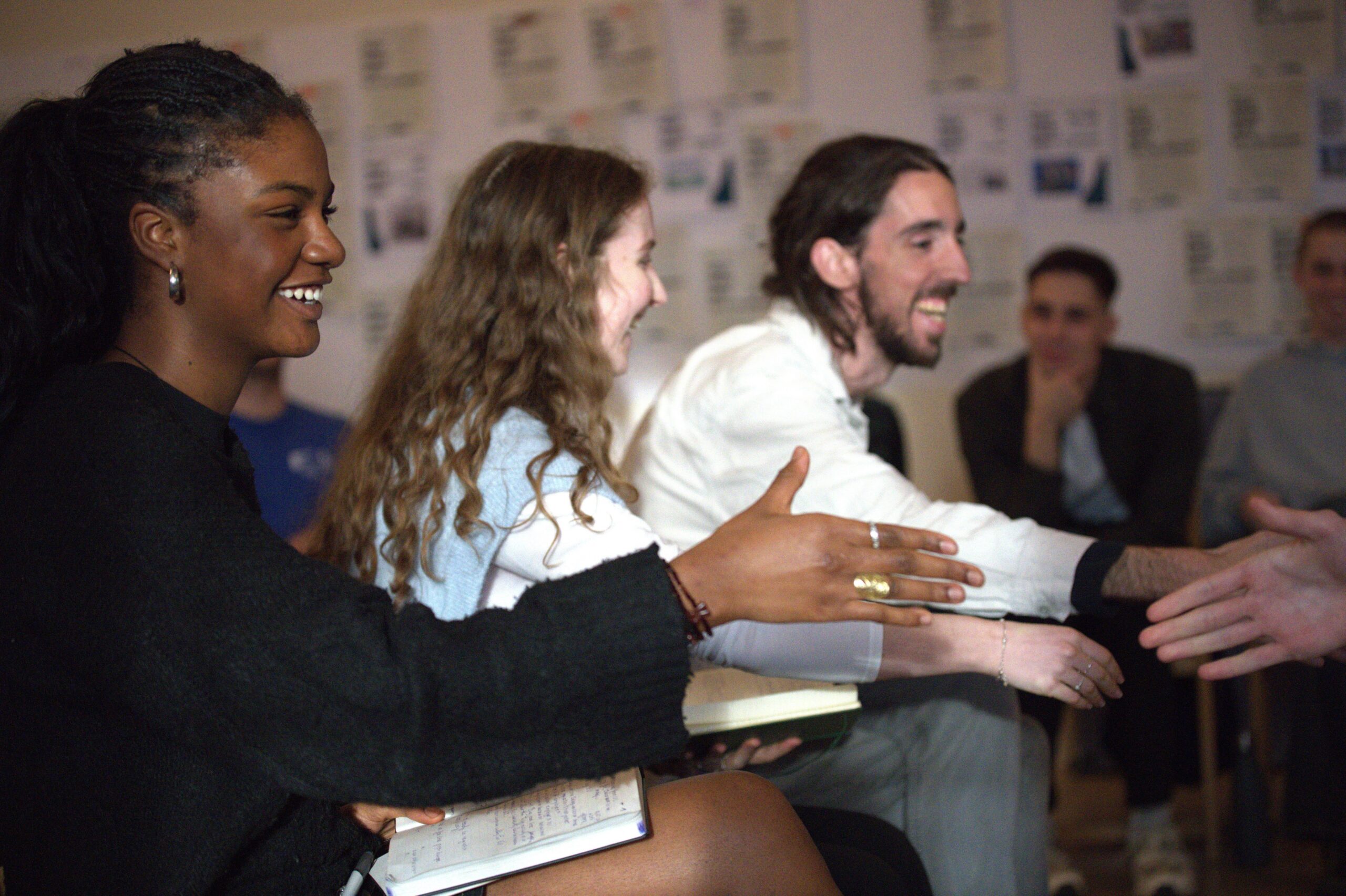
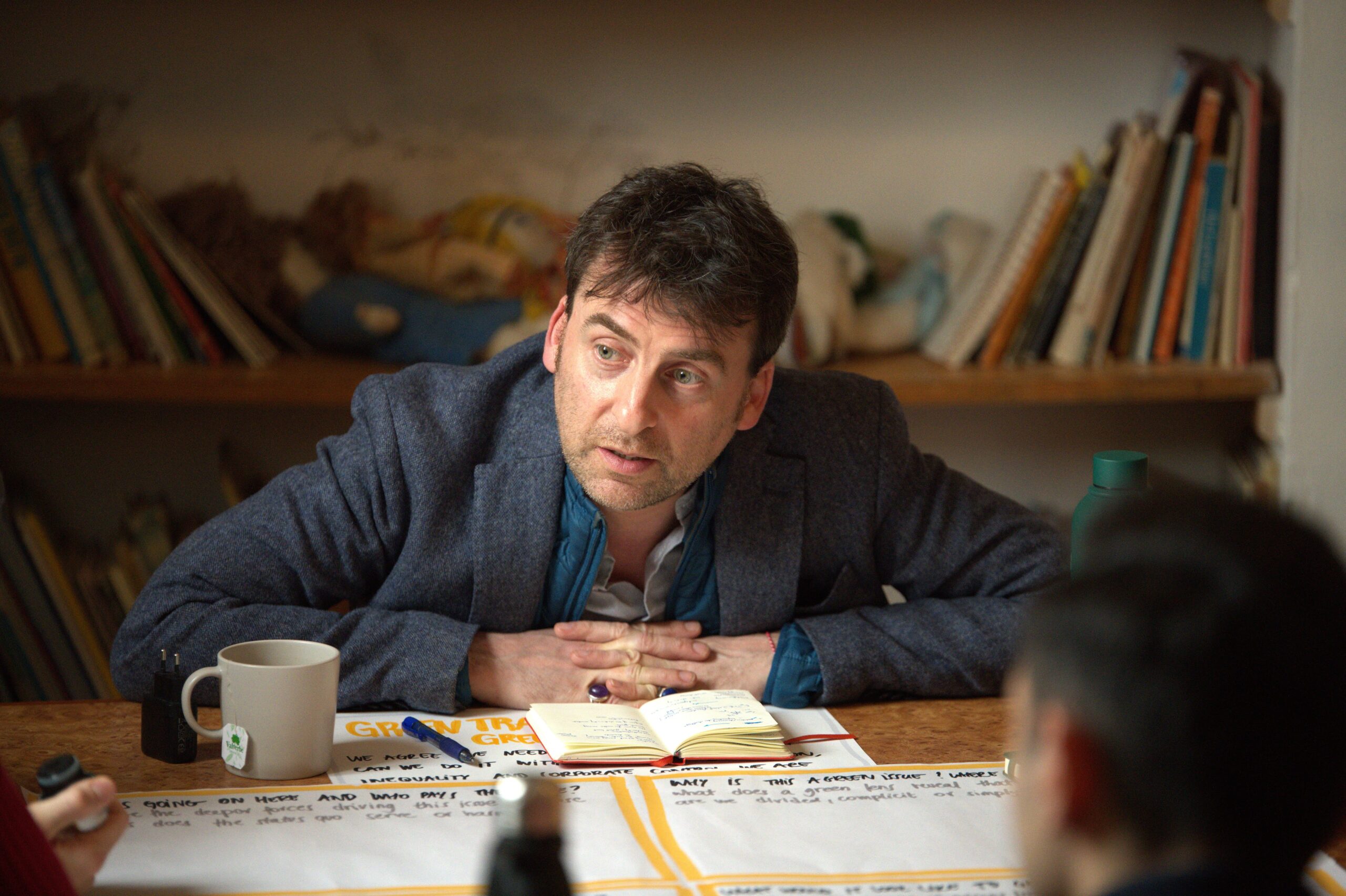
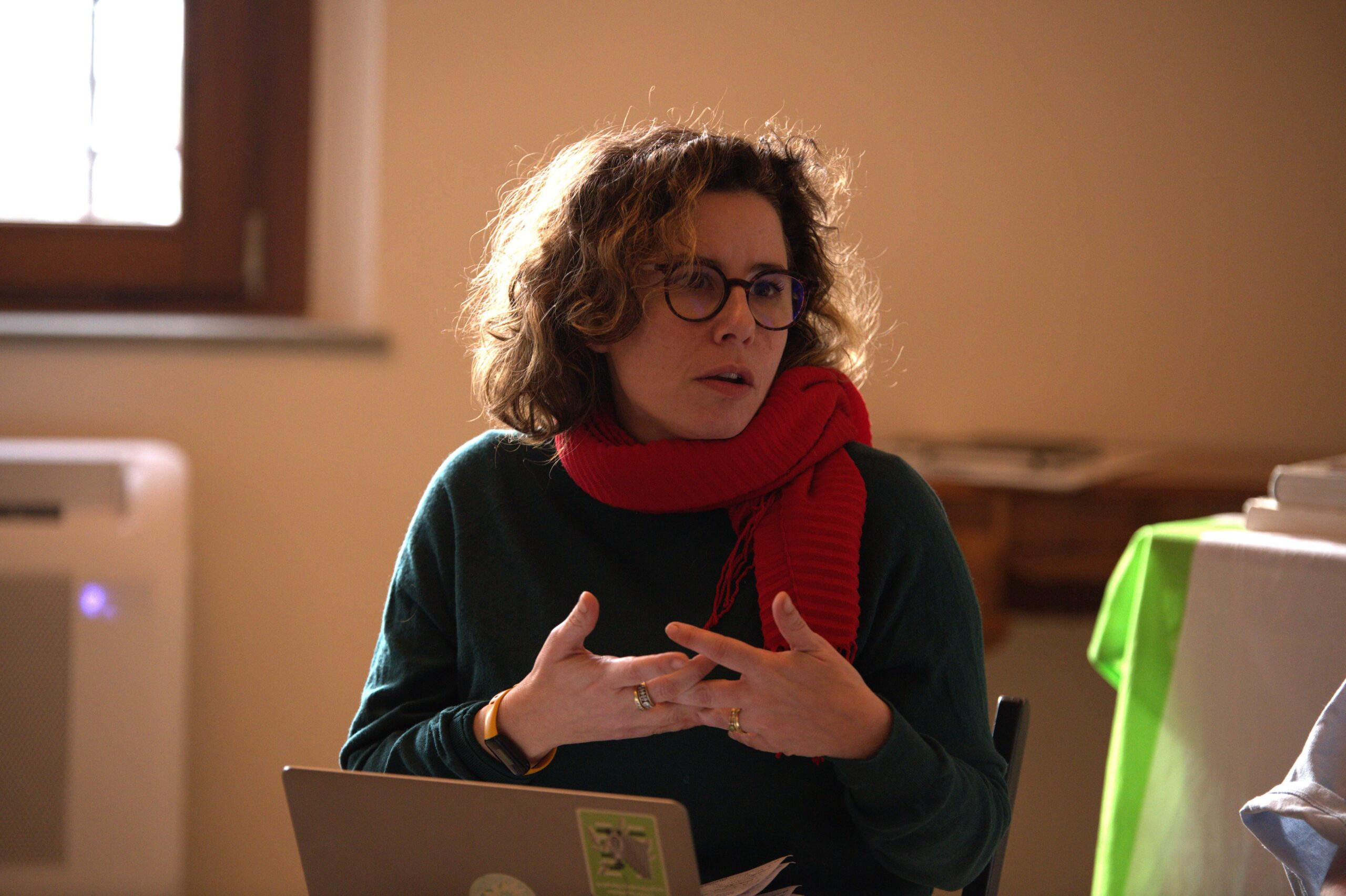
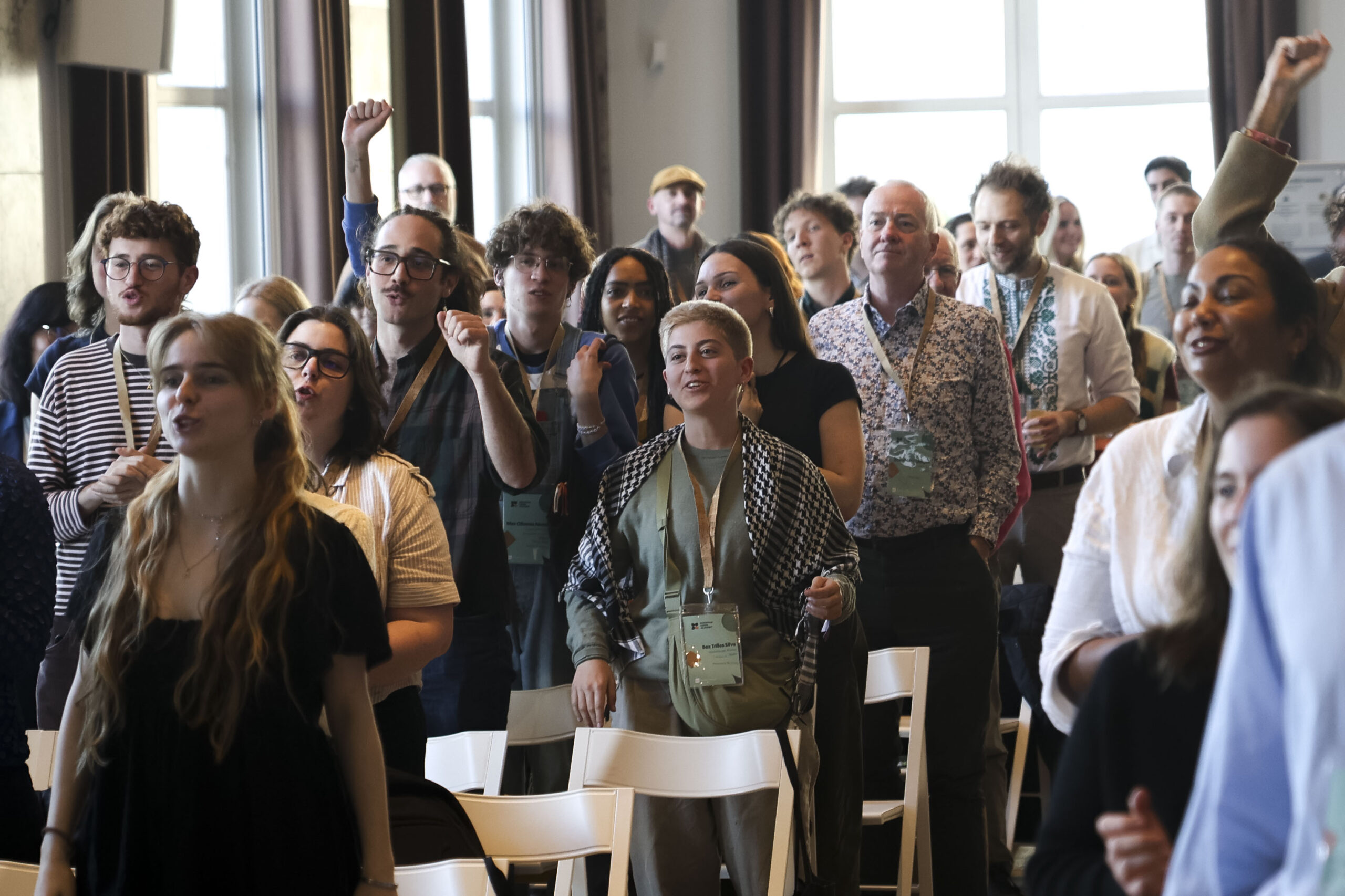
After a successful pilot edition in Latvia, the second edition of The Greenhouse: Training for Activists took place from 03 to 08 March 2026 in Reggello, Italy. The training gathered 28 participants from 19 countries between the ages of 18 and 32 – all leading change in their local communities. Creating space for exchange, connection, and debate, they were joined by a team of experienced trainers and educators, as well as leading voices from the European Green movement. 

In the context of ongoing backlash against Green and progressive forces across Europe, participants delved into a carefully designed training trajectory across six thematic days: Arrival and Connection – Green History and Current Challenges – Local context and Field Trip – Europe and Green Strategy – Argumentation and Debate – Integration and Action Planning.  

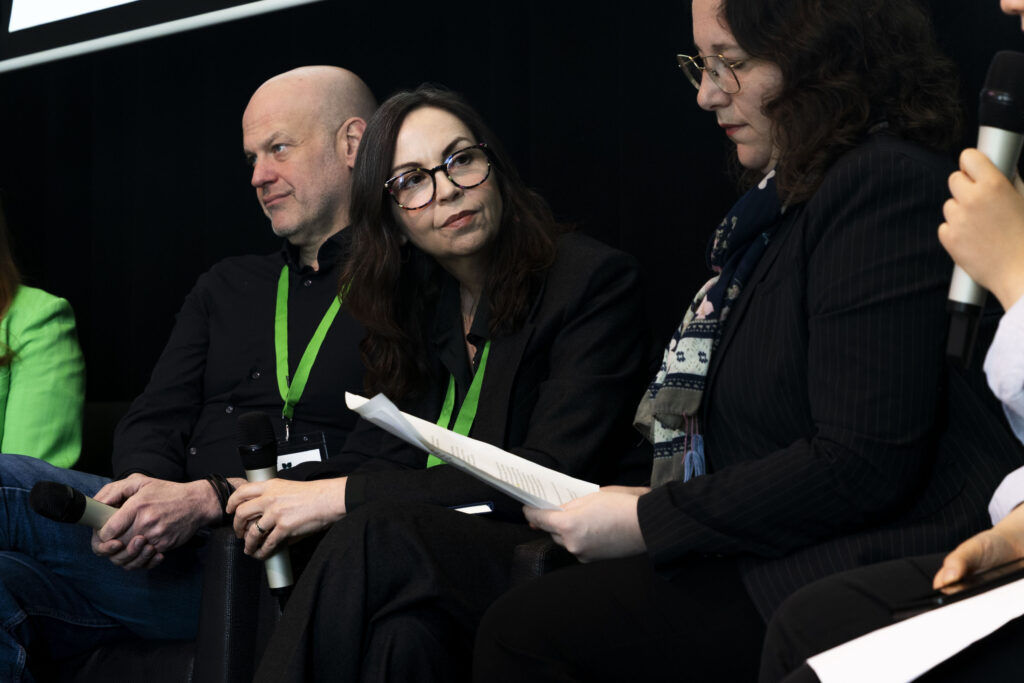
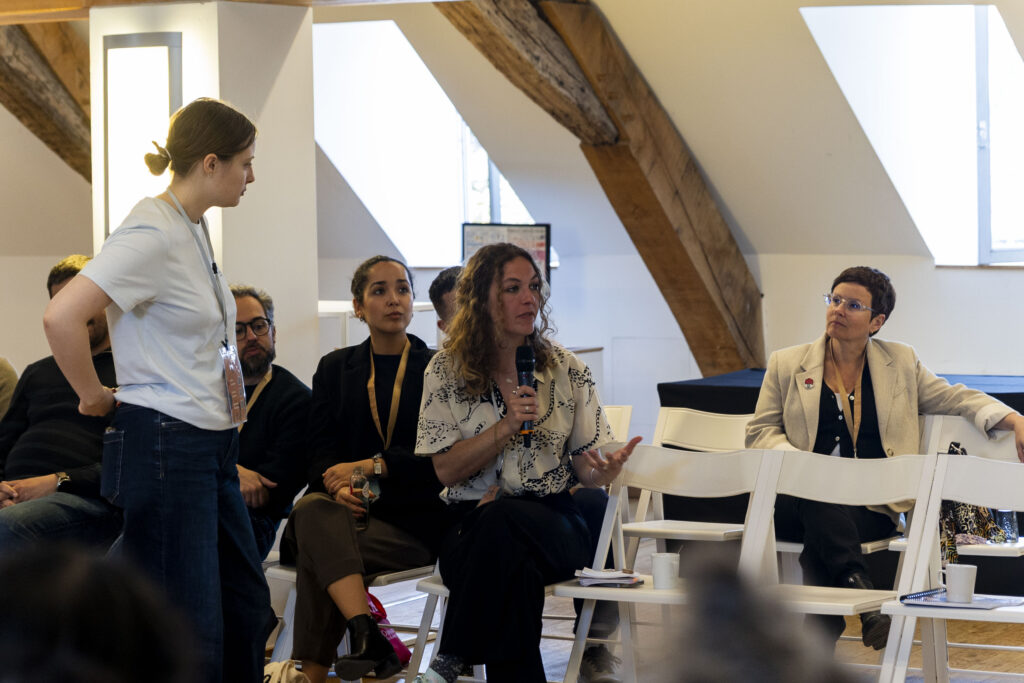
Framed by the timely theme, “Technology and Democracy”, participants explored the shared and diverging histories of European Green movements with historian and political scientist, Edouard Gaudot on day one. On day two, they delved into diverse topics, such as Big Tech and Oligarchy; Artificial Intelligence and the Future of Work; Social Media and Mental Health; and the Political Economy of the Green Transition. Connecting to local green and progressive struggles in Tuscany on day three, participants joined local Green activists on a field visit to the former GKN factory in Campi Bisenzio, engaging with representatives of the workers’ collective that occupies the factory since 2019, giving living testament to a democratic vision for industrial transition. On day four, participants delved into a full-day simulation, wrestling with the ins and outs of political strategy and negotiation at the European level with MEP Benedetta Scuderi and European Green Party Secretary General Benedetta De Marte. On day four, they refined their debating and political communication skills in a series of town hall-style debates on the local implications of tech policy. The training closed with dedicated spaces for reflection and planning next steps, before participants were inducted into the Greenhouse alumni community — connecting them to the wider European green movement through interventions by representatives from the Federation of Young European Greens (FYEG) and the Green Group in the European Parliament.


The Greenhouse’s success was driven, first and foremost, by the energy, curiosity, and commitment of its 28 participants. They embraced an intense and often challenging programme with openness and rigour: They debated freely, learned from one another, and brought the richness of their local contexts to every discussion. In doing so, they created a vibrant learning environment and forged lasting connections across borders. This spirit of open dialogue and collective commitment to learning embodies what The Greenhouse stands for: nurturing the foundations of collective action and fostering a new European cohort of activists, ready to shape a more sustainable, just, and democratic Europe.

Connect the Dots

By European Green Academy

Coffee and Networking 


Saturday, 25 April

09:30 – 10:00 

Room: Salle de Guichets 

You’re in the same room as changemakers from across Europe and beyond. Use this half-hour well. Connect the Dots is a structured speed networking session designed to spark real conversations, not small talk. In a few quick rounds, you’ll swap stories, find unexpected common ground, and leave with at least one new connection worth keeping. Come with curiosity. No agenda required. Coffee provided.


Facilitator: Eliza Popper, facilitator, trainer and consultant.

Eliza Popper is an experienced facilitator, trainer, and consultant based in Brussels, who has worked at capacity-building events in over 40 countries. She has extensive experience in the youth and education sector, with a focus on organisational development, youth policy, and youth work. Eliza used to be Ad-Interim Deputy Director of the Green European Foundation, and is the co-founder of the Good Enough Company.

Networking Dinner & Performance

By Uncategorized

Dinner & Performance


Saturday, 25 April

18:30 – 20:45 

Room: Salle de Guichets 

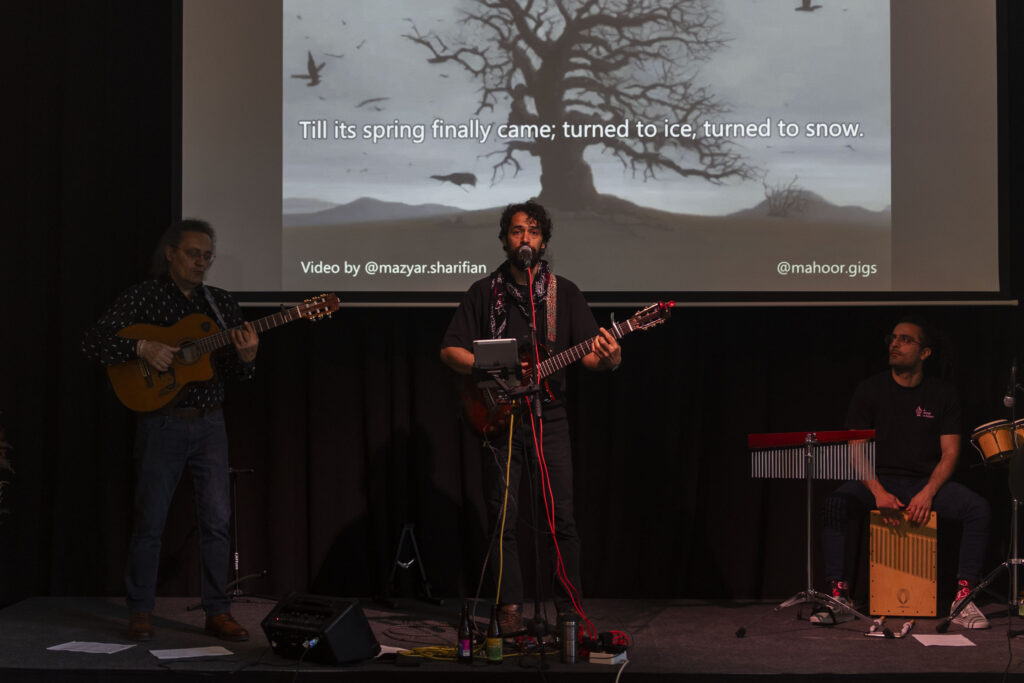
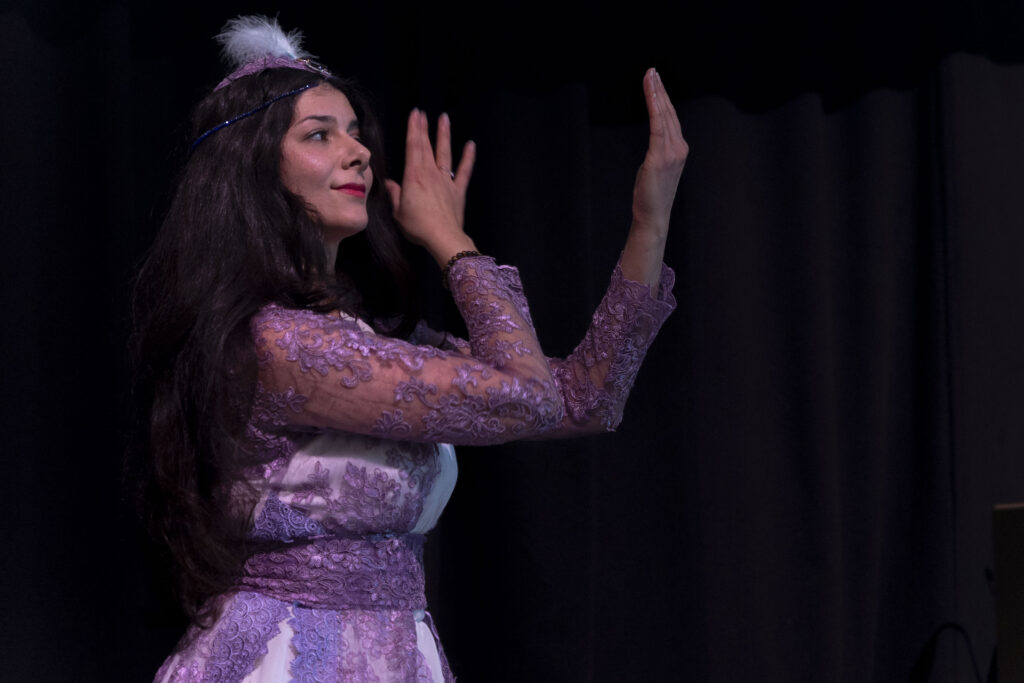
The dinner will start at 18:30 until 19:30 and will be followed by a performance by Mahour, Iranian singer-songwriter, and dancer Mahsa Bagheri, starting at 19:45 until 20:45.

Performers


Mahour is an Iranian singer-songwriter based in Belgium, blending Persian poetry with pop/rock, flamenco, and electronic elements. Since the 2022 “Woman, Life, Freedom” movement, his work has become closely tied to political and social issues in Iran and the Middle East, reflecting themes of resistance, freedom, and human rights.

Mahsa Bagheri: Coordinator at oosterweelverbinding project (ROCO), Persian classic and miniature dancer.

Where Do We Go From Here? Shaping AI, Shaping Ourselves

By European Green Academy

Shaping AI, Shaping Ourselves: Thinking Together with Shannon Vallor


Saturday, 25 April

16:30 – 17:15 

Room: Salle de Guichets

As the programme comes to a close, this session invites participants to step back and reflect on a deeper question: what does AI reveal about us, and what kind of societies do we want to build in response? Drawing on the ideas of The AI Mirror, Shannon Vallor will explore how AI not only shapes our world but also reflects our values, assumptions, and inequalities back to us. Moving from reflection to action, the conversation will consider how these technologies are reshaping human agency, democratic participation, and political responsibility- and where space still exists to resist, rethink, and redirect their trajectory. The session will be open and interactive, leaving room for collective reflection and audience exchange.

Prof. Shannon Vallor, Co-Director, Centre for Technomoral Futures, author The AI Mirror: How to Reclaim Our Humanity in an Age of Machine Thinking

Prof. Shannon Vallor is the Baillie Gifford Chair of the Ethics of Data and Artificial Intelligence at the University of Edinburgh, where she serves as Co-Director of the Centre for Technomoral Futures and the UKRI BRAID (Bridging Responsible AI Divides) programme. Professor Vallor’s research explores how AI and robotics reshape human character and capabilities. She is a former AI Ethicist at Google, a standing member of Stanford University’s 100-Year Study of Artificial Intelligence, and the 2026 recipient of the Barwise Prize from the American Philosophical Association. Her most recent book is The AI Mirror: How to Reclaim Our Humanity in an Age of Machine Thinking (Oxford University Press 2024).

Moderator: Seden AnlarJournalist, Climate Communicator

Seden Anlar is a Brussels-based multimedia journalist, moderator, and podcast producer focused on human rights and holding power to account through storytelling. Over the past eight years, she has produced more than a dozen podcasts on climate, migration, social, and tech justice—reaching over 200,000 listeners across Europe and beyond, combining rigorous reporting with audience-centred storytelling to connect the dots between borders, histories, and movements.

Keynote

By European Green Academy

Friday, 24 April

14:20 – 14:45 

Room: Salle de Guichets 

Speakers


Agnese Lāce, Latvia Minister of Culture; co-chair of PROGRESĪVIE 

Agnese Lāce is the Minister for Culture of the Republic of Latvia and Co-Chair of the political party The Progressives. She has served as Minister since June 2024. Agnese holds advanced degrees in Political Science and International Migration from prestigious institutions across Europe. She has worked extensively in migration and integration policy research and has been actively engaged in civil society initiatives and international cooperation projects. Her professional background includes policy development, research and advisory work on migration, integration and social cohesion at the European level.

Nika Kovač, My Voice My Choice 

Nika Kovač is the founding director of the Institute 8th of March, a movement-building organization that uses storytelling and advocacy to confront gender and economic inequalities across Slovenia. Commemorating International Women’s Day, which is celebrated annually on March 8th, the organisation works to break the silence around sexual violence by gathering testimonials and data on issues of rape, abortion, and sexual assault across the country, as well us brings juistice nationwide with numerous campaigns. She has led three national referendum campaigns and changed 15 laws in Slovenia. Right now she’s leading a pan-European campaign My Voice, My Choice advocating for safe and accessible abortion in Europe using the mechanism of European Citizens’ Initiative. The campaign successfully collected more than 1 million signatures for the cause and mobilised thousands of people accross Europe. The initiative was received a positive response from the European Commission granting abortion access to millions of women in Europe. Nika is also the executive director of the Democracy Hub, an international organisation collecting innovative campaign practices and educating hundreds of activists worldwide. She won numerous awards, among them Slovenian woman of the year and Personality of the year, she was an Obama scholar and Obama leader, as well as the Vital Voices Global Leadership honoree.

Zoya MiariPalestinian-Ukrainian Storyteller, Peace Ambassador

Zoya is a Palestinian-Ukrainian Peace Ambassador and storyteller. Her life journey has given her a unique perspective, having experienced two wars and becoming a refugee twice. Through these experiences, she discovered the transformative power of storytelling and the ability of individuals to shape their own narratives and the world around them. To share this vision, Zoya founded “Waves to Home,” a global storytelling movement aimed at changing the world through personal & collective stories. She is currently writing her first book, sharing her story as a message of hope and inner freedom. Zoya aspires to become a Positive Psychologist to help others create meaningful lives despite the traumas they have been through and to bring them back to life.
picture

Renata Ávila Pinto, CEO, Open Knowledge Foundation 

Renata Avila Pinto is an international lawyer specialising in technology, data governance, intellectual property, digital trade, and privacy. As CEO of the Open Knowledge Foundation, she advocates for open data policies and technologies that promote equitable access to knowledge, accountability and digital sovereignty. She advises governments and international organisations on digital policies and digital infrastructure strategies. A former Stanford HAI fellow and an affiliate of the Centre for Internet and Society at CNRS, her research focuses on commons-based governance models for digital public infrastructure and AI. She has led legal and advocacy initiatives defending freedom of expression, privacy, and access to information, as well as the defence of whistleblowers, including Julian Assange and WikiLeaks, and Nobel Peace Prize laureate Rigoberta Menchú Tum. Avila serves as an expert member of the UN working group on data governance at all levels and is a board member of Open Future and the Whistleblower Network in Germany.

Opening & Welcome

By European Green Academy

Friday, 24 April

14:00 – 14:20

Room: Salle de Guichets 

Speakers


Meyrem Almaci, Co-President, Green European Foundation

Meyrem Almaci, 1976, Belgian with Turkish roots, mother of two; lifelong fan of fantasy, anime, books and good music. Party Leader of Groen (‘14-‘22) , member of Parliament since 2007.  Believes in saving the planet and being a good ancestor for the future generations, whilst also having fun and enjoying life as much as possible. So: Don’t curse the darkness, light a candle.

Vula Tsetsi, Co-chair, European Green Party

Vula Tsetsi has been Co-Chair of the European Green Party since December 2024. Originally from Athens, Greece, she is a trained urban and regional planner and a longstanding figure in the European Green movement. Prior to her current role, Tsetsi served as Secretary General of the Greens/European Free Alliance group in the European Parliament for twenty years, being re-elected to the position five times. As Co-Chair, she has championed a united Green front against the rise of the far right across Europe, while advocating for democracy, LGBTQ+ rights, and a fair green transition for all.

Rozálie Husáková, GEF Greenhouse Activist Alumna

Rozálie is 21 years old and currently studies environmental protection in Prague, where she was born. She used to be the co-spokesperson od the Czech Young Greens of which she is still an active member. Outside of school and work as a social media manager for the Prague Greens she spends her time dancing, talking to her therapist and cuddling with her dog. Rozálie loves black skirts, pigeons and vegan buffetts.

Facilitator: Eliza Popper, Facilitator, Trainer and Consultant

Eliza Popper is an experienced facilitator, trainer, and consultant based in Brussels, who has worked at capacity-building events in over 40 countries. She has extensive experience in the youth and education sector, with a focus on organisational development, youth policy, and youth work. Eliza used to be Ad-Interim Deputy Director of the Green European Foundation, and is the co-founder of the Good Enough Company.

Academy Closing

By European Green Academy

Saturday, 25 April

17:15 – 18:00 

Room: Salle de Guichets 

Speakers


Video message by Leonore Gewessler, Party Leader, Die Grünen, former Minister for Climate Action, Environment, Energy, Mobility, Innovation and Technology


Benoit Monange, Co-President, Green European Foundation 

Benoit Monange is Director of the Social Union of the French Workers Cooperatives. He previously served as Director of the French Green Foundation and as an advisor to the leader of the Green group in the French National Assembly. A graduate of Sciences Po Grenoble, he was an elected representative of the Green Student Union Fac Verte during his time there. He is a member of the editorial board and Director of Publication of Bifurcation/s – La revue des écologies politiques émancipatrices. Benoit Monange was first elected to the Board of Directors of the Green European Foundation in 2019 and served two consecutive terms as Treasurer.

FacilitatorEliza Popper, facilitator, trainer, and consultant. 

Eliza Popper is an experienced facilitator, trainer, and consultant based in Brussels, who has worked at capacity-building events in over 40 countries. She has extensive experience in the youth and education sector, with a focus on organisational development, youth policy, and youth work. Eliza used to be Ad-Interim Deputy Director of the Green European Foundation, and is the co-founder of the Good Enough Company.

Closing Keynotes

By European Green Academy

Saturday, 25 April

18:00 – 18:30 

Room: Salle de Guichets 

Speakers

Benedetta De Marte, Secretary General, European Green Party 

Benedetta De Marte has been Secretary General of the European Green Party since 2022. Originally from Milan, Italy, she now resides in Belgium and serves as a local Green councillor in Brussels City. With over a decade of experience in the European Green movement, as Secretary General, De Marte has focused on expanding the European Green Party, strengthening party cohesion across Europe and fostering the Green movement in EU accession countries.

Cynthia Muthoni, Local Councillor, Green Party of England and Wales

I have been a member of the Young Greens of England and Wales executive committee for the past two years, and currently serve as the International Officer. I am also an elected Local Councillor in Oxfordshire in England. My education includes a Bachelor’s degree in International Relations and a Master’s Degree in Climate Change and International Development. Before becoming an active members of the Green Party of England and Wales, I had a passion for anti-racism campaigning and my efforts landed me UK Parliament’s Petitioner of the Year Award.

Dominika Lasota, Polish Social Justice Activist

Dominika Lasota is a student & social justice activist from Poland. Originally a member of the global climate movement Fridays For Future, she co-founded the WSCHÓD (pl. SUNRISE) Initiative, which grew to be nation’s leading youth space for progressive organizing. She focuses on building civic power in Eastern Europe through campaigns linking climate, security & welfare matters. Following WSCHOD’s work on mobilizing women & youth around general elections in Poland, she was recognized with a Freedom of Speech Medal in 2025.

Parallel Session

By European Green Academy

Resilience & Momentum: What’s working for Green and Progressive Youth Movements? 


Saturday, 25 April

14:30 – 16:00 

Room: Magritte (+ Delvaux) 

We often ask how progressive movements can respond to democratic erosion – but what is actually working on the ground? This session brings together activists, Greens, and civil society actors to move beyond analysis and into practice. Through direct exchange with frontline practitioners, participants will explore concrete strategies and tactics that are building resilience and momentum across Europe – from shaping narratives and countering the far right, to mobilising people into action, and using institutional levers to defend democracy and civic space.

The session builds toward a shared “tactics map” of real-world approaches – and a critical question to carry forward: how can we scale, adapt, and strengthen these strategies across different contexts?

This is part two of a two-session journey (following Understanding Democratic Erosion from the Ground Up), but can also be attended as a standalone session.

This session is organised in collaboration with the Federation of Young European Greens (FYEG) and GEF Greenhouse alumni & FYEG.

Speakers


Agata Meysner, Treasurer Green European Foundation; Co-Founder, Generation Climate Europe 

Agata Meysner is a climate activist and a non-profit entrepreneur from Poland. She co-founded and lead Generation Climate Europe, the largest coalition of youth-led networks on climate and environmental justice issues in Europe. Under her leadership, GCE has grown its membership to 380+ member organisations across 46 countries. She has collaborated with Europe’s largest environmental NGOs, and advised leading international organisations, such as the OECD and the European Commission. Agata is also a Fellow at the University of Oxford. Her expertise focuses on intergenerational justice, circular and wellbeing economy. She specialises in building impactful coalitions and strategies that drive systemic change. Agata regularly speaks at leading conferences on EU policy and social impact across Europe.

Dominika Lasota, co-founder of the Wschód (“Sunrise”) Initiative, Poland 

Dominika Lasota is a student & social justice activist from Poland. Originally a member of the global climate movement Fridays For Future, she co-founded the WSCHÓD (pl. SUNRISE) Initiative, which grew to be nation’s leading youth space for progressive organizing. She focuses on building civic power in Eastern Europe through campaigns linking climate, security & welfare matters. Following WSCHOD’s work on mobilizing women & youth around general elections in Poland, she was recognized with a Freedom of Speech Medal in 2025.

Ignasi Digón Salvà, Catalan Young Greens (FYEG)

Ignasi is a 21-year-old Law student and works at a labor law firm. He is the International Secretary of Joves Ecosocialistes (Catalan Young Greens), having also been responsible for the organization’s activities and grants at Pompeu Fabra University (UPF) and represented his organization in Barcelona’s and Catalonia’s Youth Councils.
Beyond politics, he has had an extensive involvement at UPF, where he has been a member of the Student Council and a student delegate for several years. He has contributed to the university’s strategic plan and participated its Legal Clinic, focusing on cases related to asylum and the reform of regulations for artists. He is also a member of the Commission on Linguistic Policy and the Commission on sexual harassment and LGTBIQA+ discrimination. As a volunteer, he provided public speaking training to inmates in Quatre Camins prison and acted as a judge in high school debate  leagues.

Ariane Giraneza Birekeraho, Antwerp City Council Member, Party Board member, Groen

Ariane Giraneza is a local city councilor in Antwerp working on climate issues, inclusion and equal opportunities as wel as asylum and integration issues.
Ariane is also part of the national party board of Groen. Professionally Ariane is the coordinator of a small NGO active in the climate advocacy sphere.

Facilitator: Andrej Zlatović, Co-Spokesperson, Federation of Young European Greens

Born and still living in Belgrade, where I also finished my bachelor’s studies in archaeology at the University of Belgrade as well as currently studying a master’s in culture studies. Having been active in different political and non-formal ecological groups for years, I joined the Green Youth of Serbia in 2022 and afterwards the movement which became the Green-left Front. During that time I also became engaged with the Young European Greens (FYEG) first during the campaign for the European elections in 2024 and then ran for the executive committee, currently finishing my mandate as co-spokesperson. Additionally, I also have the privilege of working at the Center for Green Politics as a Project Coordinator.

Parallel Session

By European Green Academy

From Values to Vote: The Quiet Majority Goes Loud 


Saturday, 25 April

14:30 – 16:00 

Room: Brel 

The notion that Europeans are moving to the right has become common sense. It is repeated in public discourse and media debates, and reflected in parliaments and governments across the continent. Yet there’s evidence that the opposite is true: the values and preferences of European citizens, particularly younger generations and women, are turning more progressive. This potential, however, remains largely untapped as rising numbers of citizens grow distrustful of representation and disengage from parties and elections. As a result, institutional politics is increasingly reflecting and catering to loud, older, and male-dominated conservative minorities. 

What is the role of civil society and Green actors in breaking the vicious circle of abstention and reactionary politics? And how can new forms of engagement among younger generations translate into meaningful political action and representation? 

This session is organised in collaboration with the Green European Journal.  

Speaker


Imogen Learmonth, Programme ManagerDatapraxis  

Imogen Learmonth is a researcher and programme manager at Mandate Research, an organisation that provides strategic advice, public opinion research, modelling and analysis services to progressive political parties, non-profit organisations, media, and research institutes. She leads Mandate’s cross country and thematic research programme: Aletheia. Previously, Imogen helped manage and conduct counter-extremism research, studying state-funded malign influence campaigns and networks on the far right, with a focus on incel culture and radical misogyny. She also has a background in journalism.

Bethany Lewis, Greens Organise 

Beth Lewis is an activist, educator, and organiser based in Cornwall, UK. Her work sits at the intersection between youth empowerment, political education, and left-wing organising for people and planet, over profit. Elected to the Steering Group of Greens Organise, the eco-socialist movement within the Green Party of England and Wales, she leads a programme of mass political education that translates complex political theory into practical tools for grassroots organising. Since GO’s conception, Green Party membership has tripled to more than 225K members, and bolder, more ambitious energy has taken hold. Beth also works as Young Greens Officer for Cornwall, advocating for genuine representation of young and marginalised people in political and environmental movements, in the fight against the far-right. Her personal campaign Ecological Emotions documents and archives Cornish experiences of the climate and ecological crisis, and creates community spaces that allow others to work through grief and anxiety. Previously, she established Right to Roam Kernow, and lobbied her university and student union to declare climate emergencies and commit to real carbon reduction.

Dominika Lasota, Polish Social Justice Activist

Dominika Lasota is a student & social justice activist from Poland. Originally a member of the global climate movement Fridays For Future, she co-founded the WSCHÓD (pl. SUNRISE) Initiative, which grew to be nation’s leading youth space for progressive organizing. She focuses on building civic power in Eastern Europe through campaigns linking climate, security & welfare matters. Following WSCHOD’s work on mobilizing women & youth around general elections in Poland, she was recognized with a Freedom of Speech Medal in 2025.

Moderator: Alessio Giussani, Editor-in-Chief, Green European Journal 

Alessio Giussani is the editor-in-chief of the Green European Journal. He was formerly contributing editor of Eurozine, and a freelance journalist based in Athens.

Parallel Session

By European Green Academy

Daily Distortions: Democratic Life in the Age of AI


Saturday, 25 April

14:30 – 16:00 

Room: Zinneke 

The idea of accelerating, disruptive artificial intelligence is ubiquitous. But that this narrative is spun by the very industry it nourishes doesn’t make it untrue. With the increasing adoption of AI and the roll-out of the huge infrastructures needed to sustain it, this technology is reshaping both how we live with profound implications for rights, justice and participation. In this session, participants will explore key questions with experts who will shine a light on different facets of AI, their implications for our democratic societies, and what we can do about it.

Speakers


Namita Kambli, Project Lead, Centre for Future Generations 

Namita applies a social and environmental lens to the governance of emerging technologies. Her goal is to ensure both people and the planet have a fair shot in decision-making – now and in the future.


Kristina Wilfore, Director of Innovation and Global Projects at Reset Tech  

Kristina Wilfore is a seasoned international elections and communications specialist with deep expertise in designing and leading programs that build democratic resilience. She has trained more than 2000 women politicians, journalists, and activists across 25+ countries, equipping them with the skills to counter digital threats, strengthen digital security, and engage in inclusive political leadership. From Western and Eastern Europe to the Americas, East Africa, and Middle East, Kristina has developed curricula, led high-level workshops, and facilitated strategy sessions with governments, philanthropies, and civil society organizations. As Director of Innovation and Global Projects at Reset Tech, she spearheads initiatives at the intersection of election integrity, masculinity, political violence, and information resilience, ensuring that capacity-building remains at the core of these efforts. In 2021, she co-founded #ShePersisted, an initiative that supports women leaders to confront digital harms—recognizing these attacks as threats to both democracy and human rights.

Shannon Vallor, Co-Director, Centre for Technomoral Futures, author The AI Mirror: How to Reclaim Our Humanity in an Age of Machine Thinking  

Prof. Shannon Vallor is the Baillie Gifford Chair of the Ethics of Data and Artificial Intelligence at the University of Edinburgh, where she serves as Co-Director of the Centre for Technomoral Futures and the UKRI BRAID (Bridging Responsible AI Divides) programme. Professor Vallor’s research explores how AI and robotics reshape human character and capabilities. She is a former AI Ethicist at Google, a standing member of Stanford University’s 100-Year Study of Artificial Intelligence, and the 2026 recipient of the Barwise Prize from the American Philosophical Association. Her most recent book is The AI Mirror: How to Reclaim Our Humanity in an Age of Machine Thinking (Oxford University Press 2024).

Oyidiya Oji, ENAR Policy and Advocacy Advisor: Digital Rights

Oyidiya Oji is Policy and Advocacy Advisor for Digital Rights at the European Network Against Racism (ENAR). She defends a transversal and sustainable relationship with EU institutions with a racial equality lens based on transparency and accountability as key principles. Previously, she researched and mapped projects of resistance and reappropriation of technology, with a special focus on AI. She was also part of artivism and digital community building collectives and organised meetings with people from underrepresented backgrounds in tech from across the globe.

Parallel Session

By European Green Academy

Gender Information Warfare 


Saturday, 25 April

11:45 – 13:15 

Room: Brel


Speakers


Kristina WilforeDirector of Innovation and Global Projects at Reset Tech 

Kristina Wilfore is a seasoned international elections and communications specialist with deep expertise in designing and leading programs that build democratic resilience. She has trained more than 2000 women politicians, journalists, and activists across 25+ countries, equipping them with the skills to counter digital threats, strengthen digital security, and engage in inclusive political leadership. From Western and Eastern Europe to the Americas, East Africa, and Middle East, Kristina has developed curricula, led high-level workshops, and facilitated strategy sessions with governments, philanthropies, and civil society organizations. As Director of Innovation and Global Projects at Reset Tech, she spearheads initiatives at the intersection of election integrity, masculinity, political violence, and information resilience, ensuring that capacity-building remains at the core of these efforts. In 2021, she co-founded #ShePersisted, an initiative that supports women leaders to confront digital harms—recognizing these attacks as threats to both democracy and human rights.

Parallel Session

By European Green Academy

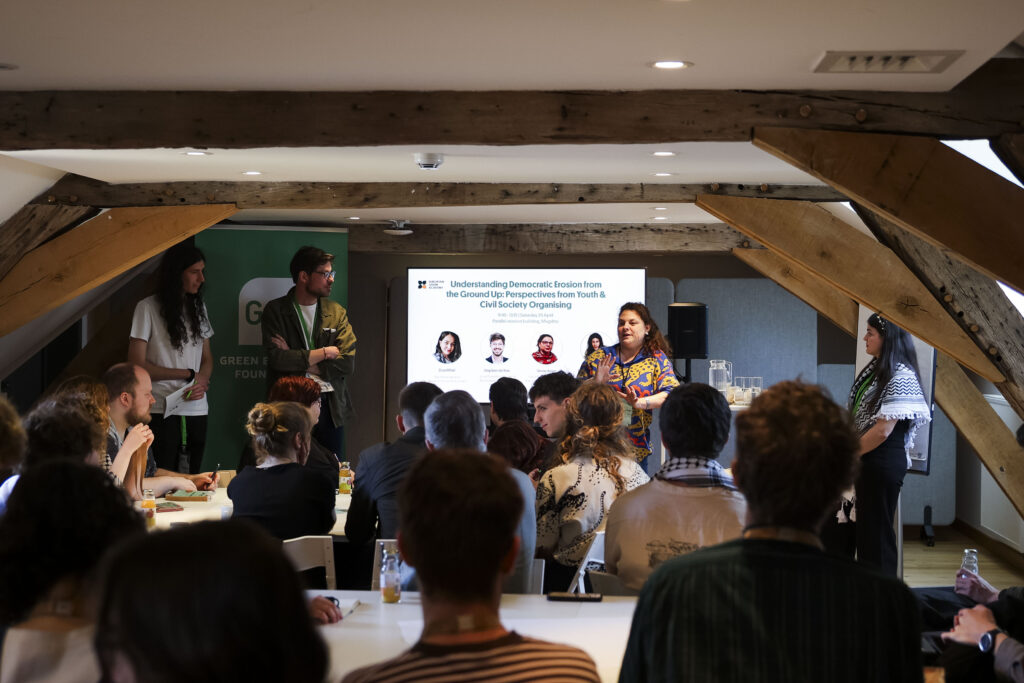
Understanding Democratic Erosion from the Ground Up: Perspectives from Youth & Civil Society Organising


Saturday, 25 April

11:45 – 13:15 

Room: Magritte (+ Delvaux)

We talk a lot about how democracy is “under pressure” across many fronts – but what does that actually look like on the ground? This session brings together activists, Greens, and civil society actors to unpack democratic erosion across Europe beyond the headlines. Starting from real frontline experiences, participants will explore the lived experiences and emotional drivers of resistance in small groups, from culture wars and the far right to organising under pressure and shrinking civic space.

The session builds toward a shared diagnosis of today’s political landscape – and a critical question to carry forward: where are progressive movements falling short when it comes to defending and advancing our vision of democracy, and what needs to change?

This is part one of a two-session journey (followed by Resilience and Momentum – What’s Working for Progressive Youth Movements?), this session can stand alone or be taken as a pair.

This session is organised in collaboration with the Federation of Young European Greens (FYEG) and GEF Greenhouse alumni & FYEG.

Speakers


Zoya Miari, Palestinian-Ukranian Storyteller and Peace Ambassador 

Zoya is a Palestinian-Ukrainian Peace Ambassador and storyteller. Her life journey has given her a unique perspective, having experienced two wars and becoming a refugee twice. Through these experiences, she discovered the transformative power of storytelling and the ability of individuals to shape their own narratives and the world around them. To share this vision, Zoya founded “Waves to Home,” a global storytelling movement aimed at changing the world through personal & collective stories. She is currently writing her first book, sharing her story as a message of hope and inner freedom. Zoya aspires to become a Positive Psychologist to help others create meaningful lives despite the traumas they have been through and to bring them back to life.

Stephen de Ron, Local CouncillorMember of the European Committee of the Regions

Stephen de Ron is a lawyer and law teacher with a strong commitment to democratic values, sustainability, and civic education. Passionate about the intersection of law and education, he believes in the power of legal knowledge as a tool for empowerment and democratic resilience. Stephen is an active member of the Green Executive Committee of the Greens Luxembourg and currently serves as Vice‑President of the Greens and Progressives Group in the European Committee of the Regions. In the CoR, he is the rapporteur for the opinion on the European Democracy Shield and previously acted as rapporteur on the Rule of Law, contributing to debates at the heart of Europe’s democratic future.

Vesna Jusup, Board member, Green European Foundation; Director of Operations, European Center for Digital Action 

Vesna Jusup holds a Master’s degree in Art History and Museology from the University of Belgrade. She began her career at the National Museum of Belgrade before fully accepting that her passions lay in activism and politics. She joined the Serbian Young Greens in 2006 and has been actively contributing to the Green movement ever since. From 2011 to 2015, Vesna served as Network Coordinator at CDNEE, investing her efforts in building the capacity of the Green movement in Eastern Europe. In 2015, she joined the European Green Party, first as Member Parties Relations Manager and later as the Head of the Policy, Strategy, and Capacity Development Unit. She is currently the Director of Operations at the European Center for Digital Action, supporting efforts to digitally upscale the progressive movement across Europe. Vesna is a passionate book nerd, a loyal museum visitor, and a proud mom of a five-year-old who already shares her love of books.

Facilitator: Andrej Zlatović, Federation of Young European Greens

Born and still living in Belgrade, where I also finished my bachelor’s studies in archaeology at the University of Belgrade as well as currently studying a master’s in culture studies. Having been active in different political and non-formal ecological groups for years, I joined the Green Youth of Serbia in 2022 and afterwards the movement which became the Green-left Front. During that time I also became engaged with the Young European Greens (FYEG) first during the campaign for the European elections in 2024 and then ran for the executive committee, currently finishing my mandate as co-spokesperson. Additionally, I also have the privilege of working at the Center for Green Politics as a Project Coordinator.

Parallel Session

By European Green Academy

Under pressure but not powerless. Civil society strategies for challenging times 


Saturday, 25 April

11:45 – 13:15 

Room: Zinneke

Civil society across Europe is operating in an increasingly contested political environment marked by democratic backsliding, deepening polarisation, geopolitical instability and shrinking international funding (including the massive USAID cuts starting last year). In some countries, the space for civic action is shrinking, while in others, it is being reshaped in more subtle but equally important ways.

This workshop explores how civil society organisations are adapting to these challenges. Through case studies from countries facing particularly difficult circumstances, we will examine how organisations respond to political pressure, funding disruptions (including the loss or restructuring of major donors), and the growing influence of well-organised transnational conservative and far-right networks building their own parallel civil societies.

Speakers


Justyna Wydrzyńska, Abortion Dream Team 

Justyna is the co-funder of Kobiety w Sieci and Abortion Dream Team, two organisations which support in abortion in Poland. She was the first abortion activist to be convicted for helping abortions in Poland and a member of the Abortion Without Borders network.


Iva Marković, Programme Director and founder, Polekol

Iva Marković is an environmental activist and social movement organiser with 15 years of experience dedicated to advancing sustainability policies and practices in Serbia. She holds an MA in Environment, Development, and Policy. Iva serves as a Programme Director at the Organisation for Political Ecology (POLEKOL) and co-founded the Right to Water initiative. Passionate about environmental justice, she works to foster progressive ideas in Serbia and across Europe. Iva founded the Women’s Network for the Environment and the regional Balkan Rivers Defenders. Previously, she was a member of the Secretariat of the European Water Movement and a Green Youth activist. She has extensive experience in non-formal education and in working with youth and diverse social groups. Her mission is to connect the humanities and natural sciences, bridge traditional and scientific knowledge, and strengthen citizens’ participation in public decision-making.

Nicolae Ștefănuță, Vice President of the European Parliament, MEP, Greens/EFA

Nicolae Ștefănuță is the Vice-President of the European Parliament and an independent Member of the Greens/EFA Group, originally from Sibiu, Romania. For over a decade, he has been active within the European institutions, consistently engaged in health policy, environmental protection, the EU budget, and youth-focused initiatives. During his first term as MEP, he served as the European Parliament’s Standing Rapporteur for the EU annual Budget, contributing to building a more sustainable and fair Europe. In 2024, Nicu Ștefănuță was elected as an independent MEP, securing over 270,000 votes and the support of more than one thousand volunteers from across the country.

Ági Fernengel, Director, School of Public Life

Ági Fernengel is a community builder and trainer, whose mission is to develop the culture of civic participation in Hungary. She believes we can only live in a meaningful democracy if we encourage participation in public life and build diverse communities that are able to stand for their interests. She is the executive director of the School of Public Life, a community-based training center that develops democratic culture in Hungary and supports social movement building. She also co-founded Deviszont Community Space, a civic education program dedicated to working-class youths in the outskirts of Budapest. Ági became active in community work in 2013 as an activist in a Hungarian student movement organized for an accessible higher education. Since then, she has been committed to working for educational justice.

Moderator: Adam Reichardt, Editor-in-Chief, New Eastern Europe

Adam Reichardt is the Editor-in-Chief of the New Eastern Europe magazine based in Poland. Published since 2011, the magazine is one of the leading publications dedicated to the region of Central and Eastern Europe. He is also the co-host of the weekly “Talk Eastern Europe” podcast. Adam has also previously worked as the Director of the Warsaw Euro-Atlantic Summer Academy (WEASA) which is organized annually at the College of Europe in Natolin (Warsaw) and was a member of the executive team of the Three Ukrainian Revolutions project run by the College of Europe.
Adam was short-listed for the European Press Prize in the category of “Editing” for his work on New Eastern Europe and was named to the “New Europe 100” list of the region’s top innovators. In 2019 he was a Transatlantic Media Fellow with the Heinrich Boell Foundation.

Plenary

By European Green Academy

System Reset: Technology for a Democratic Europe


Saturday, 25 April

10:00 – 11:30 

Room: Salle de Guichets 

Digital technologies increasingly constitute the very infrastructure of our democracies, underpinning everything from voting systems to energy grids, armies and bureaucracies, healthcare and education, economic life and public debate. While the notion of technology being “neutral” was always an illusion, today Europe finds itself increasingly exposed to the blackmail of billionaires and foreign autocrats, undermining democratic agency, public trust, and collective autonomy.

This plenary seeks to move beyond both techno-optimism and purely defensive regulation to articulate counter narratives on technology and European sovereignty. Bringing together perspectives from Green politics, academia, industry, it asks what the foundations for an alternative vision could look like. What if we designed technology to serve people, prioritising participation over surveillance and resilience over dependency? And how can Europe reclaim technological agency when digital systems increasingly risk hollowing out trust, participation, and autonomy?

Speakers


Frank Karlitschek, CEO NextCloud

Frank Karlitschek is a long time open source contributor and former board member of the KDE e.V. He Nextcloud in 2016 to create a fully open source and decentralized alternative to big centralized cloud companies. Frank was an invited expert at the W3C to help to create the ActivityPub standard. Frank has spoken at MIT, CERN, Harvard and ETH and keynoted many events. Frank is the founder and CEO of Nextcloud GmbH. He is also a fellow of Open Forum Europe and an advisor to the United Nations regarding Open Source. Frank won the European SFS Free Software Award 2023 and the Acteurs du Libre European Award 2023.

Prof. Shannon Vallor, Co-Director, Centre for Technomoral Futures, author The AI Mirror: How to Reclaim Our Humanity in an Age of Machine Thinking 

Prof. Shannon Vallor is the Baillie Gifford Chair of the Ethics of Data and Artificial Intelligence at the University of Edinburgh, where she serves as Co-Director of the Centre for Technomoral Futures and the UKRI BRAID (Bridging Responsible AI Divides) programme. Professor Vallor’s research explores how AI and robotics reshape human character and capabilities. She is a former AI Ethicist at Google, a standing member of Stanford University’s 100-Year Study of Artificial Intelligence, and the 2026 recipient of the Barwise Prize from the American Philosophical Association. Her most recent book is The AI Mirror: How to Reclaim Our Humanity in an Age of Machine Thinking (Oxford University Press 2024).

Cyrielle Chatelain, MP, Europe Écologie Les Verts

Cyrielle Chatelain is a Member of the French National Assembly and has been leader of the Green Group (Greens and affiliated) since 2022. She was first elected in 2022 and re-elected in 2024. She previously served as co-chair of the French Young Greens and later worked as a political assistant and in various Green-led local cabinets, with a focus on housing and economic issues. More recently, her work has increasingly focused on digital policy, particularly the concentration of power in Big Tech and its implications for data protection and democratic sovereignty. She initiated a parliamentary inquiry committee on structural dependencies and vulnerabilities in the digital sector and the associated risks for France’s independence. The committee has conducted over 40 hearings, including a study visit to Brussels, and its report is expected in July.

Renata Ávila Pinto, CEO, Open Knowledge Foundation

Renata Avila Pinto is an international lawyer specialising in technology, data governance, intellectual property, digital trade, and privacy. As CEO of the Open Knowledge Foundation, she advocates for open data policies and technologies that promote equitable access to knowledge, accountability and digital sovereignty. She advises governments and international organisations on digital policies and digital infrastructure strategies. A former Stanford HAI fellow and an affiliate of the Centre for Internet and Society at CNRS, her research focuses on commons-based governance models for digital public infrastructure and AI. She has led legal and advocacy initiatives defending freedom of expression, privacy, and access to information, as well as the defence of whistleblowers, including Julian Assange and WikiLeaks, and Nobel Peace Prize laureate Rigoberta Menchú Tum. Avila serves as an expert member of the UN working group on data governance at all levels and is a board member of Open Future and the Whistleblower Network in Germany.

Moderator: Seden Anlar, Journalist, Climate Communicator

Seden Anlar is a Brussels-based multimedia journalist, moderator, and podcast producer focused on human rights and holding power to account through storytelling. Over the past eight years, she has produced more than a dozen podcasts on climate, migration, social, and tech justice—reaching over 200,000 listeners across Europe and beyond, combining rigorous reporting with audience-centred storytelling to connect the dots between borders, histories, and movements.

Spotlight

By European Green Academy

My Voice My Choice


Friday, 24 April

20:15 – 20:50

Room: Salle de Guichets 

Join us for a dynamic spotlight conversation with Nika Kovač, tracing the journey of the My Voice My Choice campaign – from its initial spark to a powerful pan-European mobilisation. Revisiting key milestones, visuals, and campaign footage alongside an in-depth one-on-one conversation with its leader, this session will unpack how a bold idea evolved into a movement that gathered over one million signatures and helped transform the European agenda on abortion rights.

Speaker


Nika Kovač, My Voice My Choice

Nika Kovač is the founding director of the Institute 8th of March, a movement-building organization that uses storytelling and advocacy to confront gender and economic inequalities across Slovenia. Commemorating International Women’s Day, which is celebrated annually on March 8th, the organisation works to break the silence around sexual violence by gathering testimonials and data on issues of rape, abortion, and sexual assault across the country, as well us brings juistice nationwide with numerous campaigns. She has led three national referendum campaigns and changed 15 laws in Slovenia. Right now she’s leading a pan-European campaign My Voice, My Choice advocating for safe and accessible abortion in Europe using the mechanism of European Citizens’ Initiative. The campaign successfully collected more than 1 million signatures for the cause and mobilised thousands of people accross Europe. The initiative was received a positive response from the European Commission granting abortion access to millions of women in Europe. Nika is also the executive director of the Democracy Hub, an international organisation collecting innovative campaign practices and educating hundreds of activists worldwide. She won numerous awards, among them Slovenian woman of the year and Personality of the year, she was an Obama scholar and Obama leader leader, as well as the Vital Voices Global Leadership honoree.

ModeratorAlice Hubbard, Head of Network Development Alice

Alice Hubbard is Head of Network Development at the Green European Foundation (GEF), where she oversees GEF’s network and stakeholder relations, as well as key flagship initiatives such as the European Green Academy and the Greenhouse Activist Training. She previously served as Secretary General of the Global Young Greens and on the Executive Committee of the Green Party of England and Wales. She is also a former Policy Leader Fellow at the European University Institute in Florence.

By European Green Academy

Struggles and Horizons for Democracy in Europe 


Friday, 24 April

17:00 – 17:45 

Room: Salle de Guichets 

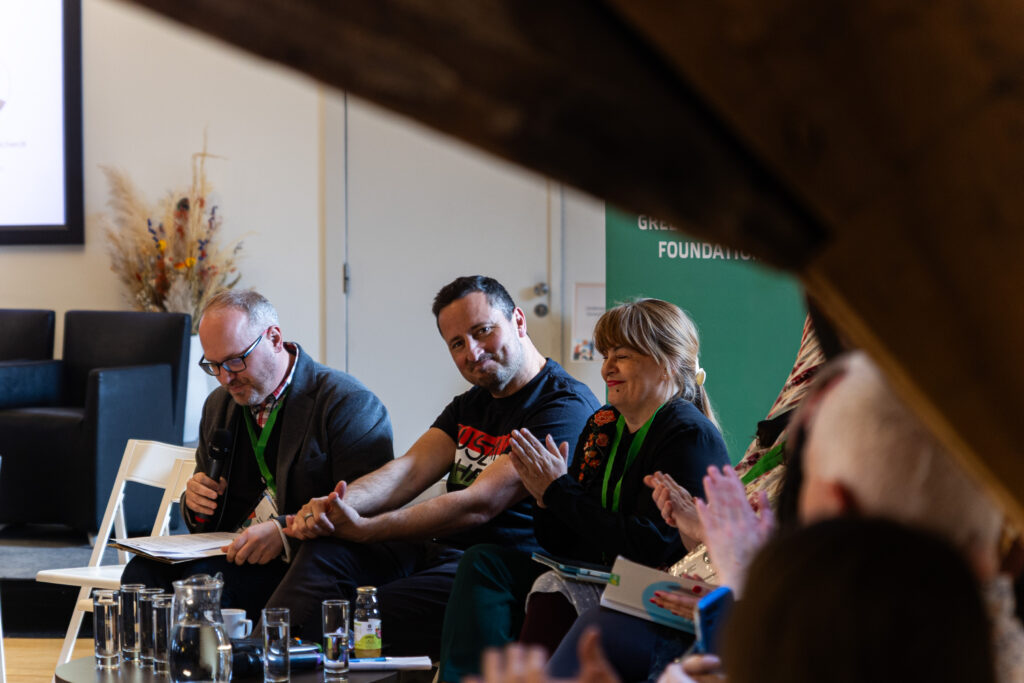
The Greens and progressives are facing an uphill battle everywhere. With the effects of political reversals hitting hard and digital technology reshaping our social interactions, Tarik Abou-Chadi and Rosa Martínez unpack the major challenges facing democratic movements and ask what new strategies we need to break the cycle.

Speakers


Tarik Abou-Chadi, Professor of European Politics, Oxford University 

Tarik Abou-Chadi is Professor of European Politics at the University of Oxford and Professorial Fellow at Nuffield College. His research investigates the transformation of European party politics.


Rosa Martínez, Secretary of State for Social Rights, Spain

Rosa Martinez Rodríguez is Secretary of State for Social Rights in the Spanish Goverment. She is currently member of the Green European Journal editorial committee, being involved with the Green Movement since 2011. As member of the Spanish Parliament (2015-2019) she worked on energy, industry and climate policies. After that, she worked for the European Climate Foundation.

Moderator: Jamie Kendrick, Head of Policy and Research, GEF 

Jamie Kendrick is Head of Policy and Research at the Green European Foundation. His work explores the politics of eco-social transformation and the implications of technology for our democratic societies. He was formerly an advisor for the European Greens and editor-in-chief of the Green European Journal.

Parallel Session

By European Green Academy

The Backlash Is Organised – Feminists Must Be Too 


Friday, 24 April

15:00-16:30 

Room: Magritte

Across Europe and beyond, attacks on women’s rights are no longer isolated – they are coordinated, strategic, and deeply embedded across political and digital ecosystems. From restrictions on reproductive rights to online harassment, femicide, and anti-gender narratives, a “new war on women” is unfolding at scale. At the same time, rising polarisation risks fragmenting feminist movements – dynamics often amplified and manufactured by the far-right, weakening collective power.

This session takes a deliberately political and provocative approach to unpack how the backlash operates and what it demands of feminist organising today. It will focus on reclaiming agency: how to rebuild mobilisation, strengthen alliances, and shape a more inclusive, intersectional feminism that is fit for this new landscape and capable of meeting the scale and urgency of the challenge.

Speakers


Justyna Wydrzyńska, Abortion Dream Team

Justyna is the co-funder of Kobiety w Sieci and Abortion Dream Team, two organisations which support in abortion in Poland. She was the first abortion activist to be convicted for helping abortions in Poland and a member of the Abortion Without Borders network.


Natalija Simović, Local CouncilorZeleno Levi Front  

Natalija Simović is a feminist activist and politician from Serbia with over 15 years of experience in the civil sector, driving grassroots change for women’s rights, gender equality, and social justice. She is also one of the founding members of Ne davimo Beograd movement that later became a Green Left Front party. Natalija serves in city politics as an elected local councilor in her second mandate, and is co-chair of party’s Grant Council and Autonomous Women’s Front, feminist wing of the party. She has been active in leading campaigns, organizing grassroots actions in collaboration with feminist organisations and policy making with feminist perspective.

Kristina Wilfore, Co-Founder, #ShePersisted & Director of Innovation and Global Projects at Reset Tech

Kristina Wilfore is a seasoned international elections and communications specialist with deep expertise in designing and leading programs that build democratic resilience. She has trained more than 2000 women politicians, journalists, and activists across 25+ countries, equipping them with the skills to counter digital threats, strengthen digital security, and engage in inclusive political leadership. From Western and Eastern Europe to the Americas, East Africa, and Middle East, Kristina has developed curricula, led high-level workshops, and facilitated strategy sessions with governments, philanthropies, and civil society organizations. As Director of Innovation and Global Projects at Reset Tech, she spearheads initiatives at the intersection of election integrity, masculinity, political violence, and information resilience, ensuring that capacity-building remains at the core of these efforts. In 2021, she co-founded #ShePersisted, an initiative that supports women leaders to confront digital harms—recognizing these attacks as threats to both democracy and human rights.

ModeratorMeyrem Almaci, GEF Co-President 

Meyrem Almaci, 1976, Belgian with Turkish roots, mother of two; lifelong fan of fantasy, anime, books and good music. Party Leader of Groen (‘14-‘22) , member of Parliament since 2007.  Believes in saving the planet and being a good ancestor for the future generations, whilst also having fun and enjoying life as much as possible. So: Don’t curse the darkness, light a candle.

Parallel Session

By European Green Academy

Re-wiring for Democracy: Can We Build Tech Sovereignty from the Ground Up?


Friday, 24 April

15:00 – 16:30

Room: Brel 

In a volatile world with democracy under pressure, the idea of technological sovereignty is gaining traction. But what does this actually mean in practice? – and where should we begin? A Green vision for technological sovereignty must go beyond asking who controls the technologies we use to consider how and where technologies can be put at the service of our democratic societies. In this interactive session, practitioners across research, civil society and citizen perspectives will outline their perspectives on the paths forward.

Speakers


Jean Cattan, Future of Tech Institute (FOTI), former Head of the National Initiative, Café IA; former Secretary General of Artificial Intelligence and Digital Technology Council 

Jean Cattan is currently the Of Counsel at the Future of Tech Institute (FOTI). In the past, he has served as Secretary General of the French Digital Council (Conseil national du numérique), head of the national “Café IA” initiative, advisor to the chairman of Arcep (the French telecom regulator), and lecturer in digital law and regulation at several higher education institutions, including Sciences Po Paris and the University of Panthéon-Assas. He holds a PhD in public law and is the co-author, with Serge Abiteboul, of Nous sommes les réseaux sociaux (Odile Jacob, September 2022), as well as around sixty articles dedicated to digital regulation. From 2021 to 2025, he oversaw all publications of the French Digital Council, including around a dozen major reports.

Karen Boers, FARI, the Brussels AI Institute for the Common Good

Karen is a serial social impact entrepreneur. Building on the experience from creating the Belgian and European startup associations Startups.be and European Startup Network as well as the unique tech education hub BeCentral and the disruptive coding school BeCode, she strives to create scalable and sustainable projects with a societal purpose. For the past 3 years, she headed the joint ULB-VUB initiative FARI, the AI Center for the Common Good, ensuring local stakeholders can benefit maximally from the expertise on Artificial Intelligence, data and robotics available in the region.

Alice StollmeyerExecutive Director, Defend Democracy

Alice Stollmeyer is Founder & Executive Director of Defend Democracy, a nonpartisan NGO defending democracy from foreign, domestic and technological threats. Alice has a background in social studies of science, technology and society. A former policy adviser, she now works at the geopolitical nexus of democracy, security and technology, in particular on hybrid threats. Besides leading Defend Democracy, Alice is on the Steering Group of the Netherlands Democracy Coalition and she is an associated expert of the Euro-Atlantic Resilience Centre.

ModeratorNamita Kambli, Project Lead, Centre for Future Generations 

Namita applies a social and environmental lens to the governance of emerging technologies. Her goal is to ensure both people and the planet have a fair shot in decision-making – now and in the future.

Parallel Session

By European Green Academy

Building Resilience Through Values


Friday, 24 April

15:00 – 16:30

Room: Zinneke

How can we make European democracies more resilient against military aggression, hybrid warfare, and ecological disruption? The GEF report New Idealism for a Disrupted Europe draws lessons from Ukraine and the Eastern frontline states that are among its staunchest allies. It advocates a comprehensive approach to security that is both values-driven and taboo-breaking. In this session, we discuss the report’s recommendations and invite you to come up with your own ideas for crisis-proofing our societies.

Speakers


Agnese Lāce, Latvia Minister of Culture; co-chair of PROGRESĪVIE 

Agnese Lāce is the Minister for Culture of the Republic of Latvia and Co-Chair of the political party The Progressives. She has served as Minister since June 2024. Agnese holds advanced degrees in Political Science and International Migration from prestigious institutions across Europe. She has worked extensively in migration and integration policy research and has been actively engaged in civil society initiatives and international cooperation projects. Her professional background includes policy development, research and advisory work on migration, integration and social cohesion at the European level.

Gabriela Svárovská, MP, Co-Chair, Zelení

Gabriela Svárovská has been a member of the Chamber of Deputies of the Czech Parliament since October 2025. In the parliament she serves as a member of the Committee on Foreign Affairs and Committee on Environment. She is a Co-Chair of the Czech Green Party. Ms Svárovská has extensive experience in diplomacy, human rights, and civil society. She previously served as the Director of the Human Rights Department at the Ministry of Foreign Affairs of the Czech Republic and held key political roles as Press Secretary to President Václav Havel and Advisor to Senator Marek Hilšer. In the non-profit sector, she co-founded the Prague Civil Society Centre, an endowment fund dedicated to supporting civic activism and independent media across the countries of the former Soviet Union. Her career has been defined by a commitment to democratic values, international security, and the protection of universal human rights.

Atte Harjanne, MP Finnish Greens (Vihreä liitto)

Atte Harjanne is a Member of Parliament in Finland representing the Green Party. In Parliament, he has focused on energy, security, technology and economic affairs. Harjanne served as Vice Chair of the Green Party of Finland from 2021 to 2023 and chaired the Green Parliamentary Group from 2021 to 2024. Before his career as a parliamentarian Harjanne worked as a researcher studying impacts of climate change. Harjanne holds the rank of captain the Finnish Defence Forces reserve.

Richard Wouters, Researcher, Wetenschappelijk Bureau GroenLinks

Richard Wouters is a project lead at Wetenschappelijk Bureau GroenLinks, the think tank of the Dutch Green party. He is the editor and co-author of various GEF publications, including ‘Geopolitics of a Post-Growth Europe’ and ‘New Idealism for a Disrupted Europe’.

Liza Bezvershenko, Independent Civil Society & Advocacy Specialist 

Liza Bezvershenko is a Ukrainian civil society expert based in Brussels, specialising in EU-Ukraine relations, European integration, and democracy promotion. She acts as Advocacy Coordinator at the NGO European Resolve, where she contributes to European security and democratic resilience by advancing research, fostering dialogue between civil society, decision-makers, and research institutions, and supporting public engagement through awareness-raising initiatives.

She is a recipient of the 2024 Young Diplomat Award and has been repeatedly featured in international media as a recognised voice for Ukraine in Brussels.

Co-Moderator: Joanna KaminskaMediation and Dialogue expert, European Parliament, European Green Party Committee

Joanna Kaminska has facilitated confidential, high stake dialogue between political party leaders, mostly in Central and Eastern Europe and advised on security and democracy building Europe’s top decision-makers for over 15 years. She has served as foreign and security policy advisor to the President of the European Parliament David Maria Sassoli, and worked on coalition making and consensus building between European political forces for over a decade in the area of security and defence. Political negotiations, democracy building and fostering dialogue between difficult political personalities are her passion. Currently she works as an advisor on mediation at the European Parliament’s mediation team, where she forges the culture of compromise between political parties in the Verkhovna Rada of Ukraine during the war.

Joanna holds a PhD from the University of London, Royal Holloway College. She has extensively published on the foreign and security policy and Eastern neighborhood issues. Her last book published with Palgrave Macmillan is entitled Poland and the EU Enlargement: Foreign Policy in Transformation.

Between 2018-2024 she was also a Brussels municipal council member. Since 2021 she is a National Council member of the Polish Green Party Zieloni. In December 2024 she got elected to the European Green Party (EGP) committee, political body managing green parties in Europe, where she is responsible for building security and defense narratives.

Co-Moderator: Tomas Tomilinas, MP Democrats for Lithuania

Over the years, Tomas Tomilinas has worked to advance social reforms, reduce poverty, and improve climate policy. Lithuania has made major investments in green energy and stopped a nuclear project in 2012. Tomilinas was one of the leaders of the referendum campaign against that nuclear power plant, and later served twice in the ruling coalition. He was elected as member of the Committee of the European Green Party in 2025. Back in 2021, he was expelled from his former party for voting in favour of LGBTQ+ rights in Parliament and that resulting in the creation of the Democtrats party,a proud member of the European Green Party. As Vice-Chair of the Party and vice-chair of the Parliamentary Committee on European Affairs, he works hard to change the country’s position on EU decision-making reform, including ending the single-country veto. He’s author of numerous social projects and initiatives, articles and three books; he’s a consultant for trade unions, specialist of adult education and co-founder of the NGO Social Investment Management Centre and political think tank Institute for Democracy (2023) and other organisations. He ha also worked as coordinator of party working groups for preparation of electoral programmes (2012, 2016, 2020, 2024) and was co-initiator of the establishment of trade unions in retail chains (2007).