
Vedran Horvat is sociologist, researcher, activist and ex-journalist from Croatia. Since 2015 he is the head and managing director of Zagreb based Institute for Political Ecology, educational and research organisation in the field of degrowth, climate justice, commons and municipalism. From 2005 to 2015 he was the director of Zagreb office of the Heinrich Böll Stiftung, German green political foundation. During last two decades he has been actively working on creating supportive conditions for development of green political project in Croatia, Western Balkans and across Europe. Since 2022 he is also associate of Amsterdam based Transnational Institute and GMF’s Marshall Memorial Fellow (2010). During past years he has also been in board of various national and European foundations or cultural organisations. He is editor and author of dozen of books and articles on green politics, climate change, commons and social movements. He joined GEF board of directors in 2019 after many years of multifaceted cooperation with GEF
In this interview by Jamie Kendrick, Vedran Horvat explores the development of Green politics in Croatia and Serbia, shaped by the legacies of war, privatisation and nationalism.
The Green movement in Western Europe emerged in the 1970s and 1980s in relatively stable, prosperous consumer societies. But Green politics in the Balkans emerged decades later, and from a different historical context. How did this different historical trajectory shape the movement in the main?
At present when we talk about Green politics in the Balkans, we really only mostly refer to Croatia and Serbia, and other Balkan countries to a lesser extent. The delay was partly due to the war in the 1990s that turned politics towards a very nationalist discourse that contaminated a large portion of the political spectrum. There was also wild privatisation and a lot of corruption and clientelism that had a kind of shock effect and life outside of what was perceived as normal. In that moment it was really difficult for any green actors to demonstrate that their agenda was as important as the prevailing topics of the day. There were also many irrelevant, small or even fake green political parties which emerged in Croatia and Serbia, but none of them achieved significant results, mainly as they were artificially created or lacked public recognition. Civil society was compensating the work of green political parties in society – all these issues that would be addressed by green parties were mainly or solely addressed by NGOs, activists and movements. It took a lot of time for the conditions to be created for a clear green political agenda, and that was inspired by different sources – human rights movements, environmental movements, feminist movements and municipalist movements. But also – and most importantly – they built on the positive experiences and lived experiences that were present in the time of Yugoslavia with regards to workers’ rights, social welfare, social protection, public services and self-management that very much overlap with today’s work on the commons and public goods. Additionally, many public companies had been targeted for privatisation, and we could see the adverse impacts of this, particularly on water, energy, waste, and communal services. So, for those reasons, an anti-privatisation agenda developed and became a strong pillar of the emerging movement.
We also learned that we didn’t have to repeat historic mistakes; we could argue for protection and governance and transformation of public goods and common goods wherever possible. In some ways we could say that the unfinished business of the Yugoslav period inspired part of the green agenda that was then coupled with municipal perspectives on radical democracy and local democracy. This in turn was paired with strong environmental work on climate, which had existed for many years and was quite successful in Croatia, and to some extent in Serbia. Yet, today, these key pillars are not always at the frontline of the political work, but they are deeply rooted in the formative period. I hope they will be emerging again.
Let’s talk about the importance of the commons to Green politics in Croatia. It’s a democratic model of governance that is not entirely public, not entirely private – it’s a kind of third model based on democracy and sustainability. Why did it resonate here?
There are several important dimensions here. One is related to different theories of the commons – specifically related to governance. It was very inspirational for the movements to start imagining how public infrastructure, public goods, and public or natural resources could be better regulated, better governed, and how they could be more democratically owned or shared among members of the community. For example, we thought it is very important to use the commons as an alternative governance model to argue against privatisation.
The second one is more related to self-management and the relationship workers have with their own companies or factories, particularly where the state was the owner. And thirdly, there was a very important dimension of the commons advocated by David Harvey on one side and Ugo Matei on another which perceived the commons as a basis for constituting, if not creating, social power that could become political power. In this, groups or movements would establish their social power through their work on the commons and through advocating different models of governance over public resources or common goods. This more conflict or antagonistic model was instrumental in formative years to establish political subjectivity.
These were all inspiring, and groups like Croatia’s Mozemo! are today recognised as defenders of public goods. But we face several challenges in translating these ideas into practice, particularly when it relates to municipal companies where this transformation is not yet taking place.
You mentioned different aspects of the legacy of Yugoslavia. In terms of socialism, is it a challenge to base politics on an idea that has a contested and difficult history there?
I would say that green movements were not interested in continuing the aspects of Yugoslavia’s legacy that related to its restrictions on civil liberties, human rights and freedoms. They instead wanted to continue the high levels of social protection, the strong welfare state, affordable and accessible housing, the relatively high standards of living and quality of life, and to some extent, the very informal, convivial degrowth practices that existed and were part of normality and everyday life. All that all disappeared in the 1990’s. Not everyone experienced socialism positively, but the type of socialism which existed in Yugoslavia was, for most people, very beneficial. It created a type of social contract or consensus about what it means to have a good life with relatively modest environmental degradation, high social protection and a relatively modest consumption footprint. In the 1980s, on top of rising nationalist tensions and the opening of Yugoslavia to international markets, there were already emerging narratives that everything should be privatised and that liberalism and the market economy will save us and offer even better life. So, the promise of the better has eliminated what was good and never delivered, at least not for the majority. Many of the ideas and practices we see today in the kind of democratic socialism advocated by Zoran Mamdani are in many ways what we had and lived in Yugoslavia. And with the transition that began in the 1980s, many of the advantages of this system disappeared and the dark sides of capitalism appeared, with factories and companies sold for zero and then resold for huge amounts of money so that clientelist networks or ruling party people could become rich and privileged.
In your book, Here at Last, you emphasise the importance of the resistance movements and political actors who formulated an alternative to rampant privatisation. How important were movements like the Right to The City movement in Zagreb or Don’t Let Belgrade Drown in the formation of Green politics?
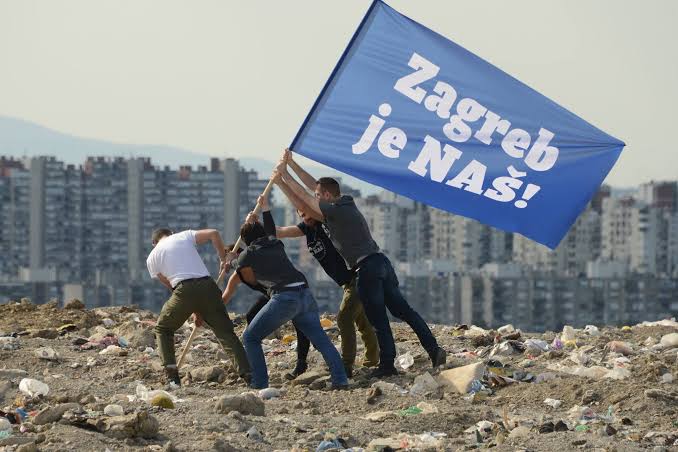
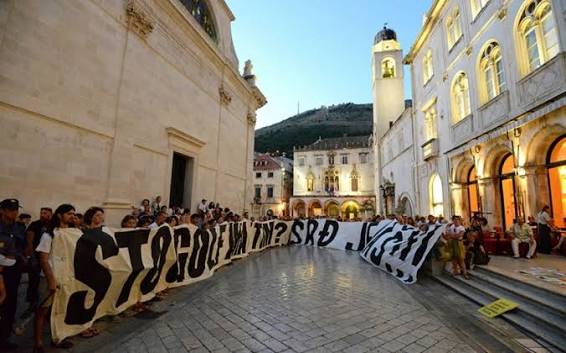
They were crucial. They didn’t have aspirations to build a party back then; they were examples of single-issue fringe politics with very clear goals: to prevent privatisation of public space, of factories, of highways. They put sustained attention on the protection of public interests and public goods, and these struggles were decisive in creating the trust that was needed to build a community around these struggles. And also, to experiment with various types of political organisation and self-organisation. Even though some of these struggles were focused on specific problems, and even if they were not fully successful in preventing damage, over time through persistent work these movements evolved, diversified, gained knowledge, created trust and became parties.
Were there any key moments when a decision was taken to move beyond movement politics and start formulating an alternative? How does that switch happen?
Some people recognised the limits of movement work, particularly in countries like Croatia or Serbia where electoral politics is the sphere where decisions are made and forces outside of that probably wouldn’t be able to prevent the damage done by certain investments or by privatisation. To some it was not clear whether this decision to enter politics would be successful, but there was recognition that we have to be present with both legs. However, once the transition took place, the leg that remained in civil society became very dormant and weak, because the new green parties were pulling most people from the movement into politics. It’s great that we have political representation in institutions but it’s not great that we have a much weaker civil society which is not able to massively mobilise around any issue. In Serbia there is a student movement that proved to be quite successful, but it works in opposition to the authoritarian regime, so it’s not politically defined and is very heterogeneous regarding its values.
Why isn’t political mobilisation happening now to the extent it was one or two decades ago?
Because key people with experience and knowledge on mobilisation are no longer active in civil society, and apparently there are not many new people who are able to do similar work, particularly in the Green Left sphere as that is predominantly defined by the parties. We might expect a new generation of mobilisation from Gen Z but it will probably look very different.
How important have organisations like your Institute for Political Ecology and those doing political education work been to the emergence of Green Left politics in Croatia, as well as Serbia and more broadly in the region?
There was a considerable amount of organic development. There is no such thing as spontaneous movements; everything has to be organised. We were established before the new green parties emerged, and we started the Green Academy already in 2010, our summer school, which proved to be very instrumental in building momentum and enabling parties in Serbia and Croatia to be more confident that this is the path they have to create. We cannot say for sure that all this wouldn’t have been possible without those groups, but they played important roles in generating public visibility and public support and showing people that these are the groups who are fighting for the public’s interest. We worked with different instruments, enabling learning, exchange, creating trust, discussing conflicts, creating knowledge communities around different topics (commons, municipalism, degrowth) and were always based on genuinely European or even internationalist perspective.
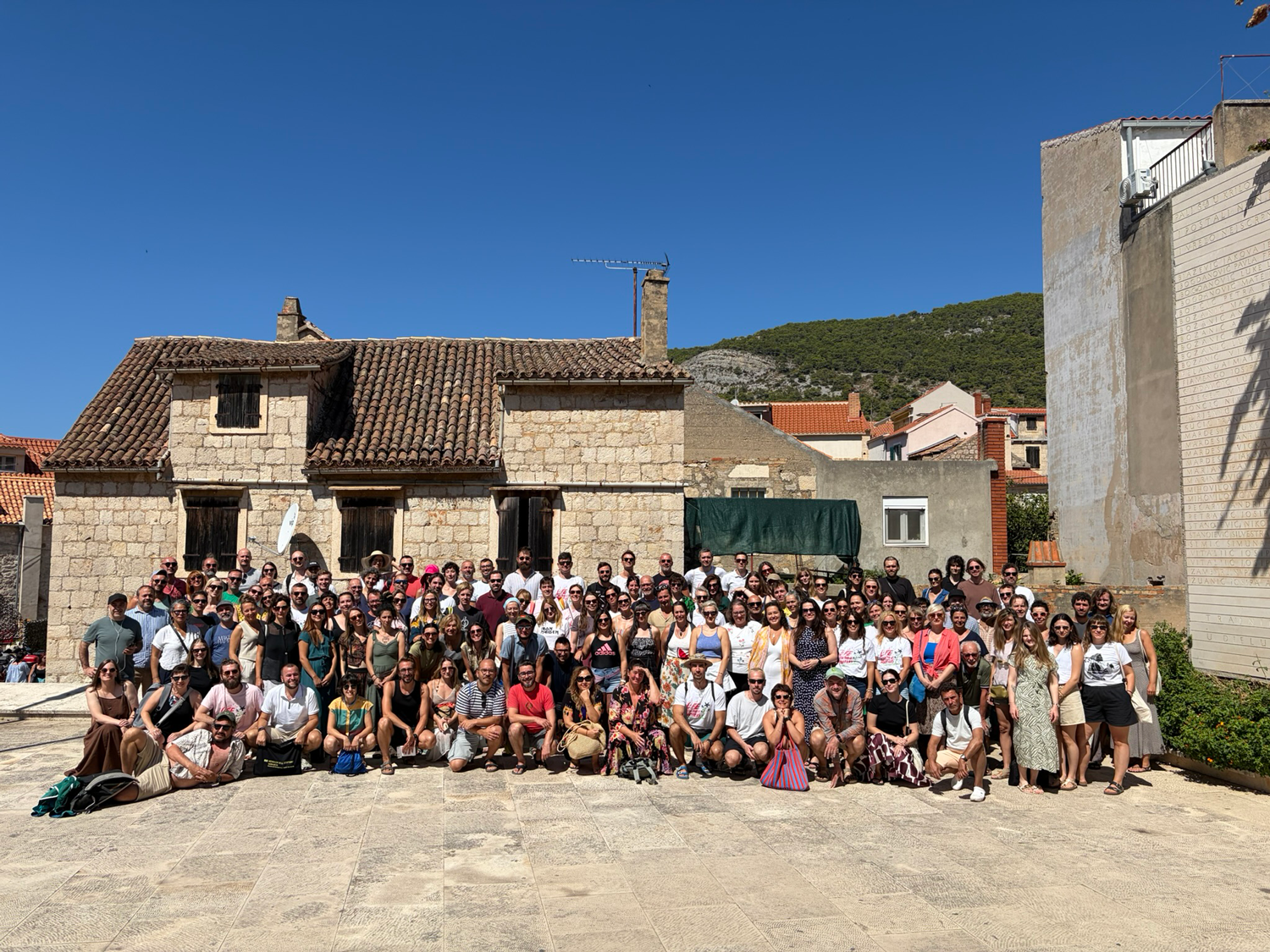
Institute for Political Ecology, Green Academy 2026, Vis, Croatia
You’ve talked about the depletion that civil society can experience when people move into government. How do you ensure that there is both balance and renewal?
Our friends in Serbian civil society experienced really strong pressure from the government, and through direct political violence, scarcity of funding, the shrinking of public space, less funding at the European level, more competition, and so on. All these factors together play quite a detrimental role, which is different from 10 or 20 years ago when these mobilisations took place and movements actually expanded this space. In Croatia, in the last decade we also suffered from serious shrinking of public space that created scarcity in the civil society scene and made activism less popular for new generations, because of its precarious dimension but also risks related to the lack of protection mechanisms.
The political battle has to take place both at the European and local level. For the majority of people on the ground there is a need for some type of recognition, if not funding or support, which is not there at the moment. At the same time, there are questions about how close Green Left governments at the city or national level should be to civil society, and how much civil society should support progressive actors for fear of being attacked. If you become more militant or more radical with your demands, you can end up down a blind alley.
The key problem is that, even if we have a long-term vision, we don’t have the resources or security to be able to realise our vision, given the high levels of uncertainty. That is applicable to many organisations in Croatia. In the last two or three years many organisations shrunk significantly. They lost a lot of funding, presence and visibility, and that has long-lasting consequences.
We know the far-right is active at the national level in many countries, but they also cooperate more on a regional or European level in order to strengthen their narrative, their ties, and even their financial positions. Can the Green Left do the same in terms of building a unifying narrative that allows them to collaborate more, or do they lack the means and funding?
Unfortunately, Green and Left parties here are very much absorbed by the national narratives that are defined by national debates, as well as absorbed by opposition to Vucić or Plenkovic. Regional cooperation is less present, and it’s becoming much more difficult to work at the regional level because Croatia is not part of the region – only geographically so. Except for Serbia, the rest of the Western Balkans doesn’t have strong or relevant Green actors. This shows a vulnerability within the Greens in both countries, that they can’t resist this national centrifugal political force which defines their agenda and means they cannot be proactive or constructive on bringing regional issues into their agenda. Very often we need to spend energy for the equivalent of two steps forward and yet make only one step. And for us, regional cooperation is an essential instrument for working against nationalism. What can be promising is that at the level of people, culture, activism, the situation is much better between our two countries and green and left actors are very close and understand each other, despite operating in somewhat different political realities.
This is a region that has known war and chaos. It’s now a mainstream view in Europe that, because there is more insecurity, countries need to build up their defenses. Are there deeper lessons that the Green Left in Croatia can offer regarding how to navigate times of growing insecurity and fear?
Wars in Ukraine and Palestine are like déjà-vu for us. We understand all these nationalist tensions – they’re pseudo-imperialist or a continuation of colonialism. But with the new modes of hybrid war, I’m personally not inclined to believe that the defence narrative is the solution. Of course, it’s very clear that the EU has to be more autonomous in creating its own defence system and less dependent on NATO, particularly given the impact of Trump’s decisions.
I was a teenager when the Yugoslav war started. People like me only realised later on whose interests this war was being fought in. The key lesson to ask ourselves is whose interest is it in to have a war in Europe? But these lessons don’t want to be heard today. We all once lived in the same country; new narratives were introduced in order to divide people and create fear. The war took place because people were affected by fear and insecurity, and nationalist politicians were able to mobilise and start the fight. Today everybody’s pulling in their own direction, from AfD to Meloni to the Patriots, or in France. I don’t know what will come tomorrow. Although cases and history are a bit different, there are many similarities with underlying tendencies that destroyed Yugoslavia, and those aiming to dismantle the EU.
The question for the Greens that is most relevant is whether militarisation will actually make Europe stronger? Do people feel safer because of that? Europe today is so divided that soldiers, weapons or investments will not bring security by themselves. So, the question becomes how to base our geopolitical stability on something else? We need to have our own narrative in terms of how we approach militarisation and not necessarily be labelled immediately as peace lovers. This is the biggest challenge for the Greens: how to define Green politics amid high levels of uncertainty in which the good life is threatened every day. Creating our own internal trust, resilience and solidarity across Europe can be much better tool and weapon to defend a vision of united Europe. But it should be a Europe they can build together and not be asked to back when everything has been decided.