Interview8

In Conversation with Ewa Sufin-Jacquemart, Poland

By Interview

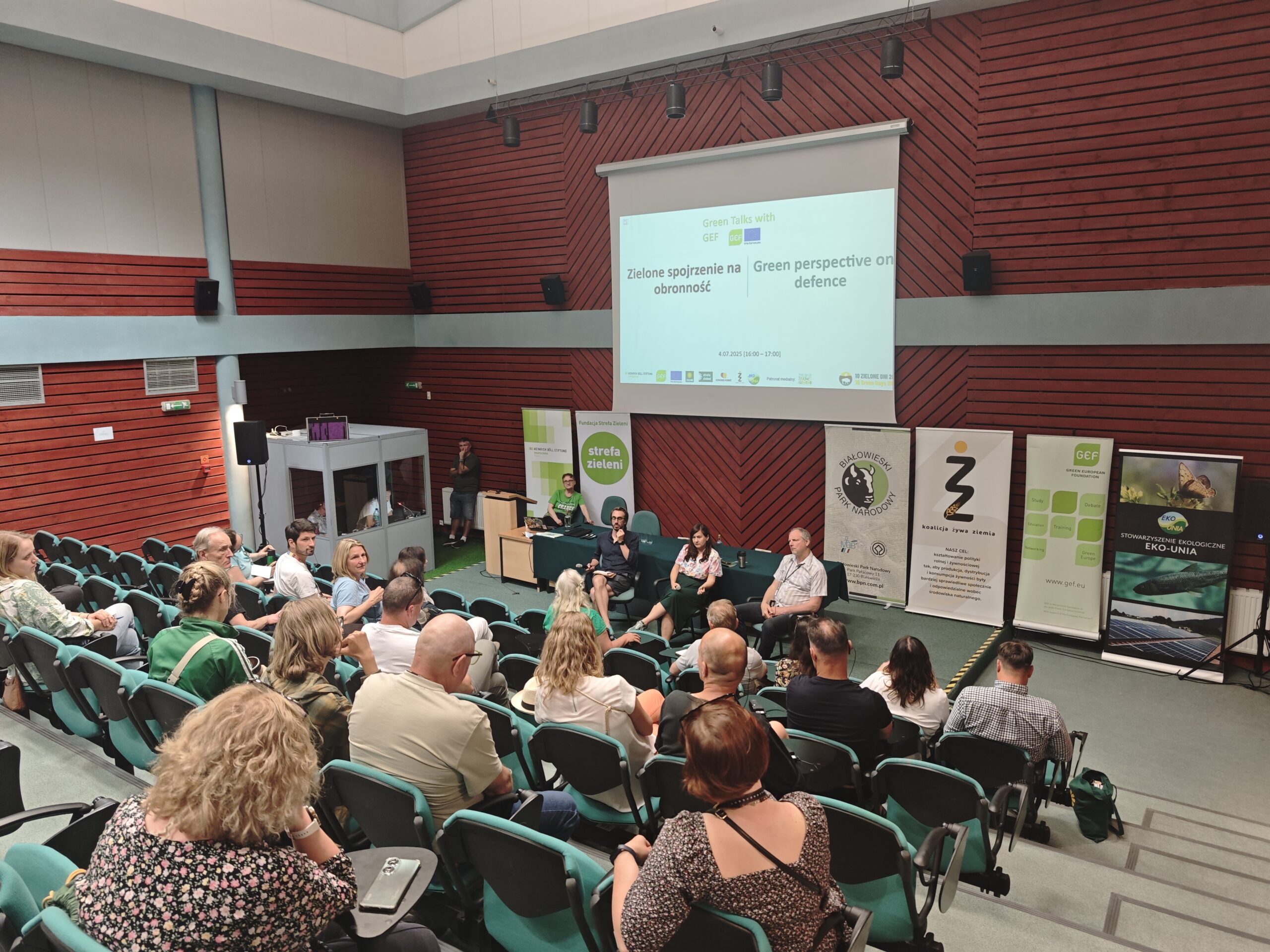
Green Talks with GEF at the Green Days 2025 (Białowieża National Park)


Ewa Sufin-Jacquemart graduated in sociologist from Warsaw University and the Sorbonne in Paris. Currently she is director of the Green Polish foundation “Strefa Zieleni”, writes for their publication, and coordinates the Green Centre of the Congress of Women.

In this interview by Edouard Gaudot, Ewa Sufin-Jacquemart traces her journey from a little NGO, turned consulting firm, called Utopia and sustainable development in France to becoming a key figure in Poland’s Green movement. She reflects on building the Polish Greens, advancing environmental politics, overcoming electoral setbacks, forging alliances, and helping climate issues gain prominence in Polish society.


You are the president of Strefa Zeleni – the Polish Greens’ political foundation – and a leading figure in political ecology in Poland. What path led you here?

I’m a French–Polish dual national. I lived in France for 25 years, then in 2011 returned to Poland to head the Polish Green Foundation. That’s what brought me back here.

I became interested in environmental issues when, as part of my continuing professional development in France, I studied strategic foresight, sustainable development, and the environment. I had already come across the concept of corporate social responsibility (CSR) through a little NGO turned consulting firm called Utopia. That you could do business while also caring for society and the environment was a revelation.

So I studied CSR on my own, then at the Conservatoire national des arts et métiers (CNAM). France was somewhat of a pioneer in CSR: in the 1970s, it introduced the idea of social reporting, before eventually making non-financial reporting mandatory in the early 2000s.

I also worked for a large non-profit that organises sports holidays, the UCPA, where I developed the thinking around CSR. But it was later at Club Med where I really came face to face with these challenges, working alongside a quality director who had just convinced management to create a sustainable development department in a sector in the midst of a revolution. That’s where the ecological awareness stems from.

The political side of things I first saw by chance as a political advisor at the Polish embassy in Luxembourg. From there I got a behind-the-scenes view of preparations for the COPs – notably the 2008 meeting in Poznań. I saw how Polish institutions struggled to engage with these questions seriously. And I was one of the few advisors who read the notes sent by experts on climate and environmental issues. When I went to meetings with colleagues, or with other members of the diplomatic corps, I could see their mistrust. They looked at things through the narrow lens of short-term thinking.

I realised just how far Poland lagged behind politically on these issues. Not just the Polish state but also the media, which is highly politicised. At the time, not one of the country’s 460 MPs talked about climate, the environment, or biodiversity, even though they had to legislate on these matters. That’s when I made this vow: I would get at least one Green MP elected to parliament.

This matters because since 2004 Poland has been a member of the EU, where climate policy is at the heart of the agenda?

Exactly. At that point, I thought the planet’s future might to a degree hinge on the environmental awareness of Poles, because the European Union is the only global political bloc that can aspire to steer the world towards a new paradigm, with ambitious goals. Poland punches above its weight on these subjects in the EU, because it enjoys a certain amount of clout with other member states from Central and Eastern Europe.

When I returned to Poland, I called Claude Turmes, a Luxembourgish MEP who sat with the Greens/EFA in the European Parliament, to arrange a meeting. He was a tad surprised because, as the group’s coordinator for climate and energy in the European Parliament, his relations with Polish officials and MEPs had never been particularly friendly. It was he who helped and guided me in devoting myself to the green cause in my country.

In what way? 

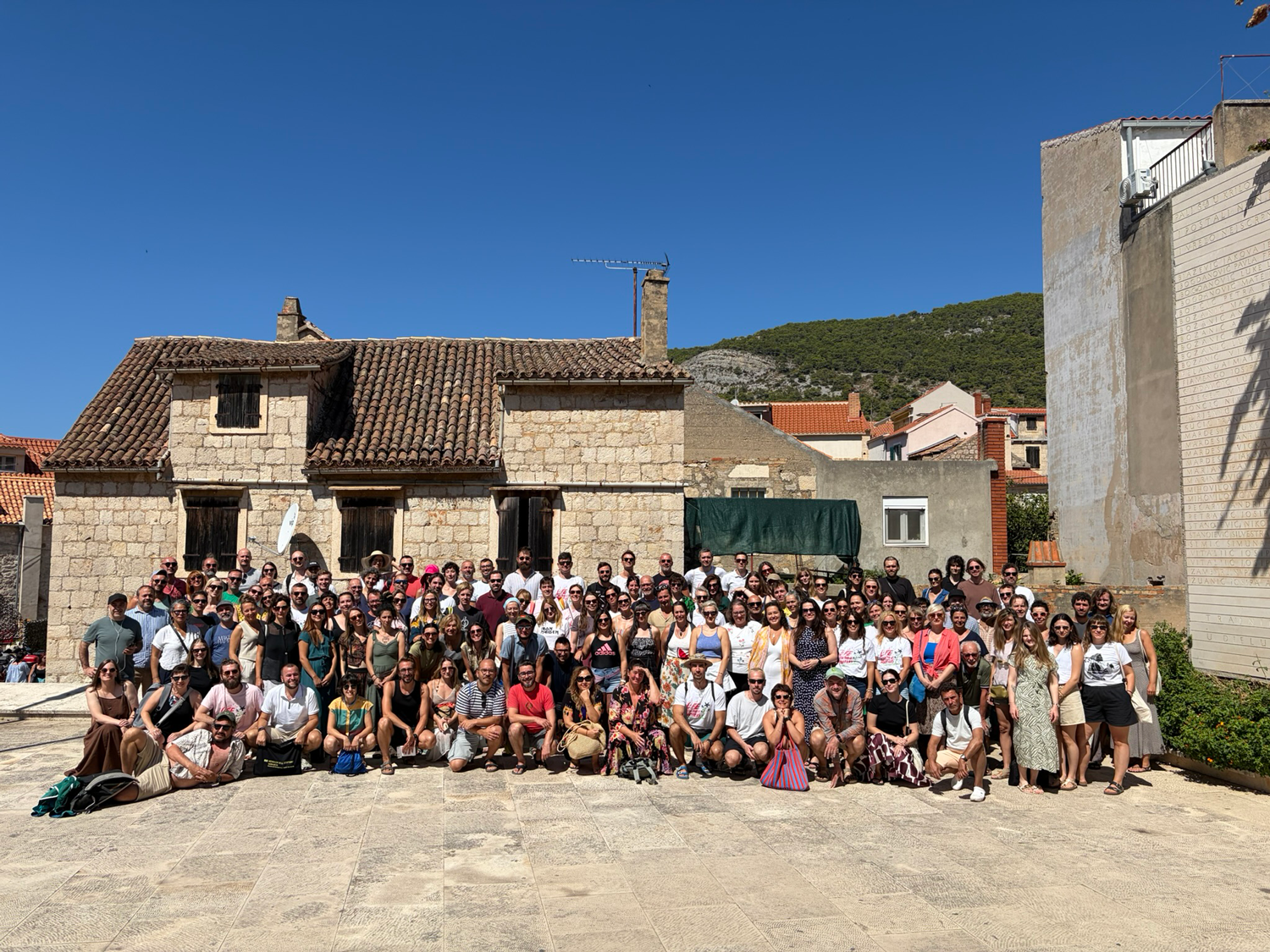
The Polish Greens (Zieloni) immediately put me in charge of the foundation that they had just created. It took time to get this off the ground, because everything needed to be built, working alongside the Green European Foundation (GEF) and other members of Europe’s political ecology family. But we eventually joined the network of Green foundations, and I became Zieloni’s delegate tn the European Green Party [delegates from member parties meeting during the Party’s annual events, represent their party and work on common European resolutions, they also elect the Party’s leadership and committee]. One of the first concrete things we did was to organise Green summer schools in Poland, modelled on similar events held in other countries, with the support of GEF. The first was held in 2015 in Białowieża, home to the last remnants of the great European primeval forest. It’s a magnificent place, with profound historical and symbolic political significance. Since then, we’ve organised these gatherings every year, because they’re essential for ensuring the cohesion and political continuity of the environmental movement in Poland. 

As president of the foundation, you’ve watched the growth of the Polish Green Party first hand, so you know its roots and history inside out. Can you give us a brief overview? 

When I joined the Polish Greens in 2011, I was struck that they were considered the only true party of the Left in Poland. The others, like the SLD (an old social-democratic party that emerged out of the former Communist Party in power until the Round Table Talks), had little of the Left about them. There were a few left-wingers who gravitated around it. One was my former ambassador to Luxembourg, Barbara Labuda, an ex-Solidarność activist, former MP and stalwart of the Polish feminist movement who served as a minister for several years in the chancellery of President Kwasniewski (SLD) among others. But strikingly, most people who called themselves left-wing were drawn naturally towards the Greens.

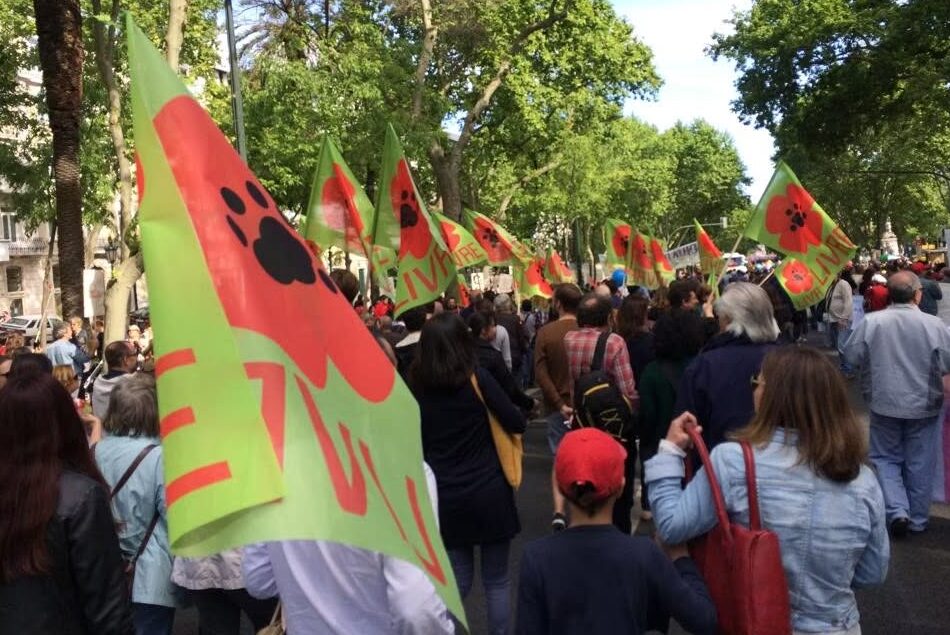
The party was founded in 2004, built on three social and cultural movements that were very powerful at the time: environmentalism, LGBT activism (gay rights campaigners especially), and feminism. The German Greens provided vital assistance in creating the party: they funded a seminar where representatives of these movements could meet one another and gave them training on things like how to build a party and run election campaigns.

In this new coalition, everyone learnt from each other: gay rights activists and feminists became eco-conscious, and environmentalists included feminist and LGBT perspectives in their approach. That coalition became a Polish Green Party.

When you joined in 2011, the party was struggling in the institutions and had just lost another election, which it fought in alliance with the SLD. It would have to wait until 2019 to finally send a Zieloni MP to the Sejm [Lower House of Polish Parliament]. How did the party bounce back after its string of election defeats? How did it have to change?

From the outset, the biggest problem has always been money. The Greens never had much in the way of resources. For a start, Green activists aren’t very rich. What’s more, without electoral success, it’s impossible to access public funding. For years, our daily struggle boiled down to two questions: how do we pay the rent for our headquarters this month? And what can we do with no money? When we were based in Marszałkowska Street in Warsaw, which was quite a large space, we regularly organised debates on the premises.

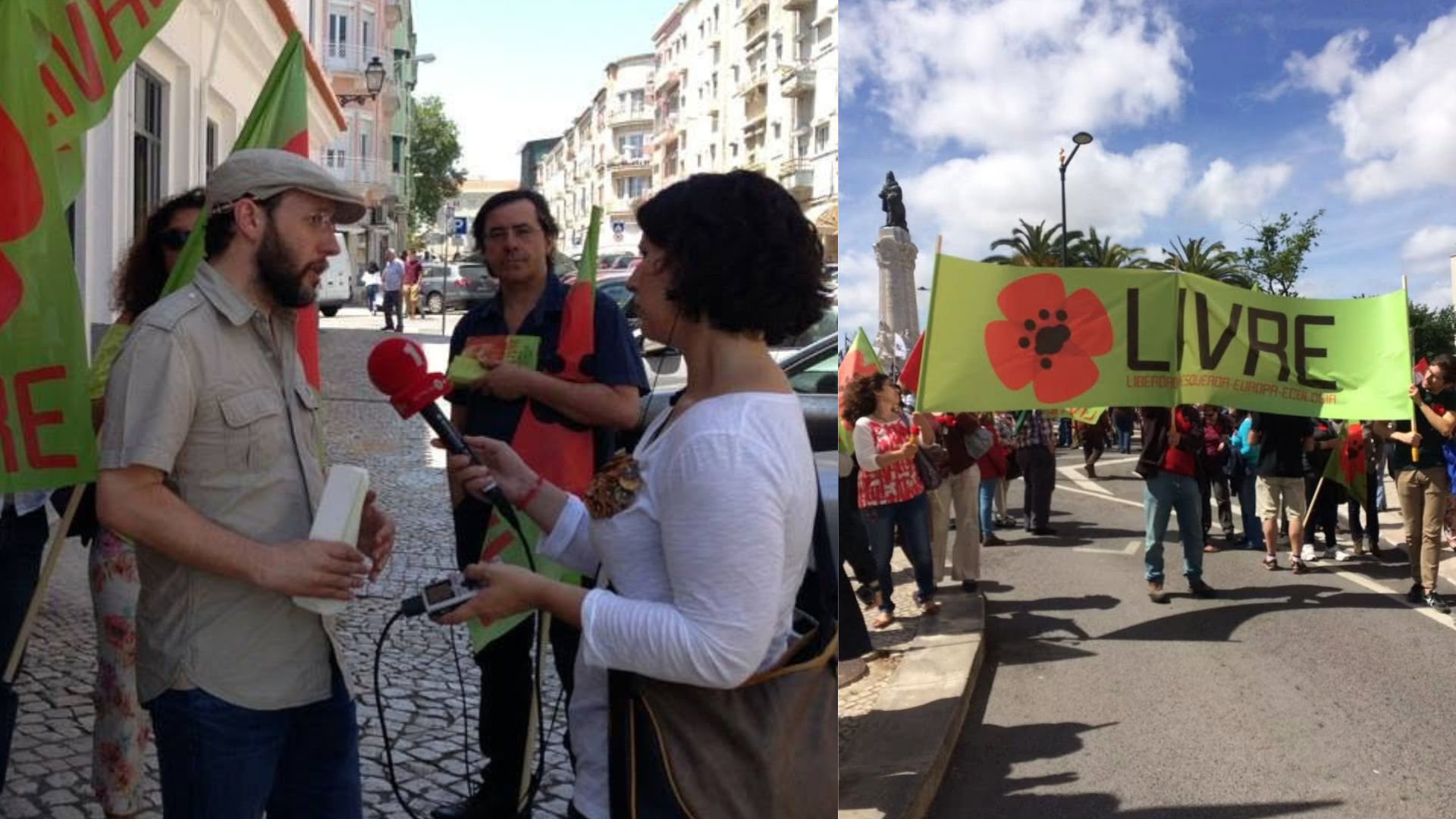
We always managed to get by with what we had, drawing on our members’ skills whenever we could. For example, the co-chair in Warsaw back in the day was Ella Rovenko, an incredible activist and painter of enormous creative talent. She lent a hand with everything from decorations to banners and posters, especially for Pride marches, which were for years a key platform for raising our profile in the outside world.

These conditions create a strong sense of solidarity and belonging but don’t encourage strategic debate or tactical pragmatism. How did you navigate these challenges?

It’s true that this held us back. I also don’t think that Polish society was ready for the Green message. People hadn’t developed enough environmental awareness, because they were pursuing materialist and consumerist goals first and foremost. They simply wanted to get richer, to make up for 60 years of communism, and reach a Western standard of living. Looking after the planet, and environmentalism in general, were seen as obstacles to economic growth and higher living standards. They weren’t very popular.

The general public confused us with Greenpeace: “you’re the ones who chain yourself to trees, right?” That’s why we had to add “party” to our name – Partia Zieloni – to make clear the specific nature and institutional ambitions of our message. We also had to gain political credibility. It was a battle on two fronts: to be recognised not just as a political movement in our own right, but also a distinctive left-wing movement.

A crucial test came in 2013 with the campaign Stop podwyżkom cen biletów ZTMi (Stop the transport fare hike). The city of Warsaw wanted to introduce a steep rise in ticket prices for public transport. It was a clearly antisocial and anti-environmental move because we need reliable and affordable public transport for everyone. The campaign took the form of a citizens’ initiative that required us to collect people’s physical signatures along with their personal details like addresses and social security numbers. It was a huge undertaking, but we managed to gather 25,000 signatures in a very short space of time, despite harsh winter weather.

This type of success creates connections and builds momentum. For example, it allowed us to forge closer ties with a small left-wing organisation called Młodzi Socjaliści (Young Socialists) that was involved in the campaign. This youth organisation was set up in opposition to the SLD and shared many of the causes we championed, and we gradually stepped up our cooperation.

How did they respond to your threefold identity as environmentalist, feminist, and pro-LGBT rights?

They pushed us to add a social dimension, so they brought another side to our identity. When the Young Socialists came on board, we worked together to amend the Greens’ founding manifesto to place greater emphasis on social issues.

Around this time, the Women’s Party joined us too. With this momentum, we went into the 2015 general elections with the goal of reaching the 3 per cent vote-share threshold that would open the door to public funding.

As well as money, we also had to address two related weaknesses: the lack of an identifiable figurehead, and poor visibility in the public sphere. The crucial question was: what strategy do we adopt for these elections? Should we go it alone? Should we form a coalition, and if so, with which lead candidates? Should we create a single Green-left party, as advocated by the Young Socialists? And so on. There were multiple questions, and each answer came with benefits and trade-offs.

The electoral requirements for a single party are less stringent than those for a coalition. But this would have meant accepting a merger, which was a tough sell, as it could have spelt the end of the Greens as an independent force. When our members voted to keep the party’s identity, cooperation fell apart and the Young Socialists, as well as some of our activists, broke away to found the radical left party Razem (Together).

This split was a disaster for us, because while Razem had the same funding problems as us, they didn’t share our figurehead issues: they had a charismatic leader who was very comfortable in the media and who shone in televised debates. They managed to pass the 3 per cent threshold. As for us, our more centrist coalition with the SLD and Twoj Ruch (Your Movement) failed to return any MPs.  

But at least you got public funding?

Yes. That was the silver lining in our defeat: we got our first public funding. It wasn’t much – because we were part of a coalition – but it allowed us to begin a real process of consolidation. We no longer worried about paying the rent. And the campaign allowed us to broaden our activist base. People joined and stayed. We could employ permanent staff. It was a new start. 

In the wake of this defeat, which proved a valuable learning experience, did the party stay focused on the same themes?

Yes and no. We placed social issues at the heart of our message: “Solidarity” took its place beside “ecology” and “democracy”. The creation of Razem changed things too: there was suddenly a new left-wing party, and this reshaped the political landscape. It brought competition but also clarification, which forced us to shift a little towards the centre.

We even found ourselves wrestling with the old clichés: “neither right nor left”, but “straight ahead” for a “different” political movement. During this period, our membership of the European Greens and our relationship with its group in the European Parliament played a crucial role in strengthening our legitimacy. It showed that we stood apart from the traditional left yet still belonged to an established political family.

What else has happened over the last 10 years? 

The landscape on the Left has become even more complicated since Robert Biedroń founded his Wiosna (Spring) movement: he used his strong environmental record as mayor of Słupsk to claim a monopoly on left-wing political ecology, so he saw us as rivals to eliminate. 

This competition from both Razem and Wiosna squeezed our political space and led us into increasingly centrist coalitions. That’s why we made a tactical move towards Donald Tusk’s Platforma Obywatelska (Civic Platform).  

But before that we needed to show our strength, which we did at the 2018 regional elections. For the first time, we had electoral results from running on our own: no seats, but around 180,000 votes, which provided an estimate of our relative support among the electorate. This success then gave us bargaining power in coalition talks with Tusk. 

Since 2019 and your agreement with Koalicja Obywatelska (Civic Coalition), you’ve had MPs in parliament. What has this accomplished?

We’ve achieved our main goal: we’re now part of the public debate and people know there are Greens in Poland. This is also thanks to the work of our Deputy Minister of Climate and the Environment, Urszula Zielińska. She has tackled issues like energy and renewables, drawing on her experience in the private sector to master her brief and her messaging. She is a well-known minister whose at times divisive positions attract an enormous amount of attention.  

Then there’s MP Klaudia Jachira, who was elected as part of the Civic Coalition list, but later joined our party. A diligent and dedicated MP, she’s also an actor and satirist with a highly active and visible online presence. She, too, has become one of the party’s best-known faces.  

We’ve built up our institutional visibility and credibility, as well as our financial resources. What we still lack is representation at European level, which is where the big strategic decisions are made on climate and the environment.  

How important is Europe for Poland’s Green movement? Not just the EU, but your German and Baltic neighbours and the Visegrád Group.  

The European political family helps foster certain ties, particularly with the Lithuanians and the Germans. But the European dimension has long been central to our political battles and this predates Poland’s 2004 accession, as we had to introduce European acquis into Polish law prior to joining the bloc. Standards are set by legislation, but they must also be enforced in practice, especially when it comes to making sure funds are invested in projects with environmental added value – in green, not grey. 

This is where NGOs come in: they campaign to make sure that legislation is followed on the ground or pressure the government to transpose directives or comply with European Court of Justice judgments, as happened in the Rospuda case.
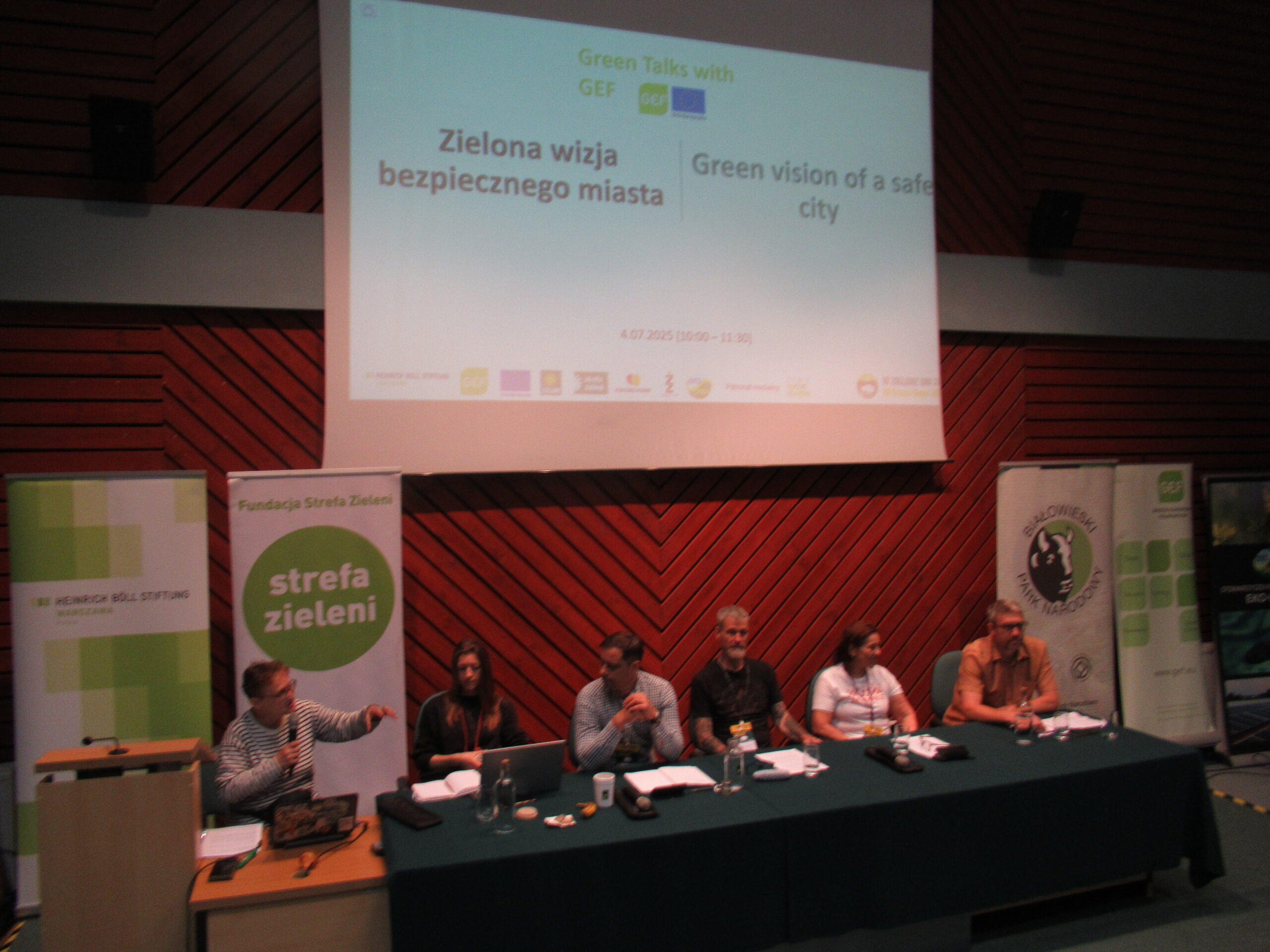
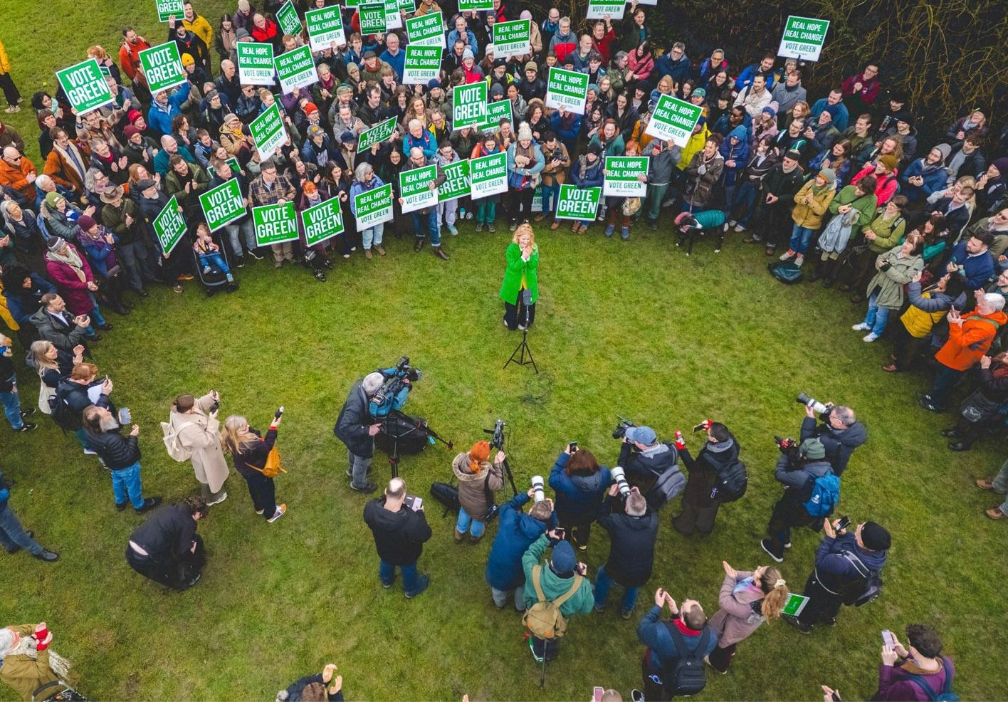
Green Days 2025 in Białowieża, marking the event’s 10-year anniversary

What assessment – even provisional – can be made of the progress of Green ideas in Polish society over the last 15 years? 

There has been real change. Fifteen years ago, nobody was talking about the climate. In 2013, at COP19 in Warsaw, climate march organisers looked for civil society groups to partner with in putting on the traditional COP march. They couldn’t find any. All they found was Koalicja Klimatyczna (Climate Coalition), but it just focuses on lobbying and monitoring institutional negotiations. There were no grassroots organisations. So I had to step in. We put together a little committee and scraped some money together to bring 700 activists over from Brussels on a special train.  

As well as handling all the logistics, we even arranged for them to meet the trade unions. In the end, 3,000 people marched, with the Greens leading the procession. It was a source of great pride. Today, all sorts of movements campaign on climate. In 2018 at COP24 in Katowice, there were over 40,000 of us. Greta Thunberg spoke at the conference. It’s a different level in terms of scale and impact.  

Clearly, environmental issues are increasingly cutting through in Polish society. Campaigns to save natural heritage have played their part, too, like the movement for Bialowieza in 2016, which echoed the mass protests over Rospuda in 2006. This fight to protect Bialowieza’s primeval forest attracted huge media coverage and mobilised people who had never previously been involved in environmental activism. 

I’ve also managed to place environmental issues at the heart of feminist concerns of the Women’s Congress [Kongres Kobiet is a major Polish social movement and NGO established in 2009], of which I’m a member, because all the research shows that women are slightly more environmentally aware and willing to act, whether it’s on climate, animal welfare, or waste.

There’s still a long way to go, but we’ve already achieved a lot.
In Conversation with Sandra Benčić, Croatia

By Interview

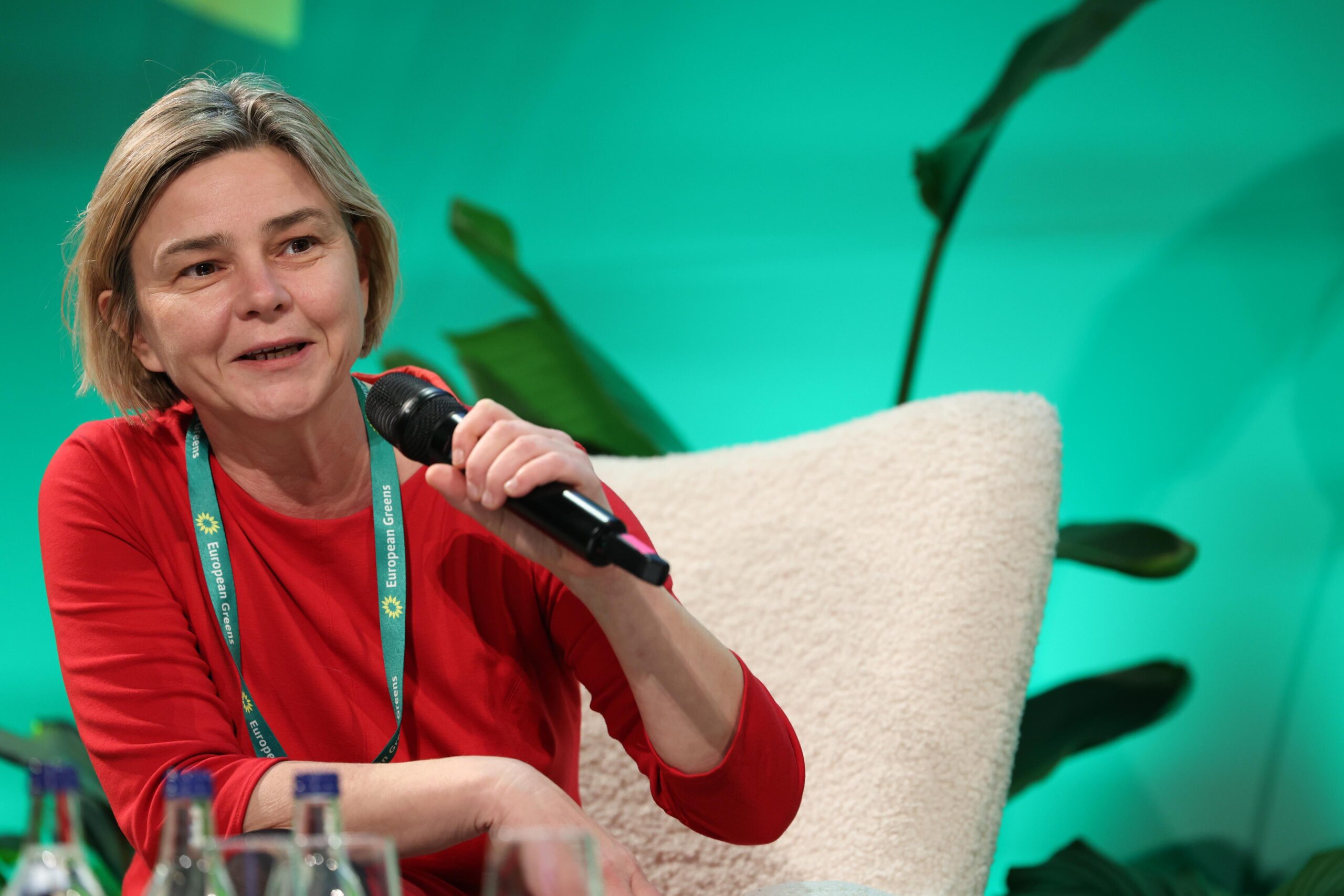
Sandra Bencic ©️ European Greens / Margot L’Hermite


Sandra Benčić is a Croatian politician and legal expert who graduated from the Faculty of Law at the University of Zagreb. She demonstrated an early interest in human rights during her university education and subsequently pursued a career in civil society organisations. Benčić is one of the founders and coordinators of the Green-Left political party Možemo!. Since the 2020 national parliamentary elections, she has been serving as the president of the Možemo! parliamentary group and has acted as the Chair of the Environment and Nature Conservation Committee in the Croatian Parliament. Her main areas of work concern environmental protection, transparency, and fair economic policies.

In this interview by Jamie Kendrick, Sandra Benčić reflects on Možemo!’s rise from a grassroots Zagreb initiative to one of Croatia’s leading political forces. She discusses the movement’s key electoral breakthroughs, strategy for broadening support, vision for a fair green economy, and ambitions to build a progressive majority in Croatia and Europe.


Why did you choose the name Možemo!, and what does it tell us about the movement?

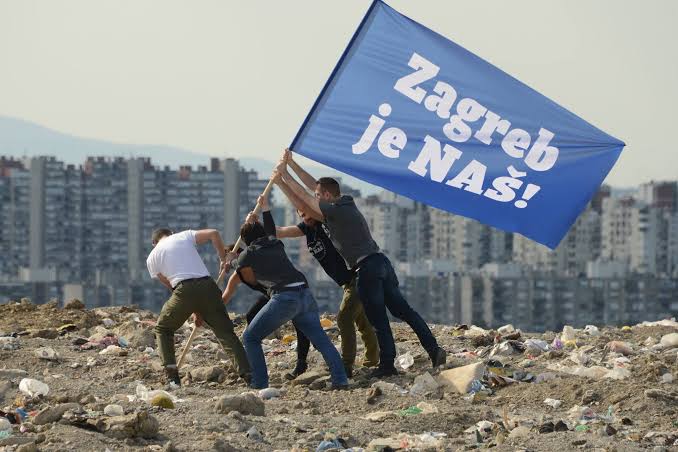
We didn’t start as Možemo!. We started in 2017 as a municipal political initiative called Zagreb je NAŠ! – “Zagreb is ours” – and the goal was to get a few representatives, mostly activists, into the city assembly. At the time, Zagreb had been run for almost two decades by an administration marked by one corruption scandal after another. Nobody thought we would clear the 5% threshold and get into the city assembly, but we did – and not with one representative, but four. That was our starting point. In 2018 we began talking about building a national initiative to represent green-left values – the same values we stood for in Zagreb, but at the national level – and about whether we could grow a network of municipal initiatives into a national party.

We discussed whether it should be a green-left party in the traditional sense or something different, something that wouldn’t put us in a box. We wanted to signal that things really can change. In Zagreb in 2017 we had succeeded with one month of campaigning and practically no money – so who knew what else was possible? That’s why we called ourselves Možemo! – “We can!” – because it can be done.

What have been the key milestones on Možemo!’s road so far? 

Entering the city assembly in 2017, then founding the national party in 2019. We first set up local organisations outside Zagreb – in Karlovac, Rijeka and Split. In Dubrovnik we had partners who already existed as a municipal initiative, and in Osijek we started to broaden out. Then came 2020: an election year, but also the year of the coronavirus pandemic and the big earthquake that hit Zagreb in March. It was a terrible time. After the earthquake much of the city was badly damaged, the pandemic was raging, and we couldn’t even meet in person. By May it was clear that the government wasn’t doing anything about post-earthquake reconstruction, so we started campaigning for a reconstruction law for Zagreb. Then the ruling majority decided to dissolve parliament ahead of early elections – without passing that law. We protested in front of parliament, and several of us from the party stayed there all night. In the morning the MPs arrived for the vote on dissolution and the television crews were there. The prime minister was booed by the protesters, and that was the turning point. The elections were in July, and we became nationally recognised. 

So we went into the election campaign with the political capital we had built through those demands. At the start of the campaign we were polling at one or two percent nationally. It looked really bad. Then we began to rise, but we still didn’t really expect to get into parliament. And then things shifted. In July we won seven seats. It was a total shock. We were complete underdogs – nobody expected us to win even one seat, and we won seven. Not all seven were from Možemo! – two were from our coalition partners. So we became a parliamentary party, and very quickly we earned a reputation as one of the most active and constructive parties in parliament. We kept up the pressure until the law on the reconstruction of Zagreb was passed, and we fought for public funding so that people would not have to pay for rebuilding their homes on their own. 

Then, in 2021, came the local elections. Tomislav Tomašević, who was leading our parliamentary group at the time, was our candidate for mayor of Zagreb – and he won. Then everything changed, because now we were in power in the capital but in opposition in parliament, and that’s a very difficult balance to strike. We also won in Pazin, the administrative seat of Istria County. In 2024 there were parliamentary elections again. We decided not to run in a coalition with the SDP, the Social Democrats. We were heavily criticised for that – by some of our own voters, but mainly by SDP voters, who felt we were protecting ourselves and our brand rather than trying to change the government. That wasn’t true; all the polls showed that a joint list wouldn’t have been enough to win. Today we are polling behind the SDP, but the gap is narrowing. We have announced that we will run together with the SDP in the next parliamentary elections, because the situation is now quite different. We could win. It will be difficult, but a government without the right is possible. But the real milestone for us was the 2025 local elections, and whether we would be re-elected in Zagreb and Pazin. We were – convincingly. 

Who are your activists, your membership, and beyond that, who are your voters? It’s a much bigger group now, if you’re third in the polls. 

Our membership is still too narrow. We were very careful about membership, because we didn’t want a sudden surge in members and votes. Many third parties have experienced sudden growth within a few years – they shot up and then collapsed, because their membership was so broad and heterogeneous that they couldn’t manage it. So we took the opposite approach. Now, though, we are looking at ways to open up – not only to new members, but also to people who simply want to contribute more, and in different ways. Ultimately, we will need to open the party up much more if we want to build a strong presence at the local level across Croatia.

Generally speaking, our voters are urban, highly educated and on higher incomes. You could say the same about many green parties in Europe, and it’s not good. We also have the largest share of young voters – but they, too, tend to be more educated. Our policies focus on inequality, poverty and low-income families, and yet we have not yet earned the trust of many of the people those policies are meant for. Meanwhile, people who don’t face those problems themselves see that our programmes are fair, and they vote for us. So we need to change that. And the only way to do it is to have authentic people from those communities speaking to those communities. If you want to talk to farmers, you need to send a farmer. You can’t send me, because they see me as an urban feminist. We need to attract people to the party who share our values but who also authentically represent groups that are not the usual Možemo! crowd.

You said you chose the name Možemo! because you wouldn’t be happy being labelled as a somewhat fringe green or radical-left party. You wanted much broader appeal. Do you aspire to become a majority party?

We want to show that you can start from the margins and still put forward policies for the majority. If we were a catch-all party, we would do what the big centre-left and centre-right parties do, which is to avoid taking a position on polarising issues. We don’t avoid them. But it’s very hard to hold that line, because the right constantly attacks us over a so-called “woke” agenda. They use us to frighten people – claiming, for example, that we want to make children change their sex, which is absurd and deeply manipulative. And some people believe it. For a long time we didn’t respond, because we thought it was too absurd to be taken seriously. That was a mistake. That’s where the question of reaching beyond your membership, towards the centre, comes in – finding the farmers, finding people who are not part of the urban elite, to represent you. 

There are a lot of movements around Europe that are a few steps behind Možemo!. What advice do you have for young movements with big dreams? 

First, get into the national parliament – to be visible. It’s crucial. You can run a city, even the capital, but without that national platform it’s really difficult. Second, we were very cautious at the beginning, and that protected us from many failures we would otherwise have faced. You need to be patient and avoid taking big risks. Tactical positioning matters. It isn’t about compromising on your values; it’s about being strategic, so that you survive long enough to put those values into practice. 

It’s also important to protect the flow of information, the conversations and the deliberation inside the party. People join parties like ours because they want to contribute, to say what they think, and to see that things actually get done. They’re not there just to carry a party card. So nurturing internal debate is essential. We hold Zoom meetings with around a thousand people and spend  hours discussing major issues, because that matters. For the leadership, it’s important to hear how people think. 

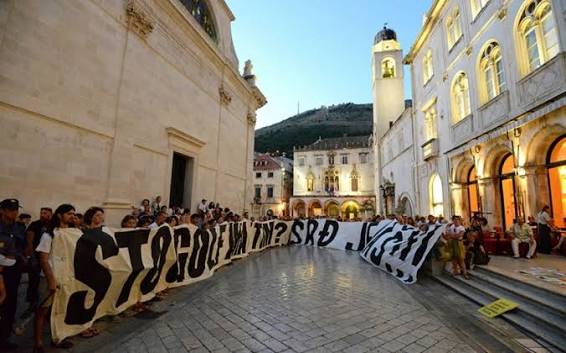
Zagreb © EGP/Shervin Sardari

Možemo! seems to be trying to speak to the majority by developing an alternative economic platform for the country. How does that fit with the visions of the movements that have pushed for degrowth, the commons and so on? 

It has been inspired by spatial justice movements, economic justice groups, think tanks and others working on climate issues and better economy. We are building an economic programme focused on how to move from an economy based on rents and tourism to a more productive one. We can reindustrialise the country, but that reindustrialisation would focus on producing the goods and services we need for the major social transformations we want to achieve over the next 20 years – in climate, equality, care, an ageing society and so on. It’s a combination of doughnut economics and a mission-oriented economy, where you look at what you actually need to produce in order to achieve your goals. But to change the economics, we also need to change where the money goes. More of it needs to go into food production, energy and housing. So we are looking at how to use the financial institutions that are still in state ownership. There are only two such institutions left in Croatia, so the question is how to use them to support that transformation. In our communication with voters, we focus on affordability – of housing and food – as well as inflation, good jobs and wages, and quality of life. 

Could you say a bit more about care – and particularly kindergartens, which Možemo! is known for in Zagreb? 

When we came to power, 3,000 children in Zagreb couldn’t get a kindergarten place at all. There simply weren’t enough places. Since then we have built around 20 new kindergartens, and by the end of 2027 there will be 28. By then, every child will be able to get a place in a public kindergarten in their own neighbourhood. 

In our first term the priority was kindergartens; in our second, it’s schools. We are renovating schools and building new ones in neighbourhoods that grew very chaotically over the last 20 years, without proper planning, and were left without basic infrastructure – schools, health centres and so on. 

What about housing? 

Our priority is not only to build new homes, but to bring existing ones back into use – flats that are empty or not being rented out – and make them available to the people who need them. That’s a generational project. Part of reindustrialisation is supporting the production of the materials needed to renovate the housing stock, especially new sustainable materials such as wood or hemp, which haven’t been widely used here before. So that is one industry we want to support. Others include food processing – in Zagreb we have piloted green public procurement of food for 30 schools, prioritising fresh produce and short supply chains. Zagreb’s new trams, for instance, are being built by a Zagreb-based manufacturer that won the public tender, which shows the kind of industrial capacity we want to strengthen. We also want more cooperative ownership and stronger collective bargaining between workers and employers. In short, we want workers in the private sector to have a real voice.

How does Možemo!’s economic programme fit into the larger European economy, in which institutions such as the central bank, and issues like trade policy, are decided at the European level?

I think Europe keeps making the same mistake. We have been trying to become more competitive and to protect ourselves from China and others, without thinking about where we want to be in 20 years. Instead, Europe accepted the rules of the global market and, for instance, let its shipyards close because China was building cheaper ships. It didn’t think about the whole chain – the companies, the knowledge, the people – that goes into the final product. Strategic sectors can’t be judged only by short-term competitiveness. The question shouldn’t be how we protect ourselves from China, or from the US for that matter, but what Europe needs – and how we produce it here. The problem is that in many sectors we are not planning for the long term.

Is this economic programme, which challenges the way that the mainstream parties in Europe think and talk about the economy, also a challenge to the far right in Europe? 

When it comes to the far right, we will take this ground back. It’s a mistake that the left and the greens have lost the narrative about people’s participation, about making policies for people, about being grounded, to the far right. If you want to win that ground back, you have to be ready to communicate messages to majority of working people.  Some will say that a certain policy serves the interests of a big industry. Fine – but the interests of  millions of people matter more. Others will say that people simply need to recycle more. But that puts both the cost and the moral responsibility on the consumer. That’s the wrong approach, because in a capitalist economy people buy what they can afford – most people simply can’t afford anything else. Ethical consumer choices shouldn’t be a privilege of the wealthy. 

There’s a huge conflict in Ukraine, and there is war across the Middle East. How does Možemo! position itself on security and defence, especially given that Croatia is a post-conflict society? 

Our roots are anti-militarist. Many of us come from the peace movement, including me. But of course we understand that Europe, especially now, needs to develop its own security and defence policy. We emphasise a broader notion of security. We want a Europe that trains, funds and connects civil protection services across member states, because that is where the most immediate threats are – fires, floods and so on. We need better-integrated civil protection services that can work together in major disasters. We need the same in defence: closer cooperation within NATO and at the European level, joint exercises and joint command structures. Europe needs to define its own security interests and pursue them through credible defence capabilities and strong diplomacy. We don’t want to copy the American model of militarisation – Europe needs to find its own way of providing security for the continent. Of course we need a credible defence, but the scale of militarisation now under way is not the right path for us.

What’s your opinion on the accession of the Western Balkans and EU enlargement? 

We are very clear and vocal about that in parliament. We strongly support fast-tracking the Western Balkans’ accession to the European Union. It’s really important, because other powers are exerting strong influence in the region and pulling it in different directions. Many of these countries face serious institutional weaknesses, but the process of joining the EU – and then membership itself – helps build the institutional capacity that domestic politics alone has not been able to deliver. 

Serbia under Vučić could not join the Union, but as the country changes course after the 25 October 2026 elections, we should do everything we can to bring it in. The EU has treated North Macedonia deeply unfairly. Montenegro and Albania are currently the frontrunners, and it is essential that Slovenia and Croatia support those countries in EU accession.  

In Conversation with Chris Williams, England and Wales

By Interview

Chris Williams joined the Green Party of England and Wales (GPEW) in 2004, after initially doubting whether such a small party could deliver meaningful change under Britain’s first-past-the-post electoral system. But a week-long study session with like-minded young Greens from across Europe in 2003 drew him in. Although the party’s numbers were very small, it was a growing movement, and Williams realised that the party’s influence would ultimately depend on the energy and commitment of people like himself. He subsequently became a key figure in the party’s campaigning, overseeing the “Target to Win” strategy that helped deliver many breakthroughs at the local level and four seats at the 2024 General Election – a massive leap forward for a party which had previously only been represented by a single Member of Parliament.

In this interview by Beatrice White, Chris Williams looks back at the party’s political and campaigning trajectory and takes stock of its current position.


Before entering Parliament, much of the work to build up the party’s power happened at the local level over many years. Can you explain the role of local politics in the steady rise of GPEW?  

First past the post (FPTP) is a huge barrier because of the high vote share you need to win. So making progress at a local level first is easier. You can build up your infrastructure at a local level: building up a team of volunteers and a relationship with the voters. For voters as well, it’s a smaller leap of faith to take. If you build their trust, it can be a stepping stone to Parliament – that’s what happened in Brighton [where Greens won their first seat in 2010], which got its first Green councillor in 1996. It’s easier for people to make small steps towards supporting us when you’re taking them on a journey. And for grassroots power to beat the establishment, party campaigners have to put their lives on hold for a while or donate a lot of money. Those small local wins early on really help build that confidence. When you believe you can win, you tend to win.  

Were there some wins then that were really genuinely surprising? Wins in unexpected places that subsequently had an impact on future ambitions and strategy.

Some people have certainly been surprised. At the last general election, we won four seats – two very rural, and two very urban. That was very confusing for the media because we have a reputation as an urban party. As strategists we haven’t surprised ourselves because we’ve won in places we targeted and prioritised – we don’t win by accident. But we’ve managed to attract a pretty broad spectrum of demographics of voters towards us.

What was the role of infrastructure around Green councillors in building up a bigger political project from pockets of success across the country? 

The Association of Green Councillors – what we call our network of local councillors – was very helpful to build competence and confidence in how to be effective as local councillors, for those who got elected. You start in opposition with two or three councillors, then build larger groups and enter coalition, and now we run six councils in England with an outright majority, three in London and three outside of London. So we’ve really been on a journey.  

The breakthroughs at the national level – first with Caroline Lucas becoming an MP in 2010, then achieving four seats in 2024 and a fifth one in a by-election earlier this year – were the result of very focused campaigning and tactical organising: Target to win. Can you explain the main idea behind this strategy and its place in the development of GPEW campaigning?  

Target to win ultimately really means selecting the number of geographical areas, called a ward or constituency, Greens can feasibly campaign in to win and then focus all resources in those places. Going too wide means we win fewer seats and of course focussing too narrowly means you win too few seats as well. So getting the right focus and combining it with evidenced and tested campaign tactics combines to form a strategy. As a general rule, it’s helpful to have a concrete model on how to campaign, like a recipe book. So this is our strategic approach to elections. 

When I joined the party, there was a strong sense that we have to focus resources because of the electoral system. We must be really hyper-focused, so I understood that, and observed what might work, how you might engage with voters. You have to listen to the community you’re trying to represent through conversations with them on the doorstep – this helps to understand what they’re looking for and work out how to refine your messages as you’re talking. It’s a live experiment, in terms of what tools might be helpful to get across those messages, how you organize your volunteers and activists, and often that’s through leaflets and door knocking. So it’s trial and error and trial and improvement over the years for all of us. But really, it’s a big team effort to constantly keep on reviewing how things are. And it’s become part of the party’s culture – trialling different things and sharing their learning.  

 Canvassing is a long-standing practice in Anglo-Saxon nations – it’s a part of the political culture. But I think Greens were poor at data collection for a long time because they just didn’t have a system. GPEW has only just got a proper nationwide system now. For the past 10-15 years we were using Excel spreadsheets, and before that paper, which was a cumbersome mess. People didn’t fully understand why you had to be so rigorous. And we don’t just ask people whether or not they are going to vote for us and try to gauge how likely they are to vote, and then move on, like some other parties. We knew we really had to build connections with people to persuade people. That’s always been our focus. 

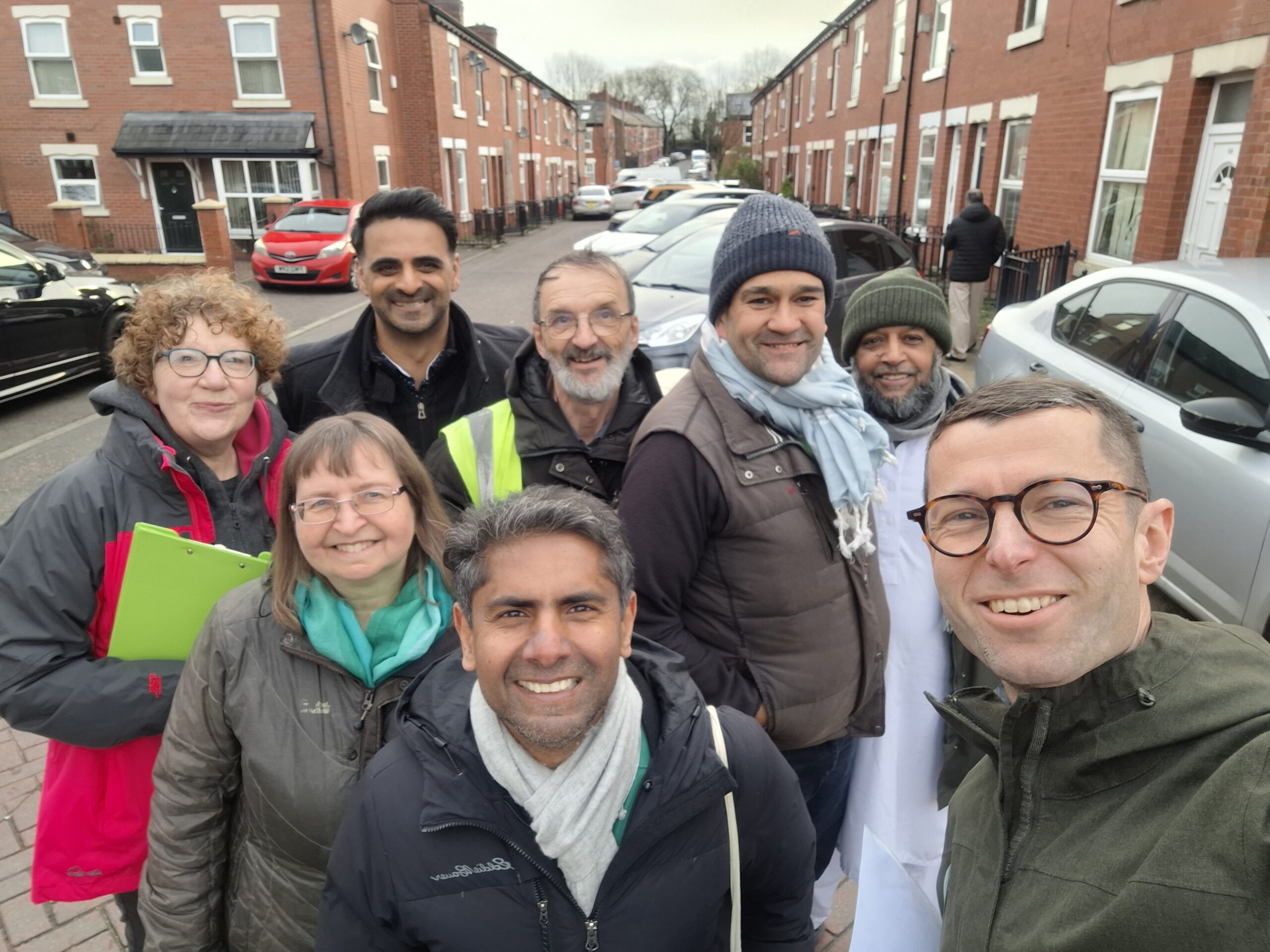
William and others on a canvass in the Gorton and Denton by-election campaign, 2026.

With field campaigns like canvassing, how do you balance the need to maximise efficient use of limited resources – in terms of people, finances, and time – with the community-building aspect needed to maintain volunteer engagement and motivation?  

I think what is not necessarily unique, but we’re particularly good at is the community aspect of it because it’s very easy to slip into hyper-efficiency mode. Rather than meeting up somewhere first, it’s much more efficient if people just leave their homes and start knocking on doors or delivering leaflets straight away. But it’s not very motivating, especially if it’s cold and rainy outside. If you’re meeting other people, you don’t want to let them down. So we’re really good at the before and after, meeting up to plan and then debrief, creating the community because that keeps people involved.  

There has been research in the UK on why members of political parties generally get involved in campaigning, because most of them don’t. And it’s either because there is some personal gain because they’re trying to get elected themselves, or because it’s their community and they feel connected with other people. So if you don’t build that community, people will just float away. There are other things to do in life. 

Under this strategy, how much autonomy have local groups had to determine their own campaigning priorities, approaches, and messages? 

They do have a lot of autonomy – the Green Party set up in that way, as I’m sure many Green Parties are. Local is in charge. We present our general recommendations and approaches nationally, but we don’t tell people not to do something because that is always a red flag to Greens. It is important that local teams have that autonomy, so we give them tools on how to come up with messaging rather than tell them what the messages should be, because they know their community, they’re doing the listening. Because nationally, it’s not possible to be certain of what local people think in a place we’ve never been to. If we teach our teams how to come up with good messaging, they will be much more effective.

Have there been challenges reconciling a rather centralised strategy with the pluralism and autonomy which are important values for the party and its members?  

As people have gone to help in other campaigns, they’ve started to learn what the ingredients for success are. Going back to the recipe analogy, they can see there are certain ingredients that are essential, and others that are less so. Our campaign managers are supported and advised by staff who build relationships with them, helping and mentoring volunteer campaign managers to take the lead in their own areas. Through that relationship of trust, they’ll generally listen to the staff member because it’s their profession. They’re learning what’s effective in election campaigns every day of the week. If you’ve got a busy life and only half a Saturday to devote to a local council election, you haven’t got time to reinvent the wheel.  

So there is discipline for sure. Sometimes teams do things we think are bad ideas, and either they learn something from it, or we do. If everything is identical or a photocopy of the previous campaign, our innovation will stop, so we’re happy to experiment. It’s really about helping people think through the process, or at least encouraging them to test something, like messaging, for example. Experimentation but with guardrails.  

Money is something that has often been an issue for the party – its financial resources have long been scarce due to the party’s ethical approach to donations and a lack of the kind of state funding that would be available to small parties in some other countries. To what extent have these financial constraints shaped deeper strategic and organisational decisions?  

We have been really constrained by financial resources due to the dependence on small donations, which made it difficult to be heard in mainstream media and to compete with other parties that can fund so much more. Our strength is people power, and volunteers can do a lot – including organising other volunteers – but to campaign across a very large area in a general election you need staffing, and that’s expensive. Campaigning costs money, whether it’s social media or leaflets. That’s where almost all the money goes: people, paper, and online.  

I think it has shaped our campaigns. Often we’ve had to work around the lack of tools – digital tools and canvassing software can be expensive, for example. So that’s held us back. It’s often meant more work for already exhausted campaigners. It feels like we’re washing our clothes without a washing machine, while the other parties have tools that make things much simpler. But compromising on our values isn’t an option for us. We’ve had another big surge in members, and that means more money coming from them, which is great. My budget has doubled in the space of the last 12 months, but it’s still small compared to other political parties.

The Green Party saw an important surge in membership under Natalie Bennett’s leadership (2012-2016), when there was a strong push to communicate around Green concepts and issues that weren’t generally being heard in UK politics. How do you see the significance of that period? 

Natalie might have been ahead of her time in talking about austerity, at the time it was quite a niche term. And then suddenly she was using it in the general election TV debates. But then she was joined by the Scottish Nationalist Party and the Plaid Cymru leaders, also using it as well. And suddenly, the public were googling “austerity”, and it became a mainstream term. It was a word the public might not have been using, but which captured something many people were already feeling the effects of – a sense of neglect. The decline and growing inequality in Britain have continued – and accelerated, particularly after the financial crisis and after Brexit.  

There’s now a whole generation who have grown up during that period and, as adults, have known nothing different. They can see their lives being significantly worse than their parents’, while their parents can see their children facing worse prospects than they had. It feels like the first generation for whom things are going backwards – with no sense of progress. So the anger towards the status quo, has grown. And with that has come a much bigger political space and a bigger electoral opportunity.

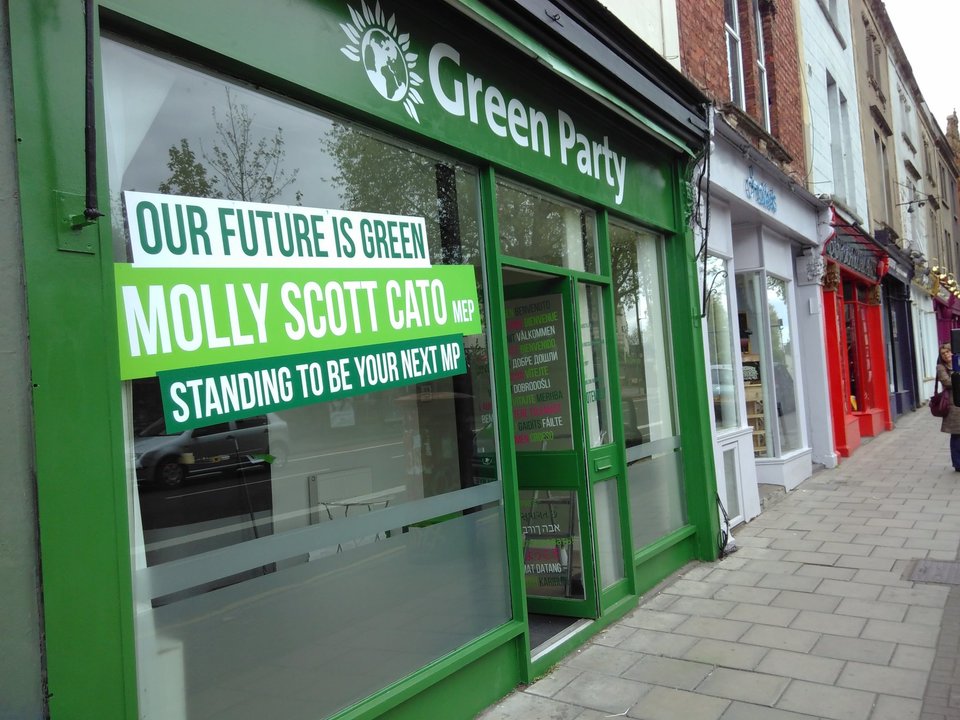
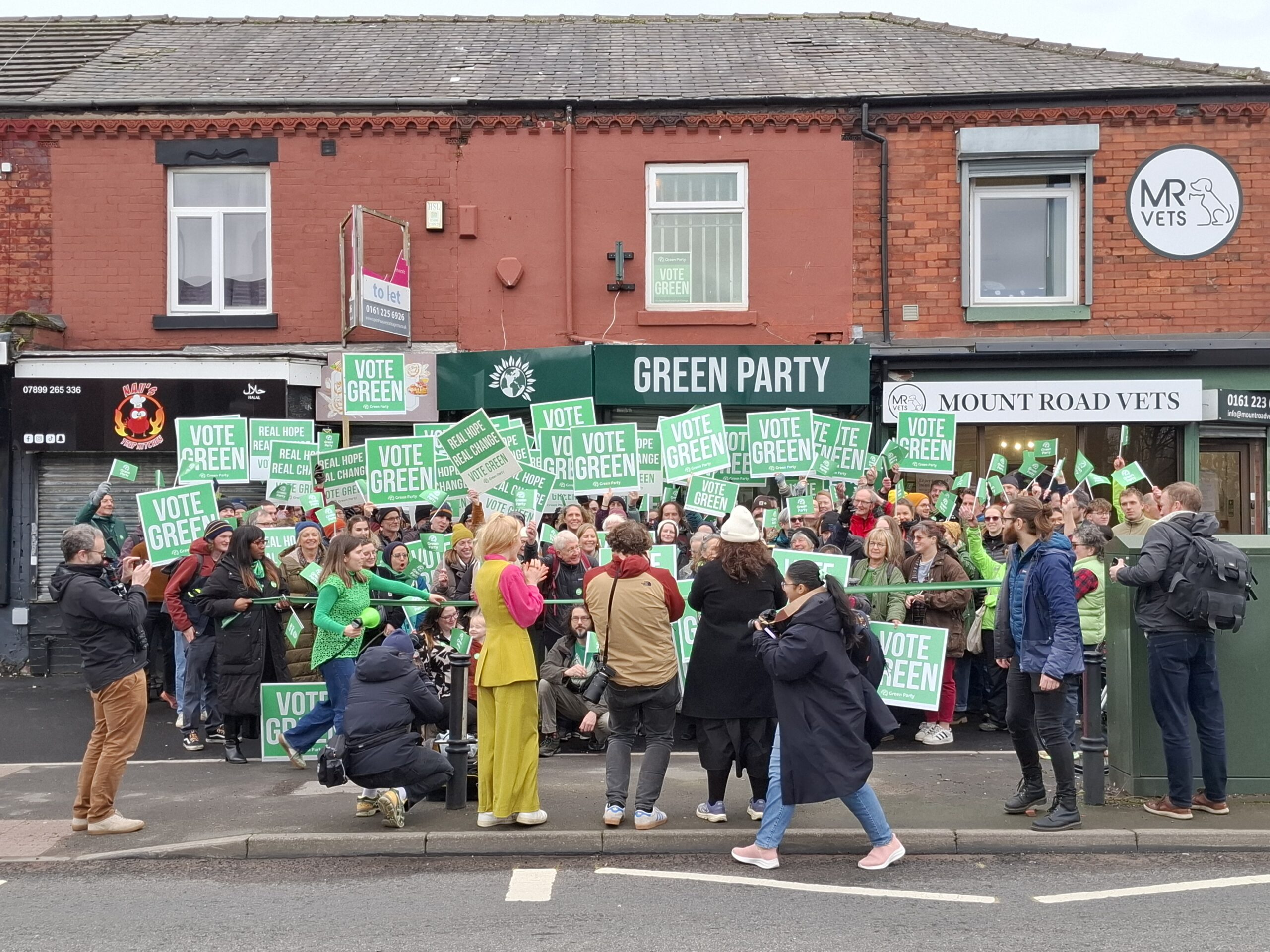
Green Party shop at the 2017 General Election in Bristol (for former MEP Molly Scott Cato).

The current electoral context – with the rise of support for smaller parties like the Greens and Reform, at the expense of what have traditionally been the two dominant parties – is now very different. How has the party’s rhetoric adapted?  

In the early 2000s, the assumption was you had to be the most middle-of-the-road party to win, because people don’t want the boat rocked. But everything is up in the air now as people don’t want tweaks to the status quo, they want more radical change. Zack [Polanski, the current leader of GPEW] saw that opportunity, he understood that millennials and Gen Z were feeling so screwed over, and could tap into that discontent. Most politicians are just wallpaper in that they all say virtually the same things. Zack really stuck out as an energising and powerful communicator. That has been a powerful combination and in Britain it has really helped move the Overton window in a number of areas. The Iran war started just a few days after we won the [Gorton and Denton] by-election in February, but Britain didn’t join in. Usually, when America says you need to join in this war, Britain does.  

Through research we’d been doing over the past years we found that Greens inspired a high level of sympathy and trust among many people. Given trust is so low in politics, that was significant. They liked us, but they just weren’t voting for us. People consistently appreciated our stance on climate and environment and felt we were telling the truth. They saw us as prescient, determined, and consistent. But they expressed a lack of clarity about where we stood on issues of social justice – like care and the health service. The new leadership really understood that as well. So we’ve got voices that are now heard on those issues, and that has convinced a lot more voters.   

Campaign day in Gorton and Denton, Feb 2026.

Prominent figures like Zack Polanski and the party’s newest MP Hannah Spencer embody a new type of political communication for the Greens – bold, direct, authentic, and not taking itself too seriously. Is that a symptom of the transformation of the information landscape, or a deliberate shift in response to the need for strong, clear messages? 

Greens always struggled with getting attention; so often the media just want entertainers, not people who can put together a coherent argument, but somebody who can put it interestingly. It’s about retaining viewers or listeners. And even if you get in the media, your points have to land with the public.  

Zack and Hannah are both very strong and authentic communicators. Being authentic in politics takes you a long way now. Hannah left school at 16 – that’s an unusual profile for Greens who are so highly educated and have a highly educated voter base. She sounds like a working class person and she isn’t trying to blend into Parliament. She’s anything but wallpaper. And I think that makes her very attractive to the media, because they know she’ll connect with the public. 

How do you see the best way to scale up the tried-and-tested strategies and refine the playbooks as GPEW continues to grow?  

In the 2024 general election, it sometimes felt as if we were running four unique campaigns – four boutique businesses. We probably could expand that to more using the exact same methods. But actually, our eyes are on bigger numbers than that. And if you want to win dozens more seats, then suddenly you can’t operate in the same way. Imagine you had four boutique bakeries, and suddenly you’re trying to have 50 or 100 of them. You can’t run it in the same way. You’re becoming a chain. You need more resources and templates, as well as guidance and flexibility. So we’re trying to become more efficient as we try and win more seats – with staff specialising in certain skills working on multiple campaigns, for example.  

And the size of a campaign very much depends on where we are in the national polls because the splintering of British politics means you can win seats with fewer votes. In some ways, FPTP has almost become a lottery, and the difference between first place and sixth place can be a very small percentage of the votes. So the winning bar is lower, and if we’re starting higher in the polls, then maybe our campaign doesn’t need to be as intensive. Even just going up or down by 5 per cent in the polls can make a huge difference to campaign decisions. But overall, the infrastructure behind it that we’re putting in place is much more flexible and centralised. Not in terms of dictates, but provision of resources and sharing of knowledge. A message on a leaflet in one campaign might work just as well in another one 100 miles away, for example, or might just need to be tweaked slightly.  

There’s long been an assumption that Green Party members are middle-class, urban, liberal, and highly educated. Are the party’s demographics changing, and if so, is this happening organically or by design?

There’s more to do, but our voter base has become more defined over the past year. Age and gender are now very strong indicators: young women, particularly those under 24, are very likely to vote Green, men less so. Muslim voters are much more likely to vote Green, and people from a global majority background are also more likely to vote Green than white voters. Gaza has a lot to do with that, as does the Labour Party pushing away some of their supporters.  

So in some ways we’ve broadened our appeal, and in other ways we’ve become more defined. We have greater diversity among our voters, but we’re also more defined by age and education. That’s contributed to us becoming more urban, too. There used to be little difference between our urban and rural support, whereas now there is. So perhaps some of those old stereotypes are hardening in a sense, but they’re also changing – particularly in terms of our voter base being less white. 

What factors do you think will be most decisive to determine whether the trend of electoral success continues for the party? Is the key more about a convincing big-picture narrative nationally or continuing to build power locally?  

I think it’s both. Traditionally, Greens have struggled to get any national airtime. But we have been very successful in the past year at getting the headlines. And the door-knocking is still really valuable. So I think now the strategy is twofold: it is doing really well in national media and with that national messaging and winning over the public effectively through our national communications, and then supplementing that with the local campaigning. This is what can take us from a good position to a winning position – convincing the wavering voters. If we can get both right, it’s a powerful combination. 

Campaigners in Gorton and Denton, 2026.

In Conversation with Vedran Horvat, Croatia

By Interview

Vedran Horvat is sociologist, researcher, activist and ex-journalist from Croatia. Since 2015 he is the head and managing director of Zagreb based Institute for Political Ecology, educational and research organisation in the field of degrowth, climate justice, commons and municipalism. From 2005 to 2015 he was the director of Zagreb office of the Heinrich Böll Stiftung, German green political foundation. During last two decades he has been actively working on creating supportive conditions for development of green political project in Croatia, Western Balkans and across Europe. Since 2022 he is also associate of Amsterdam based Transnational Institute and GMF’s Marshall Memorial Fellow (2010). During past years he has also been in board of various national and European foundations or cultural organisations. He is editor and author of dozen of books and articles on green politics, climate change, commons and social movements. He joined GEF board of directors in 2019 after many years of multifaceted cooperation with GEF

In this interview by Jamie Kendrick, Vedran Horvat explores the development of Green politics in Croatia and Serbia, shaped by the legacies of war, privatisation and nationalism.


The Green movement in Western Europe emerged in the 1970s and 1980s in relatively stable, prosperous consumer societies. But Green politics in the Balkans emerged decades later, and from a different historical context. How did this different historical trajectory shape the movement in the main? 

At present when we talk about Green politics in the Balkans, we really only mostly refer to Croatia and Serbia, and other Balkan countries to a lesser extent. The delay was partly due to the war in the 1990s that turned politics towards a very nationalist discourse that contaminated a large portion of the political spectrum. There was also wild privatisation and a lot of corruption and clientelism that had a kind of shock effect and life outside of what was perceived as normal. In that moment it was really difficult for any green actors to demonstrate that their agenda was as important as the prevailing topics of the day. There were also many irrelevant, small or even fake green political parties which emerged in Croatia and Serbia, but none of them achieved significant results, mainly as they were artificially created or lacked public recognition. Civil society was compensating the work of green political parties in society – all these issues that would be addressed by green parties were mainly or solely addressed by NGOs, activists and movements. It took a lot of time for the conditions to be created for a clear green political agenda, and that was inspired by different sources – human rights movements, environmental movements, feminist movements and municipalist movements. But also – and most importantly – they built on the positive experiences and lived experiences that were present   in the time of Yugoslavia with regards to workers’ rights, social welfare, social protection, public services and self-management that very much overlap with today’s work on the commons and public goods. Additionally, many public companies had been targeted for privatisation, and we could see the adverse impacts of this, particularly on water, energy, waste, and communal services. So, for those reasons, an anti-privatisation agenda developed and became a strong pillar of the emerging movement.  

We also learned that we didn’t have to repeat historic mistakes; we could argue for protection and governance and transformation of public goods and common goods wherever possible. In some ways we could say that the unfinished business of the Yugoslav period inspired part of the green agenda that was then coupled with municipal perspectives on radical democracy and local democracy. This in turn was paired with strong environmental work on climate, which had existed for many years and was quite successful in Croatia, and to some extent in Serbia. Yet, today, these key pillars are not always at the frontline of the political work, but they are deeply rooted in the formative period. I hope they will be emerging again.  

Let’s talk about the importance of the commons to Green politics in Croatia. It’s a democratic model of governance that is not entirely public, not entirely private – it’s a kind of third model based on democracy and sustainability. Why did it resonate here?

There are several important dimensions here. One is related to different theories of the commons – specifically related to governance. It was very inspirational for the movements to start imagining how public infrastructure, public goods, and public or natural resources could be better regulated, better governed, and how they could be more democratically owned or shared among members of the community. For example, we thought it is very important to use the commons as an alternative governance model to argue against privatisation.

The second one is more related to self-management and the relationship workers have with their own companies or factories, particularly where the state was the owner. And thirdly, there was a very important dimension of the commons advocated by David Harvey on one side and Ugo Matei on another which perceived the commons as a basis for constituting, if not creating, social power that could become political power. In this, groups or movements would establish their social power through their work on the commons and through advocating different models of governance over public resources or common goods. This more conflict or antagonistic model was instrumental in formative years to establish political subjectivity.

These were all inspiring, and groups like Croatia’s Mozemo! are today recognised as defenders of public goods. But we face several challenges in translating these ideas into practice, particularly when it relates to municipal companies where this transformation is not yet taking place.

You mentioned different aspects of the legacy of Yugoslavia. In terms of socialism, is it a challenge to base politics on an idea that has a contested and difficult history there?  

I would say that green movements were not interested in continuing the aspects of Yugoslavia’s legacy that related to its restrictions on civil liberties, human rights and freedoms. They instead wanted to continue the high levels of social protection, the strong welfare state, affordable and accessible housing, the relatively high standards of living and quality of life, and to some extent, the very informal, convivial degrowth practices that existed and were part of normality and everyday life. All that all disappeared in the 1990’s. Not everyone experienced socialism positively, but the type of socialism which existed in Yugoslavia was, for most people, very beneficial. It created a type of social contract or consensus about what it means to have a good life with relatively modest environmental degradation, high social protection and a relatively modest consumption footprint. In the 1980s, on top of rising nationalist tensions and the opening of Yugoslavia to international markets, there were already emerging narratives that everything should be privatised and that liberalism and the market economy will save us and offer even better life. So, the promise of the better has eliminated what was good and never delivered, at least not for the majority. Many of the ideas and practices we see today in the kind of democratic socialism advocated by Zoran Mamdani are in many ways what we had and lived in Yugoslavia. And with the transition that began in the 1980s, many of the advantages of this system disappeared and the dark sides of capitalism appeared, with factories and companies sold for zero and then resold for huge amounts of money so that clientelist networks or ruling party people could become rich and privileged.  

In your book, Here at Last, you emphasise the importance of the resistance movements and political actors who formulated an alternative to rampant privatisation. How important were movements like the Right to The City movement in Zagreb or Don’t Let Belgrade Drown in the formation of Green politics?

They were crucial. They didn’t have aspirations to build a party back then; they were examples of single-issue fringe politics with very clear goals: to prevent privatisation of public space, of factories, of highways. They put sustained attention on the protection of public interests and public goods, and these struggles were decisive in creating the trust that was needed to build a community around these struggles. And also, to experiment with various types of political organisation and self-organisation. Even though some of these struggles were focused on specific problems, and even if they were not fully successful in preventing damage, over time through persistent work these movements evolved, diversified, gained knowledge, created trust and became parties. 

Were there any key moments when a decision was taken to move beyond movement politics and start formulating an alternative? How does that switch happen?

Some people recognised the limits of movement work, particularly in countries like Croatia or Serbia where electoral politics is the sphere where decisions are made and forces outside of that probably wouldn’t be able to prevent the damage done by certain investments or by privatisation. To some it was not clear whether this decision to enter politics would be successful, but there was recognition that we have to be present with both legs. However, once the transition took place, the leg that remained in civil society became very dormant and weak, because the new green parties were pulling most people from the movement into politics. It’s great that we have political representation in institutions but it’s not great that we have a much weaker civil society which is not able to massively mobilise around any issue. In Serbia there is a student movement that proved to be quite successful, but it works in opposition to the authoritarian regime, so it’s not politically defined and is very heterogeneous regarding its values. 

Why isn’t political mobilisation happening now to the extent it was one or two decades ago?

Because key people with experience and knowledge on mobilisation are no longer active in civil society, and apparently there are not many new people who are able to do similar work, particularly in the Green Left sphere as that is predominantly defined by the parties. We might expect a new generation of mobilisation from Gen Z but it will probably look very different.

How important have organisations like your Institute for Political Ecology and those doing political education work been to the emergence of Green Left politics in Croatia, as well as Serbia and more broadly in the region?   

There was a considerable amount of organic development. There is no such thing as spontaneous movements; everything has to be organised. We were established before the new green parties emerged, and we started the Green Academy already in 2010, our summer school, which proved to be very instrumental in building momentum and enabling parties in Serbia and Croatia to be more confident that this is the path they have to create. We cannot say for sure that all this wouldn’t have been possible without those groups, but they played important roles in generating public visibility and public support and showing people that these are the groups who are fighting for the public’s interest. We worked with different instruments, enabling learning, exchange, creating trust, discussing conflicts, creating knowledge communities around different topics (commons, municipalism, degrowth) and were always based on genuinely European or even internationalist perspective. 

Institute for Political Ecology, Green Academy 2026, Vis, Croatia

You’ve talked about the depletion that civil society can experience when people move into government. How do you ensure that there is both balance and renewal?   

Our friends in Serbian civil society experienced really strong pressure from the government, and through direct political violence, scarcity of funding, the shrinking of public space, less funding at the European level, more competition, and so on. All these factors together play quite a detrimental role, which is different from 10 or 20 years ago when these mobilisations took place and movements actually expanded this space. In Croatia, in the last decade we also suffered from serious shrinking of public space that created scarcity in the civil society scene and made activism less popular for new generations, because of its precarious dimension but also risks related to the lack of protection mechanisms.  

The political battle has to take place both at the European and local level. For the majority of people on the ground there is a need for some type of recognition, if not funding or support, which is not there at the moment. At the same time, there are questions about how close Green Left governments at the city or national level should be to civil society, and how much civil society should support progressive actors for fear of being attacked. If you become more militant or more radical with your demands, you can end up down a blind alley.    

The key problem is that, even if we have a long-term vision, we don’t have the resources or security to be able to realise our vision, given the high levels of uncertainty. That is applicable to many organisations in Croatia. In the last two or three years many organisations shrunk significantly. They lost a lot of funding, presence and visibility, and that has long-lasting consequences. 

We know the far-right is active at the national level in many countries, but they also cooperate more on a regional or European level in order to strengthen their narrative, their ties, and even their financial positions. Can the Green Left do the same in terms of building a unifying narrative that allows them to collaborate more, or do they lack the means and funding? 

Unfortunately, Green and Left parties here are very much absorbed by the national narratives that are defined by national debates, as well as absorbed by opposition to Vucić or Plenkovic. Regional cooperation is less present, and it’s becoming much more difficult to work at the regional level because Croatia is not part of the region – only geographically so. Except for Serbia, the rest of the Western Balkans doesn’t have strong or relevant Green actors. This shows a vulnerability within the Greens in both countries, that they can’t resist this national centrifugal political force which defines their agenda and means they cannot be proactive or constructive on bringing regional issues into their agenda. Very often we need to spend energy for the equivalent of two steps forward and yet make only one step. And for us, regional cooperation is an essential instrument for working against nationalism. What can be promising is that at the level of people, culture, activism, the situation is much better between our two countries and green and left actors are very close and understand each other, despite operating in somewhat different political realities.  

This is a region that has known war and chaos. It’s now a mainstream view in Europe that, because there is more insecurity, countries need to build up their defenses. Are there deeper lessons that the Green Left in Croatia can offer regarding how to navigate times of growing insecurity and fear? 

Wars in Ukraine and Palestine are like déjà-vu for us. We understand all these nationalist tensions – they’re pseudo-imperialist or a continuation of colonialism. But with the new modes of hybrid war, I’m personally not inclined to believe that the defence narrative is the solution. Of course, it’s very clear that the EU has to be more autonomous in creating its own defence system and less dependent on NATO, particularly given the impact of Trump’s decisions.  

I was a teenager when the Yugoslav war started. People like me only realised later on whose interests this war was being fought in. The key lesson to ask ourselves is whose interest is it in to have a war in Europe? But these lessons don’t want to be heard today. We all once lived in the same country; new narratives were introduced in order to divide people and create fear. The war took place because people were affected by fear and insecurity, and nationalist politicians were able to mobilise and start the fight. Today everybody’s pulling in their own direction, from AfD to Meloni to the Patriots, or in France. I don’t know what will come tomorrow. Although cases and history are a bit different, there are many similarities with underlying tendencies that destroyed Yugoslavia, and those aiming to dismantle the EU.  

The question for the Greens that is most relevant is whether militarisation will actually make Europe stronger? Do people feel safer because of that? Europe today is so divided that soldiers, weapons or investments will not bring security by themselves. So, the question becomes how to base our geopolitical stability on something else? We need to have our own narrative in terms of how we approach militarisation and not necessarily be labelled immediately as peace lovers. This is the biggest challenge for the Greens: how to define Green politics amid high levels of uncertainty in which the good life is threatened every day. Creating our own internal trust, resilience and solidarity across Europe can be much better tool and weapon to defend a vision of united Europe. But it should be a Europe they can build together and not be asked to back when everything has been decided.   

In Conversation with Jean Lambert, England and Wales

By Interview

Five Decades of Green Politics and the European Green Project

Jean Lambert is a long-standing member of the Green Party of England and Wales, where she has held a number of posts of responsibility. She served as London’s Green Party MEP for four terms (1999-2019) and was a member of the Employment and Social Affairs Committee and the Civil Liberties Committee. Jean chaired the EP’s Delegation to the Countries of South Asia for ten years and took part in a number of Election Observation missions. Prior to her election to the EP, Jean worked as a secondary school teacher in East London. Jean is now a Trustee of the European Network on Statelessness (ENS) and a Board member of a Brussels-based organisation promoting citizens’ rights. She also recently served on the Committee of the European Green Party. She is an avid reader of crime fiction and loves dancing. 

In this interview by Alice Hubbard, Jean Lambert reflects on five decades of Green politics, from its early roots to its influence on the European agenda. She explores the lessons of European cooperation, the challenges of delivering a socially just green transition, and why the movement must keep climate at its core while rediscovering its original imagination and ambition. 


Can you please introduce yourself? 

My name is Jean Lambert. I’ve been in the Green Party of England and Wales for nearly 50 years and during that time I’ve had various positions within the party nationally, but also served for 20 years as a member of the European Parliament.   

I want to start at the very beginning. You joined the Ecology Party [former name for the Green Party of England and Wales] in 1977, at a time when Green politics was still a rather marginal political project. What drew you in, and what was the movement trying to do differently from the other parties around it? 

Well it was actually because of the guy I ended up marrying. He’d joined in 1976, and there were the practicalities of, well, how much were we going to see of each other if I wasn’t in the party as well as he was heavily involved in setting up the Ecology Party in London. But one of the things that really attracted me was the whole systems approach – a whole politics approach. Greenpeace or Friends of the Earth were looking at specific issues with a specific policy shift. The Ecology Party asked what you have to change about the system in order to make the policies better in the first place, so that you didn’t then have to campaign on the policies. Jonathan Porritt used to say that it was the difference between saving the sardine this year, the mackerel next year, and the tuna the year after. But if you actually change the system that puts those in danger, it’s much more effective. That’s what the party was trying to do. And it was questioning economic growth: how much could you actually grow, how much could you consume. At the time the concerns were very much about resources – what finite resources did we have? How long were they going to last? – and that if you just kept going with a growth economy and ever growing consumption, you were going to hit those limits to growth. And that’s really where the Green Party came from.

You were also involved in the early construction of the European Federation of Green Parties. What was the thinking back then about a genuinely European Green movement? What did Greens have in common, and what differences did they have?    

In those early days other parties were forming in different places, so the question was how could you work together, learn from each other, what were the principles, what were the goals that you had in common; to demonstrate that what was happening here was actually a global movement, not just a domestic movement. Our party took a lot of inspiration in the early days from the Values Party in New Zealand, so we were writing lots of letters. One of our chairs into the early 1980s was Gundala Dorey. I remember her being invited to the Partito Radicale conference in Italy and saying, “Well, it’s very good and really enjoyable, but it’s not Green.” You know, because survival of the planet is what we used to talk about, and it didn’t have that. 

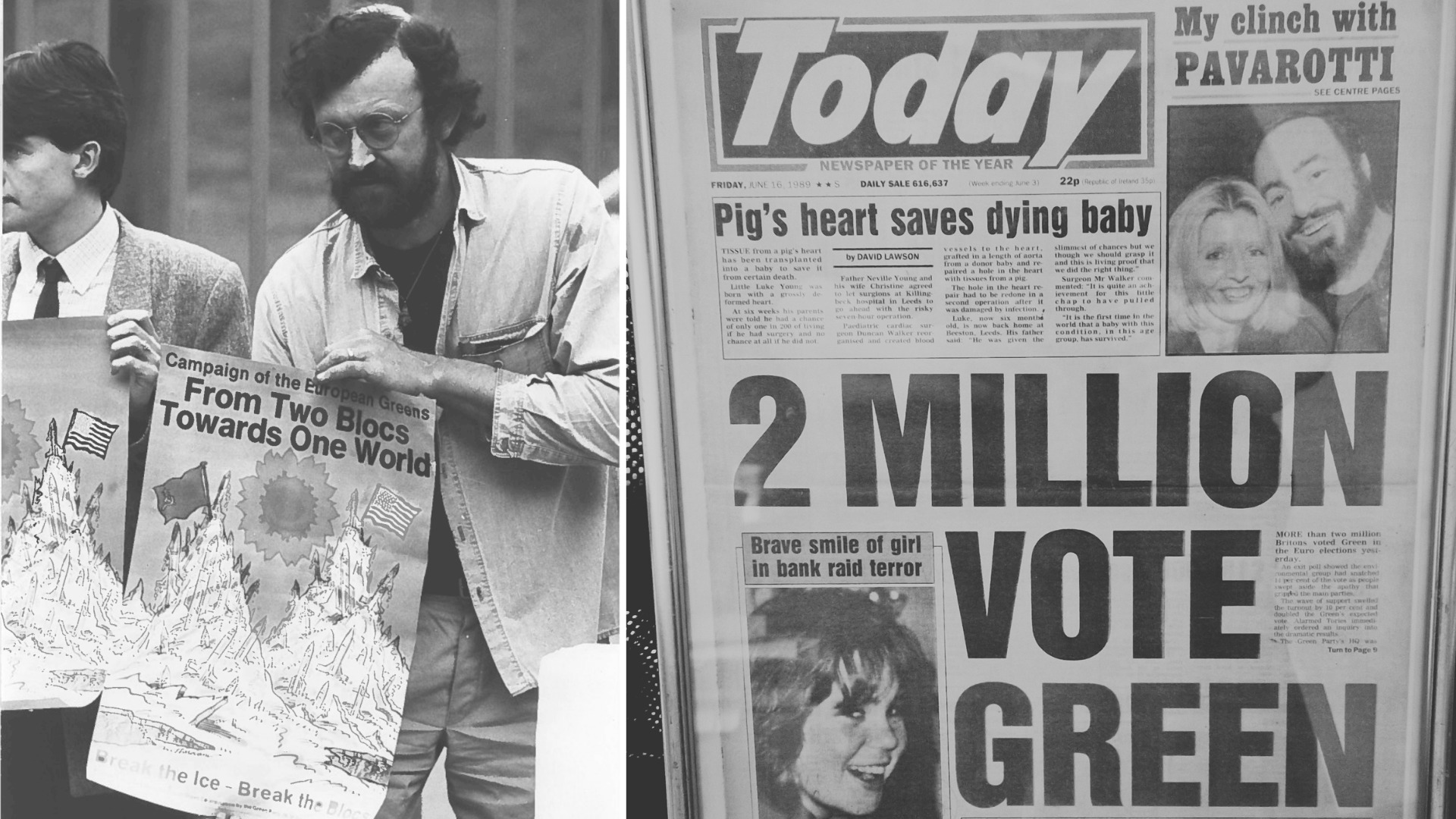
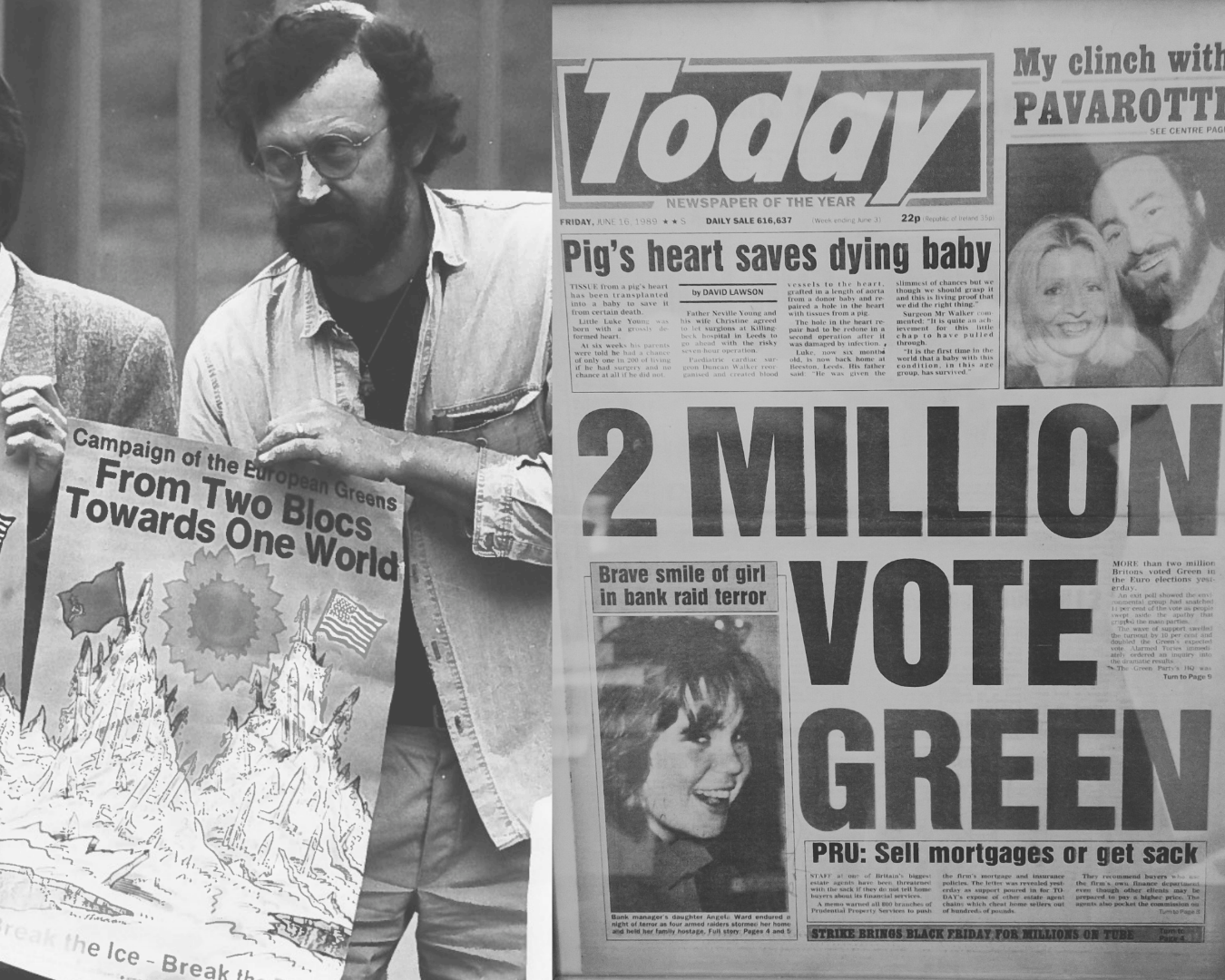
In terms of Europe, the UK joined  in 1973. In 1975 we had our first referendum to get Labour out of a hole, the second referendum was to get the Tories out of one. There were different views on the European project amongst Green parties. The UK’s early position was actually leaving the European Union (…) I stood in the 1984 European elections; our election leaflet was “Better out than in”. By 1989 we were moving to a “reform from within” position, with a vote on that very narrowly won at party conference. So in a sense we were more with the Swedes, the Austrians, the Danes as they came into play (…) It was in 1985 that we actually hosted the European Greens Congress in Dover. I was very happy to do the cross-party work: what can we learn, how can we change this, how can we work together? It was that cooperation which also helped us with the 1989 European election result [in which we won 15% of the vote share], which was a real milestone for us and where you could actually see Greens shift the agenda in the UK. Part of that was because we could say that we were part of a European movement. We had representation in the European Parliament. 

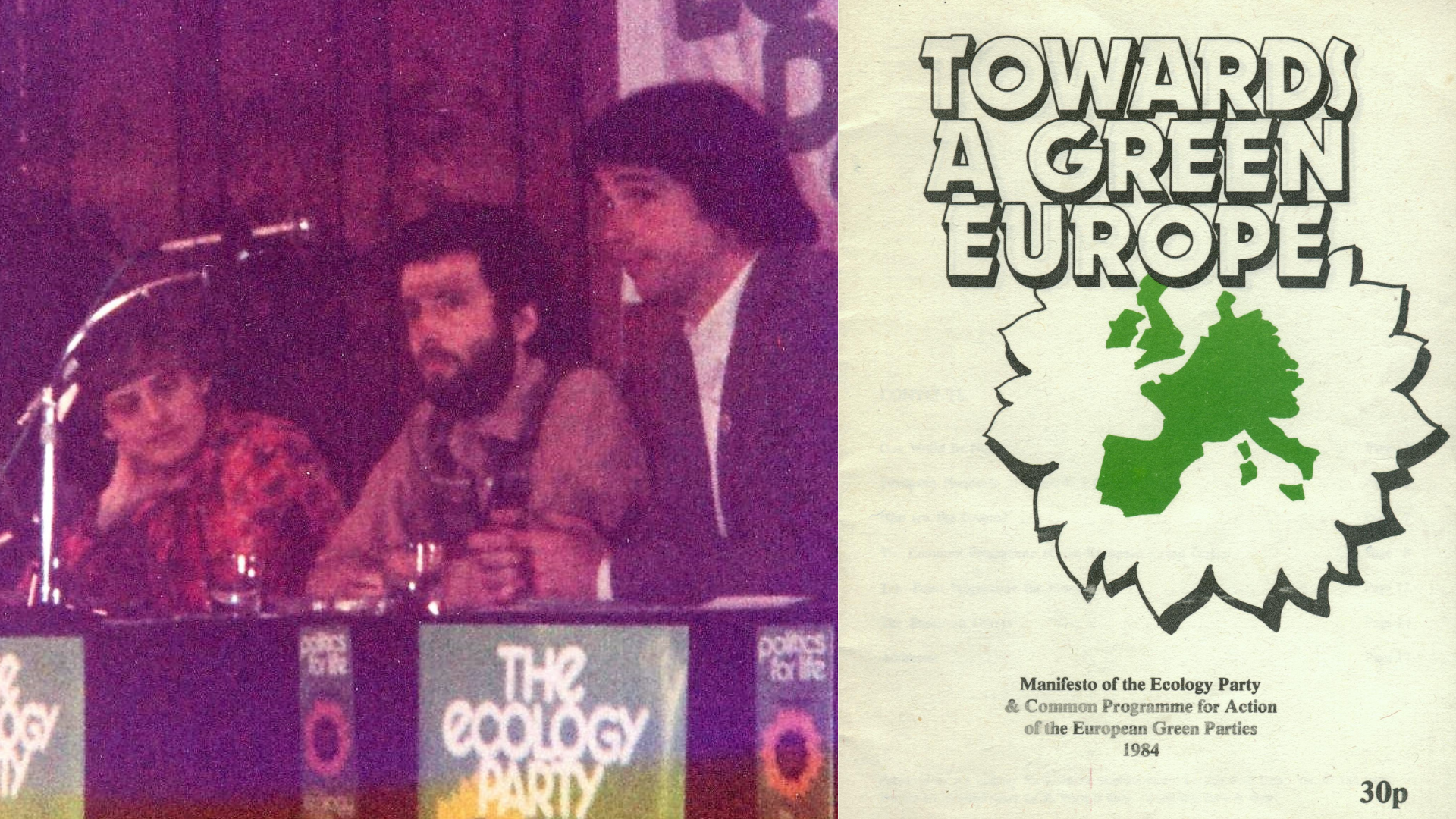
(Left) Petra Kelly alongside Jonathon Porritt [former chair of The Ecology Party from 1979 to 1980, and from 1982 to 1984] and Tony Jones at the 1983 Ecology Party Conference in Dover. (Right)1984 Manifesto of the Ecology Party & Common Programme for Action of the European Green Parties

Let’s talk about 1999. It was a significant turning point, particularly with the introduction of proportional representation for the EU elections, which allowed UK Greens to enter the European Parliament for the first time. You were one of the first two MEPs. What changed for the Green movement when it started to acquire a more institutional presence in European politics, and what did the experience of actually exercising influence within the parliament teach you about both the possibilities and limits of institutional power? 

By 1999, you’re beginning to see more co-decision, and a lot more on the environment, with the budget side of it becoming more important. Our priority was getting Caroline [Lucas] onto the trade committee because that was her policy background. You’re also learning about negotiations: what are some of the possibilities here? How do you make this work for your constituents and for the agenda that you have as a Green? What are the areas where you don’t necessarily have specific legislative power, but you have influence, and therefore what can you introduce, what can you move, and where are the real blockages? But also what you’re not supposed to touch. This is a real frustration within the parliament, particularly for the Greens who want to work on all sorts of issues which are relevant at home but where the EU has pretty limited power. Housing would be one. Can you expand that power? What are the levers that you have to influence that? So it was quite an interesting learning curve. You learnt to cooperate with people that you never thought you could cooperate with – on, for example, asylum policy work – and learnt that, while you won’t win everything, there are still things you can win, and that ideas can come from anywhere – a random remark, or a small research finding can be inspirational.

You worked on the Green New Deal and the issue of employment, which became central to European politics in the 2000s. What did the Greens need back then to change how they talked about the economy, work and industrial transformation? And is there anything that Greens are still struggling to answer when it comes to these topics?   

Part of it was having good relationships at the European level with the trade union movement. One of things I learned early on on the employment committee was that while in the UK you looked at the two sides of industry, that wasn’t the way it worked in a lot of other countries. You looked at the German model or you discovered that the EPP coordinator on the employment committee was a former trade unionist. From a British perspective that almost seemed impossible, but there it was totally normal. That was lesson one.   

The European Trade Union Confederation had a strong perspective on how the world was changing. The leader of it at that time was John Monks, who had been leader of the Trades Union Congress in the UK and was very close to the Blair government. The Blair government understood climate change; in their last UK Presidency it was a thread that ran through the whole thing, from foreign affairs right across. So you had prospective allies but you had to do a lot of groundwork in the parliament. It used to be a favourite thing of mine, when the agencies came to present to us in the employment committee, to ask them what they were doing about green jobs, green transition. What struck me was that if you were trying to link employment and ecology for an audience at home, we had all of these wonderful targets, but how are we going to deliver them if you don’t actually have a workforce that can deliver? Who was actually going to be constructing wind turbines and whatever? So the targets alone are very nice – but how to operationalise that? 

It [the green transition] still can sound very threatening because it doesn’t answer the question of what happens to my job. Your jobs in coal mining go, and you don’t necessarily have jobs in that particular place to replace them. So how do you answer that question? It’s a bit like AI now. What does it mean for me? And I think we’re still not good at that; we can still sound far too technical. We’re not leaning into the research work that the European Union is now funding through Horizon about how to make it work at the regional level. Maybe we also haven’t been flexible enough in terms of how to keep the arguments for the green transition going when it comes under pressure from a mad American president or whatever.   

Migration and asylum have also been a constant part of your political work. What tensions have you seen between Green principles and the rise of the far right and Trump, and the political pressures that Green parties are facing? 

I remember one of my Danish colleagues saying that if you go into coalition you have to do some very nasty things. You’ll get some very good things, but there will be some nasty things and quite often those attach to migration. It’s been very interesting watching the German Greens and what they’ve managed to do on the expansion of citizenship. These are models that I don’t think we’re looking at enough. I don’t think we look enough at where the Greens have actually managed to win things and draw lessons from that. We’re often very good at big messaging; we’re not so good at the details because we don’t like to talk about things like return [of migrants] – we don’t like to talk about difficult topics.    

This is where the Dutch Greens have been very good for us. We want to honour our commitments under international law on asylum. We want to have a welcoming atmosphere for migrants. We want people to have a clear path to citizenship. But we also want to make sure that we can actually keep our social security models going. Therefore, how do we find a balance? There’s also confusion about legal frameworks for asylum seekers – people with well-founded fear of persecution – and other forms of migration. You find in some Green parties that there is a very limited view of who migrants are – that it’s quite often about people who are moving because of terrible situations at home – and that’s not the full picture of migration at all. It was very difficult at the European level to find organisations that actually represented people who were migrating voluntarily for work or family purposes or whatever to be part of the discussion about migration policy. Big city lawyers migrate; not every migrant struggles to get here. The reluctance to engage with some of the really difficult stuff means that you don’t necessarily have an argument when the far right comes at you. 

Another area of discussion is climate migration – whether you put such people in the same grouping as refugees or whether you have to find other ways to manage it, because it’s not always clear cut. Climate migrants are not necessarily seeking sanctuary from persecution; they’re actually seeking somewhere where they need to build a new life. Ideally we’d quite like to do without borders, but it’s a different world. 

How do you think the role of the European Union has changed in Green political thinking? And how has the movement’s understanding of European integration changed with it, particularly with regards to enlargement and the rise of the far right? 

When you look at who the potential governments might be across Europe, you think, well, if these are the people in charge, how much power do you want Europe to have versus a national government? It makes it much more difficult to argue for more Europe. 

Within our own party the feeling has been that we should rejoin as fast as we can. I’ve come to see Europe as part of a climate adaptation strategy – that if people are going to move to fill shortages in one place, actually removing some of those barriers to trade is not a bad thing. We can pool resources. But this only works if you make people feel it’s working for everybody. 

Another point is the arguments the European Union is having over AI and big tech. In some ways this is really useful, because we can make the point that we are actually trying to control these corporations or the Trumps of the world who have been spending a lot of time, money and political weight trying to undermine the European Union. This is why we’re under so much pressure. People who consider themselves progressive really ought to be looking at how we make those arguments for the power of the European Union, at that level and on those things. I also think that Trump has made the European Union itself and people within it look at the potential partners that we have elsewhere in the world who share certain values. 

Let’s go back to the England and Wales Greens. It’s gone from a small ecological movement to being elected to European Parliament, and now has a quarter of a million members. What continuities underlie some of those very different moments? And how have Green ideas become a political force, and what does this mean for the party? 

A questioning of the economic system is one continuity, but now it’s more than simply   

a critique of the capitalist economy. We came up in a time of two blocs – a capitalist economy and a real extractivist economy under the Soviet Union. There were certain similarities in the way those systems treated the world and its resources. 

We’re also seeing a shift towards labelling the party as socialist. For old Greens like me I find it something of a problem because of the question of who do you exclude once you put a label that has so much history on it. The political positioning to be avowedly to the left of Labour has been a very deliberate move by some people but it risks making you dependent on Labour’s positioning. It’s their choice; others of us don’t like it, but what are we doing about it? 

Our view of the climate and environmental crisis is still there. To see the standing ovation Zack Polanski received at the party conference [in October 2026] when he talked about climate was really quite moving because I had been worrying that we were losing that. We need to keep that anchor because it’s an area where we have had success in shifting the agenda. In the 1989 elections, we got 15% of the vote, and in some places over 20%. That came as a real shock to a lot of people, and partly to ourselves. But we’d run a very strong campaign that had quiet backing from a variety of organisations, as well as a national newspaper urging people to vote Green on their front page. That vote actually shifted politics – the Labour and Conservative party conferences that year were doing much more on the environment than they had ever done, and the government introduced an environment minister and a sustainability strategy for the first time ever. You really saw a shift once they realised that people were willing to vote on these issues. And I think that cannot be underestimated in terms of what that has done for British politics, and elsewhere. We need to keep that going. Fuel companies are investing to undermine progressive change; the international agreement on climate change is under attack. There’s still a need for a really strong Green movement, Green parties and Green thinkers in other parties to keep climate as a really strong focus. 

(Left) "From Two Blocs Towards One World" - a historical joint European peace campaign launched in April 1986 and (right) 1989 front page of 'Today' newspaper - '2 MILLION VOTE GREEN' : Coverage of the historic performance by the Green Party in the UK during the 1989 European Parliament elections, where they won roughly 15% of the vote (over 2.3 million votes).

Read Green party correspondence on the historical campaign “From Two Blocs Towards One World” here.

Looking ahead 20 years, what do you want the Green movement to have built in terms of a political project and a force in European society? What would a successful European Green project look like? 

It would bring us to a point where it becomes almost impossible to question the importance of the environment, nature, biodiversity – the fundamental structure on which we all depend. That we’re no longer having to pay lip service to the idea that there’s a debate, and that the argument is instead about how best do we do this. I’m still quite impressed by the Bhutanese Gross National Happiness Index, which is a really rigorous analysis. It’s not just fluffiness. We met the people who introduced that and saw how they operate it. People feel very much engaged in it – you can actually see why it matters and where you fit and how you and society as a whole benefit from it. 

For the Greens it would be really useful if we rediscovered a bit of the imagination and the joy that we had at the beginning. If you look at our film for the 2004 launch of the European Green Party in Italy, it has Morricone’s music – he allowed us to use it. It’s a beautiful film and it’s about colour in the widest sense: a sense of joy; a gentleness without weakness; an ownership of something different. We’ve got a bit dull visually and verbally; we don’t have that freshness that people thought we had. We have to remember that this is cultural – that’s part of politics as well. 

In Conversation with Natalie Bennett, England and Wales

By Interview
Photograph: Getty Images
Bristol, 9 May, 2024

On the Evolution of Green Politics in the UK and Europe

Natalie Bennett, Baroness Bennett of Manor Castle, is UK Green politician and former journalist. She led the Green Party of England and Wales from 2012 to 2016 and has been a member of the UK House of Lords since 2019. Before entering politics, she was editor of the Guardian Weekly from 2007 to 2012. She also lived in Thailand for five years, where she volunteered with the National Commission on Women’s Affairs. 

In this interview by Alice Hubbard, Natalie Bennet reflects on her journey from journalism to Green politics, the lessons behind the party’s electoral breakthroughs, and the role of European cooperation. She explores how Greens can gain political power without losing their movement roots, and why the future of Green politics depends on connecting ecological limits with public health, economic justice, and social wellbeing. 


Can you please introduce yourself?  

I’m Natalie Bennett, or for formal occasions, Baroness Bennett of Manor Castle. I’m one of two Green Party members of the House of Lords, and I was leader of the party in England and Wales from 2012 to 2016. I’ve written two books, Change Everything: How We Can Rethink, Repair and Rebuild Society and Green Thinking: Unlearning Outdated Ideas in Science, Economics and Politics. 

You had a long career in journalism. Why did you make the jump to Green politics? Why did it appeal to you as a space for change? 

I can date this precisely to 1 January 2006. I had just finished working nights at the Times newspaper and I looked at the state of the world and said I want to do something to make things better. After 15 years of mostly international journalism, I wanted to not just report the news but change the news. I might have joined War on Want or Greenpeace, but those kinds of NGOs and campaign groups were carefully not touching politics – anything with a big P – and were simply focused on influencing whoever had been elected. I decided that we had to stop electing the wrong people and then lobbying them to do the right things. And so, on that 1 January, I sat down and thought, “Well, where are decisions made?” And decisions are made in councils, in Westminster, or in those days for the UK, in Brussels. So I joined the Green Party to get Greens elected.  

There’s no way I would have joined any other party. We know we can’t have infinite growth on a finite planet. That’s not politics, it’s physics. I knew that as an old feminist, the focus on getting more people into paid work really ignored all of the crucial unpaid labour in our society. And I was aware, even then, that the idea that we all have to compete to get ahead ignored the idea of cooperation. And I saw within Green politics not just policies but a culture built on cooperation. That was absolutely crucial to me.  

The Green Party emerged at a moment in the 1970s when new economic models, different ways of doing democracy, and talk of ecological limits were beginning to circulate. What did Greens get right about their thinking for the future, and what assumptions from that period have they had to rethink?  

The key assumptions in those days were that if we had the right arguments and the right data and the right policies, then we’d just convince everybody that we were right; that arguments and data about the climate emergency, the nature crisis, all the other planetary boundaries we have exceeded could just be presented and people – the whole world – would come over to our side. We didn’t realise that it was actually tactics, number of leaflets delivered and posters put up in windows, and the sophistication of those – that’s what mattered in getting elected. Yes, sometimes we’ll force other parties closer to or even into our positions without getting elected, but that still means the wrong people running the country, who have to be forced into doing the right things, painfully slowly, issue by issue. 

Lots of sister Green parties from around Europe and around the world are coming to us to ask how they might replicate our recent successes, and a lot of the answer is getting the practicals of politics right, having data about your voters, knowing how to speak to them, where you can reach them, carefully selecting candidates and preparing them well.

Speaking about my Nature's Rights Private Member's Bill at the global launch of Antarctic Rights (an alliance of individuals and organisations working to build global support for the adoption and implementation of an Antarctica Declaration) in Cambridge, 1 December 2025.

There was a Green Party surge during the austerity years in Britain, particularly around 2014-15, when three MEPs were elected, the party received 1.2 million votes and Caroline Lucas became an MP, and membership soared. How do you look back on the significance of that period, also vis-a-vis today?  

We built the foundation of professionalism that was necessary for the next jump. What’s great about this second Green surge is that, like 2015, we’ve quadrupled our membership, this time from 60,000 to about 230,000. Back in 2015 we were starting from such a small base. The other problem was that it was just before the general election, so we had no real time to organise. We did that after the election, as we had the membership income and had built the foundations. It took a couple of years. If you look at the graph of councillors, it’s around 2017 that it starts to rise exponentially. That was built on the foundations of 2015. It’s also a recognition that you have to have the right political environment, because it was partly the rise of Jeremy Corbyn that held us back at that point [2015], even though our anti-austerity message had helped his rise. That’s really a demonstration of how you change the political landscape and shift the balance of politics. If you look at, for example, Nigel Farage, he had a huge influence on British politics during the many years in which he wasn’t an MP. You can very much shift the Overton window, and the shape of what politics looks like, along the way to being elected to parliament. 

Natalie Bennett with Waltham Forest Greens shortly before their historic breakthrough in the 7 May 2026 local elections. The Green Party went from no councillors to winning 31 of 60 seats, securing an overall majority and taking control of the London Borough of Waltham Forest.

Let’s talk about Europe. The 2014 elections were crucial, but the England and Wales Greens were also a huge part of what became this European Green project. During that 2014 moment, when we got our first three MEPs, what did European cooperation mean to you politically? Was it about strengthening Green parties nationally, or did you see a European Green project emerging at that time?   

I’ll start from the personal. I was editor of Guardian Weekly [between 2007 and 2012], and in those days we translated articles from Le Monde. I could never translate anything about Europe from Le Monde, because it assumed a level of understanding about how the European Union worked that an English language audience didn’t have. I would have had to have written a sentence of explanation for every sentence of the original from Le Monde. When I became Green Party leader in 2012, one of the things I was aware of was the need to actually link with Europe. I went quite early to Brussels, to things like meetings of the MEPs. I had the exciting experience of being verbally beaten up by [Daniel] Cohn-Bendit [MEP from 1994 to 2014], who blamed me for Nigel Farage. But I realised how little I knew about how Europe worked and the first job was to inform myself.  

I’m always reminded of something Reinhard Bütikofer [MEP from 2009 to 2024] used to say, which was that the UK was always a hokey cokey member of the European Union – one foot in and one foot out, then we change the feet around, but they’re still only one footy. So we were trying to build the relationships and, still from a very small base, build that knowledge of Europe in the British public. In 2014 it wasn’t Europe that got us three MEPs, it was really good local campaigns. Molly Scott Cato [MEP from 2014 to 2020] got elected in the South West by going round saying “We will nationalise the railways”. This has nothing to do with Europe. But it got her elected. The British media did not cover the European election as anything to actually do with Europe or explain anything about European issues; it was purely run as a national election. Of course that was the election where we knocked the Tories into fifth place, which was quite fun, I have to say. But in England and Wales, as well as in the England and Wales Green Party and more broadly, the links to Europe were still pretty tenuous.  

What did Brexit ultimately change in terms of the relationship between the England and Wales Greens and the European Green movement? And how do you navigate these transformations in the broader political context?  

One of the things that we can and must do is explain to fellow members of the European Green family that Brexit was not about Brussels. I wrote a piece before the vote saying that the “Take back control” slogan, which is what ultimately won it for Farage and his people, was absolutely right for people to say. They’re not in control of their own lives, their own communities in the UK. But the problem is not Brussels, the problem is Westminster. This [vote] was not genuinely a rejection of Europe; it was an expression of frustration and anger. That is particularly important because, just in the last year or so, it has become possible to really talk about Britain rejoining the European Union. It is possible to imagine that in 20 years’ time, people will say, “Well, the people who voted for Brexit were absolutely right because they kicked the whole British political infrastructure, broke it apart, and at the end of that we got a modern functional democratic constitution for the UK. We rejoined the European Union, and we did it with a lot more understanding and knowledge and we knew what we were doing, and maybe we are no longer hokey cokey members but are actually genuinely embedded ones.” I’m not saying that is what the future looks like, but it’s possible. History is not pre-written; it’s made by the actions of people and there are a lot of different potential futures before us. If we’d got the 52-48 vote the other way round, which is what people expected when I went to bed on election referendum night, then it could be that people would say, “Well, look at what a mess British politics is. We’re still in the European Union and we’re still really angry.” I don’t know what that would have looked like but it wouldn’t have been pretty. It’s been an almost necessary transformative cycle.

Let’s talk about movement, party and power. How has the Green movement  fundamentally changed as it’s gained power? And what does it need to retain from its movement roots?  

It’s important to think about the fact that the Green Party doesn’t whip. Lots of people will say, “Oh well you can’t possibly be part of the government. How can you run councils or be in government without whipping?” But I think this is actually a really important foundation of the kind of democracy and truth and trustworthiness of Greens, that if you see a Green representative, councillor, MP or whatever getting up and saying, “I believe this”, you actually know it’s true. Under the whip system used by other parties, you will very often see a member of the cabinet say – and you can visibly see their arm twisted up behind their back – “Yes, I’ve always believed in this policy.” And that does real damage. Our process, like that of the Scottish Greens, is that if an MP encounters an issue which they feel differently to fellow MPs about, they have a responsibility to identify it, sit down and talk it through, and see what middle ground there is. Or decide that they’re going to have the flu that day and won’t make a fuss about it.  

I’ll take a case study. I was very disappointed a couple of years ago when we changed our position on the HS2 high speed rail line. And I said, you know, we’re not a whipped party; I will say this is our position, but then I will say that’s not my view. And that’s fine – that’s all perfectly manageable. It’s setting out a model of a different kind of politics. We need to keep our soul while also eventually being part of, or being, the government. And that’s a challenge, yes. And it’s doing things that, in the British context, have never been done before.  

What are the core fights for Green politics in today’s political landscape, in the UK but also in Europe? What do you think the Green movement  should be trying to build in response to those challenges?  

The first thing is understanding that the whole future of human existence is dependent on the natural world. We are human animals. The economy is a complete subset of the environment. When I first started in politics, even when I was party leader, journalists and the public thought of the environment as one issue here and the economy as one issue there. We’re making progress on joining this all up. We’ve seen the joint intelligence chiefs, who are not known as radical greenies, put out a report saying that the collapse of nature around the world is a threat to Britain’s security, particularly our food security. Those are the kinds of things that we need to bring home to people – that human, environmental and animal health are all intimately interrelated.  

Britain is a deeply unhealthy society, so there’s an argument that doing public health is essentially doing Green politics. The public health perspective actually brings together all of the issues that we most care about, that other parties just don’t really understand. There will be a health election in Britain very soon. Traditionally that has meant arguing about how much funding there is for the NHS [National Health Service], or whether it’s privatised or not, but actually, the health election will be about how we create a healthy, flourishing human society within the framework of a healthy, flourishing natural world on these islands, which are in a terrible state both in terms of human health and the health of nature. I’ve just come back from the One Health Congress in Lisbon, and that’s the perspective we need. 

In Conversation with Benedek Jávor, Hungary

By Interview

Nipped in the bud: How an authoritarian turn threw Hungary’s blossoming Green movement off course 

Benedek Jávor is a Hungarian Green activist and politician. Originally a biologist, he was an environmental campaigner before entering politics, founding and leading a major green NGO in Hungary. In 2009, he co-founded the first Hungarian Green Party, Politics Can Be Different (LMP), which entered the country’s parliament the following year. He served a four-year mandate as a member of parliament. In 2014, he was elected to the European Parliament, on behalf of a newly created Green Party – Dialogue for Hungary (PM). He currently heads the representation office of the city of Budapest to the EU.

In this interview by Alice Hubbard, Benedek Jávor traces the development of Hungary’s Green politics over the past decades, from its emergence out of grassroots environmental struggles, to the ideological divisions that lead to a fundamental schism, and the destructive impact of the Orbán years on a promising political movement that was just beginning to bear fruit.


Can you tell us about the origins of the ecological movement in Hungary, particularly around the end of the communist era? 

Green movements across Central and Eastern Europe began to emerge in the 1980s as environmental conflicts led to political conflicts with the ruling communist regimes. In Hungary, it was the Gabčíkovo-Nagymaros hydroelectric dam project on the River Danube that led to mass resistance in society. That was the Danube movement. It was a combination of green activism and political resistance. These origins also influenced the ideology and the nature of the green movements in the region. Since they developed from the resistance to a left-wing dictatorship, they were often more conservative or right-leaning than many Western European Green parties. 

After the transition years in Hungary, many of the leading figures of the Danube movement were integrated into newly founded democratic parties, and the original momentum of the movement disappeared. On the other hand, from the early 1990s, a flourishing green civil society started to develop with hundreds of new NGOs being founded. These organisations largely focused on traditional environmental issues such as nature protection, and deliberately stayed away from politics. Then, in 2000, when the globalisation-critical movement was at its peak, a different type of green NGOs started to emerge, including Védegylet (Protect the Future!), which I co-founded. We very intentionally and cautiously decided not to stay away from politics.  

What was the theory of change that led Védegylet to work towards influencing politics and using democratic tools and channels more directly? 

We argued that the decisions influencing what happens to our natural environment are made in politics, so if we want to change them, we need to address politics directly as an NGO, through more open cooperation with political parties, directly targeting parliamentary parties and proposing bills and legal reforms.

Ecopolitics, or political ecology, goes far beyond protecting nature. Nature itself cannot be defended in isolation. We can find solutions to the ecological crisis only if we address the tensions within society. To protect the global environment and ecosystems, ecological politics should aim for the transformation of the entire economic, social, and political system. Our ambition was to come up with very practical proposals that went far beyond traditional green or environmental issues. For example, Védegylet proposed establishing an ombudsman for future generations in Hungary, which was eventually adopted as one of the first institutions of its kind in the world, and still exists today. The Fidesz government later significantly downgraded it, but it was a major achievement, demonstrating that the global environment can be protected through democratic action as well as through environmental activism.

From the beginning, Védegylet was an NGO with the ambition of directly influencing politics, but also of eventually becoming a political actor itself. That happened in 2009 after a couple of years of organisational work. In 2009, a group of activists founded a green party – Politics Can Be Different [Lehet Más a Politika or LMP], which participated in the European elections that year, receiving close to 3 per cent of the vote. This pointed to a political crisis in the Hungarian political landscape, which had previously been very stable. At that time, established parties that had participated in the transition years were disappearing from Hungarian politics. Then in 2010, LMP won 16 seats in the national parliament, which at that time was a major achievement. It was also a big success for the broader green and human rights movement, in which it remained strongly rooted, since most of the party’s MPs, staff, and members came from this movement.

Campaign posters at the 2010 national elections in Hungary

LMP’s emergence was clearly a major milestone, but its 2012 split eventually led to the creation of another party: Dialogue for Hungary (PM). What were the key strategic differences behind that split, and how did it reshape the trajectory of Green politics in Hungary? 

When we were elected in 2010, we believed – somewhat naively – that after 20 years of green activism we had finally arrived as a strong Green force in parliament. We enthusiastically got to work trying to influence Hungarian politics in line with green eco-political values, flooding the parliament with hundreds of proposals, bills, and amendments.

Unfortunately, we soon realised that the original mission was no longer valid. Soon after the 2010 elections, Viktor Orbán’s regime began to undermine the democratic system of the country. First came the attacks against the constitutional court and the independent institutions, and then the continuous attacks on media freedom. So within a few months, we realised we’d have to put aside the mission of turning the country green, because Hungary’s constitutional democracy was now at stake.

LMP was deeply divided about how we viewed the nature of the Fidesz government. Half of the party felt it was fundamentally different from anything we’d seen before, and needed to be fought with completely new strategies, tools, and means. The other side viewed it as a bad government, but not much worse than the Socialist government before it. These differences led to two completely different strategical visions. We thought that if the system being built by the Orbán regime was a fundamental threat to democracy, we first had to stop it and get Hungary back on the track of democracy, before we could make the country a greener, more sustainable place. Since the Greens had limited public support, we decided we needed to cooperate with other parties because only a united opposition would have the necessary force to stop the democratic decline of Hungary.

Benedeck charing the first meeting of the HU Parliament's Sustainable Development Committee in 2010, as newly elected green MP

This strategic conflict which arose around whether to cooperate with other opposition parties is, I think, what led to the to the break within the party, because it was a historical moment when there was no middle way. We wouldn’t have been able to cooperate a little bit while trying to create a more progressive platform that could be strong enough to compete with the Socialist Party and be a counterweight to it. So that was a conflict without an easy solution. 

Finally, the internal discussions became so bitter and heated that it became impossible to keep the party together. After a vote at LMP’s congress which finally decided, by a very small margin, not to cooperate with other opposition parties, the already existing dialogue platform within the party decided to leave. We started a new party [PM, known today as Dialogue or Párbeszéd], which had eight MPs, so it had considerable political weight in the parliament, and we decided to cooperate with other parties.  

Looking back, I believe failure was almost unavoidable. There were no good solutions at that point. The bulldozer of the Orbán regime destroyed everything in its way, and whatever we tried to do, the illiberal state would have eaten us up. But in the end I think both positions were unsuccessful, as all the parties that made up the opposition movement proved unable to stop Orbán’s regime for 16 years, and we needed a completely new political movement in 2026 to capitalise on the crisis of the regime, which began in the early 2020s, and change the government.  

As the Fidesz government began to tighten its grip on all aspects of Hungarian politics and society, what was the impact on efforts to introduce policies for more sustainability and environmental justice? 

The Orbán regime was extremely hostile towards environmental movements, as well as green policies. Like many far–right populist parties in Europe, they had close ties to traditional industry interests, including fossil fuels, at the local, national, and global levels. Far-right parties in Poland, Germany, and France – which I sometimes call the illiberal international – cooperate very closely with fossil-fuel dictatorships like Russia or some of the Gulf states. This is often hidden behind nationalistic slogans, claiming to be fighting against multinational companies and global capital on behalf of local economic actors. 

Demonstration against corruption at the HQ of the flagship company of Fidesz oligarch Lajos Simicska (sign:"Enough of oligarchs!")

But what usually happens in practice is not development like in East Asian “Little Tigers” countries – it’s simply a corrupt system which redirects national resources to oligarchic groups, often with businesses in traditional industrial sectors. The Hungarian system was deeply corrupt and redirected national resources to these oligarchic groups, but it also attracted global multinationals. They might have preferred Chinese, Turkish, or Saudi Arabian capital to Western European or American capital, but the methodology was essentially the same as the most neoliberal governments in in Europe: opening the country for these multinational companies to destroy labour and environmental regulation and gain cheap access to the country’s natural resources and labour force. This coalition of the so-called “national bourgeoisie”, which is really an oligarchic system around the illiberal state, and multinational industrial groups wanted to undermine green policies and regulation. That’s why Orbán abolished the Ministry for the Environment back in 2010. Hungary was one of three countries on earth without an environmental ministry – and the only one in the EU. In the European Council, the government was always blocking, undermining, and watering down the Green Deal and any other green regulatory proposal.  

What was the impact of this attitude on wider society in Hungary, especially civil society actors and movements? 

This hostility to environmental regulation and authorities, national and European, was partly because they saw these as obstacles to economic growth and their personal investments. But there was another reason – the government recognised that the green movement was one of the strongest and most well organised civic movements in Hungary, and since LMP had emerged from this movement they regarded it as a potential source of political competitors that could gain power and challenge the government. They wanted to stop this, and to kill any opportunities at the roots – and they were quite open about this. 

Demonstration and blocking of the HU parliament in December 2011, during the votes about antidemocratic amendments to the Constitution

Of course, it wasn’t just the green movement they targeted, it was also the human rights movement, feminist movements, LGBTI organisations, and so on. They basically wanted to make any kind of public participation, self-organisation, and active citizenship impossible. But of course, this also killed the opportunities of the green movement in Hungary. In 2014, the leader of a prominent Hungarian green NGO was arrested very publicly, with a police raid of their offices. The accusations were baseless, but it was a very clear message that there was no way for NGOs to organise themselves or to challenge the central political power. 

What was the role of the European dimension in Hungarian Green politics? Europe became something of a diving line between the two parties, but in what ways did their approaches differ?

There were differing views on Europe and European Green politics. LMP was a more conservative, rural, and right-leaning political force committed to national sovereignty and autonomy. From the very beginning, they regarded the European Union as a supranational organisation with some suspicion. They regarded the EU as part of a global neoliberal system, which goes against sustainability, social justice, and national sovereignty. The more progressive and left-wing members of LMP moved to PM, who regarded the EU as an important force for maintaining peace and development in Europe, and a final anchor of democracy in a country sliding towards autocracy. In environmental policies, the EU was also seen as much more ambitious than national governments in the region.

In the European Parliament in Strasbourg with Austrian Green MEPs Ulrike Lunacek and Monika Vana, and German Green MEP Helga Trüppel

There were also considerable differences in how we saw the European Green political line. For example, issues like LGBTQI rights or Roma minority protection were extremely important for those of us in the PM side of the party. Already in the 2010 campaign, there were huge discussions over whether public billboards and ads should focus on issues like social justice, inclusion, or LGBTQI and minority rights. This was always something the more conservative side of the party opposed. Some were sympathetic but felt it was not the primary issue we should deal with while others were openly against it. Since the Conservative side of LMP was already a bit suspicious of transnational organisations, they resisted European Green suggestions to prioritise or concentrate on issues which they didn’t feel should be the main messages in a Hungarian electoral campaign. This also led to some internal conflict.  

It was not unique. From the late 2000s, more Greens were being elected to parliaments in Central and Eastern Europe, such as in Czechia and Estonia. But initially, the European Greens felt no need to develop a specific or new approach for these parties. They were expected to imitate the messages and priorities of successful Western European Green parties. It took some time to realise that the social and political reality is different in countries like Hungary, Romania, Latvia, or Croatia, and that this might require different answers. For that reason, I think some Green parties from the region found it hard to find their place in the European Green family, compared to the more established Western member parties. If you look at the successful Green parties in the region, often they approached politics in a different way rather than copying Western parties. But very often, this doesn’t go without internal conflicts. 

Hungary recently went through an important political turning point with Orbán’s Fidesz government ousted from power after 16 years. How do you see the role of opposition forces and resistance movements, including the Greens but also more broadly, in this outcome? In particular, how important were local actors and struggles, in places such as Budapest?  

To outsiders, the collapse of the Orbán regime in 2026 might have seemed to have come suddenly out of the blue. In fact, it was the result of a combination of many developments beneath the surface. For one thing, unlike in Türkiye or Russia, Orbán was never able to completely oppress and destroy resistance to the system. He invested a lot of money in controlling and capturing the media. But ultimately, he was never able to completely destroy or close down independent media outlets. There was also an ongoing resistance at the municipal level – perhaps the regime’s first major political loss was the local elections of 2019, in Budapest but also in many major cities in the countryside. Half of the 50 biggest Hungarian cities elected opposition mayors and majorities to the city councils, which was unexpected. These municipal leaders and mayors, in Budapest especially, were able to sustain the hope that it was possible to defeat Fidesz and restore democracy.  

In Budapest, the city government from the very beginning invested a lot of energy, time, and financial resources into making the system more participatory and democratic for citizens. This resistance was very important because it showed that the Orbán regime was not omnipotent. The 2025 Pride in Budapest was also a crucial moment because it defied the government’s statements that the march wouldn’t take place. The municipality was able to organise the march despite the attempt to ban it – in fact that turned it into what was perhaps the biggest ever demonstration in Budapest, with hundreds of thousands marching on the streets not just in support of the LGBTQI community but also to show that we were ready to stand up for our rights. It was a powerful demonstration of Hungarian society’s commitment to democracy. And it was a humiliation for the government because it was not a small local event – the images were broadcast across the world and it was attended by international politicians. It showed they could be publicly mocked and defeated – something very damaging for an autocratic strongman. 

But the final reason was economic. With the suspension of the EU funds in 2022, the Russian aggression in Ukraine the same year and the subsequent energy crisis, and the global economic turmoil, the Hungarian economy was running out of steam. A high inflation rate, the stagnant economy and the daily livelihood struggles of the people undermined the political foundations of the system. Péter Magyar, a talented politician, and his party Tisza stepped onto the stage at the right moment. 

Looking ahead, what do you see as the main areas where the Hungarian Greens need to focus and target their efforts to rebuild, in terms of reconnecting with citizens now and in the years to come? 

After 16 years of Orbán’s rule, both the Green parties were destroyed; they lost the parliamentary seats, and more or less disappeared institutionally or organisationally. The green movement is now in very bad shape. Many NGOs have been closed down. Now, the most important task is to build a powerful and flourishing new movement, almost from scratch. That’s going to be extremely difficult because people have been demobilised and their views repressed for so long.  

But before thinking about any parties or directly political initiatives, I think that the first thing is to build a movement gathering committed, experienced people who are ready to act together. The good news is that, at the April 2026 elections, the participation rate was the highest ever in Hungary – close to 80 per cent – with youth participation extremely strong. Young people have grown up being part of the EU and they value the freedoms and liberties that come with this, like being able to travel and study abroad. But the Orbán regime offered only a turn towards Russia and China instead of European cooperation. They were fed up with the government’s nationalism so they made the change by showing up to vote. That’s the crucial element of the political socialisation: we had a conviction, we decided to act, and it made a difference.  

According to the most recent polls, Hungarians aged between 18 and 25-30 are now the most politically active young people in Europe. It used to be the opposite – even before the Orbán regime. My own past research at university found that political participation and activism among young generations in Hungary was extremely low in comparison to other countries. But now they have a very positive experience with making a change in politics. So the big question is whether the green movement – or a newly built green movement – can capitalise on this to mobilise them and nurture this political activism under a new government. Perhaps this activism could lead to a new green political movement, or even a new party. I hope that in the coming years, a new, active, and successful green movement will grow in Hungary, that will be able to create its own political representation sooner or later. 

Such a new green political organisation should be based on systemic ecopolitics, going beyond environmental protection to address broader societal challenges. It would need a coherent vision for both society and the economy. And it would have to be responsive and inclusive, listening to diverse social perspectives and understanding people’s concerns rather than preaching at, or judging them. Finally, a new green movement must be innovatively democratic. It must defend democracy against authoritarianism while moving beyond traditional representative models towards greater citizen participation and ecological democracy. Flexible organisational structures, meaningful dialogue, and diverse opportunities for engagement are essential, particularly for younger generations who seek genuine influence over political decisions.  

In Conversation with Rui Tavares, Portugal

By Interview

Green movement in Portugal, LIVRE’s history and Political Ecology in Europe

Rui Tavares is a Portuguese writer, historian, and member of the parliament for the left-green-libertarian party LIVRE. He is the author of the documentary film Ulysses: Breaking the Spell of the Crisis to Save Europe. He was formerly an MEP for Greens/EFA.

In this interview by Jamie Kendrick, Rui Tavares talks about the green movement’s place in the turbulent history of democracy in Portugal and brings back memories of these nuances times.


You can watch the interview on our YouTube channel. 


Would you like to introduce yourself and tell us how your personal story leads to LIVRE?

I was born in Portugal in 1972, still under the dictatorship. Our democratic revolution was in April 1974, when I was less than two years old. This context is crucial for our conversation because it reveals that Portuguese democracy and green parties in Europe are both children of the early 1970s, today around 50 years old.

Portugal always had a lively ecological movement, but we waited for a long time for a green party with an autonomous strategy. There is a green party, Os Verdes, which is also a member of the European Green Party, but they have always run in coalitions. Part of the reason we founded LIVRE is that, as Portugal was becoming a democratic country in the ‘70s and ‘80s, we looked to the rest of Europe and saw green parties forming and entering parliament – and we longed for that kind of politics here too.

I didn’t want to go into politics; I wanted to be a historian. But like many kids of my generation in Portugal, I was fascinated by politics. We were living through a move from a conservative dictatorship into a dynamic democracy where everybody was discussing politics all the time. Kids played in the street and called each other fascists or communists. Politics was in the air all through the ‘70s before the great normalization in the ‘80s when everything became a bit blander.

A few decades later, Portugal enters its austerity period in the 2010s, and the progressive part of politics seemed to be stuck with no solutions or ideas. LIVRE was founded by a group of people, me among them, who were doing different things and were very reluctant to form a party. But we felt that it was needed. Now 12 years on, we’re happy that we did it and our focus is on building a party that is viable, self-sustaining, and that puts down roots.

The party is called LIVRE, free. What’s in the name? 

Our reasoning was that we should reclaim the idea of freedom that had been usurped by the right wing, by neoliberals, right-wing libertarians, and even authoritarians. And I don’t blame them; I blame us. We let them get away with a certain caricature whereby the Right cares about freedom and the Left cares about equality. 

In 2012, even before the party was founded, we published a Manifesto para uma Esquerda Livre (Manifesto for a Free Left). The idea was to put freedom first and foremost and claim freedom as a progressive and left-wing idea. All our values, principles and demands flow from the idea that you should be free, and free in a far richer way than how the right-wing portrays freedom. 

The right-wing notion of freedom is at most non-interference from the state (when they are not being completely insincere). The left-wing perspective, which is a multi-tradition blend drawing from anarchism, republicanism, socialism, left liberalism, political ecology and so on, is rather about self-realisation of your potential on one hand and not being dominated on the other. 

Philosopher Philip Pettit would describe this as freedom as non-domination: even if you live well and are comfortable, if you depend on the goodwill of someone who can withdraw it at any moment, then you are not free. From a more anarchist point of view, which is my original political tradition, they would say that you cannot be free if your brother is a slave. In other words, you cannot be free on your own. To be free, you must have a society that is, in broad terms, free.

Portugal has a very strong and diverse left-wing tradition with a strong Socialist Party, an influential Communist Party, and a more recent radical-left party BLOCO. Why found LIVRE as an autonomous political force? 

The reason is broader than our emphasis on freedom and broader than Portugal. So far in this new century, we have let the right-wing act and then organised the reaction. If they want a smaller state, if they want reformed and more precarious jobs, if they want to extract and industrialise, we progressives are the ones who say no.

The end point is a paradoxical inversion of the political poles whereby the progressives end up as the conservatives, defending the National Health Service in the UK or the Constitution in Portugal. During the austerity period, we recognised that the tables had to be turned. We had to go back to a politics where we could talk about the future and make them react to our proposals.

Creating a force that was creative and different was very historically grounded project in Portugal. The anarchist movement was very powerful at the turn of the 20th century; they ran trade unions, schools, and the third-biggest daily newspaper in the country. Growing up, I would visit the anarchist newspaper every Saturday and be greeted by people in their eighties and nineties who were the children of the anarchist trade unionists and journalists of the 1910s and ‘20s.

These are not our only roots. LIVRE was also formed by environmentalists from NGOs, by pro-Europeans of the Erasmus generation; we do not repudiate the social democratic tradition either. But this half-forgotten anarchist tradition is important to us. To me, it makes sense to recover that older history and reclaim that memory through a form of almost archaeological political work.

Why was this tradition, which today forms part of LIVRE’s heritage and that of political ecology more broadly, neglected? 

Portugal’s 20th century is divided by a long dictatorship that lasts 48 years, longer than almost all dictatorships in eastern Europe except for the Soviet Union. Portugal was democratic or at least liberal at the beginning of the 20th century. Throughout the last decade of the monarchy and the first 16 years of the Republic, we had a lively political and social scene; however, with the dictatorship, its protagonists were sent to concentration camps. Some died in Cabo Verde or Angola; others were imprisoned. Their sons and daughters reformed the anarchist movement after the weight of the dictatorship was lifted and LIVRE even had a couple among our founders.

The social space that, in the 19th and 20th centuries, existed in the form of the cooperative movement, the mutual aid and the feminist movement can be seen as a proto-ecologist movement that did not yet have that name. From the late 20th century on, consciously or unconsciously, the green movement and green parties have occupied this social space. When you look at it that way, there are many examples. The magazine published by anarchist Emma Goldman was called Mother Earth. Here in Portugal, there was a Georgist-inspired magazine called Terra Livre or free earth.

How have you translated these ideals and roots into a green politics for a western European country in the 2020s?

In the very beginning, our tactical problem was that the progressive movement in Portugal did not work together. Sectarianism blocked any pragmatism on government formation. This division weakened us during the austerity period when our country was going through every progressive’s nightmare. Every three months, the IMF, the European Commission, the Portuguese central bank and the ECB would tell the country what we could spend and not spend, whether or not we deserved the next tranche of crisis loans. Of course, we had our faults, but the crisis was a Eurozone crisis and we were collateral damage.

At the time, our right-wing government was feeding the European institutions the idea that our problem was our constitution. Because the Portuguese constitution was a latecomer in ‘76, it is very progressive. It not only protects social and employment rights, but it was the first in the world to enshrine environmental rights and treat the environment as a kind of political subject in and of itself. In the 2010s, right-wingers in Portugal tried to trace all our issues from our supposed “backwardness” to our budgetary problems to our constitution. They are still trying to this day.

So, our first job was convincing the Left to work together and overcome the sectarianism that dates back to the enmities of the ‘70s and ‘80s. We spent two years building platforms to help the Left work together and, though LIVRE missed out on Parliament and were not part of it, we ended up as the intellectual force behind the Geringonça or “contraption”, the informal alliance of centre-left and radical-left that took Portugal out of the crisis years.

Not being in government allowed us to grow out of this tactical phase and develop a deeper reflection about our idea of the world, which for LIVRE is strongly cosmopolitan and pro-European. Pro-Europeanism was not easy in Portugal for understandable reasons. Much of the Left was denouncing the European Union as neoliberal and arguing that we should have nothing to do with it. Our position was that the crisis was a tragedy, that the choices that were made and what was done to Greece were grievous injustices, but that the European project is an important project and we need it to get through the very selfish politics that are fuelling tension, instability and conflict everywhere. With Trump’s election, this has only become more apparent.

However, you cannot have a national party only with a philosophy; you must have a national project. You must be part of the narrative that the country invents for itself. Portugal’s economic model is based on mass tourism and low wages. We propose a new development model inspired by the Green New Deal that offers a vision of environmental justice and social justice at the same time.

We insist on fighting prevailing pessimism that only disappoints and demobilises people. That is why we stumbled upon the idea of objects of political desire. What is an object of political desire? It’s something that people should visualize, that if they do visualise, they will strive for. Unlike objects of desire deriving from consumption, an object of political desire is something that to get it, you need to mobilise.

As the unions and feminist movement did throughout the 19th and 20th centuries, we need proposals, like the 8-hour working day or votes for women, that people want and will fight for. This is what made the movements back then so dynamic, lively and strong, even if, scarily, when we compare it with our own situation, they ultimately lost to fascism. Considering the far right’s strength in Europe and the world today, rebuilding progressive civil society is key, and we need to learn fast.

Who are your members, who is voting for you, and who are your allies in civil society?

We are still a young party, 12 years old. If I have been talking about the past, that is because it inspires strategies for the future. We have recently created a green foundation, but there are many ideas from the past that are still to be implemented. I dream of us establishing a cooperative that runs alongside the party and a popular university the likes of which used to exist in Lisbon 100 years ago.

The Portuguese electoral system favours medium-sized parties like ours in urban areas. Of course, many people in rural areas and villages see the world in ways that resonate with us, but for the time being our support is concentrated in the cities. Creating networks to bring together supporters in rural areas is one important task for the future.

We place a lot of importance on being an optimistic and even playful party; you can see that in how we communicate and our graphic design. The left wing tends to be very pessimistic, but criticising the EU and capitalism is not enough; you have to have victories. Victories are essential to convince people to come to you. Being depressing is not a good selling point.

Being happy, optimistic, playful- who does this attract? In the first stages, younger people in urban areas, and this group makes up the core of our members. We are what political scientists would call a voters’ party. LIVRE is not a mass party, nor a technocratic party or a cadre party. We have lots of PhD and Master students among our members and many people who are already active in NGOs and local associations. Many members see LIVRE as a platform where they can do party politics on the side and still go back to what they enjoy most, be it theatre, stand up, protecting the forest.

In the future, and to become a party that has depth, breadth but also longevity, being a LIVRE member needs to bring you something that helps you in what you do every day. Running a cooperative alongside the party could help people access services and goods, be them social or cultural or even vacations. Another dream is to have a network of independent bookshops in our party headquarters across the country. The anarchists knew all about this. A boring party with a staid party headquarters on the second floor of a nondescript office building will not attract people. A headquarters on the ground floor with a nice cafe and bookshop will draw people in.

LIVRE has just under 5000 members, in a country of 10 million people with low levels of civic engagement. We aim to reach 20 or 25,000 members across Portugal and the diaspora. Being a party member should not just to be about proposing amendments and going to meetings but all sorts of cultural activities. Organising a cultural festival or running a network of workers, that is the kind of practical party that we would like to build. We cannot recreate the mass or class-based parties of the past, but we can offer a new vision for a practical and networked party that speaks to people.

LIVRE got its best-ever result at the Portugal parliamentary election in 2025, returning six MPs. What is the plan now? How are you balancing entering the legislative game with this longer-term vision for the party as a social institution? 

LIVRE is now in a position where it can aim to get 20 MPs in the future. We need to win votes back from the right and far right and recognise that their supporters are not lost but that they are our neighbours, colleagues and cousins who used to vote for the Left and can be convinced to do so again. 

I do not find entering the legislative game very satisfying in and of itself, but there is a taboo that we must break: we want to govern. Governing in Portugal is usually seen as something for the centre-left Socialist Party. They are the reformists, they won the revolution, and they see themselves as the country’s natural party of government. This also means that they are completely lost when they are in opposition. The other left-wing parties, who are now smaller than LIVRE, come from the revolutionary tradition. They always have been and are deeply uncomfortable being in government, supporting one, and even entering negotiations. LIVRE is clear and has been for many years: we want to be in government and not just offer external support. We want to have ministers and secretaries of state. We are confronting this taboo head-on. This has never been done by left-wing parties; it is a huge challenge, but an opportunity may come early in the life cycle of our party. 

The local level will be the most creative and interesting part of politics for LIVRE going forward. We now have 60 elected local representatives. Our objects of political desire strategy shines most brightly at the local level. We have for example proposals for urban paths that bring nature back to our streets, and these have proved to be ideas that attract people. The local level is where we are learning the most, and where people are listening the most; it is where we are going to make the greatest difference in the short term. 

All the good ideas that people see in and hear about from Berlin, Amsterdam and Paris, LIVRE is carrying those ideas through our elected councillors. In the next cycle, I believe that LIVRE is going to enter local majorities and start competing for mayors.