Climate Emergency Economy at the Green Hub

By

About the Event

Alongside several partners, GEF has been investigating the requirements of a so-called Climate Emergency Economy. We’ve focused on the questions and sectors that pose a particular challenges such as agriculture, transport infrastructure and trade, and hydrogen for the green transition.

Which sectors should be prioritised for limited “green hydrogen” and what are the geopolitical implications of hydrogen imports? How does zero carbon relate to food sovereignty and the EU’s Farm to fork strategy? And what needs to change in transport infrastructure investments in Europe and overseas (e.g. through foreign aid) to ensure a zero-carbon future?

Join our sessions at the COP26 Green Hub to engage in this debate and learn more about our findings!

Context

This webinar is part of the project Climate Emergency Economy–organised by GEF with the support of Green House Think Tank, Wetenschappelijk Bureau GroenLinks, Green Foundation Ireland, and the Foundation for Environment and Agriculture. The project explores policies required in the most difficult sectors to decarbonise for Europe to reach net-zero emissions.

Practicalities

These sessions will all take place at GEF’s COP26 Green Hub. They are open to the general public and you can join both in person or online. To learn more and register in advance, please check out this link.

Programme


Wed 3rd Nov 11:00am-12:30 pm: Hydrogen in the Climate Emergency Economy 

The Scottish Green Party (SGP) is hosting the Hydrogen in the Climate Emergency Economy (hybrid) panel discussion in collaboration with GEF and Wetenschappelijk Bureau GroenLink to make space for a global conversation on the role of hydrogen in achieving net-zero by 2050 through a just transition. We will be joined by an inspiring panel of experts and decision-makers to hear about the debate on hydrogen followed by an in-person & digital audience-led Q&A. 

Location: Garnethill Room, Green Hub at Renfield Centre, 260 Bath St, Glasgow G2 4JP

Speakers:

  • Evert Nieuwenhuis (Wetenschappelijk Bureau Groenlinks)
  • Alex Lee (FoES)
  • Dominic Eagleton (Global Witness)

Chair: Mark Ruskell, member of the Scottish Parliament.

With the support of Scottish Greens and Wetenschappelijk Bureau GroenLinks

Thurs 4th Nov 4:30-6pm: ​Reshaping our global economies for the Climate Emergency ​

Location: Chapel – Green Hub – 260 Bath St – Glasgow

Recording: Can be accessed after the event via this link.

Speakers:

With the support of Green House Think Tank

Sun 7th Nov 3-5pm: ​Climate Emergency Economy — What’s missing from the agenda at COP26?​

Location: Blythswood Room – Green Hub – 260 Bath St – Glasgow
Recording: Can be accessed after the event via this link.

Speakers:

  • Carla Denyer – Co-leader of Green Party of England and Wales
  • Professor Julian Allwood, Professor of Engineering and the Environment at the University of Cambridge, and Head of the Use Less Group and UK FIRES
  • Laline Paul – Author, playwright, screenwriter
  • Jean Blaylock – Global Justice Now
  • Frank Habineza – MP Democratic Green Party of Rwanda
  • Natalie Bennett – Green Peer

With the support of Green House Think Tank


This event is organised by the Green European Foundation with the support of Green House Think Tank, Wetenschappelijk Bureau GroenLinks, and Green Foundation Ireland, and with the financial support of the European Parliament to the Green European Foundation
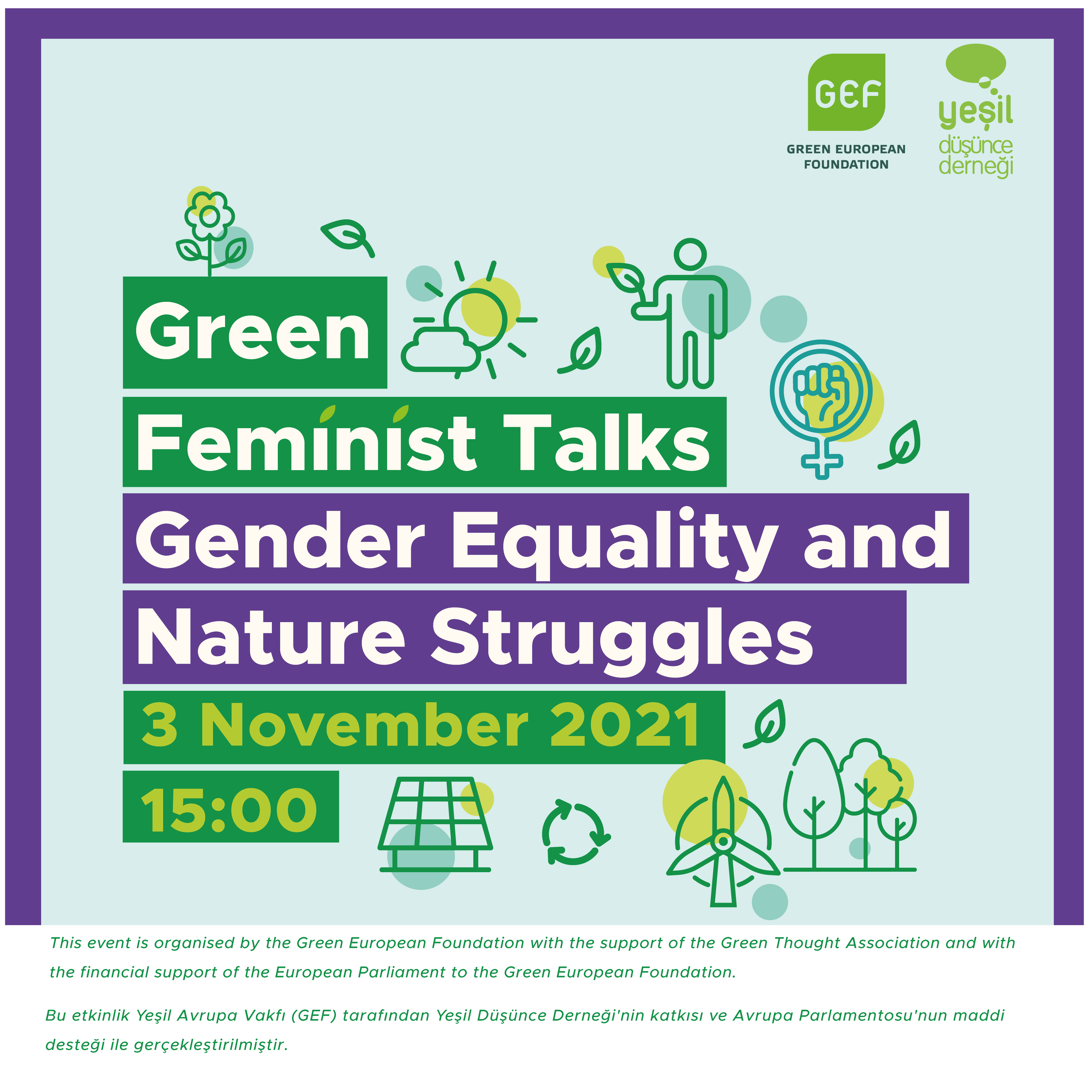

Gender Equality and Nature Struggles

By

About the event

During this webinar, we will put the focus on nature and gender equality. Join us to develop your network and discuss gender in conservation and climate policy. In many parts of Turkey, local people face natural disasters. People in the country are increasingly showing serious resistance to this issue, reinforced by the online and offline media. With this event, we will come together to talk about this matter and provide gender-related policy recommendations. We aim to provide a space for open dialogue to share common struggle in connection to personal experiences on natural disasters and gender issues.

 Context

This is the fourth of five meetings as part of the Feminist Policies in Green Politics project, where we try to delve into different policy areas to strengthen European feminist politics in energy, economics, climate policies, ecology and food & agriculture. We are presented with the challenge of identifying main difficulties in these areas to compile empowering policy recommendations.

Programme: 

14:00-15:30 (CEST)
15:00-16:30 (Istanbul Time)

Moderation & keynote speech: Özge Doruk
15.00-15.15 Opening + short meeting in breakout rooms
15.15-15.30 keynote speech 
15.30-16.30 Network Meeting & open discussion
(receiving confirmations for guests)

1. Discussion on gender equality in the field of nature protection in Turkey.
2. How preventive mechanisms/policies can be developed for vulnerable groups in natural disasters.
3. What can be said about improving the communication of the struggles of nature and the common struggle areas of the women’s movement?
4. What are your thoughts on the role of NGOs – civil society at these points?

Our aim is answering these questions and discusses these topics with activist, NGO members and who interested in this topic. 

 Practicalities 

Date: 3rd November

Time: 2pm- 4:30pm

Location: Zoom meeting

Registration: here

Please note this event is only in Turkish.


This event is organised by the Green European Foundation with the support Green Thought Association and with the financial support of the European Parliament. The European Parliament is not responsible for the content of this webinar. 


Disaster and risk management in an age of Climate and Ecological Crisis

By

Context

This event is Part of the ‘Cities as Places of Hope’ series; a project launched in 2019 focusing on progressive city networks that are a key factor in the development of a positive narrative on the future of Europe. The project brings together partners from Spain (Fundación Transición Verde), Catalonia (Nous Horitzons), Croatia (The Institute for Political Ecology-IPE) , Belgium (Oikos), North Macedonia (Sunrise), Wetenschappelijk Buereau GroenLinks (Netherlands) and Green Thought Association (Turkey). This 2021 project aims to bring together progressive and transformative trans-local city networks, to connect them and facilitate their exchanges, ultimately contributing to a positive narrative for the future of Europe.


Programme

FIRST SESSION Disaster Management, and Green Politics

Moderator: Dr. Barış Gençer Baykan

11.00 – 11.05Opening Speech by GTA

11.05 – 11.30 – Erdem Ergin (Disaster Risk Management Specialist) – Crisis Management

11.30 – 11.55 – Prof. Dr. Ali Osman Karababa – Health Policies

11.55 – 12.15 – Question & Answer


12.15 – 12.25 BREAK


SECOND SESSIONForest Fires, Droughts, Floods and Climate Adaptation Policies in Cities 

Moderator: Gökhan Ersoy

12.25 – 12.30 – Opening

12.30 – 12.50 –  Dr. Akgün İlhan (Boğaziçi University) – Two sides of the coin: Drought and Floods

12.50 – 13.10 – Prof. Dr. Nesibe Köse (İstanbul University Cerrahpaşa Forest Faculty – Forest Botany Department) – Forest Ecosystems and Climate Change

13.10 – 13.30 – Dr. Emrah Çoraman – Biodiversity

13.30 – 14.00 – Question & Answer

Moderators and Speakers:

Dr. Barış Gençer BaykanGökhan ErsoyErdem Ergin (Disaster Risk Management Specialist) – Crisis ManagementDr. Akgün İlhan (Boğaziçi University) – Two sides of the coin: Droughts and FloodsProf. Dr. Nesibe Köse (Istanbul University Cerrahpaşa Faculty of Forestry – Department of Forest Botany) – Forest Ecosystems and Climate ChangeDr. Emrah Çoraman – Biodiversity

Practicalities

Date and time: Thursday, 18th November from 11:00 to 14:00 CET.

Audience: This webinar will take place in Turkish and is open to the general public

Registrations: are now open here 

This event will be organised through the ZOOM platform.


This event is organised by the Green European Foundation, with the support of Green Thought Association and with the financial support of the European Parliament to the Green European Foundation.

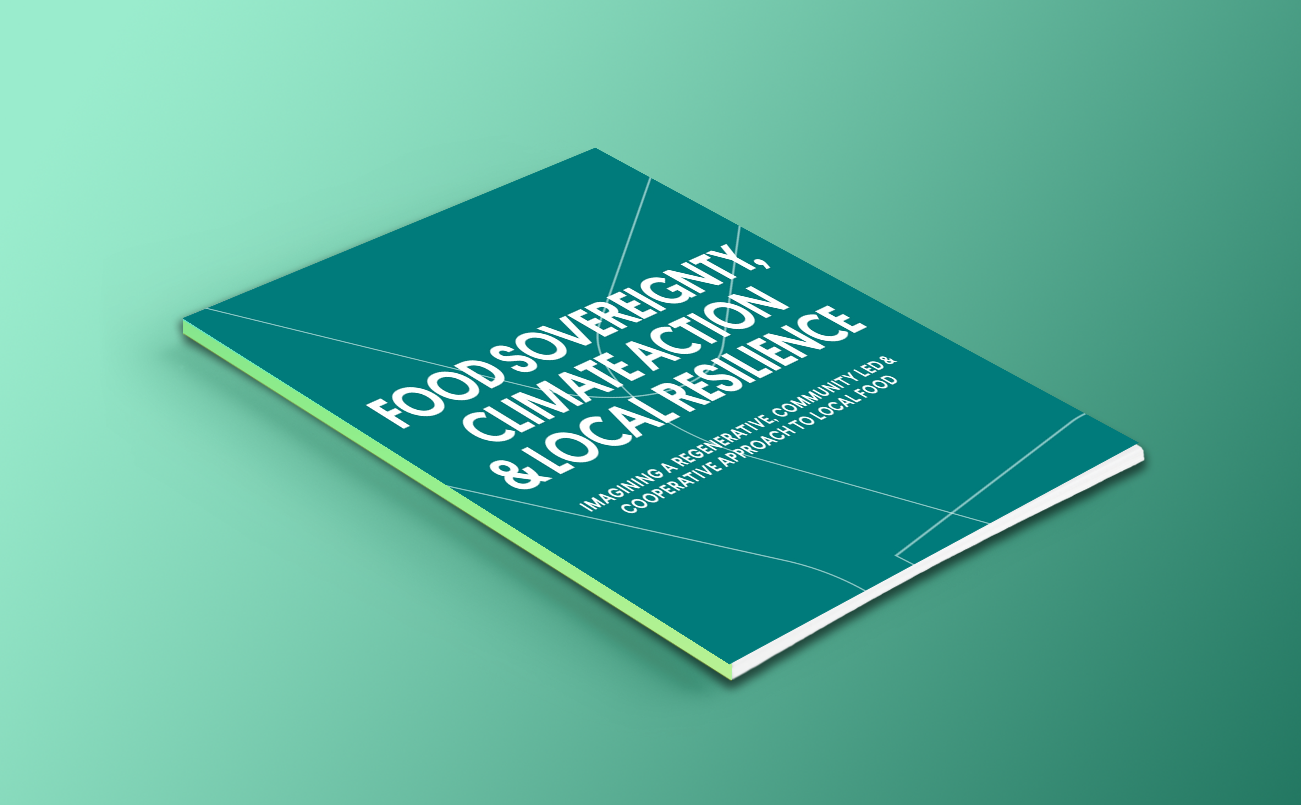
Food Sovereignty, Climate action and Local Resilience

By Uncategorized

Context

This pamphlet on Food Sovereignty, Climate Action and Local Resilience follows on from A Question of Scale: “Imagining a cooperative, community-led approach to regional resilience”. A framing paper in which we explored the potential of the Social and Solidarity Economy, Doughnut Economics, Just Transition, The Commons, Community Wealth Building, Federated co-ops as approaches to help us address the climate and ecological emergency.

The co-creation of this pamphlet began with a first draft distributed to local food, community and cooperative advocates. Then, they attended a webinar to discuss identify the blockers and enablers of this regenerative and community-led approach. Finally, we added the harvest of the session, along with links to initiatives in the field, and an infographic.

Challenging the global trade regime and the bilateral trade agreements which en-trench trade relations and which negatively affect peasant farmers on both sides is a vital part of the picture of Food Sovereignty and the global conversation that needs to be had about how to protect, encourage and support biodiverse, agroecological and small scale production not just in our backyard, but across the world.


This publication was produced as part of GEF’s Climate Emergency Economy project, exploring the challenge of such a climate emergency economy by focusing on “hard-to-decarbonise” sectors like transport, trade, industry, or agriculture.


Download

Also available in Polish.


This publication has been realised with the support of the Green Foundation Ireland, Cultivate and the financial support of the European Parliament to the Green European Foundation. The European Parliament is not responsible for the content of this publication.

Green Hub events at COP26

By

Context

The 2021 United Nations Climate Change Conference or COP26 will take place in Glasgow, Scotland, from the 31st October to 12th November 2021.

To provide support for Green actors in Glasgow during this important event, the Green European Foundation, with the support of the European Green Party and the Scottish Greens, will be holding a Green Hub: a meeting point which any member of the Green family can use to rest and recharge, to meet other actors, attend a multitude of green events, prepare for the protest.

Register to join us (in person or online!) and stay up to date on events, programming and the Green buzz at the Glasgow Green Hub and COP26!

Practicalities

Date: 1st November – 12th November

Opening times:

  • 1st Nov to 4th Nov: 9:00 to 18:00
  • 5th Nov to 9th Nov: 9:00 to 21:30
  • 10th Nov to 12th Nov: 9:00 to 18:00

Location: Reinfield Training & Conference Centre, 260 Bath Street, Glasgow , G2 4JP, United Kingdom.

Venue accessible to individuals with disabilities.

If you have any questions, please email our local coordinator at marie.stadtler@scottishgreens.org.uk.

Programme

*The following activities have been confirmed (more information on the programme will be added soon.

▶ Hybrid events

✺ In-Person events

🟢 Youth Hub events

🔐 Closed meeting


Monday 1st November

[wpcs_schedule date=”2021-11-01″ layout=”grid” align=”full” session_link= tracks=”track-4″] [wpcs_schedule date=”2021-11-01″ layout=”grid” align=”full” session_link= tracks=”track-8″]


Tuesday 2nd November:

[wpcs_schedule date=”2021-11-02″ layout=”grid” align=”full” session_link= tracks=”track-8″]


Wednesday 3rd November:

[wpcs_schedule date=”2021-11-03″ layout=”grid” align=”full” session_link= tracks=”track-8,track-10″] [wpcs_schedule date=”2021-11-03″ layout=”grid” align=”full” session_link= tracks=”track-11″]


Thursday 4th November:

[wpcs_schedule date=”2021-11-04″ layout=”grid” align=”full” session_link= tracks=”track-8,track-3″]


Friday 5th November:

[wpcs_schedule date=”2021-11-05″ layout=”grid” align=”full” session_link= tracks=”track-8,track-3″] [wpcs_schedule date=”2021-11-05″ layout=”grid” align=”full” session_link= tracks=”track-4″] [wpcs_schedule date=”2021-11-05″ layout=”grid” align=”full” session_link= tracks=”track-1″]


Saturday 6th November:

[wpcs_schedule date=”2021-11-06″ layout=”grid” align=”full” session_link= tracks=”track-1″] [wpcs_schedule date=”2021-11-06″ layout=”grid” align=”full” session_link= tracks=”track-8,kelvingrove-park”]


Sunday 7th November:

[wpcs_schedule date=”2021-11-07″ layout=”grid” align=”full” session_link= tracks=”track-1,track-6″]


Monday 8th November:

[wpcs_schedule date=”2021-11-08″ layout=”grid” align=”full” session_link= tracks=”track-3,track-6,track-8″] [wpcs_schedule date=”2021-11-08″ layout=”grid” align=”full” session_link= tracks=”track-2″]


Tuesday 9th November:

[wpcs_schedule date=”2021-11-09″ layout=”grid” align=”full” session_link= tracks=”track-8,track-6,track-4,track-3″]


Wednesday 10th November:

[wpcs_schedule date=”2021-11-10″ layout=”grid” align=”full” session_link= tracks=”track-6″] [wpcs_schedule date=”2021-11-10″ layout=”grid” align=”full” session_link= tracks=”track-2″] [wpcs_schedule date=”2021-11-10″ layout=”grid” align=”full” session_link= tracks=”track-3,track-8″]


Thursday 11th November:

[wpcs_schedule date=”2021-11-11″ layout=”grid” align=”full” session_link= tracks=”track-8,track-3″] [wpcs_schedule date=”2021-11-10″ layout=”grid” align=”full” session_link= tracks=”track-6″]


Friday 12th November:

[wpcs_schedule date=”2021-11-12″ layout=”grid” align=”full” session_link= tracks=”track-4″] [wpcs_schedule date=”2021-11-12″ layout=”grid” align=”full” session_link= tracks=”track-3″] [wpcs_schedule date=”2021-11-12″ layout=”grid” align=”full” session_link= tracks=”track-8″]

This event is co-organised by the Green European Foundation and the European Green Party with the financial support of the European Parliament to the Green European Foundation.
Mining for Metals in a Post-Cop Intersectional World: Can It Be Fair?

By

PROGRAMME

14.00-14.30 CET Introductory Session 

  • Miriam Kennet (Green Economics Institute) – Introduction to the event
  • Ewa Sufin  (Poland) (Fundacja Strefa Zieleni/GEF Member of the Board) – Introduction to GEF and the Metals for a Green and Digital Europe project

14:30 – 15:30 CET – Session 1: Mining metals for the energy transition – can it be fair? 

The role of the internet in driving social justice in 2022: The Potential for the Internet in Driving Social Justice-Can it be fair- ? Challenges for a Just Transition- an issue for our times

The internet is a powerful tool. The wide potential for democratisation and social justice it holds are evident. However, many online initiatives have failed to develop into real social change. To effectively utilise the power of the internet for social justice, we must navigate these problems and understand how detrimental outcomes materialise. This session will explore the conflicting realities of the nature of the internet and offer solutions for reclaiming it as a tool for social justice.

 Exploring the life cycle (procurement, use and recycling) and the practical situation

Speakers include:

  • Liljana Popovska (North Macedonia ) – Former MEP expert in Mining Issues and impacts
  • Hans Kåre Flø (Norway )Master of science in physics and master of management. Special adviser at Tekna which is a trade union for Engineers and scientists”. -Metals and their importance in European jobs and industry and the transition in Technology and climate challenges: Norway has important rare earths but has not exploited them yet- what are the issues? “Rare earths from Norway and challenges connected to producing them”
  • Rasa Tumaševičiūtė (Lithuania) – Europe’s Recycling of Aluminium, circular economy consultant and government sustainability strategist. Aluminium sector. How critical is situation in Europe?
  • Zaklina Zivkovic, Polekol (Serbia) – Green Economy Expert, Serbia and Executive director of Organization for Political Ecology, Polekol. The mass mobilization of citizens and environmental organizations in Serbia against extractivism that our country is currently facing. On one hand, we are aware of the need for metals for the green transition, but on another planning 40 new mines in the next 15 years in Serbia is nowhere near just the transition that we are also advocating for.

Moderated by: Bianca Madison (Croatia, Italy, Denmark, UK) & Marlyn Hughes (UK)


15:30 – 15:40 CET Short Break

15:40 – 16:10 CET Session 2: Break Out Rooms

In this section we will share knowledge and evidence  about how metals are brought into Europe and the new supply chain realities within the globalisation context.  We’ll also explore new commodity flows and power bases in the global economy and the challenges for the green transition. What should the main priorities be to start to address these challenges?

Moderated by: Liljana Popovska, North Macedonia – Former MEP expert in Mining Issues and impacts

  • Bianca-Madison – Vuleta (Croatia, Italy, Denmark and UK)
  • Hans Kare Flo ( Norway)
  • Rasa Tumaševičiūtė (Lithuania)

16:10-16:40 CET Presentations, feedback and discussions in Plenary 

16:40 -17:40 CET Session 3: Diverse perspectives and issues for different social outcomes.

Since its inception, the internet has been recognised for its potential in driving social justice in a variety of ways. A space to bring together new or marginalised communities despite geographical boundaries; a public sphere for debate and deliberation; a means to spread information and a platform for the organisation and mobilisation of incipient social movements.  In this session we’ll explore perspectives from different groups impacted including indigenous perspectives and views and voices from around Europe and beyond.

  • Ewa Sufin (Fundacja Strefa Zieleni) European Impacts of Metals Mining-No more BAU Energy Efficiency
  • Baghadadi Mahrouz – Berber Indigenous speaker and engineer (Algeria) – intervention in French
  • Professor Alexandra Harrington: (University of Lancaster) Just transitions for mining sector activities and energy transitions in Europe, the SDGs and mining.
  • Asia Mohamed – (Sudan) – IPBES Africa Lead for United Nations Biodiversity. The impact of gold mining on biodiversity (tbc)Moderated by: Bianca Madison – Vuleta – (Croatia, Denmark, Italy and UK) and Marlyn Hughes


17.40 – 18.10 CET – Conclusions : Session 4Mining for metals can it ever be fair?  Can supply chains ever be fair in 2022 in Europe? 

Conclusions from the Metals for a Green and Digital Europe transnational project.

  • Speakers: Richard Wouters, Project leader ‘Metals for a green and digital Europe’ for the Green European Foundation & Weternschappelijk Bureau GroenLinks
  • Miriam Kennet (Green Economics Institute) – Climate change and metals- the implications for social and environmental justice with the work of GEIClimate.org and the latest scientific information from the UNFCCC.


Practicalities

Date and time: 2nd April, 2-6pm.

Audience: This event is open to the general public.

Registration: Please register via this link


Recommended reading

Where We Mine: Resource Politics in Latin America, an article from the Green European Journal.


The following session is organised by the Green European Foundation, supported by the Green Economics Institute and Wetenschappelijk Bureau and with the financial support of the European Parliament to the Green European Foundation.

Practicing Food Sovereignty in the Climate Emergency

By

About the Event

GEF, with the support of Green Foundation Ireland and Cultivate, has built on our 2020 publication ‘A Question of SCALE’ and the findings of a webinar held in June 2021 to produce a new pamphlet: ‘Food Sovereignty, Climate Action and Local Resilience.’

This launch event will include conversations with leading Irish and European advocates of regenerative agriculture, rural regeneration, and sustainability. Drawing from the pamphlet, it will explore how we might take climate action and strengthen the resilience and wellbeing of our local places through the practice of food sovereignty.

Context

This webinar is part of the project Climate Emergency Economy–organised by GEF with the support of Green House Think Tank, Wetenschappelijk Bureau GroenLinks, Green Foundation Ireland, and the Foundation for Environment and Agriculture. The project explores policies required in ‘hard-to-reach’ sectors for Europe to reach zero carbon. In 2021, activities are centred around three key pillars: agriculture, hydrogen, and transport infrastructure and trade.

Speakers

  • Thomas Waitz – Austrian MEP (Greens/EFA), ecological farmer and forester
  • Ewa Sufin-Jacquemart – Director of the Green Polish foundation “Strefa Zieleni”  
  • Judith Hitchman – Food sovereignty activist and president of Urgenci, the global Community Supported Agriculture network 
  • Mike Small – Scottish freelance writer, journalist, author and publisher.  He worked in the Fife district of Scotland to develop new models of organizing around local food that culminated in a book titled Scotland’s Local Food Revolution. 
  • Lisa Fingleton – Artist, grower, writer and filmmaker based on an organic farm on the Wild Atlantic Way in Ireland. Her book The Local Food Project explores the power of growing and eating local food. 
  • Bridget Murphy – Regenerative hill farmer based in County Sligo and Core Group member of Talamh Beo, an alliance of farmers, growers and land-workers on the island of Ireland. 
  • Moderated by Davie Philip (Cultivate / ECOLISE.eu) 

Practicalities

This webinar will be taking place via Zoom, in English. As always, there will be an interactive Q&A section which will allow full participation by those attending. 

Please register in advance via this link. Contact info@greenfoundationireland.ie with any further questions. 


This project is organised by the Green European Foundation with the support of Green Foundation Ireland and Cultivate, with the financial support of the European Parliament to the Green European Foundation. 
 

Metals for a Green and Digital Europe- An Agenda for Action

By Uncategorized

Context

The climate crisis leaves us no choice but to make a swift transition from fossil fuels to renewable energies. However, while energy from renewable sources such as solar and wind is nearly infinite, the resources we need to capture it are not. Solar panels, wind turbines, batteries, and power cables all contain metals. Their various properties, including toughness and conductivity, make metals uniquely suitable for renewable energy technologies. But first they must be extracted from ores that are dug up from the ground. Because of its decentralised nature, a renewable energy system requires far larger quantities of metals than a fossil energy system.


The more energy we harvest from the skies above our heads, the deeper we will have to dig for the metals beneath our feet.


Objectives

Both the energy transition and the digital transition require large quantities of metals, such as lithium, cobalt, and rare earth. As a result, Europe must face up to various types of scarcity. This Agenda for Action sets out how we can achieve the sparing, circular use of metals and the responsible sourcing of the virgin metals that we really need.


Download

Available in Dutch

Available in Spanish

Available in Czech 

Available in French

Available in Polish

Available in Swedish

Available in Serbian

Available in Portuguese


This publication is part of the Metals for a Green and Digital Europe project. The project is led by Wetenschappelijk Bureau GroenLinks and supported by Fundacja Strefa Zieleni, Institut Aktivního Občanství, the Green Economics Institute, Etopia, Visio, and Transición Verde, with Cogito from Sweden providing additional expertise.

The Green Hydrogen Transition

By

About the Event

Hydrogen produced from renewable electricity will play a crucial role in the transition to a climate-neutral Europe, but its adoption raises several issues. These stem from the fact that green hydrogen will be scarce well into the next decade.

Does the European Union need a ‘hydrogen ladder’ that puts forward green hydrogen for the industries that are more difficult to decarbonise? Or would this actually slow down the breakthrough of green hydrogen?

Produced from natural gas, ‘Blue hydrogen’ has most of its CO2 emissions captured and stored. According to its proponents, it can pave the way for green hydrogen. What role can blue hydrogen play as a transition fuel and feedstock?

A growing number of companies and governments, including the European Commission, want to invest in the production of green hydrogen in Africa, the Middle East and other parts of the world that are rich in sun or wind. Will the import of green hydrogen create new geopolitical and ethical risks for the European Union?

This roundtable will be moderated by Suzanne Kröger, former MP for GroenLinks (Netherlands).

Context:

This webinar is part of the project Climate Emergency Economy–organised by GEF with the support of Green House Think Tank, Wetenschappelijk Bureau GroenLinks, Green Foundation Ireland, and the Foundation for Environment and Agriculture. The project explores policies required in ‘hard-to-reach’ sectors for Europe to reach zero carbon. In 2021, activities revolve around three key pillars: agriculture, hydrogen, and transport infrastructure and trade.

Practicalities

Date and time: Friday 15 October, from 14:00 to 16:00 CEST 

Audience: This roundtable is invitation-only. 

Contact: Richard Wouters, rwouters (at) groenlinks.nl   


This project is organised by the Green European Foundation with the support of Wetenschappelijk Bureau GroenLinks and with the financial support of the European Parliament to the Green European Foundation. The European Parliament is not responsible for the content of this event. 
Albanian Green Academy

By

About the event

The goal of the Green Academy is to equip young participants with the necessary knowledge and expertise in environmental topics to develop their contributing skills in the organizations they belong to, institutions, policies, projects and activism. This platform also aims to promote European green policies.

The goal of the Green Academy is to equip young participants with the climate and environmental knowledge necessary to contribute to local organisations, institutions, projects, and activism projects. This platform also aims to promote European green policies. The Green Academy will be facilitated by environmental science experts.


Programme

The academy is organised in two main phases:

  1. The first phase: “European Green Deal”. This topic will address key issues such as circular economy, green employment, eco-Industry, and environmentally friendly transport policies. This phase will take place on 10-12 September 2021, in the City of Tirana, on the premises of “Vila Tafaj”.
  2. The second phase: “Climate Change”. We will address this topic in more depth with the elaboration of issues such as economy, social concepts, COVID-19 pandemic, biodiversity, environmental pollution, health, tourism… related under a single denominator: climate change. It will take place on 1-3 October 2021, in the City of Pogradec.

Participants who complete this academy will be granted a European certificate issued by the Green European Foundation and the Albanian Green Institute.
 

Agenda

Phase 1: European Green Deal (10-12th September)

Arrival day

Day 1: Introductions, Team building, European Green Deal, Session on Circular Economy, Group discussion, Movie Night

Day 2: Green Jobs, Politics and skills requirements, Eco-Industry, Group work/ presentations, Games Night

Day 3: Green transportation, Group work: Problems -> Solutions, meet the local activists, Evening activities

Phase 2: Climate Change (1-3rd October)

Arrival day

Day 1: Team building, Climate Change definition, Key drivers of Climate Change, Impacts on human health, Movie Night

Day 2: Social concepts on Climate Change, Pandemic COVID19, Economics, Tourism, Games Night

Day 3: Policies and politics, International Climate Agreements, Public awareness, Carbon footprint, Reflections, Party


Practicalities

This training is an open opportunity for:

  • Representatives of NGOs from different cities of Albania
  • Volunteers
  • Activists
  • Young People


The training will take place under strict adherence to COVID19 measures.

In case of any further questions, do not hesitate to contact greeninstitute.al@gmail.com


This event is organised by the Green European Foundation with the support of Albanian Green Institute and with the financial support of the European parliament to the Green European Foundation. The European Parliament is not responsible for the content of the Academy.

International Development Finance and the Climate Emergency

By

About the event

This webinar is part of the project Climate Emergency Economy. It is organised by GEF with the support of Green House Think Tank, Wetenschappelijk Bureau GroenLinks, Green Foundation Ireland, and the Foundation for Environment and Agriculture. The project explores policies required in hard-to-decarbonise sectors for Europe to reach net-zero emissions. In 2021, we identify three industries that are among the most difficult to decarbonize: agriculture, hydrogen, and transport infrastructure and trade.

Context

Governments and other investors are moving away from directly financing fossil fuel extraction–in response to successful campaigning in the Global South and North. Yet they are still funding governments to develop their economies in ways that depend on fossil fuels and worsen the climate emergency.

Aid, export credit and other finance mechanisms are pushing mining and resource extraction, fossil fuel-based development and forms of trade that exacerbate both the climate crisis and global inequity. Meanwhile, there is an urgent need to help countries in the Global South mitigate and adapt to climate change. This is a simple matter of climate justice.

Please join us to share ideas on how we can redirect policy to make it fit for a climate emergency economy.

Speakers

  • Natalie Bennett – Green Party peer and former leader of the Green Party of England and Wales 
  • Jonathan Essex – chartered engineer and environmentalist 
  • Dorothy Grace Guerrero – head of Policy & Advocacy at Global Justice Now 
  • Silvia Brugger – coordinator Climate Governance at GIZ 
  • CONCORD Europe, speaker TBA

Programme

19:00 Welcome and introduction with Natalie Bennett and Peter Sims 

19:05 Jonathan Essex: key findings from forthcoming report 

19:20 Dorothy Grace Guerrero: how aid and international finance contribute to the climate emergency and climate injustice 

19:30 Silvia Brugger: how donors can support governments to address the threat of climate change – examples from GIZ’s work 

19:40 CONCORD Europe: tbc 

19:55 Summary and Q&A 

Practicalities

This event will take place online on Wednesday, September 29th (19:00 – 20:30 CEST). 

Admission is free but please register in advance via this link. 


This event is organised by the Green European Foundation with the support of Green House Think Tank and with the financial support of the European Parliament to the Green European Foundation.  
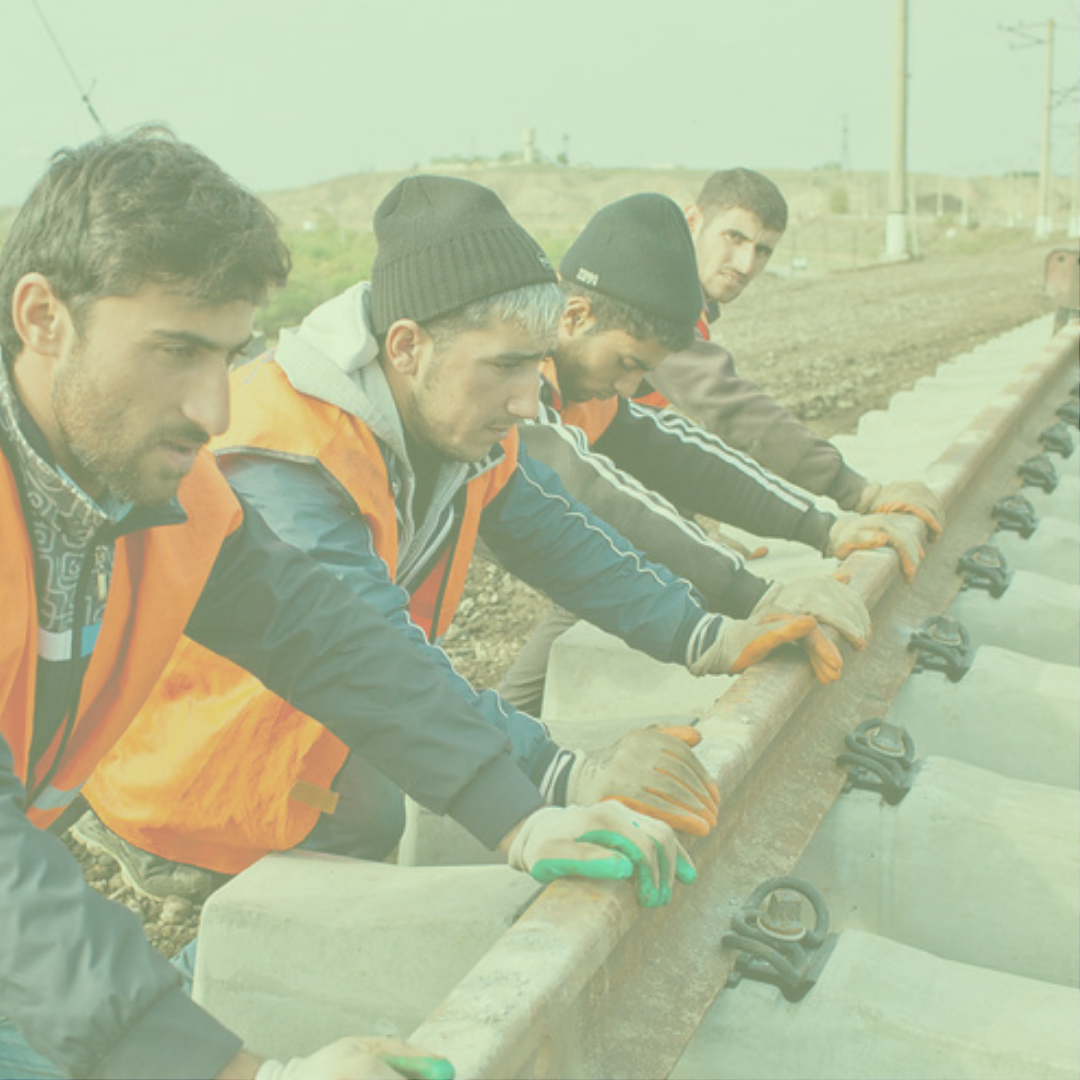
Image: Railway construction in Azerbaijan (credit: Asian Development Bank)

Albanian Green Academy

By

About the event

The goal of the Green Academy is to equip young participants with the necessary knowledge and expertise in environmental topics to develop their contributing skills in the organizations they belong to, institutions, policies, projects and activism. This platform also aims to promote European green policies.

The goal of the Green Academy is to equip young participants with the climate and environmental knowledge necessary to contribute to local organisations, institutions, projects, and activism projects. This platform also aims to promote European green policies. The Green Academy will be facilitated by environmental science experts.


Programme

The academy is organised in two main phases:

  1. The first phase: “European Green Deal”. This topic will address key issues such as circular economy, green employment, eco-Industry, and environmentally friendly transport policies. This phase will take place on 10-12 September 2021, in the City of Tirana, on the premises of “Vila Tafaj”.
  2. The second phase: “Climate Change”. We will address this topic in more depth with the elaboration of issues such as economy, social concepts, COVID-19 pandemic, biodiversity, environmental pollution, health, tourism… related under a single denominator: climate change. It will take place on 1-3 October 2021, in the City of Pogradec.

Participants who complete this academy will be granted a European certificate issued by the Green European Foundation and the Albanian Green Institute.
 

Agenda

Phase 1: European Green Deal (10-12th September)

Arrival day

Day 1: Introductions, Team building, European Green Deal, Session on Circular Economy, Group discussion, Movie Night

Day 2: Green Jobs, Politics and skills requirements, Eco-Industry, Group work/ presentations, Games Night

Day 3: Green transportation, Group work: Problems -> Solutions, meet the local activists, Evening activities

Phase 2: Climate Change (1-3rd October)

Arrival day

Day 1: Team building, Climate Change definition, Key drivers of Climate Change, Impacts on human health, Movie Night

Day 2: Social concepts on Climate Change, Pandemic COVID19, Economics, Tourism, Games Night

Day 3: Policies and politics, International Climate Agreements, Public awareness, Carbon footprint, Reflections, Party


Practicalities

This training is an open opportunity for:

  • Representatives of NGOs from different cities of Albania
  • Volunteers
  • Activists
  • Young People

We are looking for:

  • Representatives of organizations, volunteers, activists, students who want to increase their capacity on these topics.
  • Are motivated to recognize these green policies
  • Be promoters of green policies

Participation is free and all expenses (food, accommodation, transport, material base) are covered by the organizers of this event.

Deadline for applications is September 8th, 2021.

Please fill out the >>> following form to register <<< for the Albanian Green Academy.

The training will take place under strict adherence to COVID19 measures.

In case of any further questions, do not hesitate to contact greeninstitute.al@gmail.com


This event is organised by the Green European Foundation with the support of Albanian Green Institute and with the financial support of the European parliament to the Green European Foundation. The European Parliament is not responsible for the content of the Academy.
Transport Investment: The Zero Carbon Challenge

By Uncategorized

Context

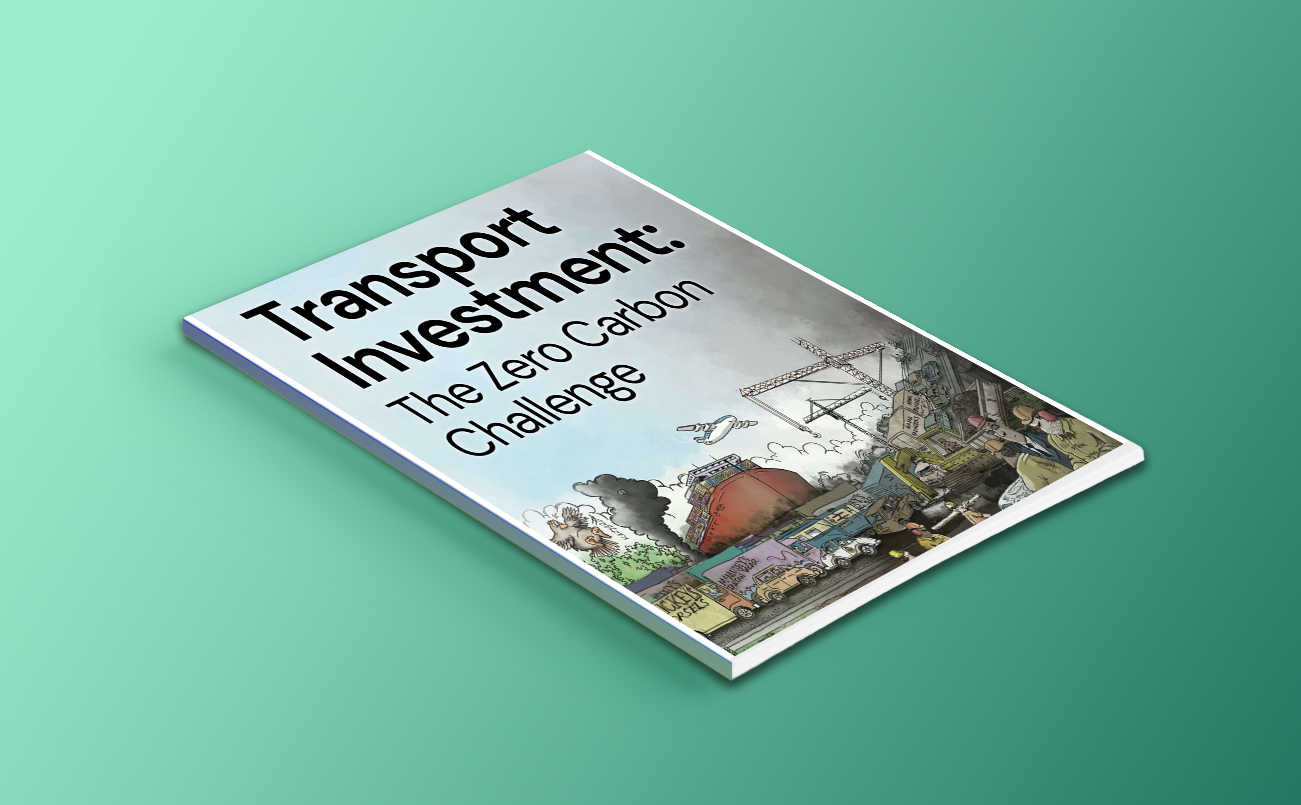
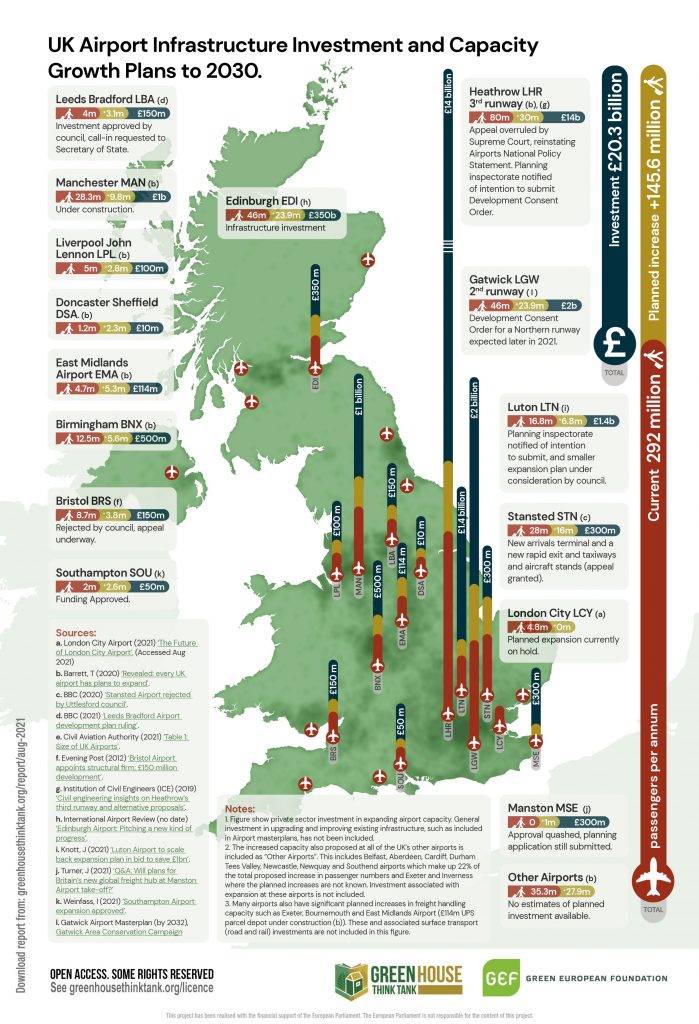
“Transport Investment: The Zero Carbon Challenge” is part of a project led by the Green European Foundation exploring what a climate emergency economy would look like through a rethinking of trade, industry and infrastructure investment. The report exposes the uncomfortable truth that a major shift in transport infrastructure investment is needed. It quantifies the massive scale of transport infrastructure investment plans across the UK and EU and how this fails to align to existing climate targets. This highlights that whilst heavy goods transport, shipping and aviation are some of the hardest to decarbonise, demand for these transport modes are not being managed or constrained in line with climate commitments.
Objectives

The report calls on transport to have far stronger carbon targets so that it is able to help drive down carbon emissions across the rest of the economy, rather than holding back the transition to zero carbon. A radical overhaul of transport infrastructure spending plans is needed so that funding is redirected from expanding capacity, to decarbonising existing transport. The report is framed ,using the Zero Carbon Policy Toolkit introduced in GEF and Green House’s August 2020 report, Trade and Investment Requirements for Zero Carbon.


Facing up to climate reality requires governments to stop driving transport growth. It is just as irresponsible to expand transport – which leads to burning of more petrol, diesel, kerosene and heavy fuel oil – as to dig a new coal mine in Cumbria. In both cases new infrastructure stands in the way of phasing out the burning of fossil fuels. Governments must ensure investment is redirected from expanding transport to decarbonising what we have already. Continued transport capacity growth should also be classed as Ecocide.” 


Download

Available in Spanish


Visual material


This publication has been realised by the Green European Foundation and Green House Think Tank with the financial support of the European Parliament. The European Parliament is not responsible for the content of this publication.


Reforming the Finnish Mining Law

By

As part of the Green European Foundation’s Metals for a green and digital Europe transnational project, we will look at how the initiative for reforming the Finnish Mining Act started with the Finnish Parliament’s ratification of the EU-Canada Comprehensive Economic and Trade Agreement (CETA) in 2018. The proposal on the reform, originally intended to be submitted to Parliament in December 2020, has now been postponed by a year as the Ministry chose to include an instrument for the comparison of interests in the reform just as the working group was about to finish its work. During this event we will focus on the background of the reform, examining the content of the draft, and offer suggestions for its improvement. Moreover, we will look at the Metals for a green and digital Europe project outputs and specifically the Agenda for Action document presenting concrete policy recommendations to be published in October 2021. 

You can contribute to this Agenda by joining one of our webinars or by commenting on our draft text, which can be found on www.metalsforeurope.eu

The project is led by the Green European Foundation and Wetenschappelijk Bureau GroenLinks. It is supported by Fundacija Strefa Zieloni, Institut Aktivního Občanství, Green Economics Institute, Etopia, Visio and Transición Verde.
 

Speakers

  • Richard Wouters, Project leader ‘Metals for a green and digital Europe’ for the Green European Foundation & Weternschappelijk Bureau GroenLinks
  • Juho Heikkilä, student of Economics and Environmental Economics, Author of the ‘Mining operations taxed lightly in Finland’ publication
  • Mari Holopainen, Member of the Finnish Parliament

Moderated by: Simo Raittila, Project Coordinator at Visio


Practicalities

Date and time: Monday, 30th August from 16:00 to 17:30 CET.

Audience: This webinar will take place in English and is open to the general public

Registration: no registration required, please join our LiveStream!

Please note the event will be organised through the StreamYard platform, with Facebook live, and YouTube livestream with a possibility for the audience to ask questions from the speakers.

YouTube live link : Webinar: Reforming the Finnish Mining Law – YouTube

Facebook live link : Ajatuspaja Visio – Posts | Facebook


This project is organised by the Green European Foundation with the support of Visio and with the financial support of the European Parliament to the Green European Foundation. The European Parliament is not responsible for the content of this event.

 

EGAT – Croatia

By

About the Project

The aim of the EGATV is to familiarise participants with green topics (climate change, biodiversity and environmental protection, human rights and democracy, feminism, active citizenship), green policies and sustainable development policies, as well as the institutions of the European Union. Through various activities and discussions with the representatives of international organisations and the European Union, we aim to explore the opportunities of active and professional participation in the development of a greener and more just society.

Many EGAT participants remained active in the fields of sustainable development and green policies, while some even had the opportunity to do an internship and find a permanent position in the institutions of the EU.

Along with Croatia, participating organizations come from Finland, Greece, Hungary, Catalonia, Poland and the Czech Republic. 

The project consists of three national training sessions and one study visit to the European institutions in Brussels:

  1. First national training (Red Cross mountain lodge, Sljeme) – 1-3/10/2021
  2. Second national training (Red Cross mountain lodge, Sljeme) – 26-28/11/2021
  3. Third national training (Red Cross mountain lodge, Sljeme) – 17-19/12/2021
  4. Study visit to Brussels – end of February/beginning of March (exact date TBA)


Participation in the project

Participants are required to participate in meetings and all three national training sessions, as well as the study trip to Brussels.

To participate in all national training sessions, EU Digital COVID Certificate will be required as a proof of COVID-19 recovery, vaccination or a negative test result (not older than 48 hours for rapid antigen tests, not older than 72 for PCR tests). On the national training sessions, all precautionary measures will be undertaken, as per the instructions of Croatian Institute for Public Health.

In case epidemiological situation in Croatia worsens and more restrictive measures are introduced, national training sessions will be conducted online or in a hybrid form, depending on the situation and following the recommendations of Croatian Institute for Public Health.

This call is open for everyone from Croatia from 18-25 years of age. Applications from individuals with less experience in aforementioned topics are encouraged. After the selection process, 20 participants will be selected to participate in the project.

One-time participation fee amounts to 450 HRK (60 EUR), while the costs of accommodation and catering are covered by the organizing team. For participants outside of Zagreb, there is a possibility to cover the travel costs.

In case of a significantly bad epidemiological situation on the level of the European Union, there is a possibility of cancellation or postponing the study visit to Brussels. 

Practicalities

Application deadline: This call is open until 8tht September 2021.

For any additional information, you can reach us at info@zeleniprozor.hr


This project is organised by the Green European Foundation with the support of Sustainable Development Forum Green Window and with the financial support of the European Parliament to the Green European Foundation.

Handling personal information collected by this call for participants, will be handled in accordance with the European laws (EU Directive 95/46/EC).

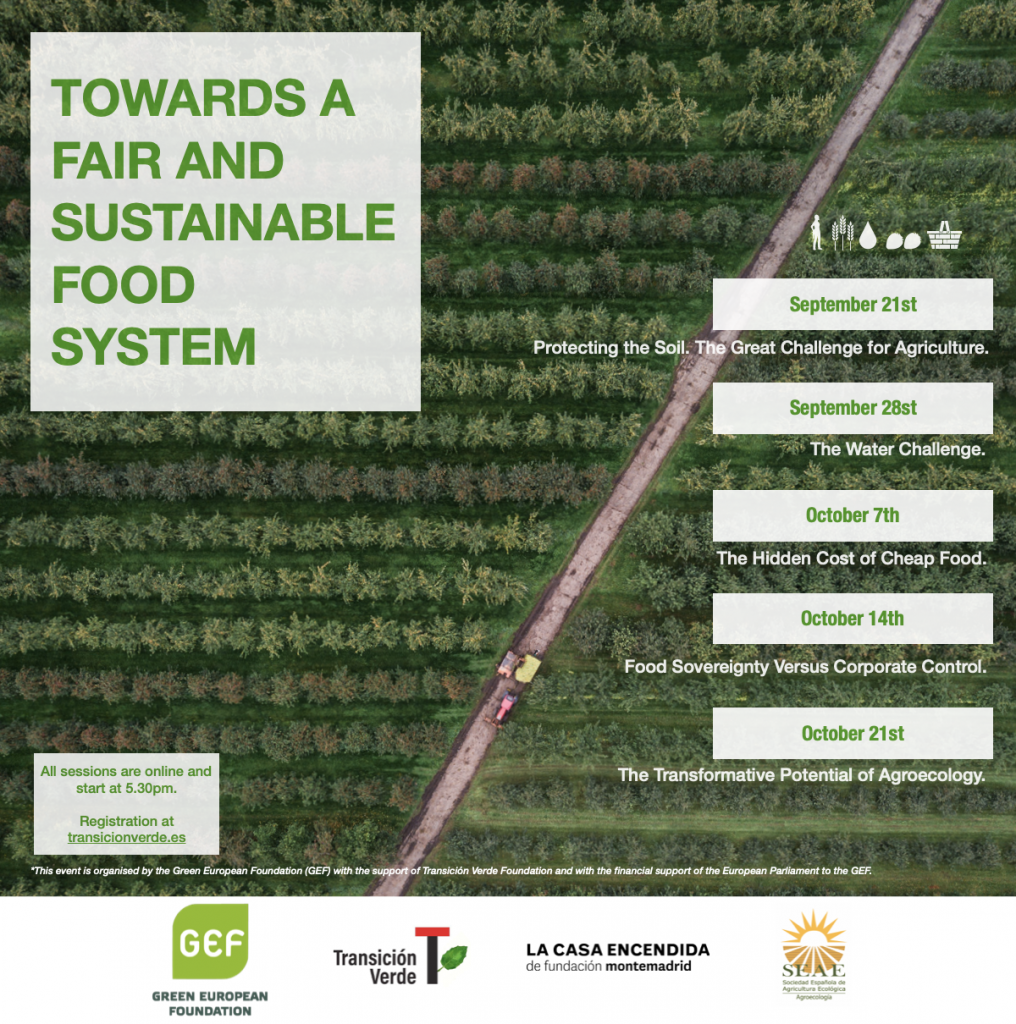
Towards a fair and sustainable food system: The Transformative Potential of Agroecology

By

About the event:

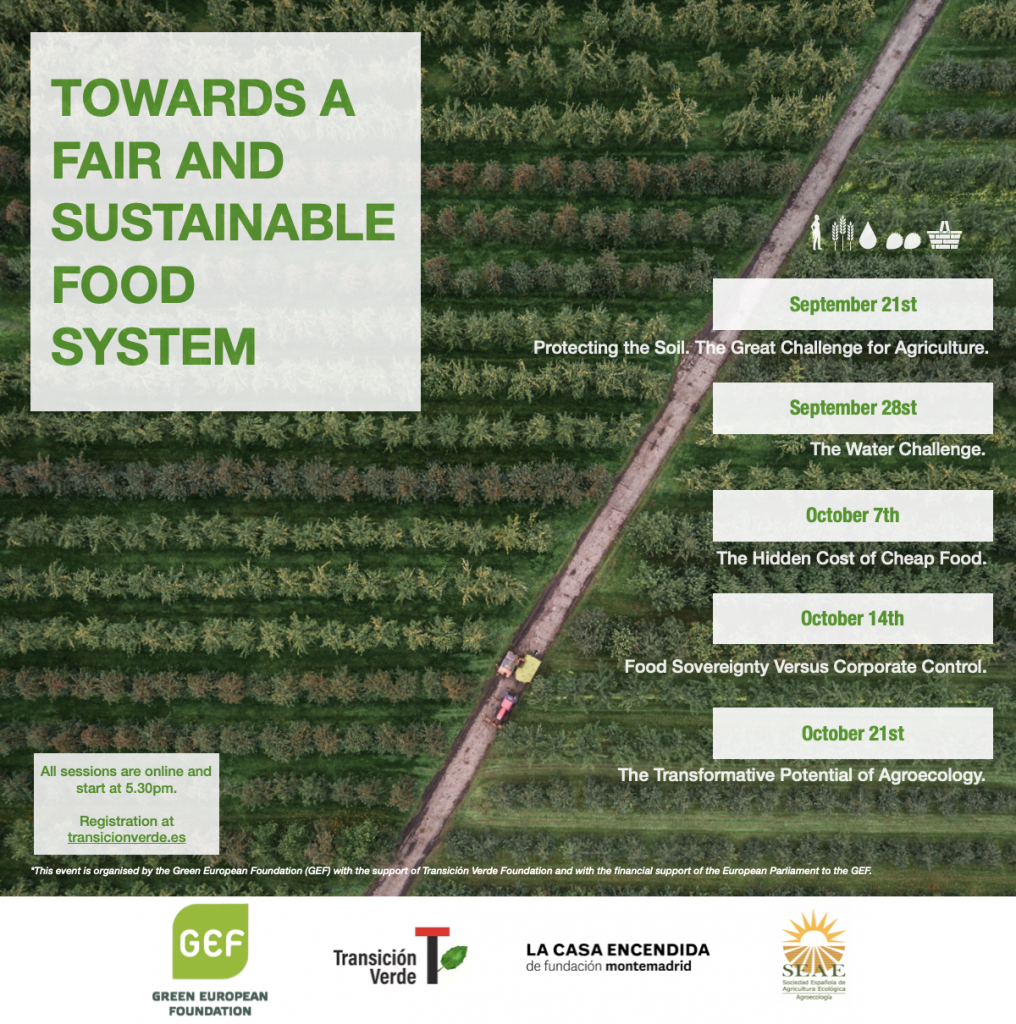
The food industry is one of the main factors behind biodiversity loss and the worsening of global inequalities. We aim to contribute to a better understanding of the food system as a tool for social change. It is vital to understand the different processes and exercise critical thinking, as actors in the agri-food system become aware, act, and demand change.

These project will be decided into sessions that will have a European focus, but also a global one, as global is the agri-food business and, above all, its impacts. The Common Agricultural Policy and the different European strategies and policies (From Farm to Fork) will be present throughout this series of roundtables in September/ October and with the speakers we will try to analyse their positive and negative aspects regarding the topics discussed.


Programme:

5. THE TRANSFORMATIVE POTENTIAL OF AGROECOLOGY

Agroecology is a way of farming that focuses on food production that makes the best use of nature’s goods and services while not damaging these resources. It is an in-depth transformative tool to develop sustainable agri-food systems, moving away from the industrial system.

Agroecology teaches us that there is another way of looking at the world, a more sustainable and fairer way to feed humanity, respecting the environment, and taking care of both producers and consumers.

Agroecological initiatives are on the rise as they favour soil regeneration, water protection, and safeguards biodiversity. It protects our health, promotes employment, fair wages, makes women’s work visible and valued, and revitalizes the rural economy.

However, the adjective “agroecological” can hide a distinct reality. Large agri-food companies have found in agroecology a new business opportunity, albeit one that promotes their vision based on profit and is far removed from its transformative component. They incorporate certain practices to mitigate some agricultural affects but avoid touching the pillars holding the current industrial system. In this session, we will further explore this issue. We will also look at the EU’s strategies and policies to promote agroecology. We will also learn about two agroecological experiences: the Ecocomedores in the Canary Islands and the projects of the El Colletero Association (

Speakers:
* Andrés Muñoz, Head of Food Sovereignty at Friends of the Earth specialising in
awareness raising and advocacy on Food Sovereignty.
* Aina Calafat
Head of international projects of the Spanish Society of Organic Agriculture and Agroecology. She
worked for almost 20 years as technical director of the Consell Balear de la Producció Agrària
Ecològica.
* Margarita Hernández
Technician at the Canary Islands Institute of Agri-food Quality (ICCA) and coordinator of the
Ecocomedores (eco canteens) programme.
* Raquel Ramírez
representative of El Colletero (Nalda – La Rioja), an association that promotes agroecology to
achieve sustainable development and equality.
Moderation:
* Helena Cifre
Coordinator of the Spanish Society of Organic Agriculture and Agroecology. Law graduate,
ecofeminist and expert in responsible consumption.

Practicalities:

Where: Online platform – ZOOM

Time and date: 21 October, 17:30-19:00 PM CET

Language: Simultaneous translation to English

Audience: these series of webinars are open for the general public

Registrations: Registrations are now open <<<


This event is organised by the Green European Foundation with the support of Transición Verde and with the financial support of the European Parliament to the Green European Foundation. The European Parliament is not responsible for the content of this event.

Towards a fair and sustainable food system: Food Sovereignty vs. Corporate Control

By

About the event:

The food industry is one of the main factors behind biodiversity loss and the worsening of global inequalities. We aim to contribute to a better understanding of the food system as a tool for social change. It is vital to understand the different processes and exercise critical thinking, as actors in the agri-food system become aware, act, and demand change.

These project will be decided into sessions that will have a European focus, but also a global one, as global is the agri-food business and, above all, its impacts. The Common Agricultural Policy and the different European strategies and policies (From Farm to Fork) will be present throughout this series of roundtables in September/ October and with the speakers we will try to analyse their positive and negative aspects regarding the topics discussed.


Programme:

4. FOOD SOVEREIGNTY VERSUS CORPORATE CONTROL

The logic of liberalism applied to agri-food markets has led to the accumulation of political and economic power by a small group of actors in critical sectors of the food chain.

Powerful agricultural companies dictate the rules for the functioning of the entire system. They exercise influence on policy-makers to boost policies that promote a productivity-based form of agriculture, neglecting any form of environmental responsibility or social justice.

Who’s in charge of making these decisions and in whose interests? How do these corporations exercise power? What is the EU doing to control this power and guarantee food sovereignty? Is food sovereignty compatible with free-market models as we know them today? Are there economic alternatives? In this session, we will try to delve deeper into the web of interests that are endangering food sovereignty and security.

Speakers:
* Vandana Shiva
one of the most influential women in the field of ecology and ecofeminism. PhD in Physics,
philosopher and writer, she has received numerous awards such as the Right Livelihood Award,
the UN Global 500 Award and the Sanctuary Wildlife Award..
* Sofía Monsalve
Secretary General of FIAN International where she coordinated the land and natural resources
programme for more than 15 years. She is also a member of the IPES-Food expert panel.
* Geneviève Savigny
Member of the European Economic and Social Committee. Former national secretary of the
Confédération paysanne (farmers’ confederation) and former member of the European
coordination committee of Via Campesina.
Moderation:
* Carolina García
Member of the Board of Trustees of Transición Verde. Journalist and political scientist, she is
currently communications coordinator at Alianza por la Solidaridad- ActionAid.

Practicalities:

Where: Online platform – ZOOM

Time and date: 14 October, 17:30-19:00 PM CET

Language: Simultaneous translation to English

Audience: these series of webinars are open for the general public

Registrations: Registrations are now open <<<


This event is organised by the Green European Foundation with the support of Transición Verde and with the financial support of the European Parliament to the Green European Foundation. The European Parliament is not responsible for the content of this event.

Towards a fair and sustainable food system: The Hidden Cost of Cheap Food

By

About the event:

The food industry is one of the main factors behind biodiversity loss and the worsening of global inequalities. We aim to contribute to a better understanding of the food system as a tool for social change. It is vital to understand the different processes and exercise critical thinking, as actors in the agri-food system become aware, act, and demand change.

These project will be decided into sessions that will have a European focus, but also a global one, as global is the agri-food business and, above all, its impacts. The Common Agricultural Policy and the different European strategies and policies (From Farm to Fork) will be present throughout this series of roundtables in September/ October and with the speakers we will try to analyse their positive and negative aspects regarding the topics discussed.


Programme:

3. THE HIDDEN COST OF CHEAP FOOD 

The EU is responsible for more than 10% of global deforestation. Global soy production -driven by a growing demand to provide food for large industrial meat farms- has more than doubled since 1997.
This rapid expansion is destroying some of the world’s most biodiverse ecosystems, such as the Amazon and the Cerrado and Gran Chaco forests in South America.

Aquaculture is the fastest-growing food sector in the world. Multinationals in the aquaculture sector present fish and shellfish farming as a cheap solution to the natural limits of fisheries. These fish, however, have to be fed on fishmeal and fish oil, most of which is made from wild-caught fish and crustaceans. Spain is the EU Country with the highest production, accounting for almost a quarter of the entire union.

The production of cheap food has profound environmental, social, and health impacts. In this session, we will focus on soy monoculture for livestock feed, industrial aquaculture, and animal suffering.

Speakers:
* Olga Kikou
European Affairs Manager at Compassion in World Farming. She was President of the Green Greek
Institute and a member of the Board of the Green European Foundation.
* Nazaret Castro
Journalist, PhD in Social Sciences and co-founder of Carro de Combate, a collective dedicated to
independent journalism, which investigates the origin of the products we consume.
* Natasha Hurley
Campaign Manager Changing Markets where she is currently running a campaign to eradicate the
use of wild-caught fish in aquaculture. She was formerly Climate Campaigner at EIA lobbying for a
global phase-out of hydrofluorocarbons (HFCs)
* Thomas Waitz
Co-chair of the European Green Party, MEP in the Greens/EFA Group. His work focuses on
sustainable agriculture, regional production and healthy food, the Common Agricultural Policy
and the reform of the animal transport directive.

Moderation:
* Lidia Ucher
Journalist specialising in social communication in the field of cooperation, the third sector and
ecology.

Practicalities:

Where: Online platform – ZOOM

Time and date: 7 October, 17:30-19:00 PM CET

Language: Simultaneous translation to English

Audience: these series of webinars are open for the general public

Registrations: Registrations are now open <<<


This event is organised by the Green European Foundation with the support of Transición Verde and with the financial support of the European Parliament to the Green European Foundation. The European Parliament is not responsible for the content of this event.

Towards a fair and sustainable food system: The Water Challenge

By

About the event:

The food industry is one of the main factors behind biodiversity loss and the worsening of global inequalities. We aim to contribute to a better understanding of the food system as a tool for social change. It is vital to understand the different processes and exercise critical thinking, as actors in the agri-food system become aware, act, and demand change.

These project will be decided into sessions that will have a European focus, but also a global one, as global is the agri-food business and, above all, its impacts. The Common Agricultural Policy and the different European strategies and policies (From Farm to Fork) will be present throughout this series of roundtables in September/ October and with the speakers we will try to analyse their positive and negative aspects regarding the topics discussed.


The Water Challenge Programme:

According to the FAO’s State of Food and Agriculture 2020 report, available freshwater resources per person have decreased by more than 20% in the last two decades.

1.2 billion people live in agricultural areas with severe water availability constraints. The agricultural sector and industrial livestock farming are largely responsible for this both through their high water
consumption and the pollution of aquifers they cause.

Climate change is affecting rainfall patterns and jeopardising food security in the most vulnerable areas of the planet. We can say that we are facing a global water crisis. Increasingly, the water transition and fair and sustainable management of water is essential.

In this debate, we will talk about the repercussions of the water crisis on food systems. We will focus on the impact of agriculture and the implications of the CAP on water resources. We will conclude by exploring the proposals from agroecology for the protection and management of these resources. As an example of the impact on aquatic ecosystems, we will look at the case of the Mar Menor (Spain).

Speakers:

* Pedro García
Director of Asociación de Naturalistas del Sureste (the Southeastern Naturalists’ Association). He
has been environmental technician in the local administration for more than 20 years
* Celsa Peiteado
Agricultural engineer and head of the Food Programme at WWF Spain where she coordinates
policy work for agroecological transition to Sustainable and Resilient Food Systems.
* Concha Fabeiro
President of the Spanish Society of Organic Agriculture and Agroecology (SEAE). Professor of
Plant Production at the University of Castilla-La Mancha.

Moderation:
* Julia Martínez
PhD in Biology and technical director of Fundación Nueva Cultura del Agua (Foundation for a New
Culture of Water


Practicalities:

Where: Online platform – ZOOM

Time and date:  28th September

17:30-19:00 PM CET

Language: Simultaneous translation to English

Audience: these series of webinars are open for the general public.

Registrations: Registrations are now open <<<


This event is organised by the Green European Foundation with the support of Transición Verde and with the financial support of the European Parliament to the Green European Foundation. The European Parliament is not responsible for the content of this event.

Towards a fair and sustainable food system- Protecting the soil: the great challenge for agriculture

By

About the event:

The food industry is one of the main factors behind biodiversity loss and the worsening of global inequalities. We aim to contribute to a better understanding of the food system as a tool for social change. It is vital to understand the different processes and exercise critical thinking, as actors in the agri-food system become aware, act, and demand change.

These project will be decided into sessions that will have a European focus, but also a global one, as global is the agri-food business and, above all, its impacts. The Common Agricultural Policy and the different European strategies and policies (From Farm to Fork) will be present throughout this series of roundtables in September/ October and with the speakers we will try to analyse their positive and negative aspects regarding the topics discussed.


Programme:

SESSIONS (from 17:30 to 19:00):

1. PROTECTING THE SOIL: THE GREAT CHALLENGE FOR AGRICULTURE (21 September)

Few people know about soil biodiversity. Life belowground is very varied, from genes and species and the communities they form to soil micro-habitats and larger landscapes.
Soil is largely forgotten when we talk about the environmental crisis, despite the fact that it is vital to feed humanity. Besides, it is a huge storehouse of carbon and our ally in the face of climate change.

Industrial agriculture in particular is degrading soils, contributing to their desertification and putting food security at serious risk. Proposals such as regenerative agriculture seek to favour their natural cycles and their recovery.

In the first session of this series of events, we will try to get to know and understand the functioning of this universe full of life that is hidden under our feet. We will explore how industrial agriculture is damaging it and
how we can regenerate life belowground so that soils can keep sustaining the world.

Speakers:

* Pilar Andrés
Senior Researcher at the Center for Ecological Research and Forest Applications (CREAF). She
has participated in the EU Soil Biodiversity Atlas (2016) and in the FAO report on the state of soil
biodiversity worldwide (2020).
* Ray Archuleta
Soil scientist and a soil conservationist, water quality specialist and conservation agronomist, with
30 years experience working for the Natural Resources Conservation Service. Ray is one of the
experts involved in the Netflix documentary “Kiss the ground”.
* Andrzej Nowakowski
Advisor on Agriculture and Rural Development for the Greens/EFA group in the European
Parliament where he is completing the CAP 2021 reform.
* Andrés Gómez
Agricultural engineer and educator accredited in holistic management by the Savory Institute. He
is the owner of Granja Zael, a young regenerative livestock and 100% grass-fed beef project in
Zael (Burgos).

Moderation:
* Dolores Raigón
Expert in organic production, Professor of Soil Science and Agricultural Chemistry. Vice-President
of the Spanish Society of Organic Agriculture and Agroecology (SEAE)


Practicalities:

Where: Online platform – ZOOM

Time and date: 17:30-19:00 PM CET

  • 21st September

Language: Simultaneous translation to English

Audience: these series of webinars are open for the general public

Registrations: Registrations are now open <<<


This event is organised by the Green European Foundation with the support of Transición Verde and with the financial support of the European Parliament to the Green European Foundation. The European Parliament is not responsible for the content of this event.