The Future of the City: What do Donuts have to do with it? (Zagreb)

By

Context

Our international speakers will give an introduction to doughnut economics, explain the concept of degrowth doughnut, and show why more and more European cities are adopting it.

This event is part of the Cities As Places of Hope project, organised by the Green European Foundation with the support of Oikos, the Institute for Political Ecology, Transición Verde, Nous Horitzons Fundacio, Sunrise, Green Thought Association and Wetenschappelijk Bureau GroenLinks, and with the financial support of the European Parliament to the Green European Foundation. The project, launched in 2019, has aimed at fostering progressive city networks to achieve a fairer, greener Europe. Its theme in 2022 is “Resilient cities”.


Speakers

Dirk Holemans (Oikos, GEF Co-President) Ajda Pistotnik (Policy Lab, Ljubljana)Mladen Domazet (Institut za političku ekologiju, Zagreb)Clara Dallaire-Fortier (PhD student, Lund University) – via ZoomTomislav Cik (Institut za društvena istraživanja, Zagreb)


Practicalities

Date and Time: 11th November, 18:00PM CET.

Location: MAMA Zagreb, Preradovićeva 18 10000 Zagreb, Croatia

Registration: Not required.

Language: This event will be in English language.


This event is organized by the Green European Foundation with the support of Insitute for Political Ecology and the financial support of the European Parliament to the Green European Foundation.

City and countryside: so close, so far

By Uncategorized

Context

In an increasingly urban world, building resilient cities has become a challenge. But for this challenge to be successfully addressed, we cannot focus solely on urban areas. We need to develop strategies that consider the territory surrounding cities, as well as their dependence on the resources from rural areas. Establishing a balanced relationship between cities and their rural environment will bring mutual benefits while giving greater autonomy and independence to the city itself in obtaining the basic resources it needs. Based on this premise, this publication explores best practices in managing food, water or energy to make our cities and territories more resilient.

This report is partially based on the outputs of the conference “City and Countryside: So Close, So Far Away” (May 26th 2022), as part of the “Cities as places of hope” project.


Resilience is the capacity of a living being to adapt to a disturbing agent or an adverse situation. This term also applies to cities, for which this capacity to adapt is essential to respond to the major crises of our time.


Download

Available in Spanish

Available in Polish


This publication has been realized by the Green European Foundation and Transición Verde with the financial support of the European Parliament. The European Parliament is not responsible for the content of this publication.

Rethinking Demand: Sufficiency Policies for a Post-Growth Society

By

About the event

Soaring energy prices are pushing European states to urgently implement energy saving measures in all sectors, as well as financial supports for the most exposed households and businesses. In France, President Macron did not hesitate to speak of “the end of abundance” and the implementation of a “great sobriety plan”. In Germany, particularly exposed to the closing of the Russian gas tap, the Federal State has implemented a series of energy saving measures. Among other things, large gas consumers are required to register and make themselves available in case of a shortage. In Belgium, the government has been refining its energy emergency plan for several months with data from large consumers and is considering ways to help the most vulnerable to pay their bills. 

Are European states ready for the advent of a post-growth society? Can the ecological project of a sober society now inspire public policies? Concretely, what does a post-growth economic policy look like? What indicators exist to assess these policies? These questions and more will be tackled in this cross-country dialogue. 

Context

This event is part of the GEF transnational project Climate Emergency Economy: Rethinking Demand. Building on several years of work exploring what it means to create an economy fit for the climate emergency, GEF and its partners are this year focusing on the crucial question of how to reduce demand for energy and materials. With the support of Green House Think Tank, Etopia, and Green Foundation Ireland, we are exploring how to frame rethinking demand politically, and articulate clear plans for demand reduction so green narratives are better grounded in reality and a shared vision of hope. 

Speakers

To discuss this pressing topic, we will be joined by a fantastic panel of experts: 

  • Yves Marignac – Négawatt, France 
  • Philippe Roman – ICHEC, Belgium 
  • Marula Tsagkari – TU Delft / R&D, Greece 
  • Lasse Thiele – Konzeptwerk, Germany 
  • Nadine Storey – Green House think tank, UK 
  • Leon Leuser – Wachstumswende, Germany 

The session will begin with a brief presentation of our Rethinking Energy Demand report, by co-author Nadine Storey (Green House think tank), followed by discussion with all our panelists.   

Practicalities

Date & Time: Wednesday, October 26th (12:00-14:00 CET) 

Location: Online, via Zoom. Please register in advance via this link 

Audience: Open to all registered participants. The event will be in English. 

 To continue the conversation on this topic, join us later that same day in Dublin or online at Rethinking Demand: Reality and Opportunities. Make sure to register, as particularly in person spots are limited! 


This event is organised by the Green European Foundation with the support of Etopia and the financial support of the European Parliament to the Green European Foundation. 

ECOPOLIS Presents: Roman Krznaric (Kortrijk)

By

About the event

History may be our most undervalued resource for thinking about the future of humanity. The dead outnumber the living fourteen to one, yet how often do we really look to the wisdom of the past for new perspectives on the ecological challenges of our age? In this talk, public philosopher Roman Krznaric explores the possibilities of ‘applied history,’ sharing lessons from the last three millennia of human civilisation. He’ll tackle three fundamental issues: the climate emergency, our addiction to consumer culture and the global water crisis. Taking us on imaginative journeys from devastating famines in ancient China to the slave revolts of the nineteenth century, from commons management in medieval Spain to the economic secrets of preindustrial Japan, Roman will reveal how the forgotten stories of past generations can illuminate new, unexpected pathways for the turbulent decades ahead. 

Context

Ecopolis is an annual gathering of people who think and care about a sustainable future. Because ecological challenges know no national or linguistic borders, Ecopolis is diverse, international, and interactive. At its heart are inspiring books, documentaries and debates between writers, academics and civil society thinkers about ecology, economy and the transition to a better Europe and a more just and sustainable world.  

Speakers

Roman Krznaric is a British-Australian cultural historian and philosopher, founding faculty member of The School of Life, London. Before, he taught at various prominent British universities, was a gardener and worked in human rights programmes in Central America. He also set up the world’s first Empathy Museum and is the author of The Good Ancestor, a book that deals with the world we will be leaving to future generations. 

He will be joined by poet and essayist Frank Keizer, in a conversation moderated by journalist and podcaster Dirk Vandenberghe.  

Practicalities

When: Saturday, October 1st (20:15 – 22:00) 

Where: Budascoop, Kapucijnenstraat 10, 8500 Kortrijk, Belgium 

Language: English 

Tickets: Please purchase your tickets in advance via this link. Ecopolis employs a “pay as you can” principle.  

Related Events 

This year, Ecopolis goes beyond one date and one location! Find out more about the programme in Brussels here 


This event is organised by the Green European Foundation and Oikos, with the support of various partners and with financial support of the European Parliament to the Green European Foundation. 

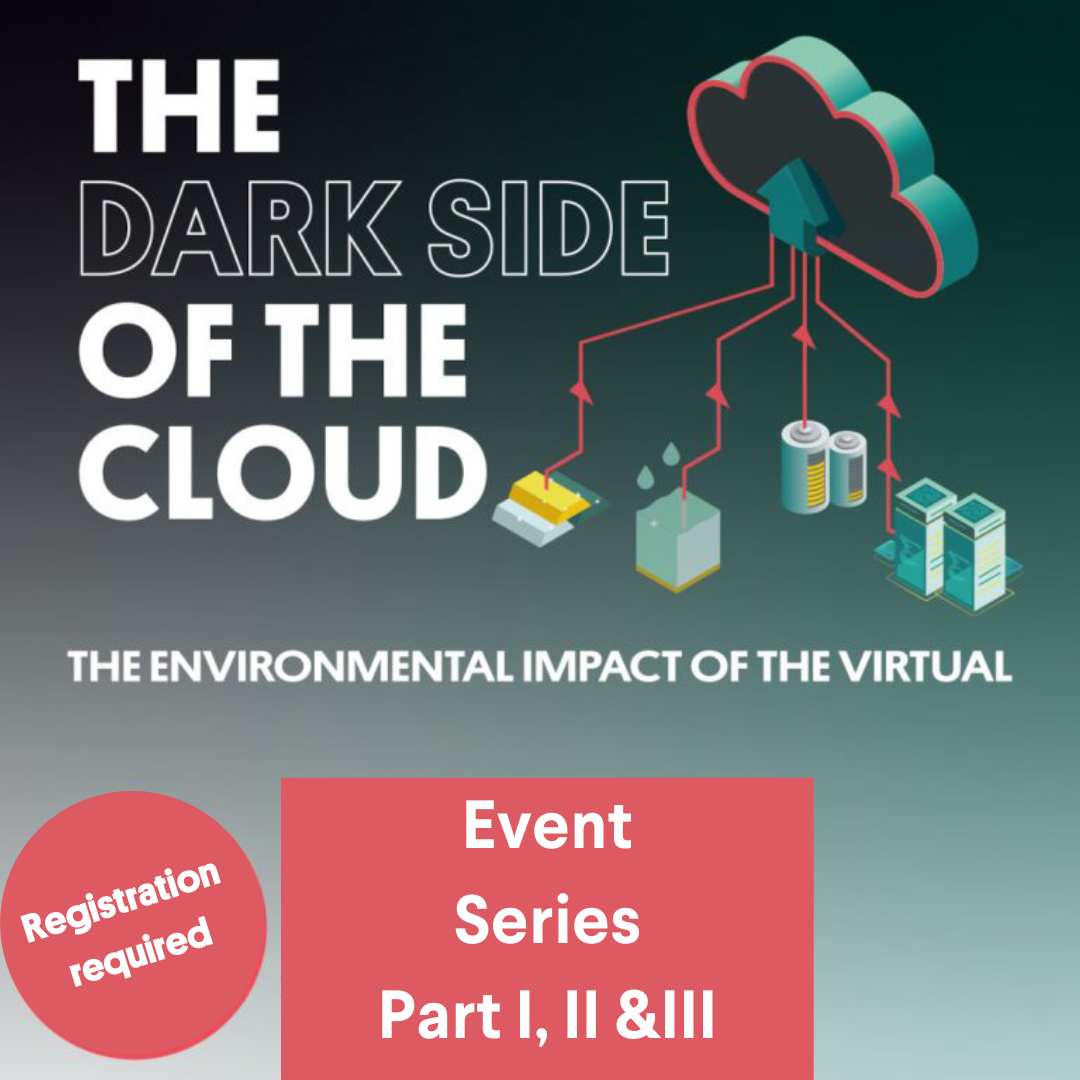
The Dark Side of the Cloud

By

Context

When we think of the cloud, we imagine it as something ethereal, light and dematerialised. We don’t visualise the millions of devices, thousands of kilometres of cables, gigantic data storage, and processing centres, or the satellites that make up its immense infrastructure. We don’t conceive the enormous amount of mineral, water, and energy resources required for its operation. Nor the environmental impacts resulting from their production and disposal.

Digital technologies have undoubtedly brought great advances for humanity. However, if we want to continue to benefit from them in the future, as well as from a healthy environment, we must delve deeper into that dark side of the cloud and correct its pernicious effects. This is especially relevant at the present time, with European post-covid policies pushing for digitalisation as a key element for economic recovery. And not only that, this endeavour aims to face multiple crises, including the global supply crisis; the energy crisis aggravated by the war in Ukraine; and an increasingly worrying climate and environmental crisis.

These will be discussed in this series, as well as alternatives for a more energy-efficient, sustainable and long-lasting digitalisation.


About

The series “The dark side of the cloud. The environmental impact of the virtual” is organised by the Green European Foundation (GEF) in collaboration with Fundación Transición Verde and La Casa Encendida.

It will take place on 20 and 27 October and 3 November, from 18:00 to 19:30 (CEST) and consists of the following round tables.


Practicalities

The event is online, open and free with prior registration through this form. The activity will take place in a Zoom room. Once registration has been completed, and before each session, a confirmation email will be sent with the access details for the meeting.

Simultaneous translation service Spanish-English will be available in all sessions.


Programme & Speakers

1st session: October 20, from 18:00 to 19:30 (CEST)
“Feeding the Beast Part I: Infrastructure, Water and Minerals”

  • Vladan Joler. Professor at the New Media department of the Academy of Arts in Novi Sad (Serbia) and founder of SHARE Lab. He is the author of Anatomy of an AI System (with Kate Crawford) and Facebook Algorithmic Factory.
  • Alicia Valero. PhD in chemical engineering from the University of Zaragoza. In addition to this university, she trained at the TU Berlin, Paul Sabatier in Toulouse and the British Geological Survey. She currently leads the Industrial Ecology research group at the CIRCE Institute and is a full professor at the University of Zaragoza.
  • Lorraine de Montenay. Independent expert in digital responsibility and member of GreenIT.fr. She piloted the first life cycle analysis (LCA) on the environmental impacts of digital in Europe, published in 2021.
  • Melisa Argento. PhD in Social Sciences from the University of Buenos Aires, is a professor at the National University of Rosario and a researcher at the Institute for Latin American and Caribbean Studies (IEALC).


2nd session: October 27, from 18:00 to 19:30 (CEST)
“Feeding the Beast Part II: Data and Energy”

  • Joseph Tainter. American anthropologist and historian, professor at Utah State University in the Department of Environment and Society. Author of The Collapse of Complex Societies and Drilling Down: The Gulf Oil Debacle and Our Energy Dilemma.
  • Antonio Aretxabala. Geologist, researcher, consultant and independent trainer and collaborator of the University of Zaragoza.
  • María Alegre. Energy and climate change specialist, focusing on decarbonisation of the electricity sector and data.


3rd session: November 3, from 18:00 to 19:30 (CET)
“The bright side of the cloud. The digitalization we want”

  • Coral Calero. PhD in Computer Engineering and Professor of Computer Languages and Systems at the University of Castilla La Mancha. Responsible for the “Green and Sustainable software” line in the Alarcos Research Group.
  • Julieta Arancio. Postdoctoral researcher at Drexel University’s Center for Science, Technology and Society. Co-founder of the Latin American network of free technologies for science and education (reGOSH).
  • Kim Van Sparrentak. Member of the European Parliament (Greens/EFA Group) since 2019. She is a member of the Special Committee on Artificial Intelligence in the Digital Age and the Committee on Internal Market and Consumer Protection.


This event is organised by the Green European Foundation with the support of Transición Verde and the financial support of the European parliament to the Green European Foundation. 

Tourism in Times of Climate and Social Crisis (Barcelona)

By

About the event

From the COVID-19 pandemic to the war in Ukraine, inflation to the energy crisis – the tourism sector has been dealt many blows in the past few years. At the same time, mass tourism is itself implicated in several of our biggest challenges today: carbon emissions, housing shortages, crumbling infrastructure, poor working conditions, and the list goes on. As we look to transforming our economies and societies, the green and just transition of tourism is a crucial element.    

In this half-day conference, we will tackle the question of tourism around three dimensions: mobility and infrastructure, labour and public services, and climate and environment. With experts, academics, trade unionists and politicians, we look forward to lively and thought-provoking exchanges.   


Context

This event is part of GEF’s Fair and Carbon Free Tourism project, which aims to identify and create conditions for collective action against detrimental social and environmental impacts of tourism. By engaging stakeholders in partner countries and developing a European transnational discussion on these challenges, we seek to build a community interested to transform this sector in the direction of low or zero carbon intensity and with a specific focus on social and economic justice. 


Speakers

Aurora Pedro Bueno – Director of the New Green Transition in Tourism department, University of Valencia 

Deborah Pérez – trade unionist at MagmaCultura 

Javier Pacheco – General Secretary of CCOO Catalunya 

José Antonio Donaire – Tourism research institute of the University of Girona 

Pau Noy – President of the Foundation for Sustainable and Safe Mobility 

Sergi Alegre – Fundacio Nous Horitzons 

Tilly Metz – Greens/EFA MEP and member of the Committee on Transport and Tourism [tbc]  

Victor Català – former Blanes City councillor  


Programme

10:00 Welcome and Introduction – with Javier Pacheco and Sergi Alegre 

10:30 Tourism, Mobility, and Territorial Balance – with José Antonio Donaire and Pau Noy 

11:30 Break 

12:00 Tourism, Public Services, and Working Conditions – with Deborah Pérez and Victor Català 

13:00 Tourism in a Climate Crisis Context – with Aurora Pedro Bueno and Tilly Metz 


Practicalities

Date and time: Saturday, October 8th (9:30 – 14:00 CEST) 

Location: CCOO de Catalunya Assembly Space – Via Laietana 16, Barcelona  

Language: Catalan 

Registration: Pre-registration is not required, but please arrive on time.  


Related reading

The Case for Not Flying

Anthropogenic Venice: Surviving Life in a Lagoon

Steering Tourism to a Greener Course in Belgrade

Seeing Mobility in a New Light


This event is organised by the Green European Foundation with the support of Fundacio Nous Horitzons and the financial support of the European parliament to the Green European Foundation. 

Rethinking Demand: Realities and Opportunities (Dublin/online)

By

About the event

The Green European Foundations is bringing together Green House Think Tank (UK), Etopia (Belgium) and Green Foundation Ireland at an event hosted with the Lord Mayor of Dublin Caroline Conroy. This event will launch our Rethinking Demand Framing Paper and explore the complexity of the actions needed to reduce our demand for energy as well as the politics involved in doing so.  

As the urgency of the need to limit emissions to prevent further climate harm grows, and the all-encompassing nature of achieving this dawns, the pivotal role of rethinking how our societies deliver wellbeing for all has become ever more critical. During this conference, sessions will explore how social and business practices, infrastructure, and our governance structures can be transformed to reduce the collective demand for energy and unlock a future without fossil fuels.

Context

This event is part of the GEF transnational project Climate Emergency Economy: Rethinking Demand. Building on several years of work exploring what it means to create an economy fit for the climate emergency, GEF and its partners are this year focusing on the crucial question of how to reduce demand for energy and materials. With the support of Green House Think Tank, Etopia, and Green Foundation Ireland, we will explore how to frame rethinking demand politically, and articulate clear plans for demand reduction so green narratives are better grounded in reality and a shared vision of hope. 

Programme

Please note that all times are indicated in IST/BST. For participants joining online from a CEST time zone, everything will be one hour later.

Our FULL PROGRAMME OF EVENTS is available here. Please see below a short overview:


14:00 Address by Dublin’s Lord Mayor Caroline Conroy.

Presentation and discussion of Green House Think Tank’s framing paper “Rethinking Energy Demand” by two of its authors, Jonathan Essex and Peter Sims.

Panel discussion facilitated by Michael Smith (Editor of The Village magazine) with keynote speaker John Gibbons (Environmental journalist and commentator) and Claire Downey (Rediscovery Centre), Davie Philip (Cultivate) and Rosalind Skillen (Keep Northern Ireland Beautiful).

“Circular Economy and Demand Reduction” with Minister Ossian Smyth.

17:00 Closing reflections and drinks reception.

Practicalities

Date and Time: Wednesday, October 26th from 14:00 – 17:30 IST (15:00 – 18:30 CEST) 

Location: In person at the Mansion House in Dublin, Ireland. Please note that you can also follow this event online, via Zoom. 

Audience: Open to all registered participants. The event will be in English. 

Registration: Whether you are joining in person or online, please register in advance via THIS LINK. Spots for in person attendees are limited, so if they fill up you may be placed on a waiting list. With any questions regarding registration, please contact info@greenfoundationireland.ie  

Related reading

For Energy Independence, the EU Must Think Bigger than Power

Energy Crisis: Keeping the Cost of Living Down While Protecting the Climate

Affordable, Sustainable Housing Can Bring the Green Deal Home

The Devil’s in the Data: How the Energy Crisis Could Reshape Ireland’s Economy

Alexander Langer’s Case for an Ecological Conversion


This event is organised by the Green European Foundation with the support of Green Foundation Ireland, Etopia, and Green House Think Tank and the financial support of the European Parliament to the Green European Foundation. 

Rethinking Demand: EU Roundtable

By

About the event

As Russia’s war in Ukraine puts pressure on energy supplies across Europe, governments are preparing for an uncertain winter, with concepts like rationing and controlled blackouts suddenly on the table. 

Yet the need to structurally rethink our demand for energy and other key goods is not new. Amid the multiple crises facing Europe and the world, not least the climate emergency, there is a continued failure to acknowledge the role of reducing demand in the rapid and fundamental change needed. Mainstream understanding of demand management focuses on improving efficiency and engaging consumers, which tends to reproduce existing consumption levels with marginally less energy and resource use.  This is insufficient to deliver the reduction in energy use needed as part of a rapid shift to zero carbon and to remain at 1.5°C warming. 

A better understanding of the realities of demand change is required, and exploring how to frame this difficult topic is critical to reaching climate targets and energy independence goals. This expert roundtable will bring together academics, politicians, activists and NGO/foundation representatives to discuss to what extent we need to reduce energy demand and how we can go about it in a just yet decisive manner. Results of this discussion will inform a framing paper to be published in the autumn. 

Context

This event is part of the GEF transnational project Climate Emergency Economy: Rethinking Demand. Building on several years of work exploring what it means to create an economy fit for the climate emergency, GEF and its partners are this year focusing on the crucial question of how to reduce demand for energy and materials. With the support of Green House Think Tank, Etopia, and Green Foundation Ireland, we will explore how to frame rethinking demand politically, and articulate clear plans for demand reduction so green narratives are better grounded in reality and a shared vision of hope. 

Programme

More details on the programme will follow. 

Practicalities

Date and Time: Thursday, 15th September (15:00 – 17:00 CEST)

Audience: This is a closed roundtable. For more information please contact sien.hasker@gef.eu 


This expert roundtable is organised by the Green European Foundation with the support of Green House Think Tank and the financial support of the European Parliament to the Green European Foundation. 

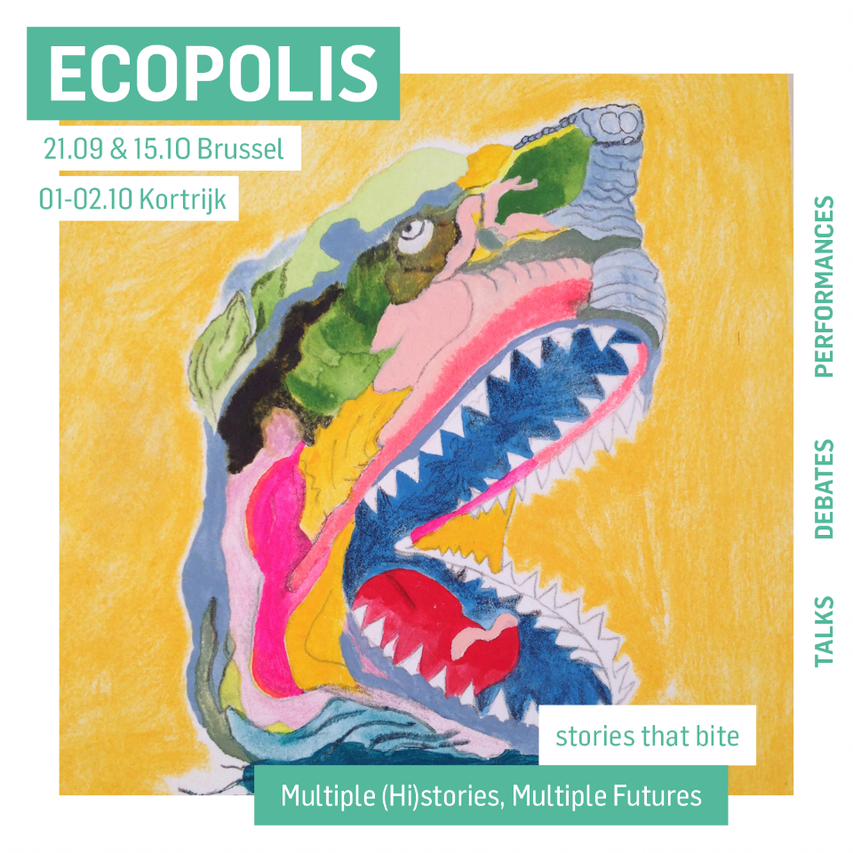
ECOPOLIS 2022: Multiple (Hi)stories, Multiple Future (Brussels)

By

Context

“Thinking out of the box is exactly how the box thinks. We are the boxes we strive to out-think,” writes philosopher Bayo Akomolafe, speaker at the eighth edition of Ecopolis where artists, thinkers and doers break open our frames. Social, ecological, and economic crises force us to think about a radically different way of living. Can unheard stories help us change today’s reality? And not any stories, but the ones that link different generations, geographical areas that are far apart, or ancient knowledge and technology. Can activism as a form of love take us further than doomsday thinking? “The world is not about to end; we are already living with a different world,” Akomolafe continues. Ecopolis brings stories that depict an inclusive and sustainable future for this new world.

About the event

Ecopolis is the perfect occasion to meet people who care about a sustainable future. Because ecological challenges know no national or linguistic borders, Ecopolis is diverse, international and interactive space to learn, discuss and connect with like-minded individuals. 

The conference welcomes Belgian and international authors to debate the transition towards a socio-ecological society. Inspiring books, documentaries and debates between writers, academics and civil society thinkers about ecology, economy and society are at the heart of this event. 

Programme

Times

Sessions

13:30 – 15:30

Minority walk with Omar Fassi Fehri (EN/FR)

The Minority Walk is a tour of the Brussels city-centre to discover the public space of the capital, told through the lens of how the oppression of minority groups is still taking place in different ways.

13:30 – 15:45

The Brussels of witches: feminist guided walk (EN/FR)

In the 14th century, as we move out of the ‘dark’ Middle Ages and into the Modern Age and the Renaissance, women are plunged into darkness – or rather into the flames of the stake. What does our urban public space reveal about that time… and about witches today?

14:00 – 15:30

Workshop ‘Limits to Growth’ (NL/EN)

To keep our planet livable, we urgently need to rethink our way of living. In this workshop we will encounter inspiring voices from Latin America who show that another way of life is possible. A life in which ‘well-being’ is central instead of ‘growth.

Panel discussions and performance

16:00 – 18:00

Colonisation as exploitation of people and nature

In this panel discussion, writers and artists from various backgrounds will talk about decolonisation and explore  the many narratives that survived colonialism while offering alternatives.

18:00 – 20:00

Different jobs, one planet. Stories of strong commitment

Whatever your studies, whatever your job, there are always plenty of opportunities for strong commitment to creating a better world.

21:00 – 22:00

The environmental impact of war

War’s impact on humans as well as on nature and biodiversity is dramatic. Ecopolis will feature playwrights and performers Enkidu Khaled and Joachim Robbrecht in the premiere of their play on the impact of war on the environment. Their stories  point out the importance of peace for all forms of life on this planet.

Learn more here about the programme and speakers. 

Practicalities

When: Saturday, October 15th (16:00 – 22:00). There are several connected events taking place before the core programme. More details to follow. 

Where: Ancienne Belgique – Bd Anspach 110, 1000 Brussels, Belgium 

Language: The primary language of this event will be English, with simultaneous translation to French and Dutch. 

Tickets: Ecopolis employs a “pay as you can” principle, please purchase your tickets in advance via this link.  The “Walks & Workshops” are included in the Ecopolis ticket, but you must reserve your spot in advance by registering here.  

Related Events

This year, Ecopolis goes beyond one date and one location! To find out more about the other events in Brussels and Kortrijk, please check the event website.  


Reading material

Degrowth Is About Global Justice

Beyond the Growth Imperative

Is Degrowth the Future?

Transforming Work, Reimagining Education

Hooked on Growth: Rewiring Institutions for Wellbeing

Questioning Our Limits to Leave Scarcity Behind

Beyond the Choke Hold of Growth: Post-growth or Radical Degrowth?

The Long Fight for Environmental Justice in the Caribbean

The “White Saviour” Deal for Nature

Politics for Change: Black Lives Matter in Europe

The Politics of Representation in the Climate Movement

Why We Need a Decolonial Ecology

Russia’s Invasion of Ukraine

The Environmental Cost of the War in Ukraine


This event is organised by the Green European Foundation and Oikos, with the support of various partners and with financial support of the European Parliament to the Green European Foundation. 


Energy Sobriety: Holy Grail of the Green Transition?

By

About the event:

Welcome to the Collaborative University a platform that consists of several sessions revolving around a specific theme. The registered participants meet on a few Saturdays during the year to work on the given subject, receive advice from experts in the field and visit relevant initiatives. The aim? To gain and exchange knowledge and to sharpen one’s critical mind…

Designed by our partner Etopia, GEF is hosting the third and final session of this series on the notion of energy sobriety–seeking to identify the reasons for but also the obstacles to reduce energy consumption in our society.

Participants will work in plenary and smaller groups, enjoying background reading and information, a collaborative space and participative methodology, and input from invited speakers and experts. Key insights from the day will be harvested in the form of podcast interviews and summary reflections for the general public.

Context

This event is part of the GEF transnational project Climate Emergency Economy: Rethinking Demand. Building on several years of work exploring what it means to create an economy fit for the climate emergency, GEF and its partners are this year focusing on the crucial question of how to reduce demand for energy and materials. With the support of Green House Think Tank, Etopia, and Green Foundation Ireland, we will explore how to frame rethinking demand politically, and articulate clear plans for demand reduction so green narratives are better grounded in reality and a shared vision of hope. 

Speakers

Mathilde Szuba – Political sociologist, Sciences Po Lille, Institut Momentum.

Luc Semal – Political scientist, Centre d’Écologie et des Sciences de la Conservation (CESCO), Institut Momentum.

Programme

The morning sessions will cover governance in the context of the end of energy abundance – possible consequences for institutions and potentially for the functioning of representative democracy as we know it. This is followed by lunch and group work in the afternoon.  

Practicalities

Date: June 4th (9:00 – 16:30) 

Location: Auberge de jeunesse Jacques Brel, Rue de la Sablonnière 30, Brussels 

Language: French 

Registrations for the collaborative university are now closed. If you wish to learn more, please email arnaud.deflorenne@etopia.be 


This session of the Collaborative University is organised by the Green European Foundation with the support of Etopia and with the financial support of the European Parliament to the Green European Foundation.  

Transition to Energy Democracy (Skopje)

By

About the Event

The energy crisis has deepened across Europe and with the chronic coal dependency of the Balkan region, we need to push for renewable energy more than never before. In this seminar, we will elaborate on the European experiences of transition in the energy sector and seek ways to stimulate positive changes in North Macedonia. Joined by various expert voices, we will also discuss the links between energy policy and the fight for a more democratic and inclusive society.

The discussions will later on result in a public policy document that will improve the legislation on the prosumer and energy cooperative models, envisioning a wider use of renewable energy to its full potential for the Balkan candidate country economies.

Context

GEF and Sunrise are pioneers on the topic of Energy Democracy in North Macedonia and with this project we will continue to discuss energy transformation towards a participatory, inclusive, and decentralised green economy through promotion of the Energy Democracy concept. Together, we will contribute to the debates and practices on the EU level with experiences and challenges from the Balkans.

Speakers

Aleksandar Gjorgjievski – National project coordinator and President of ASSED Sunrise
Dimitris Kitsikopoulos – Electra Energy Cooperative – Greece
Sara Tachelet – Communications manager at REScoop.eu – Brussels, Belgium
Strahinja Macić – Polekol – Belgrade, Serbia
Dragan Minovski – Professor at the Eletrotechnical Faculty of Shtip
Damjan Zlatanovski – Young activist and ecologist

Moderated by Hristijan Stanoevikj

Programme

11:00 Welcome and introduction 

11:10-12:00 Session with speaker on Energy Democracy  

12:00-12:30 Coffee break 

12:30-13:45 Panel discussion and Q&A 

Practicalities

When: Saturday, May 14th (11:00 – 14:00 CEST) 

Where: This is a hybrid event taking place in person in Skopje with online streaming and participation via Zoom. 

Language: The primary language is Macedonian but simultaneous translation in English will be provided. 

Register: In person participation is by invitation only (contact sien.hasker@gef.eu for more information). Online participation is open to everyone, please sign up via this link. 


This event is organised by the Green European Foundation with the support of Sunrise and with the financial support of the European parliament to the Green European Foundation. 


Albanian Green Academy Report

By Uncategorized

Context and Objectives

This report was prepared based on the trainings, workshops and lectures organized at the Albanian Green Academy in 2021. The overarching themes of the events focused on the European Green Deal and Climate Justice at local, national and European levels. The aim of the report is to promote green thinking in political, social and environmental aspects in Albania and the region.

About the Albanian Green Academy:

The Albanian Green Academy 2021 was held on 10-12thSeptember and 1-3rdOctober. It was divided in two phases. The main theme and focus of this first phase of the academy was “European Green Deal”. The main theme and focus of this second phase of the acade my was “Climate Change. In this series of 6-day training the topics of European Green Deal and Climate Change were addressed in the context of national and European conditions. Avery important objective of this project was to bring together, equip with information and build cooperation between different groups to achieve an environmental society.

Climate change is already happening: temperatures are rising, droughts and wildfires are starting to happen more often, rainfall patterns are changing, glaciers and snow are melting and the average global sea level is rising. To mitigate climate change, we must reduce or prevent emissions related to human activities.

Download

Digital version in Albanian is available here


This report has been published by the Green Europe Foundation with the support ofthe Albanian Green Institute and with the financial support of the EuropeanParliament to the Green European Foundation. The European Parliament is notresponsible for the content of this report.

Ecotransformation Summer School (Litomyšl)

By

Context

The quick transformation of European energy is one of our biggest challenges today. Russia’s attack on Ukraine, and thus on democracy and fundamental freedom, has shown that investment in renewable energy production and storage is crucial not only for tackling the climate crisis and mitigating its effects but also as part of a strategy to increase European security and our energy independence.

Unfortunately, the Czech Republic is still lagging behind in this regard. Will the amendment to the Energy Act bring a change that sets rules for community energy production? What can cities and municipalities do today to promote renewables and increase energy self-sufficiency? The ongoing crises highlight the need for significant changes in how we operate as a society, how we manage limited resources, care for the natural environment, and care for each other. What is the role of politicians, activists and other partners in achieving such change? How can we support each other and spread green ideas? These are the questions we’d like to debate this during this summer school.

About Ecotransformation 2022

Ecotransformation is an environmental policy summer school, but it’s also a weekend full of interesting seminars, debates, presentations and experiential workshops aimed at helping you develop skills to drive green social change. In this third edition, we will focus on the following areas and topics:

  • Energy revolution: how cities and municipalities can support the development of renewable energy sources and contribute to increasing energy security
  • Community energy opportunities: experience from other European countries and what we can expect in connection with the new energy law organizing across movements: how to achieve lasting change in a sustainable, inclusive and effective way – communication, cooperation, capacity building and finding partners in different parts of society
  • Seeking consensus in a divided society: public opinion is influenced by a number of stereotypes and deliberate misinformation, the debate on issues such as helping refugees is dominated by populists who reduce it to simple slogans, a splitting society – what we can do about it and how to talk to people who do not share our opinions


Who is this summer school for?

We invite anyone passionate about green policy and wanting to take an active part in promoting it. This event can be beneficial for people interested in environmental issues who want to explore how to implement practical sustainable solutions such as activists, researchers, students, scientists, teachers, politicians, journalists and so on.

Programme

THURSDAY 14 JULY

19:00–21:00 Public Debate: Pacifism and green values in the light of the war in Ukraine
Dagmar Tutschek (Co-president of the Green European Foundation and chair of FREDA, Austria)
Kateřina Vnoučková (Faculty of Social Science, Charles University in Prague)

Moderator: Michal Berg


FRIDAY 15 JULY

9:00–9:45

Introduction & Ice-breakers
Klára Berg (GEF)

10:00–11:00

Community energy – experience from Austria – Michael Sigmund, Vice Mayor of Pressbaum, Austria

Modern waste management – example of good practice – Jan Pažin, Choceň Town Councillor

11:15–12:45

The energy revolution: reducing our dependence on Russian fossil fuels – Patrícia Čekanová, Association of Community Energy of the Czech Republic

14:30–16:00

Organizing the climate movement – Klára Bělíčková, Klára Suková, Fridays for Future Czech Republic

Walking tour of Litomyšl – Citizen participation in the design of urban public space – Daniel Brýdl, Litomyšl Town Mayor

16:30–18:00

Community energy projects: energy self-sufficiency of municipalities – Jiří Krist, Local Action Group Opavsko

Active hope – doing activism sustainably (workshop) – Martin Nawrath, therapist and facilitator

20:00–21:30

Debate: Barriers and opportunities for engaging women in active citizenship
Anna Kárníková (Friends of the Earth Czech Republic)
Klára Bělíčková (Fridays for Future Czech Republic)
Eliška Koldová (cooperative SdruŽeny)
Moderator: Marie Sehnalová


SATURDAY 16 JULY

9:00–10:30

Group Work & networking
Klára Berg (GEF)

10:45–12:15

Building communities – experience from Poland (workshop in English) – Dagmara Kubik, Rzecz Społeczna

Ageing in the city, cities friendly to older people – Marcela Petrová Kafková, Department of Sociology, Faculty of Social Studies, Masaryk University in Brno

14:30–16:00

How to engage religious communities in environmental issues – Marek Drápal, Czech Christian Environmental Network (ČKES)

Light pollution – Hynek Medřický, the lighting expert

16:30–18:00

Klimavize – the future of the Czech climate movement – Tereza Navarová, klimavize.cz

Citizens’ assemblies as a tool for change – Andrea Culková, filmmaker, author of the documentary Citizens’ Assemblies

20:00–21:30

Civil society in Ukraine before and during the war (helping activists in occupied Ukraine) – Milan Štefanec, NESEHNUTÍ


SUNDAY 17 JULY

9:00 – 12:30

Open space – an opportunity to bring your own topics

Practicalities

Date: 14. 07- 17. 07. 2022

Location: Castle Hill in Litomyšl

Price: The price of the registration fee includes accommodation and meals

– basic amount of fee 990 CZK
– reduced fee 650 CZK
– sponsorship fee (any amount over 990 CZK)

The reduced fee is intended for those participants who, for whatever reason, cannot afford the basic fee – we do not require any justification. If you can support the event with an amount higher than 990 CZK, we will use it to pay the total budget.

Accommodation: the price of the registration fee includes accommodation in 2-4 bed rooms with shared bathroom facilities.

If you have questions or special requests for accommodation, do not hesitate to contact us.

Meals: we provide common vegan / vegetarian meals for all participants throughout the event.

Registration: Registrations are now closed for this summer school

Contact person: Martina Dušková, project coordinator, martinaduskova@yahoo.co.uk

– We look forward to seeing you in July!


This event is organised by the Green European Foundation, with the support of the Institute for Active Citizenship and the financial support of the European Parliament to the Green European Foundation.

Just Transition for All?

By

About the event

This three-day seminar will serve as a place to discuss opportunities and limits of just transition and explore its transformative potential.

 During the seminar, we will:

  • provide a first approach to the concept of just transition,
  • discuss the role of trade unions and workers,
  • discuss the transfer from extractive to regenerative economy,
  • explore just transition to a European and global level in solidarity,
  • Link it to recovery plans and European Green deal,
  • Explore opportunities for decent jobs,
  • discuss specific conditions of just transition at European semi periphery

Also, we will dive much deeper into just transition in the transport sector, where we will learn and discuss under which conditions sustainable mobility can become an example of just transition policies.

We see this seminar as one milestone in a systemic approach to concepts and practices of just transition in this part of Europe, and an important milestone in establishing epistemic communities in this field.


This project is organised by the Green European Foundation with the support of the Institute for Political Ecology in cooperation with the Heinrich Böll Foundation, Prague office, and the European Climate Initiative with the financial support of the European Parliament to the Green European Foundation. The European Parliament is not responsible for the content of this event.

Just Transition in the Western Balkans

By

About the Event

While the EU has tried to extend some of its climate objectives to candidate countries via the Green Agenda for the Western Balkans, civil society and other actors have raised questions as to what extent it meets the needs and will bring clear, transparent, and sustainable change to the region. Renewed efforts and public debate are crucial to drive the transition to a sustainable and carbon-neutral wellbeing economy that works for the people of the Western Balkans.   

In this webinar, we will explore the transition to an economy of the future by bringing together experts on the topic who will share their experiences and solutions to promote a just transition in the Western Balkan region. We have to rethink production and consumption from the perspective of a social circular economy. Only when the transformation is planned and executed in a just and equitable way, will it find the necessary support in short time among the population. Through this project, we are researching the different dimensions of a Just Transition and the politics and policies we should develop nationally and regionally to make the change in our economic realities.  

Context

This seminar is part of the Green European Foundation’s Just Transition transnational project. The project looks into the question of transforming from an extractive to a regenerative economy in a just and equitable way to find the necessary support among the population. It seeks to show that the green movement, including GEF in its specific role, is a leading actor in the development of future-proof politics and policies, developed in a sensitive way that keeps in mind local specificities. 

Speakers

  • Dragan MinovskiProfessor at the Electro Technical Faculty of Shtip 
  • Sonja RisteskaProject Manager Southeast Europe at Agora Energiewende 
  • Aleksandar Gjorgjievski – National Project Coordinator for GEF Just Transition project (ASSED Sunrise) 

Moderated by: Hristijan Stanoevikj

Programme

10:55-11:00 Participants join the call 

11:00-11:10 Introduction 

11:10-11:50 Speaker presentations: exploring Just Transition 

 *announcement of the upcoming GEF  book ”A European Just Transition for a Better World”  (May, 2022) 

11:50-12:10 Panel discussion and Q&A 

Practicalities

Date and Time: Saturday, March 26th (11:00 – 12:00) 

Language: Macedonian 

Registration: This event will be taking place online. Please register in advance via this link. 


This event is organised by the Green European Foundation with the support of Sunrise and with the financial support of the European parliament to the Green European Foundation. 

 

Towards Sustainable Agriculture and Cleaner Energy in the NRRP

By

About the Event

The Green European Foundation, with the support of BlueLink, has been closely following the drafting and submission process of Bulgaria’s National Recovery and Resilience Plan, with an aim to highlight key areas for scrutiny and foster a public debate on this important EU initiative. 

This media event will feature some our key expert contributors, as they give their input on the NRRP and its different versions, focusing particularly on the key areas of agriculture, climate and energy, and circular economy. We will also present some comparative analyses based on studies of the NRRPs submitted by three other EU member states: Latvia, Portugal, and Slovakia.   

Speakers

  • Petko Kovachev – Green Policy Institute 
  • Gavrail Gavrailov – BlueLink 
  • Albena Simeonova – chairperson of the “bioproducts” organic farmers branch organisation 
  • Natalia Dimitrova – BlueLink 

Practicalities

Date and Time:  2nd December, 10 am

Location: Sofia (Bulgaria)

This is an invite-only media event. If you would like to join, please send an email to sien.hasker@gef.eu. The event will be in Bulgarian, and will also be streamed online. 


This media event is organised by the Green European Foundation, with the support of BlueLink and the financial support of the European Parliament to the Green European Foundation. 
 

Metals in the Energy Transition

By

About the event

This Dutch-language webinar is for you if you are interested in circularity and the energy transition.

Context

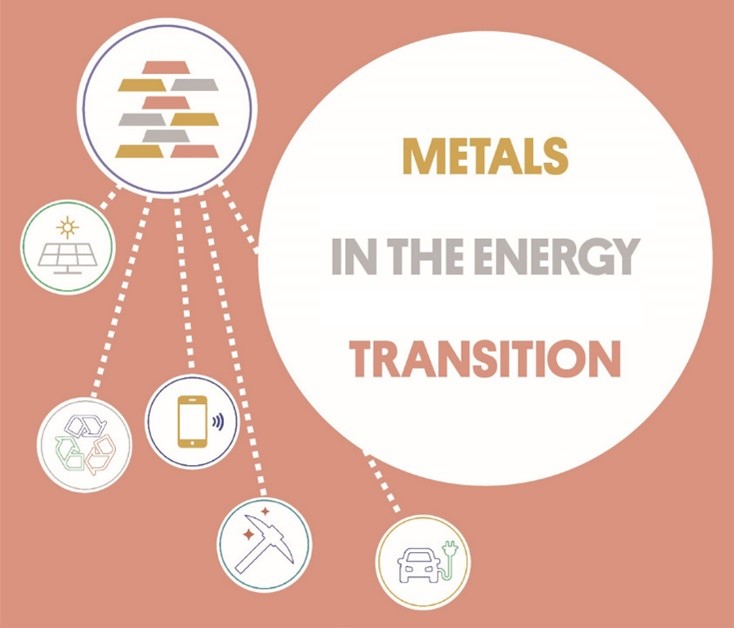
All solar panels, wind turbines, electric cars and power cables contain metals. The energy transition increases the demand for ‘energy metals’, such as lithium, cobalt, neodymium, and copper. These metals have to be dug up from the ground and mining often carries social and geopolitical risks, especially because of metal scarcity.

We can’t keep postponing action against the climate emergency. We need to prevent metal scarcity from slowing down the energy transition while protecting the environment and human rights from destructive mining.

In this webinar, we will discuss several circular strategies and solutions that can contribute to a more sparing use of metals–and may also offer economic opportunities. We will follow the circularity ladder: from refuse via reduce to recycle.

With the help of expert speakers, we will focus on three solutions:

  • Smarter mobility: from private cars to bicycles, public transport and shared e-cars (refuse, rethink)
  • A more efficient use of the (tight) power grid by combining wind and solar energy, putting generation near consumption and making demand more flexible (rethink, reduce).
  • Circular solar panels (reuse, refurbish, re-manufacture, recycle).

How can politicians, from the European to the local level, work on solutions for metal scarcity? Together with speakers and participants, we will map out the political instruments.

Speakers

Pieter van Exter (@pvanexter), lead Circular Industries at Metabolic

Mariet de Haas (@lepus2), co-ordinator Shared Mobility and Mobility Hubs for the City of Rotterdam

Roebyem Anders (@roebyem), co-founder of Sungevity International

Berend Potjer (@berendpotjer), regional minister for Energy, Nature and Biodiversity in the province of Zuid-Holland

Richard Wouters @richardwouters, project leader ‘Metals for a Green and Digital Europe’ for the Green European Foundation and Wetenschappelijk Bureau GroenLinks

Practicalities

Date and time: Friday 7 January, from 14:00 to 16:00 CET

Audience: This webinar will take place in Dutch and is open to the general public.

Registrations: here

This event will be organised through the Zoom platform.

Inspiration: You can prepare for this webinar by reading our publication ‘Metals for a Green and Digital Europe’. Download it for free in English, Dutch, French, Spanish or Czech.


This project is organised by the Green European Foundation with the support of Wetenschappelijk Bureau GroenLinks and with the financial support of the European Parliament to the Green European Foundation. The European Parliament is not responsible for the content of this event.
A just transition: between a bitter pill and sweet dreams

By

Context

Transition is a word that arouses bad associations in the Western Balkans region. When talking about the transition, people usually first think of collapsing institutions, selling off public companies and social property. At a time when the Western Balkans are witnessing mass privatisation and commodification of natural resources, talks on green transition and transformation towards sustainability are emerging too (although still far behind the European average).

These days, we are witnessing mass protests for environmental justice in Serbia and miners’ protests in Bosnia and Herzegovina. The simple introduction of environmental standards, without a social dimension, has never worked. Therefore, this is an important topic for discussion, even more so within the framework of a fair transition in Europe.

The concept of a just transition is a comprehensive guideline that complements the Green Deal in the transformation towards an environmentally sustainable society in a just and fair way. With the development of this concept, trade unions and climate movements emphasise the need for systemic transformation. A fair transition implies fundamental changes, not only of key economic branches and consumer systems, such as energy, transport, agriculture and food, but also changes in infrastructure, social values and politics. In addition, this concept highlights the need for a global shift towards a humane and fair economic system, with a healthy ecosystem, health, public services, education and culture at its core.

During the discussion that will be organized by the Green European Foundation in cooperation with the organization for political ecology Polekol, we will try to find answers to some of these questions:

– What is the broader context of a fair transition and why we need it?

– What does a fair transition mean for the Western Balkans region and how can we reach it?

– What is the role of workers and unions in the green transition?


Speakers

Dr. Maja Pupovac, project manager of the RES Foundation
Miodrag Pantović, project assistant on the project “On the way to the EU” of the European Trade Union Confederation (ETUC) and the regional network “SOLIDARITY” with the support of the European Commission
Alma Midzic, Crvena Sarajevo
Moderated by:  Žaklina Živković, Polekol


Practicalities

Date and time: 28th December

Audience: the event is open for the general public.

The webinar will be broadcasted on the Polekol Facebook page.


This project is organised by the Green European Foundation with the support of Polekol and with the financial support of the European Parliament to the Green European Foundation. The European Parliament is not responsible for the content of this event.

European Mobility Atlas

By Uncategorized

Context

Europe is the continent where multiple forms of transportation have been invented or brought to technological maturity. The free movement of persons has made Europe grow together and led to an ever-stronger sense of cohesion. Cross-border mobility is a prerequisite for a united EU and the experience of inter-connectedness on all levels. However, the Covid-19 pandemic has limited the freedom of movement extensively and shows the vulnerability of Europe as a place of constant movement. While air traffic decreased and the use of bicycles increased, there has also been a strong negative shift from shared transport to individual transport. If this change prevails, a great deal of earlier efforts to reduce GHG emissions in the transport sector will be nullified. If one thing is clear is that recovery packages to overcome the effects of the Covid-19 pandemic must be accompanied by a commitment to a sustainable transformation that avoids further carbon lock-in with a transport sector still largely powered by fossil fuels.

Objectives

Our European Mobility Atlas seeks to contribute to the efforts towards sustainable and just mobility in Europe. Thus, it covers a multitude of transport-related aspects relying on evidence-based research and highlighting concrete, tangible mobility solutions from across our continent. GEF is working together with Heinrich Böll Stiftung to Europeanise the debate on sustainable mobility on our continent. We are doing this by translating the English language version of the European Mobility Atlas to Spanish and Italian, as well as providing a series of infosheets on the mobility context in Spain.

With more and more people being mobile, Europe is a continent that needs to remain innovative in order to achieve the relevant climate goals. We need new technologies to align our mobility infrastructure and behaviour with the pressing challenges of the upcoming years. To save our climate, the European Green Deal has to be Europe’s first priority.

Download

Digital version in Spanish is available here.

Digital version in Italian is available here.

Digital version in Portuguese available here.

Complementary resources

Present and Future of Mobility in Spain (ES): available here.


These publications have been realised by the Green European Foundation in cooperation with Heinrich Böll Stiftung, and the financial support of the European Parliament to the Green European Foundation. The European Parliament is not responsible for the content of this publication
Energy to the citizens

By

About the Event

With this session, we aim to tackle the need for a more democratic and inclusive society. To do so, we will examine the state of democracy in the EU and candidate countries with the economic alternatives proposals that take into account the climate change emergency.

Context

The North Macedonian region and its surroundings currently suffer an energy crisis, as the country heavily relies on coal and other fossil fuels. During this event, we will elaborate on the European experiences in the energy sector and stimulate positive change in North Macedonia and the region.

GEF and Sunrise are pioneers on the topic of Energy Democracy in North Macedonia and will continue raising awareness and discussing energy transformation towards a participatory, inclusive and decentralized green economy. Together we will contribute to the debates and practices on the EU level with experiences and challenges from the Balkans.


Speakers:

  • Aleksandar Gjorgjievski, President, Sunrise, North Macedonia
  • Antonia Proka, Project Manager, REScoop EU
  • Melani Furlan, Community Energy Expert, Green Energy Cooperative, Zagreb, Croatia
  • Dragan Minovski, Professor at the Electro Technical Faculty of Shtip and President of the Instutute for Economy and Energy policies and research in North Macedonia


Programme:

10:00 Participants join the event

10:10-10:20 Introduction

10:20-11:00 Session with speaker’s presentations on Energy Democracy

11:00-11:20 Panel discussion and Q&A


Practicalities:

Date and time: Saturday, December 11th from 10:00 AM CET

Audience: This event will take place in Macedonian language with simultaneous translation in English

Registrations:

Register in advance for this event:https://us02web.zoom.us/meeting/register/tZMkce-tqj8qEtGPrQK9X5ModmuKvNRezcWXAfter registering, you will receive a confirmation email containing information about joining the event.


*The event will take place on the ZOOM platform 


This event is organised by the Green European Foundation with the support of Sunrise and with the financial support of the European parliament to the Green European Foundation.