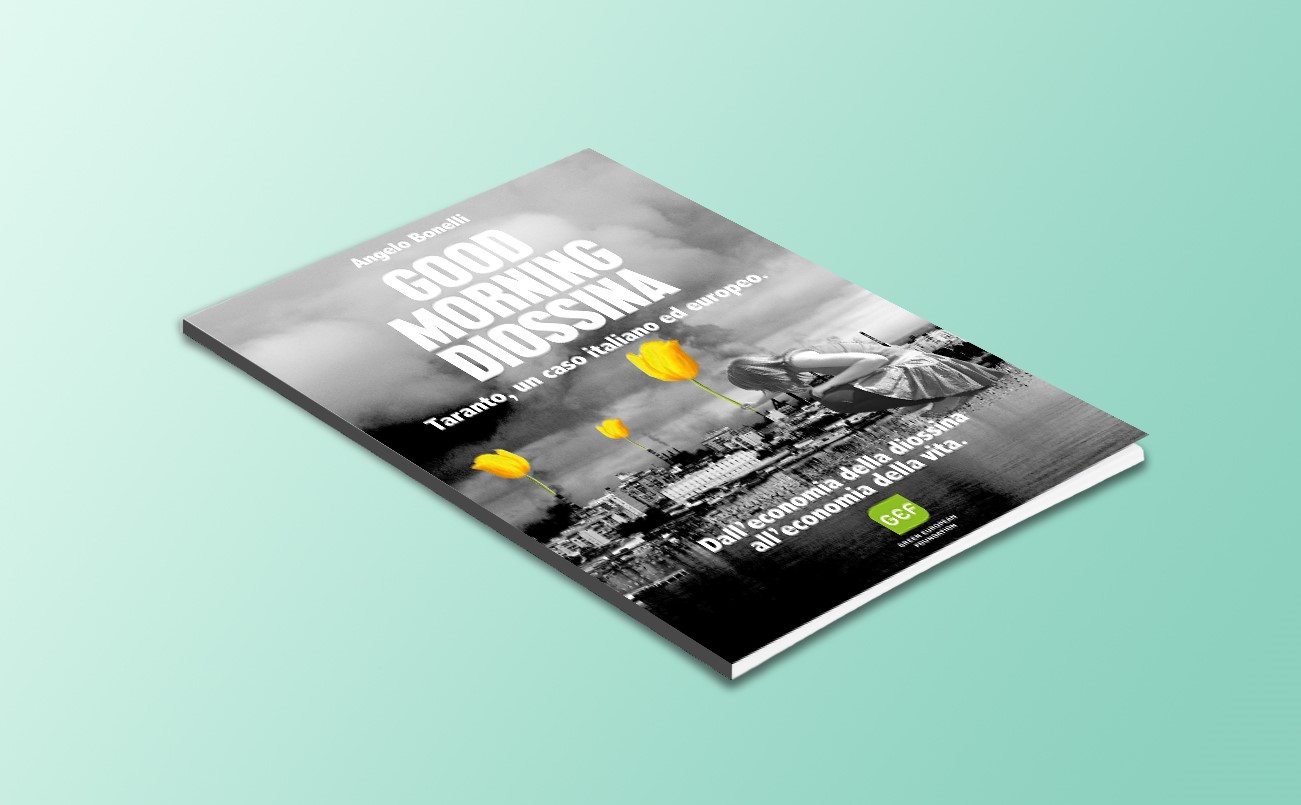
Good morning Diossina. Taranto: the toxic economy

By Uncategorized

Taranto is a city in the south of Italy where the presence of highly polluting industries, such as the Ilva steel plant, has been responsible, since the 1960s, for the highest mortality rate in Italy. The latest epidemiological study by the Italian National Institute of Health shows a terrifying +54% above-average tumor incidence rate and +21% mortality rate among children (0-14 years old).

According to data by the Italian National Institute of Emissions (INES), in recent years, Taranto accounted for 93% of all the dioxin and 67% of all the lead released in the country’s atmosphere. The level of environmental pollution is so extreme that the health authorities were forced to outlaw pasture within a 20-km radius from the plant and to order in 2009 the cull of over 3,000 animals due to dioxin contamination.

Though not an isolated case, Taranto is a perfect example of how the absence of environmental controls in Italy or the “capture” of these by special interests in the name of profit maximisation has severely compromised and “sold” the health of citizens. There’s a reason that the investigation by the Taranto prosecutor’s office was codenamed “Sold Environment”.

In this book, we will tell the story of a city brought to its knees by poisonous fumes and torn apart by the sorrow of the victims’ families. Moreover, we will focus on the economic and industrial aspect of the problem: how can the highly polluting dioxin-based industrial model – of which Taranto is the epitome – become the subject of a radical economic and industrial conversion, capable of generating new, clean jobs and social welfare? Taranto’s economy currently revolves entirely around the Ilva plant and this has irreversibly damaged other crucial economic sectors, such as agriculture, stock rearing and mussel farming. Taranto’s mussels used to be famous all over Europe, but in recent years, the health authorities have ordered the destruction of tons of mussels from the Mar Piccolo due to PCB contamination. Around 1,000 jobs were lost among breeders and farmers. The trade, service and tourist industries have also been strongly affected by the pollution and the progressive reduction of Taranto’s population.

We have successful examples of similar industrial conversions both here in Europe (Bilbao and the Ruhr carbon sink), as well as on the side of Atlantic (most notably Pittsburgh, the United States’ former steel capital). We will also show how such economic and industrial conversions have reduced social strife and boosted employment and growth rates, thus debunking the intolerable notion that one must choose between well-being and employment; how favourable tax systems can contribute to the birth of major business- and employment-creating scientific and research centres based around technological innovation (such as biotechnologies); and how urban and social fabric can be regenerated to favour both economic and environmental recovery.

We will also look at the administrative, legislative and economic tools best fit to bring about Taranto’s industrial conversion. The book’s urgency stems from the need to move from mere protest to concrete proposals, thus hailing a new phase in Italy’s environmental movement, capable of offering practical solutions to the six million Italians who still live in highly polluted areas – forgotten citizens, to which we want to say that change is possible.

Paris Climate 2015 – 20 years on

By Uncategorized

At the end of 2015, France will be hosting the 21st Conference of the Parties to the Climate Agreement (COP21). It is hoped that the international negotiations, which take place in Le Bourget for a fortnight under the patronage of the UNO, will result in an ambitious, universal and binding agreement by the international community, enabling greenhouse gas emissions to be reduced and global warming to be limited to + 2°C.

To take a truly idealistic approach: supposing that the 2015 Paris Conference was a success, and 2015 – and the years thereafter – saw a spectacular turnaround in international political decisions, what might the world look like in 2035?

To paint the portrait of such a post-transitional ecological world, a diverse group of writers recognised in their fields have produced the texts which make up this publication concerning the various questions which are key factors in the expected scenarios: world governance and new territorial, agricultural, social, economic, legal and political models. They are pieces in an as-yet incomplete jigsaw puzzle depicting a new world, imagined a quarter of a century after the Paris Conference.

The contributions by the authors of  “Paris Climate 2015: 20 years on” collection and the illustrations accompanying them convey a society in which ecological transition has enabled us to reweave our social links and change our methods of government, making them fairer, and rethink our relations with nature and the production of value in the long term.

In the near future, citizens’ action, a new economic logic and their reflection in terms of collective expectations, will lead to a renewed political dynamism, both locally and internationally, in response to the challenge of climate change. A better world, not “the best of all possible worlds”, but one which is multifaceted, open to the diversity of the possible, giving ample room for individual and collective initiative and, therefore, for discussions on the solutions, is to be envisaged.

Can imagination make it easier to understand the risks that climate change bears? That is the question at the heart of this collection of “climate prospects”, imagined as an original and creative debating tool for use at the 2015 Paris Climate Conference.

You can download the publication below in English or French, or visit the dedicated site of the FEP here.

Icon

Paris 20 Years On EN 1.39 MB 62 downloads

...
Icon

Paris 20 Years On FR 4.42 MB 129 downloads

...

Green News – Climate Edition

By Uncategorized

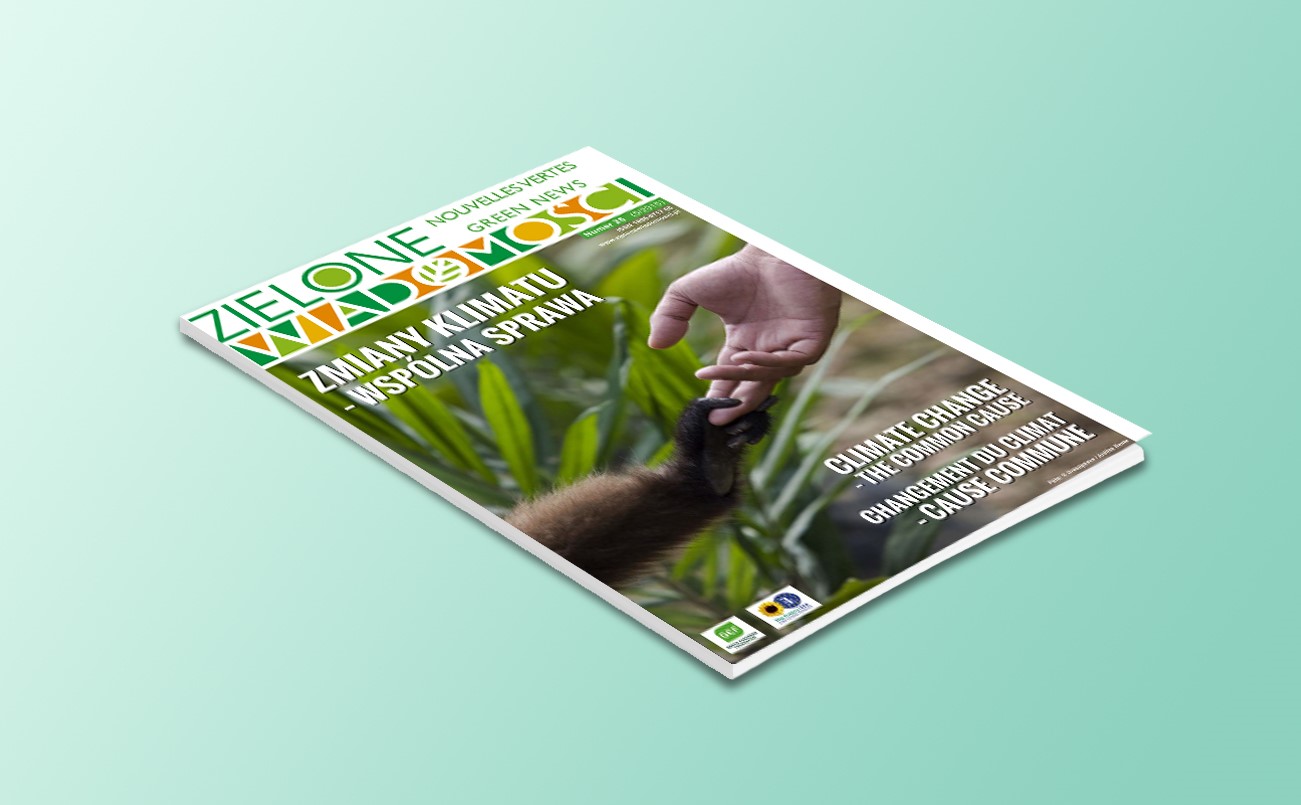
With articles in English, French and Polish, this e-book includes, among others, an examination of climate change as a moral challenge, an economic deconstruction of climate change as a ‘neoliberal illusion’, and a social perspective on climate change as a threat to the public goods that belong to all citizens.

A wide array of authors have contributed to the publication, including NGO representatives, political figures, scientists, and even an award-winning documentary-maker from several European countries. The e-book also contains case studies on how climate change is impacting specific areas such as the Arctic, the Amazon and Indonesia, as well as how the fight against climate change is manifested in areas such as resistance to TTIP, and how to spur further action and maintain the momentum of the campaign, now that COP21 is behind us.