Yellow Vest and the Green Deal

By Publications

Context

In late 2018, France witnessed a social movement that profoundly impacted public consciousness: the Yellow Vest movement. Week after week, tens of thousands of people gathered at roundabouts and in the streets, sparked by opposition to higher carbon taxes on fuel. This movement has since become a pivotal point in discussions about achieving an ecological transition. But who were the Yellow Vests, and how did they relate to ecological issues?

This report amplifies the voices of those who transformed public spaces into platforms for political expression. Their actions conveyed a strong demand to be seen, heard, and included in decisions shaping their futures. Spanning rural and urban settings, the Yellow Vest movement highlights the urgent need to harmonize ecological objectives with social justice. It calls into question governance structures and pushes for fairer, more inclusive decision-making processes.

The report begins with an essay by Kevin Puisieux, director of the Fondation de l’Écologie Politique, which examines the tensions between social equity and ecological imperatives. Drawing from the Yellow Vest movement, Puisieux explores the contradictions of a just transition while proposing pathways to bridge grassroots demands with institutional policies. This essay is supported by firsthand testimonies, reflective interviews, and in-depth research.

This publication does not offer simple solutions but invites readers to confront the complexities of these intertwined challenges. It encourages us to rethink long-standing assumptions and envision a Europe where social and ecological justice advance hand in hand.

About the authors

Kevin Puisieux – Director of the Fondation de l’Écologie Politique
Pierre Blavier
– Research fellow at the CNRS / Clersé
Etienne Walker – Lecturer in geography at the University of Caen Normandy
Chloé Alexandre – Doctoral Candidate in Political Science, Sciences Po Grenoble, UGA
Alix Levain – Research Fellow in Anthropology, AMURE
Simon Persico – Professor of Political Science, Sciences Po Grenoble Université Grenoble-Alpes – PACTE
Magali Della Sudda – Research Fellow in Political Science – Centre Emile Durkheim

Social Justice and the European Green Deal

By

About the event

With just a few months to go before the end of president of the European Commission Ursula von der Leyen’s first term in office, it’s time to look ahead to the next phase of the Green Deal. Against a backdrop of rising energy prices, growing social inequalities and the risk of an anti-Green Deal backlash, we need to take stock of the social justice issues at stake in the context of the Green Deal. 5 years after the Gilets Jaunes movement, the Green European foundation, in partnership with the Fondation de l’écologie politique, is bringing together key players from French environmental civil society to discuss these issues, from a European perspective.


Project background

This event is part of the Green European Foundation’s project A Just Green deal and Beyond. The first focus of this project is based on proposals of the green family to integrate ambitiously the social dimension, so to work on a ‘Just Green Deal’. The second level will ‘Go Beyond’ the Green Deal and mobilize future-oriented concepts such as Sustainable Welfare, related to an Ecological Welfare State and the operational concept of Universal Public Services.


Programme

9:25am: Introductory remarks by Kévin Puisieux, Director of the Fondation de l’Écologie Politiqu

9:30am-10:15am Round table 1: Social justice in the transition. 5 years after the Gilets Jaunes, what’s at stake?

  • Amandine Lebreton, Director, Pacte du pouvoir de vivre
  • Solange Martin, sociologist at ADEME

10:30 a.m. – 11:15 a.m. Round table 2: Social justice in the European Green Deal: from the social fund to ETS 2, the challenges of the next five years in Brussels

  • Neil Makaroff, co-director of Strategic Perspectives
  • Thomas Pellerin Carlin, Program Director – European Climate Investments, Cleantech at I4CE (Institute for climate economics)

11:30 a.m.-12:15 p.m. Round table 3: Looking ahead to 2035, how can we achieve a just transition regarding cars?

  • Marie Chéron, Vehicle Policy Manager, Transport & Environnement France
  • Kévin Puisieux, Director, Fondation de l’Écologie Politique

12:30 pm: Concluding remarks by Dirk Holemans, Director of Oïkos, Flemish-Belgian environmental foundation, co-president of the Green European Foundation.


Practicalities

Date and Time: 20th of December, 9:30 to 12:30

Location: Atelier Beaubourg, 7 Rue Geoffroy l’Angevin, 75004 Paris, France

Language:  French

Registration: Please register here


This event is organized by the Green European Foundation with the support of  Fondation de l’écologie politique and with the financial support of the European parliament to the Green European Foundation.

El Lado Oscuro de lo Digital

By Uncategorized

Context

Currently, digital technology consumes 10% of the world’s electricity and contributes to 3-4% of the global greenhouse gas emissions at the increasing rate of over 9% per year. A country like France dedicates 8% of its electricity to digital consumption. A study of the semiconductor industry (2015) estimate that, at the current rate of growth of computing power, and given the gradual slowdown in gains in energy efficiency, digital technology could consume before 20703 the equivalent of all the world’s energy used in 2010.


This report has been realised by the Green European Foundation with the support of Transición Verde, Fondation de l’Écologie Politique, and the financial support of the European Parliament to the Green European Foundation. The European Parliament is not responsible for the content of this publication.

In the face of the Covid-19 crisis: finding ways to increase solidarity in Europe

By

About the event:

For this year’s Europe Day, the Green European Foundation is organising its first regional Green-Post Corona Talk in French with the support of Fondation de l’Écologie Politique.

This online conference is part of the Europe Day organised by the city of Paris.

Context:

The Covid-19 crisis has exposed the vulnerabilities of our societies, our health care sytems and economies but also the fragility of European solidarity.

The online conference aims to explore ways to increase solidarity amongst European countries and how a united post-Corona Europe can be co-created.

Speakers:

  • Mounir Satouri, Member of the European Parliament (Greens/EFA) and member of the Employment and Social Affairs Committee
  • Yasmine Bouagga, Sociologist at the University of Lyon and migration specialist
  • Constanza Hermanin, invited professor of political science at John Cabot University Rome and Europe College Bruges, Member of the +Europa party Italy
  • Manuel Domergue, Director of Research at the Abbé Pierre Foundation, columnist for the monthly economic review Alternatives Economiques

Moderated by Benoit Monange, Director of Fondation de l’Écologie Politique and GEF Board member.

How to join the event:

To watch the discussion, comment and ask your questions to the speakers, register via the Facebook event.

The talk will take place in French.

For a new territorial perspective – imagining post-urban alternatives (Paris)

By

Event background

This event is part of the transnational project Cities as Places of Hope in the European Union which explores progressive city networks and their potential to foster real change – may it be on food, energy or migration policies. Cities are organising themselves increasingly in trans-local networks and are pushing the boundaries of traditional governance structures.

About the event

This conference, organised with the support of Guillaume Gontard, French Senator, and Fondation de l’Écologie Politique will delve into the subject of post-urbanism and its implications on municipal politics.

Our landscapes are undergoing major changes, first and foremost the concentration of human settlement in major metropolitan areas. Promoted by governments for decades, these concentrations and densities appear less and less ecologically habitable, sociologically fair, economically viable and democratically constituted. In response to this socio-ecological excess, a different territorial perspective opens up, initiated by alternatives that offer other places
to live and forms of life, more respectful relationships to environment and other living beings, forms of cooperative economies and more functional direct forms of political action.

Such ideas and practices can highlight new paths towards a ecological, post-urban society.

Draft Programme

13:30 Registration

14:00 Opening – Guillaume Gontard, French Senator, and Alice Canabate, Vice-president of Fondation de l’Écologie Politique

14:15 First Roundtable – Saturated European metropolises or the need for a future of post-urban territories (and policies)

With: Guillaume Faburel (Lyon University 2), Mathilde Girault (Lyon University), Sébastien Marot (École d’architecture Paris-Est)

15:30 Presentation of “Bioregion 2050”, a report from the from the Momentum Institute and the Forum Vies Mobiles

With: Yves Cochet, Agnès SinaÏ and BenoÎt Thévart

16:15 Second Roundtable –  Alternative socio-ecological formats and perspectives for the bio-region in Italy and France

With: Ilaria Agostini (Bologna University), Christophe Laurens (Master Alternatives urbaines de Vitry sur Seine), Daniela Poli (Florence University)

17:45 Conclusion and synthesis – Guillaume Gontard and Guillaume Faburel

Practicalities

The event will be held in French. To register, please write to b.monange@fondationecolo.org.

Green Summer Academy (Strasbourg)

By

Context

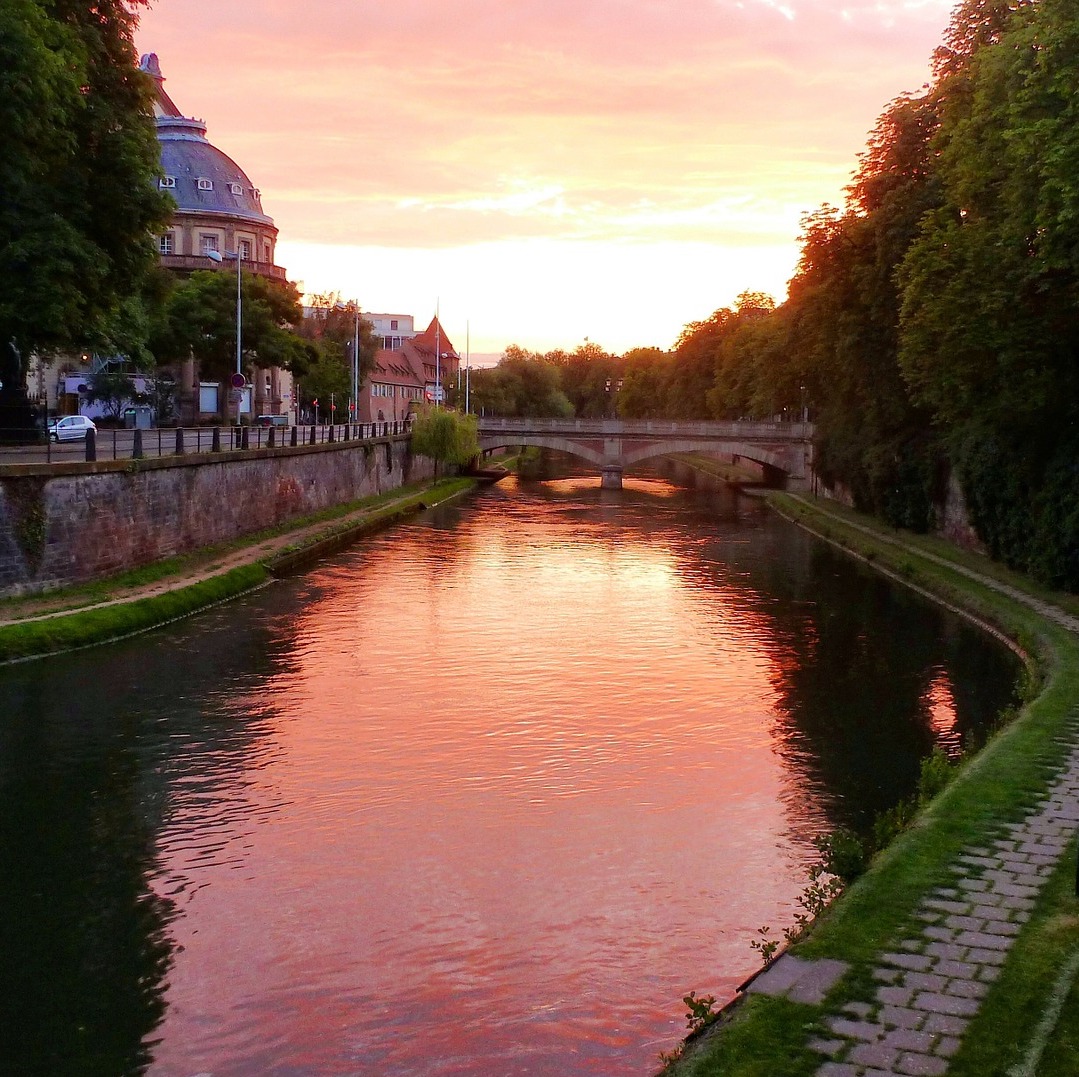
The first GEF summer university ever held in France will take place in the proudly European city of Strasbourg, home of the European Parliament. At the center of the event, we aim at exploring an important question for the furthering of green justice: how can we bridge the fight against social inequalities and the fight against environmental inequalities to pursue a just eco-transition?

About the event

The summer university will be a great opportunity for French activists to get to know the work and publications of the Green European Foundation. Participants will be able to discover the production of the Green European Journal and will have a chance to learn more about the GEF online course Impact Europe.

Programme

Thursday, August 23

12:00 – 13:00 – Greetings and opening – GEF & FEP Agora Space

  • Benoit MONANGE, Director Fondation de l’Ecologie Politique

13:30 – 15:00 –  The Future of work in Europe in a time of technological and social change (panel built around issues raised by the latest issue of the Green European Journal: Work on the Horizon. Tracking Employment’s Transformation in Europe )

  • Laurent STANDAERT, Editor in chief of the Green European Journal
  • Aida PONCE DEL CASTILLO, senior researcher at the European Trade Union Institute
  • Nathalie SCHIRVEL, holds a Masters in Medicine from the Université Libre de Bruxelles, she is the author of the Green European Journal article “Dr Strangelove or how I learned to stop worrying and love the robot”
  • Alain COULOMBEL, economist, member of the Board of the Fondation de l’Ecologie Politique, he is the author of the Green European Journal article “Recasting work in an era of insecurity”

15:30 – 17:00 – Escaping from our homo detritus condition. How to put an end to the garbage society.

  • Ewa SUFIN-JACQUEMART, Polish foundation Strefa Zielini
  • Isabelle HAJEK, sociologist, University of Strasbourg
  • Antoinette GUHL, deputy Mayor of Paris, in charge of social enterprise, social innovation and circular economy

17:30 – 19:00 Rethinking the role of culture practices with the commons paradigm: a pathway for greening our cultural practices?

  • Valérian GUILLIER, PhD researcher at the University Paris 8
  • Olivier LANOË, musician and composer, founder of AMACCA (Associations for the maintaining of alternatives in the field of cultural and artistic projects).

20:00-22:00 Bridging the fight against social and environmental inequalities to enhance our pursuit of a just ecological transition

  • Alice CANABATE, Sociologist, Vice-president of the Fondation de l’Ecologie Politique
  • Sophie SWATON, philosopher and economist, University of Lausanne, author of the book “Pour un revenu de transition écologique” [Appraisal for an ecological transition income]
  • Guillaume FABUREL, professor of geography, urban planning and political science at the University Lyon 2 and at the Institute of Political Studies of Lyon, author of the book “Les métropoles barbares” [Barbaric Metropolis]
  • Julien CAUDEVILLE, statistician and risk exposure specialist, researcher on environment and health at Ineris (National Institute on Industrial Environment and Risks).

Friday, August 24

10:00 – 11:00 – French publishing activity on political ecology at the GEF-FEP Agora

11:00 – 12:00 Presentation and registration for Impact Europe : Online Course for Green Activists

12:00 Closing remarks

  • Marie TOUSSAINT, member of the General assembly of the GEF and member of the Board of the FEP

Contact and information: b.monange[at]fondationecolo.org

Towards a New Climate (Katowice)

By

Context

COP24 in Katowice will be decisive as one of its tasks is to work out and adopt decisions to ensure the implementation of the Paris Agreement. At the same time, the Polish government has stated its objective to use the opportunity of the 2018 Climate Summit Poland to demonstrate how neutrality in terms of greenhouse gas emissions, i.e. a balance between CO2 emissions and its sequestration by soils and forests, can be attained. This sends a fatal message to the broader public as it creates the impression that ever-growing CO2 emissions around the world could be absorbed naturally, which impedes debate and progress towards a zero carbon future. In this context, a clear response to the Polish government’s stance on climate change and mitigation is needed.

About the event

In early 2018, we kicked off our transnational project “Towards COP24 in Poland” to raise awareness about climate issues among the Polish population and EU citizens in general in the run up to the Climate Summit in Katowice. The project highlight will be a one-day event in the second week of COP24 in Katowice organised with the support of all project partners to challenge the current policies by EU member states, share best practices and present sustainable, fair and just approaches that respect the ecological boundaries of our planet while having a good life for all people in mind.

Topics:

1. Just transition of mining regions – organised with the support of Heinrich Böll Foundation in Warsaw and Fundacja Strefa Zieleni, Poland

2. Potential green jobs as a result of climate oriented transition – organised with the support of Green House Think Tank, UK

3. “Zero net emissions” – are carbon removals effective enough – organised with the support of Green Economics Institute, UK

4. Why nuclear energy is a false solution for a climate oriented energy transition – organised with the support of Fondation de l’Écologie Politique

Programme

09:30 – 10:00: Opening of the conference:

  • Lucile Schmid, Green European Foundation
  • Ewa Sufin-Jacquemart, Director, Fundacja Strefa Zieleni
  • Małgorzata Tracz, Co-Chair, Polish Green Party

10:00 – 10:30: Introduction

  • Bas Eickhout, Member of the European Parliament, The Greens / EFA
  • Video by GGEP on coal transition

10:30 – 12:00: Just Transition of Mining Regions

Not only in Poland, but also in various parts of some European countries, coal and lignite mining are an important part of local identity, culture and economy.

However, for economic and ecological reasons, in the coming decade(s) coal regions and communities must shift away from a coal-based economy. In this process, they need to deeply restructure their economy and find new future perspectives for their citizens.

What are the economic and social challenges in the ecological modernisation of these regions? Could the possible decarbonisation strategies be useful in different coal regions?

How to include different actors in creating a common vision of the future while building concrete development strategies? How to address a changing job market and a need to build a competitive economy while empowering people to pursue change? To what extent could renewable energy become an answer to these questions?

Panellists:

  • Annalena Baerbock, Chairwoman of Bündnis 90/Die Grünen, Germany
  • Marcin Bazylak, Mayor of Dąbrowa Górnicza, Poland (tbc)
  • Miłka Stępień,  Member of National Council, Polish Green Party, Konin, Poland
  • Andrzej Błachowicz, Managing Director, Climate Strategies, London
  • Monika Paca, Galeria Szyb Wilson, Katowice, Poland
  • Jan Bondaruk, Deputy Director for Environmental Engineering, Central Mining Institute, Katowice

Moderation:

  • Patryk Białas, Director of Innovation and Competence Centre in  EURO-CENTRUM Science and Technology Park and President of BoMiasto Association, local councillor in Katowice

12:00 – 13:30: Potential Green Jobs as a Result of Green Transition 

(in conjunction with the project partners of GEF’s transnational project Strengthening Climate Targets, Creating Local Climate Jobs)

Meeting the challenge of climate change requires structural changes to the economy so that it is no longer dependent on fossil fuels. Different consumption and production patterns will lead to a loss of traditional jobs, but a large number of new jobs will also have to be created to accomodate the changed needs of our societies.

This panel will discuss the research done by GEF throughout the past years that has led to a model to estimate the number of jobs that would be created in key sectors of the economy.

During the event, the research report will be launched that summarises estimates for three EU member states – UK, Ireland and Hungary – and shows that increasing ambition on climate targets and transitioning the economy towards zero-carbon would result in a net increase in jobs all over the country, helping to rebalance the economy.

The debate will take into account the implications the research will have on a policy level, including input from Professor Jan Popczyk from the Silesian University of Technology, who will present results of his own metrics applied to Poland. It will also complement theory with real achievements in Germany and Spain.

Panellists:

  • Peter Sims, Green House Think Tank, UK
  • Anja Siegesmund, Minister of Environment, Energy and Nature Protection of Thuringia, Gemany
  • Florent Marcellesi, MEP, The Greens/EFA in the EP
  • Professor Jan Popczyk, Silesian University of Technology, Poland

Commentary:

  • Thomas Simpson, Green Foundation, Ireland

Moderation:

  • Johnathan Essex, Green House Think Tank, UK

13:30 – 14:30: Lunch Break 

14:30 – 16:00: Zero Net Emissions – Are Carbon Removals Effective Enough?

Technological solutions (like carbon capture and storage – CCS) and environmental solutions, in particular in land use, agriculture and climate-friendly forest management, are important steps towards achieving carbon neutrality.

This debate will focus on political will, scientific evidence and results of experimenting with various solutions based on carbon sinks, as well as scientific vailidity of methods used for assessing the amount of CO2 removed from the atmosphere.

At the same time, this panel will point to structural changes our societies will have to undergo to achieve the Paris Agreement’s objective of limiting a temperature rise to 2°C or even 1.5°C: phase out of fossil fuels, change the logic inherent to our agricultural and food system, etc.

Panellists:

  • Olivier De Schutter, Former United Nations Special Rapporteur on the right to food (video)
  • Michal Wilczynski, Poland’s former National Chief Geologist, energy expert
  • Miriam Kennet, Green Economics Institute, UK
  • Claire Weill, INRA, “4 for 1000’ initiative, FR
  • Krzysztof Cibor, Greenpeace Poland
  • Nada Zaarour, Green Party of Lebanon

Moderation: 

  • Ewa Sufin-Jacquemart, Fundacja Strefa Zieleni

16:00 – 17:30: Why Nuclear Energy is a False Solution for a Climate-Oriented Energy Transition

Poland is in the process of deciding whether to build its first nuclear power station. The public is divided, but the studies of locations, technologies, partners and investors nevertheless continue.

During this panel, it will be discussed whether nuclear energy is really the answer to the decarbonisation challenge and explore more sustainable solutions. This discussion is our contribution to the debate on nuclear energy happening in Poland today.

Panellists: 

  • Yannick Jadot or Michele Rivasi, MEPs, Greens/EFA group in the EP
  • Yves Marignac, Director of Wise-Paris think tank
  • Marie Toussaint, Notre Affaire à Tous association, EELV
  • Charline Dufournet, Director of the European Scenario for the NégaWatt Initiative

Moderation:

  • Benoit Monange, Fondation de l’Ecologie Politique, France

17:30 – 18:00 Closing

Final remarks by Natalie Bennett (Board Member Green European Foundation and Green Party of England and Wales) and Evelyne Huytebroeck (European Green Party)

18:00 – 19:00 Buffet

19:00 Film Screening: 

“Human Energy” Adam Dzienis (2018, 67 min.)

Debate after the movie with Adam DzienisWeronika Bloch and Anna Krenz, moderated by Ewa Sufin-Jacquemart


Simultaneous interpretation in Polish and English will be provided.

A shuttle will be provided from in front of COP (Rozdzienskiego street) to the venue, through the central station.

Departures from COP: 9:50, 11:20, 14:00, 15:30, 16:50, 18:20.


To register for the conference, please follow this link.

Join the Facebook event. 

Stay tuned for more updates on the programme and speakers on this event page, and follow us on Twitter and Facebook!

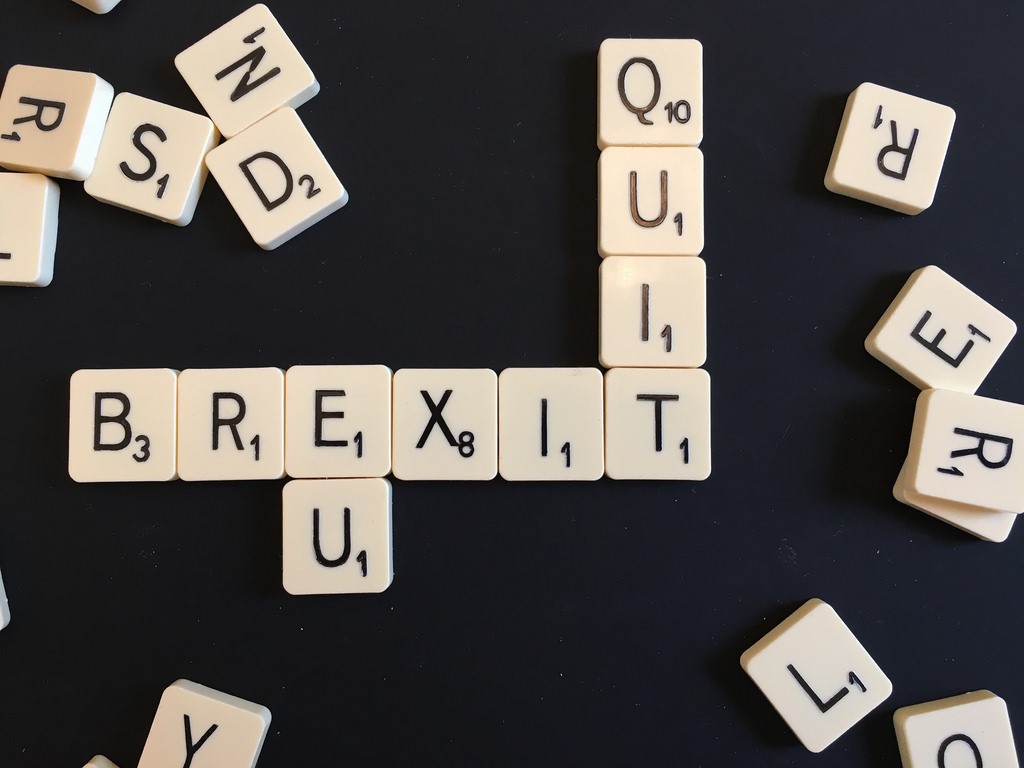
The Potential Impact of Brexit on the Prospects for a Green Transition in Europe

By Uncategorized

Context

In a referendum on 23 June 2016, 51.9% of the participating UK electorate (the turnout was 72.2% of the electorate) voted to leave the EU. On 29 March 2017, the British government invoked Article 50 of the Treaty on the European Union. The UK is thus on course to leave the EU on 29 March 2019.

This event has enormous implications not only for the future of the EU as a polity, but also for the green transition to a sustainable society and economy which is the fundamental aim shared by Green parties across Europe. The Green European Foundation therefore decided, with the help of its national project partner organisations, coordinated by Green House think tank in the UK, to hold a series of public discussion events over the course of 2017 to explore those implications.

About the project

The project aimed to examine these questions on a comparative European basis, involving selected EU member states for which Brexit raises particularly pressing issues, related either to their relationship with the UK or to their own national political situation (or both).

The rationale behind the project was two-fold. Firstly, it was intended to provide a platform for the exploration of the possible short- and medium-term impacts of Brexit on environmental and economic policies directly affecting the transition to sustainability, both in the UK and in the rest of Europe. Secondly, it was motivated by the belief that the Brexit decision in the UK raises urgent and difficult questions about the continuing coherence and effectiveness of the EU as a polity, at least in its current form, and whether it still represents the best vehicle for the achievement of sustainability in Europe in the long term.

The results and key finding are summarised in this paper. Free digital version is available for download below.

What impact will Brexit have on the ecological transition in Europe? (Paris)

By

On March 29, 2017, Theresa May, Prime Minister of the United Kingdom, triggered article 50 of the Treaty on the European Union and thereby activated the procedure of withdrawal from the European Union, which the country had joined in 1973.  Amongst all the controversies around Brexit, there is also the question on the impact of the UK’s withdrawal on ecological policies in Europe. Climate, energy, protection of biodiversity, agriculture and environmental standards are the range of policy fields concerned and not all domains are affected in the same way.

How will ecological policies evolve in an EU without the United Kingdom? Will Brexit change the European civil society that is mobilising on environmental issues?

The language of the event was French. Speakers were Viviane Gravey (PhD and Lecturer at Queen’s University Belfast) and Claude Turmes (MEP in the Greens/EFA). Debate was facilitated by Benoit Monange, director of FEP.


More Information

Registration: Please sign up for the event here

Date/Time : 27 June 2017, 18:30-20:00

Venue: Maison de l’Europe,  29 Avenue de Villiers, 75017 Paris, France

“Summer Days” Lorient, France

By

This year’s “Summer Days Lorient”, organised by Fondation de l’Écologie Politique from the 25th to 27th of August, provided three days of insightful discussions about relevant Green topics, such as Climate and Ecology, Democracy, Migration and many others. More information on the programme and its themes can be found on this webpage.

Green European Foundation participated in two special workshops during this event.

Firstly, the Green European Journal contributed with a debate entitled “Europe, borders and refugees”, on Thursday, the 25th of August from 14h00 to 15h30. This debate focused on the return of borders on the European continent and how the situation with refugees has shaken the European society and its core values, ​​such as freedom and solidarity. This event was hosted with the help of Fondation de l’Écologie Politique and Heinrich Böll Stiftung. It featured Marie Toussaint (BE delegate for Europe), Jens Althoff (Heinrich Böll Stiftung); François Gemenne (University of Liège); Dorothée Schmid (IFRI) and Laurent Standaert (Green European Journal).

As an additional reading for this occasion, we recommended the 12th edition of the Green European Journal: Checkpoint Europe – The Return of Borders.

Secondly, our director Aurélie Maréchal participated as a speaker in a workshop on “Political ecology, 20 years from now”, which took place as well on Thursday, the 25th of August from 14h00 to 15h30. During this workshop, we looked at what greens should do now, as we are confronted with catastrophic scenarios regarding the future of our democracies, along with the political, ecological, social and economic crises.  We also discussed how the new narrative to be developed and the challenges we should anticipate to face 20 years from now. The moderator was Alain Coulombel (member of the Executive Bureau of the French Green party) and the other speakers included Yves Cochet (president of Momentum Institute) and Alice Canabate (sociologist).

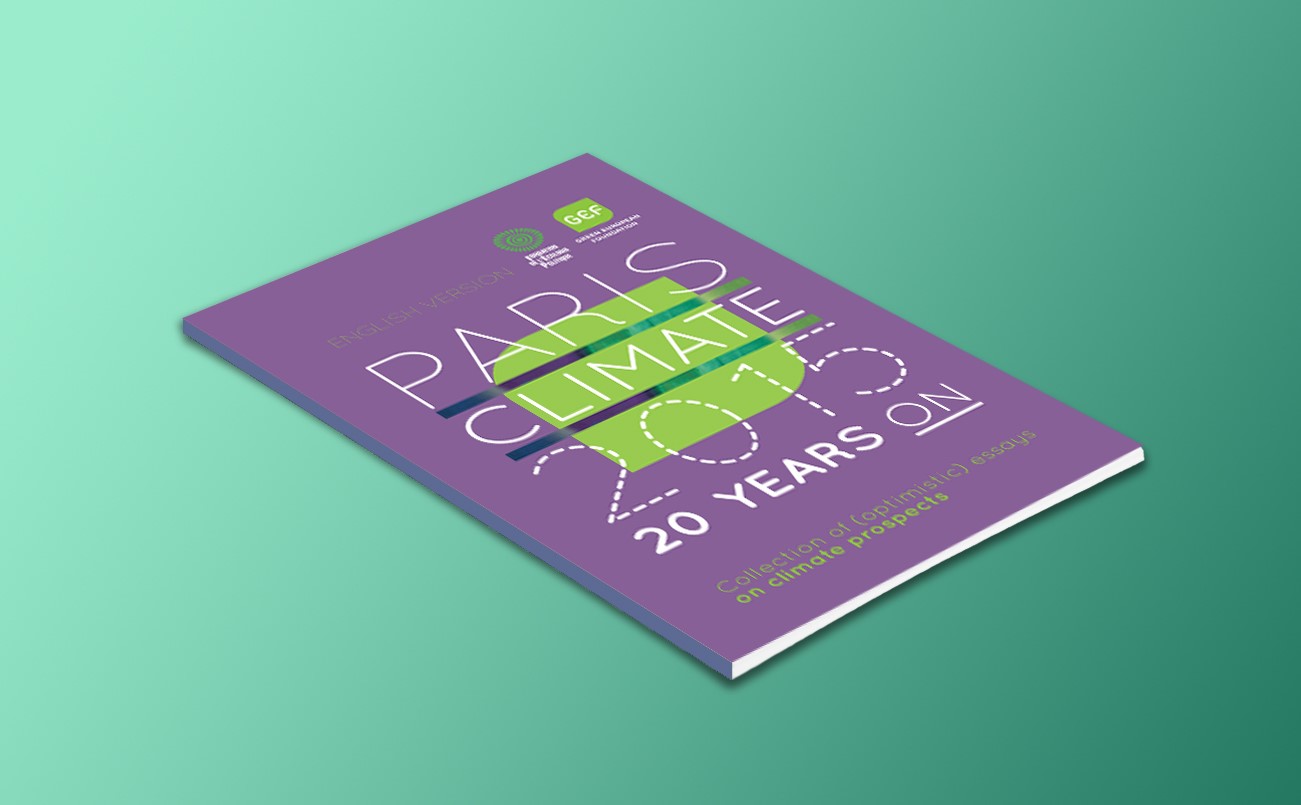
Paris Climate 2015 – 20 years on

By Uncategorized

At the end of 2015, France will be hosting the 21st Conference of the Parties to the Climate Agreement (COP21). It is hoped that the international negotiations, which take place in Le Bourget for a fortnight under the patronage of the UNO, will result in an ambitious, universal and binding agreement by the international community, enabling greenhouse gas emissions to be reduced and global warming to be limited to + 2°C.

To take a truly idealistic approach: supposing that the 2015 Paris Conference was a success, and 2015 – and the years thereafter – saw a spectacular turnaround in international political decisions, what might the world look like in 2035?

To paint the portrait of such a post-transitional ecological world, a diverse group of writers recognised in their fields have produced the texts which make up this publication concerning the various questions which are key factors in the expected scenarios: world governance and new territorial, agricultural, social, economic, legal and political models. They are pieces in an as-yet incomplete jigsaw puzzle depicting a new world, imagined a quarter of a century after the Paris Conference.

The contributions by the authors of  “Paris Climate 2015: 20 years on” collection and the illustrations accompanying them convey a society in which ecological transition has enabled us to reweave our social links and change our methods of government, making them fairer, and rethink our relations with nature and the production of value in the long term.

In the near future, citizens’ action, a new economic logic and their reflection in terms of collective expectations, will lead to a renewed political dynamism, both locally and internationally, in response to the challenge of climate change. A better world, not “the best of all possible worlds”, but one which is multifaceted, open to the diversity of the possible, giving ample room for individual and collective initiative and, therefore, for discussions on the solutions, is to be envisaged.

Can imagination make it easier to understand the risks that climate change bears? That is the question at the heart of this collection of “climate prospects”, imagined as an original and creative debating tool for use at the 2015 Paris Climate Conference.

You can download the publication below in English or French, or visit the dedicated site of the FEP here.

Icon

Paris 20 Years On EN 1.39 MB 58 downloads

...
Icon

Paris 20 Years On FR 4.42 MB 126 downloads

...