Green-Red Dialogues: For a Green and Social European Recovery Plan

By

About the Event:

The economic impact of COVID-19, on top of health and social dimensions, has been particularly challenging for economies such as Spain, with a dependent and weak industrial fabric, and heavily dependent on foreign production.

We want to explore the European recovery fund as an opportunity to propose a new industrial model, based on a true Green Deal that offers a powerful alternative to what we have today. A model that places ecology, sustainability, and the transition towards clean industries at the very centre of what is to be achieved, while promoting social and territorial cohesion and encouraging greater cross-European solidarity.

We will approach this third dialogue from different perspectives, learning first-hand what the proposals are from the trade union world from the voice of its top representative, Javier Pacheco. We will also hear from German Green MEP Henrike Hahn on what is happening at the European level. Finally, we get a local view from Laura Campos, Mayor of Montcada i Reixac, one of the territories where industry is the economic base of the municipality and therefore highly affected by this pandemic.

With them, we will debate and make proposals to tackle a real transformation.

Context:

This event is part of the Green Red Dialogues. The main purpose of this series of talks is to reflect on current issues from a green and social perspective. At a time when we have to face the global challenges as a result of COVID-19, it is important to reflect on a green way out of the crisis. The current capitalist system has demonstrated that it promotes social inequality and that it attacks the planet, and therefore, all the inhabitants of the earth. We must urgently reverse the effects of the climate crisis and promote socially just and environmentally friendly models. We need to ensure that these proposals reach citizens, and explain that it is compatible with the economy, progress, and development.

The first dialogue dealt with green responses to the health and climate crisis, and the second explored Universal Basic Income as a possible solution in addressing our current COVID-19 crisis and others to come.

Speakers:

  • Javier Pacheco – General Secretary of CCOO Catalonia
  • Henrike Hahn – MEP Greens/EFA, Committee on Industry, Research, and Energy
  • Laura Campos – Mayor of Montcada i Reixac

Welcome by: Susanne Rieger – co-president of the Green European Foundation

Moderator: Marc Rius

Practicalities:

Date: December 22nd (17:00 – 18:30 CET)

This event will take place in Spanish and English, with simultaneous translation provided via Zoom.

You can register for and join the Zoom call directly via this link.

EGAT Catalunya

By

About the event

During the European Green Activist Training, selected participants are introduced to green values and activity from the local level to the national, EU and international level. As a course participant, they hear from politicians and other professionals of the field, discover how politics is made, get a backstage pass to civil society organisations, and discuss change-making from an individual’s perspective. This course gives them the knowledge, skills and support network they need to become a changemaker themselves. Participants find their own way to be an activist, gain new friends and valuable experience.

First national Training

Catalunya- Fundacio Nous Horitzons- November 13, 14

Programme: through various presentations, participants will debate on the green way out of the health, economic and climate crisis, learn about the social protection measures in times of economic and climatic uncertainty, perspectives on climate change from feminism, and discuss green entrepreneurship.

The participants were given an additional article “UNA PROPUESTA ECOSOCIALISTA PARA EL ESCENARIO POST COVID-19”  by Joan Herrera, a jurist, former director of IDEA and current director of Environmental Action and Energy in the City Council of Prat de Llobregat. The focus of the article is in on the green way out of the sanitary, economic and climate crisis.

Green Cities Dealing with COVID-19

By

About the Event:

In this event we’ll be looking at how Green policies can be implemented at local level, to help face the challenges of Covid-19. We will also hear reflections from Green politicians on the ground, discovering how day to day governance is being disrupted.

Context:

This webinar is part of the GEF transnational project Cities as Places of Hope, which explores the power of cities to defy populist narratives and right-wing forces at the national level, and instead pursue progressive, transformative, and future-oriented policies across the continent.

Speakers:

  • Susanne Rieger, Co-President, Green European Foundation
  • Janet Sanz, Deputy-Mayor Barcelona
  • Claire Roumet, Executive Director, Energy Cities
  • Andy Deacon, Director of Operations and Strategy at Global Covenant of Mayors
  • Sergi Campillo, Vice-Mayor of Valencia

The event will be moderated by Sergi Alegre, Fundació Nous Horitzons

Programme:

18:00 – 18:10 Presentation of the webinar, Fundació Nous Horitzons, and GEF Cities as Places of Hope project (Sergi Alegre and Susanne Rieger, GEF Co-President)

18:10 – 18:20 Speaker 1: Janet Sanz, Deputy-mayor of Barcelona

18:20 – 18:30 Speaker 2: Claire Roumet, Executive Director, Energy Cities

18:30 – 18:40 Speaker 3: Andy Deacon, Director of Operations and Strategy at Global Covenant of Mayors

18:40 – 18:50 Speaker 4: Sergi Campillo, Vice-mayor of Valencia

18:50 – 19:30 Q&A via chat

19:30  –  19:35 Closing remarks

Practicalities:

We will use the Zoom video conferencing platform. It is recommended to join the webinar via a PC. You do not need to install additional software. However, for the best user experience and full participation features, you can install the free Zoom Desktop App.

Registration: https://us02web.zoom.us/webinar/register/WN_L9Dk1V0sSHi_muBJ66krVQ 

Simultaneous translation will be provided (Spanish-English)

——

This event is organised by the Green European Foundation with the support of Fundació Nous Horitzons and with the financial support of the European parliament to the Green European Foundation.

What is a Green City?

By

About the Event:

Our speakers will be exploring what it means to be a Green city. What are the aspects, actions and procedures that a city needs to follow before it can proudly call itself Green? After short presentations we’ll open the floor and give you the chance to share ideas, questions and comments.

Context:

This webinar is part of the GEF transnational project Cities as Places of Hope, which explores the power of cities to defy populist narratives and right-wing forces at the national level, and instead pursue progressive, transformative, and future-oriented policies across the continent.

With greens getting stronger and stronger at local level and even boasting a presence in parts of Europe where they underperform nationally, GEF and its partners are working to further explore and exchange on these progressive cities and networks – documenting their successes and fostering connections.

Speakers:

  • Susanne Rieger, Co-President, Green European Foundation
  • Lidia Munoz, Mayor of Sant Feliu
  • Alba Bou, Vice-Mayor of El Prat
  • Dirk Holemans, Co-President, Green European Foundation, former councilor of Gent

The event will be moderated by Sergi Alegre, Fundació Nous Horitzons

Programme:


17:00 – 17:05 Presentation of the webinar, Fundació Nous Horitzons, and GEF Cities as Places   of Hope project (Sergi Alegre, FNH)

17:05 – 17:10 Presentation of GEF and transnational projects (Susanne Rieger, GEF Co-President)

17:10 – 17:25 Speaker 1: Lidia Muñoz (Mayor of S. Feliu)

17:25 – 17:40 Speaker 2: Alba Bou (Vice mayor of El Prat)

17:40 – 17:55 Speaker 3: Dirk Holemans (GEF Co-President and former councilor of Gent)

17:55 – 18:25 Q&A

18:25 – 18:30 Closing remarks

Practicalities:

We will use the Zoom video conferencing platform. It is recommended to join the webinar via a PC. You do not need to install additional software. However, for the best user experience and full participation features, you can install the free Zoom Desktop App.

Register here

Simultaneous translation will be provided (Spanish-English)

—-

This event is organised by the Green European Foundation with the support of Fundació Nous Horitzons and with the financial support of the European parliament to the Green European Foundation.

Sun and Sand Tourism: Proposals for a Sustainable Future

By

About the Event:

For over 50 years the coasts of the Mediterranean Sea have been under pressure from masses of people looking for Sun & Sand, with a huge environmental impact on the coast and elsewhere through hidden destruction.

For the first time in decades popular tourist destinations have received respite during the travel season, but at the expense of economic and social wellbeing of millions. So now what? This webinar will focus on how greening the sector can aid the recovery in these hard-hit areas.

Context:

This event is part of the Fair and Carbon Free Tourism project. This project aims to identify and create conditions for collective action against detrimental social and environmental impacts of tourism. These impacts of tourism-induced economic activities are often underestimated, and while social impacts are increasingly being considered in some of the tourist hubs of the project partners’ countries, for instance in Barcelona, Dubrovnik, Salzburg, or Ohrid, environmental impacts in particular are often not (yet) addressed.

Speakers:

  • Susanne Rieger – Co-chair of GEF
  • Sergi Alegre – Fundacio Nous Horitzons
  • Tilly Metz – MEP Greens/EFA, Committee of Transport and Tourism
  • Eugenia Pascual – Initiative for Catalonia Greens Girona
  • Neus Truyol – Councillor Mallorca city, Equo
  • Vedran Horvat – Director of Institute for Political Ecology, Croatia

Practicalities:

Please check back later for a detailed programme.

This event will be taking place online. Register in advance via this link.

—-

This event is organised by the Green European Foundation with the support of Nous Horitzons Fundació and with the financial support of the European parliament to the Green European Foundation

Green-Red Dialogues: Minimum Living Income – A Step Towards UBI?

By

About the Event:

COVID-19 has once again put on the table the need for a change of model, based on solidarity and equity for all European citizens. If we apply the same instruments that we have used up to now, we are in danger of leaving many people behind, creating a socially and economically unequal Europe. What model of Europe do we want? How can we ensure that people can live with dignity? How can we contribute to the creation of a social security system that works for all? How can we make it possible for people to live with dignity from their work without having to accept multiple jobs or over-exploitation?

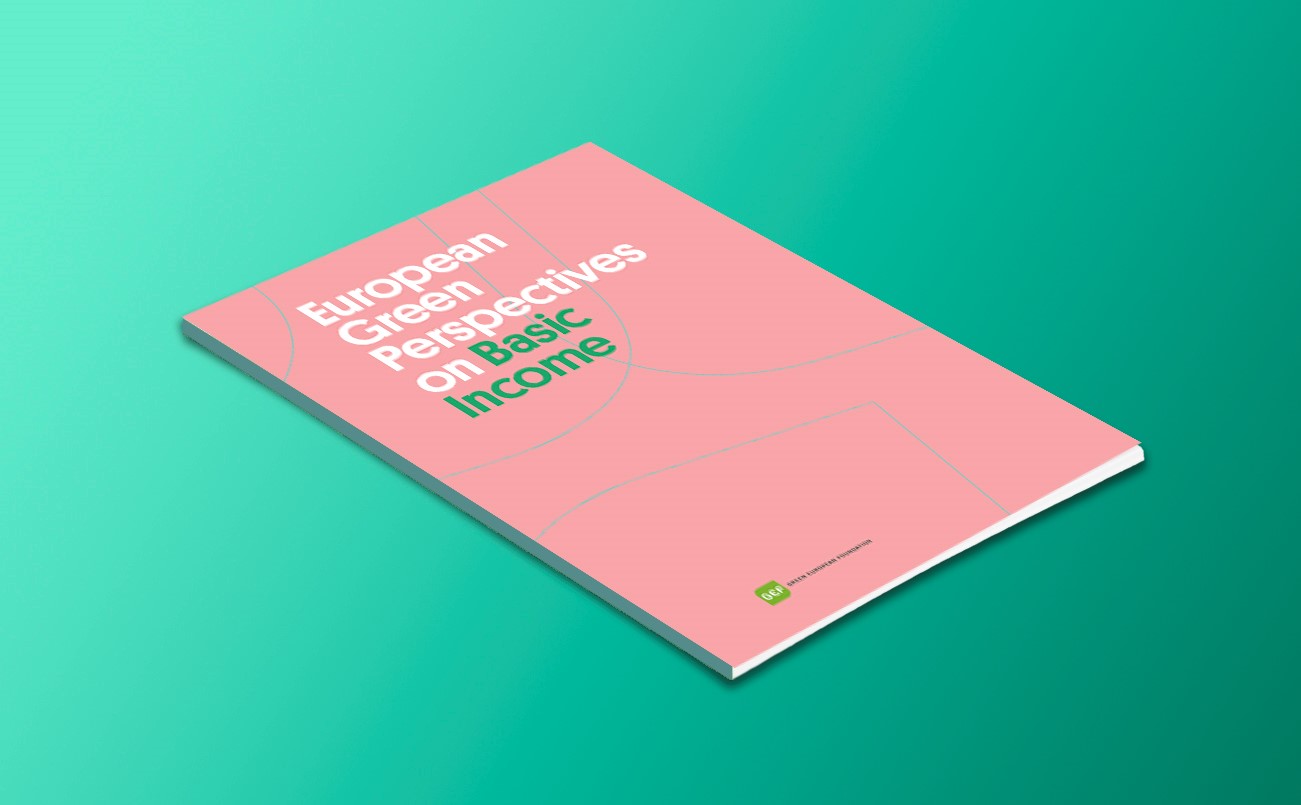
The second Green-Red Dialogue will address the topic of Basic Income. The Green European Foundation has worked with experts on this topic for the past three years, formulating “European Green Perspectives on Basic Income” together with several partner foundations including Fundacio Nous Horitzons.

Now is a good time to present the conclusions of that research and put back on the agenda an issue that in the current crisis situation is more relevant than ever. The effects of the coronavirus have left much of the population excluded and the outlook for the coming years is not very encouraging. Current welfare and subsidy models have been shown to fall short both in protecting groups at risk of exclusion and encouraging economic development in Europe.

According to experts in the field, basic income could: improve the situation of people with a low purchasing power; prevent overexploitation, job insecurity, and illegal work; prevent fraud by companies against their employees; allow higher taxes to be levied on high incomes; and enable economic development through empowering groups at risk of exclusion by dignifying them and thus contributing to a fairer and more egalitarian society.

These and other questions will be addressed in this second discussion on Basic Income – featuring Pepe Fernández Albertos, Aina Vidal, and Philippe Van Parijs.

Context:

This event is part of the Green Red Dialogues. The main purpose of this series of talks is to reflect on current issues from a green and social perspective. At a time when we have to face the global challenges as a result of COVID-19, it is important to reflect on a green way out of the crisis. The current capitalist system has demonstrated that it promotes social inequality and that it attacks the planet, and therefore, all the inhabitants of the earth. We must urgently reverse the effects of the climate crisis and promote socially just and environmentally friendly models. We need to ensure that these proposals reach citizens, and explain that it is compatible with the economy, progress and development.

The first dialogue dealt with green responses to the health and climate crisis.

Speakers:

Philippe Van Parijs, professor of philosophy and key promoter of basic income.

Pepe Fernández Albertos, doctor in political science from Harvard University and researcher at the Centro Superior de Investigaciones Científicas.

Aina Vidal, deputy at the Congress of Deputies of En Comú-Podem.

Moderator: Marc Rius

Practicalities:

Date: September 17th (18:00 – 19:15 CEST)

This event will take place in Spanish and English, with simultaneous translation provided via Zoom.

You can join the Zoom call directly here. The webinar will also be livestreamed on the YouTube channel of Fundació Nous Horitzons.


This event is organised by the Green European Foundation, with the support of Fundació Nous Horitzons and the financial support of the European Parliament to the Green European Foundation.

European Green Activist Training (Barcelona)

By

About the event:

During the European Green Activist Training Barcelona course, participants will learn about Green values, meet politicians and experts working at the front line of fighting for positive change, and of course connect with other like-minded young people.
The first training focuses on the introduction to the programme and team-building, diving into the theory behind political ecology, European and Green politics, practical skills building, as well as discussions with Dolors Comas, Ernest Urtasun and Mar García.
Programme of the online training:

Friday, 29 May
16:00 – 17:30 Introduction to the the European Green Activist Training
17:45 – 19:30 Team building: 21st century challenges

Saturday, 30 May
10:00 – 11:30 Theoretical framework: political ecology and ecosocialism.

12:00 – 13:30 Discussion with Dolors Comas (anthropologist, former President of Fundació Nous Horitzons)
16:00 – 16:30 What are European institutions and politics for? A green way forward from COVID-19.

16:45 – 19:00 Debate with Ernest Urtasun (Member of European Parliament, Greens/EFA) and Mar García (Secretary General of the European Green Party)

Sunday, 31 May
10:00 – 11:30 Discourse analysis and communication skills development
12:00 – 13:00 Evaluation and closing of the seminar

Green-Red Dialogues: Green Answers to the Health and Climate Crisis

By

About the Event:

The first Green-Red Dialogue will address key issues such as health, basic income and the economy.

What health model allows us to face possible future pandemics? The European Union is diverse, and the member states have faced the crisis from different health models, which have proven to be more effective in this fight against the COVID-18? How can we work to make the health system of the member countries more efficient and inclusive?

This is a health crisis that today, more than ever, cannot be addressed without taking into account the link with the climate crisis. The model of consumption is linked to agri-food exploitation, which also causes the deforestation of the planet and in turn has consequences for our health. Should we ignore the fact that the macro animal farms have something to do with the origin of the COVID-19? And what about the air we breathe? How does it influence our health, our defences, and the increased vulnerability to severe symptoms of the coronavirus?

Context:

This event is part of the Green Red Dialogues. The main purpose of this series of talks is to reflect on current issues from a green and social perspective. At a time when we have to face the global challenges as a result of COVID-19, it is important to reflect on a green way out of the crisis.

Speakers:

Ska Keller, Co-President of Greens/EFA in the European Parliament

Joan Herrera, lawyer and politician, former leader of Iniciativa per Catalunya

Moderator: Marc Rius, Director of Fundació Nous Horitzons

Programme:

18h00 Opening words by Marc Rius

18h05 Contribution from Ska Keller

18h20 Contribution from Joan Herrera

18h35 Q&A

19h00 Final round of closing words

19h15 End

Practicalities:

The primary language of the event is Catalan.

This event will be livestreamed on the YouTube channel of Fundació Nous Horitzons.


This event is organised by the Green European Foundation, with the support of Fundació Nous Horitzons and the financial support of the European Parliament to the Green European Foundation.

European Green Activist Training (Barcelona)

By

About this course

During the European Green Activist Training Barcelona course, you will learn about Green values, meet politicians and experts working at the front line of fighting for positive change, and of course connect with plenty of other like-minded young people!

The course will give you insights into the political decision-making processes on the national and European levels, develop your skills as an activist to enact social change, and explore how Green values promote more equal and sustainable societies.

More specifically, the training course consists of two intense training weekends, and additional online training. The first one will take place in May, in an online modality, and the second one will happen in November in Barcelona. In between, an online course on Green Learning will take place. The program will culminate in a one-week study trip to Brussels to visit the European Institutions alongside EGAT participants from other countries (Croatia, Poland, Finland, Hungary and Czechia).

We encourage people from across Spain, and particularly Catalonia, and from all backgrounds to apply to take part!

Find out more about EGAT on the EGAT project page.

Programme

The exact details of the programme are to be confirmed, please check back later for more information.

First Seminar (online)

  • 29 – 31 May, 2020
  • Sessions are planned in blocs of 2 hours
  • We work in plenary sessions, small groups, lectures with experts
  • Inclusive and interactive

Green Learning (online)

  • June 2020
  • Based on 3 recommended courses, to pick at least one.
  • Online follow-up meetings: 10 July 2020 and 18 September 2020

Second Seminar (El Prat de Llobregat, Barcelona)

  • 13 – 15 November, 2020

Online follow-up meeting:

  • 22 January, 2021

Brussels Study Trip

  • March 2021 (exact dates will be confirmed)

Practicalities

The European Green Activist Training Barcelona course is free of charge, and all travel and accommodation expenses in Spain will be covered by the Nous Horitzons Foundation.

All materials, travel (including flights) and accommodation costs in Brussels are covered by the Green European Foundation, on the assumption that the participant has successfully completed the national training sessions in Spain.

 How to Apply

Applicants must be 18-26 years old. Previous experience in Green organisations is not required.

We are looking for passionate young people with a strong motivation to learn and make a difference!

Apply via the form found here.

APPLICATION DEADLINE: Thursday 30 April 2020

The course is organised by Green European Foundation with the support of Nous Horitzons Fundació and with the financial support of the European Parliament to the Green European Foundation.

Basic Income and the EU level (Brussels)

By

About the Event

Within the last three years, the Green European Foundation has organised closed and open events on the topic of Universal Basic Income all over Europe and has produced several publications.

The transnational project is concluded with a closed roundtable meeting of representatives of our expert group from across Europe as well as stakeholders from the European Green Party, the Young Greens and the Green Group in the European Parliament.

The aim is to discuss how the outcomes of the project activities in the past years can be translated in the political process and what concrete recommendations for the political level could be to make concrete forward to make Universal Basic Income a European reality.


This roundtable is on invitation only. 

Climate Emergency Seminar (Barcelona)

By

About the Event

This seminar will tackle the issue of the climate emergency to stimulate a more lively public debate on the subject in Southern Europe. Throughout the day, representatives from academia, politics, and civil society will look at the different aspects of the climate emergency with a specific focus on the EU level as well as the situation in Spain and Catalonia.

Programme

10:10 WELCOME AND PRESENTATION OF THE DAY
Ernest Urtasun – MEP Green Group/EFA European Parliament
Susanne Rieger – Co-President Green European Foundation

10:20 PANEL: CLIMATE CHALLENGES, SPANISH AND CATALAN PERSPECTIVE
David Cid – Member of the Catalan Parliament, group Catalunya En Comú-Podem
Janet Sanz – 2nd Vice mayor of Barcelona for Environment, Urbanism, Infrastructures and Mobility
Koro López de Uralde – Climate activist
Andreu Escrivá – Environmentalist, adviser in Sustainability

11:45 COFFEE BREAK

12:15 PANEL II: CLIMATE CHALLENGES, EUROPEAN PERSPECTIVE
Ernest Urtasun – MEP Green Group/EFA European Parliament
Oriol Costa – Professor of International Relations at the Universitat Autònoma de Barcelona
Mar García – Secretary General of the European Green Party

13:45 CLOSING OF THE PLENARY AND PRESENTATION OF THE PRACTICAL WORKSHOPS IN THE AFTERNOON

14:00-16:00 LUNCH

16:00 PARALLEL WORKSHOPS

Energetical Challenges in Research and Development
Lourdes Berdié – Speaker of Network of Energetical Sovereignty

Food and Climate Change
Marta López Cifuentes – University of Natural Resources and Life Sciences, Vienna (BOKU) (Austria)

Mobility and Health
Pau Noy – President of the Foundation for Sustainable and Safe Mobility

Practicalities

The seminar will take place in English and Spanish, with simultaneous interpretation available.

Attendance at this seminar is free, but registration is required.
Please register your interest in attending by contacting fundacio@noushoritzons.cat


Details of this event are to be confirmed. Please check back later for more information. 

Global Trends, Local Challenges: The Green Answers (El Prat de Llobregat)

By

Event background

Despite increasing divisions and the rise of right-wing forces on the European and national scenes, many European cities are pursuing a progressive, positive and transnationally networked vision.

Cities are organising themselves increasingly in trans-local networks, such as Energy Cities, Fearless Cities, and Food Cities. As such, this type of governance is becoming all the more relevant at a transnational level in Europe. To this end, this upcoming GEF conference will look at global issues, how they translate into local challenges but also what the local Green answers to these challenges are.

About the event

In the framework of the transnational project Cities as Places of Hope, this event will examine global trends in their local contexts and how the emerging challenges are approached on a municipal level across Europe and what can be learned from each other. To this end, the conference will bring together local green councillors from Catalonia with their counterparts from Germany, France, the Netherlands and other countries to exchange ideas and best practices.

Programme

09.30-10.00 Registration

10.00-10.15 Welcome by Lluís Mijoler (Mayor of El Prat de Llobregat)


10.15-10.30
Presentation of the event by Sergi Alegre (Fundació Nous Horitzons)


10.30-11.00
Presentation of the project Fearless Cities by Merlijn De Rijcke (Oikos Foundation)

11-00-11.30 Migrations: past, present and future, Ricard Fernández (Coordinator Social Ares, Barcelona)


11.30-12.00
Coffee break


12.00-12.45
Digitalisation: opportunity or risk?, Florentius Kist (Local councillor, Rotterdam)


12,45-13.30
Climate change: are we in the proper track?, Anna Marti (Local councillor, El Prat de Llobregat)


13.30-14.00
The EU approach to globalization, Lluis Camprubi (responsible of ICV international committee)


14.00-15.00
Networking lunch with local food

Registration

The event will be held in Catalan with English interpretation. To find out more and participate in the event, send an email to Project Coordinator carlotta.weber@gef.eu.


Further details of this event are to be confirmed. Please check back later for more information. 

European Green Perspectives on Basic Income

By Uncategorized

Throughout 2017 and 2018, the Green European Foundation transnational project Basic Income for all EU Citizens? focused on basic income and investigated the proposal’s potential in relation to employment, the recognition of work beyond paid work, and the gendered division of labour.

This collection of articles brings together experts on basic income from all across Europe, to debate and clarify different aspects of the topic and help develop proposals. The aim of the publication is to inspire the next steps in promoting the basic income discussion, one which encompasses some of the biggest challenges faced by society today.

In 2019, GEF will continue its work on basic income and contributing to transnational discussion with the project Basic Income – European Public Debate

Download

Available in Spanish


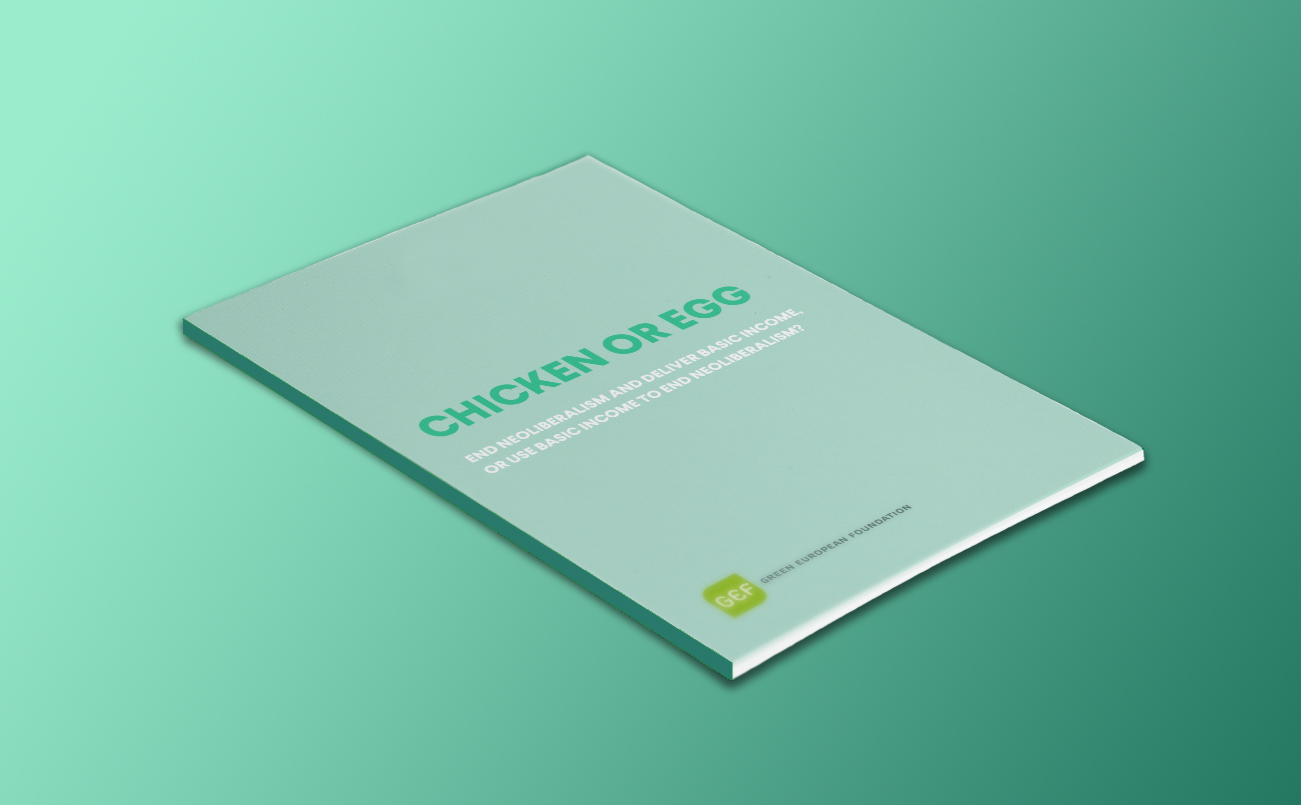
Chicken or Egg – Basic Income Earth Network (BIEN) Congress Summary

By Uncategorized

Chicken or Egg – End Neoliberalism and Deliver Basic Income, or use Basic Income to End Neoliberalism?

Natalie Bennett was in Finland as part of the Green European Foundation’s expert group for a transnational project on Universal Basic Income, initiated in 2017.

In the framework of the “Basic Income for all EU Citizens?” transnational project, the GEF expert group, comprising Basic Income experts from Finland, Spain, Germany, Switzerland, Serbia, and the United Kingdom, ateended the BIEN Congress to discuss the latest developments in the studies and application of the Basic Income models across Europe.

In addition to their participation in the conference, the expert group came together in a meeting organised by GEF to facilitate the development of the GEF Basic Income project.

GEF was present throughout the Congress, displaying and disseminating the outcomes of various GEF projects related to the topic.


Read the article in Spanish.

New Political Course Days (Barcelona)

By

Context

The current times in Europe are characterised by political uncertainty and instability in regard to domestic as well as foreign policies. As it is clear that we are living in times of fundamental change, citizens all over Europe must be equipped with the tools to take a new political course and they must be empowered to face the challenges ahead.

Many countries across the EU face similar challenges in various areas that affect citizens’ daily lives: insufficient access to affordable housing, high unemployment rates and precarious jobs, sexist violence and the ongoing migration and asylum policies crisis. At the same time, we can observe a neoliberal drift as well as the rise of nationalist, undemocratic forces in some EU member states that is counterproductive to find sustainable solutions to those challenges.

Only with an extensive participation of citizens, the radical changes that are needed to face those challenges can be made.

About the event

The upcoming New Political Course Days, organised with the support of Fundació Nous Horitzons and in collaboration with a variety of other actors such as Fundació l’Alternativa and Instituto 25M Democracia, will provide a space for debate with agents of change and to formulate demands towards the political representatives for this era of change in Catalonia, Spain and Europe.

Programme

Friday, 14 September

17:00 REGISTRATION

17:20 OPENING

17:30 DISCUSSION WITH ADA COLAU

Ada Colau, Mayor of Barcelona

18:15 PANEL DEBATE Multilevel governance, politics of scale and social transformation

Lucía Martín, ECP representative in the Congress of Deputies: Housing policies

Pablo Cotarelo, Engineer and consultant for the energy sector: A new energy economy

Marta Junqué, Fearless Cities: From the neighbourhoods to Europe – the relation of local and global

Moderation: Marc Parés, Professor of Geography at the Autonomous University of Barcelona and head of the  Research Group on Urban Governance, Commons, Internet & Social innovation at the Institute for Government and Public Policies

Programme

Saturday, 15 September

10:00 PANEL DEBATE Europe, sovereignty and democracy

Ernest Urtasun, Member of the European Parliament for the Greens/EFA Group

Fabio de Masi, Member of the German Parliament of Die Linke

Elly Schlein, MEP of S&D

Moderation: Lucile Schmid, Co-President of the Green European Foundation

11:00 BREAK

11:15 PANEL DEBATE A new economic, social and environmental model for Catalonia

Jordi Angusto, Economist: A new economic model for Catalonia

Sandra Ezquerra, Professor of sociology at Universitat de Vic Barcelona: A feminist economy

José Antonio Donaire, Professor of geography at Universitat de Girona: A sustainable economy

12:45 PANEL DEBATE Start of the new political course: the challenges  ahead for progressive forces in this moment of change

Elisenda Alemany, Member of the Catalan Parliament for Catalunya En Comú Podem

Ione Belarra, Representative in the Congress of Deputies for Unidos Podemos

Enric Juliana, Deputy Director of La Vanguardia

Gemma Ubasart, Professor of political science at Universitat de Girona

Moderation: Dolors Comas d’Argemir, President of Fundació Nous Horitzons

14:15 CLOSING


For more info and registration, send an email to fundacio@noushoritzons.cat

Stay tuned for updates on this website and by signing up for the Facebook event!

UBI - Basic Income

GEF at the BIEN Congress 2018 (Tampere)

By

Context

In the framework of the “Basic Income for all EU Citizens?” transnational project, the GEF experts’ group, comprised of Basic Income experts from Finland, Spain, Germany, Switzerland, Serbia, and the United Kingdom, will attend the BIEN Congress to discuss the latest developments in the studies and application of the Basic Income models across Europe. In addition to their participation in the conference, the experts’ group will come together in a meeting organised by GEF to facilitate the development of the GEF Basic Income project.

GEF will be present throughout the entire Congress displaying and disseminating the outcomes of various GEF projects related to the topic.

About the event

The 2018 BIEN Congress plans to build on the growing interest in Basic Income by inviting activists, stakeholders, policymakers, students and researchers to discuss the promises of Basic Income against the background of the need for a “new universalism”. The 2018 Congress is entitled “Basic Income and the New Universalism: Rethinking the Welfare State in the 21st Century”.

BIEN 2018 features a Film Festival with a dozen productions from around the world on the topic of Basic Income. The Film Festival will run alongside the congress and can be visited by Congress participants but is also open to the general public. The Congress language is English.


For more information about the conference and registration, visit the website of the BIEN 2018.

Commons Barcelona

The socio-economic model of the Commons in Europe (El Prat de Llobregat)

By

Context

Local governments have to rethink their way of doing politics with more and more citizens’ initiatives emerging across Europe that are establishing new organisations, introducing a shared economy and leave the image of a passive citizenry behind them. The challenge ahead is therefore to build specific structures and processes that foster synergies between the public and the commons domain.

These developments could lead to a prototype of transformative cities, being the driving force introducing the socio-economic model of the Commons as the new paradigm. Governmental structures however must be reformed to constitute a so-called Partner State, where politicians perceive their constituency as a community of citizens with a lot of experience and creativity and top-down politics are left behind.

About the event

By highlighting several best practices from Catalonia and all over Europe and in particular the municipal level as the most fertile ground for commons practices, this conference will showcase inspiring examples of how this Partner State can be realised and organised in the best possible way.

Draft Programme

9:30 – 10:00 REGISTRATION 

10:00 – 10:15 WELCOME Susanne Rieger, Green European Foundation Co-president

10:15 – 10:30 INTRODUCTION TO THE CONFERENCE Sergi Alegre, Fundació Nous Horitzons

10:30 – 11:15 KEYNOTE: A NEW SOCIO-ECONOMIC MODEL – COMMONS IN EUROPE Dirk Holemans, Director Oikos Think Tank and City Councillor of Ghent (Belgium)

11:15 – 11:45 COFFEE BREAK

11:45 – 12:45 MUNICIPALITY AND THE COMMONS

  • The case of Barcelona Lluís Torrens
  • The case of Prat de Llobregat Lluís Mijoler

12:45 – 13:45 ECONOMY OF THE COMMONS

  • Esperanzah! Foundation Òscar Rando
  • Obrera de Vivendas Cooperative Dolors Camats

13:45 – 14:15 SOCIETY OF THE COMMONS: The example of the region of the South Perpignan District (France) Bruno Soula

14:15 LUNCH


Register now by sending an email to fundacio@noushoritzons.cat and stay tuned for updates by following us on Facebook or Twitter to learn about our other activities. 

UBI - Basic Income

Universal Basic Income – a Green Answer to the Future Challenges of the Labour Market? (Antwerp)

By

Context

In 2017, the Green European Foundation started, with the support of different national partner foundations a transnational project on basic income with the objective to refine the concepts behind Universal Basic Income and contribute to the Europeanisation of the debate while taking into consideration the huge differences of social security systems across Europe. To this end, we formed a basic income expert group with representatives of Spain, Catalonia, Switzerland, Germany, Serbia, Belgium and Greece. In 2018, the focus of the ‘Basic Income for all EU Citizens?project lies on the financial concepts and on formulating first ideas for a European pilot project on basic income that can deliver comparable results for different European countries.

About the event

During this session, we aim to make the link of those discussions to the broader debate on the future of work and whether basic income can become part of the Green answer to the challenges the labour market is currently facing. At the same time, the session shall serve as an opportunity to exchange on examples and different ideas of Green parties across Europe.

We will organise an interactive session, using the “fish bowl” method: the discussion starts in a semi-circle with one moderator and the three panelists and two empty chairs; after the  first input by the moderator and the three panelists, the audience is invited to fill the empty chairs and take the role of panelists themselves; after the input the chairs have to be left to other participants.

Finally, the workshop will provide an opportunity to present the results of a planned survey we launched on the state of play of the UBI debate within the different Green parties across Europe as well as in the national public discourses.

Moderators

Ville Ylikahri, GEF Board Member, Secretary General in the Green Cultural and Education Centre – Visio in Finland, representative of project expert group for Finland;


Susanne Rieger, GEF Co-President, responsible for European issues and European relations in the Catalan Green foundation Fundació Nous Horitzons (FNH), Project coordinator of the GEF transnational project on Basic Income.


Speakers

  • Wolfgang Strengmann-Kuhn, Member of Parliament, Germany
  • Julen Bollain, Member of the Basque Parliament, economist & researcher specialised in unconditional basic income, Spain
  • Predrag Momcilovic, Executive Committee Member Federation of Young European Greens, journalist, PhD student on political ecology and degrowth, Serbia
  • Irina Studhalter, Local Councillor Lucerne & political campaigner, Switzerland
  • Natalie Bennett, politician and journalist, former leader of Green Party of England and Wales, United Kingdom


Stay tuned for updates

Subscribe to our Facebook event, where you will receive reminders and the latest news on content. Follow us on Facebook or Twitter to learn about our other activities.


Basic Income Greece Project

Constraints Against and Prospects Towards the Implementation of the Basic Income in Greece Within the Crisis

By Uncategorized

This report is one of the outcomes of GEF’s transnational project on Basic Income. Within this framework two study visits and multiple discussions on the topic took place.

The demand for securing all members of society against life’s adversities and the negative effects caused from social structures has been an ongoing concern of all social formations. From a historical point of view, this need was expressed in various forms in different times throughout history, ranging from food distribution to the poor in the times of the great empires (i.e. Egyptian Empire) and the charities of the monasteries in Middle Ages, to a universal basic income for all, the major social demand in late capitalism.

In contemporary industrial and post-industrial capitalism, this demand is expressed in two distinct political proposals: The first one focuses on unconditional universal basic income for all members of society irrespective of their financial status (Van Parijs, 1992) and the second one focuses on conditional basic income exclusively for those in unfavourable situation – if not in the most unfavourable situation – with respect to acceptable levels of living.

Read about the Finnish Basic Income Model here.

Basic Income Model of the Finnish Greens

By Uncategorized

This report is one of the outcomes of GEF’s transnational project on Basic Income. Within this framework two study visits and multiple discussions on the topic took place.

The Finnish Greens have been talking about the possibility of a basic income since 1980’s. Initially the term ‘citizen’s wage’ was used, but in the 1990s the term ‘basic income’ became standard. 2007 marked a big step forward in the basic income debate; that year, the Greens presented their first comprehensive basic income model. It established for the first time that a transition to a basic income model is possible. The basic income model was calculated using micro-simulation modelling as a cost-neutral and feasible model with a view to showing how Finnish social security could be organised in a new way so that it would be more just and supportive for everyone. In 2007, the Greens proposed that a basic monthly income of €440 be distributed to all Finns, and that a related tax reform be implemented.

Because the Finnish social security system was reformed and the associated minimum benefits improved, the Greens needed to update their basic income model. This update was done in 2014. The basic income level was then set at €560, which is still equivalent to the minimum level of social security for an unemployed person. The Greens’ 2014 basic income model did not restate the objectives of the model, since these were detailed in the context of a paper published with the 2007 model. This model has also been translated into English. The basic income model presented by the Greens in 2014 is still highly topical. When they published the model, the Greens insisted on a pilot study of the basic income, which the current Government of Finland has now implemented. In the basic income pilot, a small number of unemployed people receive a basic income of €560, which they will not lose even if they find work or receive other income. The pilot study is in many respects incomplete, but it is nevertheless yet another step towards realising the utopian idea of the basic income in practice.

The Finnish Greens based the calculations for their 2014 model on the micro-simulations calculated by the Finnish Parliament’s information service. The analysis based on the simulations can be accessed at www.vihreat.fi/perustulo (in Finnish). The analysis was very thorough, and it also showed many of the problem areas in the basic income model. For example, it argued that it is very difficult to combine the basic income with housing benefits. Nor does the basic income model also remove all economic disincentives. Even so, the analysis does provide a credible basis for the model proposed.

Next, the Finnish Greens aim to modify the model on the basis of the results of the ongoing pilot study. At the same time, the Greens have started discussing how housing benefits can be combined with the basic income model, and how implementing the real-time income register could enable social security automation as intended by the basic income model.