UBI - Basic Income

GEF at the BIEN Congress 2018 (Tampere)

By

Context

In the framework of the “Basic Income for all EU Citizens?” transnational project, the GEF experts’ group, comprised of Basic Income experts from Finland, Spain, Germany, Switzerland, Serbia, and the United Kingdom, will attend the BIEN Congress to discuss the latest developments in the studies and application of the Basic Income models across Europe. In addition to their participation in the conference, the experts’ group will come together in a meeting organised by GEF to facilitate the development of the GEF Basic Income project.

GEF will be present throughout the entire Congress displaying and disseminating the outcomes of various GEF projects related to the topic.

About the event

The 2018 BIEN Congress plans to build on the growing interest in Basic Income by inviting activists, stakeholders, policymakers, students and researchers to discuss the promises of Basic Income against the background of the need for a “new universalism”. The 2018 Congress is entitled “Basic Income and the New Universalism: Rethinking the Welfare State in the 21st Century”.

BIEN 2018 features a Film Festival with a dozen productions from around the world on the topic of Basic Income. The Film Festival will run alongside the congress and can be visited by Congress participants but is also open to the general public. The Congress language is English.


For more information about the conference and registration, visit the website of the BIEN 2018.
UBI - Basic Income

Universal Basic Income – a Green Answer to the Future Challenges of the Labour Market? (Antwerp)

By

Context

In 2017, the Green European Foundation started, with the support of different national partner foundations a transnational project on basic income with the objective to refine the concepts behind Universal Basic Income and contribute to the Europeanisation of the debate while taking into consideration the huge differences of social security systems across Europe. To this end, we formed a basic income expert group with representatives of Spain, Catalonia, Switzerland, Germany, Serbia, Belgium and Greece. In 2018, the focus of the ‘Basic Income for all EU Citizens?project lies on the financial concepts and on formulating first ideas for a European pilot project on basic income that can deliver comparable results for different European countries.

About the event

During this session, we aim to make the link of those discussions to the broader debate on the future of work and whether basic income can become part of the Green answer to the challenges the labour market is currently facing. At the same time, the session shall serve as an opportunity to exchange on examples and different ideas of Green parties across Europe.

We will organise an interactive session, using the “fish bowl” method: the discussion starts in a semi-circle with one moderator and the three panelists and two empty chairs; after the  first input by the moderator and the three panelists, the audience is invited to fill the empty chairs and take the role of panelists themselves; after the input the chairs have to be left to other participants.

Finally, the workshop will provide an opportunity to present the results of a planned survey we launched on the state of play of the UBI debate within the different Green parties across Europe as well as in the national public discourses.

Moderators

Ville Ylikahri, GEF Board Member, Secretary General in the Green Cultural and Education Centre – Visio in Finland, representative of project expert group for Finland;
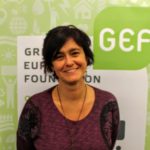


Susanne Rieger, GEF Co-President, responsible for European issues and European relations in the Catalan Green foundation Fundació Nous Horitzons (FNH), Project coordinator of the GEF transnational project on Basic Income.


Speakers

  • Wolfgang Strengmann-Kuhn, Member of Parliament, Germany
  • Julen Bollain, Member of the Basque Parliament, economist & researcher specialised in unconditional basic income, Spain
  • Predrag Momcilovic, Executive Committee Member Federation of Young European Greens, journalist, PhD student on political ecology and degrowth, Serbia
  • Irina Studhalter, Local Councillor Lucerne & political campaigner, Switzerland
  • Natalie Bennett, politician and journalist, former leader of Green Party of England and Wales, United Kingdom


Stay tuned for updates

Subscribe to our Facebook event, where you will receive reminders and the latest news on content. Follow us on Facebook or Twitter to learn about our other activities.


Basic Income Greece Project

Constraints Against and Prospects Towards the Implementation of the Basic Income in Greece Within the Crisis

By Uncategorized

This report is one of the outcomes of GEF’s transnational project on Basic Income. Within this framework two study visits and multiple discussions on the topic took place.

The demand for securing all members of society against life’s adversities and the negative effects caused from social structures has been an ongoing concern of all social formations. From a historical point of view, this need was expressed in various forms in different times throughout history, ranging from food distribution to the poor in the times of the great empires (i.e. Egyptian Empire) and the charities of the monasteries in Middle Ages, to a universal basic income for all, the major social demand in late capitalism.

In contemporary industrial and post-industrial capitalism, this demand is expressed in two distinct political proposals: The first one focuses on unconditional universal basic income for all members of society irrespective of their financial status (Van Parijs, 1992) and the second one focuses on conditional basic income exclusively for those in unfavourable situation – if not in the most unfavourable situation – with respect to acceptable levels of living.

Read about the Finnish Basic Income Model here.

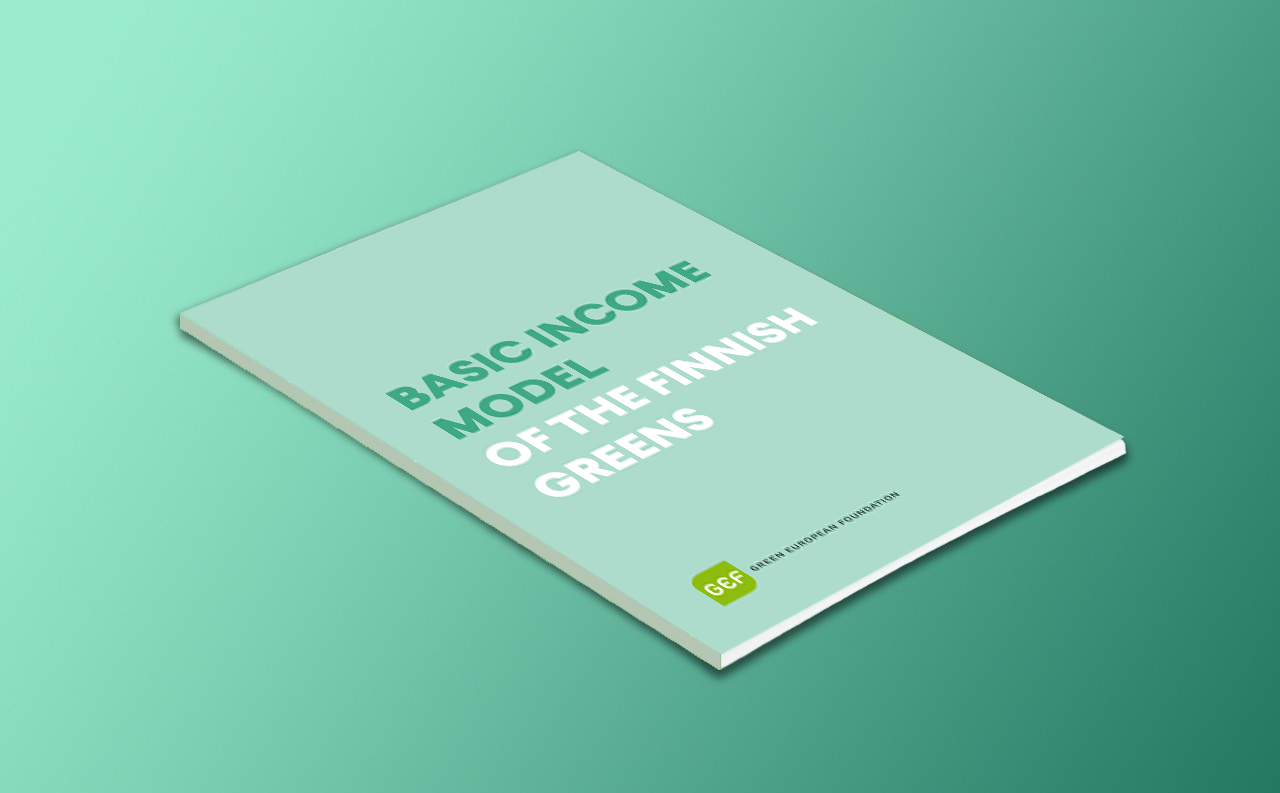
Basic Income Model of the Finnish Greens

By Uncategorized

This report is one of the outcomes of GEF’s transnational project on Basic Income. Within this framework two study visits and multiple discussions on the topic took place.

The Finnish Greens have been talking about the possibility of a basic income since 1980’s. Initially the term ‘citizen’s wage’ was used, but in the 1990s the term ‘basic income’ became standard. 2007 marked a big step forward in the basic income debate; that year, the Greens presented their first comprehensive basic income model. It established for the first time that a transition to a basic income model is possible. The basic income model was calculated using micro-simulation modelling as a cost-neutral and feasible model with a view to showing how Finnish social security could be organised in a new way so that it would be more just and supportive for everyone. In 2007, the Greens proposed that a basic monthly income of €440 be distributed to all Finns, and that a related tax reform be implemented.

Because the Finnish social security system was reformed and the associated minimum benefits improved, the Greens needed to update their basic income model. This update was done in 2014. The basic income level was then set at €560, which is still equivalent to the minimum level of social security for an unemployed person. The Greens’ 2014 basic income model did not restate the objectives of the model, since these were detailed in the context of a paper published with the 2007 model. This model has also been translated into English. The basic income model presented by the Greens in 2014 is still highly topical. When they published the model, the Greens insisted on a pilot study of the basic income, which the current Government of Finland has now implemented. In the basic income pilot, a small number of unemployed people receive a basic income of €560, which they will not lose even if they find work or receive other income. The pilot study is in many respects incomplete, but it is nevertheless yet another step towards realising the utopian idea of the basic income in practice.

The Finnish Greens based the calculations for their 2014 model on the micro-simulations calculated by the Finnish Parliament’s information service. The analysis based on the simulations can be accessed at www.vihreat.fi/perustulo (in Finnish). The analysis was very thorough, and it also showed many of the problem areas in the basic income model. For example, it argued that it is very difficult to combine the basic income with housing benefits. Nor does the basic income model also remove all economic disincentives. Even so, the analysis does provide a credible basis for the model proposed.

Next, the Finnish Greens aim to modify the model on the basis of the results of the ongoing pilot study. At the same time, the Greens have started discussing how housing benefits can be combined with the basic income model, and how implementing the real-time income register could enable social security automation as intended by the basic income model.

EGAT Study Visit to Brussels 2018

By

About EGAT

The European Green Activist Training consists of training sessions for young Green activists in two phases: the first entails national trainings on domestic politics, as well as a session on European politics and institutions; and the second brings together the activists from different countries in Brussels to complement their training by experiencing the European political dimension first-hand.

This transnational project aims at the Europeanisation of existing trainings for Green activists in several European countries by making them more European in their content, but also more co-operative, by enabling young activists to meet and network.

Study visit to Brussels 2018

This year, we will gather EGAT participants from Finland, Hungary, Czech Republic, Croatia and Malta in Brussels between 05 and 09 March 2018 to visit relevant European institutions, civil society organisations and activists, and to take part in stimulating workshops in order to gain a critical insight into functioning of the EU and ways of making an impact as a young citizen.

Programme

Monday 5 March (Arrival Day)

19:00 – 22:00 – Welcome & ice-breaker activities

Tuesday 6 March (Brussels Actors Day)

10:00 – 12:30 – Alternative Initiatives (Parallel Sessions)

12:30 – 13:30 – Lunch

13:30 – 14:50 – Introducing EGP, FYEG, GEJ (Parallel Sessions)

15:00 – 16:20 – Introducing ILGA Europe, FoEE, The Good Lobby (Parallel Sessions)

16:30 – 17:50 – Introducing GRIP, GEF, Why Privacy Matters (Parallel Sessions)

18:30 – 20:00 – Dinner

Wednesday 7 March (European Day)

9:30 – 17:30 – Visiting the European Parliament

Thursday 8 March (Activism Day) 

10:00 – 11:00 – Introduction and Games

11:00 – 12:30 – Turning apathy Into Action – what makes political campaigning effective?

12:30 – 14:00 – Lunch

14:00 – 14:50 – Fishbowl – Lessons from the Women’s Movements (EWL, FYEG)

15:00 – 16:15 – Group Work

16:15 – 17:00 – Ideas Bazar & Feel-o-meter

18:30 – 20:00 – Dinner

Friday 9 March (Evaluation Day) 

10:00 – 12:30 – Reflection and Evaluation

12:30 – 13:00 – Lunch and Departures

EGAT session on EU politics in Finland

By

Training in Finland for young Green activists with a strong interest in Europe

This training s a part of our transnational project “European Green Activists Training”, and will provide opportunities for 20 participants to learn more about the institutions of the European Union, Green politics and sustainable development policies.

As an additional element of this training, the participants will gain an exclusive access to our online course IMPACT EUROPE – which will enhance their critical understanding of the European Union, provide them with an analytical overview of the Green movement in the context of contemporary politics at the European level, as well as with insights into ways of generating political impact as a European citizen.

The EU Session

The Green European Foundation will contribute with a special session with the focus on Europe, the EU and the Greens on 1st and 2nd December in Helsinki. Find our more about the programme below.

Programme

The first day will consist of a visit  to the Ministry for Foreign Affairs of Finland, Department of Europe, and a workshop entitled ”Simulation of European Parliament” facilitated by the members of Young European Federalists of Finland.

During the second day, the participants will take part in thematic workshops, listed below:

  • “Basics of the European Union Politics” – Sirpa Hertell, Chair of the Europe Working Group of the Green Party;
  • “European Green Party and Greens at European Level”, Oras Tynkkynen, Board Member of the European Green Party;
  • “Climate Politics in the EU”, Tuuli Hirvilammi, Researcher, PHD, University of Jyväskylä;
  • “Food Policy and Security”, Carl Schlyter, Member of the Swedish Parliament and former MEP;

The EU training session will be accompanied by training session on national politics and culminate in a study visit to Brussels in Spring 2018, in which the participants will complement their training by experiencing the European political dimension first-hand.

Application process closed

The deadline for applications was 31 August 2017. Stay tuned for similar opportunities next year and shorten the wait by going through our online course!

Young Green Activist Training in Finland

By

This event is a part of our transnational project “European Green Activists Training”, which this year consists of training sessions for young Green activists from Czech Republic, Finland, Hungary, Croatia and Malta. The participants will take part in:

  • National trainings on domestic politics, as well as a session on European politics and institutions;
  • Study visit to Brussels in Spring 2018, in which they will complement their training by experiencing the European political dimension first-hand.

Young Green Activist Training

We invite all young people between 15-25 years, living in Finland, who are interested in Green ideas, European Union and change making in general. During this training the participants have a possibility to meet many politicians, get to know methods of making impact on civil society and learn about making a better world on local, national, European and global level. The aim of these training sessions is to help the participants to find their own way of change making and inspire them to act.

This training will consist of five meetings through autumn 2017 in Finland, each of them last for a weekend. This will be followed by a study trip to Brussels in the spring 2018.

As a special element of this training, the participants will gain an exclusive access to our online course IMPACT EUROPE – which will enhance their critical understanding of the European Union, provide them with an analytical overview of the Green movement in the context of contemporary politics at the European level, as well as with insights into ways of generating political impact as a European citizen.

Detailed programme and practical information is available here.

The Green European Foundation will contribute with a special session with the focus on Europe, the EU and the Greens on 1st and 2nd December in Helsinki. During this occasion, the participants will get familiar with the decision-making process and policies of the European Union and the activities of the Green Movement at the European level.

Participation

The training costs 200 euros, including travel costs for all meetings, along with material, travel and accommodation in Brussels. Accommodation in Finland will be provided to those who come from other parts of the country.

Apply now!

The applications are open until 01 September. Submit your application by filling out this form. Good luck!

In case you have any questions, please get in touch with the project coordinator Laura Mattinen.

Basic Income Study Trip to Helsinki

By

This event is a part of the ongoing project “Living with Dignity in a Digitalised Working World – Basic Income for all EU Citizens?” which aims to  contribute to the debate about basic income and to further explore social and fair solutions to increasing inequality within the European societies.

The study trip to Helsinki will have a special focus on the basic income in the context of Finland. Therefore, it will include visits to relevant NGOs and research centers to gain more insights, along with meetings with the Finnish Green party to discuss Green views on the topic.

The result of this event will be published and shared at the end of the year, summarising the most important questions and insights about basic income, and a comparison between different experiments (i.e. Helsinki and Barcelona). Participants of the study trip are pre-selected. Stay tuned for more updates!


European Green Activist Training Finland

By


Also in 2016, young green-minded people gathered in Helsinki for a training on European topics as part of the Green European Foundation’s transnational project European Green Activist Training.
The training was organised in parallel to similar trainings in Catalonia, Czech Republic and Hungary, and culminated in a common study trip to Brussels to experience the European Union first-hand.


Programme

December 2

15:00h: Visit to the European Commission’s Finnish department and to the European Parliament’s Finnish information service; ‘EU in a nutshell’ – Jarmo Oikarinen and Timo Pulkkinen

17:30h: Green in Europe and in the EU – Laura Norström (MEP Heidi Hautala’s assistant, on maternity leave)

19h30: Me, an European? – Jesse Jääskeläinen (Young European Federalists Finland)

December 3

10:00h: Discussion on the Future of free movement in the world of Trump and Brexit – Kati Pietarinen, Markus Himanen, Laura Nordström and Hussain Kazemian

12:30h: EU policies workshop – Riikka Tähkävuori

15:00h: Hate speech and human rights in Europe – Niko Pyrhönen (University of Helsinki)

17:00h: How can I influence on policy making? – Filipe Henriques

19:00h: Dinner with Alan Haji, a syrian refugee

December 4

10:00h: Climate policy – Tuuli Hietaniemi (Kepa)

13:00h: NGO and the EU – Anssi Pirttijärvi (Seta)


European Green Activists Training 2015-2016 [VIDEO]

By Uncategorized

This video was produced in 2016 during the study trip to Brussels, which represents the final part of our European Green Activist Training project. This transnational project offers educational opportunities for young people interested in politics and activism. After a series of training in their respective countries, organised together with our national partners, this joint study trip enables the young participants to meet and exchange in Brussels with other Green-minded people from all over Europe. Furthermore, it provides them with a first-hand opportunity to gain knowledge of European politics during their visits to the European Parliament and other European institutions.

Find out what the organisers, coordinators and some of the participants from Finland, Hungary, Czech Republic and Austria, have to say about this experience and receive an impression of their study trip to Brussels in the video below.


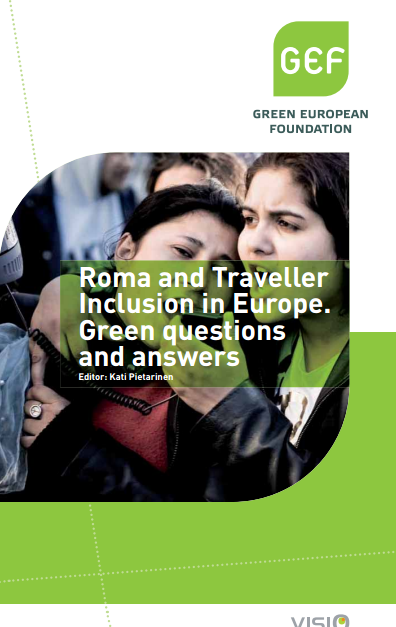
Roma and Traveller Inclusion in Europe: Green Questions and Answers

By Uncategorized

The book deals with questions related to Roma inclusion from a local, national and European perspective. In doing so, it identifies six key areas that need policy-making attention: living conditions, housing and health; employment; education; culture and language; racism and extremist aggression; and migration. For each of these topics, several good practices and solutions that make concrete steps towards greater inclusion are presented. When showcasing those good practices, we also point to those who have implemented them, in the hope to network these initiatives.

If multiplied, small steps in a good direction as those indicated in this publication could ultimately lead to a long-lasting solution to the current precarious situation of the European Roma. We hope you can take inspiration from these examples into your work!