
Smart Cities and Citizen Science

By

About the Event:

This international webinar will offer local government representatives, politicians, municipal officials, as well as academic experts and practitioners from Czech and Slovak cities the opportunity to share their experiences and be inspired by the practices of other cities.

We will discuss how to strengthen the environmental qualities of cities through citizens’ participation. For example, through presenting various examples of using citizens as motivated amateur scientists, equipping them with modern technologies for direct data collection.

Context:

This project is a part of the GEF transnational project “A Charter for the Smart City II”.

All over Europe, so-called ‘smart cities’ are the testing grounds for new technologies that affect how we live, how we organise our societies and what our ethical foundation is. Given the opportunities that new technologies offer for reducing the ecological footprint of cities and creating new urban commons, but also the potential threats they pose to civil liberties and social justice, GEF aims to stimulate the debate on smart cities.

To this end, GEF has developed, with the support of its partners, a Charter for the Smart City, consisting of guiding principles that will make it easier for green European politicians and activists to assess and steer technological innovations in their cities. Throughout 2019, ideas were solicited digitally and through events across Europe, including best practices from NGOs, experts, and local green politicians, as well as from GEF partner foundations and other Green European actors. These resulted in the published Charter for the Smart City.

Speakers:

  • Richard Wouters (Wetenschappelijk Bureau GroenLinks, Utrecht) – author of “A Charter for the Smart City” will show how modern technologies often present us with new dilemmas and how to approach them in order to strengthen the fundamental values of a democratic society.
  • Alena Bartoňová (Norwegian Institute for Air Research, Oslo) – Director of Air Quality Research in Oslo, Norway, will highlight concrete examples from European cities of how easier access to monitoring technologies increases people’s interest in the cleanliness of the air they breathe and enables research institutions and municipalities to involve the general public in tackling air pollution.
  • Thomas van Oppens (City Councilor, Leuven) – the city councilor of the Belgian city of Leuven will present inspiring examples of the use of “citizen science” for independent traffic monitoring. You will learn how the city uses this data.
  • Dana Mareková (lawyer, civic activist, Bratislava) – combines law and environmental campaigns and shares her experience from Slovakia regarding the Bratislava air quality measurements carried out before the international Clean Air Forum 2019. She will explain what the situation looked like, what they were trying to achieve, how city and state representatives reacted, and lessons for the future from such campaigns.
  • Michal Šindelář (Partnership Foundation, Brno) – an expert on bicycle transport will reveal how the data collected by city cyclists can be used by local governments to create better conditions for cycling.

Programme:

9:00-9:05 Welcome

9:05-9:15 Richard Wouters (NL)

9:15-9:35 Alena Bartoňová (NOR)

9:35-9:50 Thomas Van Oppens (BE)

9:50-10:05 Dana Mareková (SK)

10:05-10:20 Michal Šindelář (CZ)

10:20-10:30 Discussion and conclusions.

Practicalities:

The conference will take place via videoconferencing platform Zoom in Slovak, Czech and English. Simultaneous English-Slovak interpretation will be provided

Participation in the online conference is free, only electronic registration is required here: https://forms.gle/7CNYS8krsHGToAEs5

——

This conference is organised by the Green European Foundation with the support of Institute for Active Citizenship and Wetenschappelijk Bureau GroenLinks with the financial support of the European parliament to the Green European Foundation

Inclusion and Citizens’ Rights

By

About the Event:

When building “digital cities,” how do we ensure inclusivity of new spaces and opportunities?

This workshop focuses on the different aspects (social, environmental, economic, democratic) of this topic with a specific lens on Central and Eastern Europe. We hope to empower participants to influence public debate and local decision-making on technological innovations and their implementation in the cities of the region.

Learnings from this process will be used to create a manifesto on principles of new technologies’ implementation in Eastern European cities.

Context:

This project is a part of the GEF transnational project “A Charter for the Smart City II”.

All over Europe, so-called ‘smart cities’ are the testing grounds for new technologies that affect how we live, how we organise our societies and what our ethical foundation is. Given the opportunities that new technologies offer for reducing the ecological footprint of cities and creating new urban commons, as well as the potential threats they pose to civil liberties and social justice, GEF aims to stimulate the debate on smart cities. To this end, GEF has developed, with the support of its partners, a Charter for the Smart City, consisting of guiding principles that will make it easier for green European politicians and activists to assess and steer technological innovations in their cities. Throughout 2019, ideas were solicited digitally and through events across Europe, including best practices from NGOs, experts and local green politicians, as well as from GEF partner foundations and other Green European actors.

Programme:

Speakers and programme to be announced shortly.

Practicalities:

This event will be taking place online. Please register in advance via this link.

You can listen to our podcast now at https://soundcloud.com/user-881417568/smart-cities

Language: The main language of this event will be English.

This project is organised by the Green European Foundation with the support of CDNEE and Wetenschappelijk Bureau GroenLinks with the financial support of the European Parliament to the Green European Foundation.
Citizen Scoring

By

About the Event:

Councils all over Europe are now using services to apply algorithms to public data in order to segment and “score” citizens and population groups according to their social group or “risk profile”. We will talk about citizen data scoring and what should be taken in consideration when building up a truly smart city.

This workshop focuses on the different aspects (social, environmental, economic, democratic) of this topic with a specific lens on Central and Eastern Europe. We hope to empower participants to influence public debate and local decision-making on technological innovations and their implementation in the cities of the region.

Learnings from this process will be used to create a manifesto on principles of new technologies’ implementation in Eastern European cities.

Context:

This project is a part of the GEF transnational project “A Charter for the Smart City II”.

All over Europe, so-called ‘smart cities’ are the testing grounds for new technologies that affect how we live, how we organise our societies and what our ethical foundation is. Given the opportunities that new technologies offer for reducing the ecological footprint of cities and creating new urban commons, as well as the potential threats they pose to civil liberties and social justice, GEF aims to stimulate the debate on smart cities. To this end, GEF has developed, with the support of its partners, a Charter for the Smart City, consisting of guiding principles that will make it easier for green European politicians and activists to assess and steer technological innovations in their cities. Throughout 2019, ideas were solicited digitally and through events across Europe, including best practices from NGOs, experts and local green politicians, as well as from GEF partner foundations and other Green European actors.

Speakers:

Michiel Filippart – Regional councilor for GroenLinks in the Netherlands and an adviser to the GroenLinks group in the Dutch senate. A contributor to the Charter for the Smart City; he will talk about Citizen Scoring and the role of Artificial Intelligence (AI) in it.

Julian Hauser – PhD student in philosophy of mind and cognitive science at the University of Edinburgh. He researches the self and how it is changed by modern digital technologies, focusing in particular on the constitution of its boundaries. He will talk about Artificial Intelligence (AI) and its ethical aspects.

Practicalities:

This event will be streamed live on Facebook and YouTube.

You can listen to our podcast now at https://soundcloud.com/user-881417568/smart-cities

Language: The main language of this event will be English.

Acknowledgements:

This project is organised by the Green European Foundation with the support of CDNEE and Wetenschappelijk Bureau GroenLinks with the financial support of the European Parliament to the Green European Foundation.
Public Values in Smart Cities (Webinar)

By

About the event

All over Europe, municipalities want to become ‘smart cities’, front-runners in the use of sensors, big data, algorithms and apps. Smart technologies offer opportunities for improving the quality of life in cities, for reducing their ecological footprint and for creating new urban commons. But they may also present threats to civil liberties and to social justice. The smart city should not be an end in itself. A smart city is only really smart if data collection and artificial intelligence are steered by values. How do we ensure that public values such as democracy, human dignity, privacy, equality and sustainability are put at the heart of smart cities?

This online workshop will offer an opportunity for politicians, experts, practitioners and activists from cities in the Czech Republic and neighbouring countries to share their experiences. They will explain about specific technological innovations in their municipalities, discuss conflicting values and identify best practices. The conclusions may feed into the online version of the Charter for the Smart City.

The speakers at the event include Richard Wouters (Wetenschappelijk Bureau GroenLinks, NL), Marie Schäffer (member of the Brandenburg Parliament, Greens, DE), Tomáš Koláčný (deputy Mayor of the City of Brno, Pirates, CZ), Jana Drápalová (city district Mayor, Brno-Nový Lískovec, Greens, CZ) and Ondřej Veselý (user application developer, CZ).

Platform

We will use the Zoom video conferencing platform. It is recommended to join the webinar via a PC. You do not need to install additional software. However, for the best user experience and full participation features, we recommend to install the Zoom Desktop App, which is for free.

Languages

Czech and English. Translation will be provided.

Registration

Please register here to receive the meeting link.

Preparation

The Charter for the Smart City is available in Czech, English, German, French and Dutch on the website of the Green European Foundation. Click here to download.

This webinar is organised by the Green European Foundation, with the support of Institut Aktivního Občanství and Wetenschappelijk Bureau GroenLinks.

Green Post-Corona Talks with Seda Gürses, Marleen Stikker, and Laura Sophie Dornheim

By
The Green Post-Corona Talks with Seda Gürses, Marleen Stikker, and Laura Sophie Dornheim is another edition of GEF’s series of participatory online talks with inspiring guests offering an analysis on what is at stake in this crisis and what positive ideas and concepts there are for a green post-corona vision. This episode is organised in partnership with Wetenschappelijk Bureau GroenLinks.

Join our Facebook event to stay alert for the live stream.


About the event


The ongoing Covid-19 pandemic is having a grip on societies worldwide and will impact our lives long after the crisis is overcome. It is clear that we cannot continue with “business as usual,” but that we need to discuss positive ideas and concepts for a better, greener future and resilient societies now.

GEF is therefore hosting the Green Post-Corona Talks, a series of participatory online discussions with high-level experts, thinkers, and policy-makers, and the opportunity for participants to pose their most pressing questions to them live.

The talks will highlight what is currently at stake in the Corona crisis but also look beyond the period of the pandemic, and what possible solutions are already out there and can lend themselves to design the post-corona world.

The series will cover different themes from economy, over migration to gender, and bring in inspiring perspectives from all across Europe.

The project is implemented in cooperation with Oikos.


You can help us advancing forward-looking green ideas

to shape the Europe that we want! 


We rely on your generous contribution to continue putting together new, exciting Green Post-Corona Talks made extensively available to the general European public! So, please consider making a donation today, by clicking on this link.

Green Industrial Policy (Online event)

By

About the Event

The Green European Foundation and Wetenschappelijk Bureau GroenLinks (WBGL) are investigating what policy the Dutch government should pursue to make Dutch industry green and future-proof.

This online expert meeting will bring together a number of academics, experts, policymakers and politicians to exchange ideas on the topic. WBGL will provide a document about green industrial policy which shall be the main subject of the discussion.

The main goals of this expert meeting are 1) to sharpen our proposal for a green industrial policy and 2) offer experts in this field the opportunity to expand, strengthen and sharpen their thinking through an exchange of views.

This event is organised as part of the GEF transnational project Climate Emergency Economy.

Speakers

Dutch MEP Bas Eickhout and GroenLinks MP Tom van der Lee have both confirmed their participation.

Practicalities

The event will be in English.

We will use the Zoom video conferencing platform. It is recommended to join the webinar via a PC. You do not need to install additional software. However, for the best user experience and full participation features, we recommend to install the Zoom Desktop App, which is free.

Registration

This a closed, invitation-only event. However, if you are particularly interested in participating you can send an email to Evert Nieuwenhuis to see what’s possible.


This event is organised by the Green European Foundation with the support of Wetenschappelijk Bureau GroenLinks (WBGL) and with the financial support of the European Parliament to the Green European Foundation. The European Parliament is not responsible for the content of this event.

Public values in smart grids (Webinar)

By

About this webinar

A fully renewable electricity system is largely powered by wind and solar. These are intermittent energy sources. How do we keep supply and demand in balance? Data and artificial intelligence will play a major role in this balancing act. Smart electricity grids help adjusting supply and demand, using data on the forecasted weather, the available power storage and conversion capacity, and the willingness of companies and households to make their electricity consumption dependent on supply and price.

A smart grid is not necessarily fair, transparent, and privacy-friendly. It doesn’t necessarily allow for human control over algorithms and democratic participation.  How can we integrate these public values into the design of smart grids, from local microgrids to centralised macrogrids?

The Green European Foundation, Wetenschappelijk Bureau GroenLinks, and Oikos will try to find answers to this question in a webinar. It will gather (local) politicians, practitioners, activists and members of energy cooperatives from various European countries, in a coronavirus-proof way.

The webinar will start with two presentations:

Fabian Reetz (100 prozent erneuerbar stiftung, Berlin) will explain the basics of a smart electricity grid and its importance for speeding up the transition towards a 100% renewable energy system.

Christine Milchram (Delft University of Technology) will speak about smart grids and energy justice. How can fairness, data privacy and other public values be integrated into smart grids?

The first comments to the presentations will be delivered by Yvonne van Sark, president of homeowner’s association Schoon Schip, which runs a smart microgrid in Amsterdam.

The webinar will be facilitated by Dirk Holemans (Oikos).

This is a joint event of the GEF projects A Charter for the Smart City and Cities as Places of Hope.

Timetable

14:00  Welcome by Dirk Holemans

14:15  Presentation on smart grids and the energy transition by Fabian Reetz

14.35  Q&A

14:50  Short break

15:00  Presentation on smart grids and energy justice by Christine Milchram

15:20  First comments by Yvonne van Sark

15:25  Q&A

15:40  Group discussion

16:00 Closing words by Dirk Holemans

Language

The webinar will be conducted in English.

Platform

We will use the Zoom video conferencing platform. It is recommended to join the webinar via a PC. You don’t need to install additional software. However, for the best user experience and full participation features, we recommend to install the Zoom Desktop App, which is free.

Registration

Required. Please note that the number of participants is limited, so register soon following this link.

——

Background information

Energinet, Smart Grid Denmark (video), 2011
Fabian Reetz & Céline Göhlich, Prinzipien für die Energiepolitik der Zukunft, policy brief Stiftung Neue Verantwortung (in German), 2020
Marten Boekelo, ‘Full interview with Christine Milchram on energy justice in smart grids’, The Social Life of Energy blog, 2020
Christine Milchram & al., ‘Energy Justice and Smart Grid Systems: Evidence from the Netherlands and the United Kingdom’, Applied Energy, 2018
Otto Barten, ‘Smart grids in de slimme stad’, Handvest voor de Slimme Stad, pp. 85-112 (in Dutch), 2019
European Data Protection Supervisor, TechDispatch #2: Smart Meters in Smart Homes, 2019
Green European Foundation, A Charter for the Smart City, 2019

Social Scoring

Citizen scoring – towards a surveillance state for the poor? (Webinar)

By

About this webinar

What’s your opinion on ‘citizen scoring’? Big data analytics is gaining traction among local and national governments. By feeding large swaths of personal data into algorithms, they try to predict which social benefit recipients are most likely to commit fraud or which children are most at risk of abuse or neglect, for instance. Does the ‘scoring’ of citizens by algorithms boost government efficiency or is it a threat to privacy, social justice and the transparency of government? Which legal restrictions apply to citizen scoring and which ethical boundaries should we set?

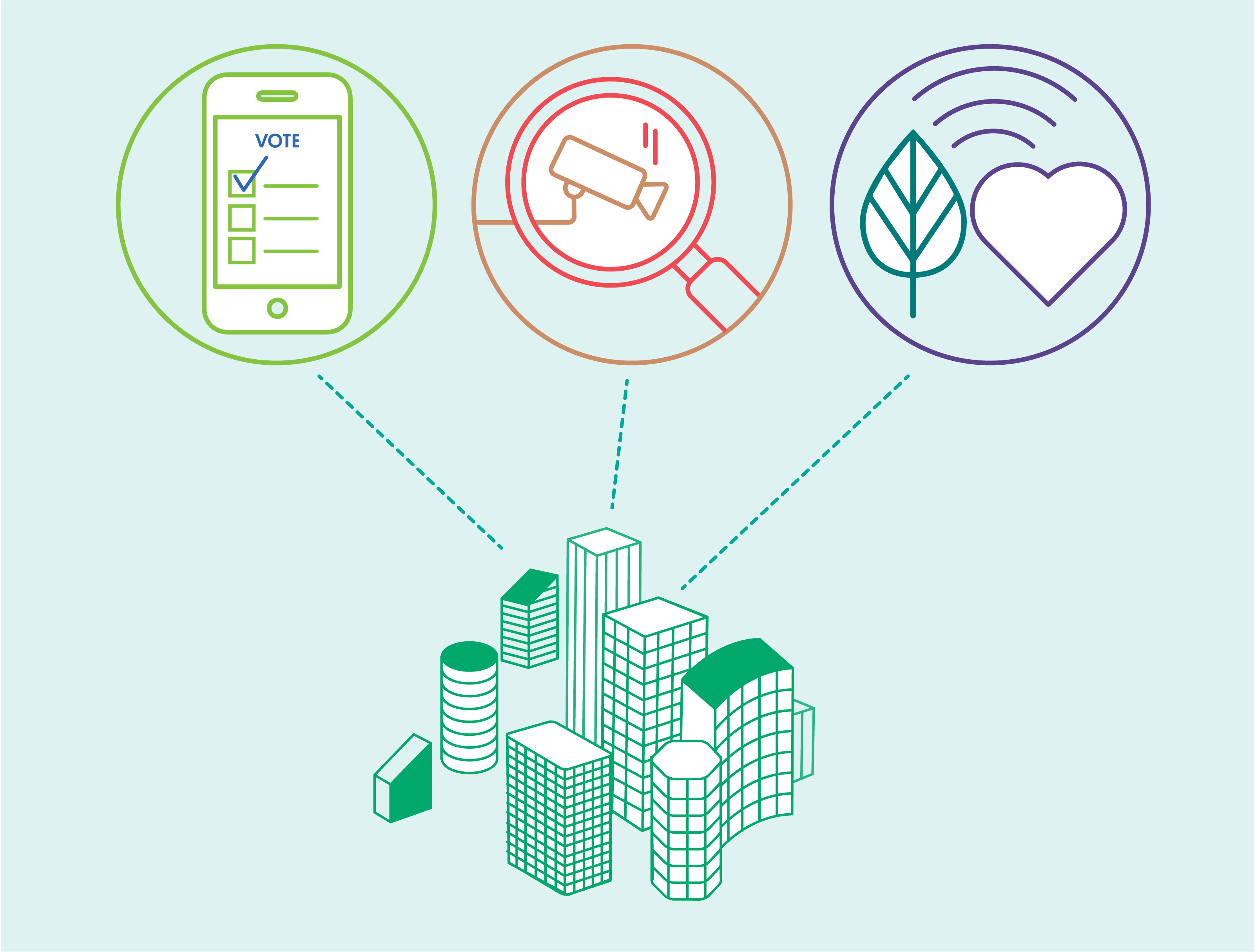
The Green European Foundation and Wetenschappelijk Bureau GroenLinks will try to find answers to these questions in a webinar. It will gather people who are active in (local) politics from various European countries, in a coronavirus-proof way.
The webinar will start with three presentations:

Richard Wouters (Wetenschappelijk Bureau GroenLinks, NL) will introduce the Charter for the Smart City that the Green European Foundation published in 2019. The Charter contains the warning that the use of big data to combat benefit fraud may lead to ‘class injustice’.

Lina Dencik (co-director of the Data Justice Lab, Cardiff School of Journalism, UK) will present the results of an extensive investigation into the use of citizen scoring by local authorities and police forces in the UK.

Ronald Huissen (Bij Voorbaat Verdacht, NL) will explain the ground-breaking verdict against the Dutch fraud detection algorithm SyRI. In February, a court ordered the immediate halt of SyRI because it violated the right to privacy. Huissen represents the NGO coalition which filed the lawsuit against SyRI.

The first comments to the presentations will be delivered by Kathalijne Buitenweg (MP for GroenLinks, NL) and Martin Fodor (local councillor for the Green Party in Bristol, UK; rapporteur on smart cities for the Congress of Local and Regional Authorities of the Council of Europe).

The webinar will be facilitated by Carlotta Weber (Green European Foundation).

Timetable

14:00 Welcome by Carlotta Weber

14:20 Presentation of the Charter for the Smart City by Richard Wouters

14:25 Presentation on citizen scoring in the UK by Lina Dencik

14:45 First comments by Martin Fodor

14:50 Q&A

15:05 Presentation on the SyRI court case in NL by Ronald Huissen

15:25 First comments by Kathalijne Buitenweg

15:30 Q&A

15:45 Break

15:55 Group discussion

16:55 Closing words by Carlotta Weber

Language

The webinar will be conducted in English.

Platform

We will use the Zoom video conferencing platform. It is recommend to join the webinar via a PC. You don’t need to install additional software. However, for the best user experience and full participation features, we recommend to install the Zoom Desktop App, which is for free.

Registration

Required. Please note that the number of participants is limited, so register soon following this link.

Background information

Green European Foundation, A Charter for the Smart City, 2019
Data Justice Lab, Data Scores as Governance. Investigating uses of citizen scoring in public services, 2018
The Guardian, Automating Poverty series, 2019
AlgorithmWatch, Automating Society. Taking stock of automated decision-making in the EU, 2019
UN Special Rapporteur on Extreme Poverty and Human Rights, Report on the digital welfare state, 2019
The Hague District Court, SyRI legislation in breach of European Convention on Human Rights, 2020


Can’t attend? Follow us on Facebook and Twitter  to keep up-to-date with the discussions at the webinar.

Public Values in Smart Cities (Webinar for the Euregio)

By

About this event

All over Europe, municipalities want to become ‘smart cities’, front-runners in the use of sensors, big data, algorithms, and apps. Smart technologies offer opportunities for improving the quality of life in cities, for reducing their ecological footprint, and for creating new urban commons. But they may also present threats to civil liberties and to social justice. The smart city should not be an end in itself. A smart city is only really smart if data collection and artificial intelligence are steered by values. How do we ensure that public values such as democracy, human dignity, privacy, equality, and sustainability are put at the heart of smart cities?

This webinar will gather politicians, experts, practitioners, and activists from the Euregio, comprising cities such as Münster and Enschede. They will explain about specific technological innovations in their municipalities, discuss conflicting values, and identify best practices. The conclusions may feed into the online version of the Charter for the Smart City.

The event will be chaired by Tom van den Nieuwenhuijzen (member of the Dutch parliament). It will feature Christoph Almering (director Euroregio), Gerdien Looman (coordinator Smart Enschede), Thomas Terstiege (project leader digitalisation Smart City Münster), Kirsten Fiedler (policy advisor to Alexandra Geese in the European Parliament, winner Felipe Rodriguez Award 2018), Richard Wouters (Wetenschappelijk Bureau GroenLinks), and other speakers.

The webinar is organised by the Green European Foundation and Wetenschappelijk Bureau GroenLinks. It replaces the workshop in Glanerbrug that was announced earlier.

Date & time

Friday 5 June, 14:00 – 16:00 CEST

Timetable

14:00  Opening by Tom van den Nieuwenhuijzen

14:10  Welcome by Christoph Almering

14:15  Introduction of the Charter for the Smart City by Richard Wouters

14:20  Presentation on the European Union and smart cities by Kirsten Fiedler

14:40  Q&A

14:50  Presentation on Enschede as a smart city by Gerdien Looman

15:00  Break

15:10  Presentation on Münster as a smart city by Thomas Terstiege

15:20  Q&A

15:30 Group discussion on (conflicting) public values in smart cities, on the basis of local examples introduced by participants

16:00 Closing words by Tom van den Nieuwenhuijzen

Languages

Participants may use German, Dutch, and English interchangeably. No interpretation is provided.

Platform

We will use the Webex videoconferencing platform. Registered participants will receive a link and a password that give them access to the webinar. It is recommended to join the webinar via a computer.

Registration

Send an e-mail to Richard Wouters at Wetenschappelijk Bureau GroenLinks.

Preparation

The Charter for the Smart City is available in German, Dutch, English, French, and Czech on the website of the Green European Foundation. Click here to download.

Call for Prep-team: Outsmarting the Paradigm

By

We are announcing a call for Prep-Team members for the international training “Outsmarting the paradigm: Implementation of new technologies in cities”. The seminar will take place between 26th and 30th May in Riga (25th and 31th are travel dates). The event is implemented as a part of the transnational project “A Charter for the Smart City II”.

Objectives:

  • Train 25 young people in critical assessment of technology in cities and re-evaluate its role in the urban environment;
  • Assess the Charter for the Smart Cities through the Central and Eastern European lens;
  • Create a platform for exchange of best practices for young people interested in exploring the connection between Urbanism and/or Technology;
  • Create a set of outputs relevant and useful for the young people in the Central and Eastern Europe tackling the connection between the Cities and Technology.

If you are young (till 30) person from Eastern and Central Europe (Albania, Armenia, Azerbaijan, Belarus, Bosnia and Herzegovina, Bulgaria, Croatia, Cyprus, Czech Republic, Estonia, Georgia, Greece, Kosovo*, Latvia, Lithuania, Hungary, Moldova, Montenegro, North Macedonia, Poland, Romania, Russia, Slovenia, Slovakia, Serbia, Turkey and Ukraine) interested in how the integration of new technologies in cities can affect the democracy, social and economic influences on youth, this project will be very much relevant.

In order to achieve these objectives, we are looking for young activists to join the preparatory team. Prep-team members should speak English, be available during the preparation period, be responsible about fulfilling their tasks, have good organisational skills, be good team players and committed to the aims of the project and CDN’s values and be familiar with non-formal education methods.

Main responsibilities of the prep-team:

  • Active participation in the regular online meetings prior to the event (March-May/ 2-3 h a week);
  • Participation in a live prep team meeting in Riga: 14-15 March (2 full working days), arrival day 13th, departure 16th.
  • Dissemination of the call and selection of participants, preparation of participants for the event and providing them with all the necessary information regarding the program;
  • Preparation and facilitation of the programme of the Training; designing and preparing sessions based on non-formal education methodology, invitation and communication with speakers, experts, trainers and partners in accordance with the project aims (4-6 h a week);
  • Helping with the promotion of the event and ensuring media visibility;
  • Taking care of practicalities and of the general well-being of the participants;
  • Full participation during the entire event and prep team meeting before and after: Arrival 23rd of May, departure 1st of June;
  • Supporting the finalisation of the outputs;
  • Helping with the reporting of the seminar.

Being a prep-team member at CDN event would offer you:

  • Working in a lively international urban activist environment;
  • Experience in managing youth projects – preparation, implementation and reporting;
  • Getting familiar with Green values and CDN work;
  • Getting to know local activists and Alternative Urbanisation activists and their work;
  • A possibility to develop your leadership and group work skills;
  • A lot of work and a lot of fun!

Practicalities: 

Accommodation, food, working space, travel and visa costs for preparatory team will be fully covered. For selection of travel means the condition is to combine the most economic and environmentally friendly way (lowest price + travel time + CO2 emissions).

DEADLINE for submitting online applications is 5th of February, Midnight CEST. 

You will be informed by e-mail approximately in 2 weeks time after the deadline. Please add project.coordinator@cdnee.org to your contacts, so that you do not receive our reply in spam folder.

Apply here.

This project is organised by the Green European Foundation with the support of CDNEE and Wetenschappelijk Bureau GroenLinks with the financial support of the European Parliament to the Green European Foundation.


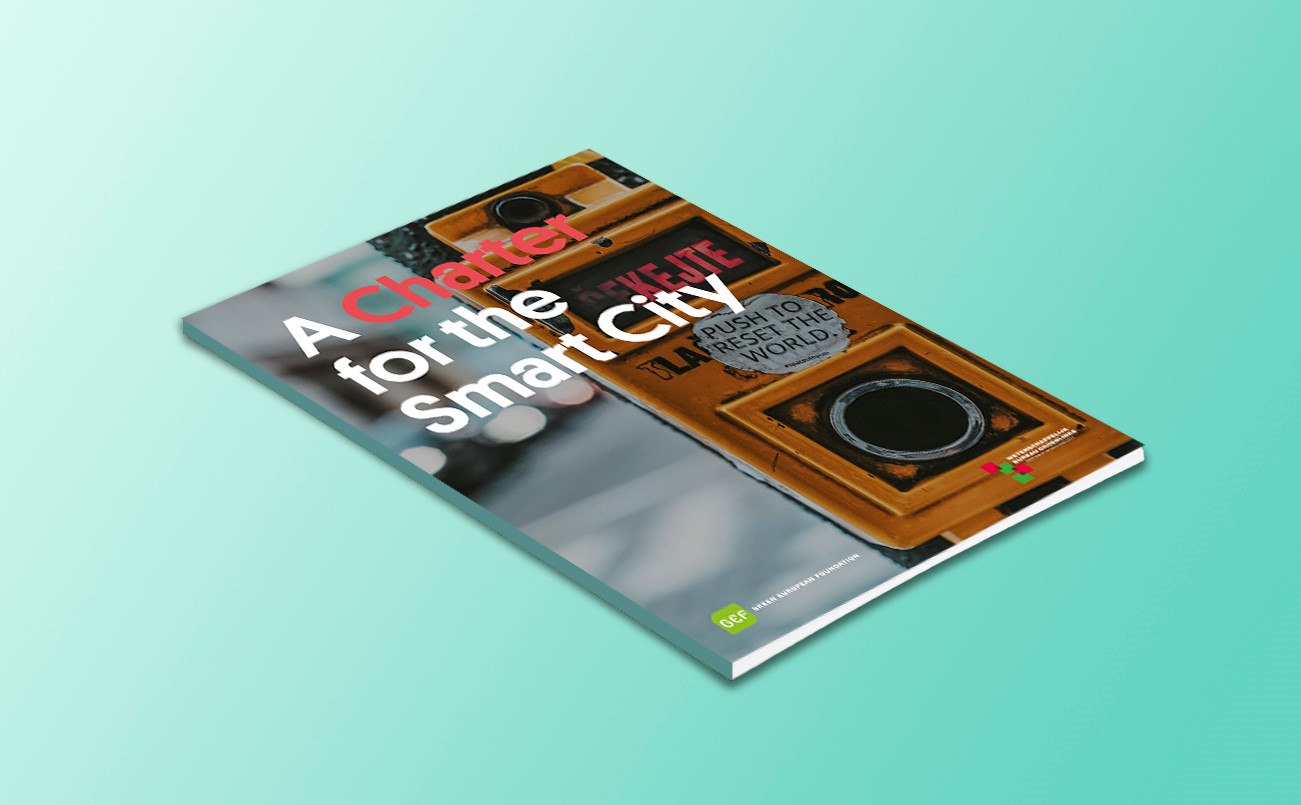
A Charter for the Smart City

By Uncategorized

People make technology, but technology in turn influences our lives, our societies and even our ethics. The development of new technologies therefore cannot be left to engineers and managers; it requires public debate and democratic control.

This Charter for the Smart City was produced as part of the project of the same name, and puts the values of democracy, connectedness, human dignity, privacy,  sustainability, and equality at the heart of smart cities. Local politicians and active citizens who share these values may use the principles in this Charter as starting points for democratic debate and informed moral judgment on technological innovations in their communities.

The Charter was developed through a series of roundtable discussions that took place in cities across Europe, as well as from online consultation, involving over 100 experts, (local) politicians and activists who shared their ideas.


Please find the Dutch version of this publication available to read here

Please find the French version of this publication available to read here

Please find the German version of this publication available to read here

Please find the Czech version of this publication available to read here

Roundtable on Smart Cities (Oslo)

By

Event Background

This round table discussion is to be held as part of the transnational project A Charter for the Smart City, which aims to formulate guiding principles that help politicians to assess and steer technological innovations in European cities.

About the Event

Taking place as part of the European Green Party’s Local Councillors Conference “Cities for the Future – The Green Way” , the roundtable will draw upon the expertise of politicians and representatives from NGOs, trade unions, and technology sectors to collect examples of best practices from across Europe.

This will contribute to the development of a Charter, one which addresses the opportunities that new technologies offer for reducing the ecological footprint of cities and creating new urban commons, while also addressing the threats they might present to civil liberties and social justice.

The roundtable is an invitation-only event.

Roundtable on Smart Cities (Utrecht)

By

Event Background

This workshop is to be held as part of the transnational project A Charter for the Smart City, which aims to formulate guiding principles that help politicians to assess and steer technological innovations in European cities.

About the Event

This workshop will draw from examples of best practices from across Europe to contribute to the development of a Charter, one which addresses the opportunities that new technologies offer for reducing the ecological footprint of cities and creating new urban commons, while also addressing the threats they might present to civil liberties and social justice.

The workshop will be chaired by former Dutch Member of the European Parliament Judith Sargentini and feature Jules van Hal, online campaigner of GroenLinks and former journalist, as rapporteur.

Programme

12.00-12.15: Welcome

12.15-12.30: Opening and introduction

12.30-14.30: First round of discussion – all participants get the chance to give their input on the draft charter

14.30-15.00: Break

15.00-16.55: Second round of discussion – In-depth discussion of crucial or controversial issues in the draft charter

16.55-17.00: Closing remarks

The event will be followed by networking drinks and dinner for the participants,


This event is closed and for invited participants only. For more information on the draft charter, visit www.smartcitycharter.eu 

Roundtable on Smart Cities (Brussels)

By

Event Background

This invitation-only workshop is the first event to be be held as part of the 2019 transnational project A Charter for the Smart Citywhich aims to create a charter to assess and steer technological innovations in European cities.

 About the Event

Bringing together politicians and representatives from NGOs, trade unions, and technology sectors, this closed workshop in Brussels, Belgium, will act as a starting point for the project by exploring the opportunities and challenges of Smart Cities.

Chaired by GEF board member & Oikos coordinator Dirk Holemans, the workshop will draw upon the expertise of the attendees to identify what is needed on an EU level, build a network of contacts and inform the drafting process of the charter.

The event will be divided into two main sessions:

  • Firstly, all experts will have the opportunity to comment on the draft version of the charter and feed into it.
  • In a second session, the workshop will focus on the most controversial issues identified in the first part and provide space for more in-depth discussions.

Organised by the Green European Foundation, with the support of Bureau de Helling and the logisitical support of Oikos.

Green Values, Religion and Secularism Report

By Uncategorized

The project Green Values, Religion and Secularism was about dialogue and plurality within the Green movement. For two years, we have been debating and reflecting in a conversation on the relationship between secular and religious values in a political context. We published a collection of interviews and we conducted and took part in debates, seminars and media events. In this report, we try to give a small glimpse into the topics we talked about and the insights we gained.

In the publication and in the seminars two major themes were discussed. Firstly, the interconnectedness of religious or secular values and political attitude; secondly, the role of religion in the public forum. Topics that came up were the difficulty of defining religion and its changing role in society; conflicts between religions and fundamental rights, such as the freedom of religion and the principle of sexual and gender equality; the role of Islam in Europe and the relationship between spiritual worldviews and the struggle for a sustainable and just society.

The wide network of the Green European Foundation and its partner foundations were crucial in exploring these topics reflecting deeply on culture and identity in Europe. In this report, you will find a summary of the themes discussed as well as some recommendations how the Greens could proceed with this urgent debate on the relation between religions and secularism both in society as in our parties

Green Values, Religion and Secularism

By Uncategorized

In the last decades, the relationship between religion and modern society has shifted. As a consequence, there have been fierce debates on issues such as ritual slaughtering, homosexual teachers in schools, the wearing of the headscarf in public institutions and the relationship between Islam and terrorism. In a new publication titled ‘Green Values, Religion and Secularism’, Green politicians from different European contexts reflect on the way their own religious or secular values influence their political attitude; the role of religion in the public forum; conflicts between fundamental rights, such as the freedom of religion and the principle of sexual and gender equality; the role of Islam in Europe and the question of whether religion is a source of inspiration or an obstacle for Green politics.

Religion and politics have much in common. They share the longing for another world, one in which peace and justice will reign. They also share the dangers of this desire: the temptation to force their own imaginative order onto others. Both religion and politics have to find a way to deal with the tension between the actual world and the world as they imagine it should be. The fact that they do this in very different ways is part of the explanation why religion and politics, by definition, have a difficult relationship. Modern political movements have roots that go back one or two centuries at most, whereas religious traditions have much older sources. However, this doesn’t discharge either of them from the task of interrogating and reinterpreting their traditions in the light of new challenges.

Although Green parties often have an uneasy relationship with religion, the debate about values, religious or secular, cannot be escaped within a Europe haunted by many different crises at the same time. This publication is an invitation to work towards a more coherent debate within the Greens on the changing role of religion in society.

The book is edited by Erica Meijers (De Helling) and Nuala Ahern (Green Foundation Ireland). It features conversations with politicians and activists from France, Turkey, Poland, Ireland, Greece, Belgium, and the Netherlands.

You can ready the publication by downloading the pdf below or order your own hard copy and support the project.

French version

The French translation of the book is available for download here.

Polish Version

The Polish translation of the book is available for download here.

Brochures in Polish

Agnieszka Kościańska: Poszukując kościoła otwartego

Bettina Jarasch: Jak Zieloni debatują o religii

Nil Mutluer: Świeckość w Turcji. Kontrolowanie wiary zamiast wolności

Yannis Paraskevopoulos:  Religie zmieniają się razem ze społeczeństwem

Populism in Europe

By Uncategorized

The rise of the populist-right and why it matters 

The publication of this book coincides with the rise of populist right-wing parties in a number of European countries. The most recent is the True Finns in Finland, but there are similar examples in Hungary, Sweden, France and elsewhere. While the book acknowledges the sometimes crucial differences that can exist between these individual parties, it is also true that they share many attributes. These include focusing their grievances on minorities, railing against so-called “elites”, and  an always high level of euroscepticism.

How should the Green movement confront such a challenge? And does this challenge present an opportunity to put forth a positive, Green message on Europe, immigration and the socio-economic challenges that we face in the 21st Century? This book attempts to answer these questions, and its contributors offer varying and diverse opinions on the origins of this trend, and what an effective response should be.

As Erica Meijers states in her introduction, the reader will at times find contradicting opinions and analyses in this book. This underlines the complexity of this issue, and shows it to be fertile ground for debate and discussion.

Table of contents

  • Introduction (Erica Meijers)
  • The Temptation to Over-Simplify: Why Populism Poses a Danger to Europe (Daniel Cohn-Bendit & Edouard Gaudot)
  • The New National Individualism: Populism is Here to Stay (Dick Pels)
  • Adversaries or Competitors: The Rise of Green and Radical Right-wing Populist Parties (Sarah L. de Lange, Wouter van der Brug & Inger Baller)
  • European Dreams, Nationalist Ambitions: Internationalism in Populist Movements (Oyvind Strommen)
  • The Quality and Future of Democracy: Two Decades of Free Elections in Central Europe (Sona Szomolanyi)
  • Lifting the Veil: Populists and Women’s Rights (Olga Pietruchova)
  • Populist Realism: Vox Populi and the Postpolitical (Merijn Oudenampsen)
  • The Spiral of Noise and Attention Seeking: Right-wing Populism and the Media (Robert Misk)
  • Imagination in Power: The Social-political Conditions of Italian Media Populism (Marco Jacquemet)
  • The Politics of Fear and Belonging: The Socio-Economic Breeding Ground of Populism (Barbara Hoheneder)
  • Freedom and Security in the Twenty-first Century: Green Alternatives (Dirk Holemans)

You can download the introduction to the book for free, which will give you an insight into the book’s chapters and what the authors discuss and propose.

Please email info@gef.eu if you are interested in purchasing a copy.

German translation now available

A German translation is now available to purchase online, with a foreword by Heinrich Böll Stiftung Co-President Ralf Fücks, GEF Co-President Heidi Hautala and Andrea Novy of Grüne Bildungswerkstatt. The foreword is available to download below. This translation is a cooperation project of GEF, the Heinrich Böll Stiftung, Grüne Bildungswerkstatt and Bureau de Helling. More information is available on the Heinrich Böll Stiftung website.

Icon

Foreword DE 36.98 KB 121 downloads

...
Icon

Book Review - Andreas Novy 94.10 KB 79 downloads

...