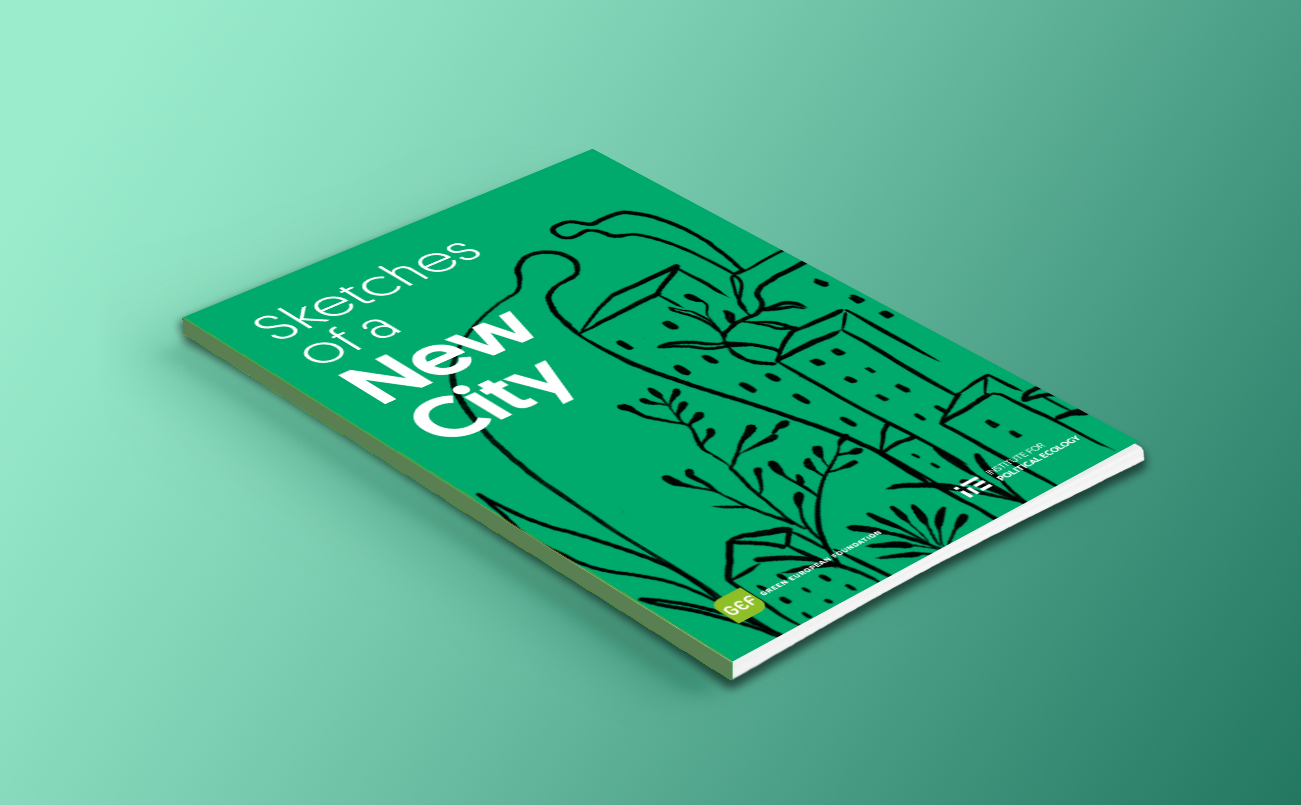
Sketches of a New City

By Uncategorized

Context

While no city is the same, one thing all have in common is the challenge of creating a society that is fit for the future. Some of the most present problems citizens living in cities are experiencing are the effects of climate change–such as rising heat or lack of water. On a political level, cities often lack opportunities for citizens to actively engage and be part of decision-making processes on citie’s future.

Far too often, big and ambitious projects end with failures. We want to start in the opposite way – with small sketches; with working material that can in time develop into something durable and resilient’’

Objectives

In this publication, researchers, scholars, practitioners and activists share their insights gained through the direct experience and empirical evidence on the daily struggle of key changemakers at the municipal level aiming to inspire and educate citizens all over the world.


Project Background

This publication is one of the results of IPE’s participation in the GEF transnational project “Cities as Places of Hope – Resilient Cities”, where we aimed to vividly illustrate the most recent developments in some European cities and trace the pathways through which they can develop resilience, increase the well-being of citizens, reach ecological sustainability, and achieve more social justice.

Available in

Translations

Available in Macedonian

Available in Greek


This report has been realised by the Green European Foundation with the support of the Institute for Political Ecology, and the financial support of the European Parliament to the Green European Foundation. The European Parliament is not responsible for the content of this publication.

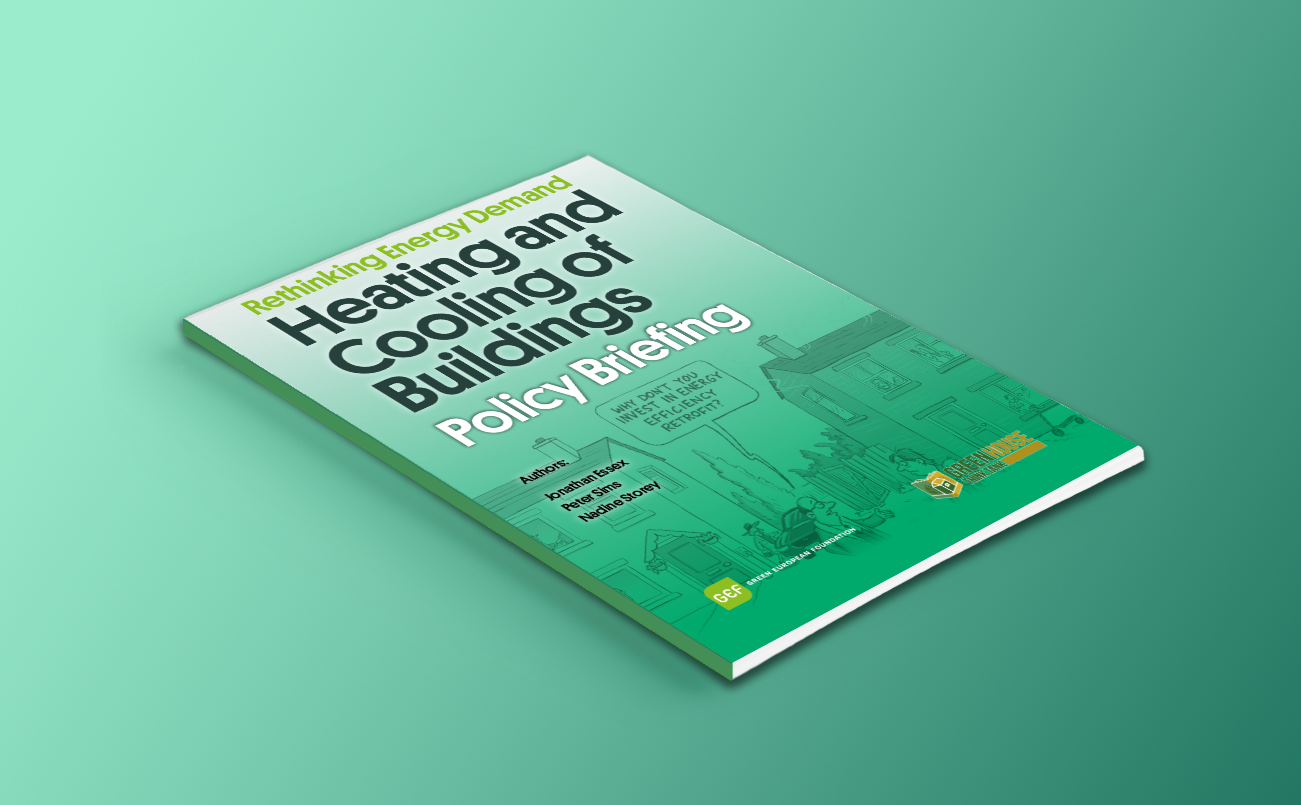
Rethinking Heating and Cooling

By Uncategorized

Context

Climate impacts became more apparent within Europe through the record high temperatures in the summer of 2022. This has converged with a cost-of-living crisis exacerbated by the war in Ukraine and consequent shortages of Russian gas and an unprecedented increase in energy prices. Whilst governments in some countries have shown imaginative thinking to deal with the immediate energy crisis, this thinking needs to be extended with a view to long-term changes of behaviour, practices and social norms. Change is essential to limit energy demand in the future as a critical response to the climate crisis.

Ensuring everyone has a living space that they can maintain at temperatures safe for human health should be a government priority.


Objectives

This publication argues for a broad rethink of the demand for heating and cooling buildings that goes beyond calls for widespread retrofit. It draws from the earlier ‘Rethinking Energy Demand’ report (October 2022) and the interviews conducted for that report with academics and thought-leaders across Europe. The earlier report considered the need and means to sufficiently reduce energy demand. This policy briefing invites policy makers to extend their thinking beyond the immediate crisis towards a longer-term strategy for delivering the human need for thermal comfort whilst eliminating carbon emissions. The briefing comprises 6 sections and offers 16 policy recommendations, across both efficiency and sufficiency measures.


Translations

Available in Spanish

Available in Greek


This publication has been realised by the Green European Foundation and Green House Think Tank with the financial support of the European Parliament. The European Parliament is not responsible for the content of this publication.

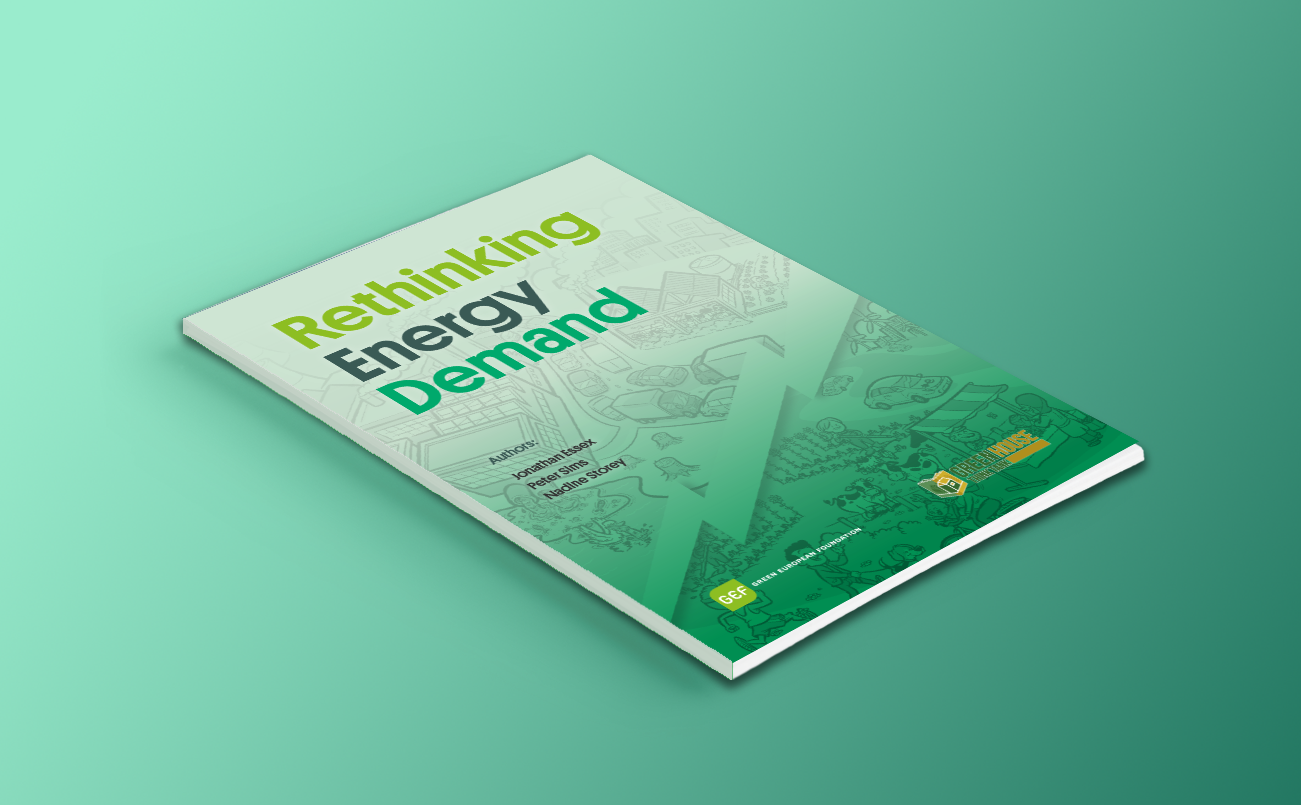
Rethinking Energy Demand

By Uncategorized

Context

Scientists are clear that Europe must significantly reduce its overall energy demand to meet the targets for carbon reduction necessary to limit climate danger. In its latest report on climate mitigation, the IPCC has, for the first time, included a chapter dedicated to reducing demand. This chapter concludes that calling for individual action is insufficient and that a society-wide approach is needed for significant impact, delivering up to 70% decarbonisation.

However, there is a dangerous silence on this matter within the public sphere. Politicians are hesitant to speak on this point, fearing the disruption that this will cause. (2) However, disruption is an inevitable part of any economic change and there is still time to make a choice about the form this disruption takes. Avoiding the topic closes off all options around how to address the impacts.

Objectives

This report explores the need to rethink energy demand in terms of policies, politics and economics. It draws on interviews and round-table discussions with academics researching energy reduction and sufficiency, and post-growth and macroeconomics, and with green politicians.

Energy demand is just a subset of how humanity is exceeding planetary boundaries.


The report focuses on the barriers, opportunities and where sufficient changes could be unlocked through new governance, policies and communication, rather than on specific policies for specific sectors.  Whilst this report focuses specifically on reducing direct energy demand, much of the report’s findings could be applied to much wider challenges, including the indirect energy embodied in supply chains, which also need to be reduced if we are to address the interlocking climate and ecological crises. The report is written to inform and provide a resource for policy makers, politicians, climate campaigners and the general public who are motivated to respond to the climate change threat.

Download

Available in Greek

Available in Catalan

Available in Spanish


This publication has been realised by the Green European Foundation and Green House Think Tank with the financial support of the European Parliament. The European Parliament is not responsible for the content of this publication.

Rethinking Demand: Sufficiency Policies for a Post-Growth Society

By

About the event

Soaring energy prices are pushing European states to urgently implement energy saving measures in all sectors, as well as financial supports for the most exposed households and businesses. In France, President Macron did not hesitate to speak of “the end of abundance” and the implementation of a “great sobriety plan”. In Germany, particularly exposed to the closing of the Russian gas tap, the Federal State has implemented a series of energy saving measures. Among other things, large gas consumers are required to register and make themselves available in case of a shortage. In Belgium, the government has been refining its energy emergency plan for several months with data from large consumers and is considering ways to help the most vulnerable to pay their bills. 

Are European states ready for the advent of a post-growth society? Can the ecological project of a sober society now inspire public policies? Concretely, what does a post-growth economic policy look like? What indicators exist to assess these policies? These questions and more will be tackled in this cross-country dialogue. 

Context

This event is part of the GEF transnational project Climate Emergency Economy: Rethinking Demand. Building on several years of work exploring what it means to create an economy fit for the climate emergency, GEF and its partners are this year focusing on the crucial question of how to reduce demand for energy and materials. With the support of Green House Think Tank, Etopia, and Green Foundation Ireland, we are exploring how to frame rethinking demand politically, and articulate clear plans for demand reduction so green narratives are better grounded in reality and a shared vision of hope. 

Speakers

To discuss this pressing topic, we will be joined by a fantastic panel of experts: 

  • Yves Marignac – Négawatt, France 
  • Philippe Roman – ICHEC, Belgium 
  • Marula Tsagkari – TU Delft / R&D, Greece 
  • Lasse Thiele – Konzeptwerk, Germany 
  • Nadine Storey – Green House think tank, UK 
  • Leon Leuser – Wachstumswende, Germany 

The session will begin with a brief presentation of our Rethinking Energy Demand report, by co-author Nadine Storey (Green House think tank), followed by discussion with all our panelists.   

Practicalities

Date & Time: Wednesday, October 26th (12:00-14:00 CET) 

Location: Online, via Zoom. Please register in advance via this link 

Audience: Open to all registered participants. The event will be in English. 

 To continue the conversation on this topic, join us later that same day in Dublin or online at Rethinking Demand: Reality and Opportunities. Make sure to register, as particularly in person spots are limited! 


This event is organised by the Green European Foundation with the support of Etopia and the financial support of the European Parliament to the Green European Foundation. 

Rethinking Demand: Realities and Opportunities (Dublin/online)

By

About the event

The Green European Foundations is bringing together Green House Think Tank (UK), Etopia (Belgium) and Green Foundation Ireland at an event hosted with the Lord Mayor of Dublin Caroline Conroy. This event will launch our Rethinking Demand Framing Paper and explore the complexity of the actions needed to reduce our demand for energy as well as the politics involved in doing so.  

As the urgency of the need to limit emissions to prevent further climate harm grows, and the all-encompassing nature of achieving this dawns, the pivotal role of rethinking how our societies deliver wellbeing for all has become ever more critical. During this conference, sessions will explore how social and business practices, infrastructure, and our governance structures can be transformed to reduce the collective demand for energy and unlock a future without fossil fuels.

Context

This event is part of the GEF transnational project Climate Emergency Economy: Rethinking Demand. Building on several years of work exploring what it means to create an economy fit for the climate emergency, GEF and its partners are this year focusing on the crucial question of how to reduce demand for energy and materials. With the support of Green House Think Tank, Etopia, and Green Foundation Ireland, we will explore how to frame rethinking demand politically, and articulate clear plans for demand reduction so green narratives are better grounded in reality and a shared vision of hope. 

Programme

Please note that all times are indicated in IST/BST. For participants joining online from a CEST time zone, everything will be one hour later.

Our FULL PROGRAMME OF EVENTS is available here. Please see below a short overview:


14:00 Address by Dublin’s Lord Mayor Caroline Conroy.

Presentation and discussion of Green House Think Tank’s framing paper “Rethinking Energy Demand” by two of its authors, Jonathan Essex and Peter Sims.

Panel discussion facilitated by Michael Smith (Editor of The Village magazine) with keynote speaker John Gibbons (Environmental journalist and commentator) and Claire Downey (Rediscovery Centre), Davie Philip (Cultivate) and Rosalind Skillen (Keep Northern Ireland Beautiful).

“Circular Economy and Demand Reduction” with Minister Ossian Smyth.

17:00 Closing reflections and drinks reception.

Practicalities

Date and Time: Wednesday, October 26th from 14:00 – 17:30 IST (15:00 – 18:30 CEST) 

Location: In person at the Mansion House in Dublin, Ireland. Please note that you can also follow this event online, via Zoom. 

Audience: Open to all registered participants. The event will be in English. 

Registration: Whether you are joining in person or online, please register in advance via THIS LINK. Spots for in person attendees are limited, so if they fill up you may be placed on a waiting list. With any questions regarding registration, please contact info@greenfoundationireland.ie  

Related reading

For Energy Independence, the EU Must Think Bigger than Power

Energy Crisis: Keeping the Cost of Living Down While Protecting the Climate

Affordable, Sustainable Housing Can Bring the Green Deal Home

The Devil’s in the Data: How the Energy Crisis Could Reshape Ireland’s Economy

Alexander Langer’s Case for an Ecological Conversion


This event is organised by the Green European Foundation with the support of Green Foundation Ireland, Etopia, and Green House Think Tank and the financial support of the European Parliament to the Green European Foundation. 

Rethinking Demand: EU Roundtable

By

About the event

As Russia’s war in Ukraine puts pressure on energy supplies across Europe, governments are preparing for an uncertain winter, with concepts like rationing and controlled blackouts suddenly on the table. 

Yet the need to structurally rethink our demand for energy and other key goods is not new. Amid the multiple crises facing Europe and the world, not least the climate emergency, there is a continued failure to acknowledge the role of reducing demand in the rapid and fundamental change needed. Mainstream understanding of demand management focuses on improving efficiency and engaging consumers, which tends to reproduce existing consumption levels with marginally less energy and resource use.  This is insufficient to deliver the reduction in energy use needed as part of a rapid shift to zero carbon and to remain at 1.5°C warming. 

A better understanding of the realities of demand change is required, and exploring how to frame this difficult topic is critical to reaching climate targets and energy independence goals. This expert roundtable will bring together academics, politicians, activists and NGO/foundation representatives to discuss to what extent we need to reduce energy demand and how we can go about it in a just yet decisive manner. Results of this discussion will inform a framing paper to be published in the autumn. 

Context

This event is part of the GEF transnational project Climate Emergency Economy: Rethinking Demand. Building on several years of work exploring what it means to create an economy fit for the climate emergency, GEF and its partners are this year focusing on the crucial question of how to reduce demand for energy and materials. With the support of Green House Think Tank, Etopia, and Green Foundation Ireland, we will explore how to frame rethinking demand politically, and articulate clear plans for demand reduction so green narratives are better grounded in reality and a shared vision of hope. 

Programme

More details on the programme will follow. 

Practicalities

Date and Time: Thursday, 15th September (15:00 – 17:00 CEST)

Audience: This is a closed roundtable. For more information please contact sien.hasker@gef.eu 


This expert roundtable is organised by the Green European Foundation with the support of Green House Think Tank and the financial support of the European Parliament to the Green European Foundation. 

Energy Sobriety: Holy Grail of the Green Transition?

By

About the event:

Welcome to the Collaborative University a platform that consists of several sessions revolving around a specific theme. The registered participants meet on a few Saturdays during the year to work on the given subject, receive advice from experts in the field and visit relevant initiatives. The aim? To gain and exchange knowledge and to sharpen one’s critical mind…

Designed by our partner Etopia, GEF is hosting the third and final session of this series on the notion of energy sobriety–seeking to identify the reasons for but also the obstacles to reduce energy consumption in our society.

Participants will work in plenary and smaller groups, enjoying background reading and information, a collaborative space and participative methodology, and input from invited speakers and experts. Key insights from the day will be harvested in the form of podcast interviews and summary reflections for the general public.

Context

This event is part of the GEF transnational project Climate Emergency Economy: Rethinking Demand. Building on several years of work exploring what it means to create an economy fit for the climate emergency, GEF and its partners are this year focusing on the crucial question of how to reduce demand for energy and materials. With the support of Green House Think Tank, Etopia, and Green Foundation Ireland, we will explore how to frame rethinking demand politically, and articulate clear plans for demand reduction so green narratives are better grounded in reality and a shared vision of hope. 

Speakers

Mathilde Szuba – Political sociologist, Sciences Po Lille, Institut Momentum.

Luc Semal – Political scientist, Centre d’Écologie et des Sciences de la Conservation (CESCO), Institut Momentum.

Programme

The morning sessions will cover governance in the context of the end of energy abundance – possible consequences for institutions and potentially for the functioning of representative democracy as we know it. This is followed by lunch and group work in the afternoon.  

Practicalities

Date: June 4th (9:00 – 16:30) 

Location: Auberge de jeunesse Jacques Brel, Rue de la Sablonnière 30, Brussels 

Language: French 

Registrations for the collaborative university are now closed. If you wish to learn more, please email arnaud.deflorenne@etopia.be 


This session of the Collaborative University is organised by the Green European Foundation with the support of Etopia and with the financial support of the European Parliament to the Green European Foundation.  

GEF at the Green Days: On the Way to COP26

By

About the Event: 

The past year has taught us painful but vital lessons about our relation to nature, the importance of often underfunded public services, and other topics which the Greens have been highlighting for years. Yet as the green wave continues rolling, and with pandemic lessons fresh on our mind, now is precisely the time to refocus attention on key challenges like the climate emergency and to ensure that green-minded activists and politicians are ready to take responsibility at all levels.       

The annual Green Days conference is an important moment of learning and exchange for the green movement in Poland and beyond. GEF is hosting several sessions at this event – tackling important topics on the road to COP26. We will address the question of rare-earth metals, a crucial but challenging aspect of the energy and digital transition. We will also ask ourselves what feminist climate and foreign policy looks like, heading to Glasgow, as well as dive into local and regional recovery plans. Finally, we will host a session on agriculture – a sector that is at times particularly hard to reach in our pursuit of a climate emergency economy.

Context: 

These seminars are being organised as part of the transnational projects Climate Emergency Economy, Metals for a Green and Digital EuropeFeminists in the Climate Movementand Cities as Places of HopeFor more information about each of these projects and the other partners involved, please check out their respective project pages on the GEF website.  

Speakers:

The extensive line up of speakers includes:

  • Michael Bloss (MEP, Greens/EFA)
  • Urszula Zielińska (Polish Green Party MP)
  • Iwona Reichardt (New Eastern Europe journal)
  • Tomasz Piątek (investigative journalist, expert on Russia)
  • Joanna Maria Stolarek (Director HBS Warsaw)
  • Thomas Simpson (Green Foundation Ireland)
  • Jakop Dalunde (MEP, Greens/EFA)
  • Jan Popczyk (Silesian University of Technology)
  • Elżbieta Anna Polak (President of the Region of Lubuskie)

And many more!

Programme:  

Friday, August 27th

11:30 – 13:00 “Agriculture friendly for climate, farmers, biodiversity, consumer health, animal welfare and future generations – utopia or necessity?”

15:00 – 16:30 ‘’Green Europe of regions and cities – recovery and climate challenges’’

  • With Jakop Dalunde (Greens/EFA MEP), Przemysław Słowik (Green local councillor from Szczecin), Ada Colaou (Mayor of Barcelona), Elżbieta Anna Polak (President of the Region of Lubuskie), Miłosława (Miłka) Stępień (Akcja Konin/ Bankwatch), and more!


Saturday, August 28th

9:30 – 11:00 “Europe and Poland in the new global geopolitics of recovery, climate and resources’’

  • With Michael Bloss (Greens/EFA MEP), Urszula Zielińska (Polish Green Party MP), Richard Wouters (Wetenschappelijk Bureau GroenLinks, Tomasz Piątek (investigative journalist, expert on Russia), Dariusz Szwed (Green Institute), Joanna Maria Stolarek (Director HBS Warsaw), Małgorzata Kopka (former international policy coordinator at HBS Warsaw), and more!

11:30 – 13:00 – Digital economy and artificial intelligence – ethics, responsibility, human rights

Host: Kim van Sparrentak (MEP, online)

With: Anna Adamowicz (Polish technology philosopher), Sarah Chander (EDRI, online, tbc.), Maciej Józefowicz (Partia Zieloni) oraz Karolina Iwańska (online or video,  Fundacja Panoptykon).

  • Lead by: Ioana Banach (Managing Director, Green European Foundation) and Kuba Bilski (Fundacja Strefa Zieleni Council/Partia Zieloni Council) 


16:15 – 17:15 “Women on the way to Glasgow – climate and feminist diplomacy and foreign policy”

  • With Iwona Reichardt (New Eastern Europe journal), Małgorzata Kopka (former international policy coordinator at the HBS Warsaw), and more!


16:00 – 18:30 ‘Metals for a Green and Digital Europe (workshop – activists and experts will work on regional insights for GEF’s Agenda for Action)

  • With Radosław Gawlik (EKO-UNIA/PZ), Urszula Zielińska (MP), Prof. Jan Popczyk (Silesian University of Technology), Dr. Krzysztof Dudek (Mining and Metallurgy Academy/PZ), Dariusz Szwed (Green Institute), Ewa Sufin-Jacquemart (Strefa Zieleni), and more!

Please note that this programme is provisional and subject to change. Some speakers will be joining online or via video message. You can access the full Green Days schedule – including more speakers and other sessions not organised by GEF – via this link.

Practicalities: 

The summer school will be taking place in person at the junction of three provinces: Wielkopolskie, Zachodniopomorskie and Lubuskie, in the Pestkownica settlement belonging to the Krzyż Wielkopolski commune, in the Drawska Great Forest – 200 km east of Berlin. Most sessions feature simultaneous translation in English and Polish.

There is no registration form in English. International participants and panellists who would like to take part in situ are asked to send the information to fundacja@strefazieleni.org with name(s) of participant(s), time and place of arrival/departure, and the relevant Covid-19 information (see details below).

Livestreaming will not be possible, but some sessions will be recorded in English and in Polish for later online viewing.

Transfers

We will have an autocar from the main rail station in Poznań (Poznań Główny) on the August 26th at 15:45 (we will wait however in any case for the arrival of the train from Warszawa, the planned arrival is 15:28). The same day at 22:00 we will organise a car transfer for a few persons. The nearest station is DOBIEGNIEW (25 km from the site) and we will organise transfers from/to there, case by case.

Price and Payment

The organisers offer all the conference logistics and the content, the participants pay the hotel, food and transport (except organised local transfers). The price of the full stay (2 nights with breakfast + 5 lunches/dinners) is 605 PLN (~ 140 EUR) that the participant will be able to pay directly on site if he/she needs an invoice, or pay by bank transfer before the event to Fundacja Strefa Zieleni, if he/she doesn’t need the invoice:

FUNDACJA STREFA ZIELENI, 01-822 Warszawa, ul. E. Schroegera 28, IBAN:   PL66 1020 1097 0000 7602 0237 0450  //  BIC/SWIFT:    BPKOPLPW, title: „Green Days + name(s) of participant(s)”.

COVID-19

Please inform us of the anticipated vaccination or testing status of each participant upon registration.

  • The participant will be vaccinated with two doses of the Covid-19 vaccine or one dose of the Johnson & Johnson vaccine
  • The participant will be vaccinated with one dose of the COVID-19 vaccine
  • The participant will not be vaccinated, but will have an up-to-date COVID-19 test (RT-PCR or antigens, done less than 72 hours before the arrival)
  • Other situation (please explain)

These summer school sessions are organised by the Green European Foundation, with the support of Strefa Zieleni and the financial support of the European Parliament to the Green European Foundation. 

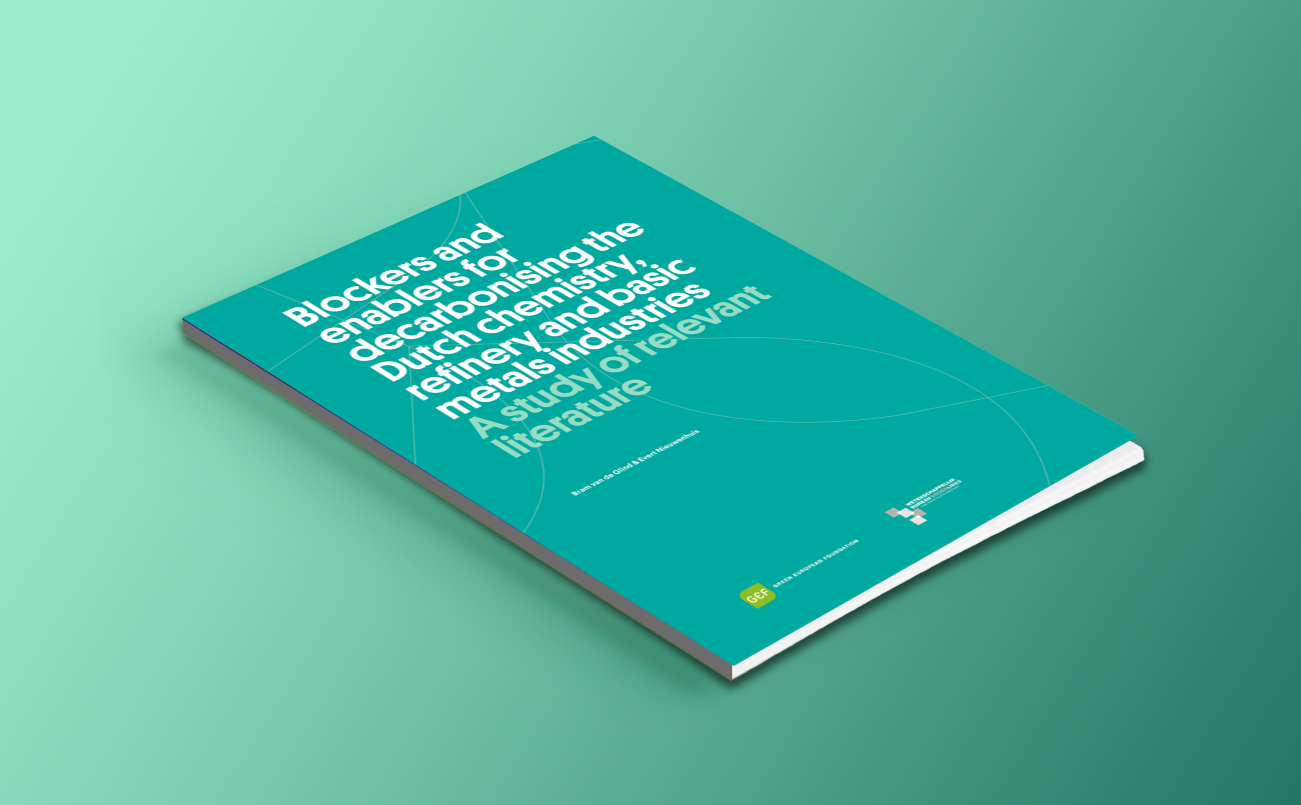
Blockers and Enablers for Decarbonising the Dutch Chemistry, Refinery and Basic Metals Industries

By Uncategorized

This report is part of the Green European Foundation’s Transnational Climate Emergency Economy project. The project explores the challenge of decarbonising ‘harder to abate’ sectors, such as the chemistry, basic metals and refinery industries and international trade. Wetenschappelijk Bureau GroenLinks, Green House Think Tank and Green Foundation Ireland each focus on a specific part of a climate emergency economy. This particular report was written by WBGL and focuses on Dutch energy-intensive industries.

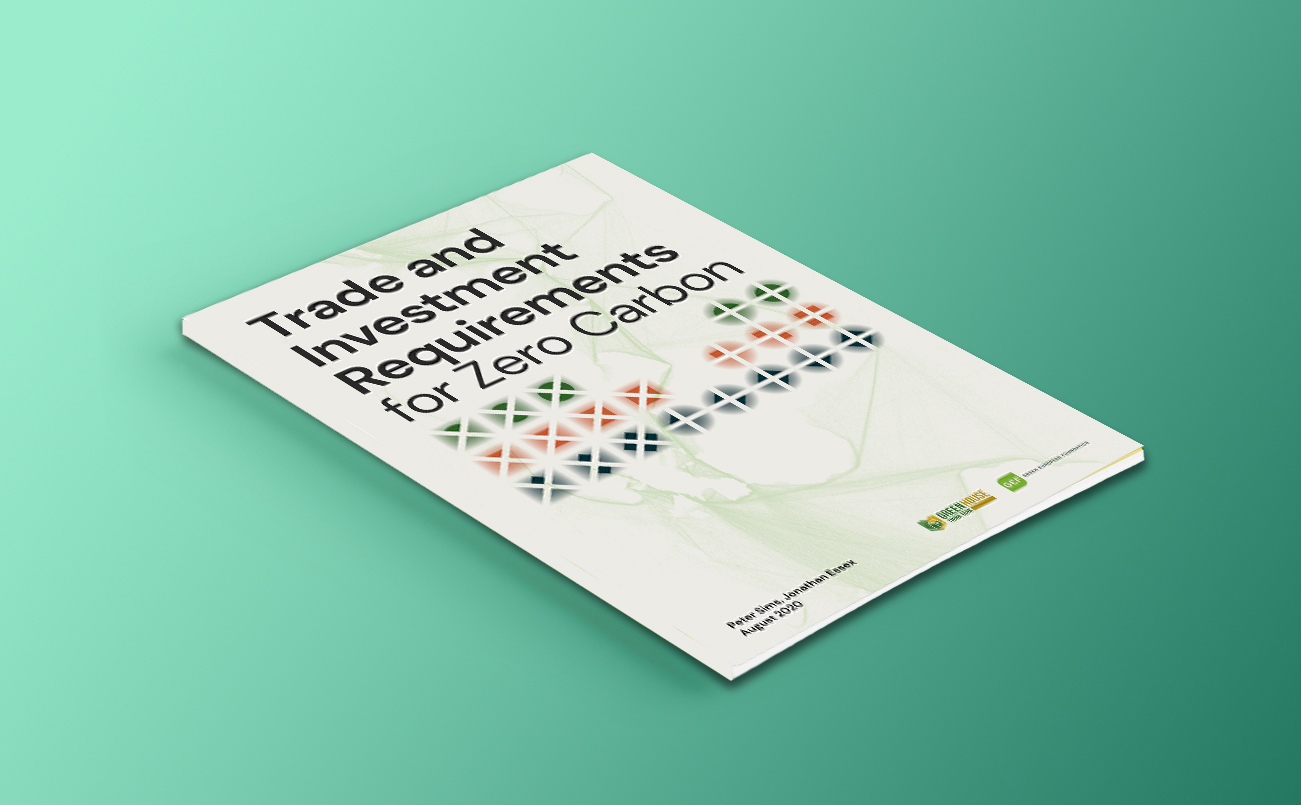
Trade and Investment Requirements for Zero Carbon

By Uncategorized

As moves are being made to introduce a Climate & Ecological Emergency Bill in the UK, and a new Trade Bill is progressing through parliament post-Brexit, it’s an important time to be considering the implications of zero carbon for global trade and investment decisions. This report proposes a much-needed toolkit to help policy makers face up to climate reality and address the wider environmental impacts and the imbalances of power and wealth that underlie our global trade.

Download the technical annex here.

A Question of Scale (Supply Chains and Local Economies)

By

Context:

The Green European Foundation, in cooperation with Green Foundation Ireland is organising the online conference as part of the Climate Emergency Economy project.  This work forms part of a wider project led by the GEF involving Green Foundation Ireland, Green House in the UK and  the Scientific Bureau Groenlinks in the Netherlands. The work of the project is to identify the key enablers and blockers in order to formulate strategies to stop those actors of the EU and global economy from blocking the transition to limit climate change to 1.5°C.  

About the Event:

A QUESTION OF SCALE: “Imagining a co-operative, community-led approach to regional resilience” (SCALE being the acronym for Supply Chains and Local Economies)

“A Question of Scale” is a conversation in the context of global vulnerabilities and challenges – climate, pandemic, risks to supply chain, jobs, etc – that will…

  • Identify ‘Blockers & Enablers’ to a cooperative, community-led approach to regional resilience;
  • Secure local supply chains and strengthen regional economies;
  • Outline the benefits of regional economies (especially, but not limited to, the agri-food sector);
  • Encourage cooperative effort in local production for local need;
  • Identify the potential for livelihoods in our regions (with a focus on the midlands).

Speakers:

  • Tommy Simpson (Green Foundation Ireland)
  • Dirk Holemans (Oikos, Co-President Green European Foundation)
  • Ciarán Cuffe MEP (Greens/EFA group, European Parliament) 
  • Stanka Becheva (Friends of the Earth Europe)
  • Peter Sims (Green House Think Tank)
  • Jonathan Essex (Green House Think Tank)
  • Oliver Moore (Cultivate; ARC2020)
  • Davie Philip (Cultivate)
  • Sinead Mercier (Philip Lee) 
  • Sean McCabe  (TASC)
  • Liam McGinley (Glencolmcille)

Programme:

13:30 – Welcome & introduction

13:45 – Context of SCALE -Supply Chains and Local Economies

13:55 – Sharing and listening exercise

14:15 – 14:35 Reflections

  • Supply Chains
  • Circular and Local Economies
  • Cooperative Approaches

14:45 Plenary

16:00 Keynote Reflection

16:30 End of event


Practicalities:

This event will be in English.

Time: BST (British Summer Time)

The event is invitation only and free of charge, however registration is required.

Registration link:  https://bit.ly/2GvptQU

For further information please contact: info@greenfoundationireland.ie


Acknowledgements:

This event is organised by the Green European Foundation with the support of Green Foundation Ireland and Cultivate with the financial support of the European Parliament to the Green European Foundation.
Achieving zero carbon trade, investment and industry (London)

By

Context:

The Green European Foundation, in cooperation with Green House Think Tank is organising the online conference as part of the Climate Emergency Economy project.  This work forms part of a wider project led by the GEF involving Green House in the UK, Scientific Bureau of Groenlinks in the Netherlands and Green Foundation Ireland.

This online conference follows successful events last year on Climate Jobs and a Just Transition and Climate Emergency – Raising Ambition.

About the Event:

Under the title “Achieving zero carbon trade, investment and industry” the Conference will focus on What needs to change for trade, investment and industry to meet the challenge of the climate emergency and exist within planetary boundaries?

A new report from the Green European Foundation and Green House Think Tank introduces a new toolkit to aid policy makers and campaigners to rethink trade.

The “Trade and Investment Requirements for Zero Carbon” Report is now available for download. (Technical Annex – Methodology)

What obstacles are blocking decarbonisation? What policies will enable the changes we need?

With speakers from the Netherlands and Ireland, a political panel discussion, break-out sessions and chances for networking, please join us to explore what a climate emergency economy could look like.

Speakers:

  • Natalie Bennett (Green Peer)
  • Saskia Bricmont (Belgian MEP and Member of the Committee on International Trade)
  • Anna Cavazzini (German MEP and Member of the Committee on International Trade)
  • Peter Sims (Green House Think Tank)
  • Jonathan Essex (Green House Think Tank)
  • Evert Nieuwenhuis (GroenLinks)
  • Tommy Simpson (Green Foundation Ireland)
  • Davie Philip (Cultivate)
  • Ellie Chowns (England and Wales Green Party)
  • Jean Blaylock (Global Justice Now)

Programme:

14:00 – Welcome & introduction

14:05 – Session 1a | Chair – Natalie Bennett

  • Trade story highlights
  • Introduction of the Blockers & Enablers toolkit
  • Group discussion

14:30 – Session 1b | Chair – Natalie Bennett

Decarbonising Industry – The Netherlands

  • Presentation
  • Pairs discussion

Re-localisation / Shortening the Supply Chain – Ireland

  • Presentation
  • Pairs discussion

14:50 – Session 1c | Chair – Natalie Bennett

Group discussion – Q&A from the audience

15:15 – Short break

15:30 – Session 2 | Chair – Natalie Bennett

Panelists:

  • Ellie Chowns, England and Wales Green Party International Spokesperson
  • Jean Blaylock, Campaigns and Policy Manager, Global Justice Now
  • Saskia Bricmont (Belgian MEP and Member of the Committee on International Trade)
  • Anna Cavazzini (German MEP and Member of the Committee on International Trade)

16:30 – End of event


Practicalities:

This event will kick off new work on trade, infrastructure and industry – and we’d love to have you there.

Time: BST (British Summer Time)

Registrations are now open


Acknowledgements:

This event is organised by the Green European Foundation with the support of Green House and with the financial support of the European parliament to the Green European Foundation.
 

Green Industrial Policy (Online event)

By

About the Event

The Green European Foundation and Wetenschappelijk Bureau GroenLinks (WBGL) are investigating what policy the Dutch government should pursue to make Dutch industry green and future-proof.

This online expert meeting will bring together a number of academics, experts, policymakers and politicians to exchange ideas on the topic. WBGL will provide a document about green industrial policy which shall be the main subject of the discussion.

The main goals of this expert meeting are 1) to sharpen our proposal for a green industrial policy and 2) offer experts in this field the opportunity to expand, strengthen and sharpen their thinking through an exchange of views.

This event is organised as part of the GEF transnational project Climate Emergency Economy.

Speakers

Dutch MEP Bas Eickhout and GroenLinks MP Tom van der Lee have both confirmed their participation.

Practicalities

The event will be in English.

We will use the Zoom video conferencing platform. It is recommended to join the webinar via a PC. You do not need to install additional software. However, for the best user experience and full participation features, we recommend to install the Zoom Desktop App, which is free.

Registration

This a closed, invitation-only event. However, if you are particularly interested in participating you can send an email to Evert Nieuwenhuis to see what’s possible.


This event is organised by the Green European Foundation with the support of Wetenschappelijk Bureau GroenLinks (WBGL) and with the financial support of the European Parliament to the Green European Foundation. The European Parliament is not responsible for the content of this event.