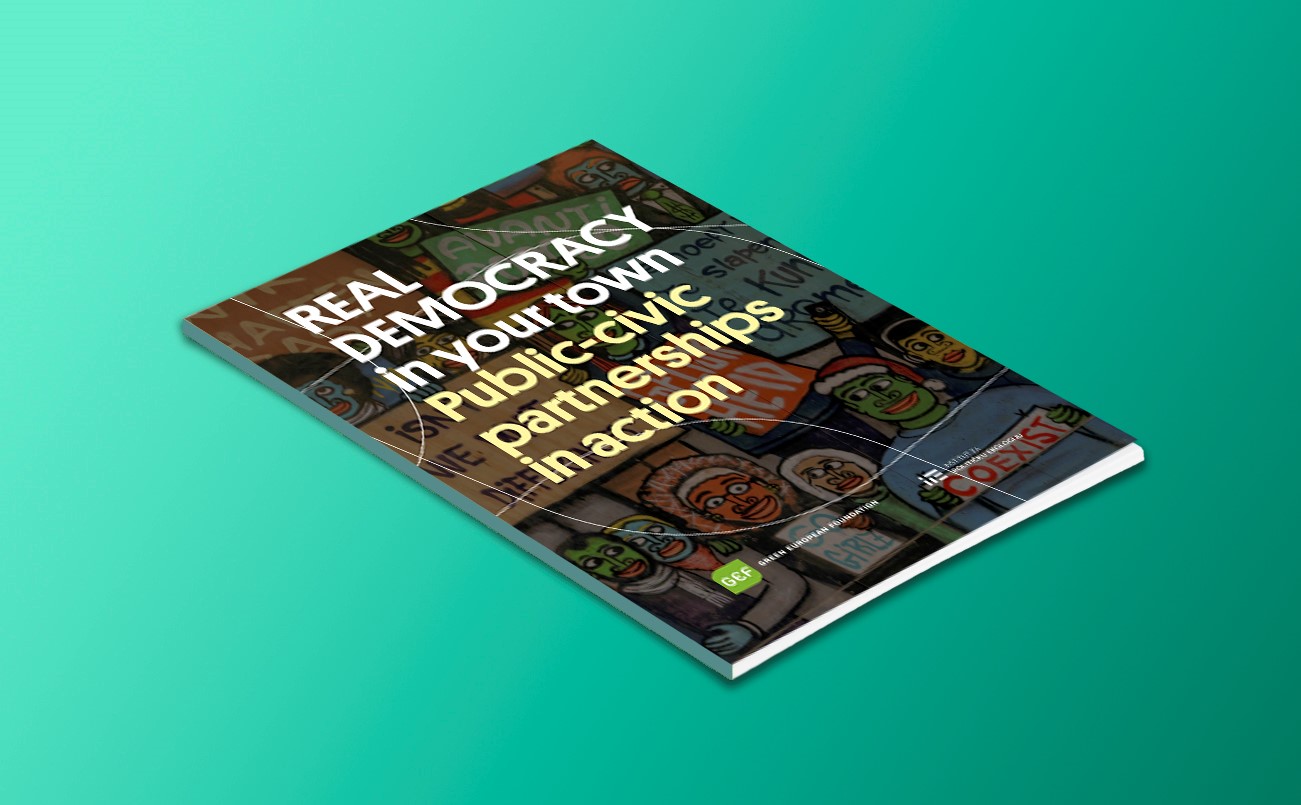
Real Democracy in Your Town: Public-Civic Partnerships in Action explores the potential of public-civil partnerships (as opposed to the conventional public-private partnerships), as an opportunity to provide basic public services within societies without the privitisation of public goods and making them subjects of the free market.
It particularly focuses on the power of municipalist and local citizens’ movements and highlights successful case studies in Europe from which to draw inspiration from.
Local governments have to rethink their way of doing politics with more and more citizens’ initiatives emerging across Europe that are establishing new organisations, introducing a shared economy and leave the image of a passive citizenry behind them. The challenge ahead is therefore to build specific structures and processes that foster synergies between the public and the commons domain.
These developments could lead to a prototype of transformative cities, being the driving force introducing the socio-economic model of the Commons as the new paradigm. Governmental structures however must be reformed to constitute a so-called Partner State, wherepoliticians perceive their constituency as a community of citizens with a lot of experience and creativity and top-down politics are left behind.
About the event
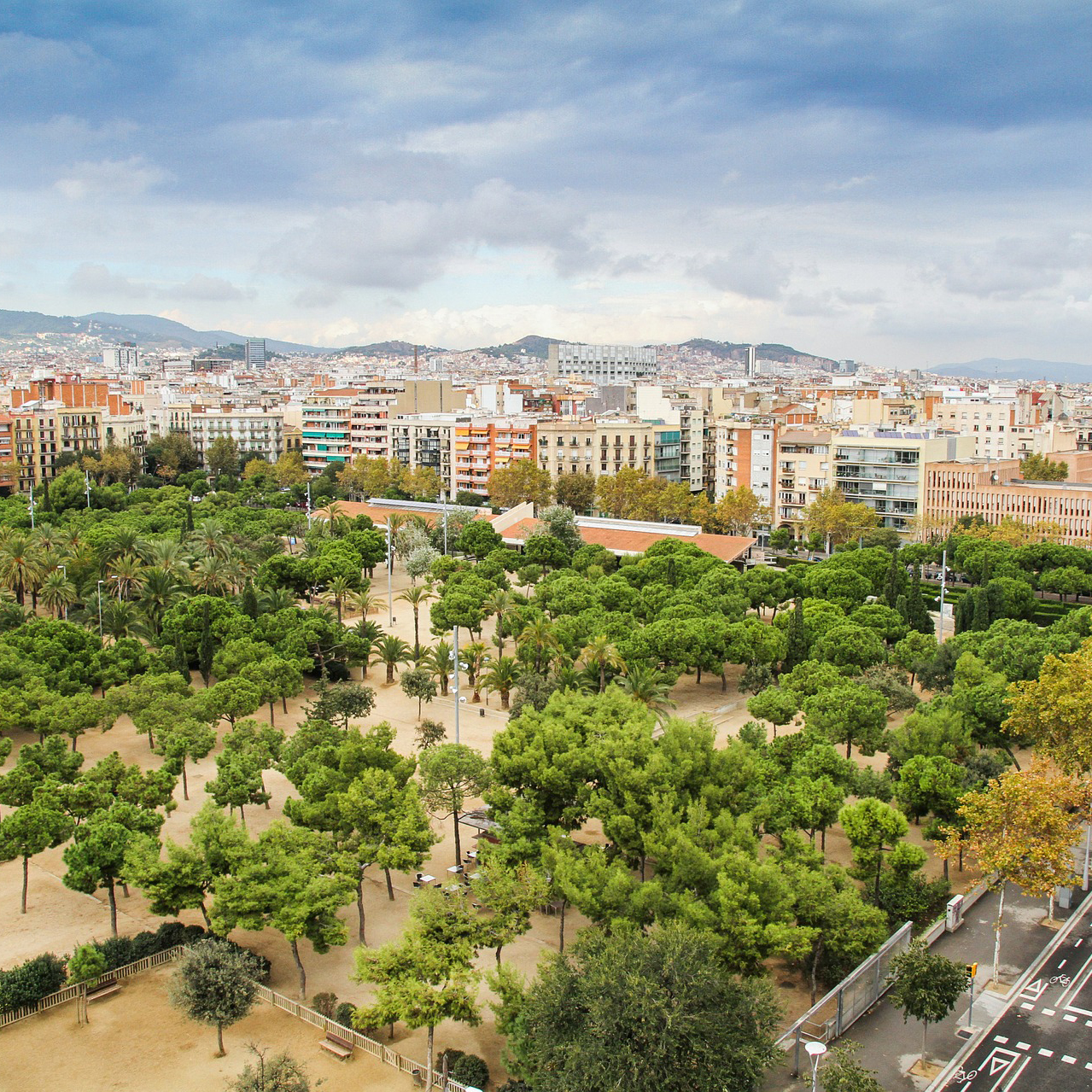
By highlighting several best practices from Catalonia and all over Europe and in particular the municipal level as the most fertile ground for commons practices, this conference will showcase inspiring examples of how this Partner State can be realised and organised in the best possible way.
Draft Programme
9:30 – 10:00 REGISTRATION
10:00 – 10:15 WELCOME Susanne Rieger, Green European Foundation Co-president
10:15 – 10:30 INTRODUCTION TO THE CONFERENCE Sergi Alegre, Fundació Nous Horitzons
10:30 – 11:15 KEYNOTE: A NEW SOCIO-ECONOMIC MODEL – COMMONS IN EUROPE Dirk Holemans, Director Oikos Think Tank and City Councillor of Ghent (Belgium)
11:15 – 11:45 COFFEE BREAK
11:45 – 12:45 MUNICIPALITY AND THE COMMONS
The case of Barcelona Lluís Torrens
The case of Prat de Llobregat Lluís Mijoler
12:45 – 13:45 ECONOMY OF THE COMMONS
Esperanzah! Foundation Òscar Rando
Obrera de Vivendas Cooperative Dolors Camats
13:45 – 14:15 SOCIETY OF THE COMMONS:The example of the region of the South Perpignan District (France) Bruno Soula
14:15 LUNCH
Register now by sending an email to fundacio@noushoritzons.cat and stay tuned for updates by following us on Facebook or Twitter to learn about our other activities.
Cities are becoming a new and hopeful transnational governance level. They are organising themselves in a whole tissue of networks (Fearless Cities, Fabcities, etc.), working together in domains like climate policy, renewable energy and urban economy.
At the same time, citizens are developing a whole range of urban commons, based on co-operation and an ethics of care. Tired of only being a powerless consumer or a passive citizen, we get active as maker, urban farmer, solidarity volunteer, user of shared resources, civic or social entrepreneur, etc. This goes along with the establishment of new organisations and infrastructures like fab labs, energy co-ops, co-working spaces, urban food production plots, and many more.
In recent years, we have seen cities like Ghent and Bologna moving a step further, establishing structures and processes that aim at building synergies between the public and the commons domain. This is part of a new political vision, the Partner State. So, a partner city sustains and gives incentives to alternative civil and economic institutions, like the commons and cooperatives. The conference, as part of this year’s transnational project around Urban Commons Transitions, therefore aims to look at these developments of collaborative city-making and to examine those prototypes of transformative cities as a driving force towards socio-ecological societies.
Lately institutions, research groups and organisations were created to investigate how commons could be integrated in a more sustainable way in the vivid networks of cities.
About the Event
The seminar will be kicked off by two experts who will share their experiences and knowledge: Michel Bauwens (P2P-Foundation) and Elena De Nictolis (LabGov). Afterwards, all participants are invited to enrich the debate by contributing with their own perspective and experiences in the field.
This seminar organised with the support of our Flemish partner Oikos Think Tank is targeting participants that are already working on commons. By bringing together the theoretical and experiential experts, this event aims to tackle the challenges on how urban commons transitions can be a prototype for creating socio-ecological societies.
More info and updates can be found in our Facebook event.
How to register
To register for this seminar follow these steps:
1. Send an e-email to info@oikos.be stating your motivation and shortly describing the commons initiative/project you are active in
2. Participation fee: for organisations € 20, for private individuals € 10.
3. Transfer the participation fee to the following details:BE29 0015 9877 0164 (BIC: GEBA BE BB) of Oikos vzw with as a reference ‘seminar commons’
Your participation for this seminar will confirmed to you via e-mail.
Join our evening conference!
The seminar will be followed from 19h30 to 21h30 by a conference entitled ‘Creating Eco-Societies through Urban Commons Transitions‘. During this event, the experts will debate with a broader audience and share thoughts with commons’ initiatives already functioning in an Urban environment.
Context: European cities as the key element of transnational governance
More and more cities across Europe and worldwide are organising themselves through initiatives such as Eurocities, Fearless Cities, Fabcities and many more, to work together in areas such as climate policy, renewable energy or urban economy.
Especially cities with progressive governments are spearheading this development and are becoming the key factor of transnational governance. Oftentimes the respective initiatives start from the bottom up and there must then be a fertile ground provided by local administrations so they can flourish. Those new types of relationships between the public sphere and the commons can become the key drivers within a transformative city model that will ultimately help us achieve more just and ecological societies.
About the event
This conference aims to serve as a collective reflection on the urban governance of cities and the limits and functions of the cooperation between administration and an active citizenry across Europe. Experts from Italy, Belgium and Spain will share their experiences and best practices that are implemented in other cities. It will be organised in conjunction with a conference of the New Economic and Social Innovation Forum (NESI), that will be held the following day, on 9 May, at the same venue.
Draft Programme
17:30 – 17:40 OPENING Óscar Fernández, Member of EQUO and Councillor of Vitoria-Gasteiz
17:40 – 18:30 KEYNOTE “OSTROM IN THE CITY: PRINCIPLES AND DESIGN PRACTICES FOR URBAN COMMONS” Christian Iaione, Associate professor of public law at Guglielmo Marconi University of Rome, visiting professor of governance of the commons at LUISS Guido Carli where he directs LabGov.
18:30 – 20:45 ROUNDTABLES: THE NEW EUROPEAN CITIES OF COOPERATION BETWEEN THE PUBLIC AND THE COMMON SPHERE
1. Citizens’ initiatives
Culture and political thought in Madrid, Iñaki Alonso, vice-president of the Teatro del Barrio cooperative
Urban gardens in Zabalortu, Susana Cantero, activist and member of Zabalortu Association
Energy cooperatives, Erika Martínez, Communication Manager of GoiEner
Moderated by: Borja Izaola, architect, anthropologist and consultant
19:30 – 19:45 BREAK
2. Initiatives of local administrations
The experience of Ghent, Dirk Holemans, councillor of Ghent and member of the board of the
Green European Foundation
B-MINCOME project (Barcelona), Lluis Torrens, Director of Planning and Innovation of the Social Rights
Area of the Barcelona City Council
Manage waste creating citizen value (Madrid), Reyes Montiel, Director of the Environment and Mobility Department of the Barcelona City Council
Moderated by: Maritxu Díez, journalist
20:45 – 21:00 CLOSING AND CONCLUSIONS Xabi Marrero, spokesperson of EQUO Araba
This conference will be simultaneous interpretation Spanish-English throughout the conference.
Register now by following this link and stay tuned for updates by following us on Facebook or Twitter to learn about our other activities.
Cities are becoming a new and hopeful transnational governance level. They are organising themselves in a whole tissue of networks (Fearless Cities, Fabcities, etc.), working together in domains like climate policy, renewable energy and urban economy.
At the same time, citizens are developing a whole range of urban commons, based on co-operation and an ethics of care. Tired of only being a powerless consumer or a passive citizen, we get active as maker, urban farmer, solidarity volunteer, user of shared resources, civic or social entrepreneur, etc. This goes along with the establishment of new organisations and infrastructures like fab labs, energy co-ops, co-working spaces, urban food production plots, and many more.
In recent years, we have seen cities like Ghent and Bologna moving a step further, establishing structures and processes that aim at building synergies between the public and the commons domain. This is part of a new political vision, the Partner State. So, a partner city sustains and gives incentives to alternative civil and economic institutions, like the commons and cooperatives. The conference, as part of this year’s transnational project around Urban Commons Transitions, therefore aims to look at these developments of collaborative city-making and to examine those prototypes of transformative cities as a driving force towards socio-ecological societies.
About the Event: A conference to inspire and motivate
Lately institutions, research groups and organisations were created to investigate how commons could be integrated in a more sustainable way in the vivid networks of cities. During this conference, organised with the support of the Flemish Think Tank Oikos, experts from different projects and institutions will inspire you with their knowledge and findings about sustainable commons in cities.
Draft Programme
19:30 – 19:40 INTRODUCTION Dirk Holemans, Director of Oikos and GEF Board member
19:40 – 20:20 THE VISION OF TWO EXPERTS Michel Bauwens & Elena De Nictolis
20:20 – 20:50 THREE STORIES ON URBAN COMMONS
Marie Haspeslagh,Enchanté – a network of warm-hearted merchants
Lucie Evers,Partago – a coop for electric car sharing – Mobility Factory
3rd speaker to be announced
20:50 – 21:10 PANEL DISCUSSION “CHANGING THE CITY”, Marie Haspeslagh,Lucie Evers, tbc
21:10 – 21:30 CLOSING PANEL “URBAN COMMONS TRANSITION”, Michel Bauwens & Elena De Nictolis
Keynote speakers
Michel Bauwens
Founder and director of the P2P Foundation and expert in peer production, governance and property. Bauwens is a well-known public speaker and thought leader. In 2017 he wrote the Commons Transition Plan for Ghent, after a similar project for Ecuador.
Elena De Nictolis
Research associate at LabGov, the LABoratory for the GOVernance of the City as a Commons. She prepares a Phd thesis on public policies for urban co-governance and the relation with the quality of city democracy at LUISS University of Rome.
Register now
To attend this inspiring conference, follow this link and order your tickets on the bottom of the page.
To complete your registration, transfer the entrance fee of 5 € to BE29 0015 9877 0164 (BIC: GEBA BE BB) Oikos vzw with the reference ‘Commons Congress’.
Stay tuned for updates
Subscribe to our Facebook event, where you will receive the latest news on speakers and the detailed programme, and follow us on Facebook or Twitter to learn about our other activities.
This training for trainers includes several stages aiming at young and motivated people who are eager to improve Eastern European cities through alternative ways of urbanisation, as well as in mastering their skills in advocacy and project management.
The objective is to empower them to shape and improve their urban communities, and to ultimately create more sustainable green cities based on the principles of inclusion and democracy.
First step: Online Course “Urban Steps for a Resilient Future
Prior to their attendance of the training, the course introduces the training participants to different concepts concerning public spaces and urban commons, explores various examples of urban activism as well as grassroots and entrepreneurial initiatives, illustrates urban problems and propose good practices. The course Urban Steps for a Resilient Futureshows ways to turn ideas into concrete actionand how urban activism can serve as a connection point for collaboration between different stakeholders on a local level in reaching common solutions.
Second step: Face-to-face training
During an intensive one-week face-to-face training, the participants consolidate the knowledge gained while going through the online course, they receive insights from external speakers and receive in-depth and hands-on training on a variety of topics. Among those are a session on “City and Economy” by Dirk Holemans (Director of the Flemish Green Think Tank Oikos, GEF Board member and city councillor in Gent, Belgium), an introduction to useful tools of project management by Vesna Jusup (European Green Party), as well as a hands-on training on effective communication by Pinar Ilkiz (Co-Founder and Communications Director at Pikan Ajans, an NGO social media consultancy).
Third step: Fortify
Participants of the Training for Trainers will have an opportunity to implement one of four Regional Trainings that they designed and planned themselves. These activities are targeting young people from the regions respectively. Young people will both be able to practice their trainer and project management skills as well as to map decision-makers and existing urban initiatives in their local communities/regions and exchange experiences and practices among themselves. At the end of this phase, every group from each country will have a completed action plan.
About the event
The international activity will take place from24-29 April near Istanbul, Turkey, in the framework of this year’s transnational project “Creating Socio-Ecological Societies through Urban Commons Transitions”. Both urban activists with experience and people who are new to this topic but keen to develop an expertise in this field were invited to answer the call for participants.
The training is going to enable young people to analyse their cities (think global) as well as equip them with capabilities to conduct local activities on the spot with the goal to improve their communities (act local), and will include, among others, sessions on “City and Inclusion”, “City and Environment”, Manifesto Writing, and more.
All the materials produced during the project: Manifesto, Regional Action plans, impressions, recommendations and other materials will be summed up into a publication that will be translated into four different languages, so stay tuned for the follow up!
We are happy to announce the call for participants for the International Activity (Training for Trainiers) that will take place from 24-29 April near Istanbul, Turkey.
We are looking for young and motivated people who are eager to improve Eastern European cities through alternative ways of urbanisation, as well as in mastering their skills in advocacy and project management. Participants are expected to come from one of the following 16 countries of Eastern Europe: Albania, Armenia, Azerbaijan, Belarus, Bosnia and Herzegovina, Bulgaria, Croatia, Georgia, Kosovo*, Macedonia, Moldova, Montenegro, Serbia, Turkey, Ukraine, Russian Federation.
Both urban activists with experience and people who are new to this topic but keen to develop an expertise in this field are welcome to apply. The team will select participants respecting the criteria of gender, geographical and regional balance and taking into consideration the diversity of participants’ backgrounds regarding the event’s topic. We encourage applications reflecting diversity in all forms, especially gender and sexual identity.
All sessions of the international activity will be conducted in English.
DEADLINE for submitting the application is Sunday 4th March, 2018.
Go to PROJECT PAGE to read more information about the full project.
*All reference to Kosovo, whether to the territory, institutions or population, in this text shall be understood in full compliance with the United Nations Security Council Resolutions 1244 and without prejudice to the status of Kosovo.