Cities as Places of Hope: Expert Meeting (Utrecht)

By

About

Cities all around the world have the potential to be the primary drivers behind the transition towards a sustainable and just society. At the moment, however, cities cannot provide a good life for all within planetary boundaries. They are still part of an economic system that depends on hyper consumption and extractivism. In this context, a foundational shift is needed, starting with a transformation in our world view. A shift that departs from the view of humans as homo economicus, towards a mode of living that recognises the fundamental vulnerability of human and non-human life. A world view based on the ethics of care as the founding principle for a new city. The question is how we can make this world view a reality. Whit what reforms can local politicians start working today? This expert meeting will focus on the reforms that local politicians can start working on today and explore the contours of a framework for an ecologically and socially just city.

Context

This expert meeting is part of the Green European Foundations project Cities as Places of Hope, in which we highlight inspiring examples of progressive cities across Europe which are the frontrunners of the social-ecological transition.

Organizers

Dirk Holemans, Coordinator of Oikos Think Tank, Co-president of the Green European Foundation
Hans Rodenburg, Wetenschappelijk Bureau GroenLinks, Project Coordinator

Practicalities

Date and time: Tuesday, 18th October from 15.00 to 17.00 CET.

Audience: This expert meeting will take place in Dutch and is invitation only.


This project is organised by the Green European Foundation with the support of Wetenschappelijk Bureau GroenLinks and Oikos Think Tank with the financial support of the European Parliament to the Green European Foundation. The European Parliament is not responsible for the content of this event.

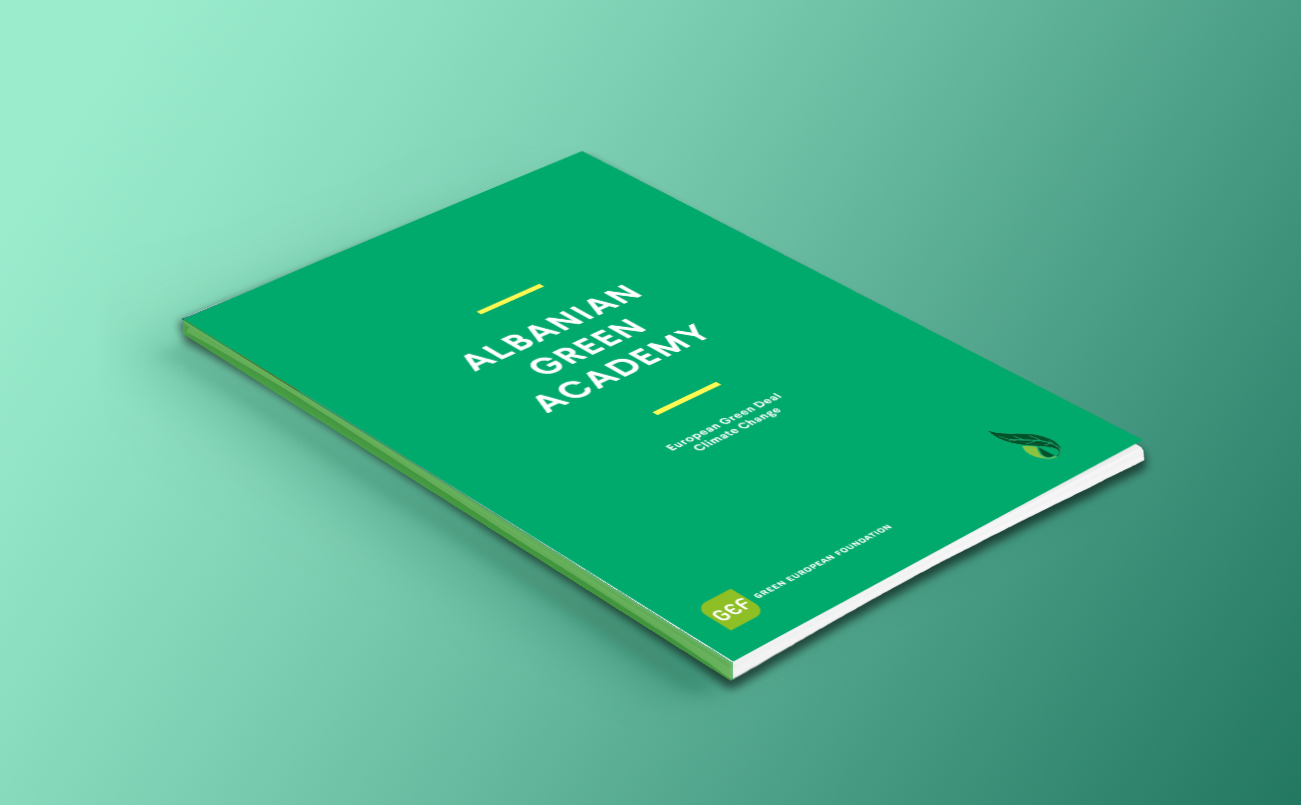
Albanian Green Academy Report

By Uncategorized

Context and Objectives

This report was prepared based on the trainings, workshops and lectures organized at the Albanian Green Academy in 2021. The overarching themes of the events focused on the European Green Deal and Climate Justice at local, national and European levels. The aim of the report is to promote green thinking in political, social and environmental aspects in Albania and the region.

About the Albanian Green Academy:

The Albanian Green Academy 2021 was held on 10-12thSeptember and 1-3rdOctober. It was divided in two phases. The main theme and focus of this first phase of the academy was “European Green Deal”. The main theme and focus of this second phase of the acade my was “Climate Change. In this series of 6-day training the topics of European Green Deal and Climate Change were addressed in the context of national and European conditions. Avery important objective of this project was to bring together, equip with information and build cooperation between different groups to achieve an environmental society.

Climate change is already happening: temperatures are rising, droughts and wildfires are starting to happen more often, rainfall patterns are changing, glaciers and snow are melting and the average global sea level is rising. To mitigate climate change, we must reduce or prevent emissions related to human activities.

Download

Digital version in Albanian is available here


This report has been published by the Green Europe Foundation with the support ofthe Albanian Green Institute and with the financial support of the EuropeanParliament to the Green European Foundation. The European Parliament is notresponsible for the content of this report.

Cities as Places of Hope (Vilvoorde)

By

About the Event

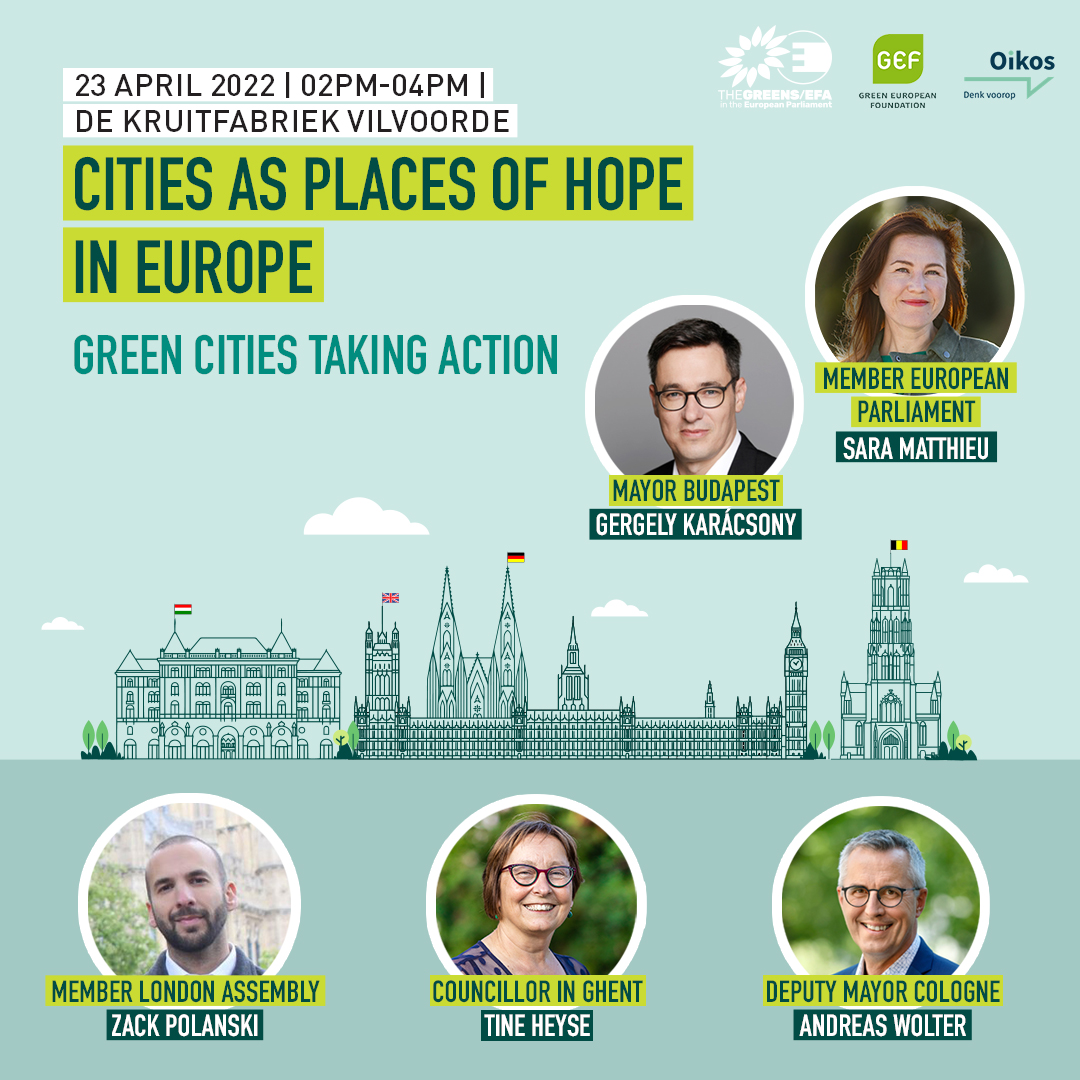
This event brings together advocates for progressive and transformative city policies in various Green Cities in Europe. Gergely Karácsony, mayor of Budapest as well as other Belgian and European mayors and vice-mayors will present transformative policies from their home cities and enter into conversation. There will also be a video presentation on green initiatives in the city of Ghent, one of Belgium’s most progressive green cities.

This event presents an opportunity to learn about projects to make European cities sustainable and green, to inspire one another and strengthen the inter-city network. Everyone interested in making our cities green places of hope is welcome.

Context

This event is co-organized by the Green European Foundation, Oikos Think Tank and Member of European Parliament Sara Matthieu, as part of the GEF project Cities as Places of Hope. Cities as Places of Hope aims to bring together progressive and transformative trans-local city networks, to connect them and facilitate their exchanges, ultimately contributing to a positive narrative for the future of Europe.

Speakers

  • Gergely Karácsony, Mayor of the City of Budapest
  • Sara Matthieu, Member of European Parliament (Group of the Greens/European Free Alliance)
  • Andreas Wolter, Mayor of the City of Cologne
  • Zack Polanski, London Assembly
  • Tine Heyse, vice-mayor of the city of Ghent
  • Benedek Jávor, Head of the Budapest Representation in Brussels and former MEP

Programme

14:00-14:15pm: Welcoming and introduction by MEP Sara Matthieu + video Ghent14:15-14:30pm: Keynote lecture by Gergely Karácsony14:30-15:15pm: Conversation between Benedek Jávor, Andreas Wolter and Tine Heyse, moderated by Dirk Holemans 15:15-15:30pm: Q&A with audience15:30-15:45pm: Presentation on Ghent + video of Ghent15:45- 16:15pm: Conversation between Sara Matthieu & Zack Polanski, moderated by Dirk Holemans16:15-16:30pm: Q&A with audience

16:30: end of the event


Practicalities

Location: De Kruitfabriek – Steenkaai 44D – 1800 Vilvoorde

Date and Time: Doors open at 13:30; Event starts at 14:00 and ends at 16:30

Registration: Please sign up through this link.

 Audiovisual Material


This event is co-organised by the Green European Foundation,  Oikos think tank, Member of the European Parliament Sara Matthieu and with the financial support of the European Parliament to the Green European Foundation. The European Parliament is not responsible for the content of this event.

Disaster and risk management in an age of Climate and Ecological Crisis

By

Context

This event is Part of the ‘Cities as Places of Hope’ series; a project launched in 2019 focusing on progressive city networks that are a key factor in the development of a positive narrative on the future of Europe. The project brings together partners from Spain (Fundación Transición Verde), Catalonia (Nous Horitzons), Croatia (The Institute for Political Ecology-IPE) , Belgium (Oikos), North Macedonia (Sunrise), Wetenschappelijk Buereau GroenLinks (Netherlands) and Green Thought Association (Turkey). This 2021 project aims to bring together progressive and transformative trans-local city networks, to connect them and facilitate their exchanges, ultimately contributing to a positive narrative for the future of Europe.


Programme

FIRST SESSION Disaster Management, and Green Politics

Moderator: Dr. Barış Gençer Baykan

11.00 – 11.05Opening Speech by GTA

11.05 – 11.30 – Erdem Ergin (Disaster Risk Management Specialist) – Crisis Management

11.30 – 11.55 – Prof. Dr. Ali Osman Karababa – Health Policies

11.55 – 12.15 – Question & Answer


12.15 – 12.25 BREAK


SECOND SESSIONForest Fires, Droughts, Floods and Climate Adaptation Policies in Cities 

Moderator: Gökhan Ersoy

12.25 – 12.30 – Opening

12.30 – 12.50 –  Dr. Akgün İlhan (Boğaziçi University) – Two sides of the coin: Drought and Floods

12.50 – 13.10 – Prof. Dr. Nesibe Köse (İstanbul University Cerrahpaşa Forest Faculty – Forest Botany Department) – Forest Ecosystems and Climate Change

13.10 – 13.30 – Dr. Emrah Çoraman – Biodiversity

13.30 – 14.00 – Question & Answer

Moderators and Speakers:

Dr. Barış Gençer BaykanGökhan ErsoyErdem Ergin (Disaster Risk Management Specialist) – Crisis ManagementDr. Akgün İlhan (Boğaziçi University) – Two sides of the coin: Droughts and FloodsProf. Dr. Nesibe Köse (Istanbul University Cerrahpaşa Faculty of Forestry – Department of Forest Botany) – Forest Ecosystems and Climate ChangeDr. Emrah Çoraman – Biodiversity

Practicalities

Date and time: Thursday, 18th November from 11:00 to 14:00 CET.

Audience: This webinar will take place in Turkish and is open to the general public

Registrations: are now open here 

This event will be organised through the ZOOM platform.


This event is organised by the Green European Foundation, with the support of Green Thought Association and with the financial support of the European Parliament to the Green European Foundation.

How do we build Community Wealth?

By

Context

A new model of economic development, called Community Wealth Building (CWB), is emerging in cities and communities all over Europe. These cities are challenging the dominant economic system that puts private capital accumulation above the basic needs of people. Local policymakers are building collaborative, inclusive, and locally controlled economies.

During this event, we will explore the concept of CWB and discuss how local authorities can implement these ideas in their own cities. This webinar is part of the project Cities as Places of Hope, that highlights inspiring examples of progressive cities across Europe which are the frontrunners of the social-ecological transition.

Speakers

  • Tom Lloyd Goodwin, Associate Director of the Centre for Local Economic Strategies: Tom is one of the drivers of Community Wealth Building movement in the United Kingdom and will tell us about the ideas of CWB and the way it is being developed in the UK.
  • Simion Blom, Councilor of GroenLinks in Amsterdam: Simion will talk about their plans to implement the CWB model in Amsterdam.


Programme

19:00 – 19:05: Welcome and introduction by Hans Rodenburg

19:05 – 19:20: Presentation by Tom Lloyd Goodwin

19:20 – 19:35: Presentation by Simion Blom

19:35 – 20:00: Questions and discussion


Practicalities

Date and time: Thursday, 28th October from 19:30 to 20:30 CET.

Audience: This webinar will take place in English and is open to the general public

Registrations: Please register through this link.

This event will be organised through the ZOOM platform.

Audiovisual material

Additional GEF reading material: 


This project is organised by the Green European Foundation with the support of Wetenschappelijk Bureau GroenLinks and with the financial support of the European Parliament to the Green European Foundation. The European Parliament is not responsible for the content of this event.

Food Policy in Barcelona Metropolitan Area

By

About the event

2021 marks Barcelona’s year as the World Sustainable Food Capital. A catalyst for a food transition towards sustainability that strengthens local economies and improves the health of both people and the planet.

In this context, the webinar will focus on different safe and affordable, sustainable food production and how to support local farmers.

Speakers:
  • Sergi Alegre, Fundació Nous Horitzons, welcome words
  • Susanne Rieger (Green European Foundation, Co-President), Introduction of the Green European Foundation
  • Alvaro Porro, Commissioner of social economy, local development and food policy of the City of Barcelona
  • Anna Martin, Vice-Mayor of El Prat
  • Gemma Frances, Director of Agricultural Parc of Baix Llobregat
Q&A

Practicalities:

Date and Time: 16th June 17:00 – 18:00 PM CET
Language: English/Catalan with simultaneous translation

This event is organised by the Green European Foundation with the support of  Fundació Nous Horitzons and with the financial support of the European Parliament to the Green European Foundation. The European Parliament is not responsible for the content of these workshops.

Governance Strategies for Cooling Cities: Cases of Athens and Istanbul

By

About

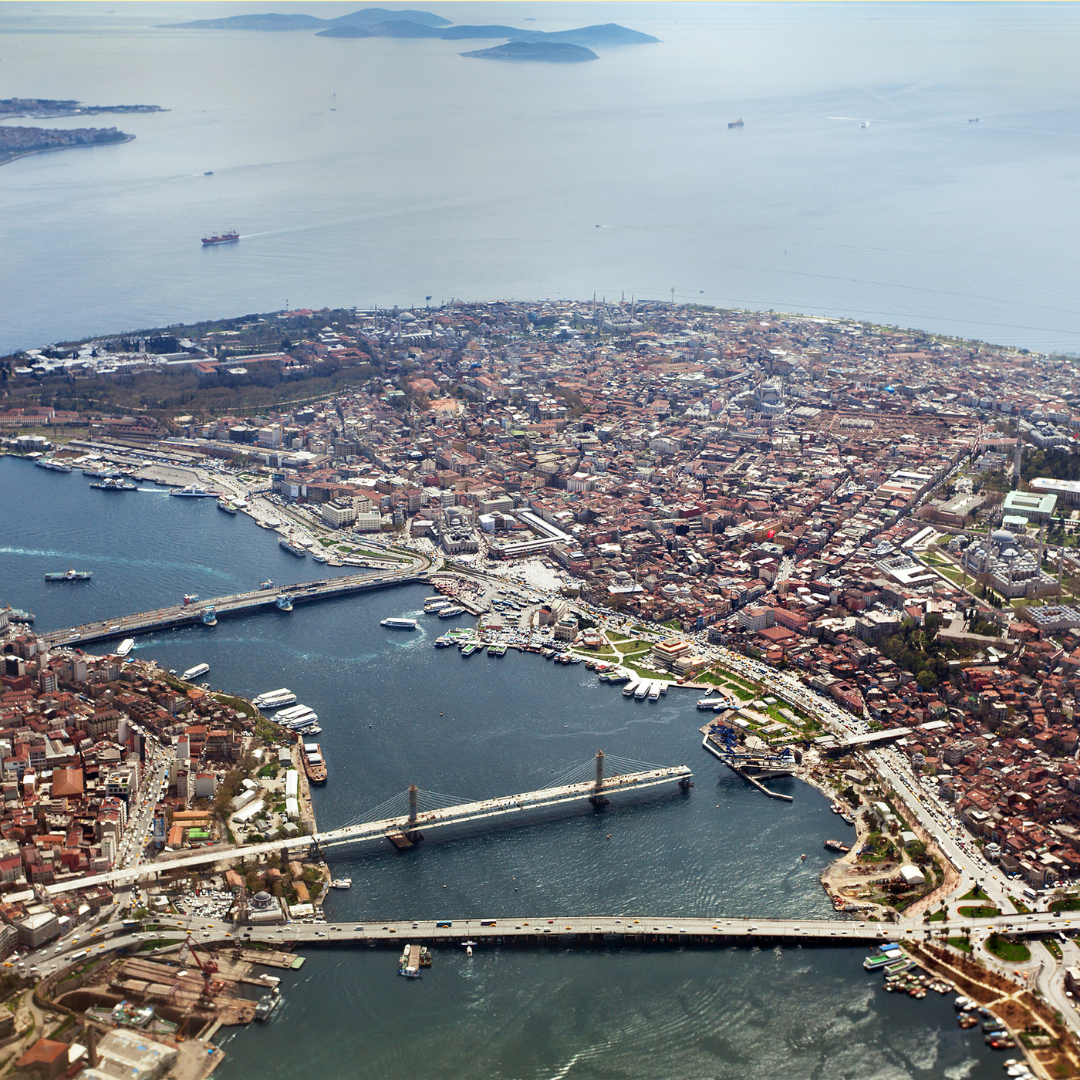
This research focuses specifically on improving the understanding of the capabilities and needs that cities have for an effective adaptation to heatwaves, which are expected to become more frequent with the increasing average global temperature while adaptation to the changing climate has many different aspects.  To this end, after laying a short account of the relation between cities, climate change, and heatwaves, we will first try to assess the efforts of cooling Athens, conducted within the “100 Resilient Cities” initiative between 2014-2019. Then, drawing from the experience in Athens, we will explore the potential policies and measures relevant to the case in Istanbul and conduct a discussion on effective governance for the effective implementation of these policies.”

We will hold a meeting on Tuesday, 2nd of March, to share the topics covered in the article with our stakeholders and to discuss the responsibilities and policy proposals of municipalities and city actors to cooling cities.”

Speakers:

Cem İskender Aydın, Article author, Boğaziçi University, Institute of Environmental Sciences

Begüm Aydın, Corresponding article writer Boğaziçi University, Institute of Environmental Sciences

Ümit Şahin, Istanbul Policy Center, Senior Specialist and Climate Change Studies Coordinator

Programme

13.00-13.30 Introduction of the article

13.30-13.50 Questions and comments on the report

13.50-14.00 Heat waves in cities: Policy suggestions for local governments

14.00-14.30 Free discussion

Register Here

Language:

This event will be in Turkish language


The Cities as Places of Hope Project is carried out by the Green European Foundation with the support of green organizations in the following countries: Spain (Transición Verde), Catalonia (Nous Horitzons), Croatia (The Institute for Political Ecology-IPE), Belgium (Oikos), North Macedonia (Sunrise), and Turkey (Green Thought Association). The Cities as Places of Hope Project started in 2019 with a focus on progressive city networks that appear as key factors in the creation of a positive narrative about the future of Europe. Project activities that were carried out in 2020 aimed to bring together progressive and transformative trans-local city networks, to connect them and to facilitate exchange between them, ultimately contributing to the development of a positive narrative about the future of Europe.

Climate Emergency – Raising Ambition (London)

By

Event Background

With the consequences of climate change beinng increasingly perceptible through extreme weather events (both worldwide and in European countries), verifiable research is urgently needed to set targets and policies that reduce greenhouse gas emissions by the amount necessary to secure a livable environment. At the same time, policies to reduce greenhouse emissions are often attacked for threatening existing jobs. 

GEF’s transnational project “Strengthening Climate Targets, Creating Local Climate Jobs” sets out to explore what greenhouse emissions reductions would mean in practical terms for our job markets and economies, and whether jobs could be created in rural areas across Europe. Can both a safe and just economically sound life for all be achieved? To this end, our project undertook research on the potential to create more climate jobs in three EU countries with diverse historic and economic prerequisites: United Kingdom, Ireland and Hungary. In 2019 the project is expanding also to Poland. 

About the Event: 

This climate energy conference is a one-day event for those looking to act on the climate emergency.  What can local authorities and communities do?  What scale of change do we need to be looking at?  What could the benefits be for jobs and local economies?  How do we keep fossil fuels in the ground? 

Speakers: 

  • Andrew Simms, (Rapid Transition Alliance) – the Climate Emergency
  • Nadine Andrews, (Green House) – Climate psychology & cultural shifts
  • Paul Allen, (Centre for Alternative Technology) – Zero Carbon Britain
  • Jonathan Essex and Peter Sims, (Green House) – Climate Jobs
  • Sam Mason (PCS Union) – Need for a Just Transition
  • Fatima Ibrahim (IPPR Environmental Justice Commission) – Need for a Just Transition
  • Yves Marignac, (Association négaWatt) – Europe-wide transition
  • Simon Pickering (Councillor, Stroud District Council) – Reducing in-house emissions
  • Philip Webber (formerly of Kirklees Council) – Street by street retrofit
  • Ian Christie ​(University of Surrey) – Widening the coalition
  • Agamemnon Otero (Repowering London) – Renewable energy
  • Page Dykstra (Community Supported Agriculture Network UK) – Land/Food Transition
  • Robert Read (The A Team Foundation) – Land/Food Transition
  • John Webb (Herts WithOut Waste) – Materials/Waste Transition
  • Neil Pitcairn (United Kingdom Without Incineration Network) – Materials/Waste Transition
  • Stephen Joseph (Transport Policy Consultant) – Transport Transition

Programme 

10:00-10:30 – Registration & refreshment

10:30 – Welcome and introductions – Natalie Bennett Green European Foundation, Anne Chapman Green House
– The Climate Emergency – Andrew Simms
– Climate Psychology and cultural change – Nadine Andrews
– Questions and discussion
– Introduction to parallel sessions and workshops

11:45 – Tea/ coffee break

12:00 – Parallel sessions – Making a plan
– Green New Deal and Just Transition – Fatima Ibrahim and Sam Mason
– Climate Jobs – Jonathan Essex and Peter Sims
– Zero Carbon plans – Paul Allen (Centre for Alternative Technology) and Yves Marignac (negaWatt)

13:00 – Lunch and information/discussion tables on:
– Reuse and recycling – Herts WithOut Waste & UKWIN
– Sustainable and Active Transport – Stephen Joseph,
– Renewable energy – Repowering London
– Food and farming – Community Supported Agriculture Network & Team A Foundation
– Street by street retrofit – Philip Webber (formerly Kirklees council)
– Local councils – Simon Pickering, Stroud District Council

14:30 – Workshops – Making it happen
– Making an Action Plan – Simon Pickering, with Jonathan Essex and Peter Simms
– Identifying key enablers and blockers of a step change in emissions.
– Widening the Coalition – Ian Christie, Surrey Climate Commission
– Establishing partnerships, setting up a local climate commission and citizens assemblies.

15:30 – tea/coffee break

15:45 – Making change happen – Feed back from workshops and panel discussion chaired by Natalie Bennett

17:00 – Conference Ends

Practicalities: 

Conference fee: £10

Please register for this event via the form found here.


Creating Socio-Ecological Societies Through Urban Commons Transitions

By Uncategorized

This framing paper is the closing publication of the Green European Foundation’s transnational project Creating Socio-Ecological Societies Through Urban Commons Transitionswhich focused on urban spaces as a driving force towards socio-ecological societies and as a hub of transformative policies.

Written by Dirk Holemans & Kati Van de Velde from GEF partner Oikos, this paper explores the new roles of cities in our society and their potential for collaboration as urban commons.

The work of GEF on Urban Commons will continue with the 2019 transnational project Cities as Places of Hope in the European Union.

Univerde X Edition (Madrid)

By

Context

66% of the world population will live in urban areas by 2050. Currently, already 73% of Europeans live in urban areas. There is no doubt that the future of humanity will be decided in cities and that they can be catalysts for the transformation we urgently need to face the multiple challenges, both socially and environmentally, that we see at the moment. Cities constitute the new political centre, tackling global problems on a local level: local governments and citizens’ movements are at the forefront of the fight against climate change or aid to refugees, and new forms of participation and democracy are being experimented with.

About the event

At this Univerde, which will already be the tenth edition of the successful Spanish summer school, we’ll reflect on the present and future of cities; about their role for the future of the planet and its inhabitants; about how our cities should be to move towards environmental and social sustainability.
In this context, we’ll discuss about climate change, citizen movements and commons, gentrification, water and food supply, the relationship between the urban and the rural. We will bring positive European experiences that can be replicated in other cities.

Programme

Saturday, September 8

08:45 – 09:30 Accreditation
09:30 – 11:15 Parallel Workshops:
  • Green urbanism for the 21st century
  • Cities of solidarity: immigration and cooperation
  • Political ecology and local political action
  • The policy against plastics
  • Education for the ecological transition in cities
11:15 – 11:45 Break
11:45 – 12:15 Opening Ceremony: Initial reflections on the city
  • Aurélie Maréchal, Director of the Green European Foundation
  • Javier Ayala, Mayor of Fuenlabrada
  • Florent Marcellesi, Member of the European Parliament for Greens/EFA
  • Monica Frassoni, Co-president of the European Green Party and Board member of Fundación EQUO
  • Juan López de Uralde, Co-spokesperson of EQUO and member of the Congress of Deputies for Unidos Podemos

12:15 – 14:00 Round table: Cities and citizens building future

Moderator: Mariano Baratech, Sociologist and Member of the EQUO Fundación’s board
  • Evelyne Huytebroeck, Member of the Brussels Parliament and Local Councillor in the Brussels commune of Forest, Responsible of the Local Councilors Network for the European Green Party
  • Julia López Ventura, C40’s Regional Director for Europe
  • Christina Monge, Political scientist and Associate Professor of Sociology at the Unversity of Zaragoza
14:00 – 15:45 Lunch break
15:45 – 17:30 Parallel Workshops:
  • The city of the future vs. the field of the past
  • Women who “paint” cities to inhabit them
  • Re-municipalisation of basic services: water
  • A more just, supportive and sustainable Europe: the role of EQUO in the European Parliament
  • Re-naturalisation of our cities

17:30 – 18:00 Break

18:00 – 18:45 Keynote speech: Anthropocene and bioregion
  • Fernando Prats, urbanist architect. Advisor of the Complutense University of Madrid for the Global Change Spain 2020/50 programme
18:45 – 20:30 Round table: City and territory. The road to a sustainable coexistence
Moderator: Ana Sabaté, former Professor of Human Geography at the Complutense University of Madrid
  • Marco Marangoni, Member of the research team of EStà – Economia e Sosenibilità
  • Alejandro Sánchez, Member of the regional parliament of Madrid
  • Irene Lorite, Architect and Urbanist, Advisor in the municipality of Cercedilla (Madrid), Member of Ahora Movilidad

Sunday, September 9

9:45 – 12:00 Parallel Workshops:
  • Latest lessons on citizens’ participation
  • Make your city a seed
  • “With you”: The positive presence of the wolf in our environment
  • Bullying in a digital world – cyberbullying
  • Energy transition in the administration: reality or fiction
  • Visit to the agricultural park of Fuenlabrada
12:00 – 13:45 Round table: Green cities – egalitarian and sustainable
Moderator: Ana M. Álvarez, Local councillor of Parla (Madrid)
  • Neus Truyol, Councillor of Ecology, Agriculture and Animal Welfare of the Palma de Mallorca City Council
  • Inés Sabanés, Councillor of Environment and Mobility of the Madrid  City Council
  • Jean-Claude Englebert, First Deputy Mayor of the municipality of Forest (Region of Brussels-Capital)

13:45 Closing Ceremony

  • Ruth Pascual, Local Councillor of Fuenlabrada
  • Marta Santos, Co-spokesperson of EQUO
  • José Larios, President of Fundación EQUO


Stay tuned for updates on our website and get more information via info@fundacionequo.es.

Crossing Borders (Janów Podlaski)

By

Context

The title of this year’s GEF Green Summer Academy in Poland is ‘Crossing Borders’, a phrase charged with meaning and symbolism, considering the fact that the event will be taking place near the borders of Poland with Belarus and Ukraine, as well as within a region with diverse cultures, dialects, languages, and religions.

About the event

The event includes several major themes, such as:

  • The future of Europe in the context of changing geopolitics and the upcoming European Parliamentary elections
  • Climate change and preparing for the COP24 Climate Change Conference in Katowice
  • Green visions for farming, nutrition, and rural development
  • Green visions for local governance, with particular emphasis on regional assemblies, and transition cities in alignment with the ideals of the Commons and urban movements

Through several workshops, round tables and expert debates, the event will feature discussions on fighting pollution, cities of equal chances, preventing corruption and the role of art and artists in citizens-led activism and the political transformation of Poland in a European context. The participants will also engage with the local community and local activists and learn about new green transborder initiatives and opportunities.

Through its diverse programme, the Green Summer Academy in Poland connects the dots between politics and society at local, regional, national, European and global levels.

Programme

Thursday July 12

16:00 – 19:00 Local expeditions in small groups

17:00 – 19:00 Meeting with local active inhabitants on projects of local development opportunities in a transborder context

Friday July 13

9:30 – 10:00 Opening speeches

10:00 – 12:00 What future for the Eastern Europe in EU?  (Debate)

Speakers: Rebecca Harms (Member of the Greens/EFA group in the European Parliament), Paweł Kowal (College of Europe, Natolin), Małgorzata Tracz (Partia Zieloni, Poland), Michał Sutowski (Krytyka Polityczna), Moderator: Bartłomiej Kozek (GEJ), Adam Ostolski  (GEJ, Krytyka Polityczna, Partia Zieloni)

12:00 – 13:45 Creating Socio-Ecological Societies through Urban Commons Transition. Lecture ‘Cities in transition’

Lecture: Dirk Holemans (Green European Foundation Board Member and Director of the Flemish Green Think Tank Oikos

Cities in transition 

Speakers: Dirk Holemans (Ghent in transition with Michel Bauwens), Sergi Alegre (El Prat and Barcelona),  Hanna Gill-Piątek (innovative revitalisation in Łódź), Marcin Gerwin (citizens’ panels in Gdansk and Lublin), Roger Manser (London Great Parc), Moderator: Dagmara Misztela (Partia Zieloni, Poland)

14:45 – 15:45 Artists as change makers (Debate)

Speakers: Ela Hołoweńko, Cecylia Malik, Michał Kasprzak, Joanna Kessler. Moderator: Gert Roehrborn

15:45 – 17:45 Panel debate 

  • Food and farming past revolution and its consequences (Key note), Thomas Waitz, MEP, EGP Committee 
  • The CAP today and tomorrow, the Green perspective (Key note), Andrzej Nowakowski (GGEP) 
  • From industrial agriculture to agroecology and food sovereignty? (Debate), Andrzej Nowakowski (Advisor on Agriculture and Rural Development in the Greens/EFA group in the European Parliament), dr Katarzyna Bańkowska (IRWiR PAN), Izabela Mier (Cooperative Dobrze), Ben Lazar (Nyeleni Polska/permaculture), Dorota Metera (expert in certification), Maria Staniszewska (ecological NGO), Adrian Sulikowski (conventional farmer/Green Party), Katarzyna Jagiełło (Greenpeace), Justyna Zwolińska (SGGW, Poland). Moderator: Ewa Jakubowska-Lorenz, (HBS Warszawa)

18:00 – 19:45 Parallel programme in Janów Podlaski and Biała Podlaska

21:00 – 22:00 ‘No Problem!’ by Yasmin Kidwai, documentary projection

Saturday July 14

9:00 – 11:00 Parallel Sessions I 

  • Future of work (Adam Ostolski, Bartlomiej Kozek)
  • Economy and climate change (Roger Manser, Przemek Stępień)
  • Rivers exchange of knowledge part I (Alesia Basharymava, Volha Kasevitch, Uladzimir Zuyeu, Petro Hrystiszyn, Heorhiy Veremiychyk, Oleksandr Husiev, Sascha Maier, Mikhail Durkin, and members of the Save the Rivers Coalition, moderators:  Ewa Leś, Sascha Maier)

11:30 – 13:00 Parallel Sessions II

  • Seminar ‘Green farming: Campaigning against GMO, why and how’ (Ewa Sufin-Jacquemart (Strefa Zieleni), Juliette Leroux (Greens/EFA)
  • City of Open Chances (Hanna Gill-Piątek, Aleksandra Kołeczek)
  • Rivers exchange of knowledge part II (Iza Zygmunt, Maria Staniszewska)

14:00 – 16:00 Parallel Sessions III 

  • Green media for the climate (Beata Nowak, Bartek Kozek, Jamie Kendrick (GEJ), Annabelle Dawson (GEJ), Monika Matus (Democratic Action), Wojciech Szymalski (Institute for Sustainable Development), Ilona Jędrasik (Client Earth Lawyers for Earth), Hanna Schudy (EKO-UNIA), Monika Sadkowska (RT-ON), Marcin Harembski (SMA/CAN + Climate Coalition) and others, Moderator: Katarzyna Ugryn)
  • Green regional program: clean air, green jobs, integrated public transport and enthralled hunting (Małgorzata Tracz and Paweł Pomian)
  • Rivers working groups E30 and E40 coalitions (Ewa Leś, Sascha Maier, Maria Staniszewska, Petro Hrystiszyn)

16:30 – 18:30 Parallel Sessions IV

  • Towards COP 24 (Roger Manser (urbanist), Beata Nowak (Zielone Wiadomości), Monika Matus (Democratic Action), Wojciech Szymalski (Institute for Sustainable Development),  Ilona Jędrasik (Client Earth Lawyers for Earth), Hanna Schudy (EKO-UNIA), Monika Sadkowska (RT-ON), Marcin Haremski (SMA), Patryk Białas (Skype), Maciej Smykowski (Partia Zieloni), Katarzyna Ugryn (HBS), moderators: Ewa Sufin-Jacquemart (Strefa Zieleni), Artur Wieczorek
  • Seminar ‘Green farming: How organic farming can be developed in Poland and EU’ (Monika Styczek- Kuryluk, Andrzej Nowakowski, Dorota Metera, Dr. Katarzyna Bańkowska, Ben Lazar, Rober Kuryluk, and others. Moderators: Iza Mier, Julia Rokicka)
  • Rivers plan of action (Izabela Zygmunt, Ewa Leś)

18:45 – 19:30 Summary and closing

Sunday July 15

7:00 – 9:00 Local expeditions in small groups


Participation fee:

The full fee of 500 PLN (570 PLN with transfer) should be paid by bank transfer to the account of Fundacja Strefa Zieleni:

66 1020 1097 0000 7602 0237 0450, title: ‘Green Summer Academy participation fee’

(from abroad: IBAN: PL66 1020 1097 0000 7602 0237 0450, Swift/BIC: BPKOPLPW)

The lower participation fee is possible when registering before June 25

Registration/more information:

Ewa Sufin-Jacquemart +48-664673700 ewa.sufin@strefazieleni.org

Urszula Sadlowska +32 (0)2 234 65 73 urszula.sadlowska@gef.eu


The Green Summer Academy “Crossing borders” is organised by the Green European Foundation with the support of Fundacja Strefa Zieleni and with the financial support of the European Parliament to the Green European Foundation.

The debate on transitioning cities towards the Commons is organised as a part of the international project “Creating Socio-Ecological Societies through Urban Commons Transition” by the Green European Foundation with the support of Fundacja Strefa Zieleni and with the financial support of the European Parliament to the Green European Foundation.
Commons Barcelona

The socio-economic model of the Commons in Europe (El Prat de Llobregat)

By

Context

Local governments have to rethink their way of doing politics with more and more citizens’ initiatives emerging across Europe that are establishing new organisations, introducing a shared economy and leave the image of a passive citizenry behind them. The challenge ahead is therefore to build specific structures and processes that foster synergies between the public and the commons domain.

These developments could lead to a prototype of transformative cities, being the driving force introducing the socio-economic model of the Commons as the new paradigm. Governmental structures however must be reformed to constitute a so-called Partner State, where politicians perceive their constituency as a community of citizens with a lot of experience and creativity and top-down politics are left behind.

About the event

By highlighting several best practices from Catalonia and all over Europe and in particular the municipal level as the most fertile ground for commons practices, this conference will showcase inspiring examples of how this Partner State can be realised and organised in the best possible way.

Draft Programme

9:30 – 10:00 REGISTRATION 

10:00 – 10:15 WELCOME Susanne Rieger, Green European Foundation Co-president

10:15 – 10:30 INTRODUCTION TO THE CONFERENCE Sergi Alegre, Fundació Nous Horitzons

10:30 – 11:15 KEYNOTE: A NEW SOCIO-ECONOMIC MODEL – COMMONS IN EUROPE Dirk Holemans, Director Oikos Think Tank and City Councillor of Ghent (Belgium)

11:15 – 11:45 COFFEE BREAK

11:45 – 12:45 MUNICIPALITY AND THE COMMONS

  • The case of Barcelona Lluís Torrens
  • The case of Prat de Llobregat Lluís Mijoler

12:45 – 13:45 ECONOMY OF THE COMMONS

  • Esperanzah! Foundation Òscar Rando
  • Obrera de Vivendas Cooperative Dolors Camats

13:45 – 14:15 SOCIETY OF THE COMMONS: The example of the region of the South Perpignan District (France) Bruno Soula

14:15 LUNCH


Register now by sending an email to fundacio@noushoritzons.cat and stay tuned for updates by following us on Facebook or Twitter to learn about our other activities. 

commons

The Commons Transition in Practice (Brussels)

By

Context

Cities are becoming a new and hopeful transnational governance level. They are organising themselves in a whole tissue of networks (Fearless Cities, Fabcities, etc.), working together in domains like climate policy, renewable energy and urban economy.

At the same time, citizens are developing a whole range of urban commons, based on co-operation and an ethics of care. Tired of only being a powerless consumer or a passive citizen, we get active as maker, urban farmer, solidarity volunteer, user of shared resources, civic or social entrepreneur, etc. This goes along with the establishment of new organisations and infrastructures like fab labs, energy co-ops, co-working spaces, urban food production plots, and many more.

In recent years, we have seen cities like Ghent and Bologna moving a step further, establishing structures and processes that aim at building synergies between the public and the commons domain. This is part of a new political vision, the Partner State. So, a partner city sustains and gives incentives to alternative civil and economic institutions, like the commons and cooperatives. The conference, as part of this year’s transnational project around Urban Commons Transitions, therefore aims to look at these developments of collaborative city-making and to examine those prototypes of transformative cities as a driving force towards socio-ecological societies.

Lately institutions, research groups and organisations were created to investigate how commons could be integrated in a more sustainable way in the vivid networks of cities. 

About the Event

The seminar will be kicked off by two experts who will share their experiences and knowledge: Michel Bauwens (P2P-Foundation) and Elena De Nictolis (LabGov). Afterwards, all participants are invited to enrich the debate by contributing with their own perspective and experiences in the field.

This seminar organised with the support of our Flemish partner Oikos Think Tank is targeting participants that are already working on commons. By bringing together the theoretical and experiential experts, this event aims to tackle the challenges on how urban commons transitions can be a prototype for creating socio-ecological societies.  

More info and updates can be found in our Facebook event.

How to register

To register for this seminar follow these steps:

1. Send an e-email to info@oikos.be stating your motivation and shortly describing the commons initiative/project you are active in 

2. Participation fee: for organisations € 20, for private individuals € 10.

3. Transfer the participation fee to the following details: BE29 0015 9877 0164 (BIC: GEBA BE BB) of Oikos vzw with as a reference ‘seminar commons’

Your participation for this seminar will confirmed to you via e-mail.

Join our evening conference!

The seminar will be followed from 19h30 to 21h30 by a conference entitled ‘Creating Eco-Societies through Urban Commons Transitions‘. During this event, the experts will debate with a broader audience and share thoughts with commons’ initiatives already functioning in an Urban environment.

Transforming the society from the City of the Commons (Vitoria-Gasteiz)

By

Context: European cities as the key element of transnational governance

More and more cities across Europe and worldwide are organising themselves through initiatives such as Eurocities, Fearless Cities, Fabcities and many more, to work together in areas such as climate policy, renewable energy or urban economy.

Especially cities with progressive governments are spearheading this development and are becoming the key factor of transnational governance.  Oftentimes the respective initiatives start from the bottom up and there must then be a fertile ground provided by local administrations so they can flourish. Those new types of relationships between the public sphere and the commons can become the key drivers within a transformative city model that will ultimately help us achieve more just and ecological societies.

About the event

This conference aims to serve as a collective reflection on the urban governance of cities and the limits and functions of the cooperation between administration and an active citizenry across Europe. Experts from Italy, Belgium and Spain will share their experiences and best practices that are implemented in other cities. It will be organised in conjunction with a conference of the New Economic and Social Innovation Forum (NESI), that will be held the following day, on 9 May, at the same venue.

Draft Programme

17:30 – 17:40 OPENING Óscar Fernández, Member of EQUO and Councillor of Vitoria-Gasteiz

17:40 – 18:30 KEYNOTE “OSTROM IN THE CITY: PRINCIPLES AND DESIGN PRACTICES FOR URBAN COMMONS” Christian Iaione, Associate professor of public law at Guglielmo Marconi University of Rome, visiting professor of governance of the commons at LUISS Guido Carli where he directs LabGov.

18:30 – 20:45 ROUNDTABLES: THE NEW EUROPEAN CITIES OF COOPERATION BETWEEN THE PUBLIC AND THE COMMON SPHERE

1. Citizens’ initiatives

  • Culture and political thought in Madrid, Iñaki Alonso, vice-president of the Teatro del Barrio cooperative
  • Urban gardens in Zabalortu, Susana Cantero, activist and member of Zabalortu Association
  • Energy cooperatives, Erika Martínez, Communication Manager of GoiEner

Moderated by: Borja Izaola, architect, anthropologist and consultant

19:30 – 19:45 BREAK

2. Initiatives of local administrations

  • The experience of Ghent, Dirk Holemans, councillor of Ghent and member of the board of the
    Green European Foundation
  • B-MINCOME project (Barcelona), Lluis Torrens, Director of Planning and Innovation of the Social Rights
    Area of the Barcelona City Council
  • Manage waste creating citizen value (Madrid), Reyes Montiel, Director of the Environment and Mobility Department of the Barcelona City Council

Moderated by: Maritxu Díez, journalist

20:45 – 21:00 CLOSING AND CONCLUSIONS Xabi Marrero, spokesperson of EQUO Araba

This conference will be simultaneous interpretation Spanish-English throughout the conference.


Register now by following this link and stay tuned for updates by following us on Facebook or Twitter to learn about our other activities. 

Creating Eco-Societies through Urban Commons Transitions (Brussels)

By

Context: Towards socio-ecological societies

Cities are becoming a new and hopeful transnational governance level. They are organising themselves in a whole tissue of networks (Fearless Cities, Fabcities, etc.), working together in domains like climate policy, renewable energy and urban economy.

At the same time, citizens are developing a whole range of urban commons, based on co-operation and an ethics of care. Tired of only being a powerless consumer or a passive citizen, we get active as maker, urban farmer, solidarity volunteer, user of shared resources, civic or social entrepreneur, etc. This goes along with the establishment of new organisations and infrastructures like fab labs, energy co-ops, co-working spaces, urban food production plots, and many more.

In recent years, we have seen cities like Ghent and Bologna moving a step further, establishing structures and processes that aim at building synergies between the public and the commons domain. This is part of a new political vision, the Partner State. So, a partner city sustains and gives incentives to alternative civil and economic institutions, like the commons and cooperatives. The conference, as part of this year’s transnational project around Urban Commons Transitions, therefore aims to look at these developments of collaborative city-making and to examine those prototypes of transformative cities as a driving force towards socio-ecological societies.

About the Event: A conference to inspire and motivate

Lately institutions, research groups and organisations were created to investigate how commons could be integrated in a more sustainable way in the vivid networks of cities. During this conference, organised with the support of the Flemish Think Tank Oikos, experts from different projects and institutions will inspire you with their knowledge and findings about sustainable commons in cities. 

Draft Programme

19:30 – 19:40 INTRODUCTION Dirk Holemans, Director of Oikos and GEF Board member

19:40 – 20:20 THE VISION OF TWO EXPERTS Michel Bauwens & Elena De Nictolis

20:20 – 20:50 THREE STORIES ON URBAN COMMONS

Marie Haspeslagh, Enchanté – a network of warm-hearted merchants

Lucie Evers, Partago – a coop for electric car sharing – Mobility Factory

3rd speaker to be announced

20:50 – 21:10 PANEL DISCUSSION “CHANGING THE CITY”, Marie Haspeslagh, Lucie Evers, tbc

21:10 – 21:30 CLOSING PANEL “URBAN COMMONS TRANSITION”, Michel Bauwens & Elena De Nictolis

Keynote speakers

Michel Bauwens

Founder and director of the P2P Foundation and expert in peer production, governance and property. Bauwens is a well-known public speaker and thought leader. In 2017 he wrote the Commons Transition Plan for Ghent, after a similar project for Ecuador.


Elena De Nictolis

Research associate at LabGov, the LABoratory for the GOVernance of the City as a Commons. She prepares a Phd thesis on public policies for urban co-governance and the relation with the quality of city democracy at LUISS University of Rome.


Register now

To attend this inspiring conference, follow this link and order your tickets on the bottom of the page.

To complete your registration, transfer the entrance fee of 5 € to BE29 0015 9877 0164 (BIC: GEBA BE BB) Oikos vzw with the reference ‘Commons Congress’.


Stay tuned for updates

Subscribe to our Facebook event, where you will receive the latest news on speakers and the detailed programme, and follow us on Facebook or Twitter to learn about our other activities.


Urban Steps for Resilient Future (Istanbul)

By

Context

This training for trainers includes several stages aiming at young  and motivated people who are eager to improve Eastern European cities through alternative ways of urbanisation, as well as in mastering their skills in advocacy and project management.

The objective is to empower them to shape and improve their urban communities, and to ultimately create more sustainable green cities based on the principles of inclusion and democracy.

First step: Online Course “Urban Steps for a Resilient Future

Prior to their attendance of the training, the course introduces the training participants to different concepts concerning public spaces and urban commons, explores various examples of urban activism as well as grassroots and entrepreneurial initiatives, illustrates urban problems and propose good practices. The course Urban Steps for a Resilient Future shows ways to turn ideas into concrete action and how urban activism can serve as a connection point for collaboration between different stakeholders on a local level in reaching common solutions.  

Second step: Face-to-face training

During an intensive one-week face-to-face training, the participants consolidate the knowledge gained while going through the online course, they receive insights from external speakers and receive in-depth and hands-on training on a variety of topics. Among those are a session on “City and Economy” by Dirk Holemans (Director of the Flemish Green Think Tank Oikos, GEF Board member and city councillor in Gent, Belgium), an introduction to useful tools of project management by Vesna Jusup (European Green Party), as well as a hands-on training on effective communication by Pinar Ilkiz  (Co-Founder and Communications Director at Pikan Ajans, an NGO social media consultancy).

Third step: Fortify

Participants of the Training for Trainers will have an opportunity to implement one of four Regional Trainings that they designed and planned themselves. These activities are targeting young people from the regions respectively. Young people will both be able to practice their trainer and project management skills as well as to map decision-makers and existing urban initiatives in their local communities/regions and exchange experiences and practices among themselves. At the end of this phase, every group from each country will have a completed action plan.

About the event

The international activity will take place from 24-29 April near Istanbul, Turkey, in the framework of this year’s transnational project “Creating Socio-Ecological Societies through Urban Commons Transitions”. Both urban activists with experience and people who are new to this topic but keen to develop an expertise in this field were invited to answer the call for participants.

The training is going to enable young people to analyse their cities (think global) as well as equip them with capabilities to conduct local activities on the spot with the goal to improve their communities (act local), and will include, among others, sessions on “City and Inclusion”, “City and Environment”, Manifesto Writing, and more.

All the materials produced during the project: Manifesto, Regional Action plans, impressions, recommendations and other materials will be summed up into a publication that will be translated into four different languages, so stay tuned for the follow up!


Call for Participants: Urban Steps for Resilient Future

By

We are happy to announce the call for participants for the International Activity (Training for Trainiers) that will take place from 24-29 April near Istanbul, Turkey.

We are looking for young  and motivated people who are eager to improve Eastern European cities through alternative ways of urbanisation, as well as in mastering their skills in advocacy and project management. Participants are expected to come from one of the following 16 countries of Eastern Europe: Albania, Armenia, Azerbaijan, Belarus, Bosnia and Herzegovina, Bulgaria, Croatia, Georgia, Kosovo*, Macedonia, Moldova, Montenegro, Serbia, Turkey, Ukraine, Russian Federation.

Both urban activists with experience and people who are new to this topic but keen to develop an expertise in this field are welcome to apply. The team will select participants respecting the criteria of gender, geographical and regional balance and taking into consideration the diversity of participants’ backgrounds regarding the event’s topic. We encourage applications reflecting diversity in all forms, especially gender and sexual identity.

All sessions of the international activity will be conducted in English.

DEADLINE for submitting the application is Sunday 4th March, 2018.

You can apply using this application form.

Go to PROJECT PAGE to read more information about the full project.

*All reference to Kosovo, whether to the territory, institutions or population, in this text shall be understood in full compliance with the United Nations Security Council Resolutions 1244 and without prejudice to the status of Kosovo.

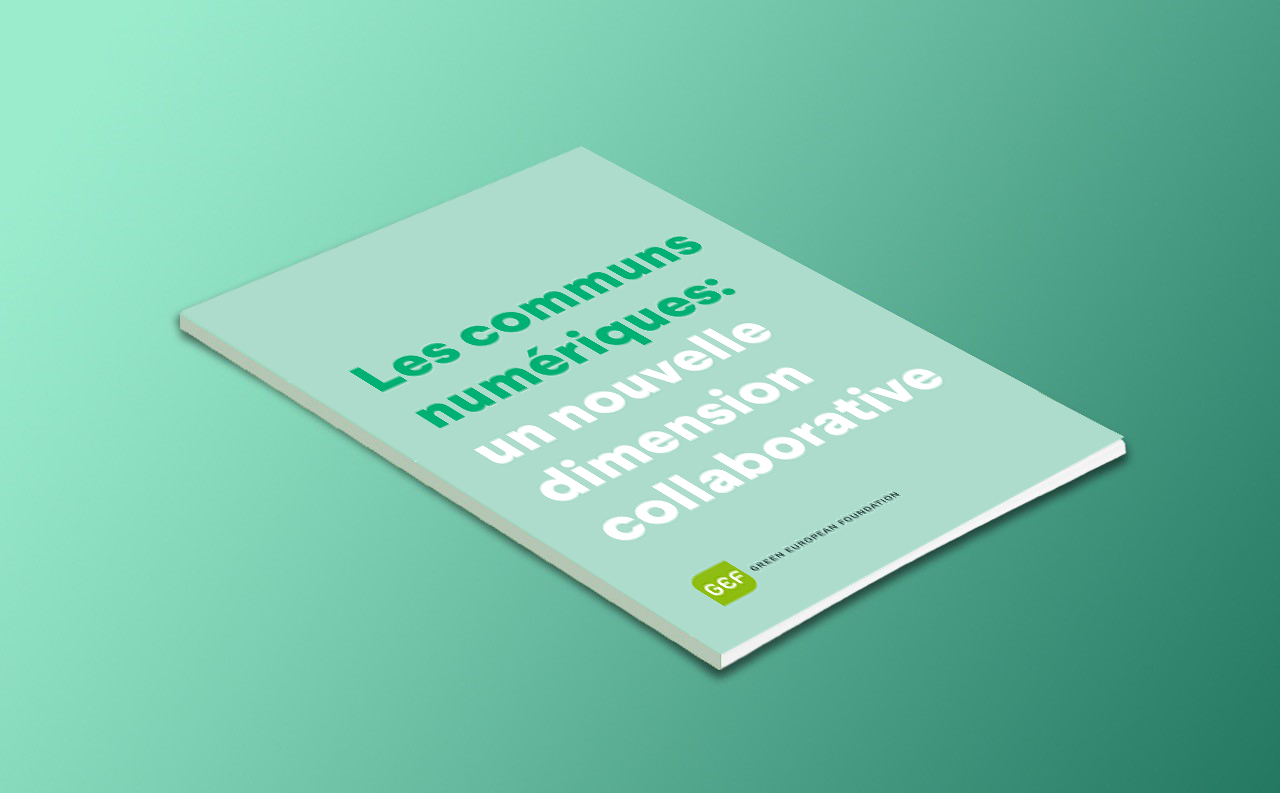
Digital Commons: A New Collaborative Dimension

By Uncategorized

Due to the digitisation of our societies, the way individuals act and interact in the private as well as the public sphere changes rapidly. Digital platforms and open source programmes as Commons can contribute to the transformation of our societies and will, wished for or not, change the modus operandi of our economy as well.

The approach of Governance of the Commons could be one solution against possible misuse and working towards a more just redistribution or a government that balances the interests of producers, workers and consumers better.

The objective of this short analysis is to address these aspects of remuneration and protection of digital tools.

Digital Democracy

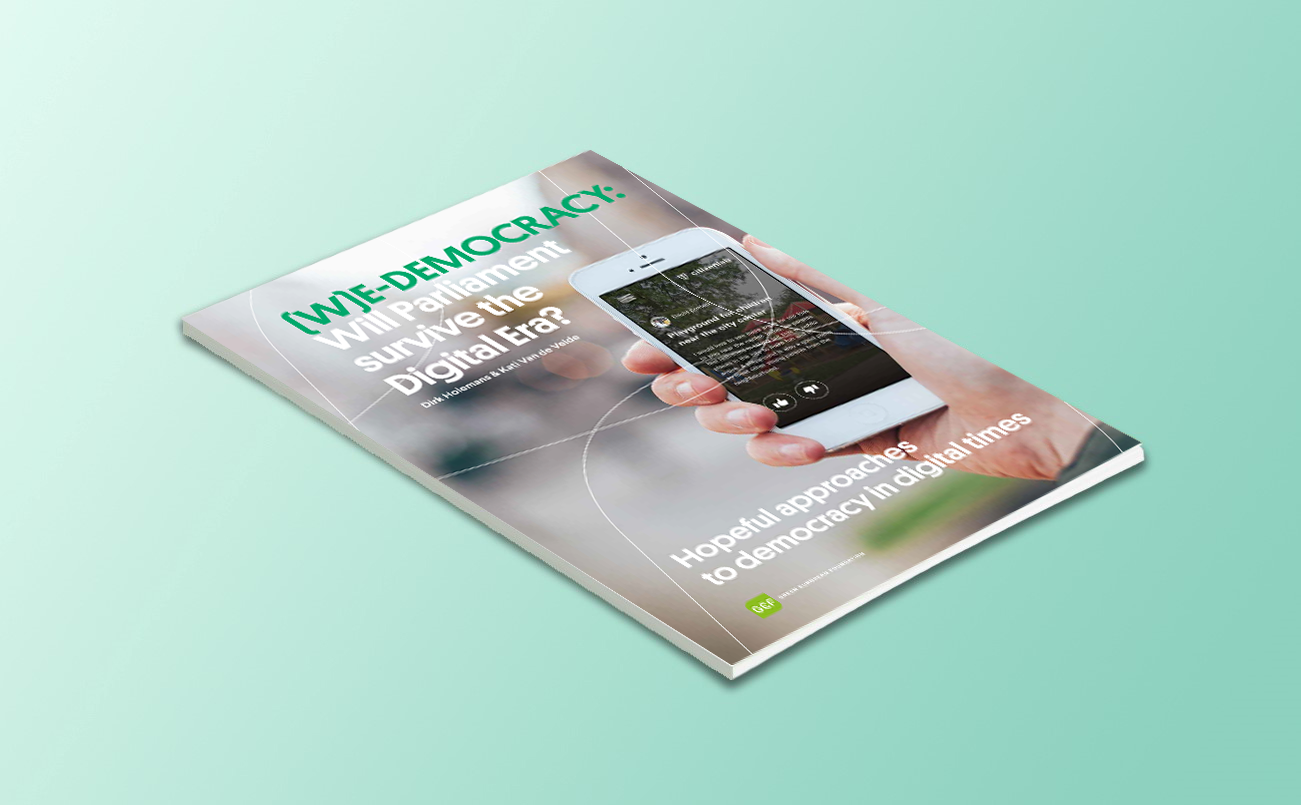
(W)E-DEMOCRACY: Will Parliament survive the Digital Era?

By Uncategorized

The 21st century democracy in Europe is in dire straits. Citizens feel disconnected with politics. Many people, especially youngsters, no longer see the traditional democracy as a good system of governance. Democracy like we know it today seems to be overdue for a profound upgrade. How can we reverse the erosion?  Will parliament survive the digital era?

Democratic institutions haven’t changed much since their formation in the 19th century. Even though our lives have been permeated with digital technologies, our parliaments and local councils have not. If we do not intervene quickly, our democracy is threatened to fall behind on digitalisation, and the gap between citizens and politics will grow even more.

Nonetheless our digitalised society offers a fertile breeding ground for citizens who organize themselves in innovative ways to participate in political decision-making. Digital initiatives like online knowledge centres and participation platforms pop up everywhere in Europe. For example, did you know that the mayors from Barcelona and Paris use digital platforms to actively engage citizens in outlining policy? What is the potential of these technologies to renew democracy? What are the challenges? What about participation of the elderly for instance? And how can local governments respond to these growing digital trends?

In this trend paper we explore innovative approaches to democracy. The paper was produced in the aftermath of the (W)E-Democracy European Thinking Day held in Brussels on 26th May 2017.

“Blockchain & Commons” in Brussels

By

Context

The commons are driven by citizens’ initiatives, including an increasing amount of digital opportunities as well as new technologies which have the power to transform democracy. This topic will be addressed in the upcoming workshop in Brussels hosted together with Etopia. The event is a part of our ongoing project Reclaim the Commons which aims to explore the transformative power of the commons, whilst involving the Greens and a wider audience around this topic.

Workshop in Brussels

This event will provide insights into the use of blockchain as a technology that reinvents the way citizens think and organise their exchanges. Beyond the most famous example of Bitcoin, employment contracts, insurances, our culture, and much more could be deeply impacted by this change in interaction between users and creators.

Can this technology be used as new common to pave the way for a better collective data management?  What about the future of public data and their transparency? And what are the potential dangers that need to be averted?

These intriguing questions will be discussed during our workshop together with:

  • tbc, Blockchain France
  • Olivier Roucloux, Consultant at Fenoryx

Time & Venue

The workshop will be hosted on Thursday, 23 November 2017, from 11h00 to 12h20 in the premises of Etopia in Brussels (Place des Barricades 1, 4th floor).

Registration

Please sign up by sending an email to jonathan.piron@etopia.be.