Geopolitics of a Post-Growth Europe: Rethinking Relations with the Global South?

By

About the event

Rivalries between states or political entities for sovereignty over a territory or a resource are often enough to justify the development of (often commercial) armed forces and alliances. Geopolitics, if it is to mean anything other than the analysis of this interplay of forces and influences, would therefore affirm that no state would voluntarily reduce its economy at the risk of being overpowered by another one not willing to make this sacrifice.

This generality about international relations partly explains the expansion of empires throughout history, and from this point of view, the great European and industrial powers are doing nothing new by colonizing, enslaving, and establishing asymmetrical trade relations.

What’s new, however, is that the intensity of the economic flows of industrial means of production is ravaging ecosystems and climatic balances. In other words, the economic growth of the major powers (exploiting resources extending far beyond their sovereign territories) is unsustainable.

In response, many intellectuals are striving to bring out a convincing macro-economic model of post-growth. These efforts are taking place when economic growth is slowing down, or even stagnating, and producing increasingly irreversible and lethal effects on the environment and people’s health.

Theoretical models of post-growth postulate that it is possible to reduce the intensity of physical and economic flows while maintaining a satisfactory standard of living.  That is to say, maintaining a “good standard of living” (with access for all to education, healthcare, leisure, culture…) without using fossil fuels implies developing a large-scale renewable energy system, which we know very well has a lower energy rate of return and requires large quantities of materials.

In any case, the abandonment of fossil fuels and the development of a decarbonized, non-growthiest economic model holds the seeds of new international relations and new balances of power.

Project background

This event is part of GEF’s project Geopolitics of a Post-Growth Europe, which explores the tensions between degrowth/post-growth and geopolitics. The project aims to ignite a conversation between critics of economic growth and progressive thinkers on foreign and security policy, who now often operate in separate circuits. It aims to find solutions beyond naïve anti-militarism and convenient belief in green growth. Find out more about the project and its findings at geopoliticspostgrowth.eu.   

Practicalities

Date and Time: Friday, July 7th (12:00 – 14:00 CEST) 

Location: Online, via Zoom 

Language: French 

Registration: This is a closed expert meeting. However, if you wish to learn more or receive an invitation, please get in touch with Kévin Puisieux via k.puisieux (at) fondationecolo.org. 


This expert meeting is organised by the Green European Foundation with the support of the Fondation de l’Ecologie Politique and the financial support of the European Parliament to the Green European Foundation. 
Geopolitics of Post-Growth

By

About the event

Scientists increasingly doubt whether we can stop the climate and ecological crises as long as our economy continues to grow. So we had better prepare for a future without GDP growth. In fact, the degrowth movement, which is rapidly gaining popularity among activists and scientists, advocates the deliberate scaling back of overproduction and overconsumption to bring the economy back into balance with the living world, in a way that reduces inequality and improves human well-being.

But what would a farewell to economic growth mean for geopolitics? Can a European Union that is the first to enter the post-growth era remain (or become) a global player? Will it be able to defend itself, its allies, democracy, and the international rule of law against aggressive autocrats? The transition to a post-growth society must be a democratic one. But that is far from obvious at a time when authoritarian regimes are invading or threatening their democratic neighbours.

On the plus side, a post-growth EU might gain resilience. Without economic growth, it will be easier for the EU to reduce its dependence on imported energy and raw materials. This favours strategic autonomy. It also provides an opportunity to move beyond the neo-colonial ‘extractivism’ that burdens relations with the global South.

In this webinar, we will identify points of contention and try to develop commonalities. After some brief introductions, there will be ample time for participants to have their say.

Project background

This event is part of GEF’s project Geopolitics of a Post-Growth Europe, which explores the tensions between degrowth/post-growth and geopolitics. The project aims to ignite a conversation between critics of economic growth and progressive thinkers on foreign and security policy, who now often operate in separate circuits. It aims to find solutions beyond naïve anti-militarism and convenient belief in green growth. Find out more about the project and its findings at geopoliticspostgrowth.eu 

Speakers

  • Sophie Bloemen, co-director Commons Network
  • Roderick Kefferpütz, director of the European Union office of the Heinrich-Böll-Stiftung 
  • Richard Wouters, project leader ‘Geopolitics of a post-growth Europe’ for GEF 

The webinar will be moderated by Judith Sargentini, former MEP for GroenLinks and CEO in the not-for-profit sector.

Practicalities

Date and Time: Friday, 8 September (14:00 – 16:00 CEST) 

Language: English 

Audience: Public event online, via Zoom   

Registration: Please register online via this link. 

In case of further questions, contact project lead Richard Wouters – rwouters (at) groenlinks.nl 


This project is organised by the Green European Foundation with the support of Wetenschappelijk Bureau GroenLinks and with the financial support of the European Parliament to the Green European Foundation. The European Parliament is not responsible for the content of this event. 
The Green Narrative on Peace and Security (Vaxtorp)

By

About the Event

This learning space is designed for young activists (15-35) from across Europe. The two sessions, organised by GEF with the support of FYEG, will facilitate learning about what security is and what it can mean in different regional contexts in Europe, in the light of past conflicts, crises and current trends. The session will be led by carefully selected experts. Following this, space will be given to those directly affected by the recent conflict in Ukraine to share their thoughts, experiences and ideas for moving forward. After the Summer School, participants will be able to talk about security in an informed and holistic way.

Project background:

This event is part of the Summer Camp: Writing the Green Stories. The camp focuses on building the capacity of young people to create their own narratives, turning their personal stories and experiences into activist actions.


Speakers

  • Sofija Todorović, Programme Director of YIHR Serbia
  • Palina Burko, Belarusian environmental activist, Republican Theater of Belarusian Drama
  • Yevheniia Bryhinets, Executive Committee Member of Cooperation and Development Network Eastern Europe (CDN)


Programme

12:00 – 13:00: Security and geopolitics – hand in hand?

  • Sofija Todorović, Programme Director of YIHR Serbia

15:00 – 16:30: Workshop: Security in times of war – Belarusian and Ukrainian perspective

  • Palina Burko, Belarusian environmental activist, Republican Theater of Belarusian Drama
  • Yevheniia Bryhinets, Executive Committee Member of Cooperation and Development Network Eastern Europe (CDN)


Practicalities

Date and Time: 19 July, 12 – 16:30  CEST

Location: Vallåsens Värdshus, Rössjöholmsv. 20, 312 98 Våxtorp (Sweden)

LanguageEnglish.

Format: In person event

Registrations for this event are now closed


These summer school sessions are organised by the Green European Foundation with the support of FYEG and the financial support of the European Parliament to the Green European Foundation.
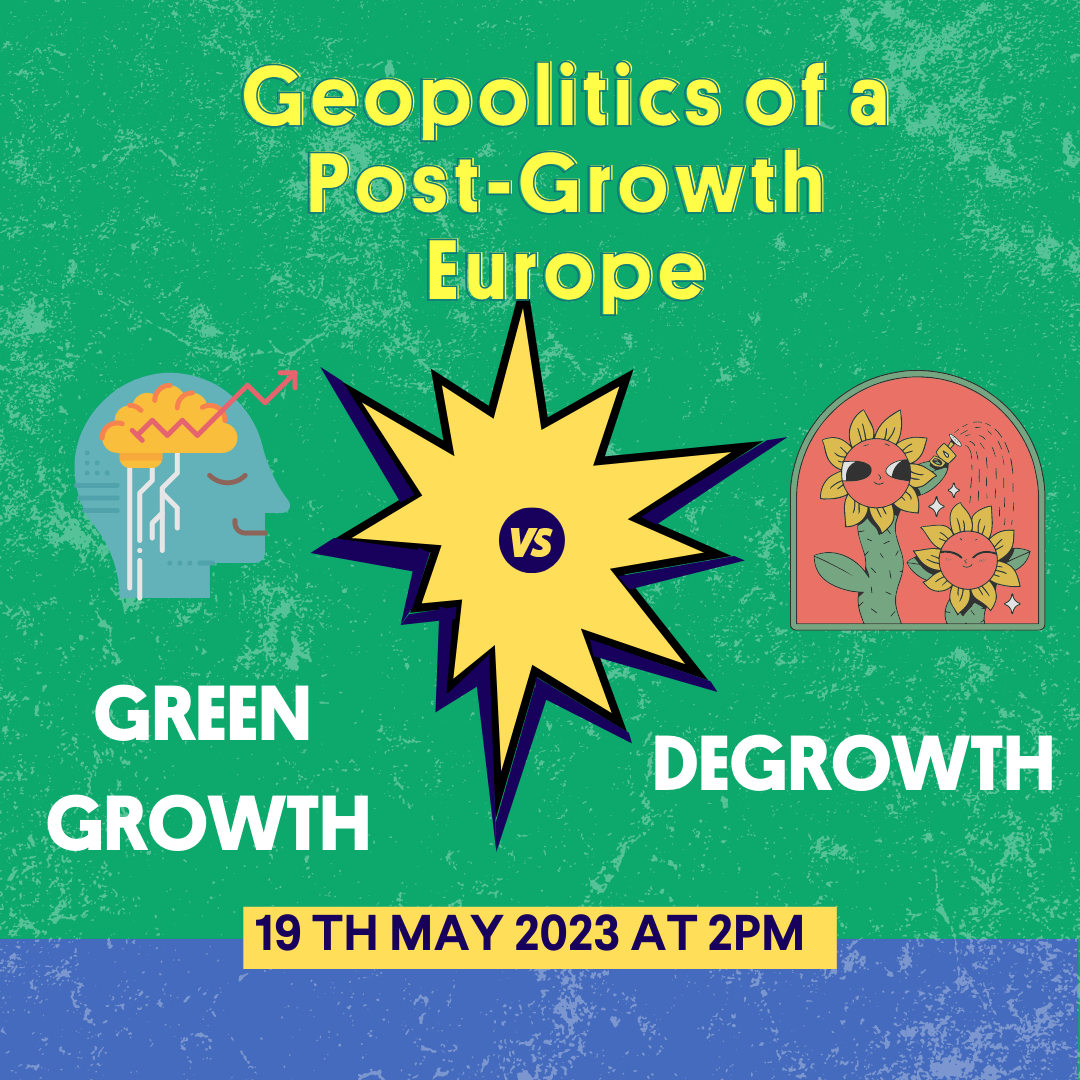
 

Green Growth vs. Degrowth (Utrecht)

By

About the event

Can our economy continue to grow if we want to respect planetary boundaries and give developing countries room to meet the needs of their inhabitants?  

Yes, say proponents of ‘green growth’. To do so, we need strict climate and environmental policies that drive technological innovation and reduce the most polluting forms of consumption. The drive for green growth underpins the European Green Deal.  

No, say the advocates of ‘de-growth’. Decoupling economic growth from ecological damage is an illusion. Therefore, rich countries must abandon the growth imperative, scale back overproduction and overconsumption and focus on collective well-being. The degrowth movement is gaining popularity among scientists and activists.  

In this seminar, we explore the differences and similarities between ‘green growth’ and ‘degrowth’ with proponents of both schools of thought as well as Green and Labour politicians. What facts and trends do the two movements invoke? What are the underlying visions of society? Is there any overlap between the political agendas? 

Project background

This event is part of GEF’s Geopolitics of Post-Growth project, which explores the tensions between degrowth/post-growth and geopolitics. The project aims to ignite a conversation between critics of economic growth and progressive thinkers on foreign and security policy, who now often operate in separate circuits. It aims to find solutions beyond naïve anti-militarism and convenient belief in green growth.  

The geopolitical ramifications of (de)growth will be discussed in a follow-up seminar. 

Speakers and Programme

14:00 – 14:10 Opening by moderator Suzanne Kröger (MP GroenLinks) 

14:10 – 14:20 Presentation by Diederik Samsom (head of cabinet of European Commission VP Frans Timmermans) 

14:20 – 14:30 Presentation by Karolien van Teijlingen (social geographer Radboud University Nijmegen) 

14:30 – 14:40 Audience Q&A 

14:40 – 14:50 Presentation by Wim Naudé (professor technology & innovation management RWTH Aachen University) 

14:50 – 15:00 Presentation by Hans Stegeman (chief economist Triodos Bank, columnist) 

15:00 – 15:10 Audience Q&A 

15:10 – 15:50 Discussion 

15:50 – 16:00  Closing words 

Practicalities: 

Date and Time: Friday 19 May, from 14:00 to 16:00 CEST

Location: De Kargadoor, Oudegracht 36, Utrecht, Netherlands

Language:  Dutch  

Registration: Participation is free of charge. Registration in advance is required, via this link .

If you have any questions or suggestions, you can contact Richard Wouters – rwouters@groenlinks.nl. 


This event is organised by the Green European Foundation with the support of Wetenschappelijk Bureau GroenLinks and the financial support of the European Parliament to the Green European Foundation. 

Beyond Growth Conference

By

About the event

With this event , the organisers aim to challenge conventional policy-making in the European Union and to redefine societal goals across the board, in order to move away from the harmful focus on the sole economic growth – that is, the growth of GDP – as the basis of our development model. The conference will put into practice the idea of a post-growth future-fit EU that combines social well-being and viable economic development with the respect of planetary boundaries.

This three-day event is a cross-party initiative of 20 Members of the European Parliament, supported by a wide-range of partner organisations, which follows the success of the Post-Growth 2018 conference. The conference offers an opportunity for discussion across institutional boundaries and with European citizens. It will involve stakeholders from EU and national policymaking, academia, social partners and civil society organisations. As it aims to discuss the future of European citizens, it will take place in their house, in the European Parliament (Brussels’ site) on 15-16-17 May 2023. Live streaming will also be available.


Context

The Green European Foundation supports innovative approaches to economic sustainability in Europe and, together with its European and national partners, aspires to contribute to the transition towards societies that enable a good life for all within planetary boundaries.

Economic transformation has been a core area of work for GEF since its beginning. Today the foundation is active in fostering the reflection on the creation of a society and the functioning of an economy beyond GDP growth. GEF also  aims to be at the forefront of the critique of economic growth and the existing economic model by supporting the coming to light of alternative models and ideas. In this context, it is with great pleasure that the foundation will actively support the organisation of the upcoming Beyond Growth Conference.


Practicalities

Dates: 15-17 May

Location: European Parliament (Brussels) and online

Registration: Please sign up here

Degrowth Open Letter

There is no empirical basis indicating that it is possible to globally and sufficiently decouple economic growth from environmental pressures.

Read here


GEF in the Media

EU Observer

ElDiario.es


Related reading

Ten Thoughts on Growth

Rethinking Demand

Metals for a Green and Digital Europe

The Transformative Doughnut Economics Model


The Beyond Growth 2023 conference is an initiative of 20 Members of the European Parliament from five different political groups and non-attached, with the support of other partner organisations including the Green European Foundation.

About Degrowth and Geopolitics

By

About the event

Stopping the climate and ecological crisis would be unlikely as long as our economy continues growing. In fact, the degrowth movement, which is rapidly gaining popularity among activists and scientists, advocates for the deliberate scaling back of overproduction and overconsumption to bring the economy back into balance with the living world in a way that reduces inequality and improves human well-being.
But what would a farewell to economic growth mean for geopolitics? Can a European Union that is the first to enter the post-growth era still remain (or become) a global player? Will it be able to defend itself, its allies, democracy, and the international rule of law against aggressive autocrats?
The transition to a post-growth society must be a democratic one. But that is far from obvious at a time when authoritarian regimes are invading or threatening their democratic neighbours.

Context

The new transnational project Geopolitics of a post-growth Europe will explore the tensions between degrowth/post-growth and geopolitics. The project aims to ignite a conversation between critics of economic growth and progressive thinkers on foreign and security policy, who now often operate in separate circuits. What are the points of contention? Can we find or develop commonalities?

Practicalities

The online expert meeting will be moderated by Suzanne Kröger, MP for GroenLinks, Netherlands. 

Date and time: Friday 20 January, from 10:00 to 12:00 CET 

Language: Dutch 

Audience: This event is invitation-only. 

Contact: Richard Wouters, rwouters@groenlinks.nl   


This project is organised by the Green European Foundation with the support of Wetenschappelijk Bureau GroenLinks and with the financial support of the European Parliament to the Green European Foundation. The European Parliament is not responsible for the content of this event. 
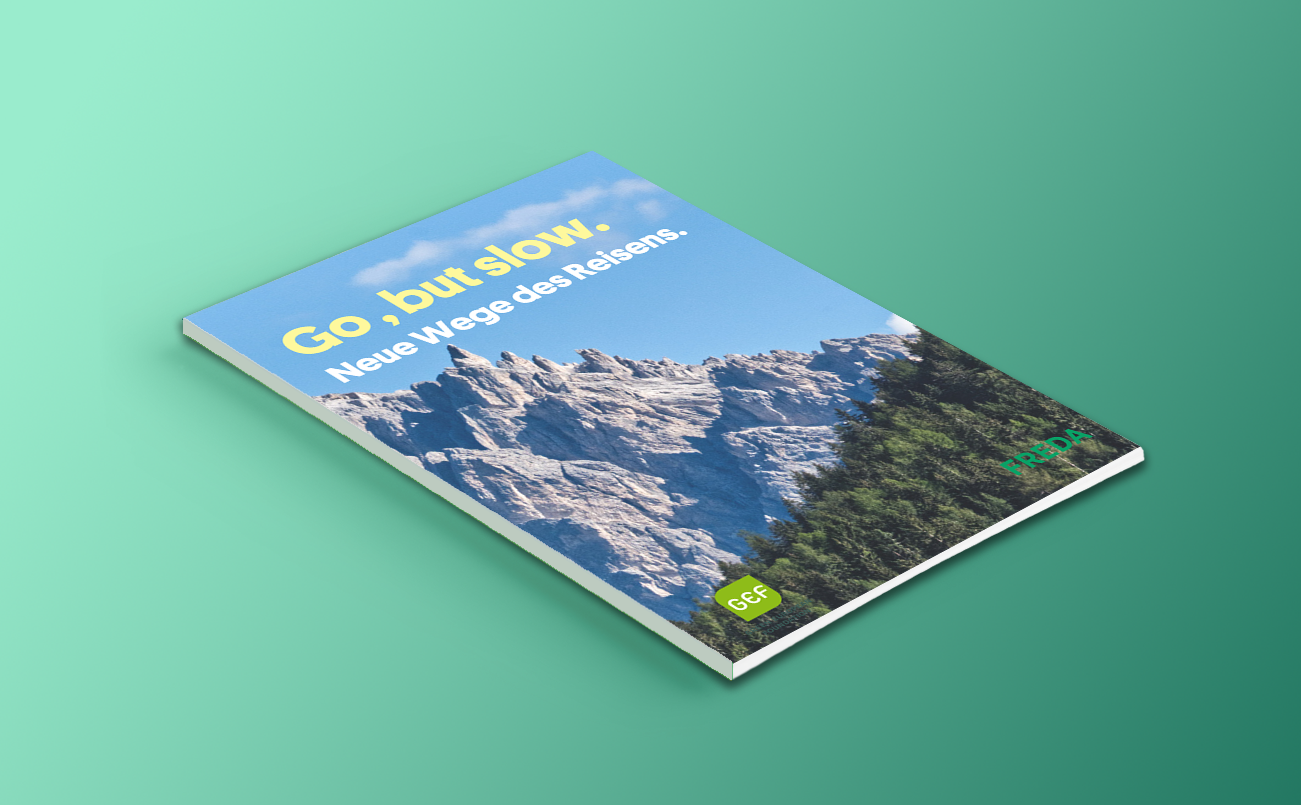
Go, but Slow: Neue Wege des Reisens

By Uncategorized

Context

When we talk about tourism, it’s all about the economy, but at the same time, we are talking about nature. However, these two terms don’t always go together well.  Moreover, the climate crisis and the energy transition will soon shift the tourism industry as we know it. Because travelling will be different in the future, we have collected a few examples from Austria and its border regions that show how this transformation could take place.

The transition to a more sustainable form of tourism is not a distant utopia. It is feasible – with the involvement of all local stakeholders, with the involvement of politics and economy, with consideration of the needs of people and nature.

Objectives

This brochure aims to call readers to rethink all aspects of the tourism sector at a national and European level. More often than not, the consequences of tourism go from a workforce suffering from low wages to working conditions that circumvent national regulations, especially in structurally weak regions of Europe. The damages caused to people and the environment have serious consequences. The same applies to the cost of a rapidly growing ecological footprint in the industry. All these facts are calling for joint European solutions.


This publication has been published by the Green European Foundation with the support of FREDA foundation (Serbia), and the financial support of the European Parliament to the Green European Foundation. The European Parliament is not responsible for the content of this publication.

Sources of Rest: Sustainable Tourism in Serbia (Belgrade)

By

About the Event

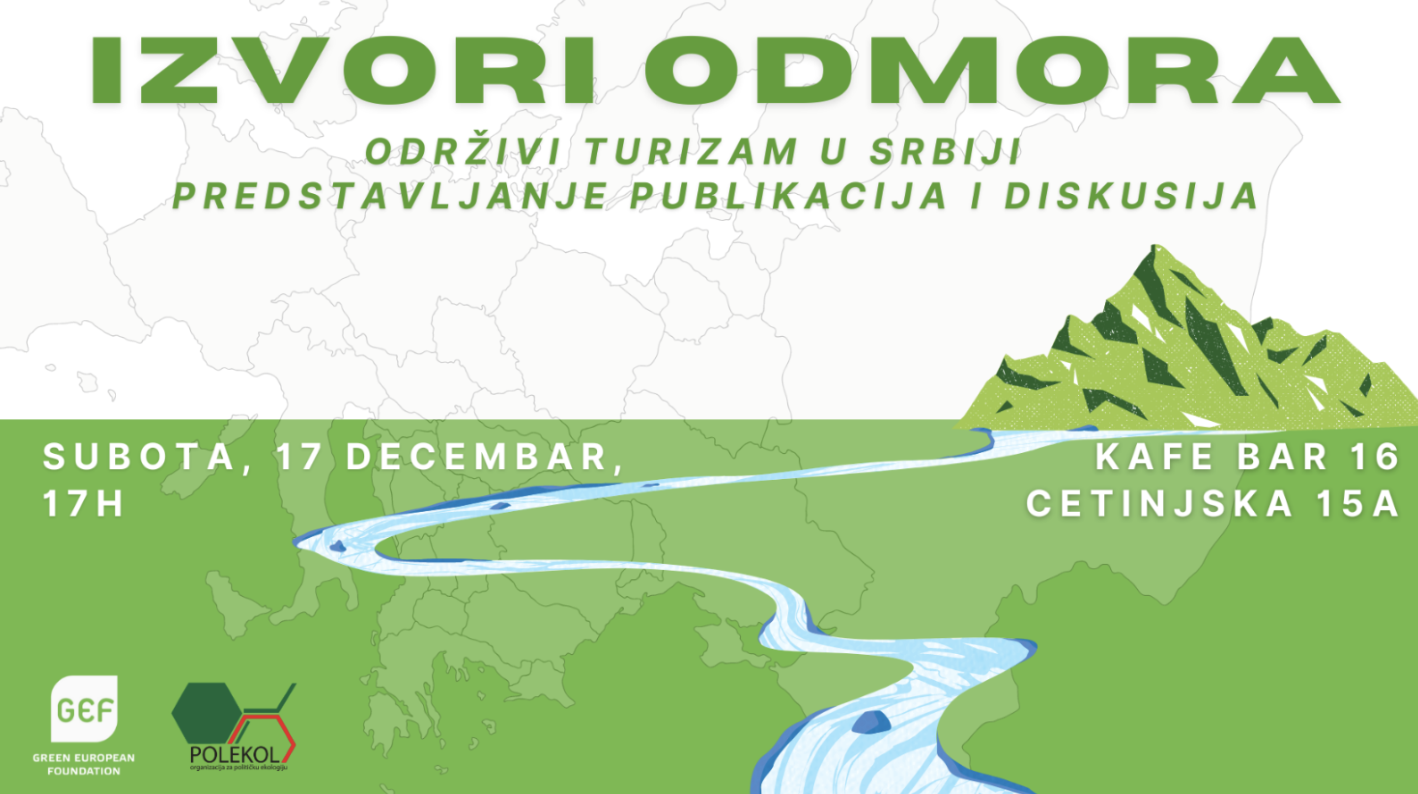
The development of tourism is an important aspect of the economic activities of a country because it enables the inflow of foreign capital, economic growth, and job creation. It also holds invaluable opportunities for exchange and understanding between and beyond the citizens of Europe. However, inadequate development and implementation of tourism plans can make it impossible to use its potential in an adequate way. The business and development of this economic branch, especially in less developed countries, generally has disastrous consequences for the environment and the local community. The development of mass tourism in popular locations leads to the mass exploitation of natural resources and their destruction, while most of the income goes to the owners of large hotel chains and companies at the expense of the local community, which is mostly engaged in seasonal work. 

Serbia is a country that has many natural beauties and a huge tourist potential, but that potential must not become an object of exploitation. In order to prevent this scenario, it is necessary to adopt adequate plans and strategies, and for that it is important to organize discussions and hear the opinion of not only experts and the civil sector, but local communities, which are the most important element of tourism development planning and whose opinion is generally the least heard. In this panel discussion, we will discuss the findings of such local discussions in the Stara Planina region and reflect more broadly on what the future could hold for fair and carbon-free tourism in Serbia. 

Context

This event is part of GEF’s Fair and Carbon Free Tourism project, which aims to identify and create conditions for collective action against detrimental social and environmental impacts of tourism. By engaging stakeholders in partner countries and developing a European transnational discussion on these challenges, we seek to build a community interested to transform this sector in the direction of low or zero carbon intensity and with a specific focus on social and economic justice. 

Speakers

Katarina Lević – MA in Political Sciences and PolEkol researcher, who studied spa tourism and tourism on Stara Planina 

Nataša Gligorijević – Director of the Center for Sustainable Development of Serbia 

Milan Zlatanović, MA in Political Sciences and PolEkol researcher, who studied tourism on Stara Planina  

Practicalities

Date and Time: Saturday, December 17th at 17:00 

Location: Cafe Bar 16, Cetinjska 15a, Belgrade, Serbia 

Language: Serbian 

Registration: No advance registration is necessary, but you can join our facebook event for the latest updates.  


This event is organized by the Green European Foundation with the support of PolEkol and with the financial support of the European parliament to the Green European Foundation. 
Closing Roundtable: Fair and Carbon Free Tourism (Skopje)

By

About the Event

In this final event of the project, we will discuss green visions to transform tourism across Europe, setting the path to a different future for a Fair and Carbon Free Tourism.

We will hear the perspectives of researchers, experts and academics in North Macedonia as well as best practices and initiatives mapped within the project that have already led to transformation. Attention will be paid not just to environmental and climate concerns at the macro-level, but also to how this sector is strongly connected to local communities and their mission for a better quality of life.

Context

This event is part of GEF’s Fair and Carbon Free Tourism project, which aims to identify and create conditions for collective action against detrimental social and environmental impacts of tourism. By engaging stakeholders in partner countries and developing a European transnational discussion on these challenges, we seek to build a community interested to transform this sector in the direction of low or zero carbon intensity and with a specific focus on social and economic justice.

 Speakers

  • Vlado Srbinovski – Association Balkania – Expert on Sustainable and Alternative Tourism
  • Dejan Metodievski – Professor at Shtip University, Faculty of Tourism
  • Aleksandar Gjorgjievski – National coordinator of the project

More to be announced!

Programme

17:00Participant arrivals
17:10Introduction
17:20Speaker presentations on transformative tourism
17:40Break
18:00Panel discussion with experts, researchers, and NGOs

Practicalities

This is a closed event that will take place in Skopje, North Macedonia. The primary language is Macedonian. If you have any questions or want to learn more, please contact sien.hasker@gef.eu.


This event is organized by the Green European Foundation with the support of ASSED Sunrise and with the financial support of the European parliament to the Green European Foundation.
Metals for a Green and Digital Europe (Stockholm)

By

About the Event

This event will consist of debate between think tanks and academics on the Swedish version of the GEF publication Metals for a Green and Digital Europe – An Agenda for Action.  The debate will involve an open conversation of mineral use with a particular look at the role of the indigenous population in Sweden (Sapmi).

Context

This event is organised as part of the launch of the Swedish translation of the report Metals for a Green and Digital Europe – An Agenda for Action.

Speakers

Speaker: Richard Wouters, Wetenschappelijk Bureau, GroenLinks.

Panelists:

  • Kalle Sundin, policy officer at the think tank KatalysIsadora Wronski, senior strategist Greenpeace
  • Charles Berkow, Cogito
  • May-Britt Öhman, Associate Professor of Environmental History, Uppsala University
  • Maria Sunér, managing director Svemin

Moderator: Henrik Jalalian, Cogito

Practicalities

Date and time: 12 December 18:00 – 19:30 PM

Format: In person event

Audience: This debate will take place in Swedish language and is open to the general public

Registration: Registrations will open shortly


This project is organised by the Green European Foundation with the support of Cogito with the financial support of the European Parliament to the Green European Foundation. The European Parliament is not responsible for the content of this event.

Community Wealth Building: A Participatory Governance Tool

By

About

In collaboration with the Bosch Alumni Network, we will organise a discussion on Community Wealth Building strategies implemented in Amsterdam and in various cities in the United Kingdom (UK), as examples of ways to ensure that wealth is redirected back into the local economy and that it benefits residents.


Speakers

  • Simion Blom, a GroenLinks councilor in Amsterdam
  • Rachel Lewis, Energy Systems/Energy Commons Teams, Carbon Coop in the UK.


Practicalities

Date and Time: October 11th, 14:30-15:30

Location: Online

Registration: Please sign up using this registration form.


This event is organised by the Green European Foundation and the Bosch Alumni Network, with the financial support of the European Parliament to the Green European Foundation. 

Rethinking Demand: Sufficiency Policies for a Post-Growth Society

By

About the event

Soaring energy prices are pushing European states to urgently implement energy saving measures in all sectors, as well as financial supports for the most exposed households and businesses. In France, President Macron did not hesitate to speak of “the end of abundance” and the implementation of a “great sobriety plan”. In Germany, particularly exposed to the closing of the Russian gas tap, the Federal State has implemented a series of energy saving measures. Among other things, large gas consumers are required to register and make themselves available in case of a shortage. In Belgium, the government has been refining its energy emergency plan for several months with data from large consumers and is considering ways to help the most vulnerable to pay their bills. 

Are European states ready for the advent of a post-growth society? Can the ecological project of a sober society now inspire public policies? Concretely, what does a post-growth economic policy look like? What indicators exist to assess these policies? These questions and more will be tackled in this cross-country dialogue. 

Context

This event is part of the GEF transnational project Climate Emergency Economy: Rethinking Demand. Building on several years of work exploring what it means to create an economy fit for the climate emergency, GEF and its partners are this year focusing on the crucial question of how to reduce demand for energy and materials. With the support of Green House Think Tank, Etopia, and Green Foundation Ireland, we are exploring how to frame rethinking demand politically, and articulate clear plans for demand reduction so green narratives are better grounded in reality and a shared vision of hope. 

Speakers

To discuss this pressing topic, we will be joined by a fantastic panel of experts: 

  • Yves Marignac – Négawatt, France 
  • Philippe Roman – ICHEC, Belgium 
  • Marula Tsagkari – TU Delft / R&D, Greece 
  • Lasse Thiele – Konzeptwerk, Germany 
  • Nadine Storey – Green House think tank, UK 
  • Leon Leuser – Wachstumswende, Germany 

The session will begin with a brief presentation of our Rethinking Energy Demand report, by co-author Nadine Storey (Green House think tank), followed by discussion with all our panelists.   

Practicalities

Date & Time: Wednesday, October 26th (12:00-14:00 CET) 

Location: Online, via Zoom. Please register in advance via this link 

Audience: Open to all registered participants. The event will be in English. 

 To continue the conversation on this topic, join us later that same day in Dublin or online at Rethinking Demand: Reality and Opportunities. Make sure to register, as particularly in person spots are limited! 


This event is organised by the Green European Foundation with the support of Etopia and the financial support of the European Parliament to the Green European Foundation. 

ECOPOLIS Presents: Roman Krznaric (Kortrijk)

By

About the event

History may be our most undervalued resource for thinking about the future of humanity. The dead outnumber the living fourteen to one, yet how often do we really look to the wisdom of the past for new perspectives on the ecological challenges of our age? In this talk, public philosopher Roman Krznaric explores the possibilities of ‘applied history,’ sharing lessons from the last three millennia of human civilisation. He’ll tackle three fundamental issues: the climate emergency, our addiction to consumer culture and the global water crisis. Taking us on imaginative journeys from devastating famines in ancient China to the slave revolts of the nineteenth century, from commons management in medieval Spain to the economic secrets of preindustrial Japan, Roman will reveal how the forgotten stories of past generations can illuminate new, unexpected pathways for the turbulent decades ahead. 

Context

Ecopolis is an annual gathering of people who think and care about a sustainable future. Because ecological challenges know no national or linguistic borders, Ecopolis is diverse, international, and interactive. At its heart are inspiring books, documentaries and debates between writers, academics and civil society thinkers about ecology, economy and the transition to a better Europe and a more just and sustainable world.  

Speakers

Roman Krznaric is a British-Australian cultural historian and philosopher, founding faculty member of The School of Life, London. Before, he taught at various prominent British universities, was a gardener and worked in human rights programmes in Central America. He also set up the world’s first Empathy Museum and is the author of The Good Ancestor, a book that deals with the world we will be leaving to future generations. 

He will be joined by poet and essayist Frank Keizer, in a conversation moderated by journalist and podcaster Dirk Vandenberghe.  

Practicalities

When: Saturday, October 1st (20:15 – 22:00) 

Where: Budascoop, Kapucijnenstraat 10, 8500 Kortrijk, Belgium 

Language: English 

Tickets: Please purchase your tickets in advance via this link. Ecopolis employs a “pay as you can” principle.  

Related Events 

This year, Ecopolis goes beyond one date and one location! Find out more about the programme in Brussels here 


This event is organised by the Green European Foundation and Oikos, with the support of various partners and with financial support of the European Parliament to the Green European Foundation. 
Tourism in Times of Climate and Social Crisis (Barcelona)

By

About the event

From the COVID-19 pandemic to the war in Ukraine, inflation to the energy crisis – the tourism sector has been dealt many blows in the past few years. At the same time, mass tourism is itself implicated in several of our biggest challenges today: carbon emissions, housing shortages, crumbling infrastructure, poor working conditions, and the list goes on. As we look to transforming our economies and societies, the green and just transition of tourism is a crucial element.    

In this half-day conference, we will tackle the question of tourism around three dimensions: mobility and infrastructure, labour and public services, and climate and environment. With experts, academics, trade unionists and politicians, we look forward to lively and thought-provoking exchanges.   


Context

This event is part of GEF’s Fair and Carbon Free Tourism project, which aims to identify and create conditions for collective action against detrimental social and environmental impacts of tourism. By engaging stakeholders in partner countries and developing a European transnational discussion on these challenges, we seek to build a community interested to transform this sector in the direction of low or zero carbon intensity and with a specific focus on social and economic justice. 


Speakers

Aurora Pedro Bueno – Director of the New Green Transition in Tourism department, University of Valencia 

Deborah Pérez – trade unionist at MagmaCultura 

Javier Pacheco – General Secretary of CCOO Catalunya 

José Antonio Donaire – Tourism research institute of the University of Girona 

Pau Noy – President of the Foundation for Sustainable and Safe Mobility 

Sergi Alegre – Fundacio Nous Horitzons 

Tilly Metz – Greens/EFA MEP and member of the Committee on Transport and Tourism [tbc]  

Victor Català – former Blanes City councillor  


Programme

10:00 Welcome and Introduction – with Javier Pacheco and Sergi Alegre 

10:30 Tourism, Mobility, and Territorial Balance – with José Antonio Donaire and Pau Noy 

11:30 Break 

12:00 Tourism, Public Services, and Working Conditions – with Deborah Pérez and Victor Català 

13:00 Tourism in a Climate Crisis Context – with Aurora Pedro Bueno and Tilly Metz 


Practicalities

Date and time: Saturday, October 8th (9:30 – 14:00 CEST) 

Location: CCOO de Catalunya Assembly Space – Via Laietana 16, Barcelona  

Language: Catalan 

Registration: Pre-registration is not required, but please arrive on time.  


Related reading

The Case for Not Flying

Anthropogenic Venice: Surviving Life in a Lagoon

Steering Tourism to a Greener Course in Belgrade

Seeing Mobility in a New Light


This event is organised by the Green European Foundation with the support of Fundacio Nous Horitzons and the financial support of the European parliament to the Green European Foundation. 

Stara Planina: Tourism and Natural Resources

By

Programme

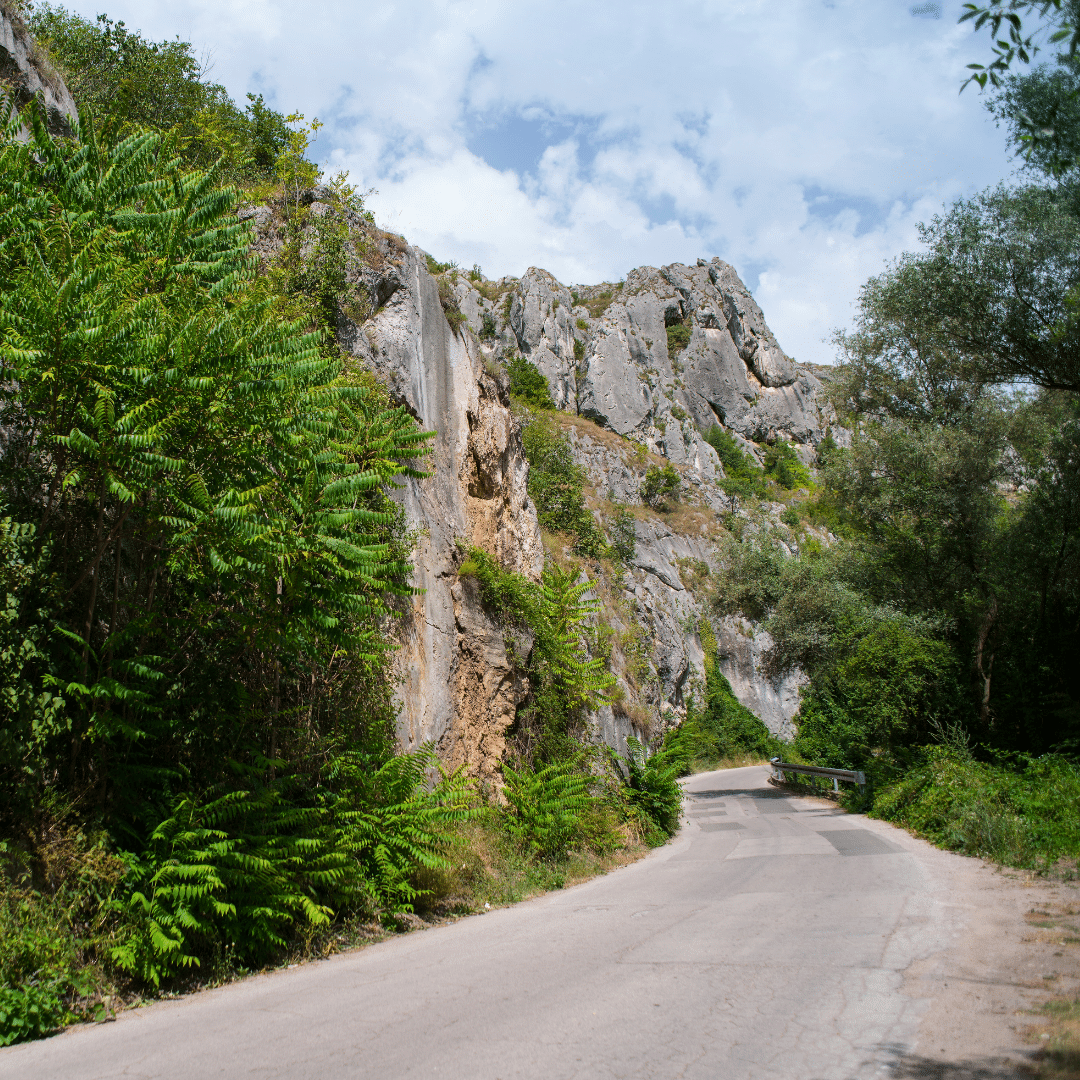
Throughout the study tour, partners will be meeting local stakeholders and activists, from the tourism sector as well as the wider community. Particular attention will be paid to the issue of water, as the mountain range plays an important role in the region’s water flows, but developments over the past two decades have significantly impacted the landscape. The programme is provisional and subject to change. 

September 15th 

  • Arrivals in Belgrade and initial project exchanges 
  • Travel to Pirot in the evening 

September 16th 

  • Visit Temska village, with Milinka Nikolić (environmental activist and Serbian MP for Moramo) – history of the fight for river preservation 
  • Head to Topli Do to see waterfalls and exchange with local activists 
  • Spend the night in Topli Do 

September 17th 

  • Head to Dojkinci village for a sustainable farm visit 
  • Meet members of the first energy collective form Serbia, based in the Balkan Mountains 
  • Return to Belgrade in the evening 

September 18th 

  • Closing partner meeting, departure from Belgrade 

Practicalities

Date: 15-18 September 

Location: Stara Planina and Belgrade, Serbia 

This is a closed study trip for selected project partners. Learn more about the project here. 


This study trip is organised by the Green European Foundation with the support of PolEkol and the financial support of the European Parliament to the Green European Foundation. 

Rethinking Demand: Realities and Opportunities (Dublin/online)

By

About the event

The Green European Foundations is bringing together Green House Think Tank (UK), Etopia (Belgium) and Green Foundation Ireland at an event hosted with the Lord Mayor of Dublin Caroline Conroy. This event will launch our Rethinking Demand Framing Paper and explore the complexity of the actions needed to reduce our demand for energy as well as the politics involved in doing so.  

As the urgency of the need to limit emissions to prevent further climate harm grows, and the all-encompassing nature of achieving this dawns, the pivotal role of rethinking how our societies deliver wellbeing for all has become ever more critical. During this conference, sessions will explore how social and business practices, infrastructure, and our governance structures can be transformed to reduce the collective demand for energy and unlock a future without fossil fuels.

Context

This event is part of the GEF transnational project Climate Emergency Economy: Rethinking Demand. Building on several years of work exploring what it means to create an economy fit for the climate emergency, GEF and its partners are this year focusing on the crucial question of how to reduce demand for energy and materials. With the support of Green House Think Tank, Etopia, and Green Foundation Ireland, we will explore how to frame rethinking demand politically, and articulate clear plans for demand reduction so green narratives are better grounded in reality and a shared vision of hope. 

Programme

Please note that all times are indicated in IST/BST. For participants joining online from a CEST time zone, everything will be one hour later.

Our FULL PROGRAMME OF EVENTS is available here. Please see below a short overview:


14:00 Address by Dublin’s Lord Mayor Caroline Conroy.

Presentation and discussion of Green House Think Tank’s framing paper “Rethinking Energy Demand” by two of its authors, Jonathan Essex and Peter Sims.

Panel discussion facilitated by Michael Smith (Editor of The Village magazine) with keynote speaker John Gibbons (Environmental journalist and commentator) and Claire Downey (Rediscovery Centre), Davie Philip (Cultivate) and Rosalind Skillen (Keep Northern Ireland Beautiful).

“Circular Economy and Demand Reduction” with Minister Ossian Smyth.

17:00 Closing reflections and drinks reception.

Practicalities

Date and Time: Wednesday, October 26th from 14:00 – 17:30 IST (15:00 – 18:30 CEST) 

Location: In person at the Mansion House in Dublin, Ireland. Please note that you can also follow this event online, via Zoom. 

Audience: Open to all registered participants. The event will be in English. 

Registration: Whether you are joining in person or online, please register in advance via THIS LINK. Spots for in person attendees are limited, so if they fill up you may be placed on a waiting list. With any questions regarding registration, please contact info@greenfoundationireland.ie  

Related reading

For Energy Independence, the EU Must Think Bigger than Power

Energy Crisis: Keeping the Cost of Living Down While Protecting the Climate

Affordable, Sustainable Housing Can Bring the Green Deal Home

The Devil’s in the Data: How the Energy Crisis Could Reshape Ireland’s Economy

Alexander Langer’s Case for an Ecological Conversion


This event is organised by the Green European Foundation with the support of Green Foundation Ireland, Etopia, and Green House Think Tank and the financial support of the European Parliament to the Green European Foundation. 

Rethinking Demand: EU Roundtable

By

About the event

As Russia’s war in Ukraine puts pressure on energy supplies across Europe, governments are preparing for an uncertain winter, with concepts like rationing and controlled blackouts suddenly on the table. 

Yet the need to structurally rethink our demand for energy and other key goods is not new. Amid the multiple crises facing Europe and the world, not least the climate emergency, there is a continued failure to acknowledge the role of reducing demand in the rapid and fundamental change needed. Mainstream understanding of demand management focuses on improving efficiency and engaging consumers, which tends to reproduce existing consumption levels with marginally less energy and resource use.  This is insufficient to deliver the reduction in energy use needed as part of a rapid shift to zero carbon and to remain at 1.5°C warming. 

A better understanding of the realities of demand change is required, and exploring how to frame this difficult topic is critical to reaching climate targets and energy independence goals. This expert roundtable will bring together academics, politicians, activists and NGO/foundation representatives to discuss to what extent we need to reduce energy demand and how we can go about it in a just yet decisive manner. Results of this discussion will inform a framing paper to be published in the autumn. 

Context

This event is part of the GEF transnational project Climate Emergency Economy: Rethinking Demand. Building on several years of work exploring what it means to create an economy fit for the climate emergency, GEF and its partners are this year focusing on the crucial question of how to reduce demand for energy and materials. With the support of Green House Think Tank, Etopia, and Green Foundation Ireland, we will explore how to frame rethinking demand politically, and articulate clear plans for demand reduction so green narratives are better grounded in reality and a shared vision of hope. 

Programme

More details on the programme will follow. 

Practicalities

Date and Time: Thursday, 15th September (15:00 – 17:00 CEST)

Audience: This is a closed roundtable. For more information please contact sien.hasker@gef.eu 


This expert roundtable is organised by the Green European Foundation with the support of Green House Think Tank and the financial support of the European Parliament to the Green European Foundation. 
Green Academy: Archipelagos in Movement (Komiža)

By

About the event:

In the aftermath of the COVID-pandemic and surrounded with the devastating impacts of the war in Ukraine, we are moving forward with the second decade of the Green Academy, an effort to provide permanent discussion and a learning platform for progressive, green and left social forces in the Balkans, Europe and internationally.

While new energy and food crises are approaching quickly, the depth of the climate crisis and huge loss of biodiversity did not disappear. On the contrary, they are at its peak, continuing to challenge our maturity to create conditions for the good life of the generations to come. And yet, achievements and successes, bigger and smaller, of green and progressive political platforms in Croatia, Serbia, Montenegro and Slovenia demonstrate that the green wave is spreading through Eastern Europe and the Balkans – and that the protagonists that might be carriers of systemic change, though surrounded by hostile environments and worsening conditions, are gaining more and more recognition and power.

Our event is located on the island of Vis, in the midst of the Adriatic archipelagos, but in this 8th edition we explicitly focus on symbolic archipelagos of epistemological, cognitive, practical and political “islands of change” that exist across geographical but also institutional, disciplinary and practical territories and imaginaries. Placing our conversations and learnings in time of turbulences and global turmoil, we aim to create conditions to dive deeper into ideas, cases or models of transformative practices where more autonomy and/or innovation is being exercised, with the final goals of ensuring a just, secure, democratic and ecologically sustainable future. These emerging archipelagos spread across different division lines of class, gender, disciplines, sectors; as spaces of autonomy, emancipation and counter power to any oppressive, extractive, exclusive regime. It is the movement of these archipelagos that can open the door for paradigmatic shift and systemic change, which still appears to be very fragile.

This year, we will dive deeper into our imaginary of change and search for the ways of mutual empowerment. We will revisit our roles and reflect upon our strategies; learn from various experiences and dive deeper into ideas that are based on more autonomy, more self-organisation and internal knowledge-sharing. Before the next wave of expansion, our archipelagos need time to reflect on achievements and failures which occurred in our collective experience. Our program is inclined to be more open to initiative and self-organisation. Therefore, besides keynote lectures, panels and workshops, we will ensure sufficient time for participants to self-organize around certain topics and propose topics around which they want to initiate discussion (see Call for sessions).

Programme:

Confirmed speakers include: 

  • Dirk Holemans – co-president of the Green European Foundation, director of Oikos 
  • Danijela Dolenec – deputy mayor of the city of Zagreb, Možemo! 
  • Giorgos Kallis – ecological economist, Universitat Autònoma de Barcelona (UAB) 
  • Jagoda Munić – director at Friends of the Earth Europe 
  • Srećko Horvat – philosopher, DiEM25 

Check out the provisional programme via this link. 

Practicalities:

Dates and Time: 27th to 31st of August 2022. Registration starts at 18:00 on the 27th of August and the program starts at 20:00 with the opening session. During your stay at the Green Academy, the program will start at 9:30 and end at 22:30 (including 4 hours of lunch, sun, and sea break between 13:30 and 17:30).

Catering and Accommodation:  Participants will have paid accommodation in two-bed rooms, including breakfast and dinner in Hotel BiSevo, which is also the primary event venue.

Location and Travel: The Island of Vis is easily reached via a ferry line from Split, Croatia. Check www.jadrolinija.hr for timetables. Once you arrive on Vis, a bus to Komiza waits for you in front of the port. Check the bus timetable here.

Due to decreased funding in 2022, we are able to offer travel costs only to speakers. In cases of international travel, where more people travel together (car-sharing) or take public transport to reach the Green Academy, co-financing of travel costs (up to 50%) will be considered. Travel costs within Croatia will not be covered.

Call for Action:

Registration for this event is now closed.  


The Green Academy is organised by the Green European Foundation and Institute for Political Ecology, with the financial support of the European Parliament to the Green European Foundation.

This Oppressive System & our Mental Health (Rouen)

By

About the Event

This youth-focused summer camp will consist of workshops and discussions exploring mental health in all of its political relevance, including how such issues disproportionally affect the oppressed and activists, and its relation to freedom of expression, right to protest, and access to information in Europe.

GEF, with the support of our partner FYEG, is providing selected participants with a crash course on how public policies and civil society actions address mental health at various levels, including on a European scale. Participants will be challenged to use their creativity, critical thinking, and activist skills to design the green visions and policy solutions of the future–addressing mental health and the fight against oppression across Europe.

Programme

09:30-10:00 Morning circle 

10:00-11:30 Mental health and policy: national and regional level 

11:30-12:00 Coffee break 

12:00-13:30 Mental health and policy: European and international level 

13:30-15:00 Lunch 

15:00-16:30 Radical view: imagining the policies for an ideal future 

16:30-17:00 Coffee break 

17:00-19:30 Committee work and reflection groups 

19:30-20:30 Dinner 

21:00 Non-stereotypical cultural fair 

More details on programme and speakers will be announced shortly! 

Practicalities

Date: 27 July (10:00 – 22:00) 

Location: Rouen, France (Auberge de Jeunesse – 3, rue du tour Route de Darnétal) 

Audience: This summer school gathers 40 young people aged between 15 and 35. Registrations are now closed and all selected participants have been informed.  

Language: The main language of this activity will be English. Not being comfortable interacting in English  


These summer school sessions are organised by the Green European Foundation with the support of FYEG and the financial support of the European Parliament to the Green European Foundation.
 

ECOPOLIS 2022: Multiple (Hi)stories, Multiple Future (Brussels)

By

Context

“Thinking out of the box is exactly how the box thinks. We are the boxes we strive to out-think,” writes philosopher Bayo Akomolafe, speaker at the eighth edition of Ecopolis where artists, thinkers and doers break open our frames. Social, ecological, and economic crises force us to think about a radically different way of living. Can unheard stories help us change today’s reality? And not any stories, but the ones that link different generations, geographical areas that are far apart, or ancient knowledge and technology. Can activism as a form of love take us further than doomsday thinking? “The world is not about to end; we are already living with a different world,” Akomolafe continues. Ecopolis brings stories that depict an inclusive and sustainable future for this new world.

About the event

Ecopolis is the perfect occasion to meet people who care about a sustainable future. Because ecological challenges know no national or linguistic borders, Ecopolis is diverse, international and interactive space to learn, discuss and connect with like-minded individuals. 

The conference welcomes Belgian and international authors to debate the transition towards a socio-ecological society. Inspiring books, documentaries and debates between writers, academics and civil society thinkers about ecology, economy and society are at the heart of this event. 

Programme

Times

Sessions

13:30 – 15:30

Minority walk with Omar Fassi Fehri (EN/FR)

The Minority Walk is a tour of the Brussels city-centre to discover the public space of the capital, told through the lens of how the oppression of minority groups is still taking place in different ways.

13:30 – 15:45

The Brussels of witches: feminist guided walk (EN/FR)

In the 14th century, as we move out of the ‘dark’ Middle Ages and into the Modern Age and the Renaissance, women are plunged into darkness – or rather into the flames of the stake. What does our urban public space reveal about that time… and about witches today?

14:00 – 15:30

Workshop ‘Limits to Growth’ (NL/EN)

To keep our planet livable, we urgently need to rethink our way of living. In this workshop we will encounter inspiring voices from Latin America who show that another way of life is possible. A life in which ‘well-being’ is central instead of ‘growth.

Panel discussions and performance

16:00 – 18:00

Colonisation as exploitation of people and nature

In this panel discussion, writers and artists from various backgrounds will talk about decolonisation and explore  the many narratives that survived colonialism while offering alternatives.

18:00 – 20:00

Different jobs, one planet. Stories of strong commitment

Whatever your studies, whatever your job, there are always plenty of opportunities for strong commitment to creating a better world.

21:00 – 22:00

The environmental impact of war

War’s impact on humans as well as on nature and biodiversity is dramatic. Ecopolis will feature playwrights and performers Enkidu Khaled and Joachim Robbrecht in the premiere of their play on the impact of war on the environment. Their stories  point out the importance of peace for all forms of life on this planet.

Learn more here about the programme and speakers. 

Practicalities

When: Saturday, October 15th (16:00 – 22:00). There are several connected events taking place before the core programme. More details to follow. 

Where: Ancienne Belgique – Bd Anspach 110, 1000 Brussels, Belgium 

Language: The primary language of this event will be English, with simultaneous translation to French and Dutch. 

Tickets: Ecopolis employs a “pay as you can” principle, please purchase your tickets in advance via this link.  The “Walks & Workshops” are included in the Ecopolis ticket, but you must reserve your spot in advance by registering here.  

Related Events

This year, Ecopolis goes beyond one date and one location! To find out more about the other events in Brussels and Kortrijk, please check the event website.  


Reading material

Degrowth Is About Global Justice

Beyond the Growth Imperative

Is Degrowth the Future?

Transforming Work, Reimagining Education

Hooked on Growth: Rewiring Institutions for Wellbeing

Questioning Our Limits to Leave Scarcity Behind

Beyond the Choke Hold of Growth: Post-growth or Radical Degrowth?

The Long Fight for Environmental Justice in the Caribbean

The “White Saviour” Deal for Nature

Politics for Change: Black Lives Matter in Europe

The Politics of Representation in the Climate Movement

Why We Need a Decolonial Ecology

Russia’s Invasion of Ukraine

The Environmental Cost of the War in Ukraine


This event is organised by the Green European Foundation and Oikos, with the support of various partners and with financial support of the European Parliament to the Green European Foundation.