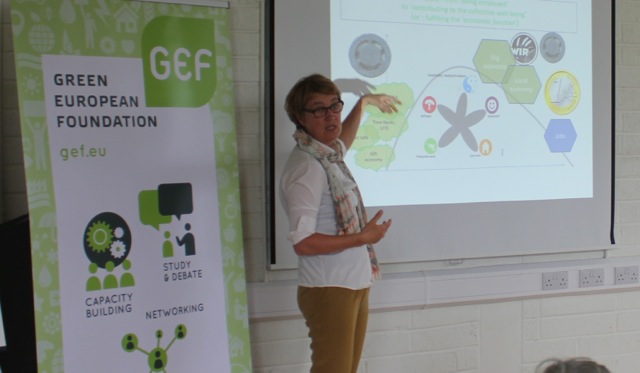
Ecopolis 2018: Just Transition (Brussels)

By

Context

Is it possible to bring about fundamental changes to our societies while still respecting the boundaries of our planet and offering opportunities to develop for everyone? Is it possible to realise a Just Transition – across diverse sectors of society such as food, work, transport, energy etc. – in a increasingly polarised and inequitable world?

Facing this challenge will require far reaching changes of an unseen scale and speed while at the same time not leaving a part of the population behind.

How can social justice be strengthened and ecological sustainability be fostered at the same time? For a just transition, this seeming contradiction has to be resolved and cooperation in a superdiverse society must be realised, so everyone can have equal access to a valuable job, payable and sustainable housing, food and energy.

About the event

Ecopolis is an annual day gathering people who are concerned with the transition to a socio-ecological society. Because ecological challenges cross national and language boundaries, Ecopolis is diverse, international and interactive, with the Green European Foundation contributing to a strong European dimension of the event.

The event invites national and international authors to debate the transition of our societies. Academics, writers and civil society thinkers meet to enter into a constructive and open dialogue. Besides lectures, debates and interviews, there is an extensive book-fair with multilingual, ecological books and an internationally acclaimed documentary on the environment will be screened.

Speakers will include:

Kate Raworth, Economist and author of “Doughnut Economics – 7 Ways to Think Like a 21st-Century Economist”

Rachida Lamrabet, Novellist and author of “Vrouwland”, “Een kind van God” and others

Jeroen Theunissen, Writer and teacher at RITCS Brussels, author of “De omwegen” “Onschuld” and others

Sharan Burrow, General Secretary of the International Trade Union Confederation (ITUC)

Alberto Alemanno, Professor of EU Law at HEC Paris and Global Professor of Law at the New York University School of Law, Co-Founder and Director of The Good Lobby

Laurien Spruyt, Policy Officer ‘Mobility and Climate’ at Bond Beter Leefmilieu, Co-Creator of UGent1010 and former Campaign Coordinator of Climate Express

Jean-Pascal van Ypersele, Climatologist and Professor of Environmental Sciences at the Catholic University of Louvain

Yasmien Naciri, Marekting & Communication Entrepreneur, Columnist and author, Chairwoman of Amana n-pa and Fleks


Programme

11:00: The uncomfortable consumer: on a diet in the candy store

It’s a challenge, trying to live an environmentally conscious life, while society constantly tempts you to cheap city trips or cheap clothing. While each of us is muddling along, the temptation is systemic. Transition will only succeed if we tackle it structurally and if politicians dare to stick their necks out (government role, ‘moralising technology’).
Theatrical performers Anoek Nuyens and Rebekka de Wit present us their Monologue For A Consumer. Followed by a panel with, among others, Laurien Spruyt, policy officer Bond Beter Leefmilieu, and Jeroen Theunissen, author of Jouw Huid (‘Your Skin’).

12:15: Relay talks: citizens in action, from May ’68 ’til today

With which actions can citizens contribute to speeding up the transition? By lobbying as much as possible with the European institutions, and/or organising protest actions and blocking lignite plants? How does today’s action differ from a few decades ago?
With Yasmien Naciri, a young entrepreneur and author of Wij nemen het heft in handen, Samuel Cogolati, researcher at KULeuven and activist in the domain of the commons, Lenny Peeters, laureate of the Bronzen Uil prize for best debut novel in Dutch, and Paul Goossens, journalist for De Standaard.

13:30: The connection between identity debate, inequality and the ecological issue

From the perspective of social ecology, the ecological crisis, which is the result of the idea that man has to dominate nature, is connected with the domination of one person over the other.
A debate with among others Rachida Lamrabet, author of Zwijg allochtoon, Leo Lucassen, migration expert and professor at Leiden University, and Aziza El Miamouni from Wijkacademie Molenbeek.

15:00: Just Transition – The proof is in the eating

‘To change everything it takes everyone’, a just transition is about both decent jobs, climate policy as well as a just society. An interesting dialogue between trade union, industry and research community. With the economist Kate Raworth, author of The Doughnut Economy, Sharan Burrow, Secretary-General of the International Trade Union Confederation, and Thomas Leysen, Chairman of Umicore & KBC. Moderated by Karel Verhoeven (chief editor at De Standaard)

16:00: Grand Tour 2020

Pieter Van Bogaert talks with Guy Gypens, director of Kaaitheater, about his book Grand Tour 2020 – the report of a trip through ten European cities where he talked to ten artists about their ecological commitment (as an artist and as a citizen). The book is the final document of ten years of ‘Imagine 2020’, a European collaboration on art and ecology founded by Kaaitheater in 2008.

16:30: Does the climate summit of Poland tackle the challenges?

Two weeks after ECOPOLIS, the COP24 climate summit will take place in Poland, the country that still largely runs on coal(mines). What can we expect from this COP? What does ‘Just Transition’ mean for workers in polluting industries? Can we offer them green jobs?
With, among others, climate expert and IPCC member Jean-Pascal van Ypersele and Catalina Caro (CENSAT, Friends of the Earth Colombia). Moderated by Tine Hens.


The event will be simultaneously interpreted in English, French and Dutch.

Book your tickets for the event here 

For more info & updates on the programme, follow us on Twitter and Facebook.

You can find here the Facebook profile of the event  and here the website for the event.
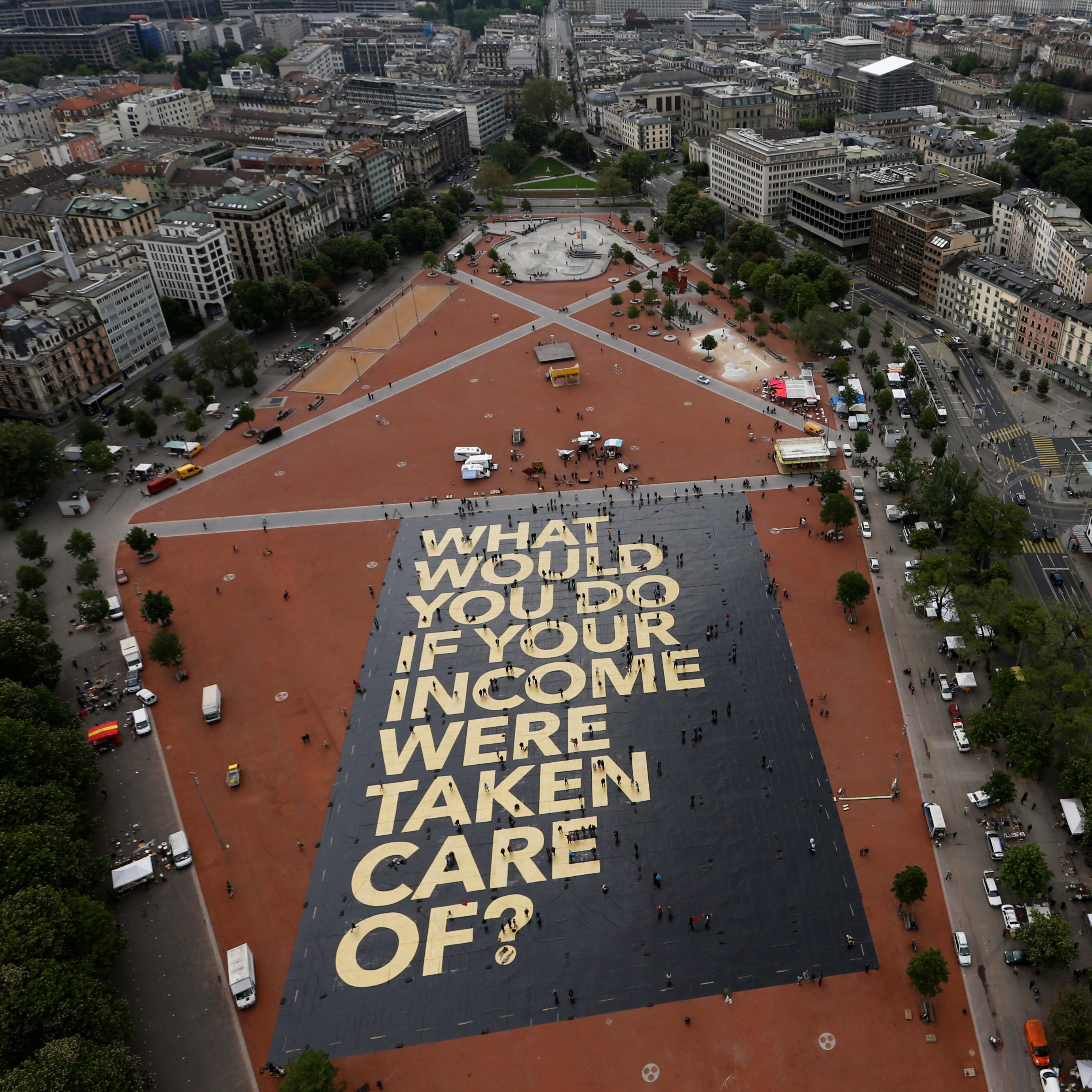
 

UBI - Basic Income

GEF at the BIEN Congress 2018 (Tampere)

By

Context

In the framework of the “Basic Income for all EU Citizens?” transnational project, the GEF experts’ group, comprised of Basic Income experts from Finland, Spain, Germany, Switzerland, Serbia, and the United Kingdom, will attend the BIEN Congress to discuss the latest developments in the studies and application of the Basic Income models across Europe. In addition to their participation in the conference, the experts’ group will come together in a meeting organised by GEF to facilitate the development of the GEF Basic Income project.

GEF will be present throughout the entire Congress displaying and disseminating the outcomes of various GEF projects related to the topic.

About the event

The 2018 BIEN Congress plans to build on the growing interest in Basic Income by inviting activists, stakeholders, policymakers, students and researchers to discuss the promises of Basic Income against the background of the need for a “new universalism”. The 2018 Congress is entitled “Basic Income and the New Universalism: Rethinking the Welfare State in the 21st Century”.

BIEN 2018 features a Film Festival with a dozen productions from around the world on the topic of Basic Income. The Film Festival will run alongside the congress and can be visited by Congress participants but is also open to the general public. The Congress language is English.


For more information about the conference and registration, visit the website of the BIEN 2018.

Jobs in a Changing Climate (Dublin)

By

Context

With a changing climate, many traditional jobs will be lost all over Europe, as a just transition to less carbon emission intensive industries is inevitable. It will be vital for all stakeholders, such as policy makers, trade union representatives, civil society organisations, think tanks and businesses to establish a dialogue and to come up with new solutions to those challenges – and the Green movement can spearhead this process.

About the event

As part of the transnational project “Strengthening Climate Targets, Creating Local Climate Jobs”,  this conference will contribute to the discussion within the Irish society and among the key stakeholders on how to ensure a just transition to Zero Carbon and create local climate jobs across the country.

The event will also feature results of the ongoing research of the Green European Foundation and its partners to draft and launch strategies for local investment to create more climate jobs in Ireland.

One of the practical examples that will be discussed is the proposed closure of three peat burning power stations in the Midlands and the effect on the livelihoods of 400 workers. Studies have been carried out on how the transition to a low carbon society in the UK will create sustainable jobs in Sheffield and Isle of Wight. Also we will look at the Lucas Plan, where workers devised viable alternatives to redundancies, using their skills to develop socially useful products and services. The implementation of the Circular Economy will also affect jobs, positively and negatively, and mitigate greenhouse gas emissions.

Speakers

Duncan Stewart, Environmentalist, Broadcaster, and Chair, Green Foundation Ireland

Tommy Simpson, Project Coordinator Green Foundation Ireland and former President Dublin Council of Trade Unions

Jonathan Essex, Project Coordinator, Greenhouse Think Tank United Kingdom

Peter Simms, Researcher,Greenhouse Think Tank United Kingdom

Adrian Kane, Public Administration and Community Division Organiser, SIPTU

Sinead Mercier, Researcher, Just Transition

Yvonne O’Callaghan, Strategic Organiser, SIPTU Trade Union Ireland

Joseph Curtin, Senior Fellow, Institute of International and European Affairs

The input by the speakers will be each followed by Q&A sessions to allow for full participation in the event of those attending.


The event is free of charge but registration is required. To secure your spot follow this link.

Registration for the event on the day starts at 9:30.

For more  information on  the conference, please contact info@greenfoundationireland.ie

UBI - Basic Income

Universal Basic Income – a Green Answer to the Future Challenges of the Labour Market? (Antwerp)

By

Context

In 2017, the Green European Foundation started, with the support of different national partner foundations a transnational project on basic income with the objective to refine the concepts behind Universal Basic Income and contribute to the Europeanisation of the debate while taking into consideration the huge differences of social security systems across Europe. To this end, we formed a basic income expert group with representatives of Spain, Catalonia, Switzerland, Germany, Serbia, Belgium and Greece. In 2018, the focus of the ‘Basic Income for all EU Citizens?project lies on the financial concepts and on formulating first ideas for a European pilot project on basic income that can deliver comparable results for different European countries.

About the event

During this session, we aim to make the link of those discussions to the broader debate on the future of work and whether basic income can become part of the Green answer to the challenges the labour market is currently facing. At the same time, the session shall serve as an opportunity to exchange on examples and different ideas of Green parties across Europe.

We will organise an interactive session, using the “fish bowl” method: the discussion starts in a semi-circle with one moderator and the three panelists and two empty chairs; after the  first input by the moderator and the three panelists, the audience is invited to fill the empty chairs and take the role of panelists themselves; after the input the chairs have to be left to other participants.

Finally, the workshop will provide an opportunity to present the results of a planned survey we launched on the state of play of the UBI debate within the different Green parties across Europe as well as in the national public discourses.

Moderators

Ville Ylikahri, GEF Board Member, Secretary General in the Green Cultural and Education Centre – Visio in Finland, representative of project expert group for Finland;


Susanne Rieger, GEF Co-President, responsible for European issues and European relations in the Catalan Green foundation Fundació Nous Horitzons (FNH), Project coordinator of the GEF transnational project on Basic Income.


Speakers

  • Wolfgang Strengmann-Kuhn, Member of Parliament, Germany
  • Julen Bollain, Member of the Basque Parliament, economist & researcher specialised in unconditional basic income, Spain
  • Predrag Momcilovic, Executive Committee Member Federation of Young European Greens, journalist, PhD student on political ecology and degrowth, Serbia
  • Irina Studhalter, Local Councillor Lucerne & political campaigner, Switzerland
  • Natalie Bennett, politician and journalist, former leader of Green Party of England and Wales, United Kingdom


Stay tuned for updates

Subscribe to our Facebook event, where you will receive reminders and the latest news on content. Follow us on Facebook or Twitter to learn about our other activities.


Moving Beyond Capital-centered Growth – Planning for Jobs across the UK

By Uncategorized

The UK is at a turning point, whether we like it or not. This paper explores how this could be used as an opportunity to reflect on what kind of future we want for the UK.

Currently economic growth is directed to where the economy is already strongest. This is further skewing who benefits, with inequality growing across the UK. It is expanding London, building on Green Belt and commuter suburbs, expanding cities and other centres of growth. This capital-centred growth is ignoring climate and environmental challenges and making life and livelihoods for many more precarious and insecure. To redirect the economy of the UK we need a plan, that joins up strategies and investment for jobs and skills, industry and infrastructure, housing and environment to align to the environmental and social challenges of today.

We need to do it in such a way that transitions us to a green future that is climate secure, and ensures no-one is left behind. Attaining a better quality of life for all requires a better redistribution of jobs around the UK to rebalance the economy regionally and in terms of income. This needs a rapid transition to shift our economy, politics and ways of living so they are sustainable within our resource and climate limits. This then would give us freedom and security, and generate the most crucial of aspects needed to enhance our collective resilience: hope.

This paper will first explore how the trends towards a gig economy and automation provide an opportunity for this to be realised as a new approach, before setting out why, what and how such a green industrial strategy might be realised.

Basic Income Greece Project

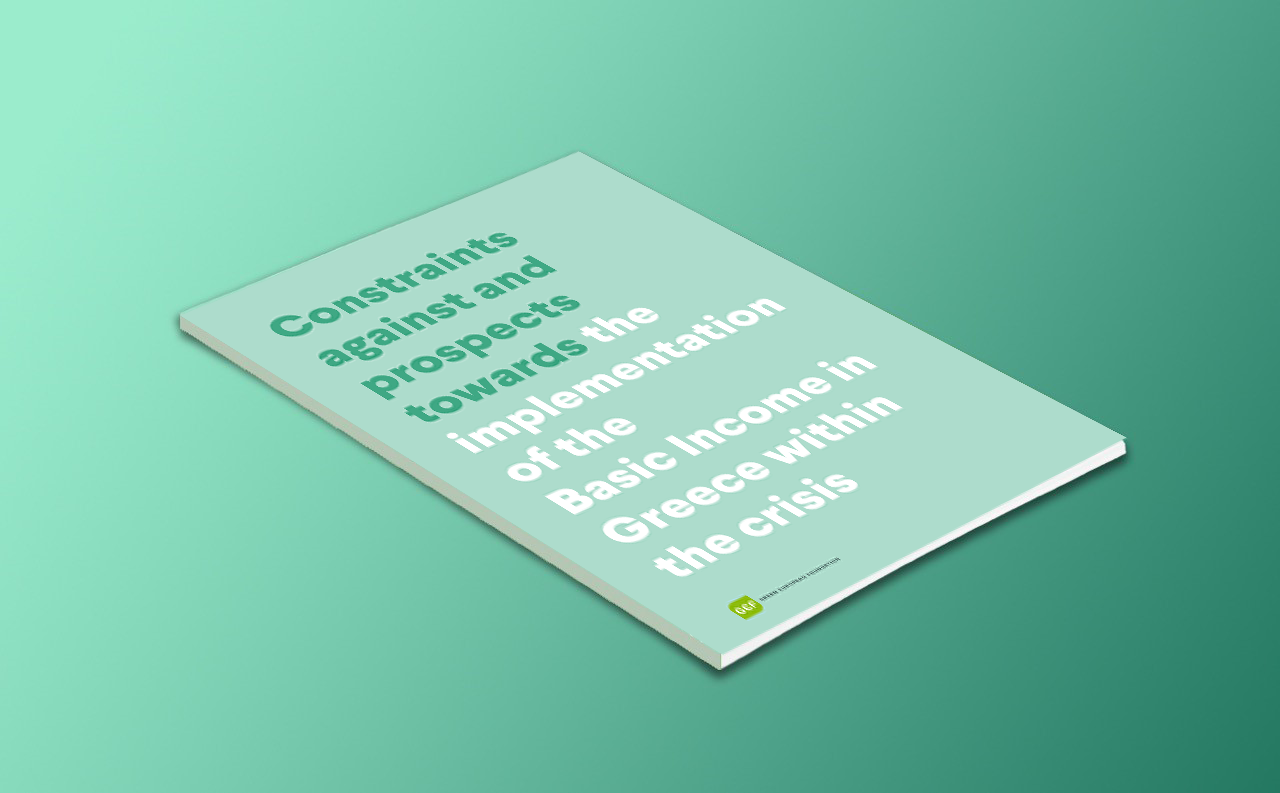
Constraints Against and Prospects Towards the Implementation of the Basic Income in Greece Within the Crisis

By Uncategorized

This report is one of the outcomes of GEF’s transnational project on Basic Income. Within this framework two study visits and multiple discussions on the topic took place.

The demand for securing all members of society against life’s adversities and the negative effects caused from social structures has been an ongoing concern of all social formations. From a historical point of view, this need was expressed in various forms in different times throughout history, ranging from food distribution to the poor in the times of the great empires (i.e. Egyptian Empire) and the charities of the monasteries in Middle Ages, to a universal basic income for all, the major social demand in late capitalism.

In contemporary industrial and post-industrial capitalism, this demand is expressed in two distinct political proposals: The first one focuses on unconditional universal basic income for all members of society irrespective of their financial status (Van Parijs, 1992) and the second one focuses on conditional basic income exclusively for those in unfavourable situation – if not in the most unfavourable situation – with respect to acceptable levels of living.

Read about the Finnish Basic Income Model here.

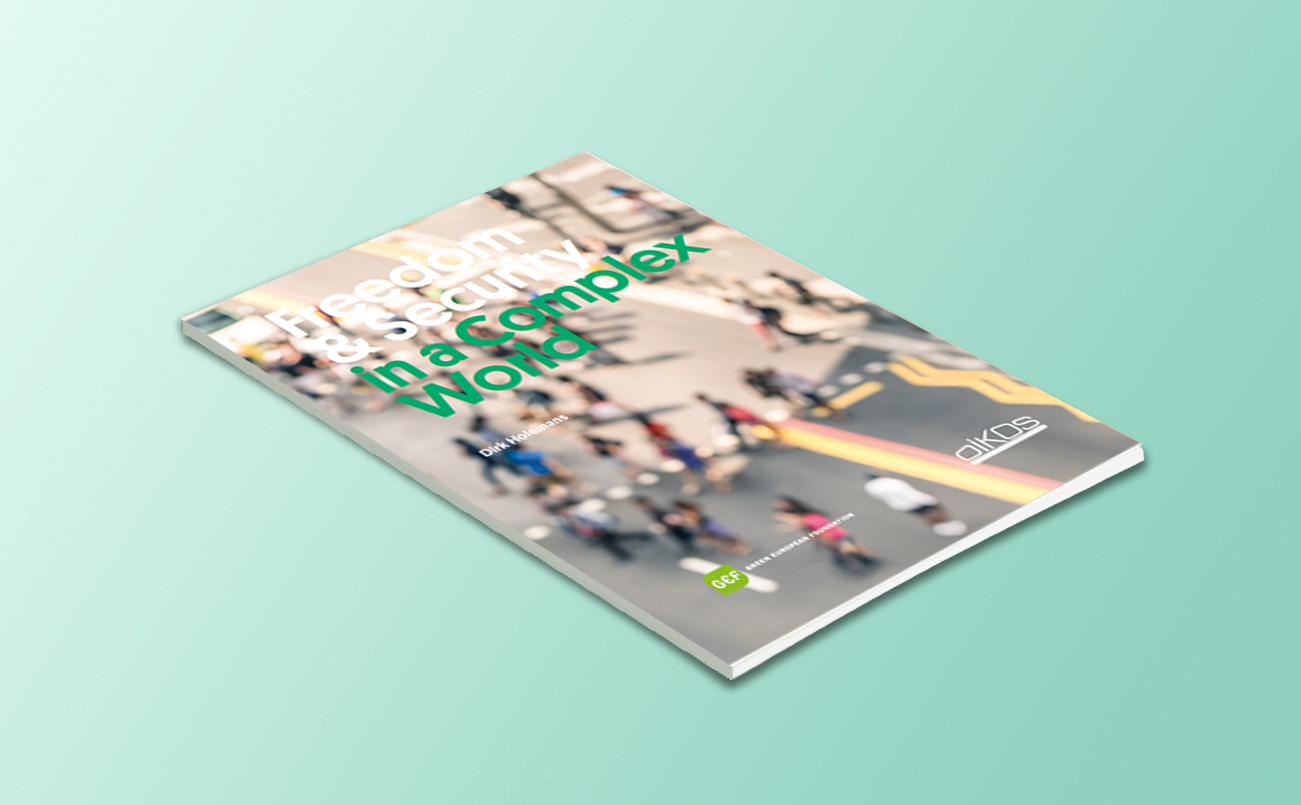
Freedom & Security in a Complex World (2017 edition)

By Uncategorized

Context

People all over the world are taking their future back into their hands. Together, they are taking initiatives in the fields of renewable energy, local food production, sharing tools, and so forth. This is the most hopeful movement of our time. Where the market and state fail, people are taking action. As free citizens, they are reinventing the collective, with open partnerships where personal development and social engagement go hand in hand. This observation seems to contradict what we experience every day. The system errors of our society model fill the newspapers: climate crisis, unstable banks, refugee flows. Accepted wisdom is that uncertainty is increasing. But both trends are happening, not by coincidence, at the same time.


Objectives

While examining the two interlinked concepts of Freedom and Security, this publication suggests that the answer needs to be the transformation into a socioecological society in the 21st century. It argues for the realisation of a societal project that strives for equal freedom for all people to flourish in security, within the boundaries of the planet, and proposes concrete steps towards it.


Download

Digital version in English is available here.

Digital version in French is available here.

Digital version in German is available here.

Digital version in Hungarian is available here.

Digitial version in Spanish is available here.


This report was part of the transnational project “A green transformation: Freedom and Security in uncertain times” . An updated version from April 2021 is available here. 

Possibilities and Perspectives for Basic Income around Europe (Leuven)

By

This event is a part of our transnational project, which aspires to contribute to the discussion on basic income and aims to further explore social and fair solutions to increasing inequality within the European societies.

Debate in Leuven

This debate will provide new perspectives on how basic income could be organised on European level. We will gather relevant experts from different parts of Europe to share insights and research possibilities for basic income in different parts of Europe, with a special focus on the youth.  Furthermore, we will discuss different models of basic income and how they can affect society on economic, social, environmental and feminist levels.

The list of panelists includes:

  • Irina Studhalter, Member of Swiss young Greens, local councilor and part of the GEF Basic Income expert group (Switzerland);
  • Simo Raittila, Member of the party council of the Finnish Greens Vihreät – De Gröna, researcher (Finland);
  • Cinta Gonzalez Sentis, Member of Catalan Young Greens (Catalonia).

The debate will be moderated by Predrag Momčilović, FYEG Executive Committee member and part of the GEF Basic Income expert group (Serbia).

For more information to attend the event, send an email to project.manager@fyeg.org.

Freedom and Society seminar (Zagreb)

By

The seminar will address the changing societies in the European Union and the interplay of freedom and security, and in particular look at the local perspective in Croatia. The aim is to stimulate the debate among activists, the political community as well as academia to discuss new concepts for fundamental changes needed in our complex world.

This is a closed event on invitation only.

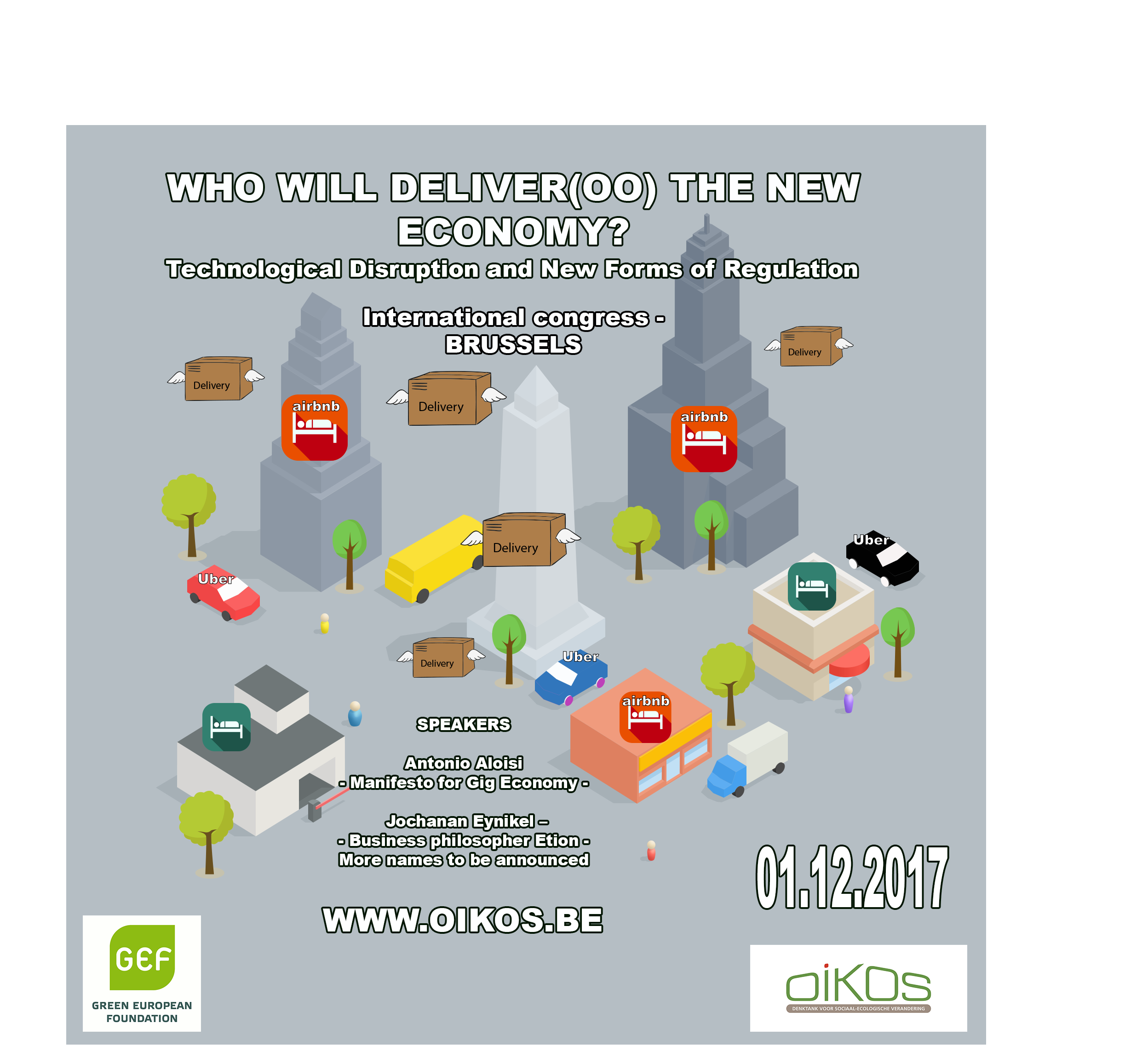
Who Will Deliver(oo) the New Economy? – Technological disruption and new forms of regulation (Brussels)

By

Context

Companies presenting themselves as mere digital platforms, such as Uber, Airbnb, Deliveroo, etc., are changing our economy in a rapid pace. These techno-economic disrupters not only change the way we produce or deliver services, but also lead to radical changes in the labour market, the availability and the organization of work. They question the existing regime of our national welfare states with a social security system build on full employment in stable and localized jobs.

The crucial question is how we will be able to re-embedded these new companies that tend to ignore legislation and deny the European social contract. This is more than an economic issue: more flexible and precarious jobs feed the growing insecurity in our society, which is a feeding ground for populists and national authoritarianism. So we need progressive answers that embrace the possibilities of digital platforms while at the same time empowering workers and their freedom and building new systems of social security.

Programme

13:00-13:10 Opening words (Aurélie Maréchal, Director Green European Foundation)

13:10-13:35 Keynote – The Need for a Green Transformation. Freedom and Security in Uncertain Times (Dirk Holemans, Director Oikos Denktank), followed by a Q&A

13:35-14:00 The Ethics of Things. Staying Human in the Robot Age (Jochanan Eynikel, Business philosopher Etion)

14:00-14:35 A Manifesto to Reform the Gig Economy (Antonio Aloisi, PhD candidate University of Milan)

14:35-15:10 Cabfair – We Can Do Better than Uber (Duncan McCann, New Economics Foundation)

15:10 coffee break

15:20-16:00 Panel debate –The European Dimension, moderated by Aurélie Maréchal

  • Philippe Lamberts (MEP Greens/EFA)
  • Frank Moreels (President European Transport Workers Federation)

16:00-16:45 Panel debate – The Future of New Economy

  • Meyrem Almaci (President Groen party)
  • Antonio Aloisi  (University Milano)
  • Duncan McCann (New Economics Foundation)

16:45 Reception & Networking

More information

The event is free of charge – to register, please fill in this form. For more updates, see the Facebook event.


Social Security & Basic Income (Madrid)

By

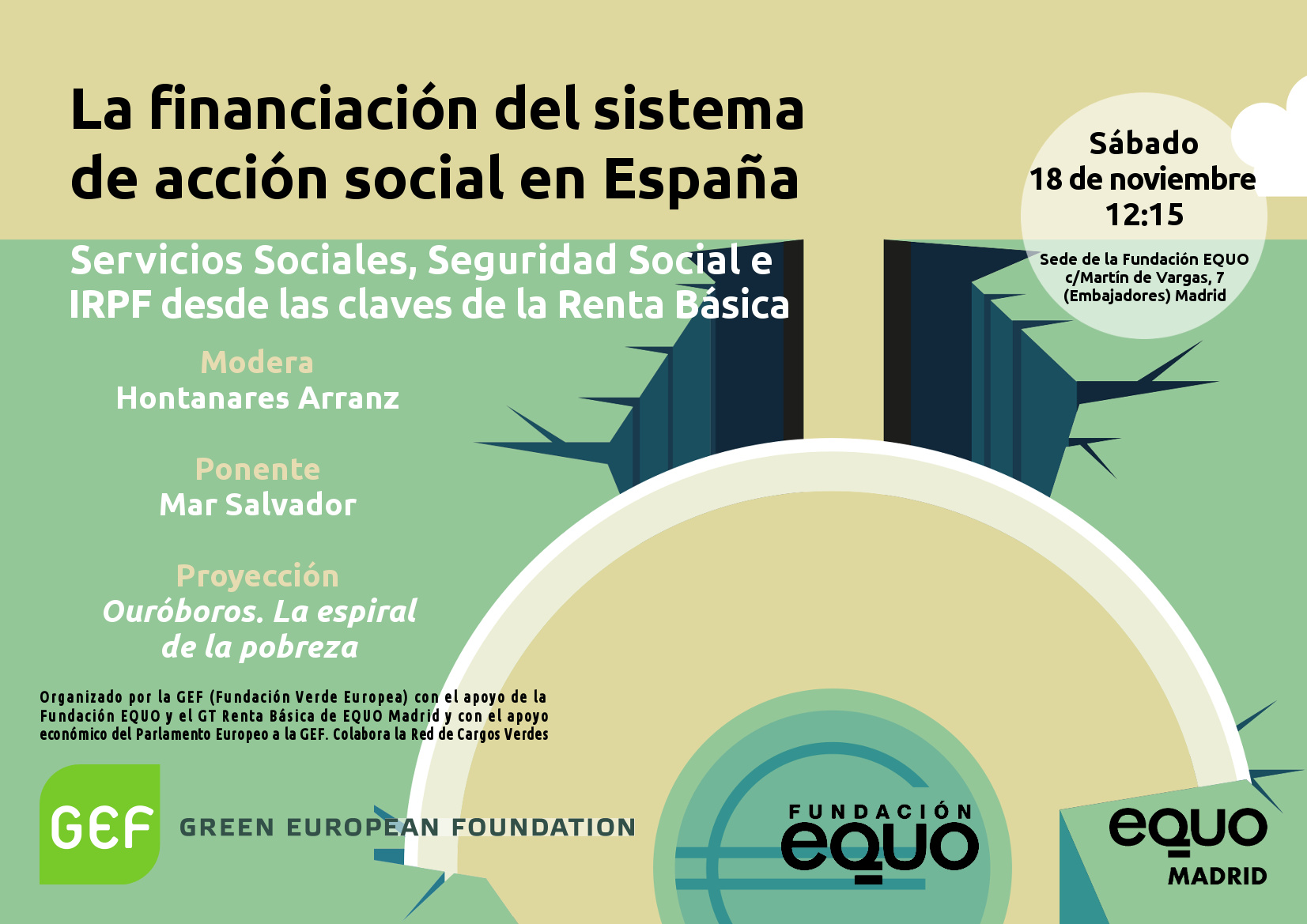
This event is a part of the ongoing transnational project “Living with Dignity in a Digitalised Working World – Basic Income for all EU Citizens?”, which aspires to contribute to the debate on basic income and aims to further explore social and fair solutions to increasing inequality within the European societies. In the framework of this transnational project, the workshop in Madrid will provide insights into the relationship between social security and basic income in Spain as a case study, and it will serve as an inspiration for discussions about basic income in other EU countries.

Workshop in Madrid

The workshop will go further into the financing of the social action system in Spain. We will investigate the budget of the social action system and who its actors are. It is said that basic income will end poverty and that it will be possible to start it up by transferring the expenses generated by the bureaucracy of social action, but for a transition in which the basic income is an instrument of transformation, it is necessary to know which is the starting point. Where are the resources that could be redirected to move towards the basic income? What are they currently financing? What tensions and pressures would have to be faced in the construction of this transition? Such questions will be addressed by prominent speakers, such as Mar Salvador (Forum of Social Services of Madrid) and Carlos Cruzado (GESTHA), tbc.

Date and Place

The workshop will be hosted at the office of Fundación EQUO – C/ Martín de Vargas, 7 – 28005 Madrid, on Saturday, 18 November 2017 from 12h15 to 14h30.

Registration

The event is open to the public and free of charge. To register, please follow this link.

Basic Income and its prospects: Is there an alternative to a Europe in crisis? (Athens)

By

The event will explore whether the concept of basic income can be a solution in Europe to the crisis and the economic implications it is having, in particular in Greece. Together with our international panel, we will discuss different approaches and ways forward.

Programme

Tuomas Viskari, Researcher in Finland, MSocSc
“The Finnish Basic Income Trial 2017-2018 and the Green BI Model”

Bru Lain, Associate Professor of Sociology, University of Barcelona, ​​Secretary of the Network for Basic Income
“Distribution, Pre-Distribution and Labor Markets: The Case of Basic Income”

Christos Dellasoudas, Blockchain Independent Researcher, Basic Income Europe Member
“Basic Blockchain Income”

Dimitris Karelas, Secretary General of Welfare, Ministry of Labor, Social Security and Social Solidarity
“What is and what does the Social Solidarity Income Program want?”

Manos Matsanganis, Associate Professor, Polytechnic of Milan
“A basic income for everyone in Greece?”

Christos Papatheodorou, Professor of Social Policy, Panteion University
“Poverty and deprivation in Greece of the crisis: rhetoric of minimum guaranteed income and shrinking social protection”

Kostantinos Dimoulas, Assistant Professor, Panteion University, Expert on the Basic Income Network
“How can the implementation of basic income in Greece of the crisis begin? Challenges and Prospects ”

The panel will be followed by a Q&A with the audience.

More information

The entrance is free. For more information, please visit the Greek Green Institute’s website.

There will be simultaneous translation Greek – English.

Ökopódium EU (Budapest)

By

The 4th Industrial Revolution: Opportunities for Green Transformation in the World of Employment

As part of our ongoing transnational project on questions around green transformation and a post-growth society, we are hosting a workshop in Budapest to discuss new technologies and other ‘change-makers’, such as climate disruption, and how they contribute to an ongoing social-ecological transformation and the 4th industrial revolution fueled by disruptive technologies such as digitalisation or robotisation.

Programme

17:00-17:15: Welcome

17:15-18:00: Green transformation – freedom and security in uncertain times

Dirk HOLEMANS director, Oikos Research Center, Belgium

18:00-18:30: What makes the 4th Industrial Revolution different from the previous ones? What are the major dangers and the biggest opportunities?

KIS Miklós, journalist

18:30-19:00: Humans or profit comes first? How do politics and politicians help?

SCHMUCK Erzsébet, Member of the Hungarian Parliament, Politics Can Be Different

19:00 – 19:20: break, buffet

19:20 – 20:20: Forum with the speakers

20:20 – 20:30: Closing Remarks

Dirk Holemans director, Oikos Research Center, Belgium

Registration and information

The event will be provide simultaneous English-Hungarian interpretation throughout the programme.

It is free of charge, but subject to prior registration. For more information, please visit the Ökopolisz website.


GEF at the Zero Carbon Yorkshire: Make it Happen! weekend

By

The weekend conference will explore energy, food, transport and buildings solutions and change for a climate safe future.

GEF Session

Following the publication of a study outlining a sustainable local economic strategy based on more green enterprises and employment, the Green European Foundation will organise a workshop on Saturday, 28 October, from 12h15 to 13h15,  with the support of Green House Think Tank and present this year’s further research as well as proposals on how to apply the model to the Sheffield City Region.

In this workshop we will provide space for debate about future of work – what type of jobs would be created locally by tackling climate change – including in energy, buildings, waste, food production in Sheffield City Region as case study. Furthermore, we will discuss the key ideas about zero carbon together with Aaron Thierry from Sheffield Climate Alliance.

Registration

To register for the conference at the Interdisciplinary Centre of the Social Sciences at the Sheffield University, please fill in this form.

Moving towards Basic Income at Univerde

By

WORKSHOP

Pilot experiences of basic income are being carried out in different parts of the world with a variety of approaches. In general, these aim to assess the socio-economic impact on beneficiary individuals and societies.

In this workshop we will discuss basic income as an alternative to poverty and exclusion, along with the possibilities of realising pilot projects at the local level. As a special case study, we will analyse the pilot plan for the city of Madrid.

This workshop is part of our ongoing transnational project “Living with Dignity in a Digitalised Working World – Basic Income for all EU Citizens?”.

SPEAKERS:

Experts on basic income will give us their opinion on the pros and cons of this experience and other possibilities of advancement.

  • Philippe Van Parijs – Belgian philosopher and political economist. Professor at the Faculty of Economics, Social and Political Sciences of the Catholic University of Louvain. Co-founder of the European Basic Income Network;
  • Julen Bollain – economist and researcher, member of the Basic Income Network and Basic Income Earth Network (BIEN);
  • Lluís Torrens – economist, member of the Basic Income Network. Director of Planning and Innovation of the Social Rights Area of ​​the Barcelona City Council;
  • Jorge M. Neira;
  • Hontanares Arranz – social worker, activist and member of EQUO.

Univerde IX

The ninth edition of Univerde is entitled “The Future of Europe: Democracy & Borders in the Era of Global Society”. Find more information on our webpage.

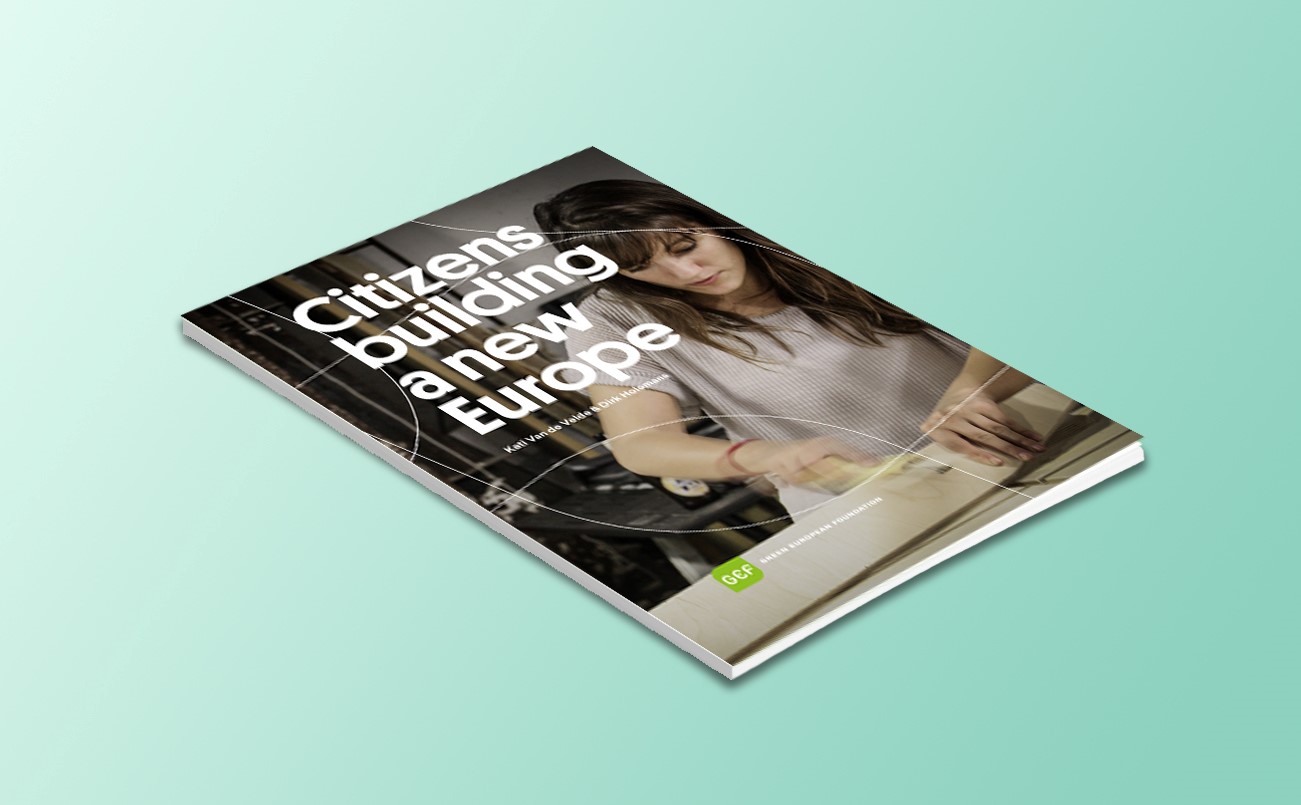
Citizens Building a New Europe

By Uncategorized

According to its citizens, immigration, terrorism, the economic situation and the state of member states’ public finances are the most important issues facing the EU. Less important, but still in the top 10, are unemployment and climate change. According to the latest Eurobarometer, a staggering 54% thinks that their voice doesn’t count in the EU. News about terror threats, refugee crises, budget cuts and corruption don’t paint a rosy picture of the reality we currently live in. Populists thrive on fear, human rights and freedoms are questioned and cynicism among citizens seems to be winning ground.

At the same time however, an ever-increasing number of citizens strike sparks in this seemingly dark tunnel, by developing social-ecological initiatives. To rebuild communities from the bottom up, to revitalize a more sustainable economy and to strengthen ties of solidarity and care, while governments struggle to manifest our common identity. Everywhere in Europe, hopeful democratic citizen initiatives emerge in fast pace. And knowingly or unknowingly, they are already making a difference, whether it be small or big, by building social and sustainable alternatives within the current neoliberal model of fear. Like swimmers against the tide, citizen movements get organised to take domains like production, finance, energy and care back in their own hands. So, join us for a walk through Europe and explore some of these exciting initiatives, because this is how citizens react to the policy of fear and austerity in our disrupted societies.

Digital version is Spanish is available to download here.

Basic Income Study Trip to Barcelona

By

The visit is hosted with an international group of experts, composed of academics, basic income activists and politicians, in order to advance the political debate around this topic and to share experiences across Europe.

This event is a part of the ongoing project “Living with Dignity in a Digitalised Working World – Basic Income for all EU Citizens?” which aims to  contribute to the debate about basic income and to further explore social and fair solutions to increasing inequality within the European societies.

The study trip to Barcelona will provide insights about basic income in the context of Spain and Catalonia in particular, along with clarification of various definitions of this concept. In addition, it will include meetings with relevant experts and NGOs working in the field.

The result of this event will be published and shared at the end of the year, summarising the most important questions and insights about basic income, and a comparison between different experiments (i.e. Barcelona and Helsinki). Participants of the study trip are pre-selected. Stay tuned for more updates!

Basic Income Study Trip to Helsinki

By

This event is a part of the ongoing project “Living with Dignity in a Digitalised Working World – Basic Income for all EU Citizens?” which aims to  contribute to the debate about basic income and to further explore social and fair solutions to increasing inequality within the European societies.

The study trip to Helsinki will have a special focus on the basic income in the context of Finland. Therefore, it will include visits to relevant NGOs and research centers to gain more insights, along with meetings with the Finnish Green party to discuss Green views on the topic.

The result of this event will be published and shared at the end of the year, summarising the most important questions and insights about basic income, and a comparison between different experiments (i.e. Helsinki and Barcelona). Participants of the study trip are pre-selected. Stay tuned for more updates!


ECOPRO Seminar in Brussels

By

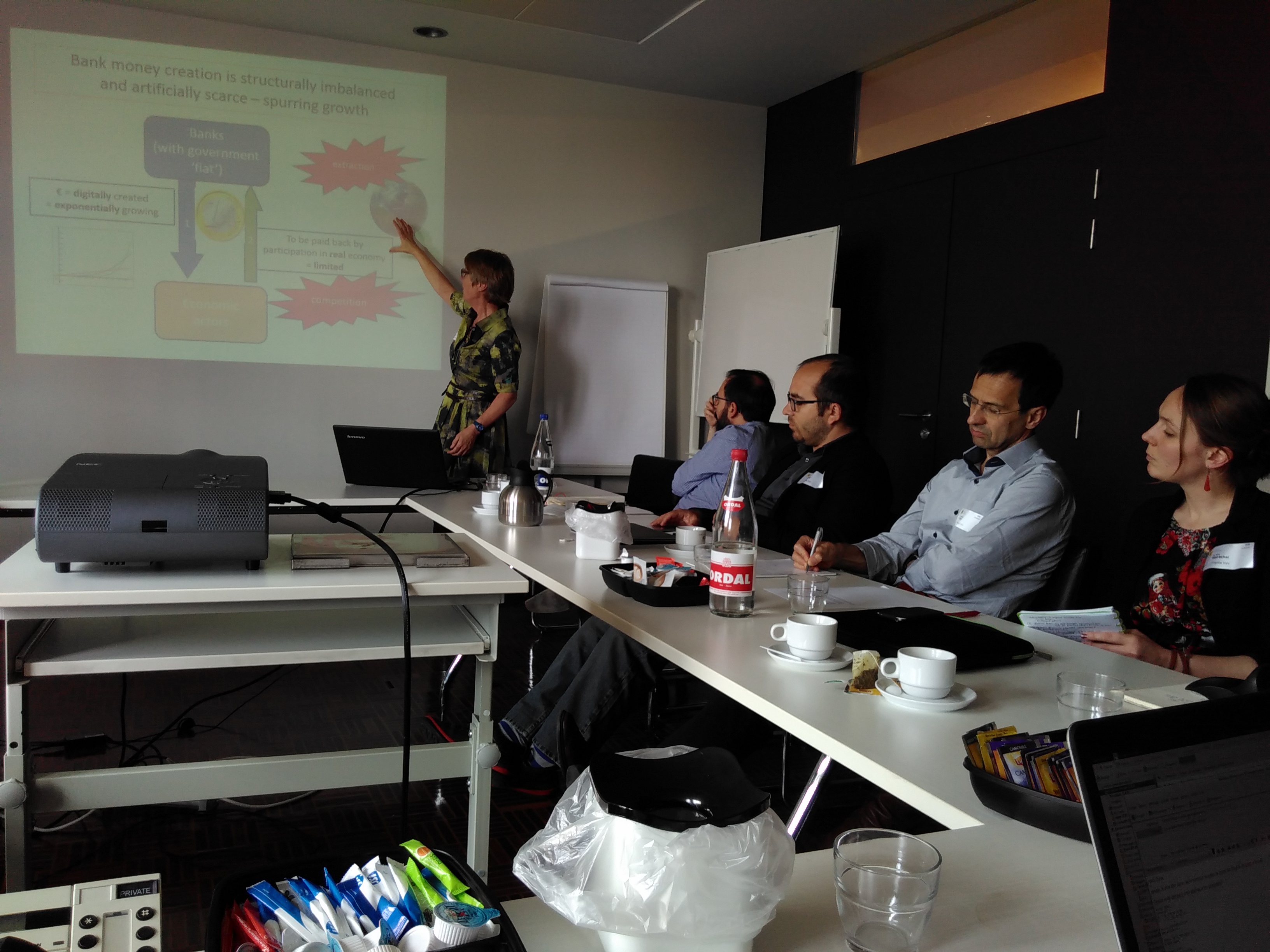
As a part of the ECOPRO project with a focus on the “Sustainable Work for All in a Post-Growth Society”, an inspiring seminar was held in Brussels, as an opportunity to engage with the different participants of the project. Three relevant speakers participated it the seminar with the presentations focusing on the central theme of the new ways of “work”, presented with a variety of perspectives.

The first speaker was Dustin Benton, head of Energy and Resources at Green Alliance, a charity and independent think tank focused on ambitious leadership for the environment. Mr. Benton gave a very interesting presentation about jobs in a circular economy. He participated in a study about the potential of new jobs in a circular economy in Italy, Poland and Germany.

The second speaker was Raimon Roda, director at the Baix Llobregat Agricultural park just outside Barcelona. He used the park as an example of the potentials for the agricultural areas near cities to foster sustainable development and evolution towards local food production.

The last speaker of the day was Anne Snick, expert on gender and social sustainable economy. Her presentation focused on the need of the current economy to serve the basic societal functions –  efficient allocation of resources to the well being of all. Her presentation also highlighted the gender implications of contemporary economic system and possible solutions for such issues.

This seminar ended with a fruitful discussion and a lot of questions from the participants after each presentation.

ECOPRO Seminar in Ireland: “A Community Approach to Sustainable Work in the Circular Economy”

By

The theme of this seminar was “FULL CIRCLE: A Community Approach to Sustainable Work in the Circular Economy”. With this focus, the seminar in Ireland aspired to reflect further on the current topics of our ECOPRO project.

Therefore, some of the most relevant questions which were addressed during the event were:

  • What role do community groups, co-operatives and local enterprises have in the circular economy? 
  • Under what conditions can the circular economy help us accelerate the transition to a resilient and low carbon society?

This seminar was based on a participatory format, blending presentations with facilitated conversations. The list of speakers included Dr. Anne Snick (KU Leuven, Belgium) and Clare Downey (Community Reuse Network, Ireland).

TIME: Seminar was held between 14h00 and 16h30 on the 10th of June.

LOCATION: WeCreate Workspace, located in Cloughjordan Ecovillage in Tipperary, Ireland.