Mining for Metals in a Post-Cop Intersectional World: Can It Be Fair?

By

PROGRAMME

14.00-14.30 CET Introductory Session 

  • Miriam Kennet (Green Economics Institute) – Introduction to the event
  • Ewa Sufin  (Poland) (Fundacja Strefa Zieleni/GEF Member of the Board) – Introduction to GEF and the Metals for a Green and Digital Europe project

14:30 – 15:30 CET – Session 1: Mining metals for the energy transition – can it be fair? 

The role of the internet in driving social justice in 2022: The Potential for the Internet in Driving Social Justice-Can it be fair- ? Challenges for a Just Transition- an issue for our times

The internet is a powerful tool. The wide potential for democratisation and social justice it holds are evident. However, many online initiatives have failed to develop into real social change. To effectively utilise the power of the internet for social justice, we must navigate these problems and understand how detrimental outcomes materialise. This session will explore the conflicting realities of the nature of the internet and offer solutions for reclaiming it as a tool for social justice.

 Exploring the life cycle (procurement, use and recycling) and the practical situation

Speakers include:

  • Liljana Popovska (North Macedonia ) – Former MEP expert in Mining Issues and impacts
  • Hans Kåre Flø (Norway )Master of science in physics and master of management. Special adviser at Tekna which is a trade union for Engineers and scientists”. -Metals and their importance in European jobs and industry and the transition in Technology and climate challenges: Norway has important rare earths but has not exploited them yet- what are the issues? “Rare earths from Norway and challenges connected to producing them”
  • Rasa Tumaševičiūtė (Lithuania) – Europe’s Recycling of Aluminium, circular economy consultant and government sustainability strategist. Aluminium sector. How critical is situation in Europe?
  • Zaklina Zivkovic, Polekol (Serbia) – Green Economy Expert, Serbia and Executive director of Organization for Political Ecology, Polekol. The mass mobilization of citizens and environmental organizations in Serbia against extractivism that our country is currently facing. On one hand, we are aware of the need for metals for the green transition, but on another planning 40 new mines in the next 15 years in Serbia is nowhere near just the transition that we are also advocating for.

Moderated by: Bianca Madison (Croatia, Italy, Denmark, UK) & Marlyn Hughes (UK)


15:30 – 15:40 CET Short Break

15:40 – 16:10 CET Session 2: Break Out Rooms

In this section we will share knowledge and evidence  about how metals are brought into Europe and the new supply chain realities within the globalisation context.  We’ll also explore new commodity flows and power bases in the global economy and the challenges for the green transition. What should the main priorities be to start to address these challenges?

Moderated by: Liljana Popovska, North Macedonia – Former MEP expert in Mining Issues and impacts

  • Bianca-Madison – Vuleta (Croatia, Italy, Denmark and UK)
  • Hans Kare Flo ( Norway)
  • Rasa Tumaševičiūtė (Lithuania)

16:10-16:40 CET Presentations, feedback and discussions in Plenary 

16:40 -17:40 CET Session 3: Diverse perspectives and issues for different social outcomes.

Since its inception, the internet has been recognised for its potential in driving social justice in a variety of ways. A space to bring together new or marginalised communities despite geographical boundaries; a public sphere for debate and deliberation; a means to spread information and a platform for the organisation and mobilisation of incipient social movements.  In this session we’ll explore perspectives from different groups impacted including indigenous perspectives and views and voices from around Europe and beyond.

  • Ewa Sufin (Fundacja Strefa Zieleni) European Impacts of Metals Mining-No more BAU Energy Efficiency
  • Baghadadi Mahrouz – Berber Indigenous speaker and engineer (Algeria) – intervention in French
  • Professor Alexandra Harrington: (University of Lancaster) Just transitions for mining sector activities and energy transitions in Europe, the SDGs and mining.
  • Asia Mohamed – (Sudan) – IPBES Africa Lead for United Nations Biodiversity. The impact of gold mining on biodiversity (tbc)Moderated by: Bianca Madison – Vuleta – (Croatia, Denmark, Italy and UK) and Marlyn Hughes


17.40 – 18.10 CET – Conclusions : Session 4Mining for metals can it ever be fair?  Can supply chains ever be fair in 2022 in Europe? 

Conclusions from the Metals for a Green and Digital Europe transnational project.

  • Speakers: Richard Wouters, Project leader ‘Metals for a green and digital Europe’ for the Green European Foundation & Weternschappelijk Bureau GroenLinks
  • Miriam Kennet (Green Economics Institute) – Climate change and metals- the implications for social and environmental justice with the work of GEIClimate.org and the latest scientific information from the UNFCCC.


Practicalities

Date and time: 2nd April, 2-6pm.

Audience: This event is open to the general public.

Registration: Please register via this link


Recommended reading

Where We Mine: Resource Politics in Latin America, an article from the Green European Journal.


The following session is organised by the Green European Foundation, supported by the Green Economics Institute and Wetenschappelijk Bureau and with the financial support of the European Parliament to the Green European Foundation.

Metals for a Green and Digital Europe- An Agenda for Action

By Uncategorized

Context

The climate crisis leaves us no choice but to make a swift transition from fossil fuels to renewable energies. However, while energy from renewable sources such as solar and wind is nearly infinite, the resources we need to capture it are not. Solar panels, wind turbines, batteries, and power cables all contain metals. Their various properties, including toughness and conductivity, make metals uniquely suitable for renewable energy technologies. But first they must be extracted from ores that are dug up from the ground. Because of its decentralised nature, a renewable energy system requires far larger quantities of metals than a fossil energy system.


The more energy we harvest from the skies above our heads, the deeper we will have to dig for the metals beneath our feet.


Objectives

Both the energy transition and the digital transition require large quantities of metals, such as lithium, cobalt, and rare earth. As a result, Europe must face up to various types of scarcity. This Agenda for Action sets out how we can achieve the sparing, circular use of metals and the responsible sourcing of the virgin metals that we really need.


Download

Available in Dutch

Available in Spanish

Available in Czech 

Available in French

Available in Polish

Available in Swedish

Available in Serbian

Available in Portuguese


This publication is part of the Metals for a Green and Digital Europe project. The project is led by Wetenschappelijk Bureau GroenLinks and supported by Fundacja Strefa Zieleni, Institut Aktivního Občanství, the Green Economics Institute, Etopia, Visio, and Transición Verde, with Cogito from Sweden providing additional expertise.

Climate Feminist Summer School

By

About the Event

Women and minorities are more likely to be affected by the impacts of climate change and environmental crises, but are also key to bringing about change in their communities. Countries with more diversity in decision-making have more ambitious climate policies, while the empowerment of women is also closely linked to better economic and wellbeing outcomes for all.  

We need this diversity and we celebrate it, but we also know that it flourishes best when it is pursued actively and obstacles are clearly understood. Specific support for systemically underrepresented groups, including women and non-binary people, is crucial in order to make a change in traditionally male-dominated spaces.  

How are women currently excluded from climate negotiations and decisions? What are the lessons and insights from those leaders who have managed to break through? What are the narratives and structures that keep inequalities in place, and the “gender-blind” solutions that fail to challenge the status quo? How does the patriarchal exploitation of the planet relate to the lived experiences and activism of women of colour, indigenous women, LGBTQ+ women, and others? And above all, what can we do to address all of this?  

This online summer school will feature a series of interactive sessions to explore the gendered impacts of the climate crisis, but also provide concrete tools, inspiration, and knowledge to equip participants in their own lives and with a special eye on COP26. We will facilitate encounters between activists, climate scientists, researchers, policy makers, campaigners, politicians, and the general public, in order to move this priority high on the agenda and spark connections across Europe and beyond. 

Context: 

This summer school is part of the project “Feminists in the Climate Movement,” organised by GEF with the support of Visio, Green Economics Institute, Oikos, and Fundacja Strefa Zieleni. With a closed training programme for selected Feminist Climate Ambassadors as well as a series of public events, the project seeks to build capacity among (potential) climate leaders, while highlighting the gendered aspects and impacts of the climate crisis to a broader audience.   

Speakers: 

Confirmed speakers include: 

  • Prof. Graciela Chichilnisky (professor of economics at Columbia University, IPCC lead author, co-founder of Global Thermostat) 
  • Clare Bailey (Leader of Green Party Northern Ireland)
  • Jean Lambert (European Green Party)
  • Mana Livardjani (Director of ENOP – European Network of Political Foundations)
  • Frances Roberts-Gregory (Northeastern University Future Faculty Fellow)
  • Patrizia Heidegger (European Environmental Bureau)
  • Rahila James (ActionAid Nigeria)
  • Marie Pochon (Notre Affaire a Tous)
  • Ewa Sufin-Jacquemart (director of Strefa Zieleni, Congress of Women coordinator) 
  • Chelangat Scholar (national chairperson at Green Congress of Kenya) 
  • Olfa Jelassi (GenderCC) 
  • Dr. Alexandra Harrington (research director at Centre for International Sustainable Development Law) 

And many more!

Programme:  

The full programme and speakers can be found here. Please note that sessions are subject to change. 

Practicalities: 

Date and time: August 20th – 22nd (13:00 – 19:30)   

  • Sessions include plenaries, networking, workshops, social sessions, and many other formats. There will be plenty of extended breaks, and participants are welcome to join whenever and for whichever session(s) they want.  

Audience: This summer school will take place in English, online, and is open to the general public. We strive for an open but safe space, making the summer school as interactive and accessible as possible while ensuring the wellbeing of our participants.   

Registration: Please register in advance here. 


This event is organised by the Green European Foundation with the support of the Green Economics Institute and with the financial support of the European Parliament to the Green European Foundation. The European Parliament is not responsible for the content of this event.
Women for Climate – A Just Transition

By

About the Event

What is a just transition of coal regions from the feminist perspective? What does transition look like in Poland and in other European countries? Do the current solutions ensure equal participation of men and women in decision-making processes? What role do women play in the broader just transition movement? In which approach to transformation is the gender perspective particularly relevant?

These and other questions will be answered by politicians and activists from Poland, the Czech Republic and Germany.


Context

This is the second of four public webinars as part of the project “Feminists in the Climate Movement,” organised by GEF with the support of Visio, Green Economics Institute, Oikos, and Fundacja Strefa Zieleni. With a closed training programme for selected Feminist Climate Ambassadors as well as a series of public events, the project seeks to build capacity among (potential) climate leaders, while highlighting the gendered aspects and impacts of the climate crisis to a broader audience.


Speakers

  • Dr. Miłosława (Miłka) Stępień – social and political climate activist, working on the just transition of coal regions in Poland, as well as issues linked to environmental protection, public transparency and civic participation. Chair of Association Akcja Konin (Konin in Action). Co-spokesperson of the European Green Party’s Conciliation Panel.
  • Jitka Nesrstova – longtime environmental activist by heart and fundraiser by profession. She worked for Greenpeace CZ for almost 13 years and co-founded the Coalition for Easy Giving that brings together major Czech nonprofits systematically raising funds from individuals. Since 2016 Jitka is part of Limity jsme my, an open grassroots civic movement fighting for coal phase-out and just transition. Jitka is a member of the Czech Green Party and served as Deputy Chair of the Energy Working Group in the past.
  • Katrin Uhlig – green politician from Bonn, Westphalia, Germany. She is the co-chair of the Green party in Bonn and deals in particular with energy policy and climate protection, incl. following the UN climate negotiations. Bonn is the seat of the United Nations World Climate Secretariat with many international organizations active in the environment and climate sector.


Practicalities

Date and time: Thursday, April 8th from 18:00 to 19:30 CEST.

Audience: This webinar will take place in English and Polish (with simultaneous translation) and is open to the general public.

Registration: Please register in advance via this link.


This event was organised by the Green European Foundation with the support of Strefa Zieleni and with the financial support of the European Parliament to the Green European Foundation.
Climate, Economics, and Gender

By

About the Event

Women and minorities are more likely to be affected by the impacts of climate change and environmental crises, but are also key to bringing about change in their communities. Countries with more diversity in decision-making have more ambitious climate policies, while the empowerment of women is also closely linked to better economic and wellbeing outcomes for all.

Nevertheless, women have been too often side-lined in the narratives of history and power, and their labour performed in service of society and the planet is often structurally undervalued or pushed to the margins. This webinar, organised with the support of the Green Economics Institute, will examine those points where climate, economics, and gender converge, providing thought-provoking insights to how climate feminists can reclaim these narratives and counter patriarchal exploitation of the planet before it is too late.

Context

This is the first of four public webinars as part of the project “Feminists in the Climate Movement,” organised by GEF with the support of Visio, Green Economics Institute, Oikos, and Fundacja Strefa Zieleni. With a closed training programme for selected Feminist Climate Ambassadors as well as a series of public events, the project seeks to build capacity among (potential) climate leaders, while highlighting the gendered aspects and impacts of the climate crisis to a broader audience.

Speakers

Katrine Marçal – Swedish writer and journalist, and author of the book “Who Cooked Adam Smith’s Dinner?”

Rosalind Miles – writer, broadcaster and journalist, and author of the book “The Women’s History of the World”

Dr. Sarah Parry – senior lecturer at the University of Edinburgh

in conversation with Lynne Franks – writer, advocate, communications strategist, and founder of SEED Women’s Leadership Platform

Programme

16:00 – 16:15 Introduction

16:15 – 16:45 Setting the scene – Katrine Marçal on economics and patriarchy, and the fundamental flaws at the basis of mainstream economic thinking.

16:45 – 17:15 Invisible women – Rosalind Miles on how women’s contributions are underacknowledged in historical narratives, and how we can change that.

17:15 – 17:30 Break

18:00 – 18:30 Mobilising for Change – Leena Ahmed and Bianca Madison-Vuleta in conversation with Lynne Franks on empowering women to enhance wellbeing for all.

18:30 – 19:00 Closing – open discussion, next steps, and how to get involved.

Practicalities:

Date and time: Monday, March 29th from 16:00 to 19:00 CEST.

Audience: This webinar will take place in English and is open to the general public.

Registration: Please register in advance here.

Online events require extensive preparation, and speakers and moderators deserve fair compensation for their work. Therefore, this event features paid general admission tickets and we welcome donations. However, should your financial situation not allow this then please feel free to reserve one of the free tickets – no questions asked.

Climate Networking Conference

By

About the Event:

With COP26 postponed but the need for immediate climate action stronger than ever, we are bringing together actors from civil society, politics, activism, and academia to determine what climate leadership looks like in 2020 and what strategies, messages, and objectives will propel us forward.

This conference will act as a green networking event – with exchanges across a variety of different thinkers, topics, and backgrounds, in order to provide everyone with resources and connections in the run up to the Bonn Climate Change Conference, COP26, and further climate negotiations.

Speakers:

  • Tilly Metz – Member of the European Parliament, Greens/EFA
  • Natalie Bennett – Member of the House of Lords for the Green Party of England and Wales
  • Djana Bejko – Director of Shkodra Lake Forum and former Deputy Minister of Environment in Albania
  • Sir Brian Hoskins – Founding Director of Grantham Institute for Climate Change and the Environment
  • Mark Ruskell – Member of the Scottish Parliament for the Scottish Green Party
  • Prof. Maria Madi – University of Campinas, green economics
  • Doug Parr – Greenpeace UK Chief Scientist
  • Jean Lambert, former MEP for the Green Party of England and Wales
  • Alice Hubbard – International Coordinator of the Green Party, European Union Institute policy leader fellow

And many more.

Programme:

Please find the schedule below. All times are in CEST.

9:30 – 9:45 Welcome: Leadership in the Age of Climate Challenge

9:45 – 10:15 Setting the contemporary climate scene – ft. virtual site visits highlighting climate impacts around the world.

10:15 – 10:30 Break

10:30 – 11:30 Opening Plenary: What does climate leadership look like?

11:30 – 11:45 Break

11:45 – 12:00 Climate Science and Climate Narratives: Keynote by Sir Brian Hoskins

12:00 – 12:15 Climate Science and Climate Narratives: Keynote by Kaya Axelsson

12:15 – 12:45 Breakout sessions and Ice Breaker: discussing climate leadership across different networks

12:45 – 13:15 Climate Science and Climate Narratives: Short presentations

13:15 – 13:20 Break

13:20 – 13:45 Climate Science and Climate Narratives: Panel discussion

13:45 – 14:30 Lunch break, with virtual site visits and exhibition stands

14:30 – 14:50 Master Class in Climate Finance and Science

14:50 – 14:55 Break

14:55 – 15:15 Master Class in Climate Law, Governance, and Treaty Design

15:15 – 15:30 Break

15:30 – 16:15 Climate Change and Health and Social Issues

16:15 – 16:30 Break

16:30 – 17:30 Politics and Policymaking: The European Green Deal and EU actors

17:30 – 17:45 Break

17:45 – 18:30 Contemporary challenges across different countries’ political and media realities, campaigning for a Green Recovery and next steps.

18:30 – 18:45 Break

18:45 – 19:45 Contemporary challenges across different countries’ political and media realities, looking towards COP26 Glasgow.

Registration:

This event will be taking place online via the Zoom videoconferencing platform and is open to all registered participants. For access to full participation features, please download the free desktop version.

Please register for your ticket here.

This event is open to the general public and aims to be accessible to all, so ticket prices are based on a solidarity fee between 0 and 15 EUR.

The conference is a great networking opportunity, so should you be interested in running a virtual exhibition stand during the lunch break from 13:45 – 14:30, then please apply for a slot here. You will be contacted shortly after to confirm details.

This conference is organised with the support of the Green Economics Institute.

Public Values and Technology in the Corona Crisis

By

About the Event:

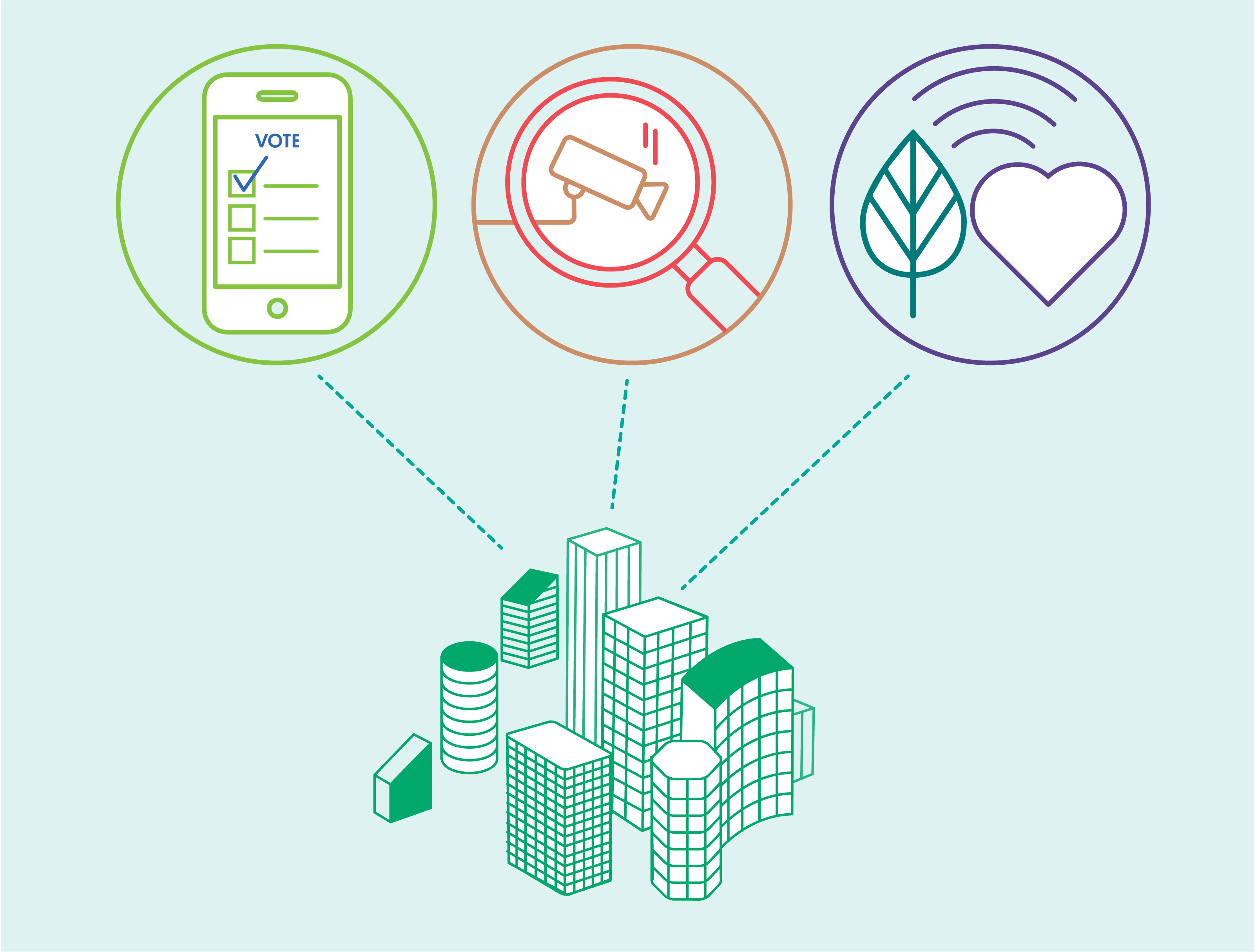
The Green European Foundation and the Green Economics Institute are delighted to invite you to a webinar on smart cities in corona times. All over Europe, municipalities want to become ‘smart cities’, front-runners in the use of sensors, big data, algorithms and apps. Smart technologies offer opportunities for improving the quality of life in cities, for reducing their ecological footprint and for creating new urban commons. But they may also present threats to civil liberties and to social justice. The smart city should not be an end in itself. A smart city is only really smart if data collection and artificial intelligence are steered by values. How do we ensure that public values such as democracy, human dignity, privacy, equality and sustainability are put at the heart of smart cities?

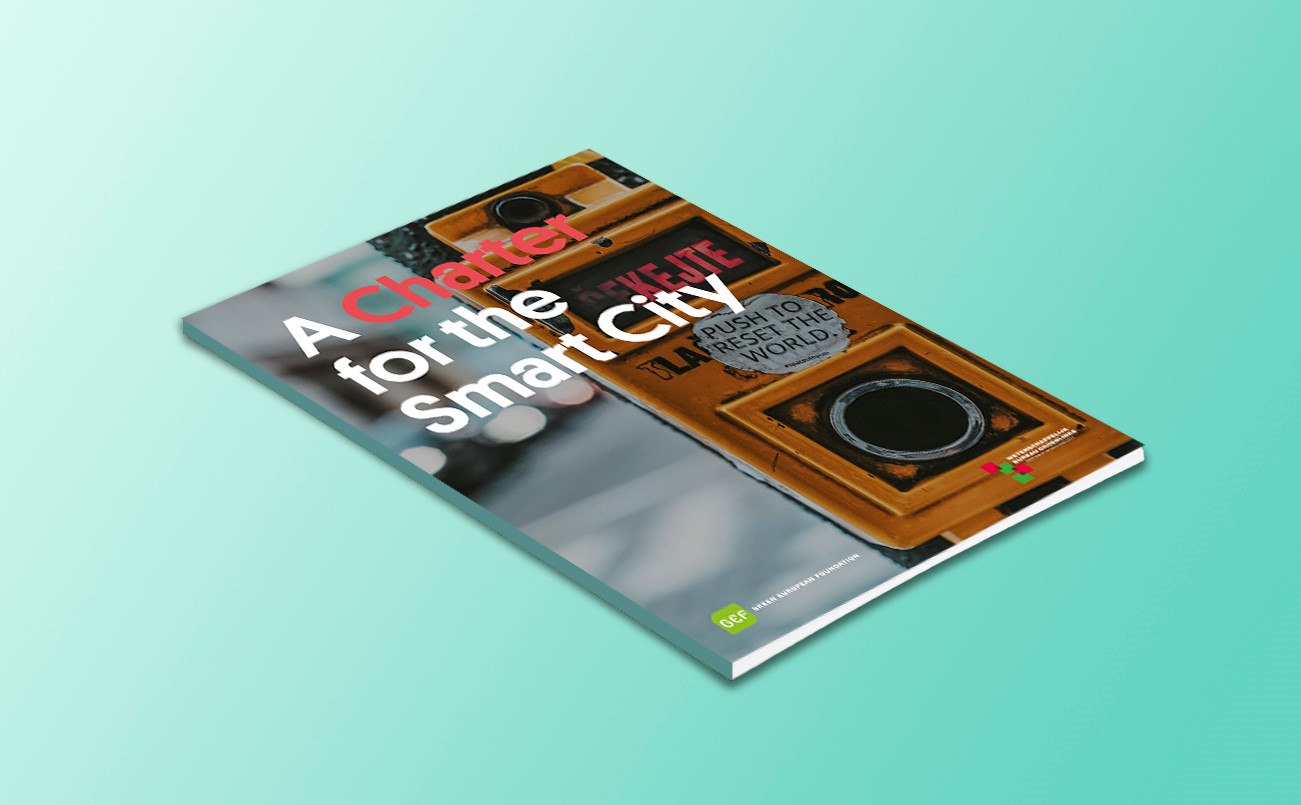
This webinar will gather experts, practitioners, activists and (local) politicians. The online discussions will cover two mornings. Participants can choose to take part in one session or in both sessions. The webinar takes the Green European Foundation’s Charter for the Smart City as a starting point. The results of the webinar will feed into the online version of the Charter.

Speakers:

Friday:

  • Richard Wouters – Wetenschappelijk Bureau GroenLinks, project leader A Charter for the Smart City. (Netherlands)
  • Prof. Maria Madi – Specialist in the Digital Economy and Innovation Philosophy. (Portugal/Brazil)

Saturday:

  • Monika Sobiecki – Barrister specialising in Digital Technology, Data and AI Law; senior associate in a Privacy and Cybersecurity team. (United Kingdom)
  • Dr. Vandana Shiva – Scholar, environmental activist, food sovereignty advocate, and anti-globalization author; Founder of the Research Foundation for Science, Technology and Ecology. (India)
  • Dorothy Nalubega – Minority rights activist, feminist, and environmentalist; African Coordinator for the Global Greens Women’s Network and Chairperson of the East African Greens Women’s Network. (Uganda)
  • Natalie Louise Bennett – Former leader of the Green Party of England and Wales; member of the UK House of Lords; specialist in Mass Communication and former editor of The Guardian Weekly. (United Kingdom)
  • Ewa Sufin-Jacquemart – Director of the Green Polish foundation “Strefa Zieleni”, writes for the Green journal „Zielone Wiadomości”, and coordinator of the Green Centre of the Congress of Women. (Poland)

Programme:

June 19th 11:00 – 13:00

    • Presentation of the Charter for the Smart City, value-led development of technology and its relevance in times of corona by Richard Wouters (Wetenschappelijk Bureau GroenLinks, NL), followed by discussion.
    • Presentation and discussion on digital surveillance. Will the corona crisis take the surveillance of citizens and workers to new heights? Can and should we counter this tendency? Is there a role for local politics?

June 20th 11:00 – 13:00

    • Presentation and discussion on digital innovations. The corona crisis has given a boost to the digitalisation of work, commerce, education and social life. How do we deal with the socio-economic inequalities which arise from this? Can we prevent Big Tech from becoming even more powerful? What role for local politics?
    • Presentation and discussion on a Green New Deal. The economic crisis and the climate crisis must be tackled simultaneously. Does this create new opportunities for green technologies? What role for local politics?

Practicalities:

Platform

We will use the Zoom video conferencing platform. It is recommended to join the webinar via a PC. You do not need to install additional software. However, for the best user experience and full participation features, we recommend to install the Zoom Desktop App, which is free.

Registration

This event is free and open to the public, but advance registration is required. You can register via the GEI website, via Eventbrite, or by emailing info@geiconferences.org.

Please consider making a donation to enable the Green Economics Institute, a not for profit, to continue its work. The suggested donation is around £25.00 per person.

Preparation

The Charter for the Smart City is available on the website of the Green European Foundation. Click here to download.


This event is organised by the Green European Foundation and the Green Economics Institute, with the financial support of the European Parliament to the Green European Foundation.
A Charter for the Smart City

By Uncategorized

People make technology, but technology in turn influences our lives, our societies and even our ethics. The development of new technologies therefore cannot be left to engineers and managers; it requires public debate and democratic control.

This Charter for the Smart City was produced as part of the project of the same name, and puts the values of democracy, connectedness, human dignity, privacy,  sustainability, and equality at the heart of smart cities. Local politicians and active citizens who share these values may use the principles in this Charter as starting points for democratic debate and informed moral judgment on technological innovations in their communities.

The Charter was developed through a series of roundtable discussions that took place in cities across Europe, as well as from online consultation, involving over 100 experts, (local) politicians and activists who shared their ideas.


Please find the Dutch version of this publication available to read here

Please find the French version of this publication available to read here

Please find the German version of this publication available to read here

Please find the Czech version of this publication available to read here

Roundtable on Smart Cities (Oxford)

By

Event Background

This round table discussion is to be held as part of the transnational project A Charter for the Smart City, which aims to formulate guiding principles that help politicians to assess and steer technological innovations in European cities.

About the Event

Drawing upon the expertise politicians and representatives from NGOs, trade unions, and technology sectors, the event will collect examples of best practices from across Europe to contribute to the development of a Charter, one which addresses the opportunities that new technologies offer for reducing the ecological footprint of cities and creating new urban commons, while also addressing the threats they might present to civil liberties and social justice.

Programme

11.00-11.40:  Welcome and introduction by Richard Wouters (Wetenschappelijk Bureau GroenLinks – De Helling)

11.40-13.00: Group discussions on smart cities: Which values are at stake? Do we need new rules? If so, which ones?

13.00-14.00: Lunch

14.00-14.30: Panel discussion on the draft Charter for the Smart City with Martin Fodor (green councillor Bristol, rapporteur on smart cities of the Congress of Local and Regional Authorities, Council of Europe), Richard Wouters, and others

14.30-15.55: Roundtable discussion on principles of the charter, identification of gaps, local implementation, green character, practical examples

15.55-16.00: Closing remarks

After the roundtable there will be space for informal networking.

Registration

Registration is open to all, but spaces are limited to approx. 30 people. Please register via the registration form found on this website page. 

Towards a New Climate (Katowice)

By

Context

COP24 in Katowice will be decisive as one of its tasks is to work out and adopt decisions to ensure the implementation of the Paris Agreement. At the same time, the Polish government has stated its objective to use the opportunity of the 2018 Climate Summit Poland to demonstrate how neutrality in terms of greenhouse gas emissions, i.e. a balance between CO2 emissions and its sequestration by soils and forests, can be attained. This sends a fatal message to the broader public as it creates the impression that ever-growing CO2 emissions around the world could be absorbed naturally, which impedes debate and progress towards a zero carbon future. In this context, a clear response to the Polish government’s stance on climate change and mitigation is needed.

About the event

In early 2018, we kicked off our transnational project “Towards COP24 in Poland” to raise awareness about climate issues among the Polish population and EU citizens in general in the run up to the Climate Summit in Katowice. The project highlight will be a one-day event in the second week of COP24 in Katowice organised with the support of all project partners to challenge the current policies by EU member states, share best practices and present sustainable, fair and just approaches that respect the ecological boundaries of our planet while having a good life for all people in mind.

Topics:

1. Just transition of mining regions – organised with the support of Heinrich Böll Foundation in Warsaw and Fundacja Strefa Zieleni, Poland

2. Potential green jobs as a result of climate oriented transition – organised with the support of Green House Think Tank, UK

3. “Zero net emissions” – are carbon removals effective enough – organised with the support of Green Economics Institute, UK

4. Why nuclear energy is a false solution for a climate oriented energy transition – organised with the support of Fondation de l’Écologie Politique

Programme

09:30 – 10:00: Opening of the conference:

  • Lucile Schmid, Green European Foundation
  • Ewa Sufin-Jacquemart, Director, Fundacja Strefa Zieleni
  • Małgorzata Tracz, Co-Chair, Polish Green Party

10:00 – 10:30: Introduction

  • Bas Eickhout, Member of the European Parliament, The Greens / EFA
  • Video by GGEP on coal transition

10:30 – 12:00: Just Transition of Mining Regions

Not only in Poland, but also in various parts of some European countries, coal and lignite mining are an important part of local identity, culture and economy.

However, for economic and ecological reasons, in the coming decade(s) coal regions and communities must shift away from a coal-based economy. In this process, they need to deeply restructure their economy and find new future perspectives for their citizens.

What are the economic and social challenges in the ecological modernisation of these regions? Could the possible decarbonisation strategies be useful in different coal regions?

How to include different actors in creating a common vision of the future while building concrete development strategies? How to address a changing job market and a need to build a competitive economy while empowering people to pursue change? To what extent could renewable energy become an answer to these questions?

Panellists:

  • Annalena Baerbock, Chairwoman of Bündnis 90/Die Grünen, Germany
  • Marcin Bazylak, Mayor of Dąbrowa Górnicza, Poland (tbc)
  • Miłka Stępień,  Member of National Council, Polish Green Party, Konin, Poland
  • Andrzej Błachowicz, Managing Director, Climate Strategies, London
  • Monika Paca, Galeria Szyb Wilson, Katowice, Poland
  • Jan Bondaruk, Deputy Director for Environmental Engineering, Central Mining Institute, Katowice

Moderation:

  • Patryk Białas, Director of Innovation and Competence Centre in  EURO-CENTRUM Science and Technology Park and President of BoMiasto Association, local councillor in Katowice

12:00 – 13:30: Potential Green Jobs as a Result of Green Transition 

(in conjunction with the project partners of GEF’s transnational project Strengthening Climate Targets, Creating Local Climate Jobs)

Meeting the challenge of climate change requires structural changes to the economy so that it is no longer dependent on fossil fuels. Different consumption and production patterns will lead to a loss of traditional jobs, but a large number of new jobs will also have to be created to accomodate the changed needs of our societies.

This panel will discuss the research done by GEF throughout the past years that has led to a model to estimate the number of jobs that would be created in key sectors of the economy.

During the event, the research report will be launched that summarises estimates for three EU member states – UK, Ireland and Hungary – and shows that increasing ambition on climate targets and transitioning the economy towards zero-carbon would result in a net increase in jobs all over the country, helping to rebalance the economy.

The debate will take into account the implications the research will have on a policy level, including input from Professor Jan Popczyk from the Silesian University of Technology, who will present results of his own metrics applied to Poland. It will also complement theory with real achievements in Germany and Spain.

Panellists:

  • Peter Sims, Green House Think Tank, UK
  • Anja Siegesmund, Minister of Environment, Energy and Nature Protection of Thuringia, Gemany
  • Florent Marcellesi, MEP, The Greens/EFA in the EP
  • Professor Jan Popczyk, Silesian University of Technology, Poland

Commentary:

  • Thomas Simpson, Green Foundation, Ireland

Moderation:

  • Johnathan Essex, Green House Think Tank, UK

13:30 – 14:30: Lunch Break 

14:30 – 16:00: Zero Net Emissions – Are Carbon Removals Effective Enough?

Technological solutions (like carbon capture and storage – CCS) and environmental solutions, in particular in land use, agriculture and climate-friendly forest management, are important steps towards achieving carbon neutrality.

This debate will focus on political will, scientific evidence and results of experimenting with various solutions based on carbon sinks, as well as scientific vailidity of methods used for assessing the amount of CO2 removed from the atmosphere.

At the same time, this panel will point to structural changes our societies will have to undergo to achieve the Paris Agreement’s objective of limiting a temperature rise to 2°C or even 1.5°C: phase out of fossil fuels, change the logic inherent to our agricultural and food system, etc.

Panellists:

  • Olivier De Schutter, Former United Nations Special Rapporteur on the right to food (video)
  • Michal Wilczynski, Poland’s former National Chief Geologist, energy expert
  • Miriam Kennet, Green Economics Institute, UK
  • Claire Weill, INRA, “4 for 1000’ initiative, FR
  • Krzysztof Cibor, Greenpeace Poland
  • Nada Zaarour, Green Party of Lebanon

Moderation: 

  • Ewa Sufin-Jacquemart, Fundacja Strefa Zieleni

16:00 – 17:30: Why Nuclear Energy is a False Solution for a Climate-Oriented Energy Transition

Poland is in the process of deciding whether to build its first nuclear power station. The public is divided, but the studies of locations, technologies, partners and investors nevertheless continue.

During this panel, it will be discussed whether nuclear energy is really the answer to the decarbonisation challenge and explore more sustainable solutions. This discussion is our contribution to the debate on nuclear energy happening in Poland today.

Panellists: 

  • Yannick Jadot or Michele Rivasi, MEPs, Greens/EFA group in the EP
  • Yves Marignac, Director of Wise-Paris think tank
  • Marie Toussaint, Notre Affaire à Tous association, EELV
  • Charline Dufournet, Director of the European Scenario for the NégaWatt Initiative

Moderation:

  • Benoit Monange, Fondation de l’Ecologie Politique, France

17:30 – 18:00 Closing

Final remarks by Natalie Bennett (Board Member Green European Foundation and Green Party of England and Wales) and Evelyne Huytebroeck (European Green Party)

18:00 – 19:00 Buffet

19:00 Film Screening: 

“Human Energy” Adam Dzienis (2018, 67 min.)

Debate after the movie with Adam DzienisWeronika Bloch and Anna Krenz, moderated by Ewa Sufin-Jacquemart


Simultaneous interpretation in Polish and English will be provided.

A shuttle will be provided from in front of COP (Rozdzienskiego street) to the venue, through the central station.

Departures from COP: 9:50, 11:20, 14:00, 15:30, 16:50, 18:20.


To register for the conference, please follow this link.

Join the Facebook event. 

Stay tuned for more updates on the programme and speakers on this event page, and follow us on Twitter and Facebook!

Carbon Budgets

Fast Ratcheting Down of Personal and Global Carbon Budgets (Oxford)

By

Context of the event

To achieve the ambition of limiting the global temperature rise this century to 1.5 degrees Celsius as stated in the Paris Agreement concluded during the COP21 negotiations in Paris in late 2015, new methodologies and pathways to move faster towards stabilising the global climate need to be considered. Scientific and technological options must be re-examined.

About the event

Therefore the upcoming one-day event introduces the use of Global  and Personal Carbon Budgets, and will provide a space for experts from all over Europe, and beyond, to debate and consider different options in the run up to the coming United Nations Climate Change Conference in Katowice, the COP24.

Draft Programme

10:00 – 11:00 PANEL 1: INTRODUCTION TO THE SCIENCE United Nations Climate Process COP21-COP24 and the Paris Agreement  ‘Ambition’

11:00 – 11:30 COFFEE BREAK

11:30 – 13:00 PANEL 2: SWITCHING FROM COAL TO RENEWABLES The Context of Poland and the rapid change from Coal to Renewables

13:00 – 14:00 LUNCH BREAK

14:00 – 15:00 PANEL 3: EXAMINING THE TECHNOLOGY OPTIONS Renewables. Carbon and Distribution

15:00 – 16:00 PANEL 4: ACHIEVING A 2 TONNES OF CARBON LIFESTYLE AND ECONOMY Methodologies and prerequisites

16:00 CLOSING PANEL AND DISCUSSION


Register now by following this link and stay tuned for updates by following us on Facebook or Twitter to learn about our other activities. 

Migration

Exploring the Economic Impact of Migration (Oxford)

By

Context

Europe seems stuck and appears to be paralysed by the latest inward migratory processes. This is affecting democracy itself as people are unable to find a party which expresses their fears and politicians are unable to find solutions and scenarios that they can relate to. As a result, core values of the European Union and green values are jeopardised whereas populist and right-wing forces are still on a winning streak in large parts of the EU and anti-migration rhetoric has not least also played a role during the EU referendum in the United Kingdom.

About the event

The transboundary need for a change of narrative to disseminate the reality of migrants among society and their impact on the society in return is evident. Hence, the conference, while building on experiences and findings of GEF’s transnational project of the past two years on migration and asylum policies in the EU, aims to put progressive political forces back ahead of the game to drive a positive approach to international migration.

One aspect will be to showcase, how the Thames Valley, Oxford University and other European hubs are a success – not only economically – specifically due to their inward migrations. Moreover, the event will also look at the growing impact of climate change and how that aspect can be channelled for the green family to offer its unique solutions as a force for positive change.

The conference will feature speakers from Europe, for instance the United Kingdom, Italy, Norway, Malta, etc. but also experiences from Nigeria and other parts of the world.

Draft Programme

10:00 – 11:00 INTRODUCTION TO THE GREEN EUROPEAN FOUNDATION PROJECT “CHANGING THE NARRATIVE OF MIGRATION”

11:00 – 11:30 COFFEE BREAK

11:30 – 13:00 CONTEMPORARY CHANGES TO THE LABOUR MARKET

13:00 – 14:00 LUNCH

14:00 – 15:00 HI-TECH SOLUTIONS; THE VALUE AND IMPACT OF MIGRATION

15:00 – 16:00 EXAMPLES OF INWARD MIGRATION AND BEST PRACTICES

16:00 – 16:30 TEA BREAK

16:30 – 17:00 CLOSING PANEL AND DISCUSSION:  Migration of the future – Choices and pathways


Register and purchase your tickets now by following this link and stay tuned for updates by  following us on Facebook or Twitter .

The Potential Impact of Brexit on the Prospects for a Green Transition in Europe

By Uncategorized

Context

In a referendum on 23 June 2016, 51.9% of the participating UK electorate (the turnout was 72.2% of the electorate) voted to leave the EU. On 29 March 2017, the British government invoked Article 50 of the Treaty on the European Union. The UK is thus on course to leave the EU on 29 March 2019.

This event has enormous implications not only for the future of the EU as a polity, but also for the green transition to a sustainable society and economy which is the fundamental aim shared by Green parties across Europe. The Green European Foundation therefore decided, with the help of its national project partner organisations, coordinated by Green House think tank in the UK, to hold a series of public discussion events over the course of 2017 to explore those implications.

About the project

The project aimed to examine these questions on a comparative European basis, involving selected EU member states for which Brexit raises particularly pressing issues, related either to their relationship with the UK or to their own national political situation (or both).

The rationale behind the project was two-fold. Firstly, it was intended to provide a platform for the exploration of the possible short- and medium-term impacts of Brexit on environmental and economic policies directly affecting the transition to sustainability, both in the UK and in the rest of Europe. Secondly, it was motivated by the belief that the Brexit decision in the UK raises urgent and difficult questions about the continuing coherence and effectiveness of the EU as a polity, at least in its current form, and whether it still represents the best vehicle for the achievement of sustainability in Europe in the long term.

The results and key finding are summarised in this paper. Free digital version is available for download below.

To Migrate Is Human

By

The debate provided a temporal and spatial tour of the facts around migration beyond the current primarily negative narrative.

Although migration is a human phenomenon and has always taken place, the global crises, such as the Syrian civil war, and migratory movements over the last decades have led to a revitalisation of the Nation State and to the return of borders.

The event aimed to explore historical examples and lessons of integration to highlight a way forward by proposing a constructive way to deal with migratory movements. By hearing the stories of migrants, the benefits for society were made clear. The event is a part of GEF’s transnational project in 2017, which wants to contribute to the development of a New Narrative on Migration for Europe.


More Information

Registration:  by sending an email to: greeneconomicsinstitute@yahoo.com

Date: 12 June 2017 (The event is taking place as part of the Green Economics Institute’s Annual Conference from 10 to 12 June)

Venue: St Hugh’s College, University of Oxford, United Kingdom

“Next To Us’’ A New Narrative on Migration in Europe

By Uncategorized

The project consisted of a set of events, organised by the above-mentioned institutions, aimed at identifying the main challenges in ensuring the wellbeing of migrants and asylum seekers in Europe. This report, which included the participation of the author in the 6 events organised in 5 countries between May and September 2016 in Spain (Barcelona and Madrid), Germany (Berlin and Munich), United Kingdom (Oxford) and Greece (Athens), was developed as part of this project with a twofold objective:

Firstly, it summarises the main findings from debates held within the GEF transnational migration project involving a wide range of actors, from policy-makers, civil society and refugees themselves;

Secondly, it provides an analytical view of the divergent trajectories of the debate to identify a solid common ground and to build a narrative that would precede new policy proposals offered by the Green political family.

You can read the report by accessing it below.

“Green Perspectives on Migration, From Global to Local” Conference in Oxford

By

This conference is a part of our transnational Refugees and Migration Policies project. It aimed to provide a space for debate about the implications of the Refugee and Asylum Policies crisis in Europe, and to foster Green alternatives in terms of solutions and best practices of integration. Furthermore, this was an opportunity to bring forward the cases of Green activism with successful outcomes in enabling integration in the European context.

The programme of the conference included lessons of contemporary integration models from Green professionals in the field, research inputs from relevant academics and debates on practical proposals for Green policies towards migration.

PROGRAMME:

11h00 – 12h00 Framing the Debate & Introducing the Issues;

12h00 – 13h00 Framing the Debate at the European Level;

14:00 – 15:00 Experts in Practise and Policy: Integration?;

15h00 – 16h00 Experiences, Policies and Solutions around Migration in European Union;

16h00 – 17h00 Refugee Journeys through time and space: Green Solutions at the Local Level.


SPEAKERS:

  • Professor Marie Louise Seeberg,  Professor of Migration Studies;
  • Sushilla Dall, Manager at The Refugee Resource Centre;
  • In addition to Speakers and Professional Economists from Norway, Turkey & Egypt and Sicily with Green Experts & Policy Makers.


LOCATION: Kellogg College, University of Oxford, UK

TIME: 31st of July 2016, from 11h00 to 17h00