GEF Green Horizons Academy – Good for Nature (Belgrade)

By

About the Event

The GEF Green Horizons Academy (GHA) is an annual space for discussion and idea development around the future of environmental and social policies in Europe. This year’s edition, Good for Nature, will focus on advocating for strong biodiversity protection policies and empowering civic engagement in environmental efforts. 

In 2025, nature protection activists and green minded individuals in general face mounting challenges. The EU’s Biodiversity Strategy 2030 is under pressure, environmental laws are threatened by corporate lobbying, and civic movements face increasing repression amid a growing trend of authoritarianism. Meanwhile, in Serbia and across the Balkans, local movements struggle to protect ecosystems from extractivist industries, such as lithium mining and hydropower projects. In this context, GHA: Good for Nature will bring together civil society representatives, grassroots activists, EU policy experts, and decision-makers to strategize and build knowledge on defending nature and strengthening environmental democracy. 

The two-day conference will feature a public panel debate, a field trip to explore local environmental challenges, workshops, and networking opportunities. 

Project Background

GEF GHA: Good for Nature is part of the Green European Foundation’s broader mission to promote a sustainable and socially just future. This year’s edition follows the 2024 discussions on extractivism and the European Green Deal’s external impacts, shifting the focus toward biodiversity and nature restoration as central pillars of Europe’s green transition, as well as avoiding the clashes that can happen between the fight for biodiversity and the development of sustainable energies. 

Programme

DAY 1: PUBLIC EVENT – no pre-registration needed

16:00 Arrival of the participants and public
17:00 Panel 1:  Biodiversity and consistency in EU policies

  • Igor Kalaba – Center for Environment, (Bosnia and Herzegovina)
  • Belma Šestović – Wildlife Montenegro
  • Nataša Đereg – National Convention on European Union in Serbia (NCEU)
  • Vanja Jakšić – WWF Adria (Belgrade)

Moderator: Žaklina Živković, Polekol

18:30 Panel 2: Ecosystems, local communities and decarbonisation

  • Ivan Milosavljević – Rangers of East Serbia
  • Aleksandar Dragićević – Eco activist, Montenegro
  • Milja Vuković – Blue and Green initiative
  • Andrey Ralev – Bankwatch SEE
  • Marko Mirč – Institute for Biological Research “Siniša Stanković”

Moderator: Iva Marković, Polekol

20:00 Dinner for the participants and speakers – at the venue

DAY 2: CLOSED DOOR – only selected applicant

09:00 Workshop 1: Sandra Jovanović – Biodiversity Expert – EU policies for the people!
10:30 Workshop 2: Discussions around case studies with the participants and lessons learned from the day before’s panel discussions
12:00 Field trip to Bara Reva, Lunch
14:00 Ana Džakić, NGO Bela Čaplja (White Heron) – Presentation about the local struggle, Networking opportunities
18:00 Trip back to Belgrade
19:00 Dinner & Goodbyes


Practicalities

Date: 28-29 March 2025
Location: Belgrade, Serbia / online live retransmission on our partner’s instagram channel
Venue: KC Grad, Braće Krsmanović 4, Belgrade, Serbia
Language: English
Costs coverage: We will provide catering during the event and cover any travel costs within Serbia. Accommodation and international travel costs will be assessed on a case-by-case basis and as funds allow. We however would really like to mention that this should not be a barrier to apply ! Please indicate your needs in the application form.

Who Should Apply?

We are looking for participants who are: 
Environmental activists, civil society representatives, students, researchers, or decision-makers 
Passionate about biodiversity, climate justice, and civic engagement 
Interested in networking and collaborating with green-minded individuals from Serbia and beyond

Limited spots available – apply now to this link! Applications will be reviewed on a rolling basis. To better mitigate the travel cost, the deadline for international application is 14th of March, the deadline for Serbian application is the 19th of March.
APPLICATIONS ARE NOW CLOSED

If you have any question, please reach out to anthony.msika@gef.eu


This event is organized by the Green European Foundation with the support of  Polekol and the financial support of the European Parliament to the Green European Foundation. The European Parliament is not responsible for the content of this publication.
Green European Horizons Academy: Good for All (Belgrade)

By

About the event

GEF’s Green European Horizons Academy aims to expand the imaginarium of the green movement towards an alternative livable future equally across Europe and beyond. After the first two successful Academies, (1) The Good Story (focused on green narratives) and (2) The Good Collective (dealt with structures for resilient green organisations), with this Green European Horizons Academy: Good for All, the organisers wish to address raising extractivist and neocolonial practices being enacted inside the territory of the EU, in member and candidate EU countries, and outside the borders of the EU, especially in the light of the green energy transition and the ambitious goals of carbon neutrality.

What to expect

Under the noble goal of climate change mitigation, the mainstream decarbonisation agenda demands not just cuts in the use of old materials but also the exponential growth of demand for new ones. Thus far, it is blatantly evident that exploiting natural resources does not mean good for everyone. Neither profit nor pollution is evenly distributed worldwide and locally. With the desire to find answers to the questions of who earns and who pays with health, dependency, and poverty and how to achieve well-being for all while avoiding extractivist practices, we hope to contribute to both the domestic and the international networks of green actors by forging new ties and alliances and setting the basis for further discussion on EU’s policies regarding renewable energy.

In this Academy, we aim to disseminate both academic insights and activist perspectives on extractivism. Our discussions will span its historical roots, present-day practices, role in the global economy, and impact on international politics. We will delve into the conceptual framework of extractivism, exploring its potential and constraints, and examining its intersections with neocolonialism and exploitation. However, our primary emphasis will be on the escalating prevalence of contemporary extractivism, highlighting the environmental risks and harm it poses, as well as the grassroots efforts and local struggles against its detrimental effects.

Context

Positioned as an attractive prospect for foreign multinational companies and trade ministries, the Western Balkan countries are often marketed as a region with “low earnings and low environmental standards.” Unfortunately, this portrayal puts at risk the remaining protected nature areas, drinking water resources, and the potential for sustainable and organic agriculture. The looming threat comes from an escalating “mining frenzy” and unsustainable hydropower projects, poised to compromise various locations. Concurrently, a robust grassroots movement has emerged over the past decade, opposing extractivism in its various forms. Your presence and expertise could significantly benefit this movement. Our goal is to strengthen both domestic and international networks of green actors by fostering new connections and coalitions.

Speakers

  • Iskra Krstić – Polekol
  • Diego Marin –  European Environmental Bureau
  • Jan Moril –  Earthworks
  • Shanai Matteson –  Tamarack Water Alliance
  • Johnny Barber –  Honor the Earth
  • Allen Richardson – Honor the Earth
  • Anishinaabe elder Ricky DeFoe – Fond du Lac Band of Minnesota Chippewa
  • Lynda Sullivan – Yes to Life, No to Mining
  • Marijana Petkovic – Alliance of Environmental Organizations of Serbia – Gornje Nedeljice Village
  • Francisco Venes – Unidos em Defesa de Covas do Barroso (UCDB)
  • Majda Ibraković –  Eko forum Zenica

Programme

February 15th Thursday 

14:30 – 15:00 Registration
15:00 – 15:30 Setting the scene – presentation of the program and expectations
15:30 – 17:00 From global to local: getting to know each other and share different perspectives on green transition and extractivism – first part
17:00 – 17:30 Pause
17:30 – 19:00 From global to local: getting to know each other and share various perspectives on green transition and extractivism – second part

February 16th Friday 

10:00 – 10:30 Opening and welcome
10:30 – 12:00 Lecture and discussion: What do we mean when we say extractivism – Iskra Krstić, Polekol
12:00 – 12:30 Pause
12:30 – 13:30 Lecture and discussion: EU Critical Raw Material Act and Green New Deal – Diego Marin, European Environmental Bureau
13:30 – 15:00 Lunch
15:00 – 16:30 Lecture and discussion: Right to Say No

  • with Jan Moril, Earthworks, Shanai Matteson, Tamarack Water Alliance, Johnny Barber, Honor the Earth, Allen Richardson, Honor the Earth

16:30 – 17:00 Pause
17:00 – 19:00 Panel discussion: Moving from Extraction to Regeneration

  • with Anishinaabe elder Ricky DeFoe, Fond du Lac Band of Minnesota Chippewa, Lynda Sullivan, Yes to Life, No to Mining, Marijana Petkovic, Alliance of Environmental Organizations of Serbia – Gornje Nedeljice Village, Francisco Venes, Unidos em Defesa de Covas do Barroso (UCDB), Majda Ibraković, Eko forum Zenica

20:00 Dinner

Practicalities

Date : 15-17 February

Location:  Belgrade, Miljenko Dereta Space, Dobračina 55, Belgrade
Registration: If you are interested in participating, please send an email to: organizacija.polekol@gmail.com


The event is organised by the Green European Foundation with the support of PolEkol and the financial support of the European Parliament to the Green European Foundation. 

Fair and Carbon Free Tourism – Serbian Research Reports

By Uncategorized

Context

The research for these papers was conducted in 2021 by the Organisation for Political Ecology – PolEkol as part of the GEF transnational project named “Fair and Carbon Free Tourism”. The aim of the project was to identify and create conditions for

collective action against the detrimental social and environmental impacts of tourism, which are often underestimated while pursuing different economic activities. Throughout 2020, this project entailed events, desk research, several local site visits as well as public debates to increase visibility and build a community around this topic. In 2021 and 2022, it followed up with larger study trips and further research to expand this knowledge and connect further with stakeholders, affected audiences and policymakers on the local but also the European level.

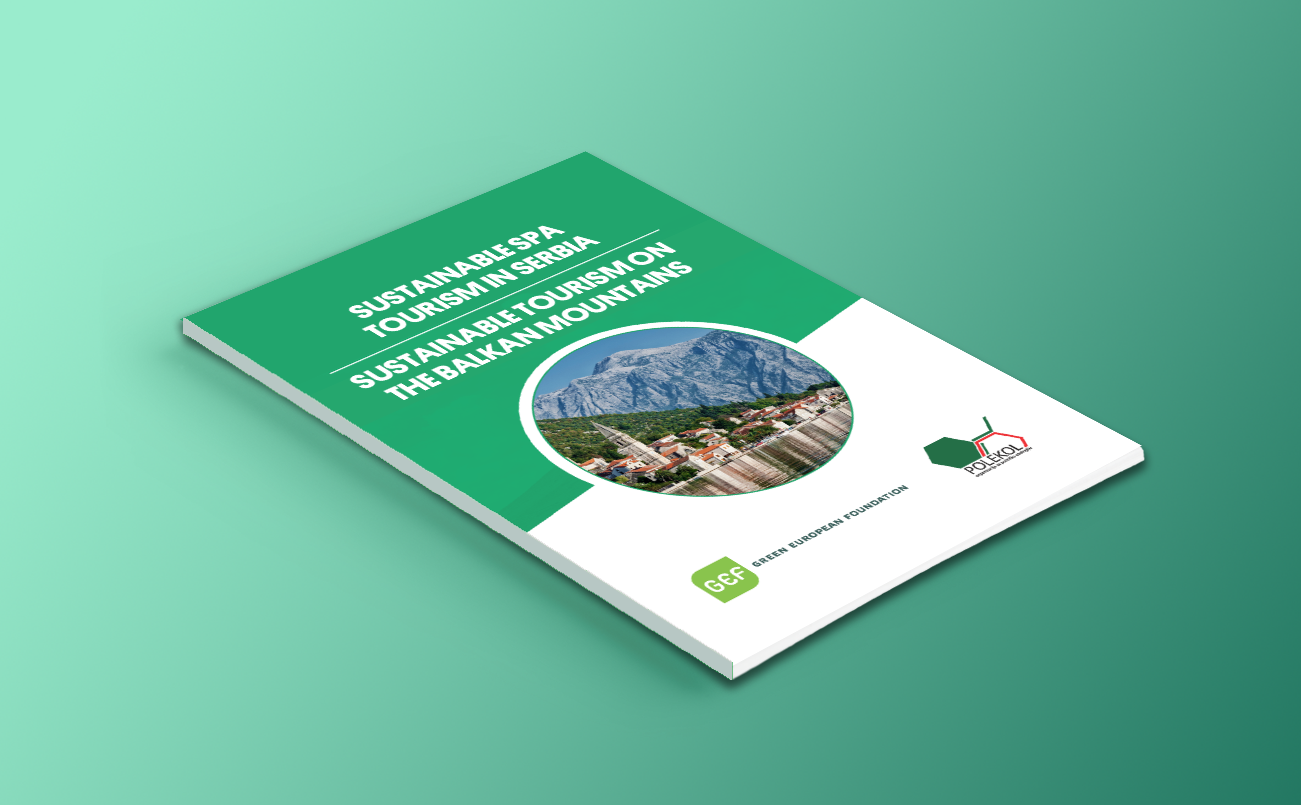
Sustainable Spa Tourism in Serbia

The tourism sector is a highly lucrative branch of the economy, and one that the Republic of Serbia has identified explicitly as a priority area for growth. With a history of spas that dates back to Roman times, wellness tourism is particularly interesting for international visitors and foreign investment. This research report considers the current situation, some of the challenges and risks that come with tourism development, and lays out a series of recommendations to ensure that this happens in a fair and sustainable way. Particular attention is paid to the idea of water as a public good, and the importance of protecting water access and quality for local communities and the natural world.

OPEN PDF VERSION

Sustainable Tourism on the Balkan Mountains

The tourism sector is a highly lucrative branch of the economy, and one that the Republic of Serbia has identified explicitly as a priority area for growth. At the same time, tourism is a significant driver of climate change and environmental harm, and the Covid-19 crisis highlighted the precarity of jobs and communities that depend on it. This research report explored local tourism in the Balkan Mountains as a potential model to do things differently. It looks at how community-led, small-scale tourism can not just avoid harm but actively enhance environmental protection, and offers rural populations a way to maintain their village lives with diversified sources of income. However, this requires careful investment in infrastructure and social and communal services, not just opening up the area to be a playground for private investors.

OPEN PDF VERSION


These reports have been realised by the Green European Foundation with the support of Polekol foundation (Serbia), and the financial support of the European Parliament to the Green European Foundation. The European Parliament is not responsible for the content of this publication.
Sources of Rest: Sustainable Tourism in Serbia (Belgrade)

By

About the Event

The development of tourism is an important aspect of the economic activities of a country because it enables the inflow of foreign capital, economic growth, and job creation. It also holds invaluable opportunities for exchange and understanding between and beyond the citizens of Europe. However, inadequate development and implementation of tourism plans can make it impossible to use its potential in an adequate way. The business and development of this economic branch, especially in less developed countries, generally has disastrous consequences for the environment and the local community. The development of mass tourism in popular locations leads to the mass exploitation of natural resources and their destruction, while most of the income goes to the owners of large hotel chains and companies at the expense of the local community, which is mostly engaged in seasonal work. 

Serbia is a country that has many natural beauties and a huge tourist potential, but that potential must not become an object of exploitation. In order to prevent this scenario, it is necessary to adopt adequate plans and strategies, and for that it is important to organize discussions and hear the opinion of not only experts and the civil sector, but local communities, which are the most important element of tourism development planning and whose opinion is generally the least heard. In this panel discussion, we will discuss the findings of such local discussions in the Stara Planina region and reflect more broadly on what the future could hold for fair and carbon-free tourism in Serbia. 

Context

This event is part of GEF’s Fair and Carbon Free Tourism project, which aims to identify and create conditions for collective action against detrimental social and environmental impacts of tourism. By engaging stakeholders in partner countries and developing a European transnational discussion on these challenges, we seek to build a community interested to transform this sector in the direction of low or zero carbon intensity and with a specific focus on social and economic justice. 

Speakers

Katarina Lević – MA in Political Sciences and PolEkol researcher, who studied spa tourism and tourism on Stara Planina 

Nataša Gligorijević – Director of the Center for Sustainable Development of Serbia 

Milan Zlatanović, MA in Political Sciences and PolEkol researcher, who studied tourism on Stara Planina  

Practicalities

Date and Time: Saturday, December 17th at 17:00 

Location: Cafe Bar 16, Cetinjska 15a, Belgrade, Serbia 

Language: Serbian 

Registration: No advance registration is necessary, but you can join our facebook event for the latest updates.  


This event is organized by the Green European Foundation with the support of PolEkol and with the financial support of the European parliament to the Green European Foundation. 

Green Horizons Academy: The Good Collective (Belgrade)

By

About the event

Throughout Europe, activists face numerous external pressures every day that threaten to stop their fight. To these pressures, we add a trap into which we as activists often unwittingly fall. We have all witnessed or experienced (self)exploitation, a productivity race to the bottom, unequal distribution of work tasks and power, various forms of discrimination, and even burnout and giving up the fight. That is why GEF, with the support of PolEkol, decided to discuss and work on building a good collective at the Green Horizon Academy! During the three days of the Academy, a series of lectures, workshops and panels will be organised, where we will try to answer some of the following questions: 

  • What are good activist collectives? 
  • What do sustainable structures look like? 
  • How to care for the mental health of activists and prevent burnout? 

On the path to a good collective, we have at our disposal knowledge and skills from the sphere of politics, psychology, sociology, and other social sciences. Within the growing green movement, they can help us apply the ideas we advocate for in public policies: the internal values and management of our organizations so that they are as humane and democratic as possible, the working environment as stimulating and supportive as possible, and collectives open to diversity. What does politics of care truly mean?

Programme

Friday, 18 November: Public Programme at Cultural Center GRAD 

17:00 – 17:45 – Lecture “Tell me about happiness” 

  • With Branko Anćić, Institute for Political Ecology, Zagreb 

17:45 – 19:00 – Panel discussion “Are we good?” 

  • With Brajan Brković (civil activist), Isidora Petrović (Ne Davimo Belgrade), Maja Stojanović (Civic Initiative), and Dragan Srećković (organizational development consultant) 


Saturday, 19 November: Closed Training at Arka Barka 

8:00 – 9:30 – Breakfast 

10:00 – 11:00 – Welcome and introduction of participants 

11:00 – 13:00 – Workshop: Structures for a Good Collective 

  • With Marina Škrabalo, Solidarna.HR 

13:00 – 14:30 – Lunch 

14:30 – 16:00 – Workshop: Put out the fire and save the flame – burnout prevention 

  • With Doris Rafajlovski, psychotherapist 

16:00 – 16:30 – Coffee break 

16:30 – 18:00 – Fishbowl discussion: Personal and political – feminization of the work of organizations 

  • With Lidija Vasiljević and Jelena Memet 

19:30 – Dinner 


Sunday, 20 November: Closed Training at Arka Barka 

10:00 – 11:00 – Let’s take a deep breath – yoga, breathing, anti-stress workshop 

  • With Nada Milosević 

11:15-13:00 – Workshop – Sustainable collective: communication, conflicts and support 

  • With Aleksandra Živković, environmental activist, professional coach and trainer 

13:00 – 14:00 – Impressions and conclusions 

14:00 – Lunch 

Practicalities

The Good Horizons Academy consists of two parts: a public programme and a private, invite-only training. All activities will take place in Serbo-Croat-Bosnian, with informal translation provided on the spot where needed. 

Public Programme 

Date and time: Friday, 18 November from 17:00 – 19:00 

Location: Cultural center GRAD, Braće Krsmanović 4, Belgrade 

Registration: No prior registration needed. You can also follow the event online via Facebook. 

Invite-Only Training 

The two-day training will take place after the public programme, with workshops, lectures, and experience-sharing sessions. Due to the nature of the topic and limited spots available, a selection of activists and NGO representatives have been invited. Please contact sien.hasker@gef.eu with questions or for more information. 


The event is organised by the Green European Foundation with the support of PolEkol and the financial support of the European Parliament to the Green European Foundation. 

Just Green Transition for a Better World (Belgrade)

By

About the event

The transition to a green economy and stronger action against climate are imperative, there’s no doubt. However, it is equally important that in this process no one gets left behind, especially those who are already in a vulnerable position. That’s why Polekol, together with partners from Belgium, Spain, Finland, Great Britain, Macedonia and Croatia, joined this project and contributed to the book “European Just Transition for a Better World” whose aim is to look at key topics related to a just and green transition.

What makes this book unique is the pan-European and global approach, which looks at a just transition in a wider context, as well as the green perspective it describes. Authors and chapters include the European Union (EU) and the Global South, with a particular focus on Namibia and Colombia.

Context

The book covers many aspects, including historical perspectives, regional approaches, European policy developments, youth perspectives and industries in transition, with a focus on specific struggles, such as unemployment.

‘’Only a vision of transition that considers the complexity, context dependency and interconnections of the multiple challenges that we face will be able to bring about the radical change that is so urgently needed. This shows that you cannot implement environmental policies without a social framework. Or, in other words: either climate policy will be social or it will not ‘be’ at all.’’ is a quote from the editor of the book, Dirk Holemans from the Belgian Think Tank, Oikos.

Practicalities

Date and Time: 14th November 2022, 17:00 – 19:00 CET

Location: Prostor Miljenko Dereta, Dobračina 55, Belgrade, Serbia

Format: In person event

Language: The main language of this event will be English, with simultaneous interpretation provided for the speakers

Registrations: Please register via the Facebook link: Pravedna zelena tranzicija za bolji svet – promocija knjige i diskusija | Facebook


This event is organised by the Green European Foundation with the support of Polekol and with the financial support of the European Parliament to the Green European Foundation. The Euroapean Parliament is not responsible for the content of this event.

Stara Planina: Tourism and Natural Resources

By

Programme

Throughout the study tour, partners will be meeting local stakeholders and activists, from the tourism sector as well as the wider community. Particular attention will be paid to the issue of water, as the mountain range plays an important role in the region’s water flows, but developments over the past two decades have significantly impacted the landscape. The programme is provisional and subject to change. 

September 15th 

  • Arrivals in Belgrade and initial project exchanges 
  • Travel to Pirot in the evening 

September 16th 

  • Visit Temska village, with Milinka Nikolić (environmental activist and Serbian MP for Moramo) – history of the fight for river preservation 
  • Head to Topli Do to see waterfalls and exchange with local activists 
  • Spend the night in Topli Do 

September 17th 

  • Head to Dojkinci village for a sustainable farm visit 
  • Meet members of the first energy collective form Serbia, based in the Balkan Mountains 
  • Return to Belgrade in the evening 

September 18th 

  • Closing partner meeting, departure from Belgrade 

Practicalities

Date: 15-18 September 

Location: Stara Planina and Belgrade, Serbia 

This is a closed study trip for selected project partners. Learn more about the project here. 


This study trip is organised by the Green European Foundation with the support of PolEkol and the financial support of the European Parliament to the Green European Foundation. 

North Macedonia: Mass Tourism Alternatives

By

Programme

Throughout the study tour, partners will be accompanied by a local expert in sustainable tourist practices as well as a video crew who will be filming and interviewing key case studies and stakeholders along the way. 

May 27th 

  • Arrivals in Skopje and initial project exchanges 

May 28th 

  • Morning departure from Skopje 
  • Visit of Mavrovo national park and Jance village – sustainable tourism practices and presentation on construction and building policies 
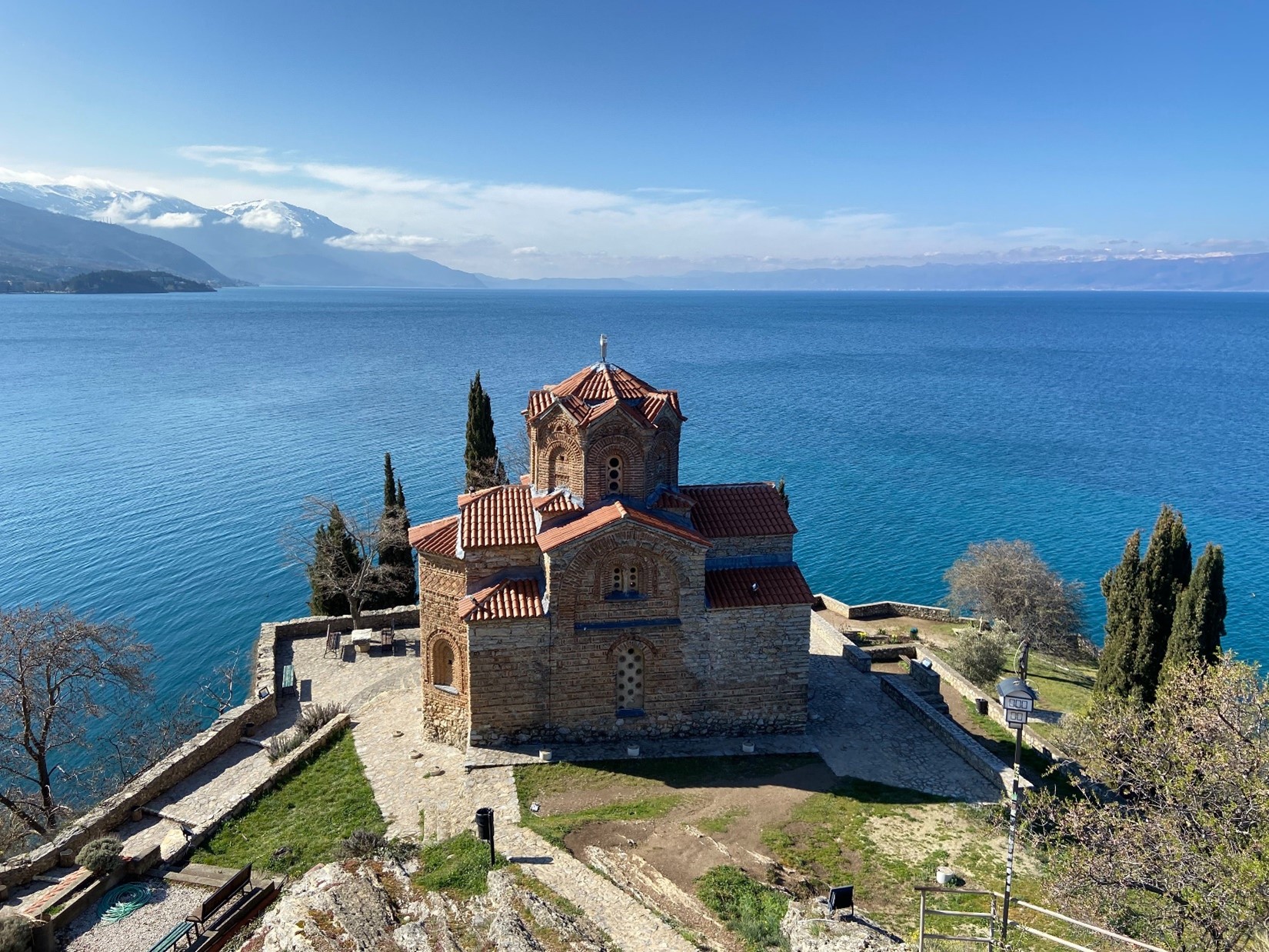
  • Arrival in Ohrid (UNESCO heritage), with dinner at nearby Kuratica village and presentation on alternative touristic offers 

May 29th 

  • Morning exploring Ohrid, partner meetings and stakeholder conversations 
  • Visit village of Dihovo – local tourism practices and slow food movement 
  • Arrival in Demir Kapija – winery tour and accommodation – and meeting with Vlado Srbinovski (Balkan Association of Alternative Tourism) 

May 30th 

  • Partner meetings, return to Skopje 

Practicalities

Date: 27-30 May 

Location: North Macedonia (Skopje and Lake Ohrid region) 

This is a closed study trip for selected project partners. Learn more about the project here. 


This study trip is organised by the Green European Foundation with the support of ASSED Sunrise and the financial support of the European Parliament to the Green European Foundation. 

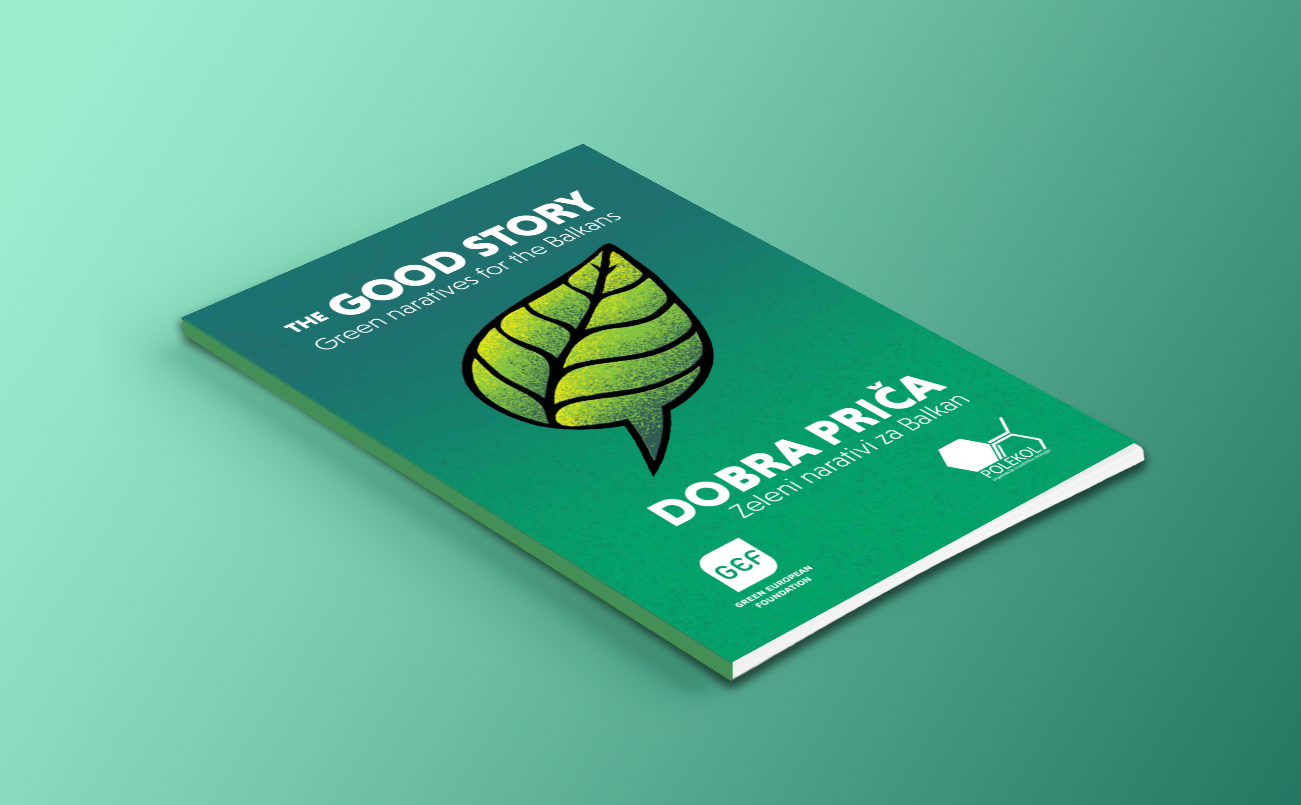
The Good Story – Green Narratives from the Balkans

By Uncategorized

Context

The Good Story gathers contributions from experts and activists who participated in the GEF Green Horizons Academy in Serbia. The publication explores the different approaches to how green narratives can reach a broader audience, in Serbian and English language

If there ever was an actor who could contest peripheral neoliberal capitalism and nationalism effectively in the past 30 years, this is the green actor. This is not because green politics is superior to other ones, but because no one expected it to occur and especially not at this level of organization and public support.


Objectives

What makes a good story? A compelling narrative, a powerful beginning, an interesting hook? The convincing and trustworthy messenger?

This text zooms in on eco-politic struggles faced in Serbia in the last few years. Serbia has been the field site of an unprecedented environmental mobilization. It explores Serbian activist movements, green populism and reflects on wider tensions at the heart of the Balkans’ ecopolitics and potential solutions for the future.


Download

Available in Greek


This report has been published by the Green Europe Foundation with the support of Polekol and with the financial support of the European Parliament to the Green European Foundation. The European Parliament is not responsible for the content of this report.

Rust: National Park Tourism

By

Programme

12 November

17:00 – 19:00    Arrivals

19:00 – 21:00    Traditional tavern dinner with regional cuisine

13 November

10:30 – 12:00    Ferry across Neusiedlersee

12:00 – 13:30    Lunch meeting with national park managing expert Alois Lang

13:30 – 14:30    Presentation on national park management and marketing (visitor centre)

14:30 – 16:30    Hands-on tour of the national park

18:00 – 20:00   Rust city tour with emphasis on tourism management and marketing

20:00 – 21:30   Dinner

14 November

10:30 – 12:00    Tour at sustainable vineyard – showcase of environmentally friendly farming techniques

12:30 – 13:00    Closing and departures

Practicalities

Date: 12-14 November, 2021

Location: Rust, Austria

This is a closed study trip for selected project partners. Learn more about the project here.


This study trip is organised by the Green European Foundation with the support of FREDA and the financial support of the European Parliament to the Green European Foundation.

Pula: Seasonal Tourism

By

Programme

13 October

16:00 – 17:00    Arrivals to Pula

17:00 – 18:30    Short sight-seeing tour of Pula

19:30 – 21:00    Dinner with hotel director

14 October

08:00 – 09:00 Breakfast meeting with Pula tourist board president

9:00 – 12:00     Visit to Arenaturist hotel

12:30 – 14:00    Lunch

14:00 – 15:00   Tour of community centre ROJC

15:00 – 17:00    Meeting with Dušica Radojčić from the Green-Left political platform / Pula city council

17:00 – 20:00   Project partners meeting: fiches, case studies, methodology, and lessons learned

20:00 – 21:30   Dinner

15 October

08:00 – 09:00 Breakfast

09:00 – 11:00   Project partners meeting: publication outline, policy recommendations, 2022 activities

11:30 – 15:00     Visit to Brijuni national park or local farm Kumparička

15:00 – 16:00   Closing and departures

Practicalities

Date: 13-15 October

Location: Pula, Croatia

This is a closed study trip for selected project partners. Learn more about the project here.


This study trip is organised by the Green European Foundation with the support of the Institute for Political Ecology and the financial support of the European Parliament to the Green European Foundation.

A just transition: between a bitter pill and sweet dreams

By

Context

Transition is a word that arouses bad associations in the Western Balkans region. When talking about the transition, people usually first think of collapsing institutions, selling off public companies and social property. At a time when the Western Balkans are witnessing mass privatisation and commodification of natural resources, talks on green transition and transformation towards sustainability are emerging too (although still far behind the European average).

These days, we are witnessing mass protests for environmental justice in Serbia and miners’ protests in Bosnia and Herzegovina. The simple introduction of environmental standards, without a social dimension, has never worked. Therefore, this is an important topic for discussion, even more so within the framework of a fair transition in Europe.

The concept of a just transition is a comprehensive guideline that complements the Green Deal in the transformation towards an environmentally sustainable society in a just and fair way. With the development of this concept, trade unions and climate movements emphasise the need for systemic transformation. A fair transition implies fundamental changes, not only of key economic branches and consumer systems, such as energy, transport, agriculture and food, but also changes in infrastructure, social values and politics. In addition, this concept highlights the need for a global shift towards a humane and fair economic system, with a healthy ecosystem, health, public services, education and culture at its core.

During the discussion that will be organized by the Green European Foundation in cooperation with the organization for political ecology Polekol, we will try to find answers to some of these questions:

– What is the broader context of a fair transition and why we need it?

– What does a fair transition mean for the Western Balkans region and how can we reach it?

– What is the role of workers and unions in the green transition?


Speakers

Dr. Maja Pupovac, project manager of the RES Foundation
Miodrag Pantović, project assistant on the project “On the way to the EU” of the European Trade Union Confederation (ETUC) and the regional network “SOLIDARITY” with the support of the European Commission
Alma Midzic, Crvena Sarajevo
Moderated by:  Žaklina Živković, Polekol


Practicalities

Date and time: 28th December

Audience: the event is open for the general public.

The webinar will be broadcasted on the Polekol Facebook page.


This project is organised by the Green European Foundation with the support of Polekol and with the financial support of the European Parliament to the Green European Foundation. The European Parliament is not responsible for the content of this event.

Through Value to Wealth: Sustainable Tourism in Serbia

By

About the Event

Although tourism is well known for being an industry that stimulates the economy and the creation of new jobs, experience shows that its traditional way of development is detrimental to the environment, and therefore – to all of us. The jobs generated by mass tourism today are mostly seasonal and precarious, while much of the revenue goes to a few big companies and hotel chains. In addition, an unreasonable increase of tourists puts a lot of pressure on natural resources and leads to various negative impacts on the environment.

On the other hand, trends show that tourists are increasingly opting to visit preserved natural areas where they can enjoy sports and recreation. In addition, the Covid-19 pandemic has significantly affected the way we travel, and it is noticeable that people, instead of mass, are increasingly choosing small-scale tourism, which means less social interaction and more enjoyment of nature.

We are witnessing a rise in awareness of green issues in the entire world, but also in Serbia and the region. Citizens becoming conscious of their own need for living in a healthy and clean environment. That is why they are getting involved in the decision-making process, demanding to a sustainable development of the environment.

Serbia is a country rich in natural beauty and has huge tourist potential. In this webinar, speakers will discuss how we can better use it for the development of sustainable tourism, drawing lessons and exchanging as well with other emerging tourist destinations in the region.

Context

What is the future of tourism? Through the project “Fair and carbon-free tourism,” GEF and its partner organisations across Europe (Austria, Croatia, Northern Macedonia, Spain, and Serbia), is researching ways in which tourism, as an industry, can be transformed to be more environmentally and socially sustainable – a tourism that will not only contribute to the development of the local community and economy but also at the same time preserve and regenerate natural resources for future generations. 

Speakers

 Milica Kočović – an independent researcher who, through her specific prism, considers the potential for the development of sustainable tourism on Mt. Balkans (Stara Planina) 

Katarina Lević – a researcher from Polekol who researched spa tourism in Serbia 

Predrag Momčilović – a researcher from Platform Zajedničko who worked on sustainable tourism in the Serbian capital Belgrade 

Stevche Dechev – from Sunrise, who will present examples of managing nature and cultural good in Ohrid, North Macedonia 

Practicalities

Date: Thursday, December 9th (18:00 CET) 

Language: Serbian 

Registration: Please register for the webinar in advance via this link. 


This webinar is organised by the Green European Foundation with the support of PolEkol and the financial support of the European Parliament to the Green European Foundation. 

Green Horizons Academy: The Good Story

By

About the Event

The Green Horizons Academy is an educational programme that aims to expand the ideas surrounding the green movement towards the alternative liveable future across Europe. Addressing the climate crisis and environmental issues is a home ground for the greens. Still, we need to better prepare for the forthcoming battles of narratives, where everyone is “playing the green card”.

Populists and conservative authoritarians, especially in countries with a weak green opposition, are casting a long shadow over social movements and appropriating environmentalism. Europe’s narrative of openness and solidarity has been put to the test amid the pandemic. The Academy is a space for theory and practice that can serve both for political actors to step into closer communication with the people, and for citizens to politicize the growing environmental struggles.

This year’s Green Horizons Academy’s main topic is building a successful narrative around green values that resonates with the broad public, therefore its title – THE GOOD STORY.

Over three days, we hope to inspire European green actors and raise the capacities of citizens from South-East Europe in their approach to presenting green values and agendas. GHA will also examine the resilience of the local Green political organisations and offer the space for authentic policy debates designed for and from the region. The time has come for green-minded actors to create a cultural uprising, painting our views as possible, tangible, and popular! From the academic field of political theory to the environmental activists and new movements, the Green Horizons Academy will present, discuss, and articulate democratic, feminist, sustainable and just alternatives.

Programme

The 3-day event consists of two interlinked parts: 

  • closed daily workshops (registered participants only, in physical space)  
  • public evening sessions (online) with lectures and panels covering various topics 

Friday, 15 October 

17:30 Welcome 

18:00 –  19:15 PUBLIC SESSION: Moving of the Movements (panel): Analysis of the development cycle of the environmental movements, where are they today, what messages are they sending, and what are the roadmaps to success. 

  • Pablo Dominguez (Senior Eco-Anthropologist at the National Council for Scientific Research CNRS, France) 
  • Safet Kubat (Eco Movement Rivers of Bosnia and Herzegovina – Be the Change, PhD candidate in political ecology) 
  • Aleksandar Dragićević (Coalition for Sustainable Development, Montenegro) 
  • Žaklina Živković (Right to Water, Serbia) 
  • Moderator: Bojana Selaković (Civic Initiatives) 

19:30 – 20:45 PUBLIC SESSION: Environmentalism Gone Rights and Wrong (panel): Populist and conservative influences in environmental struggles and our green and left alternative. 

  • Speaker: Balša Lubarda – an environmental sociologist specializing in environmental communication, radicalism, right-wing politics and political ideologies. He is a Doctoral candidate at the Central European University, and Head of Ideology Research Unit at the Centre for Analysis of the Radical Right, United Kingdom. 
  • Commentators: Olga Nikolić (Institute for Philosophy and Social Theory) and Vladan Đukanović (activist, co-author of an investigative article on far-right ecologism) 

Saturday, 16 October 

9:30 – 11:00 Registration and onsite rapid COVID-19 testing 

11:00 – 11:30 Welcoming session – the role of the Green Horizons Academy in Europe today 

  • Iva Marković (Polekol) and Vedran Horvat (Green European Foundation) 

11:30 – 13:00 Green Ideas – workshop introducing and discussing universal values and principles 

  • Nikola Palibrk Ristić and Mika Nikolić (Serbian Green Youth) 

13:00 – 14:30 Lunch 

14:30 – 16:00 Political ecology lecture – climate crisis, management crisis, and what does political ecology have to do with this? 

  • Vedran Horvat (Green European Foundation, Institute for Political Ecology, Croatia) 

16:00 – 16:15 Coffee break 

16:15 – 17:45 Communicating Green – workshop on how to reach hearts and minds of a broader public, while being loyal to green values and principles 

  • Teo Comet Kortman (Green European Foundation), Vladan Đukanović (activist) 

18:00 – 19:30 PUBLIC SESSION: Story by the People for the People (panel): Choosing narratives and designing messages 

  • Marija Ratković (activist, founder of the Center for Biopolitical Education Biopolis, Serbia) 
  • Filip Balunović (Institute for Philosophy and Social Theory, Serbia) 
  • Sonja Dragović (KANA – Who If Not Architect group, Montenegro; PhD researcher at the 
  • ISCTE – University Institute of Lisbon) 
  • Teodor Celakoski (Možemo!, Croatia) 
  • Moderator: Srđan Đurović (Program Manager, Open Society Foundation, Serbia) 

20:00 Dinner (Stara Hercegovina restaurant) 

Sunday, 17 October 

9:30 – 10:00 Coffee and gathering 

10:00 – 11:30 Don’t take it outside, talk to each other! Lessons learned from work on alliances, coalitions, and networks of environmental movements about common communication strategies 

  • Lejla Kusturica (Balkan River Defenders alliance) and Natalija Stojmenović (Balkans United for Clean Air campaign) 

11:30 – 11:45 Break 

11:45 – 13:00 Reflections, conclusions, and final messages 

13:00 Lunch 

18:00 – 19:30 PUBLIC SESSION: The Good Story (panel): Green/left narratives put to practice. In the political arena, leverage of the greens and the left is not the force, capital or fear, rather it is the story of a happy ending, a hope for utopia where people can live a good life, in peace, equality and harmony with the planet. How to fight the power with a positive story, especially under the threats of arrests, voting manipulation, powerful far right and the burden of historical stigma? We’ll discuss how to successfully communicate affirmative narratives, what works and what doesn’t. 

  • Teresa Griesebner (Communist Party of Austria – Graz) 
  • Dobrica Veselinović (Don’t Let Belgrade D(r)own, Serbia) 
  • Nebojša Zelenović (Together for Serbia/Action, Serbia) 
  • Michal Berg (Co-chair of Czech Greens, Member of the Committee of European Greens) 
  • Rudi Sayat Pulatyan (Central Executive Committee Member, Green Party, Turkey) 
  • Moderator: Iva Marković (Polekol, Serbia) 

As the output of the event, topical articles will be compiled and curated in a guidebook publication. A more detailed programme and speaker names will be shared soon! 

Practicalities

The Green Horizons Academy will take place in Belgrade, Serbia from 15-17 October. The venue is the House of Civic Initiatives (Dobračina 55). The language of the event is BCS and English, and translation will be provided.  

The programme will be held in a hybrid model, where selected participants are in the physical space, and evening sessions are live streamed for the public. In person participants need to apply via this link by Monday, October 4th 

Watch the public sessions live via Facebook or click on the dedicated Zoom link for each programme session to enjoy translation.  

If you have any questions, please send an email to organizacija.polekol@gmail.com. 


This event is organised by the Green European Foundation, with the support of PolEkol and the financial support of the European Parliament to the Green European Foundation.  

Call for Participants: Green Horizons Academy

By

About the Call

The Green European Foundation and the Organisation for Political Ecology POLEKOL are launching a call for participants for the first Green Horizons Academy, under the title “The Good Story.”  

We are looking for participants that are active in environmental movements, civic initiatives, academic institutions and/or political organizations with green policy agenda. This three-day event will give you the opportunity to: 

  • Learn about political ecology and the green political idea in Europe 
  • Put forward ways to bring the green agenda into practice in South-East Europe  
  • Improve your green values communication skills 
  • Create an affirmative green narrative on sustainability, alternative to the populist one 
  • Network with potential green-minded allies 

Context

The Green Horizons Academy is an educational programme that aims to expand the imaginary of the broad green movement towards the alternative liveable future across Europe. Addressing the climate crisis and environmental issues is a home ground for the greens. Still, we need to prepare for the forthcoming battles of narratives, especially at a time where everyone is “playing the green card”.

Populists and conservative authoritarians, especially in countries with a weak green opposition, are casting a long shadow over social movements and appropriating environmentalism. Europe’s narrative of openness and solidarity has been put to the test amid the pandemic. The Academy is a space for theory and practice that can serve both for political actors to step into closer communication with the people, and for citizens to politicize the growing environmental struggles.

This year’s Green Horizons Academy’s main topic is building a successful narrative around green values that resonates with the broad public, therefore its title – THE GOOD STORY.

During three days of lectures, debates, and workshops, we hope to inspire European green actors and raise the capacities of citizens from South-East Europe in their approach to presenting green values and agenda. GHA will also examine the resilience of the existing Green political organisations in the region and offer the space for authentic policy debates designed for and from the region. The time has come for green-minded actors to create a cultural uprising, painting our views as possible, tangible, and popular! From the academic field of political theory to the environmental activists and new movements, the Green Horizons Academy will present, discuss, and articulate democratic, feminist, sustainable and just alternatives.

Practicalities

The Green Horizons Academy will take place in Belgrade, Serbia from 15-17 October. The language of the event is BCS and English, and translation will be provided.  

Please apply by filling out this online formThe application deadline is Monday, October 4th. If you have any questions, please send an email to organizacija.polekol@gmail.com. 

All applicants will be informed about the selection results by October 6th. 

As we are still in the middle of the pandemic, as a safety precaution, all participants will be Covid tested at the spot, right before the event starts.  

The programme will be held in a hybrid model, where selected participants are in the physical space, and evening sessions are live streamed for the public. 


This event is organised by the Green European Foundation, with the support of PolEkol and the financial support of the European Parliament to the Green European Foundation.