
Crossing Borders (Janów Podlaski)

By

Context

The title of this year’s GEF Green Summer Academy in Poland is ‘Crossing Borders’, a phrase charged with meaning and symbolism, considering the fact that the event will be taking place near the borders of Poland with Belarus and Ukraine, as well as within a region with diverse cultures, dialects, languages, and religions.

About the event

The event includes several major themes, such as:

  • The future of Europe in the context of changing geopolitics and the upcoming European Parliamentary elections
  • Climate change and preparing for the COP24 Climate Change Conference in Katowice
  • Green visions for farming, nutrition, and rural development
  • Green visions for local governance, with particular emphasis on regional assemblies, and transition cities in alignment with the ideals of the Commons and urban movements

Through several workshops, round tables and expert debates, the event will feature discussions on fighting pollution, cities of equal chances, preventing corruption and the role of art and artists in citizens-led activism and the political transformation of Poland in a European context. The participants will also engage with the local community and local activists and learn about new green transborder initiatives and opportunities.

Through its diverse programme, the Green Summer Academy in Poland connects the dots between politics and society at local, regional, national, European and global levels.

Programme

Thursday July 12

16:00 – 19:00 Local expeditions in small groups

17:00 – 19:00 Meeting with local active inhabitants on projects of local development opportunities in a transborder context

Friday July 13

9:30 – 10:00 Opening speeches

10:00 – 12:00 What future for the Eastern Europe in EU?  (Debate)

Speakers: Rebecca Harms (Member of the Greens/EFA group in the European Parliament), Paweł Kowal (College of Europe, Natolin), Małgorzata Tracz (Partia Zieloni, Poland), Michał Sutowski (Krytyka Polityczna), Moderator: Bartłomiej Kozek (GEJ), Adam Ostolski  (GEJ, Krytyka Polityczna, Partia Zieloni)

12:00 – 13:45 Creating Socio-Ecological Societies through Urban Commons Transition. Lecture ‘Cities in transition’

Lecture: Dirk Holemans (Green European Foundation Board Member and Director of the Flemish Green Think Tank Oikos

Cities in transition 

Speakers: Dirk Holemans (Ghent in transition with Michel Bauwens), Sergi Alegre (El Prat and Barcelona),  Hanna Gill-Piątek (innovative revitalisation in Łódź), Marcin Gerwin (citizens’ panels in Gdansk and Lublin), Roger Manser (London Great Parc), Moderator: Dagmara Misztela (Partia Zieloni, Poland)

14:45 – 15:45 Artists as change makers (Debate)

Speakers: Ela Hołoweńko, Cecylia Malik, Michał Kasprzak, Joanna Kessler. Moderator: Gert Roehrborn

15:45 – 17:45 Panel debate 

  • Food and farming past revolution and its consequences (Key note), Thomas Waitz, MEP, EGP Committee 
  • The CAP today and tomorrow, the Green perspective (Key note), Andrzej Nowakowski (GGEP) 
  • From industrial agriculture to agroecology and food sovereignty? (Debate), Andrzej Nowakowski (Advisor on Agriculture and Rural Development in the Greens/EFA group in the European Parliament), dr Katarzyna Bańkowska (IRWiR PAN), Izabela Mier (Cooperative Dobrze), Ben Lazar (Nyeleni Polska/permaculture), Dorota Metera (expert in certification), Maria Staniszewska (ecological NGO), Adrian Sulikowski (conventional farmer/Green Party), Katarzyna Jagiełło (Greenpeace), Justyna Zwolińska (SGGW, Poland). Moderator: Ewa Jakubowska-Lorenz, (HBS Warszawa)

18:00 – 19:45 Parallel programme in Janów Podlaski and Biała Podlaska

21:00 – 22:00 ‘No Problem!’ by Yasmin Kidwai, documentary projection

Saturday July 14

9:00 – 11:00 Parallel Sessions I 

  • Future of work (Adam Ostolski, Bartlomiej Kozek)
  • Economy and climate change (Roger Manser, Przemek Stępień)
  • Rivers exchange of knowledge part I (Alesia Basharymava, Volha Kasevitch, Uladzimir Zuyeu, Petro Hrystiszyn, Heorhiy Veremiychyk, Oleksandr Husiev, Sascha Maier, Mikhail Durkin, and members of the Save the Rivers Coalition, moderators:  Ewa Leś, Sascha Maier)

11:30 – 13:00 Parallel Sessions II

  • Seminar ‘Green farming: Campaigning against GMO, why and how’ (Ewa Sufin-Jacquemart (Strefa Zieleni), Juliette Leroux (Greens/EFA)
  • City of Open Chances (Hanna Gill-Piątek, Aleksandra Kołeczek)
  • Rivers exchange of knowledge part II (Iza Zygmunt, Maria Staniszewska)

14:00 – 16:00 Parallel Sessions III 

  • Green media for the climate (Beata Nowak, Bartek Kozek, Jamie Kendrick (GEJ), Annabelle Dawson (GEJ), Monika Matus (Democratic Action), Wojciech Szymalski (Institute for Sustainable Development), Ilona Jędrasik (Client Earth Lawyers for Earth), Hanna Schudy (EKO-UNIA), Monika Sadkowska (RT-ON), Marcin Harembski (SMA/CAN + Climate Coalition) and others, Moderator: Katarzyna Ugryn)
  • Green regional program: clean air, green jobs, integrated public transport and enthralled hunting (Małgorzata Tracz and Paweł Pomian)
  • Rivers working groups E30 and E40 coalitions (Ewa Leś, Sascha Maier, Maria Staniszewska, Petro Hrystiszyn)

16:30 – 18:30 Parallel Sessions IV

  • Towards COP 24 (Roger Manser (urbanist), Beata Nowak (Zielone Wiadomości), Monika Matus (Democratic Action), Wojciech Szymalski (Institute for Sustainable Development),  Ilona Jędrasik (Client Earth Lawyers for Earth), Hanna Schudy (EKO-UNIA), Monika Sadkowska (RT-ON), Marcin Haremski (SMA), Patryk Białas (Skype), Maciej Smykowski (Partia Zieloni), Katarzyna Ugryn (HBS), moderators: Ewa Sufin-Jacquemart (Strefa Zieleni), Artur Wieczorek
  • Seminar ‘Green farming: How organic farming can be developed in Poland and EU’ (Monika Styczek- Kuryluk, Andrzej Nowakowski, Dorota Metera, Dr. Katarzyna Bańkowska, Ben Lazar, Rober Kuryluk, and others. Moderators: Iza Mier, Julia Rokicka)
  • Rivers plan of action (Izabela Zygmunt, Ewa Leś)

18:45 – 19:30 Summary and closing

Sunday July 15

7:00 – 9:00 Local expeditions in small groups


Participation fee:

The full fee of 500 PLN (570 PLN with transfer) should be paid by bank transfer to the account of Fundacja Strefa Zieleni:

66 1020 1097 0000 7602 0237 0450, title: ‘Green Summer Academy participation fee’

(from abroad: IBAN: PL66 1020 1097 0000 7602 0237 0450, Swift/BIC: BPKOPLPW)

The lower participation fee is possible when registering before June 25

Registration/more information:

Ewa Sufin-Jacquemart +48-664673700 ewa.sufin@strefazieleni.org

Urszula Sadlowska +32 (0)2 234 65 73 urszula.sadlowska@gef.eu


The Green Summer Academy “Crossing borders” is organised by the Green European Foundation with the support of Fundacja Strefa Zieleni and with the financial support of the European Parliament to the Green European Foundation.

The debate on transitioning cities towards the Commons is organised as a part of the international project “Creating Socio-Ecological Societies through Urban Commons Transition” by the Green European Foundation with the support of Fundacja Strefa Zieleni and with the financial support of the European Parliament to the Green European Foundation.
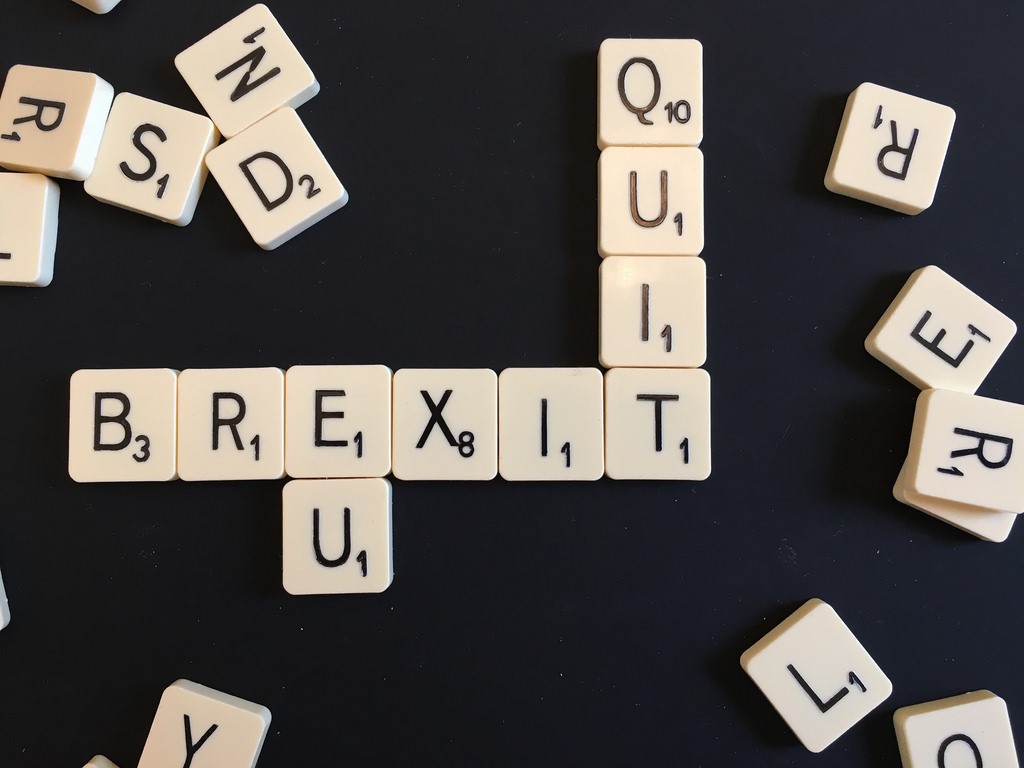
The Potential Impact of Brexit on the Prospects for a Green Transition in Europe

By Uncategorized

Context

In a referendum on 23 June 2016, 51.9% of the participating UK electorate (the turnout was 72.2% of the electorate) voted to leave the EU. On 29 March 2017, the British government invoked Article 50 of the Treaty on the European Union. The UK is thus on course to leave the EU on 29 March 2019.

This event has enormous implications not only for the future of the EU as a polity, but also for the green transition to a sustainable society and economy which is the fundamental aim shared by Green parties across Europe. The Green European Foundation therefore decided, with the help of its national project partner organisations, coordinated by Green House think tank in the UK, to hold a series of public discussion events over the course of 2017 to explore those implications.

About the project

The project aimed to examine these questions on a comparative European basis, involving selected EU member states for which Brexit raises particularly pressing issues, related either to their relationship with the UK or to their own national political situation (or both).

The rationale behind the project was two-fold. Firstly, it was intended to provide a platform for the exploration of the possible short- and medium-term impacts of Brexit on environmental and economic policies directly affecting the transition to sustainability, both in the UK and in the rest of Europe. Secondly, it was motivated by the belief that the Brexit decision in the UK raises urgent and difficult questions about the continuing coherence and effectiveness of the EU as a polity, at least in its current form, and whether it still represents the best vehicle for the achievement of sustainability in Europe in the long term.

The results and key finding are summarised in this paper. Free digital version is available for download below.

Digital Commons in Warsaw

By

Context

The commons are driven by citizens’ initiatives, including an increasing amount of digital opportunities as well as new technologies which have the power to transform democracy. This topic will be addressed in the upcoming workshop in Warsaw hosted together with Strefa Zieleni. The event is a part of our ongoing project Reclaim the Commons which aims to explore the transformative power of the commons, whilst involving the Greens and a wider audience around this topic. This event will focus on democracy and participation, and how digital tools can and should be utilised to facilitate the involvement of citizens and to guarantee transparency.

Programme

15:15 Barcelona – E-democracy with Decidim (Xabier E. Barandiaran, Barcelona En Comú, via Skype)
16:00 Barcelona and agglomeration – what’s new thanks to Barcelona En Comu? (Sergi Alegre Calero, Barcelona En Comú)
16:45 Break
17:00 „Fearless cities” the first International Municipalist Summit, Barcelona 9-11 June 2017- lessons learned (Weronika Śmigielska, Miasto Wspólne, Justyna Kościńska, MJN, Natalia Malek, City of Warsaw)
17:45 Are digital technologies a chance or a difficulty for local democracy and governance? – debate (Xabier E. Barandiaran, Sergi Alegre, Weronika Śmigielska, Justyna Kościńska, Natalia Malek)
18:45 Conclusions and closing (Ewa Sufin-Jacquemart)
19:00 End of the conference

Time, Venue & Registration

The event will take place at Dom Towarowy Bracia Jabłkowscy in Warsaw on Saturday, 04 November 2017, from 15h00 to 19h00.  To register, please send an email to Ewa Sufin at ewa.sufin@strefazieleni.org. The event will be live-streamed in Polish and more information is also available on the Facebook event page.

“Europe after Brexit. Will a green transition still be possible?” (Poland)

By

Theme:

Brexit will have a huge impact on the UK and EU economies and on virtually every area of policy, which increases the need for public discussion of that impact and the choices that will have to be made to deal with it. Beyond that, it calls into question the coherence and effectiveness of the EU as a polity, and as a vehicle for the Green movement. Greens are committed to the belief that European countries can make the transition to sustainability more quickly as a coordinated polity (the EU) than as individual states or societies but this assumption may need to be re-examined.

The event is a part of the ongoing transnational project “The potential impact of Brexit on the prospects for a Green transition in Europe” which attempts to support the much-needed public discussion of Brexit’s impact on individual Member States, as well as on the EU level, while exploring what this means for the Green movements’ endeavour in the transition to sustainability.

This debate took place during the Green Summer Academy in Puszczykowo, Poland, organised with the support of Fundacja Strefa Zieleni.  It featured a discussion amongst prominent politicians and experts listed below. The debate was moderated by Ewa Sufin-Jacquemart (Fundacja Strefa Zielenie) and Bartłomiej Kozek (Editorial Board Green European Journal).

Speakers:

  • Video introduction by Philippe Lamberts (MEP Greens/EFA);
  • Debate with Dr Ray Cunningham (Green House Think Tank, UK), Lucile Schmid (GEF/Fondation de l’Écolgie Politique, France), Marek Kossakowski (Partia Zieloni), Kuba Gogolewski (Koalicja Rozwój TAK – odkrywki NIE).

Registration:

To register for the Summer Academy of Fundacja Strefa Zieleni, please send an email to: Ewa Sufin-Jacquemart at ewa.sufin@strefazieleni.org


Hope and cope – Green Summer Academy in Poland

By

Context:

We meet in an extremely important year for EU, with the Brexit negotiations, the elections in France, Germany and Netherlands, the unpredictability of the new US President Donald Trump and the crisis of democracy in Poland and Hungary.  This generates various factors that will directly and indirectly impact the progress of the global climate policy and the implementation of the Paris Agreement. Next year’s municipal election in Poland makes us focus on the role of regions and cities in the transition to low carbon societies, and other progressive transformations. We checked if the European Pact of Amsterdam can play a role in this transition. One of the cornerstones of the green vision of the world is sustainable development, for which the preservation  of pure environment and of nature rich in biodiversity for the future generations is as important as the short term economic efficiency and social justice.

Therefore, our Green Summer Universities gave the participants an opportunity to enter into a direct relationship with living nature and thus provide them with additional knowledge, sensitivity and motivation for its protection and political representation of its interests.  Due to the mega projects of transeuropean waterways that threat the principal Polish rivers, together with badly implemented Water Frame Directive, the water ecosystems were at the center of  the ecological outdoor expeditions during this third Green Summer Academy, located in the heart of the Natural Park of Great Poland.

Programme:

The three day event consisted of lectures, debates and practical workshops focusing on the following themes:

  • Puszczykowo theme;
  • Green economy seminar;
  • Green and progressive city, local governance theme;
  • Skills and empowerment;
  • Climate change and Paris Agreement theme;
  • Public debate in Poznań.


This summer school was executed with the support of the Green European Foundation and Heinrich Böll Foundation in Warsaw.

Registration: Via email to ewa.sufin@strefazieleni.org

Date: 13 to 16 July 2017

Place:  Puszczykowo near Poznan, Poland


“Green Values, Religion and Secularism” Debate in Warsaw

By

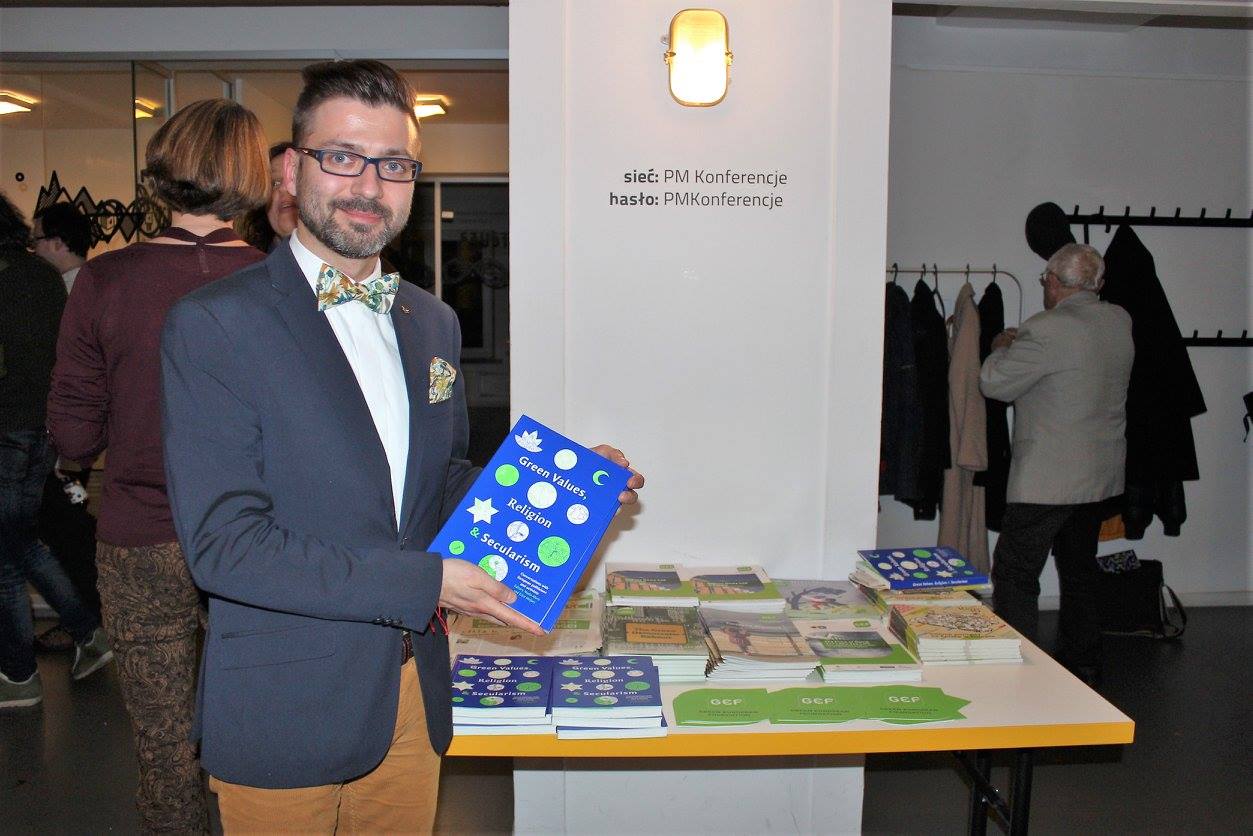
This seminar is part of the Green European Foundation project “Green Values, Religion and Secularism”, which promotes and serves as a space for the debate within the Greens towards a more coherent stance on the changing role of religion in European society. The project is based on the book with the same name, published by the Green European Foundation together with six national Green foundations in 2015.

The debate in Warsaw was opened by Erica Meijers, co-editor of the book “Green Values, Religion and Secularism” and editor-in-chief of the Journal De Helling, published by the Dutch Green Foundation Bureau De Helling, who provided more context on the development of the book. Bartłomiej Kozek, journalist of Zielone Wiadomości, delivered insights into the discussion around this topic within the Polish society. Speakers such as Lucas Skurczyński (Protestant theologian and editor of Miesięcznik Ewangelicki), Adam Ostolski (Co-leader of the Polish Green Party Partia Zieloni), Maria Roczaczewska (sociologist from the University of Warsaw) contributed to this interesting debate and shed light on issues around this topic in the context of Poland and Europe.

Green News – Climate Edition

By Uncategorized

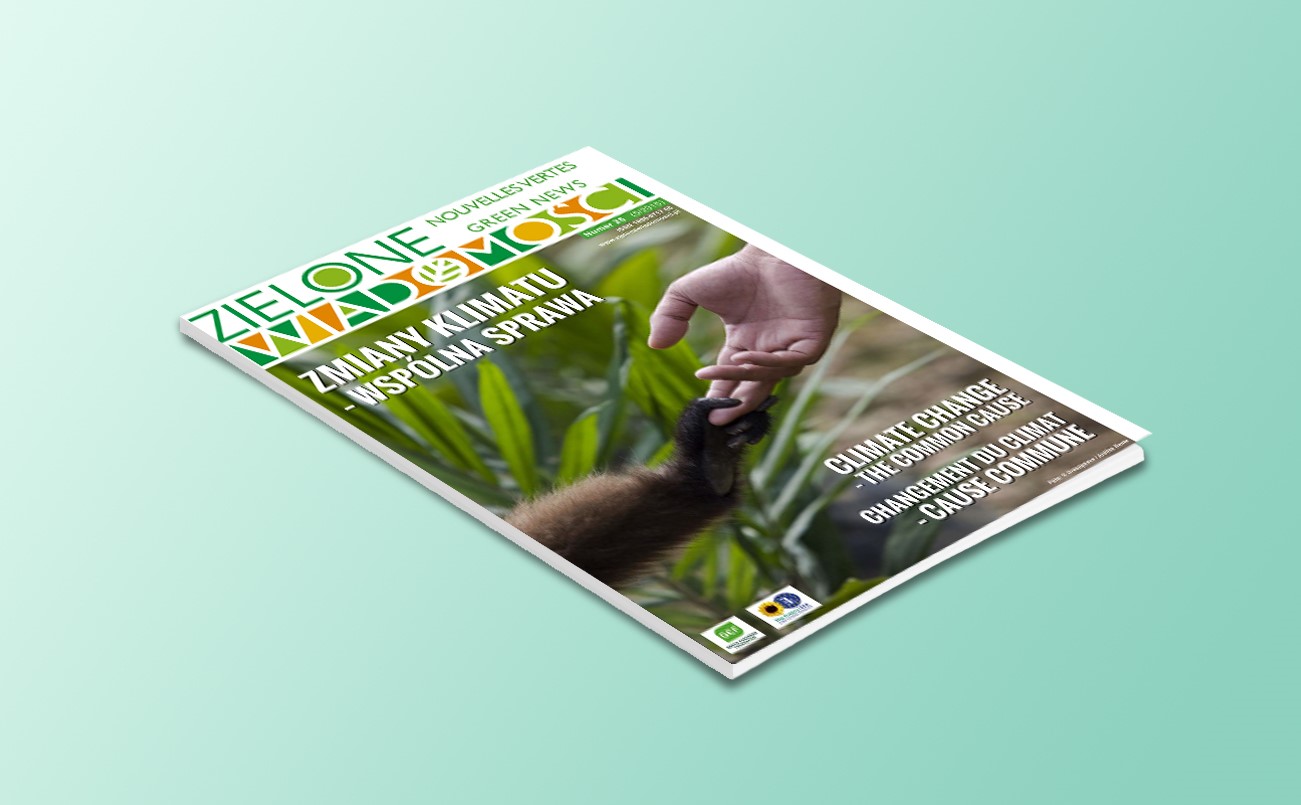
With articles in English, French and Polish, this e-book includes, among others, an examination of climate change as a moral challenge, an economic deconstruction of climate change as a ‘neoliberal illusion’, and a social perspective on climate change as a threat to the public goods that belong to all citizens.

A wide array of authors have contributed to the publication, including NGO representatives, political figures, scientists, and even an award-winning documentary-maker from several European countries. The e-book also contains case studies on how climate change is impacting specific areas such as the Arctic, the Amazon and Indonesia, as well as how the fight against climate change is manifested in areas such as resistance to TTIP, and how to spur further action and maintain the momentum of the campaign, now that COP21 is behind us.