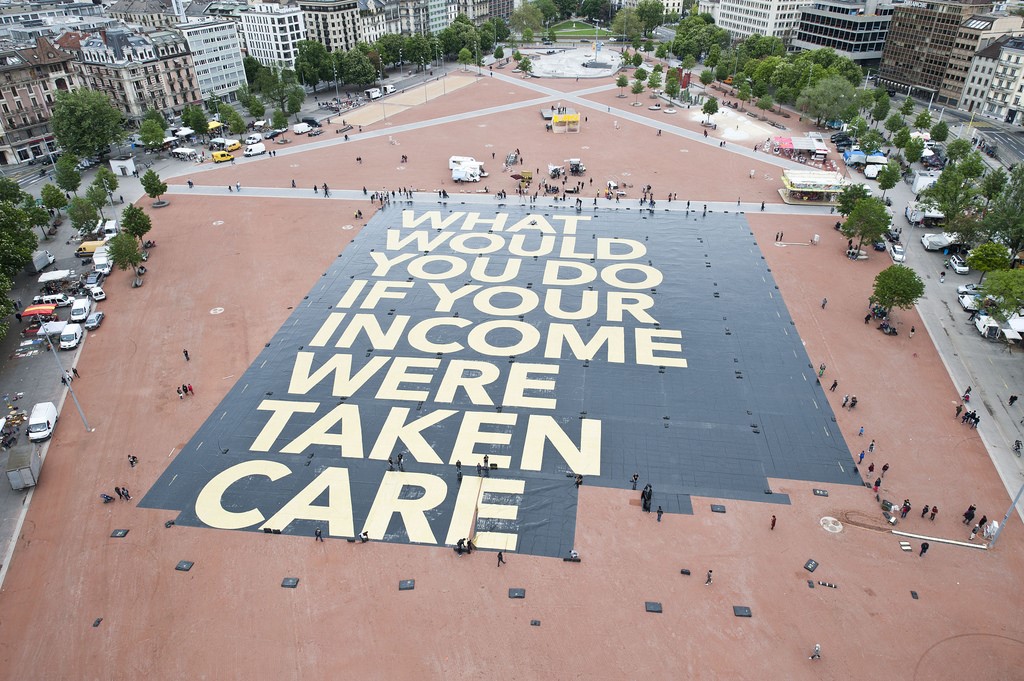
Basic Income and the EU level (Brussels)

By

About the Event

Within the last three years, the Green European Foundation has organised closed and open events on the topic of Universal Basic Income all over Europe and has produced several publications.

The transnational project is concluded with a closed roundtable meeting of representatives of our expert group from across Europe as well as stakeholders from the European Green Party, the Young Greens and the Green Group in the European Parliament.

The aim is to discuss how the outcomes of the project activities in the past years can be translated in the political process and what concrete recommendations for the political level could be to make concrete forward to make Universal Basic Income a European reality.


This roundtable is on invitation only. 

Making Basic Income a European Reality (Tampere)

By

About the Event

The long lived dream of a basic income has gained relevance in Europe in the last few years. Changing working life and an uncertain economy has sparked the need for social security reforms in many countries. The Finnish basic income study has received world wide coverage. The goals have long been established but how do countries move forward to make it actually happen? Is a European BI possible? Should we approach BI incrementally?

In this seminar, taking place at the 30th European Green Party Council, guest speakers will discuss the status of basic income developments in different countries and outline paths to make the utopia a reality. Both national and Europe-wide points of view will be discussed. The seminar is a chance to spread ideas among the participants and help implement change across Europe.

Speakers

Via video: Jamie Cooke, The RSA Scotland

Pathways to a Basic Income in Scotland and the UK

Jane Millar, University of Bath, UK
Universal Credit: designing and implementing the UK’s new working-age benefit and how this differs from Basic Income

Kim Evangelista, Belgian Green party (Ecolo)
A Basic Income for the young: Inventing tomorrow’s solidarities

Lukas Korpelainen, Visio – Finnish Green Think Tank
A hybrid model for basic social security and the steps for the next 10 years in Finland


Speaker Biographies

Jane Millar OBE, FBA, FAcSS is Professor of Social Policy in the Institute for Policy Research at the University of Bath, UK. Her research interests include the design, implementation and impact of social policy and comparative research on family policy, social security and employment policy, with particular reference to gender and changing family patterns. Her current research examines the impact of Universal Credit on couples, focusing on labour market decisions and family budgeting.

Kim Evangelista is a policy advisor for the Belgian Green party (Ecolo). He is in charge of economic, social and fiscal policies. He worked on a concrete Basic Income proposition included in the political program of the party for the May 2019 election. He studied economics and political sciences, and was later a researcher in applied economics. He worked in both the private and public sector

Lukas Korpelainen is a research coordinator at the Finnish Green think tank Visio. Earlier this year he wrote a report on improving the basic social security system in Finland. The work includes a new model for a basic income combined with means-tested benefits and a realistic first step with economic simulations. He has also helped the Finnish Green party develop its social security policies.

Jamie Cooke is the head of The RSA Scotland and leads on the development of the RSA’s activity in Scotland, through innovative partnerships, projects and programmes. He is also a leading advocate, writer, and speaker on the subject of basic income. He sits on the Executive Committee of Basic Income Earth Network (BIEN) and on the Board of Citizens’ Basic Income Network Scotland (CBINS).


This seminar is organised by the Green European Foundation with the support of the Finnish Green think tank Visio.

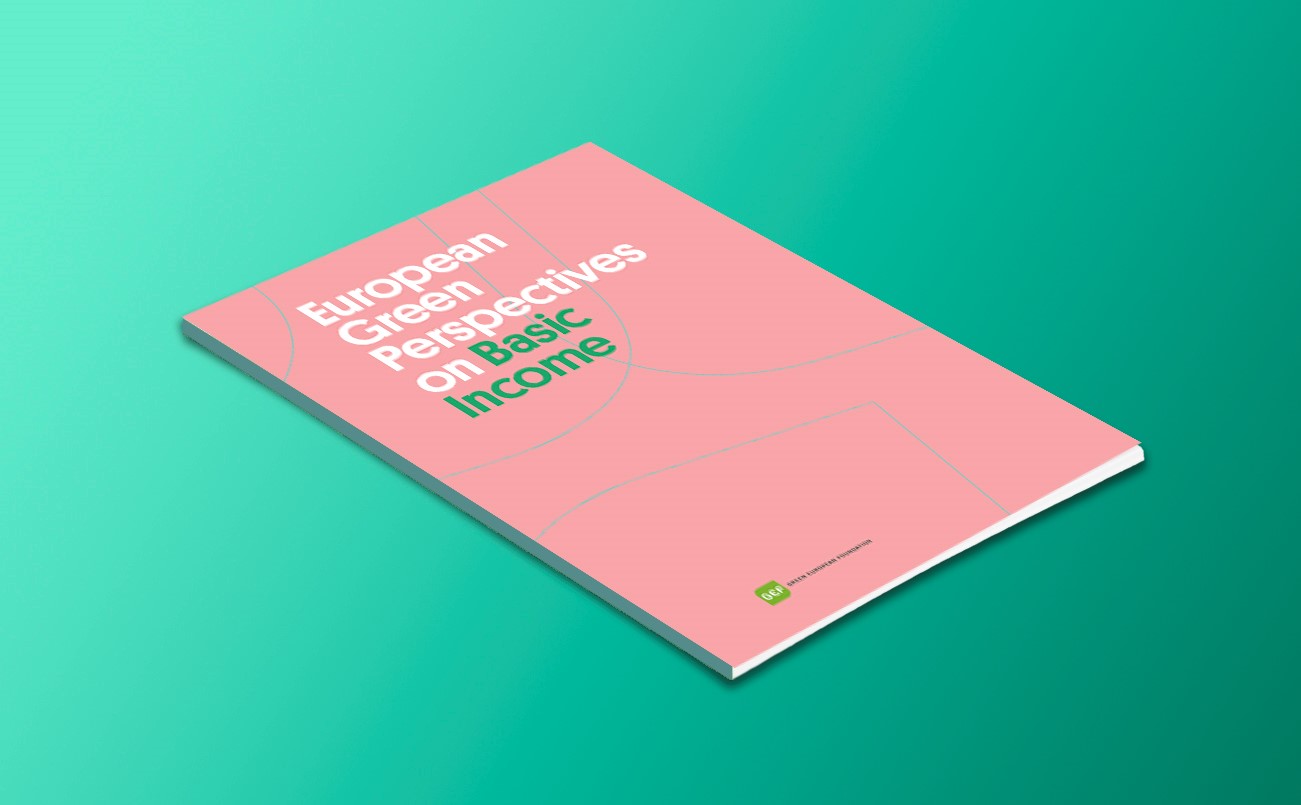
European Green Perspectives on Basic Income

By Uncategorized

Throughout 2017 and 2018, the Green European Foundation transnational project Basic Income for all EU Citizens? focused on basic income and investigated the proposal’s potential in relation to employment, the recognition of work beyond paid work, and the gendered division of labour.

This collection of articles brings together experts on basic income from all across Europe, to debate and clarify different aspects of the topic and help develop proposals. The aim of the publication is to inspire the next steps in promoting the basic income discussion, one which encompasses some of the biggest challenges faced by society today.

In 2019, GEF will continue its work on basic income and contributing to transnational discussion with the project Basic Income – European Public Debate

Download

Available in Spanish


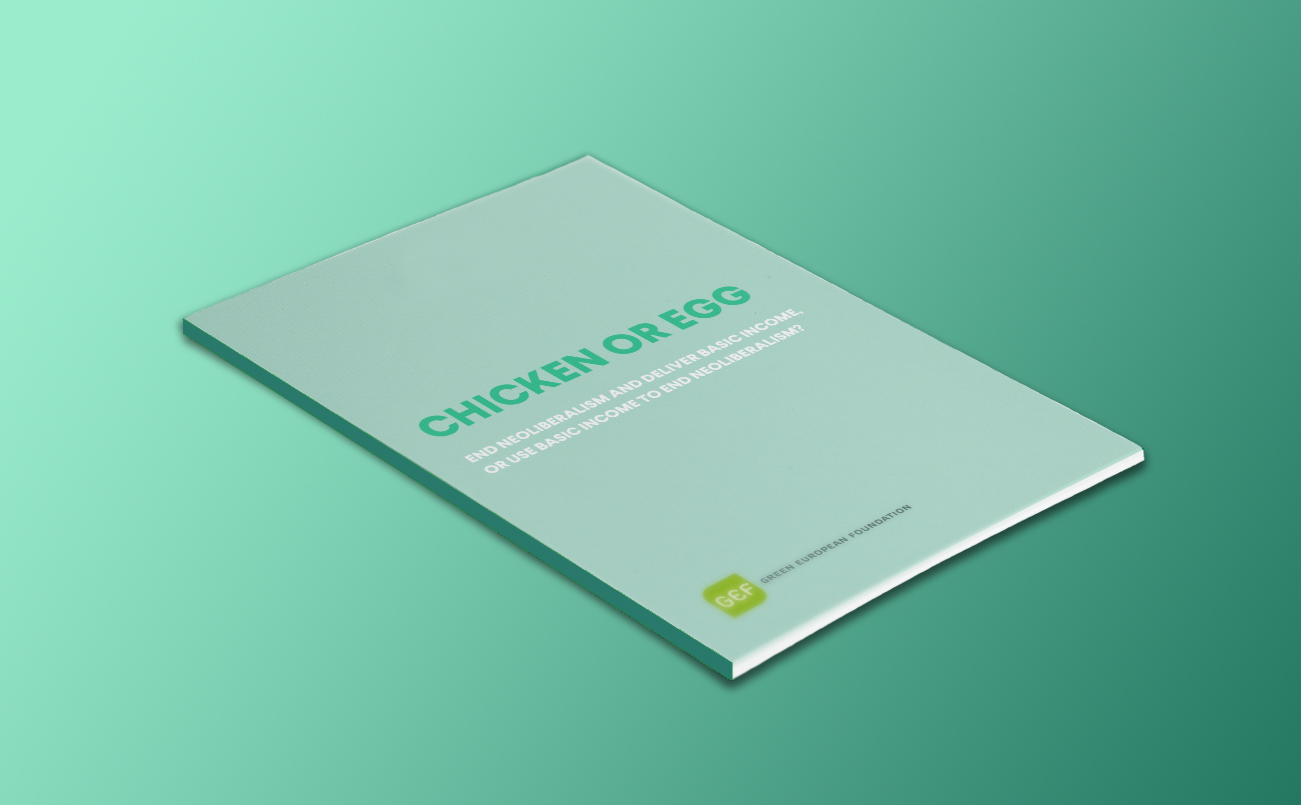
Chicken or Egg – Basic Income Earth Network (BIEN) Congress Summary

By Uncategorized

Chicken or Egg – End Neoliberalism and Deliver Basic Income, or use Basic Income to End Neoliberalism?

Natalie Bennett was in Finland as part of the Green European Foundation’s expert group for a transnational project on Universal Basic Income, initiated in 2017.

In the framework of the “Basic Income for all EU Citizens?” transnational project, the GEF expert group, comprising Basic Income experts from Finland, Spain, Germany, Switzerland, Serbia, and the United Kingdom, ateended the BIEN Congress to discuss the latest developments in the studies and application of the Basic Income models across Europe.

In addition to their participation in the conference, the expert group came together in a meeting organised by GEF to facilitate the development of the GEF Basic Income project.

GEF was present throughout the Congress, displaying and disseminating the outcomes of various GEF projects related to the topic.


Read the article in Spanish.

UBI - Basic Income

Technological Unemployment and Basic Income (Budapest)

By

Context

Technological change causes short-term job losses, that can ultimately lead to lasting increases in unemployment. Especially among young people in Europe, unemployment is already extremely high and unequal distribution of common resources, shrinking of social security and lack of access to low-skilled jobs deepens the insecurity about the future of work. To counter the erosion of the 20th century welfare state and the increasing youth precariousness, new ideas  have to be put forward on how society’s wealth can be distributed in a just way.

About the event

In the framework of this year’s Basic Income for all EU Citizens? transnational project, we will host this particular workshop to have a closer look at the prospects of a Universal Basic Income to combat youth precariousness and will especially address the following questions:

  • What is technological unemployment, what are its possible consequences and how does it relate to young people?
  • What are policy answers to technological unemployment and what kind of role could Basic Income play?
  • What are the digital tools we can use and what is the strategy to advocate for Basic Income in a digital world?

The workshop will be hosted at the Federation of Young Europeans’ week-long training “Common Digital (R)evolution”.

Programme

During this workshop, young Green activists from all across Europe will learn more about technological unemployment and its relation to basic income from Lilja Tamminen, Director Of Operations & Product Management at a computer software company, former Deputy Member of the Helsinki City Hall and expert on technological (un)employment.

Furthermore, the participants of the workshop will receive practical tools during a hands-on training session to argue for basic income as a means to move towards a more just society.


For more info on the event and how to participate, contact office@fyeg.org

UBI - Basic Income

GEF at the BIEN Congress 2018 (Tampere)

By

Context

In the framework of the “Basic Income for all EU Citizens?” transnational project, the GEF experts’ group, comprised of Basic Income experts from Finland, Spain, Germany, Switzerland, Serbia, and the United Kingdom, will attend the BIEN Congress to discuss the latest developments in the studies and application of the Basic Income models across Europe. In addition to their participation in the conference, the experts’ group will come together in a meeting organised by GEF to facilitate the development of the GEF Basic Income project.

GEF will be present throughout the entire Congress displaying and disseminating the outcomes of various GEF projects related to the topic.

About the event

The 2018 BIEN Congress plans to build on the growing interest in Basic Income by inviting activists, stakeholders, policymakers, students and researchers to discuss the promises of Basic Income against the background of the need for a “new universalism”. The 2018 Congress is entitled “Basic Income and the New Universalism: Rethinking the Welfare State in the 21st Century”.

BIEN 2018 features a Film Festival with a dozen productions from around the world on the topic of Basic Income. The Film Festival will run alongside the congress and can be visited by Congress participants but is also open to the general public. The Congress language is English.


For more information about the conference and registration, visit the website of the BIEN 2018.

UBI - Basic Income

Universal Basic Income – a Green Answer to the Future Challenges of the Labour Market? (Antwerp)

By

Context

In 2017, the Green European Foundation started, with the support of different national partner foundations a transnational project on basic income with the objective to refine the concepts behind Universal Basic Income and contribute to the Europeanisation of the debate while taking into consideration the huge differences of social security systems across Europe. To this end, we formed a basic income expert group with representatives of Spain, Catalonia, Switzerland, Germany, Serbia, Belgium and Greece. In 2018, the focus of the ‘Basic Income for all EU Citizens?project lies on the financial concepts and on formulating first ideas for a European pilot project on basic income that can deliver comparable results for different European countries.

About the event

During this session, we aim to make the link of those discussions to the broader debate on the future of work and whether basic income can become part of the Green answer to the challenges the labour market is currently facing. At the same time, the session shall serve as an opportunity to exchange on examples and different ideas of Green parties across Europe.

We will organise an interactive session, using the “fish bowl” method: the discussion starts in a semi-circle with one moderator and the three panelists and two empty chairs; after the  first input by the moderator and the three panelists, the audience is invited to fill the empty chairs and take the role of panelists themselves; after the input the chairs have to be left to other participants.

Finally, the workshop will provide an opportunity to present the results of a planned survey we launched on the state of play of the UBI debate within the different Green parties across Europe as well as in the national public discourses.

Moderators

Ville Ylikahri, GEF Board Member, Secretary General in the Green Cultural and Education Centre – Visio in Finland, representative of project expert group for Finland;


Susanne Rieger, GEF Co-President, responsible for European issues and European relations in the Catalan Green foundation Fundació Nous Horitzons (FNH), Project coordinator of the GEF transnational project on Basic Income.


Speakers

  • Wolfgang Strengmann-Kuhn, Member of Parliament, Germany
  • Julen Bollain, Member of the Basque Parliament, economist & researcher specialised in unconditional basic income, Spain
  • Predrag Momcilovic, Executive Committee Member Federation of Young European Greens, journalist, PhD student on political ecology and degrowth, Serbia
  • Irina Studhalter, Local Councillor Lucerne & political campaigner, Switzerland
  • Natalie Bennett, politician and journalist, former leader of Green Party of England and Wales, United Kingdom


Stay tuned for updates

Subscribe to our Facebook event, where you will receive reminders and the latest news on content. Follow us on Facebook or Twitter to learn about our other activities.


Basic Income Greece Project

Constraints Against and Prospects Towards the Implementation of the Basic Income in Greece Within the Crisis

By Uncategorized

This report is one of the outcomes of GEF’s transnational project on Basic Income. Within this framework two study visits and multiple discussions on the topic took place.

The demand for securing all members of society against life’s adversities and the negative effects caused from social structures has been an ongoing concern of all social formations. From a historical point of view, this need was expressed in various forms in different times throughout history, ranging from food distribution to the poor in the times of the great empires (i.e. Egyptian Empire) and the charities of the monasteries in Middle Ages, to a universal basic income for all, the major social demand in late capitalism.

In contemporary industrial and post-industrial capitalism, this demand is expressed in two distinct political proposals: The first one focuses on unconditional universal basic income for all members of society irrespective of their financial status (Van Parijs, 1992) and the second one focuses on conditional basic income exclusively for those in unfavourable situation – if not in the most unfavourable situation – with respect to acceptable levels of living.

Read about the Finnish Basic Income Model here.

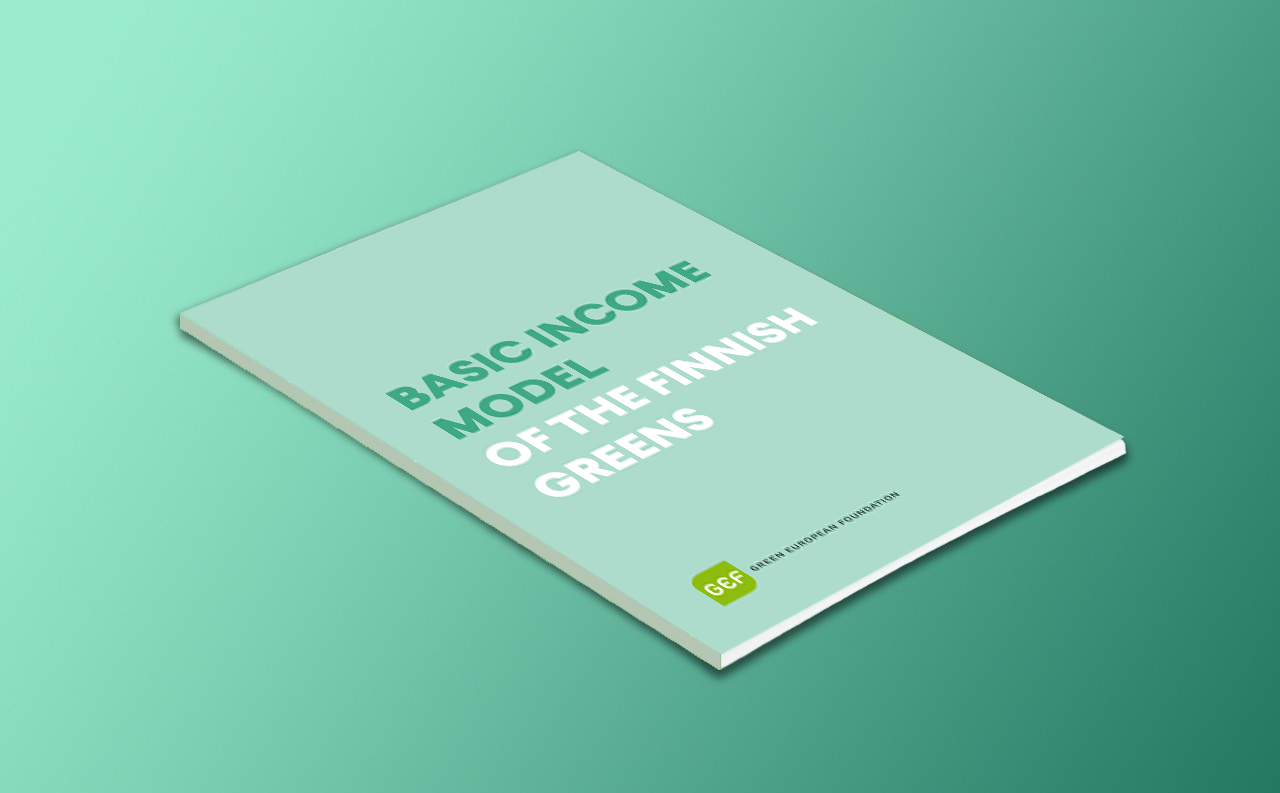
Basic Income Model of the Finnish Greens

By Uncategorized

This report is one of the outcomes of GEF’s transnational project on Basic Income. Within this framework two study visits and multiple discussions on the topic took place.

The Finnish Greens have been talking about the possibility of a basic income since 1980’s. Initially the term ‘citizen’s wage’ was used, but in the 1990s the term ‘basic income’ became standard. 2007 marked a big step forward in the basic income debate; that year, the Greens presented their first comprehensive basic income model. It established for the first time that a transition to a basic income model is possible. The basic income model was calculated using micro-simulation modelling as a cost-neutral and feasible model with a view to showing how Finnish social security could be organised in a new way so that it would be more just and supportive for everyone. In 2007, the Greens proposed that a basic monthly income of €440 be distributed to all Finns, and that a related tax reform be implemented.

Because the Finnish social security system was reformed and the associated minimum benefits improved, the Greens needed to update their basic income model. This update was done in 2014. The basic income level was then set at €560, which is still equivalent to the minimum level of social security for an unemployed person. The Greens’ 2014 basic income model did not restate the objectives of the model, since these were detailed in the context of a paper published with the 2007 model. This model has also been translated into English. The basic income model presented by the Greens in 2014 is still highly topical. When they published the model, the Greens insisted on a pilot study of the basic income, which the current Government of Finland has now implemented. In the basic income pilot, a small number of unemployed people receive a basic income of €560, which they will not lose even if they find work or receive other income. The pilot study is in many respects incomplete, but it is nevertheless yet another step towards realising the utopian idea of the basic income in practice.

The Finnish Greens based the calculations for their 2014 model on the micro-simulations calculated by the Finnish Parliament’s information service. The analysis based on the simulations can be accessed at www.vihreat.fi/perustulo (in Finnish). The analysis was very thorough, and it also showed many of the problem areas in the basic income model. For example, it argued that it is very difficult to combine the basic income with housing benefits. Nor does the basic income model also remove all economic disincentives. Even so, the analysis does provide a credible basis for the model proposed.

Next, the Finnish Greens aim to modify the model on the basis of the results of the ongoing pilot study. At the same time, the Greens have started discussing how housing benefits can be combined with the basic income model, and how implementing the real-time income register could enable social security automation as intended by the basic income model.

Possibilities and Perspectives for Basic Income around Europe (Leuven)

By

This event is a part of our transnational project, which aspires to contribute to the discussion on basic income and aims to further explore social and fair solutions to increasing inequality within the European societies.

Debate in Leuven

This debate will provide new perspectives on how basic income could be organised on European level. We will gather relevant experts from different parts of Europe to share insights and research possibilities for basic income in different parts of Europe, with a special focus on the youth.  Furthermore, we will discuss different models of basic income and how they can affect society on economic, social, environmental and feminist levels.

The list of panelists includes:

  • Irina Studhalter, Member of Swiss young Greens, local councilor and part of the GEF Basic Income expert group (Switzerland);
  • Simo Raittila, Member of the party council of the Finnish Greens Vihreät – De Gröna, researcher (Finland);
  • Cinta Gonzalez Sentis, Member of Catalan Young Greens (Catalonia).

The debate will be moderated by Predrag Momčilović, FYEG Executive Committee member and part of the GEF Basic Income expert group (Serbia).

For more information to attend the event, send an email to project.manager@fyeg.org.

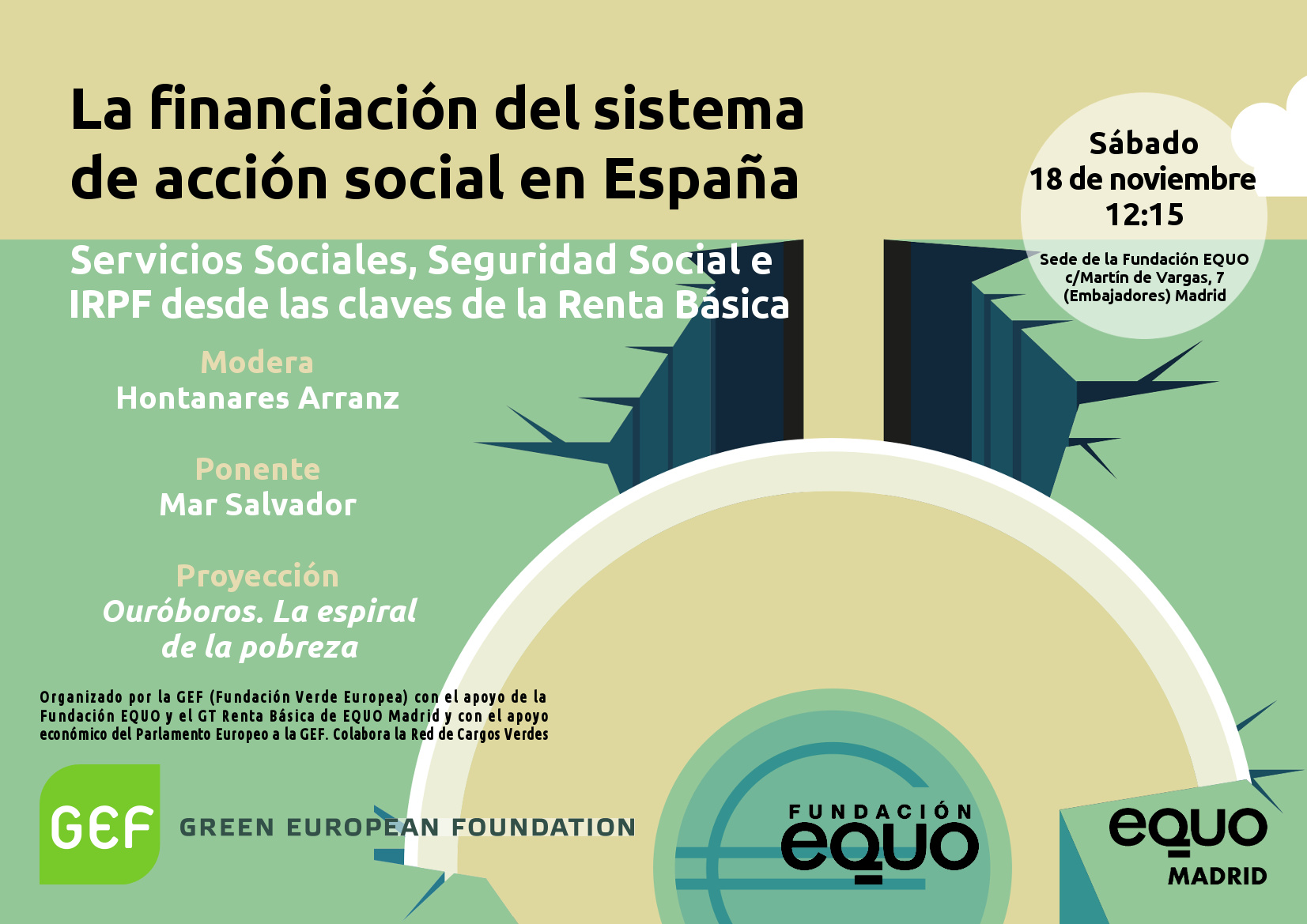
Social Security & Basic Income (Madrid)

By

This event is a part of the ongoing transnational project “Living with Dignity in a Digitalised Working World – Basic Income for all EU Citizens?”, which aspires to contribute to the debate on basic income and aims to further explore social and fair solutions to increasing inequality within the European societies. In the framework of this transnational project, the workshop in Madrid will provide insights into the relationship between social security and basic income in Spain as a case study, and it will serve as an inspiration for discussions about basic income in other EU countries.

Workshop in Madrid

The workshop will go further into the financing of the social action system in Spain. We will investigate the budget of the social action system and who its actors are. It is said that basic income will end poverty and that it will be possible to start it up by transferring the expenses generated by the bureaucracy of social action, but for a transition in which the basic income is an instrument of transformation, it is necessary to know which is the starting point. Where are the resources that could be redirected to move towards the basic income? What are they currently financing? What tensions and pressures would have to be faced in the construction of this transition? Such questions will be addressed by prominent speakers, such as Mar Salvador (Forum of Social Services of Madrid) and Carlos Cruzado (GESTHA), tbc.

Date and Place

The workshop will be hosted at the office of Fundación EQUO – C/ Martín de Vargas, 7 – 28005 Madrid, on Saturday, 18 November 2017 from 12h15 to 14h30.

Registration

The event is open to the public and free of charge. To register, please follow this link.

Basic Income and its prospects: Is there an alternative to a Europe in crisis? (Athens)

By

The event will explore whether the concept of basic income can be a solution in Europe to the crisis and the economic implications it is having, in particular in Greece. Together with our international panel, we will discuss different approaches and ways forward.

Programme

Tuomas Viskari, Researcher in Finland, MSocSc
“The Finnish Basic Income Trial 2017-2018 and the Green BI Model”

Bru Lain, Associate Professor of Sociology, University of Barcelona, ​​Secretary of the Network for Basic Income
“Distribution, Pre-Distribution and Labor Markets: The Case of Basic Income”

Christos Dellasoudas, Blockchain Independent Researcher, Basic Income Europe Member
“Basic Blockchain Income”

Dimitris Karelas, Secretary General of Welfare, Ministry of Labor, Social Security and Social Solidarity
“What is and what does the Social Solidarity Income Program want?”

Manos Matsanganis, Associate Professor, Polytechnic of Milan
“A basic income for everyone in Greece?”

Christos Papatheodorou, Professor of Social Policy, Panteion University
“Poverty and deprivation in Greece of the crisis: rhetoric of minimum guaranteed income and shrinking social protection”

Kostantinos Dimoulas, Assistant Professor, Panteion University, Expert on the Basic Income Network
“How can the implementation of basic income in Greece of the crisis begin? Challenges and Prospects ”

The panel will be followed by a Q&A with the audience.

More information

The entrance is free. For more information, please visit the Greek Green Institute’s website.

There will be simultaneous translation Greek – English.

Moving towards Basic Income at Univerde

By

WORKSHOP

Pilot experiences of basic income are being carried out in different parts of the world with a variety of approaches. In general, these aim to assess the socio-economic impact on beneficiary individuals and societies.

In this workshop we will discuss basic income as an alternative to poverty and exclusion, along with the possibilities of realising pilot projects at the local level. As a special case study, we will analyse the pilot plan for the city of Madrid.

This workshop is part of our ongoing transnational project “Living with Dignity in a Digitalised Working World – Basic Income for all EU Citizens?”.

SPEAKERS:

Experts on basic income will give us their opinion on the pros and cons of this experience and other possibilities of advancement.

  • Philippe Van Parijs – Belgian philosopher and political economist. Professor at the Faculty of Economics, Social and Political Sciences of the Catholic University of Louvain. Co-founder of the European Basic Income Network;
  • Julen Bollain – economist and researcher, member of the Basic Income Network and Basic Income Earth Network (BIEN);
  • Lluís Torrens – economist, member of the Basic Income Network. Director of Planning and Innovation of the Social Rights Area of ​​the Barcelona City Council;
  • Jorge M. Neira;
  • Hontanares Arranz – social worker, activist and member of EQUO.

Univerde IX

The ninth edition of Univerde is entitled “The Future of Europe: Democracy & Borders in the Era of Global Society”. Find more information on our webpage.

Basic Income Study Trip to Barcelona

By

The visit is hosted with an international group of experts, composed of academics, basic income activists and politicians, in order to advance the political debate around this topic and to share experiences across Europe.

This event is a part of the ongoing project “Living with Dignity in a Digitalised Working World – Basic Income for all EU Citizens?” which aims to  contribute to the debate about basic income and to further explore social and fair solutions to increasing inequality within the European societies.

The study trip to Barcelona will provide insights about basic income in the context of Spain and Catalonia in particular, along with clarification of various definitions of this concept. In addition, it will include meetings with relevant experts and NGOs working in the field.

The result of this event will be published and shared at the end of the year, summarising the most important questions and insights about basic income, and a comparison between different experiments (i.e. Barcelona and Helsinki). Participants of the study trip are pre-selected. Stay tuned for more updates!

Basic Income Study Trip to Helsinki

By

This event is a part of the ongoing project “Living with Dignity in a Digitalised Working World – Basic Income for all EU Citizens?” which aims to  contribute to the debate about basic income and to further explore social and fair solutions to increasing inequality within the European societies.

The study trip to Helsinki will have a special focus on the basic income in the context of Finland. Therefore, it will include visits to relevant NGOs and research centers to gain more insights, along with meetings with the Finnish Green party to discuss Green views on the topic.

The result of this event will be published and shared at the end of the year, summarising the most important questions and insights about basic income, and a comparison between different experiments (i.e. Helsinki and Barcelona). Participants of the study trip are pre-selected. Stay tuned for more updates!