Fair and Carbon Free Tourism – Serbian Research Reports

By Uncategorized

Context

The research for these papers was conducted in 2021 by the Organisation for Political Ecology – PolEkol as part of the GEF transnational project named “Fair and Carbon Free Tourism”. The aim of the project was to identify and create conditions for

collective action against the detrimental social and environmental impacts of tourism, which are often underestimated while pursuing different economic activities. Throughout 2020, this project entailed events, desk research, several local site visits as well as public debates to increase visibility and build a community around this topic. In 2021 and 2022, it followed up with larger study trips and further research to expand this knowledge and connect further with stakeholders, affected audiences and policymakers on the local but also the European level.

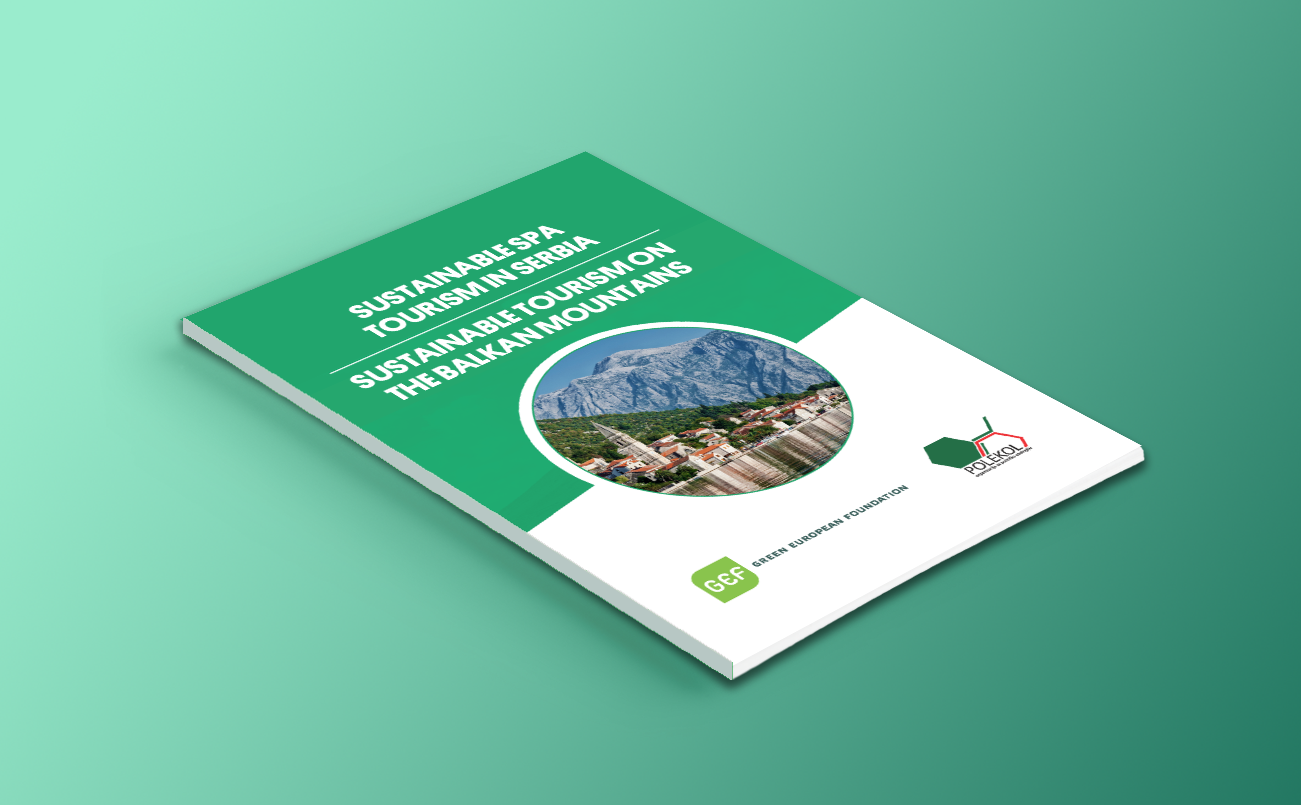
Sustainable Spa Tourism in Serbia

The tourism sector is a highly lucrative branch of the economy, and one that the Republic of Serbia has identified explicitly as a priority area for growth. With a history of spas that dates back to Roman times, wellness tourism is particularly interesting for international visitors and foreign investment. This research report considers the current situation, some of the challenges and risks that come with tourism development, and lays out a series of recommendations to ensure that this happens in a fair and sustainable way. Particular attention is paid to the idea of water as a public good, and the importance of protecting water access and quality for local communities and the natural world.

OPEN PDF VERSION

Sustainable Tourism on the Balkan Mountains

The tourism sector is a highly lucrative branch of the economy, and one that the Republic of Serbia has identified explicitly as a priority area for growth. At the same time, tourism is a significant driver of climate change and environmental harm, and the Covid-19 crisis highlighted the precarity of jobs and communities that depend on it. This research report explored local tourism in the Balkan Mountains as a potential model to do things differently. It looks at how community-led, small-scale tourism can not just avoid harm but actively enhance environmental protection, and offers rural populations a way to maintain their village lives with diversified sources of income. However, this requires careful investment in infrastructure and social and communal services, not just opening up the area to be a playground for private investors.

OPEN PDF VERSION


These reports have been realised by the Green European Foundation with the support of Polekol foundation (Serbia), and the financial support of the European Parliament to the Green European Foundation. The European Parliament is not responsible for the content of this publication.
Go, but Slow: Neue Wege des Reisens

By Uncategorized

Context

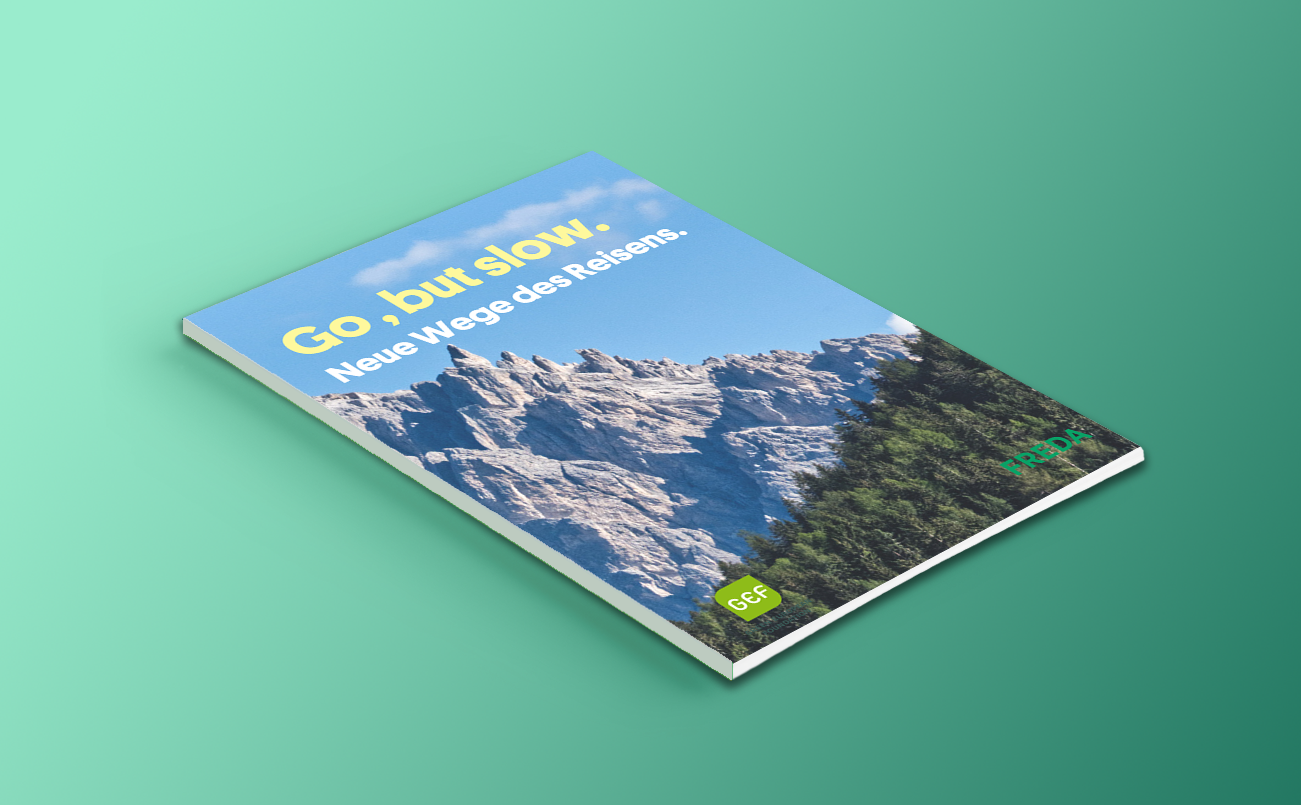
When we talk about tourism, it’s all about the economy, but at the same time, we are talking about nature. However, these two terms don’t always go together well.  Moreover, the climate crisis and the energy transition will soon shift the tourism industry as we know it. Because travelling will be different in the future, we have collected a few examples from Austria and its border regions that show how this transformation could take place.

The transition to a more sustainable form of tourism is not a distant utopia. It is feasible – with the involvement of all local stakeholders, with the involvement of politics and economy, with consideration of the needs of people and nature.

Objectives

This brochure aims to call readers to rethink all aspects of the tourism sector at a national and European level. More often than not, the consequences of tourism go from a workforce suffering from low wages to working conditions that circumvent national regulations, especially in structurally weak regions of Europe. The damages caused to people and the environment have serious consequences. The same applies to the cost of a rapidly growing ecological footprint in the industry. All these facts are calling for joint European solutions.


This publication has been published by the Green European Foundation with the support of FREDA foundation (Serbia), and the financial support of the European Parliament to the Green European Foundation. The European Parliament is not responsible for the content of this publication.

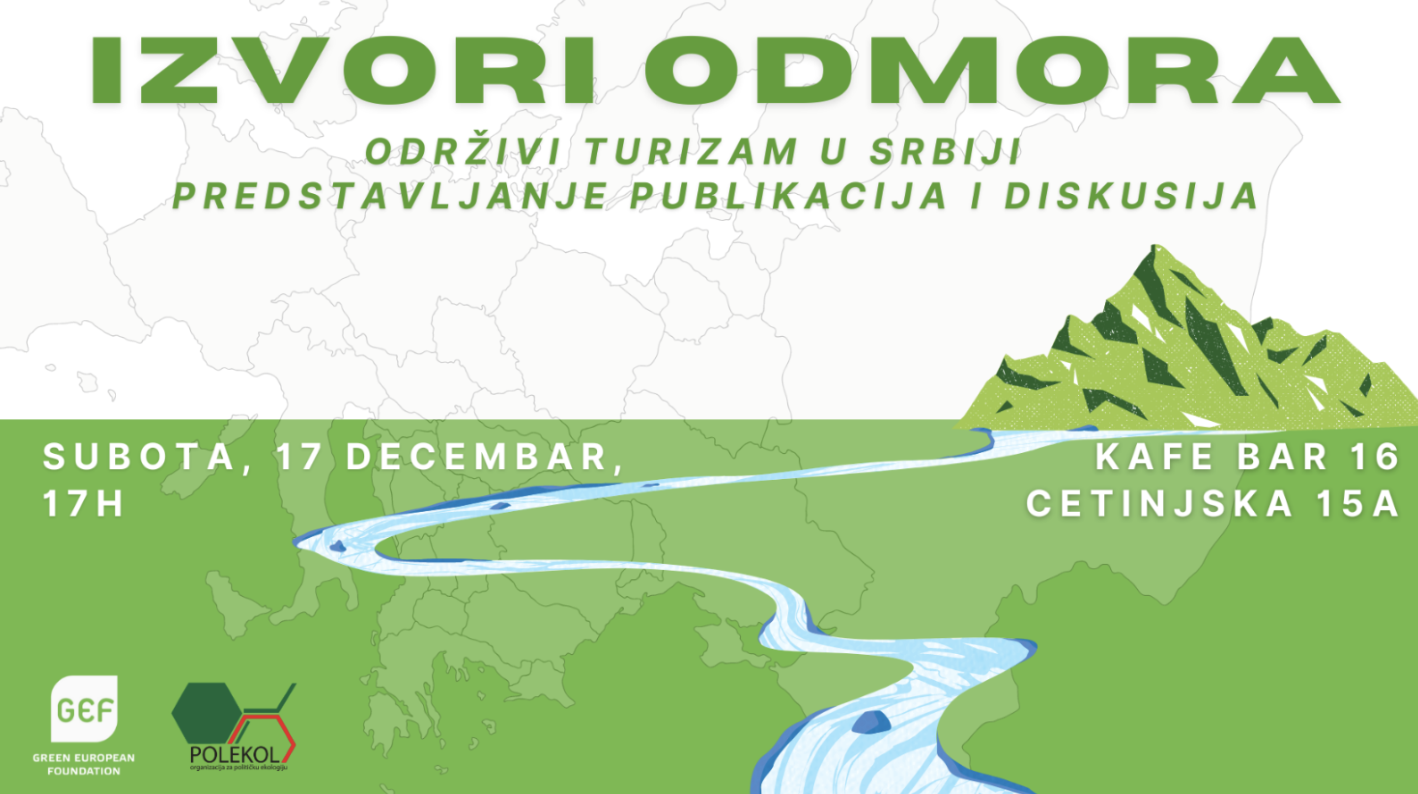
Sources of Rest: Sustainable Tourism in Serbia (Belgrade)

By

About the Event

The development of tourism is an important aspect of the economic activities of a country because it enables the inflow of foreign capital, economic growth, and job creation. It also holds invaluable opportunities for exchange and understanding between and beyond the citizens of Europe. However, inadequate development and implementation of tourism plans can make it impossible to use its potential in an adequate way. The business and development of this economic branch, especially in less developed countries, generally has disastrous consequences for the environment and the local community. The development of mass tourism in popular locations leads to the mass exploitation of natural resources and their destruction, while most of the income goes to the owners of large hotel chains and companies at the expense of the local community, which is mostly engaged in seasonal work. 

Serbia is a country that has many natural beauties and a huge tourist potential, but that potential must not become an object of exploitation. In order to prevent this scenario, it is necessary to adopt adequate plans and strategies, and for that it is important to organize discussions and hear the opinion of not only experts and the civil sector, but local communities, which are the most important element of tourism development planning and whose opinion is generally the least heard. In this panel discussion, we will discuss the findings of such local discussions in the Stara Planina region and reflect more broadly on what the future could hold for fair and carbon-free tourism in Serbia. 

Context

This event is part of GEF’s Fair and Carbon Free Tourism project, which aims to identify and create conditions for collective action against detrimental social and environmental impacts of tourism. By engaging stakeholders in partner countries and developing a European transnational discussion on these challenges, we seek to build a community interested to transform this sector in the direction of low or zero carbon intensity and with a specific focus on social and economic justice. 

Speakers

Katarina Lević – MA in Political Sciences and PolEkol researcher, who studied spa tourism and tourism on Stara Planina 

Nataša Gligorijević – Director of the Center for Sustainable Development of Serbia 

Milan Zlatanović, MA in Political Sciences and PolEkol researcher, who studied tourism on Stara Planina  

Practicalities

Date and Time: Saturday, December 17th at 17:00 

Location: Cafe Bar 16, Cetinjska 15a, Belgrade, Serbia 

Language: Serbian 

Registration: No advance registration is necessary, but you can join our facebook event for the latest updates.  


This event is organized by the Green European Foundation with the support of PolEkol and with the financial support of the European parliament to the Green European Foundation. 

Closing Roundtable: Fair and Carbon Free Tourism (Skopje)

By

About the Event

In this final event of the project, we will discuss green visions to transform tourism across Europe, setting the path to a different future for a Fair and Carbon Free Tourism.

We will hear the perspectives of researchers, experts and academics in North Macedonia as well as best practices and initiatives mapped within the project that have already led to transformation. Attention will be paid not just to environmental and climate concerns at the macro-level, but also to how this sector is strongly connected to local communities and their mission for a better quality of life.

Context

This event is part of GEF’s Fair and Carbon Free Tourism project, which aims to identify and create conditions for collective action against detrimental social and environmental impacts of tourism. By engaging stakeholders in partner countries and developing a European transnational discussion on these challenges, we seek to build a community interested to transform this sector in the direction of low or zero carbon intensity and with a specific focus on social and economic justice.

 Speakers

  • Vlado Srbinovski – Association Balkania – Expert on Sustainable and Alternative Tourism
  • Dejan Metodievski – Professor at Shtip University, Faculty of Tourism
  • Aleksandar Gjorgjievski – National coordinator of the project

More to be announced!

Programme

17:00Participant arrivals
17:10Introduction
17:20Speaker presentations on transformative tourism
17:40Break
18:00Panel discussion with experts, researchers, and NGOs

Practicalities

This is a closed event that will take place in Skopje, North Macedonia. The primary language is Macedonian. If you have any questions or want to learn more, please contact sien.hasker@gef.eu.


This event is organized by the Green European Foundation with the support of ASSED Sunrise and with the financial support of the European parliament to the Green European Foundation.

Tourism in Times of Climate and Social Crisis (Barcelona)

By

About the event

From the COVID-19 pandemic to the war in Ukraine, inflation to the energy crisis – the tourism sector has been dealt many blows in the past few years. At the same time, mass tourism is itself implicated in several of our biggest challenges today: carbon emissions, housing shortages, crumbling infrastructure, poor working conditions, and the list goes on. As we look to transforming our economies and societies, the green and just transition of tourism is a crucial element.    

In this half-day conference, we will tackle the question of tourism around three dimensions: mobility and infrastructure, labour and public services, and climate and environment. With experts, academics, trade unionists and politicians, we look forward to lively and thought-provoking exchanges.   


Context

This event is part of GEF’s Fair and Carbon Free Tourism project, which aims to identify and create conditions for collective action against detrimental social and environmental impacts of tourism. By engaging stakeholders in partner countries and developing a European transnational discussion on these challenges, we seek to build a community interested to transform this sector in the direction of low or zero carbon intensity and with a specific focus on social and economic justice. 


Speakers

Aurora Pedro Bueno – Director of the New Green Transition in Tourism department, University of Valencia 

Deborah Pérez – trade unionist at MagmaCultura 

Javier Pacheco – General Secretary of CCOO Catalunya 

José Antonio Donaire – Tourism research institute of the University of Girona 

Pau Noy – President of the Foundation for Sustainable and Safe Mobility 

Sergi Alegre – Fundacio Nous Horitzons 

Tilly Metz – Greens/EFA MEP and member of the Committee on Transport and Tourism [tbc]  

Victor Català – former Blanes City councillor  


Programme

10:00 Welcome and Introduction – with Javier Pacheco and Sergi Alegre 

10:30 Tourism, Mobility, and Territorial Balance – with José Antonio Donaire and Pau Noy 

11:30 Break 

12:00 Tourism, Public Services, and Working Conditions – with Deborah Pérez and Victor Català 

13:00 Tourism in a Climate Crisis Context – with Aurora Pedro Bueno and Tilly Metz 


Practicalities

Date and time: Saturday, October 8th (9:30 – 14:00 CEST) 

Location: CCOO de Catalunya Assembly Space – Via Laietana 16, Barcelona  

Language: Catalan 

Registration: Pre-registration is not required, but please arrive on time.  


Related reading

The Case for Not Flying

Anthropogenic Venice: Surviving Life in a Lagoon

Steering Tourism to a Greener Course in Belgrade

Seeing Mobility in a New Light


This event is organised by the Green European Foundation with the support of Fundacio Nous Horitzons and the financial support of the European parliament to the Green European Foundation. 

Stara Planina: Tourism and Natural Resources

By

Programme

Throughout the study tour, partners will be meeting local stakeholders and activists, from the tourism sector as well as the wider community. Particular attention will be paid to the issue of water, as the mountain range plays an important role in the region’s water flows, but developments over the past two decades have significantly impacted the landscape. The programme is provisional and subject to change. 

September 15th 

  • Arrivals in Belgrade and initial project exchanges 
  • Travel to Pirot in the evening 

September 16th 

  • Visit Temska village, with Milinka Nikolić (environmental activist and Serbian MP for Moramo) – history of the fight for river preservation 
  • Head to Topli Do to see waterfalls and exchange with local activists 
  • Spend the night in Topli Do 

September 17th 

  • Head to Dojkinci village for a sustainable farm visit 
  • Meet members of the first energy collective form Serbia, based in the Balkan Mountains 
  • Return to Belgrade in the evening 

September 18th 

  • Closing partner meeting, departure from Belgrade 

Practicalities

Date: 15-18 September 

Location: Stara Planina and Belgrade, Serbia 

This is a closed study trip for selected project partners. Learn more about the project here. 


This study trip is organised by the Green European Foundation with the support of PolEkol and the financial support of the European Parliament to the Green European Foundation. 

North Macedonia: Mass Tourism Alternatives

By

Programme

Throughout the study tour, partners will be accompanied by a local expert in sustainable tourist practices as well as a video crew who will be filming and interviewing key case studies and stakeholders along the way. 

May 27th 

  • Arrivals in Skopje and initial project exchanges 

May 28th 

  • Morning departure from Skopje 
  • Visit of Mavrovo national park and Jance village – sustainable tourism practices and presentation on construction and building policies 
  • Arrival in Ohrid (UNESCO heritage), with dinner at nearby Kuratica village and presentation on alternative touristic offers 

May 29th 

  • Morning exploring Ohrid, partner meetings and stakeholder conversations 
  • Visit village of Dihovo – local tourism practices and slow food movement 
  • Arrival in Demir Kapija – winery tour and accommodation – and meeting with Vlado Srbinovski (Balkan Association of Alternative Tourism) 

May 30th 

  • Partner meetings, return to Skopje 

Practicalities

Date: 27-30 May 

Location: North Macedonia (Skopje and Lake Ohrid region) 

This is a closed study trip for selected project partners. Learn more about the project here. 


This study trip is organised by the Green European Foundation with the support of ASSED Sunrise and the financial support of the European Parliament to the Green European Foundation. 

Barcelona: Proximity Tourism

By

Programme

January 21st

09:00 – 10:30  Introduction of the programme and the Metropolitan Area of Barcelona

11:00 – 12:30     Visit to Fundesplai Youth Hostel

12:30 – 13:30    Guided visit to “Eat, Act, and Impact” exhibition on New Food Systems

13:30 – 15:00    Lunch

15:00 – 16:00   Meeting with Association for Tourism and Gastronomy

16:00 – 17:00    Visit to Agriculture Park of Baix Llobregat

17:00 – …            Dinner and free time

January 22nd

09:30 – 11:30   Guided visit of Natural Park wetlands of Llobregat Delta

12:00 – 12:30    Visit to El Prat beach

12:30 – 13:30    Guided visit to CRAM (Recovery centre for sea animals and coastal birds)

14:00 – 15:30   Lunch

15:30 – 16:00    Closing

Practicalities

Date: 21-22 January

Location: El Prat, Barcelona Metropolitan Area, Spain

This is a closed study trip for selected project partners. Learn more about the project here.


This study trip is organised by the Green European Foundation with the support of Fundacio Nous Horitzons and the financial support of the European Parliament to the Green European Foundation

Rust: National Park Tourism

By

Programme

12 November

17:00 – 19:00    Arrivals

19:00 – 21:00    Traditional tavern dinner with regional cuisine

13 November

10:30 – 12:00    Ferry across Neusiedlersee

12:00 – 13:30    Lunch meeting with national park managing expert Alois Lang

13:30 – 14:30    Presentation on national park management and marketing (visitor centre)

14:30 – 16:30    Hands-on tour of the national park

18:00 – 20:00   Rust city tour with emphasis on tourism management and marketing

20:00 – 21:30   Dinner

14 November

10:30 – 12:00    Tour at sustainable vineyard – showcase of environmentally friendly farming techniques

12:30 – 13:00    Closing and departures

Practicalities

Date: 12-14 November, 2021

Location: Rust, Austria

This is a closed study trip for selected project partners. Learn more about the project here.


This study trip is organised by the Green European Foundation with the support of FREDA and the financial support of the European Parliament to the Green European Foundation.

Pula: Seasonal Tourism

By

Programme

13 October

16:00 – 17:00    Arrivals to Pula

17:00 – 18:30    Short sight-seeing tour of Pula

19:30 – 21:00    Dinner with hotel director

14 October

08:00 – 09:00 Breakfast meeting with Pula tourist board president

9:00 – 12:00     Visit to Arenaturist hotel

12:30 – 14:00    Lunch

14:00 – 15:00   Tour of community centre ROJC

15:00 – 17:00    Meeting with Dušica Radojčić from the Green-Left political platform / Pula city council

17:00 – 20:00   Project partners meeting: fiches, case studies, methodology, and lessons learned

20:00 – 21:30   Dinner

15 October

08:00 – 09:00 Breakfast

09:00 – 11:00   Project partners meeting: publication outline, policy recommendations, 2022 activities

11:30 – 15:00     Visit to Brijuni national park or local farm Kumparička

15:00 – 16:00   Closing and departures

Practicalities

Date: 13-15 October

Location: Pula, Croatia

This is a closed study trip for selected project partners. Learn more about the project here.


This study trip is organised by the Green European Foundation with the support of the Institute for Political Ecology and the financial support of the European Parliament to the Green European Foundation.

The Economic Model in Tourism Monoculture

By Uncategorized

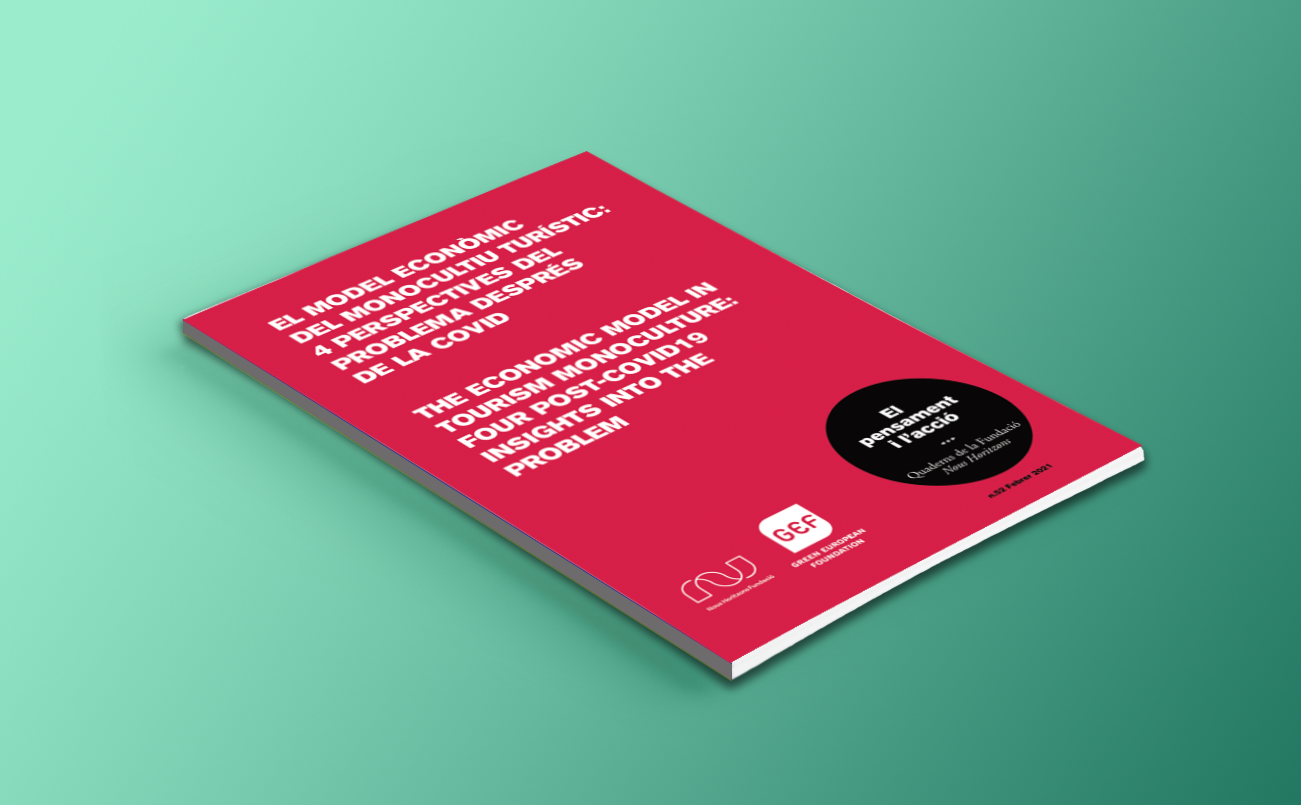
EL MODEL ECONÒMIC DEL MONOCULTIU TURÍSTIC


As this project developed in 2020, COVID-19 wrestled hold of Europe and devastated tourism industries across the continent. With the streets and beaches empty, people and governments have been forced to look at the economic sustainability and the environmental impact of the sector; our project has been holding up a magnifying glass, allowing them to look more closely.

In this publication (EN/CAT) we analyse the sun and beach tourism model, and draw conclusions that may help  us find alternatives.


This publication is a summary of the workshop “The economic model of monoculture tourism: 4 perspectives of the problem after COVID” that took place on 3 December 2020 in the frame of the GEF (Green European Foundation) project “Fair and Carbon Free Tourism”. Different green foundations collaborate in this transnational project that will work for three years on different aspects of sustainable tourism.

More information: Fair and Carbon Free Tourism

Transformative pathways for tourism in post-pandemic Europe

By

About the Event:

This webinar will offer space for debate among various academic and political organisations across Europe on the sustainability of tourism and the influences the COVID-19 pandemic has had on this sector. This will be an opportunity to share experiences and be inspired by the practices of others. Some of the research findings from the project will be presented but also expanded to a broader debate with engaged scholars and researchers.

Context:

This event is part of the Green European Foundation’s Fair and Carbon Free Tourism transnational project. The project aims to identify and create conditions for collective action against the detrimental social and environmental impacts of tourism. In many countries, tourism is a generator of GDP and fully employed in a growth-oriented consumerist economy. However, there is an underestimated environmental and social impact of tourism.

The impacts of tourism-induced economic activities are often underestimated, and while social impacts are increasingly being considered in some of the tourist hubs of the project partners’ countries, for instance in Barcelona, Dubrovnik, Salzburg, or Ohrid, environmental impacts, in particular, are often not (yet) addressed.

Speakers:

  • Robert Fletcher, Waegeningen University
  • Filka Sekulova, University of Barcelona
  • Nikolina Rajković, Institute for Political Ecology
  • Claus Mersch, FREDA (tbc)

Moderated by: Vedran Horvat, Institute for Political Ecology

Programme:

17:00 – 17.10 Introduction: Vedran Horvat, IPE

17:10 – 17.25 Robert Fletcher, Waegeningen University

17:25 – 17:40 Filka Sekulova, University of Barcelona

17:40 – 17.55 Nikolina Rajković, Institute for Political Ecology

17.55 – 18.10 Claus Mersch, FREDA (tbc)

18:10 – 18.30 Discussion

Practicalities:

Monday, 7 December, 17:00-18:30

This is an online event, please join us here via Zoom.

The event will take place in English.

—-

This event is organised by the Green European Foundation with the support of the Institute for Political Ecology and with the financial support of the European Parliament to the Green European Foundation

Towards a Fair and Low Carbon Tourism: Perspectives from Spain

By

About the Event:

Tourism has positioned itself as one of the main engines of the Spanish economy, but the current crisis of COVID-19 – as the economic crisis of 2008 did before – has shown the fragility of the sector and has called into question the high dependence of the GDP on this activity. The pandemic should serve as an opportunity to seek alternatives to make tourism resilient to new economic, health and climate crises.

Tourism is also a sector that not only produces serious climatic and environmental impacts but these, in turn, affect it negatively. Water shortages, reduced climatic comfort, the loss of beaches or an increase in extreme weather events are some of the effects of global warming with direct consequences on tourism activity and which can seriously compromise its viability.

We should take advantage of the lessons learned during the pandemic to rethink a paradigm shift, a shift towards a fair, low-carbon tourism model that is prepared to face the major climate, economic and social challenges of our time and that is sustainable in the long term. Are we prepared for this?

Context:

This event is part of the Green European Foundation’s Fair and Carbon Free Tourism transnational project. This project aims to identify and create conditions for collective action against the detrimental social and environmental impacts of tourism. In many countries, tourism is a generator of GDP and fully employed in a growth oriented consumerist economy. However, there is an underestimated environmental and social impact of tourism.

Speakers:

  • Javier Benayas: Professor of Ecology at the Universidad Autónoma de Madrid (UAM) and member of the Advisory Council of the Spanish Network for Sustainable Development. Town Planning and Sustainability Councilor in Soto del Real (Madrid).
  • Karima Delli: French MEP from the Greens/EFA group. Chair of the Committee on Transport and Tourism. In 2016 she was appointed vice-chair of the Commission of Inquiry into the Measurement of Emissions from Cars (the so-called Dieselgate).
  • Aurora Pedro Bueno: Director of the New Green Transition Chair at the University of Valencia. Consultant for the World Tourism Organization (UNWTO) since the mid-1990s and author of several publications on Tourism topics.

Moderator: Rosa M. Tristán, environmental and scientific journalist with 30 years of professional experience in different media (El Mundo, El HuffPost, El País, Público, RNE, …).

Practicalities:

Thursday, 3 December, 18:00-19:30

This is an online event, please register in advance via this link.

Simultaneous Spanish-English translation will be available.

—-

This event is organised by the Green European Foundation with the support of Fundación Transición Verde and with the financial support of the European parliament to the Green European Foundation

Exploring Fair and Carbon Free Tourism

By

About the Event:

This international seminar will offer insight into the research conducted by 7 organizations across Europe on the sustainability of tourism and the influences the Corona pandemic had on this sector. This will be an opportunity to share experiences and be inspired by the practices of others.

The impacts of tourism-induced economic activities are often underestimated, and while social impacts are increasingly being considered in some of the tourist hubs of the project partners’ countries, for instance in Barcelona, Dubrovnik, Salzburg, or Ohrid, environmental impacts in particular are often not (yet) addressed.

Context:

This event is part of the Green European Foundation’s Fair and Carbon Free Tourism transnational project. This project aims to identify and create conditions for collective action against the detrimental social and environmental impacts of tourism. In many countries, tourism is a generator of GDP and fully employed in a growth oriented consumerist economy. However, there is an underestimated environmental and social impact of tourism.

Speakers:

  • Maja Morachanin, MP and Leader of the Macedonian Green Party (DOM)
  • Aleksandar Gjorgjievski, ASSED Sunrise – North Macedonia
  • Vedran Horvat, Institute for Political Ecology – Croatia
  • Sergi Alegre, Fundacio Nous Horizons, Barcelona – Spain
  • Zaklina Zivkovic, Networked – Serbia
  • Claus Mersch, FREDA – Austria
  • Ana Petrovska, ASSED Sunrise – North Macedonia

Programme:

11:00 – 11:10      Introduction of the event and participants; opening remarks by Maja Morachanin

11:10 – 11:25       Vedran Horvat – Project Leader of the GEF “Fair and Carbon Free Tourism” – IPE Croatia

11:25 – 11:35      Sergi Alegre – Sand and Sun Tourism in Catalonia: An Overview

11:35 – 11:45      Zaklina Zivkovic – Serbian Tourism Overview

11:45 – 11:55      Claus Mersch – Austrian Tourism Overview

11:55 – 12:05     Ana Petrovska – Responsible Tourism in Ohrid

12:05 – 12:30    Discussion and conclusions

Practicalities:

This online event is open to the general public. It will be taking place in English and Macedonian, with simultaneous translation.

Please register and join the Zoom webinar via this link.

—-

This event is organised by the Green European Foundation with the support of ASSED Sunrise and with the financial support of the European Parliament to the Green European Foundation

Possibilities for Fair, Sustainable and Carbon Free Tourism (Belgrade)

By

About the Event:

The outbreak of the COVID-19 virus significantly affected the number of tourists and overnight stays in Serbia, and tourism in Belgrade was particularly affected. The number of tourists in March 2020 in Belgrade decreased by 65.2% compared to March 2019, while in April 2020 the number of tourists decreased by 98.8% compared to April 2019; in May 2020, a reduced number of tourists was recorded compared to May 2019 with 95.7%.

The COVID-19 pandemic especially affected the number of foreign tourists who, due to the closure of state borders and prevention measures, did not come to Belgrade. After the mitigation of measures to fight the COVID-19 pandemic, an increase in the number of domestic tourists was noted in Serbia, but that recovery was limited in Belgrade, which was the main focal point of the infected in Serbia. In June 2020, the total number of tourists in Belgrade was 83.8% lower compared to June 2019, this trend continued in July with 88.2% and in August with 85.8% less tourists compared to the same months during 2019.

The almost complete shut down and uncertainty that emerged in the tourism and hospitality sector at the global and European level, as well as in Serbia and the city of Belgrade, left room for reflection on how to make the tourism sector more fair, sustainable and carbon neutral after the COVID-19 virus pandemic.

Context:

This event is part of the Green European Foundation’s Fair and Carbon Free Tourism transnational project. This project aims to identify and create conditions for collective action against the detrimental social and environmental impacts of tourism. In many countries, tourism is a generator of GDP and fully employed in a growth oriented consumerist economy. However, there is an underestimated environmental and social impact of tourism.

Programme:

  • 18:00-18:10 Introduction

Predrag Momčilović – Platform for Theory and Practice Zajedničko

  • 18:10-18:20 The project and the situation in Croatia

Nikolina Rajković – Institute for Political Ecology

  • 18:20-18:30 Presentation of research report about Fair and carbon free tourism in Belgrade

Nikoleta Petković and Elene Petrovska – Zajedničko

  • 18:30-20:00 Panel debate about possibilities for fair, sustainable and carbon free tourism in Belgrade

Natalija Stojmenović – Don’t Let Belgrade D(r)own

Miloš Baković Jadžić –Party of the Radical Left

Vladimir Pajić – Movement of Free Citizens

Moderation: Predrag Momčilović – Zajedničko

Practicalities:

When: Wednesday, 4th November (18:00 – 20:00 CET)

Where: Cultural center Grad, Braće Krsmanović 4, Belgrade

A live stream will also be provided via this link.

This event will be primarily in Serbian. No translation is foreseen. 

This event is organised by the Green European Foundation with the support of Zajedničko and with the financial support of the European Parliament to the Green European Foundation

Sun and Sand Tourism: Proposals for a Sustainable Future

By

About the Event:

For over 50 years the coasts of the Mediterranean Sea have been under pressure from masses of people looking for Sun & Sand, with a huge environmental impact on the coast and elsewhere through hidden destruction.

For the first time in decades popular tourist destinations have received respite during the travel season, but at the expense of economic and social wellbeing of millions. So now what? This webinar will focus on how greening the sector can aid the recovery in these hard-hit areas.

Context:

This event is part of the Fair and Carbon Free Tourism project. This project aims to identify and create conditions for collective action against detrimental social and environmental impacts of tourism. These impacts of tourism-induced economic activities are often underestimated, and while social impacts are increasingly being considered in some of the tourist hubs of the project partners’ countries, for instance in Barcelona, Dubrovnik, Salzburg, or Ohrid, environmental impacts in particular are often not (yet) addressed.

Speakers:

  • Susanne Rieger – Co-chair of GEF
  • Sergi Alegre – Fundacio Nous Horitzons
  • Tilly Metz – MEP Greens/EFA, Committee of Transport and Tourism
  • Eugenia Pascual – Initiative for Catalonia Greens Girona
  • Neus Truyol – Councillor Mallorca city, Equo
  • Vedran Horvat – Director of Institute for Political Ecology, Croatia

Practicalities:

Please check back later for a detailed programme.

This event will be taking place online. Register in advance via this link.

—-

This event is organised by the Green European Foundation with the support of Nous Horitzons Fundació and with the financial support of the European parliament to the Green European Foundation