Fair allocation of energy network costs

By Featured, Publications

About 

As Europe electrifies, it will need to invest massively in its grid. Grid investment is paid for through network tariffs, a component of energy bills. A surge in investment means a surge in network tariffs. But how should these costs be fairly allocated in the context of a just transition for all and an ongoing cost-of-living crisis across Europe? 

Well-designed grid tariffs can reward household flexibility that eases pressure on grids while protecting vulnerable consumers. This brief calls on the European Commission to provide stronger guidance for national regulators on designing network tariffs that encourage those who can to flex their electricity demand while protecting vulnerable consumers and working to reduce energy poverty.  

This policy brief is one in a series of briefs developed by a Knowledge Community of approximately 30 experts in energy and social policy from industry, the EU institutions, civil society and think tanks. The group met several times over half a year to discuss how to foster participation and inclusion in the energy transition. To write the briefs, the authors used a collaborative method where they presented each draft during Knowledge Community meetings, then led a dedicated discussion, drawing ideas from the expertise in the group to develop their work. 

You can access the publication here, also available in Catalan.

Authors

  • Tom Lewis is Energy Policy Coordinator at Climate Action Network Europe 
  • Christophe Jost is Energy Policy Coordinator at Climate Action Network Europe 

The other briefs in this series are: 

We encourage you to explore the two policy briefs featured above or access the complete collection below:


This policy brief is published by the Green European Foundation with the financial support of the European Parliament to the Green European Foundation. The European Parliament is not responsible for the content of this publication. The views expressed in this publication are solely those of the authors and contributors and do not necessarily reflect the views of the European Parliament or the Green European Foundation.

Published with the support of the Heinrich-Böll-Stiftung European Union| Global Dialogue. The analysis and opinions expressed in this report reflect the views of the authors, and do not necessarily reflect the views of the Heinrich-Böll-Stiftung European Union | Global Dialogue.

Increasing benefit sharing of renewable energy projects

By Featured, Publications

About 

The practice of benefit sharing of renewable energy projects is a win-win situation. It can make the energy transition fairer for local communities, help developers speed up project deployment and accelerate the EU’s renewable rollout. Project developers consult with local citizens and municipalities, and come to an agreement on sharing some of the benefits of the project, whether that be through local investment, in-kind benefits, or local part-ownership. Involving the local community can reduce local opposition and speed up permitting, and make projects more competitive.  

Despite its many advantages, the practice is still relatively limited. This brief calls for the EU to help widen and standardise benefit sharing by providing guidelines and setting out key principles that can be implemented across the EU. It calls on the European Commission to include benefit sharing in its Citizens Energy Package, look at making benefit sharing mandatory and include it in assessment criteria for permitting applications.  

This policy brief is one in a series of briefs developed by a Knowledge Community of approximately 30 experts in energy and social policy from industry, the EU institutions, civil society and think tanks. The group met several times over half a year to discuss how to foster participation and inclusion in the energy transition. To write the briefs, the authors used a collaborative method where they presented each draft during Knowledge Community meetings, then led a dedicated discussion, drawing ideas from the expertise in the group to develop their work. 

You can access the publication here, also available in Catalan.

Author 

  • Etienne Charbit is Europe Policy Officer at French NGO réseau Cler 


The other briefs in this series are: 

We encourage you to explore the two policy briefs featured above or access the complete collection below:


This policy brief is published by the Green European Foundation with the financial support of the European Parliament to the Green European Foundation. The European Parliament is not responsible for the content of this publication. The views expressed in this publication are solely those of the authors and contributors and do not necessarily reflect the views of the European Parliament or the Green European Foundation.

Published with the support of the Heinrich-Böll-Stiftung European Union| Global Dialogue. The analysis and opinions expressed in this report reflect the views of the authors, and do not necessarily reflect the views of the Heinrich-Böll-Stiftung European Union | Global Dialogue.

The beauty of what already exists: The contribution of renovation and repurposing to affordable energy-efficient homes

By Featured, Publications

About 

Political pressure is high to deal with Europe’s housing crisis. This policy brief calls on policymakers to resist the temptation for short-term fixes, arguing rather for a holistic understanding of housing affordability that looks beyond paying rent or mortgage to also account for the cost of living in a home. Quality housing can save energy, protect occupants’ health and resist extreme weather impacts. The policy brief makes the case that investing further in renovation and repurposing of existing buildings should be central to any response to the housing crisis.  

This policy brief is one in a series of briefs developed by a Knowledge Community of approximately 30 experts in energy and social policy from industry, the EU institutions, civil society and think tanks. The group met several times over half a year to discuss how to foster participation and inclusion in the energy transition. To write the briefs, the authors used a collaborative method where they presented each draft during Knowledge Community meetings, then led a dedicated discussion, drawing ideas from the expertise in the group to develop their work. 

You can access the publication here.

This brief is also available in Catalan.

Author

  • Emily Bankert is Researcher for Carbon and Energy in the Built Environment at Buildings Performance Institute Europe 
  • Hélène Sibileau is Senior Policy Advisor at Buildings Performance Institute Europe 

The other briefs in this series are: 

We encourage you to explore the two policy briefs featured above or access the complete collection below:


This policy brief is published by the Green European Foundation with the financial support of the European Parliament to the Green European Foundation. The European Parliament is not responsible for the content of this publication. The views expressed in this publication are solely those of the authors and contributors and do not necessarily reflect the views of the European Parliament or the Green European Foundation.

Published with the support of the Heinrich-Böll-Stiftung European Union | Global Dialogue. The analysis and opinions expressed in this report reflect the views of the authors, and do not necessarily reflect the views of the Heinrich-Böll-Stiftung European Union | Global Dialogue.

The Greenhouse Training for Activists 2026: Applications Closed

By

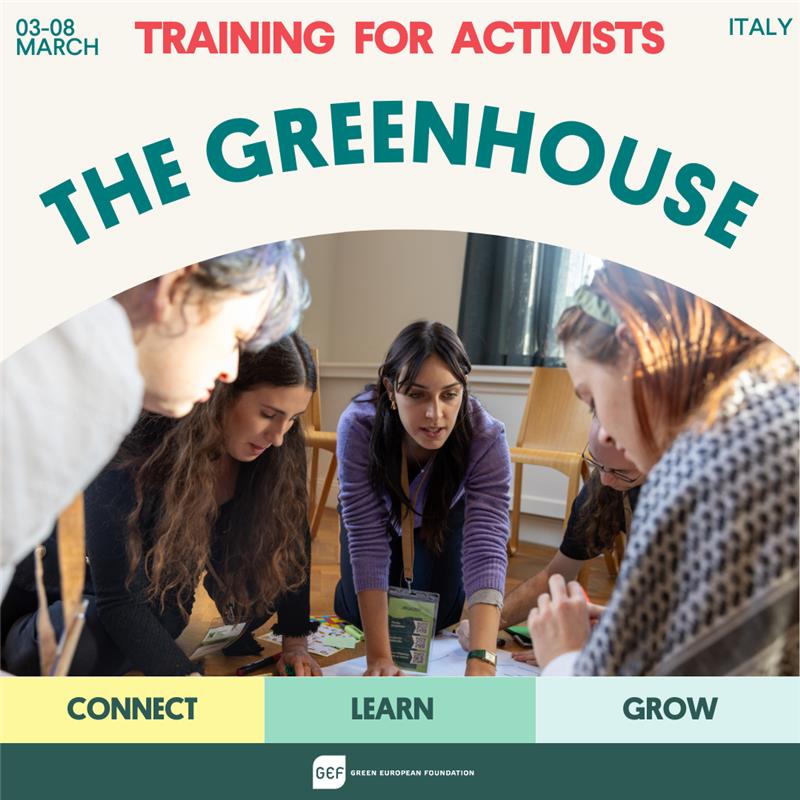
The Greenhouse: Training for Activists is a unique opportunity to connect, learn and grow as part of a new generation of green and green-minded Europeans leading change in their communities. Taking place in Reggello, Tuscany from 03.03.2026-08.03.2026, the training will bring together 30 young Europeans committed to building a more just and sustainable Europe to further build their political skillset through practical training, transnational exchange, and political ecology education. 

Please note that applications for this event are now closed.

About The Greenhouse: Training for Activists 

The Greenhouse Training is a five-day intensive for activists, thinkers, organisers, and anyone committed to shaping a vibrant, sustainable, and democratic Europe. 

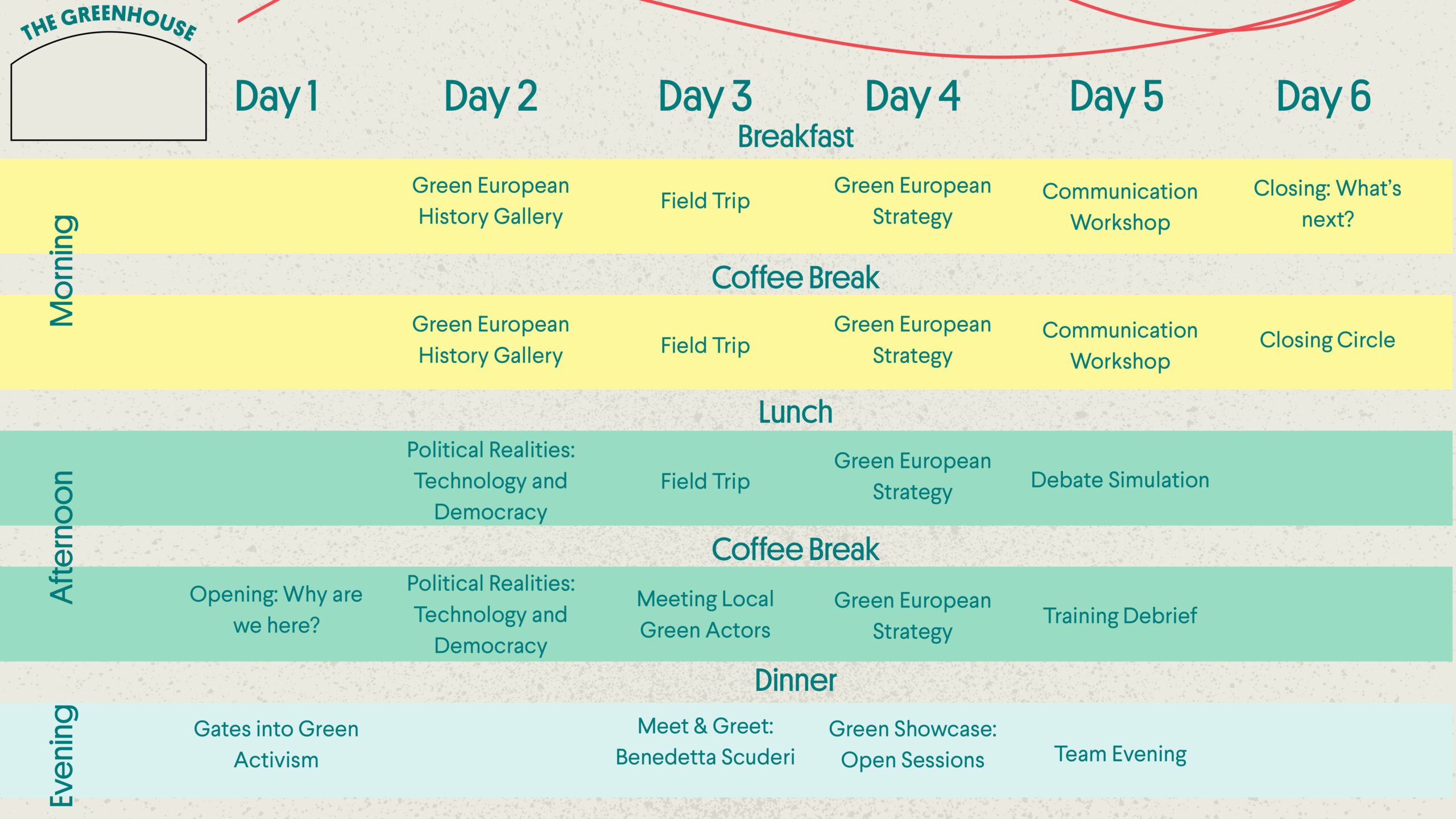
Rooted in political ecology education, the training combines participatory methods, expert-led workshops and debates, and community-building activities.  During the training, participants will deepen their understanding of the roots and trajectories of the green movement, explore pressing societal challenges through a European lens, and strengthen their competences in areas like rhetoric and debating. The March 2026 edition of The Greenhouse centres around the timely theme of “Technology and Democracy”.  

At GEF, we believe that the European green movement is strongest when it is diverse, inclusive, and interconnected. This training is designed to foster lasting relationships and build a resilient cohort of green Europeans ready to lead change in their own communities. 


The training includes:  

  • Political Ecology Sessions exploring the roots and trajectories of the European Green movements, connecting past struggles to current political challenges
  • Deep dive into the theme “Technology and Democracy”
  • Practical skill-building in argumentation and political debate
  • A strong focus on collaboration, peer learning, and European perspectives 
  • Guidance and mentorship from expert facilitators and insights from leading voices in the European Green movement 
  • Networking with fellow European activists and local political actors to foster lasting relationships across borders
  • Introduction into the Greenhouse Community – opening further opportunities for training, mentorship, and networking


Programme:


Next to the five-day training 03-08 March, The Greenhouse: Training for Activists includes three online sessions 

  • Greenhouse pre-training session (24.02.2026 – 17:00 – 18:30) 
  • Greenhouse post-training Session #1 (07.04.2026 – 17:00 – 18:30) 
  • Greenhouse post-training Session #2 (05.05.2026 – 17:00 – 18:30) 

These sessions are an integral part of the training. Your availability during these timeslots is conditional for your application to be considered. 


Expert speakers and Trainers  

Edouard Gaudot – Historian and Political Scientist; Expert on Political Ecology, expert speaker

Benedetta Scuderi – MEP (Italy), Greens/EFA, expert speaker

Benedetta de Marte – Secretary General, European Green Party, expert speaker

Eliza Popper – Co-founder, The Good Enough Company, trainer

Sebastian Huehne – Network & Training Assistant, Green European Foundation, trainer

Local Italian Green Movement Actors (names tbc)

Participation fees and financial considerations 

Successful applicants will be asked to contribute a €75–120 participation fee (sliding scale) to confirm their spot. This contribution supports the Green European Foundation’s co-financing efforts, helping to make the training sustainable and accessible for future generations of activists. We will cover all other costs related to the training, including participant accommodation, catering, and a full travel reimbursement for journeys to and from Italy.

Our aim is to ensure that financial barriers do not prevent committed young activists from taking part in this unique learning experience. No profit is incurred. If the participation fee presents a barrier to your participation, please indicate this in your application – we are committed to finding a solution together.


Participant Profile  

The ideal candidate for The Greenhouse: Training for Activists is: 

  • a young (18–30 years old) green or green-minded activist, academic, community organiser, trainer, journalist, civil society/political actor actively engaged in shaping a more just, sustainable, and democratic society 
  • anchored in local green and progressive movements and/or organisations 
  • motivated to deepen their understanding of political ecology, strengthen their advocacy and debate skills, and interested in exploring the political debates at the intersection of Technology and Democracy. 
  • ready to engage at the transnational level and connect with a diverse network of green-minded peers from across Europe 
  • ready to bring their learning back to their local context through concrete actions and initiatives 
  • eager to join a growing European community of young green leaders and remain actively engaged beyond the training


Project Background

The Greenhouse is the Green European Foundation’s activist training initiative dedicated to offering political education on Europe, capacity building for the green movement at large, and fostering engagement and participation of young leaders and activists across the continent – to support a strong and vibrant European democracy.   

Joining The Greenhouse Training opens doors for continued networking, mentoring, and training as part of the Greenhouse Community – such as facilitated sessions with the biggest thinkers and doers in the European green movement and the opportunity to join our summer trainings, where we delve deeper into the core principles and practices of green leadership and political organising. 

Across its different formats, The Greenhouse nurtures the foundations of collective action and cultivates the routes forward for young European citizens to shape systemic change in their local communities.  


Practicalities 

Date and Time: 03 – 08 March 2026

Location: Reggello (Tuscany), Italy – around one hour south of Florence

Language:   Fluency in both written and spoken English is required to participate in the training 

Participants: 25 activists aged 18 – 30 years from across Europe (EU and non-EU countries) 

Application: Applications for this training are now closed.

If you have any questions about the training, contact training@gef.eu


This event is organised by the Green European Foundation with the financial support of the European Parliament to the Green European Foundation.

Boosting Citizen Participation in the EU Energy Transition

By

The EU is making significant progress in its energy transition. Yet many citizens still struggle with their energy bills. How can households better benefit from renewables roll out and energy savings?

About the event

Over the past 18 months, the Green European Foundation and Heinrich-Böll-Stiftung EU | Global Dialogue have worked with experts in energy and social policy to identify key areas where the EU could act to ensure that citizens and households are able to fully experience the benefits of the energy transition, in their homes, communities and pockets.  

A Knowledge Community of experts from EU institutions, local government, industry, consumer organisations, trade unions and think tanks have examined several existing and new tools in EU legislation to facilitate citizens’ engagement in the energy transition. This work has focused on three actionable areas: affordable and energy efficient housing; benefit sharing of renewable energy projects; and fair allocation of network costs.  

This launch event will serve as a platform to discuss the main findings with policymakers from the European Parliament and the European Commission, as well as experts in energy and social policy, and give the floor to testimonials from energy transition practitioners sharing on-the-ground experience. 

Register here

Agenda 

09:30 Welcome, introduction to the event and to the project 

  • Philippa Nuttall, Financial Times, moderator  
  • Laurent Standaert, Director, Green European Foundation 
  • Roderick Kefferpütz, Director, Heinrich-Böll-Stiftung EU | Global Dialogue
09:35
 
Key note: Promoting citizens’ access to the energy transition
Anne Katherina Weidenbach, Member of Cabinet of EU Commissioner for Energy & Housing
09:45
 
A Citizens Energy Package: What energy transition practitioners need
Local voices on concrete needs and expectations
09:55 Panel 1: Fair network tariffs: How can we fund grid build-out while incentivising innovation and protecting vulnerable households? 

  • Carmen Gimeno, Secretary General, GEODE Europe 
  • Raphael Hanoteaux, Deputy Secretary General, Council of European Energy Regulators 
  • Tom Lewis, Climate Action Network Europe, author ‘Fair network tariffs’ 
  • Bruno Tobback, MEP, S&D, Committee on Industry, Research and Energy 
10:40 Panel 2: Benefit sharing: Is sharing renewable energy profits with host communities a win-win? 

  • Michael Bloss, MEP, Greens/EFA, Committee on Industry, Research and Energy
  • Etienne Charbit, Réseau Cler, author ‘Improving benefit sharing of renewable energy projects’  
  • Vera Kissler (Policy Officer working on renewables and energy system integration, DG ENER)
  • Barbara Nicoloso (Director of Virage Énergie) 
11:25
 
Coffee break
11:40 Panel 3:Affordable and energy efficient homes: How do we make homes warm in winter, cool in summer and financially accessible? 

  • Ada Ámon, Budapest Climate Agency
  • Emily Bankert, Buildings Performance Institute Europe, author Affordable energy efficient homes
  • Mariangiola Fabbri, Member of Affordable Housing Task Force, European Commission
  • Mauricio Yrivarren, Climate Strategy & Partners 
12:30 Closing remarks 
12:40 Lunch 

Practicalities

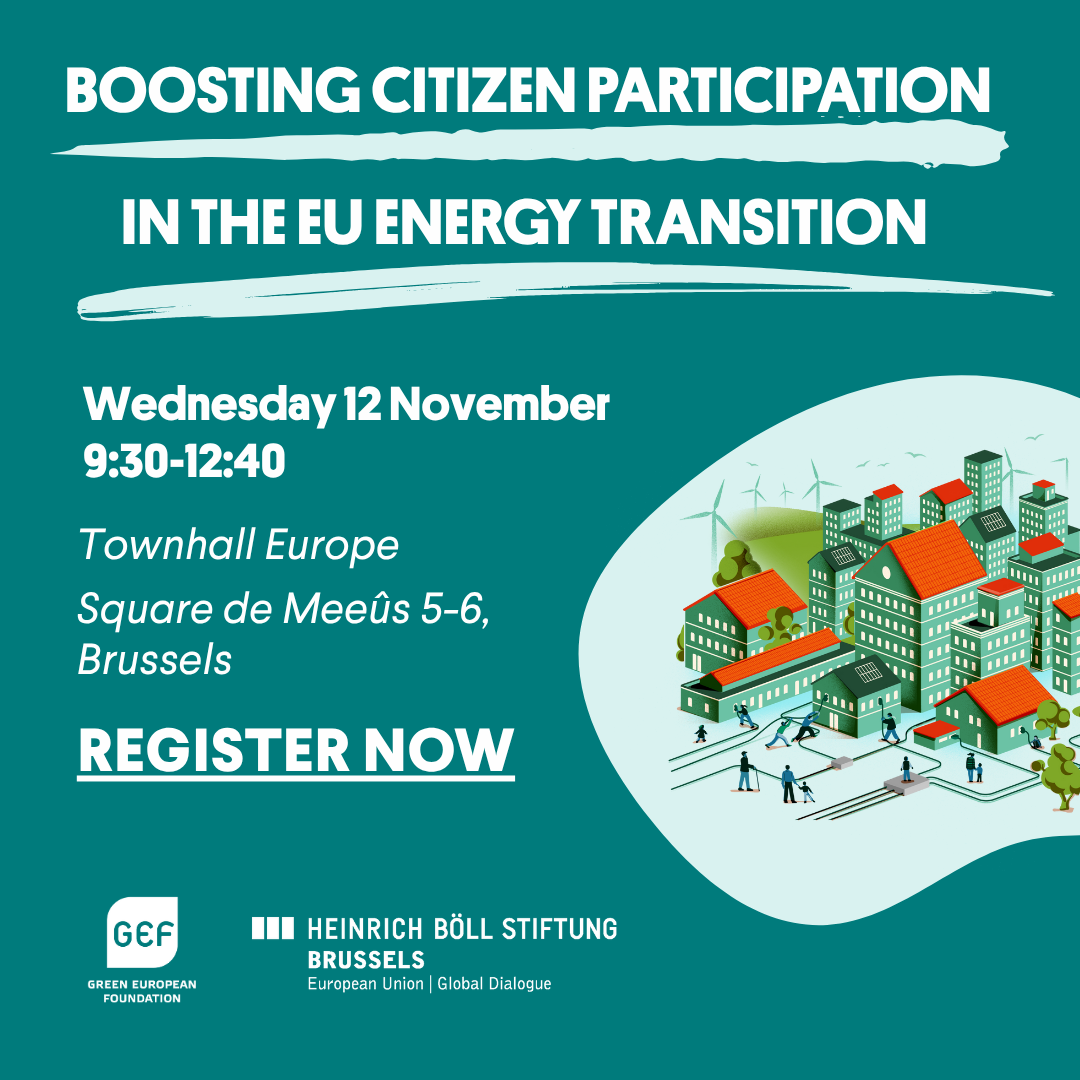
Date: Wednesday 12th November, 9:30 – 12:40

Language: English

Register here


This event is organised by the Green European Foundation with the support of Heinrich Böll Stiftung and the financial support of the European Parliament to the Green European Foundation.

Gender Power: The energy transition through a gender lens

By Publications

EN (French, Italian and Polish version below):

Gender often remains a blind spot in energy policies of the European Union and its Member States. Yet, our relationships to energy are deeply gendered. Women are, for example, disproportionately affected by energy poverty and climate change, while remaining underrepresented in the energy sector and its governance. These inequalities are rooted in our society’s dependence on fossil fuels and the patriarchal systems that sustain them.

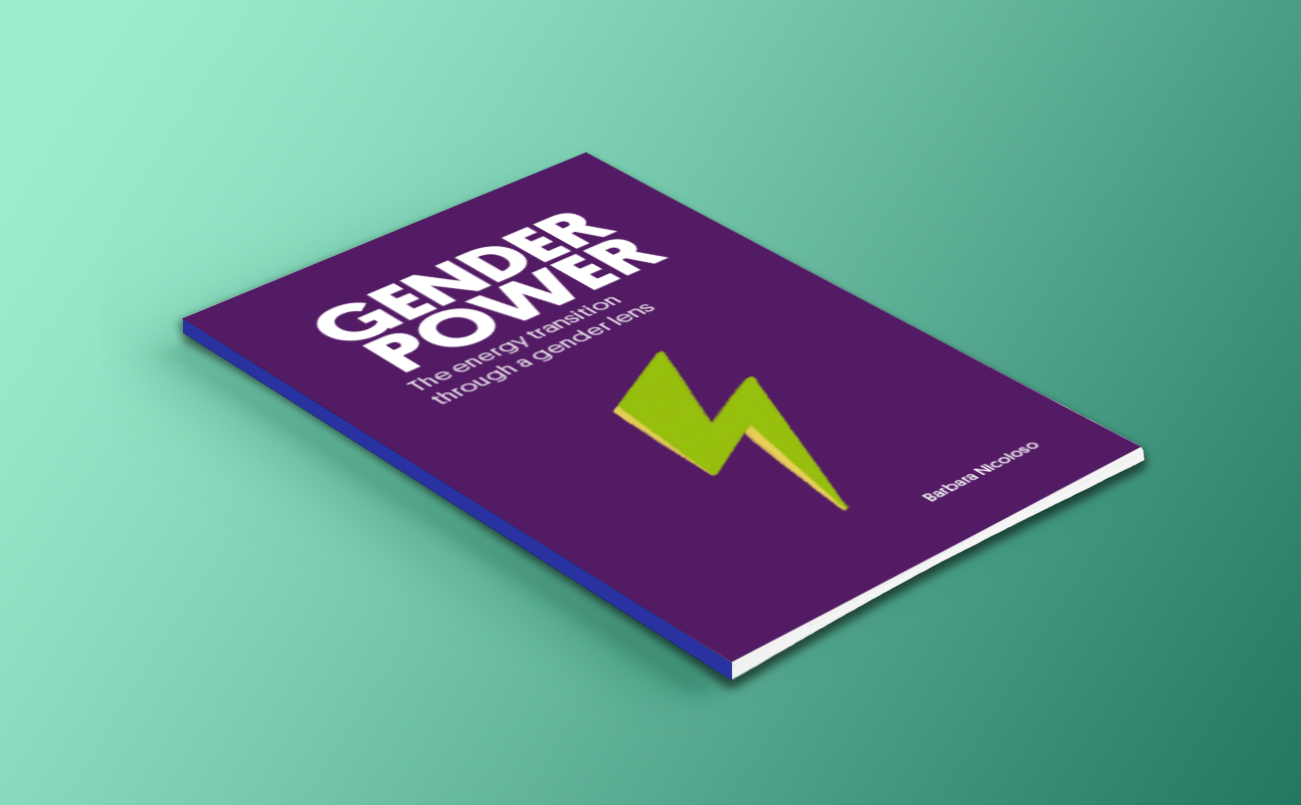
How can we move away from fossil fuels and carry out a socially just energy transition while reducing gender inequalities? In her new essay, Gender Power, Barbara Nicoloso explores the deep historical links between gender and energy and skillfully outlines a path toward an equitable and just energy transition.

About

This essay is divided into three chapters, which take stock of gender inequalities in Europe, analyse the links between fossil fuel energy systems and gender inequalities, and then identify ways of avoiding their reproduction in a model based on sufficiency, efficiency and renewable energy. The aim is also to show how transition policies, and in particular energy sufficiency policies, can be levers for reducing gender inequalities. Finally, we will set out the political conditions necessary for the fight to preserve the environment and the societal fight for gender equality to go hand in hand.

The aims of this essay are in line with those of the Green European Foundation: to move the political and public debate forward, towards a more social and sustainable Europe;
to support elected representatives and local actors in implementing a just transition; to promote inclusive policies to achieve Europe’s climate and energy objectives; and to ensure that the energy transition does not amplify social, ethnic and gender inequalities and can, on the contrary, help to reduce them. The essay is based on the available scientific and institutional literature on the subject, as well as interviews conducted with stakeholders with field actors as part of a Knowledge Community composed of representatives from associations, research centres, local governments, and elected officials. This group met from September 2023 to April 2024 to discuss the gender dimension of the energy transition in both the French and European contexts. This Knowledge Community also led to the publication of the policy brief “Putting Gender at the Heart of the EU Energy Transition”, co-authored by Barbara Nicoloso, which you can find by clicking here.

Author

  • Barbara Nicoloso is the director of Virage Énergie and a lecturer at Sciences Po Lille.

Please click here to access the English translation of the essay.


FR:

La question du genre est un angle mort des politiques énergétiques et climatiques actuellement engagées par les États membres de l’Union européenne. Pourtant, les femmes sont plus impactées que les hommes par la précarité, vivent davantage dans des logements de mauvaise qualité, utilisent plus les transports en commun… Tout en étant sous-représentées dans les métiers de l’énergie. 

Comment sortir des énergies fossiles et mener une transition énergétique socialement juste en réduisant les inégalités de genre ? Dans son nouvel essai, « Gender Power », Barbara Nicoloso explore les liens historiques profonds entre le genre et l’énergie, et esquisse habilement la voie à suivre pour parvenir à une transition énergétique équitable et juste. 

A propos

Cet essai est construit autour de trois chapitres permettant de dresser l’état des lieux des inégalités de genre en Europe, d’analyser les liens entre un modèle énergétique carboné basé sur les combustibles fossiles et les inégalités de genre, pour ensuite identifier la façon d’éviter leur reproduction dans un modèle reposant sur la sobriété et les énergies renouvelables. Il s’agira également de montrer comment les politiques de transition, et en particulier les politiques de sobriété énergétique, peuvent être des leviers pour réduire les inégalités de genre. Enfin, nous exposerons les conditions politiques nécessaires pour que la lutte pour la préservation de l’environnement et la lutte sociétale pour l’égalité de genre aillent de pair. 

L’objectif de cet essai rejoint ceux poursuivis par la Green European Foundation, à savoir, faire avancer les débats politiques et publics vers une Europe plus sociale et durable, accompagner les élus et acteurs locaux dans la mise en place d’une transition juste, promouvoir des politiques inclusives pour atteindre les objectifs climatiques et énergétiques européens et s’assurer que la transition énergétique n’amplifie pas les inégalités sociales, ethniques, et de genre et peut au contraire contribuer à les réduire. Il se base sur la littérature scientifique et institutionnelle disponible sur le sujet ainsi que sur des entretiens réalisés avec des actrices et acteurs de terrain dans le cadre d’une Knowledge Community (Communauté de connaissances) composée de représentant.es d’associations, de centres de recherche, de collectivités locales, d’élu.es qui se sont réunies de septembre 2023 à avril 2024 pour discuter de la dimension genrée de la transition énergétique dans le contexte français et européen. 

Cette communauté de connaissances a également donné lieu au policy brief « Le genre au cœur de la transition énergétique de l’UE », co-écrite par Barbara Nicoloso, que vous pouvez trouver en cliquant ici .

Autrice

  • Barbara Nicoloso est directrice de Virage Énergie et enseignante à Sciences Po Lille.

Veuillez cliquer ici pour accéder à la version française de la publication.


IT:

Il genere rimane spesso un punto cieco nelle politiche energetiche dell’Unione Europea e dei suoi Stati membri. Eppure, il nostro rapporto con l’energia è profondamente influenzato dalle dinamiche di genere. Le donne, ad esempio, sono colpite in modo sproporzionato dalla povertà energetica e dai cambiamenti climatici, pur rimanendo sottorappresentate nel settore energetico e nella sua governance. Queste disuguaglianze sono radicate nella dipendenza della nostra società dai combustibili fossili e nei sistemi patriarcali che li sostengono. Come possiamo abbandonare i combustibili fossili e realizzare una transizione energetica socialmente equa, riducendo al contempo le disuguaglianze di genere? Nel suo nuovo saggio, Gender Power, Barbara Nicoloso esplora i profondi legami storici tra genere ed energia e delinea abilmente un percorso verso una transizione energetica equa e giusta.

Informazioni

Questo saggio è suddiviso in tre capitoli, che fanno il punto sulle disuguaglianze di genere in Europa, analizzano i legami tra i sistemi energetici basati sui combustibili fossili e le disuguaglianze di genere, e infine individuano i modi per evitare che queste si riproducano in un modello basato sulla sufficienza, l’efficienza e le energie rinnovabili. L’obiettivo è anche quello di mostrare come le politiche di transizione, e in particolare quelle di sufficienza energetica, possano essere leve per ridurre tali disuguaglianze. Infine, il testo definisce le condizioni politiche necessarie affinché la lotta per la salvaguardia dell’ambiente e la lotta sociale per la parità di genere possano andare di pari passo.

Gli obiettivi di questo saggio sono in linea con quelli della Green European Foundation: far progredire il dibattito politico e pubblico verso un’Europa più sociale e sostenibile; sostenere i rappresentanti eletti e gli attori locali nell’attuazione di una transizione giusta; promuovere politiche inclusive per raggiungere gli obiettivi climatici ed energetici dell’Europa; e garantire che la transizione energetica non amplifichi le disuguaglianze sociali, etniche e di genere e possa, al contrario, contribuire a ridurle. Il saggio si basa sulla letteratura scientifica e istituzionale disponibile sull’argomento, nonché su interviste condotte con le parti interessate e gli attori sul campo nell’ambito di una knowledge community composta da rappresentanti di associazioni, centri di ricerca, amministrazioni locali e funzionari eletti. Questo gruppo si è riunito da settembre 2023 ad aprile 2024 per discutere della dimensione di genere della transizione energetica sia nel contesto francese che in quello europeo. Questa comunità della conoscenza ha anche portato alla pubblicazione del documento programmatico “Putting Gender at the Heart of the EU Energy Transition” (Mettere il genere al centro della transizione energetica dell’UE), scritto in collaborazione con Barbara Nicoloso, che potete trovare cliccando qui.

Informazioni sull’autrice

  • Barbara Nicoloso è direttrice di Virage Énergie e docente presso Sciences Po Lille.

Clicca qui per accedere alla traduzione italiana della pubblicazione.

PL:

Kwestia płci często pozostaje pomijana w polityce energetycznej Unii Europejskiej i jej państw członkowskich. Jednak nasze relacje z energią są głęboko uwarunkowane płcią. Kobiety są na przykład nieproporcjonalnie dotknięte ubóstwem energetycznym i zmianami klimatycznymi, a jednocześnie pozostają niedostatecznie reprezentowane w sektorze energetycznym i jego zarządzaniu. Nierówności te wynikają z uzależnienia naszego społeczeństwa od paliw kopalnych i patriarchalnych systemów, które je podtrzymują.

Jak możemy odejść od paliw kopalnych i przeprowadzić sprawiedliwą społecznie transformację energetyczną, jednocześnie zmniejszając nierówności płciowe? W swoim nowym eseju „Gender Power” Barbara Nicoloso bada głębokie historyczne powiązania między płcią a energią i umiejętnie nakreśla drogę do sprawiedliwej i równej transformacji energetycznej.

O

Niniejszy esej podzielony jest na trzy rozdziały, w których dokonano przeglądu nierówności płci w Europie, przeanalizowano powiązania między systemami energetycznymi opartymi na paliwach kopalnych a nierównościami płci, a następnie wskazano sposoby uniknięcia ich powielania w modelu opartym na wystarczalności, efektywności i energii odnawialnej. Celem jest również pokazanie, w jaki sposób polityka transformacji, a w szczególności polityka wystarczalności energetycznej, może stanowić dźwignię służącą zmniejszeniu nierówności płci. Na koniec przedstawimy warunki polityczne niezbędne do tego, aby walka o ochronę środowiska i walka społeczna o równouprawnienie płci szły w parze.

Cele niniejszego eseju są zgodne z celami Zielonej Fundacji Europejskiej: przesunięcie debaty politycznej i publicznej w kierunku bardziej społecznej i zrównoważonej Europy;
wspieranie wybranych przedstawicieli i lokalnych podmiotów w realizacji sprawiedliwej transformacji; promowanie polityki sprzyjającej włączeniu społecznemu w celu osiągnięcia europejskich celów klimatycznych i energetycznych; oraz zapewnienie, aby transformacja energetyczna nie pogłębiała nierówności społecznych, etnicznych i płciowych, a wręcz przeciwnie, przyczyniała się do ich zmniejszenia. Esej opiera się na dostępnej literaturze naukowej i instytucjonalnej na ten temat, a także na wywiadach przeprowadzonych z zainteresowanymi stronami i podmiotami działającymi w terenie w ramach społeczności wiedzy złożonej z przedstawicieli stowarzyszeń, ośrodków badawczych, samorządów lokalnych i wybranych urzędników. Grupa ta spotykała się od września 2023 r. do kwietnia 2024 r., aby omówić wymiar płci w transformacji energetycznej zarówno w kontekście francuskim, jak i europejskim. Wspólnota wiedzy doprowadziła również do publikacji dokumentu strategicznego „Putting Gender at the Heart of the EU Energy Transition” (Płeć w centrum transformacji energetycznej UE), którego współautorką jest Barbara Nicoloso. Dokument ten można znaleźć tutaj.

Autorka

  • Barbara Nicoloso jest dyrektorką Virage Énergie i wykładowczynią w Sciences Po Lille.

Kliknij tutaj, aby uzyskać dostęp do angielskiego tłumaczenia eseju.


Published by the Green European Foundation with the financial support of the European Parliament to the Green European Foundation. The European Parliament is not responsible for the content of this publication. The views expressed in this publication are solely those of the author and do not necessarily reflect the views of the European Parliament.  

Green Horizons Academy – Good for Nature (Belgrade)

By

About the Event

The Green Horizons Academy (GHA) is an annual space for discussion and idea development around the future of environmental and social policies in Europe. This year’s edition, Good for Nature, will focus on advocating for strong biodiversity protection policies and empowering civic engagement in environmental efforts. 

In 2025, nature protection activists and green minded individuals in general face mounting challenges. The EU’s Biodiversity Strategy 2030 is under pressure, environmental laws are threatened by corporate lobbying, and civic movements face increasing repression amid a growing trend of authoritarianism. Meanwhile, in Serbia and across the Balkans, local movements struggle to protect ecosystems from extractivist industries, such as lithium mining and hydropower projects. In this context, GHA: Good for Nature will bring together civil society representatives, grassroots activists, EU policy experts, and decision-makers to strategize and build knowledge on defending nature and strengthening environmental democracy. 

The two-day conference will feature a public panel debate, a field trip to explore local environmental challenges, workshops, and networking opportunities. 

Project Background

GHA: Good for Nature is part of the Green European Foundation’s broader mission to promote a sustainable and socially just future. This year’s edition follows the 2024 discussions on extractivism and the European Green Deal’s external impacts, shifting the focus toward biodiversity and nature restoration as central pillars of Europe’s green transition, as well as avoiding the clashes that can happen between the fight for biodiversity and the development of sustainable energies. 

Programme

DAY 1: PUBLIC EVENT – no pre-registration needed

16:00 Arrival of the participants and public
17:00 Panel 1:  Biodiversity and consistency in EU policies

  • Igor Kalaba – Center for Environment, (Bosnia and Herzegovina)
  • Belma Šestović – Wildlife Montenegro
  • Nataša Đereg – National Convention on European Union in Serbia (NCEU)
  • Vanja Jakšić – WWF Adria (Belgrade)

Moderator: Žaklina Živković, Polekol

18:30 Panel 2: Ecosystems, local communities and decarbonisation

  • Ivan Milosavljević – Rangers of East Serbia
  • Aleksandar Dragićević – Eco activist, Montenegro
  • Milja Vuković – Blue and Green initiative
  • Andrey Ralev – Bankwatch SEE
  • Marko Mirč – Institute for Biological Research “Siniša Stanković”

Moderator: Iva Marković, Polekol

20:00 Dinner for the participants and speakers – at the venue

DAY 2: CLOSED DOOR – only selected applicant

09:00 Workshop 1: Sandra Jovanović – Biodiversity Expert – EU policies for the people!
10:30 Workshop 2: Discussions around case studies with the participants and lessons learned from the day before’s panel discussions
12:00 Field trip to Bara Reva, Lunch
14:00 Ana Džakić, NGO Bela Čaplja (White Heron) – Presentation about the local struggle, Networking opportunities
18:00 Trip back to Belgrade
19:00 Dinner & Goodbyes


Practicalities

Date: 28-29 March 2025
Location: Belgrade, Serbia / online live retransmission on our partner’s instagram channel
Venue: KC Grad, Braće Krsmanović 4, Belgrade, Serbia
Language: English
Costs coverage: We will provide catering during the event and cover any travel costs within Serbia. Accommodation and international travel costs will be assessed on a case-by-case basis and as funds allow. We however would really like to mention that this should not be a barrier to apply ! Please indicate your needs in the application form.

Who Should Apply?

We are looking for participants who are: 
Environmental activists, civil society representatives, students, researchers, or decision-makers 
Passionate about biodiversity, climate justice, and civic engagement 
Interested in networking and collaborating with green-minded individuals from Serbia and beyond

Limited spots available – apply now to this link! Applications will be reviewed on a rolling basis. To better mitigate the travel cost, the deadline for international application is 14th of March, the deadline for Serbian application is the 19th of March.
APPLICATIONS ARE NOW CLOSED

If you have any question, please reach out to anthony.msika@gef.eu


This event is organized by the Green European Foundation with the support of  Polekol and the financial support of the European Parliament to the Green European Foundation. The European Parliament is not responsible for the content of this publication.

Gender at the Heart of the EU Energy Transition: Key learnings from the French case

By Publications

About

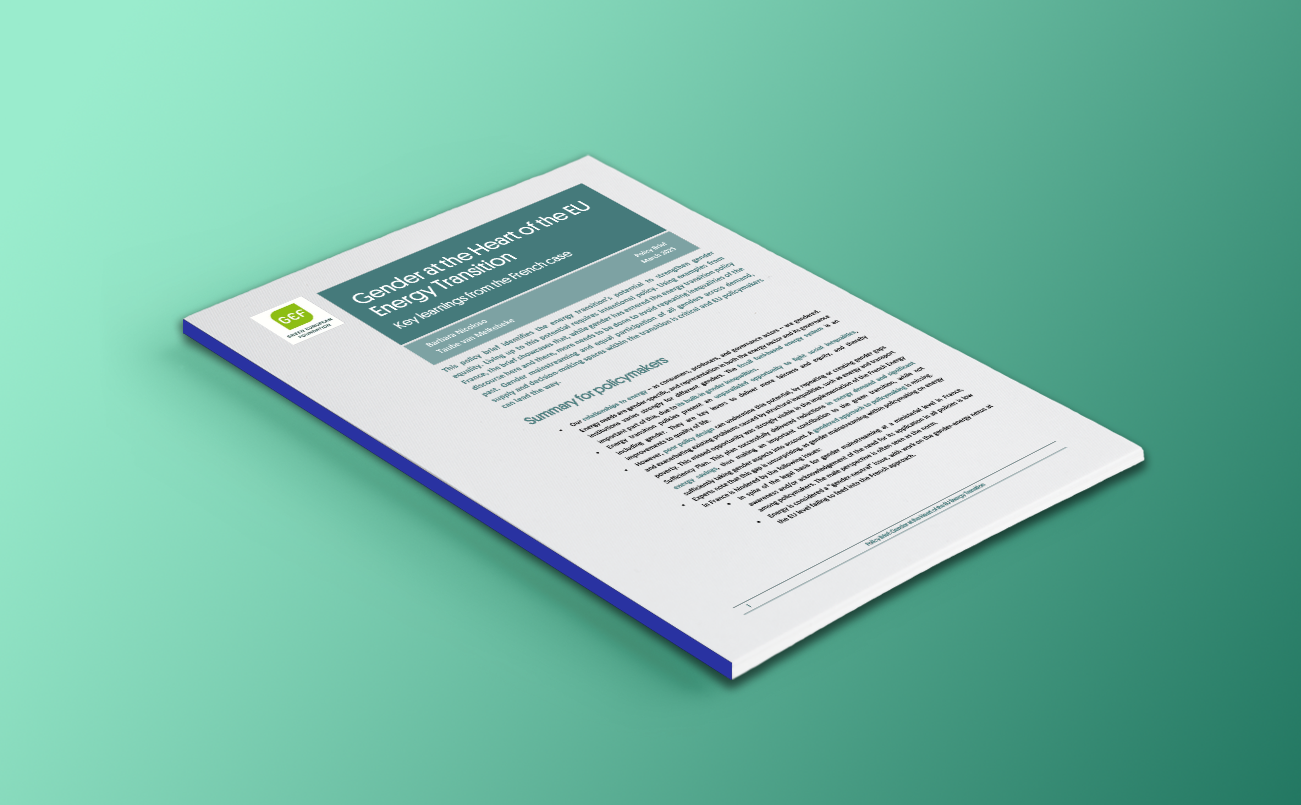
The policy brief “Gender at the Heart of the EU Energy Transition” identifies the energy transition’s potential for gender equality. The publication exposes the gendered nature of our relationships to energy and the link between the fossil-based energy systems and gender inequalities. It examines gender-based disparities within the three key roles that define our relationships with energy: as consumer, producer, and governance actor.

The energy transition has the potential to tackle these inequalities. But to effectively counter these traditional dynamics, intentional policy is required. Using examples from France, the brief showcases that, while gender has entered the energy transition policy discourse here and there, more needs to be done to avoid repeating inequalities of the past. We argue that gender mainstreaming and active participation of all genders across demand, supply and decision-making spaces within the transition are critical and that EU policymakers must – and can – lead the way.


Authors

  • Barbara Nicoloso, Director of the French NGO Virage Énergie,
  • Taube van Melkebeke, Head of Policy at the Green European Foundation. For further information, contact her at taube.vanmelkebeke@gef.eu.

Published by the Green European Foundation with the financial support of the European Parliament to the Green European Foundation. The European Parliament is not responsible for the content of this publication. The views expressed in this publication are solely those of the authors and contributors and do not necessarily reflect the views of the European Parliament. 


Strengthening Participation in the Energy Transition: Five action areas for the new EU policy cycle (Brussels)

By

About the event

Despite the surge in support for right and far-right parties in the European elections, polls show that European citizens continue to see climate as a top priority for the EU.  The transition to renewables can bring energy security and cheaper bills whilst being the only credible response to the climate crisis. But to be a success, the benefits need to reach everyone. This session will examine how ensure better participation and inclusion in the energy transition in the new EU mandate.  

Project background

Over the past year, the Heinrich-Böll-Stiftung European Union and the Green European Foundation have gathered a Knowledge Community of more than 30 energy and social policy experts from very diverse backgrounds. The group has developed a series of five briefs with recommendations for the EU’s new policy cycle, covering five action areas for boosting participation in the energy transition: energy sharing, electricity tariffs, renovation one-stop-shops, just transition governance and local transition management.  

At this launch event, the core authors from the Knowledge Community will present their key findings and discuss them with stakeholders from EU institutions, local government and civil society. 

Speakers

The event will feature interventions from the following speakers and be moderated by Philippa Nuttall, from the Financial Times’ Sustainability Views.

  • Benedetta Scuderi,MEP Greens/EFA, Italy 
  • Thomas Pellerin-Carlin, MEP S&D, France 
  • Ivo Schmidt, Acting Head of Unit, Chief Economist, DG Energy, European Commission 
  • Frank Siebern-Thomas, Head of Unit, Fair, Green, and Digital Transitions, DG for Employment, Social Affairs and Inclusion, European Commission 
  • MāraBerzina, SecretaryGeneral, Council of European Energy Regulators (CEER) 
  • Sorcha Edwards, Secretary General, Housing Europe 
  • Vincent Fristot, Vice-Mayor of Grenoble, Responsible for Energytransition
  • Ihsane Haouach, Energy expert and author, and Advisory Board Member for the Brussels-Capital Region Regulator for Electricity and Gas (Brugel) 
  • Laurens Rutten, Senior Energy Policy Officer, The European Consumer Organisation (BEUC) 

Programme

14:00 Welcome and introduction 
14:15 Fireside chat with Benedetta Scuderi MEP and Ivo Schmidt (DG ENER)
14:40 Panel 1: How to strengthen participation in the energy transition in the new EU policy cycle: just transition and multi-level governance 
15:35 Coffee break 
15:55 Panel 2: How to help households: tools for citizens’ fair participation in the EU’s energy transition  
16:50 Closing remarks, Frank Siebern-Thomas (DG EMPL)
17:00 Drinks reception 

Practicalities

Date and Time: 21st November, 2pm-5pm CET  

Location: The Press Club Brussels, Rue Froissart 95, 1040 Brussels  

Language:  English   

Registration: Please register in advance here (https://forms.monday.com/forms/cb2ddef2838c251f69a58c6d430d2655?r=use1 ) 


This event is co-organised by the Green European Foundation and Heinrich-Böll-Stiftung EU, with the financial support of the European Parliament and Heinrich-Böll-Stiftung EU to the Green European Foundation. The European Parliament is not responsible for the content of this event. 

Green-Red Dialogues: The European Green Deal, At Risk

By

About the event:

The European Green Deal is facing major hurdles due to economic pressures, political tensions, and competing industrial interests, threatening the EU’s climate goals. This event will examine how to overcome these obstacles and secure a just and green future for Europe. Targeted at individuals passionate about climate policy, sustainability, and social justice, the event aims to foster a dialogue between experts from various fields. The format includes panel discussions, audience engagement, and hybrid participation to maximize involvement. The objective is to identify actionable strategies to protect and advance the European Green Deal in a time of crisis.

Project background:

GEF’s Green Red Dialogues, organised with the support of Fundació Nous Horitzons, aim to tackle pressing issues of our time and the challenges Europe faces with an explicit social and green lens. From COVID-19 to the war in Ukraine, far right resurgence to feminist struggles – these issues tend to reverberate across multiple countries and domains. Through the dialogues, we connect the red and the green and highlight Southern European perspectives on crucial topics and developments across the continent.

Speakers:

  • María Rosa Martínez Rodríguez, Secretary of State for Social Rights
  • Xan López, Sustainability Expert
  • Mariano Sanz, CCOO
  • Taube Van Melkebeke, GEF Policy Manager

Programme:

  • 18:30: Welcome and introduction by Marc Rius, president of the Fundació Nous Horitzons (Moderator)
  • 18:45: First round of questions to panelists (5 minutes per speaker)
  • 19:10: Collective discussion on the future of the European Green Deal
  • 19:30: Open floor for audience questions
  • 19:50: Closing remarks and wrap-up

Practicalities:

Date and Time: 1st October, 18:30 – 19:50

Location: Espai Assemblea de Comisiones Obreras (Via Laietana 16, Barcelona), with hybrid participation

Language:  The session will be in Catalan, Spanish, and English. While most speakers will present in Spanish, the event will primarily be hosted in Catalan. Translation services will be provided for all attendees.

Registration: Please register in advance here. You can also join the Zoom call directly via this link.


This event is organised by the Green European Foundation with the support of Fundacio Nous Horitzons and the financial support of the European Parliament to the Green European Foundation.

Next Generation – Summer Academy (Siófok)

By

About the event:

Young people today are faced with a plethora of (bad) news and complex challenges, and it can be difficult to see the forest for the trees. How do local water struggles connect to the EU’s green agenda? What can health system failures tell us about rethinking care ahead of the next pandemic? And what is the role of education in building a society that is ready for a green and just transition?

With interactive sessions and expert inputs, this summer academy tries to combat skepticism and misinformation with vibrant discussions and ideas for change. Join us to think and work with others who are equally committed to a green future, and learn more about potential levers of change – in Hungary and across Europe.


Project background:

GEF’s Next Generation summer academy builds on several years of training young green activists in Hungary and beyond, offering tools, knowledge, and skills to counter disengagement and Euroscepticism in times of crisis.


Speakers:

  • Gergely Karácsony – Mayor of Budapest
  • Miklós Sebők – Research Professor at Centre for Social Sciences
  • Lili Aschenbrenner – Fridays for Future
  • István Bart – Energiaklub
  • Mia Machac-Tóth – United Forum of Students
  • Rebeka Szabó – Párbeszéd (Dialogue)
  • Eliza Popper – Green European Foundation
  • László Szilágyi – Progressive Hungary Foundation

And many more!


Programme:

Please note that the exact programme and timings remain subject to change. Registered participants will be informed accordingly.

Saturday, 14 September

13:00 – 13:30    Welcome speeches and icebreaker

13:30 – 14:15     Book talk: “The Beginning of the World”

14:15 – 15:00     Green Europe 2030: what comes next?

15:00 – 15:45    Future of the Green Deal following the European elections

15:45 – 17:00    BREAK

17:00 – 18:00    Fight against climate change: is adaptation really our last chance?

18:00 – 19:00    Next Generation of Green Europe: a conversation with the Mayor of Budapest

19:00                   Dinner, campfire, and party

Sunday, 15 September

09:20 – 10:00  Book talk: “Handbook for Revolutionaries”

10:00 – 10:45   U.S. presidential election and the future of global climate policies

10:45 – 11:00    BREAK

11:00 – 11:45     From silence to action: where is the future of education?

11:00 – 12:00    Sustainable healthcare on the brink of climate change

12:45 – 13:30    LUNCH and closing


Practicalities:

Date and Time: Saturday, 14 September (13:00) – Sunday, 15 September (14:00)

Location: Siófok Youth Hotel, Balaton, Hungary

Language: Hungarian

Registration: Please register in advance via this link. Meals and accommodation are provided free of charge, you just need to cover your own travel. Spots are limited, so do register as quickly as possible!


This summer academy is organised by the Green European Foundation with the support of the Progressive Hungary Foundation (MMAA) and the financial support of the European parliament to the Green European Foundation.

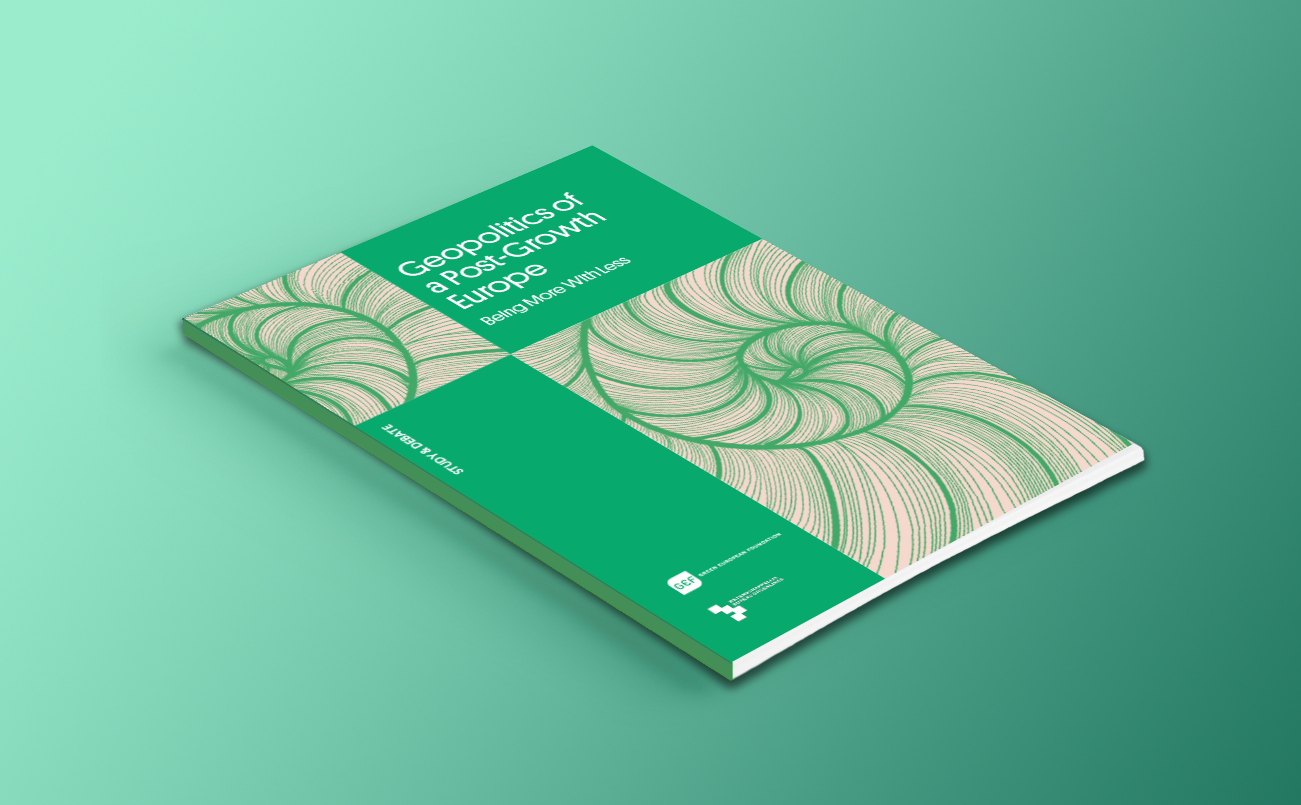
Geopolitics of a Post-Growth Europe

By Uncategorized

Context

As it stands, degrowth fails to resonate with experts in foreign and security policy. It is easy to see why. In geopolitics, many determinants of power – trade, aid, tech nology, defence – are closely linked to GDP. If they do not ignore planetary boundaries altogether, geopolitical pundits trumpet the ‘green growth’ narrative so as to reconcile ecological and geopolitical security. It is this very narrative that degrowthers aim to refute.

It is better to manage the end of growth through democratic deliberation than to have it imposed on us by ecological breakdown.


Objectives

It is unlikely that we will be able to defuse the climate time bomb, let alone other ecological threats, as long as our economy continues to grow. But what would the end of economic growth mean for geopolitics? Could a European Union that is the first to embrace post-growth still be a global actor? Would it be able to defend itself, its allies, democracy, human rights, and the international rule of law at a time when aggressive autocracies are invading or threatening their democratic neighbours? This report addresses uneasy questions that few have dared to ask.


Project Background

This report is produced by the Green European Foundation. It is part of the project Geopolitics of a Post-Growth Europe. The project is led by Wetenschappelijk Bureau GroenLinks (NL) and supported by BlueLink (BG), Center for Green Politics (RS), Etopia (BE), Fondation de l’Écologie Politique (FR), Green House Think Tank (UK), and Transición Verde (ES). Check out www.geopoliticspostgrowth.eu for more interviews, videos, and other project outputs.


Available Translations

Dutch

Spanish

Serbian

French

Bulgarian

Czech

Portuguese


This report has been realised by the Green European Foundation with the support of  Wetenschappelijk Bureau GroenLinks and the financial support of the European Parliament to the Green European Foundation. The European Parliament is not responsible for the content of this publication.

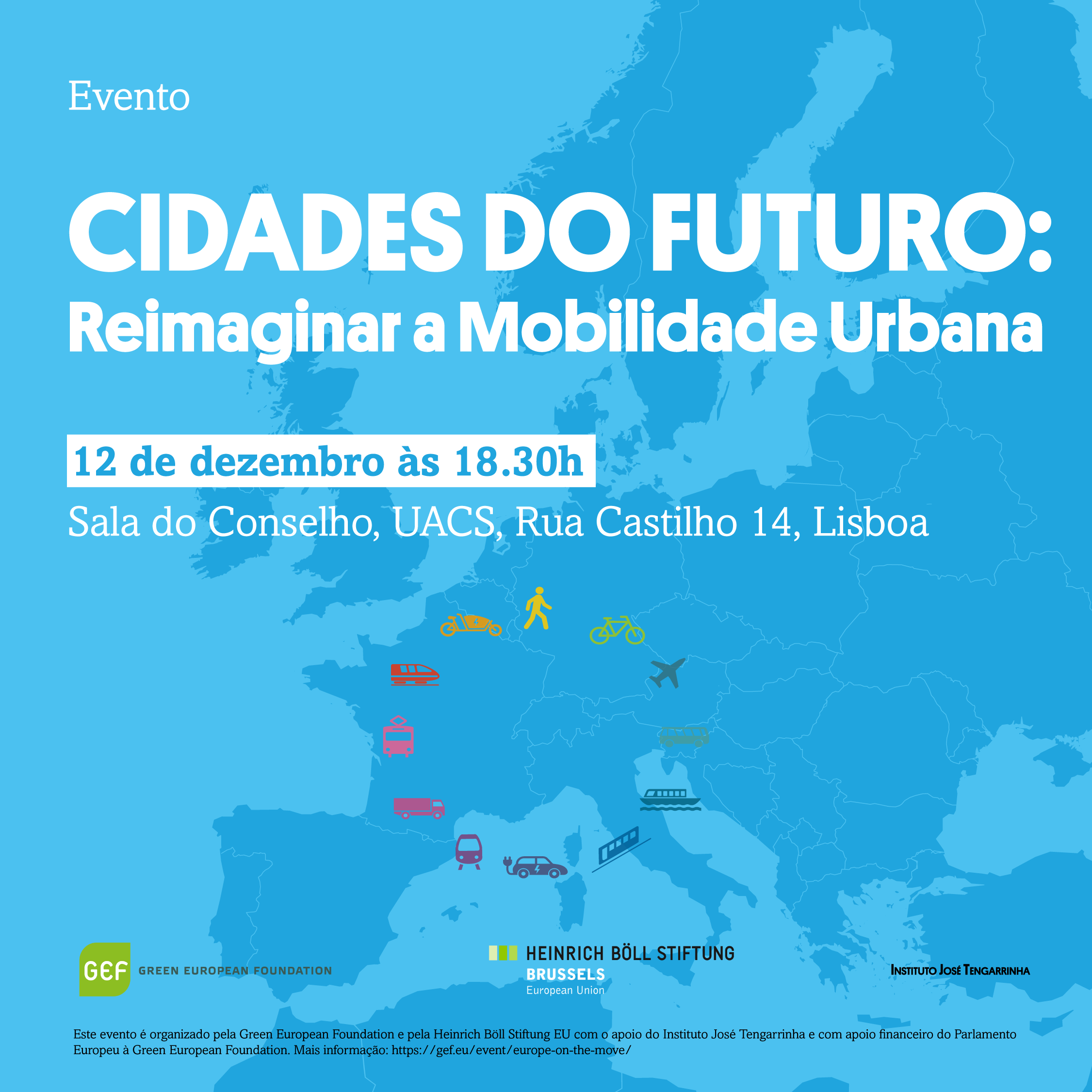
Moving to the Future: Reimagining Urban Mobility (Lisbon)

By

About the event

The present ecological crisis impels us to seek a change in the way we move, leading to increased efforts towards the decarbonisation of mobility. A mix of new and old solutions are key to change the urban mobility panorama, namely the electrification and the expansion of public transportation networks, and the creation of walking or cycling infrastructure to make active mobility attractive and pleasant. This change can also be seen as an opportunity to improve people’s lives by decreasing commuting time, improving the air quality, reducing noise, and promoting an active lifestyle. 

In a simple sentence, there is a need to shift the cities’ focus from cars to people. To achieve this, a new mindset that prioritises public transportation is needed, or “the social ideology of the motorcar”, as the philosopher André Gorz named it back in 1973. 

Sustainable mobility must not only encompass ecological considerations, but also needs to include an intersectional approach which takes gender and accessibility dimensions into account. As such, we will also speak about gender and accessibility, and dive into how to make daily commuting in metropolitan areas more sustainable, accessible, and inclusive. 

Project background

This event is part of “Europe on the Move: Shaping the Future of Sustainable Mobility in the Iberian Peninsula” event series, which aims to nurture the debate in Portugal and Spain around the future of mobility and the Green Deal, with a particular eye for the challenges and opportunities for sustainable mobility and how they relate to Iberian realities.  

Speakers

  • Manuel Banza, EMEL 
  • Carla Castelo, Local Councillor at Oeiras 
  • Rosa Félix, Instituto Superior Técnico 
  • Philipp Cerny, Chief Executive Editor of the European Mobility Atlas 
  • More to be announced 

Practicalities

Date and Time: 12th December, 6:30pm-8:30pm GMT 

Location: Sala do Conselho, UACS, Rua Castilho 14, Lisboa 

Language: The main languages of the event will be Portuguese and English, with simultaneous interpretation provided EN<>PT.   

Registration: N/A 

Other useful info: A recording will be uploaded to the GEF Youtube channel following the event. 

Recommended reading: 


This event is organised by the Green European Foundation and Heinrich Böll Stiftung EU with the support of Instituto José Tengarrinha and the financial support of the European Parliament to the Green European Foundation. 

Green deal and Beyond II (Skopje)

By

About the event:

In the face of multiple crises – geopolitical, climate and energy, but also the very erosion of Europe’s social fabric by its outdated economic model – what should the Greens bring to the table to ensure that the European Green Deal (EGD) switches to the next gear into a social EGD or EGD 2.0? This session will bring together voices and expertise from politics and civil society to lay bare the flaws and limitations of the current Green Deal and propose the pathways we need to explore to make a Green Deal worthy of its name.

The Green Deal is a comprehensive progressive plan to combat the climate disaster while eliminating socio-economic inequalities in the country. The plan is a strategic framework for collective action towards transforming the functioning of the economic and energy system by creating thousands of low-carbon jobs for a better life for all living beings in harmony with nature. The same principles that will apply to EU member states by European Green Deal are mirrored in the region by the Green Agenda for the Western Balkans.

In the Green Agenda document regarding the circular economy, the countries of the Western Balkans will strive to contribute to the protection of the environment and the minimization of the amount of waste generated in the region, while with a large set of activities to be committed to the depollution of the air, water and soil.

In proposing this project as a transnational project, we see a huge importance not only in empowering citizens to engage with topics of our interest (climate, energy, water, biodiversity, health), but also in strengthening linkages between the Greens across Europe and engaged citizens, with the purpose of making them more relevant, inclusive and connected with social groups and movements.

Guests and experts from academic and practical backgrounds will share their expertise with the participants and enable an exchange of ideas and concepts.

On this event we will discuss with experts, institutions, NGOs and activists on the perspectives of the Green Agenda for the WB.


Project background

This event is part of the Green European Foundation’s project Green deal and Beyond. The first focus of this project is based on proposals of the green family to integrate ambitiously the social dimension, so to work on a ‘Just Green Deal’. The second level will ‘Go Beyond’ the Green Deal and mobilize future-oriented concepts such as Sustainable Welfare, related to an Ecological Welfare State and the operational concept of Universal Public Services.


Speakers

  • Ewa Sufin Jaquemart, Strefa Zieleni, Poland and Board member of GEF
  • Vanja Djinlev, Scientific assistant and researcher, Transdisciplinary Lab (TdLab), ETH Zurich, Switzerland
  • Zekija Memedova Hristovaspeaker and researcherAssociation SUNRISE


Programme

10:00-12:00 Introduction to GEF projects and researchEwa Sufin Jaquemart, Strefa Zieleni, Poland and Board member of GEF

10:00-12:00 Green European Deal and Transition of the Energy Sector – Vanja Djinlev, Scientific assistant and researcher, Transdisciplinary Lab (TdLab), ETH Zurich, Switzerland

12:00-12:30 Coffee Break

12:30-13:30 European Green Deal and Energy Democracy – Zekija Memedova Hristova

13:30-14:00 Summarizing and conclusions

14:00-15:00 Lunch and departure

Working language: Macedonian, English


Practicalities

Date and Time: 3rd December, 10am-15:00pm CET

Location: Skopje

Language:  The main language of the event will be Macedonian

Please note this is a closed-doors event.


This event is organized by the Green European Foundation with the support of Sunrise and with the financial support of the European parliament to the Green European Foundation.

Citizens Assemblies in Action (Skopje)

By

About the event

Both the climate and energy crises are at their peak across Europe and very often policymakers are required to make quick and short-notice decisions based on the executive power they gained through elections. In many cases the voices and needs of citizens are not properly represented and recognized as it appears that crisis mode does not allow sufficient time nor resources to allow a deeper democratic process.

Citizen’s assemblies have the potential to empower citizens to engage in a diverse of topics (climate, energy, water, biodiversity, health), but also to strengthening linkages between the Greens across Europe and engaged citizens, with the purpose of making them more relevant, inclusive and connected with social groups and movements.

Guests and experts from academic and practical backgrounds will share their expertise with the participants and enable an exchange of ideas and concepts.


Project background

This event is part of the Green European Foundation’s project Green deal for All – Citizens Assemblies in Action. The emergence of assemblies across Europe is a symptom which shows that citizens don’t feel sufficiently involved in policy making or decision-making processes that relate to the green transition. Citizen assemblies emerge as a form of civic deliberation to underline the societal dimension of the green transition policies present in the European Green Deal, to reflect the full spectrum of society and very often to boost local or national decision makers who often don’t have sufficient legitimacy to take more ambitious, bolder actions.

This project aims to increase the knowledge on the work of citizen assemblies, their methodologies, successes and failures, but also to work proactively with them or create the supportive conditions for the emergence of new ones. Not only with the purpose of building public ownership over tough choices to be taken, but also to democratize climate action across Europe.


Speakers

Ewa Sufin Jaquemart, Strefa Zieleni, Poland and Board member of GEF

Hristijan Stanoevikj – SUNRISE Association

Vedran Horvat – IPE Croatia – Board member of GEF and Leading partner of GEF project “Citizen’s Assemblies in Action”

Moderator Nevena Georgievska, O2 Initiative and Independents for Karposh

Programme

13:00-14:00 Registrations and welcome coffee

14:00-14:20 Introduction of participants

14:20-14:40 Introduction of Green European Foundation – Ewa Sufin Jaquemart, Strefa Zieleni, Poland and Board member of GEF

14:40-15:10 Introduction to Citizens assemblies – Regional and European experiences, Hristijan Stanoevikj – SUNRISE Association

15:10-15:45 Vedran Horvat – IPE Croatia – Board member of GEF and Leading partner of GEF project “Citizen’s Assemblies in Action”

15:45-16:00 Coffee Break

16:00-18:00 Networking opportunities in green activism (Informal round table) – Moderator Nevena Georgievska Grad. Engineer, O2 Initiative and Independents for Karposh

18:00-21:00 Discussion and Networking Dinner


Practicalities

Date and Time: 2nd December, 13am-21:00pm CET

Location: Skopje

Language: Macedonian and English


Please note this roundtable is a closed event.


This event is organized by the Green European Foundation with the support of Sunrise and with the financial support of the European parliament to the Green European Foundation.

The metallic core of the energy transition (Porto)

By

About the event

The ecological crisis needs urgent action which brings along its own challenges. One of these challenges is the increasing use of certain materials within the context of the energy transition, resulting from the need to substitute old technologies with new ones. The shift to such materials increases the demand for metals which are particularly necessary for electricity storage and conductivity. 

However, mining activities have serious impacts on the environment and local populations. Therefore, there is a tension that arises between the energy transition and the increasing demand for metals. How can we minimize the demand for metals? How should mining activities be regulated and where should they occur? How can the energy transition be fair? 

In this debate we will address these questions and look for possible solutions to make the energy transition fair. Join us!  

Project background

This event is part of “Europe on the Move: Shaping the Future of Sustainable Mobility in the Iberian Peninsula” event series, which aim to nurture the debate in Portugal and Spain around the future of mobility and the Green Deal, with a particular eye for the challenges and opportunities for sustainable mobility and how they relate to Iberian realities. 

Speakers:

  • Ana Rita Antunes, Coopérnico 
  • Artur Patuleia, E3G 
  • Diego Marín, European Environmental Bureau  

Practicalities 

Date and Time: 4th December, 6:30pm-7:45pm GMT 

Location: Avenida Fernão de Magalhães 1147, Porto  

Language:  The main language of the event will be English.   

Other useful info: In-person event with further publication of the recording online. 

Recommended readings

Metals for a Green and Digital Europe- An Agenda for Action (available in multiple languages, namely Portuguese) 

European Mobility Atlas  


This event is organised by the Green European Foundation and Heinrich Böll Stiftung EU with the support of Instituto José Tengarrinha and the financial support of the European Parliament to the Green European Foundation. 

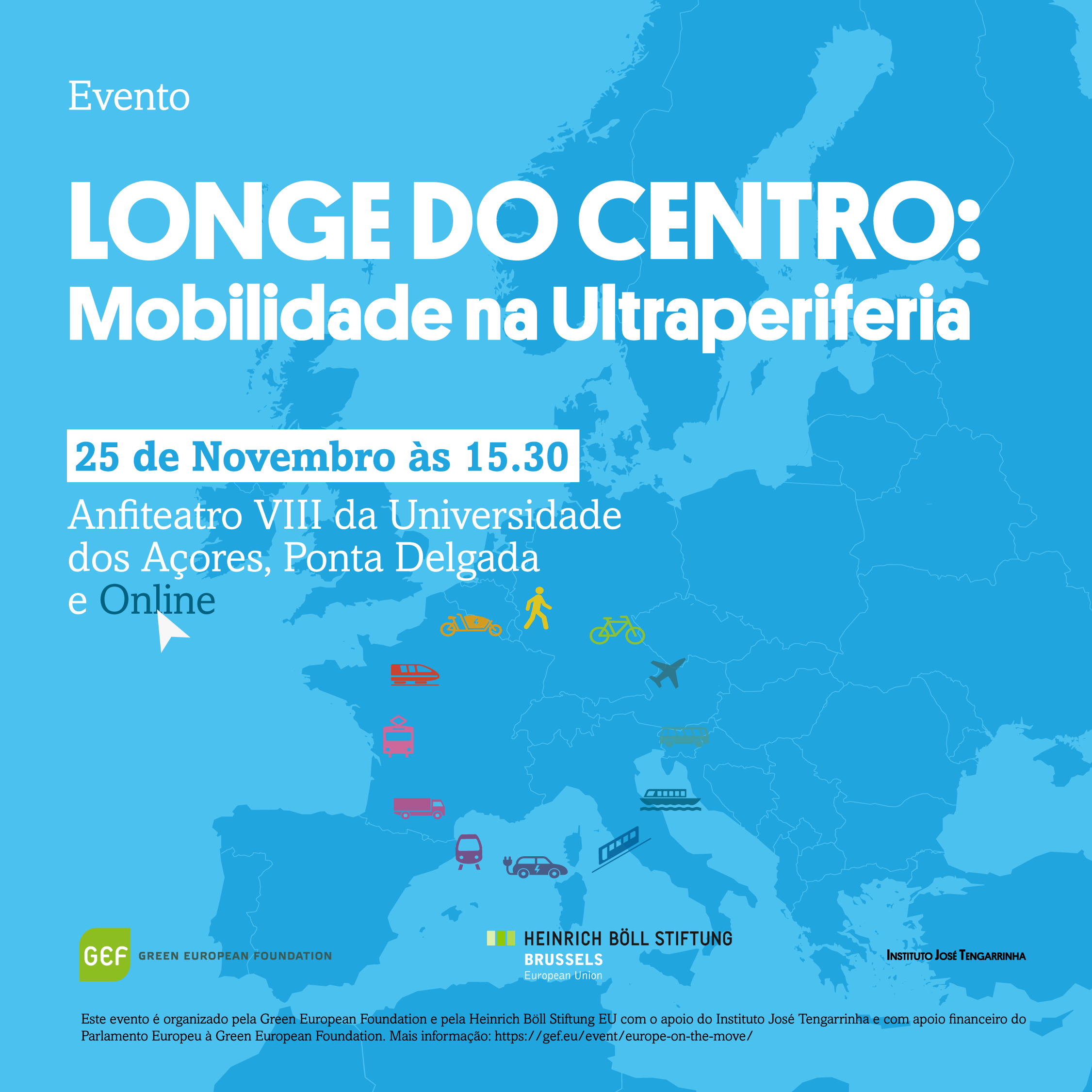
Far from the Center: Mobility in the Ultra-Periphery (Ponta Delgada)

By

About

Mobility plays a crucial role in shaping the quality of people’s lives by influencing multiple aspects. To name a few examples, it determines which jobs people can apply to, how often they can see relatives and friends, and the amount of free time they have. It can also amplify prejudice and inequality, namely those regarding gender, race and others. The way people move has a huge impact on the environment that should always be taken into consideration.

With both wonderful but challenging geography, the Azores is a good place to discuss these problems as there is much work to be done towards sustainable mobility that works for all. Far from mainland Portugal, travelling to or from Azores is not affordable to everyone’s pockets; there are inequalities between the islands in the archipelago, with some having much better connections than others. In this debate, we seek to address the pressing issues connected to mobility in the ultra-periphery with multiple analytical and geographical lenses. We will bring together diverse perspectives to analyse the challenges and opportunities for mobility on island and in ultra-peripheral contexts, the impacts of tourism on mobility and how mobility is also a gender issue. Besides the Azorean perspective, we welcome an international panel with insights from Greece, Croatia and Spain.


Project background

This event is part of “Europe On the Move: Shaping the Future of Sustainable Mobility in the Iberian Peninsula”, which aims to nurture the debate in Portugal and Spain around the future of mobility and the Green Deal, with a particular eye for the challenges and opportunities for sustainable mobility and how they relate to Iberian realities.


Speakers

o            Filipe Roque (moderator) – Councillor of Ponta Delgada, Portugal

o            Henar Martín – Consultant of Sustainable Mobility in Canarias, Spain

o            Nikolina Rajkovic – Institute for Political Ecology, Croatia

o            Rosa Simas – Universidade dos Açores e Universidade Nova de Lisboa, Portugal

o            Theocharis Tsoutsos – Technical University of Crete, Greece


Programme

  • Introduction and presentation of the speakers

Filipe Roque (moderator) – Councillor of Ponta Delgada, Portugal

  • Mobility on the island: the Azorean case

Nikolina Rajkovic – Institute for Political Ecology, Croatia

  • The impact of tourism on mobility

Theocharis Tsoutsos – Technical University of Crete, Greece

  • Sustainable mobility in and between islands

Rosa Simas – Universidade dos Açores e Universidade Nova de Lisboa, Portugal

  • A gender perspective on mobility in Azores and its links with sustainability

Henar Martín – Consultant of Sustainable Mobility in Canarias, Spain

  • Mobility in the ultra-periphery, the example of Canarias and connection with sustainable mobility
  • Moderated discussion followed by Q&A


Practicalities

Date and Time: 25th November, 15:30pm-17:30pm GMT-1

Location: Anfiteatro VIII, Universidade dos Açores and Online (streamed on GEF Youtube).

Language:  The main languages of the event will be Portuguese and English, with simultaneous interpretation provided EN<>PT.

Registration: This is public event; no prior registration is required.

Social media event page: Longe do Centro: Mobilidade na Ultraperiferia | Facebook

Recommended reading: European Mobility Atlas


This event is organised by the Green European Foundation and Heinrich Böll Stiftung EU with the support of Instituto José Tengarrinha and the financial support of the European Parliament to the Green European Foundation

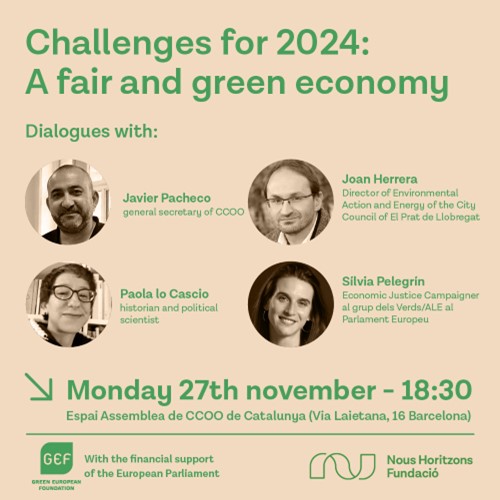
Challenges for 2024: A fair and Green Economy (Barcelona)

By

About the event

The pandemic may be over but economic instabilities continue. The effects of the war in Ukraine, high inflation rates, the energy crisis, and the Israeli-Palestinian conflict are just some examples of how the economic and social agenda will be impacted in 2024 in the fight against the climate emergency.

The year 2024 represents a change of cycle in Europe and in Spain. We must, therefore, define the priorities to move forward towards a green and just transition that allows European citizens make ends meet.


Context

GEF’s Green Red Dialogues, organised with the support of Fundació Nous Horitzons, aim to tackle pressing issues of our time and the challenges Europe faces with an explicit social and green lens. From COVID-19 to the war in Ukraine, far right resurgence to feminist struggles – these issues tend to reverberate across multiple countries and domains. Through the dialogues, we connect the red and the green and highlight Southern European perspectives on crucial topics and developments across the continent. 


Speakers

  • Javier Pacheco, Secretary General of the Comisiones Obreras (CCOO) trade union in Catalonia;
  • Joan Herrera, Lawyer and Director of Environmental Action and Energy of the City Council of El Prat de Llobregat;
  • Paola lo Cascio, Historian and political scientist;
  • Sílvia Pelegrín, Economic Justice Campaigner for the Greens/EFA group in the European Parliament.
 

Practicalities

Date and time: 27th November 2023, 6PM – 9 PM

Location: Espai Assemblea of CCOO (Via Laietana, 16 Barcelona)

Language: The main languages of this event will be Catalan and Spanish. A video-summary with English subtitles will be available after the event.

Registration: Please register in advance via this link. 


This event is organised by the Green European Foundation with the support of Fundacio Nous Horitzons and the financial support of the European Parliament to the Green European Foundation. 

Green deal and Beyond (Skopje)

By

About

The European Green Deal (EGD) is a comprehensive plan to combat the climate crisis while eliminating socio-economic inequalities. This package of policy initiatives aims to transform our economic and energy system through collective action.

The Green Agenda for the Western Balkans reflects the same principles as the EGD for EU member states: In line with the EGD measures, Western Balkans countries will work towards environmental protection, waste reduction, and the decontamination of air, water, and soil.  In this event, we will discuss with experts, NGOs and activists the perspectives of the development of the Green Agenda in the Western Balkans.


Project background

This event is part of the Green European Foundation’s project Green deal and Beyond. The first focus of this project is based on proposals of the green family to integrate ambitiously the social dimension, so to work on a ‘Just Green Deal’. The second level will ‘Go Beyond’ the Green Deal and mobilize future-oriented concepts such as Sustainable Welfare, related to an Ecological Welfare State and the operational concept of Universal Public Services.


Agenda

12.00 – 12.30 Welcome coffee and registration
12.30– 15.00 Roundtable discussion on the Green Agenda for the Western Balkans and the European Green Deal
15.00 – 15.30 Coffee break
15.30 – 17.30 Conclusions and recommendations from the participants followed by individual speeches
17.30 – 18.00 Break
18.00 Dinner and discussion

moderated by Hristijan Stanoevikj, ASSED Sunrise

Practicalities

Date and Time: 11th November, 12pm- 19pm CET

Location: Skopje

Language:  The main language of the event will be Macedonian

Please note this roundtable is a closed event.


This event is organized by the Green European Foundation with the support of Sunrise and with the financial support of the European parliament to the Green European Foundation.

Anticipating the Climate Collapse (Barcelona)

By

About the event

The future we predicted is unfolding before us. Devastating climate changes have resulted from pushing the planet to unprecedented limits. We must continue to fight to reverse the effects we have, unfortunately, already provoked. But in the meantime, we are living with climate changes that are here to stay. What can we do about it? How can we fight increasingly hot summers in our cities? How can we ensure the protection of the natural environment, so that deforestation and mistreatment do not continue? How can we live comfortably without damaging natural and energy resources? What can we do to ensure that our children live in a less polluted environment? How can we help young people who suffer from climate anxiety? How can we continue fighting and prevent ourselves from succumbing to inaction and helplessness?

Context

GEF’s Green Red Dialogues, organised with the support of Fundació Nous Horitzons, aim to tackle pressing issues of our time and the challenges Europe faces with an explicit social and green lens. From COVID-19 to the war in Ukraine, far right resurgence to feminist struggles – these issues tend to reverberate across multiple countries and domains. Through the dialogues, we connect the red and the green and highlight Southern European perspectives on crucial topics and developments across the continent. 

Speakers

  • Francesc Mauri – Weather Forecaster
  • Júlia Boada – Member of the Spanish Congress, former Political Advisor to the European Greens,
  • Llorenç Serrano – Just Transition manager (CCOO Catalonia)
  • Mercè Conangla– Psychologist

Practicalities

Date and time: Thursday, December 15th, 18:00 – 19:30 

Location: Espai Assemblea of CCOO (Via Laietana, 16 Barcelona)

Language: The main languages of this event will be Catalan and English.

Registration: Please register in advance via this link. 


This event is organised by the Green European Foundation with the support of Fundacio Nous Horitzons and the financial support of the European Parliament to the Green European Foundation.