Climate Networking Conference

By

About the Event:

With COP26 postponed but the need for immediate climate action stronger than ever, we are bringing together actors from civil society, politics, activism, and academia to determine what climate leadership looks like in 2020 and what strategies, messages, and objectives will propel us forward.

This conference will act as a green networking event – with exchanges across a variety of different thinkers, topics, and backgrounds, in order to provide everyone with resources and connections in the run up to the Bonn Climate Change Conference, COP26, and further climate negotiations.

Speakers:

  • Tilly Metz – Member of the European Parliament, Greens/EFA
  • Natalie Bennett – Member of the House of Lords for the Green Party of England and Wales
  • Djana Bejko – Director of Shkodra Lake Forum and former Deputy Minister of Environment in Albania
  • Sir Brian Hoskins – Founding Director of Grantham Institute for Climate Change and the Environment
  • Mark Ruskell – Member of the Scottish Parliament for the Scottish Green Party
  • Prof. Maria Madi – University of Campinas, green economics
  • Doug Parr – Greenpeace UK Chief Scientist
  • Jean Lambert, former MEP for the Green Party of England and Wales
  • Alice Hubbard – International Coordinator of the Green Party, European Union Institute policy leader fellow

And many more.

Programme:

Please find the schedule below. All times are in CEST.

9:30 – 9:45 Welcome: Leadership in the Age of Climate Challenge

9:45 – 10:15 Setting the contemporary climate scene – ft. virtual site visits highlighting climate impacts around the world.

10:15 – 10:30 Break

10:30 – 11:30 Opening Plenary: What does climate leadership look like?

11:30 – 11:45 Break

11:45 – 12:00 Climate Science and Climate Narratives: Keynote by Sir Brian Hoskins

12:00 – 12:15 Climate Science and Climate Narratives: Keynote by Kaya Axelsson

12:15 – 12:45 Breakout sessions and Ice Breaker: discussing climate leadership across different networks

12:45 – 13:15 Climate Science and Climate Narratives: Short presentations

13:15 – 13:20 Break

13:20 – 13:45 Climate Science and Climate Narratives: Panel discussion

13:45 – 14:30 Lunch break, with virtual site visits and exhibition stands

14:30 – 14:50 Master Class in Climate Finance and Science

14:50 – 14:55 Break

14:55 – 15:15 Master Class in Climate Law, Governance, and Treaty Design

15:15 – 15:30 Break

15:30 – 16:15 Climate Change and Health and Social Issues

16:15 – 16:30 Break

16:30 – 17:30 Politics and Policymaking: The European Green Deal and EU actors

17:30 – 17:45 Break

17:45 – 18:30 Contemporary challenges across different countries’ political and media realities, campaigning for a Green Recovery and next steps.

18:30 – 18:45 Break

18:45 – 19:45 Contemporary challenges across different countries’ political and media realities, looking towards COP26 Glasgow.

Registration:

This event will be taking place online via the Zoom videoconferencing platform and is open to all registered participants. For access to full participation features, please download the free desktop version.

Please register for your ticket here.

This event is open to the general public and aims to be accessible to all, so ticket prices are based on a solidarity fee between 0 and 15 EUR.

The conference is a great networking opportunity, so should you be interested in running a virtual exhibition stand during the lunch break from 13:45 – 14:30, then please apply for a slot here. You will be contacted shortly after to confirm details.

This conference is organised with the support of the Green Economics Institute.

Ecopolis – Again(st) Nature (Brussels, Belgium)

By

About Ecopolis: 

Anno 2020. Nature is on fire, from Australia to the Ardennes. Forests are felled, no more insects on the windshield, concrete everywhere, a million species are in danger of extinction. A virus turns the world upside down. The exploitation of nature is threatening our existence. Vulnerable groups here and in the South are facing even harder times.

How much longer do we saw off the very branch that supports us? Or do we change course?

Ecopolis 2020 puts the finger on the pulse and looks ahead. What are the post-corona challenges? How do we feel part of nature again? How do we restore the balance? How does this support a vigorous climate and nature policy? Which transitions are necessary ― urban, agricultural, etc. ― for a society that respects people and nature? And gives everyone prospect of a good life.

Ecopolis 2020 is moving online, follow the event at home via livestream.

Due to the recent increase of coronavirus infections, we have had to take a difficult decision. This year’s edition will have no live audience, and will move entirely online. We will build a cosy studio on the Kaaitheater stage and stream the lectures and conversations directly to your living room, with opportunities for online interaction.

Speakers:

  • Jan Rotmans, Urgenda
  • Warda El-Kaddouri, De Groene Amsterdammer
  • Yousra Benfquih, University of Antwerp
  • Hans Van Dyck, UCLouvain
  • Tom Bauler, Université Libre de Bruxelles
  • Hendrik Schoukens, Ghent University
  • Anuna De Wever, climate activist
  • Eva Meijer, Wageningen University
  • Myriam Dumortier, Ghent University

And many more names to be announced!

Programme:

11:00 – 12:30 | Corona lessons for a resilient society

The corona crisis has taught us that you cannot just cut down forests or deal carelessly with animals endlessly. Outsourcing all production to low-wage countries is also no longer an option. How do we build resilient societies that are ecologically and socially durable?

A panel discussion with Myriam Dumortier (bio engineer and senior researcher at INBO), Koen Vannmechelen (contemporary conceptual artist), Jan Rotmans (transition thinker) and Christine Van Acker (writer).

12:30 – 14:00 | Meet the animal

For centuries we have been intrigued by animals and have used them in our stories. Who does not know Reynard the Fox? Only recently have we learned how small the differences between humans and animals are. What does an understanding relationship with animals with recognition of their own abilities mean?

A conversation that explores new paths with: Eva Meijer (writer, philosopher and artist), Hans Van Dyck (professor Behavioral Biology), Hendrik Schoukens (environmental lawyer), Lisa Tostado (Heinrich Böllstiftung, which recently released the Insect Atlas).

14:00 – 15:30 | Transition to a fair agro-ecology

Agricultural soils are eroding, biodiversity is declining alarmingly. Fortunately, we see new agro-ecological farmers emerge. Through short-chain they restore contact with consumers while also taking care of the surrounding nature. The challenge is to make these innovative practices the new normal.

A conversation with Yousra Benfquih (lawyer, poet and columnist), Louis De Jaeger (landscape architect) and others.

15:30 – 17:00 | Cities full of nature and the barren countryside

It is at odds with what we think: the city is full of nature and agricultural areas are increasingly turning into deserts. But there is work to be done everywhere. For example, green space in the city is unevenly distributed and there is a need for a different vision of open space with reinforced village centers.

With Paul Demets (poet), Els Vervloesem (transition architect) and Tom Bauler (ecological economist).

17:00 – 18:00 | Final debate

The starting point is the question posed by the French thinker Bruno Latour: Where can we land? How can we “ground ourselves” and take care of our living environment, while being open to the world?

With Warda El-Kaddouri (researcher and journalist), Anuna De Wever (climate activist), Olivier de Schutter (UN special rapporteur on extreme poverty and human rights) and Dirk Holemans (coordinator of Oikos – Think tank for socio-ecological change).


Labiomista, Genk

In 2019 artist Koen Vanmechelen launched LABIOMISTA, an evolving work of art situated on the foundations of a former zoo in Genk (BE).

Vanmechelen is one of the most versatile thinkers of these times. He works at the confluence of art, science, philosophy and community. LABIOMISTA is the embodiment of his artistic and philosophical vision. It is based on the belief in art as a driver of mutual understanding and as a guide in the search for answers to the major challenges of the 21st century, the relationship between nature and culture and in particular the development of sustainable communities.

The 24-hectare park is a permanent and evolving work of art, a garden of order and chaos, an arena of culture and nature. It invites, challenges and inspires. It is a hotbed for a wealth of new ideas, creations, projects and collaborations; and a meeting place for all the species of this world.

Exclusively, the Ecopolis conversation is hosted in the artist private studio. Seats are limited. With your Ecopolis ticket you also have free access to the park.


Programme:

10:00 – 19:00 | Labiomista visit (cancelled)

LABIOMISTA is open from 10:00 to 19:00. Visitors can visit the park prior to or following the talks and should count 2 hours.

12:30 – 14:00 | Ecopolis Brussels livestream

Meet the animal

14:00 – 16:00 | Talks & debates

  • Introduction to Ecopolis: Again(st) Nature
  • Introduction to LABIOMISTA, by Koen Vanmechelen
  • Are we necessary? The position of the human animal. Panel discussion with Koen Vanmechelen, Ignace Schops, Glenn Deliège and Lara Klaassen, moderated by Peter Dupont


Translab K at CC ‘t Schaliken, Herentals

13:30 – 15:30 | Softening with an eye for biodiversity

Building on their experiments on ‘softening with an eye for biodiversity’, VormingPlus invites Stijn Neuteleers (environmental philosopher), Tim Vekemans (architect) and Liesl Vanautgaerden (program director for spatial development at the Department of Environment of the Flemish Government).

15:30 – 18:00 | Ecopolis Brussels livestream

15:30 – 17:00   Cities full of nature and the barren countryside

17:00 – 18:00   Final debate


Practicalities:

Ecopolis goes on! Of course, we take into account the current circumstances and corona measures.

Ecopolis 2020 is moving online

Facebook event >> https://bit.ly/34E2VY0


Tickets

KAAITHEATER, BRUSSELS

– 10€ all day

– 5€ half-day (11h-14h or 14h-18h)

– 5€ livestream

BUY NOW.


LABIOMISTA, GENK

10€ all day, including visit to Labiomista and exclusive access to the studio

Tickets are available here.


TRANSLAB K ― CC ‘T SCHALIKEN, HERENTALS

Free but registration required.

Register via wannes@translabk.be.


How to find us?


ECOPOLIS 2020
Sunday 18 October 2020, 11:00 – 18:00
Kaaitheater, Sainctelettesquare 20, 1000 Brussels
Labiomista, Marcel Habetslaan 50, 3600 Genk
Translab K ― CC ‘t Schaliken, Grote Markt 35, 2200 Herentals
HOW TO GET TO KAAITHEATER
ON FOOT. At 15 min. walking distance from Brussel-Noordstation.
BIKE. Bike parking in front of the venue; Villo-station at Square Saincetlette (across the canal).
METRO. Stop at Ijzer/Yser (lines 2 and 6)
TRAM. Line 51.
BUS. Line 47 (MIVB) or lines 129, 190, 212, 213, 214, 230, 231, 232, 233, 235, 240, 241, 242, 243, 246, 250, 251, 260 and 355.
—————–

This event has been organised by the Green European Foundation with the support of Oikos and with the financial support of the European Parliament to the Green European Foundation. The European Parliament is not responsible for the content of this event.

Ecotransformation 2020 Summer School (Kostelec nad Černými lesy)

By

About the Event:

The transition to a sustainable, carbon-neutral future is a central theme of current European policy. Tackling the climate crisis – mitigating climate change and adapting to its inevitable effects – is one of the biggest challenges on this path.

We know how to do it. But can we convince others of that? Can we reach out to the important public and private partners and convince them that the transition to a sustainable economy is also in their interests? And does green politics go hand in hand with activism?

It turns out that we need to change the way we communicate on environmental issues. More and more people are aware of the threat of climate change, but it is difficult for them to imagine how to deal with it effectively. They need to hear a new story. The story of how we can handle the crisis together.

We cordially invite all those who are interested in green policy and want to take an active part in promoting to Ecotransformation 2020, a weekend full of interesting seminars, debates, presentations and experiential workshops grouped around several main topics:

  • Urban climate crisis and what to do about it: how to transform our cities to be better prepared for climate change and to actively contribute to reducing emissions.
  • Transforming the approach to landscape management: how to heal our landscape and increase its resilience to ongoing change.
  • Changing ways of communicating the climate crisis and other environmental topics: using the knowledge of ecopsychology and the art of telling the story of positive change.
  • Transformation of Czech ecological policy into a successful project – the role of activism, inspiration from neighbouring countries.

 Speakers:

  • Carmine Rodi – trainer, facilitator and consultant, an expert in communication skills, public speaking and storytelling techniques.
  • Helena Truchlá – editor of Aktuálně.cz
  • Ondráš Přibyla – founder of faktaoklimatu
  • Petra Kolínská – Zelený kruh (association of Czech ecological NGOs)
  • Martin Ander – Partnership Foundation (Nadace Partnerství)
  • Zuzana Pavelková – Federation of European Young Greens

Additional speakers may be announced.

Programme:

Thursday, 23 July

Public debate: Million Moments for Climate

Friday, 24 July

Climate change adaptation of cities

  • The new building law as one of the tools to solve the climate crisis? (Petra Kolínská – Zelený kruh)
  • Climate emergency – how cities respond to climate change (Martin Ander – Nadace partnerství)
  • Solutions to heat and drought in cities – LIFE TreeCheck project (Dita Tesařová – Nadace partnerství)
  • Blue-green-grey infrastructure (Jitka Češková – Pardubické ekologické forum)
  • The transition of cities to renewable energy (Jan Krčmář – Solární asociace)
  • Sustainable mobility (Roman Meliška – Consultant in Urban Mobility)

Adapting landscape to climate change

  • Healing our landscape – the transformation of agriculture system in the face of the climate crisis (TBC)

Communicating climate change

  • Environmental issues in the media – journalist cover of climate change (Helena Truchlá – Aktuálně.cz)
  • How to talk about the climate crisis I – project “Fakta o klimatu” (Facts about climate) (Ondráš Přibyla – Fakta o klimatu)
  • How to talk about the climate crisis II – topic management in the climate change discussion (Ondráš Přibyla – Fakta o klimatu)

Saturday, 25 July

Storytelling – introducing environmental topics to the public

  • Workshop, in English (Carmine Rodi – lecturer of storytelling)

Using videos in environmental activism

  • Workshop, in Czech (Petr Salaba – photographer and documentary filmmaker)

Transforming green politics into a successful project

  • Sharing European experience (Wojciech Kubalewski – Co-Chair of Green Party Poland)
  • European cooperation on environmental policies / European Green Deal (Kateřina Davidová – EUROPEUM Institute for European Policy, additional speakers to be announced)
  • The relationship between activism, the non-profit sector, and politics (debate with guests from across the environmental movement, to be announced)
  • How to involve young people in politics (Zuzana Pavelková – Federation of Young European Greens)

Sunday, 26 July

Workshop: Ideas for sustainable economic recovery at the urban level

Open Space

See the detailed programme here.


The summer school is organized the Green European Foundation with the support of the Institute of Active Citizenship and the financial support of the European Parliament to the Green European Foundation.


Green Industrial Policy (Online event)

By

About the Event

The Green European Foundation and Wetenschappelijk Bureau GroenLinks (WBGL) are investigating what policy the Dutch government should pursue to make Dutch industry green and future-proof.

This online expert meeting will bring together a number of academics, experts, policymakers and politicians to exchange ideas on the topic. WBGL will provide a document about green industrial policy which shall be the main subject of the discussion.

The main goals of this expert meeting are 1) to sharpen our proposal for a green industrial policy and 2) offer experts in this field the opportunity to expand, strengthen and sharpen their thinking through an exchange of views.

This event is organised as part of the GEF transnational project Climate Emergency Economy.

Speakers

Dutch MEP Bas Eickhout and GroenLinks MP Tom van der Lee have both confirmed their participation.

Practicalities

The event will be in English.

We will use the Zoom video conferencing platform. It is recommended to join the webinar via a PC. You do not need to install additional software. However, for the best user experience and full participation features, we recommend to install the Zoom Desktop App, which is free.

Registration

This a closed, invitation-only event. However, if you are particularly interested in participating you can send an email to Evert Nieuwenhuis to see what’s possible.


This event is organised by the Green European Foundation with the support of Wetenschappelijk Bureau GroenLinks (WBGL) and with the financial support of the European Parliament to the Green European Foundation. The European Parliament is not responsible for the content of this event.
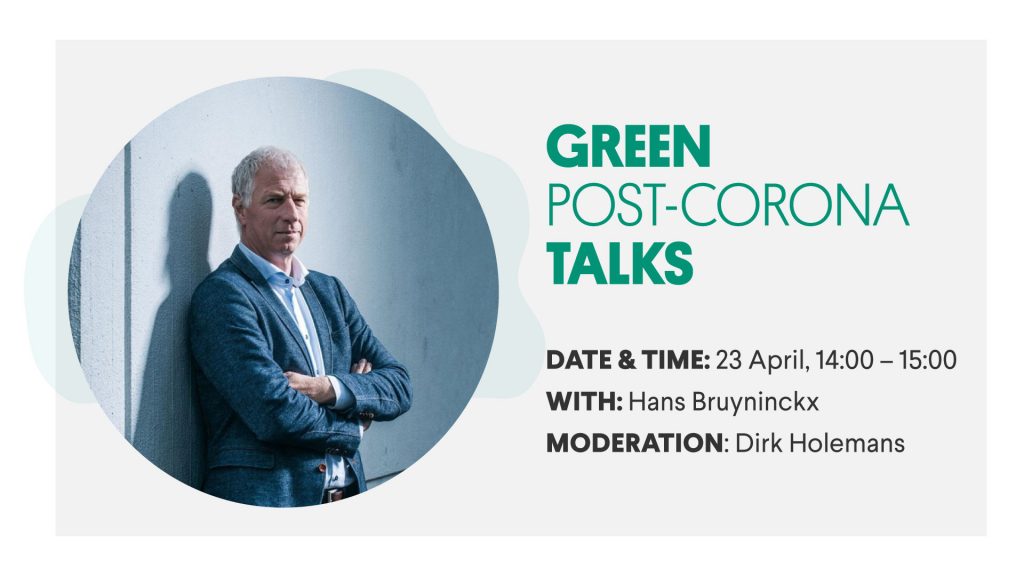
Green Post-Corona talks with Hans Bruyninckx

By

This is the first event from a series of participatory online talks with inspiring guests offering an analysis on what is at stake in this crisis and what positive ideas and concepts there are for a green post-corona vision.

Join our Facebook event to stay alert for the live stream.

About the event


The ongoing Covid-19 pandemic is having a grip on societies worldwide and will impact our lives long after the crisis is overcome. It is clear that we cannot continue with “business as usual,” but that we need to discuss positive ideas and concepts for a better, greener future and resilient societies now.

GEF is therefore hosting the Green Post-Corona Talks, a series of participatory online discussions with high-level experts, thinkers, and policy-makers, and the opportunity for participants to pose their most pressing questions to them live.

The talks will highlight what is currently at stake in the Corona crisis but also look beyond the period of the pandemic, and what possible solutions are already out there and can lend themselves to design the post-corona world.

The series will cover different themes from economy, over migration to gender, and bring in inspiring perspectives from all across Europe.

We rely on your generous contribution to continue putting together new, exciting Green Post-Corona Talks made extensively available to the general European public! So, please consider making a donation today, by clicking on this link.

The project is implemented in cooperation with Oikos.

The Climate Emergency – how to build a bridge between scientific knowledge and the political and social reality? (Brussels)

By

About the event

In cooperation with transform europe and the Foundation for European Progressive Studies (FEPS), the Green European Foundation (GEF) is organising a workshop at this year’s European Forum of Left, Green and Progressive Forces, taking place in Brussels.

Various cities all over the world have declared a climate emergency in the past months and for more than a year, Fridays For Future and the Extinction Rebellion have been demonstrating and blocking traffic all over the world. At the same time, governments seem to not be acting fast enough.

It is up to progressive political forces to take this climate emergency serious and find answers to urgent questions: how can we achieve a good, a prosperous life for all now and in future? Moreover, how can we rally the political majorities for the necessary transformation of our societies? Is it possible to channel the powerful wave of climate awareness to redress the economic growth paradigm that caused this emergency? 

The Green European Foundation, transform europe, and the Foundation for European Progressive Studies (FEPS) will organise this workshop at the 3rd European Forum to share analyses and proposals on which differences might arise on specific policy solutions but also explore commonalities to stimulate political debate on the necessary way forward.

Speakers

  • Zuzana Pavelková, human rights lawyer and climate activist, former Co-Spokesperson of the Federation of Young European Greens (FYEG) 2018-2019
  • Alexandra Lutz, former president of CliMates and assistant in the European Parliament in the Greens/EFA group
  • Yann Le Lann, Director Espaces Marx
  • Gitte Pedersen, transform Denmark
  • Ania Skrzypek, Director of Research and Training
  • Céline Charveriat, Executive Director, Institute for European Environmental Policy

The workshop will be moderated by Walter Baier, Political Coordinator of transform!europe

Practicalities

For more details on the programme, visit www.europeanforum.eu

To register, please send an email to marseilleforum2017@gmail.com.

Ecopolis 2019: Generation Hope (Brussels)

By

Event Background

The past year has seen the remarkable rising worldwide of young people calling for action on the climate emergency: all across the world, the younger generations are bringing the debates on climate to the political forefront.

Ecopolis 2019 will focus on this inspiring “‘#GenerationHope”, exploring how we can ensure a sustainable future on our planet.

About the Event

Ecopolis is an annual conference held in Brussels and the perfect place to connect and discuss with others who are passionate about a sustainable future!

The ecological challenges we face are transnational and so Ecopolis is appropriately diverse, international and interactive to stimulate productive discussions.

Ecopolis will bring together Belgian and international authors and experts to debate on the transition to a socio-ecologically sound society. The conference will encompass inspiring books, documentaries and discussion sessions between academics, writers and civil-society thinkers on ecology, economy and society.

Speakers:

More speakers to be confirmed soon!

Anissa Boujdaini – Flore De Pauw – Mariyam Safi – Joke Hermsen – Christian Felber – Sofie Bloemen – Elvis Peeters – Arno Kempynck – Maeve Cohen ∙ Stijn Warmenhoven – Walter Lotens – Thomas de Groot – Christian Schwarzer – Arno Kempynck

For speaker profiles, please the Ecopolis website. 

Programme

10:30 – DOORS OPEN

11:00 – The Citizen Movement, the Government and Future Generations

Lecture performance by Dutch dramatists Anoek Nuyens and Rebekka De Wit.

11:30 – Can We Turn the Tide?

Discussion panel on the climate crisis, featuring Dutch writer Joke Hermsen, alongside climate activists from across Europe.

13:00 – Why Should We Still Study?

Discussion panel exploring the interplay between the climate crisis and education, featuring Post-Crash Economics Society founder Maeve Cohen, Austrian “Economy for the Common Good” movement founder Christian Felber, and UN Youth Representative on sustainable development Flore De Pauw.

14:30 – How to Unite Countries Torn Apart?

We will delve into the fragmentations evident in European societies and the challenges this poses to tackling the climate crisis with this panel discussion, featuring writer Elvis Peeters, and climate activists Stijn Warmenhoven and Mariyam Safi.

16:00 – Intermezzo:

Spoken word performance by Anissa Boujdaini

16:15 – Global Warming and the Male Meltdown – the interplay of misogyny, right-wing populism and climate denial

Debate discussing ecofeminism and the connections between anti-feminist movements and climate skepticism, featuring Sherilyn MacGregor (University of Manchester), Benedikte Zitouni (Université Saint-Louis), Leen Schelfhout (Extinction Rebellion) and Youna Marette (Manifeste de la Génération Climat), moderation by Bieke Purnelle.

18:00 – END

For the full programme description and list of speakers, please visit the Ecopolis website. 

Practicalities

Language

Simultaneous interpretation into Dutch, English and French will be available.

Directions to the venue

  • By foot – 15 min. walking distance for Brussel-Noord station.
  • By bike – bike parking in front of the venue; Villo-station at Square Saincetlette (across the canal)
  • Metro –  Stop at Ijzer/Yser (lines 2 and 6)
  • Tram – Line 51.
  • Bus –  Line 47 (MIVB) or lines 129, 190, 212, 213, 214, 230, 231, 232, 233, 235, 240, 241, 242, 243, 246, 250, 251, 260 and 355.

Tickets

Tickets can be purcahsed from the venue Kaaitheater website

Tickets cost 7 euro in presale and 10 euro at the door.


Further details of this event are to be confirmed, please check back later for more information.

The official website of the event can be found here. 

Congress of Young Europeans 2019 (Marseille)

By

About the Event

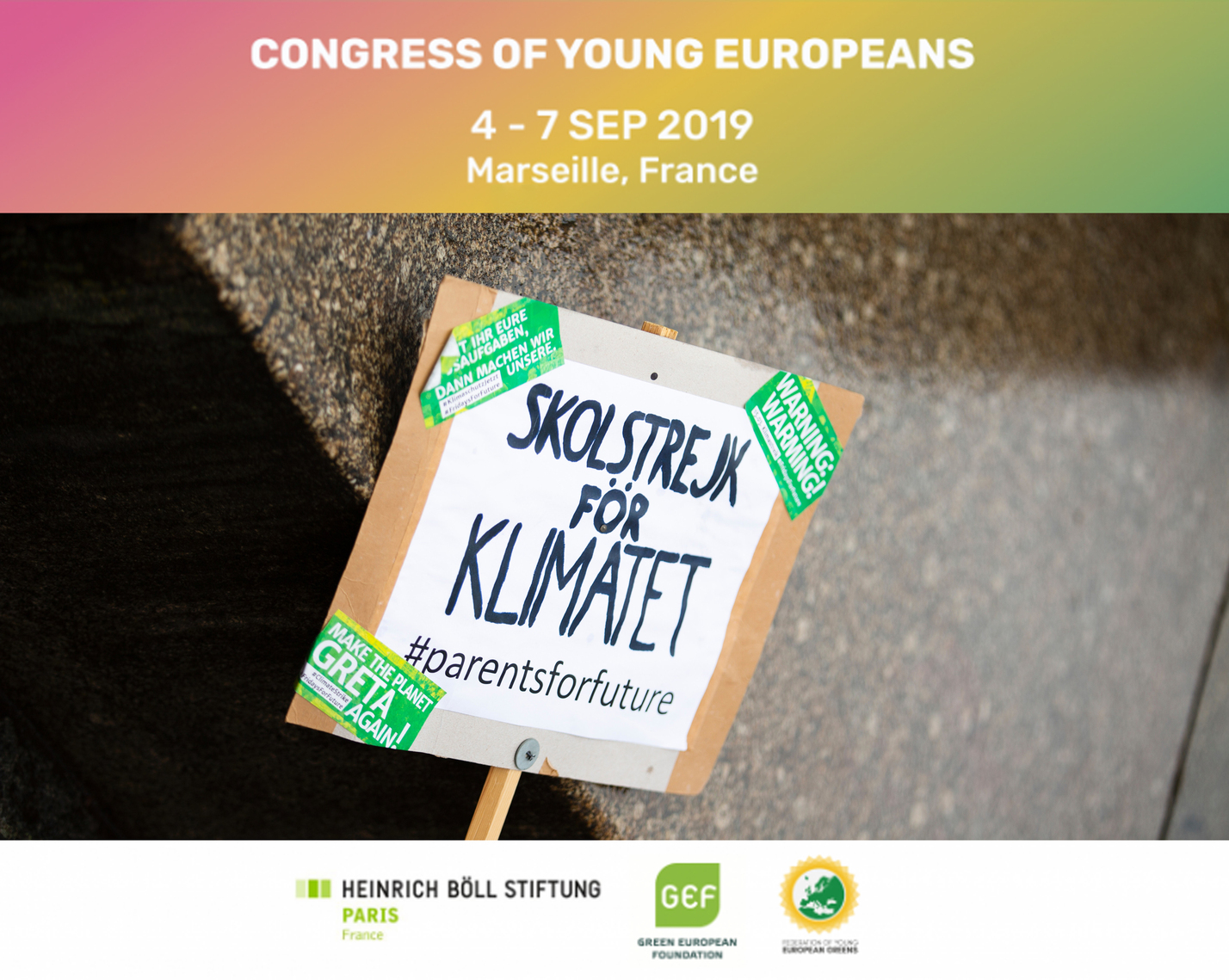
During the three-day Congress, 75 selected participants from across Europe will have the opportunity to come together and take advantage of different panels and interactive workshops. Panel debates and workshops at the congress are going to evolve around the strategies and experiences with fighting for climate and democracy in Europe and beyond. 

In addition to this, the Green European Foundation (GEF) will contribute to the congress with a pre-event online course, providing for a common knowledge base for all participants, as well as a platform for debates ahead of their trip to Marseille.

Programme

The final programme in full can be found here. 

Practicalities

Venue: Friche Belle de Mai – 41 Rue Jobin, 13003 Marseille: Google Maps location.
Accomodation :
Village Club du Soleil, 23 rue François Simon, 13003 Marseille: Google Maps location.

How to get there?

The Bus No. 6 ( https://www.marseille-airport.com//parkings-et-acces/acces/bus/marseille-centre ) will bring you from Marseille Airport to Marseille Saint Charles (Central Station). It leaves every 10 minutes and it takes you roughly 30 minutes to get to the Central Station. You can purchase tickets online, beforehand ( https://store.marseille.aeroport.fr/bus.html ), get them in ticket offices on the spot or even from the coach driver, if the ticket office happens to be closed.

From Saint Charles to our venue and your hotel, you can either walk ( ca. 20 mins) and you will pass by our venue on your way : https://goo.gl/maps/mPjuGqiKvVdiYJka6  OR you can take a bus (ca. 15 mins) https://goo.gl/maps/wkZxKnY2RkS7dUg86


This event is organised by the Green European Foundation in cooperation with the Heinrich Böll Foundation Paris. 

Climate Refugees and Climate Migration

By Uncategorized

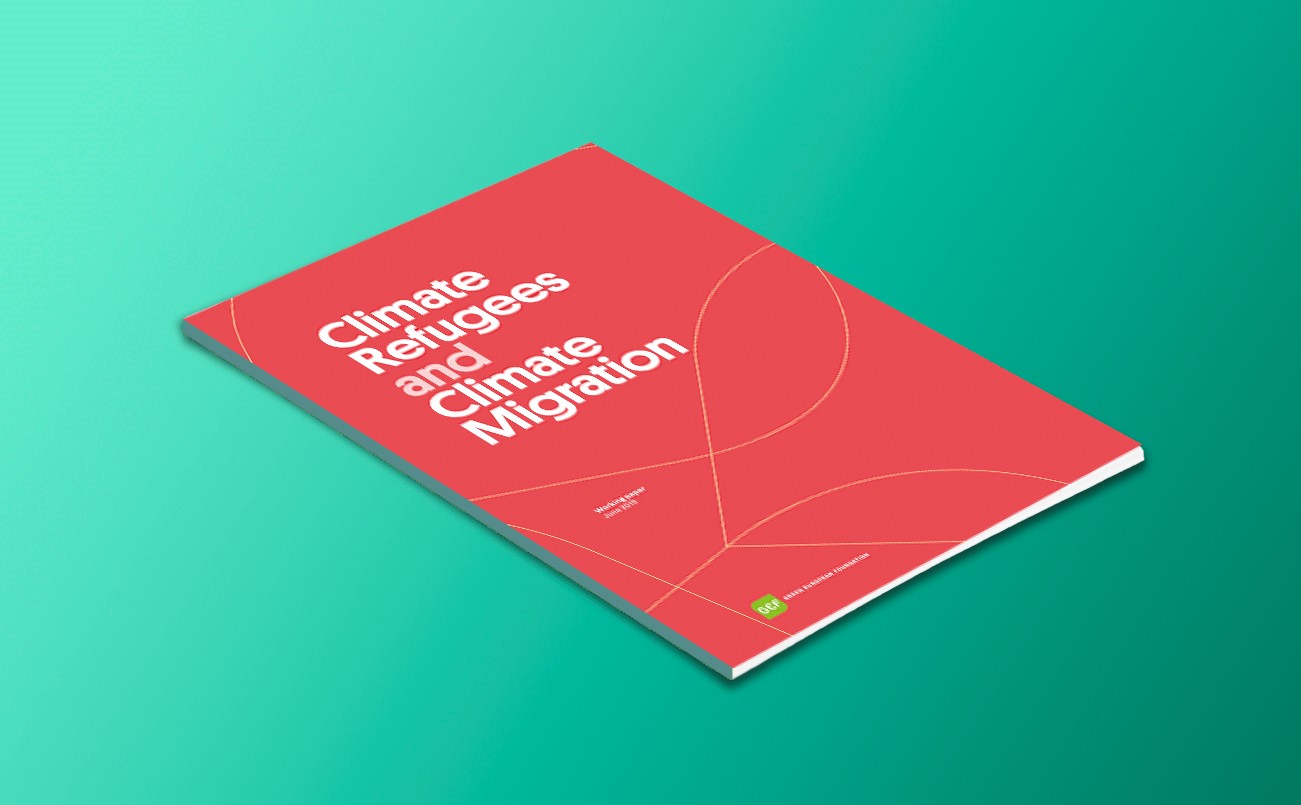
The effects of climate change and consequential natural disasters is causing the mass displacement of peoples across the world, a phenomenon that will only be exacerbated as the climate crisis continues.

A response to this global challenge and a clear legal framework to recognise and protect climate refugees on an international, regional and national level are urgently required.

This working paper aims to serve as a basis for debate and exchange on the matter, exploring controversies around and difficulties in pinpointing this phenomenon to better understand how to respond it.

Mapping the state of discourse on climate migration on the international and European levels, the Green European Foundation hopes to foster a more constructive debate and increase awareness.

This paper has been published as part of the GEF project Environmental Migration and Climate Refugees.

Climate Emergency – Raising Ambition (London)

By

Event Background

With the consequences of climate change beinng increasingly perceptible through extreme weather events (both worldwide and in European countries), verifiable research is urgently needed to set targets and policies that reduce greenhouse gas emissions by the amount necessary to secure a livable environment. At the same time, policies to reduce greenhouse emissions are often attacked for threatening existing jobs. 

GEF’s transnational project “Strengthening Climate Targets, Creating Local Climate Jobs” sets out to explore what greenhouse emissions reductions would mean in practical terms for our job markets and economies, and whether jobs could be created in rural areas across Europe. Can both a safe and just economically sound life for all be achieved? To this end, our project undertook research on the potential to create more climate jobs in three EU countries with diverse historic and economic prerequisites: United Kingdom, Ireland and Hungary. In 2019 the project is expanding also to Poland. 

About the Event: 

This climate energy conference is a one-day event for those looking to act on the climate emergency.  What can local authorities and communities do?  What scale of change do we need to be looking at?  What could the benefits be for jobs and local economies?  How do we keep fossil fuels in the ground? 

Speakers: 

  • Andrew Simms, (Rapid Transition Alliance) – the Climate Emergency
  • Nadine Andrews, (Green House) – Climate psychology & cultural shifts
  • Paul Allen, (Centre for Alternative Technology) – Zero Carbon Britain
  • Jonathan Essex and Peter Sims, (Green House) – Climate Jobs
  • Sam Mason (PCS Union) – Need for a Just Transition
  • Fatima Ibrahim (IPPR Environmental Justice Commission) – Need for a Just Transition
  • Yves Marignac, (Association négaWatt) – Europe-wide transition
  • Simon Pickering (Councillor, Stroud District Council) – Reducing in-house emissions
  • Philip Webber (formerly of Kirklees Council) – Street by street retrofit
  • Ian Christie ​(University of Surrey) – Widening the coalition
  • Agamemnon Otero (Repowering London) – Renewable energy
  • Page Dykstra (Community Supported Agriculture Network UK) – Land/Food Transition
  • Robert Read (The A Team Foundation) – Land/Food Transition
  • John Webb (Herts WithOut Waste) – Materials/Waste Transition
  • Neil Pitcairn (United Kingdom Without Incineration Network) – Materials/Waste Transition
  • Stephen Joseph (Transport Policy Consultant) – Transport Transition

Programme 

10:00-10:30 – Registration & refreshment

10:30 – Welcome and introductions – Natalie Bennett Green European Foundation, Anne Chapman Green House
– The Climate Emergency – Andrew Simms
– Climate Psychology and cultural change – Nadine Andrews
– Questions and discussion
– Introduction to parallel sessions and workshops

11:45 – Tea/ coffee break

12:00 – Parallel sessions – Making a plan
– Green New Deal and Just Transition – Fatima Ibrahim and Sam Mason
– Climate Jobs – Jonathan Essex and Peter Sims
– Zero Carbon plans – Paul Allen (Centre for Alternative Technology) and Yves Marignac (negaWatt)

13:00 – Lunch and information/discussion tables on:
– Reuse and recycling – Herts WithOut Waste & UKWIN
– Sustainable and Active Transport – Stephen Joseph,
– Renewable energy – Repowering London
– Food and farming – Community Supported Agriculture Network & Team A Foundation
– Street by street retrofit – Philip Webber (formerly Kirklees council)
– Local councils – Simon Pickering, Stroud District Council

14:30 – Workshops – Making it happen
– Making an Action Plan – Simon Pickering, with Jonathan Essex and Peter Simms
– Identifying key enablers and blockers of a step change in emissions.
– Widening the Coalition – Ian Christie, Surrey Climate Commission
– Establishing partnerships, setting up a local climate commission and citizens assemblies.

15:30 – tea/coffee break

15:45 – Making change happen – Feed back from workshops and panel discussion chaired by Natalie Bennett

17:00 – Conference Ends

Practicalities: 

Conference fee: £10

Please register for this event via the form found here.


Call for Applications: Congress of Young Europeans 2019 (Marseille)

By

The Heinrich Böll Foundation, the Green European Foundation and the Federation of Young European Greens (FYEG) are calling for applications to participate in the 7th Congress of Young Europeans! The Congress will take place in Marseille, France, from 4th to 7th September 2019.

The main theme of this year’s Congress is “How to fight for climate and democracy”. How can young people with ideas and ideals at hand contribute to social and political change? What can we learn from movements like Fridays for Future? Which tools do successful activists use? How can we build and connect a movement?

During the three-day Congress, selected participants will have the opportunity to come together and participate in different panels and workshops focusing on these questions.

How to Apply

  • Are you already involved in a movement, NGO, or similar activity?
  • Are you interested in sharing and expanding your vision, knowledge and ideas?
  • Are you between 18 and 30 years old?
  • Are you interested in sharing and discussing ideas in a transnational environment?

Apply now to the Congress of Young Europeans and become part of a young and innovative European network!

The organisers will cover the the travel and accomodation costs for all selected participants of the Marseille Congress of Young Europeans.

The number of available spaces is limited.

The working language of the Congress is English.

Please apply via the application form found here: APPLY!

DEADLINE EXTENSION: 21st June


Climate for Future: Climate Summit (Austria)

By

Event Background

The Alps and the Carpathians mountain ranges that cover half of Europe are a critical part of climate protection, as they serve as an early warning system for the negative effects of climate change on Europe. The issues that climate change brings to these areas demonstrate what the rest of Europe must prepare for.

About the Event

The summit will feature a range of keynote speeches, workshops and excursions, conducted by experts who will offer attendees opportunities to learn more about climate change and how it specifically affects the alpine environment.

Programme

Thursday 20th June

17:00 – Opening

18:00 – The climate and ecosystem crisis –

  • Matthias Schickhofer, author of “Schwarzbuch Alpen – Why we have to save our mountains”.
  • Christoph Matulla, climatologist, ZAMG Vienna. Comment Leonore Gewessler, Global 2000.
  • Comment by Regina Hrbek.

20:00Dinner

21:00 – Climate change at all levels! Fish bowl discussion, with experts and politicians on the local and European level alternatively taking the ‘hot seat’.

Werner Kogler (Head of the Austrian Greens), Tom Waitz (MEP, Austria), Hannah Pfalzgraf ( youngest Cantonal Counselor of Switzerland), Gisela Sengl (Member of the Landtag, Bayern/Germany), Ingrid Felipe (Deputy Governor, Tyrol/Austria), Eva Lichtenberger (former MEP, Austria), Ewa Dziedzic (Federal Counselor, Austria), Helga Krismer (Member of the Landtag, Lower Austria), Norbert Lantschner (Member of the Landtag, Upper Adige/Italy), Johann Döller (Mayor Reichenau/Austria), et al.

Friday 21st June

09:30 – Workshops

Workshop 1: Climate Change, Economy and Environment
With experts and international initiatives.

Workshop 2: Climate Change and Us – Politics and Society
Best practices and new ways of cooperation.

12:30 – Climate change is system change. Synthesis and political mission.

14:00 Lunch buffet and graduation.

Supporting program (optional) for those who want to celebrate the longest day of the year with vision:
Afternoon trip by cable car to the Rax
In the evening, bonfires and festivities at the Biohof Babiol, Edlach / Rax.

The full programme in German can be found here. 

Practicalities

Language: the majority of the summit will be in German, with some activities accessible in English.

Transport:
Take the train to Payerbach / Bahnhof.
From there take the Höllentalbahn (museum train) to Hirschwang (departure 14:25, arrival 14:50).


Registration

Please register via the registration form found here (in German).

Good Health & Wellbeing (Budapest)

By

Event Background

As part of the GEF transnational project Sustainable Development Goals, this event held with GEF partner Ökopolisz Alapitvany will look specifically at Goal 3: ensuring healthy lives and promoting the well-being of all ages, which is essential for sustainable development.

About the Event

This conference will focus on the Hungarian perspective of Goal 3 and how it can be achieved in the country.

Programme

  • 17:30 – 17:50 Sándor Fülöp PhD: The UN’s 2030 Sustainability Objectives (SDG) system and Target 3 in the system
  • 17 :50 – 18:10 Péter Balázs: Problems of public financing of health care and the possibility of solution
  • 18:10 – 18:30 Gábor Kapócs: institutional system of health care, social security; health training, labor situation
  • 18:30 – 18:50 Debate and Q&A
  • 18:50 – 19:10 COFFEE BREAK
  • 19:10 – 19:30 János Sándor: Impact of poverty, low socio-economic status on health in Hungary
  • 19:30 – 19:50 Zoltán Brys: Alcohol and smoking in the context of sustainable development
  • 19:50 – 20:10 Tamás Szigeti: Reducing the burden of environmental disease in the light of SDGs
  • 20:10 – 20:30 Debate and Q&A
  • 20:30 – 20:50 Szilvia Lengyel: Reflections – Possible elements of a green party health program

Registration

Entrance is free, but registration is required.

Please register via the website here. 


You can join the Facebook event page for this event here. 

Climate Conference (Istanbul)

By

Event Background

Turkey has been seeing the tangible effects of climate change over the last few years, with impacts on food security, the economy, and other broader social ramifications.

Yet there is no solution-oriented action due to resistance by policy-makers and a lack of public awareness. There is particularly a lack of clarity in the debate regarding the link between urban and local ecological deterioration and climate change, and the effects of climate change on the local level. There is also an absence of understanding on how political decisions and action at an international level relate to the local level.

About the Event

Held in coordination with our partner Yesil Dusunce Dernegi, this national conference will offer a different perspective on climate change, connecting society, movements, communication and green politics. It aims to build capacities and raise awareness of the effects of climate change, local actions and green policy alternatives in the field.

It will bring together the agenda for the climate and ecology movements on both European and local levels, and provide networking opportunities.

In particular, the conference will focus on:

  • Opportunities to identify and compare relationships between mitigation and adaptation policies at national and local levels, and the obligations and potential they offer.
  • Develop awareness and comprehension of European policy proposals regarding climate change and encourage political debate that includes the Turkism perspective on the issue.
  • Establish solidarity networks between local movements directly affected by environmental disasters and those affected by ill-conceived fossil-fuel projects.

Programme

The working language of the conference will be Turkish.

10.00-10: 45 | Climate Policies

Moderator: Barış Gençer Baykan / Yeditepe University – Green Thought Association

Omer Madra / Açık Radyo
Kelsey DePorte / FYEG (European Young Greens) Climate Campaigner

10: 45-11.00 | Break

11: 00-11: 45 | Climate Law

Moderator: Serkan Köybaşı / Bahcesehir University – Green Thought Association

Gökşen Şahin / People’s Climate Case
Serde Atalay / Ecology Collective Association

11: 45-12.00 | Break

12: 00-13: 00 | Activism / Communication/ Campaigning

Teo Commet / FYEG Secretary General
XR (Extenction Rebellion) International
13: 00-14: 00 | Lunch

14: 00-16: 00 | Forum

XR Turkey (Extinction Rebellion / Rebellion Extinction)
FFF Turkey (Fridays For Future Turkey)
PFF Turkey (Parents For Future)
Local Movements
Climate Activists

Parallel Sessions:

10.00-13.00 | Informatics Education-kidsistanbul

This event will last for 3 hours and is suitable for children between the ages of 10-15.

Registration

This conference is free and open to all. However, registration is required.

Please register via this form that can be found here. 


Eco Podium Gender Equality (Budapest)

By

Event Background

This seminar in Hungary is part of a series of events and studies on the implementation of the United Nation’s 17 Sustainable Development Goals, started by our project partner Ecopolis who previously looked at the SDGs 1 (Eradicating poverty), 2 (Ending hunger) and 4 (Ensuring inclusive and equitable education).

This upcoming event will focus particularly on SDG 5 – Achieving gender equality and empowering all girls and women.

About the Event

This seminar will bring together experts on gender equality policies and sustainable development, as well as NGO representatives, policy-makers and academics.

Discussions will focus on the following aspects in the context of the upcoming Eco Podium:

  • Recognising and assessing unpaid care and domestic work through the provision of public services and infrastructure, through social protection policies and by promoting shared responsibility within the household and the family, in line with national specificities.
  • Ensuring full and effective participation and equal opportunities for women at all levels of decision-making in political, economic and public life at all levels of decision-making.
  • Adopting and reinforcing sound policies and enforceable legislation to promote gender equality and strengthen the social role of all women and girls at all levels.

Programme

17:30 – 17:45: Introduction – Gender Equality in the SDG:

  • Dr. János Zlinszky, associate professor

17:00 – 17:45: Ending All Discrimination Against Women & Girls Everywhere

  • Borbála Juhász, former president of the Women’s Confederation

18:00-18:15: We ensure full and effective participation of women, as well as equal opportunities for leadership at all levels of decision-making in politics, economics and public life.

  • Kata Keveházi

18:15-18:30:  We enhance the use of technologies that increase capabilities and relationships, especially information and communication technology to strengthen the position of women.

  • Anna Réz

18:30 – 19:10: Debate & Q&A

  • Moderation: Krisztina Bombera, journalist

19:10 – 19:30: Coffee Break 

19:30 – 19:45: We will eliminate all forms of violence against women and girls in the public and private sectors, including trafficking, sexual and other forms of exploitation.

  • Sára Halász

19:45 – 20:00: We recognize and appreciate unpaid caring and housework by providing public services, infrastructure and social networks, and promoting shared responsibility within the household and family.

  • Anikó Gregor

20:00 – 20:15: We provide full access to sexual and reproductive health services and reproductive rights with the International Conference on Population and Development Action Program.

  • Sarolta Kremmer

20:15 – 20:55: Debate & Q&A

  • Moderation: Krisztina Bombera, journalist

Registration

Entrance is free but registration is required.

Please register for the event via the form found here. 


This event is organised with the support of Ecopolis.

You can join the Facebook event for this seminar here. 

Citizens Energy: Making Energy Democracy Happen

By Uncategorized

This publication has been produced as part of the GEF transnational project Energy Democracy: Changing the Energy System.  

In this project, Green foundations from the United Kingdom, Greece, Macedonia and Belgium share their experiences and ideas and develop policy proposals to enable a transition to a renewable and democratic energy system.

The publication, written by Dirk Holemans and Kati Van de Velde from Flemish think tank Oikos explores the concepts of a democratic energy regime, drawing from examples in Germany and Denmark, and cooperation between citizens and local governments, focusing on case studies in the UK and Belgium.

Download your copy here. 

This publication is also available in Serbian, Portuguese, Spanish, Macedonian & Turkish.


Unlocking the Job Potential of Zero Carbon – Full Report

By Uncategorized

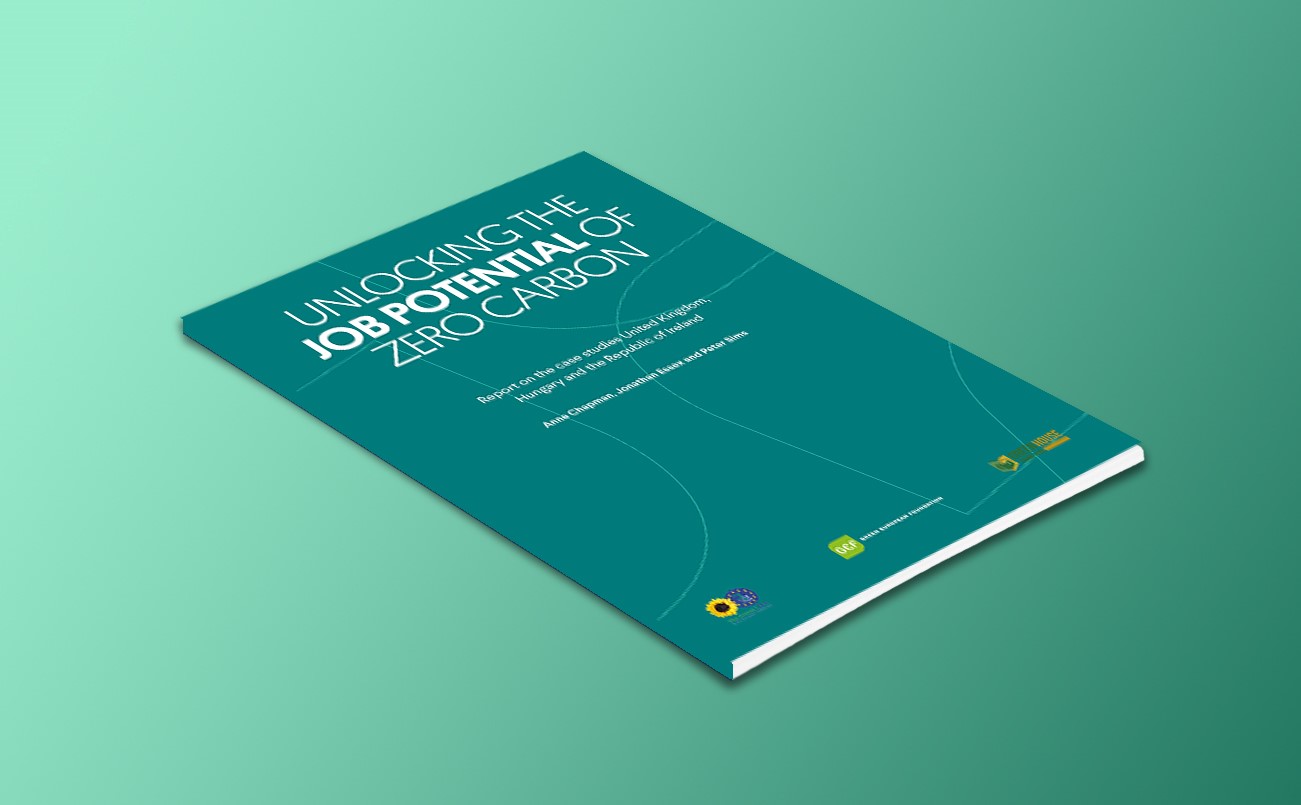
This report is the result of the Green European Foundation transnational project “Strengthening Climate Targets, Creating Local Climate Jobs”, conducted with its partners Green House Think Tank (United Kingdom), Ecopolis (Hungary) and Green Foundation Ireland.

Meeting the challenge of climate change requires structural changes to the economy so that it is no longer dependent on fossil fuels: we need to reduce overall energy use and ensure that all the energy that we do use is from renewable sources. This will require the creation of a large number of new jobs.

The Green European Foundation, with the support of Green House Think Tank, has developed a model to estimate the number of jobs that would be created in key sectors of the economy, to not only demonstrate that a transition is achievable but to also show where those jobs will be.

This model has been applied to the United Kingdom,  as well as to Ireland (with the support of Green Foundation Ireland) and Hungary (with the support of Ökopolisz Alaptivány). The methodology used in that work and its results are presented in this report.

Download your copy here.

This publication is also available in Hungarian, which can be read here. 

The appendix can be accessed here.

A summary of the report can also be found here. 

Following on from the work conducted for this report, GEF’s partner Green House Think Tank conducted further research into climate jobs modelling for regions in the UK, which can be found on their website here.


Inside COP24 – Tackling the Climate Crisis (Webinar)

By

About the webinar:

Join us for an exciting and interactive webinar, where you will learn more about the all-important 24th Conference of the Parties to the United Nations Framework Convention on Climate Change (COP)!

What exactly is the COP and what makes this year’s COP (held in Katowice, Poland), so crucial? What is the connection to the seminal United Nations Intergovernmental Panel on Climate Change (IPCC) report released earlier this year?

These questions and more will be explored in this hour-long webinar with our expert speakers, who will offer perspectives from the Green and NGO point of view, as well as insights from behind the scences at this year’s COP.
You will also have the opportunity to pose your own questions to the speakers and exchange with other participants on all things COP-related.

With a deeper understanding of the COP, the IPCC report, and their implications for action on limiting climate change, you will be better equipped to take action yourself and influence the transition to a fair and sustainable society on a local and international level!

Speakers:

Oras Tynkkynen
Oras Tynkkynen is a climate policy expert, having worked on climate action in a variety of different roles for the past 25 years.

Oras is currently a Committee Member of the European Green Party and substitute Member of the European Parliament, and will be offering a Green perspective on the COP, and first-hand insights into the debate.

Oras has also written for the Green European Journal, exploring the COP & IPCC report: the perfect pre-webinar reading!
Read the article here

Klaus Röhrig
Klaus Röhrig is the EU Climate and Energy Policy Coordinator for the Climate Action Network Europe (CAN).

Klaus will be offering insights into the top goals for NGOs at this years COP and the activism movements towards sustainable energy solutions across Europe.

Joanna Flisowska from CAN Europe spoke to the Green European Journal about COP, the global energy transition, and the gender dimension of climate change.
Read here the interview here.


Registration:

JOIN THE WEBINAR HERE

Spaces are limited and offered on a first come, first served basis. Register your space now!

Join the Facebook event here.

Citizen’s Energy: Making Energy Democracy Happen (Brussels)

By

Context 

This conference is part of the Green European Foundation Energy Democracy transnational project, which aims to explore the potential of an energy transition for Europe and how to shape this process in a democratic, participatory way. 

Europe has to change its energy system into a fully renewable one to transition to a sustainable economy and to establish a real climate policy. This is a major challenge for every Member State of the European Union, but will only succeed if the states work together. 

European citizens are already playing an active role, together with governments at different levels, as they are organising themselves in national energy cooperatives and also the European Federation REScoop. 

Studies show that by 2050, around 45% of all EU households could be producing their own renewable energy, more than a third could come through renewable energy cooperatives. This constitutes a huge opportunity for regional economic development, as locally-owned renewable energy projects deliver eight times the value of projects that are owned by private companies not from the area. However, the reality in the different Member States is extremely diverse. While the contribution of citizens’ Energy co-ops and local communities is well recognized in Western Europe, the situation in Eastern Europe is quite the opposite. 

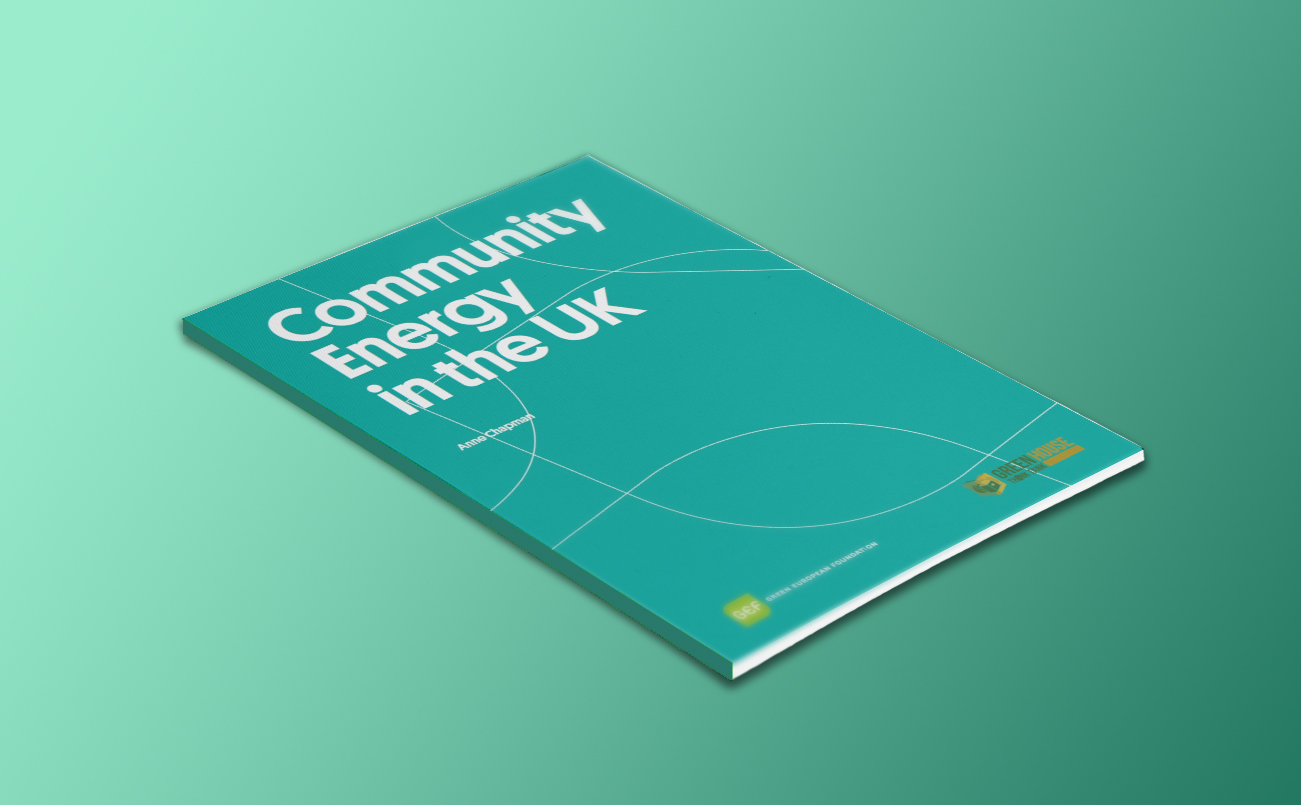
See also the publication that was produced for this project: Community Energy in UK. 

About the event 

Our energy system is outdated in many ways: fossil fuel based and thus unsustainable, technocratic, and dominated by a few big market players. But over the last few decades, citizens have been developing an alternative system that is renewable, decentralised and democratic.

The development of renewable energy cooperatives demonstrates what citizens are capable of, especially when they are supported by a partner state, one that develops a stimulating legal framework and offers smart incentives.

How can we strengthen this transition to an energy system of the future? This conference will bring together contributors from GEF partners, energy cooperatives and energy sectors to discuss renewable energy potential on both a European and local level.  

Speakers 

  • Dirk Holemans, coordinator Oikos Think Tank
  • Dirk Vansintjan, President REScoop.eu
  • Elise Steyaert, from local climate cooperation Klimaan and VEB (Vlaams Energie Bedrijf)  
  • Claire Roumet, Director Energy Cities 
  • Johan Daenen, Member of Flemish Parliament 
  • Bob d’Haeseller, Green Party in Eeklo (BE)
  • Anne Chapman, Director Green House Think Tank (UK)
  • Aurélie MaréchalDirector Green European Foundation

Programme

17:00 – Welcome by Aurélie Maréchal, Director of Green European Foundation
17:10 – Stage setting by Dirk Holemans, coordinator at Oikos think tank
17:30 – Local and citizen iniatatives with Elise Steyaert (Klimaan), Dirk Vansintjan (REScoop), Bob d’Haeseleer (Groen Eeklo)
18:30 – Q&A
19:00 – Coffee break and snacks
19:30 – Role of governments with Claire Roumet (Energy Cities), Johan Daenen (Member of Flemish Parliament), Anne Chapman (Green House Think Tank)
20:30 – Q&A

Tickets for the event can be purchased from the Oikos website here. 

Community Energy in the UK

By Uncategorized

This report is part of the Green European Foundation project, Energy Democracy, Changing the Energy System. It tells the story of people in the UK who have attempted to gain ownership of the bits of their energy system available to them – to meet the challenge posed by climate change – and to help people struggling with the cost of the energy needed to keep themselves warm and healthy.