This Oppressive System & our Mental Health (France)

By

About the Event

This six-day summer camp will consist of insightful workshops and discussions exploring the topic of mental health in all of its political relevance.  We will aim to unravel how such issues disproportionally affect oppressed individuals and communities as well as the activists fighting against the systems of oppression. We will also tackle other issues such as freedom of expression, right to protest, and access to information in Europe.

GEF will be organising a one-day summer school as part of this activity, with a particular focus on mental health in the European political context and how the green movement can play a role.

Practicalities

When: 23 – 28 July (arrival on July 22nd, departure on July 29th)

Where: France (exact location to be confirmed)

Who: We are looking for 40 young people between 15-35, residing in one of the Council of Europe member states, Belarus, Russia and Kosovo*. We welcome applications reflecting diversity in all forms; therefore we encourage applications from those who identify as women*, LGBTQIA+, POC, or with a disability or other health impairment.

Language: The main language of this activity will be English. Not being comfortable interacting in English should not prevent you from applying, as we will try finding a solution with you to support you.

Further information on cost, Covid guidelines, and travel and accommodation can be found here.

How to Apply

Registrations are now closed.


These summer school sessions are organised by the Green European Foundation with the support of FYEG and the financial support of the European Parliament to the Green European Foundation.


North Macedonia: Mass Tourism Alternatives

By

Programme

Throughout the study tour, partners will be accompanied by a local expert in sustainable tourist practices as well as a video crew who will be filming and interviewing key case studies and stakeholders along the way. 

May 27th 

  • Arrivals in Skopje and initial project exchanges 

May 28th 

  • Morning departure from Skopje 
  • Visit of Mavrovo national park and Jance village – sustainable tourism practices and presentation on construction and building policies 
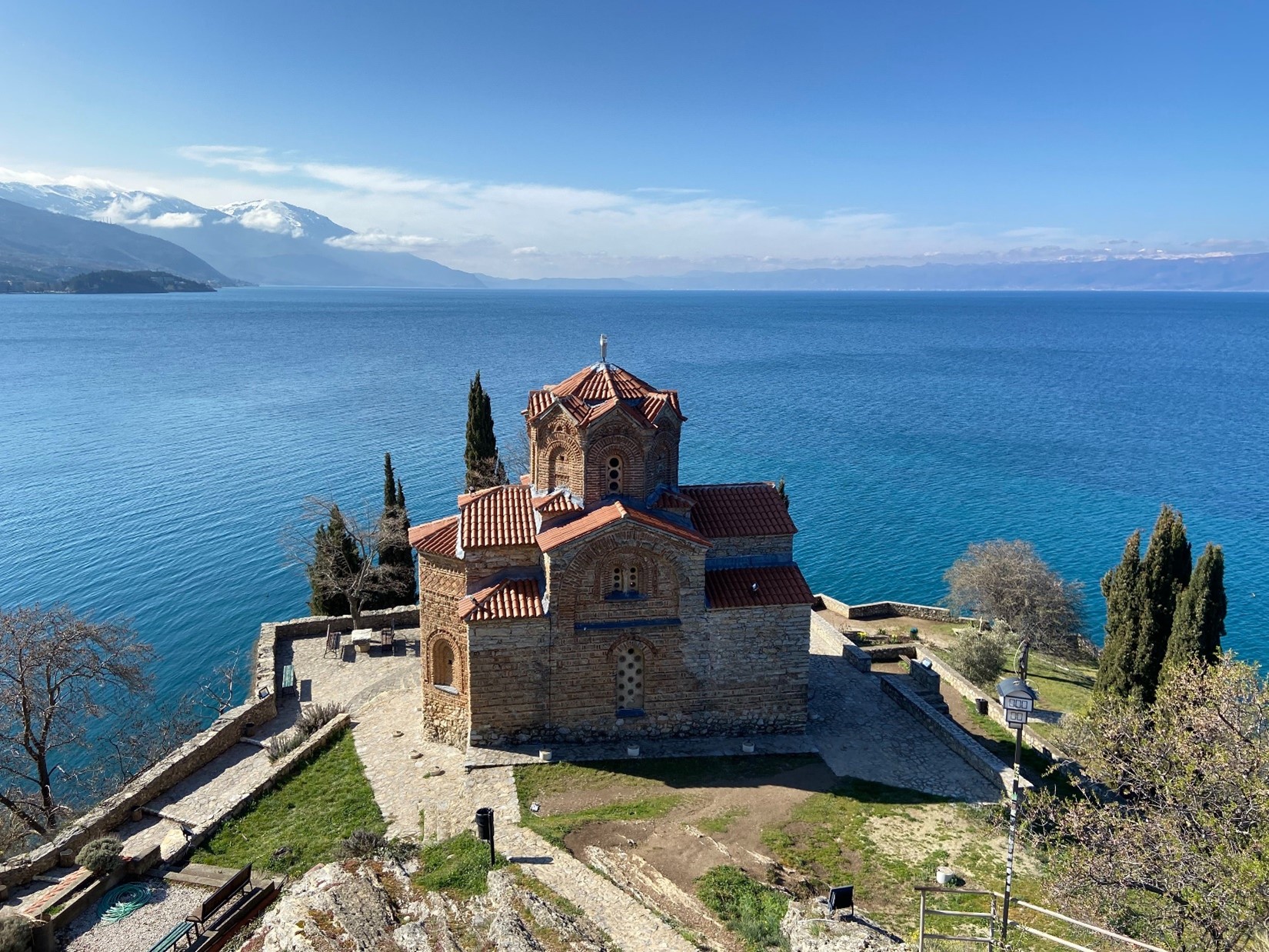
  • Arrival in Ohrid (UNESCO heritage), with dinner at nearby Kuratica village and presentation on alternative touristic offers 

May 29th 

  • Morning exploring Ohrid, partner meetings and stakeholder conversations 
  • Visit village of Dihovo – local tourism practices and slow food movement 
  • Arrival in Demir Kapija – winery tour and accommodation – and meeting with Vlado Srbinovski (Balkan Association of Alternative Tourism) 

May 30th 

  • Partner meetings, return to Skopje 

Practicalities

Date: 27-30 May 

Location: North Macedonia (Skopje and Lake Ohrid region) 

This is a closed study trip for selected project partners. Learn more about the project here. 


This study trip is organised by the Green European Foundation with the support of ASSED Sunrise and the financial support of the European Parliament to the Green European Foundation. 

This Oppressive System and our Mental Health (France)

By

About the Event

This six-day summer camp will consist of insightful workshops and discussions exploring the topic of mental health in all of its political relevance.  We will aim to unravel how such issues disproportionally affect oppressed individuals and communities as well as the activists fighting against the systems of oppression. We will also tackle other issues such as freedom of expression, right to protest, and access to information in Europe.

GEF will be organising a one-day summer school as part of this activity, with a particular focus on mental health in the European political context and how the green movement can play a role.

Practicalities

When: 23 – 28 July (arrival on July 22nd, departure on July 29th)

Where: France (exact location to be confirmed)

Who: We are looking for 40 young people between 15-35, residing in one of the Council of Europe member states, Belarus, Russia and Kosovo*. We welcome applications reflecting diversity in all forms; therefore we encourage applications from those who identify as women*, LGBTQIA+, POC, or with a disability or other health impairment.

Language: The main language of this activity will be English. Not being comfortable interacting in English should not prevent you from applying, as we will try finding a solution with you to support you.

Further information on cost, Covid guidelines, and travel and accommodation can be found here.

How to Apply

Please apply online via this link.

Deadline: May 16th at midnight CET

You will be informed about the results of the selection within ten days after the deadline.


These summer school sessions are organised by the Green European Foundation with the support of FYEG and the financial support of the European Parliament to the Green European Foundation.


Ecotransformation Summer School (Litomyšl)

By

Context

The quick transformation of European energy is one of our biggest challenges today. Russia’s attack on Ukraine, and thus on democracy and fundamental freedom, has shown that investment in renewable energy production and storage is crucial not only for tackling the climate crisis and mitigating its effects but also as part of a strategy to increase European security and our energy independence.

Unfortunately, the Czech Republic is still lagging behind in this regard. Will the amendment to the Energy Act bring a change that sets rules for community energy production? What can cities and municipalities do today to promote renewables and increase energy self-sufficiency? The ongoing crises highlight the need for significant changes in how we operate as a society, how we manage limited resources, care for the natural environment, and care for each other. What is the role of politicians, activists and other partners in achieving such change? How can we support each other and spread green ideas? These are the questions we’d like to debate this during this summer school.

About Ecotransformation 2022

Ecotransformation is an environmental policy summer school, but it’s also a weekend full of interesting seminars, debates, presentations and experiential workshops aimed at helping you develop skills to drive green social change. In this third edition, we will focus on the following areas and topics:

  • Energy revolution: how cities and municipalities can support the development of renewable energy sources and contribute to increasing energy security
  • Community energy opportunities: experience from other European countries and what we can expect in connection with the new energy law organizing across movements: how to achieve lasting change in a sustainable, inclusive and effective way – communication, cooperation, capacity building and finding partners in different parts of society
  • Seeking consensus in a divided society: public opinion is influenced by a number of stereotypes and deliberate misinformation, the debate on issues such as helping refugees is dominated by populists who reduce it to simple slogans, a splitting society – what we can do about it and how to talk to people who do not share our opinions


Who is this summer school for?

We invite anyone passionate about green policy and wanting to take an active part in promoting it. This event can be beneficial for people interested in environmental issues who want to explore how to implement practical sustainable solutions such as activists, researchers, students, scientists, teachers, politicians, journalists and so on.

Programme

THURSDAY 14 JULY

19:00–21:00 Public Debate: Pacifism and green values in the light of the war in Ukraine
Dagmar Tutschek (Co-president of the Green European Foundation and chair of FREDA, Austria)
Kateřina Vnoučková (Faculty of Social Science, Charles University in Prague)

Moderator: Michal Berg


FRIDAY 15 JULY

9:00–9:45

Introduction & Ice-breakers
Klára Berg (GEF)

10:00–11:00

Community energy – experience from Austria – Michael Sigmund, Vice Mayor of Pressbaum, Austria

Modern waste management – example of good practice – Jan Pažin, Choceň Town Councillor

11:15–12:45

The energy revolution: reducing our dependence on Russian fossil fuels – Patrícia Čekanová, Association of Community Energy of the Czech Republic

14:30–16:00

Organizing the climate movement – Klára Bělíčková, Klára Suková, Fridays for Future Czech Republic

Walking tour of Litomyšl – Citizen participation in the design of urban public space – Daniel Brýdl, Litomyšl Town Mayor

16:30–18:00

Community energy projects: energy self-sufficiency of municipalities – Jiří Krist, Local Action Group Opavsko

Active hope – doing activism sustainably (workshop) – Martin Nawrath, therapist and facilitator

20:00–21:30

Debate: Barriers and opportunities for engaging women in active citizenship
Anna Kárníková (Friends of the Earth Czech Republic)
Klára Bělíčková (Fridays for Future Czech Republic)
Eliška Koldová (cooperative SdruŽeny)
Moderator: Marie Sehnalová


SATURDAY 16 JULY

9:00–10:30

Group Work & networking
Klára Berg (GEF)

10:45–12:15

Building communities – experience from Poland (workshop in English) – Dagmara Kubik, Rzecz Społeczna

Ageing in the city, cities friendly to older people – Marcela Petrová Kafková, Department of Sociology, Faculty of Social Studies, Masaryk University in Brno

14:30–16:00

How to engage religious communities in environmental issues – Marek Drápal, Czech Christian Environmental Network (ČKES)

Light pollution – Hynek Medřický, the lighting expert

16:30–18:00

Klimavize – the future of the Czech climate movement – Tereza Navarová, klimavize.cz

Citizens’ assemblies as a tool for change – Andrea Culková, filmmaker, author of the documentary Citizens’ Assemblies

20:00–21:30

Civil society in Ukraine before and during the war (helping activists in occupied Ukraine) – Milan Štefanec, NESEHNUTÍ


SUNDAY 17 JULY

9:00 – 12:30

Open space – an opportunity to bring your own topics

Practicalities

Date: 14. 07- 17. 07. 2022

Location: Castle Hill in Litomyšl

Price: The price of the registration fee includes accommodation and meals

– basic amount of fee 990 CZK
– reduced fee 650 CZK
– sponsorship fee (any amount over 990 CZK)

The reduced fee is intended for those participants who, for whatever reason, cannot afford the basic fee – we do not require any justification. If you can support the event with an amount higher than 990 CZK, we will use it to pay the total budget.

Accommodation: the price of the registration fee includes accommodation in 2-4 bed rooms with shared bathroom facilities.

If you have questions or special requests for accommodation, do not hesitate to contact us.

Meals: we provide common vegan / vegetarian meals for all participants throughout the event.

Registration: Registrations are now closed for this summer school

Contact person: Martina Dušková, project coordinator, martinaduskova@yahoo.co.uk

– We look forward to seeing you in July!


This event is organised by the Green European Foundation, with the support of the Institute for Active Citizenship and the financial support of the European Parliament to the Green European Foundation.

Barcelona: Proximity Tourism

By

Programme

January 21st

09:00 – 10:30  Introduction of the programme and the Metropolitan Area of Barcelona

11:00 – 12:30     Visit to Fundesplai Youth Hostel

12:30 – 13:30    Guided visit to “Eat, Act, and Impact” exhibition on New Food Systems

13:30 – 15:00    Lunch

15:00 – 16:00   Meeting with Association for Tourism and Gastronomy

16:00 – 17:00    Visit to Agriculture Park of Baix Llobregat

17:00 – …            Dinner and free time

January 22nd

09:30 – 11:30   Guided visit of Natural Park wetlands of Llobregat Delta

12:00 – 12:30    Visit to El Prat beach

12:30 – 13:30    Guided visit to CRAM (Recovery centre for sea animals and coastal birds)

14:00 – 15:30   Lunch

15:30 – 16:00    Closing

Practicalities

Date: 21-22 January

Location: El Prat, Barcelona Metropolitan Area, Spain

This is a closed study trip for selected project partners. Learn more about the project here.


This study trip is organised by the Green European Foundation with the support of Fundacio Nous Horitzons and the financial support of the European Parliament to the Green European Foundation

Rust: National Park Tourism

By

Programme

12 November

17:00 – 19:00    Arrivals

19:00 – 21:00    Traditional tavern dinner with regional cuisine

13 November

10:30 – 12:00    Ferry across Neusiedlersee

12:00 – 13:30    Lunch meeting with national park managing expert Alois Lang

13:30 – 14:30    Presentation on national park management and marketing (visitor centre)

14:30 – 16:30    Hands-on tour of the national park

18:00 – 20:00   Rust city tour with emphasis on tourism management and marketing

20:00 – 21:30   Dinner

14 November

10:30 – 12:00    Tour at sustainable vineyard – showcase of environmentally friendly farming techniques

12:30 – 13:00    Closing and departures

Practicalities

Date: 12-14 November, 2021

Location: Rust, Austria

This is a closed study trip for selected project partners. Learn more about the project here.


This study trip is organised by the Green European Foundation with the support of FREDA and the financial support of the European Parliament to the Green European Foundation.

Just Transition in the Western Balkans

By

About the Event

While the EU has tried to extend some of its climate objectives to candidate countries via the Green Agenda for the Western Balkans, civil society and other actors have raised questions as to what extent it meets the needs and will bring clear, transparent, and sustainable change to the region. Renewed efforts and public debate are crucial to drive the transition to a sustainable and carbon-neutral wellbeing economy that works for the people of the Western Balkans.   

In this webinar, we will explore the transition to an economy of the future by bringing together experts on the topic who will share their experiences and solutions to promote a just transition in the Western Balkan region. We have to rethink production and consumption from the perspective of a social circular economy. Only when the transformation is planned and executed in a just and equitable way, will it find the necessary support in short time among the population. Through this project, we are researching the different dimensions of a Just Transition and the politics and policies we should develop nationally and regionally to make the change in our economic realities.  

Context

This seminar is part of the Green European Foundation’s Just Transition transnational project. The project looks into the question of transforming from an extractive to a regenerative economy in a just and equitable way to find the necessary support among the population. It seeks to show that the green movement, including GEF in its specific role, is a leading actor in the development of future-proof politics and policies, developed in a sensitive way that keeps in mind local specificities. 

Speakers

  • Dragan MinovskiProfessor at the Electro Technical Faculty of Shtip 
  • Sonja RisteskaProject Manager Southeast Europe at Agora Energiewende 
  • Aleksandar Gjorgjievski – National Project Coordinator for GEF Just Transition project (ASSED Sunrise) 

Moderated by: Hristijan Stanoevikj

Programme

10:55-11:00 Participants join the call 

11:00-11:10 Introduction 

11:10-11:50 Speaker presentations: exploring Just Transition 

 *announcement of the upcoming GEF  book ”A European Just Transition for a Better World”  (May, 2022) 

11:50-12:10 Panel discussion and Q&A 

Practicalities

Date and Time: Saturday, March 26th (11:00 – 12:00) 

Language: Macedonian 

Registration: This event will be taking place online. Please register in advance via this link. 


This event is organised by the Green European Foundation with the support of Sunrise and with the financial support of the European parliament to the Green European Foundation. 


A just transition: between a bitter pill and sweet dreams

By

Context

Transition is a word that arouses bad associations in the Western Balkans region. When talking about the transition, people usually first think of collapsing institutions, selling off public companies and social property. At a time when the Western Balkans are witnessing mass privatisation and commodification of natural resources, talks on green transition and transformation towards sustainability are emerging too (although still far behind the European average).

These days, we are witnessing mass protests for environmental justice in Serbia and miners’ protests in Bosnia and Herzegovina. The simple introduction of environmental standards, without a social dimension, has never worked. Therefore, this is an important topic for discussion, even more so within the framework of a fair transition in Europe.

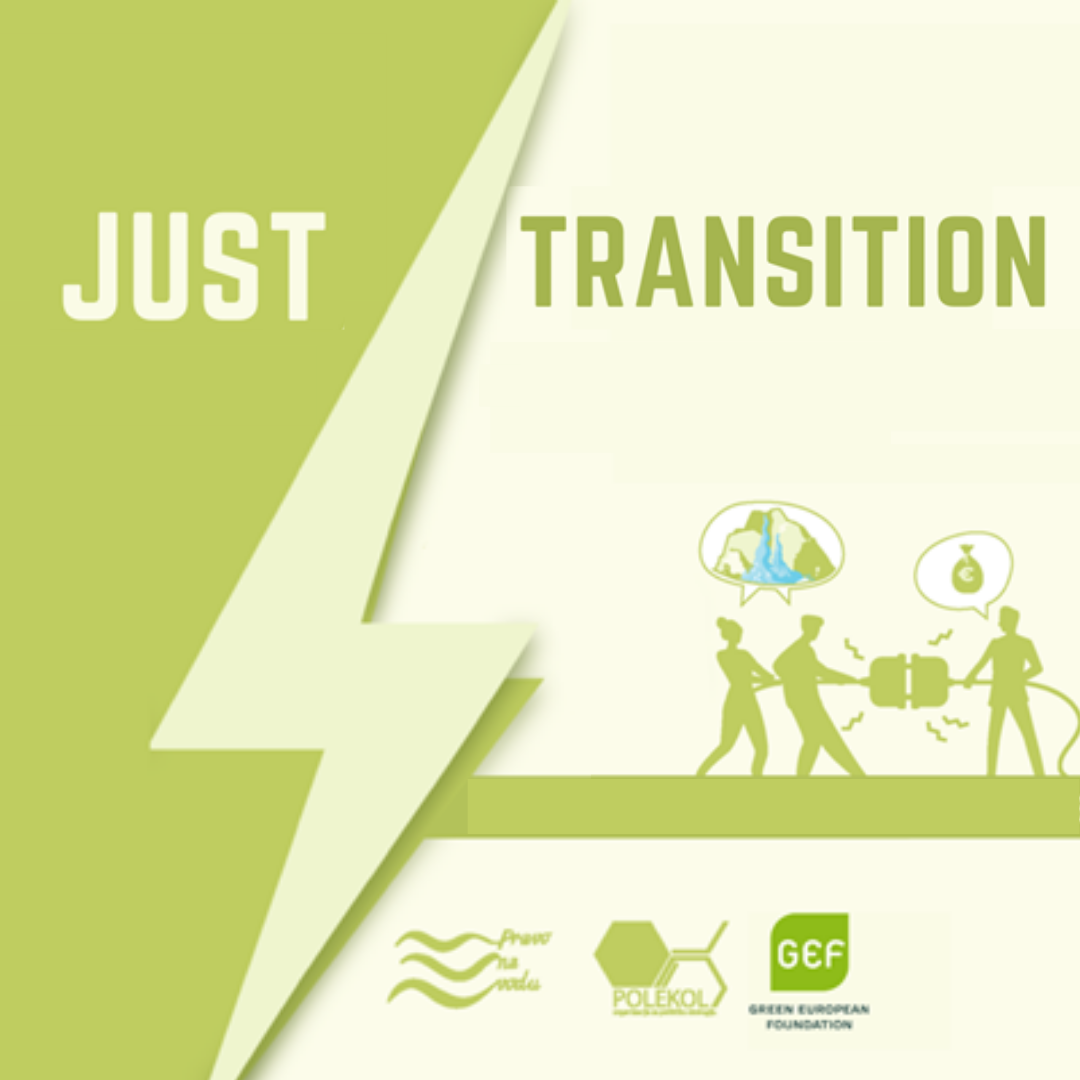
The concept of a just transition is a comprehensive guideline that complements the Green Deal in the transformation towards an environmentally sustainable society in a just and fair way. With the development of this concept, trade unions and climate movements emphasise the need for systemic transformation. A fair transition implies fundamental changes, not only of key economic branches and consumer systems, such as energy, transport, agriculture and food, but also changes in infrastructure, social values and politics. In addition, this concept highlights the need for a global shift towards a humane and fair economic system, with a healthy ecosystem, health, public services, education and culture at its core.

During the discussion that will be organized by the Green European Foundation in cooperation with the organization for political ecology Polekol, we will try to find answers to some of these questions:

– What is the broader context of a fair transition and why we need it?

– What does a fair transition mean for the Western Balkans region and how can we reach it?

– What is the role of workers and unions in the green transition?


Speakers

Dr. Maja Pupovac, project manager of the RES Foundation
Miodrag Pantović, project assistant on the project “On the way to the EU” of the European Trade Union Confederation (ETUC) and the regional network “SOLIDARITY” with the support of the European Commission
Alma Midzic, Crvena Sarajevo
Moderated by:  Žaklina Živković, Polekol


Practicalities

Date and time: 28th December

Audience: the event is open for the general public.

The webinar will be broadcasted on the Polekol Facebook page.


This project is organised by the Green European Foundation with the support of Polekol and with the financial support of the European Parliament to the Green European Foundation. The European Parliament is not responsible for the content of this event.

Through Value to Wealth: Sustainable Tourism in Serbia

By

About the Event

Although tourism is well known for being an industry that stimulates the economy and the creation of new jobs, experience shows that its traditional way of development is detrimental to the environment, and therefore – to all of us. The jobs generated by mass tourism today are mostly seasonal and precarious, while much of the revenue goes to a few big companies and hotel chains. In addition, an unreasonable increase of tourists puts a lot of pressure on natural resources and leads to various negative impacts on the environment.

On the other hand, trends show that tourists are increasingly opting to visit preserved natural areas where they can enjoy sports and recreation. In addition, the Covid-19 pandemic has significantly affected the way we travel, and it is noticeable that people, instead of mass, are increasingly choosing small-scale tourism, which means less social interaction and more enjoyment of nature.

We are witnessing a rise in awareness of green issues in the entire world, but also in Serbia and the region. Citizens becoming conscious of their own need for living in a healthy and clean environment. That is why they are getting involved in the decision-making process, demanding to a sustainable development of the environment.

Serbia is a country rich in natural beauty and has huge tourist potential. In this webinar, speakers will discuss how we can better use it for the development of sustainable tourism, drawing lessons and exchanging as well with other emerging tourist destinations in the region.

Context

What is the future of tourism? Through the project “Fair and carbon-free tourism,” GEF and its partner organisations across Europe (Austria, Croatia, Northern Macedonia, Spain, and Serbia), is researching ways in which tourism, as an industry, can be transformed to be more environmentally and socially sustainable – a tourism that will not only contribute to the development of the local community and economy but also at the same time preserve and regenerate natural resources for future generations. 

Speakers

 Milica Kočović – an independent researcher who, through her specific prism, considers the potential for the development of sustainable tourism on Mt. Balkans (Stara Planina) 

Katarina Lević – a researcher from Polekol who researched spa tourism in Serbia 

Predrag Momčilović – a researcher from Platform Zajedničko who worked on sustainable tourism in the Serbian capital Belgrade 

Stevche Dechev – from Sunrise, who will present examples of managing nature and cultural good in Ohrid, North Macedonia 

Practicalities

Date: Thursday, December 9th (18:00 CET) 

Language: Serbian 

Registration: Please register for the webinar in advance via this link. 


This webinar is organised by the Green European Foundation with the support of PolEkol and the financial support of the European Parliament to the Green European Foundation. 

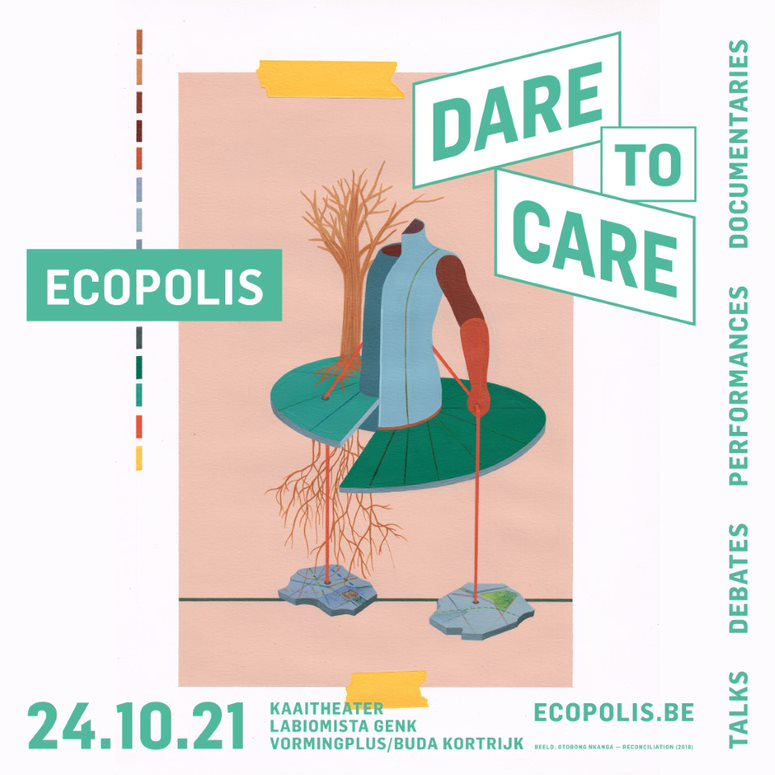
Ecopolis: Dare to Care

By

About the Event

The global Covid-19 crisis brought healthcare into the spotlight. But care extends beyond the strictly medical: it includes everything we do to preserve and restore the world. The erosion of the welfare state, the plundering of the Global South and the crossing of planetary boundaries are worrying developments. And what about the connection between the exploitation of man and of nature?
What if tomorrow we found the courage to truly care for all people and other earthlings, for our unique living world? Seeing nature merely as raw material for plundering man, and man as merely driven by competition: can we put that behind us? Can care be a new starting point, based on connectedness and generosity? Can care, as an emancipatory principle, underpin politics and economics?
Ecopolis makes room for these questions, and many more, during a day of lectures, conversations, workshops, literature and performance. The analyses and proposals come together from many perspectives: alert carers and emancipated people in need of care, inspiring researchers and committed artists, fellow citizens who start from the local context and guests who bring in experiences and wisdom from indigenous cultures and the Global South.
Because ecological challenges know no national or linguistic borders, Ecopolis is diverse, international and interactive.


Context

Ecopolis is the perfect annual day to meet people who care about a sustainable future. Because ecological challenges know no national or linguistic borders, Ecopolis is diverse, international and interactive.

Ecopolis invites Belgian and international authors to debate the transition towards a socio-ecological society. Inspiring books, documentaries and debates between writers, academics and civil society thinkers about ecology, economy and society are at the heart of this event.

Speakers:

Jason Hickel – economic anthropologist and author of the recent book Less is More – How Degrowth Will Save the World 

Benedikte Zitouni – lecturer in Sociology and head of CESIR (Centre for Sociological Intervention and Research) at the University of Saint-Louis in Brussels, specialized in ecofeminist perspectives 

Mieke Vogels – Flemish Minister of Welfare, Health, Equal Opportunities and Development Cooperation from 1999 to 2003 

Els Hertogen – director of 11.11.11, the Flemish coalition of international solidarity groups 

Malcom Ferdinand  University College London, author of A Decolonial Ecology: Thinking from the Caribbean World 

Moya de Feyter – author and poet, and founder of the Dutch language branch of Poets for the Planet 

John Mussington – Barbuda Farming Co-Op and Barbuda Land Rights Committee 

Olave Nduwanje – author, legal scholar, and activist 

Sien Volders – award winning author of novels including Oogst (2020), which describes the harrowing fate of East European migrant workers in the agricultural sector in Italy  

You can see the full list via this link. 


Programme:  

Theatre Hall 

11:00 – 12:30 An economy that cares for people and the planet 

  • With Jason Hickel, Sien Volders, and Koen Schoors 

12:30 – 13:45 Care in the arts: how a choreographic practice can also become a care practice 

  • With Jija Sohn, Lucy Wilke, and Julia Reist (Lands of Concert) 

13:45 – 15:15 The care home of the future 

  • With Anne Berquin, Fed Ingram, Mieke Vogels, and Luc Van Gorp 

15:15 – 15:30 Essay by Carolina Maciel de França 

15:30 – 17:00 Chasing the idyll: neo-colonialism disguised as charity 

  • With Olave Nduwanje, John Mussington, Gaea Schoeters, Malcom Ferdinand, and Line Algoed 

17:00 – 18:00 Closing debate: towards a caring society 

  • With Benedikte Zitouni, Kopano Maroga, Carolina Maciel de França, Els Hertogen, and Lidia Paz 

Forum 

12:30 – 13:45 Health workers and the climate crisis 

14:00 – 15:30 Poetry room: the climate poets 

15:30 – 17:00 The Book Forum 

Living: Slow Discussions 

13:45 Curator: Philsan Osman 

15:30 Unequal care work: a daily struggle 

18:00 The Work that (Re)Connects: experimenting with collective grief circles 

For more details on the programme, please check here. 


Practicalities: 

Date: October 24th, 2021.  

Location: Kaaitheater, Square Sainctelette 20, 1000 Brussels 

Language: there will be simultaneously translation into English, French, and Dutch. 

Tickets: on sale via this link 

We operate a “pay what you can” principle with a suggested price of 10 EUR. If you are able to pay a higher price, this helps make it possible for others to pay less. Thank you for your solidarity! 

You can subscribe to the GEF newsletter here to stay informed of this and other upcoming events.  


This event is organised by the Green European Foundation, with the support of Oikos and with the financial support of the European Parliament to the Green European Foundation.


Green jobs and airport expansion campaigns

By

About this event

Airports seeking expansion across Europe are subject to growing scrutiny and organised opposition in light of stricter climate targets. Supporters push back that they are engines of local employment. Meanwhile a huge wave of redundancies accompanies the ongoing pandemic restrictions. If it wasn’t obvious before, it is now: jobs are a critical element of our relationship to aviation.

A recent report on Gatwick Airport, the UK’s second largest, showed that at least 16,000 alternative green jobs could be created in the surrounding region via a Green New Deal. This event will hear from the authors of this report, trade unionists and local airport campaigners on how to challenge the local jobs case for airport expansion and make the case for a different route.

Speakers will include:

  • Tahir Latif, former aviation group president of the UK trade union PCS, and co-author, ‘A Green New Deal for Gatwick’, which called for urgent investment in green jobs and retraining in the region surrounding the airport.
  • Alex Chapman, a Senior Researcher at the New Economics Foundation, and author of recent analyses of the economic case for expansion at Leeds-Bradford and Bristol airports.
  • Anne Kretzschmar, an organiser with the international Stay Grounded network, and co-author of its ‘Just Transition of Aviation’ discussion paper.

This webinar will be hosted on Zoom – details below:

Join Zoom Meeting

https://zoom.us/j/92892981279?pwd=eUpRdStVMk5WYVZNTHhvWWphU3Qrdz09

Meeting ID: 928 9298 1279

Passcode: 195673


This event is organised by the Green European Foundation with the support of Green House and the financial support of the European Parliament to the Green European Foundation.

Just Transition in Spain and Next Generation funds- Session 1

By

About the Event:

Transición Verde is working in Spain within the framework of the Prosoxi Alliance, an Observatory for a socially fair ecological transition, that aims to participate, as civil society stakeholders, in the design, evaluation and monitoring of the projects that are designed and implemented in Spain under the Next Generation EU Plan.


The objectives of the workshop are:

• To analyse national and international Just Transition experiences.

• Building evaluation and monitoring indicators for Just Transition in order to review and analyse the projects presented to NG.

• To improve the communication to society of everything related to Just Transition in order to encourage greater involvement of civil society in these policies.


With these sessions we intend to take advantage of the experience of the initiatives implemented by the Spanish Government through the Institute for Just Transition (mainly focused on the abandonment of the coal industry in Spain, guaranteeing a fair exit for the regions historically linked to this industry) to project it onto the transitions that will or must be entailed in some cases by the projects implemented within the framework of the Next Generation plans.


Spain has acquired international prominence in the application of Just Transition policies due to the aforementioned plans, which is why the GEF has decided to collaborate in promoting these sessions with the aim of analysing their approach and execution and also trying to draw lessons so that social actors in other countries, which will also benefit from the Next Generation EU Funds, can intervene to ensure that Just Transition is not displaced in those countries.


To do this, we have planned two working sessions which are detailed below. The organisations invited to participate will be the promoters and partners of the Prosoxi alliance, as well as GEF member foundations or partners that are currently working on Just Transition. Sessions will be held in Spanish and English (with simultaneous translation).


Organizations part of the GEF Just Transition Project:


Green European Foundation

Oikos (Belgium)

Institut for Political Ecology (Croatia)

Sunrise (Macedonia)

Networked (Serbia)

Visio (Finland)

Green House Think Tank (United Kingdom)

FYEG (Federation of Young European Greens)


Spanish organizations:


Transición Verde

Fundación Renovables

Retorna

Centro Ibérico de Restauración Fluvial

Fundación Nueva Cultura del Agua

Sociedad Española de Agricultura Ecológica

Foro Transiciones

Fundación Savia

Promoció del Transport Públic

Instituto Int. de Derecho y Medio Ambiente

Amigos de la Tierra

Ecologistas en Acción

Economistas frente a la crisis

Asociación Española de Operadores Públicos


Programme:

Tuesday 25th of May. From 10:30 to 12:00

JUST TRANSITION IN SPAIN. LESSONS TO LEARN

Guest organisations: ILO and Instituto para la Transición Justa (Ministry for Ecological Transition)


Speakers:

• Dirk Holemans, co-chair of GEF, Oikos thinktank – Lead partner at GEFs Just Transition project. He will briefly comment on the importance of Just Transition and the importance of it being taken into account in Next Generation projects.


• Joaquín Nieto, Director of the ILO in Spain, will frame the session with the situation of Just Transition initiatives at the international level.


• A representative of the Just Transition Institute, who will comment on the planning and development process and the current situation of the Just Transition plans addressed by this Institute.


The speeches by the guest speakers will be short (from 10 to 15 minutes) followed by a debate among the experts and the participants.


Practicalities:

When: 25th May 2021

This is a closed workshop.

Language: Spanish (simultaneous translation to English)


This event is organised by the Green European Foundation with the support of Transición Verde and with the financial support of the European Parliament to the Green European Foundation. The European Parliament is not responsible for the content of these workshops.

Recovering sustainably from the pandemic

By

The European Green Deal – Thinking Locally


The impact of the Covid 19 pandemic on Europe’s economy, health systems and democracy is enormous. In terms of European policy it will now be important to shape the economic construction in Europe in a socially and ecologically sustainable way. The policy fields of climate, energy, environment, digitalisation as well as economy, labour and social affairs must be thought together in the European Green Deal and shaped in such a way that social cohesion in Europe is strengthened. Germany, as the most populous and economically strongest country, will have to play a central role in this tour de force. The EU’s ability to act will continue to depend largely on the German government’s will to act. The Annual Conference on European Policy 2021 of the Heinrich Böll Foundation will therefore focus on the question of which European policy priorities the new German government should and must set after the federal elections in autumn 2021.

At this year’s annual conference on European policy, which will also take place online, European representatives from politics, science, political consultancy and civil society will analyse and discuss the current crisis and appropriate strategies to overcome it.

The focus is on the local dimension of the European Green Deal.

In many places, municipalities are seen as the new bearers of hope. Initiatives at the local level are already making a difference in many areas and are seen as potential drivers of the socio-ecological transformation, be it in the energy transition, sustainable mobility and infrastructure or in public space. We want to let some initiatives have their say and present good examples from practice that show the way forward and provide inspiration for imitation.

Speakers

  • Rasmus Andresen, MEP, EFA/Greens, Brussels
  • Dr. Franziska Brantner, German MP, Alliance90/The Greens, Berlin
  • Annika Hedberg, Head of Sustainable Prosperity for Europe Programme, European Policy Centre, Brussels
  • Dirk Holemans, Co-president of the Green European Foundation GEF, Brussels
  • Benedek Jávor, Representative of the City of Budapest, Brussels/Budapest
  • Ares Kalandides, Professor of Place Management, Manchester Metropolitan University, Manchester
  • Phoebe Koundouri, Professor, University of Economics and Business, Athens
  • Audrey Mathieu, EU Climate Policy Officer, Head of Berlin Office, Germanwatch, Berlin
  • Neil Makaroff, European Policy Officer, Reseau Action Climat, Paris
  • Bozena Ryszawska, Professor, Wroclaw University of Economics and Business, Wroclaw
  • Claude Turmes, Minister for Energy and Spatial Planning Luxembourg, Luxembourg
  • Dr. Ellen Ueberschär, President, Heinrich Böll Foundation, Berlin
  • Sanna Vesikansa, Deputy Mayor, for Social Services and Health Care, Helsinki

Practical information

Time: Thursday, 10 May 2020, 14.00 – 19.00 CEST

Conference languages: English/German with simultaneous translation

Full programme and registration:  See the Heinrich Böll Foundation website here

Sustainable Batteries

By

About the Event:

During the event we will reflect on:

Do we have enough raw materials in Europe to produce the required amount of batteries?

Can we mine the necessary rare metals such as lithium, cobalt and rare earth without the risk of major damage of the environment?

Don’t we risk depending on the purchase of precious metals from developing countries or dictatorial regimes, where mining neglects the dignity of workers and excessively devastates nature?

Given the lithium deposits in the Czech Republic, can the production of batteries be an opportunity for Czech companies on the European or world market? Do we have technologies that can recycle metals from obsolete batteries, making the energy storage sector part of the circular economy? Is there room for Czech companies in the field of battery recycling?

These are some of the questions we will address in the presentations and discussion.

Speakers:

  • Ewa Sufin-Jacquemart, Strefa Zieleni Foundation (Poland), Member of the Board of the Green European Foundation – opening the topic: the need for precious metals for energy and digital transition in a European and global context
  • Doc. ing. Tomáš Kazda, Brno University of Technology – raw materials and technologies for battery production, challenges and expected development
  • Alicia Valero, Head of Industrial Ecology at the Research Center for Energy Resources and Consumption (CIRCE Institute), Zaragoza, Spain – Precious metal recycling options and technologies for the production of batteries for the automotive industry
  • RNDr. Petr Kratochvíl, Ecobat – collection and recycling of batteries in the Czech Republic, current state and expected development, opportunities for Czech companies in the field of precious metal recycling
  • Pavel Čmelík, Director of the ČEZ a.s. Development Project Management Department – how a big Czech energy company is considering entering the energy storage and battery production sector, including the provision of the necessary sources of raw materials

The event will be moderated by Martin Ander, Chairman of the Institute.


Practicalities:

Where: Online platform – ZOOM

Date and time: Wednesday, 28th April from 15:00 to 17:00 CET.

Audience: this webinar is open to the general public

Registrations:  Click here

Language: simultaneous interpretation Czech – English will be provided for this event


This event is organised by the Green European Foundation with the support of Institute for Active Citizenship

and with the financial support of the European Parliament to the Green European Foundation. The European Parliament is not responsible for the content of this event.


The Transformative Doughnut Economics Model

By Uncategorized

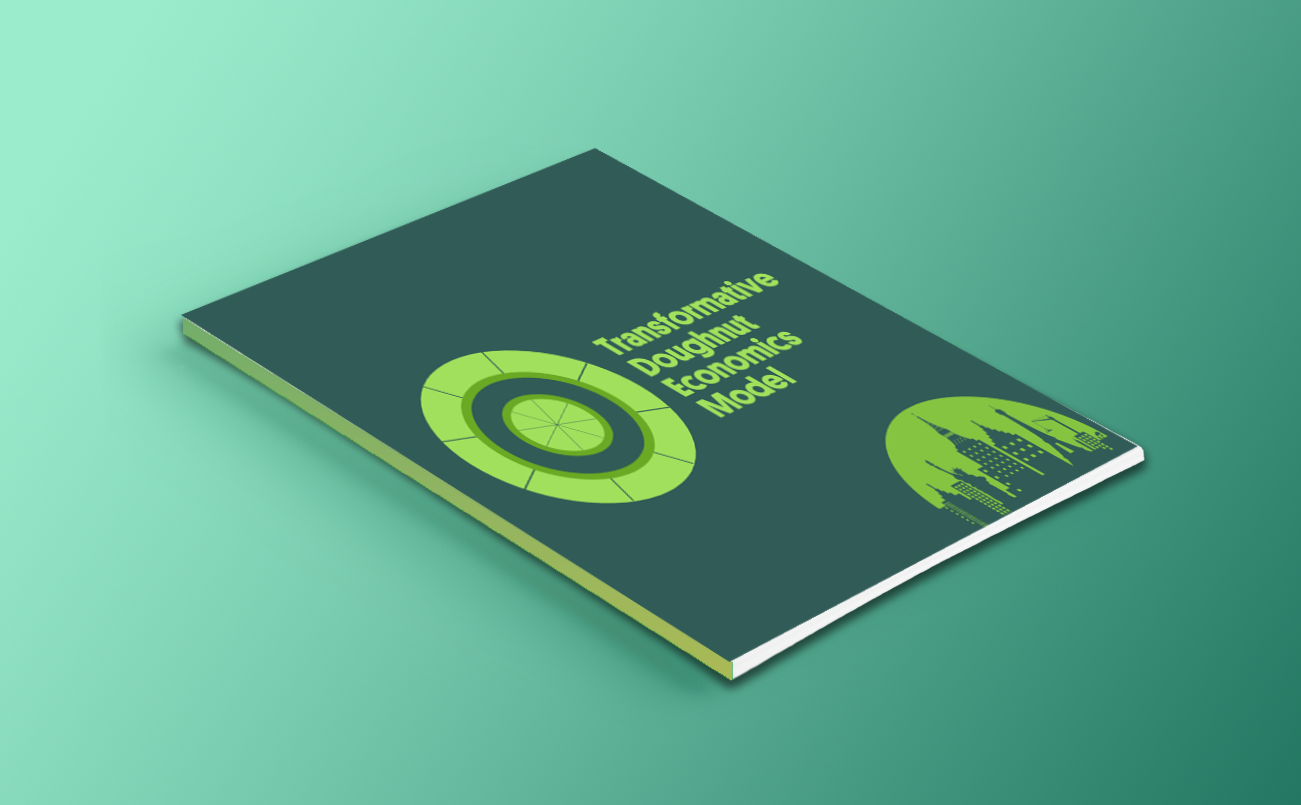
The doughnut economics model is increasingly presented as an alternative human development measure, meeting needs and crossing the boundaries of environmental degradation. In the last ten years, the model has been further developed, and more and more, cities are giving up measuring their development through GDP and deciding to switch to the doughnut model, which should ensure that human needs are met in accordance with natural boundaries.

Read more about it and how cities can be a fertile testing ground for the model in EnglishSerbian and Greek.

Mining for metals – can it be fair?

By

About the Event:

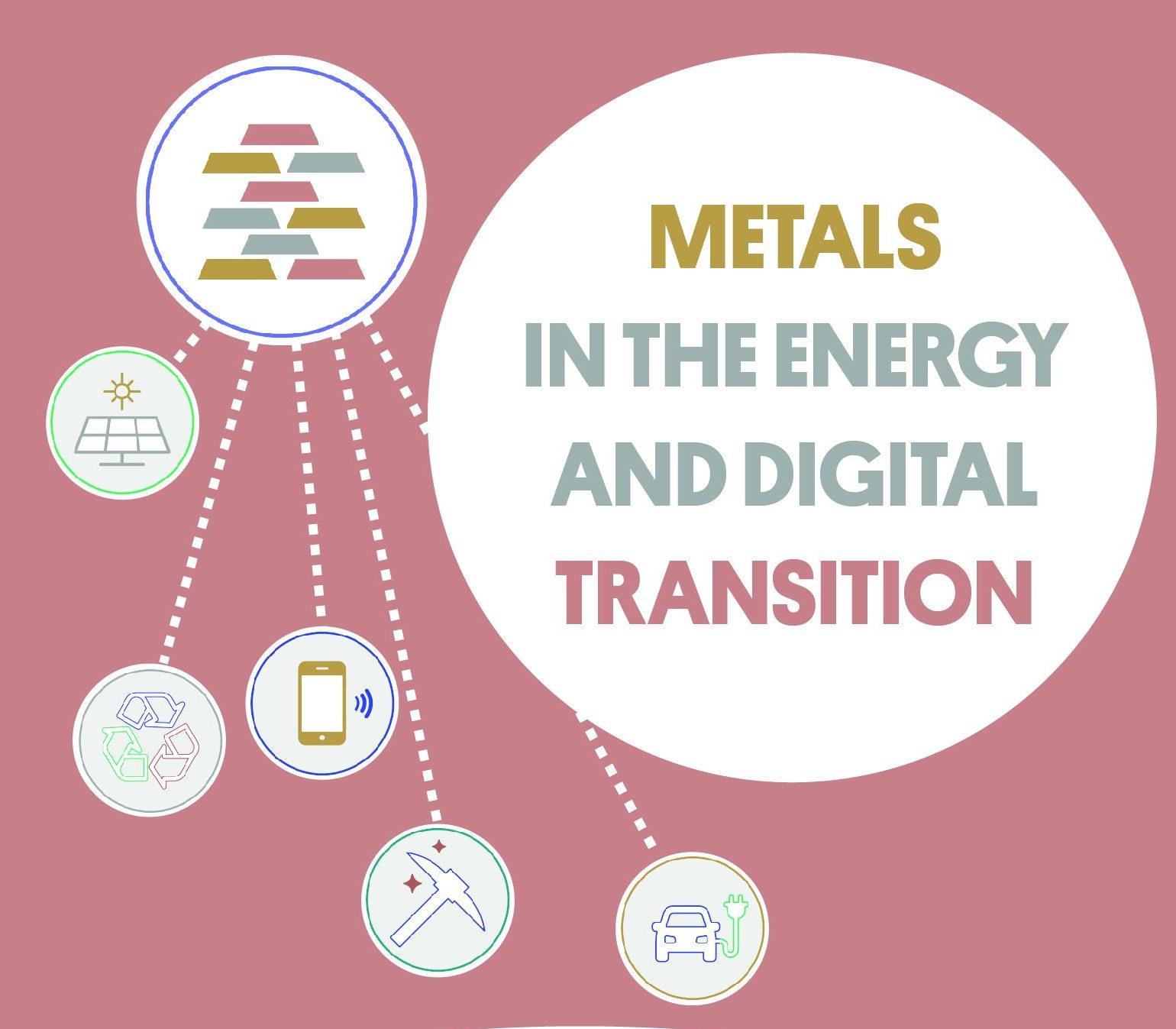
The energy transition has been placed at the top of the European political agenda, with the digital transition closely following suit. But to successfully implement these two priorities, the EU needs to examine and adjust its supply and use of metals.

Should we press mining companies to clean up their act and negotiate a fair trade in metals, or is time to nearshore the extraction of metal ores? Is it even possible for Europe or the UK to become self-sufficient in metals, by reviving metal mining within their borders and/or by drastically improving recycling from the urban mine? One thing is clear: the dilemmas around metals make it all the more urgent to rethink our consumption patterns, from mobility to data use.

This is the third of nine public webinars as part of the project ”Metals for a green and digital Europe” organised by GEF with the support of Wetenschappelijk Bureau GroenLinks (Lead partner), Green Economics Institute, Institute for Active Citizenship, Etopia, Transición Verde, Visio, Fundacja Strefa Zieleni.


Speakers:


Miriam Kennet (The Green Economics Institute, UK ) – Director CEO

Richard Wouters (Wetenschappelijk Bureau GroenLinks, NL) – Metals for a green and digital Europe  project leader

Francisco Ruiz and Mark Driver- (Mining in Chile)

Dr Freddie Tshibumbu Shamwana ( DRC)

Sophie Kwizera – Just Transition, Actionaid (NL)

Karen Alvarenga Windham-Bellord, (UK and Brazil) PhD Cantab,Natural Resrouces Law specialist, Doctor of Philosophy from the University of Cambridge

Agneta Granstroem Indigenous Sami and former MP, (Sweden)

Dr Liliana Poposkova-  Macedonia Former MP and specialist in Mining

Professor Peter Yang- USA and China- Renewable Energy. Case University

Michael Oghia from the Sustainable Digital Infrastructure Alliance.

Kim Than (University of Alberta, Canada)

Dr Enkhbaya Shagdar, Erina- (Japan) Senior Research Fellow and COP Climate Expert specialist in energy issues and sustainable development

Baroness Natalie Bennett- UK House of Lords

Coal Mining-Speaker- Ewa Sufin –

Professor Asia Mohammed IPBES (Sudan)


To be confirmed:

Dr Hend Ahmed Saldedin (Egypt) Steel Economics and mining and the environment.


Programme:


9.30-10.00 CEST Introduction

Presentation of the Green European Foundation’s transnational project Metals for a green and digital Europe by project leader Richard Wouters (Wetenschappelijk Bureau GroenLinks, NL).

10.00 -11.20 Session 1 – Mining in the Global South

A) Overview: The extraction of metal ores often causes major damage to nature and the environment, as well as human rights violations, conflicts and corruption.Examples include DRC and Chile. The mining of cobalt and coltan in the Democratic Republic of Congo (DRC) is a case at hand. Is a more responsible sourcing of metals from developing countries possible? Is the European Union on the right track by extending mandatory due diligence in supply chains?

Speaker: Sophie Kwizera – Just Transition, Actionaid (NL)Confirmed,

A) The situation in Africa and the DRC

Speaker: Dr Freddie Tshibumbu Shamwana ( DRC), Confirmed

B) Mining in Latin America

1)Mining in Chile- Speaker: Francisco Ruiz (Chile) Mining in Chile ,Confirmed

2) Stakeholder participation in dam safety plans in the mining sector-

Speaker: Karen Alvarenga Windham-Bellord, (UK and Brazil) PhD Cantab,Natural Resrouces Law specialist, Doctor of Philosophy from the University of Cambridge, . GEI Author and Editor. Confirmed-

She says”“The United Nations’ Awareness and Preparedness for Emergencies at Local Level (APELL) for the mining sector sets a 10-step plan for drafting and implementing actions with stakeholders’ participation at its centre. The APELL places special emphasis on representatives of local communities, making the plan more inclusive and effective in saving lives and the environment. This is because when people participate in the decision-making process from an early stage, they are more likely to implement what is planned. In times of emergency, knowledge of the plan and the will to follow it are crucial to save lives and minimize negative consequences of accidents.”

C) Discussion scene setting and Q and A (20minutes)

11.20-11.30 Short Break

11.30- 12.45 CEST Session 2 – Fair trade in metals: The Situation in Europe : Speaker Debate Panel.

Chair Professor Simon Mouatt, Co-Chair Ewa Sufin, Tech: Marlyn Hughes: Tech Miriam Kennet

The EU is eager to strengthen its industry for energy and digital technology, for

instance by building battery factories. If a developing country restricts the export of

metal ores in because it wants to make and export semi-finished metal products

instead, that might lead to a WTO complaint by the EU, as happened in the case of

Indonesia. Does the EU’s scramble for metal ores undermine the global South’s right

to earn more from their raw materials by building their own industry around it? What

would a fair trade arrangement look like?

A) -Mining in Europe: –

Cases

1) Dr Krzysztof Dudek a presentation on the mining of metals in Poland, especially copper. (Poland)

2) The just transition in Poland -Coal Mining-Speaker GEI UN COP Delegate Ewa Sufin -(Poland)

3) Mining conflicts in Norway- Hans Kare Flo- (Tekna-Technical Trade Union, Norway)


11.55-12.05 Mid session quick break


4) N Macedonia. Speaker: Liljana Popovska (N. Macedonia), Former MP and specialist in Mining, GEI Author.

5) Mining in Serbia: Zaklina Zivkovic, PolEkol (Serbia)

6) Indigenous Perspectives -Mining in Traditional SAMI areas in Sweden

Speaker- Agneta Granstroem Indigenous Sami Gov Councillor and Former MP (Sweden)

Q and A


12.45-13.00 Short Break


B) 13.00-13.15 Exploiting the urban mine

To what extent can a better recycling of metals reduce the need for virgin metals? At

present, it is the rarest metals that are worst recycled. How much research and what

kind of legislation do we need to fully exploit the urban mine? Can some metals that

are critical for green energy and digitalisation, such as the rare earths that we

currently source from China, be substituted by more common materials?

Speaker:

Dr Liljana Popovska-( N Macedonia )Former MP and specialist in Mining. ‘Liljana Popovska: Mining can not be in the neighbourhood of agriculture and tourism, definitely.’

13.00-13.30 CEST Lunch Break and Break Outs


13.30-14.20  Session 2d) Mining and The SDGs

The UN Sustainable Development Goals, impacts and ethics of mining -near shoring -can we justify bringing mining effects into the EU? If not- what is the alternative? (All speakers invited to be confirmed)

14.20-14.30 Short Break

14.30- 15.30 Session 3 –Contemporary Metal mining

A) 14.30-15.15 CEST : By importing most of their metals, both the European Union and the UK shift the burden of environmental damage to poorer countries. Mining in Europe would

probably be less destructive because of our environmental rules. Moreover,

perpetuating Europe’s dependence on metal imports, especially from China, creates

geopolitical risks. Is it time to revive metal mining within Europe’s borders? On what

conditions would that be acceptable to local communities and green activists, if at

all?

B) Sustainable digitalisation 15.10-15.30 20 minutes

Digital technologies can help us make a more sparing use of natural resources – from smart energy grids to sensors and algorithms that sort out metal scrap. However, not all forms of digitalisation are a blessing to the environment. The exploding use of data for online video, gaming, advertising, surveillance and training artificial intelligence requires more and more energy and metals. How can we put the digital transition on a sustainable path?


15.30- 15.45 – CEST Break


15.45 – 16.45  Session 4 –From Glasgow COP21 to Kunmin COP15 – 2021 a watershed year. The importance of mining and how to incorporate its future as a sustainable part of human activity.

At the end of 2021, the global community hopes to gather for the UN Biodiversity onference (COP15) in Kunming, China, and for the UN Climate Change Conference (COP26) in Glasgow, UK. If the coronavirus crisis has not driven home the urgency of protecting natural habitats and respecting planetary boundaries, then what will? However, whereas metal mining might be seen as a curse for biodiversity in Kunming, it may be seen as a blessing for climate solutions in Glasgow. Where metal mining takes place in the remaining habitats of wildlife, the risk of new zoonoses is lurking. But we cannot do without metals for carbon-free energy. How to reconcile the objectives of Kunming and Glasgow?

16.45 -17.00 CEST Break


17.00- 17.45 CEST Session 5–Concluding session- and next steps. Rethinking our hunger for metals

The dilemmas around metals prompt us to question a western way of life that is

consuming more and more kilowatt-hours and megabytes. Should we replace every

fossil fuel car with an electric one, or is it better to share cars and promote cycling?

Can our growing data consumption be justified and do we need an even more

versatile smartphone every two years? Are our politicians willing to confront these

questions, even if it might spook their voters?

Practicalities:

Date and time: Saturday, May 15th from 09:00 to 18:00 CET

Audience: This webinar will be in English and is open to the general public.

Registration: Click Here


Please note all times are Central European Time for this event.


This event is organised by the Green European Foundation with the support of  Green Economics Institute and with the financial support of the European Parliament to the Green European Foundation.

Ten Thoughts on Growth

By Uncategorized

With the ongoing Covid-crisis, it has become clear that “business as usual” is no longer an option, as the effects will be felt for years to come. Yet still, governments remain obsessed with growth based on GDP.

In this report, Mikael Malmaeus (board member in Cogito and researcher at The Swedish Environmental Research Institute) uncovers and clarifies the concepts of growth, their meaning and impact with the purpose to enable a meaningful, forward looking and insightful discussion on preferred futures and where to start to get there. With this collaboration, GEF and Cogito hope to contribute to a clear and comprehensive discussion on growth today and tomorrow, and to inspire actionable insight.

Download

Available in Polish

Available in Czech

Available in Albanian

Available in Turkish

Understanding growth in different ways – the implications of transcending the growth paradigm in Europe 

By

About this event

For the launch of the Ten thoughts on Growth report, written by the economist and environmental researcher Mikael Malmaeus and published by GEF and Cogito, we will be holding a webinar to discuss the concept of growth from different angles. When the vaccine has reached out in society we can expect a recovery of the economy. The European Green Deal is one of many initiatives on how we are to invest to come to a green recovery, but will we keep within planetary boundaries?

The discussion around sustainability and growth often ends up in confusion and locked positions. The purpose of this report is to clarify where we should reach consensus, and where we have the essential lines of conflicts in our thoughts on growth.


Speakers

  • Mikael Malmaeus – Author of the report, board member in Cogito and researcher at The Swedish Environmental Research Institute
  • Klas Eklund – Senior Economist and author with a background as a Chief Economist of SEB. 2001-2010 he was a member of the European Commission’s Group of Economic Policy Analysis. He has written several books on economic growth and sustainability
  • Magda Rasmusson – economist and political expert with the minister of financial markets and former spokesperson for the Young Greens in Sweden


Moderator

  • Maria Wetterstrand – CEO of Milton Europe in Brussels, opinion leader on environment and policy, former leader of the Green Party Sweden


Practicalities

When? Wednesday March 24th 18.00-19.00

Where?  https://us02web.zoom.us/j/89869853908

Language

Please note this webinar will be in Swedish language only

Metals in the Energy and Digital Transition: The EU Facing an Uncertain Scenario

By

[ENG]

 –  Información en español, más abajo.


There is no doubt that the climate crisis makes the energy transition to renewable sources indispensable. The 2015 Paris Agreement was a historic milestone, at least on paper, in terms of reducing emissions and boosting renewable energy. But some issues have not been sufficiently resolved, issues linked to the metals required for the “green” and digital technologies on which the energy transition is based.

In this context, will it be possible to guarantee a sufficient and clean supply of the metals required for a green and digital Europe? What does the EU propose to achieve its strategic autonomy? What are the keys that will allow us to look to the future with optimism?


Context:

The climate crisis makes it necessary and urgent to replace fossil fuels with renewables, but we must not forget one key issue: the “green” and digital technologies that will make this possible are based on non-renewable materials and require many more metals than fossil fuels, metals that are finite and, in many cases, scarce.

The distribution and scarcity of rare metals is altering the global geopolitical order and the European Union will be no stranger to its consequences. In the 21st century, the country that dominates their export and consumption is China, which also has a monopoly on a group of metals known as rare earths.

The West’s dependence on China is not limited to raw materials, but has extended to green and digital technologies, which complicates a situation of which the European Union is fully aware.


Speakers:

Henrike Hahn is a German Member of the European Parliament since 2019. As speaker for industrial policy and member of the European Parliament’s Committee on Industry, Research and Energy (ITRE), she has extensive knowledge of the industry sector. Ms Hahn is the Green Shadow rapporteur for the own initiative report “A European strategy for critical raw materials”. She is a member of the delegations for relations with China and the United States. For many years she worked as strategy consultant for technology-oriented companies in Paris and Munich. Henrike is passionate about greening the industry and the social-ecological transformation of the economy.

Guillaume Pitron is a French journalist (Le Monde Diplomatique, National Geographic, etc.) and documentary maker. In 2018, he published his first book, “The Rare Metals War: The Dark Side Of the Energy Transition and Digitalization”. From Chinese rare earth metals, oil extraction in Alaska, to Sudanese gum arabic and khat trading in Djibouti, he focuses his work on commodities and on the economic, political and environmental issues associated with their use. He has authored around 100 reports, investigations and documentaries across more than 40 countries In 2017 he won the Erik Izraelewicz Prize for best investigative report of the year, awarded by the leading daily newspaper Le Monde, and the award for Best Economic Book of the year in 2018.

Richard Wouters is a researcher at Wetenschappelijk Bureau GroenLinks, the think tank of the Dutch Greens. His main interests are the circular economy, climate policy and technology. He’s leading the Green European Foundation’s project “Metals for a Green and Digital Europe”. Also for the Green European Foundation, he wrote the “Charter for the Smart City.”

The session will be moderated by Cárol García, who is a journalist and political scientist. She is a specialist in international relations and cooperation. She has worked in Senegal and Palestine and is currently communications coordinator at Alianza por la Solidaridad – ActionAid. She is a member of the board of trustees of Fundación Transición Verde.

Practicalities:

Registrations are now open – Próximos eventos: Los metales en la transición energética y digital (transicionverde.es)

Simultaneous interpretation Spanish-English will be provided for this event.

The ZOOM link and technical details will be sent to all registered participants on Monday 15th March. 


This event was organised by the Green European Foundation with the support of Transición Verde and with the financial support of the European Parliament to the Green European Foundation.


[ESP]

Contexto

No hay duda de que la crisis climática hace indispensable la transición energética hacia fuentes renovables. El Acuerdo de París de 2015 supuso un hito histórico, al menos sobre el papel, en cuanto a reducción de emisiones e impulso a las energías renovables. Pero algunas cuestiones no han quedado suficientemente resueltas, cuestiones ligadas a los metales que requieren las tecnologías “verdes” y digitales en que se basa la transición energética.

¿Está garantizado el suministro de metales para hacer posible la transición ecológica? ¿Dónde y cómo se obtienen esos metales?. ¿Qué implicaciones ambientales y sociales tiene su extracción, transformación y posterior retorno como residuo? ¿Hasta qué punto está garantizada la salud y la protección del medio ambiente en las zonas mineras? ¿Cuál será el nuevo marco geopolítico mundial derivado de estas materias primas estratégicas? ¿Qué papel va a jugar la Unión Europea en esta nueva coyuntura? ¿Está dispuesta a cargar con los costes ambientales derivados de la transición energética?

Aunque no es fácil dar respuesta a estas cuestiones, no es menos cierto que el debate sobre cómo debe realizarse la ineludible transición energética no debe ser postergado. Si evitamos hablar o ignoramos los factores negativos que conlleva, volveremos a caer en los errores del pasado y no podremos realizar una auténtica transición verde.

Programa

Para arrojar luz sobre este complejo tema contaremos, durante la Sesión 16 de marzo (centrada en las repercusiones geopolíticas de la dependencia de estos metales y sus implicaciones para la Unión Europea), con los siguientes ponentes:

  • Guillaume Pitron, periodista de investigación y realizador de documentales, En 2018 publicó el libro La guerra de los metales raros: el lado oscuro de la transición energética y la digitalización
  • Henrike Hahn, eurodiputada alemana en el Parlamento Europeo y miembro de la Comisión de Industria, Investigación y Energía (ITRE) y de las delegaciones para las relaciones con China y Estados Unidos.
  • Richard Wouters, investigador en el Wetenschappelijk Bureau GroenLinks, think tank de Los Verdes holandeses. Dirige el proyecto de la Green European Foundation “Metales para una Europa verde y digital”.

La moderación correrá a cargo de Cárol García Toledano, miembro del patronato de Transición Verde. Periodista y politóloga. Coordinadora de comunicación en Alianza por la Solidaridad- ActionAid.


Informaciones prácticas

Inscripciones- https://survey.co1.qualtrics.com/jfe/form/SV_8bQUJSjX71VYArs

Los detalles para la conexión se enviarán por email el 15 de marzo


Estas jornadas están organizadas por la Green European Foundation con la colaboración de Transición Verde y La Casa Encendida.

Metals in the Energy and Digital Transition: Limits and Impacts

By

[ENG]

 – para leer la descripción en ESP, vean más abajo –


There is no doubt that the climate crisis makes the energy transition to renewable sources indispensable. The 2015 Paris Agreement was a historic milestone, at least on paper, in terms of reducing emissions and boosting renewable energy. But some issues have not been sufficiently resolved, issues linked to the metals required for the “green” and digital technologies on which the energy transition is based.

In this session we will talk about the mineral limits of the energy transition and the implications that these limits bring with them. Are we willing to accept the impacts of mining for the benefit of the energy transition? What is the situation of the mining project in Cáceres? Does the current Spanish Mining Law of 1973 guarantee clean and responsible mining?

Context:

The technologies that make the energy transition possible are based on a wide variety of metals and huge quantities of them. Photovoltaic panels, wind turbines or electric cars would not exist without them. Tellurium, cobalt, copper, gallium, indium, lithium, nickel and zinc are some of these essential elements, all of which are at risk of being in short supply in the future, either because they are scarce in nature or because they are controlled by few countries.

Given this fact, a key question is how to supply the metals demand of the energy transition. In addition to diversifying imports, one of the EU’s objectives is to strengthen its strategic autonomy by increasing its internal supply capacity. In Spain alone, in recent years, applications have been submitted for several hundred new mining operations, which have been met with significant social protest. An emblematic case, due to its proximity to the historic centre of Cáceres, a World Heritage Site, and due to the environmental and social impacts that it may entail, is the San José de Valdeflores open-pit mining project for the extraction of lithium.


Speakers:

  • Alicia Valero is a chemical engineer and head of the Industrial Ecology group at the Research Centre for Energy Resources and Consumption (CIRCE Institute).
  • Juantxo López de Uralde is a Member of the Spanish Parliament for Unidas Podemos and president of the Ecological Transition Commission.
  • Santiago Martín-Barajas is a member of Ecologistas en Acción and expert on water, mining, energy, etc.


The session will be moderated by Cárol García, who is a journalist and political scientist. She is a specialist in international relations and cooperation. She has worked in Senegal and Palestine and is currently communications coordinator at Alianza por la Solidaridad – ActionAid. She is a member of the board of trustees of Fundación Transición Verde.


Practicalities:

Registrations are now open – Próximos eventos: Los metales en la transición energética y digital (transicionverde.es)

Simultaneous interpretation Spanish-English will be provided for this event


This event was organised by the Green European Foundation with the support of Transición Verde and with the financial support of the European Parliament to the Green European Foundation.


[ESP]

Contexto

No hay duda de que la crisis climática hace indispensable la transición energética hacia fuentes renovables. El Acuerdo de París de 2015 supuso un hito histórico, al menos sobre el papel, en cuanto a reducción de emisiones e impulso a las energías renovables. Pero algunas cuestiones no han quedado suficientemente resueltas, cuestiones ligadas a los metales que requieren las tecnologías “verdes” y digitales en que se basa la transición energética.

¿Está garantizado el suministro de metales para hacer posible la transición ecológica? ¿Dónde y cómo se obtienen esos metales?. ¿Qué implicaciones ambientales y sociales tiene su extracción, transformación y posterior retorno como residuo? ¿Hasta qué punto está garantizada la salud y la protección del medio ambiente en las zonas mineras? ¿Cuál será el nuevo marco geopolítico mundial derivado de estas materias primas estratégicas? ¿Qué papel va a jugar la Unión Europea en esta nueva coyuntura? ¿Está dispuesta a cargar con los costes ambientales derivados de la transición energética?

Aunque no es fácil dar respuesta a estas cuestiones, no es menos cierto que el debate sobre cómo debe realizarse la ineludible transición energética no debe ser postergado. Si evitamos hablar o ignoramos los factores negativos que conlleva, volveremos a caer en los errores del pasado y no podremos realizar una auténtica transición verde.

Programa

Para arrojar luz sobre este complejo tema contaremos, durante la sesión 7 de abril (centrada en los límites en cuanto a disponibilidad de los metales y en los impactos locales que puede tener la intención de la UE de aumentar su autonomía en materias primas), con los siguientes ponentes:

  •  Alicia Valero, ingeniera química, dirige el grupo de investigación de Ecología Industrial en el Instituto CIRCE y es profesora en la Universidad de Zaragoza
  • Juantxo López de Uralde, diputado de Unidas Podemos en el Congreso. Presidente de la Comisión de Transición Ecológica
  • Santiago Martín Barajas miembro de Ecologistas en Acción y experto en agua, minería, energía, etc.

La moderación correrá a cargo de Cárol García Toledano, miembro del patronato de Transición Verde. Periodista y politóloga. Coordinadora de comunicación en Alianza por la Solidaridad- ActionAid.


Informaciones prácticas

Inscripciones- https://survey.co1.qualtrics.com/jfe/form/SV_8bQUJSjX71VYArs

Habrá interpretación simultánea del inglés al español. Los detalles técnicos segiran por email el 15 de Marzo.


Estas jornadas están organizadas por la Green European Foundation con la colaboración de Transición Verde y La Casa Encendida.