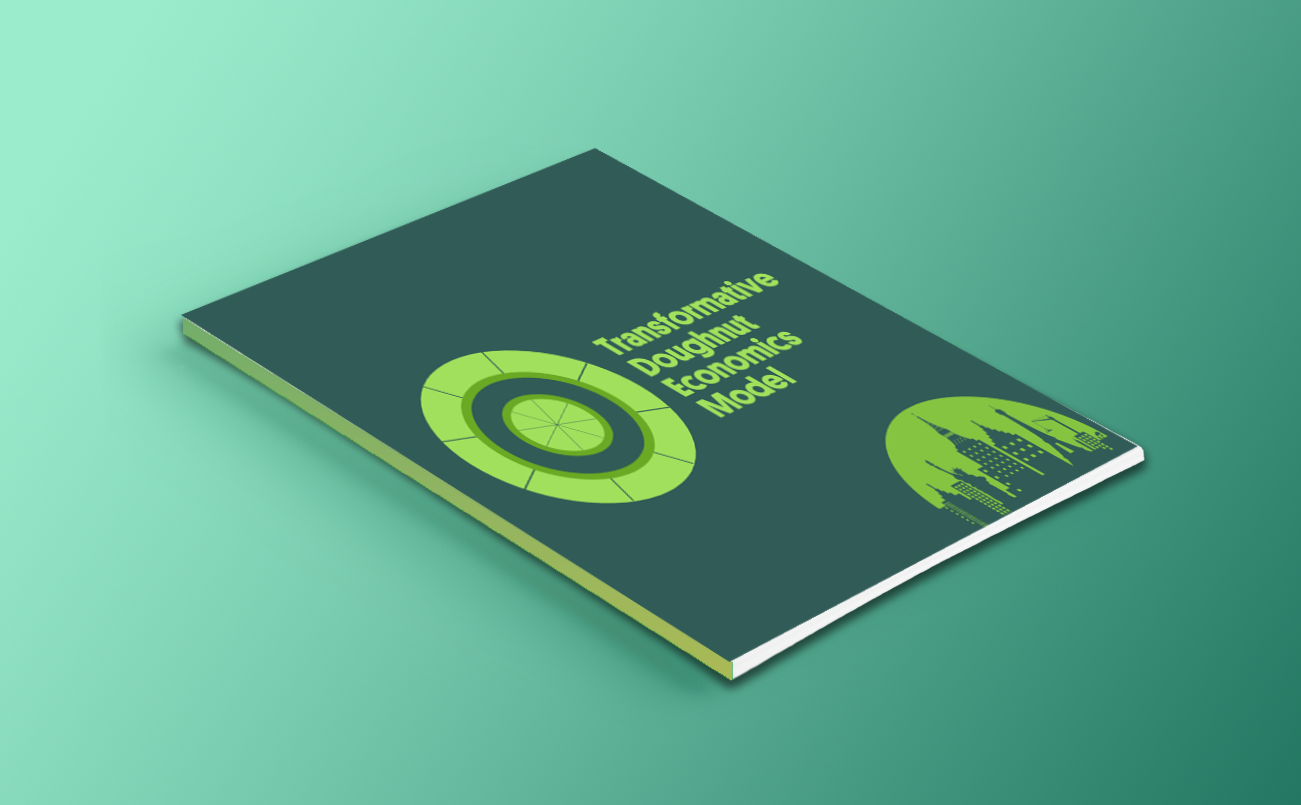
The Transformative Doughnut Economics Model

By Uncategorized

The doughnut economics model is increasingly presented as an alternative human development measure, meeting needs and crossing the boundaries of environmental degradation. In the last ten years, the model has been further developed, and more and more, cities are giving up measuring their development through GDP and deciding to switch to the doughnut model, which should ensure that human needs are met in accordance with natural boundaries.

Read more about it and how cities can be a fertile testing ground for the model in EnglishSerbian and Greek.

Mining for metals – can it be fair?

By

About the Event:

The energy transition has been placed at the top of the European political agenda, with the digital transition closely following suit. But to successfully implement these two priorities, the EU needs to examine and adjust its supply and use of metals.

Should we press mining companies to clean up their act and negotiate a fair trade in metals, or is time to nearshore the extraction of metal ores? Is it even possible for Europe or the UK to become self-sufficient in metals, by reviving metal mining within their borders and/or by drastically improving recycling from the urban mine? One thing is clear: the dilemmas around metals make it all the more urgent to rethink our consumption patterns, from mobility to data use.

This is the third of nine public webinars as part of the project ”Metals for a green and digital Europe” organised by GEF with the support of Wetenschappelijk Bureau GroenLinks (Lead partner), Green Economics Institute, Institute for Active Citizenship, Etopia, Transición Verde, Visio, Fundacja Strefa Zieleni.


Speakers:


Miriam Kennet (The Green Economics Institute, UK ) – Director CEO

Richard Wouters (Wetenschappelijk Bureau GroenLinks, NL) – Metals for a green and digital Europe  project leader

Francisco Ruiz and Mark Driver- (Mining in Chile)

Dr Freddie Tshibumbu Shamwana ( DRC)

Sophie Kwizera – Just Transition, Actionaid (NL)

Karen Alvarenga Windham-Bellord, (UK and Brazil) PhD Cantab,Natural Resrouces Law specialist, Doctor of Philosophy from the University of Cambridge

Agneta Granstroem Indigenous Sami and former MP, (Sweden)

Dr Liliana Poposkova-  Macedonia Former MP and specialist in Mining

Professor Peter Yang- USA and China- Renewable Energy. Case University

Michael Oghia from the Sustainable Digital Infrastructure Alliance.

Kim Than (University of Alberta, Canada)

Dr Enkhbaya Shagdar, Erina- (Japan) Senior Research Fellow and COP Climate Expert specialist in energy issues and sustainable development

Baroness Natalie Bennett- UK House of Lords

Coal Mining-Speaker- Ewa Sufin –

Professor Asia Mohammed IPBES (Sudan)


To be confirmed:

Dr Hend Ahmed Saldedin (Egypt) Steel Economics and mining and the environment.


Programme:


9.30-10.00 CEST Introduction

Presentation of the Green European Foundation’s transnational project Metals for a green and digital Europe by project leader Richard Wouters (Wetenschappelijk Bureau GroenLinks, NL).

10.00 -11.20 Session 1 – Mining in the Global South

A) Overview: The extraction of metal ores often causes major damage to nature and the environment, as well as human rights violations, conflicts and corruption.Examples include DRC and Chile. The mining of cobalt and coltan in the Democratic Republic of Congo (DRC) is a case at hand. Is a more responsible sourcing of metals from developing countries possible? Is the European Union on the right track by extending mandatory due diligence in supply chains?

Speaker: Sophie Kwizera – Just Transition, Actionaid (NL)Confirmed,

A) The situation in Africa and the DRC

Speaker: Dr Freddie Tshibumbu Shamwana ( DRC), Confirmed

B) Mining in Latin America

1)Mining in Chile- Speaker: Francisco Ruiz (Chile) Mining in Chile ,Confirmed

2) Stakeholder participation in dam safety plans in the mining sector-

Speaker: Karen Alvarenga Windham-Bellord, (UK and Brazil) PhD Cantab,Natural Resrouces Law specialist, Doctor of Philosophy from the University of Cambridge, . GEI Author and Editor. Confirmed-

She says”“The United Nations’ Awareness and Preparedness for Emergencies at Local Level (APELL) for the mining sector sets a 10-step plan for drafting and implementing actions with stakeholders’ participation at its centre. The APELL places special emphasis on representatives of local communities, making the plan more inclusive and effective in saving lives and the environment. This is because when people participate in the decision-making process from an early stage, they are more likely to implement what is planned. In times of emergency, knowledge of the plan and the will to follow it are crucial to save lives and minimize negative consequences of accidents.”

C) Discussion scene setting and Q and A (20minutes)

11.20-11.30 Short Break

11.30- 12.45 CEST Session 2 – Fair trade in metals: The Situation in Europe : Speaker Debate Panel.

Chair Professor Simon Mouatt, Co-Chair Ewa Sufin, Tech: Marlyn Hughes: Tech Miriam Kennet

The EU is eager to strengthen its industry for energy and digital technology, for

instance by building battery factories. If a developing country restricts the export of

metal ores in because it wants to make and export semi-finished metal products

instead, that might lead to a WTO complaint by the EU, as happened in the case of

Indonesia. Does the EU’s scramble for metal ores undermine the global South’s right

to earn more from their raw materials by building their own industry around it? What

would a fair trade arrangement look like?

A) -Mining in Europe: –

Cases

1) Dr Krzysztof Dudek a presentation on the mining of metals in Poland, especially copper. (Poland)

2) The just transition in Poland -Coal Mining-Speaker GEI UN COP Delegate Ewa Sufin -(Poland)

3) Mining conflicts in Norway- Hans Kare Flo- (Tekna-Technical Trade Union, Norway)


11.55-12.05 Mid session quick break


4) N Macedonia. Speaker: Liljana Popovska (N. Macedonia), Former MP and specialist in Mining, GEI Author.

5) Mining in Serbia: Zaklina Zivkovic, PolEkol (Serbia)

6) Indigenous Perspectives -Mining in Traditional SAMI areas in Sweden

Speaker- Agneta Granstroem Indigenous Sami Gov Councillor and Former MP (Sweden)

Q and A


12.45-13.00 Short Break


B) 13.00-13.15 Exploiting the urban mine

To what extent can a better recycling of metals reduce the need for virgin metals? At

present, it is the rarest metals that are worst recycled. How much research and what

kind of legislation do we need to fully exploit the urban mine? Can some metals that

are critical for green energy and digitalisation, such as the rare earths that we

currently source from China, be substituted by more common materials?

Speaker:

Dr Liljana Popovska-( N Macedonia )Former MP and specialist in Mining. ‘Liljana Popovska: Mining can not be in the neighbourhood of agriculture and tourism, definitely.’

13.00-13.30 CEST Lunch Break and Break Outs


13.30-14.20  Session 2d) Mining and The SDGs

The UN Sustainable Development Goals, impacts and ethics of mining -near shoring -can we justify bringing mining effects into the EU? If not- what is the alternative? (All speakers invited to be confirmed)

14.20-14.30 Short Break

14.30- 15.30 Session 3 –Contemporary Metal mining

A) 14.30-15.15 CEST : By importing most of their metals, both the European Union and the UK shift the burden of environmental damage to poorer countries. Mining in Europe would

probably be less destructive because of our environmental rules. Moreover,

perpetuating Europe’s dependence on metal imports, especially from China, creates

geopolitical risks. Is it time to revive metal mining within Europe’s borders? On what

conditions would that be acceptable to local communities and green activists, if at

all?

B) Sustainable digitalisation 15.10-15.30 20 minutes

Digital technologies can help us make a more sparing use of natural resources – from smart energy grids to sensors and algorithms that sort out metal scrap. However, not all forms of digitalisation are a blessing to the environment. The exploding use of data for online video, gaming, advertising, surveillance and training artificial intelligence requires more and more energy and metals. How can we put the digital transition on a sustainable path?


15.30- 15.45 – CEST Break


15.45 – 16.45  Session 4 –From Glasgow COP21 to Kunmin COP15 – 2021 a watershed year. The importance of mining and how to incorporate its future as a sustainable part of human activity.

At the end of 2021, the global community hopes to gather for the UN Biodiversity onference (COP15) in Kunming, China, and for the UN Climate Change Conference (COP26) in Glasgow, UK. If the coronavirus crisis has not driven home the urgency of protecting natural habitats and respecting planetary boundaries, then what will? However, whereas metal mining might be seen as a curse for biodiversity in Kunming, it may be seen as a blessing for climate solutions in Glasgow. Where metal mining takes place in the remaining habitats of wildlife, the risk of new zoonoses is lurking. But we cannot do without metals for carbon-free energy. How to reconcile the objectives of Kunming and Glasgow?

16.45 -17.00 CEST Break


17.00- 17.45 CEST Session 5–Concluding session- and next steps. Rethinking our hunger for metals

The dilemmas around metals prompt us to question a western way of life that is

consuming more and more kilowatt-hours and megabytes. Should we replace every

fossil fuel car with an electric one, or is it better to share cars and promote cycling?

Can our growing data consumption be justified and do we need an even more

versatile smartphone every two years? Are our politicians willing to confront these

questions, even if it might spook their voters?

Practicalities:

Date and time: Saturday, May 15th from 09:00 to 18:00 CET

Audience: This webinar will be in English and is open to the general public.

Registration: Click Here


Please note all times are Central European Time for this event.


This event is organised by the Green European Foundation with the support of  Green Economics Institute and with the financial support of the European Parliament to the Green European Foundation.

Call for Author: Youth Chapter for the Just Transition Book

By

About the Event

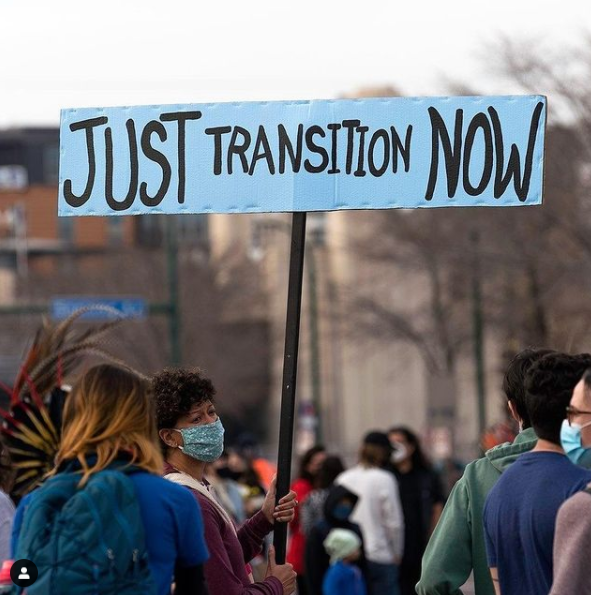
The chapter will be published in the Book on Just Transition produced as part of the multiannual and multipartner project carried out by the Green European Foundation, led by Oikos and participated by green European partners. It will be divided in five parts: (1) Setting the stage, (2) European regions on their way, (3) Just transition and the EU Green Deal, (4) Frontrunners showing the way, and (5) Conclusions. The Youth Chapter will open part 4.

We are looking for someone who can bring a fresh perspective and nuanced insights into the following questions:

  • How do young people take the future into their own hands?
  • How are grassroots movements changing the narrative and convincing politicians to push for a socially just transition?
  • How are young activists from marginalised communities and minority groups impacted by climate change, and how are they fighting for climate justice?
  • Why are current EU programmes such as Next Generation EU not good enough?
  • How has the pandemic transformed the efforts of grassroots activists and changed their methods to create impact?

We are looking for one or two young authors with a passion for writing who are interested in the topic and committed to unpack the relation between the work of activists everywhere in Europe and the political advancement towards a more sustainable, welcoming and fairer Europe.


Context

About the chapter:

  • The content of the chapter should have a strong focus on the role of youth, grassroots and marginalised and minority groups in achieving a better and more just transition away from fossil fuels towards a socially and environmentally sustainable future
  • The chapter should have a clear sub-structure (contextual introduction, main body divided in sub-sections and topics, summarising conclusion) and can include various formats (analysis, essays, case studies and/or interviews)
  • The chapter should support analysis with figures and examples from at least three European countries (including at least one non-EU)
  • The chapter should consist of 4000 to 6000 words
  • The contribution should be written in English
  • The remuneration for the writing of the chapter is EUR 500

We accept both individual and joint applications of maximum two authors to co-write the chapter. If you decide to apply with someone please send in only one joint application.

The writer(s) applying should:

  • Be interested and passionate about tactics, methods and narratives used by grassroots movements across Europe to achieve a socially just transition
  • Be determined in expanding their knowledge on the topic by doing research, following the work or contacting activists
  • (Possibly) have previous experience in writing extensive pieces
  • Feel comfortable in writing long texts in English

Timeline:

  • Send your application by 2nd April at 23:59 CET
  • You will be informed of the decision at the latest by 7th April (all applicants will be informed)
  • Start writing!
  • A first draft of the chapter should be sent in by the 7th of May
  • Wait for the feedback and comments of the FYEG Executive Committee
  • The final version of the chapter should be sent in by the 31st of May


Practicalities

To apply:

Please send the following to project.manager@fyeg.org by 2nd April @ 23:59 CET:

  • Your pitch for the chapter: a description of what you would like to write about (between 300 and 400 words)
  • A short mention of the structure and format you plan to use
  • A proposal for a concise title
  • Your CV (or CVs if two authors are applying)

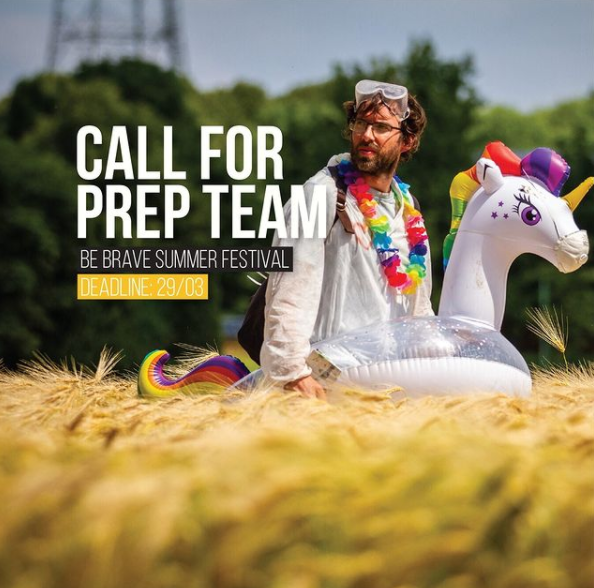
Call for Prep team: Be Brave Summer Festival

By

About the Event

Be Brave Summer Festival

The 6-day long, community-managed, outdoor summer festival will potentially bring together 300 Young Greens and representatives of youth green movements to look back at the challenges and learnings of this period of digital organising, as well as to undertake a journey of introspective reflection of our groups and movements to imagine a way forward for more inclusivity and resiliency.

Please note: the final number of participants and number of festival days will be decided at a later stage and both figures might consequently be reduced to comply with national and EU restrictions.

Context

With the general aim to pursue more inclusive and democratic interactions, processes and structures among youth-led groups and organisations, the event’s concrete objectives are to:

  1. Explore the struggles with active participation for youth-led organisations, movements and informal groups in different parts of Europe;
  2. Create space to reflect on the common culture of green youth organisations and movements, including elements of supremacy culture, patriarchal structures and canceling culture, as well as undergoing a process of collective imagination to envision how a society free of these elements looks like;
  3. Equip young people with tools to analyse and transform the organisational structures, participation methods and decision-making processes of their groups; and
  4. Promote and develop skills of community organising.

In order to achieve these objectives, we are looking for four young activists to join forces with the rest of the preparatory team composed of FYEG’s Project Manager, a member of FYEG Executive Committee, and a team member nominated by the host organisation. Prep-team members should speak English, be available during the preparation period, be responsible about fulfilling their tasks, have good organisational skills, be good team players, be committed to the aims of the project and FYEG’s values, and be familiar with non-formal education methods. They should also be dedicated to the successful implementation of the event.

Main responsibilities of the Prep-Team (PT):

  • Active participation in and commitment to the preparation work prior the event (mid-April – July 2021 // 1.5h weekly PT meeting + 2/3h of individual or couple work);
  • Participation in a live prep team meeting (30 April-3 May or 7-10 May // 2 full working days + travel // location TBD);
  • Preparation and facilitation of the programme of the festival: designing and preparing sessions based on non-formal education methodology, invitation and communication with speakers, trainers and partners in accordance with the project aims;
  • Collaborating with the Local Prep Team to implement community-management elements during the festival and for the establishment of a solidarity/sliding scale ticket;
  • Create and implement an Awareness strategy (including the formation of an awareness team to work full-time during the festival) to ensure the wellbeing and inclusion of all participants;
  • Full participation during the entire festival (6 days, tbc) and prep team meeting before and after (2 days before and 1 day after) in August 2021, exact dates tbd; Support the finalisation of the festival outputs;
  • In the unfortunate event that we can’t hold this activity in-real-life, the PT members should be interested and motivated to hold online activities
  • Helping with the reporting of the event (optional)

Being a prep-team member for the Young Greens Summer Festival would offer you:

  • Working in a lively, supportive and safe international environment;
  • Experience in managing youth projects – preparation, implementation, evaluation, follow-up and reporting;
  • Becoming familiar with the international Green family and various sides of FYEG’s work;
  • The chance to research and learn about best practices for improved inclusion and democratic process of youth organisations and movements;
  • The chance to develop your facilitation skills in group work and non-formal education;
  • The chance to help build, through the programme, long-lasting inclusion and democratising strategies and plans for FYEG, alongside the Executive Committee and the Democracy & Inclusion Working Group;
  • A lot of work and a lot of fun!

Methodology

The program will be based on the principles of non-formal education and intercultural learning. We strive for an active, inclusive and direct communication and transfer and sharing of knowledge. Sessions will be balanced between theoretical inputs, training, workshops, discussions, reflection, planning, committee work, brainstorming, collective imagination and other interactive methods of learning.


Practicalities

Accommodation, food, working space, travel and visa costs for the preparatory team will be fully covered within reasonable limits and within Europe. For selection of travel the condition is to combine the most economic and environmentally friendly way (lowest price + travel time + CO2 emissions).

If you are excited about bringing to life the first ever Young Greens Summer Festival and dig deeper into topics of democratic organising and inclusion methods, you should apply by filling in THIS FORMThe deadline for submitting online applications is March 29th at 23:59 CET.


Acknowledgements

The festival is organised by the FYEG in cooperation with the European Greens and it’s the second activity of the year-long Youth Rebuilds a Brave New Europe project supported by the European Youth Foundation of Council of Europe and the European Greens. One of the seminar workshops is organised by the Green European Foundation with the support of the FYEG and with the financial support of the European Parliament to the GEF.

Call for Host Organisation: Young Greens Summer Festival

By

Be Brave Summer Festival

It will soon be almost two years since Young Greens have gathered in-real-life internationally. In August 2021 we plan to invite 300 Young Greens and representatives of youth Green movements to a 6-day long, community-managed, outdoor summer festival to: look back at the challenges and learnings of this period of digital organising, as well as to undertake a journey of introspective reflection of our groups and movements to imagine a way forward for more inclusivity and resiliency.

IMPORTANT NOTE: the final number of participants and number of festival days will be decided at a later stage and both figures might consequently be reduced to comply with national and EU restrictions.


About the location and logistical set-up

In organising the first ever Young Greens Summer Festival, we firstly want to ensure the safety and inclusion of all participants. This event will be organised outdoors, with the following logistical requirements:

  • Enough space to host (1) three large open tent constructions (similar to the ones used at music festivals) where to host plenaries and workshops; (2) several smaller stands (Doctors without Borders style) where to hold the parallel sessions of the programme
  • An open space where participants can pitch their camping tents
  • Access to running water on the site and at least one dry area (building or container)
  • Road accessibility to the site for vehicles


About the Local Preparatory Team (LPT)

We are looking for 5 motivated Young Greens who will form the Local Preparatory Team and who will be working alongside FYEG’s Projects staff team and take part in the entire planning and organisational process.

The LPT’s responsibilities will be:

  • Research site/venue, meal and refreshment arrangement options, taking into consideration the logistics criteria identified in agreement with FYEG project staff and green organising partners
  • Coordinate the logistical preparation and implementation of the festival in accordance with the budget envisioned for the event
  • Prepare an infopack related to the event logistics, venue, local travel etc. together with the PT and FYEG office
  • Support with the establishment of a solidarity/sliding scale ticket system
  • Arrange all technical and logistical needs of the preparatory team (PT) and of participants before and during the event
  • Monitor and keep the FYEG office informed of relevant covid-related country developments for the periodic reassessment of the event’s logistics
  • Attend weekly coordination meetings (1h) with FYEG’s project staff (May to August)

The applying organisation should include the formation of the Local Prep Team in the application, and each member should provide their contact and self-identification details by filling in the form linked below.


Apply to host the first Young Greens Summer Festival

The local host organisation will have the following benefits:

  • To promote this activity at local/national level as its international activity in cooperation with FYEG;
  • To make use of presence of the international Young Greens to organise side activities during the event that will support the interest of their organisation;
  • To organise a media event and use the international presence of Young Greens;
  • To build capacities of its own members in organising events, fundraising, educational work and international cooperation.

If your organisation is interested in hosting the Young Greens Summer Festival, we kindly ask you to submit an application to help us decide on the best possible location. This application should contain:

  • A short statement on behalf of your organisation, expressing the interest to be the host of the Young Greens Summer Festival and the commitment to take part in the entire planning and organisational process (April to August).
  • An initial overview of the venue options. Can you think of suitable locations for hosting the festival? Think about: do you know any summer festivals organised in your country and if so, where are they hosted? Are there areas of land that are symbolically important to Greens (squatted land used for community activities and projects, threatened parks/forests that communities are trying to preserve, etc.). What is the road connectivity to the closest city/town/village of these sites like?
  • The formation of the Local Prep Team. Due to the scale and nature of the event, we are looking for 5 people to form the local prep team (LPT). Include their full names and contact emails in the application. Each individual LPT member should fill in this brief questionnaire with their contact details and self-identification information. Please consider that this is a long-term commitment as the preparations will require your LPT’s attention for the 4 months prior to the event.
  • An overview of the transportation options that the place offers: is it easily accessible by road, railway or airway? What are the average costs of travel from various regions of Europe?
  • If your organisation has any, please include any relevant experience with hosting a youth activity last year under Corona restrictions.


Practicalities

Please send all documents by 10th April at 23:59 CET by e-mail to project.manager@fyeg.org and milan@fyeg.org, and do not hesitate to contact us in case you have any questions.

The decision regarding the selected location will be communicated by the 20th April 2021. FYEG strives for regional balance in the organisation of its events, and that will be an important criteria during the selection – together with the quality of the application. The festival is the second activity of the year-long Youth Rebuilds a Brave New Europe supported by the European Youth Foundation of Council of Europe and organised in collaboration with the European Greens. One of the seminar workshops is organised by the Green European Foundation with the support of the FYEG and with the financial support of the European Parliament to the GEF.


A portion of this event is organised by the Green European Foundation with the support of the FYEG and with the financial support of the European Parliament to the Green European Foundation

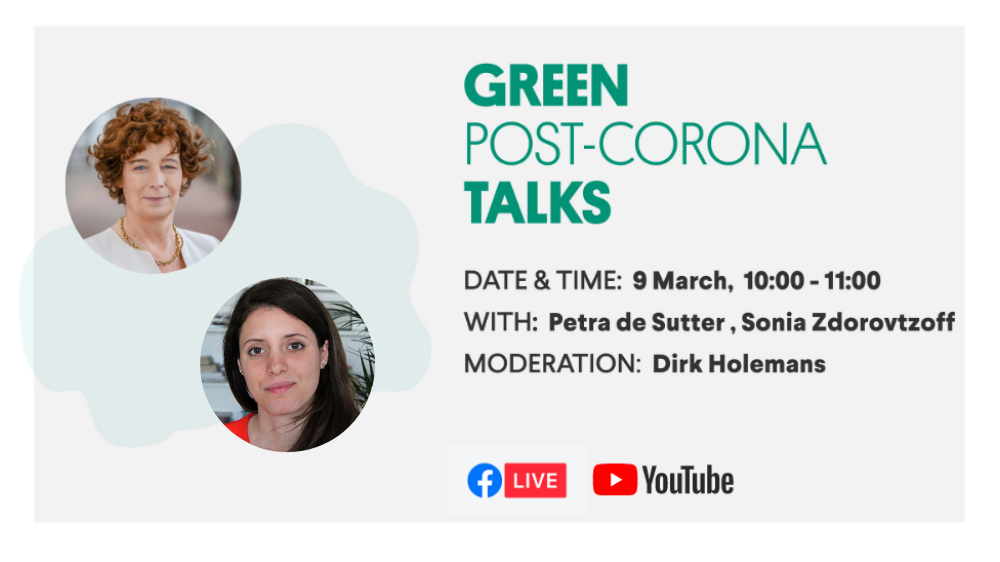
Green Post-Corona Talk with Petra de Sutter and Sonia Zdorovtzoff

By

The ongoing Covid-19 pandemic is having a grip on societies worldwide and will impact our lives long after the crisis is overcome. It is clear that we cannot continue with “business as usual,” but that we need to discuss positive ideas and concepts for a better, greener future and resilient societies now.


About the event


You can stream the talk on Facebook and YouTube.

GEF is hosting the Green Post-Corona Talks, a series of participatory online discussions with high-level experts, thinkers, and policy-makers, and the opportunity for participants to pose their most pressing questions to them live.

The talks will highlight what is currently at stake in the Corona crisis but also look beyond the period of the pandemic, and what possible solutions are already out there and can lend themselves to design the post-corona world.

The series will cover different themes from economy, over migration to gender, and bring in inspiring perspectives from all across Europe.

The project is implemented in cooperation with Oikos.


You can help us advancing forward-looking green ideas

to shape the Europe that we want! 


We rely on your generous contribution to continue putting together new, exciting Green Post-Corona Talks made extensively available to the general European public! So, please consider making a donation today, by clicking on this link.


EGAT Catalunya

By

About the event

During the European Green Activist Training, selected participants are introduced to green values and activity from the local level to the national, EU and international level. As a course participant, they hear from politicians and other professionals of the field, discover how politics is made, get a backstage pass to civil society organisations, and discuss change-making from an individual’s perspective. This course gives them the knowledge, skills and support network they need to become a changemaker themselves. Participants find their own way to be an activist, gain new friends and valuable experience.

First national Training

Catalunya- Fundacio Nous Horitzons- November 13, 14

Programme: through various presentations, participants will debate on the green way out of the health, economic and climate crisis, learn about the social protection measures in times of economic and climatic uncertainty, perspectives on climate change from feminism, and discuss green entrepreneurship.

The participants were given an additional article “UNA PROPUESTA ECOSOCIALISTA PARA EL ESCENARIO POST COVID-19”  by Joan Herrera, a jurist, former director of IDEA and current director of Environmental Action and Energy in the City Council of Prat de Llobregat. The focus of the article is in on the green way out of the sanitary, economic and climate crisis.

EGAT Hungary

By

About the event

During the European Green Activist Training, selected participants are introduced to green values and activity from the local level to the national, EU and international level. As a course participant, they hear from politicians and other professionals of the field, discover how politics is made, get a backstage pass to civil society organisations, and discuss change-making from an individual’s perspective. This course gives them the knowledge, skills and support network they need to become a changemaker themselves. Participants find their own way to be an activist, gain new friends and valuable experience.

First national training

Hungary- Ecopolis Foundation- December 5

Programme: introduce EGAT programme, lectures on the theory and practice of politics and ecopolitics as well as the Green movement in Hungary.

Second national training

Hungary- Ecopolis Foundation- February 12, 13, 14

Programmeexplore Green policies, Greens in the European Union, the future of Green politics and the paradoxes and contradictions in green politics. Presentations given by a variety of political scientists.

EGAT Finland

By

About the event

During the European Green Activist Training, selected participants are introduced to green values and activity from the local level to the national, EU and international level. As a course participant, they hear from politicians and other professionals of the field, discover how politics is made, get a backstage pass to civil society organisations, and discuss change-making from an individual’s perspective. This course gives them the knowledge, skills and support network they need to become a changemaker themselves. Participants find their own way to be an activist, gain new friends and valuable experience.

  1. First national training

Finland- Green Cultural Association- Educational Centre and Think Tank Visio- October 9,10

Programme: introduce EGAT programme, explore personal reflections and aims for the course, presentation of green politics and values, discussion with Panel of Young Greens 

2. Second national training

Finland- Green Cultural Association- Educational Centre and Think Tank Visio- October 27, 31, and November 1st

ProgrammePanel discussions on local politics with presentation from Vilma Virolainen, Green candidate for Lempäälä city council to discuss what it’s like to be running for city council as a young person 

3. Third national training

Finland- Green Cultural Association- Educational Centre and Think Tank Visio- November 25, 28, 29

Programmefocus on the themes of NGOs and civil society. The programme includes introductions to different non-governmental organisations and movements and the ways they create change, from non-violent civil disobedience and demonstrations to lobbying. The programme will also include plenty of discussions as well as workshops on effective social media communication and lobbying. 

4. Fourth national training

Finland- Green Cultural Association- Educational Centre and Think Tank Visio- January 16-17 

EGAT Czech Republic

By

About European Green Activist Training (EGAT)

During the EGAT course, participants learn about Green values, meet politicians and experts working at the frontline of fighting for positive change, and of course connect with plenty of other like-minded young people!

The course gives them insights into the political decision-making processes on the national and European levels, develop skills as an activist to enact societal change, and explore how Green values promote more equal and sustainable societies.

The aim of EGAT is to familiarise trainees with the institutions of the European Union, green topics, green policies, and sustainable development policies, and through various activities and discussions with representatives of international organizations and representatives of the European Union, to explore opportunities for active and professional involvement in building a greener and more just society.

The training course will be comprised of two weekend training sessions in the Czech Republic, an online course, a preparation session for the Brussels trip and then culminating with a one-week study trip to Brussels to visit the European Institutions alongside EGAT participants from other countries.

  1. First national training

Czech Republic- Institute for Active Citizenship- October 24, 25

Programme: introduce EGAT programme, explore motivations and expectations of programme, presentation of Young Greens, workshops on different methods of civic participation.  

2. Second national training

Czech Republic- Institute for Active Citizenship- November 20-21

Programmefocusing on the topics of feminismgender, and social media strategies in the online era, participants will create educational content to use for their very own campaigns. Workshops on the topic of social networks and how they work as a marketing and educational tool. 

3. Third national training

Czech Republic- Institute for Active Citizenship- January 29-31 

EGAT Croatia

By

About European Green Activist Training

This EGAT programme is organised by the Green European Foundation with the support of Sustainable Development Forum Green Window and with the financial support of the European Parliament to the Green European Foundation.
During the EGAT course, participants learn about Green values, meet politicians and experts working at the frontline of fighting for positive change, and of course connect with plenty of other like-minded young people!

The course gives participants insights into the political decision-making processes on the national and European levels, develop your skills as an activist to enact societal change, and explore how Green values promote more equal and sustainable societies.

The training course is comprised of three training sessions in Croatia, an online course, and then culminating with a one-week study trip to Brussels to visit the European Institutions alongside EGAT participants from other countries.

  1. First national training

Croatia- Sustainable Development Forum Green Window– November 21,22

Programme: introduce EGAT programme, history of the EU, EU politics, EU institutions, presentation by Alan Kečkeš, Greens/EFA on the decision-making processes and careers in the EU. 

2. Second national training

Croatia- Sustainable Development Forum Green Window– December 19-20 

3. Third national training

Croatia- Sustainable Development Forum Green Window– January 23-24 

How can we drastically reduce CO2 emissions in the EU and eradicate poverty?

By

Context:

The Covid-19 crisis has only enhanced the social crises: decreasing wages, increased inequalities and union busting.

Contrary to public belief, the Covid-19 induced economic crisis is not an exogenous crisis to our economic system. Covid19 is a deeply endogenous crisis of our world capitalistic system. It has exposed the failures of underfinanced social and health systems that are the result of decades of austerity policies and privatisation. Zoonotic viruses that “jump” from animals to humans are increasing due to the destruction of the last areas of wilderness. Houses, streets, agricultural areas, all are invading formerly untouched nature.

Our current system exploits both: people and nature. Only a radical change in the human-nature metabolism can stop the ongoing climate catastrophe. Only a radical change in the social and economic policy can stop the wave of poverty we are facing. We thus need to solve both: the climate and the social crisis in one stroke.

Hence, the climate crisis and the necessity to exist inside the planetary boundaries are the main challenge of the current generations. What is equally clear is that workers and common citizens must be in the centre of the necessary socio-ecological transformation. We have to build a much better economy now.

We need to act now, and indeed: we have started to transform our economies. The European Commission has presented its Green Deal on 11th December 2019 and currently the EU is negotiating the historic ‘Recovery Plan’. The member states have also reacted to the immediate Covid19 induced economic crisis as well as to the long-term climate crisis.

About the event:

In our common seminar, we want to share our analysis of the Covid-19 and climate crisis and discuss possible solutions and propose alternative ways forward. We want to continue our dialogue on our understanding of the necessary socio-ecological transformation of our societies.

Speakers:

Speakers for the Green European Foundation (GEF):

  • Political introduction: Aurélie Maréchal (Political Director GEF)
  • Speaker: Councillor Jonathan Essex (Green House Think Tank, United Kingdom)

Speakers for the Foundation for European Progressive Studies (FEPS):

  • Political introduction: Uwe Optenhögel (Vice-President FEPS)
  • Speaker: Saïd El Khadraoui (Special Adviser FEPS, Belgium)

Speakers for transform! europe:

  • Political introduction: Cornelia Hildebrandt (Co-President transform! europe)
  • Speaker: Manuela Kropp (Project Manager Rosa Luxemburg Stiftung, Brussels)

The event will be hosted by Marga Ferré (Co-President transform! europe)

Practicalities:

The event will take place in English & French.

Registration Link: https://us02web.zoom.us/meeting/register/tZUsdOmtqz0uHtAcuu9R1CeAGwuUAd-3lgyx

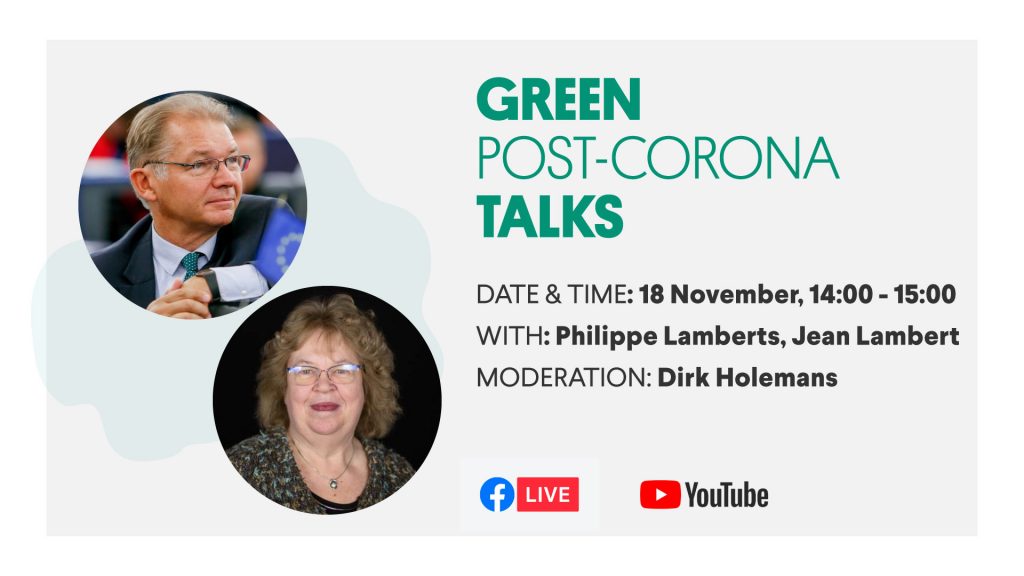
Green Post-Corona Talks with Philippe Lamberts and Jean Lambert

By

About the event

The Green Post-Corona Talks is a series of online talks launched by the Green European Foundation in collaboration with Oikos during the first wave of the COVID19 pandemic in Europe. The talks offer an analysis of what is at stake in the COVID crisis and bringing forward ideas and concepts for a green post-corona vision.

As the epidemiological situation in all European countries gets worse again, the continuous need for such discussions brought to the re-launch of the series. In this new episode with representatives of the European Green Party and the Greens/EFA group, the speakers will go back to the series kick off that took place in April 2020, to discuss the evolution of the crisis,  the developments in terms of EU cooperation and Green New Deal, and the consequences of these two waves of COVID-19 on European societies .

The event will be live-streamed on YouTube and Facebook and the audience will be able to interact with the speakers live. Join our Facebook event to stay alert for the live stream.

The ongoing Covid-19 pandemic is having a grip on societies worldwide and will impact our lives long after the crisis is overcome. It is clear that we cannot continue with “business as usual,” but that we need to discuss positive ideas and concepts for a better, greener future and resilient societies now.

GEF is therefore hosting the Green Post-Corona Talks, a series of participatory online discussions with high-level experts, thinkers, and policy-makers, and the opportunity for participants to pose their most pressing questions to them live.

The talks will highlight what is currently at stake in the Corona crisis but also look beyond the period of the pandemic, and what possible solutions are already out there and can lend themselves to design the post-corona world.

The series will cover different themes from economy, over migration to gender, and bring in inspiring perspectives from all across Europe.

The project is implemented in cooperation with Oikos.

You can help us advancing forward-looking green ideas to shape the Europe that we want! 

We rely on your generous contribution to continue putting together new, exciting Green Post-Corona Talks made extensively available to the general European public! So, please consider making a donation today, by clicking on this link.

What future for economic and monetary policy in the EU?

By

About the event

This second installment of the joint series “Worldwide Pandemic, European Responses” will look at the economic consequences of the ongoing COVID-19 pandemic and how it is shaping monetary and economic policies on the European level.

The event will discuss what the latest developments amidst this crisis could mean for the future of the EU. Will we see a further integration with a fiscal union following the monetary union? Or are those just extraordinary measures in extraordinary times, and the ECB policy will face massive challenges again in the future as suggested by a landmark ruling of Germany’s Constitutional Court in early May? What are the risks and what are the opportunities of the EU directly borrowing money at the financial markets, which would have to be paid back after the next long-term budget in 2027? What will this debt mean for the actual ‘next generation’ of the EU? Could this be a precedent for future crises to tackle and could an increased economic ‘firepower’ of the Commission revive public approval for the EU and its institutions?

Context

The COVID-19 pandemic has brought life to a standstill across the globe and the resulting halt in production, interrupted supply chains worldwide, and a drop in consumption have plunged our economies into a severe crisis. Within the EU, the countries hardest hit by the pandemic – Italy and Spain – were also among the member states that suffered most under the European debt crisis a decade ago. Immense efforts and support from financially stronger member states will be needed for their recovery.

To soften the economic and social fallout of the ongoing COVID-19 pandemic and after coordination and display of solidarity was initially lacking amidst the crisis, the European Commission presented its proposal for a major recovery plan, which includes a recovery fund entitled ‘Next Generation EU’ amounting to 750 billion euro alongside proposals to reinforce the long-term EU budget, the Multi-Annual Financial Framework 2021-2027, as well as an adjustment of its own work programme for the year 2020, prioritising recovery and resilience. Additionally, the European Central Bank announced in early June that it would boost its emergency support programme by 600 billion euro to 1.35 trillion euro. The support from the ECB comes on top of up to 540 billion euro in financial aid from Eurozone governments that includes credit lines from the euro bailout fund as well as the above-mentioned proposal by the European Commission.


Speakers

  • Ernest Urtasun, Member of the European Parliament Greens/EFA and member of the Economic and Monetary Affairs Committee of the European Parliament
  • Gabriele Michalitsch, economist & political scientist, lecturer at Vienna and Klagenfurt University & guest professor in Beijing, Budapest and Istanbul
  • Thierry Philipponnat, Head of research & advocacy at Finance Watch

Moderation: Jennifer Baker, Freelance EU Correspondent

The event will be live streamed on Facebook and YouTube.

The impact of the pandemic on climate change

By

About the event

The Green Post-Corona Talks is a format of the Green European Foundation, which features online discussions with experts, launching a dialogue on the impact and consequences of the coronavirus pandemic on the development of a fairer, better and greener society.

With the support of Forum for Sustainable Development Green Window, GEF will organise in the coming period, with interesting and renowned speakers, several regional online events on youth and youth work, vulnerable groups, climate change and foreign policy.

The first Green Post-Corona Talk Croatia will address climate change and the impact of the pandemic on climate change, but also the ways in which we can use this situation and recovery from the pandemic as an opportunity to impact climate change.

Speakers

The discussion will be moderated by Kaja Pavlinić, and the speakers are:

  • Vedran Horvat (Institute of Political Ecology)
  • Sandra Vlasic (Terrahub)
  • Marija Mileta (Green Action)
  • Julije Domac (Special Adviser to the President of the Republic of Croatia for Energy and Climate)

Registration

The event will be hosted on the Zoom platform, and those interested can apply for participation at the following link: https://forms.gle/x4UG1LBZF3tbzFUH6

Participation in the event is free. The event will take place in Croatian.

Public Health and Societal Resilience: what role for the EU?

By

About the event

Which role will public health spending play within the Next Generation EU budget and the MFF 2021-2027, and how are those two interlinked? How can the general resilience of the EU and its members be strengthened, in light of other crises such as the climate crisis?

Context

This pandemic has exposed the fragility of the European Union as it led to uncoordinated, divergent approaches by the European Union’s member states, and the timidity of any solidarity between member states has prompted many citizens to question the general purpose of the European Union, particularly in times of crisis.

One of the reasons for the lack of coordination certainly lies in the fact that healthcare remains a competence of the member states. Although the EU’s role should be complementary to the member states’ policies, taking on a coordination role in the case of serious cross-border health risks, the individualistic approaches by the EU governments and the lack of information sharing about them made such coordination nearly impossible at the beginning of the pandemic.

As most member states are slowly easing lockdown measures with daily infection rates and casualties fortunately decreasing, the EU seems to slowly find its role in the crisis – having recently unveiled an unprecedented financial package as part of the European Commission’s recovery plan. It is underlined that one of the pillars of this budget will be to learn from the lessons of this crisis and hence rolls out a new Health programme (EU4Health) as well as increased resources for the EU’s disaster response rescEU.

Back in April, European Commission President Ursula von der Leyen suggested in an interview to combine the green deal climate plan with a “white deal” for healthcare, coined so subsequently by the media as white is usually the colour associated with healthcare. As the Commission is proposing, alongside the recovery package, to reinforce the EU long-term budget 2021-2027 and allow within it more flexibility, this could potentially mean that a substantial amount is being ring-fenced for healthcare spending.

Speakers

  • Petra de Sutter, Member of the European Parliament for the Greens/EFA group & Chair of the Committee on Internal Market and Consumer Protection
  • Ingrid Keller, from unit Crisis management and preparedness in health at the European Commission

Moderated by: Sarantis Michalopoulos, Network Editor EurActiv


The event will be live streamed on Facebook and Youtube.

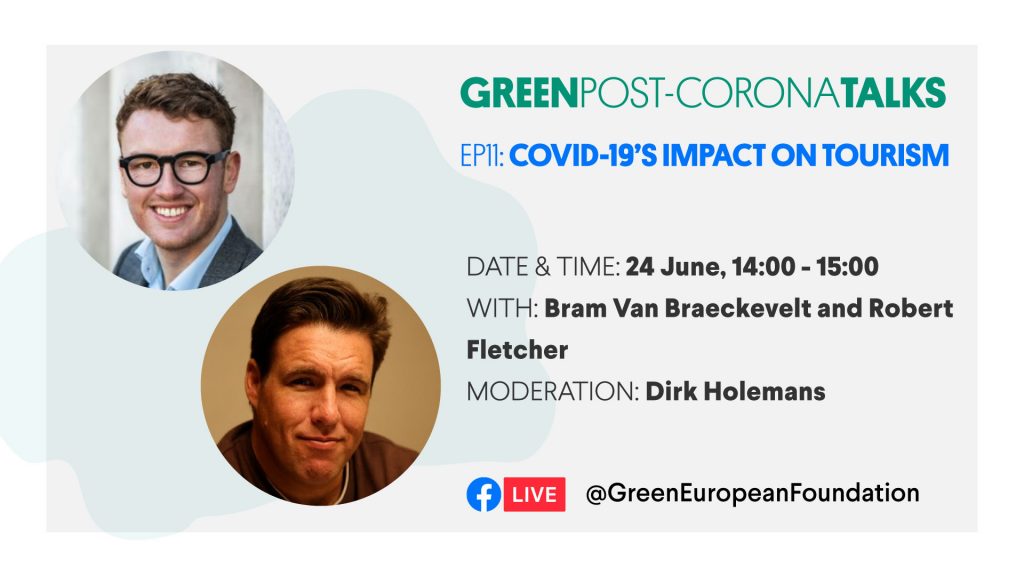
Green Post-Corona Talks with Bram Van Braeckevelt and Robert Fletcher

By

The COVID-19 crisis has led to closed borders and brought international travel to a halt and thereby dramatically impacted the tourism industry across the world. The International Labour Organisation (ILO) warns that “the impact on tourism enterprises and workers, the majority being young women, is unprecedented.” Within the EU, some of the hardest hit countries by the pandemic, such as Spain and Italy, are heavily relying on their tourism industry flourishing.

At the same time, with the almost complete suspension of international air travel, record low emissions and in many tourist hot spots a partial recovery of the environment (e.g. water quality in Venice) could be observed.

The World Tourism Organization launched the campaign #TravelTomorrow earlier this year. While it underlines the importance of tourism as one of the key drivers of international (economic) recovery, it also aims to highlight the need for a more sustainable approach to international travel as an effort to achieve the Sustainable Development Goals.

With most inner European borders opening again as of mid-June just in time for the summer holidays, the question arises whether the COVID-19 crisis can be a second chance for sustainable tourism that considers and tries to reverse the detrimental social and environmental impacts of tourism. Is a real transformation of the industry towards low or zero carbon intensity possible?

Join our Facebook event to stay alert for the live stream.


About the event


The ongoing Covid-19 pandemic is having a grip on societies worldwide and will impact our lives long after the crisis is overcome. It is clear that we cannot continue with “business as usual,” but that we need to discuss positive ideas and concepts for a better, greener future and resilient societies now.

GEF is therefore hosting the Green Post-Corona Talks, a series of participatory online discussions with high-level experts, thinkers, and policy-makers, and the opportunity for participants to pose their most pressing questions to them live.

The talks will highlight what is currently at stake in the Corona crisis but also look beyond the period of the pandemic, and what possible solutions are already out there and can lend themselves to design the post-corona world.

The series will cover different themes from economy, over migration to gender, and bring in inspiring perspectives from all across Europe.

The project is implemented in cooperation with Oikos.


You can help us advancing forward-looking green ideas

to shape the Europe that we want! 


We rely on your generous contribution to continue putting together new, exciting Green Post-Corona Talks made extensively available to the general European public! So, please consider making a donation today, by clicking on this link.

Green-Red Dialogues: Minimum Living Income – A Step Towards UBI?

By

About the Event:

COVID-19 has once again put on the table the need for a change of model, based on solidarity and equity for all European citizens. If we apply the same instruments that we have used up to now, we are in danger of leaving many people behind, creating a socially and economically unequal Europe. What model of Europe do we want? How can we ensure that people can live with dignity? How can we contribute to the creation of a social security system that works for all? How can we make it possible for people to live with dignity from their work without having to accept multiple jobs or over-exploitation?

The second Green-Red Dialogue will address the topic of Basic Income. The Green European Foundation has worked with experts on this topic for the past three years, formulating “European Green Perspectives on Basic Income” together with several partner foundations including Fundacio Nous Horitzons.

Now is a good time to present the conclusions of that research and put back on the agenda an issue that in the current crisis situation is more relevant than ever. The effects of the coronavirus have left much of the population excluded and the outlook for the coming years is not very encouraging. Current welfare and subsidy models have been shown to fall short both in protecting groups at risk of exclusion and encouraging economic development in Europe.

According to experts in the field, basic income could: improve the situation of people with a low purchasing power; prevent overexploitation, job insecurity, and illegal work; prevent fraud by companies against their employees; allow higher taxes to be levied on high incomes; and enable economic development through empowering groups at risk of exclusion by dignifying them and thus contributing to a fairer and more egalitarian society.

These and other questions will be addressed in this second discussion on Basic Income – featuring Pepe Fernández Albertos, Aina Vidal, and Philippe Van Parijs.

Context:

This event is part of the Green Red Dialogues. The main purpose of this series of talks is to reflect on current issues from a green and social perspective. At a time when we have to face the global challenges as a result of COVID-19, it is important to reflect on a green way out of the crisis. The current capitalist system has demonstrated that it promotes social inequality and that it attacks the planet, and therefore, all the inhabitants of the earth. We must urgently reverse the effects of the climate crisis and promote socially just and environmentally friendly models. We need to ensure that these proposals reach citizens, and explain that it is compatible with the economy, progress and development.

The first dialogue dealt with green responses to the health and climate crisis.

Speakers:

Philippe Van Parijs, professor of philosophy and key promoter of basic income.

Pepe Fernández Albertos, doctor in political science from Harvard University and researcher at the Centro Superior de Investigaciones Científicas.

Aina Vidal, deputy at the Congress of Deputies of En Comú-Podem.

Moderator: Marc Rius

Practicalities:

Date: September 17th (18:00 – 19:15 CEST)

This event will take place in Spanish and English, with simultaneous translation provided via Zoom.

You can join the Zoom call directly here. The webinar will also be livestreamed on the YouTube channel of Fundació Nous Horitzons.


This event is organised by the Green European Foundation, with the support of Fundació Nous Horitzons and the financial support of the European Parliament to the Green European Foundation.
Green Post-Corona Talks with Özge Kara, Michael Piccinino, Adélaïde Charlier, Jada Kennedy

By

The talk wants to address intergenerational solidarity in the light of the COVID-19 crisis but also how the pandemic is specifically affecting young people – from implications on their mobility or exercise of rights, to of course how the economic crisis will especially impact youth unemployment and precarity.

With the recovery package recently presented by the von der Leyen Commission being entitled “Next Generation EU”, the discussion will also shed a light on how the recovery of the EU and its economy can be ensured with without leaving the young generation behind, and how a more ambitious climate policy must be at the core of that.

Join our Facebook event to stay alert for the live stream.


About the event


The ongoing Covid-19 pandemic is having a grip on societies worldwide and will impact our lives long after the crisis is overcome. It is clear that we cannot continue with “business as usual,” but that we need to discuss positive ideas and concepts for a better, greener future and resilient societies now.

GEF is therefore hosting the Green Post-Corona Talks, a series of participatory online discussions with high-level experts, thinkers, and policy-makers, and the opportunity for participants to pose their most pressing questions to them live.

The talks will highlight what is currently at stake in the Corona crisis but also look beyond the period of the pandemic, and what possible solutions are already out there and can lend themselves to design the post-corona world.

The series will cover different themes from economy, over migration to gender, and bring in inspiring perspectives from all across Europe.

The project is implemented in cooperation with Oikos.


You can help us advancing forward-looking green ideas

to shape the Europe that we want! 


We rely on your generous contribution to continue putting together new, exciting Green Post-Corona Talks made extensively available to the general European public! So, please consider making a donation today, by clicking on this link.

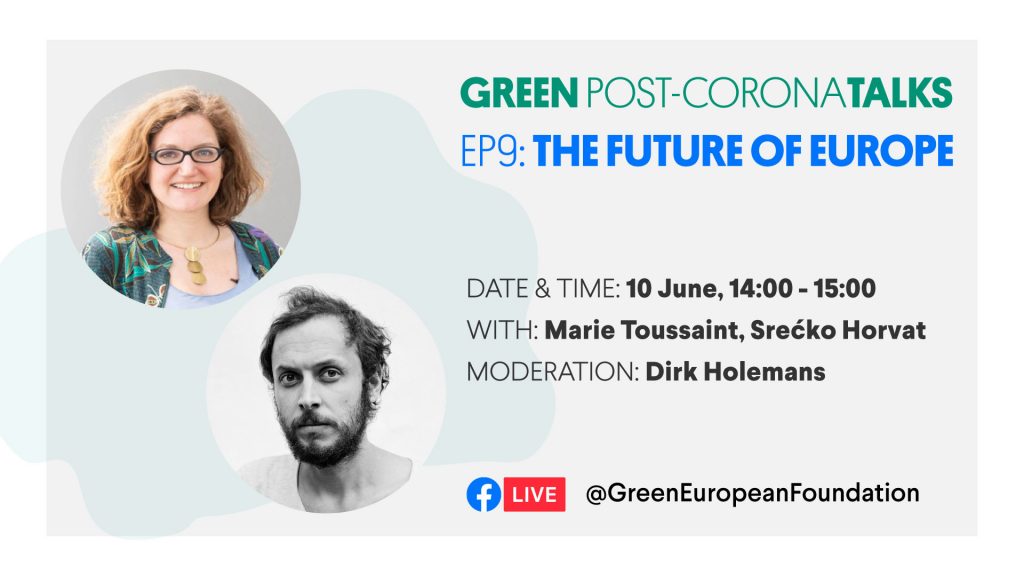
Green Post-Corona Talks with Marie Toussaint and Srećko Horvat

By

With the talk with Marie Toussaint and Srećko Horvat we want to discuss the prospects for Europe in the wake of this crisis. Some of the questions we will tackle are: What are the conflict lines in Europe today? Is this crisis a re-run of the previous Eurozone crisis? How is civil society organising in times like these? What is the relevance of the Conference on the Future of Europe announced by the European Commission for citizens?

Join our Facebook event to stay alert for the live stream.


Horvat

About the event


The ongoing Covid-19 pandemic is having a grip on societies worldwide and will impact our lives long after the crisis is overcome. It is clear that we cannot continue with “business as usual,” but that we need to discuss positive ideas and concepts for a better, greener future and resilient societies now.

GEF is therefore hosting the Green Post-Corona Talks, a series of participatory online discussions with high-level experts, thinkers, and policy-makers, and the opportunity for participants to pose their most pressing questions to them live.

The talks will highlight what is currently at stake in the Corona crisis but also look beyond the period of the pandemic, and what possible solutions are already out there and can lend themselves to design the post-corona world.

The series will cover different themes from economy, over migration to gender, and bring in inspiring perspectives from all across Europe.

The project is implemented in cooperation with Oikos.


You can help us advancing forward-looking green ideas

to shape the Europe that we want! 


We rely on your generous contribution to continue putting together new, exciting Green Post-Corona Talks made extensively available to the general European public! So, please consider making a donation today, by clicking on this link.