The Challenges of Metropolitan Sustainable Mobility

By

About the event

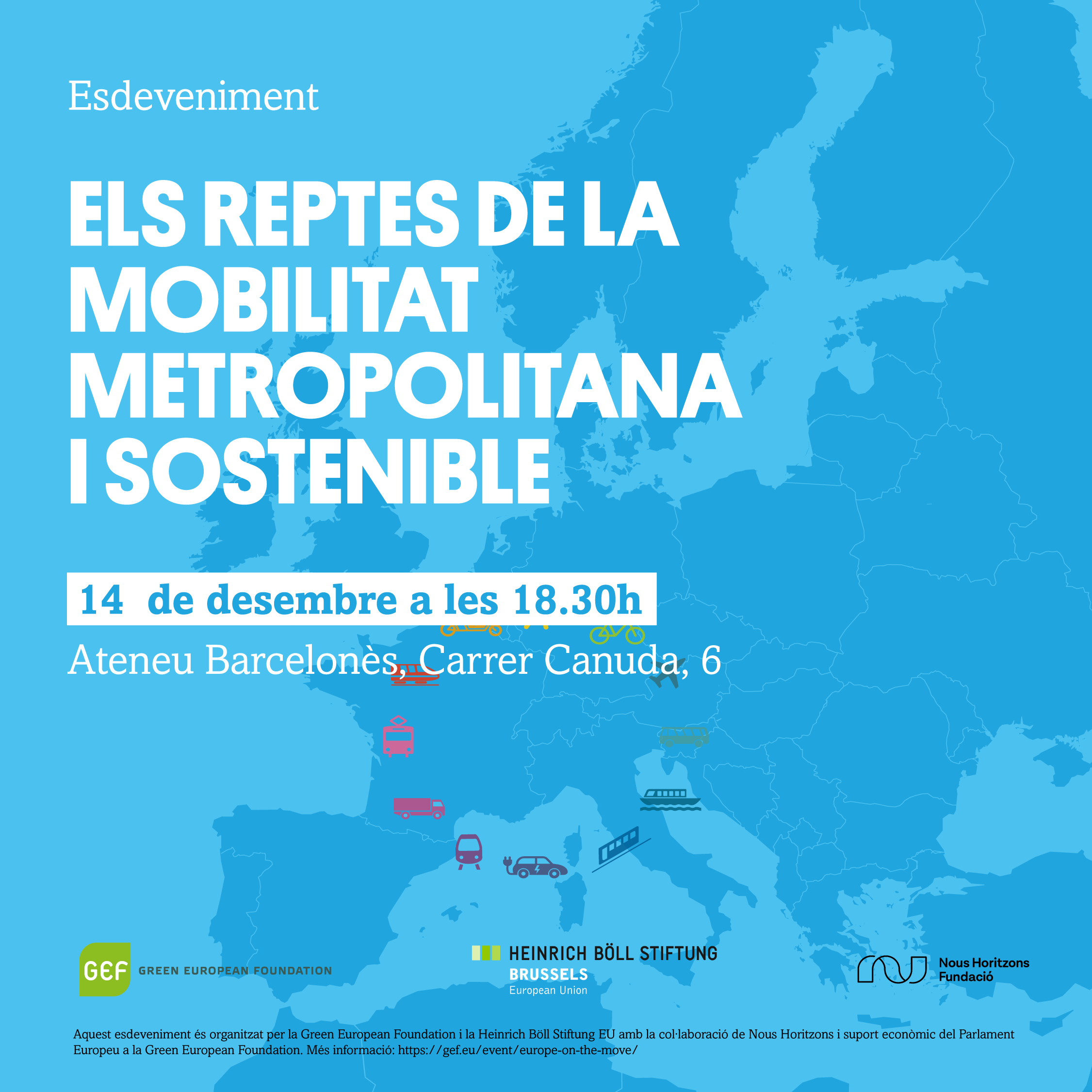
Sustainable mobility is a particular priority in metropolitan areas because of its impact on air quality, on the daily lives of millions of people and economic actors, and as an instrument of territorial cohesion. Public transport, cycling and walking are at the heart of a model that guarantees the right to sustainable mobility.

The Barcelona metropolitan area, with its population exceeding 3.5 million inhabitants, is a paradigmatic case in this debate, as it is an area that risks being sanctioned by the EU due to its poor air quality.

Within this context, what are the examples of good and bad practices of mobility? What are the challenges that lie ahead? Can we find successful sustainable urban mobility practices in other European cities?

These questions and possible answers will be the subject of this dynamic debate, bringing together diverse experts, academics, and local government actors.


Project background

This event is part of a series of debates entitled “Europe on the Move: Shaping the Future of Sustainable Mobility in the Iberian Peninsula” organised by the Green European Foundation and Heinrich Böll Stiftung EU with the support of Transición Verde, Instituto José Tengarrinha, Fundació Nous Horitzons, EcoPolítica and the financial support of the European Parliament to the Green European Foundation.

This series of debates aims to foster debate in Portugal and Spain around the future of mobility, bringing together relevant stakeholders from civil society, academia and politics to analyse and explore challenges and opportunities for the future of mobility and the Green Deal in Europe.


Speakers

  • Guille Lopez, Barcelona City Councillor and Promoter of the Eixample Breathe platform
  • Carme Miralles, Professor of Urban Geography at the UAB
  • Laura Campos, Montcada I Reixac City Councillor
  • Zeeger Ernsting, Amsterdam City Councillor


Practicalities

Date and Time: 14th December, 6:30pm CET

Location: Ateneu Barcelones, Carrer Canuda, 6

Registration: Prior registration is required – please register here.

Language:  Catalan with English simultaneous translation

Recommended reading: European Mobility Atlas


This event is organized by the Green European Foundation and Heinrich Böll Stiftung EU with the support of Fundació Nous Horitzons and the financial support of the European Parliament to the Green European Foundation.
Beyond Electrification: Social and Geopolitical Costs of Lithium

By

About the event

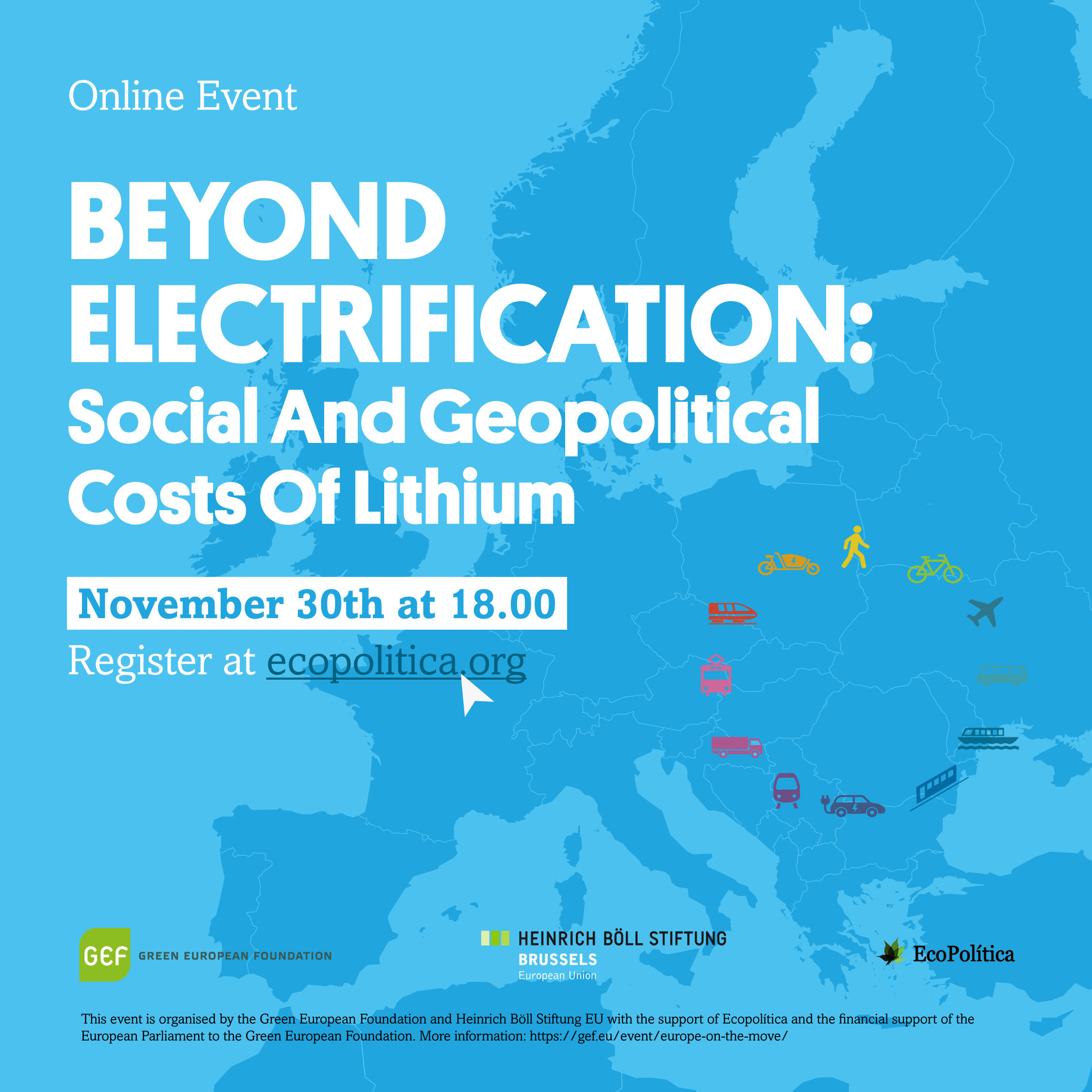
The growing demand for electrification does not come without its own costs. Environmental, social and ethical considerations arise when taking into account the impact on local communities. To obtain the necessary resources, huge extractivist industries threaten to devastate entire regions. How can we resist them? Furthermore, electrification also poses some serious global issues. Can we move beyond our outdated electricity and mobility model without compromising social justice and the exploitation of the Global South?

This session will bring together voices and expertise from politics and civil society to expose the flaws and limitations of the current model of electrification at local, national and European levels. The aim of the event is to create a dynamic space for debate where we can explore ways to ensure a more sustainable and socially just electrified future.


Project background

This event is part of a series of debates entitled “Europe on the Move: Shaping the Future of Sustainable Mobility in the Iberian Peninsula” organised by the Green European Foundation and Heinrich Böll Stiftung EU with the support of Transición Verde, Instituto José Tengarrinha, Fundació Nous Horitzons, EcoPolítica and the financial support of the European Parliament to the Green European Foundation.
This series of debates aims to foster debate in Portugal and Spain around the future of mobility, bringing together relevant stakeholders from civil society, academia and politics to analyse and explore challenges and opportunities for the future of mobility and the Green Deal in Europe.


Speakers

  • Catalina Abell (moderator), EcoPolitica, expert in political communication and political processes.
  • Florent Marcellesi, former-MEP. Federal Co-Spokesperson of Verdes Equo.
  • Adriana Espinosa, Amigas de la Tierra (Friends of the Earth Spain). Responsible for the Area of Natural resources and Waste. Author of the next AdT inform on “Materials for the energetic and digital transition”.
  • Catarina Scarrott, Associação Unidos em Defesa de Covas do Barroso (UDCB) movement. Covas de Barroso is being targeted as a ‘sacrifice zone’ for lithium mining, and the local population, represented by the UDCB, is opposed.
  • Diego MarinPolicy Officer for Raw Materials and Resource Justice, European Environmental Bureau


Practicalities

Date and Time: 30th November, 6pm-7:30pm CEST

Location: Online

Language: The main languages of the event will be Spanish and English, with simultaneous interpretation provided EN<>SP.

Registration: Prior registration is required – Please register in advance here.

Recommended reading:


This debates series is organised by the Green European Foundation and Heinrich Böll Stiftung EU with the support of, EcoPolítica and the financial support of the European Parliament to the Green European Foundation.
New Mobility: Economy and Employment

By

About the event

The decarbonisation of mobility is one of the great challenges of the European Union. The transformation it entails is complex and not without its difficulties, but it can be an opportunity to reactivate the economy and generate employment. The latter is a particularly relevant aspect in maintaining social stability, especially at a time when populism and the extreme right are on the rise in Europe.

In this event, we seek to analyse the challenges and opportunities of zero-emission mobility in terms of the economy and employment in Spain, paying special attention to the bicycle sector from a gender perspective.

The event is a roundtable open to all those interested in mobility, especially members of organisations and platforms working on the issue, government officials, politicians, academia, and civil society associations. Our aim is to raise awareness of the employment opportunities associated with zero-emission transport and to promote the shift towards more sustainable mobility.

The event will be held via zoom platform, requiring prior registration.


Project background

This event is part of a series of debates entitled “Europe on the Move: Shaping the Future of Sustainable Mobility in the Iberian Peninsula” organised by the Green European Foundation and Heinrich Böll Stiftung EU with the support of Transición Verde, Instituto José Tengarrinha, Fundació Nous Horitzons, EcoPolítica and the financial support of the European Parliament to the Green European Foundation.
This series of debates aims to foster debate in Portugal and Spain around the future of mobility, bringing together relevant stakeholders from civil society, academia and politics to analyse and explore challenges and opportunities for the future of mobility and the Green Deal in Europe.


Speakers

  • Albert Vilallonga, geographer and mobility technician at ISTAS (Union Institute for Labour, Environment and Health). Author of the report on Zero-emission mobility.
  • Iria Vázquez, equity coordinator at ConBici, professor of sociology at the University of Vigo and expert in gender studies.
  • Philipp Cerny,Transport Policy Consultant. Chief Executive Editor of the EU Mobility Atlas.
  • Moderation: Pilar Calvo, board member of Transición Verde and expert in operational security and transportation


Practicalities

Date and Time: 11th December, 5:30pm – 7pm CET

Location: Online, via zoom.

Registration: Prior registration is required – please register here. The session will be recorded and made available on YouTube.

Language:  The main languages of the event will be Spanish.

Recommended reading: European Mobility Atlas


This event is organized by the Green European Foundation and Heinrich Böll Stiftung EU with the support of Fundación Transición Verde and the financial support of the European Parliament to the Green European Foundation.
The Green Narrative on Peace and Security (Vaxtorp)

By

About the Event

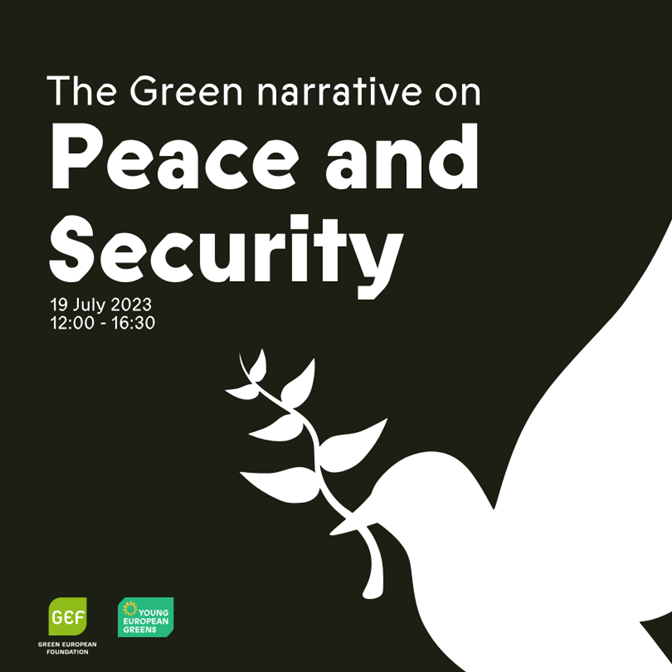
This learning space is designed for young activists (15-35) from across Europe. The two sessions, organised by GEF with the support of FYEG, will facilitate learning about what security is and what it can mean in different regional contexts in Europe, in the light of past conflicts, crises and current trends. The session will be led by carefully selected experts. Following this, space will be given to those directly affected by the recent conflict in Ukraine to share their thoughts, experiences and ideas for moving forward. After the Summer School, participants will be able to talk about security in an informed and holistic way.

Project background:

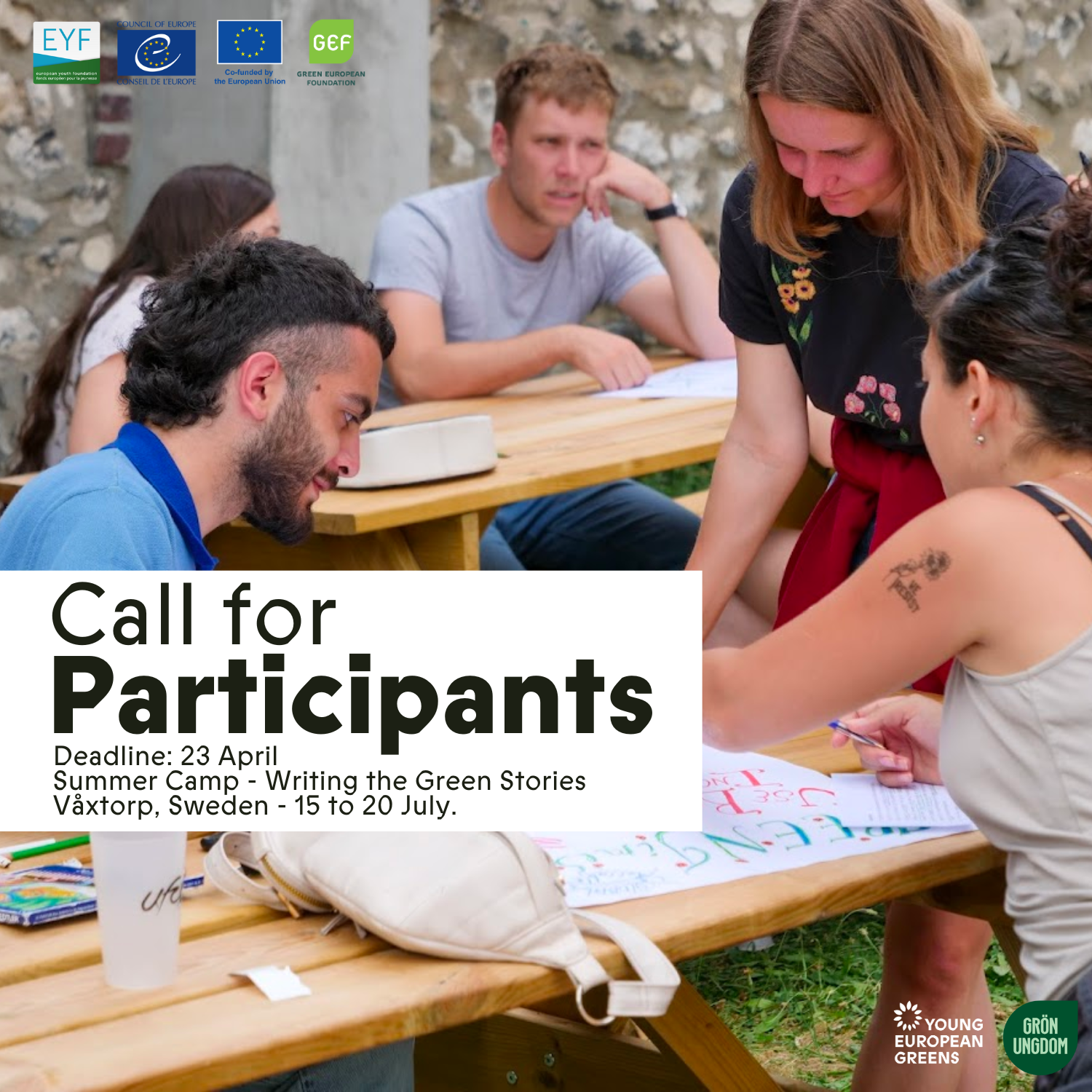
This event is part of the Summer Camp: Writing the Green Stories. The camp focuses on building the capacity of young people to create their own narratives, turning their personal stories and experiences into activist actions.


Speakers

  • Sofija Todorović, Programme Director of YIHR Serbia
  • Palina Burko, Belarusian environmental activist, Republican Theater of Belarusian Drama
  • Yevheniia Bryhinets, Executive Committee Member of Cooperation and Development Network Eastern Europe (CDN)


Programme

12:00 – 13:00: Security and geopolitics – hand in hand?

  • Sofija Todorović, Programme Director of YIHR Serbia

15:00 – 16:30: Workshop: Security in times of war – Belarusian and Ukrainian perspective

  • Palina Burko, Belarusian environmental activist, Republican Theater of Belarusian Drama
  • Yevheniia Bryhinets, Executive Committee Member of Cooperation and Development Network Eastern Europe (CDN)


Practicalities

Date and Time: 19 July, 12 – 16:30  CEST

Location: Vallåsens Värdshus, Rössjöholmsv. 20, 312 98 Våxtorp (Sweden)

LanguageEnglish.

Format: In person event

Registrations for this event are now closed


These summer school sessions are organised by the Green European Foundation with the support of FYEG and the financial support of the European Parliament to the Green European Foundation.
 

Writing the Green Stories (Vaxtorp)

By

About the Event

GEF is organising a day focusing on peace & security in the framework of the The Federation of Young European Greens’ 2023 Summer Camp’. We aim to bring together a diverse group of young people who will learn about the green narrative on peace & security – from Dublin to Tbilisi, from Oslo to Nicosia. Our diverse and unique lived experiences, perspectives and beliefs are what make us green. Help us define what Europe’s future should look like and learn about the role of peace & security in the green movement!

Programme

More details on programme and speakers will be announced shortly! 

Practicalities

Date: 20 July (10:00 – 22:00) 

Location: Vaxtorp, Sweden

Audience: This summer school gathers 40 young people aged between 15 and 35.

Language: The main language of this activity will be English.

Registration: Sign up here


These summer school sessions are organised by the Green European Foundation with the support of FYEG and the financial support of the European Parliament to the Green European Foundation.
 

This Oppressive System & our Mental Health (Rouen)

By

About the Event

This youth-focused summer camp will consist of workshops and discussions exploring mental health in all of its political relevance, including how such issues disproportionally affect the oppressed and activists, and its relation to freedom of expression, right to protest, and access to information in Europe.

GEF, with the support of our partner FYEG, is providing selected participants with a crash course on how public policies and civil society actions address mental health at various levels, including on a European scale. Participants will be challenged to use their creativity, critical thinking, and activist skills to design the green visions and policy solutions of the future–addressing mental health and the fight against oppression across Europe.

Programme

09:30-10:00 Morning circle 

10:00-11:30 Mental health and policy: national and regional level 

11:30-12:00 Coffee break 

12:00-13:30 Mental health and policy: European and international level 

13:30-15:00 Lunch 

15:00-16:30 Radical view: imagining the policies for an ideal future 

16:30-17:00 Coffee break 

17:00-19:30 Committee work and reflection groups 

19:30-20:30 Dinner 

21:00 Non-stereotypical cultural fair 

More details on programme and speakers will be announced shortly! 

Practicalities

Date: 27 July (10:00 – 22:00) 

Location: Rouen, France (Auberge de Jeunesse – 3, rue du tour Route de Darnétal) 

Audience: This summer school gathers 40 young people aged between 15 and 35. Registrations are now closed and all selected participants have been informed.  

Language: The main language of this activity will be English. Not being comfortable interacting in English  


These summer school sessions are organised by the Green European Foundation with the support of FYEG and the financial support of the European Parliament to the Green European Foundation.
 

This Oppressive System & our Mental Health (France)

By

About the Event

This six-day summer camp will consist of insightful workshops and discussions exploring the topic of mental health in all of its political relevance.  We will aim to unravel how such issues disproportionally affect oppressed individuals and communities as well as the activists fighting against the systems of oppression. We will also tackle other issues such as freedom of expression, right to protest, and access to information in Europe.

GEF will be organising a one-day summer school as part of this activity, with a particular focus on mental health in the European political context and how the green movement can play a role.

Practicalities

When: 23 – 28 July (arrival on July 22nd, departure on July 29th)

Where: France (exact location to be confirmed)

Who: We are looking for 40 young people between 15-35, residing in one of the Council of Europe member states, Belarus, Russia and Kosovo*. We welcome applications reflecting diversity in all forms; therefore we encourage applications from those who identify as women*, LGBTQIA+, POC, or with a disability or other health impairment.

Language: The main language of this activity will be English. Not being comfortable interacting in English should not prevent you from applying, as we will try finding a solution with you to support you.

Further information on cost, Covid guidelines, and travel and accommodation can be found here.

How to Apply

Registrations are now closed.


These summer school sessions are organised by the Green European Foundation with the support of FYEG and the financial support of the European Parliament to the Green European Foundation.


This Oppressive System and our Mental Health (France)

By

About the Event

This six-day summer camp will consist of insightful workshops and discussions exploring the topic of mental health in all of its political relevance.  We will aim to unravel how such issues disproportionally affect oppressed individuals and communities as well as the activists fighting against the systems of oppression. We will also tackle other issues such as freedom of expression, right to protest, and access to information in Europe.

GEF will be organising a one-day summer school as part of this activity, with a particular focus on mental health in the European political context and how the green movement can play a role.

Practicalities

When: 23 – 28 July (arrival on July 22nd, departure on July 29th)

Where: France (exact location to be confirmed)

Who: We are looking for 40 young people between 15-35, residing in one of the Council of Europe member states, Belarus, Russia and Kosovo*. We welcome applications reflecting diversity in all forms; therefore we encourage applications from those who identify as women*, LGBTQIA+, POC, or with a disability or other health impairment.

Language: The main language of this activity will be English. Not being comfortable interacting in English should not prevent you from applying, as we will try finding a solution with you to support you.

Further information on cost, Covid guidelines, and travel and accommodation can be found here.

How to Apply

Please apply online via this link.

Deadline: May 16th at midnight CET

You will be informed about the results of the selection within ten days after the deadline.


These summer school sessions are organised by the Green European Foundation with the support of FYEG and the financial support of the European Parliament to the Green European Foundation.
 

Freedom and Security in a Complex World (2021 edition)

By Uncategorized

Context

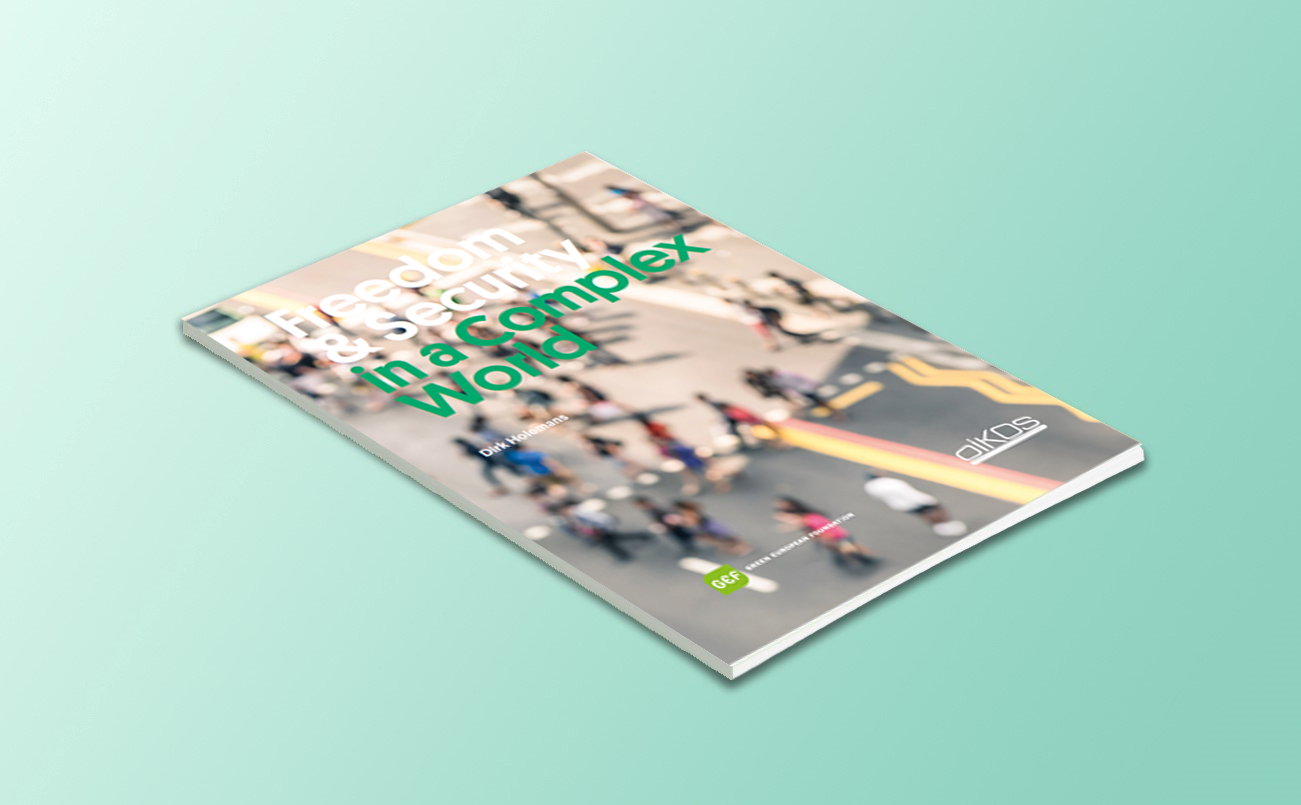
People all over the world are taking their future back into their hands. Together, they are taking initiatives in the fields of renewable energy, local food production, sharing tools, and so forth. This is the most hopeful movement of our time. Where the market and state fail, people are taking action. As free citizens, they are reinventing the collective, with open partnerships where personal development and social engagement go hand in hand. This observation seems to contradict what we experience every day. The system errors of our society model fill the newspapers: climate crisis, unstable banks, refugee flows. Accepted wisdom is that uncertainty is increasing. But both trends are happening, not by coincidence, at the same time.


Objectives

While examining the two interlinked concepts of Freedom and Security, this publication suggests that the answer needs to be the transformation into a socioecological society in the 21st century. It argues for the realisation of a societal project that strives for equal freedom for all people to flourish in security, within the boundaries of the planet, and proposes concrete steps towards it.


Download

Available in English here.

Available in French here.

Available in German here.

Available in Hungarian here.

Available in Spanish here.

Available in Macedonian here.

Available in Greek here.


This report presents a new and updated take on the 2017 version (Please see the English, French, German, Hungarian and Spanish editions from that year, which were part of the transnational project “A green transformation: Freedom and Security in uncertain times” ).

The 2021 report was developed in partnership with Oikos and with financial support from the European Parliament to the European Green Foundation. 

Call for Author: Youth Chapter for the Just Transition Book

By

About the Event

The chapter will be published in the Book on Just Transition produced as part of the multiannual and multipartner project carried out by the Green European Foundation, led by Oikos and participated by green European partners. It will be divided in five parts: (1) Setting the stage, (2) European regions on their way, (3) Just transition and the EU Green Deal, (4) Frontrunners showing the way, and (5) Conclusions. The Youth Chapter will open part 4.

We are looking for someone who can bring a fresh perspective and nuanced insights into the following questions:

  • How do young people take the future into their own hands?
  • How are grassroots movements changing the narrative and convincing politicians to push for a socially just transition?
  • How are young activists from marginalised communities and minority groups impacted by climate change, and how are they fighting for climate justice?
  • Why are current EU programmes such as Next Generation EU not good enough?
  • How has the pandemic transformed the efforts of grassroots activists and changed their methods to create impact?

We are looking for one or two young authors with a passion for writing who are interested in the topic and committed to unpack the relation between the work of activists everywhere in Europe and the political advancement towards a more sustainable, welcoming and fairer Europe.


Context

About the chapter:

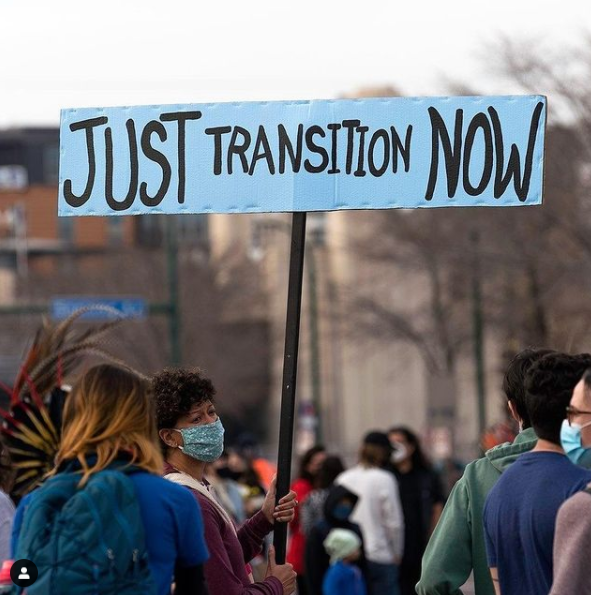
  • The content of the chapter should have a strong focus on the role of youth, grassroots and marginalised and minority groups in achieving a better and more just transition away from fossil fuels towards a socially and environmentally sustainable future
  • The chapter should have a clear sub-structure (contextual introduction, main body divided in sub-sections and topics, summarising conclusion) and can include various formats (analysis, essays, case studies and/or interviews)
  • The chapter should support analysis with figures and examples from at least three European countries (including at least one non-EU)
  • The chapter should consist of 4000 to 6000 words
  • The contribution should be written in English
  • The remuneration for the writing of the chapter is EUR 500

We accept both individual and joint applications of maximum two authors to co-write the chapter. If you decide to apply with someone please send in only one joint application.

The writer(s) applying should:

  • Be interested and passionate about tactics, methods and narratives used by grassroots movements across Europe to achieve a socially just transition
  • Be determined in expanding their knowledge on the topic by doing research, following the work or contacting activists
  • (Possibly) have previous experience in writing extensive pieces
  • Feel comfortable in writing long texts in English

Timeline:

  • Send your application by 2nd April at 23:59 CET
  • You will be informed of the decision at the latest by 7th April (all applicants will be informed)
  • Start writing!
  • A first draft of the chapter should be sent in by the 7th of May
  • Wait for the feedback and comments of the FYEG Executive Committee
  • The final version of the chapter should be sent in by the 31st of May


Practicalities

To apply:

Please send the following to project.manager@fyeg.org by 2nd April @ 23:59 CET:

  • Your pitch for the chapter: a description of what you would like to write about (between 300 and 400 words)
  • A short mention of the structure and format you plan to use
  • A proposal for a concise title
  • Your CV (or CVs if two authors are applying)

Basic Income and the EU level (Brussels)

By

About the Event

Within the last three years, the Green European Foundation has organised closed and open events on the topic of Universal Basic Income all over Europe and has produced several publications.

The transnational project is concluded with a closed roundtable meeting of representatives of our expert group from across Europe as well as stakeholders from the European Green Party, the Young Greens and the Green Group in the European Parliament.

The aim is to discuss how the outcomes of the project activities in the past years can be translated in the political process and what concrete recommendations for the political level could be to make concrete forward to make Universal Basic Income a European reality.


This roundtable is on invitation only. 

Public debate: Cornerstones for a New Climate (Wiener Neustadt)

By

Event background

As part of our transnational project Basic Income – European Public Debate, which has been implemented across Europe since 2017, GEF is holding a two-fold event in Austria to explore different positions on universal basic income (UBI) across Europe.

About the event

Following a one-day conference bringing together green actors with proponents and experts of UBI from Austria and other parts of Europe, organised by GEF with the support of Grüne Bildungswerkstatt and Bildungszentrum St. Bernhard, a public debate will be organised to invite citizens to engage with the topic of UBI. Together, the attendees will explore if a UBI can be a component to tranform our economy and society in order to fight climate change.

Programme

19:00 Welcome: Positioning and synthesis of the conference during the day

19:30 Fishbowl discussions (30 minutes each) between experts, politicians and audience on three thematic strands:

  • UBI, social and economic inclusion
  • UBI, financing and alternative economic models
  • UBI from a feminist perspective

21:00 Perspectives, possibilities and conclusion


To find out more about the registration and programme, please contact buero@gbw.at.

The event will be held in German and English with interpretation.

The public debate is preceeded by an internal conference from 10h30 to 18h. More information can be found here.

Cornerstones for a New Climate – UBI’s contribution to new policies on economy and environment (Wiener Neustadt)

By

Event background

As part of our transnational project Basic Income – European Public Debate, which has been implemented across Europe since 2017, GEF is holding a two-fold event in Austria to explore different positions on universal basic income (UBI) across Europe.

About the event

As it is clear that our planet calls for a different, new climate, GEF will, with the support of Grüne Bildungswerkstatt and Bildungszentrum St. Bernhard, open the space for green actors and proponents of a UBI to discuss how such a policy instrument could contribute to new policies for economy, society and the environment.

Programme

10:00 Registration

10:30 Welcome and introduction to the GEF transnational project on UBI

11:30 Input on 3 themes of the day

  • UBI, social and economic inclusion

Kim Fredericq-Evangelista, policy advisor Ecolo (BE)

  • UBI, financing and alternative economic models

Helmo Pape, founder of Generation Grundeinkommen (AT)

  • UBI from a feminist perspective

Barb Jacobsen, coordinator of Basic Income UK and member of Universal Basic Income Europe (UBIE) network (UK)

Margit Appel, researcher on feminist economic policy and universal basic income (AT)

12:30 Discussion: Connecting the threads to green climate policies

13:00 Lunch break

14:00 Open Space

Deepening of the 3 themes highlighted in the morning and exploring of further questions on UBI

16:45 Harvesting and synthesis

18:00 Networking drinks and snacks

Speakers

  • Margit Appel –  researcher on feminist economic policy/universal basic income in Austria.
  • Kim Fredericq-Evangelista – Policy advisor for the Belgium Green Party, Ecolo. His “Youth UBI” was added to the last election programme.
  • Barb Jacobsen – Universal Basic Income Europe (UBIE) Network, Co-ordinator of Basic Income UK.
  • Helmo Pape – Founder of Generation Grundeinkommen, Austria.

Practicalities

Language

The conference will be in German with English whispered interpreting.

Participation fee

Solidarity fee / voluntary donation for the organization and food. Participation in the evening event is free of charge.

Registration

To register for this event, please contact buero@gbw.at.

Registration deadline: 14 October


For more information in German, please visit our partner’s webpage here.

The internal conference will be followed by a public debate reflecting on the key insights of the day and discussing the (political) steps forward as of 19h. More information can be found here.

Roundtable: Work(ing) policies in the EU (Brussels)

By

Event background

We are living in an era of rapid socio-economic restructuring: economic globalisation, trade liberalisation, skill-biased technological innovation and digitalisation, changes of family structures and gender roles, the rise of the service economy, population ageing, fiscal austerity and economic crisis management, imbalanced growth, increased poverty, inequality, and increasing international mobility.

These changes all affect the lives of citizens and the nature of their work. A growing number of people feel left behind due to the increasing inequalities and labour market polarisation.

Within the European Green movement, various perspectives on how (economic) security, social inclusion and meaningful participation of everyone in society can be fostered. These views are influenced by the importance that work is given as an integrating factor in society as well as in national contexts and political realities.

About the event

The Green European Foundation is opening a space for dialogue to exchange on the experiences with different labour market policies across Europe and to map the different policy tools and perspectives on work within the Green movement. The participants, ranging from representatives of Green organisations and parties from all over Europe to academics, trade unions and members of the European Green actors will share and debate different policy models from active labour market policies (ALMPs) to universal basic income (UBI) models or pilot projects, as well as the idea of an ecological transition income.

Programme

14:00 Welcome and introduction

14:45 Presentation by Wetenschappelijk Bureau GroenLinks: Active labour market policies in the Netherlands

15:05 1st round of discussion:

15:45 Coffee break

16:00 2nd round of discussion

17:30 Wrap-up and outlook

18:00 Networking reception


Please note that is an invitation-only event. 

European Green Perspectives on Basic Income

By Uncategorized

Throughout 2017 and 2018, the Green European Foundation transnational project Basic Income for all EU Citizens? focused on basic income and investigated the proposal’s potential in relation to employment, the recognition of work beyond paid work, and the gendered division of labour.

This collection of articles brings together experts on basic income from all across Europe, to debate and clarify different aspects of the topic and help develop proposals. The aim of the publication is to inspire the next steps in promoting the basic income discussion, one which encompasses some of the biggest challenges faced by society today.

In 2019, GEF will continue its work on basic income and contributing to transnational discussion with the project Basic Income – European Public Debate

Download

Available in Spanish


Unlocking the Job Potential of Zero Carbon – Full Report

By Uncategorized

This report is the result of the Green European Foundation transnational project “Strengthening Climate Targets, Creating Local Climate Jobs”, conducted with its partners Green House Think Tank (United Kingdom), Ecopolis (Hungary) and Green Foundation Ireland.

Meeting the challenge of climate change requires structural changes to the economy so that it is no longer dependent on fossil fuels: we need to reduce overall energy use and ensure that all the energy that we do use is from renewable sources. This will require the creation of a large number of new jobs.

The Green European Foundation, with the support of Green House Think Tank, has developed a model to estimate the number of jobs that would be created in key sectors of the economy, to not only demonstrate that a transition is achievable but to also show where those jobs will be.

This model has been applied to the United Kingdom,  as well as to Ireland (with the support of Green Foundation Ireland) and Hungary (with the support of Ökopolisz Alaptivány). The methodology used in that work and its results are presented in this report.

Download your copy here.

This publication is also available in Hungarian, which can be read here. 

The appendix can be accessed here.

A summary of the report can also be found here. 

Following on from the work conducted for this report, GEF’s partner Green House Think Tank conducted further research into climate jobs modelling for regions in the UK, which can be found on their website here.


Chicken or Egg – Basic Income Earth Network (BIEN) Congress Summary

By Uncategorized

Chicken or Egg – End Neoliberalism and Deliver Basic Income, or use Basic Income to End Neoliberalism?

Natalie Bennett was in Finland as part of the Green European Foundation’s expert group for a transnational project on Universal Basic Income, initiated in 2017.

In the framework of the “Basic Income for all EU Citizens?” transnational project, the GEF expert group, comprising Basic Income experts from Finland, Spain, Germany, Switzerland, Serbia, and the United Kingdom, ateended the BIEN Congress to discuss the latest developments in the studies and application of the Basic Income models across Europe.

In addition to their participation in the conference, the expert group came together in a meeting organised by GEF to facilitate the development of the GEF Basic Income project.

GEF was present throughout the Congress, displaying and disseminating the outcomes of various GEF projects related to the topic.


Read the article in Spanish.

Climate Jobs – Towards a Zero-Carbon Economy (Bristol)

By

Context

With the consequences of climate change being evermore perceptible through extreme weather events (both worldwide and in European countries), verifiable research is urgently needed to set targets and policies that reduce greenhouse gas emissions by the amount necessary to secure a livable environment. At the same time, policies to reduce greenhouse emissions are often attacked for threatening existing jobs.

GEF’s transnational project “Strengthening Climate Targets, Creating Local Climate Jobs” sets out to explore what greenhouse emissions reductions would mean in practical terms for our job markets and economies, and whether jobs could be created in rural areas across Europe. Can both a safe and just economically sound life for all be achieved? To this end, our project undertook research on the potential to create more climate jobs in three EU countries with diverse historic and economic prerequisites: United Kingdom, Ireland and Hungary.

About the event

This upcoming side event at the Autumn Conference of the Green Party of England and Wales will offer an introduction to the GEF transnational project. In particular, it will present the results of modelling to estimate the net number of jobs that could be created in each local authority area of the United Kingdom, via the transition to a zero carbon economy, in the key sectors of energy, transport, waste management, buildings and food, farming, and forestry.

During the event, the overall GEF project as well as the research findings and resulting policy recommendations for the United Kingdom will be presented by:

Jonathan Essex, Green House Think Tank

Anne Chapman, Green House Think Tank

Chaired by: Natalie Bennett, Board Member Green European Foundation and former Leader of the Green Party of England and Wales


For more information on this workshop and the Autumn Conference of the Green Party of England and Wales from 5 to 7 October in Bristol, you can find the programme here.

For updates and other upcoming events of this GEF transnational project, follow us on Twitter and Facebook.

Change of Climate in the World of Jobs? (Budapest)

By

Context

With a changing climate, many traditional jobs will be lost all over Europe, as a just transition to less carbon emission intensive industries and a green economy is inevitable. Innovative policy proposals will be necessary to create new jobs that do not threaten the emission reduction targets as they have been agreed in the Paris Climate Agreement from 2015.

About the event

As part of the transnational project “Strengthening Climate Targets, Creating Local Climate Jobs”,  this conference will feature a first presentation of the local job creation potential in Hungary in a zero carbon society that has been estimated as part of this year’s project research. Together with the data gathered on the United Kingdom and Ireland, this estimation will be a first step towards quantifying and publicising the EU-wide potential of greening local economies to create new climate jobs, and better address climate change, in the run-up to COP24.

Programme

17:00 – 17:20 PRESENTATION OF THE GEF TRANSNATIONAL PROJECT AND RESEARCH RESULTS – Jonathan Essex, Green House Think Tank United Kingdom

17:20 – 17:40 4th INDUSTRIAL REVOLUTION: REDUCE OR INCREASE EMISSIONS? – Miklós Kis, Journalist

17:40 – 18:00 CLIMATE CHANGE AND SOCIAL JUSTICE – Sándor Fülöp Phd, Co-chair of Ökopolisz

18:00 – 18:15 COFFEE BREAK

18:15 – 19:30 Q & A, DISCUSSION

Registration

To register for the event, please click here.


Stay tuned for updates on the programme here and via our Twitter and Facebook channels.

UBI - Basic Income

Technological Unemployment and Basic Income (Budapest)

By

Context

Technological change causes short-term job losses, that can ultimately lead to lasting increases in unemployment. Especially among young people in Europe, unemployment is already extremely high and unequal distribution of common resources, shrinking of social security and lack of access to low-skilled jobs deepens the insecurity about the future of work. To counter the erosion of the 20th century welfare state and the increasing youth precariousness, new ideas  have to be put forward on how society’s wealth can be distributed in a just way.

About the event

In the framework of this year’s Basic Income for all EU Citizens? transnational project, we will host this particular workshop to have a closer look at the prospects of a Universal Basic Income to combat youth precariousness and will especially address the following questions:

  • What is technological unemployment, what are its possible consequences and how does it relate to young people?
  • What are policy answers to technological unemployment and what kind of role could Basic Income play?
  • What are the digital tools we can use and what is the strategy to advocate for Basic Income in a digital world?

The workshop will be hosted at the Federation of Young Europeans’ week-long training “Common Digital (R)evolution”.

Programme

During this workshop, young Green activists from all across Europe will learn more about technological unemployment and its relation to basic income from Lilja Tamminen, Director Of Operations & Product Management at a computer software company, former Deputy Member of the Helsinki City Hall and expert on technological (un)employment.

Furthermore, the participants of the workshop will receive practical tools during a hands-on training session to argue for basic income as a means to move towards a more just society.


For more info on the event and how to participate, contact office@fyeg.org