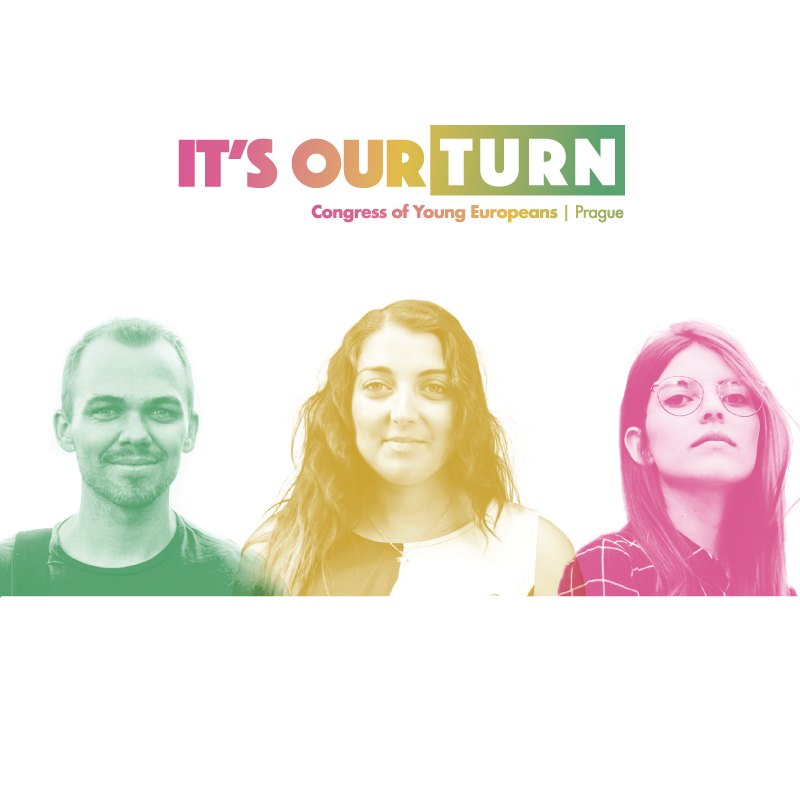
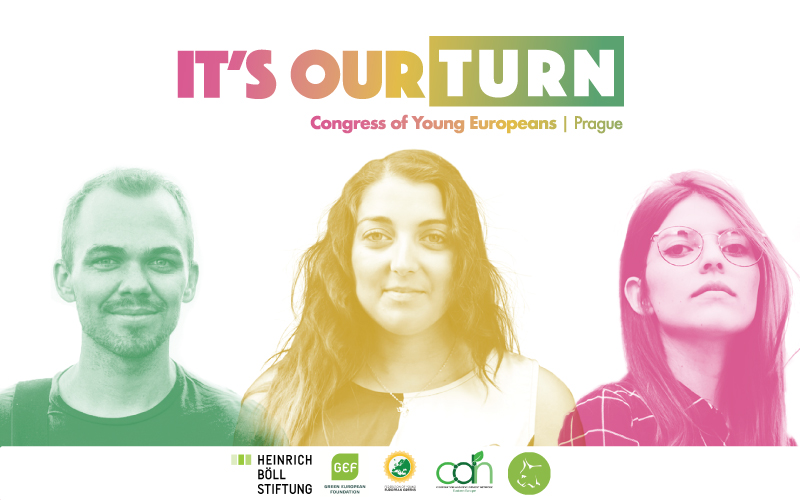
It’s Our Turn! Congress of Young Europeans (Prague)

By

About the event

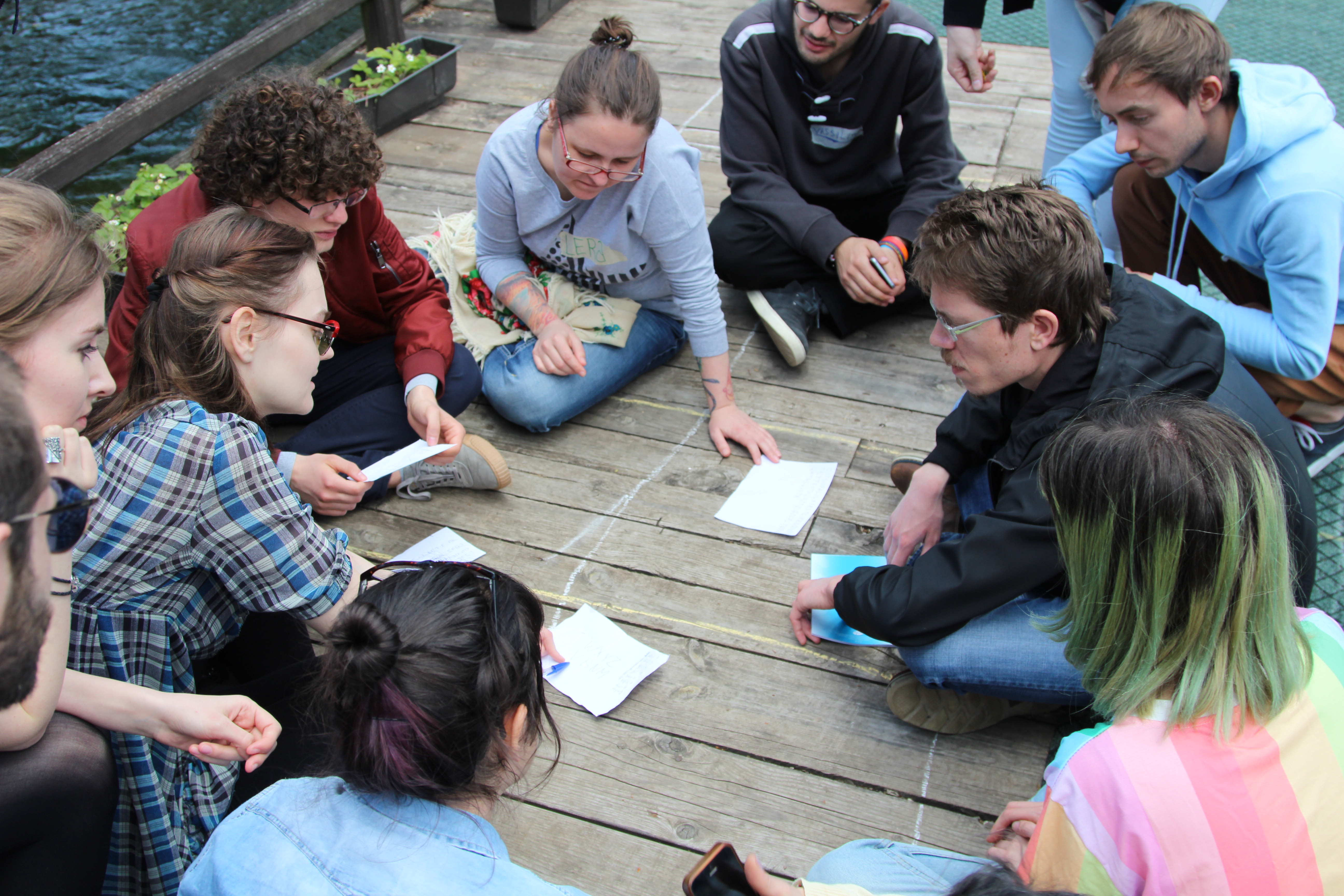
At the four-day congress in Prague, selected participants will have the chance to come together in a historically important Central European capital to discuss their visions of Europe’s future. Participants will reflect on the protest movements from 1968 and 1989 and debate issues that concern them today as well as ways in which they can mobilise to shape the future for the better. In addition to this, the Green European Foundation (GEF) will contribute to the congress with a pre-event online course, providing for a common knowledge base for all participants, as well as a platform for debates ahead of their trip to Prague.

Programme:

Thursday August 30

18:00-22:00 Opening event and dinner reception

Friday 31 August

9:30-10:30 Welcome and introduction

Ellen Ueberschär, Heinrich Böll Foundation, Germany

Carlotta Weber, Green European Foundation, Belgium

Teo Comet, Federation of Young European Greens, Belgium

10:30-12:30 ‘It’s Our Turn’ – plenary discussion about young activists, politicians, artists and public engagement

Moderation: Özge Kara, Cooperation and Development Network Eastern Europe, Serbia

Václav Kříž, Mladí občané, city councillor in Krásno, Czech Republic

Sergey Lagodinsky, Heinrich Böll Foundation, Germany

Vincent Madeline, Europe Écologie-Les Verts, France

Maria Demisheva, Feminist Workshop, Ukraine

14:00-17:30 City walks in Prague

17:30-19:30 Film screening: ‘Leave/Stay’ followed by discussion with Mariann Dósa, School of Public Life, Hungary, and László Józsa, Film producer, Hungary

19:30-20:30 Dinner

20:30-22:30 Screening of the film “Jan Palach”by Robert Sedláček (2018, English subtitles)

Saturday September 1

9:30-10:00 Introduction of the community space Studio ALTA

10:00-12:00 WORKSHOPS: Protest Movements and Activism

  • Elections, protest movements ad the role of young people – School of Public Life, Hungary
  • The use of artistic tools in contemporary activism – Studio ALTA, Czech Republic
  • Human Rights Workshop – Panoptykon Foundation, Poland
  • “The spirit of 1968”: What it was and what is left – Heinrich Böll Foundation, Germany

12:00-13:30 Lunch

13:30-15:30 Participants’ presentations and discussion

15:30-16:00 Coffee break

16:00-18:00 WORKSHOPS: Our Role in Public Spaces

  • Manage your town! – Mladí Občané, Czech Republic
  • Art and culture shaping public spaces – Studio ALTA, Czech Republic
  • “We started from the bottom, now we are here” – interactive workshop with urban activists from Eastern Europe – Cooperation and Development Network Eastern Europe, Serbia
  • Children in Urban Development – Milota Siorová, Urbanist, Slovakia
  • Housing in European cities – Czech Young Greens

18:00-19:30 Dinner

19:30-21:00 PANEL DISCUSSION: The Future of Democracy in Europe – How to defend the core values of open and plural societies?

Moderation: Agata Skrzypczyk, Journalist, Poland

Lluis Camprubi, Iniciativa per Catalunya Verds, Catalonia – Spain

Vít Havelka, Europeum, Czech Republic

Terry Reintke, Member of European Parliament for Greens/EFA, Germany

Ellen Ueberschär, Heinrich Böll Foundation, Germany

Sunday September 2

9:30-11:30 WORKSHOPS: Our Future of Europe

  • European Green Activism – Green European Foundation, Belgium
  • Safeguarding Democracy in the EU – Heinrich Böll Foundation, Germany, and Linda Schneider, Humboldt University Berlin, Germany
  • The Role of Youth in Shaping Europe – Federation of Young Europeans
  • “Migration is our Encounter with Globalisation!”: A Future Lab on the EU’s Migration Policy – Heinrich Böll Foundation, Germany, and Ali Nobil Ahmad, Leibniz-Zentrum Moderner Orient, Germany

11:30-12:00 Coffee break

11:45-13:30 Presentations from workshops – Follow-up

13:30-14:45 Lunch

14:45-16:00 Evaluation and closing

16:30-19:00 Film screenings and discussion in cooperation with the JIHLAVA Film Festival

19:00-20:00 Dinner

20:00-22:00 Farewell Party with a concert of Šarbilach Orchestr


This event is organised by the Green European Foundation in collaboration with the Heinrich Böll Foundation Prague.
Education for Europe

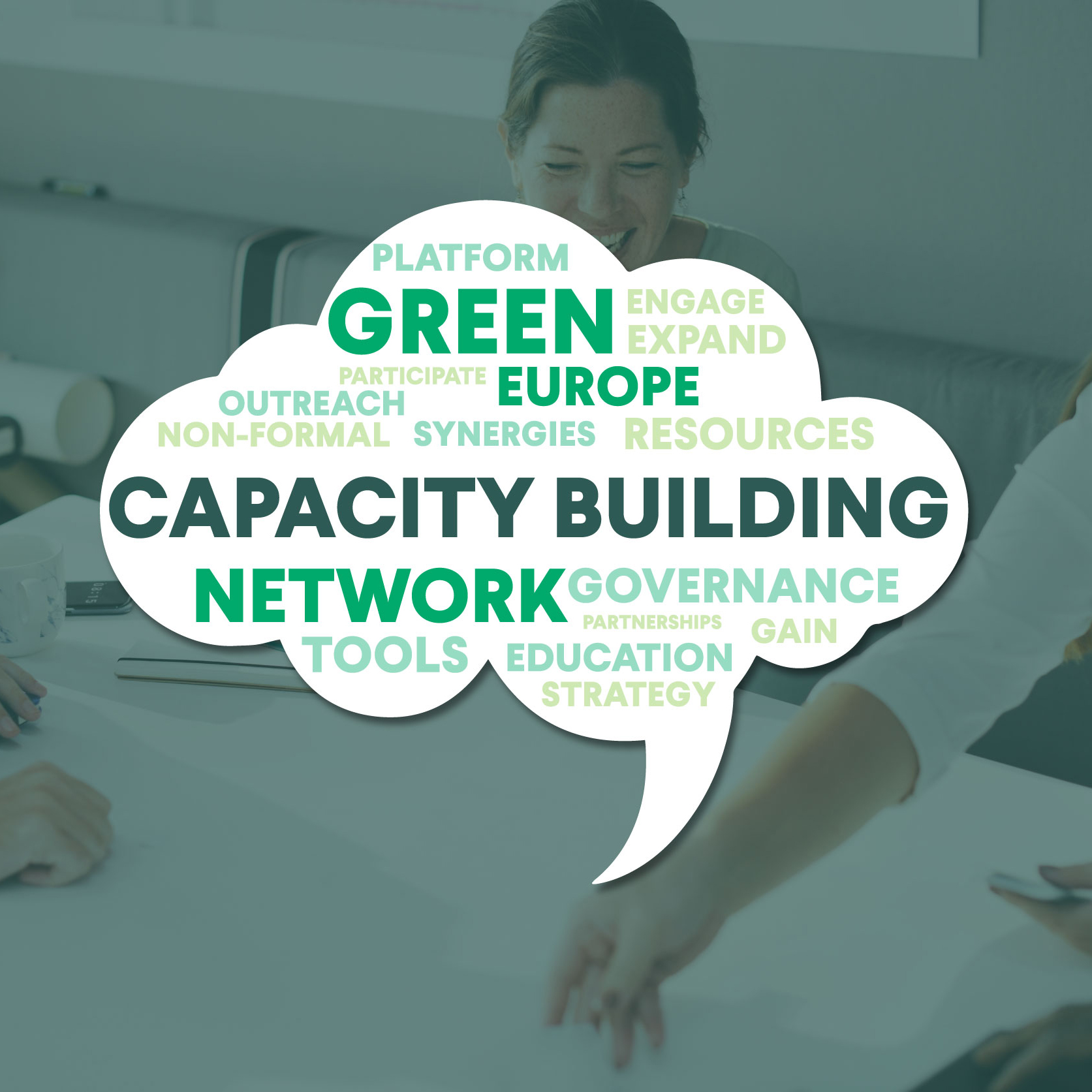
Education for Europe – Building Capacities Towards and Beyond 2019 (Brussels)

By

Context

The Green European Foundation (GEF) invites organisations invested in strengthening the European green movement to join its annual networking and capacity building meeting on education and training. This year’s special edition is entitled “Education for Europe – building capacity towards and beyond 2019” and will take place in Brussels on June 5 to 7, 2018.  

Over the past decade, GEF has built expertise in capacity building as integral part of its work programme through online courses, face-to-face trainings across Europe such as the European Green Activists Training or our Fundraising Training for projects on Migration and Asylum. In this spirit, “Education for Europe – building capacity towards and beyond 2019” will serve as a platform for political discussions on the role of training for advancing activism, as well as an opportunity to identify training and educational needs within the Green network, as well as available resources and inspiring initiatives taking place across Europe. The meeting will combine formal and non-formal training and facilitation methods.  

About the event  

This year’s edition is aimed at GEF’s members and partner’s foundations, as well as other NGOs, citizen movements, educational institutes, youth organisations and green parties active in the field of education, training and capacity-building.  Through this event, participants will be able to:  

  • Engage in a political discussion on the role of capacity-building and trainings ahead of the upcoming European elections; 
  • Create new partnerships with other actors implementing trainings on green topics across Europe;  
  • Expand their knowledge on building successful online learning courses;  
  • Gain knowledge and inspiration on adding a European dimension to their training programmes; 
  • Transfer and gain knowledge on resources and tools that can boost educational projects; 
  • Increase their impact and outreach through expanding and diversifying the green network of trainers and trainings; 
  • Participate in the creation of a governance model for European green pool of trainers and experts.  


Draft Programme

TUESDAY 5 JUNE 

14:00 – 15:00 CAPACITY BUILDING AS BREEDING GROUND OF THE GREEN MOVEMENT Keynote speech 

15:00 – 16:00 OUTREACH AND NETWORK EXPANSION  Political discussion 

16:30 – 18:30 CREATING SYNERGIES: EDUCATIONAL PROJECTS 2018-2019 Market Place – parallel sessions 

WEDNESDAY 6 JUNE 

10:15 – 12:00 LET’S CREATE A GREEN POOL OF TRAINERS! Training session & moderated discussion 

12:00 – 13:30 HOW ABOUT STARTING AN ONLINE COURSE? Training session 

14:30 – 16:30 PARALLEL WORKSHOPS

  • FUNDRAISING FOR POLITICAL ORGANISATIONS 
  • HOW TO BUILD A SUCCESSFUL EVENT & PUBLICATION PROMOTION STRATEGY? 
  • GENERAL DATA PROTECTION REGULATION: ARE YOU COMPLIANT? 

16:30 – 18:00 OPEN SPACE  Parallel sessions and working groups

THURSDAY 7 JUNE 

10:15-12:15 PROJECTS INCUBATOR Interactive working session in small groups 

12:15-13:15 EVALUATION & CLOSING 


Stay tuned for updates

Subscribe to our Facebook event, where you will receive reminders and the latest news on content. Follow us on Facebook or Twitter to learn about our other activities.

Congress of Young Europeans (Prague)

By

At the four-day Congress, taking place from 30 August to 2 September in Prague, selected participants from all over Europe will have a chance to come together in this beautiful and especially historically important Central European capital to discuss their visions of Europe’s future.

The main theme of this year’s Congress of Young Europeans is protest and activism in time: How activism in the past has shaped our present, and how the young generation of today can shape our future.

  • Are you already involved in European matters or do you feel the need?
  • Are you interested in sharing your visions, knowledge and ideas?
  • Are you below 30?

APPLY to the Congress of Young Europeans and become part of a young and innovative European network!

The working language of the congress will be English.

The organisers will cover the travel costs and accommodation for all selected participants of the Prague Congress of Young Europeans. The number of spots is limited to 60 participants. Application deadline is 6 April 2018!

Download the call: Call CYE

Application form

Basic Income Model of the Finnish Greens

By Uncategorized

This report is one of the outcomes of GEF’s transnational project on Basic Income. Within this framework two study visits and multiple discussions on the topic took place.

The Finnish Greens have been talking about the possibility of a basic income since 1980’s. Initially the term ‘citizen’s wage’ was used, but in the 1990s the term ‘basic income’ became standard. 2007 marked a big step forward in the basic income debate; that year, the Greens presented their first comprehensive basic income model. It established for the first time that a transition to a basic income model is possible. The basic income model was calculated using micro-simulation modelling as a cost-neutral and feasible model with a view to showing how Finnish social security could be organised in a new way so that it would be more just and supportive for everyone. In 2007, the Greens proposed that a basic monthly income of €440 be distributed to all Finns, and that a related tax reform be implemented.

Because the Finnish social security system was reformed and the associated minimum benefits improved, the Greens needed to update their basic income model. This update was done in 2014. The basic income level was then set at €560, which is still equivalent to the minimum level of social security for an unemployed person. The Greens’ 2014 basic income model did not restate the objectives of the model, since these were detailed in the context of a paper published with the 2007 model. This model has also been translated into English. The basic income model presented by the Greens in 2014 is still highly topical. When they published the model, the Greens insisted on a pilot study of the basic income, which the current Government of Finland has now implemented. In the basic income pilot, a small number of unemployed people receive a basic income of €560, which they will not lose even if they find work or receive other income. The pilot study is in many respects incomplete, but it is nevertheless yet another step towards realising the utopian idea of the basic income in practice.

The Finnish Greens based the calculations for their 2014 model on the micro-simulations calculated by the Finnish Parliament’s information service. The analysis based on the simulations can be accessed at www.vihreat.fi/perustulo (in Finnish). The analysis was very thorough, and it also showed many of the problem areas in the basic income model. For example, it argued that it is very difficult to combine the basic income with housing benefits. Nor does the basic income model also remove all economic disincentives. Even so, the analysis does provide a credible basis for the model proposed.

Next, the Finnish Greens aim to modify the model on the basis of the results of the ongoing pilot study. At the same time, the Greens have started discussing how housing benefits can be combined with the basic income model, and how implementing the real-time income register could enable social security automation as intended by the basic income model.

German Greens in Coalition Governments

By Uncategorized

The Alliance 90/The Greens Party has succeeded in taking over governmental responsibility in the majority of the 16 federal states. This is a great success for the party. However, in order to remain successful and to encourage general confidence in politics, a sober look at the factors which led to the success and which will continue to do so in the future is required.

How does good governance work? How does government participation change the decision-making processes and the political objectives of a party? How does good cooperation between those responsible in federal and state government function?

In this study the political scientist, Arne Jungjohann, has analysed Green government participation of previous years and in answering the questions above arrives at interesting conclusions.

Greens in Government

By
The Alliance 90/The Greens Party has succeeded in taking over governmental responsibility in the majority of the 16 federal states. This is a great success for the party. However, in order to remain successful and to encourage general confidence in politics, a sober look at the factors which led to the success and which will continue to do so in the future is required. How does good governance work? How does government participation change the decision-making processes and the political objectives of a party? How does good cooperation between those responsible in federal and state government function?

Parting from the experience of German Greens in coalition governments, we had a discussion with representatives of different Green parties with hands-on government experience. You can watch the entire event in English on demand here.
Speakers:
Arne Jungjohann, Energy Analyst & Political Scientist, author of “Greens in Government”
Christine Milne, former Australian Senator & leader of the Australian Greens
Gustav Fridolin, Minister of Education Sweden, Swedish Green Party Co-spokesperson
Moderation: Marta Loja Neves, Editorial Board, Green European Journal

When: Friday, 31 March 2017, 18:30 – 20:00
Where: Room 4A, Global Greens & European Greens Congress, Arena and Convention Centre, room 4A, Kings Dock, Liverpool L3 4FP, United Kingdom

Digitised Security – How to Read the Surveillance Discourse and Fight it!

By

The seminar took place from 24th – 30th April in Bosnia. It was inspired by a digital [x] webinar that looked at the political reactions sparked by the terrorist attacks in Paris and how the tension between security and freedom was framed by agenda setters. A year later, censorship and mass surveillance are becoming the norm, and we want to fight this: we want to change the discourse to achieve better policy and give everyone the tools to protect their freedom, even in hostile environments.

The programme was based on the principles of non-formal education and intercultural learning. We strove for active, inclusive and direct communication and transfer of knowledge. The sessions were balanced between theoretical inputs, workshops, role-plays, debates, discussions, reflection and other interactive methods of learning.

The seminar aspired to:

  • Explore how recent events have led to fear being instrumentalised to restrict our online freedoms;
  • Analyse how online censorship and mass surveillance are justified by governing bodies and why these policies are ineffective at increasing security;
  • See how they harm personal freedoms and democracy;
  • Look at why anonymity and privacy is important for oppressed and minority groups to avoid persecution and harassment;
  • Develop skills to use software that protects us from surveillance and overcomes censorship.

During the week-long event, 40 young people from all over Europe came together and aimed at creating a vibrant environment to produce sustainable and long lasting collaboration to fight for common digital rights!

The event reported can be downloaded here.

More information

Date: 24 – 30 April 2017
Location: (close to) Sarajevo, Bosnia and Herzegovina
Duration: 6 working days
Working language:
English
Number of participants: 40

Call for applications closed!

Call for Participants
Project Description
AGENDA

This project was supported by the Youth Department of the Council of Europe, Green Forum (Sweden), Green European Foundation and Terry Reintke (Member of the European Parliament, The Greens/EFA).

Online E-Learning and Green Politics

By

E-learning has the potential to become a powerful tool in promoting Green ideas: it can respond to the knowledge and skills needs of Green activists, campaigners and politicians across the globe.

Therefore, GEF organised a workshop, which took place at the Global and European Greens Congress in Liverpool on 31 March 2017. 

During this workshop, we shared the experience of Green organisations who have developed e-learning programmes. Furthermore, the event provided an interactive space for exploring ways in which Green organisations and parties can make use of new (online) technologies in order to advance their capacity building activities.

Date: 1st April 2017
Time: 9:30 – 10:30
Location: Arena and Convention Centre, Kings Dock, Liverpool L3 4FP, United Kingdom
Room: 10

Interested in joining the Green European Foundation online course for green activists? Find out more here!

ECOPOLIS 2017: Digital Together – For a Just Society

By

The main theme of Ecopolis 2017 is the impact of the digital era on relationships between people, between people and organisations as well as between people and politics. In spite of the insecurity of the modern world, the rapid speed of advancing technologies will not slow down or go away. On the contrary, our reliance on these technologies will only increase in our daily lives. Therefore, it will be crucial to empower people to work together, share ideas, and connect with politicians in new ways.

What is Ecopolis?

Ecopolis is a full day event incorporating several key note speeches, high-level panel discussions and round table workshops, which will converge around the possibilities of digital technologies to unite people in different ways. The panels, among others, will for instance be entitled ‘Tools for democracy’, and ‘Individual autonomy and digital commons’. A core question will be how we can build political communities in the digital era and what policies can be developed on the EU level to facilitate this goal?

The aim of Ecopolis is to set up a fruitful dialogue between different sectors of society on the socio-ecological challenges, to provide a platform for exchange of innovative ideas and perspectives. The Green European Foundation will contribute to the European dimension of this event and interpretation in English, French, and Dutch will guarantee broad accessibility to the event.

Programme

The full programme of Ecopolis 2017 can be found here.

Speakers

Speakers will be Yochai Benkler (Harvard University Professor and co-director Berkman Center for Internet & Society), Ana Naomi de Sousa (Filmmaker and journalist), Kate Raworth (Economist and author), Aral Balkan (European Cyborg Rights Activist and designer and developer ), Jeroen Olyslaegers (Novelist and playwright), and many more. See the full list here.

Registration: Tickets can be purchased here.
Date: 8 October 2017
Venue: Kaaitheater, Brussels
Time: 11-19h

Green Debating Room

By

The year 2017 will witness several European parliamentary and presidential elections, whose turnout are not only of major importance to the respective countries, but are also expected to have great influence on the overall political direction of the European Union. In this context, GEF hosted the ‘Green Debating Room’.

In accordance with GEF’s mission to contribute to the development of a European public sphere, where European citizens can engage in a political dialogue to shape decisions taken at European level, this event gathered Members of the European Parliament, diplomatic representatives from France and Germany, think-tanks, as well as representatives of Green foundations from all over Europe, the European Green Party, and guests from other political families.

A panel debate took place followed by questions from the audience. Speakers at the event included:

  • Daniela Vincenti, Editor-in-Chief of Euractiv;
  • Marc Olivier Padis, Director of Studies, Terra Nova think tank; 
  • Reinhard Bütikofer, Member  of  the  European  Parliament (Greens/EFA)  and  the  Co‐Chair  of  the  European  Green  Party  (EGP).

Location: Renaissance Hotel, Brussels
Date: 7th March 2017
Time: 
11:00 – 13:00

Green Values, Religion and Secularism Report

By Uncategorized

The project Green Values, Religion and Secularism was about dialogue and plurality within the Green movement. For two years, we have been debating and reflecting in a conversation on the relationship between secular and religious values in a political context. We published a collection of interviews and we conducted and took part in debates, seminars and media events. In this report, we try to give a small glimpse into the topics we talked about and the insights we gained.

In the publication and in the seminars two major themes were discussed. Firstly, the interconnectedness of religious or secular values and political attitude; secondly, the role of religion in the public forum. Topics that came up were the difficulty of defining religion and its changing role in society; conflicts between religions and fundamental rights, such as the freedom of religion and the principle of sexual and gender equality; the role of Islam in Europe and the relationship between spiritual worldviews and the struggle for a sustainable and just society.

The wide network of the Green European Foundation and its partner foundations were crucial in exploring these topics reflecting deeply on culture and identity in Europe. In this report, you will find a summary of the themes discussed as well as some recommendations how the Greens could proceed with this urgent debate on the relation between religions and secularism both in society as in our parties

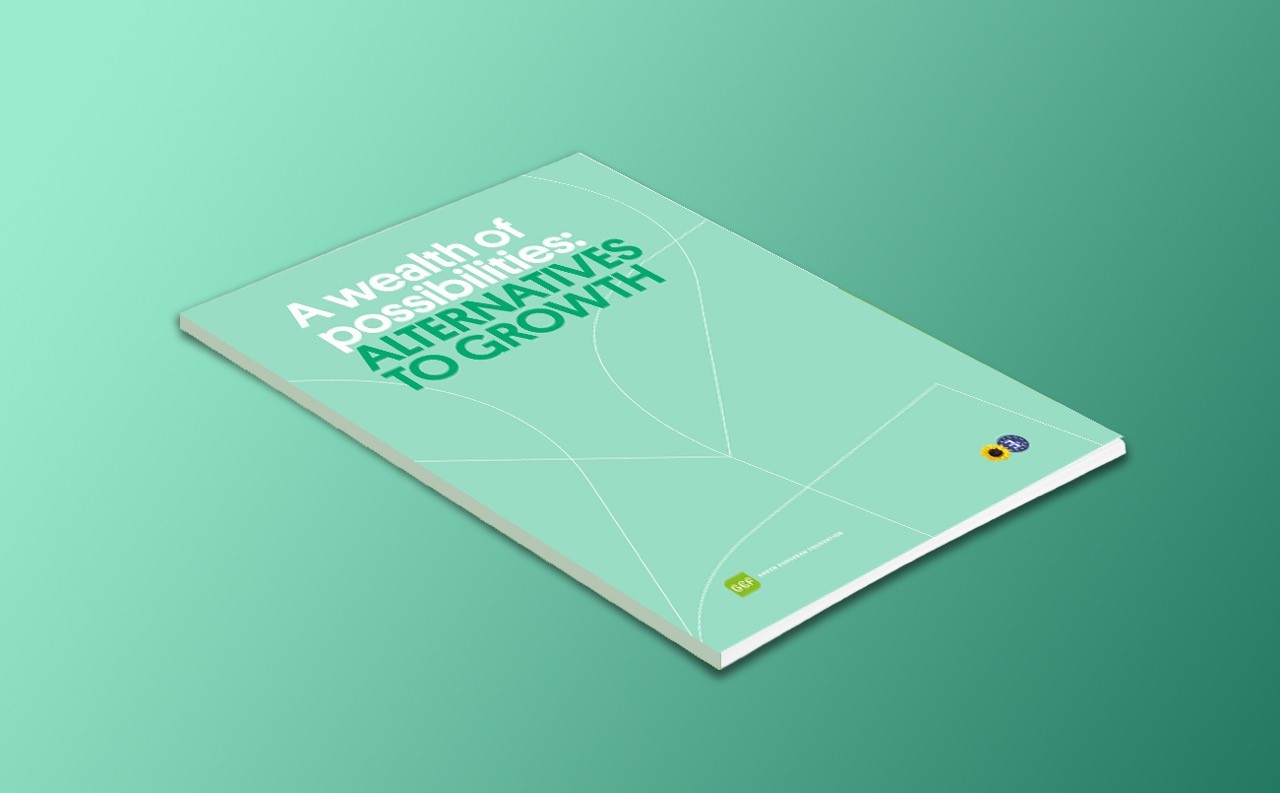
A Wealth of Possibilities: Alternatives to Growth

By Uncategorized

However, the long-awaited recovery has not materialised: even though the level of European GDP (Gross Domestic Product) reached its pre-crisis level in 2014, the employment rate, in spite of the educational attainment, is still dragging behind and the poverty rate has substantially risen. It is as if whenever growth materialises, it only benefits the happy few. This unambiguously testifies to the inefficiency of the usual economic recipes in the current globalised and highly connected world.

This study, commissioned by the Greens in the European Parliament and the Green European Foundation, aimed at questioning current practices and policies in six fields structuring our economic model and at investigating alternative ways that are more adapted to the current challenges by being more socially inclusive and more appropriate on climate and environmental issues. It overlooks to fields of: labour markets; the fight against inequality; tax collection; international trade’ and monetary and banking systems;

The study is not meant to provide its readers with a toolkit or a textbook to reboot our economic model so that we can distance ourselves from the growth of the Gross Domestic Product mantra and engage a fair and green transformation of the economy. Instead, it outlines priority sectors that need to be reframed in a genuinely sustainable mode.

“Next To Us’’ A New Narrative on Migration in Europe

By Uncategorized

The project consisted of a set of events, organised by the above-mentioned institutions, aimed at identifying the main challenges in ensuring the wellbeing of migrants and asylum seekers in Europe. This report, which included the participation of the author in the 6 events organised in 5 countries between May and September 2016 in Spain (Barcelona and Madrid), Germany (Berlin and Munich), United Kingdom (Oxford) and Greece (Athens), was developed as part of this project with a twofold objective:

Firstly, it summarises the main findings from debates held within the GEF transnational migration project involving a wide range of actors, from policy-makers, civil society and refugees themselves;

Secondly, it provides an analytical view of the divergent trajectories of the debate to identify a solid common ground and to build a narrative that would precede new policy proposals offered by the Green political family.

You can read the report by accessing it below.

“Crossing Borders – Refugee and Asylum Policy in Europe” Conference in Berlin

By

This event addressed the scope and the causes of the ongoing crisis in relation to Refugee, Asylum and Migration policies in Europe. Furthermore, it analysed the EU’s lack of political consensus and co-ordination in the process of decision-making and the impact of this situation on the ongoing crisis.

This conference included experts from Europe and the US, as well as from the EU’s southern neighbour regions, who discussed crucial issues of Europe’s asylum and migration policies.

Some of the most important debates that this event aspired to contribute to are:

  • What are our responsibilities as Europeans in face of the refugee crisis?
  • How do debates in Europe differ between countries? What are the reasons for these differences? And how much common ground will we be able to find?
  • How can we create a European refugee policy that enables us to act in solidarity, while also respecting the Geneva Convention?
  • Is it possible to establish a European minimum consensus that goes beyond repression and closing the borders? Or will we instead have to form changing and flexible alliances between member states to decide, for example, whether or not to receive refugees or how to cooperate with neighbouring countries that serve as a refuge for refugees and migrant workers?
  • How can we create a common EU border regime?
  • How can the EU improve co-operation with its neighbours, in order to stabilise Europe’s external borders and improve the conditions for refugees in the initial receiving countries?


PROGRAMME:

DAY 1: Thursday, 26th of May (Open to public)

15h00 Welcome and introduction by Ralf Fücks (President, Heinrich Böll Foundation, Berlin)

15h15 Keynote debate: Europe’s Responsibility – Europe’s Future

Speakers: Sven Biscop (Professor and Director “Europe in the World”, Egmont Royal Institute for International Relations, Brussels), Rosa Balfour (Senior Fellow, The German Marshall Fund of the United States, Brussels) and Ralf Fücks (President, Heinrich Böll Foundation, Berlin)

16h45 Panel: European Realities

Speakers: Pernilla Bäckman (Researcher, Swedish Institute for European Policy Studies, Stockholm),  Thanos Dokos (Director-General, Hellenic Foundation for European & Foreign Policy, Athens), Piotr Buras (Head of Warsaw Office, European Council on Foreign Relations, Warsaw), Steffen Angenendt (Head of Research Division, German Institute for International and Security Affairs, Berlin)

18h45 Keynote and Panel: Cosmopolitanism, International Law and National Interests

Speakers: Carol Batchelor, Director of the Division of International Protection, UNHCR, Geneva), Kathleen Newland (Senior Fellow and Co-Founder of the Migration Policy Institute, Washington D.C.), Aboubakr Jamai (Professor and Dean, School of Business and International Relations, IAU College, Aix-en-Provence/Rabat), Rebecca Harms (MEP, Chair, The Greens/EFA, Brussels)

DAY 2: Friday, 27th of May (Closed to public)

10h00 Keynote 1: Europe’s Asylum Policy – A Vision Limited by Realities

Speakers: Lotte Leicht (Advocacy Director, European Union, Human Rights Watch, Brussels) and Yves Pascouau (Director of Migration and Mobility Policies, European Policy Centre, Brussels)

11h30 Debate 1: European Asylum Policy: Shared Responsibilities, Shared Obligations 

Speakers: Matthieu Tardis (Research Fellow, Centre for Migration and Citizenship, IFRI, Paris), Maciej Duszczyk (Professor and Head of Research Unit, Centre of Migration Research, Warsaw), Sara Prestianni (ARCI, Roma) and Reinhard Bütikofer (MEP, Chair, The European Green Party, Brussels)

14h00 Keynote 2: Europe’s Border Protection – A Vision Limited by Realities

Gerald Knaus (Chairman, European Stability Initiative, Berlin/Istanbul) and Doris Peschke (General Secretary, Churches’ Commission for Migrants in Europe, Brussels)

15h30 Debate 2: Repelling, Sealing Off, Relocating: Risks and Ramifications of Europe’s Border Protection

Speakers: Andreas Takis (Assistant Professor, Aristotle University, Thessaloniki), Metin Çorabatır (President, Research Center on Asylum and Migration, Ankara), Manuel Sarrazin (German MP, Alliance 90/The Greens, Berlin) and Emina Bužinkić (Activist, Centre for Peace Studies, Zagreb)

LOCATION: Heinrich Böll Foundation, Schumannstraße 8, 10117 Berlin, Germany

LANGUAGES: The conference was translated simultaneously in German/English.

“Degrowth in the Parliaments” Panel Debate in Budapest (VIDEO Available)

By

THEME:  

Could we say that degrowth has entered parliamentary politics? Notably several party figures, especially in Europe, have raised the issue of degrowth in their parties and in the parliaments.

For this session, we invited outstanding politicians from various European countries and political parties that, in different ways, have engaged with degrowth. First, we asked them to share with the degrowth community the experiences they have had while attempting to promote degrowth within their parties and/or parliaments looking specifically at the opportunities and challenges they are facing.  Second, we wanted to know what opportunities they see for the future and whether degrowth could gain momentum in public debates, electoral campaigns and in the parliaments. Third, we were eager to understand whether and how the degrowth community, which includes grassroots activists, practitioners and researchers, could eventually support such processes from outside the parliaments.

The focus was on the national and European levels. On the one hand, these levels are potentially very relevant to implement degrowth ideas in a systematic way, but –on the other hand- they are also places were decision-making processes are complex, the balance of powers not favorable, and mainstream ideology very strong.

SPEAKERS:

  • Philippe Lamberts, Member of the European Parliament and Co-Spokeperson of the Greens/EFA group in the European Parliament, member of Ecolo (Belgium);
  • Sabine Leidig, former director of Attac Germany, and Member of the Bundestag for Die Linke (Germany);
  • Florent Marcellesi, Spokesperson of EQUO in the European Parliament (Spain);
  • Rebeka Szabó, Vice-Mayor of the 14th district of Budapest – Zugló.

MODERATORS:

  • Aurélie Maréchal, Director of the Green European Foundation;
  • Federico Demaria, researcher at Research & Degrowth, and ICTA UAB.

VENUE: Corvinus University auditorium, Budapest

TIME: Friday, the 2nd of September 2016, 16h30 – 18h30

VIDEO: Watch this relevant debate in English or Hungarian.

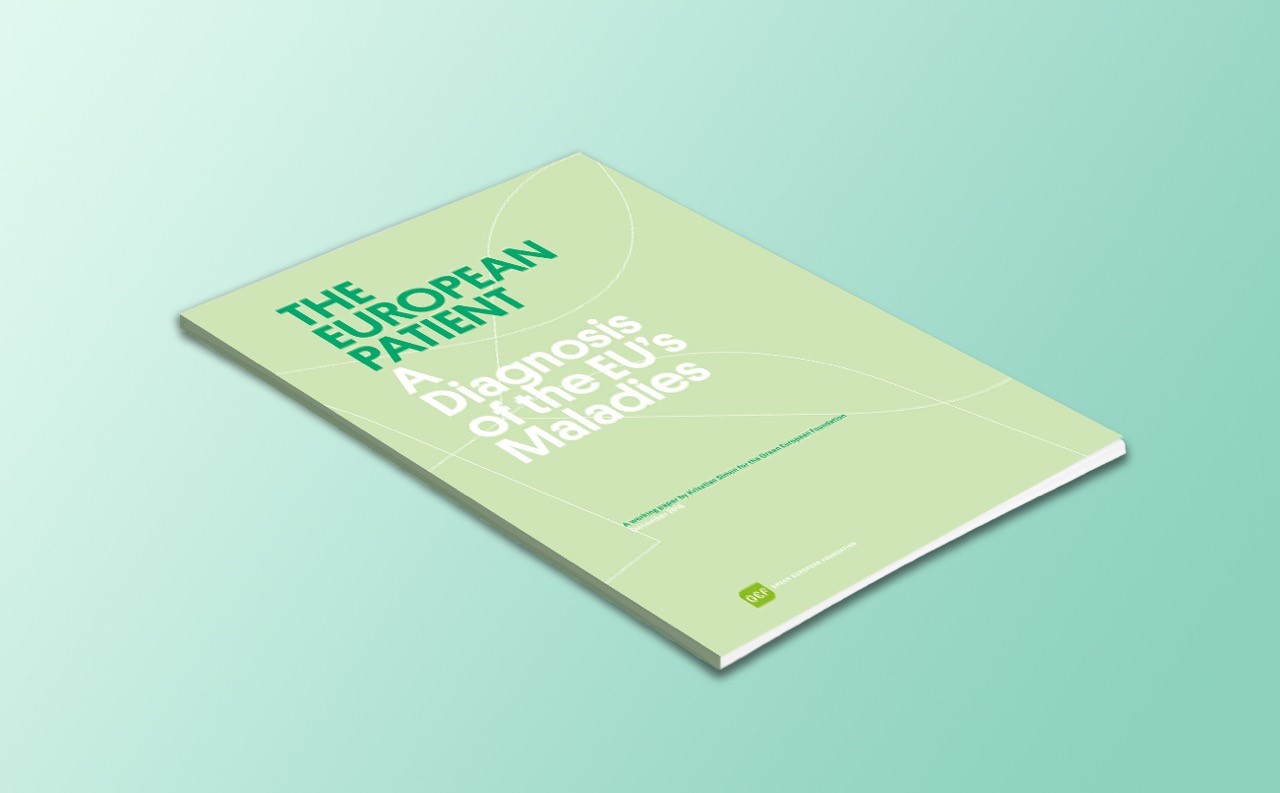
The European Patient – A Diagnosis of the EU’s Maladies

By Uncategorized

Today, Europe is in the midst of a number of overlapping crises: among others, economic, social, political, and environmental. For years it has been obvious that the European project cannot go on in the way it exists today, but the warnings were not taken seriously by the governments and major political forces in Europe. A “Grexit” or “Grexident” was barely averted in 2015, and 2016 saw a majority of voters in the United Kingdom opting to leave the European Union. In the meantime, opinion polls have shown that large parts of the population in other member countries, France and Denmark amongst others, would not mind following the British example of continuing their lives outside the European Union.

The compilation is subjective, and is based on the readings of the author and the GEF team, as well as a survey of the correspondents of the Green European Journal. The selected articles do not represent the views of the whole of the Green movement; rather their goal is to provide food for thought and to provide a selection of interesting readings

This publication looks into a number of possible reasons that have led, according to analysts, politicians, journalists, and activists, to the current problems of the EU, in order to identify the most important issues of concern, and – as a next step of our project – provide solutions to the shortcomings of the European Union.