Green Summer Academy (Strasbourg)

By

Context

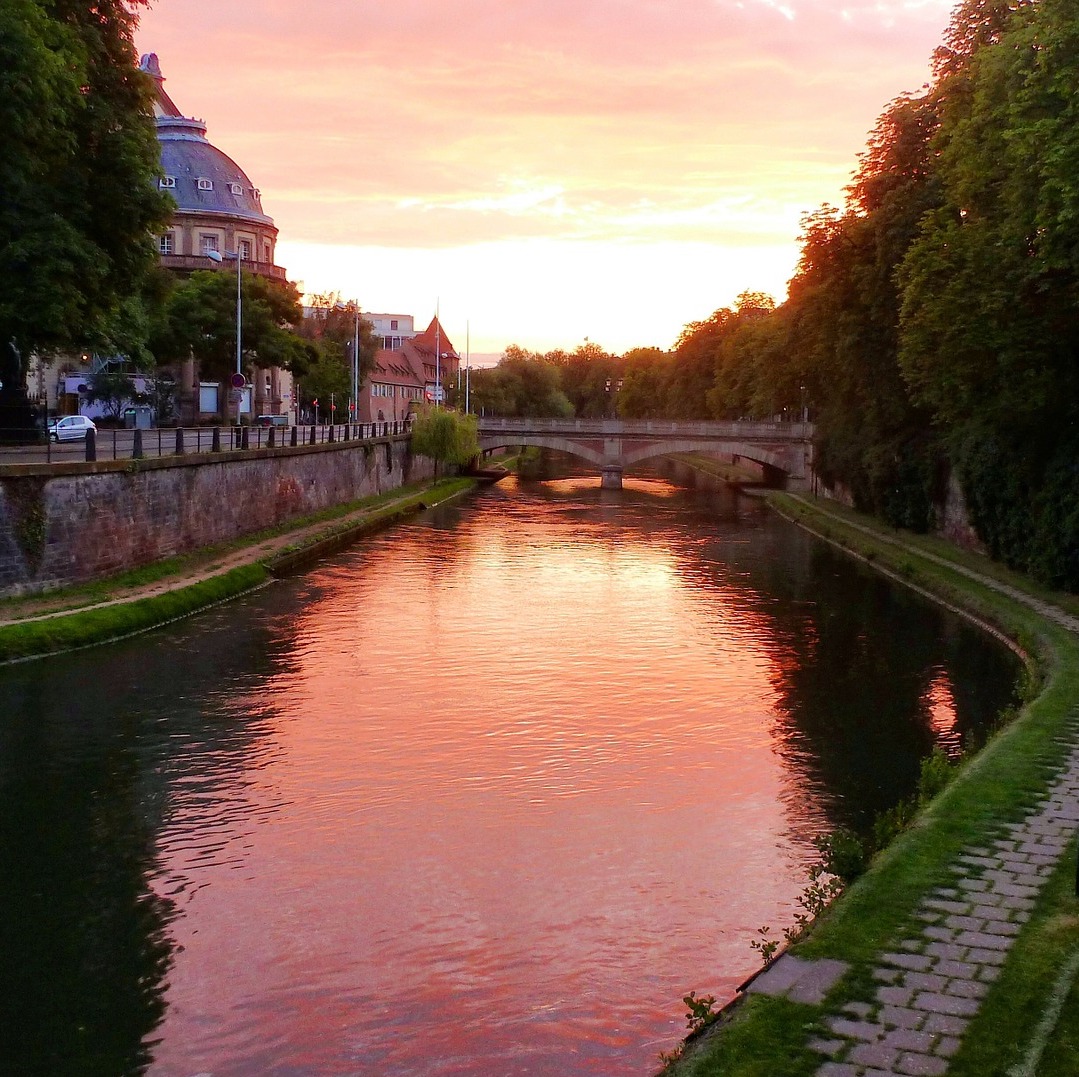
The first GEF summer university ever held in France will take place in the proudly European city of Strasbourg, home of the European Parliament. At the center of the event, we aim at exploring an important question for the furthering of green justice: how can we bridge the fight against social inequalities and the fight against environmental inequalities to pursue a just eco-transition?

About the event

The summer university will be a great opportunity for French activists to get to know the work and publications of the Green European Foundation. Participants will be able to discover the production of the Green European Journal and will have a chance to learn more about the GEF online course Impact Europe.

Programme

Thursday, August 23

12:00 – 13:00 – Greetings and opening – GEF & FEP Agora Space

  • Benoit MONANGE, Director Fondation de l’Ecologie Politique

13:30 – 15:00 –  The Future of work in Europe in a time of technological and social change (panel built around issues raised by the latest issue of the Green European Journal: Work on the Horizon. Tracking Employment’s Transformation in Europe )

  • Laurent STANDAERT, Editor in chief of the Green European Journal
  • Aida PONCE DEL CASTILLO, senior researcher at the European Trade Union Institute
  • Nathalie SCHIRVEL, holds a Masters in Medicine from the Université Libre de Bruxelles, she is the author of the Green European Journal article “Dr Strangelove or how I learned to stop worrying and love the robot”
  • Alain COULOMBEL, economist, member of the Board of the Fondation de l’Ecologie Politique, he is the author of the Green European Journal article “Recasting work in an era of insecurity”

15:30 – 17:00 – Escaping from our homo detritus condition. How to put an end to the garbage society.

  • Ewa SUFIN-JACQUEMART, Polish foundation Strefa Zielini
  • Isabelle HAJEK, sociologist, University of Strasbourg
  • Antoinette GUHL, deputy Mayor of Paris, in charge of social enterprise, social innovation and circular economy

17:30 – 19:00 Rethinking the role of culture practices with the commons paradigm: a pathway for greening our cultural practices?

  • Valérian GUILLIER, PhD researcher at the University Paris 8
  • Olivier LANOË, musician and composer, founder of AMACCA (Associations for the maintaining of alternatives in the field of cultural and artistic projects).

20:00-22:00 Bridging the fight against social and environmental inequalities to enhance our pursuit of a just ecological transition

  • Alice CANABATE, Sociologist, Vice-president of the Fondation de l’Ecologie Politique
  • Sophie SWATON, philosopher and economist, University of Lausanne, author of the book “Pour un revenu de transition écologique” [Appraisal for an ecological transition income]
  • Guillaume FABUREL, professor of geography, urban planning and political science at the University Lyon 2 and at the Institute of Political Studies of Lyon, author of the book “Les métropoles barbares” [Barbaric Metropolis]
  • Julien CAUDEVILLE, statistician and risk exposure specialist, researcher on environment and health at Ineris (National Institute on Industrial Environment and Risks).

Friday, August 24

10:00 – 11:00 – French publishing activity on political ecology at the GEF-FEP Agora

11:00 – 12:00 Presentation and registration for Impact Europe : Online Course for Green Activists

12:00 Closing remarks

  • Marie TOUSSAINT, member of the General assembly of the GEF and member of the Board of the FEP

Contact and information: b.monange[at]fondationecolo.org
New Political Course Days (Barcelona)

By

Context

The current times in Europe are characterised by political uncertainty and instability in regard to domestic as well as foreign policies. As it is clear that we are living in times of fundamental change, citizens all over Europe must be equipped with the tools to take a new political course and they must be empowered to face the challenges ahead.

Many countries across the EU face similar challenges in various areas that affect citizens’ daily lives: insufficient access to affordable housing, high unemployment rates and precarious jobs, sexist violence and the ongoing migration and asylum policies crisis. At the same time, we can observe a neoliberal drift as well as the rise of nationalist, undemocratic forces in some EU member states that is counterproductive to find sustainable solutions to those challenges.

Only with an extensive participation of citizens, the radical changes that are needed to face those challenges can be made.

About the event

The upcoming New Political Course Days, organised with the support of Fundació Nous Horitzons and in collaboration with a variety of other actors such as Fundació l’Alternativa and Instituto 25M Democracia, will provide a space for debate with agents of change and to formulate demands towards the political representatives for this era of change in Catalonia, Spain and Europe.

Programme

Friday, 14 September

17:00 REGISTRATION

17:20 OPENING

17:30 DISCUSSION WITH ADA COLAU

Ada Colau, Mayor of Barcelona

18:15 PANEL DEBATE Multilevel governance, politics of scale and social transformation

Lucía Martín, ECP representative in the Congress of Deputies: Housing policies

Pablo Cotarelo, Engineer and consultant for the energy sector: A new energy economy

Marta Junqué, Fearless Cities: From the neighbourhoods to Europe – the relation of local and global

Moderation: Marc Parés, Professor of Geography at the Autonomous University of Barcelona and head of the  Research Group on Urban Governance, Commons, Internet & Social innovation at the Institute for Government and Public Policies

Programme

Saturday, 15 September

10:00 PANEL DEBATE Europe, sovereignty and democracy

Ernest Urtasun, Member of the European Parliament for the Greens/EFA Group

Fabio de Masi, Member of the German Parliament of Die Linke

Elly Schlein, MEP of S&D

Moderation: Lucile Schmid, Co-President of the Green European Foundation

11:00 BREAK

11:15 PANEL DEBATE A new economic, social and environmental model for Catalonia

Jordi Angusto, Economist: A new economic model for Catalonia

Sandra Ezquerra, Professor of sociology at Universitat de Vic Barcelona: A feminist economy

José Antonio Donaire, Professor of geography at Universitat de Girona: A sustainable economy

12:45 PANEL DEBATE Start of the new political course: the challenges  ahead for progressive forces in this moment of change

Elisenda Alemany, Member of the Catalan Parliament for Catalunya En Comú Podem

Ione Belarra, Representative in the Congress of Deputies for Unidos Podemos

Enric Juliana, Deputy Director of La Vanguardia

Gemma Ubasart, Professor of political science at Universitat de Girona

Moderation: Dolors Comas d’Argemir, President of Fundació Nous Horitzons

14:15 CLOSING


For more info and registration, send an email to fundacio@noushoritzons.cat

Stay tuned for updates on this website and by signing up for the Facebook event!

Moving Beyond Fragments (Komiža)

By

Context   

In its 6th edition, the Green Academy aims to identify the convergences and draw on positive experiences of social movements and political actors across Europe. The will is to foster transnational European exchange on ways of moving beyond the fragments, with a particular focus on Eastern Europe and the European South, where obstacles to enact progressive politics seem most vivid. The emergence of far-right authoritarianism and the exposure to austerity should challenge us to formulate a sharp and coherent political strategy, homegrown to the European semi-periphery.  

Since its establishment in 2010, the Green Academy was designed as an intensive knowledge-building and discussion program for left, green and other progressive political forces. So far, almost 1000 people from civil society, politics, academia, movements and media have participated in its work. The 6th edition of the Green Academy, grounded in intersectionality and transdisciplinary approach, encourages in-depth knowledge building, combining academic modules with political debate and activist exchanges.  

Continuing its focus on three education modules, namely degrowth/sustainability, municipalism/commons and climate change/just transition, it will aim to break with disciplinary divisions and limitations, using methodologies such as critical pedagogy and new formats that encourage self-organisation, cultural expression and learning of practical political skills.  

About the event 

At the Green Academy GEF will organise a specific workshop under the title ‘’Degrowth & Glocal Sustainability’, that will offer relevant cutting-edge knowledge to participants (from Doughnut Economics and Eco-Sufficiency to the concept of a Good life for all) through interactive formats of learning. 

The workshop will concentrate on different variations between growth, technology, work and quality of life, but also tackling specific aspects of inequality or participation. It will help to identify points of convergences where political and social alliances can be framed and strengthened while at the same time not ignoring the potential conflicts or controversial aspects that have divisive impact, with the ultimate goal of finding solutions for them. The focus of this workshop will be predominantly to frame the narrative about a deeper understanding of sustainability as an old concept, through discovering of its importance of future design of future life in and of the European Union. 


The workshop ‘Degrowth & Glocal Sustainability is organised by the Green European Foundation with the support of Institute for Political Ecology and with the financial support of the European Parliament to the Green European Foundation. 

Univerde X Edition (Madrid)

By

Context

66% of the world population will live in urban areas by 2050. Currently, already 73% of Europeans live in urban areas. There is no doubt that the future of humanity will be decided in cities and that they can be catalysts for the transformation we urgently need to face the multiple challenges, both socially and environmentally, that we see at the moment. Cities constitute the new political centre, tackling global problems on a local level: local governments and citizens’ movements are at the forefront of the fight against climate change or aid to refugees, and new forms of participation and democracy are being experimented with.

About the event

At this Univerde, which will already be the tenth edition of the successful Spanish summer school, we’ll reflect on the present and future of cities; about their role for the future of the planet and its inhabitants; about how our cities should be to move towards environmental and social sustainability.
In this context, we’ll discuss about climate change, citizen movements and commons, gentrification, water and food supply, the relationship between the urban and the rural. We will bring positive European experiences that can be replicated in other cities.

Programme

Saturday, September 8

08:45 – 09:30 Accreditation
09:30 – 11:15 Parallel Workshops:
  • Green urbanism for the 21st century
  • Cities of solidarity: immigration and cooperation
  • Political ecology and local political action
  • The policy against plastics
  • Education for the ecological transition in cities
11:15 – 11:45 Break
11:45 – 12:15 Opening Ceremony: Initial reflections on the city
  • Aurélie Maréchal, Director of the Green European Foundation
  • Javier Ayala, Mayor of Fuenlabrada
  • Florent Marcellesi, Member of the European Parliament for Greens/EFA
  • Monica Frassoni, Co-president of the European Green Party and Board member of Fundación EQUO
  • Juan López de Uralde, Co-spokesperson of EQUO and member of the Congress of Deputies for Unidos Podemos

12:15 – 14:00 Round table: Cities and citizens building future

Moderator: Mariano Baratech, Sociologist and Member of the EQUO Fundación’s board
  • Evelyne Huytebroeck, Member of the Brussels Parliament and Local Councillor in the Brussels commune of Forest, Responsible of the Local Councilors Network for the European Green Party
  • Julia López Ventura, C40’s Regional Director for Europe
  • Christina Monge, Political scientist and Associate Professor of Sociology at the Unversity of Zaragoza
14:00 – 15:45 Lunch break
15:45 – 17:30 Parallel Workshops:
  • The city of the future vs. the field of the past
  • Women who “paint” cities to inhabit them
  • Re-municipalisation of basic services: water
  • A more just, supportive and sustainable Europe: the role of EQUO in the European Parliament
  • Re-naturalisation of our cities

17:30 – 18:00 Break

18:00 – 18:45 Keynote speech: Anthropocene and bioregion
  • Fernando Prats, urbanist architect. Advisor of the Complutense University of Madrid for the Global Change Spain 2020/50 programme
18:45 – 20:30 Round table: City and territory. The road to a sustainable coexistence
Moderator: Ana Sabaté, former Professor of Human Geography at the Complutense University of Madrid
  • Marco Marangoni, Member of the research team of EStà – Economia e Sosenibilità
  • Alejandro Sánchez, Member of the regional parliament of Madrid
  • Irene Lorite, Architect and Urbanist, Advisor in the municipality of Cercedilla (Madrid), Member of Ahora Movilidad

Sunday, September 9

9:45 – 12:00 Parallel Workshops:
  • Latest lessons on citizens’ participation
  • Make your city a seed
  • “With you”: The positive presence of the wolf in our environment
  • Bullying in a digital world – cyberbullying
  • Energy transition in the administration: reality or fiction
  • Visit to the agricultural park of Fuenlabrada
12:00 – 13:45 Round table: Green cities – egalitarian and sustainable
Moderator: Ana M. Álvarez, Local councillor of Parla (Madrid)
  • Neus Truyol, Councillor of Ecology, Agriculture and Animal Welfare of the Palma de Mallorca City Council
  • Inés Sabanés, Councillor of Environment and Mobility of the Madrid  City Council
  • Jean-Claude Englebert, First Deputy Mayor of the municipality of Forest (Region of Brussels-Capital)

13:45 Closing Ceremony

  • Ruth Pascual, Local Councillor of Fuenlabrada
  • Marta Santos, Co-spokesperson of EQUO
  • José Larios, President of Fundación EQUO


Stay tuned for updates on our website and get more information via info@fundacionequo.es.

European Green Alternatives (Assos-Canakkale)

By

Context

In a time of ever-growing challenges fundamental principles of Human Rights and human dignity, this projects aims to highlight the transformative power of social movement, and how green alternatives in politics as well as in everyone’s daily lives can be realised.

About the event

For almost a decade, the Green Thought Association is organising a Yeşil Kamp in Turkey to bring together European and Turkish Greens to exchange ideas and discuss the most pressing issues such as women’s rights, food and agricultural systems and rights of nature, law, social contracts and ecological struggles, and so forth.

This year, the Green Camp will be kicked off with a special GEF Summer School on European Green Alternatives aiming to promote green values such as sustainability, feminism, direct democracy etc. in Turkey.

The Summer School of GEF will be followed up from 2 to 5 August with more thematic and interactive workshops and presentations to deepen the participants’ understanding and knowledge on those topics.

Programme

10:00- 11:15 The Rights of Nature and the Environmental Constitutionalism

Moderator and Introduction: Ümit Şahin (Istanbul Policy Center Climate Change Senior Specialist, Green Thought Association)

  • Rana Göksu (Lawyer, Green Thought Association)
  • Georgi Velev (SavePirin Campaign, Zelenite – Green Party of Bulgaria)

11:45-13:45 Gender Policies and Queer Ecology 

  • Moderator and Introduction: Sevil Turan (Green Thought Association)
  • Vesna Jusup (European Green Party/EGP)
  • Beatrice White (Green European Foundation /GEF)
  • Teo Comet Kortman (Federation of Young European Greens/FYEG)

15:15-16:30 Food Policies

  • Moderator and Introduction: Bengi Akbulut (Ecology Collective)
  • Antoine Tifine (Federation of Young European Greens/FYEG)
  • Leyla Aslan Ünlübay (Buğday Association)
  • Ayşenur Arslanoğlu (Slowfood Movement)

18.00-19.30 Parallel Workshops

Workshop 1: Fight against water crisis- Akgün İlhan

Workshop 2: Gender Equality and Queer Ecology –Cihan Koral Malak

Workshop 3: Fair Food and Food Policies–Durukan Dudu


For further questions, directly get in touch with cihat.demirtas@yesildusunce.org 

Fighting for Our Common Planet (Selce)

By

Context

The Summer Camp ‘Fighting for Our Common Planet’ is part of Federation of Young European Greens’ annual project on commons. Commons refer to shared resources and social practices that are maintained by communities in a sustainable manner. Good management of commons offers a sustainable and accessible alternative to the current centralised and dominant role of the state and market.

The Summer Camp will focus on environmental commons, particularly on how the climate can be managed in a sustainable, inclusive and participatory way.

About the event

A central part of the programme – ‘Climate Change Summer Workshop’, organised by the Green European Foundation – is built around Climate Change. It aims to increase awareness of the importance of combating climate change among Young Greens, and a better understanding of climate negotiations and what actions are needed on the EU and national level to make a difference. Moreover, young people will be trained to bring climate change into the public debate and make it a relevant subject.

Programme

Friday July 27

12:00-13:30 ‘Looking into the Paris Agreement’

​Introduction to climate negotiations – understanding how international stakeholders cooperate to mitigate temperature rises and adapt to climate change. We will look into what the Paris Agreement brought to the table, what were the commitments by different European countries, and how far are we in reaching them. From FYEG’s Climate Change Working group we will learn the relation between the European Union and nation states when it comes to national policies related to climate change.

14:30-16:00 ‘Towards the climate change solutions’ ​(with a livestream)

Three guest speakers coming from different backgrounds are invited to discuss the main challenges faced within international climate negotiations and in the elaboration of European Climate Policies (Mitigation, adaptation, North/South Solidarity, Transfer of knowledge, Loss and damage, etc.). The panel will address questions such as: Why is COP24 in Poland important? What policies are planned in relation to combating climate change around Europe and in the EU? What changes can we expect in the upcoming elections in regards to climate change policies? Is Europe ready to mitigate the consequences of climate change? What are the next steps in the fight against climate change and what are the entry points through which young people can influence the outcome of climate negotiations?

SpeakersYan Dupas​, Political advisor in the Greens/EFA group in the European Parliament (tbc); Kelsey de Porte​, Jonge Klimaatbeweging; Luka Tomac,​ Green Action/Friends of the Earth Croatia (tbc); Moderator: ​Zuzana Pavelkova,​ FYEG’s co-spokesperson

Saturday July 28

12:00-13:30 ‘Storytelling about Climate’

With the engagement of a guest-trainer from the Green European Journal (tbc) and a famous French vlogger Vincent Verzat (Partager C’est Sympa), participants will be trained about efficient ways of communicating climate change to a wider audience. Emphasis of the training will be put on how to create a positive narrative on combating climate change, and how to incentivise people about the issue. The program will be based on the principles of ​non-formal education​ and intercultural learning. We strive for an active, inclusive and direct communication and sharing of knowledge.

Practicalities:

The workshop is open to the public. Those interested can receive information about available places at project.manager@fyeg.org.


The event ‘Climate Change Summer Workshop’ is organised by the Green European Foundation with the support of the Federation of Young European Greens and with the financial support of the European Parliament to the Green European Foundation.

Crossing Borders (Janów Podlaski)

By

Context

The title of this year’s GEF Green Summer Academy in Poland is ‘Crossing Borders’, a phrase charged with meaning and symbolism, considering the fact that the event will be taking place near the borders of Poland with Belarus and Ukraine, as well as within a region with diverse cultures, dialects, languages, and religions.

About the event

The event includes several major themes, such as:

  • The future of Europe in the context of changing geopolitics and the upcoming European Parliamentary elections
  • Climate change and preparing for the COP24 Climate Change Conference in Katowice
  • Green visions for farming, nutrition, and rural development
  • Green visions for local governance, with particular emphasis on regional assemblies, and transition cities in alignment with the ideals of the Commons and urban movements

Through several workshops, round tables and expert debates, the event will feature discussions on fighting pollution, cities of equal chances, preventing corruption and the role of art and artists in citizens-led activism and the political transformation of Poland in a European context. The participants will also engage with the local community and local activists and learn about new green transborder initiatives and opportunities.

Through its diverse programme, the Green Summer Academy in Poland connects the dots between politics and society at local, regional, national, European and global levels.

Programme

Thursday July 12

16:00 – 19:00 Local expeditions in small groups

17:00 – 19:00 Meeting with local active inhabitants on projects of local development opportunities in a transborder context

Friday July 13

9:30 – 10:00 Opening speeches

10:00 – 12:00 What future for the Eastern Europe in EU?  (Debate)

Speakers: Rebecca Harms (Member of the Greens/EFA group in the European Parliament), Paweł Kowal (College of Europe, Natolin), Małgorzata Tracz (Partia Zieloni, Poland), Michał Sutowski (Krytyka Polityczna), Moderator: Bartłomiej Kozek (GEJ), Adam Ostolski  (GEJ, Krytyka Polityczna, Partia Zieloni)

12:00 – 13:45 Creating Socio-Ecological Societies through Urban Commons Transition. Lecture ‘Cities in transition’

Lecture: Dirk Holemans (Green European Foundation Board Member and Director of the Flemish Green Think Tank Oikos

Cities in transition 

Speakers: Dirk Holemans (Ghent in transition with Michel Bauwens), Sergi Alegre (El Prat and Barcelona),  Hanna Gill-Piątek (innovative revitalisation in Łódź), Marcin Gerwin (citizens’ panels in Gdansk and Lublin), Roger Manser (London Great Parc), Moderator: Dagmara Misztela (Partia Zieloni, Poland)

14:45 – 15:45 Artists as change makers (Debate)

Speakers: Ela Hołoweńko, Cecylia Malik, Michał Kasprzak, Joanna Kessler. Moderator: Gert Roehrborn

15:45 – 17:45 Panel debate 

  • Food and farming past revolution and its consequences (Key note), Thomas Waitz, MEP, EGP Committee 
  • The CAP today and tomorrow, the Green perspective (Key note), Andrzej Nowakowski (GGEP) 
  • From industrial agriculture to agroecology and food sovereignty? (Debate), Andrzej Nowakowski (Advisor on Agriculture and Rural Development in the Greens/EFA group in the European Parliament), dr Katarzyna Bańkowska (IRWiR PAN), Izabela Mier (Cooperative Dobrze), Ben Lazar (Nyeleni Polska/permaculture), Dorota Metera (expert in certification), Maria Staniszewska (ecological NGO), Adrian Sulikowski (conventional farmer/Green Party), Katarzyna Jagiełło (Greenpeace), Justyna Zwolińska (SGGW, Poland). Moderator: Ewa Jakubowska-Lorenz, (HBS Warszawa)

18:00 – 19:45 Parallel programme in Janów Podlaski and Biała Podlaska

21:00 – 22:00 ‘No Problem!’ by Yasmin Kidwai, documentary projection

Saturday July 14

9:00 – 11:00 Parallel Sessions I 

  • Future of work (Adam Ostolski, Bartlomiej Kozek)
  • Economy and climate change (Roger Manser, Przemek Stępień)
  • Rivers exchange of knowledge part I (Alesia Basharymava, Volha Kasevitch, Uladzimir Zuyeu, Petro Hrystiszyn, Heorhiy Veremiychyk, Oleksandr Husiev, Sascha Maier, Mikhail Durkin, and members of the Save the Rivers Coalition, moderators:  Ewa Leś, Sascha Maier)

11:30 – 13:00 Parallel Sessions II

  • Seminar ‘Green farming: Campaigning against GMO, why and how’ (Ewa Sufin-Jacquemart (Strefa Zieleni), Juliette Leroux (Greens/EFA)
  • City of Open Chances (Hanna Gill-Piątek, Aleksandra Kołeczek)
  • Rivers exchange of knowledge part II (Iza Zygmunt, Maria Staniszewska)

14:00 – 16:00 Parallel Sessions III 

  • Green media for the climate (Beata Nowak, Bartek Kozek, Jamie Kendrick (GEJ), Annabelle Dawson (GEJ), Monika Matus (Democratic Action), Wojciech Szymalski (Institute for Sustainable Development), Ilona Jędrasik (Client Earth Lawyers for Earth), Hanna Schudy (EKO-UNIA), Monika Sadkowska (RT-ON), Marcin Harembski (SMA/CAN + Climate Coalition) and others, Moderator: Katarzyna Ugryn)
  • Green regional program: clean air, green jobs, integrated public transport and enthralled hunting (Małgorzata Tracz and Paweł Pomian)
  • Rivers working groups E30 and E40 coalitions (Ewa Leś, Sascha Maier, Maria Staniszewska, Petro Hrystiszyn)

16:30 – 18:30 Parallel Sessions IV

  • Towards COP 24 (Roger Manser (urbanist), Beata Nowak (Zielone Wiadomości), Monika Matus (Democratic Action), Wojciech Szymalski (Institute for Sustainable Development),  Ilona Jędrasik (Client Earth Lawyers for Earth), Hanna Schudy (EKO-UNIA), Monika Sadkowska (RT-ON), Marcin Haremski (SMA), Patryk Białas (Skype), Maciej Smykowski (Partia Zieloni), Katarzyna Ugryn (HBS), moderators: Ewa Sufin-Jacquemart (Strefa Zieleni), Artur Wieczorek
  • Seminar ‘Green farming: How organic farming can be developed in Poland and EU’ (Monika Styczek- Kuryluk, Andrzej Nowakowski, Dorota Metera, Dr. Katarzyna Bańkowska, Ben Lazar, Rober Kuryluk, and others. Moderators: Iza Mier, Julia Rokicka)
  • Rivers plan of action (Izabela Zygmunt, Ewa Leś)

18:45 – 19:30 Summary and closing

Sunday July 15

7:00 – 9:00 Local expeditions in small groups


Participation fee:

The full fee of 500 PLN (570 PLN with transfer) should be paid by bank transfer to the account of Fundacja Strefa Zieleni:

66 1020 1097 0000 7602 0237 0450, title: ‘Green Summer Academy participation fee’

(from abroad: IBAN: PL66 1020 1097 0000 7602 0237 0450, Swift/BIC: BPKOPLPW)

The lower participation fee is possible when registering before June 25

Registration/more information:

Ewa Sufin-Jacquemart +48-664673700 ewa.sufin@strefazieleni.org

Urszula Sadlowska +32 (0)2 234 65 73 urszula.sadlowska@gef.eu


The Green Summer Academy “Crossing borders” is organised by the Green European Foundation with the support of Fundacja Strefa Zieleni and with the financial support of the European Parliament to the Green European Foundation.

The debate on transitioning cities towards the Commons is organised as a part of the international project “Creating Socio-Ecological Societies through Urban Commons Transition” by the Green European Foundation with the support of Fundacja Strefa Zieleni and with the financial support of the European Parliament to the Green European Foundation.

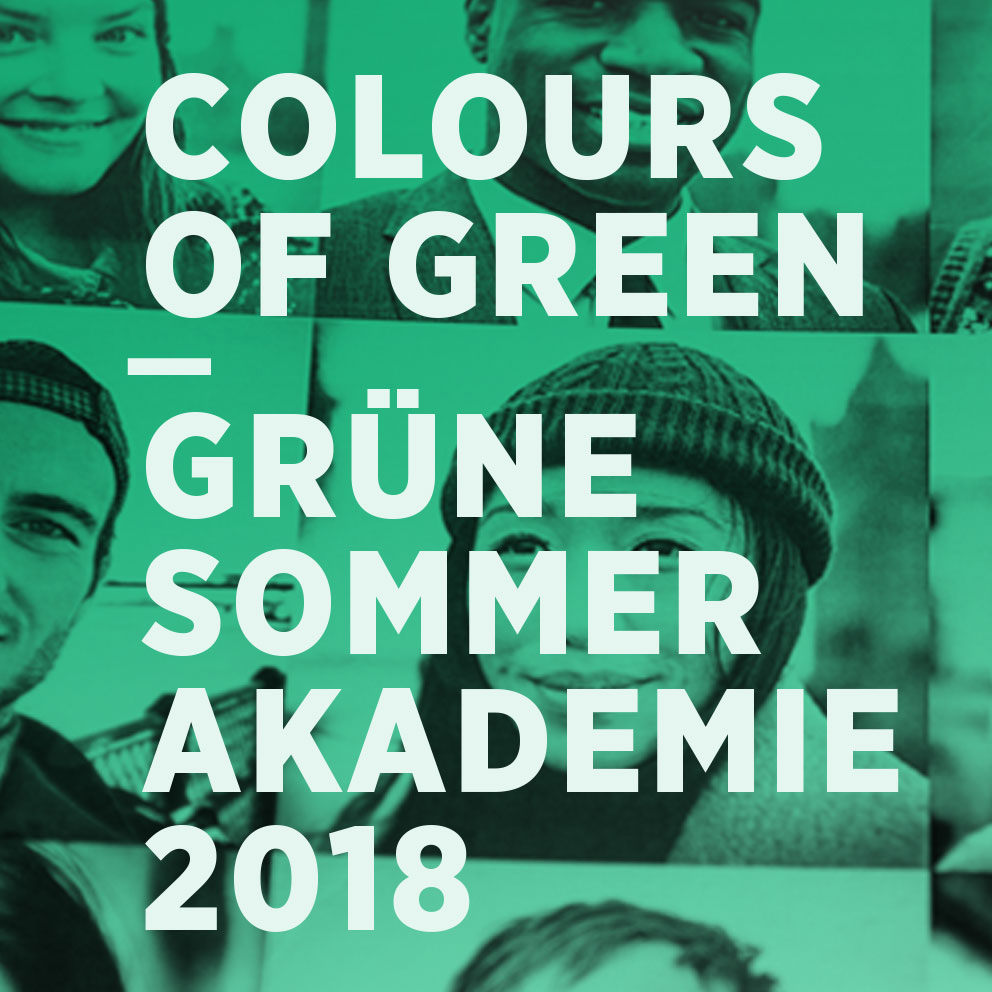
Colours of Green (Graz)

By

Context

Following the loss of the Austrian Green party during the national elections in 2017, the entire Austrian Green movement is at a crossroads. ‘Green Repositioning’ aims to start a process of re-organising the Green movement and to come up with a new Green narrative that links ecological and social concerns and lays out how to master the Great Transformation based on solidarity and resilience. A clear positioning and a joint understanding of socio-ecological politics based on Political Ecology will become a cornerstone in reinventing the Austrian Green movement. This ‘Green Repositioning’ project consists of several different events throughout the year all over Austria.

Within this framework, GEF will organise a Summer Academy with the support of Grüne Bildungswerkstatt.

About the event

Three key areas – six workshops – one Green identity. Following this motto, the Summer Academy will function as a laboratory within the ‘Green Repositioning’ project currently implemented by the Austrian green foundation Grüne Bildungswerkstatt.

Following the Regional Ideas Lab, organised by the Greens/EFA Group in the European Parliament and the European Green Party on the days before the Summer Academy, the event will continue lively debates with change makers and pulse generators from all over Europe.

The aim is to develop working theses for the following three key areas that were identified:

  • Environment & Ecology
  • Democracy & Media
  • Economy & Future of Work

The project ‘Green Repositioning’, including the GEF Summer Academy, aims to contribute to a new Green narrative that answers the question ‘Where will the Green movement be in 2030, and how can it contribute to a better future?’.

Three workshops will be organised in English. The detailed programme will be available on this website soon.


Registration

Register now for the GEF Summer Academy in Graz by following this link.

The participation fee for the event is 60 Euro (including catering during the event). For further questions, send an email to sommerakademie(at)gbw.at.

Food Community

Restoring Food to the Heart of the Community (Cork)

By

Context

The broadening and deepening of global food production and supply has been a powerful force of economic, social and environmental transformation for the last three decades or more with profound changes, not only to farming systems that become locked into industrial commodity production, but also to adverse environmental effects leading to major ecological ruptures: The productivist agri-industrial model has achieved a remarkable grip over the policy agenda surrounding food security. Yet the consequences include growing concern over emissions of greenhouse gases and impacts upon biological diversity.

The summer school will propose policy changes not only in response to the review of the EU Common Agricultural Policy (CAP) which is taking place in 2018 but also to the Milan Urban Food Policy pact. The European Commission’s communication on the review of the CAP states that climate change and preserving the environment is the main challenge facing the EU, and the CAP must play an enhanced role in this battle – not only to protect farmers from the impact of climate change but also to ensure that farming does not contribute to making the problem worse. Stringent new goals will be set at European level to ensure farming contributes fully to helping meet the EU’s international commitments on climate change and sustainability.

About the event

The Summer University is organised in collaboration with academics, local policy makers, artisan producers, community food security NGOs and local growers. Its objective is to discuss a new policy which can develop a new healthy, sustainable and resilient food system. The aim is to improve equitable access to quality food, create a fairer and sustainable food system, and reduce the environmental footprint of food.

Programme

Friday, June 29

19:30 Welcome reception and opening address

  • Nuala Ahern (Green Foundation Ireland)
  • Colin Sage (School of the Human Environment in UCC and Chair of the Cork Food Policy Council)
  • Duncan Stewart (Chair of Green Foundation Ireland).

Saturday, June 30

09:30 – 09:40 Welcome and introductions

09:40 – 10:20 Dr Colin Sage Why we must restore food to the heart of community

10:20 – 11:00 Cristina Grasseni Food citizenship: Sustainable food procurement in cities

11:20 – 12:00 Oliver Moore re-CAP: Food and Farming Policy in Europe

12:00 – 12:40 Regina Sexton Cork: City of Food

12:45 – 13:30 Debate and Discussion

16:15  St. Stephen’s Sustainable Food Lab: Talk on food growing

17:15  Nano Nagle Place: Heritage experience

Speakers


Colin SageDr Colin Sage – Senior Lecturer in Geography at UCC with research interests in food systems, environmental policy and civic initiatives for social change. He is the author of Environment and Food (2012) and co-editor of Transdisciplinary Perspectives on Transitions to Sustainability (2017), Food Transgressions: Making sense of contemporary food politics (2014) and Strategies for Sustainable Development. Colin is honorary Visiting Professor on the Food Studies program at the American University, Rome as well as at the University of Gastronomic Sciences near Turin, Italy, and has just completed a Visiting Research Fellowship at the University of Tasmania.  He is strongly committed to public engagement and is Chair of the Cork Food Policy Council which he co-founded in 2013.
Dr Christina Grasseni – Professor of Anthropology at the University of Leiden, Netherlands. Her research interests lie broadly in economic, political and visual anthropology, focusing especially upon skilled visions and ecologies of belonging. She is the author of Beyond Alternative Food Networks (2013) which analysed Italy’s solidarity economy networks as ethnographic models of grassroots transition to sustainable consumption and food sovereignty. Her most recent book, The Heritage Arena (2017) unravels the political agency of heritage cheese in the reinvention of local economies and ecology in the Alps. Cristina currently leads a major European Research Council project, Food citizens? Collective food procurement in European cities which examines the premises and consequences of collective forms of food production, distribution and consumption in three European cities.
Dr. Oliver Moore – has a PhD in the sociology of farming and food and writes in the field of organics, direct selling and consumer-producer relations. He is a contributor to the Irish Examiner where he writes a weekly column on organic food and farming. A member of the Irish Food Writers Guild he also contributes to Food and Wine magazine, and to Organic Matters magazine. Dr. Moore is Communications Manager with ARC2020, an EU agri-food and rural NGO based in Paris and also maintains a lively and informative blog. He is a board member and active organiser for Cloughjordan Community Farm and Cloughjordan Ecovillage. In 2015 he participated in the La Via Campesina Forum for Agroecology in Nyéléni Mali.

Regina Sexton – a food historian, food writer, broadcaster and cook. Her research interests include food and identity, food and tradition and food in the Irish country house. She has published widely at academic and popular levels. Her publications include A Little History of Irish Food (Gill and Macmillan, 1998) and Ireland’s Traditional Foods (Teagasc, 1997). At University College Cork, she lectures in the area of food history with the School of History, the Food Industry Training Unit and Adult Continuing Education. Her research interests encompass food and culinary history, food preservation, food and identity, ’traditional‘ food cultures, and constructed and ‘invented‘ food traditions.  ‍ Regina is secretary of the Agricultural History Society of Ireland.

Registration

The Cork Summer University will cost €40 per person (plus booking fee), which includes wine reception on Friday evening as well as morning coffee and dinner on Saturday. Please note this does not cover the cost of lunch on Saturday.

To attend the Summer University in Cork, you can order your tickets here.