
Context
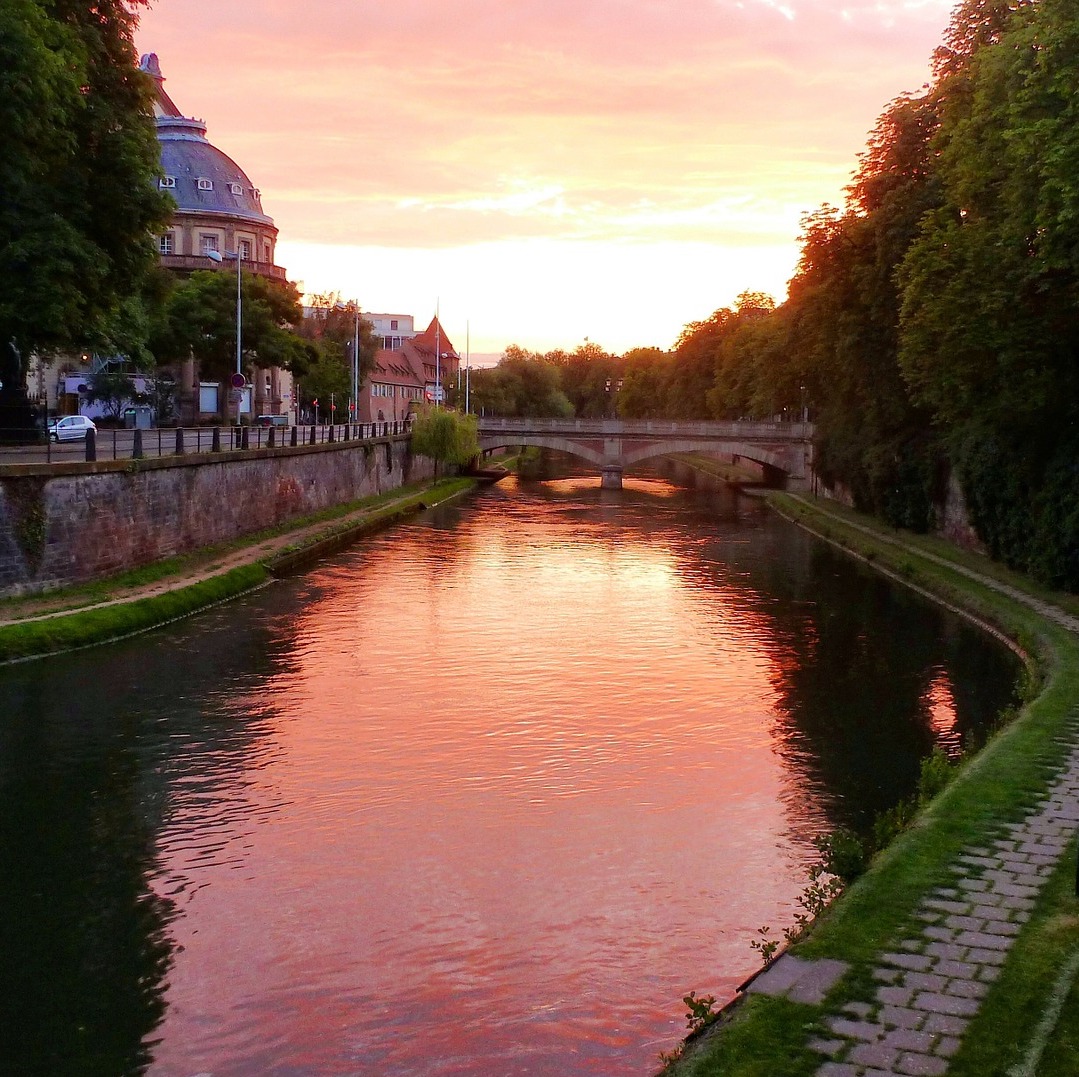
The first GEF summer university ever held in France will take place in the proudly European city of Strasbourg, home of the European Parliament. At the center of the event, we aim at exploring an important question for the furthering of green justice: how can we bridge the fight against social inequalities and the fight against environmental inequalities to pursue a just eco-transition?
About the event
The summer university will be a great opportunity for French activists to get to know the work and publications of the Green European Foundation. Participants will be able to discover the production of the Green European Journal and will have a chance to learn more about the GEF online course Impact Europe.
Programme
Thursday, August 23
12:00 – 13:00 – Greetings and opening – GEF & FEP Agora Space
- Benoit MONANGE, Director Fondation de l’Ecologie Politique
13:30 – 15:00 – The Future of work in Europe in a time of technological and social change (panel built around issues raised by the latest issue of the Green European Journal: Work on the Horizon. Tracking Employment’s Transformation in Europe )
- Laurent STANDAERT, Editor in chief of the Green European Journal
- Aida PONCE DEL CASTILLO, senior researcher at the European Trade Union Institute
- Nathalie SCHIRVEL, holds a Masters in Medicine from the Université Libre de Bruxelles, she is the author of the Green European Journal article “Dr Strangelove or how I learned to stop worrying and love the robot”
- Alain COULOMBEL, economist, member of the Board of the Fondation de l’Ecologie Politique, he is the author of the Green European Journal article “Recasting work in an era of insecurity”
15:30 – 17:00 – Escaping from our homo detritus condition. How to put an end to the garbage society.
- Ewa SUFIN-JACQUEMART, Polish foundation Strefa Zielini
- Isabelle HAJEK, sociologist, University of Strasbourg
- Antoinette GUHL, deputy Mayor of Paris, in charge of social enterprise, social innovation and circular economy
17:30 – 19:00 Rethinking the role of culture practices with the commons paradigm: a pathway for greening our cultural practices?
- Valérian GUILLIER, PhD researcher at the University Paris 8
- Olivier LANOË, musician and composer, founder of AMACCA (Associations for the maintaining of alternatives in the field of cultural and artistic projects).
20:00-22:00 Bridging the fight against social and environmental inequalities to enhance our pursuit of a just ecological transition
- Alice CANABATE, Sociologist, Vice-president of the Fondation de l’Ecologie Politique
- Sophie SWATON, philosopher and economist, University of Lausanne, author of the book “Pour un revenu de transition écologique” [Appraisal for an ecological transition income]
- Guillaume FABUREL, professor of geography, urban planning and political science at the University Lyon 2 and at the Institute of Political Studies of Lyon, author of the book “Les métropoles barbares” [Barbaric Metropolis]
- Julien CAUDEVILLE, statistician and risk exposure specialist, researcher on environment and health at Ineris (National Institute on Industrial Environment and Risks).
Friday, August 24
10:00 – 11:00 – French publishing activity on political ecology at the GEF-FEP Agora
11:00 – 12:00 Presentation and registration for Impact Europe : Online Course for Green Activists
12:00 Closing remarks
- Marie TOUSSAINT, member of the General assembly of the GEF and member of the Board of the FEP
Contact and information: b.monange[at]fondationecolo.org




 Dr Colin Sage – Senior Lecturer in Geography at UCC with research interests in food systems, environmental policy and civic initiatives for social change. He is the author of Environment and Food (2012) and co-editor of Transdisciplinary Perspectives on Transitions to Sustainability (2017), Food Transgressions: Making sense of contemporary food politics (2014) and Strategies for Sustainable Development. Colin is honorary Visiting Professor on the Food Studies program at the American University, Rome as well as at the University of Gastronomic Sciences near Turin, Italy, and has just completed a Visiting Research Fellowship at the University of Tasmania. He is strongly committed to public engagement and is Chair of the Cork Food Policy Council which he co-founded in 2013.
 Dr Christina Grasseni – Professor of Anthropology at the University of Leiden, Netherlands. Her research interests lie broadly in economic, political and visual anthropology, focusing especially upon skilled visions and ecologies of belonging. She is the author of Beyond Alternative Food Networks (2013) which analysed Italy’s solidarity economy networks as ethnographic models of grassroots transition to sustainable consumption and food sovereignty. Her most recent book, The Heritage Arena (2017) unravels the political agency of heritage cheese in the reinvention of local economies and ecology in the Alps. Cristina currently leads a major European Research Council project, Food citizens? Collective food procurement in European cities which examines the premises and consequences of collective forms of food production, distribution and consumption in three European cities.
 Dr. Oliver Moore – has a PhD in the sociology of farming and food and writes in the field of organics, direct selling and consumer-producer relations. He is a contributor to the Irish Examiner where he writes a weekly column on organic food and farming. A member of the Irish Food Writers Guild he also contributes to Food and Wine magazine, and to Organic Matters magazine. Dr. Moore is Communications Manager with ARC2020, an EU agri-food and rural NGO based in Paris and also maintains a lively and informative
  Regina Sexton – a food historian, food writer, broadcaster and cook. Her research interests include food and identity, food and tradition and food in the Irish country house. She has published widely at academic and popular levels. Her publications include A Little History of Irish Food (Gill and Macmillan, 1998) and Ireland’s Traditional Foods (Teagasc, 1997). At University College Cork, she lectures in the area of food history with the School of History, the Food Industry Training Unit and Adult Continuing Education. Her research interests encompass food and culinary history, food preservation, food and identity, ’traditional‘ food cultures, and constructed and ‘invented‘ food traditions. Regina is secretary of the Agricultural History Society of Ireland.