Tbilisi Security Conference

By

About the event:

Despite the ideals and efforts of several generations to bring lasting peace to Europe and the world, armed conflict and escalation remain a daily presence in the lives of many young Europeans – whether in their direct lived experience, their fears for the future, or their contacts and solidarity with peers elsewhere. This includes not just Russia’s invasion of Ukraine, but also violence in the South Caucasus and Gaza, among others. While the Green movement is rooted in non-violence and pacifism, these terms are at times vaguely defined and understood within and outside the Green movement. They are also easier to defend in times of peace.

This one-day conference in Tbilisi will spotlight and dive deeper into GEF’s ongoing work on geopolitics, peace, and security, combining expert inputs with non-formal education on topics ranging from peacebuilding in practice, to environment and security, to green practice and proposals on European defence. With a particular focus on enlargement as well as youth perspectives, the conference aims to be a space for learning and reflection, and to highlight green visions for a safer Europe and world.


Project background:

This project connects directly to GEF’s thematic priority Geopolitics, Peace, and Security, as well as the transversal focus on youth. It also supports our strategic focus on bringing the green wave to Southern and Eastern Europe, and provides an important opportunity to spotlight and discuss GEF’s most recent peace and security publications.

Programme:

9:30-10:15       –        Opening 

10:15-11:45       –       Plenary panel: Paradigm shifts and non-violence today

With Laurent Standaert (Director of the Green European Foundation), Giorgi Ptskialadze (Former Secretary General of CDN), Yevheniia Bryhinets (CDN Executive Committee), Joanna Kaminska (Policy Advisor and mediation expert at the European Parliament – online) . Moderation: Igor Skórzybót (CDN Sec-Gen)

11:45-12:00       –      Coffee break

12:00-13:30     –       Green perspectives on European Security – visions and testimonies

You can read the featured articles and testimonies via this link.

With Tatia Ishkneli (“Queer security in Georgia”), Serdar Şengezer (“Securitization of Migration in Europe: Processes, Influences, and Paths to De-Securitization”), Natalia Volyk (“The security of Europe through the experience of the Russian-Ukrainian war”), Nijat Guliyev (“Navigating Challenges: Queer Security Dynamics in the South Caucasus and EU”), and Kateryna Andrieieva (Study Session and Security Toolkit). Moderation: Filip Janković (CDN EC)

13:30-15:00     –      Lunch

15:00-16:30     –       Parallel sessions: Peacebuilding and reconciliation

With Joanna Kaminska (Policy Advisor and mediation expert at the European Parliament – online), Maria Khachatrian (Frontline Youth Network), Nikola Kožul (Human Rights Lawyer at Serb National Council, Vice President of Sustainable Development Forum – Green Window). Moderation: Cemre Nayir (CDN EC)

15:00-16:30     –       Parallel sessions: Environment and security

With Yevheniia Zasiadko (Climate Policy Expert, Razom we Stand), Mariam Yeghiazaryan (CSN Lab), Aliaksei Auchynnikau (Ukraine War Environmental Consequences Work Group). Moderation: Lena Anna Kuklińska (FYEG,  Anonymous for the Voiceless)

17:00-18:30     –        Interview: Green defence policy in practice

With Progresīvie (Latvia)

18:30-18:40     –       Closing 


Practicalities:

Date and Time: 11th of August, 9:30AM-6:30PM CEST

Location: Fabrika Hostel, 8 Egnate Ninoshvili Street, Tbilisi, Georgia

Language: English

Registration: This one-day conference is open to all interested participants. However, you must register in advance via THIS LINK.

Contact: Please email anthony.msika@gef.eu if you have any further questions or concerns, or if you would like GEF to cover your travel or accommodation to this event (support available on a limited basis).


This one-day event is organised by the Green European Foundation with the support of the Cooperation and Development Network in Eastern Europe (CDNEE) and the financial support of the European Parliament to the Green European Foundation.

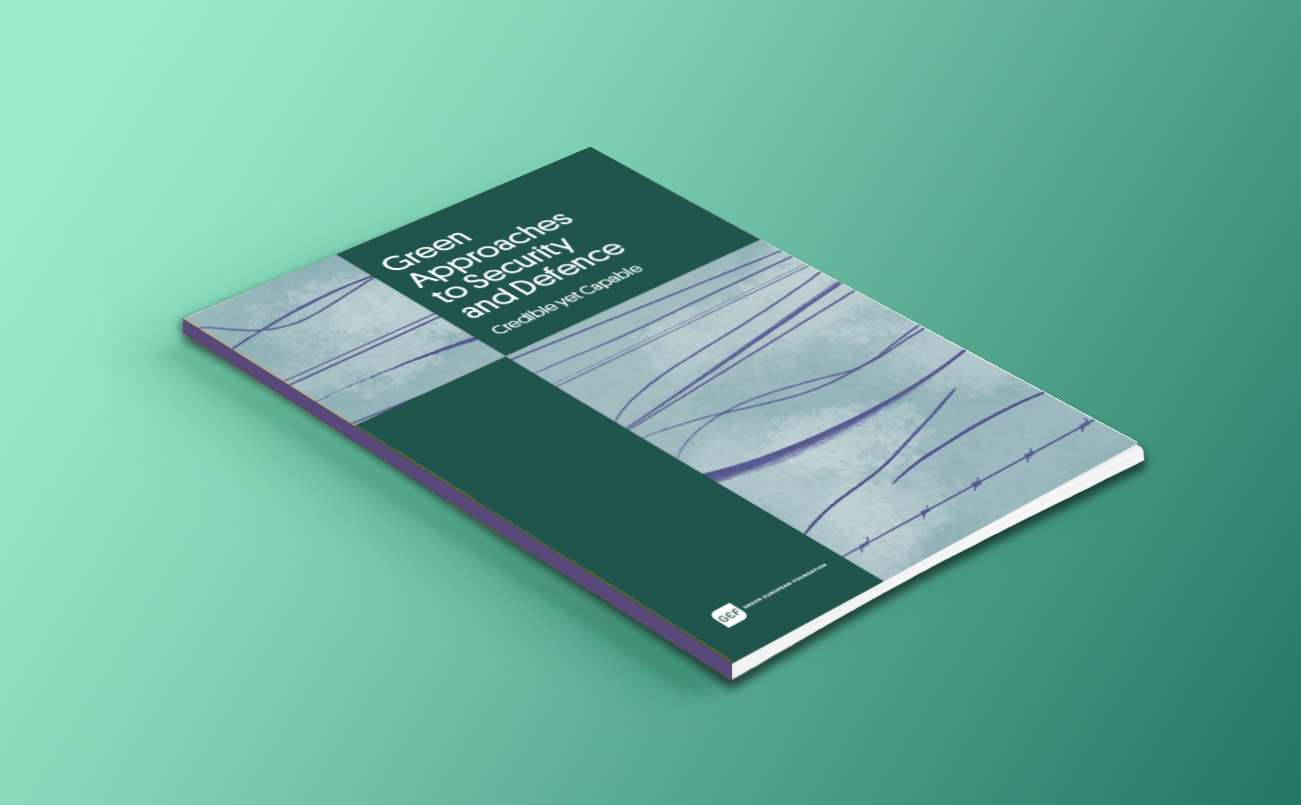
Green Approaches to Security and Defence

By Publications

In a shifting geopolitical landscape, Greens are grappling with the interplay between their traditional pacifist roots and the post-February 2022 security challenges. This report delves into their evolving stances on key defence issues, from EU military cooperation to disarmament, offering insights into the varied approaches adopted by Green parties from eight EU countries. Expert viewpoints featured throughout provide further feedback and inputs as to what a Green defence policy could (or should) look like. As Europe navigates turbulent waters, the report calls for renewed commitment to progressive and principled approaches to security and defence.

The report is structured into five chapters that address important EU military challenges. They portray a nuanced understanding of European security dynamics among Green parties, reflecting varying national contexts, strategic cultures, and historical perspectives. This report thus provides a clear mapping of green defence thinking across Europe, including points of convergence, gaps, and tensions. Complemented by the expert views, it gives a solid basis for further discussion within and beyond the Greens, to strengthen defence and security policy while maintaining a critical and progressive voice, even in uncertain times.

Chapter 1 delves into the complex institutional landscape of security and defence in Europe. It examines the debates surrounding the identity of the EU and looks at the respective roles of the EU and NATO as security providers.

Chapter 2 focuses on military expenditures and budget allocation. It discusses differing perspectives among Green parties on the use of GDP to set defence government budgets and on how these should be allocated.

Chapter 3 explores Green parties’ opinions on defence industrial policies broadly understood. It examines Green positions on grant programs put in place by the EU and shows diverging opinions on the allocation of public funds to industry.

Chapter 4 analyses positions on nuclear deterrence, disarmament, and arms control. Green parties generally continue to oppose the doctrine of nuclear deterrence, but the war in Ukraine has led some to revise their position on its effectiveness.

Chapter 5 delves into the intertwined concepts of civic militarism, civil protection and non-violence; their implications for military involvement in security as well as civilian participation to defence.


This report is a call to action for Green parties to embrace their role as catalysts for progressive security policies. By navigating the complexities of modern security with creativity, Greens can contribute to shaping a peace-oriented, sustainable, and common European security architecture.


About the authors

Agatha Verdebout is a researcher and deputy director at GRIP. Her main area of expertise is international peace and security law.

Anne Xuan Nguyen is a researcher at GRIP. Working more broadly on security and environmental issues, she specializes in conflict-related pollution and its remediation.


This report is also available in:

FrenchGreekGerman


This study was conducted by the Green European Foundation with the support of Etopia , Cogito , Cooperation and Development Network Eastern Europe, and Sustainable Development Forum Green Window . The study was commissioned by GEF to the Groupe de recherche et d’information sur la paix et la sécurité (GRIP). It is published with the financial support of the European Parliament to the Green European Foundation. The views expressed in this publication are solely those of the authors and do not necessarily reflect the views of the European Parliament or the Green European Foundation.

Green Perspectives on European Security

By

About the event

Despite the ideals and the efforts of several generations to stop wars, the reality is that armed conflicts are still ravaging societies worldwide. Besides the most brutal war affecting the youth in Europe, the Russian invasion of Ukraine, armed conflicts continue to rise in South Caucasus, Turkey, and the Balkans. While the Green movement is rooted in non-violence and pacifism, it’s also vaguely defined and understood within and outside the Green movement. These principles are also easier to defend in peaceful times. However, these conflicts and the aspects of life (such as energy, infrastructure, food, housing) once again remind us that we need to have a better definition of non-violence, pacifism, peace, security, and stability. During this Study Session, the green youth of Europe will consider these issues and discuss them with the experts directly working on and around the impacts of these conflicts on energy security, digital security, propaganda, media, freedom of speech, and civil society activities.


Project background

This event is a part of Green European Foundation’s Green Visions on European Security project, which aims to explore how the Greens could adopt the necessary tools to understand contemporary conflicts and develop mechanisms to anticipate, respond, and terminate them. By facilitating a frank discussion on key tension points and vacuums, across historical, geographical, and national sensitivities, and with political ecology values at its core, GEF and its partners contribute to the green movement’s reflections and anchoring of an updated vision on security and defence.


Programme and Speakers:

10:00 – 11:30      Session on Energy Security

  • Olena Rutkovska – project manager for Ukrainian NGO Khmelnitsky Energy Cluster
  • Morgan Henley – EU heating sector decarbonisation campaigner at Bankwatch

12:00 – 13:30     Session on Democracy & Civil Society in Ensuring Security

  • Balin Mikola – research fellow at the Democracy Institute of Central European University

15:00 – 16:30    Workshop on Media Security & Propaganda

  • Iryna Zemlyana – media expert at the Institute for Mass Information

17:00 – 18:30    Session on Digital Security

  • Anastasiya Zhyrmont – campaigner for Eastern Europe and Central Asia at Access Now

20:30 – 22:00  Forum on Sharing Experiences


Practicalities:

Date and Time: 27th October (10:00-22:00)

Location: European Youth Center Budapest

Language:  The main language of the event will be English.

Registration: Registration is now closed, but links will be provided for the streams of some sessions.


This event is organised by the Green European Foundation, with the support of Cooperation and Development Network Eastern Europe, as well as the Federation of Young European Greens and the European Youth Centre Budapest. It is organised with the financial support of the European parliament to the Green European Foundation.


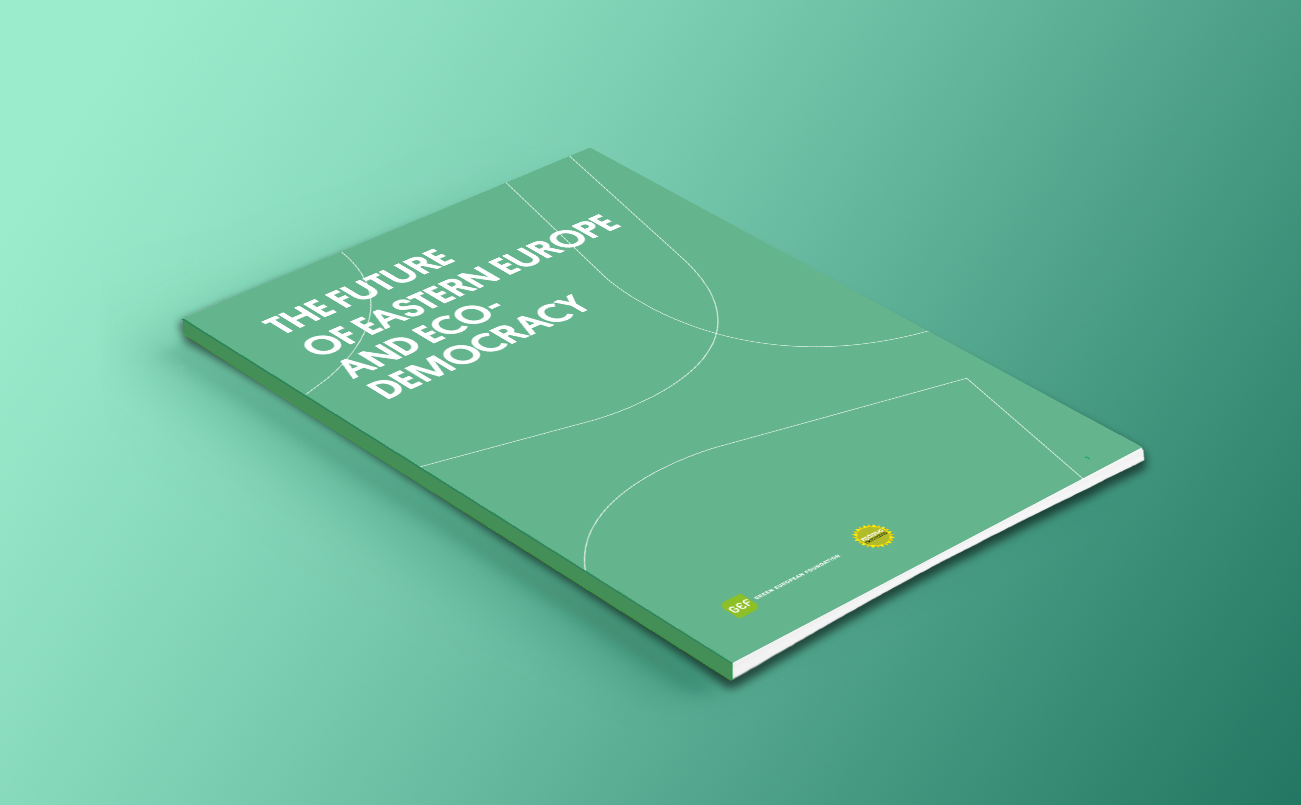
The Future of Eastern Europe and Eco-Democracy

By Uncategorized

Context & Objectives

Democracy in Eastern Europe is hanging by a thread. Authoritarianism is growing and nationalist narratives are reopening old conflicts. The pandemic has exposed governments’ inefficiencies to react to any sort of crisis and contributed to heighten polarisation in an already polarised society. On the other side, hope is on the horizon as progressive movements are gaining relevance locally, and mobilisation around environmental issues is rapidly growing. In this context, this publication aims to explore how to leverage these small steps and use them to strengthen the Green movement in the region. This publication is part of the Transnational Project The Future of Eastern Europe and Eco democracy.

“At least two to three generations of humans have now lived through some of the fastest changes with regards to the climate crisis and species extinction. It is up to us to reinvent politics, disrupt the status quo and create a solid foundation not only for us but also for the continued existence of biodiversity on our planet…”


Download

Also available in Greek.

Also available in Turkish.


This publication has been published by the Green European Foundation with the support of Cooperation Development Networks Eastern Europe (CDNEE), Green Thought Association (Turkey), Sustainable Development Forum Green Window (Croatia), Green Institute (Greece) and Ecopolis Foundation (Hungary).

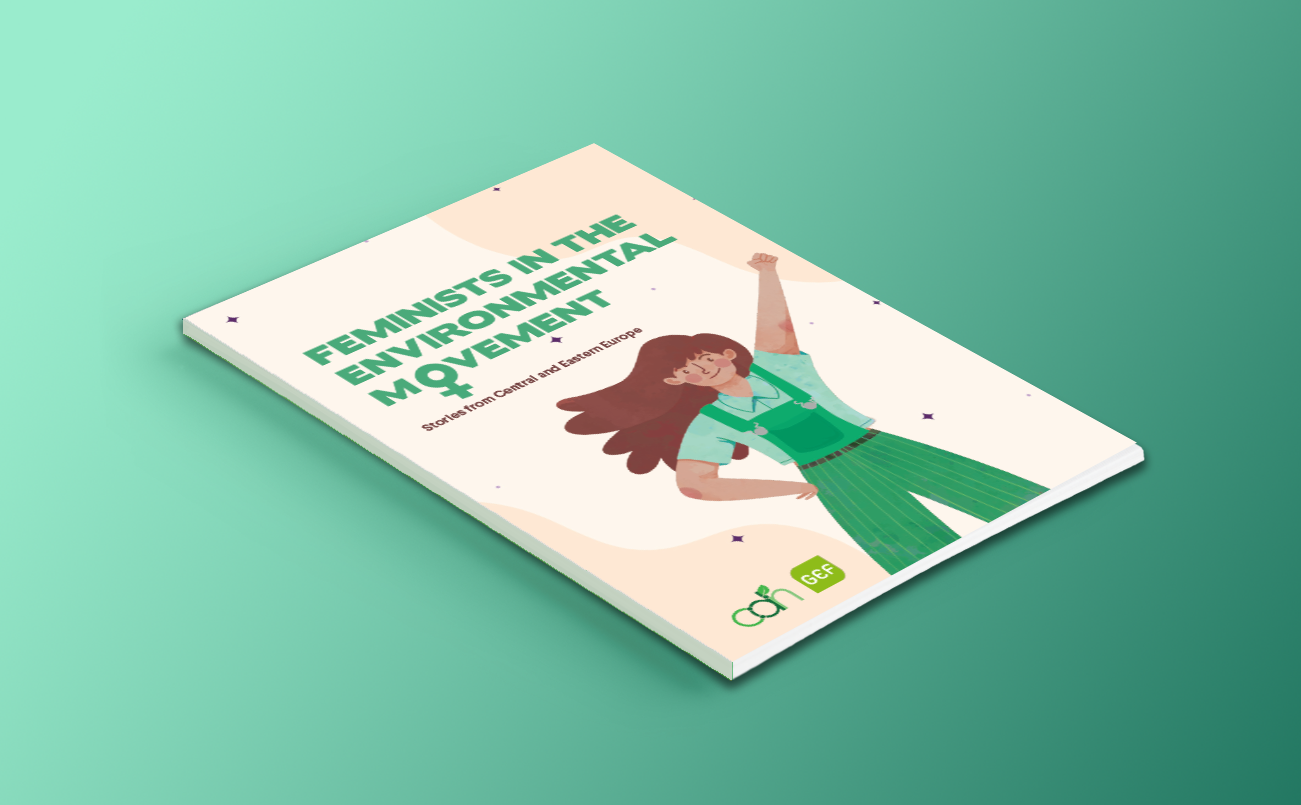
Feminists in the Environmental Movement

By Uncategorized

Context

Through an ecofeminist lense, this publication explores the connection between feminism, youth, and the environmental struggles in Central and Eastern Europe. As part of the Feminists in the Environmental Movement project, we have explored these concepts within urban areas, but the struggle in rural and de-urbanised areas remained under-examined. While green successes and support often concentrate in urban centres, engaging and mobilising rural communities is crucial to achieve a socially just green transition.


Objectives

This publication includes an extensive research on the lives of young female activists in rural and de-urbanised areas, the stories of their struggles, victories and hopes for the future. It aims to raise voices of people who are usually unheard in the European landscape. While reading the different articles, you will explore the lives of women in rural areas, their perspectives and tools to cope with the local issues, and the multiple forms of oppression they face.

Let’s stand in solidarity and truly “leave no one behind” in our path towards a just society!

Download

Turkish (Please note this translation is an abridged version of the original publication).


This publication has been produced by the Green European Foundation with the support of Cooperation and Development Network Eastern Eu-rope (CDN) and with the financial support of the European Parliament to the Green European Foundation.

Climate Change Impacts on Rural Women: Local Stories

By

About the Event

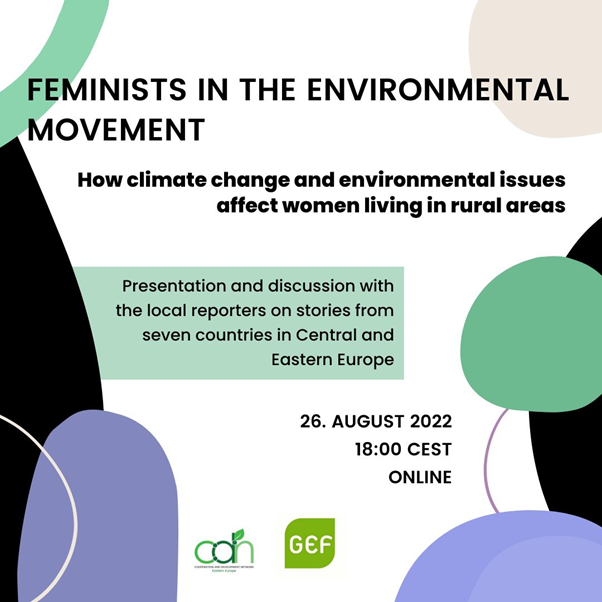
Our planet is in danger, and there are people fighting for their homes daily whose voices are not being heard. Conversations and decision-making around the climate crisis too often highlight the voices and experiences of a limited few, depriving us of crucial perspectives in national and European conversations. Moreover, we know that the effects of the climate crisis have a disproportionate impact on specific demographics, such as women and those living in rural communities.  

This year, local reporters in seven countries of Central and Eastern Europe have visited the areas harmed by climate change and harsh industries, and listened to the inspiring stories of young women living in rural areas.  

We will hear their perspectives and discuss the intersection of feminist and environmental movements through different lenses they discovered in these local stories. 

Context

This webinar is part of Feminists in the Environmental Movement, a GEF transnational project that seeks to stimulate conversations around (the intersections of) gender and environmental justice across Europe. The project is implemented with the support of Visio (Finland), Green Economics Institute (UK), Oikos (Belgium), Strefa Zieleni (Poland), Green Thought Association (Turkey), and CDNEE.  

Practicalities

Date and Time: Friday, August 26th (18:00-19:00 CEST) 

Location: Online

Registration: Please register in advance here.

Audience: This webinar is open to all interested participants. It will consist of presentations from the local reporters followed by audience Q&A and discussion. The webinar will take place in English. 

Related Reading

For more on this topic, check out these articles from our flagship publication, the Green European Journal: 

Fighting the Patriarchy to Save the Planet 

Gender in Climate Governance: Telling Numbers but Who is Listening? 

Gender Justice: Beyond Binaries and Buzzwords 

Down but Not Out: Central Europe’s Independent Media 

Save the Facts: Journalism as a Weapon against Disinformation 

Communities Against Climate Change: Exploring Resilience in Rural Scotland 


This event is organised by the Green European Foundation with the support of Cooperation and Development Network Eastern Europe (CDNEE) and with the financial support of the European Parliament to the Green European Foundation. The European Parliament is not responsible for the content of this event.

We are the future, but we are here NOW (Riga)

By

About the Event

Around 30 young people from Eastern Europe (Latvia, Poland, Balkans, South Caucasus, Ukraine and Belarus) will meet up to discuss the actions that can be taken in the ever-shrinking space for civil society in the Eastern part of our continent. We will look at the EU integration processes, the future of activism and politics and concentrate on 4 different skill-oriented tracks that are becoming more and more useful for the youth in Eastern Europe:

1. Creative Campaigning

2. Debates and public speaking

3. Movement organising

4. Non-Formal Education

The programme will be based on the principles of non-formal education and intercultural learning. We strive for an active and inclusive environment for direct communication and sharing of knowledge. The sessions will be balanced between theoretical inputs, work in small groups, workshops, discussions, training, and other interactive methods of non-formal learning.

Programme:

Arrival day

Day 1: Introductions, Team building, takaways from the 1st event, home evaluation groups

Day 2: Introductions to: Non formal education, creative campaigning, public speaking, non verbal communication, local actions planning, intercultural evening

Day 3: Introducions to: live and online events, urban performances, debates, non formal education methodologies, public speaking, free evening 

Day 4: Non formal education in local actions, working wiht trainers, public speaking, teambuilding, presentation, movie night

Day 5: Morning cicle, technicalities of reporting, local actions planning and presentations, evaluation, final party

Departure day

Speakers & trainers

  • Nika Tarasevich (she, Belarus/Georgia) teacher of art, expert on artivism and long time practitioner.
  • Luka Gudek (he, Croatia) CDN alumnus, master degree holder of Political science.
  • Hanna Filistovich (she, Belarus/Lithuania) seasoned activist and organiser, experienced with the movement organising in Belarus.
  • Maja Klimentic (she, Bosnia and Herzegovina/Czech Republic) CDN alumnus, she was a member of 10+ preparatory teams, Non-formal eduction expert and gender activist.

Practicalities

When: 8-12th May, 09:00-18:00 PM CEST

Time Zone: Eastern European Summer Time (EEST) / Coordinated Universal
Time (UTC) + 3

Location: Rija VEF Hotel, Brīvības 199c, Riga, Latvija, LV-1039 

Language: The main language of this activity will be English. But not being comfortable with interacting in English should not prevent you from applying. GEF & CDN strives to create an inclusive atmosphere at the events, where participants are encouraged to express themselves and ask for clarifications or translations from peers that speak the same language.


Additional Reading

Bulgaria’s Greens: From Street Protests to Government

How Green Independents Broke Through in North Macedonia

Extraction and Energy Transition in Serbia

Can Protests Steer Serbia Back Towards Democracy?

The War in Ukraine is Part of the Soviet Empire’s Unravelling

The Unfinished Business of Building Bosnia-Herzegovina

The Romanian Protest Wave: A Path to a New Political Era?
Belarus’s Struggle for Democracy


This event is organised by the Green European Foundation with the support of CDNEE and with the financial support of the European Parliament to the Green European Foundation and supported by the European Youth Foundation of Council of Europe. The European Parliament is not responsible for the content of this event.


The Future of Eastern Europe Conference (Riga)

By

About the event

We are pleased to announce the Conference on the Future of Eastern Europe organized on 6-7 June in Riga, Latvia. The conference will be organised by GEF with the support of Cooperation Development Networks Eastern Europe (CDNEE), Green Thought Association (Turkey), Sustainable Development Forum Green Window (Croatia), Green Institute (Greece) and Ecopolis Foundation (Hungary). The Conference aims to unite the voices of young green activists from Eastern Europe to talk about the future of the region, and the challenges and opportunities for an ecological and progressive turnaround.

Context

This is the first event as part of our 2022 Transnational Project The Future of Eastern Europe and Ecodemocracy. Democracy in Eastern Europe is hanging by a thread. Authoritarianism is growing and nationalist narratives are reopening old conflicts. The Pandemic has exposed governments’ inefficiencies to react to any sort of crisis and contributed to heighten polarisation in an already polarised society. On the other side, hope is on the horizon as progressive movements are taking over power at the local level, as well as at the rapidly growing mobilisation of public around environmental issues. How could we leverage these small steps and use them to strengthen the Green movement in the region?

Programme

DAY 1 – (6th June) Monday

10:00-10:15 Opening of the conference (Live Stream)

10:15-12:00 Eastern Europe as a region – a story of turbulent transformation (Live Stream)
Description:  For more than thirty years Eastern Europe is a region of independent nation-states. During this period there was the promise that after a long struggle democracy and well-being would be achieved. Looking at it today, it is clear that most Eastern European countries are far from democracy and the well-being of citizens.
In this session, we will try to analyse and reflect on the last decades of Eastern Europe, mainly focusing to find the roots of current problems and possible solutions by looking back at the recent history – what shaped the region, how the democratisation and transition took place.

Speakers:
Sonja Schiffers, Director of Heinrich-Boell Foundation, South Caucasus Office
Anastasiya Dorofeeva, Belarusian Green party, Belarusian anti-nuclear campaign, hub “Green foundations”

Moderator: Luka Gudek, Green European Foundation

12:00-13:30 Influence of Global Powers: Eastern Europe at the crossroads between democracy and autocracy (Live Stream)
Description: Discussing political dynamics and transformation of Eastern Europe cannot take place without paying attention to global powers and their involvement in the region. 
With this session we aim to map global powers: EU – China, Russia and US – and their interests; What role do they play in supporting democracy and progressive agenda or the opposite – encouraging and financing anti-democratic, right-wing and authoritarian forces. 

Speakers: 
Anton Cherepenko, the Free Hong Kong Center in Kyiv
Zarina Burkadze,  Associate Proffessor of Political Science, Ilia State University 
Raluca Besliu, Fundraising Manager, Green European Foundation and contributor of the Green European Journal focusing on Eastern European affairs
Teo Comet, TILT Coordinator at European Greens, Board Member at Green European Foundation 

Moderator: Giorgi Ptskialadze, Network Coordinator of CDN

15:30-17:00 War in Ukraine: Context, Present and the Effect on the region (Live Stream) 
DescriptionRussian aggression against Ukraine is continuing. Every day we are witnessing atrocities, war crimes and violations of international law from the Russian side, at the same time Ukraine is bravely defending its people, sovereignty, democracy and even Europe as a whole.
In this session, we will take a look at a few different aspects of the conflict: the context of the war, the historical roots of Russian aggression, the current events, as well as what greens should do to help Ukraine, and how the ongoing war affects countries in the region.

Facilitator: Katya Andrieieva, Executive Committee Member of CDN

17:30-19:00 Energy – a veto point and/or a chance for democracy? (Live Stream)
DescriptionThe energy we choose reflects the systems we support. In this session, we will discuss energy as the core factor for sustaining authoritarian regimes and the way the energy sector influences political dynamics. As well as we are going to focus on the possibility of democratisation through energy – decentralisation, renewables and the prospect of energy cooperatives in Eastern Europe

Speakers:

Manana Kochladze, Bankwatch Strategic Area Leader – Democratization and Human Rights

Yevheniia ZasiadkoHead of climate and transport department at Ecoaction – Centre for Environmental Initiatives

Workshop: Sandy-Kyriaki Fameliari, ElectaEnergy Cooperative

Moderator: Lusine Kosakyn, Executive Committee Member of CDN

DAY 2 – (7th June) Tuesday

10:00-11:30 Eco-Democracy as a new paradigm for Eastern Europe
DescriptionThe Workshop aims to add a philosophical, ethical and institutional dimension to the conversations on the Future of Eastern Europe happening at the Conference. It hopes to bring together the different voices and ideas from the wealth of participants and facilitate a meaningful discussion on how to put Ecology at the Centre of Democracy.

How can we make democracy more ecological? What kind of changes do we need to apply to our thinking about participation, institutions and decision-making to put ecology and the environment at the forefront of our political systems?

These are some of the questions that we’ll be asking and trying to answer at our Ecodemocracy Workshop!                              

Facilitators: Anna Maniadi and Dimitris Papageorgiou, Green Institute Greece            

12:00-13:30  Conflicts in Eastern Europe: the theory and beyond
Description
The session aims to provide participants with the basis of conflict theory and conflict resolution and analyze the conflicts in EE through case studies.  The session encompasses theoretical and practical parts that will be conducted through non-formal education methods. The objectives of the session are 1)to understand the concept of conflict (origin, causes, consequences), 2) to discuss the mechanisms of handling conflict, particularly, conflict resolution, and 3) to explore the conflicts that happened in EE in recent years, their consequences and current state.

15:30-17:00 Open Mic

17:30-19:30 Movements into politics: Green Wave in Eastern Europe (Live Stream)

Description: For the last decades, if you checked the electoral map of Europe intending to see how Green parties have been performing, you would see a clear pattern: Greens in the west and north do well – they get elected in national and regional parliaments, city councils, win mayorships and even participate in governing coalitions; while in the east – you would see a grey colour representing either absence of Green parties from the political landscape or lack of support and therefore relevance. However, in recent years the pattern is dissolving and becoming a blur, the Green wave spreading to the East.

During the panel, we will discuss the ongoing Green wave with newly established Green political parties across Eastern Europe with the aim to analyse current success, find the patterns and similarities, understand the importance of grassroots movements and civil society, map challenges, envision the future and their influence on the political landscape.
Speakers:
Justine Pantelejeva, Progresīvie, Latvia
Predrag Momčilović, Ne davimo Beograd, Serbia
Sopo Shubitidze, Mtsvaneebi, Georgia
Mozemo Croatia TBC
Stefan Vukmanovic, Ura Montenegro
Vesna TBC
Koray Doğan Urbarlı, Green Party Turkey

Practicalities

Date: 6-7th June

Time Zone: Eastern European Summer Time (EEST) / Coordinated Universal
Time (UTC) + 3

Location: Rija VEF Hotel, Brīvības 199c, Riga, Latvija, LV-1039 

Format: Hybrid format (some sessions will be Livestreamed)

Language: The main language of this activity will be English. But not being comfortable with interacting in English should not prevent you from applying. GEF & CDN strives to create an inclusive atmosphere at the events, where participants are encouraged to express themselves and ask for clarifications or translations from peers that speak the same language.

Costs: Anyone is welcome to take part in the conference with their own expenses. There is no participation fee.

In addition, CDN can cover the participation of a limited number of applications of young greens and activists from Eastern Europe (with a maximum age of 30). Meaning the cost of travel, and lodging (accommodation in multi-bed rooms, vegetarian/vegan food and refreshments).

In any case, take into consideration choosing the most economic and environmentally friendly means of travel (lowest price + travel time + CO2 emissions) and in case the trip would take less than 15 hours only travelling by land (train+bus) is reimbursed (IRPs §9.1).

Deadline: 20th of May (if applying for CDN to cover your participation.)

You will be informed by e-mail approximately 1 week after the deadline. Please add office@cdnee.org to your contacts, so that you do not receive our reply in the spam folder.

If you have any questions, do not hesitate to write us at office@cdnee.org

Registration: Registrations are now open! 

Additional Reading

Bulgaria’s Greens: From Street Protests to Government

How Green Independents Broke Through in North Macedonia

Extraction and Energy Transition in Serbia

Can Protests Steer Serbia Back Towards Democracy?

The War in Ukraine is Part of the Soviet Empire’s Unravelling

The Unfinished Business of Building Bosnia-Herzegovina

The Romanian Protest Wave: A Path to a New Political Era?
Belarus’s Struggle for Democracy


This event is organised by the Green European Foundation with the support of CDNEE and with the financial support of the European Parliament to the Green European Foundation. The European Parliament is not responsible for the content of this event

Cities for all – How?

By

Objectives:

  • Exploring new tools and strategies for lobbying the demands of women and young LGBT+ individuals to different stakeholders.
  • Equipping participants with appropriate skills to work with local communities and organising outreach activities at a local level. Encourage young people’s active mobilisation around the topic of Cities for all.

The programme will be based on the principles of non-formal education and intercultural learning. We strive for an active and inclusive environment for direct communication and sharing of knowledge. The sessions will be balanced between theoretical inputs, work in small groups, workshops, discussions, training, and other interactive methods of non-formal learning.

Context:

The ‘‘Cities for all – How?‘‘ Summer School training will gather young activists  who are interested in looking for different urban approaches and questioning the existing urban planning status quo that neglects inclusivity, human rights and needs of the city dwellers. Participants will come from a variety of countries including Albania, Armenia, Azerbaijan, Belarus, Bosnia and Herzegovina, Bulgaria, Croatia, Cyprus, Czech Republic, Estonia, Georgia, Greece, Kosovo*, Latvia, Lithuania, Hungary, Moldova, Montenegro, North Macedonia, Poland, Romania, Russia, Slovenia, Slovakia, Serbia, Turkey and Ukraine.

*All references to Kosovo, whether to the territory, institutions, or population, in this text shall be understood in full compliance with the United Nations Security Council Resolutions 1244 and without prejudice to the status of Kosovo.


Programme:

Arrival day

Day 1: Introductions, Inclusive cities Online Course recap, Gender in the city

Day 2: Greening the city, Politics in the city, Manifesto discussion, Game night

Day 3: Methods of Urban activism, Actvist action – practical exercise, Importance of the local context, Lobbying and advocacy, Movie night

Day 4: Lobbying and advocacy practice, Free afternoon

Day 5: Taget audience, Emotional communication, Tailoring the message, Communication channels and media, Manifesto discussion, Organisational night

Day 6: Project cycle and technicalities, Communication within the project, LA development, Manifesto discussion, Human library with local activists

Day 7: LA development, LA presentation, Manifesto voting, Evaluation hour, Party

Departure day

Practicalities:

Date: 26-31 July

Place: Novi Sad, Serbia

Language: This activity will take place in English. We strives to create an inclusive atmosphere at the events, where participants are encouraged to express themselves and ask for clarifications or translations of terms from peers that speak the same language.

Costs: The cost of travel (80% or 90%), PCR tests, visa, lodging (accommodation in multi-bed rooms, vegan food, and refreshments), and working materials during the event will be covered by the organisers. In exchange, we ask for a participation fee of 20 EUR from participants coming from non-EU countries and 50 EUR from participants coming from EU countries.

CDN will reimburse 90% of the travel costs for the participants from the non-EU countries and 80% of travel costs for the participants coming from the EU countries, within reasonable limits and within Europe, with the condition of combining the most economic and environmentally friendly means of travel (lowest price + travel time + CO2 emissions).

Registrations are now closed.

If you have any questions or difficulties, please reach out to us via project.coordinator@cdnee.org

Please note that we continue to closely monitor the local COVID-19 situation. Any activities will take place in full compliance with the required hygiene measures, and participants will be informed accordingly.


This summer school is organised by the Green European Foundation with the support of Cooperation and Development Network Eastern Europe, with the financial support of the European Parliament to the Green European Foundation and supported by the European Youth Foundation of Council of Europe.

Call for participants: Training ‘Cities for all-How?’

By

About the Event 

The training will take place between the 25th and 31st of July in Serbia. Participants will arrive on the 24th of July and depart on the 1st of August. 

Objectives:

· To develop the participants’ skills to design creative and efficient campaigns that reach the wider public;

· Exploring new tools and strategies for lobbying the demands of women and young LGBT+ individuals to different stakeholders;

· Equipping participants with appropriate skills to work with local communities and organising outreach activities at a local level. Encourage young people’s active mobilisation around the topic of Cities for all.

The programme will be based on the principles of non-formal education and intercultural learning. We strive for an active and inclusive environment for direct communication and sharing of knowledge. The sessions will be balanced between theoretical inputs, work in small groups, workshops, discussions, training, and other interactive methods of non-formal learning.

Who should apply?

We are looking for participants up to 30 y/o from Albania, Armenia, Azerbaijan, Belarus, Bosnia, and Herzegovina, Bulgaria, Croatia, Cyprus, Czech Republic, Estonia, Georgia, Greece, Kosovo*, Latvia, Lithuania, Hungary, Moldova, Montenegro, North Macedonia, Poland, Romania, Russia, Slovenia, Slovakia, Serbia, Turkey and Ukraine interested in looking for different urban approaches and questioning the existing urban planning status quo that neglects inclusivity, human rights, and needs of the city dwellers, would like to contribute to the discussions with their local perspective and are willing to reproduce the gained knowledge on the local level. 

Practicalities: 

Language: This activity will take place in English. However, not being comfortable interacting in English should not prevent you from applying. CDN strives to create an inclusive atmosphere at the events, where participants are encouraged to express themselves and ask for clarifications or translations of terms from peers that speak the same language.

Costs: The cost of travel (80% or 90%), PCR tests, visa, lodging (accommodation in multi-bed rooms, vegan food, and refreshments), and working materials during the event will be covered by the organisers. In exchange, we ask for a participation fee of 20 EUR from participants coming from non-EU countries and 50 EUR from participants coming from EU countries. Applicants for whom paying this fee is an obstacle for participation, should still apply and mention this in their application (no selection criteria). CDN will try to find a solution together with the applicant after the selection is finalised.

CDN will reimburse 90% of the travel costs for the participants from the non-EU countries and 80% of travel costs for the participants coming from the EU countries, within reasonable limits and within Europe, with the condition of combining the most economic and environmentally friendly means of travel (lowest price + travel time + CO2 emissions).

DEADLINE for submitting online applications: 10th of June 2021 at 23:59 CEST

You will be informed about the results of the selection within two weeks after the deadline. Please add project.coordinator@cdnee.org to your contacts, so that you do not receive our reply in spam folder.

*All references to Kosovo, whether to the territory, institutions, or population, in this text shall be understood in full compliance with the United Nations Security Council Resolutions 1244 and without prejudice to the status of Kosovo.


Apply Here


This project is organised by the Green European Foundation with the support of Cooperation and Development Network Eastern Europe, with the financial support of the European Parliament to the Green European Foundation and supported by the European Youth Foundation of Council of Europe.

Call for Prep-Team: Training ‘’Cities for All-How?’

By

Objectives of the “Cities for all – How?” are:

  1. To develop the participants’ skills of creative and efficient campaigning for spreading the message to the wider public;
  2. Create  a space to explore the new tools and strategies, adapted to the struggles of young LGBT+ individuals and women in the cities, for  lobbying the demands to the different stakeholders;
  3. Equipping  the participants with the skills of working with the local communities  and organising outreach activities on the local level, that encourage  young people’s active mobilisation around the topic of Cities for all.

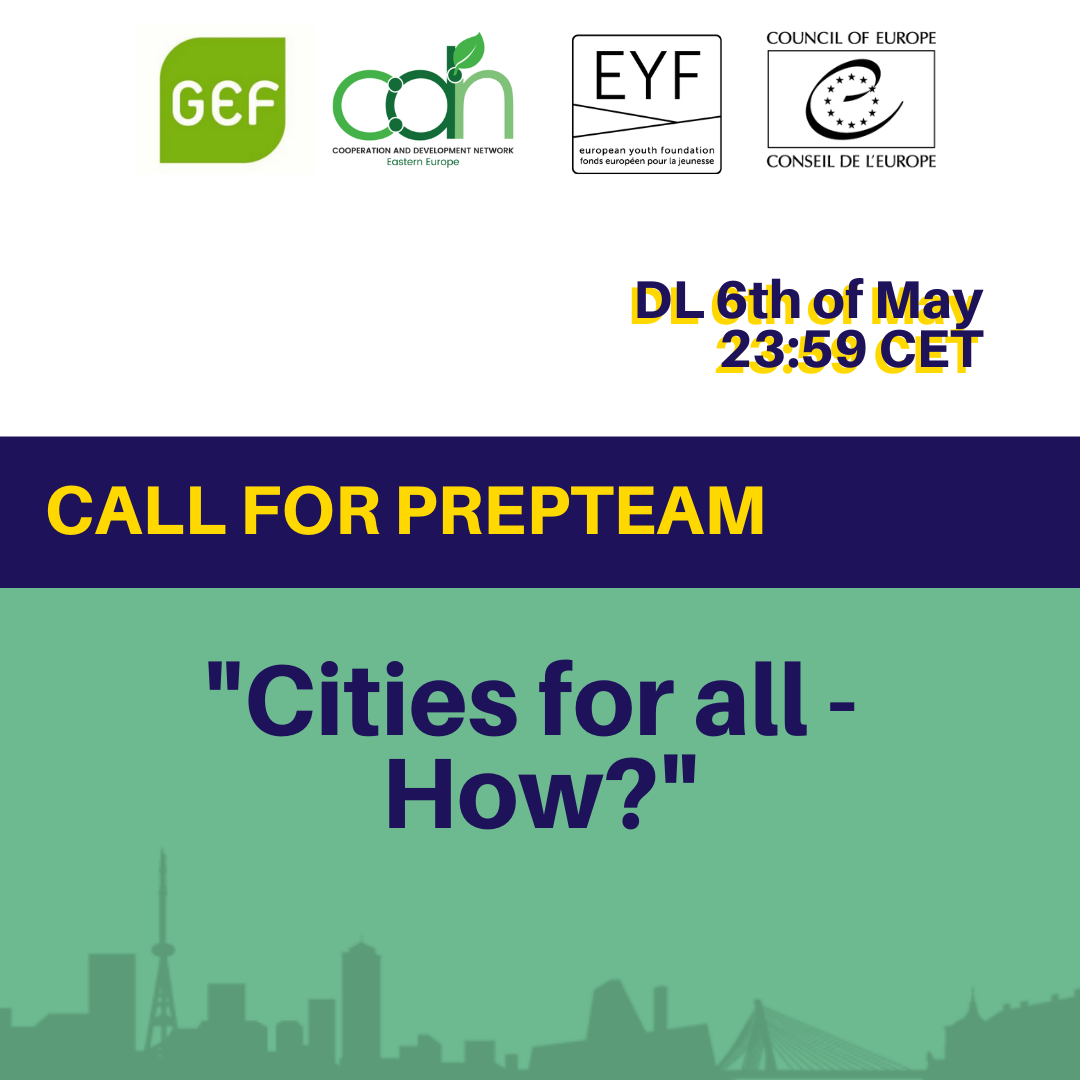
If you are young (till 35) person from Albania, Armenia, Azerbaijan, Belarus, Bosnia and Herzegovina, Bulgaria, Croatia, Cyprus, Czech Republic, Estonia, Georgia, Greece, Kosovo*, Latvia, Lithuania, Hungary, Moldova, Montenegro, North Macedonia, Poland, Romania, Russia, Slovenia, Slovakia, Serbia, Turkey or Ukraine interested in looking for different urban approaches and questioning the existing urban planning status quo that neglects inclusivity, human rights and needs of the city dwellers and would like to work on designing the program and the follow-up of the event, you are more then encouraged to apply.

The preparatory team is composed of CDN’s Project Coordinator, EC member and several other members. PT members should speak English, be available during the preparation period, be responsible about fulfilling their tasks, have good organisational skills, be good team players and committed to the aims of the project and CDN’s values and be familiar with non-formal education methods.

Main responsibilities of the prep-team:

  • Active participation in the regular online meetings prior to the event (May-July/ 3-4 h a week);
  • Full participation in the live PT kick off meeting on 5-6th of June (4th arrival day and 7th departure day);
  • Dissemination of the call and selection of participants, preparation of participants for the activity and providing them with all the necessary information regarding the program;
  • Preparation and facilitation of the program of the activity; designing and preparing sessions based on non-formal education methodology, invitation and communication with speakers, experts, trainers and partners in accordance with the project aims (4-6 h a week);
  • Helping with the promotion of the event and ensuring media visibility;
  • Taking care of the general well-being of the participants;
  • Full participation during the entire event and prep team meeting before and after (Arrival 23rd of July, departure 1st of August );
  • Supporting in finalising the outputs;
  • Helping with the reporting of the event.


Being a prep-team member would offer you:

  • Working in a lively international feminist environment;
  • Experience in managing youth projects – preparation, implementation and reporting;
  • Getting familiar with Green values and GEFs & CDNs work;
  • Getting to know local Urbanists and Gender activists and their work;
  • New knowledge of lobbying theory;
  • A possibility to develop your leadership and group work skills;
  • A lot of work and a lot of fun!


Practicalities:

Accommodation, food, working space, travel and visa costs for preparatory team will be fully covered. The travel means will be negotiated with CDN secretariat with considering the economic and environmental aspects.

DEADLINE for submitting online applications is 6th of May, 23:59 CET.

You will be informed by e-mail approximately in 5 days after the deadline. Please add project.coordinator@cdnee.org to your contacts, so that you do not receive our reply in spam folder.

To apply click on the link here <<<


This project is organised by the Green European Foundation with the support of Cooperation and Development Network Eastern Europe, with the financial support of the European Parliament to the Green European Foundation and supported by the European Youth Foundation of Council of Europe.

Call for participants: Online Course ‘Cities for all: Why?’

By

About this course

The upcoming online course: “Cities for all: Inclusive urban planning and decision making in Eastern European citieswill take place on the Green European Foundation‘s  online learning platform Green Academy during May 2021. Aside from interactive educational content on the platform, learners will have the opportunity to acquire new knowledge, have fun and meet new people on weekly meetings, webinars with experts and workshops.

The course attendants will be encouraged to continue their learning in the scope of the project during the second phase which will take place in Croatia in July 2021 (subject to  COVID19 restrictions). The involvement in both events is a precondition for applying for Local Actions sub-grants that will take place in September 2021.

The Online Course “Cities for all: why?”  will aim to understand how patriarchy shapes our cities, urban infrastructure and lives of urban youth and has the following objectives:

  • Provide the participants with the theoretical knowledge on how cities are affecting the lives of young people of different genders and sexualities.
  • Create an inter-cultural safe space for young women and LGBT+ people to share their struggles and stimulate the discussion on the values, principles and the directions about the future of inclusive cities.
  • Empower the participants with the tools and analytical skills for identifying local challenges of their communities in regards of gender inclusive city planning.

The course will be based on the principles of non-formal education and intercultural learning. We strive for an active, safe and inclusive environment for direct communication and sharing of knowledge. The online course will be balanced between theoretical inputs, work in groups, discussions, and other interactive methods of non-formal learning.


Who should apply?

We are looking for young people:

  • Maximum 30 years old;
  • From Albania, Armenia, Azerbaijan, Belarus, Bosnia and Herzegovina, Bulgaria, Croatia, Cyprus, Czech Republic, Estonia, Georgia, Greece, Kosovo*, Latvia, Lithuania, Hungary, Moldova, Montenegro, North Macedonia, Poland, Romania, Russia, Slovenia, Slovakia, Serbia, Turkey and Ukraine;
  • Interested in observing cities trough gender inclusion lens and a deep intersectional approach;
  • Who would like to contribute to the discussions with their local perspective;
  • Are willing to share the gained knowledge on the local level.

Participants who have experience in urbanism, activism, gender and politics or have high motivation to learn about the topic are highly encouraged to apply. People with less experience on the topics are welcome to apply and get to know more about these topics.

Practicalities:


Language: The main language of the course will be English.
Costs: The course is free for all participants.
Technical requirements: Internet connection and PC or/and phone.

DEADLINE for submitting online applications: 12.04.2021 at 23:59 CEST


You will be informed about the results of the selection within two weeks after the deadline. Please add project.coordinator@cdnee.org to your contacts, so that you do not receive our reply in spam folder.


To apply click on the link here <<<


——————————————————————————————————————————————————————————————–

This project is organised by the Green European Foundation with the support of Cooperation and Development Network Eastern Europe, with the financial support of the European Parliament to the Green European Foundation and supported by the European Youth Foundation of Council of Europe.

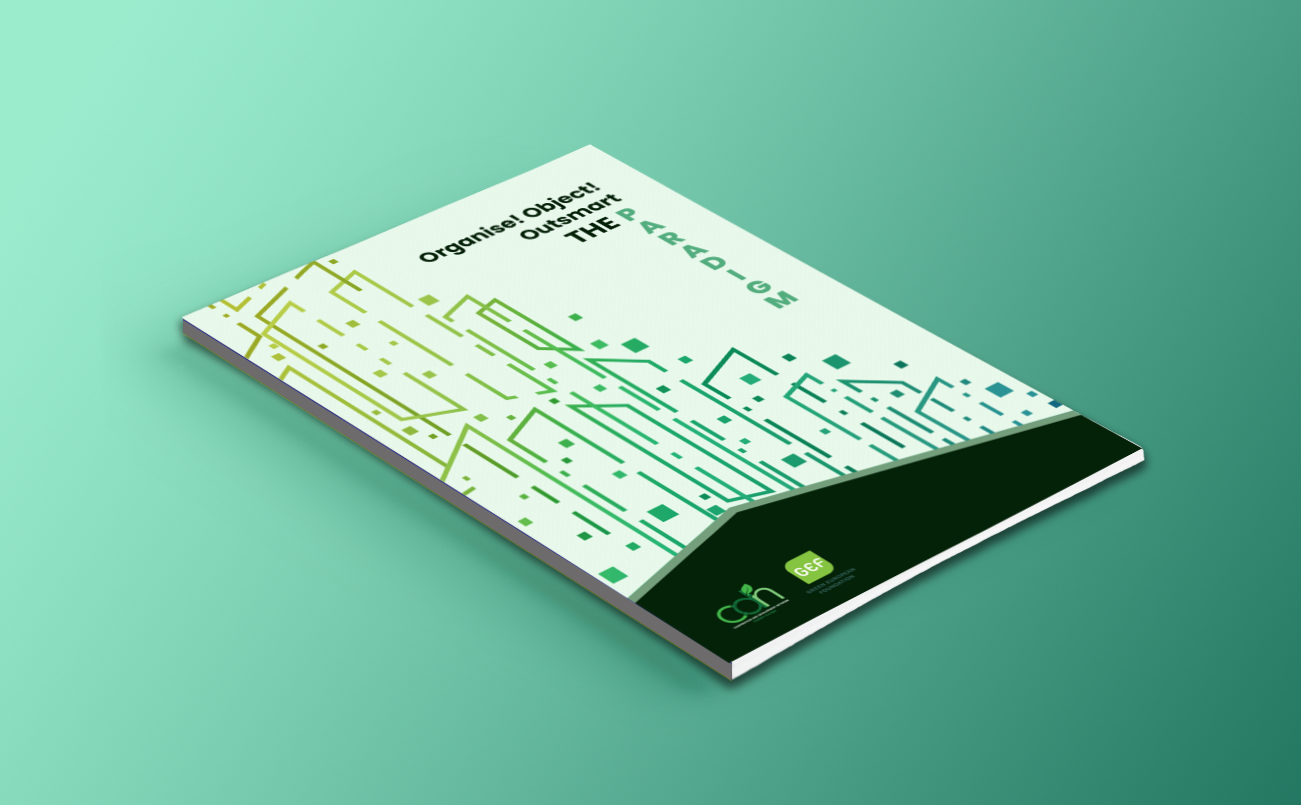
Organise! Object! Outsmart the Paradigm!

By Uncategorized

Read this publication and use it to learn about smart cities with an added Eastern European perspective, have some fun along the way and feel empowered enough to promote the critical solutions for smart city implementation in your city!

The Charter for the Smart City was produced as part of the project of the same name, and puts the values of democracy, connectedness, human dignity, privacy,  sustainability, and equality at the heart of smart cities. Local politicians and active citizens who share these values may use the principles in the Charter as starting points for democratic debate and informed moral judgment on technological innovations in their communities.


Also available in Albanian, Croatian, Russian and Turkish.


This publication was produced within the project “Charter for the Smart City II” organised by the Green European Foundation (GEF) with the support of Cooperation and Development Network Eastern Europe (CDN) and Wetenschapellijk Bureau Groen Links. It has been realised with the financial support of the European Parliament.

Webinar Series: For the Young, the Queer, the Feminists

By

About the Event:

The Green European Foundation, with the support of CDNEE, has brought together young green activists from across Europe to explore artivism and its use for gender activism, working together towards anti-discrimination and equal opportunities for men and women in the Eastern European context.

Selected participants are completing an extensive online training programme that tackles feminist and queer theory and its links to Green ideology and politics, as well as skill development and creation of impactful artistic outputs. This webinar series forms part of that training, and is also open to viewers from the general public.

The ultimate objective of the project is to support young green activists and politicians to gain new knowledge, increase their own visibility and be empowered to deliver their messages.

Programme:

November 4th (17:00) – Females in Politics

  • With Dr. Sylwia Spurek (lawyer and MEP, Greens/EFA) and Justine Pantelejeva (urban planner and Riga city councillor, Progresivie)

November 9th (18:00) – EU and EC Gender Policies

  • With Vesna Jusup (European Green Party)

November 11th (18:00) – CoE gender policies

  • With Mari Kurtanidze (Advisory Council on Youth, Council of Europe)

November 18th (18:00) – Public speaking for Female and Queer people

  •  With Zuzana Pavelkova (Mladi Zeleni, former FYEG co-spokesperson)

Practicalities

All webinars will be in English, and will be livestreamed on Facebook and YouTube.


Inclusion and Citizens’ Rights

By

About the Event:

When building “digital cities,” how do we ensure inclusivity of new spaces and opportunities?

This workshop focuses on the different aspects (social, environmental, economic, democratic) of this topic with a specific lens on Central and Eastern Europe. We hope to empower participants to influence public debate and local decision-making on technological innovations and their implementation in the cities of the region.

Learnings from this process will be used to create a manifesto on principles of new technologies’ implementation in Eastern European cities.

Context:

This project is a part of the GEF transnational project “A Charter for the Smart City II”.

All over Europe, so-called ‘smart cities’ are the testing grounds for new technologies that affect how we live, how we organise our societies and what our ethical foundation is. Given the opportunities that new technologies offer for reducing the ecological footprint of cities and creating new urban commons, as well as the potential threats they pose to civil liberties and social justice, GEF aims to stimulate the debate on smart cities. To this end, GEF has developed, with the support of its partners, a Charter for the Smart City, consisting of guiding principles that will make it easier for green European politicians and activists to assess and steer technological innovations in their cities. Throughout 2019, ideas were solicited digitally and through events across Europe, including best practices from NGOs, experts and local green politicians, as well as from GEF partner foundations and other Green European actors.

Programme:

Speakers and programme to be announced shortly.

Practicalities:

This event will be taking place online. Please register in advance via this link.

You can listen to our podcast now at https://soundcloud.com/user-881417568/smart-cities

Language: The main language of this event will be English.

This project is organised by the Green European Foundation with the support of CDNEE and Wetenschappelijk Bureau GroenLinks with the financial support of the European Parliament to the Green European Foundation.

Citizen Scoring

By

About the Event:

Councils all over Europe are now using services to apply algorithms to public data in order to segment and “score” citizens and population groups according to their social group or “risk profile”. We will talk about citizen data scoring and what should be taken in consideration when building up a truly smart city.

This workshop focuses on the different aspects (social, environmental, economic, democratic) of this topic with a specific lens on Central and Eastern Europe. We hope to empower participants to influence public debate and local decision-making on technological innovations and their implementation in the cities of the region.

Learnings from this process will be used to create a manifesto on principles of new technologies’ implementation in Eastern European cities.

Context:

This project is a part of the GEF transnational project “A Charter for the Smart City II”.

All over Europe, so-called ‘smart cities’ are the testing grounds for new technologies that affect how we live, how we organise our societies and what our ethical foundation is. Given the opportunities that new technologies offer for reducing the ecological footprint of cities and creating new urban commons, as well as the potential threats they pose to civil liberties and social justice, GEF aims to stimulate the debate on smart cities. To this end, GEF has developed, with the support of its partners, a Charter for the Smart City, consisting of guiding principles that will make it easier for green European politicians and activists to assess and steer technological innovations in their cities. Throughout 2019, ideas were solicited digitally and through events across Europe, including best practices from NGOs, experts and local green politicians, as well as from GEF partner foundations and other Green European actors.

Speakers:

Michiel Filippart – Regional councilor for GroenLinks in the Netherlands and an adviser to the GroenLinks group in the Dutch senate. A contributor to the Charter for the Smart City; he will talk about Citizen Scoring and the role of Artificial Intelligence (AI) in it.

Julian Hauser – PhD student in philosophy of mind and cognitive science at the University of Edinburgh. He researches the self and how it is changed by modern digital technologies, focusing in particular on the constitution of its boundaries. He will talk about Artificial Intelligence (AI) and its ethical aspects.

Practicalities:

This event will be streamed live on Facebook and YouTube.

You can listen to our podcast now at https://soundcloud.com/user-881417568/smart-cities

Language: The main language of this event will be English.

Acknowledgements:

This project is organised by the Green European Foundation with the support of CDNEE and Wetenschappelijk Bureau GroenLinks with the financial support of the European Parliament to the Green European Foundation.

Call for Participants: Art for the Young, the Queer, the Feminists of Eastern Europe (Online Course)

By

About the Event:

This online course will be taking place on the online learning platform of the Green European Foundation from September to October 2020.

By providing the platform to discuss the shared experiences and counteracting strategies, we would like to contribute to the creation of inclusive and sensitive European political environment by understanding power dynamics in a patriarchal society and by empowering young women, LGBT+ youth, transgender, non-binary, agender, genderqueer and intersex people, broaden safe space and claim more private and political space through art.

Through this online course, we would like to:

  • Create an online safe space for young activists of various genders and sexualities to share their experience and struggle;
  • Identify Women’s and queer community’s contemporary needs, expectations and challenges and exchange good practices;
  • Build capacities of young people to challenge power relations and provide creative tools to stand up in their political struggle;
  • Empower young activists to stand up against prejudice, discrimination and violence across Europe;
  • Inspire young people for influencing gender-sensitive politics through art.

This course will be based on the principles of non-formal education and intercultural learning. We strive for an active, inclusive environment for direct communication and sharing of knowledge. The sessions will be balanced between theoretical inputs, work in groups, discussions, and other interactive methods of non-formal learning that the online platform provides.

The course will be divided into 3 modules, in which participants will cover topics of Feminism, LGBT+ rights, learn about activism and political art, as well as basics of project management, advocacy and project writing that will serve as a starting point for the implementation of Local Actions.

Who Should Apply?

We are looking for young (till 30) women, lesbian, gay, bisexual, pansexual, transgender, genderqueer, intersex, non-binary and agender people from Albania, Armenia, Azerbaijan, Belarus, Bosnia and Herzegovina, Bulgaria, Croatia, Cyprus, Czech Republic, Estonia, Georgia, Greece, Kosovo*, Latvia, Lithuania, Hungary, Moldova, Montenegro, North Macedonia, Poland, Romania, Russia, Slovenia, Slovakia, Serbia, Turkey and Ukraine interested in looking for different usage for forms of art in confronting and questioning the existing power relations in the society that stress the importance of art, inclusivity and human rights, would like to contribute to the discussions with the local perspective and are willing to reproduce the gained knowledge on the local level.

Participants who have experience in artivism, activism, gender and politics or have high motivation to learn about the topic are highly encouraged to apply. People with less experience on the topic are welcome to apply and get to know more about these topics.

Course attendance is a precondition for applying for Local Actions subgrant funding. More about the Local Actions here.

*All references to Kosovo, whether to the territory, institutions or population, in this text shall be understood in full compliance with the United Nations Security Council Resolutions 1244 and without prejudice to the status of Kosovo 

Practicalities:

Language: The main language of the course will be English.

Costs: The course will be free for all participants.

Technical requirements: Basic internet connection and PC or/and phone.

DEADLINE for submitting online applications: 02.08.2020 at 23:59 CEST.

Please apply HERE.

You will be informed about the results of the selection within two weeks after the deadline. Please add project.coordinator@cdnee.org to your contacts, so that you do not receive our reply in the spam folder. 


This project is organised by the Green European Foundation with the support of CDNEE and with the financial support of the European Parliament to the Green European Foundation.

Growing out of Growth: A New Future after the Crisis (Webinar)

By

About the Event:

The second webinar on digital technology in cities will explore how the current crisis is exposing the systemic shortcomings of our economies and impacting our urban structures. A discussion will be made on the position of technology and its role in shifting growth led urban strategies to more resilient, socially inclusive, and green cities.

Context:

All over Europe, so-called ‘smart cities’ are the testing grounds for new technologies that affect how we live, how we organise our societies and what our ethical foundation is. These technologies often involve the use of big data and devices that can act with a degree of autonomy. The development of new technologies therefore cannot be left to engineers and managers; it requires public debate and democratic control.

To this end, GEF developed, with the support of its partners, a Charter for the Smart City, consisting of guiding principles that will make it easier for green European politicians and activists to assess and steer technological innovations in their cities. Many of the issues that the Charter deals with, such as algorithmic discrimination, automated facial recognition and smart mobility, will rise in prominence in the coming years.

In 2020, this transnational project is devoted to the dissemination of the Charter and its contents, available in multiple languages, through a series of events across Europe.

Programme:

18:00-18:15 Introduction: Links of the corona crisis and the economy

18:15-19:00 Smart cities as instruments to achieve priorities: case studies with speakers

Discussion: Redefining priorities of smart cities

Speakers:

Kim van Sparrentak, Member of the European Parliament for GroenLinks (Greens/EFA)

Lisa Gutu, former member of CDN’s Executive committee and Head of Business at Salt Edge

Registration:

This webinar will be taking place on the open source meeting platform Jitsi. No prior account or download is necessary. A link to join the meeting will be posted on the Facebook event page shortly before the start.

Hacking the Narratives of Smart Cities

By

About the Event:

In the first of the two webinars on digital technology in cities, young activists interested in digital and urban topics will get the opportunity to discuss the different narratives connected with smart cities. They will observe what stands behind the utopistic, critical and realistic storytelling on technology in cities. This will be done through the exploration of smart cities from the perspectives of pop culture, journalism and business, referring to actors such as New York Times, IBM, and the different series such as Black Mirror.

Context:

All over Europe, so-called ‘smart cities’ are the testing grounds for new technologies that affect how we live, how we organise our societies and what our ethical foundation is. These technologies often involve the use of big data and devices that can act with a degree of autonomy. The development of new technologies therefore cannot be left to engineers and managers; it requires public debate and democratic control.

To this end, GEF developed, with the support of its partners, a Charter for the Smart City, consisting of guiding principles that will make it easier for green European politicians and activists to assess and steer technological innovations in their cities. Many of the issues that the Charter deals with, such as algorithmic discrimination, automated facial recognition and smart mobility, will rise in prominence in the coming years.

In 2020, this transnational project is devoted to the dissemination of the Charter and its contents, available in multiple languages, through a series of events across Europe.

Programme:

18:00-18:10 Introduction: Evolution of the discourse on smart cities

18:10-18:40 Reflections on smart cities by different stakeholders: pop-culture, business, media

18:40-19:00 Discussion: Who defines the way we talk about smart cities?

Registration:

This webinar will be taking place on the open source meeting platform Jitsi. No prior account or download is necessary. A link to join the meeting will be posted on the Facebook event page shortly before the start.

Call for Participants: Art as Shelter (Tirana)

By

About the event:

GEF together with CDN is announcing a call for Participants for the international seminar ‘Art as Shelter’. The seminar will take place between 7th – 11th April in Tirana, Albania.

We would like empower the participants with tools to broaden safe space and claim more private and political space through non-formal education and art. In particular, we would like to:

  • build understanding of patriarchy as a dominant power that operates in the society and feminism as a theory and strategy to challenge dominant power relations;
  • create an intercultural safe space for young women, transgender, non-binary, genderqueer, agender and intersex people to share their private and political struggles and to explore tools to counteract them;
  • use art to empower young women, transgender, non-binary, genderqueer, agender and intersex people to stand up against patriarchy and broaden the safe space by giving visibility to women* through art.

The programme will be based on the principles of non-formal education and intercultural learning. The project is the first phase of our annual work plan “Art for the Young, the Queer, the Feminists of Eastern Europe .


Practicalities: 

Costs: The full cost of travel, visa, lodging (accommodation in multi-bed rooms, vegetarian and vegan food, and refreshments) will be covered. In exchange, we ask for a participation fee of 20 EUR for participants coming from non-EU countries and 50 EUR for participants coming from EU countries. Applicants for whom paying this fee is an obstacle for participation, should still apply and mention this in their application (not a selection criteria).

CDN will reimburse 90% of the travel costs for the participants from the non-EU countries and 80% of travel costs for the participants coming from the EU countries, within reasonable limits and within Europe, with the condition to combine the most economic and environmentally friendly way (lowest price + travel time + CO2 emissions).

DEADLINE for submitting online applications: 3rd of March 2020 at Midnight CET. 

 Apply here! 


This project is organised by the Green European Foundation with the support of Cooperation and Development Network Eastern Europe, with the financial support of the European Parliament to the Green European Foundation, and supported by the European Youth Foundation of Council of Europe.

Subscribe to our monthly newsletter and make sure that you don’t miss other great opportunities!