Acting Out: Arts and Culture Under Pressure

By Featured, Publications

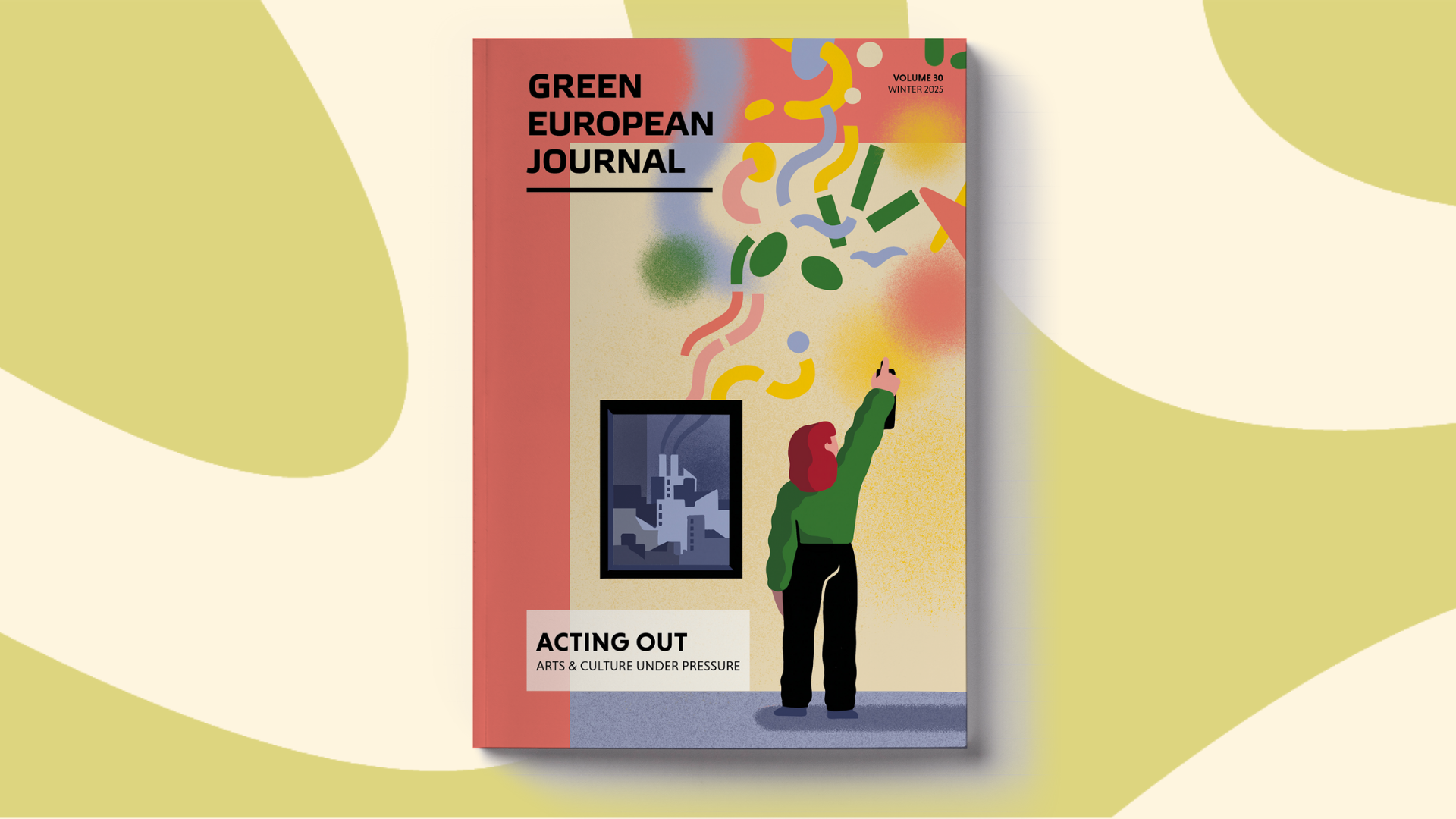
The ability of arts and culture to foster a sense of community and help us understand the past, interpret the present, and imagine the future is often celebrated. Yet in today’s political climate, these vital human endeavours are both devalued and instrumentalised. Neoliberal economic orthodoxy, the rise of the far right, the dominance of tech corporations, and unregulated AI all add to an already precarious situation for artists and cultural workers. Still, instances of cultural resistance offer reason for hope. Recognising the value of arts and culture and their potential to contribute to a just ecological transformation, this edition aims to open a space for what both the green movement and the creative sectors see as the key to healthy democracies – dialogue, pluralism, and mutual understanding – without erasing productive conflict.

Acting Out: Arts and Culture Under Pressure is now available in print and online on the Green European Journal website.

Fair allocation of energy network costs

By Featured, Publications

About 

As Europe electrifies, it will need to invest massively in its grid. Grid investment is paid for through network tariffs, a component of energy bills. A surge in investment means a surge in network tariffs. But how should these costs be fairly allocated in the context of a just transition for all and an ongoing cost-of-living crisis across Europe? 

Well-designed grid tariffs can reward household flexibility that eases pressure on grids while protecting vulnerable consumers. This brief calls on the European Commission to provide stronger guidance for national regulators on designing network tariffs that encourage those who can to flex their electricity demand while protecting vulnerable consumers and working to reduce energy poverty.  

This policy brief is one in a series of briefs developed by a Knowledge Community of approximately 30 experts in energy and social policy from industry, the EU institutions, civil society and think tanks. The group met several times over half a year to discuss how to foster participation and inclusion in the energy transition. To write the briefs, the authors used a collaborative method where they presented each draft during Knowledge Community meetings, then led a dedicated discussion, drawing ideas from the expertise in the group to develop their work. 

You can access the publication here.

Authors

  • Tom Lewis is Energy Policy Coordinator at Climate Action Network Europe 
  • Christophe Jost is Energy Policy Coordinator at Climate Action Network Europe 


The other briefs in this series are: 

We encourage you to explore the two policy briefs featured above or access the complete collection below:


This policy brief is published by the Green European Foundation with the financial support of the European Parliament to the Green European Foundation. The European Parliament is not responsible for the content of this publication. The views expressed in this publication are solely those of the authors and contributors and do not necessarily reflect the views of the European Parliament or the Green European Foundation.

Published with the support of the Heinrich-Böll-Stiftung European Union| Global Dialogue. The analysis and opinions expressed in this report reflect the views of the authors, and do not necessarily reflect the views of the Heinrich-Böll-Stiftung European Union | Global Dialogue.

Increasing benefit sharing of renewable energy projects

By Featured, Publications

About 

The practice of benefit sharing of renewable energy projects is a win-win situation. It can make the energy transition fairer for local communities, help developers speed up project deployment and accelerate the EU’s renewable rollout. Project developers consult with local citizens and municipalities, and come to an agreement on sharing some of the benefits of the project, whether that be through local investment, in-kind benefits, or local part-ownership. Involving the local community can reduce local opposition and speed up permitting, and make projects more competitive.  

Despite its many advantages, the practice is still relatively limited. This brief calls for the EU to help widen and standardise benefit sharing by providing guidelines and setting out key principles that can be implemented across the EU. It calls on the European Commission to include benefit sharing in its Citizens Energy Package, look at making benefit sharing mandatory and include it in assessment criteria for permitting applications.  

This policy brief is one in a series of briefs developed by a Knowledge Community of approximately 30 experts in energy and social policy from industry, the EU institutions, civil society and think tanks. The group met several times over half a year to discuss how to foster participation and inclusion in the energy transition. To write the briefs, the authors used a collaborative method where they presented each draft during Knowledge Community meetings, then led a dedicated discussion, drawing ideas from the expertise in the group to develop their work. 

You can access the publication here.

Author 

  • Etienne Charbit is Europe Policy Officer at French NGO réseau Cler 


The other briefs in this series are: 

We encourage you to explore the two policy briefs featured above or access the complete collection below:


This policy brief is published by the Green European Foundation with the financial support of the European Parliament to the Green European Foundation. The European Parliament is not responsible for the content of this publication. The views expressed in this publication are solely those of the authors and contributors and do not necessarily reflect the views of the European Parliament or the Green European Foundation.

Published with the support of the Heinrich-Böll-Stiftung European Union| Global Dialogue. The analysis and opinions expressed in this report reflect the views of the authors, and do not necessarily reflect the views of the Heinrich-Böll-Stiftung European Union | Global Dialogue.

The beauty of what already exists: The contribution of renovation and repurposing to affordable energy-efficient homes

By Featured, Publications

About 

Political pressure is high to deal with Europe’s housing crisis. This policy brief calls on policymakers to resist the temptation for short-term fixes, arguing rather for a holistic understanding of housing affordability that looks beyond paying rent or mortgage to also account for the cost of living in a home. Quality housing can save energy, protect occupants’ health and resist extreme weather impacts. The policy brief makes the case that investing further in renovation and repurposing of existing buildings should be central to any response to the housing crisis.  

This policy brief is one in a series of briefs developed by a Knowledge Community of approximately 30 experts in energy and social policy from industry, the EU institutions, civil society and think tanks. The group met several times over half a year to discuss how to foster participation and inclusion in the energy transition. To write the briefs, the authors used a collaborative method where they presented each draft during Knowledge Community meetings, then led a dedicated discussion, drawing ideas from the expertise in the group to develop their work. 

You can access the publication here.

Author

  • Emily Bankert is Researcher for Carbon and Energy in the Built Environment at Buildings Performance Institute Europe 
  • Hélène Sibileau is Senior Policy Advisor at Buildings Performance Institute Europe 

The other briefs in this series are: 

We encourage you to explore the two policy briefs featured above or access the complete collection below:


This policy brief is published by the Green European Foundation with the financial support of the European Parliament to the Green European Foundation. The European Parliament is not responsible for the content of this publication. The views expressed in this publication are solely those of the authors and contributors and do not necessarily reflect the views of the European Parliament or the Green European Foundation.

Published with the support of the Heinrich-Böll-Stiftung European Union | Global Dialogue. The analysis and opinions expressed in this report reflect the views of the authors, and do not necessarily reflect the views of the Heinrich-Böll-Stiftung European Union | Global Dialogue.

Gender Power: The energy transition through a gender lens

By Publications

EN (French Version below):

Gender often remains a blind spot in energy policies of the European Union and its Member States. Yet, our relationships to energy are deeply gendered. Women are, for example, disproportionately affected by energy poverty and climate change, while remaining underrepresented in the energy sector and its governance. These inequalities are rooted in our society’s dependence on fossil fuels and the patriarchal systems that sustain them.

How can we move away from fossil fuels and carry out a socially just energy transition while reducing gender inequalities? In her new essay, Gender Power, Barbara Nicoloso explores the deep historical links between gender and energy and skillfully outlines a path toward an equitable and just energy transition.

About

This essay is divided into three chapters, which take stock of gender inequalities in Europe, analyse the links between fossil fuel energy systems and gender inequalities, and then identify ways of avoiding their reproduction in a model based on sufficiency, efficiency and renewable energy. The aim is also to show how transition policies, and in particular energy sufficiency policies, can be levers for reducing gender inequalities. Finally, we will set out the political conditions necessary for the fight to preserve the environment and the societal fight for gender equality to go hand in hand.

The aims of this essay are in line with those of the Green European Foundation: to move the political and public debate forward, towards a more social and sustainable Europe;
to support elected representatives and local actors in implementing a just transition; to promote inclusive policies to achieve Europe’s climate and energy objectives; and to ensure that the energy transition does not amplify social, ethnic and gender inequalities and can, on the contrary, help to reduce them. The essay is based on the available scientific and institutional literature on the subject, as well as interviews conducted with stakeholders with field actors as part of a Knowledge Community composed of representatives from associations, research centres, local governments, and elected officials. This group met from September 2023 to April 2024 to discuss the gender dimension of the energy transition in both the French and European contexts. This Knowledge Community also led to the publication of the policy brief “Putting Gender at the Heart of the EU Energy Transition”, co-authored by Barbara Nicoloso, which you can find by clicking here.

Author

  • Barbara Nicoloso is the director of Virage Énergie and a lecturer at Sciences Po Lille.


EN Publication Link


FR:

La question du genre est un angle mort des politiques énergétiques et climatiques actuellement engagées par les États membres de l’Union européenne. Pourtant, les femmes sont plus impactées que les hommes par la précarité, vivent davantage dans des logements de mauvaise qualité, utilisent plus les transports en commun… Tout en étant sous-représentées dans les métiers de l’énergie. 

Comment sortir des énergies fossiles et mener une transition énergétique socialement juste en réduisant les inégalités de genre ? Dans son nouvel essai, « Gender Power », Barbara Nicoloso explore les liens historiques profonds entre le genre et l’énergie, et esquisse habilement la voie à suivre pour parvenir à une transition énergétique équitable et juste. 

A propos

Cet essai est construit autour de trois chapitres permettant de dresser l’état des lieux des inégalités de genre en Europe, d’analyser les liens entre un modèle énergétique carboné basé sur les combustibles fossiles et les inégalités de genre, pour ensuite identifier la façon d’éviter leur reproduction dans un modèle reposant sur la sobriété et les énergies renouvelables. Il s’agira également de montrer comment les politiques de transition, et en particulier les politiques de sobriété énergétique, peuvent être des leviers pour réduire les inégalités de genre. Enfin, nous exposerons les conditions politiques nécessaires pour que la lutte pour la préservation de l’environnement et la lutte sociétale pour l’égalité de genre aillent de pair. 

L’objectif de cet essai rejoint ceux poursuivis par la Green European Foundation, à savoir, faire avancer les débats politiques et publics vers une Europe plus sociale et durable, accompagner les élus et acteurs locaux dans la mise en place d’une transition juste, promouvoir des politiques inclusives pour atteindre les objectifs climatiques et énergétiques européens et s’assurer que la transition énergétique n’amplifie pas les inégalités sociales, ethniques, et de genre et peut au contraire contribuer à les réduire. Il se base sur la littérature scientifique et institutionnelle disponible sur le sujet ainsi que sur des entretiens réalisés avec des actrices et acteurs de terrain dans le cadre d’une Knowledge Community (Communauté de connaissances) composée de représentant.es d’associations, de centres de recherche, de collectivités locales, d’élu.es qui se sont réunies de septembre 2023 à avril 2024 pour discuter de la dimension genrée de la transition énergétique dans le contexte français et européen. 

Cette communauté de connaissances a également donné lieu au policy brief « Le genre au cœur de la transition énergétique de l’UE », co-écrite par Barbara Nicoloso, que vous pouvez trouver en cliquant ici .

Autrice

  • Barbara Nicoloso est directrice de Virage Énergie et enseignante à Sciences Po Lille.

FR publication link


Published by the Green European Foundation with the financial support of the European Parliament to the Green European Foundation. The European Parliament is not responsible for the content of this publication. The views expressed in this publication are solely those of the author and do not necessarily reflect the views of the European Parliament.  

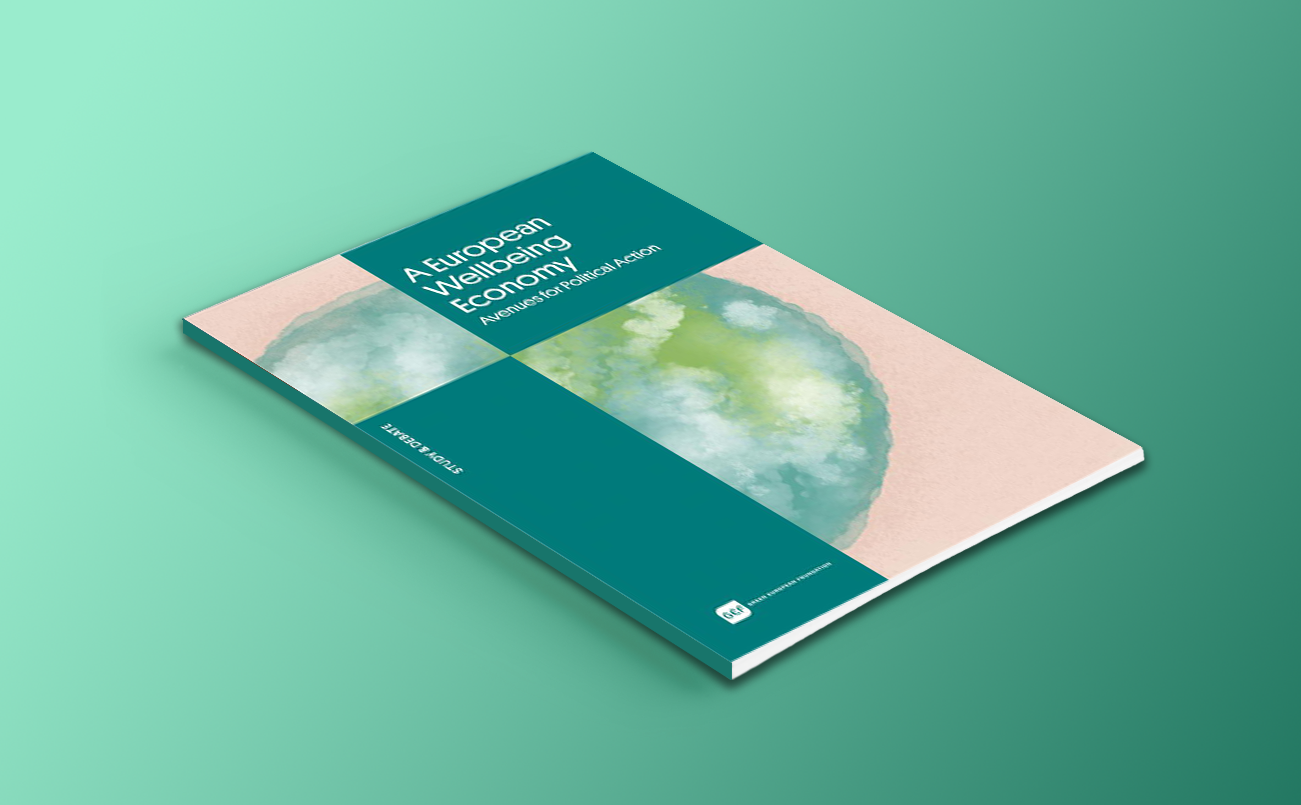
A European Wellbeing Economy: Avenues for political action

By Publications

About

The starting point of this publication is that the EU’s economy is ultimately embedded in cultural and social systems, which in turn are sub-systems of the Earth’s biosphere. As Fullerton notes, “the history of economic theory is [therefore] not over with Keynes and Hayek”. Instead, we need to be more critical, more systemic, and more daring. A wellbeing economy addresses this need – it aims at delivering quality of life for people, while pulling our economy back within planetary boundaries.

Adopting a wellbeing-centred approach would enable the EU to tackle social-ecological risks linked to the triple planetary crises, to increase fairness, and to transform towards a quality-focused economic strategy. It can inform a sustainable and transformative policy and investment agenda, that goes beyond crisis-after-crisis response. Learning from the past five years of the COVID-19 pandemic, energy and cost of living crises, and at the start of the new mandate, EU leaders have the opportunity to carve out an offer that truly delivers for their citizens amidst geopolitical turmoil.

Our publication is a call to action for EU policymakers across the political spectrum to make the crucial years ahead count for the wellbeing of current and future generations on our planet. Ultimately, we aim to clarify that a wellbeing economy is not an abstract utopia; it is a strategic response to the lessons of history and the need for long-term security. In a world increasingly defined by great power competition, Europe’s best bet is not to be trapped between rival blocs but to define a distinct path – one that prioritises security and protection in the broadest sense. After all, what is security if not the health of people, the resilience of our environment, the strength of education systems, and the assurance of a safe and stable future?

The publication is the result of a one-year-long exchange within a Knowledge Community of more than 60 experts that aims to map the main challenges and provide recommendations to inspire the European institutions in the delivery of their ambition to work toward the wellbeing of its peoples. It discusses the state of play and problem identification, and develops EU-level reflections, solutions and recommendations for 6 interrelated thematic clusters for a European wellbeing economy.


Contributors

  • Emma Bergeling is Junior Policy Analyst, Climate and Circular Economy at the Institute for European Environmental Policy (IEEP),
  • Antoine Oger is Executive Director of the Institute for European Environmental Policy (IEEP),
  • Taube Van Melkebeke is Head of Policy at the Green European Foundation (GEF). For further information, contact her at taube.vanmelkebeke@gef.eu.


Summary for policymakers

A  summary of the publication can be found here: Summary


Published by the Green European Foundation with the collaboration of the Institute for European Environmental Policies, and with the financial support of the European Parliament to the Green European Foundation. The European Parliament is not responsible for the content of this publication. The views expressed in this publication are solely those of the editor and contributors and do not necessarily reflect the views of the European Parliament or the Green European Foundation. 

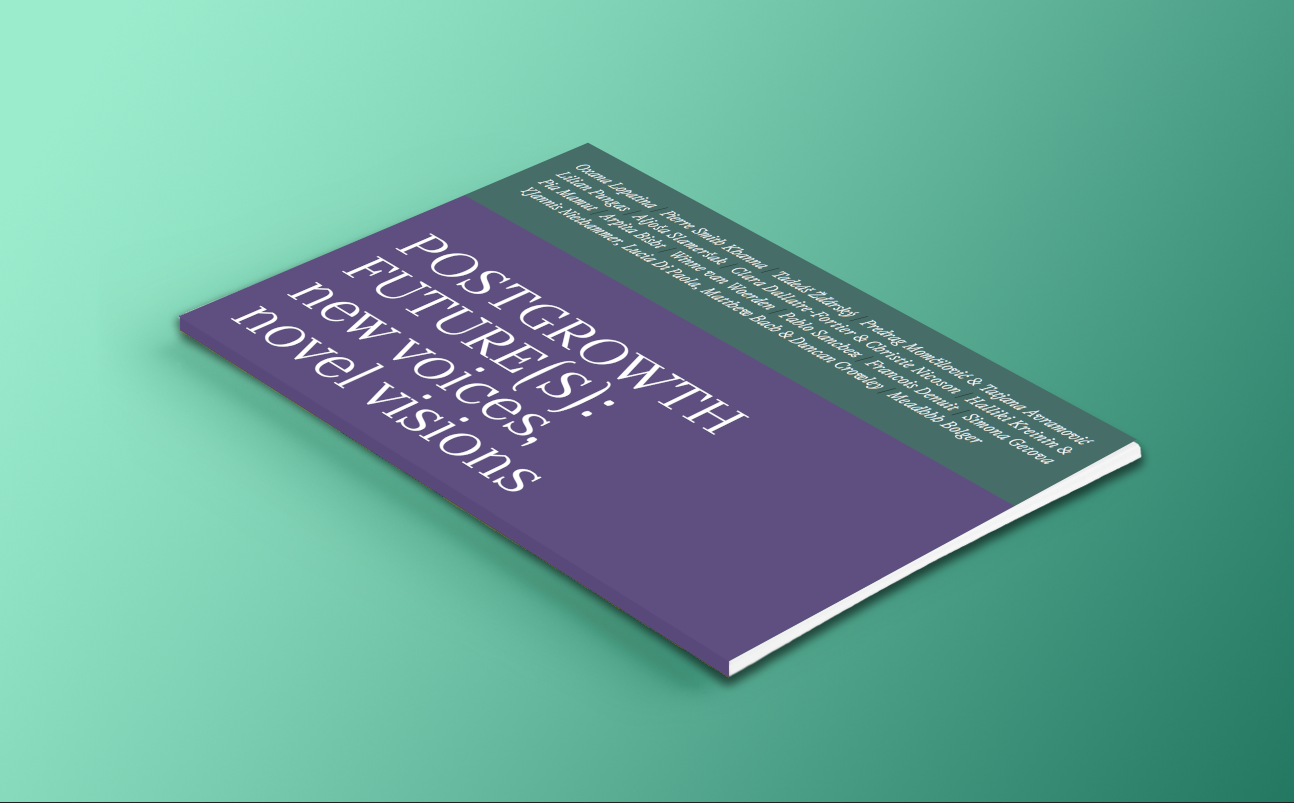
Post-growth Future(s): New Voices, Novel Visions

By Publications

Growth is no longer a viable path, yet the idea of a post-growth society is still struggling to enter mainstream politics. Despite mounting ecological and social crises, policy discussions remain locked in outdated economic paradigms. However, recent years have marked a turning point, with post-growth thinking gaining momentum in European institutions, civil society, and academia.

The age of growth is behind us, but hardly anybody dares to admit it. […] In this publication, we say it loud and clear: growth is past tense. We need to engage now, without delay, in reimagining prosperity and wellbeing beyond growth

This publication brings together 20 authors from across Europe to explore what a future beyond growth could look like. Through diverse perspectives, it examines how post-growth ideas can reshape economic structures, social justice frameworks, and environmental policies. It also highlights how new voices (academics, activists, and policymakers) are translating these ideas into concrete political and policy action. By connecting emerging debates with real-world transformations, the publication contributes to strengthening the movement for a just and sustainable post-growth future.

This publication is part of the Green European Foundation’s work on post-growth in the scope of the project Post-Growth Future(s). It builds on discussions from key post-growth events, including the Beyond Growth Conference in Brussels and the International Degrowth Conference in Zagreb. The publication amplifies new ideas and connects them with the broader movement for systemic change.


This publication has been realized by the Green European Foundation with the support of  the Institute of Political Ecology and the Heinrich Böll Stiftung, as well as with the financial support of the European Parliament to the Green European Foundation. The European Parliament is not responsible for the content of this publication.

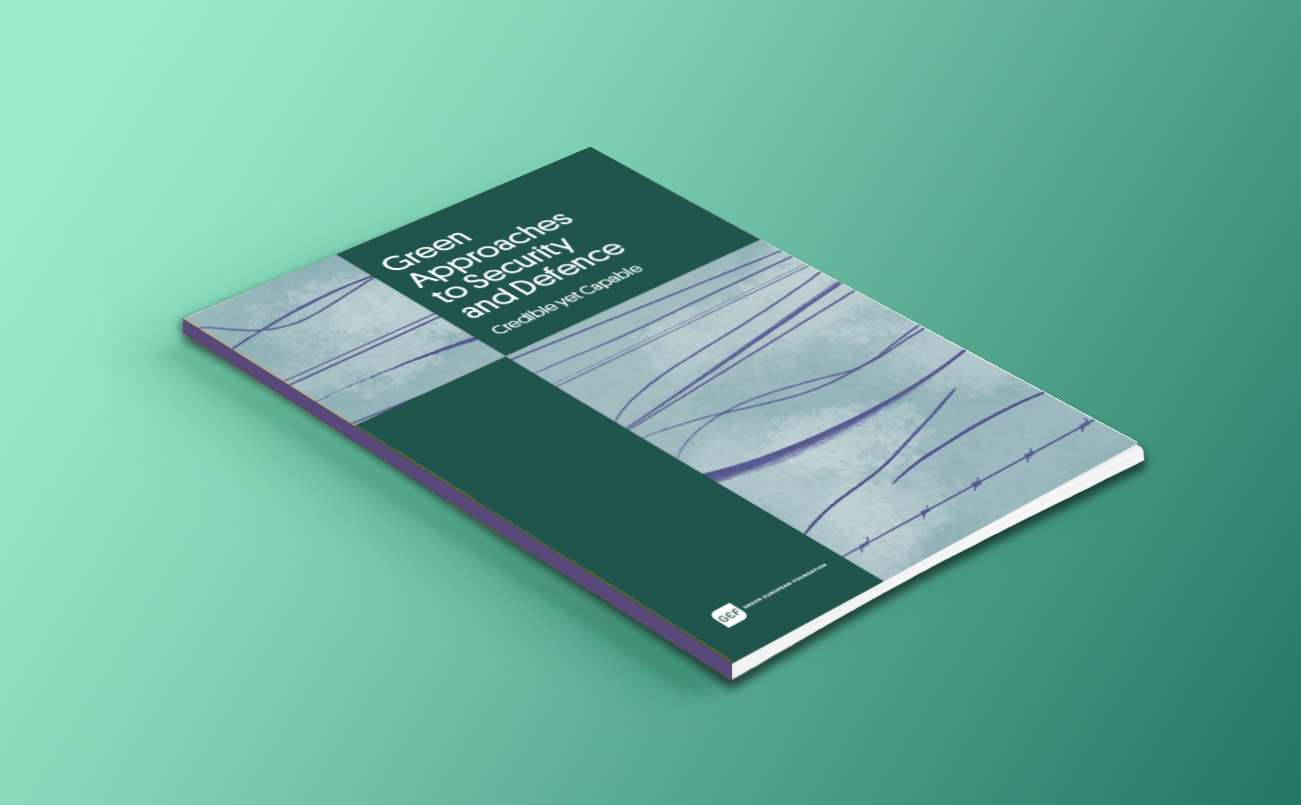
Green Approaches to Security and Defence

By Publications

In a shifting geopolitical landscape, Greens are grappling with the interplay between their traditional pacifist roots and the post-February 2022 security challenges. This report delves into their evolving stances on key defence issues, from EU military cooperation to disarmament, offering insights into the varied approaches adopted by Green parties from eight EU countries. Expert viewpoints featured throughout provide further feedback and inputs as to what a Green defence policy could (or should) look like. As Europe navigates turbulent waters, the report calls for renewed commitment to progressive and principled approaches to security and defence.

The report is structured into five chapters that address important EU military challenges. They portray a nuanced understanding of European security dynamics among Green parties, reflecting varying national contexts, strategic cultures, and historical perspectives. This report thus provides a clear mapping of green defence thinking across Europe, including points of convergence, gaps, and tensions. Complemented by the expert views, it gives a solid basis for further discussion within and beyond the Greens, to strengthen defence and security policy while maintaining a critical and progressive voice, even in uncertain times.

Chapter 1 delves into the complex institutional landscape of security and defence in Europe. It examines the debates surrounding the identity of the EU and looks at the respective roles of the EU and NATO as security providers.

Chapter 2 focuses on military expenditures and budget allocation. It discusses differing perspectives among Green parties on the use of GDP to set defence government budgets and on how these should be allocated.

Chapter 3 explores Green parties’ opinions on defence industrial policies broadly understood. It examines Green positions on grant programs put in place by the EU and shows diverging opinions on the allocation of public funds to industry.

Chapter 4 analyses positions on nuclear deterrence, disarmament, and arms control. Green parties generally continue to oppose the doctrine of nuclear deterrence, but the war in Ukraine has led some to revise their position on its effectiveness.

Chapter 5 delves into the intertwined concepts of civic militarism, civil protection and non-violence; their implications for military involvement in security as well as civilian participation to defence.


This report is a call to action for Green parties to embrace their role as catalysts for progressive security policies. By navigating the complexities of modern security with creativity, Greens can contribute to shaping a peace-oriented, sustainable, and common European security architecture.


About the authors

Agatha Verdebout is a researcher and deputy director at GRIP. Her main area of expertise is international peace and security law.

Anne Xuan Nguyen is a researcher at GRIP. Working more broadly on security and environmental issues, she specializes in conflict-related pollution and its remediation.


This report is also available in:

GreekGerman


This study was conducted by the Green European Foundation with the support of Etopia , Cogito , Cooperation and Development Network Eastern Europe, and Sustainable Development Forum Green Window . The study was commissioned by GEF to the Groupe de recherche et d’information sur la paix et la sécurité (GRIP). It is published with the financial support of the European Parliament to the Green European Foundation. The views expressed in this publication are solely those of the authors and do not necessarily reflect the views of the European Parliament or the Green European Foundation.

Enough – Thriving Societies Beyond Growth

By Publications

The ecological crisis shows that infinite growth on a finite planet is impossible. Meanwhile, the current economic system fails to secure livelihoods and exacerbates inequalities. There is an alternative to this self-destructive system: an economy of enough, which would provide for everyone’s basic needs while addressing greed and overconsumption.

The EU has the potential to lead the ecological transition. Although the Green Deal was a significant step forward, it remains entrenched in a growth-addicted economy centered on competition within a single market, and it does not sufficiently address social inequality. We need to envision a different European economy, rooted in a new paradigm, before we can build it.

In this essay, the authors build on the work of visionaries, both past and present, recognising that Earth is on loan to us from future generations. They explore how societies can thrive without depending on economic growth. The essay presents a compelling vision: fewer private jets, less inequality, fewer burnouts, and reduced waste, alongside more quality of life, more time for each other, more sustainable products, and a healthier planet. In other words, this essay provides the keys to imagining a different Europe – one that ensures a good life for everyone within the planet’s limits.

The ecological crisis in its entirety, including climate change, biodiversity loss and all its other facets, is without doubt the greatest challenge of our lifetime. […] For this reason, grand projects like the European Green Deal have begun to address social dimensions to guarantee that the transition is a just one.

About the authors

  • Dirk Holemans is director of Think Tank Oikos and former co-president of the Green European Foundation.
  • Lara Ferrante is a staff member at Oikos and wrote a master’s thesis on degrowth.
  • Elze Vermaas is a staff member at Oikos and former vice-chair of the Dutch young green think tank Jong Wetenschappelijk Bureau GroenLinks.


Endorsements

“Have you ever wondered how our social, economic and ecological crises are connected, and what we could do about them? This short and perfect book demonstrates how a ‘Wellbeing Economy For All’ addresses the interconnected crises of our time, and imaginatively motivates us to be part of its realization.” — Julia Steinberger


“For too long, the planetary crisis has loomed as a monstrous inevitability. But what if we dared to imagine otherwise? Enough paints a vibrant picture of a society that has transcended the limitations of endless growth, prioritising ecological well-being and human connection. It takes on the difficult task of envisioning a future where societies can thrive beyond the shackles of constant expansion and in harmony with the natural world.” — Amitav Ghosh


“This book does crucial work in offering vision, delivering hope and providing a way forward from a world where we are trashing the planet while creating miserable societies. It works towards a model for living within the limits of this fragile planet while allowing humans to thrive in a healthy future.” — Natalie Bennett


“Enough is a brilliant combination of imaginative vision, conceptual clarity and concrete proposals. A necessary handbook for an ecological civilisation.” — Roman Krznaric


“Enough challenges us to look beyond the current economic models that form the root cause of the climate crisis. If our human society is to survive this century, fundamental change is inescapable. This means embracing enough, coupled with a profound decolonisation of current world relations and building true democracy.” — Anuna De Wever


Book tour

With book tour events across Belgium, Croatia, Ireland, the UK, Finland, and Sweden, GEF is using this book to spark conversations across the continent on how Europe can reconcile social and ecological justice in a wellbeing project for all. You can watch the recordings here


This publication has been realised with the support of Oikos Think Tank and the financial support of the European Parliament to the Green European Foundation. The European Parliament is not responsible for the content of this publication.

Navigating NATO

By Publications

Green and progressive parties across Europe have historically held a sceptical view towards the military industry and defence alliances such as NATO. Russia’s war of aggression against Ukraine spotlighted existing security vulnerabilities and profoundly shifted the public and political debate. In this context, Greens may have differing attitudes towards NATO, but find themselves in the political reality of not if but how to engage within it. Based on desk research and expert interviews from ten European countries, this report explores different ways that greens and progressives can influence NATO, and the risks and opportunities this entails.


It is important to bring alternative thinking into mainstream and conservative security spaces, and with more Greens in parliaments and governments across the continent, there is both the room and need for greater influence and expertise.


About the author

Sarah Bitamazire

Sarah Bitamazire is a policy expert on international human rights law and foreign policy work in conflict and high-risk environments. She is currently Chief Policy Officer at Lumiera, a boutique advisory firm with policy, tech, and business expertise that equips organisations with responsible AI strategies. Prior to this she was at the heart of the Swedish policy debate on defence and foreign affairs, developing policy ideas for the Swedish Greens. Sarah is specialised in Public International Law and Human Rights Law, and holds a Law Degree from Uppsala University and Leiden University.


This report is also available in:

GreekGerman


This study was conducted by the Green European Foundation with the support of Cogito. It is published with the financial support of the European Parliament to the Green European Foundation. The views expressed in this publication are solely those of the authors and do not necessarily reflect the views of the European Parliament or the Green European Foundation.

Women Leaders on the Frontlines

By Uncategorized

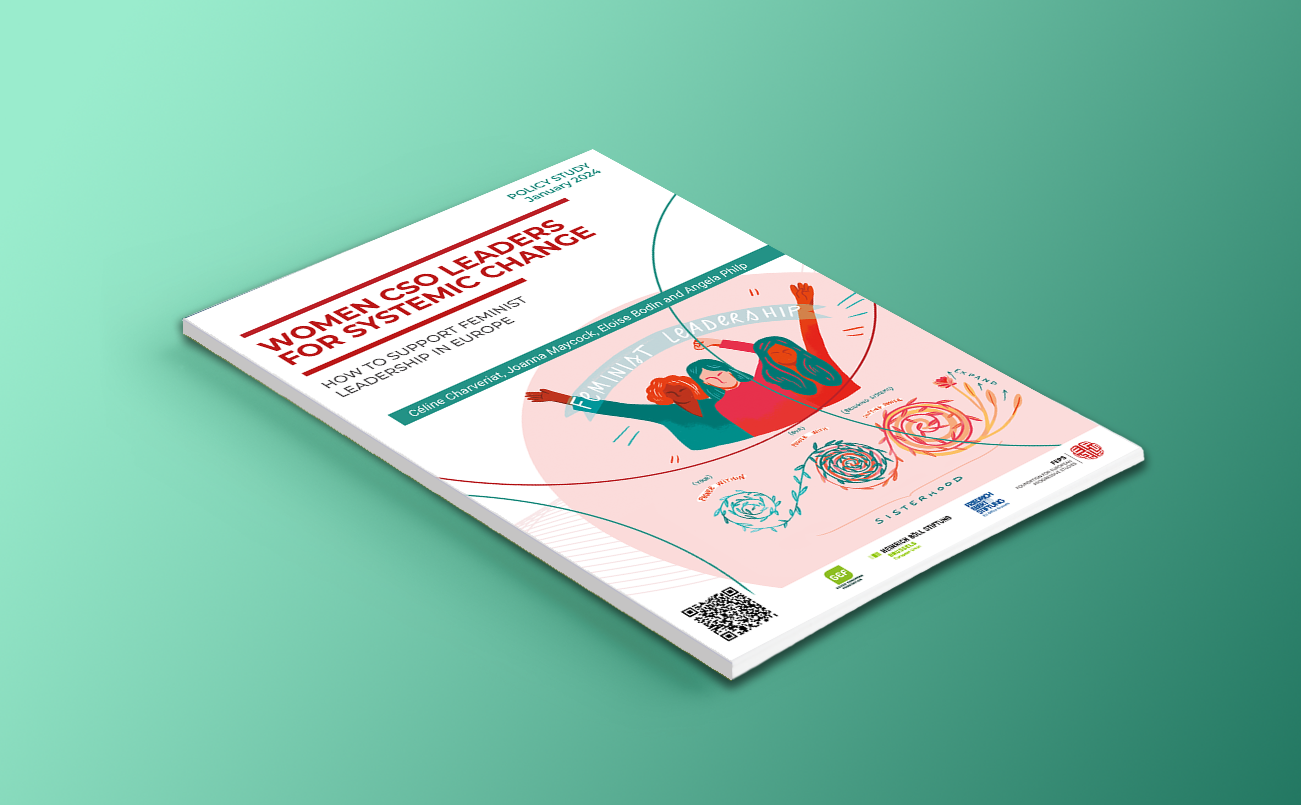
Context

Europe’s social economy sector, a highly feminised sector which employs 13.6 million people, representing 6.4% of the workforce, is faced with an increasingly impossible mission: delivering essential services at scale in the face of rising societal challenges, or at least that’s what is currently expected from them. This includes inequality and the climate crisis, to build societal cohesion in a context of increasing polarisation and loneliness, as well as to play a role of initiator and catalyser of the green transition.

“Our big mistake as women leaders in NGOs is the failure to acknowledge that the challenges we are experiencing are not personal, they are systemic.”


Objectives

This study, which represents the first-ever study of its kind, aims to take stock of the progress of the last decade, as well as identify remaining barriers and new opportunities for women CSO leaders in achieving systemic change in Europe. The idea for this study grew out of dozens of conversations the authors have had with their peer women leaders over the years. A survey of 148 women leaders was conducted to explore their strategies for managing complex demands, their perspectives on being women in leadership in 2023, their contributions to innovation and cultural transformation in the workplace, and the obstacles they encounter. Through 25 interviews and two focus groups, this study draws out recommendations for donors, organisations, and wider society to support and invest in transformative, feminist women’s leadership.

You can view the authors’ presentation from the study launch here.


This policy study “was commissioned by the Foundation for European Progressive Studies (FEPS), with the support of GEF, Friedrich-Ebert-Stiftungand the Heinrich-Böll-Stiftung European Union, with the financial support of the European Parliament to GEF and FEPs.

Geopolitics of a Post-Growth Europe

By Uncategorized

Context

As it stands, degrowth fails to resonate with experts in foreign and security policy. It is easy to see why. In geopolitics, many determinants of power – trade, aid, tech nology, defence – are closely linked to GDP. If they do not ignore planetary boundaries altogether, geopolitical pundits trumpet the ‘green growth’ narrative so as to reconcile ecological and geopolitical security. It is this very narrative that degrowthers aim to refute.

It is better to manage the end of growth through democratic deliberation than to have it imposed on us by ecological breakdown.


Objectives

It is unlikely that we will be able to defuse the climate time bomb, let alone other ecological threats, as long as our economy continues to grow. But what would the end of economic growth mean for geopolitics? Could a European Union that is the first to embrace post-growth still be a global actor? Would it be able to defend itself, its allies, democracy, human rights, and the international rule of law at a time when aggressive autocracies are invading or threatening their democratic neighbours? This report addresses uneasy questions that few have dared to ask.


Project Background

This report is produced by the Green European Foundation. It is part of the project Geopolitics of a Post-Growth Europe. The project is led by Wetenschappelijk Bureau GroenLinks (NL) and supported by BlueLink (BG), Center for Green Politics (RS), Etopia (BE), Fondation de l’Écologie Politique (FR), Green House Think Tank (UK), and Transición Verde (ES). Check out www.geopoliticspostgrowth.eu for more interviews, videos, and other project outputs.


Available Translations

Dutch

Spanish

Serbian

French

Bulgarian

Czech

Portuguese


This report has been realised by the Green European Foundation with the support of  Wetenschappelijk Bureau GroenLinks and the financial support of the European Parliament to the Green European Foundation. The European Parliament is not responsible for the content of this publication.

Feminists in the Environmental Movement

By Uncategorized

Context

Through an ecofeminist lense, this publication explores the connection between feminism, youth, and the environmental struggles in Central and Eastern Europe. As part of the Feminists in the Environmental Movement project, we have explored these concepts within urban areas, but the struggle in rural and de-urbanised areas remained under-examined. While green successes and support often concentrate in urban centres, engaging and mobilising rural communities is crucial to achieve a socially just green transition.


Objectives

This publication includes an extensive research on the lives of young female activists in rural and de-urbanised areas, the stories of their struggles, victories and hopes for the future. It aims to raise voices of people who are usually unheard in the European landscape. While reading the different articles, you will explore the lives of women in rural areas, their perspectives and tools to cope with the local issues, and the multiple forms of oppression they face.

Let’s stand in solidarity and truly “leave no one behind” in our path towards a just society!

Download

Turkish (Please note this translation is an abridged version of the original publication).


This publication has been produced by the Green European Foundation with the support of Cooperation and Development Network Eastern Eu-rope (CDN) and with the financial support of the European Parliament to the Green European Foundation.

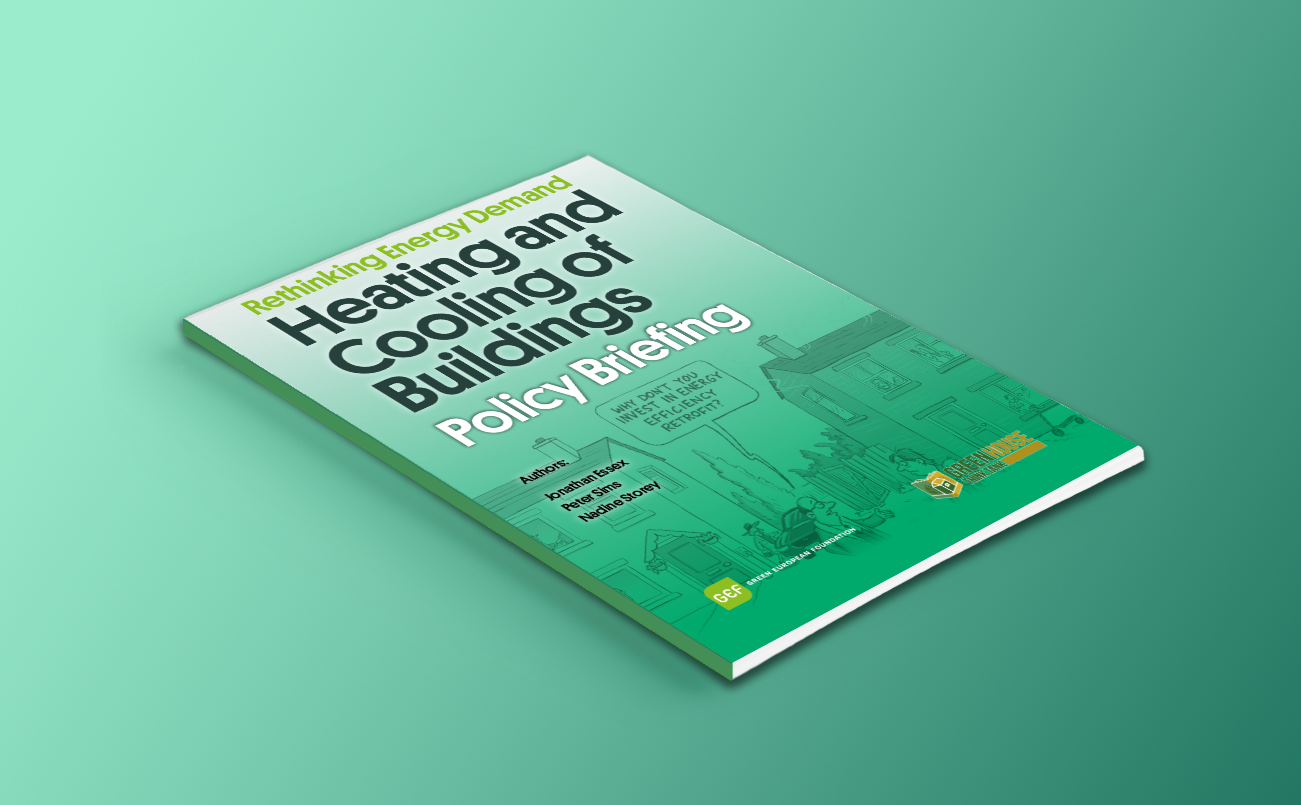
Rethinking Heating and Cooling

By Uncategorized

Context

Climate impacts became more apparent within Europe through the record high temperatures in the summer of 2022. This has converged with a cost-of-living crisis exacerbated by the war in Ukraine and consequent shortages of Russian gas and an unprecedented increase in energy prices. Whilst governments in some countries have shown imaginative thinking to deal with the immediate energy crisis, this thinking needs to be extended with a view to long-term changes of behaviour, practices and social norms. Change is essential to limit energy demand in the future as a critical response to the climate crisis.

Ensuring everyone has a living space that they can maintain at temperatures safe for human health should be a government priority.


Objectives

This publication argues for a broad rethink of the demand for heating and cooling buildings that goes beyond calls for widespread retrofit. It draws from the earlier ‘Rethinking Energy Demand’ report (October 2022) and the interviews conducted for that report with academics and thought-leaders across Europe. The earlier report considered the need and means to sufficiently reduce energy demand. This policy briefing invites policy makers to extend their thinking beyond the immediate crisis towards a longer-term strategy for delivering the human need for thermal comfort whilst eliminating carbon emissions. The briefing comprises 6 sections and offers 16 policy recommendations, across both efficiency and sufficiency measures.


Translations

Available in Spanish

Available in Greek


This publication has been realised by the Green European Foundation and Green House Think Tank with the financial support of the European Parliament. The European Parliament is not responsible for the content of this publication.
Nuclear Power

By Uncategorized

Context

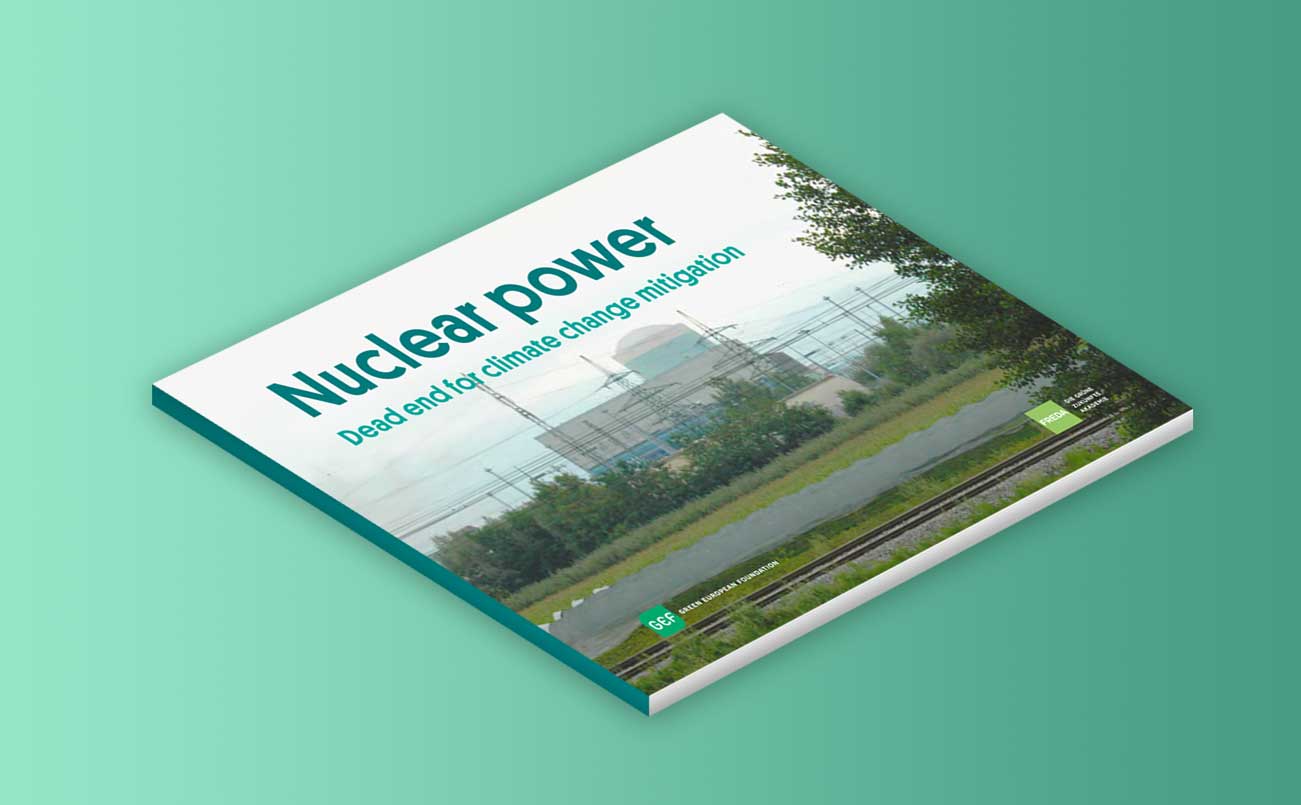
The nuclear power lobby is stronger today than ever. The lobbyists have succeeded in creating an enormous disparity in the perception of what to believe and reality. The post-Chernobyl generation is increasingly falling prey to the fairy tale of modern, safe, cheap and CO2 neutral nuclear power. These arguments can be quickly refuted and often only serve to conceal the ulterior motive: to increase the stockpile of nuclear armaments. Nuclear power will most definitely not save the environment.

Objectives

This publications argues that nuclear power is not the solution to climate change including a critical analysis of the main ten misconceptions about “green” nuclear power. It has been written in close cooperation with Martin Litschauer, Member of the Austrian Parliament and Anti-nuclear Spokesman of the Austrian Greens, and Maria Niedertscheider, Expert Assistant, Austrian Federal Environmental Agency. Th purpose of the brochures is to serve as guidance for a broad European discussion and as a concise summary of the narrative on nuclear power as a supposedly bridge technology.

If we want to protect ourselves and save the environment, we have to use solar, wind and geothermal energy, because these are the fastest and safest ways to achieve the energy transition.

Translations

Available in Turkish

Available in Slovenian


This publication, originally published by FREDA, has been realised by the Green European Foundation and FREDA with the financial support of the European Parliament. The European Parliament is not responsible for the content of this publication.
A Green New Deal for Leeds City Region

By Uncategorized

GALBA’s Vision for a Sustainable Local Economy (Group for Action on Leeds Bradford Airport)

Context

The Group for Action on Leeds Bradford Airport (GALBA) is a group of concerned citizens in West Yorkshire. They came together from a range of backgrounds and across the political spectrum to stop the proposed expansion of Leeds Bradford Airport (LBA), which they managed to do in 2022.  Learn more here.

Following the COP26 Climate Conference in Glasgow, the Group for Action on Leeds Bradford Airport (GALBA) launched their new report: ‘A Green New Deal for Leeds City Region: GALBA’s Vision for a Sustainable Local Economy’.

We believe that local jobs and our fragile climate are best safeguarded by investing in a new green economy that supports sustainability whilst making sure our communities are employed in secure, productive and meaningful work.

Objectives

This report sets out concerns about the claims being made by Leeds Bradford Airport (LBA) around job creation.  GALBA propose a more forward-looking, ambitious and achievable economy that reduces reliance on aviation and encourages investment in local communities, whilst addressing the other key challenges faced around transport, energy and food supply. “Our generation has seen the emergence of a human-created climate emergency. We must also be the generation to fix this, by making best use of our most precious resource–our people”.

Download

Also available in Spanish.


This report is published by the Green European Foundation with the support of Green House Think Tank and the financial support of the European Parliament. The European Parliament is not responsible for the content of this project.
Ecologia: La Revolució del Segle XXI

By Uncategorized

Context

‘Ecology as the revolution of the 21st century’ takes the contributions of experts and authors as well as previously published Green European Journal pieces, to provide an overview of the formative green visions for Europe. The publication language is Catalan.

La crisi climàtica és una emergència glo bal que tan sols podrem superar des dels grans acords internacionals que ens permetin gover nar les interdependències que genera la globalització.

“The climate crisis is a global emergency that can only be overcome from the great international agreements that allow us to govern the interdependencies generated by globalization.”

Objectives

This issue of the Nous Horizons Magazine features insightful reflections on the state of the green movement and its relationship with the world of work, adding a European and global perspective to contextualize what is happening in the world we live in. It also aims to provide the right tools for political environmentalism to become the political paradigm of the 21st century.


This publication has been realized with the support of Nous Horitzons and the financial support of the European Parliament. The European Parliament is not responsible for the content of this publication.
The Good Story – Green Narratives from the Balkans

By Uncategorized

Context

The Good Story gathers contributions from experts and activists who participated in the GEF Green Horizons Academy in Serbia. The publication explores the different approaches to how green narratives can reach a broader audience, in Serbian and English language

If there ever was an actor who could contest peripheral neoliberal capitalism and nationalism effectively in the past 30 years, this is the green actor. This is not because green politics is superior to other ones, but because no one expected it to occur and especially not at this level of organization and public support.


Objectives

What makes a good story? A compelling narrative, a powerful beginning, an interesting hook? The convincing and trustworthy messenger?

This text zooms in on eco-politic struggles faced in Serbia in the last few years. Serbia has been the field site of an unprecedented environmental mobilization. It explores Serbian activist movements, green populism and reflects on wider tensions at the heart of the Balkans’ ecopolitics and potential solutions for the future.


Download

Available in Greek


This report has been published by the Green Europe Foundation with the support of Polekol and with the financial support of the European Parliament to the Green European Foundation. The European Parliament is not responsible for the content of this report.

A guide to engaging aviation workers and trade unions

By Uncategorized

Context

Climate campaigners are coalescing around an agenda of no expansion of airports and the need for a long-term reduction of aviation. However, not all of these campaigns have incorporated worker perspectives to better understand the impact on jobs and changes to local and national economies.

We don’t just want to get the industry back to where it was in 2018, but decarbonised. Because that wasn’t a good industry for workers. Transport had become too cheap, it was market driven. There is a need to embark on a huge transformation of the industry.

Objectives

This short guide explores how campaigns can connect better with aviation workers and the trade unions that represent them – to build mutual support, win those campaigns and advance a rapid and just transition for workers in the sector.

About the project

This publication is part of the project “Just Transition in the Aviation Sector” that explores how the concept of a just transition could look like when applied to the aviation sector in the UK. It focuses on the loss of jobs in the context of the COVID-19 pandemic as well as the potential of the green job creation. In this context, a case study of the Gatwick airport was conducted.  

Just Transition in the Aviation Sector explored the topic of the Aviation sector adaptation through several formats, including the development of infographics, events with an inclusive European dimension. As a part of the project, GEF implemented an online event called Green jobs and airport expansion campaigns, gathering experts and politicians to debate the topic in a panel format.  

The initial research and debates within the project scope culminated in this report.  

Download

Available in Spanish


This publication has been realized with the support of Green House Think Tank and the financial support of the European Parliament. The European Parliament is not responsible for the content of this publication. 
Albanian Green Academy Report

By Uncategorized

Context and Objectives

This report was prepared based on the trainings, workshops and lectures organized at the Albanian Green Academy in 2021. The overarching themes of the events focused on the European Green Deal and Climate Justice at local, national and European levels. The aim of the report is to promote green thinking in political, social and environmental aspects in Albania and the region.

About the Albanian Green Academy:

The Albanian Green Academy 2021 was held on 10-12thSeptember and 1-3rdOctober. It was divided in two phases. The main theme and focus of this first phase of the academy was “European Green Deal”. The main theme and focus of this second phase of the acade my was “Climate Change. In this series of 6-day training the topics of European Green Deal and Climate Change were addressed in the context of national and European conditions. Avery important objective of this project was to bring together, equip with information and build cooperation between different groups to achieve an environmental society.

Climate change is already happening: temperatures are rising, droughts and wildfires are starting to happen more often, rainfall patterns are changing, glaciers and snow are melting and the average global sea level is rising. To mitigate climate change, we must reduce or prevent emissions related to human activities.

Download

Digital version in Albanian is available here


This report has been published by the Green Europe Foundation with the support ofthe Albanian Green Institute and with the financial support of the EuropeanParliament to the Green European Foundation. The European Parliament is notresponsible for the content of this report.