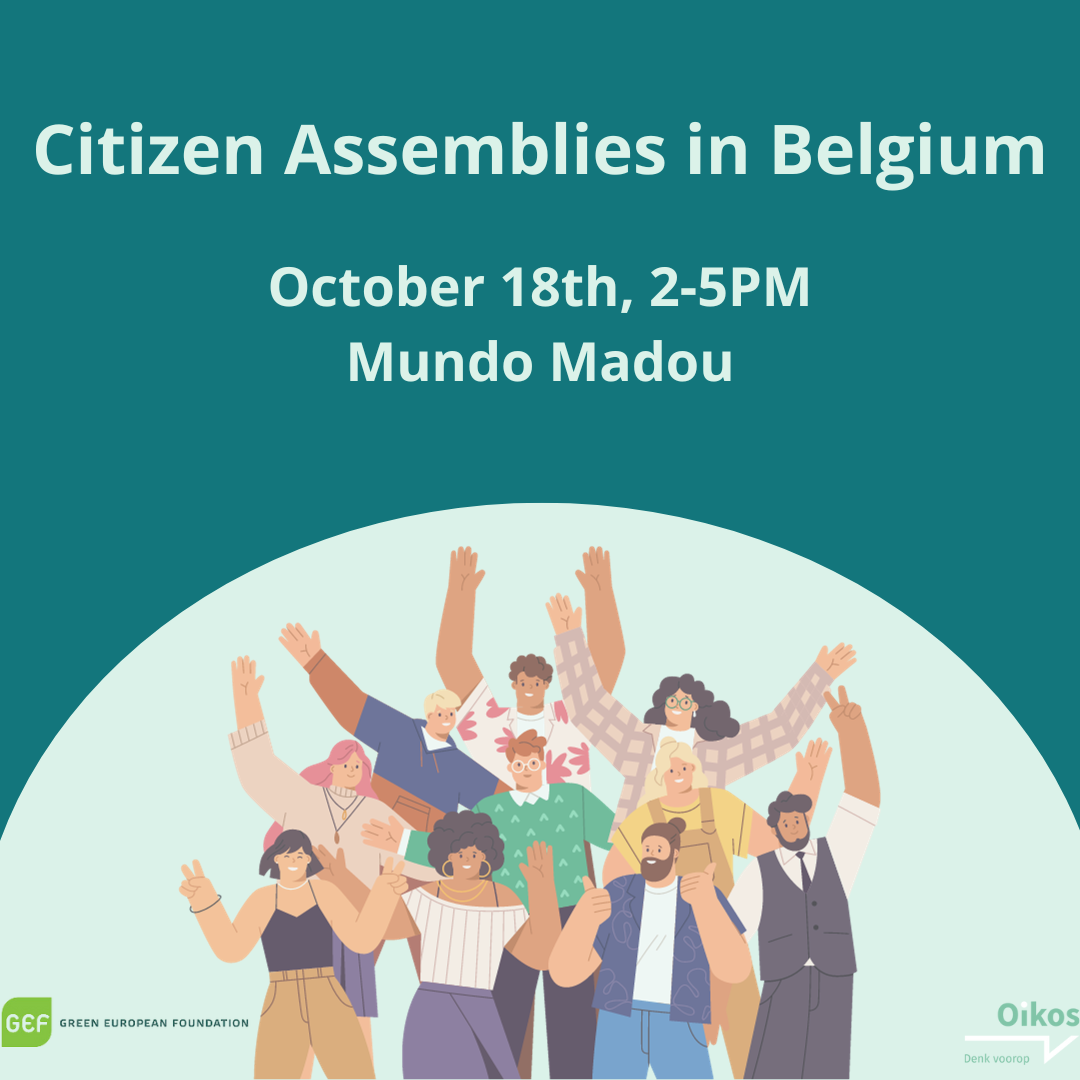
Citizen Assemblies in Belgium (Brussels)

By


About the Event

In the event, speakers from the different language communities of Belgium share their experiences of citizen assemblies as a democratic and participative form of decision making. The discussion will evolve around the permanent climate citizen assembly of Brussels, the citizen assembly of the German community and innovative democratic models in the French-speaking Parliament of Brussels.


Practicalities

Date and time: 18th October 1:45PM – 5PM

Location: Mundo Madou building, Avenue des Arts 7/8, 1210 Bruxelles

Please note this is an invite only event.


This event is organised by the Green European Foundation with  the support of Oikos Think Tank and the financial support of the European parliament to the Green European Foundation.


The Tilting City

By Uncategorized

Context

Three out of four Europeans live in a city. Therefore, cities are essential to lead the transformation to a socially and ecologically just society. This radical change is more urgent than ever, as IPCC reports remind us: already 3.5 billion people are highly vulnerable to climate impacts. Different cities suffer from diverse ecological impacts and will be differently affected by climate change. And within cities, certain groups are more exposed to the effects of air pollution, noise, and extreme temperatures than others. Without thoughtful politics and policies, the most vulnerable will suffer the consequences. In this context, ecological justice is vital. Taking inequalities into account and repairing the damage to these people’s lives but also holding those most responsible for the climate crisis to account.

‘’When imagining cities, we for instance cannot lose sight of the farmer in rural areas feeding urban mouths, or the homeless person at the city centre bus station.’’

Objectives

This publication aims to draw an image of what the city of the future could look like. The authors show alternatives to the current urban models and how they can be future-proof. This text will hopefully serve as a valuable source of information and bring up new thoughts among citizens activist, policymakers and everyone interested in exploring ethical and ecological ways of living in cities in the 21st century.


Project Background

This publication is part of Cities as a Place of Hope project of the Green European Foundation. With this project, we aim to create a strong communication network and solidarity network that will enable access to information and policies by compiling experiences and needs on sustainable and green city governments and related policies together with green associations in different cities in Europe. In this study, making the city’s actors effective and visible in city policies is one of our biggest goals.


Dowload

Available in Turkish

Available in Polish

Available in Greek


This report has been realised by the Green European Foundation with the support of  Oikos, Green Though Association and the financial support of the European Parliament to the Green European Foundation. The European Parliament is not responsible for the content of this publication.

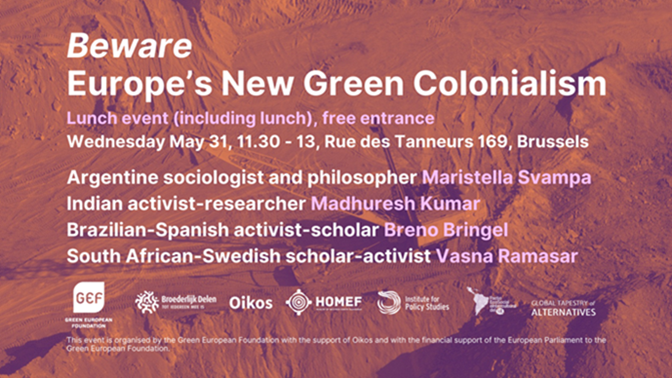
Beware Europe’s New Green Colonialism (Brussels)

By

About the event

A delegation of Global South scholars and activists are launching a lobbying and advocacy tour of European capitals to discuss the urgent issue of an eco-social energy transition. The seven participants are following up on a global manifesto published this year decrying a new Green colonialism and urging more equitable approaches to achieving a fossil-free future.

The mission of the event is to inject Global South perspectives into current European policy discussions around energy and the environment. Decisions made by European policy makers do not only affect Europe, but also the broader world, climate change knows no borders and neither do emissions caused by industry based in Europe.

Project background:

This event is part of the Green European Foundation’s A Just Green Deal for All transnational project. The project aims to provide ideas on how to pave the way for a Green New Deal that is based on a fair and just society and does not leave anyone behind.

Speakers

  • Breno Bringel, Brazilian-Spanish activist-scholar,
  • Madhuresh Kumar,  Indian activist-researcher,
  • Vasna Ramasar  South African-Swedish scholar-activist,
  • Maristella Svampa, Argentine sociologist and philosopher.

Practicalities:

Date and Time: 31st May 2023, 11:30-13:00

Location: Rue des Tanneurs 169, Brussels

Language:  The main languages of the event will be English.

Registration: Closed event


This event is organised by the Green European Foundation with the support of  Oikos and the financial support of the European Parliament to the Green European Foundation. The European Parliament is not responsible for the content of this event.

Ecopolis: Fair(er) Futures Festival (Brussels)

By

Context:

Hope is something you need to deserve,” writes Greta Thunberg in The Climate Book. That’s why ECOPOLIS 2023 takes on the challenge of igniting hopeful activism. How do you turn concern or anxiety about the climate crisis into commitment? How to find a middle ground between naiveté and defeatism?

About the event:

Ecopolis is the day to meet people who care about a sustainable future. Because ecological challenges know no national or linguistic borders, Ecopolis is diverse, international and interactive. Ecopolis invites Belgian and international authors to debate the transition towards a socio-ecological society. Inspiring books, documentaries and debates between writers, academics and civil society thinkers about ecology, economy and society are at the heart of Ecopolis

This year the festival brings together different actors from the political, cultural and social environment to discuss this years focus topic, cooperation for a fair – fairer future as core value. This means tackling the conflicts rooted by competition as basic organisational principle on the individual and economic level. Cooperation is understood as cooperation between movements and allyships, the cooperation between countries and the Global South and Global North, as well as the development of commons, such as housing and energy cooperatives.

Speakers

  • Kim Stanley Robinson, novelist
  • Stephanie Collingwoode Williams, activist in climate justice and anti-racist movements
  • Geert Buelens, poet
  • Jessica den Outer, author and activists for the Rights of Nature
  • Peter Bosmans

Programme:

The festival runs from 10:30 to 21:00, offering different parallel activities, such as panel discussions, workshops or thematic walks around the city. This years programme highlights three different themes, each shedding light on the ecological crisis in a different way.

The first one is Facts and/or fiction. Does knowing more about climate help us make the right decisions? Where can we gain this knowledge from? Can politics and our personal lives also play a role?  How can fiction help bring about our hope and a sense of responsibility? Are these questions on your mind too? In this programme item, you will take part in conversations, a walk and performances with a host of scientists and readers (you, for instance) and share inspiration.

In the series of activities under the umbrella of How to, you will get your hands dirty: come screen printing, pimp your clothes and cycle around in the city visiting places full of hope. Engage with real doers on energy sharing, fair fashion and housing cooperatives. Discover how to transform your own commitment into collective action in your daily life. The debate is open!

In the third theme named The Power of Change you will learn how history shows that a better society does not happen by itself and learn in different workshops wat are the deep conflicts and challenges we are facing today.  It comes from sustained action by committed people. It took decades of social struggles to bring about the welfare state. Today, many are pushing for a quality society for all.

Learn more about the schedule of the programme and speakers. 

Practicalities:

Date and Time: 18 November, 10:30 – 21:00

Location: Muntpunt, Pl. de la Monnaie 6, 1000 Bruxelles (some events, such as walks, happen at different locations, you can find them indicated in the programm)

Language:  The main languages of the event will be Dutch, English and French, with simultaneous interpretation provided EN<>NL<>FR for some sessions

Get your tickets here! 


This event is organised by the Green European Foundation with the support of Oikos and the financial support of the European Parliament to the Green European Foundation.


Political Ecology Days (Brussels)

By

About the event

This edition of the Politicla Ecology Days will be particularly focusing on the question of the reversal of inequalities and the innvational ideas on how to take care better of our world and society. We will therefore discuss how to repair and transform the earth, how to mend inequalities, investigate the relations between humans and non-humans and discuss  our visions of the economy, the world or justice. Repair can be conceived here as both “acknowledging”, “doing justice” or “taking care”. Transform as a movement which, starting among other things from what there is to repair, modifies the coordinates of the world-system.

During 4 days, you can discover more about green politics in 8 lectures, 12 workshops, Greens Talks and 1 documentary screening.


Some highlights of the pogramme:

12th October 2023

20:00-21:30: Une économie centrée sur le soin with Emmanuel Petit, Christine Bauhardt and Géraldine Thiry, moderated by  Dirk Holemans (Co-President Green European Foundation) (FR<>EN)

13 October 2023

9:30: La sobriété ou l’essentiel au quotidien with Geneviève Pruvost, Catherine Larrère, Nadia Leila Aissaoui, moderated by Claudine Drion (FR<>EN)

11:30: Justice restaurative environnementale & écologie judiciaire with Marine Calmet, Olivier de Schutter, moderated by Sophie Wustefeld (FR<>EN)

20:00: Une écologie des corps par-delà nature et culture with Myriam Bahaffou, Catriona Sandilands, Cy Lecerf Maulpoix, moderated by Julien Didier (FR<>EN)

 14 October 2023

14:00: Le Green Talk – 8 nanos-conferences with François Ost, Catherine Larrère, Erica Lippert and many more (FR)

18:30: Artistic performance: Désorceler la finance

15th October 2023 

10:30 – 15:30: School of love – processus artistique (artistic performance)

10:30 – 13:00: De la résilience intérieure (workshop, FR)

14:00 – 16:30: Créer des “mèmes” (internet) écologiques (workshop, FR)

You can find more details for the individual events and many more highlights and the complete programme on this website.


Speakers

  • Catherine Larrère, French philosopher
  • Geneviève Pruvost, sociologist of work and gender
  • Emmanuel Petit, professor of economics
  • Myriam Bahaffou, decolonial ecofeminist activist
  • Géraldine Thiry, professor of economics
  • Olivier De Schutter, former special rapporteur for the UN Human Rights Council

and many more!

Learn more about the schedule of the programme and speakers.


Practicalities:

Date and Time: 12-15 October, 9am – 6pm

Location: Tour et Taxis, Avenue du Port 86c/3002, Brussels

Language:  The main languages of the event will be French and English, with simultaneous interpretation provided for some sessions.

Registration: Please sign up here


This event is organised by the Green European Foundation with the support of Etopia and the financial support of the European Parliament to the Green European Foundation. 

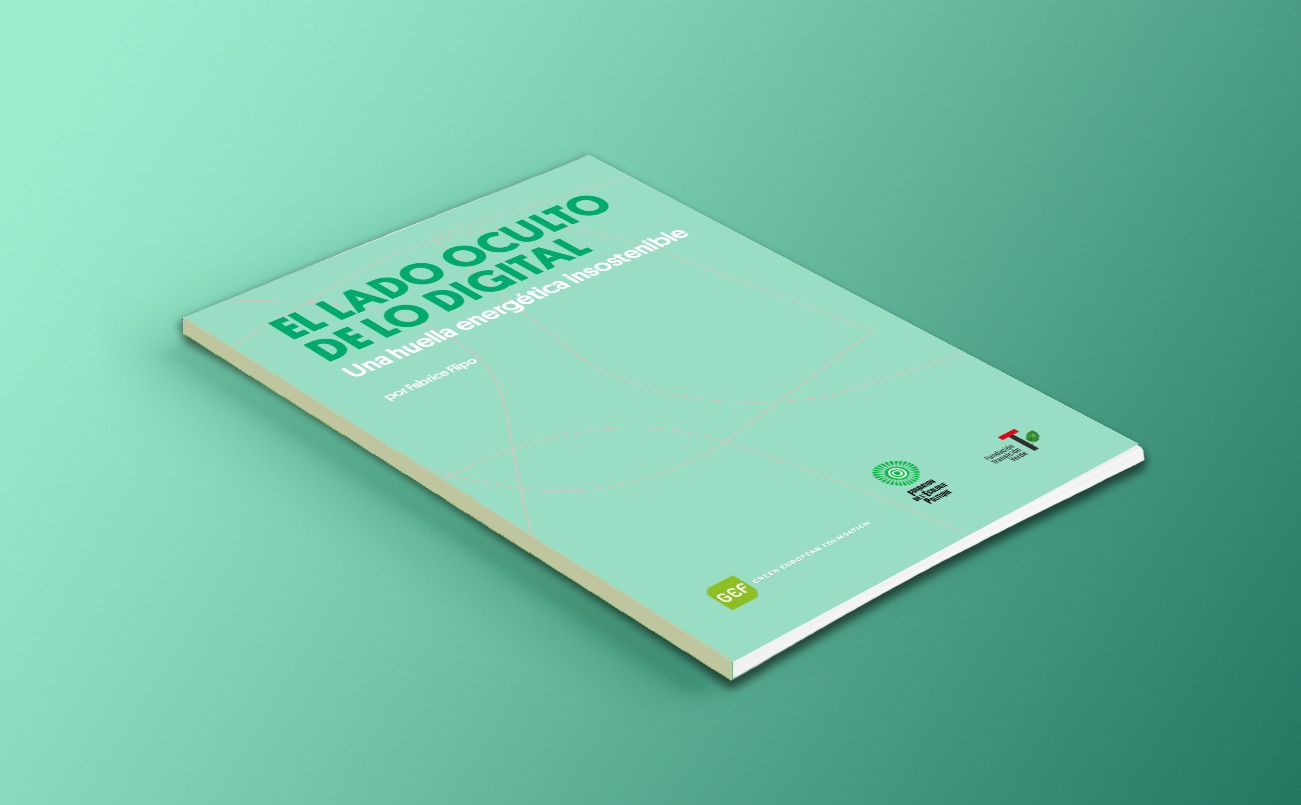
El Lado Oscuro de lo Digital

By Uncategorized

Context

Currently, digital technology consumes 10% of the world’s electricity and contributes to 3-4% of the global greenhouse gas emissions at the increasing rate of over 9% per year. A country like France dedicates 8% of its electricity to digital consumption. A study of the semiconductor industry (2015) estimate that, at the current rate of growth of computing power, and given the gradual slowdown in gains in energy efficiency, digital technology could consume before 20703 the equivalent of all the world’s energy used in 2010.


This report has been realised by the Green European Foundation with the support of Transición Verde, Fondation de l’Écologie Politique, and the financial support of the European Parliament to the Green European Foundation. The European Parliament is not responsible for the content of this publication.
Regional Responses to Climate Change Through Regional Adaptations

By Uncategorized

Context

In its European Adaption to Climate Change, the EU presents the objective suggested to support 150 European regions and communities  working on climate resilience measures until 2023. It particularly takes into account the different ways that regions all over European are affected by Climate Change and how the European Union can support regions and local communities in the process of adjusting to the already existing and predicted effects of climate change on the daily lives of different communities.

The European Union should orient its climate change policy towards a policy mix that includes both Adaptation and Resilience to Climate Change. The former implies a more passive and reactive approach to mitigating the effects of Climate Change, while the latter indicates an active mitigation response.

Objectives

Based on the outcomes of the project Regional Responses to Climate Change,  this study offers insights on the implementation and response to the Regional Climate Change Adaptation Plans in the context of Greece and proposes a potential regional and local response to the predicted impacts of climate change .

Project Background

The “Regional Responses to Climate Change” project explores what a regional climate adaptation-resilience Plan would look like through a rethinking of policies for a new concept of infrastructure investments.

The creation of the publication has been possible thanks to the input from a large number of contributors, including: Panagiotis Panagos, Stavros Solomos, Demosthenes Sarigiannis, Rigas Tsiakiris, Panagiotis Vouros, Ilias Gianniris,  Elias Gianniris, Mirto Garis, Rigas Tsiakiris, Michael Bakas, Philippos Ganoulis, Nikos Poutsiakas and Costas Papakonstantinou.


This Publication is also available in Greek


This report has been realised by the Green European Foundation with the support of the Greek Green Institute, and the financial support of the European Parliament to the Green European Foundation. The European Parliament is not responsible for the content of this publication.
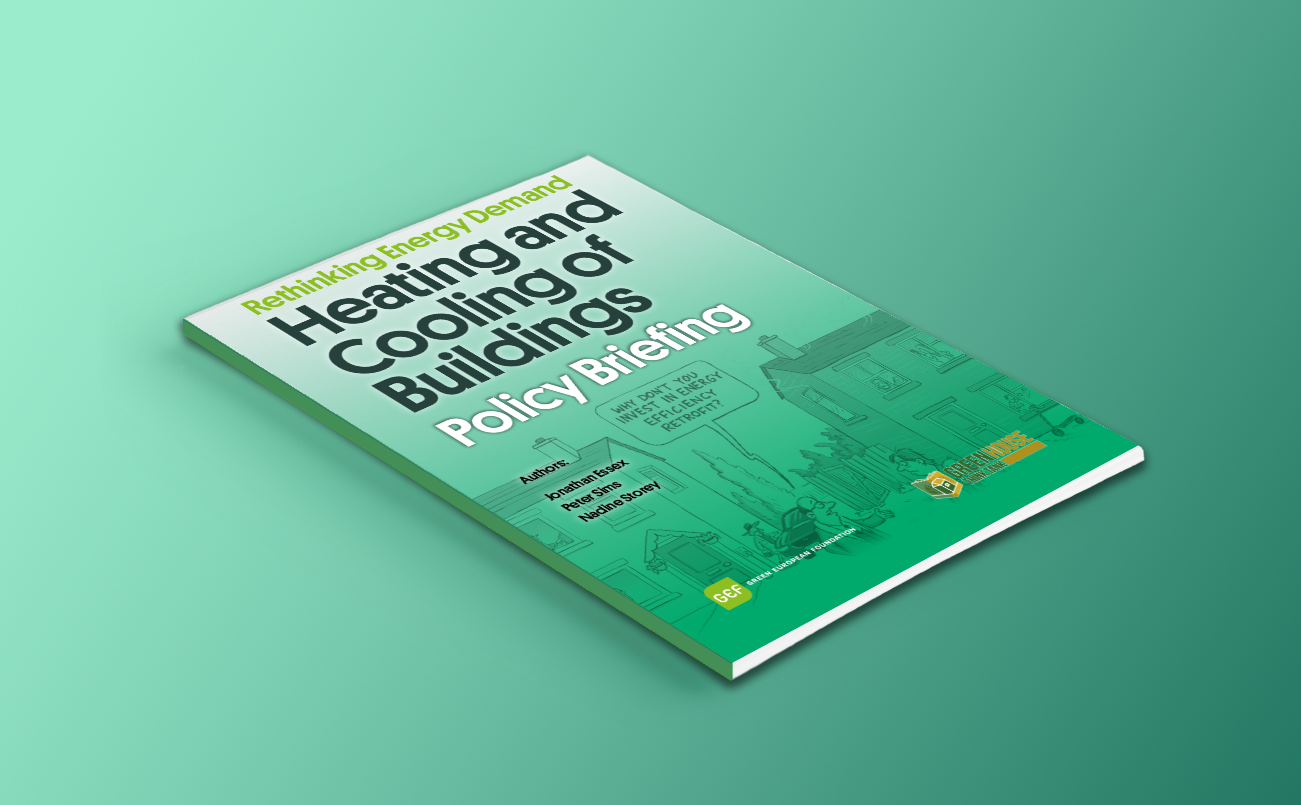
Rethinking Heating and Cooling

By Uncategorized

Context

Climate impacts became more apparent within Europe through the record high temperatures in the summer of 2022. This has converged with a cost-of-living crisis exacerbated by the war in Ukraine and consequent shortages of Russian gas and an unprecedented increase in energy prices. Whilst governments in some countries have shown imaginative thinking to deal with the immediate energy crisis, this thinking needs to be extended with a view to long-term changes of behaviour, practices and social norms. Change is essential to limit energy demand in the future as a critical response to the climate crisis.

Ensuring everyone has a living space that they can maintain at temperatures safe for human health should be a government priority.


Objectives

This publication argues for a broad rethink of the demand for heating and cooling buildings that goes beyond calls for widespread retrofit. It draws from the earlier ‘Rethinking Energy Demand’ report (October 2022) and the interviews conducted for that report with academics and thought-leaders across Europe. The earlier report considered the need and means to sufficiently reduce energy demand. This policy briefing invites policy makers to extend their thinking beyond the immediate crisis towards a longer-term strategy for delivering the human need for thermal comfort whilst eliminating carbon emissions. The briefing comprises 6 sections and offers 16 policy recommendations, across both efficiency and sufficiency measures.


Translations

Available in Spanish

Available in Greek


This publication has been realised by the Green European Foundation and Green House Think Tank with the financial support of the European Parliament. The European Parliament is not responsible for the content of this publication.

Nuclear Power

By Uncategorized

Context

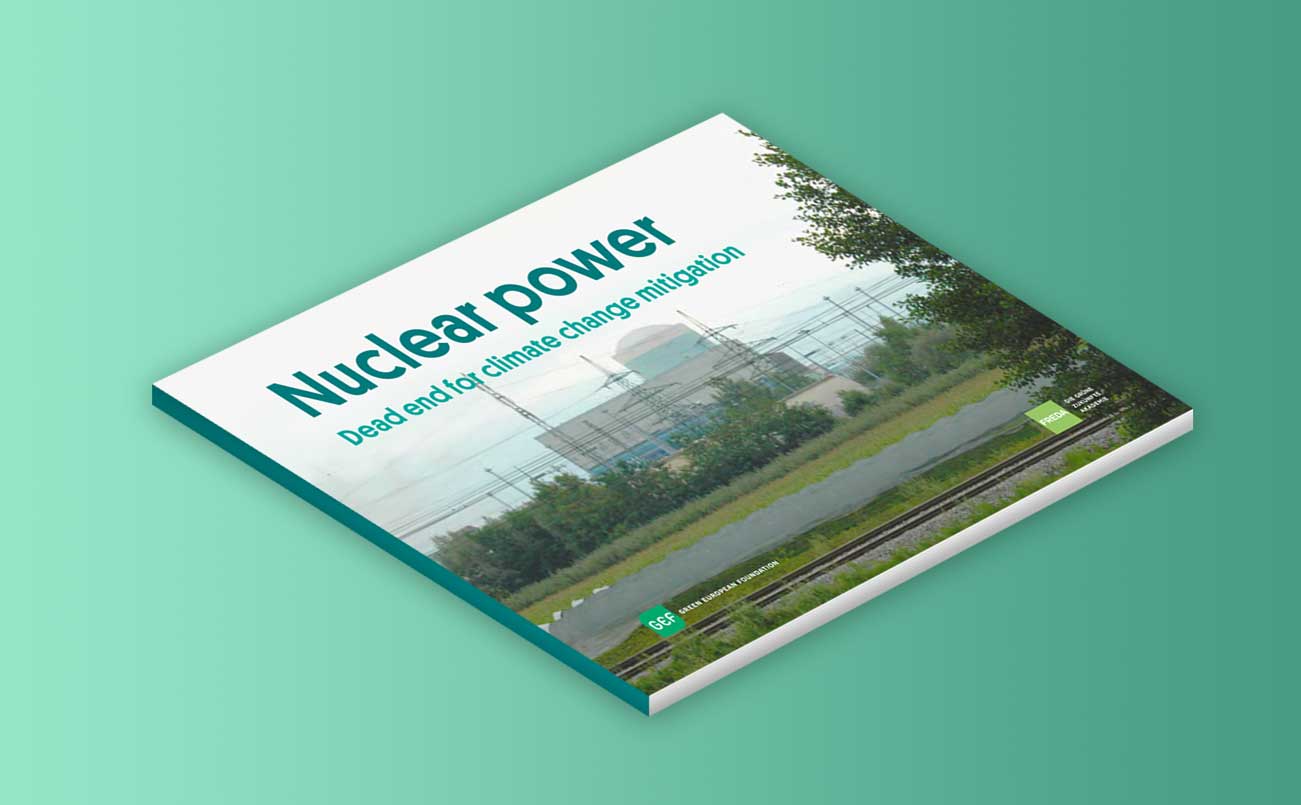
The nuclear power lobby is stronger today than ever. The lobbyists have succeeded in creating an enormous disparity in the perception of what to believe and reality. The post-Chernobyl generation is increasingly falling prey to the fairy tale of modern, safe, cheap and CO2 neutral nuclear power. These arguments can be quickly refuted and often only serve to conceal the ulterior motive: to increase the stockpile of nuclear armaments. Nuclear power will most definitely not save the environment.

Objectives

This publications argues that nuclear power is not the solution to climate change including a critical analysis of the main ten misconceptions about “green” nuclear power. It has been written in close cooperation with Martin Litschauer, Member of the Austrian Parliament and Anti-nuclear Spokesman of the Austrian Greens, and Maria Niedertscheider, Expert Assistant, Austrian Federal Environmental Agency. Th purpose of the brochures is to serve as guidance for a broad European discussion and as a concise summary of the narrative on nuclear power as a supposedly bridge technology.

If we want to protect ourselves and save the environment, we have to use solar, wind and geothermal energy, because these are the fastest and safest ways to achieve the energy transition.

Translations

Available in Turkish

Available in Slovenian


This publication, originally published by FREDA, has been realised by the Green European Foundation and FREDA with the financial support of the European Parliament. The European Parliament is not responsible for the content of this publication.

Evaluating the Plan for Adaptation to Climate Change in Western Greece ( Patras)

By

About the event

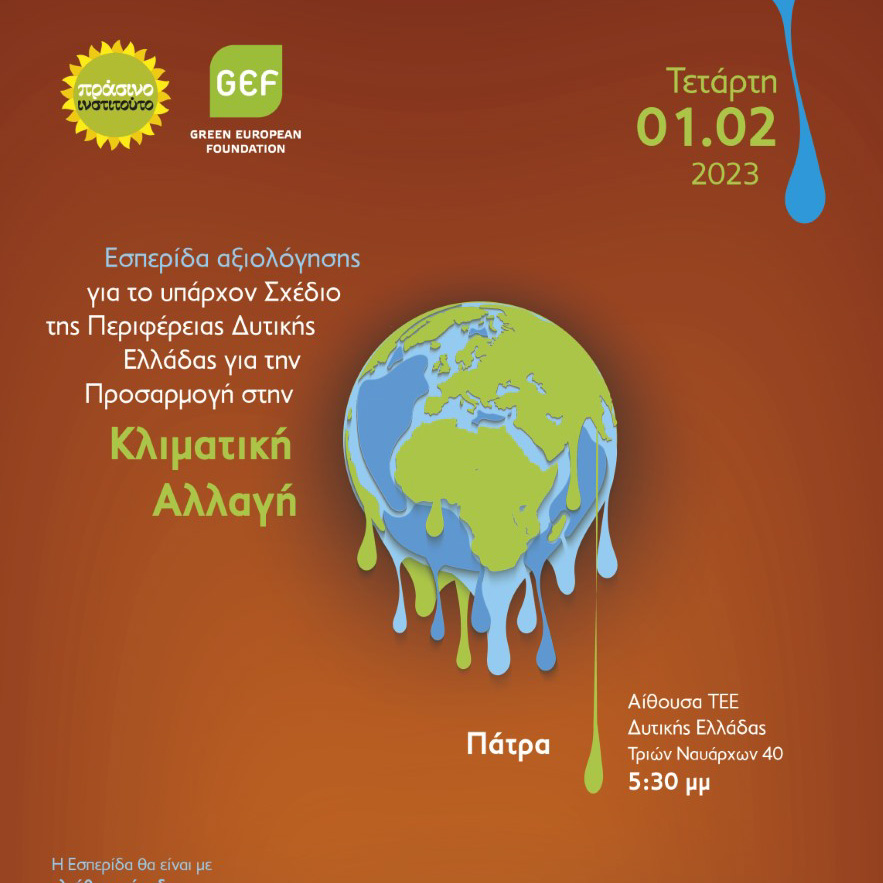
This seminar will mobilise the local society and the Regional Authorities, and inform rural and civil associations, regional representatives, students, municipalities and policy makers to discuss the existing Plan for Adaptation to Climate Change in Western Greece. The aim of the seminar will be to assess which policies need improvement and to consider the best ways to reach civil society. Very few people are aware of this Plan as it is, and one of the purposes of this event is to make it more visible.

Context

Local stakeholders should be the best actors in the efforts to adapt to Climatic Change, for that reason it is important to raise awareness among  EU, National administration, Regional authorities, actors and stakeholders about to the context planned and the actions needed to successfully adapt to Climate Change. With this project, GEF with the support of Green Institute Greece seeks to bring together academics, activists, and policymakers to engage local stakeholders on climate change prevention, mitigation, and restoration.

Speakers

  • Ilias Gianniris, President of the Green Institute, “Some Conclusions from the three previous Green Institute evenings on Regional Plans”.
  • Rigas Tsiakiris, forester, “Findings – inputs for the drafting of a PESPKA. The role of forestry and especially agroforestry and the European dimensions of the protection of wild flora and fauna”.
  • Stavros Solomos, Researcher C, Atmospheric Physics and Climatology Research Center of the Academy of Athens, “Assessment of Expected Climate Changes in Western Greece”.
  • Antonis Sakalis, Environmentalist MSc, Researcher ENVIROPLAN A.E., “Adaptation to Climate Change in the Region of Western Greece – The Regional Plan as a road map for the implementation of measures and actions”.
  • Kostas Papakonstantinou, Regional Councilor of Western Greece, “Combining adaptation to Climate Change with the need for Civil Protection in Western Greece”.
  • Vassilis Aivalis, President of Technical Chamber of Western Greece “Adaptation of Municipalities to Climate Change and the value of building within an urban fabric”.
  • Ecological Movement of Patras, “Planning with a positive perspective on the environment – From the level of the Region to the local level”.

Practicalities

Date and Time: February 1, 5:30 pm

Location: TEE Hall of Western Greece, Trion Navarchon 40, Patras, Greece

Registration: Participation is free. Registrations will occur at the venue.


This seminar is organised by the Green European Foundation, with the support of The Green Greek Institute, the Ecological Movement of Patras (NGO) and the Ecological Western Greece and the financial support of the European Parliament to the Green European Foundation.
Go, but Slow: Neue Wege des Reisens

By Uncategorized

Context

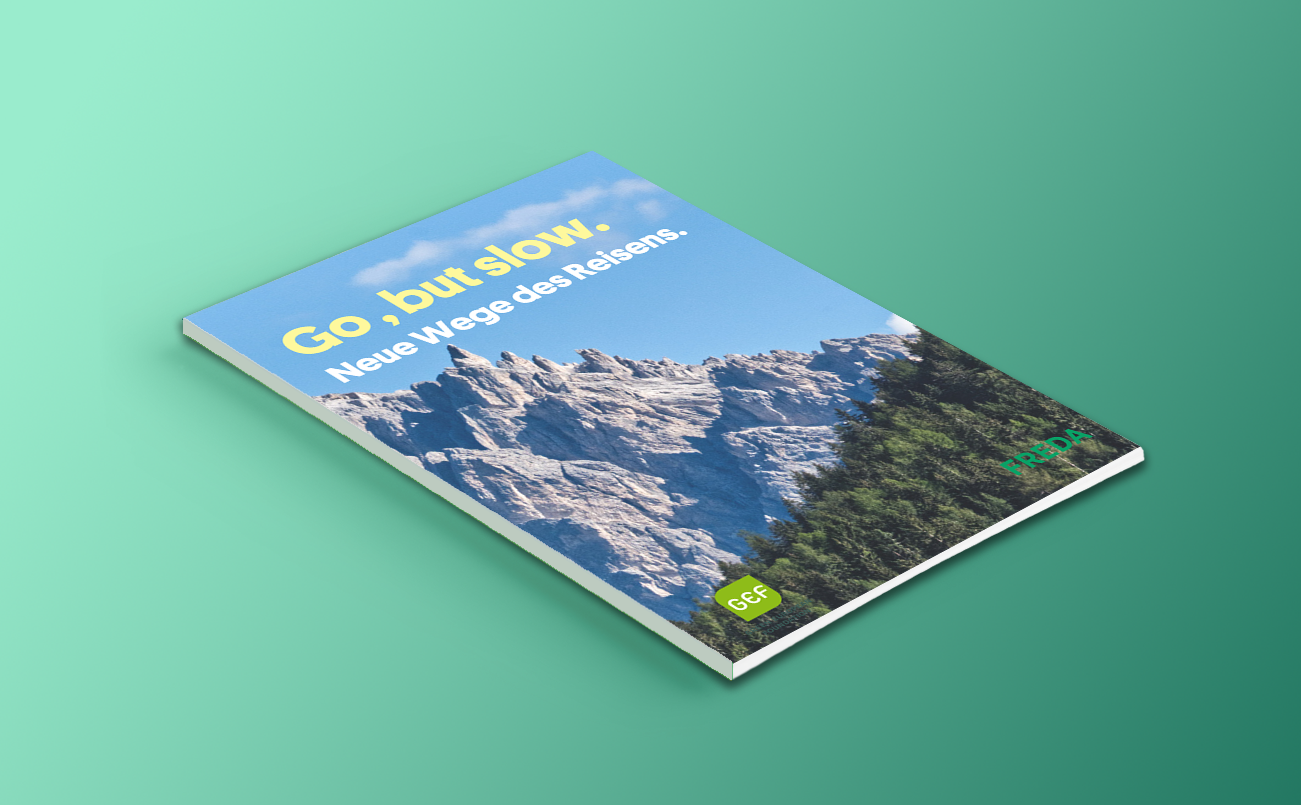
When we talk about tourism, it’s all about the economy, but at the same time, we are talking about nature. However, these two terms don’t always go together well.  Moreover, the climate crisis and the energy transition will soon shift the tourism industry as we know it. Because travelling will be different in the future, we have collected a few examples from Austria and its border regions that show how this transformation could take place.

The transition to a more sustainable form of tourism is not a distant utopia. It is feasible – with the involvement of all local stakeholders, with the involvement of politics and economy, with consideration of the needs of people and nature.

Objectives

This brochure aims to call readers to rethink all aspects of the tourism sector at a national and European level. More often than not, the consequences of tourism go from a workforce suffering from low wages to working conditions that circumvent national regulations, especially in structurally weak regions of Europe. The damages caused to people and the environment have serious consequences. The same applies to the cost of a rapidly growing ecological footprint in the industry. All these facts are calling for joint European solutions.


This publication has been published by the Green European Foundation with the support of FREDA foundation (Serbia), and the financial support of the European Parliament to the Green European Foundation. The European Parliament is not responsible for the content of this publication.
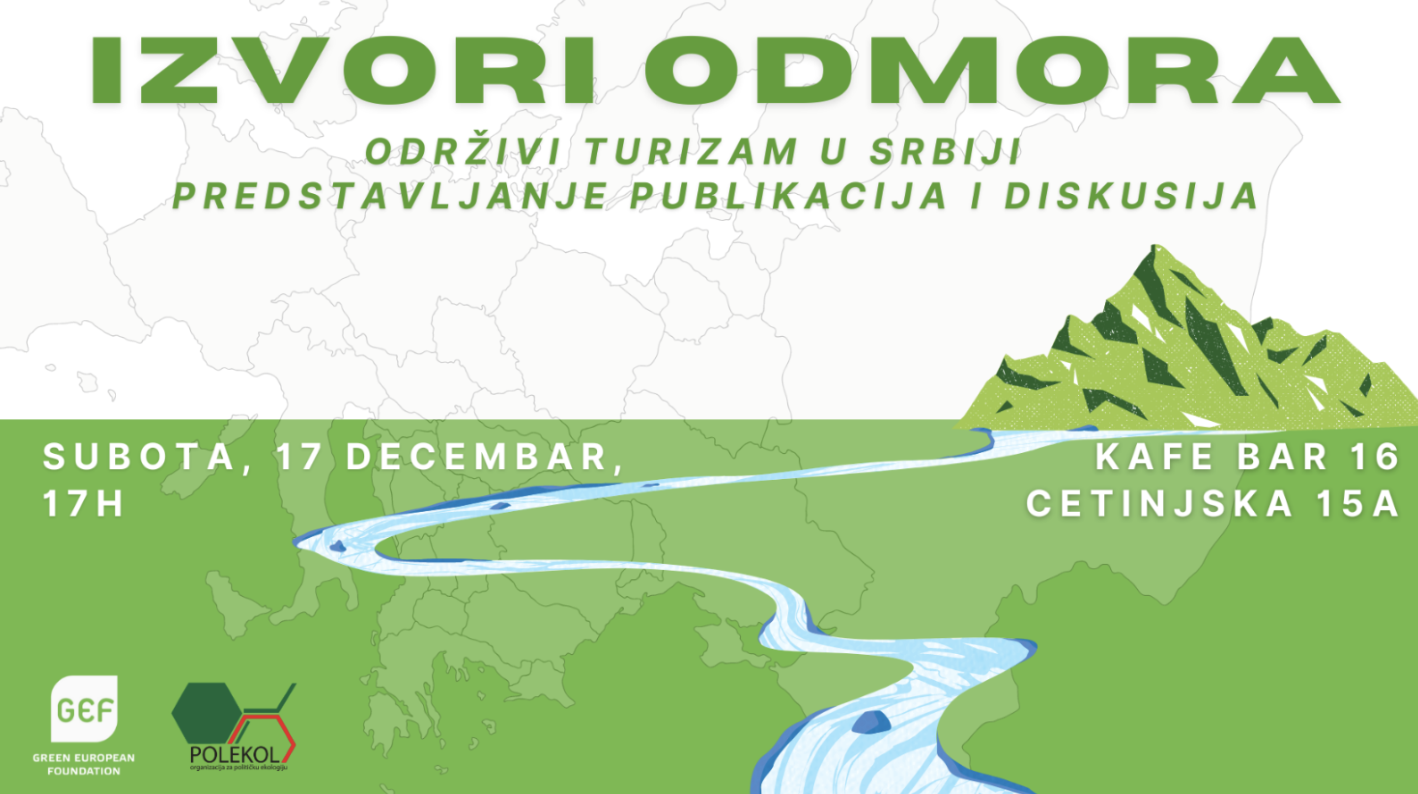
Sources of Rest: Sustainable Tourism in Serbia (Belgrade)

By

About the Event

The development of tourism is an important aspect of the economic activities of a country because it enables the inflow of foreign capital, economic growth, and job creation. It also holds invaluable opportunities for exchange and understanding between and beyond the citizens of Europe. However, inadequate development and implementation of tourism plans can make it impossible to use its potential in an adequate way. The business and development of this economic branch, especially in less developed countries, generally has disastrous consequences for the environment and the local community. The development of mass tourism in popular locations leads to the mass exploitation of natural resources and their destruction, while most of the income goes to the owners of large hotel chains and companies at the expense of the local community, which is mostly engaged in seasonal work. 

Serbia is a country that has many natural beauties and a huge tourist potential, but that potential must not become an object of exploitation. In order to prevent this scenario, it is necessary to adopt adequate plans and strategies, and for that it is important to organize discussions and hear the opinion of not only experts and the civil sector, but local communities, which are the most important element of tourism development planning and whose opinion is generally the least heard. In this panel discussion, we will discuss the findings of such local discussions in the Stara Planina region and reflect more broadly on what the future could hold for fair and carbon-free tourism in Serbia. 

Context

This event is part of GEF’s Fair and Carbon Free Tourism project, which aims to identify and create conditions for collective action against detrimental social and environmental impacts of tourism. By engaging stakeholders in partner countries and developing a European transnational discussion on these challenges, we seek to build a community interested to transform this sector in the direction of low or zero carbon intensity and with a specific focus on social and economic justice. 

Speakers

Katarina Lević – MA in Political Sciences and PolEkol researcher, who studied spa tourism and tourism on Stara Planina 

Nataša Gligorijević – Director of the Center for Sustainable Development of Serbia 

Milan Zlatanović, MA in Political Sciences and PolEkol researcher, who studied tourism on Stara Planina  

Practicalities

Date and Time: Saturday, December 17th at 17:00 

Location: Cafe Bar 16, Cetinjska 15a, Belgrade, Serbia 

Language: Serbian 

Registration: No advance registration is necessary, but you can join our facebook event for the latest updates.  


This event is organized by the Green European Foundation with the support of PolEkol and with the financial support of the European parliament to the Green European Foundation. 
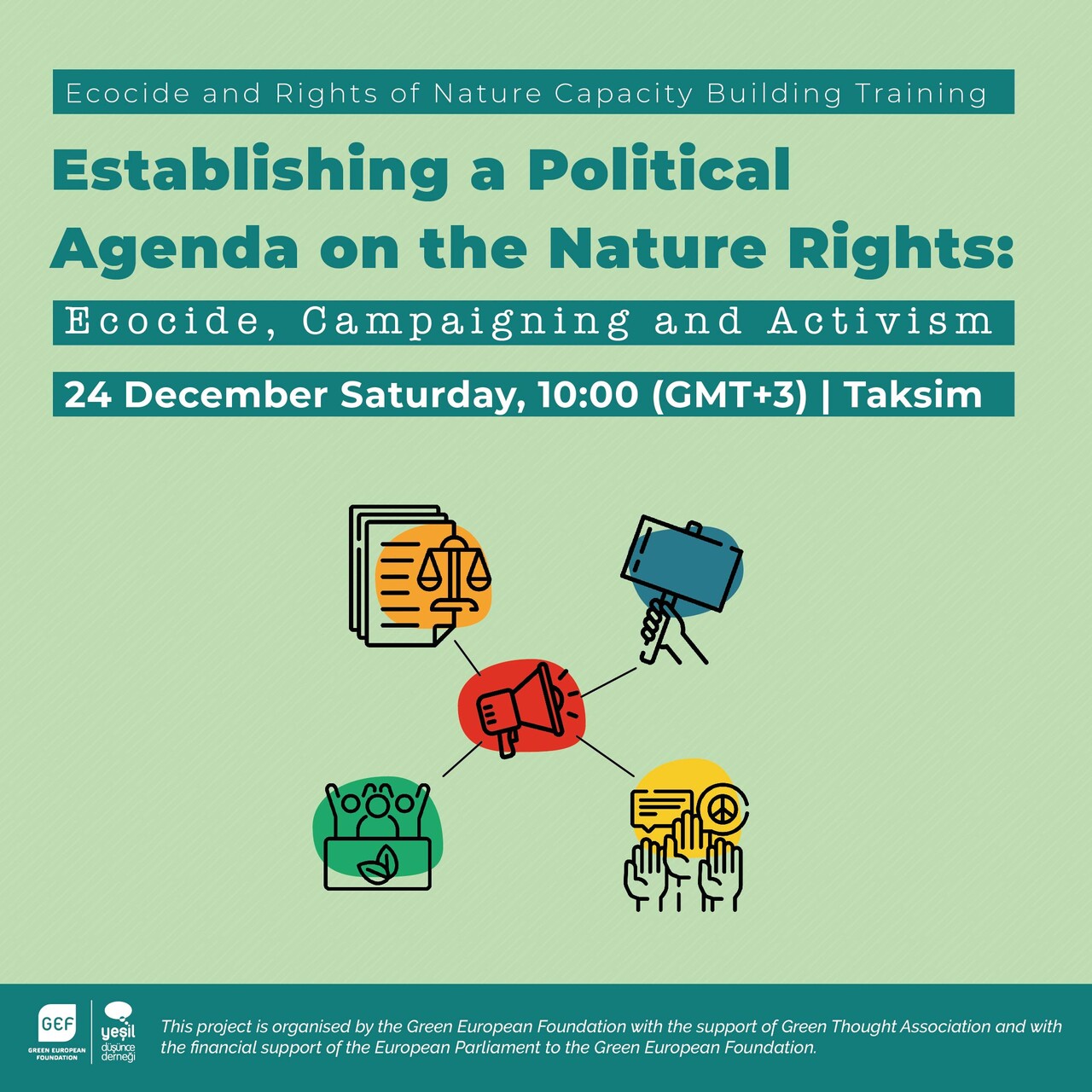
Establishing a Political Agenda on the Nature Rights: Ecocide and Activism (Istanbul)

By

Context

With the support of GTA, GEF is organising a capacity building training for those who are eager to deepen the knowledge on the theoretical background of ecocide, campaigning and activism. With this training, you will be introduced to campaign organization and communication strategies along with relevant theoretical discussions. The capacity building training will culminate with a panel discussion including examples of local movements. 

Programme

10:00-10:30Opening and brief introduction
10:30-12:30Serkan Köybaşı (Greens, Bahçeşehir University) – theoretical framework Q&A – group work 
12:30-13:15 Lunch
13:15-14:45İrem İnceoğlu (Head of Communications Kadir Has University) – On the campaign and communication
14:45-15:15Break
15:15-17:15Panel Session 

Speakers

Moderation: İrem İnceoğlu

  •   Süheyla Doğan
  •   Kazdagi Natural and Cultural Heritage Conservation Association / Ecology Association
  •   Defne Koryürek 
  •   Deniz Gumusel 
  •   Akbelen Struggle Activist / Right to Clean Air Platform Coordinator
  •   Zeynep İlhan
  •   Kazdagi Natural and Cultural Heritage Preservation Association : Akçay wetland struggle

Practicalities

Date: 24th December, Saturday

Location: Cezayir Meeting Hall, Hayriye Caddesi 12, Galatasaray, Beyoglu, 34425 Istanbul

Language: this event will be in Turkish language

Registration: Please register in advance: https://forms.gle/g2Cum1E2Ya7t5R7WA


This event is organised by the Green European Foundation with the support of Green Thought Association and with the financial support of the European Parliament to the Green European Foundation.
 

Closing Roundtable: Fair and Carbon Free Tourism (Skopje)

By

About the Event

In this final event of the project, we will discuss green visions to transform tourism across Europe, setting the path to a different future for a Fair and Carbon Free Tourism.

We will hear the perspectives of researchers, experts and academics in North Macedonia as well as best practices and initiatives mapped within the project that have already led to transformation. Attention will be paid not just to environmental and climate concerns at the macro-level, but also to how this sector is strongly connected to local communities and their mission for a better quality of life.

Context

This event is part of GEF’s Fair and Carbon Free Tourism project, which aims to identify and create conditions for collective action against detrimental social and environmental impacts of tourism. By engaging stakeholders in partner countries and developing a European transnational discussion on these challenges, we seek to build a community interested to transform this sector in the direction of low or zero carbon intensity and with a specific focus on social and economic justice.

 Speakers

  • Vlado Srbinovski – Association Balkania – Expert on Sustainable and Alternative Tourism
  • Dejan Metodievski – Professor at Shtip University, Faculty of Tourism
  • Aleksandar Gjorgjievski – National coordinator of the project

More to be announced!

Programme

17:00Participant arrivals
17:10Introduction
17:20Speaker presentations on transformative tourism
17:40Break
18:00Panel discussion with experts, researchers, and NGOs

Practicalities

This is a closed event that will take place in Skopje, North Macedonia. The primary language is Macedonian. If you have any questions or want to learn more, please contact sien.hasker@gef.eu.


This event is organized by the Green European Foundation with the support of ASSED Sunrise and with the financial support of the European parliament to the Green European Foundation.

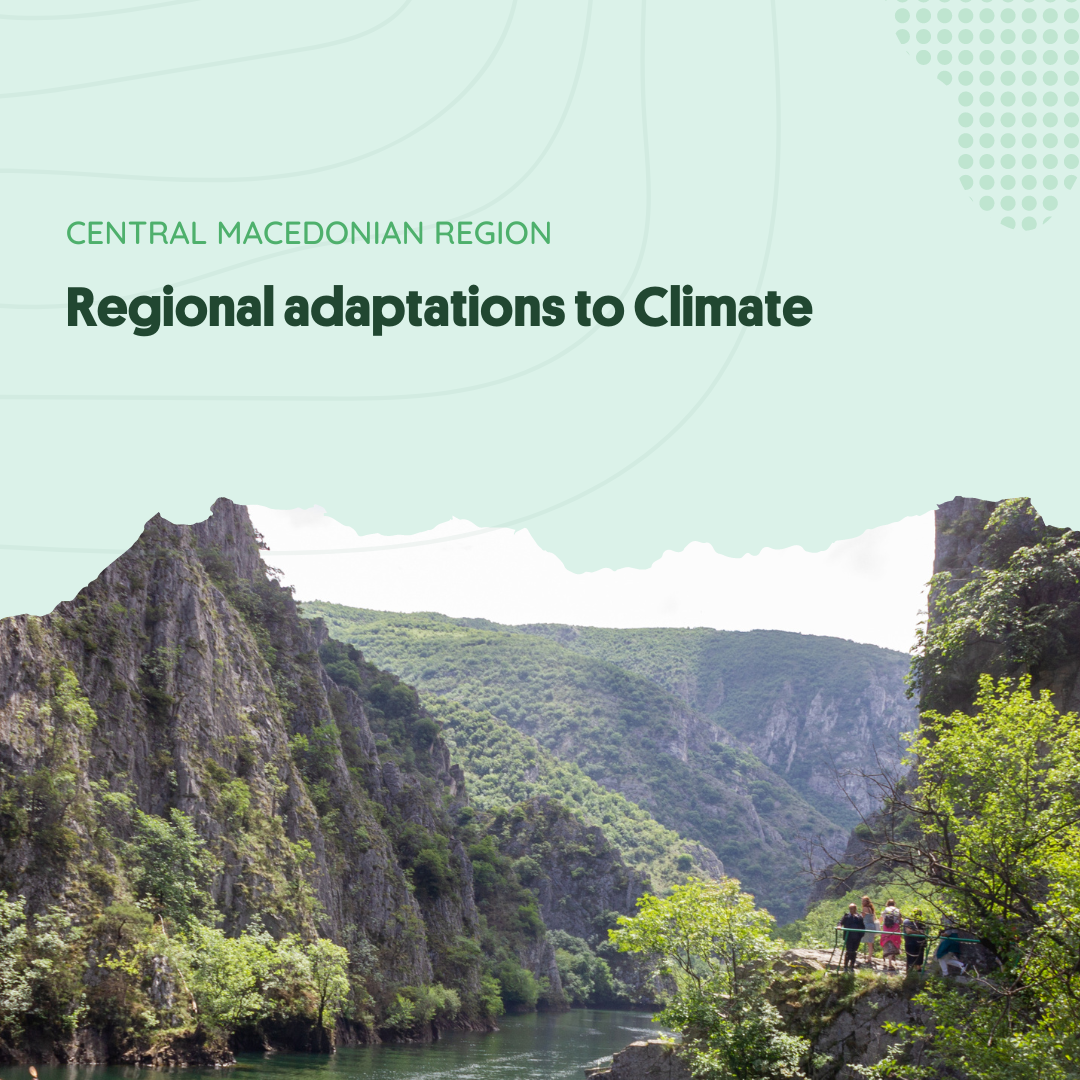
Regional adaptations to Climate Change (Central Macedonia region)

By

Context

In 2022-23, The Green European Foundation with the support of the Green Institute Greece is implementing the project “Regional Adaptations to Climate Change”. The project aims to explore Adaptation plans for four Regions in Greece (North Aegean, Thessaly, Central Macedonia, and Peloponnese) in relation to their existing Regional Climate Change Adaptation Plans (PESPKA).

During the next four months, the events will focus on one region at a time, with recommendations on how to improve adaptation plans in the region and share best practices for other European countries facing similar climate impacts.

Program

5:15-5:30 Arrival
5:30 Opening Chair: Philippos Ganoulis, researcher, partner of the Green Institute, Argyris Ginoudis, partner of the Green Institute
5:30-6:00 Greetings
6:00-6:20 Ilias Gianniris, President of the Green Institute, Conclusions from the Green Institute’s investigations on resilience and adaptation to climate change
6:20- 6:40 Stavros Solomos, Researcher, Atmospheric Physics and Climatology Research Center of the Academy of Athens, Assessment of Expected Climate Changes in Central Macedonia
6:40- 7:00 Panagiotis Panagos, Research Officer at the European Commission, The soil and its value for adaptation to climate change in relation to the Central Macedonian PESSPKA
7:00-7:20 Dimosthenis Sarigiannis, Professor, AUTH, Department of Chemical Engineering – Environmental Engineering, Preparedness of organizations and citizens for Adaptation to Climate Change – Forecasts of the PeSPKA of Central Macedonia
7:20- 7:40 Philippos Ganoulis, researcher, Positive and weak points of the PeSPKA of Central Macedonia
7:40-8:00 questions
8:00-8:10 break
8:10- 8:50 Round table with the participation of the speakers. Coordination: Xenofon Zisis, Evaluation of the Central Macedonia PESPKA.- proposals- implementation measures- Revision
8:50-9:00 Ilias Gianniris, president of the Green Institute: The next steps.

Practicalities

Location: Hall of the Directorate of Urban Planning and Architectural Studies
of the Municipality of Thessaloniki

Date and Time:  5th December 5:30 pm to 9:00 pm CET

Audience: This event is open to the general public, hybrid

Participation: This event will be livestreamed via Zoom

Meeting ID: 863 4813 8848

Language:  This event will be in Greek language


This event is organised by the Green European Foundation with the support of Greek Green Institute and with the financial support of the European Parliament to the Green European Foundation.The European Parliament is not responsible for the content of this event.


Putting the New Back In: The Green Deal for a World in Crisis (Copenhagen)

By

About the event

In the face of multiple crises – geopolitical, climate and energy, but also the very erosion of Europe’s social fabric by its outdated economic model – what should the Greens bring to the table to ensure that the European Green Deal (EGD) switches to the next gear into a social EGD or EGD 2.0? When the time comes to act the Greens respond. Looking ahead to the 2030 and 2050 European project, how can Greens set the direction to overcome the challenges of a EGD that was designed in a pre-Covid and pre-conflict world, and one that fails to account for key dimensions of wellbeing or care? 

Speakers: 

  • Kira Peter Hansen, MEP & Vice President of Greens/EFA Group in the European Parliament 
  • Rosa Martínez Rodríguez, former Member of the Spanish Parliament
  • Dirk Holemans, Co-President of the Green European Foundation & Director of Oikos Thinktank 

Moderator: Jamie Kendrick, Editor-In-Chief, Green European Journal 


 Practicalities

Date and Time: Friday 2nd December, 1pm

Location: Christianhavn room at the CPH conference centre (Tietgensgade 65, DK-1704 København).

Audience: This session is open to all participants of the 6th Congress of the European Green Party.


This project is organised by the Green European Foundation with the financial support of the European Parliament to the Green European Foundation. The European Parliament is not responsible for the content of this event.
Metals for a Green and Digital Europe (Stockholm)

By

About the Event

This event will consist of debate between think tanks and academics on the Swedish version of the GEF publication Metals for a Green and Digital Europe – An Agenda for Action.  The debate will involve an open conversation of mineral use with a particular look at the role of the indigenous population in Sweden (Sapmi).

Context

This event is organised as part of the launch of the Swedish translation of the report Metals for a Green and Digital Europe – An Agenda for Action.

Speakers

Speaker: Richard Wouters, Wetenschappelijk Bureau, GroenLinks.

Panelists:

  • Kalle Sundin, policy officer at the think tank KatalysIsadora Wronski, senior strategist Greenpeace
  • Charles Berkow, Cogito
  • May-Britt Öhman, Associate Professor of Environmental History, Uppsala University
  • Maria Sunér, managing director Svemin

Moderator: Henrik Jalalian, Cogito

Practicalities

Date and time: 12 December 18:00 – 19:30 PM

Format: In person event

Audience: This debate will take place in Swedish language and is open to the general public

Registration: Registrations will open shortly


This project is organised by the Green European Foundation with the support of Cogito with the financial support of the European Parliament to the Green European Foundation. The European Parliament is not responsible for the content of this event.
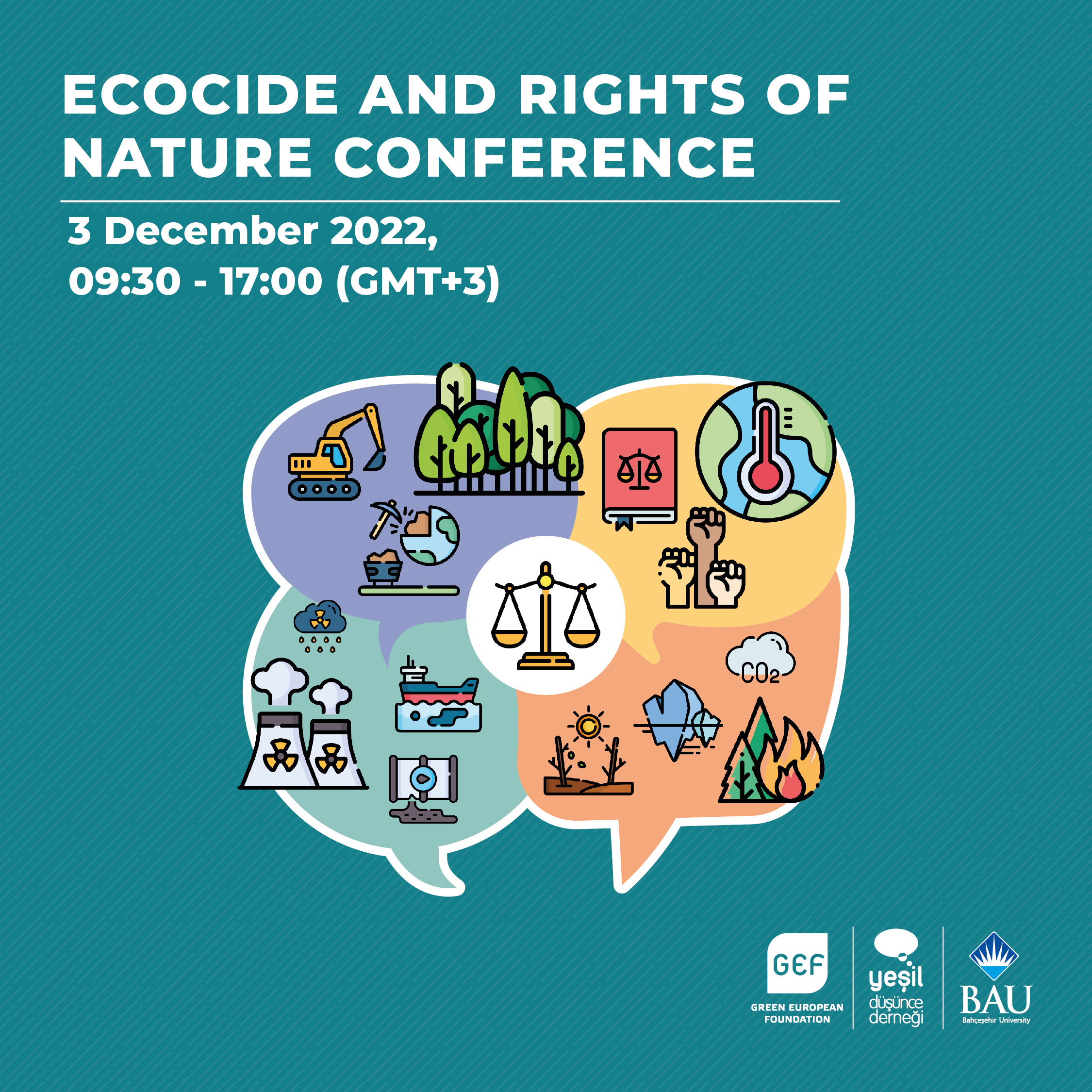
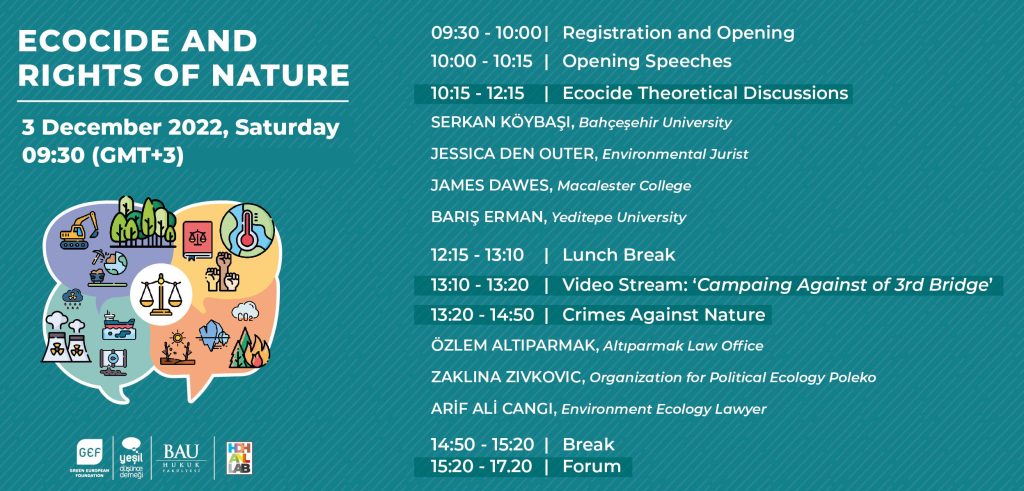
Ecocide Conference (Istanbul)

By

About

This conference will aim to revise and share the knowledge, experiences, and collective memory gathered so far through previous projects such as the ‘Ecological Constitution Initiative’ and ‘Nature Has Rights’. The ‘Ecocide and Rights of Nature’ conference will draw attention to the rights of nature, and will contribute to strengthen environmental protection monitoring and advocacy actions, with the intention to reinforce political discourse in nature conservation movements. The “Ecocide and Rights of Nature” conference will gather nature rights defenders, activists, academics, lawyers, and green actors fighting against ecocide from Turkey and Europe.


Programme


Practicalities

Date and Time: Saturday, 3 December 2022  from 09:30-17:00 CEST

Location: Bahçeşehir University, Beşiktaş.

Language: This conference will be in Turkish with  simultaneous translation to English.

Registration: Please register here.


This project is organised by the Green European Foundation with the support of  Green Thought Association with the financial support of the European Parliament to the Green European Foundation. The European Parliament is not responsible for the content of this event.
Transition to Energy Democracy (Skopje)

By

About the Event

During this interactive sessions on Energy democracy, we will discuss the current energy policies in North Macedonia and the need for a more democratic and inclusive society. As part of this exercise, we will address the state of democracy in the EU and candidate countries, looking at possible economic alternatives and considering the climate change urgency.

Context

This is the second event with our Energy Democracy project in 2022. With Europe’s deepening energy crisis and the chronic coal dependency of the Balkan region, the need for renewable energy is more evident than never before. On this event we will elaborate on previous experiences in Europe involving transitions in the energy sector to stimulate positive change in North Macedonia and the region. The discussions should result in a workshop to discuss and learn more about the prosumer and energy cooperative models, the use of renewable energy and its potential for the economy.

GEF and Sunrise are pioneers on the topic of Energy Democracy in North Macedonia and again with this second event in 2022 we will continue to discuss energy transformation towards participatory, inclusive and a decentralised green economy through the expansion of the Energy Democracy concept. Together we will contribute to the debates and practices on EU level with experiences and challenges from the Balkans.

Speakers

Speakers will be announced shortly.

Programme

15:00                   Welcome and introduction

15:10-15:20       Session with speaker on Energy Democracy

15:20-16:00      Workshop sessions on prosumer models in the EU and the region of the Western balkans

16:00-16:20      Coffee break

16:20-17:00      Workshop sessions on energy cooperatives with European experiences and regional approach

17:00-19:00        Dinner and discussion

Practicalities

Date and Time: 15th November, 3pm

Location: Skopje

Language: The primary language is Macedonian but simultaneous translation in English will be provided. 

Audience: Closed event with invitation only.


This event is organised by the Green European Foundation with the support of Sunrise and with the financial support of the European parliament to the Green European Foundation. 
 

Regional adaptations to Climate Change (North Aegean region)

By

Context

The Green European Foundation with the support of the Green Institute Greece is implementing the project “Regional Adaptations to Climate Change” in 2022-23. The aim of the project is to explore Adaptation plans of four Regions in Greece (North Aegean, Thessaly, Central Macedonia, Peloponnese), in relation to the existing Regional Climate Change Adaptation Plans for each Region (PESPKA).

During the next four months, the events will focus on one region at a time, with recommendations on how to improve adaptation plans in the region and share best practies for other European countries facing similar climate impacts.


Program

5:30pm Arrivals6:00pm Introductions by the Chair: Michalis Bakas, Environmentalist, MDE Environ. Policy and Management,6:00-6:10pm Greetings6:10- 6:25pm Stavros Solomos, Researcher, Atmospheric Physics and Climatology Research Center of the Academy of Athens, Assessment of Expected Climate Changes in the North Aegean6:25- 6:40 pm Eleni Briasoulis-Kapetanaki, Om. Professor, Department of Geography, University of the Aegean, The challenges of spatial planning to combat land degradation and desertification6:40- 6:55pm Panagiotis Panagos, Research Officer at the European Commission, Soil and its value for adaptation to climate change in relation to the North Aegean PESPKA6:55- 7:10 pm Giorgos Plakotaris, EYD Executive, Procedures and Provisions of PESPKA B Aegean – Next steps7:10- 7:25pm Theodora Petanidou, Professor, Department of Geography, Laboratory of Biogeography & Ecology, University of the Aegean, Why the preservation of the terraces is a priority in the North Aegean7:25- 7:40pm Athanasios Kizos, Professor, Rural Geography, Department of Geography, University of the Aegean, Preparedness of farmers, their organizations and citizens for Adaptation to Climate Change – Forecasts of the North Aegean PESPKA7:40-7:55pm Q&A7:55- 8:10pm break8:10- 9:00 pm Round table with the participation of the Speakers

Coordination: Ilias GiannirisEvaluation of the North Aegean PESPKA.- proposals and implementation measures9:00-9:10 pm Ilias Gianniris, president of the Green Institute Greece: Next steps.


Practicalities

Where: Chamber of Lesvos, P. Kountourgioti 71, Mitilini-Lesvos, 81100

Date:  22nd November

Time:  17:30 to 21:00 CET

Audience: This event is open to the general public

Registrations: Registrations will be open shortly

Language:  This event will be in Greek language


This event is organised by the Green European Foundation with the support of Greek Green Institute and with the financial support of the European Parliament to the Green European Foundation.The European Parliament is not responsible for the content of this event.