Heinrich Böll Foundation – After Europe goes to the polls: Where is the European Union headed? (Berlin)

By

Event Background

The European election will be a litmus test for the European democratic project and further reveal and demonstrate what has been a trend in many European countries in recent years – the increasing success of right-wing populist and extremist forces. In regions where they are gaining more and more ground, they have already managed to influence the political discourse to a large degree and thus changed the direction and
impetus of the European election campaigns.

About the Event

The Heinrich Böll Foundation is therefore committed to bringing its European partners and European actors fighting against right-wing populism in Europe together to provide a platform for networking and the exchange of ideas, best practices and lessons learned.

At the conference “After Europe goes to the polls: Where is the European Union headed?”, the election results will be analysed, to examine the causes of voting behaviour in the individual EU member states, and discuss with European experts how the new majorities will impact the European Parliament’s ability to act, the interaction between the EU institutions, and the orientation of future EU policy.

The networking event – as part of the Conference – aims to connect and support progressive forces that promote liberal democracy within the EU.

Held with the cooperation of the Green European Foundation.

Programme

Monday, June 3rd, 2019

10.45: Registration
11.00: Welcome
13.00: Lunch
14.00: Welcome address and introduction
Dr. Ellen Ueberschär, President, Heinrich Böll Foundation, Berlin

Keynote
What challenges await the European Union after the European elections?
Ivan Krastev, Chair of the Centre for Liberal Strategies and Fellow at the Institute for Human Sciences, Sofia/Vienna

Discussion with:
Anne Gellinek*, Chief of the ZDF Television Office Brussels, Second German Television,
Brussels

15.00: Break
15.30: Panel – Analysis of the election results

· Motives and background: What are the key election results?
· What kind of EU have the voters elected?
· What were the motives behind electing parties sceptical about the EU and
integration?
· Do the election results vary by certain regions or groups of countries?
· What impact will the election results have on the EU policy of individual member
states?
Piotr Buras, Head of the Warsaw Office, European Council on Foreign Relations, Warsaw
Prof. Dr. Sylvie Strudel, Professor of Political Science, Université de Paris 2, Paris
Prof. Dr. Uwe Jun, Professor of Political Science, Trier University, Trier
Prof. Dr. Lina Papadopoulou, Associate Professor of Constitutional Law, Aristotle University Thessaloniki

17.00: Break
17.30: Panel – Where is the EU headed after Europe goes to the polls?

· What effect will the new majorities have on the European Parliament’s ability to act?
· New parliamentary groups – new alliances: How must the progressive forces now
position themselves?
· How much support does the European Union still have? How can it build further
trust? And how can it find a capacity to act?
· What consequences will the election results have for future EU policy?
· What common projects will now take priority?
Reinhard Bütikofer, MEP, Chair of the European Green Party, Brussels
Dr. Rui Tavares*, Politician and former MEP, The Greens/EFA, Young Policy Leader Fellow at European University Institute, Florence
Edit Zgut*, Analyst, Polish Academy of Sciences, Warsaw/Budapest
Prof. Dr. Teresa Pullano, Assistant Professor of European Global Studies, University of
Basel

19.00: End
19.30: Dinner

*Speakers listed above have been invited, but have not necessarily confirmed their participation.

Tuesday, June 4th, 2019
09.30: Registration
10.00: Welcome address and introduction
Keynote
Civil society and the future of Europe

  • Dr. Sergey Lagodinsky, Candidate for the European Parliament, The Greens/EFA and
    Head of the European Union/North America Department, Heinrich Böll Foundation, Berlin
  • Flavia Kleiner, Co-President, Operation Libero, Bern

10.30: Exchange
How European elections have affected and affect the political landscape for civil
society and civil action

  • Inputs from partner organizations from different countries

Discussion

12.30: Lunch
13.30: Exchange
Capacity to act for civil society in times of shrinking spaces

  • Inputs from partner organizations from different countries

Discussion

15.00: Break
15.30: What comes next?
Feedback
16.00: End

Practicalities

Entry is free, but registration is required. Please register with the form found on the  Heinrich Böll Foundation website here. 

Transport connection
Bus 147 Deutsches Theater
S-Bahn S1, 2, 25, 5, 7, 75, 9 Friedrichstraße
U-Bahn U6, Oranienburger Tor
Tram M1, M6, 12 Oranienburger Tor
from central station (DB), Bus 147 > Ostbahnhof bis Deutsches Theater

Conference languages
The international conference will be translated simultaneously German/English.
The network meeting will take place in English only.

 

Call for Applications: Congress of Young Europeans 2019 (Marseille)

By

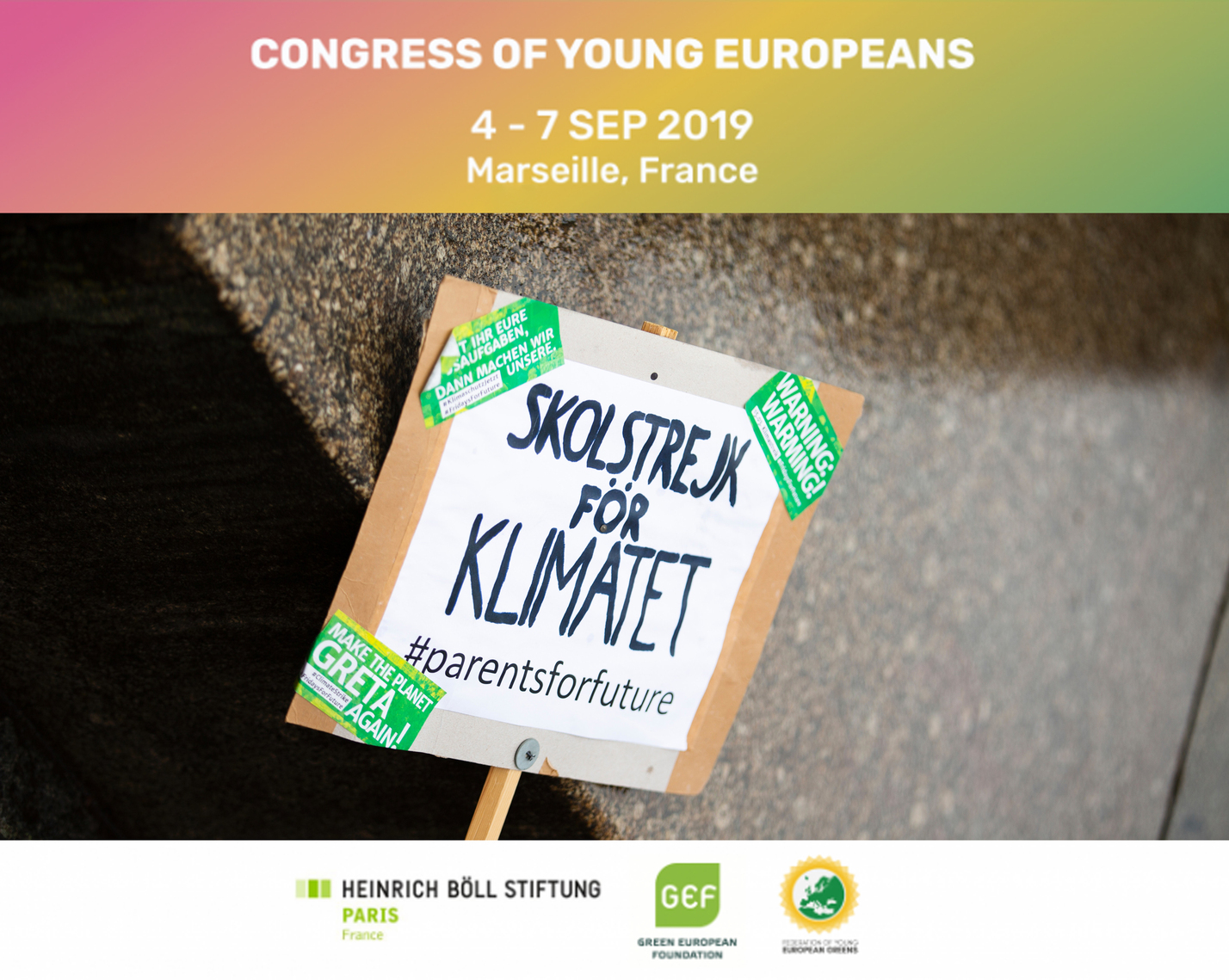
The Heinrich Böll Foundation, the Green European Foundation and the Federation of Young European Greens (FYEG) are calling for applications to participate in the 7th Congress of Young Europeans! The Congress will take place in Marseille, France, from 4th to 7th September 2019.

The main theme of this year’s Congress is “How to fight for climate and democracy”. How can young people with ideas and ideals at hand contribute to social and political change? What can we learn from movements like Fridays for Future? Which tools do successful activists use? How can we build and connect a movement?

During the three-day Congress, selected participants will have the opportunity to come together and participate in different panels and workshops focusing on these questions.

How to Apply

  • Are you already involved in a movement, NGO, or similar activity?
  • Are you interested in sharing and expanding your vision, knowledge and ideas?
  • Are you between 18 and 30 years old?
  • Are you interested in sharing and discussing ideas in a transnational environment?

Apply now to the Congress of Young Europeans and become part of a young and innovative European network!

The organisers will cover the the travel and accomodation costs for all selected participants of the Marseille Congress of Young Europeans.

The number of available spaces is limited.

The working language of the Congress is English.

Please apply via the application form found here: APPLY!

DEADLINE EXTENSION: 21st June


Call for Testers: an Online Course on Hate Speech (in German)

By

Context:

We are looking for testers for the final test phase of the online course „Hate Speech Widersprechen“.

Your feedback is invaluable: we will use the information you give in the evaluation at the end of the course to refine and improve the content accordingly, with the final version to be launched on 15th February 2019.

The course is available in German and takes less than 1.5 hours to complete.

About the Event:

This course offers you knowledge on hate speech, how it affects communities, national and European legal framework, as well as equipping you with the tools for countering hate speech on social networks.

Together with other learners, you can exchange ideas, network and improve your own ability to counter hate speech. This will help you to change social networks and become active against discrimination.

Sign up:

www.mygreenlearning.eu/courses/hate-speech-widersprechen

Acknowledgements:

The course was created in cooperation with Green Campus and the Heinrich Boll Stiftung.


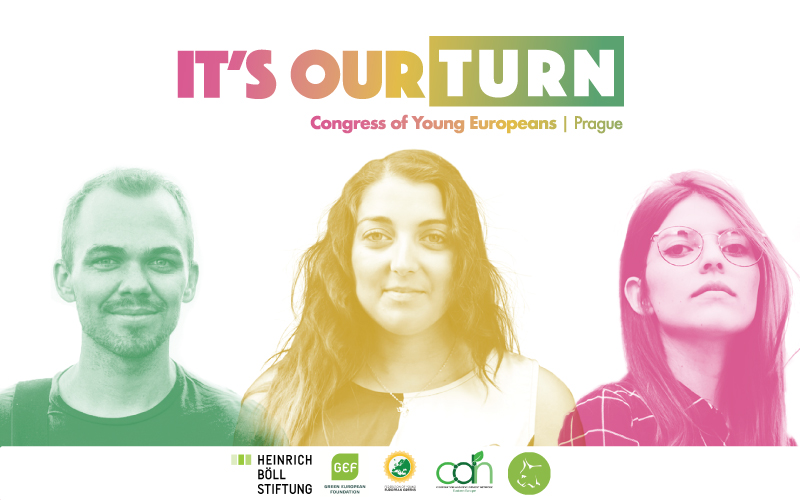
It’s Our Turn! Congress of Young Europeans (Prague)

By

About the event

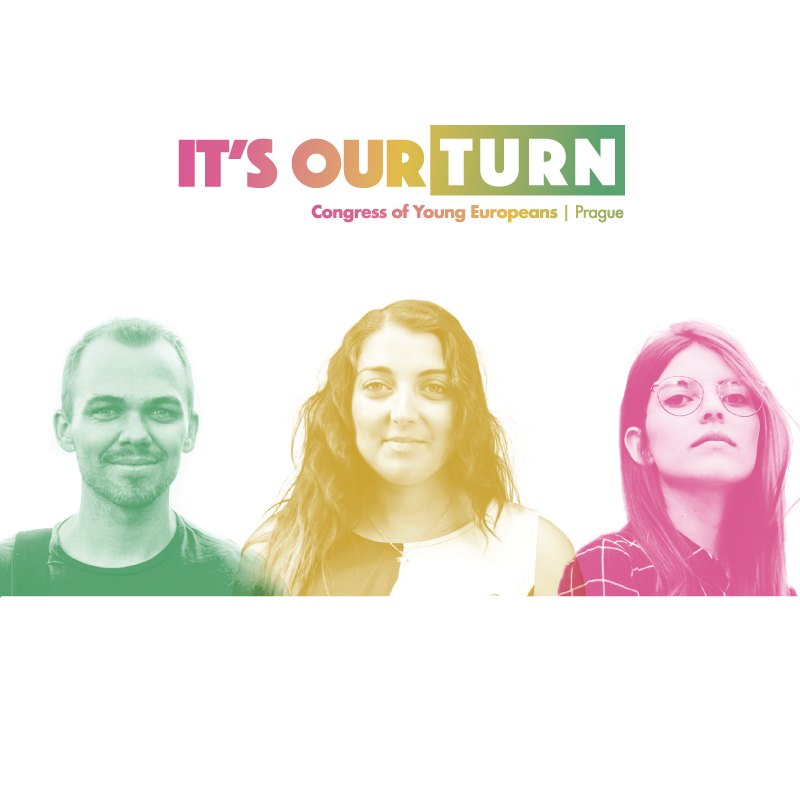
At the four-day congress in Prague, selected participants will have the chance to come together in a historically important Central European capital to discuss their visions of Europe’s future. Participants will reflect on the protest movements from 1968 and 1989 and debate issues that concern them today as well as ways in which they can mobilise to shape the future for the better. In addition to this, the Green European Foundation (GEF) will contribute to the congress with a pre-event online course, providing for a common knowledge base for all participants, as well as a platform for debates ahead of their trip to Prague.

Programme:

Thursday August 30

18:00-22:00 Opening event and dinner reception

Friday 31 August

9:30-10:30 Welcome and introduction

Ellen Ueberschär, Heinrich Böll Foundation, Germany

Carlotta Weber, Green European Foundation, Belgium

Teo Comet, Federation of Young European Greens, Belgium

10:30-12:30 ‘It’s Our Turn’ – plenary discussion about young activists, politicians, artists and public engagement

Moderation: Özge Kara, Cooperation and Development Network Eastern Europe, Serbia

Václav Kříž, Mladí občané, city councillor in Krásno, Czech Republic

Sergey Lagodinsky, Heinrich Böll Foundation, Germany

Vincent Madeline, Europe Écologie-Les Verts, France

Maria Demisheva, Feminist Workshop, Ukraine

14:00-17:30 City walks in Prague

17:30-19:30 Film screening: ‘Leave/Stay’ followed by discussion with Mariann Dósa, School of Public Life, Hungary, and László Józsa, Film producer, Hungary

19:30-20:30 Dinner

20:30-22:30 Screening of the film “Jan Palach”by Robert Sedláček (2018, English subtitles)

Saturday September 1

9:30-10:00 Introduction of the community space Studio ALTA

10:00-12:00 WORKSHOPS: Protest Movements and Activism

  • Elections, protest movements ad the role of young people – School of Public Life, Hungary
  • The use of artistic tools in contemporary activism – Studio ALTA, Czech Republic
  • Human Rights Workshop – Panoptykon Foundation, Poland
  • “The spirit of 1968”: What it was and what is left – Heinrich Böll Foundation, Germany

12:00-13:30 Lunch

13:30-15:30 Participants’ presentations and discussion

15:30-16:00 Coffee break

16:00-18:00 WORKSHOPS: Our Role in Public Spaces

  • Manage your town! – Mladí Občané, Czech Republic
  • Art and culture shaping public spaces – Studio ALTA, Czech Republic
  • “We started from the bottom, now we are here” – interactive workshop with urban activists from Eastern Europe – Cooperation and Development Network Eastern Europe, Serbia
  • Children in Urban Development – Milota Siorová, Urbanist, Slovakia
  • Housing in European cities – Czech Young Greens

18:00-19:30 Dinner

19:30-21:00 PANEL DISCUSSION: The Future of Democracy in Europe – How to defend the core values of open and plural societies?

Moderation: Agata Skrzypczyk, Journalist, Poland

Lluis Camprubi, Iniciativa per Catalunya Verds, Catalonia – Spain

Vít Havelka, Europeum, Czech Republic

Terry Reintke, Member of European Parliament for Greens/EFA, Germany

Ellen Ueberschär, Heinrich Böll Foundation, Germany

Sunday September 2

9:30-11:30 WORKSHOPS: Our Future of Europe

  • European Green Activism – Green European Foundation, Belgium
  • Safeguarding Democracy in the EU – Heinrich Böll Foundation, Germany, and Linda Schneider, Humboldt University Berlin, Germany
  • The Role of Youth in Shaping Europe – Federation of Young Europeans
  • “Migration is our Encounter with Globalisation!”: A Future Lab on the EU’s Migration Policy – Heinrich Böll Foundation, Germany, and Ali Nobil Ahmad, Leibniz-Zentrum Moderner Orient, Germany

11:30-12:00 Coffee break

11:45-13:30 Presentations from workshops – Follow-up

13:30-14:45 Lunch

14:45-16:00 Evaluation and closing

16:30-19:00 Film screenings and discussion in cooperation with the JIHLAVA Film Festival

19:00-20:00 Dinner

20:00-22:00 Farewell Party with a concert of Šarbilach Orchestr


This event is organised by the Green European Foundation in collaboration with the Heinrich Böll Foundation Prague.

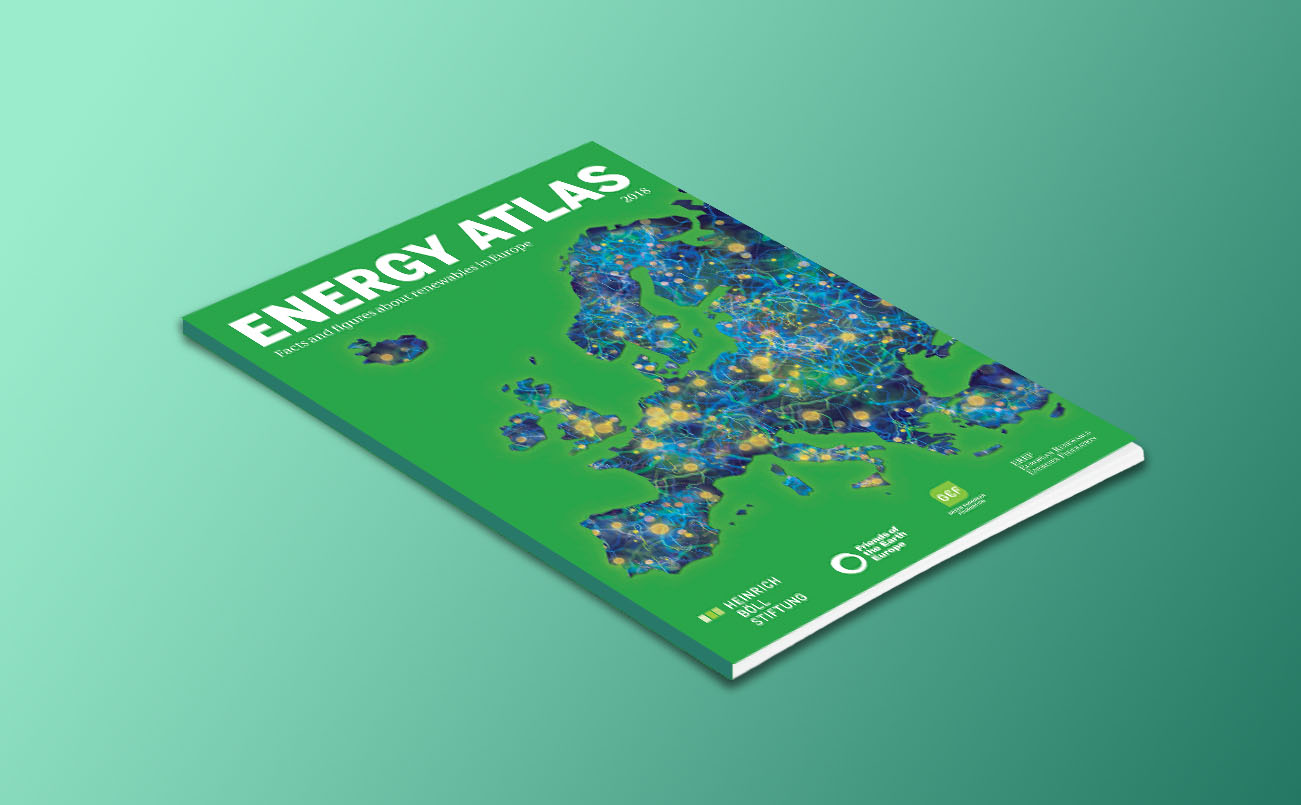
Energy Atlas 2018 – Facts and Figures about Renewables in Europe

By Uncategorized

The energy transition is already well underway. However, it is happening at different speeds across the continent. For the past 100 years, geopolitical strength has depended on access to fossil fuel resources. With the support schemes for renewable energy and the rise of citizen energy, the energy system is taking a new course towards greater democratization and decentralization.

With the Paris climate agreement, Europe is facing the global responsibility to keep global warming within 1.5°C. Renewable capacity in the EU has increased by 71 percent between 2005 and 2015, contributing to sustainable development and more local jobs. In the most advanced countries and regions in Europe it is often the local government and citizens who are driving the transition. At the time of publication of this Atlas, the EU’s next generation of energy legislation is in the process of being finalised. The targets and regulations agreed to take effect by 2030 will shape Europe’s energy system for the next decade – one of the last critical chances to take sufficient action to avoid catastrophic climate change.

Cooperation on the European level is key to ensuring the right conditions for switching to renewables. Back in 2010, several countries in the Union were already on their way towards integrating large amounts of renewable energies into their systems. They also pushed for stable and reliable frameworks at EU level, as well as ambitious binding targets.

We can already tell that the EU’s 2030 ‘Clean Energy package’ sets out roughly the right direction for the path towards renewables, but it fails to ensure the speed and depth of the transition. The proposed renewable energy and energy efficiency targets are far too modest, particularly given the falling technology costs and availability of new renewables technologies, thus jeopardising the progress achieved in previous years. The EU energy framework needs to be better aligned with its long-term climate commitments.

The next big challenges in Europe’s energy transition are the heating and transport sectors. So far, renewable technologies have not penetrated the transport, heating and cooling systems as much as they have the electricity system. In transport, we are beginning to see a shift to electrified transport and electric vehicles – driven by fast-advancing storage and battery technology and decreasing cost.

Bringing the heating, cooling and transport sectors together with the power sector – connecting sectors that are currently isolated from one another – will allow Europe to reach a 100 percent renewable system with technology that is already available today. This will enable us to overcome the longstanding renewable energy challenge – that of variable supply. When electrified, the heating, cooling and transport sectors will become large sources of flexible storage that back up the electricity sector. When wind and solar energy is plentiful these sectors can flexibly be used by heating systems and the batteries of electric vehicles, making ‘backup’ nuclear or fossil fuel capacities redundant.

The advantages of renewable energy are clear, especially when they are owned and controlled by communities: cleaner air, warmer homes, industrial benefits. Furthermore, money stays local, more jobs are created, energy poverty is reduced, and most importantly, renewable energy contributes to saving the planet.

With this Atlas, we aim to contribute to an open and facts-based discussion on the European energy transition, whilst advancing this ambitious European project that unites European citizens.

Congress of Young Europeans (Prague)

By

At the four-day Congress, taking place from 30 August to 2 September in Prague, selected participants from all over Europe will have a chance to come together in this beautiful and especially historically important Central European capital to discuss their visions of Europe’s future.

The main theme of this year’s Congress of Young Europeans is protest and activism in time: How activism in the past has shaped our present, and how the young generation of today can shape our future.

  • Are you already involved in European matters or do you feel the need?
  • Are you interested in sharing your visions, knowledge and ideas?
  • Are you below 30?

APPLY to the Congress of Young Europeans and become part of a young and innovative European network!

The working language of the congress will be English.

The organisers will cover the travel costs and accommodation for all selected participants of the Prague Congress of Young Europeans. The number of spots is limited to 60 participants. Application deadline is 6 April 2018!

Download the call: Call CYE

Application form

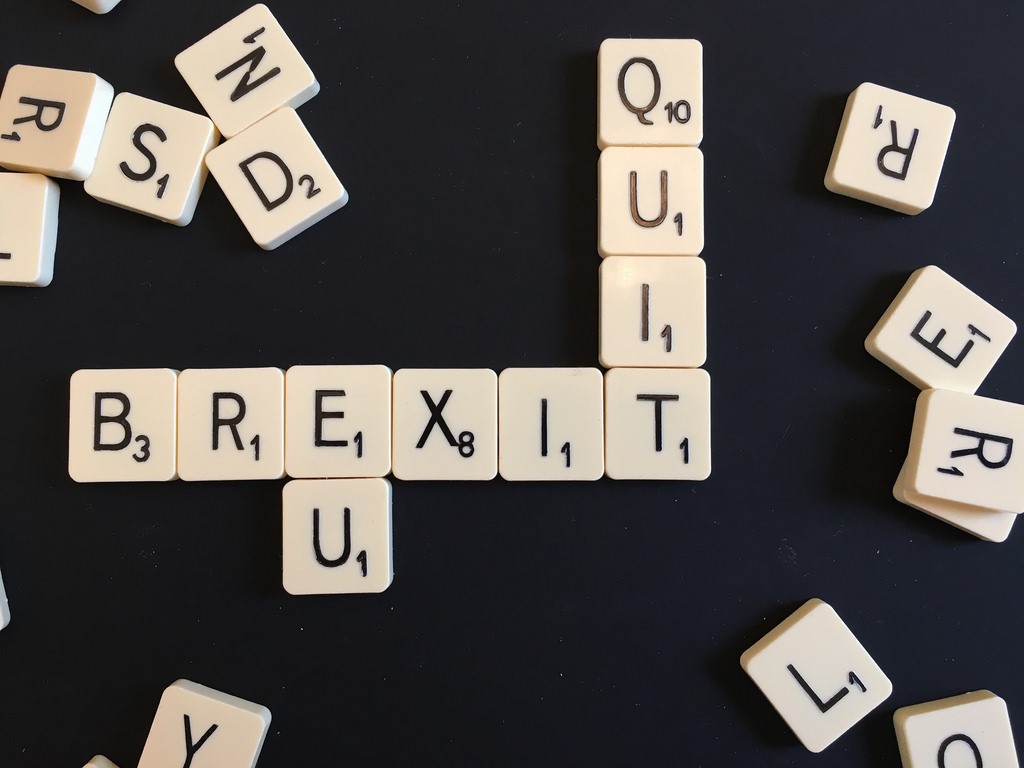
The Potential Impact of Brexit on the Prospects for a Green Transition in Europe

By Uncategorized

Context

In a referendum on 23 June 2016, 51.9% of the participating UK electorate (the turnout was 72.2% of the electorate) voted to leave the EU. On 29 March 2017, the British government invoked Article 50 of the Treaty on the European Union. The UK is thus on course to leave the EU on 29 March 2019.

This event has enormous implications not only for the future of the EU as a polity, but also for the green transition to a sustainable society and economy which is the fundamental aim shared by Green parties across Europe. The Green European Foundation therefore decided, with the help of its national project partner organisations, coordinated by Green House think tank in the UK, to hold a series of public discussion events over the course of 2017 to explore those implications.

About the project

The project aimed to examine these questions on a comparative European basis, involving selected EU member states for which Brexit raises particularly pressing issues, related either to their relationship with the UK or to their own national political situation (or both).

The rationale behind the project was two-fold. Firstly, it was intended to provide a platform for the exploration of the possible short- and medium-term impacts of Brexit on environmental and economic policies directly affecting the transition to sustainability, both in the UK and in the rest of Europe. Secondly, it was motivated by the belief that the Brexit decision in the UK raises urgent and difficult questions about the continuing coherence and effectiveness of the EU as a polity, at least in its current form, and whether it still represents the best vehicle for the achievement of sustainability in Europe in the long term.

The results and key finding are summarised in this paper. Free digital version is available for download below.

Greens in Negotiations, EGP Council Karlstad

By

Join the Green European Foundation and the Heinrich Böll Foundation European Union for a new workshop in their “Greens in government” series!  This event will take place at the upcoming EGP Council in Karlstad, on Saturday, 25 November 18h45-20h30. During this workshop we will dive in the preliminary stage of governing and discuss first-hand insight with Green parties’ representatives who are or have recently been in a negotiation process to enter a coalition government. The participants will get useful insights into relevant questions, such as:

  • What makes a deal (un)acceptable?
  • Should Greens engage with everyone? 
  • What are reasonable conditions for a coalition government? 


Roundtable: Brexit and the implications for a Green Europe (Berlin)

By

The event is a part of the ongoing transnational project “The potential impact of Brexit on the prospects for a Green transition in Europe” which attempts to support the much-needed public discussion of Brexit’s impact on individual Member States, as well as on the EU level, while exploring what this means for the Green movements’ endeavour in the transition to sustainability.

Programme

9h00-9h10 Welcome – Sergey Lagodinsky (Head of Department EU and North America, Heinrich-Böll-Stiftung)

9h10-9h20 Where do we stand with Brexit and what’s next? – Ray Cunningham (Green House Think Tank UK)

9h20-9h35 Commentary – Cornelius Huppertz (Department Northern Europe, Foreign Ministry Germany)

9h35-10h20 Discussion

10h30-12h00 Panel 1: The impact of Brexit for a Green Europe

Viviane Gravey (Lecturer, Queen’s University of Belfast)
Jonathan Gaventa (E3G, Director Brussels)
Katharina Umpfenbach (
Senior Fellow Ecologic Institute, Berlin)

12h00-13h00 Lunch

13h00-14h30 Panel 2: Does Brexit possible offer opportunities for a deepening of democratic structures in Europe?

Jean Quatramer (tbc) (European Correspondent, Libération, Brussels)
Giles Merrit (tbc) (Friends of Europe, Brussels)
Klaus Linsenmeier (Director Heinrich-Böll-Stiftung EU office Brussels)
Thierry Chopin (tbc) (Director, Jacques Delors Institute, Paris)

The panels will be moderated by Brexit expert, blogger and green activist Jon Worth.

15h00-16h00 Wrap up: What are green positions and demands during the Brexit negotiations? How should we as Greens position ourselves? 

Moderation: Sergey Lagodinsky (Head of Department EU and North America, Heinrich-Böll-Stiftung)

Registration:

In order to participate in this debate, please register by sending an email to Claudia Rothe at: rothe@boell.de.

Results:

The report from the event is available in German here.

European Youth Conference 2017 in Gdańsk

By

The three-day Conference in Gdańsk addressed issues including globalisation and European and nationalist answers to it. From  24 to 26 July, we explored the current challenges to open societies and inclusive democracies, and how people risk being divided along lines of integration and identity. Moreover, the programme included practical workshops and ample space for networking.  

We discussed important points of reference and processes that are shaping the worldview of engaged young Europeans, who on an everyday basis are searching for ways to make a socially responsible, just and sustainable Europe happen, and also focus on the causes of and reactions to growing feelings of uncertainty, injustice and fear in EU member states in a beautiful setting at the Baltic Sea.

GEF Workshops

The Green European Foundation contributed to this conference with three relevant workshops:

  • WIDEN YOUR OUTLOOK – NETWORKING SESSION (Tuesday, 25 July, 15h-17h): To face today’s challenges, it is crucial that grassroots movements and activists connect with each other and collaborate to strengthen their impact. This session reflected the needs of youth leaders to expand their network and identify resources which the other organisations/ participants present at the event can offer them.
  • ONLINE LEARNING FOR GREEN POLITICS (Tuesday, 25th of July, 17h30-19h00): During this workshop, we shared the experience of Green European Foundation in developing e-learning programmes. Furthermore, the workshop provided an interactive space for exploring ways in which the participants can make use of new (online) technologies to advance their own learning and activities.
  • TELLING THE STORY: GETTING YOUNG GREEN VOICES HEARD (Wednesday, 26 July, 11h-13h): This workshop aimed to give participants some tips and tools to make their voice heard. From coming up with an angle to turn an important topic into a compelling news story, to pitching their proposal and getting their work published – we walked them through the steps to get their story out there.

More Information

Other useful information can be found here: http://calendar.boell.de/de/event/european-youth-conference or you can send an email to eyc2017@pl.boell.org.

Registration: Applications closed on 30 April 2017

Date: 24 to 26 July 2017

Venue: Europejskie Centrum Solidarności I European Solidarity Centre, Gdańsk (Poland)

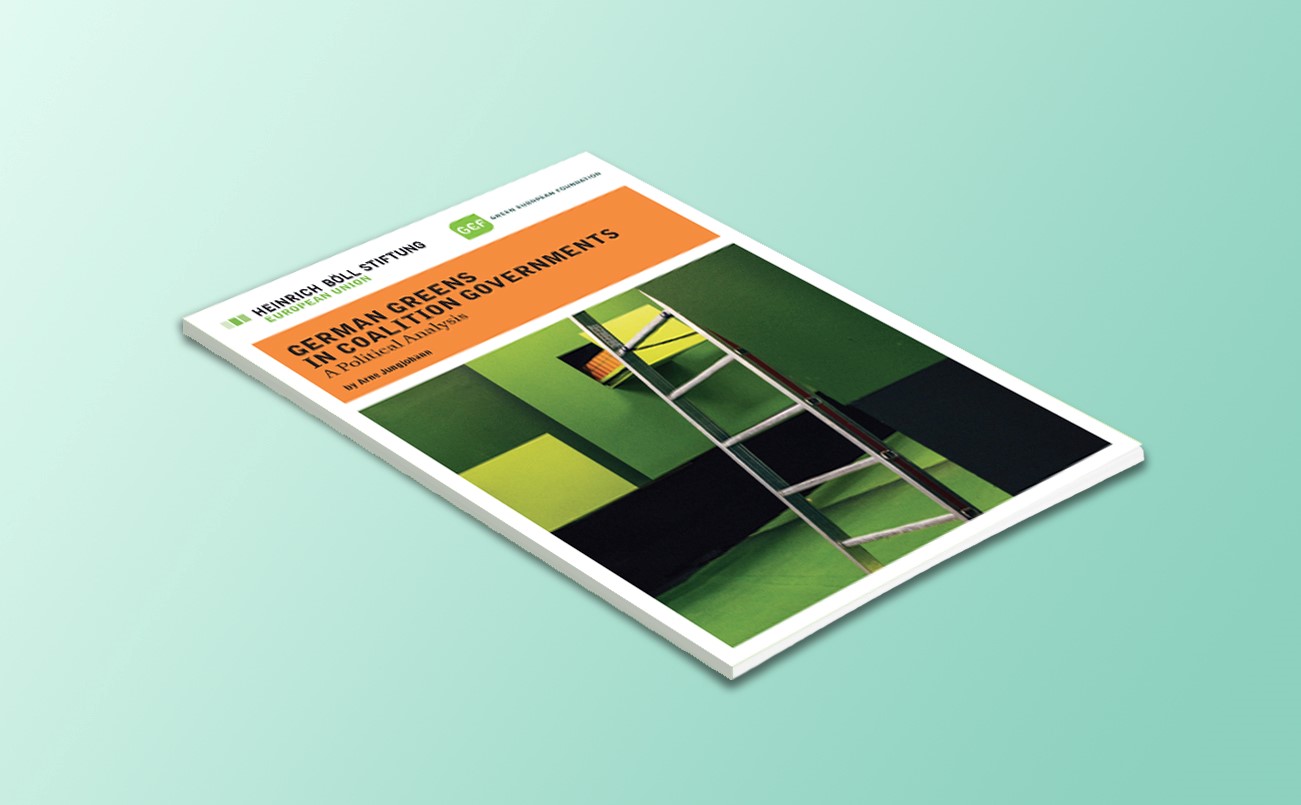
German Greens in Coalition Governments

By Uncategorized

The Alliance 90/The Greens Party has succeeded in taking over governmental responsibility in the majority of the 16 federal states. This is a great success for the party. However, in order to remain successful and to encourage general confidence in politics, a sober look at the factors which led to the success and which will continue to do so in the future is required.

How does good governance work? How does government participation change the decision-making processes and the political objectives of a party? How does good cooperation between those responsible in federal and state government function?

In this study the political scientist, Arne Jungjohann, has analysed Green government participation of previous years and in answering the questions above arrives at interesting conclusions.

Greens in Government

By
The Alliance 90/The Greens Party has succeeded in taking over governmental responsibility in the majority of the 16 federal states. This is a great success for the party. However, in order to remain successful and to encourage general confidence in politics, a sober look at the factors which led to the success and which will continue to do so in the future is required. How does good governance work? How does government participation change the decision-making processes and the political objectives of a party? How does good cooperation between those responsible in federal and state government function?

Parting from the experience of German Greens in coalition governments, we had a discussion with representatives of different Green parties with hands-on government experience. You can watch the entire event in English on demand here.
Speakers:
Arne Jungjohann, Energy Analyst & Political Scientist, author of “Greens in Government”
Christine Milne, former Australian Senator & leader of the Australian Greens
Gustav Fridolin, Minister of Education Sweden, Swedish Green Party Co-spokesperson
Moderation: Marta Loja Neves, Editorial Board, Green European Journal

When: Friday, 31 March 2017, 18:30 – 20:00
Where: Room 4A, Global Greens & European Greens Congress, Arena and Convention Centre, room 4A, Kings Dock, Liverpool L3 4FP, United Kingdom

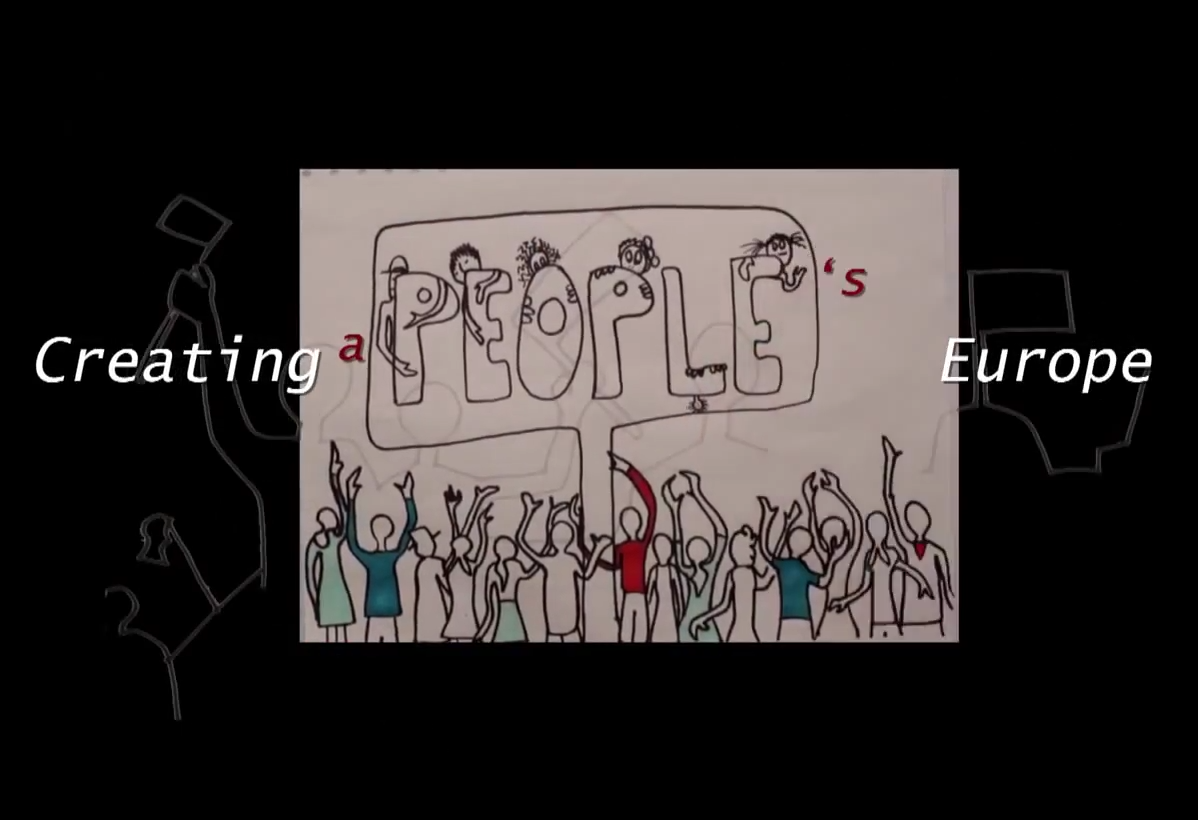
Creating a Peoples’ Europe [VIDEO]

By Uncategorized

“Creating a People’s Europe” was produced and scripted by John Gormley, Irish Minister for the Environment (2007 – 2011).

The film is a project of the Green European Foundation for the Greens/EFA Group in the European Parliament. It was realised in cooperation with the Heinrich Boell Foundation and with the financial support of the European Parliament.

Subtitles available in Catalan, Czech, English, French, German, Greek, Hungarian, Polish, and Spanish.

Youth Conference “Digital Commons” in Belgrade

By

This three-days conference included talks and panel discussions with a focus on the theme of “Internet as a Commons and the New Politics / New Economy of Commoning”. The aim of the event was to provide space for a European debate on how to re-decentralise and reclaim the Internet as a Commons, which also leaves it open to commercial opportunities.

In terms of the programme, the first day provided insights into relevant themes, such as The Copernican Revolution of Copyright Regulation, Digital Commons in New EU Copyright Law, Social Networks as a Commons and more.

The second day consisted of many panel discussions, along with talks related to Knowledge as a Commons – Innovation & Creativity through Open Access, Transformative Power of the Commons and Open Innovation.

During the last day of the conference, the participants analysed Trust & Distrust in Internet Governance, Data PPPs, Selfgoverned Commons, in addition to other relevant topics.

Green Academy “TIPPING POINTS” in Croatia

By

Under the title ”Tipping points”, the fifth edition of this summer university provided 6 days of intensive programme for a very diverse group of 150 participants from more than 20 countries, including Latin America and U.S. For the first time City of Komiza was hosting the Green Academy, which programme was conducted in public spaces.

Programme was organised in three working modules (Commons, Degrowth and Climate Justice) and was focused on exchange of theoretical  insights and practical experiences of scholars, practitioners, activists and experts.  Intense exchange has taken place between European scholars and their Latin American counterparts which have demonstrated some of the most interesting lessons from previous decade.  Among many relevant speakers, guests of the Green Academy were Boris Buden, Hilary Wainright, Daniel Chavez, Joan Martinez Alier, Jagoda Munić, Pablo Solon, Giacommo D’Allisa, Barb Jacobson, Edgardo Lander, Kira Vinke, Branon Andersen and Srećko Horvat. Apart from modules, participants were also involved in plenary debates where political implications of current political situations were broadly discussed.

Participants were able to take part in many cutting edge discussions which are currently relevant at European level and have a first hand experience and exchange with contributors. As a working framework was also relevant for broadening epistemic community gravitating to political ecology at European level and exchange platform between different organisations and groups. It has proven to be a very safe environment to articulate demands for more interesectionality on the Left and for feminisation of politics while at the same time offering visions that comply with ideas of internationalism, sufficiency and solidarity.

Working languages of the academy were Croatian and English.

The final programme is available here.

MORE INFO:

More information about this event available at IPE website and Facebook.

Sustainable Industrial Policy for Europe

By Uncategorized

The memorandum “Sustainable Industrial Policy for Europe – Governing the Green Industrial Revolution” argues that industrialised production and consumption patterns lead the world to its ecological limits. Climate change, ongoing poverty, food and water shortages and the global economic recession can become driving forces of a Green Industrial Revolution. In Europe, a transformation process of old, as well as new, economic structures has begun, with a high potential of causing social conflicts. In this context, the study argues that a new approach to industrial policy by governments is essential to manage this fundamental change. Not having a sustainable industrial policy is not a political option.

The memorandum analyses, as a first step, the shortcomings of current industrial policies at the national and European levels, and subsequently highlights goals, guiding principles and measures of implementing sustainable industrial policies for Europe. Finally, it outlines an integrated monitoring and evaluation method assessing the state of industrial policy with regards to the pre-requisites of a shift towards sustainability.

The research has been realised by the Öko-Institut e.V (Institute for Applied Ecology), and published by the Green European Foundation in cooperation with the Heinrich Böll Foundation.

Green New Deal in Poland

By Uncategorized

The publication starts from the premise that although many European governments have taken over a discourse in line with the Green New Deal, there is long way to go to turn commendable political discourse into concrete political action. In this sense, the publication looks at key questions that need to be tackled in order to allow for a sustainable transformation of Europe’s economies.

Which sectors would drive the transformation and which sectors would be in most need of reform? Which transversal issues, such as gender relations or education, would have to be addressed as part of this transformation? These are questions that this publication deals with in detail. The aim is to highlight that there is an enormous latent potential to build a better future, which is not achieved due to unambitious policies within the European Union – at the national as well as the European level.

Icon

Green New Deal in Poland EN 6.93 MB 170 downloads

...
Icon

Green New Deal in Poland PL 7.02 MB 69 downloads

...

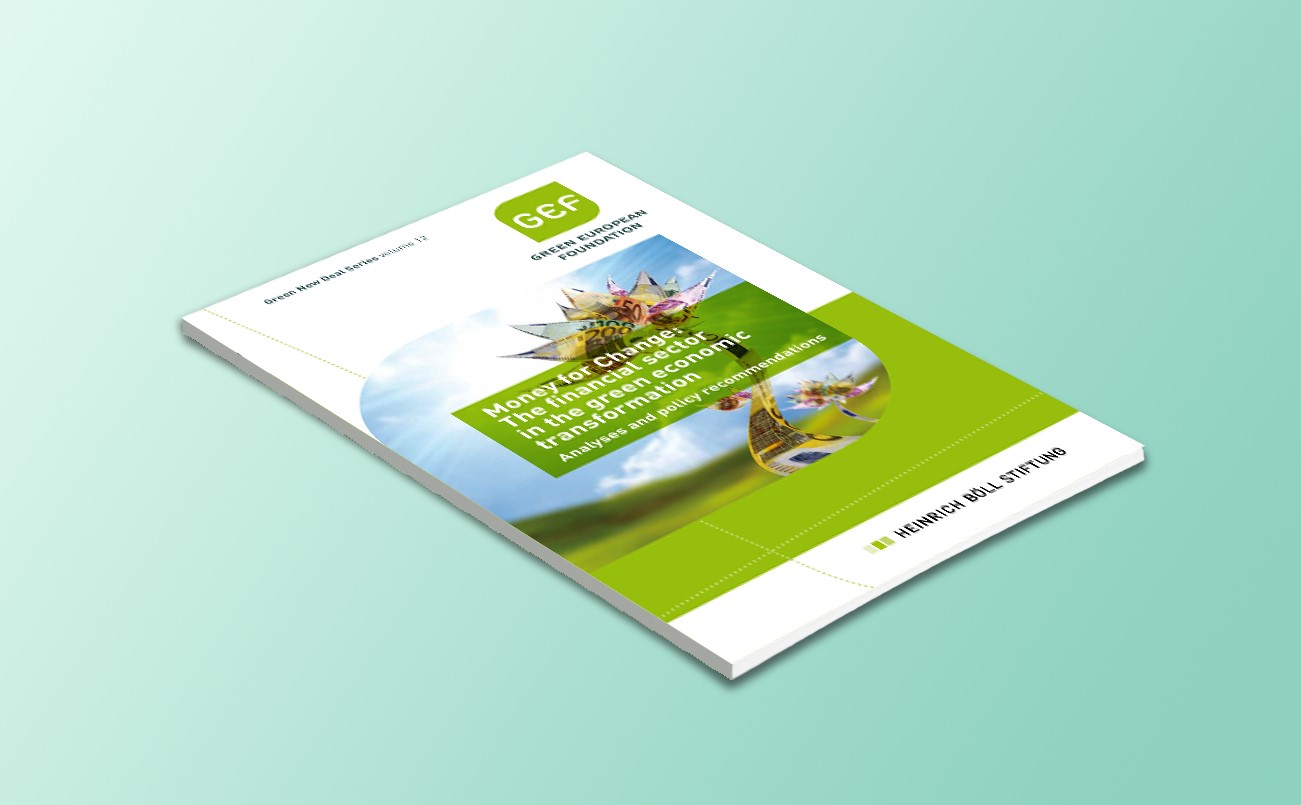
Money for Change

By Uncategorized

Six years after the global financial, economic and debt crisis, Europe is still struggling with the consequences and trying to improve its economic situation. The relatively good position of the Federal Republic of Germany is the exception in a generally crisis-ridden environment. The devastating effects of the financial crisis of 2008 -2009 and the recession that followed have yet to be fully overcome. The aggressive monetary policy of the European Central Bank may have relieved the financial crisis but it has not boosted the real economy. The risks of deflation are now being discussed in view of the policy of low interest rates followed by the ECB.

Icon

Money for Change EN 1.72 MB 103 downloads

...
Icon

Geld für den Wandel 2.28 MB 57 downloads

...

At the same time, we are faced with the challenge of hastening the convergence of economics and ecology. Climate change and the crisis facing the world’s ecology demand an urgent shift away from an economic system that is based on the ruthless exploitation of natural resources. The European Union cannot resolve its financial and social crisis without economic growth. However, the old economic model is not viable for the future because it leads us deeper into crisis. The way out of this dilemma is a new, sustainable model for growth based on renewable energy, a high degree of resource efficiency and re-utilisation of valuable raw materials. This is, in fact, a green industrial revolution – no more, no less – which will dramatically reduce depletion of the environment and also lead to a new boom in green technologies, products and jobs. This requires innovation and investment on a large scale.


Expert Symposium: Financing the Green Transformation (Berlin, May 2014)

Concepts for an ecological orientation to European economic and financial policies were the focus of a conference held in Berlin at the beginning of May 2014 and organised by the Heinrich Böll Foundation, the Green European Foundation and the German Trade Union Federation (DGB). The key question was how to finance extensive modernisation of the economy in Europe according to ecological considerations. This requires re-regulation of the financial sector, which would lead to greater alignment with the real economy, and would offer sustained investment opportunities for private investors.

Europe has the opportunity to make ecological re-orientation the springboard for new creation of value. This requires steering capital flow that is searching for investment opportunities into areas suitable for investment. Solutions that satisfy these criteria are sustainable in two ways: from an ecological point of view, and from the point of view of a stable financial and economic system.


Key contributions to the publication

This publication is a collection of articles from participants at this conference as well as from other authors. In his introductory article, Gerhard Schick illustrates the connection between a greater focus of the financial world on the real economy and financing a green transformation; he then names the most important areas to promote green investment. Simon Wolf then raises the question of whether we need a policy for the financial sector even more than before, in view of the investment required for this green transformation, or whether green investments would flow automatically if we improved the general conditions for ecological economic activity.

The next four contributions primarily address the problems of financing the real economy in Europe. Thierry Philipponnat warns against a hasty reversion to more capital market financing as a response to a lack of bank lending; instead, the banking sector should be geared more towards the needs of the real economy. Andreas Botsch sees the main problem as being the paradox of savings and the drop in investment rates, and proposes the formation of a private equity fund that could be used to finance this ecological transformation. Benoît Lallemand explains why breaking up the large banks would have a positive effect on financing opportunities for both small and large companies and why the resulting financial system would also favour ecological projects. For Reinhard Bütikofer, the decisive key factor for economic recovery in Europe lies in a renaissance and eco-orientation of industry and he investigates financing opportunities beyond the banking sector.

The remaining articles discuss how to encourage green investment. In his interview, Karsten Löffler advocates green mainstreaming in the financial sector instead of promoting individual projects. Stanislas Dupré and Jakob Thomä identify three promising initiatives to dismantle the obstacles in the financial sector to reducing the carbon footprint of the economy. Mehrdad Payandeh explains his proposal for a European Marshall Plan which combines public investment and private investment to secure ecological modernisation. Ana Belén Sánchez analyses the current status of ecological transformation in Spain and the challenges of how to finance it. The contributions of Claudia Kemfert and Dorothea Schäfer, as well as Silvia Kreibiehl and Ulf Moslener, use the example of the energy transition in Germany to examine the question of how more private capital, especially from large institutional investors, can drive the transition of energy systems. Finally, Philippe Lamberts takes a look at the previous and future role of the European Parliament in promoting a green transformation.

The German version of the publication has been published by the Heinrich Böll Foundation. Read the German version here.

Overcoming the Corporatist Economy

By Uncategorized

This publication is the first paper in a series of three papers, available in French and Spanish.

The second paper, “The Corporatist Economy and the Nanny State”, was published by Heinrich-Böll-Stiftung and GEF in September 2015, is available here.

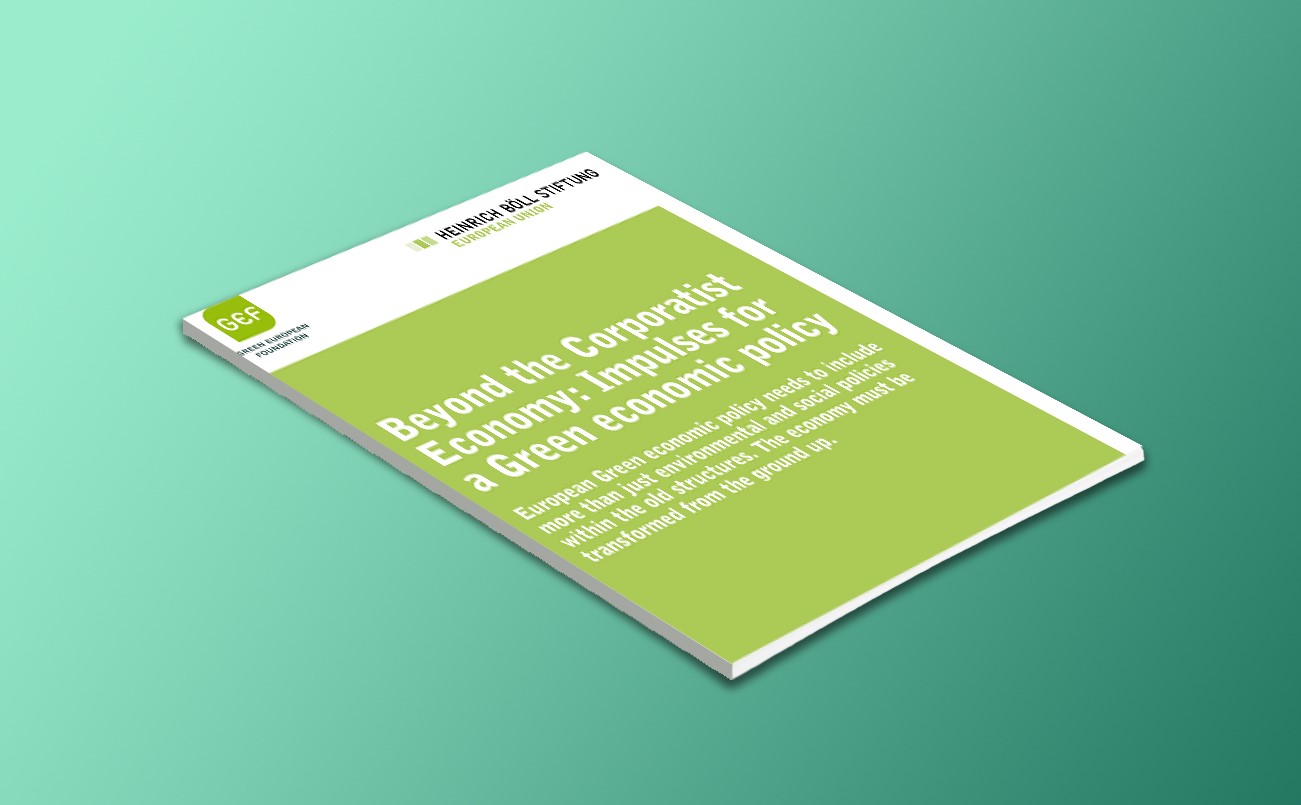
The third paper,  “Beyond the Corporatist Economy: Impulses for a Green Economic Policy”, was published by Heinrich-Böll-Stiftung and GEF in September 2015, is available in English and Spanish.

Icon

Beyond the Corporatist Economy EN 274.23 KB 127 downloads

...
Icon

Beyond the Corporatist Economy ES 294.48 KB 58 downloads

...

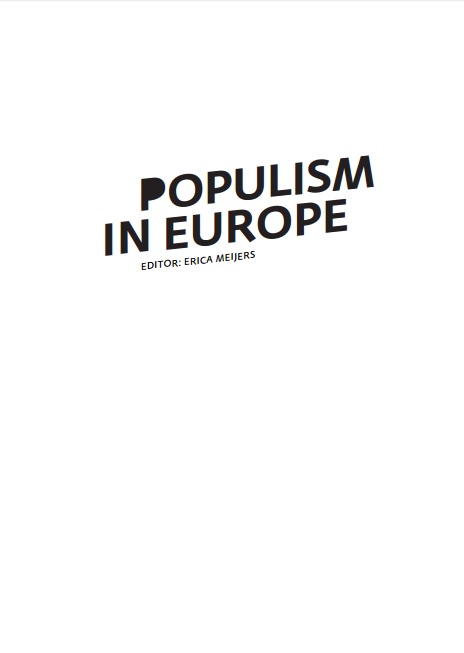
Populism in Europe

By Uncategorized

The rise of the populist-right and why it matters 

The publication of this book coincides with the rise of populist right-wing parties in a number of European countries. The most recent is the True Finns in Finland, but there are similar examples in Hungary, Sweden, France and elsewhere. While the book acknowledges the sometimes crucial differences that can exist between these individual parties, it is also true that they share many attributes. These include focusing their grievances on minorities, railing against so-called “elites”, and  an always high level of euroscepticism.

How should the Green movement confront such a challenge? And does this challenge present an opportunity to put forth a positive, Green message on Europe, immigration and the socio-economic challenges that we face in the 21st Century? This book attempts to answer these questions, and its contributors offer varying and diverse opinions on the origins of this trend, and what an effective response should be.

As Erica Meijers states in her introduction, the reader will at times find contradicting opinions and analyses in this book. This underlines the complexity of this issue, and shows it to be fertile ground for debate and discussion.

Table of contents

  • Introduction (Erica Meijers)
  • The Temptation to Over-Simplify: Why Populism Poses a Danger to Europe (Daniel Cohn-Bendit & Edouard Gaudot)
  • The New National Individualism: Populism is Here to Stay (Dick Pels)
  • Adversaries or Competitors: The Rise of Green and Radical Right-wing Populist Parties (Sarah L. de Lange, Wouter van der Brug & Inger Baller)
  • European Dreams, Nationalist Ambitions: Internationalism in Populist Movements (Oyvind Strommen)
  • The Quality and Future of Democracy: Two Decades of Free Elections in Central Europe (Sona Szomolanyi)
  • Lifting the Veil: Populists and Women’s Rights (Olga Pietruchova)
  • Populist Realism: Vox Populi and the Postpolitical (Merijn Oudenampsen)
  • The Spiral of Noise and Attention Seeking: Right-wing Populism and the Media (Robert Misk)
  • Imagination in Power: The Social-political Conditions of Italian Media Populism (Marco Jacquemet)
  • The Politics of Fear and Belonging: The Socio-Economic Breeding Ground of Populism (Barbara Hoheneder)
  • Freedom and Security in the Twenty-first Century: Green Alternatives (Dirk Holemans)

You can download the introduction to the book for free, which will give you an insight into the book’s chapters and what the authors discuss and propose.

Please email info@gef.eu if you are interested in purchasing a copy.

German translation now available

A German translation is now available to purchase online, with a foreword by Heinrich Böll Stiftung Co-President Ralf Fücks, GEF Co-President Heidi Hautala and Andrea Novy of Grüne Bildungswerkstatt. The foreword is available to download below. This translation is a cooperation project of GEF, the Heinrich Böll Stiftung, Grüne Bildungswerkstatt and Bureau de Helling. More information is available on the Heinrich Böll Stiftung website.

Icon

Foreword DE 36.98 KB 129 downloads

...
Icon

Book Review - Andreas Novy 94.10 KB 83 downloads

...