Campaign Handbook: A users’ guide to campaigning

By Uncategorized

Participation in politics is not only about good policies and exciting new ideas, but also about having the skills to make these visions heard and embraced by others. This is even more relevant in European politics, where the distance between citizens and decision making can be better bridged with efficient communication and campaigning.
The Green European Foundation first developed the Campaign Handbook in 2010 as an online platform that was both a manual on campaigning for Green activists, as well as a platform of exchange of knowledge and experience for Green campaigners. The website has been constantly updated with interesting examples from Green campaigns.

The print edition of the handbook guides the reader through a coherent political campaign: from the strategic vision of what should be accomplished, to how to manage a campaign team in order to achieve the set goals; how to target the audience with the right messaging; and how to assess the gains and losses of the campaign.

This edition of the Campaign Handbook is updated to respond to the latest shifts in campaigning practices. It brings together the “musts” of successful campaigning, from the point of view of experienced Green campaign managers. We therefore hope it will be a useful guide, accompanying the reader in exciting and efficient campaigns.
Check out the Campaign handbook online platform

My data – my choice! Giving citizens tools to better understand their rights on data protection

By Uncategorized

New data protection laws, contrary to the 1995 Data Protection Directive that allowed Member States to individualise laws, have now been enacted across the European Union. The new data protection levels enacted will protect all 500 million EU citizens.

The new laws have been revised to protect citizens from the potential perils of the digital age; in particular for the EU Single Digital Market. New rights like data portability, principles such as data protection by design and high sanctions in the case of infringements are enshrined in the text, allowing citizens to browse the digital market freely, safely, and in knowledge of their protected rights.

GEF and The Greens/EFA have provided you with some tools: a cool educational video in English and German about what enhanced data protection laws mean for you; and a PDF outlining the study behind the reforms. The PDF is available also to read in French – both of which you may download below.

For more information you can also visit Jan Philip Albrecht’s website or see The Greens/EFA press release.

Icon

My data – my choice! EN 3.19 MB 55 downloads

...
 
Icon

My data – my choice! FR 2.84 MB 40 downloads

...


Europe for Beginners: A Green Guide to the EU

By Uncategorized

It is more evident than ever that politics at a national level alone cannot provide the solutions for the most challenging issues of our time. In this sense, a true European response is fundamental in ensuring a success of the causes the Greens are fighting for: environmental protection, an efficient use and a safe and sustainable production of energy, a reorientation of our economy to guarantee social inclusion and social security and – on the world stage – peace, development and the consolidation of democracy and fundamental rights.

But all of this cannot be achieved without genuine conversation and participation of both European politicians and the citizens they serve. In order to inspire them to engage with the European Union and work with colleagues across borders, this book aims to change the perception of the EU as a complex institution, which is hard for citizens to interact with.

Through an accessible and reader-friendly format, Europe for Beginners presents some of the most useful information on how the EU operates: what the different institutions do, how decisions are made, how EU law is enforced and how the EU is funded. It also includes a discussion of the role of democracy, the rights of European citizens and the challenges for a true European democracy, such as the power of lobbies.

Downloads this manual in English, French, Spanish, Czech or German below.

Icon

Europe for Beginners EN 3.22 MB 277 downloads

...
 
Icon

Europe for Beginners FR 5.85 MB 201 downloads

...
 
Icon

Europe for Beginners ES 3.24 MB 603 downloads

...
 
Icon

Europe for Beginners DE 3.25 MB 119 downloads

...
 
Icon

Evropa pro začátečníky 3.49 MB 134 downloads

...


The commons: (co)managing commonly owned resources

By Uncategorized

The term “commons” is gaining increasing currency in political debates today, as thinkers and activists look for alternatives to what appears to be the failing model of the market economy. While many people have a broad idea of what the commons are – a means of co-managing a resource for the community as a whole – what does it mean in practice? And where and when can the idea of a commons be applied?

Many of these issues were discussed at the GEF seminar earlier this year. Since the idea of the commons was reintroduced to the public debate by the likes of Elinor Ostrom, many new forms of commons have become viable. An example discussed at the seminar was the idea of genetics and DNA as a type of commons.

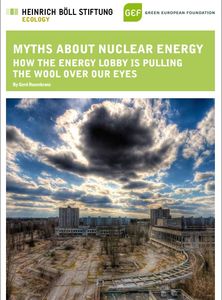
Myths of nuclear power – a guide

By Uncategorized

The publication highlights several common misconceptions regarding nuclear energy. One such misconception emphasises that supporting nuclear energy does not set back the development and spread of renewable energy sources, and that nuclear power plants can be a “bridge” between dirty and clean energy systems. This misconception has resulted in increased government investments throughout the world in improving and building new nuclear power plants rather than concentrating on safe, clean and not so costly renewable energy, as well as on promoting and investing in increased energy efficiency.

The publications below examine these issues in a forthright manner, and outline the reasons why atomic energy does not constitute a real solution to our energy problems.

The Green European Foundation has translated one of the studies, “Systems for change: Nuclear Power vs Energy Efficiency and Renewables” into Italian to facilitate the debate on the topic in more parts of Europe.


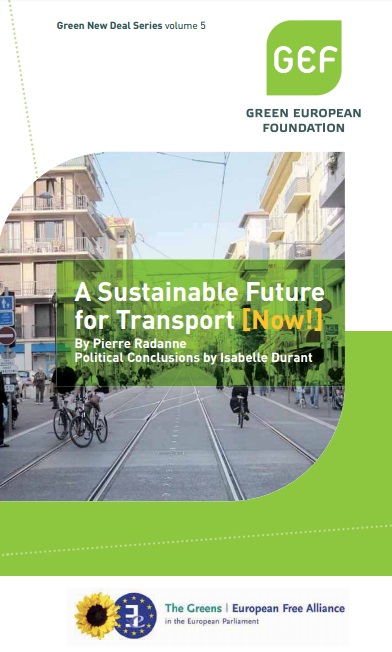
A Sustainable Future for Transport – Now

By Uncategorized

With the major contribution that the transport sector makes to CO2, there is a need for major reductions in its emissions to ensure Europe meets its necessary targets of an overall reduction of 20% by 2020. This publication sets out the urgent action that needs to be taken in order to achieve these targets, along with the benefits that such actions can bring to the economy and the quality of life for Europe’s citizens.

Authored by transport expert Pierre Radanne, the publication examines not just the short term changes that are required, but also discusses a longer term vision for what a sustainable transport system would be like for Europe.

Icon

Commission White Paper 133.10 KB 71 downloads

...

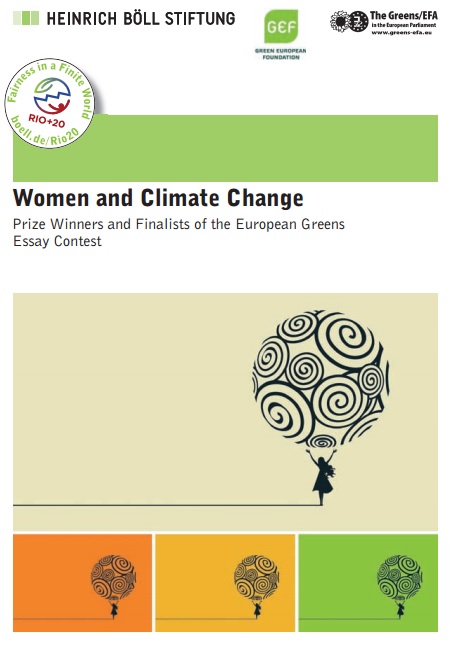
Women and Climate Change

By Uncategorized

The published essays are very diverse, but they all concur on one point: gender equality and the fight against climate change are two challenges that have to be tackled simultaneously and urgently. Adaptation to climate change seems to be the realm of women in countries across Africa, Asia and South America. They are often the ones working the land and getting water to feed their families, while they do not have control over the land they work on or the major decisions about where and how to live. Many contributions from developing countries are included in the publication, which reveal that the level of awareness of this topic in developing countries is much greater than in Europe. Gender, as often, is the blind spot of the academic and political debate on climate change. It is high time that more attention is paid to the women’s hardships as well as their inspiring solutions.

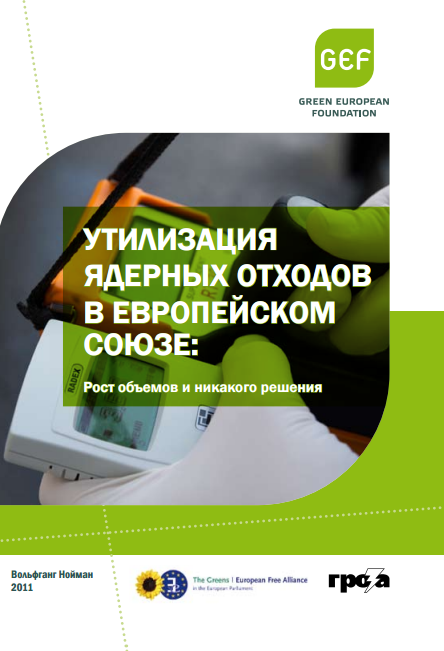
Nuclear Waste management in the EU: Growing volumes and no solution

By Uncategorized

The Green European Foundation, with support of the Russian NGO Groza, has produced the study into Russian, in order to make it more accessible and easy to use for Russian-speaking communities inside and around Europe. The publication was also presented in a big conference organised in Vilnius in December 2011. The English version of the study can be accessed on the website of the nuclear waste campaign of the Greens/EFA group, here.

Sustainable Democratic Energy for Ireland and Europe

By Uncategorized

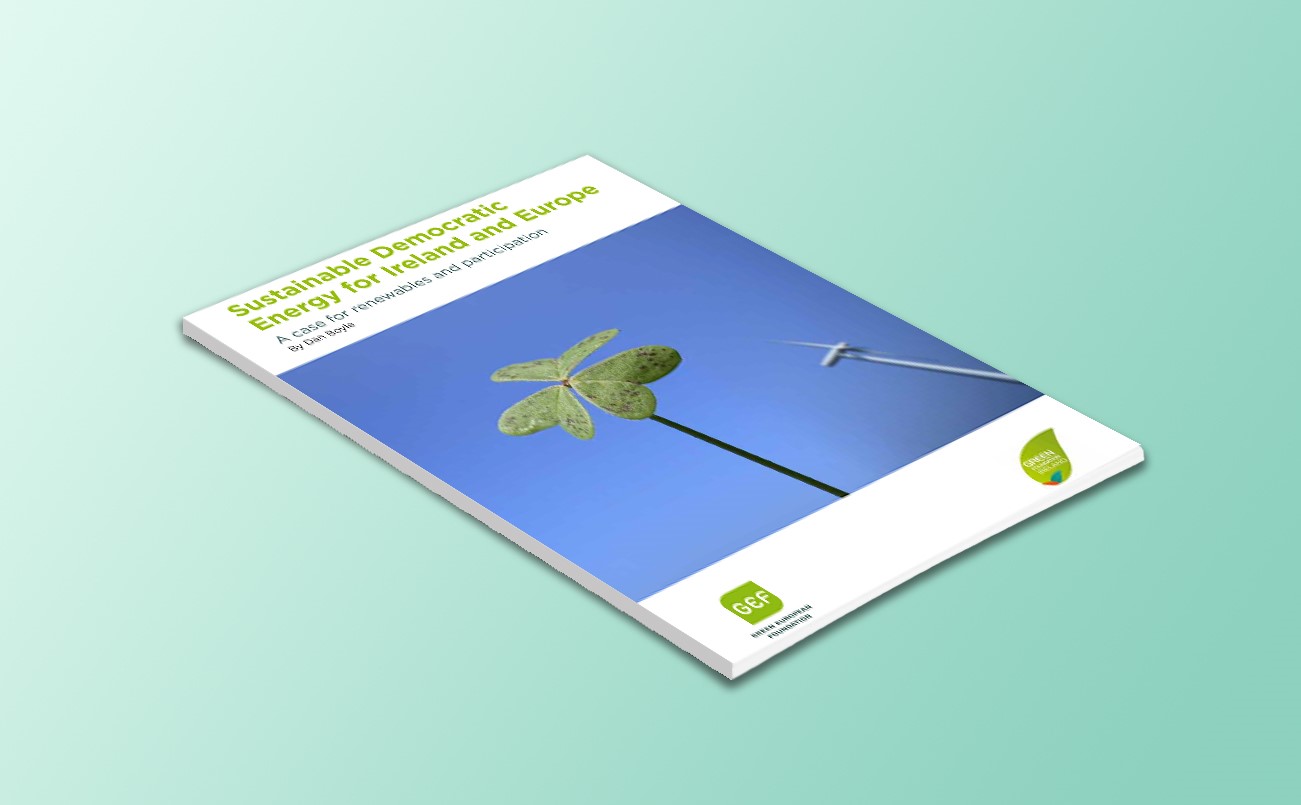
The European Union is committed to reducing greenhouse gas emissions to 80 – 95% below 1990 levels by 2050. Given the many reasons for public concern about the technological and infrastructural developments required to achieve this ambitious target — threats to landscapes and habitats, public safety fears, etc. — citizens themselves must be informed and engaged in the decision-making process.

Using case studies from citizen’s initiatives and renewable energy projects specifically in Ireland, and contrasting them with similar experiences in Denmark and Germany, Dan Boyle makes the case for the desirability of participative renewable energy projects across Europe as a whole. He also provides an overview of some of the key democratic models for effective public participation, examining key lessons learnt from environmental campaigns which have questioned and opposed renewable energy projects on the basis of the potential environmental damage caused by the infrastructure.

Ireland has had one of the highest levels of fossil fuel dependence in the European Union but, with relatively abundant wind and water power opportunities, combined with the entrance into government of the Irish Green Party for the first time in 2007, Ireland is racing towards its renewable energy targets. In 2012, for example, its target of 40% renewable energy generation was achieved 103 days early. According to Boyle, part of the reason for the comparatively swift development of renewables in Ireland was the level of public participation and buy-in — concepts which are explored in depth in this report.

The UK, France, Poland and the future of EU energy policy

By Uncategorized

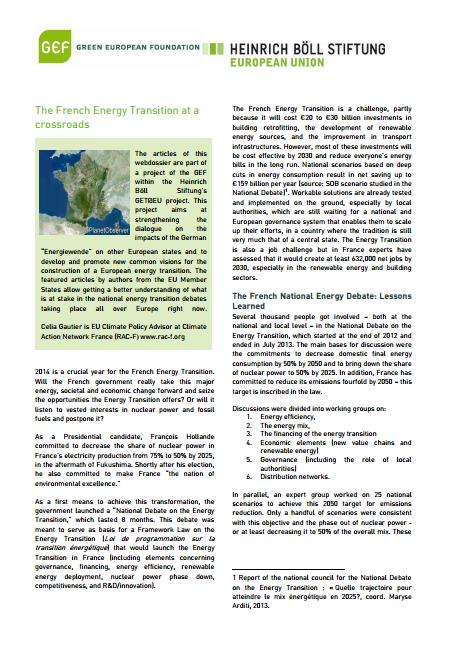
The French government is currently working on plans to reduce France’s reliance on nuclear energy and adopt ambitious CO2 reduction goals. The roadmap for this will be presented in an ambitious energy law, expected to be published later this year. Celia Gautier from Reseau Action Climate France outlines the current debate and highlights some of the challenges faced.

The UK, meanwhile, is facing an uncertain energy future, with efforts by some to impose uncertain CCS (carbon capture and storage) and risky fracking for shale gas in to the country’s energy mix. But what does this mean for its future investment in renewables? Mark Johnson from the European Policy Centre gives an overview of the situation.

Poland is a country in need of a major energy transition, yet the concept of widespread use of green energy is yet to take root. What concrete steps can be taken to change this? Andrzej Kassenberg, co-founder and president of the Institute for Sustainable Development Poland, provides some ideas.

The articles of this web dossier are part of a project of GEF within the Heinrich Böll Stiftung’s GET@EU project. This project aims at strengthening the dialogue on the impacts of the German “Energiewende” on other European states and to develop and promote new common visions for the construction of a European energy transition. Events as part of this project took place in LondonParisBrussels and Warsaw.

Good morning Diossina. Taranto: the toxic economy

By Uncategorized

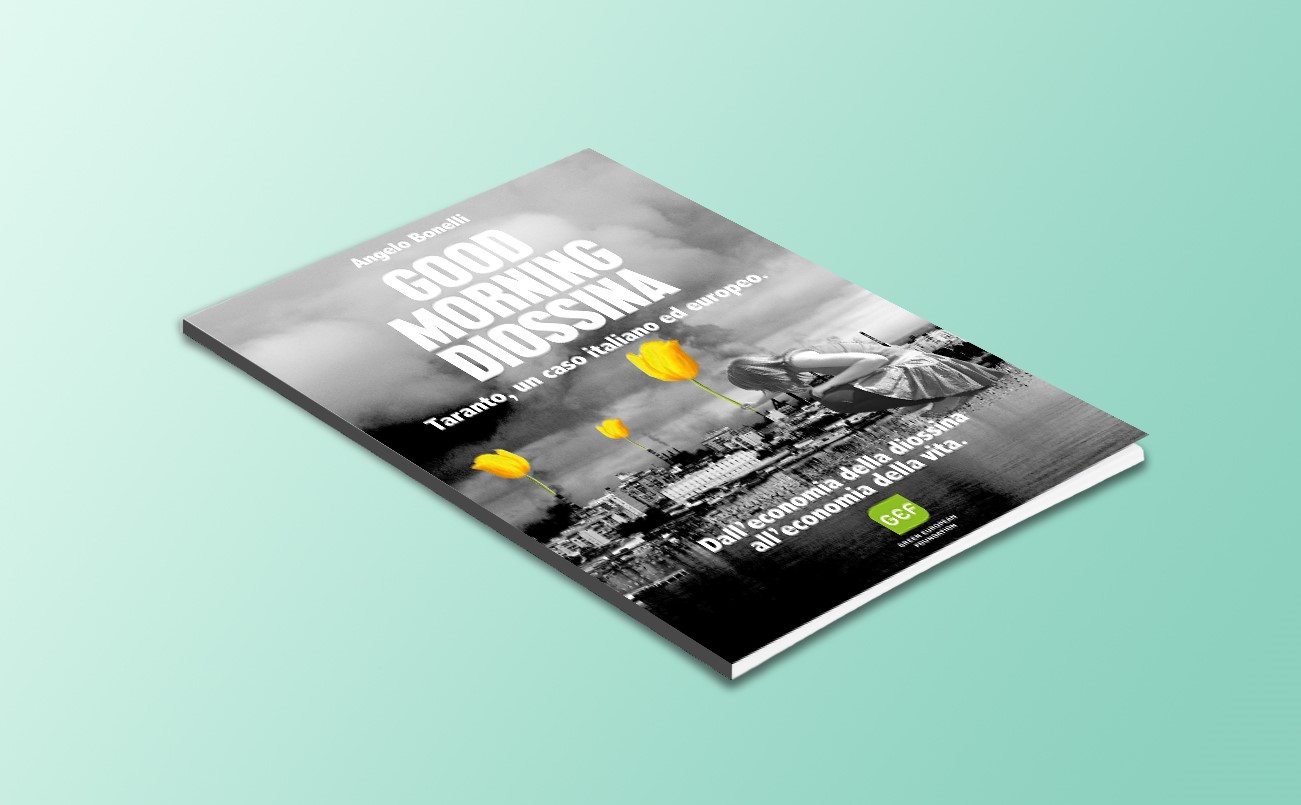
Taranto is a city in the south of Italy where the presence of highly polluting industries, such as the Ilva steel plant, has been responsible, since the 1960s, for the highest mortality rate in Italy. The latest epidemiological study by the Italian National Institute of Health shows a terrifying +54% above-average tumor incidence rate and +21% mortality rate among children (0-14 years old).

According to data by the Italian National Institute of Emissions (INES), in recent years, Taranto accounted for 93% of all the dioxin and 67% of all the lead released in the country’s atmosphere. The level of environmental pollution is so extreme that the health authorities were forced to outlaw pasture within a 20-km radius from the plant and to order in 2009 the cull of over 3,000 animals due to dioxin contamination.

Though not an isolated case, Taranto is a perfect example of how the absence of environmental controls in Italy or the “capture” of these by special interests in the name of profit maximisation has severely compromised and “sold” the health of citizens. There’s a reason that the investigation by the Taranto prosecutor’s office was codenamed “Sold Environment”.

In this book, we will tell the story of a city brought to its knees by poisonous fumes and torn apart by the sorrow of the victims’ families. Moreover, we will focus on the economic and industrial aspect of the problem: how can the highly polluting dioxin-based industrial model – of which Taranto is the epitome – become the subject of a radical economic and industrial conversion, capable of generating new, clean jobs and social welfare? Taranto’s economy currently revolves entirely around the Ilva plant and this has irreversibly damaged other crucial economic sectors, such as agriculture, stock rearing and mussel farming. Taranto’s mussels used to be famous all over Europe, but in recent years, the health authorities have ordered the destruction of tons of mussels from the Mar Piccolo due to PCB contamination. Around 1,000 jobs were lost among breeders and farmers. The trade, service and tourist industries have also been strongly affected by the pollution and the progressive reduction of Taranto’s population.

We have successful examples of similar industrial conversions both here in Europe (Bilbao and the Ruhr carbon sink), as well as on the side of Atlantic (most notably Pittsburgh, the United States’ former steel capital). We will also show how such economic and industrial conversions have reduced social strife and boosted employment and growth rates, thus debunking the intolerable notion that one must choose between well-being and employment; how favourable tax systems can contribute to the birth of major business- and employment-creating scientific and research centres based around technological innovation (such as biotechnologies); and how urban and social fabric can be regenerated to favour both economic and environmental recovery.

We will also look at the administrative, legislative and economic tools best fit to bring about Taranto’s industrial conversion. The book’s urgency stems from the need to move from mere protest to concrete proposals, thus hailing a new phase in Italy’s environmental movement, capable of offering practical solutions to the six million Italians who still live in highly polluted areas – forgotten citizens, to which we want to say that change is possible.

Paris Climate 2015 – 20 years on

By Uncategorized

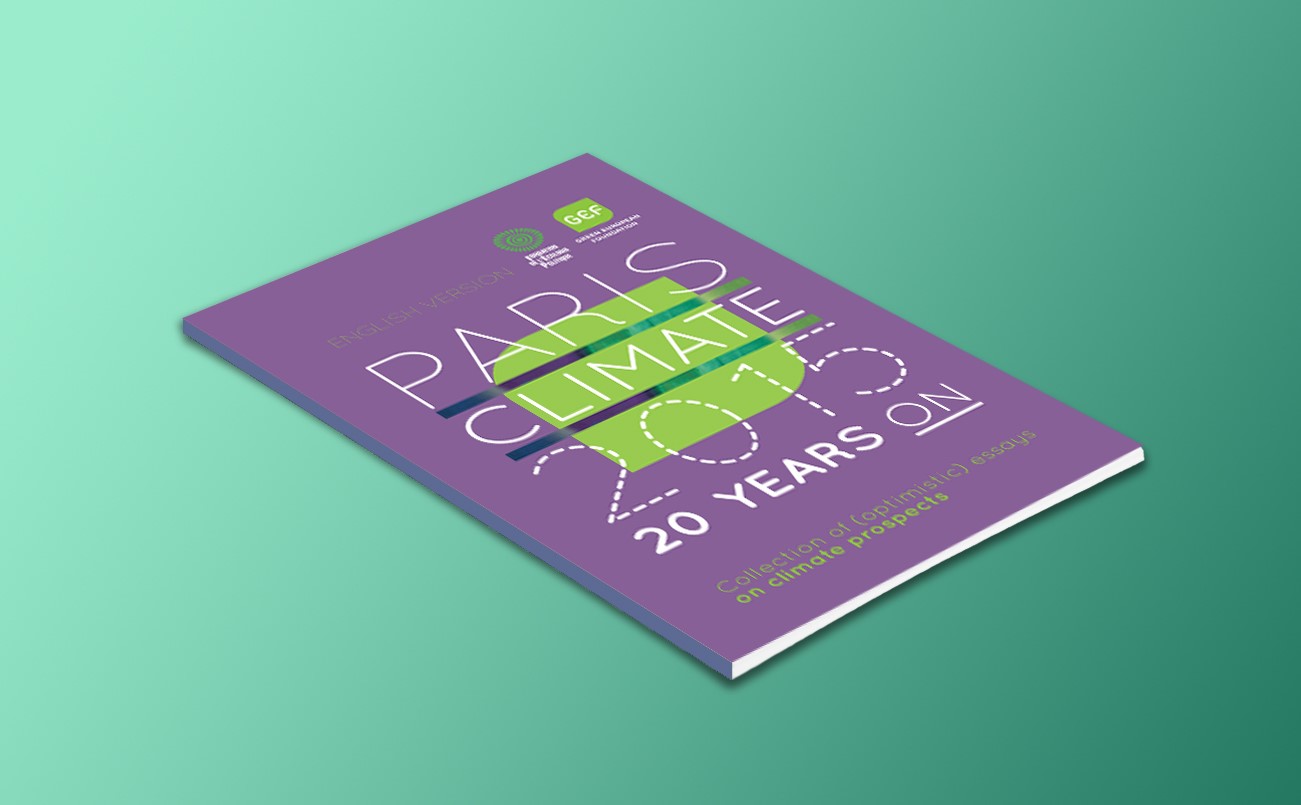
At the end of 2015, France will be hosting the 21st Conference of the Parties to the Climate Agreement (COP21). It is hoped that the international negotiations, which take place in Le Bourget for a fortnight under the patronage of the UNO, will result in an ambitious, universal and binding agreement by the international community, enabling greenhouse gas emissions to be reduced and global warming to be limited to + 2°C.

To take a truly idealistic approach: supposing that the 2015 Paris Conference was a success, and 2015 – and the years thereafter – saw a spectacular turnaround in international political decisions, what might the world look like in 2035?

To paint the portrait of such a post-transitional ecological world, a diverse group of writers recognised in their fields have produced the texts which make up this publication concerning the various questions which are key factors in the expected scenarios: world governance and new territorial, agricultural, social, economic, legal and political models. They are pieces in an as-yet incomplete jigsaw puzzle depicting a new world, imagined a quarter of a century after the Paris Conference.

The contributions by the authors of  “Paris Climate 2015: 20 years on” collection and the illustrations accompanying them convey a society in which ecological transition has enabled us to reweave our social links and change our methods of government, making them fairer, and rethink our relations with nature and the production of value in the long term.

In the near future, citizens’ action, a new economic logic and their reflection in terms of collective expectations, will lead to a renewed political dynamism, both locally and internationally, in response to the challenge of climate change. A better world, not “the best of all possible worlds”, but one which is multifaceted, open to the diversity of the possible, giving ample room for individual and collective initiative and, therefore, for discussions on the solutions, is to be envisaged.

Can imagination make it easier to understand the risks that climate change bears? That is the question at the heart of this collection of “climate prospects”, imagined as an original and creative debating tool for use at the 2015 Paris Climate Conference.

You can download the publication below in English or French, or visit the dedicated site of the FEP here.

Icon

Paris 20 Years On EN 1.39 MB 53 downloads

...
Icon

Paris 20 Years On FR 4.42 MB 118 downloads

...

Building up for Paris: COP21

By Uncategorized

2015 is a crucial year for climate negotiations. The current agreement – the Kyoto Protocol – is in its final commitment period (2013-2020) and this year marks the deadline for world leaders to reach a new agreement. As the United Nations Framework Convention on Climate Change (UNFCCC) states, this agreement could be in the form of “a protocol, another legal instrument or an agreed outcome with legal force under the Convention applicable to all Parties”, which will enter into force post-2020 in order to keep global warming below 2°C.

Over the year, the Parties met at different sessions. The most recent one took place in Bonn in June and there will another session in the beginning September. These events all pave the way towards the 21st Conference of the Parties (COP) that will be held in Paris in December, where the negotiations will peak.

The chapters in the report are structured as follows: chapter two provides a summary of the history of COPs since the UNFCCC was created by the Parties following the Earth Summit in 1992. The third chapter assesses what is at stake in Paris. In the fourth chapter, we discuss the legal nature that a Paris deal could adopt.

The fifth chapter provides a deeper analysis on a core principle guiding the negotiations: common but differentiated responsibilities. The sixth and the seventh chapters give an insight on the broader concepts of mitigation and adaptation in the context of the UNFCCC negotiations.

The eighth chapter focuses on the CBDR principle and the notion that the implementation of the Convention worldwide needs financial mechanisms. This chapter is followed by a critical perspective on market mechanism, before moving on to discuss land-use, land-use change and forestry in the tenth chapter – giving an insight on the broader topic of agriculture within the UNFCCC.

To follow, the eleventh chapter deals with another part of the Convention, essential for its implementation but often forgotten: education. The twelfth chapter focuses on the blockers in the UNFCCC process, divided in two parts: the countries analysed through their group position (Umbrella and EU); and the business and industry networks. Finally, the publication concludes with the elaboration of possible scenarios for the COP in Paris.

The European Patient – A Diagnosis of the EU’s Maladies

By Uncategorized

Today, Europe is in the midst of a number of overlapping crises: among others, economic, social, political, and environmental. For years it has been obvious that the European project cannot go on in the way it exists today, but the warnings were not taken seriously by the governments and major political forces in Europe. A “Grexit” or “Grexident” was barely averted in 2015, and 2016 saw a majority of voters in the United Kingdom opting to leave the European Union. In the meantime, opinion polls have shown that large parts of the population in other member countries, France and Denmark amongst others, would not mind following the British example of continuing their lives outside the European Union.

The compilation is subjective, and is based on the readings of the author and the GEF team, as well as a survey of the correspondents of the Green European Journal. The selected articles do not represent the views of the whole of the Green movement; rather their goal is to provide food for thought and to provide a selection of interesting readings

This publication looks into a number of possible reasons that have led, according to analysts, politicians, journalists, and activists, to the current problems of the EU, in order to identify the most important issues of concern, and – as a next step of our project – provide solutions to the shortcomings of the European Union.