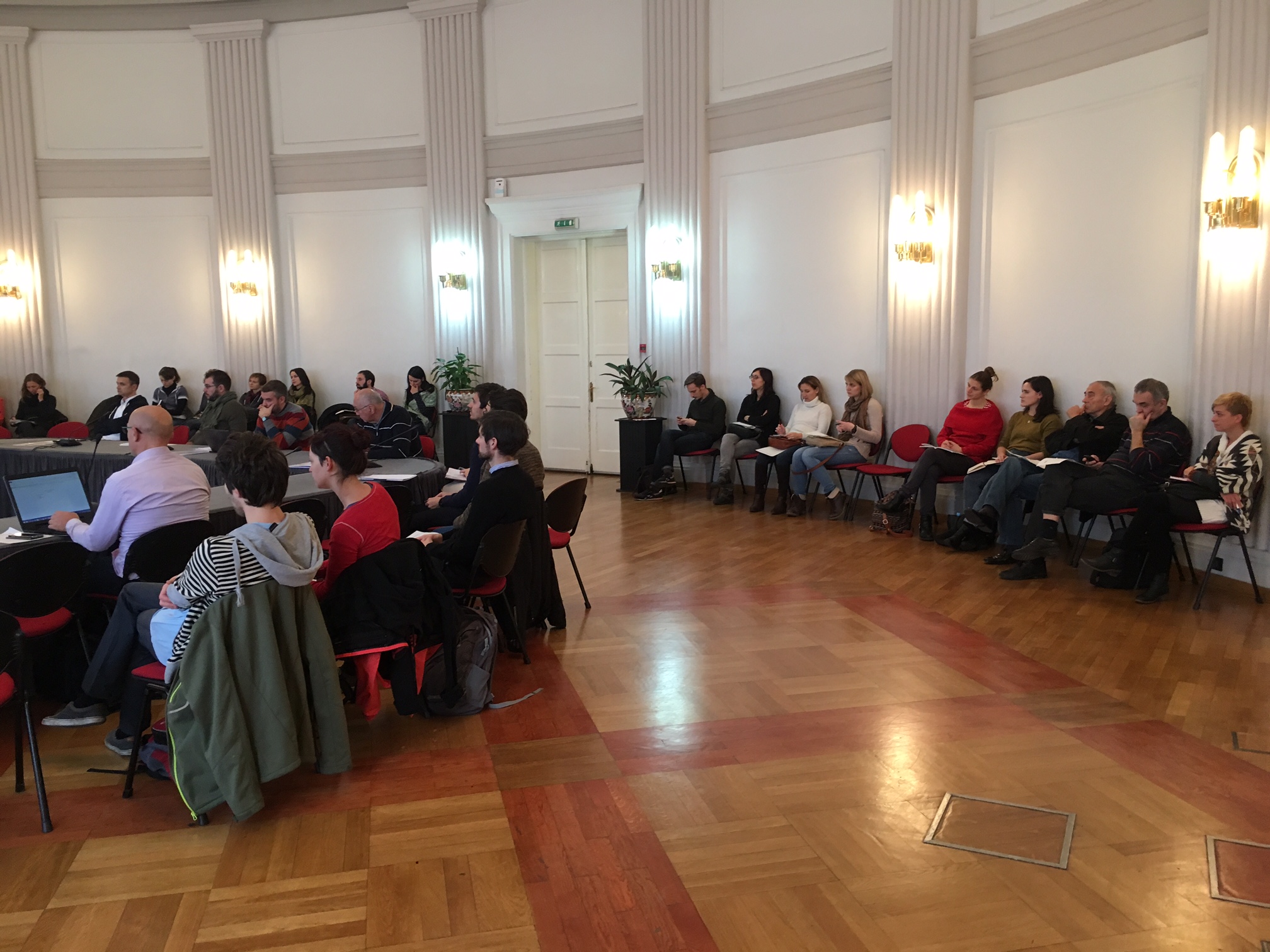
ECOPRO Seminar in Brussels with John Restakis

By

This event is a part of this year’s GEF transnational project ECOPRO (“Ecological Production in a Post-Growth Society”). It featured John Restakis – the director of the British Columbia Co-operative Association (Canada) and an acknowledged researcher of the role of Co-operatives worldwide, especially in relation to a new, socially fair economy, and he is the author of Humanising the Economy. Co-operatives in the Age of Capital. He is currently working together with Michael Bauwens and the P2P Foundation to create synergies between the Commons and the Co-operative movement.

During the seminar, John Restakis illustrated the advantages of co-operative enterprises in the context of this year’s ECOPRO thematic focus – sustainable work in a post-growth society.

ECOPRO Seminar in Zagreb

By

This event is a part of our transnational project ECOPRO (“Ecological Production in a Post-Growth Society”), which this year has a particular focus on the sustainable work. The seminar was entitled “Future of Work in Ecological Transition”, as it provided an analysis of impacts of the ecological transition on work, working conditions and generally transformation of labour that are generated by environmental challenges.

Transition of both economy and industry to (more) ecological, just and sustainable modes of production is already – with more or less success – taking place globally and in Europe. In some cases it takes forms of technological revolution, in other it relates to slower transformatory processes that deserve adaptation of societies, citizens, workers. As this change generates irreversible impacts on work conditions, quality of work, job security, time, education system it is also opportunity for new ecology of work that will improve quality of life, social equity and work conditions. Taking into account new impetus for industrial policy in Croatia, this seminar will aim to present different views on conditions for creating sustainable work in Croatia.

Furthermore, this event had a strong focus on exploring directions in which work conditions can be improved throughout ecological and just transition; ecologists, trade unionists, politicians and experts from different will share their insights and experiences about ways in which work conditions, quality of work and social criteria can be improved alongside with fundamental changes in the systems of production and consumption.

PROGRAMME:

11h30 – 13h00 Introduction

  • Vedran Horvat, Institute for Political Ecology, Zagreb
  • Beate Littig, Institute for Human Sciences, Vienna
  • Toni Vidan, European Economic and Social Committee, Brussels/Green Action/FoE Croatia, Zagreb
  • Ana Maria Boromisa, Institute for Development and International Relations, Zagreb
  • Bojana Percan, Croatian Union of Independent Trade Unions, Croatia

13h00 – 14h00 Lunch break

14h00 – 16h00 Debate

  • Branko Ančić, Institute for Social Research, Zagreb
  • Karolina Leaković,  International Secretary, Socialdemocratic party of Croatia
  • Siniša Vinković, European Trade Union Confederation

This event was open to public and free of charge.

Green Watchdog Stories Wanted from Bulgaria, Macedonia and Serbia

By

Freelance journalists based in one of the three countries, who are willing to work as public interest watchdogs applying high ethical and professional standards, are welcome to submit stories about environmental challenges and Green policies as sustainable alternative solutions. Interested authors should send their story proposals and a brief professional biography by email to contact@bluelink.info.

Please note that full story texts are not required at this stage. Successful proposals will need to identify an environmental problem or issue that affects at least two of the covered countries and:

  • indicate what facts, developments and figures the journalists intend to collect and investigate;
  • list the main story characters, organisations or sides, whose explanation, stand or opinion will be part of the story; and
  • explain its impact on the everyday life of individuals, communities or groups affected.

The editor will respond within 5 working days and will offer feedback to successful candidates, make suggestions on the story structure and word length, and eventually invite them to develop full text stories. A detailed introduction to BlueLink’s ethical and professional editorial requirements will also be offered to new authors.

Authors and editors will then work as a team to produce illustrated feature stories of outstanding quality and will eventually see them published online by the BlueLink.info e-magazine. Multimedia features will be encouraged. Certain journalistic pieces will be also translated and republished in Bulgarian, Serbian or Macedonian.

Published authors will be remunerated based on the contracted length and complexity of each story. Additional funds will be available for reporting trip(s) or other expenses that are essential for the quality of their articles. An average author’s fee for a 1750 words long story should be about EUR 100 in total, including all applicable taxes and deductions. Travel and related costs may also be covered separately where necessary. The deadline for this call is the 30th of November 2016, but story proposals will be accepted on a first come – first served basis as long as funding is available.

This call is part of the Journalists and Policy Makers Boost Green Economy project funded by the Green European Foundation (Brussels), implemented by the BlueLink Foundation (Sofia) in partnership with the Association for Sustainable Social-Economic Development Sunrise (Skopje) and Drugi Novi Centar Association (Belgrade). The project is organised with financial support of the European Parliament to the Green European Foundation.

Sustainable Industrial Policy for Europe

By Uncategorized

The memorandum “Sustainable Industrial Policy for Europe – Governing the Green Industrial Revolution” argues that industrialised production and consumption patterns lead the world to its ecological limits. Climate change, ongoing poverty, food and water shortages and the global economic recession can become driving forces of a Green Industrial Revolution. In Europe, a transformation process of old, as well as new, economic structures has begun, with a high potential of causing social conflicts. In this context, the study argues that a new approach to industrial policy by governments is essential to manage this fundamental change. Not having a sustainable industrial policy is not a political option.

The memorandum analyses, as a first step, the shortcomings of current industrial policies at the national and European levels, and subsequently highlights goals, guiding principles and measures of implementing sustainable industrial policies for Europe. Finally, it outlines an integrated monitoring and evaluation method assessing the state of industrial policy with regards to the pre-requisites of a shift towards sustainability.

The research has been realised by the Öko-Institut e.V (Institute for Applied Ecology), and published by the Green European Foundation in cooperation with the Heinrich Böll Foundation.

Green New Deal in Poland

By Uncategorized

The publication starts from the premise that although many European governments have taken over a discourse in line with the Green New Deal, there is long way to go to turn commendable political discourse into concrete political action. In this sense, the publication looks at key questions that need to be tackled in order to allow for a sustainable transformation of Europe’s economies.

Which sectors would drive the transformation and which sectors would be in most need of reform? Which transversal issues, such as gender relations or education, would have to be addressed as part of this transformation? These are questions that this publication deals with in detail. The aim is to highlight that there is an enormous latent potential to build a better future, which is not achieved due to unambitious policies within the European Union – at the national as well as the European level.

Icon

Green New Deal in Poland EN 6.93 MB 166 downloads

...
Icon

Green New Deal in Poland PL 7.02 MB 69 downloads

...

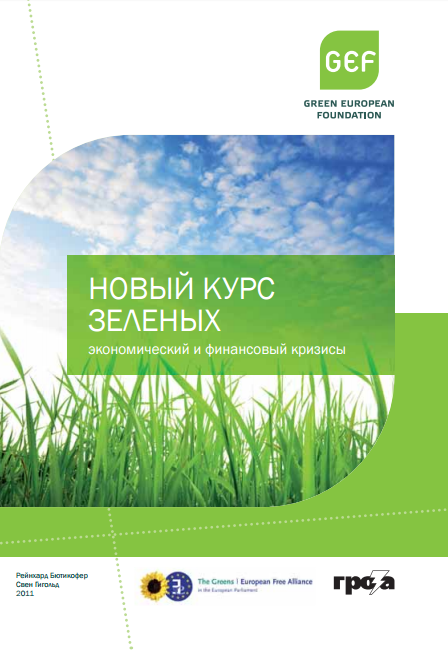
A Green New Deal – Economic and Financial Crisis

By Uncategorized

The Green New Deal rests on three pillars: the first is the re-regulation of unfettered financial markets to avoid the creation of another speculative bubble. The second pillar is the ecological and social transformation of our society through investment in climate protection and education, but also by an ecological industrial policy. The third pillar is the renewal of social balance between the North and South and between  the rich and poor in the developed world.

GEF offers here a Russian translation of the book, which has been authored by German Green MEPs Reinhard Bütikofer and Sven Giegold (further details are available here).

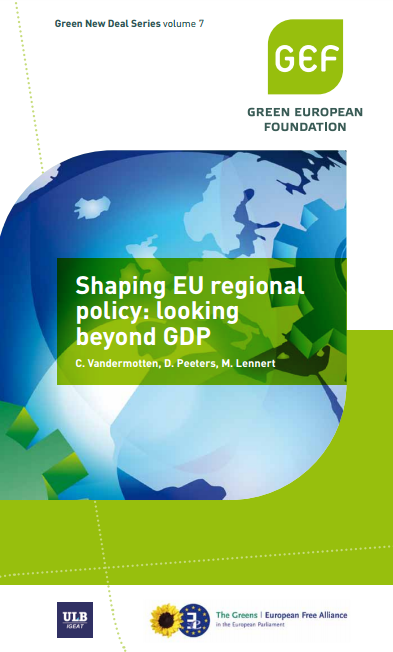
GDP and regional policy

By Uncategorized

EU regional policy continues to be based solely on the Gross Domestic Product (GDP) of each region. As is now accepted by many, there are serious flaws with the concept of GDP, such as its emphasis on economic production over other factors such as social equality. However, how else can regional policy be decided, if not by the GDP of each region?

This publication comes to the conclusion that the usefulness of GDP means it will continue to play a major role in shaping EU regional policy. However, its shortcomings can be compensated for by taking into account other factors, such as health and social cohesion.

As the European Commission prepares to review regional policy for the 2014-2020 period, this publication makes the case for a more nuanced regional policy that ensures European money is put to the best possible use.

Icon

GDP and regional policy EN 3.70 MB 59 downloads

...
Icon

GDP and regional policy FR 3.44 MB 117 downloads

...

Green jobs from a small state perspective. Case studies from Malta

By Uncategorized

The economic turmoil and the financial crisis faced by most of the European Union Member States can represent an opportunity to address the needs of the time by embarking on the ecological transformation of current production and consumption models in our societies. This transformation of the economy will entail a transformation of Europe’s employment strategies. Many of the jobs, which are likely to be in demand in the future, may involve tasks and require abilities different from those being demanded today. This is why we have to discuss the needed changes to the labour force and to analyse the prerequisites for the creation of green jobs, as well as the characteristics of these jobs.

The Green European Foundation (GEF) has been working extensively for the past three years on a Green New Deal for Europe – a comprehensive response to the current economic, financial, social and environmental crisis. The Green New Deal puts forward a set of reforms at micro- and macro-economic levels aimed at ensuring high levels of prosperity and well-being. The creation of decent employment and re-thinking the role work plays in our societies are central parts of this response, and thus need to be thoroughly addressed. This is how the project, “Green Jobs from a Small State Perspective”, developed by GEF with the support of Ceratonia Foundation in Malta, came about.

The current collection of articles focuses on the Europe 2020 Strategy to create new skills and employment opportunities and its relevance for Malta, as one of the smallest Member States of the EU. As reforming the labour market, as well as creating new green jobs, is a resource intensive process, Malta was chosen as an example of a small state without extensive financial or natural resources that would facilitate this transformation. We find it a worthwhile case study that constitutes an example for other Member States.

Work more? Work less? A report on working time

By Uncategorized

There are numerous reasons to assess “work” in the context of the Green New Deal. Clearly, a central goal of the sustainable transformation of our economy is to create quality green jobs. However, if we want to ensure prosperity and a decent quality of life for all, within the physical limits of our planet, old recipes will not work.

Working time could play an important role in the system change that is required. Working less is likely to improve the quality of life for all, ensuring a better balance between work and leisure or family time. By giving priority to free time over productivity and consumerism, a collective reduction of working time could promote more sustainable consumption patterns, increase community involvement, and achieve a better distribution of roles between women and men.

This publication addresses the multiple issues that are involved when considering changes to working times. It also looks at some of the challenges when considering this policy instrument. For example, what vocational training is needed to avoid skill shortage; how to finance such changes; and how flexibility should be organised at the micro and macro level in order to ensure collective as well as individual benefits? This publication aims to start a debate on what changes should be introduced to working time in Europe.

Read the publication in English here. 

Read the publication in German here.

Read the publication in French here. 

Funding the Green New Deal: Building a Green Financial System

By Uncategorized

The need to invest in a Green New Deal – a transformation to a more equitable and sustainable economy – is now more clear than ever. The current economic crisis is the result of short-term thinking and speculative investments, which have directly contributed to creating an unequal society and environmental harm.

The Green New Deal is a stark contrast to this. It is an essential change that will create an economy fit for today and for future generations. However, such a transformation will not come cheap. This report estimates that investment amounting to 3% of GDP per annum is required.

Given the state of many national budgets, it may not be possible for this investment to come directly from public funds. This report therefore examines how public and private capital can be leveraged to make the necessary investment in a Green New Deal.

Learn more about the Green New Deal at www.greennewdeal.eu.

Icon

Funding the Green New Deal EN 2.28 MB 143 downloads

...
Icon

Funding the Green New Deal FR 1.95 MB 161 downloads

...
Icon

Funding the Green New Deal DE 2.02 MB 60 downloads

...

A strategy for a bio-based economy

By Uncategorized

A bio-economy is an economy that moves away from a damaging reliance on fossil fuels and instead is based on the sustainable use of natural resources. The concept is one that is growing in popularity, but it has also suffered setbacks, such as the continued controversy over the use of biofuels.

This publication is a response to the recent debate over the potential of a bio-economy. Green MEP Bas Eickhout outlines the history, the different types of bio-economy other than energy, and some of the concrete steps that the EU can take to develop a sustainable, just and regional bio-economy.

A Post-Growth Society for the 21st Century: An executive summary

By Uncategorized

The study suggests that low growth rates are likely and that there is even fundamental uncertainty about future growth prospects. The challenge for European citizens and politicians is to accept this uncertainty and to create a society that frees itself from the shackles of looking at growth on its own – a society which focuses on other ways to ensure wellbeing and prosperity. This is what the study calls a “post-growth society”.

The key for the future is to develop a collective proposal in which the economy and society would no longer be dependent on the need for a sustained increase in GDP. Growth in GDP depends on many factors, including the extraction and use of many natural resources (e.g. oil, coal or gas). A big challenge for Europe and the world is the rapid depletion of available stocks of such resources.

Under pessimistic but plausible assumptions for the coming decades (concerning energy resources, the cost of renewable energy or lifestyle changes), growth is likely to be significantly reduced. “In a nutshell, our analysis shows that it is not so much a society’s economic growth that matters for prosperity, but rather the economic and social regime that creates more or less prosperity”, conclude the authors.

Carbon Bubble: The Price of Doing Too Little Too Late

By Uncategorized

The so-called ‘carbon bubble’ – which refers to the overvaluation of oil, gas and coal mining companies because of the need to shift from fossil fuels to renewable energy sources – poses a growing risk to our economies.

If we want to have a chance to limit global warming below 2°C and therefore avoid harmful climate change, the amount of fossil fuels that can actually be burnt is limited, and the majority of fossil fuel reserves would become stranded assets. Today, private companies own about a 1/4 of fossil fuel reserves. If a large part of these reserves cannot be extracted, that reduces the valuation of these companies and their ability to repay their debt. The carbon bubble therefore poses serious risks to the financial sector, given the financial institutions´ large exposures to oil, gas and coal mining companies through equity, bond, and loan portfolios.

This publication is also available in German, which can be found here. 

Money for Change

By Uncategorized

Six years after the global financial, economic and debt crisis, Europe is still struggling with the consequences and trying to improve its economic situation. The relatively good position of the Federal Republic of Germany is the exception in a generally crisis-ridden environment. The devastating effects of the financial crisis of 2008 -2009 and the recession that followed have yet to be fully overcome. The aggressive monetary policy of the European Central Bank may have relieved the financial crisis but it has not boosted the real economy. The risks of deflation are now being discussed in view of the policy of low interest rates followed by the ECB.

Icon

Money for Change EN 1.72 MB 86 downloads

...
Icon

Geld für den Wandel 2.28 MB 54 downloads

...

At the same time, we are faced with the challenge of hastening the convergence of economics and ecology. Climate change and the crisis facing the world’s ecology demand an urgent shift away from an economic system that is based on the ruthless exploitation of natural resources. The European Union cannot resolve its financial and social crisis without economic growth. However, the old economic model is not viable for the future because it leads us deeper into crisis. The way out of this dilemma is a new, sustainable model for growth based on renewable energy, a high degree of resource efficiency and re-utilisation of valuable raw materials. This is, in fact, a green industrial revolution – no more, no less – which will dramatically reduce depletion of the environment and also lead to a new boom in green technologies, products and jobs. This requires innovation and investment on a large scale.


Expert Symposium: Financing the Green Transformation (Berlin, May 2014)

Concepts for an ecological orientation to European economic and financial policies were the focus of a conference held in Berlin at the beginning of May 2014 and organised by the Heinrich Böll Foundation, the Green European Foundation and the German Trade Union Federation (DGB). The key question was how to finance extensive modernisation of the economy in Europe according to ecological considerations. This requires re-regulation of the financial sector, which would lead to greater alignment with the real economy, and would offer sustained investment opportunities for private investors.

Europe has the opportunity to make ecological re-orientation the springboard for new creation of value. This requires steering capital flow that is searching for investment opportunities into areas suitable for investment. Solutions that satisfy these criteria are sustainable in two ways: from an ecological point of view, and from the point of view of a stable financial and economic system.


Key contributions to the publication

This publication is a collection of articles from participants at this conference as well as from other authors. In his introductory article, Gerhard Schick illustrates the connection between a greater focus of the financial world on the real economy and financing a green transformation; he then names the most important areas to promote green investment. Simon Wolf then raises the question of whether we need a policy for the financial sector even more than before, in view of the investment required for this green transformation, or whether green investments would flow automatically if we improved the general conditions for ecological economic activity.

The next four contributions primarily address the problems of financing the real economy in Europe. Thierry Philipponnat warns against a hasty reversion to more capital market financing as a response to a lack of bank lending; instead, the banking sector should be geared more towards the needs of the real economy. Andreas Botsch sees the main problem as being the paradox of savings and the drop in investment rates, and proposes the formation of a private equity fund that could be used to finance this ecological transformation. Benoît Lallemand explains why breaking up the large banks would have a positive effect on financing opportunities for both small and large companies and why the resulting financial system would also favour ecological projects. For Reinhard Bütikofer, the decisive key factor for economic recovery in Europe lies in a renaissance and eco-orientation of industry and he investigates financing opportunities beyond the banking sector.

The remaining articles discuss how to encourage green investment. In his interview, Karsten Löffler advocates green mainstreaming in the financial sector instead of promoting individual projects. Stanislas Dupré and Jakob Thomä identify three promising initiatives to dismantle the obstacles in the financial sector to reducing the carbon footprint of the economy. Mehrdad Payandeh explains his proposal for a European Marshall Plan which combines public investment and private investment to secure ecological modernisation. Ana Belén Sánchez analyses the current status of ecological transformation in Spain and the challenges of how to finance it. The contributions of Claudia Kemfert and Dorothea Schäfer, as well as Silvia Kreibiehl and Ulf Moslener, use the example of the energy transition in Germany to examine the question of how more private capital, especially from large institutional investors, can drive the transition of energy systems. Finally, Philippe Lamberts takes a look at the previous and future role of the European Parliament in promoting a green transformation.

The German version of the publication has been published by the Heinrich Böll Foundation. Read the German version here.

John Hilary on TTIP

By Uncategorized

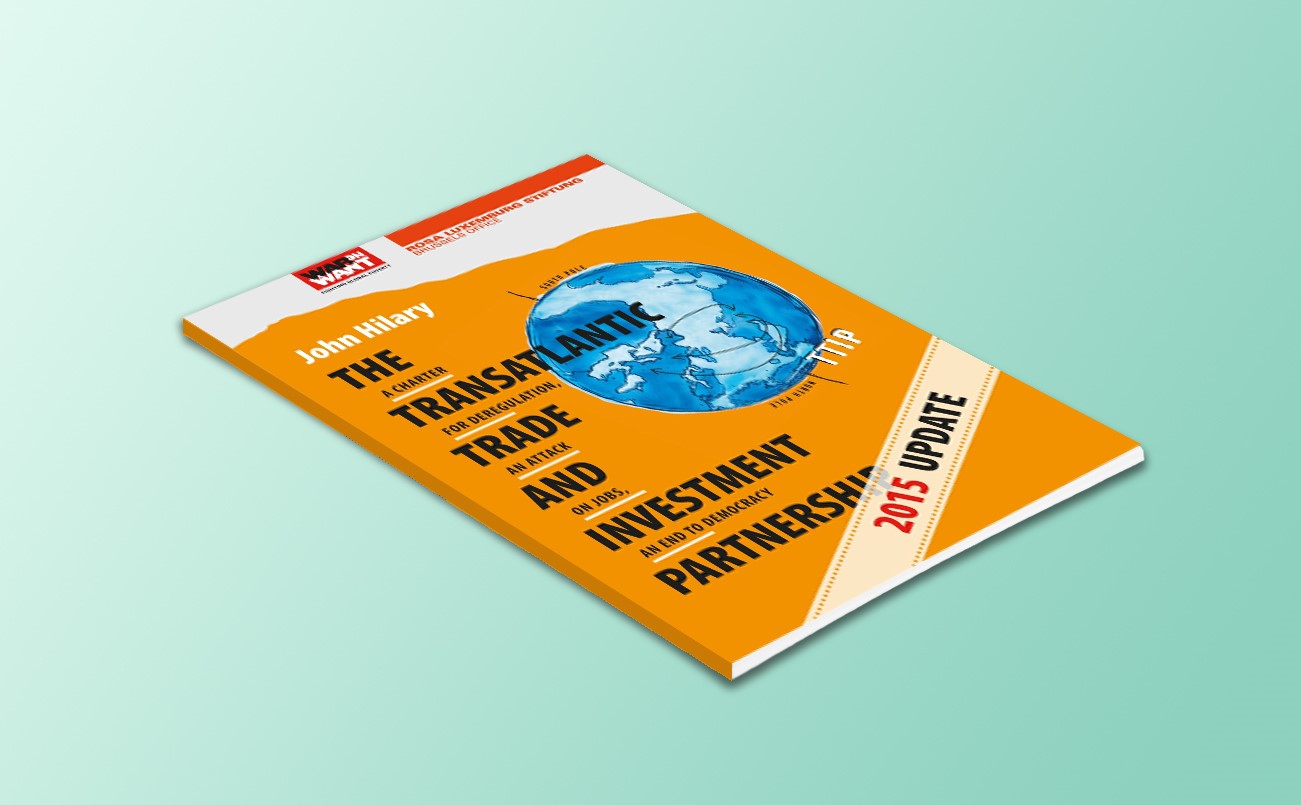
In 2015, John Hilary, the Executive Director of War on Want, an anti-war UK based charity, published a revised version of a TTIP dossier, The Transatlantic Trade and Investment Partnership: A Charter for Deregulation, an Attack On Jobs, an End to Democracy.

Now, GEF has translated the publication into Romanian! The dossier can be available to read here.

Overcoming the Corporatist Economy

By Uncategorized

This publication is the first paper in a series of three papers, available in French and Spanish.

The second paper, “The Corporatist Economy and the Nanny State”, was published by Heinrich-Böll-Stiftung and GEF in September 2015, is available here.

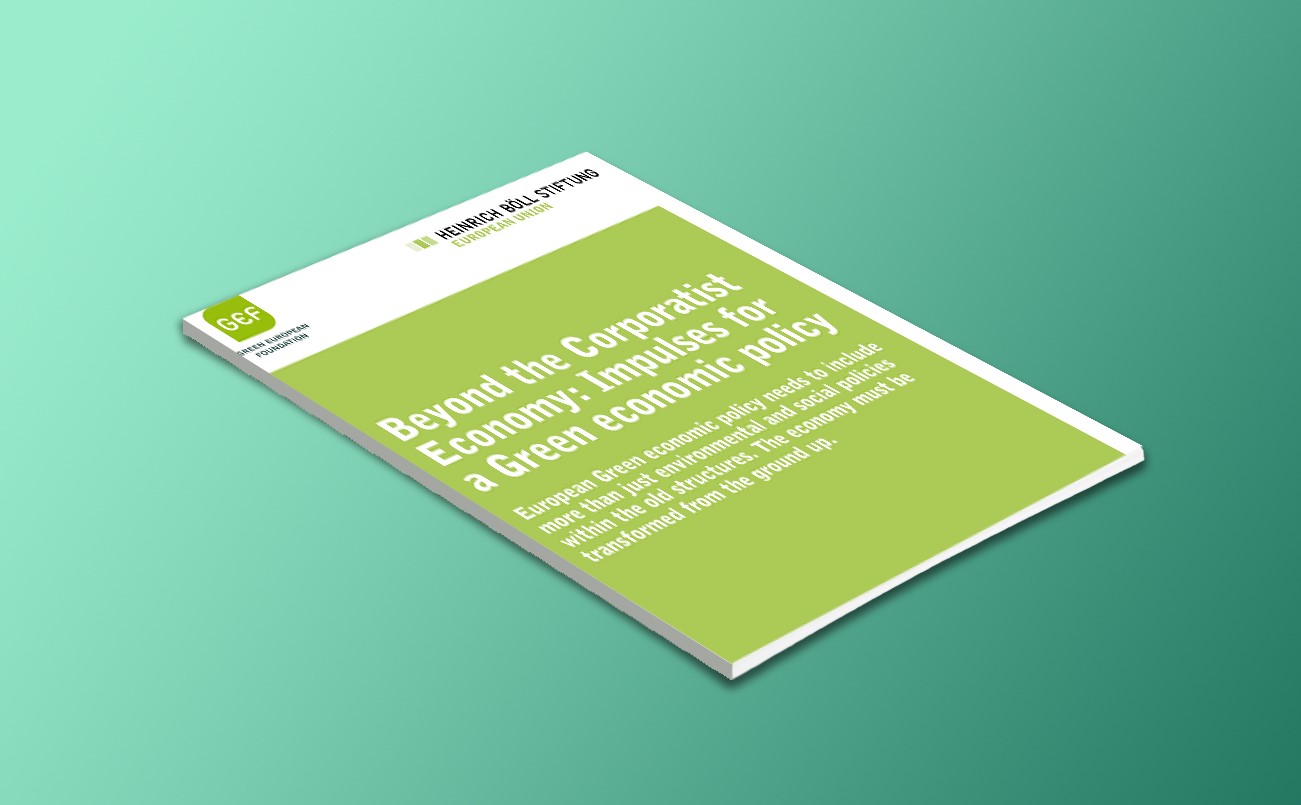
The third paper,  “Beyond the Corporatist Economy: Impulses for a Green Economic Policy”, was published by Heinrich-Böll-Stiftung and GEF in September 2015, is available in English and Spanish.

Icon

Beyond the Corporatist Economy EN 274.23 KB 108 downloads

...
Icon

Beyond the Corporatist Economy ES 294.48 KB 55 downloads

...

The commons: (co)managing commonly owned resources

By Uncategorized

The term “commons” is gaining increasing currency in political debates today, as thinkers and activists look for alternatives to what appears to be the failing model of the market economy. While many people have a broad idea of what the commons are – a means of co-managing a resource for the community as a whole – what does it mean in practice? And where and when can the idea of a commons be applied?

Many of these issues were discussed at the GEF seminar earlier this year. Since the idea of the commons was reintroduced to the public debate by the likes of Elinor Ostrom, many new forms of commons have become viable. An example discussed at the seminar was the idea of genetics and DNA as a type of commons.