A Basic Income for Europe

By

About the event

“The Unconditional Basic Income is a periodic cash transfer granted to all members of a political community, without work requirement nor means-testing, and high enough to ensure an existence in dignity and participation in society”.

During this event, we’ll seek to analyse if a European UBI is possible. We’ll put the focus on what benefits it would bring compared to nationwide implementation and how institutions could finance it.

We will also review how the European Citizens’ Initiative (ECI) for a European Basic Income emerged and whether European society is actually ready for a basic income.

Context

Views on a guaranteed basic income vary drastically across Europe. In 2020 a Universal Basic Income ECI was launched to request the EU Commission to make a proposal for unconditional basic incomes throughout the EU to reduce regional disparities and to strengthen the economic, social and territorial cohesion in the EU.

This event is part of our knowledge community ‘A welfare state of the 21st century’. The Green European Foundation has been working on this issue for several years with the aim of opening a debate on UBI across Europe. We are now joining forces with other social actors to give this effort a broader scope.

As the debate continues, we too would be interested in expanding our analysis to include new information and additional countries.

Speakers

  • Malcolm Torry. Dr. Malcolm Torry is a Visiting Fellow at the Institute for Policy Research at the University of Bath and treasurer of the Basic Income Earth Network (BIEN), and was until recently a visiting senior fellow at the London School of Economics and director of the Citizen’s Basic Income Trust. He has written a number of books about Basic Income, and for nearly twenty years has researched the financial feasibility of illustrative Basic Income schemes.


  • Klaus Sambor. One of the main initiators of activities surrounding basic income in Austria and in Europe and one of the main organizers of the European Citizens’ Initiative “Start Unconditional Basic Incomes (UBI) throughout the EU”, which is taking place in all countries of the European Union.


Moderation:

Ewa Suffin-Jacquemart.  Member of the Board of the Green European Foundation and Director of the Polish green foundation Fundacja Strefa Zieleni.


Practicalities

Date and Time: October 5th (17:00-18:00)
Audience: The webinar is free and open to the general public.
Registration: Please register in advance via this link.


This event is organised by the Green European Foundation with the support of Transición Verde and with the financial support of the European Parliament to the Green European Foundation. The European Parliament is not responsible for the content of this event.
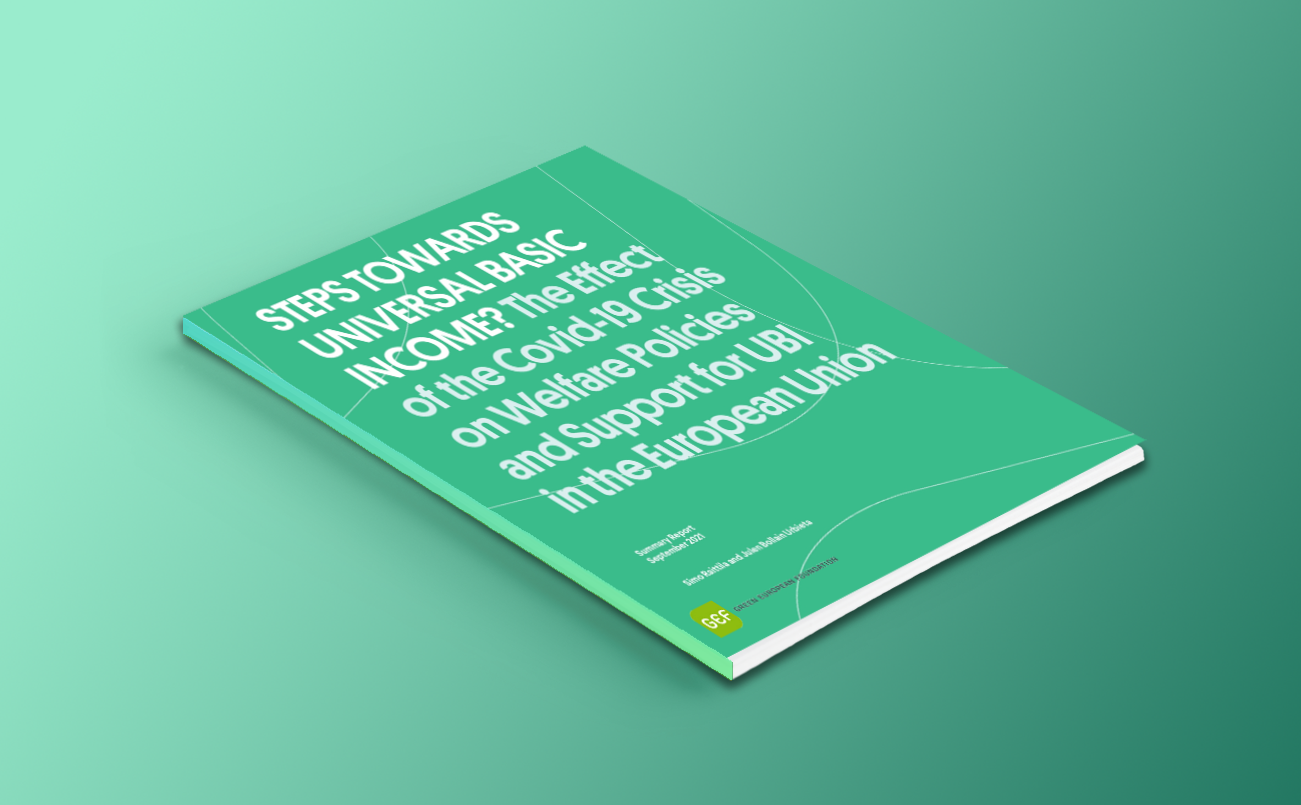
Steps Towards Universal Basic Income? The Effect of the Covid-19 Crisis on Welfare Policies and Support for UBI in the European Union

By Uncategorized

Context

When the Covid-19 pandemic hit Europe, it put an enormous strain on the lives and livelihoods of millions. Amid lockdowns and quarantines, many countries responded by (temporarily) broadening their social security policies and providing additional support to those at risk of falling through the cracks. Yet as we slowly emerge from this crisis, there are already others looming. Society will continue to feel the effects of COVID-19 for a decade or more without an urgent public policy overhaul. We need to re-examine our social security approaches and implement bold measures to make societies more resilient to change and crisis. One such proposal is the Universal Basic Income.

There is no place for narrow views or short-sighted policies aimed at continuing to patch up a wound that is gradually – although more and more rapidly – bleeding us dry. Nor is there any point in trying to face the challenges of the 21st century with policies from the last century that have already proved to be unsuccessful.

Objectives

This report examines the social policy reactions to the Covid-19 crisis in a dozen different European countries. Drawing on survey and qualitative data, we explore how these expanded support measures relate to the vision of Universal Basic Income. To what extent do they represent a step towards UBI, despite government hesitancy? And what do they say about the (in)ability of our existing social security systems to deal with crises? The report also investigates the popularity of UBI among Europe’s citizens. Has the pandemic made an impact on the way people talk and think of UBI?

Experts and stakeholders across Europe contributed data for this publication, and shared their insights and reflections as part of our project “Change of Mindset–Civil Society Dialogue around UBI, Social Justice, and Climate Impact.” As the debate continues, we too would be interested in expanding our analysis to include new information and additional countries.

If you wish to:

  • Submit a survey response;
  • Provide details or resources on countries not featured in this analysis;
  • Send us your feedback;

Please get in touch! GEF’s work on UBI continues–read more here.


This publication has been realised with the support of Visio and Fundació Nous Horitzons and the financial support of the European Parliament to the Green European Foundation. The European Parliament is not responsible for the content of this publication.

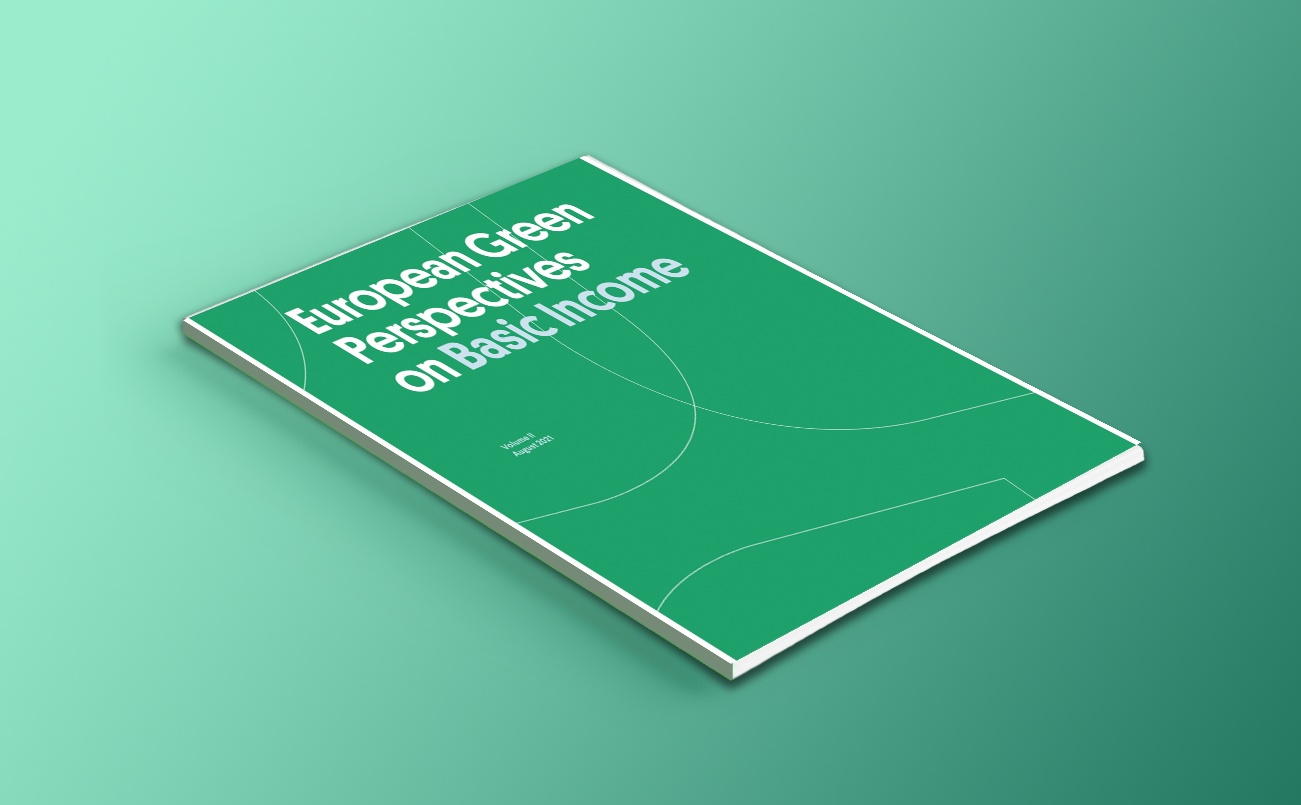
European Green Perspectives on Basic Income

By Uncategorized

Context

Since 2017, the Green European Foundation has shaped the discussion of advancing universal basic income in Europe and, if possible, worldwide.

“European Green Perspectives on Basic Income” is the second volume of a collection of articles tackling different facets and perspectives on basic income (BI) 1.

Because of the Covid-19 pandemic, the debate about basic income has gained a lot of traction. In Europe, and around the world, we’ve seen efforts to ease the economic crisis across all levels of government.

A considerable amount of aid programs that were approved included a partial basic income. For the first time, many people realised we can all suddenly find ourselves in an economically challenging situation through no fault of our own.

An unconditional basic income may help us focus our energies on finding a way out of this crisis. The Covid-19 pandemic further highlighted and aggravated social injustice and economic inequalities as much as it raised questions on the social responsibility of individuals and solidarity at all levels of society.

Objectives

Our aim is to support initiatives to foster a debate within and outside Green circles to learn from each other and to allow an exchange of alternative social policies. Following the suggestion of the “European Green network of basic income supporters”, we have updated and expanded the Green European Foundation’s publication, European Green Perspectives on Basic Income, from 2019 to create this present publication. Similar to the first edition, this second volume aims to provide insights into the discussions about BI in various European countries,–both within the Green movement as well as in the broader public–and contextualises those in historic and cultural prerequisites.

“From a degrowth perspective, UBI should be implemented as a tool to reinforce democracy by reconnecting people by creating solidarities and by questioning basic needs and how to fulfil them in a sustainable way.”


Download

Available  in Greek

Available in Albanian

Available in Croatian

Terrestrial Forum: Horizons of Change- Summer School

By

About the event:

Sociologists define social change as changes in human interactions and relationships that transform cultural and social institutions. Well known examples of such change have resulted from social movements in civil rights, women’s rights, and LBGTQ rights, to name just a few.

The desire for change will be the driving force of this Summer School. We will explore together progressive policies, institutional practices and the fight for a just society within the limits of global sustainability. The National Forum’s purpose is to inspire progressive policy discussions and facilitate a networking space for social actors. This year’s program comprises three modules:

  • Affordable housing.
  • Democratization of public services and management of public resources.
  • A fair energy transition.

Context

Serbia has been under a conservative and authoritarian government for almost a decade. During this time, the powers in office have rapidly decomposed all the remaining welfare services and further deteriorated the already fragile democratic institutions. Whether one looks at the political, economic or social aspects, the Serbian society cries out for a radical structural change. Although we’ve witnesses a rise in resisting practices that show alternative models of governing, we need to strengthen our efforts to coordinate the counter-hegemonic voices to achieve better results.

Practicalities:

The program will unfold under the current COVID-19 measures. Travel, accommodation and food costs are covered by the summer school organizer. The official language of the school will be B / C / S, while some lectures will be held in English.

Dates: 23rd-29th August

Where: Sremski Karlovci (Serbia)


This event is organised by Green European Foundation with the support of MINISTARSTVO PROSTORA and with the financial support of the European Parliament to the Green European Foundation.

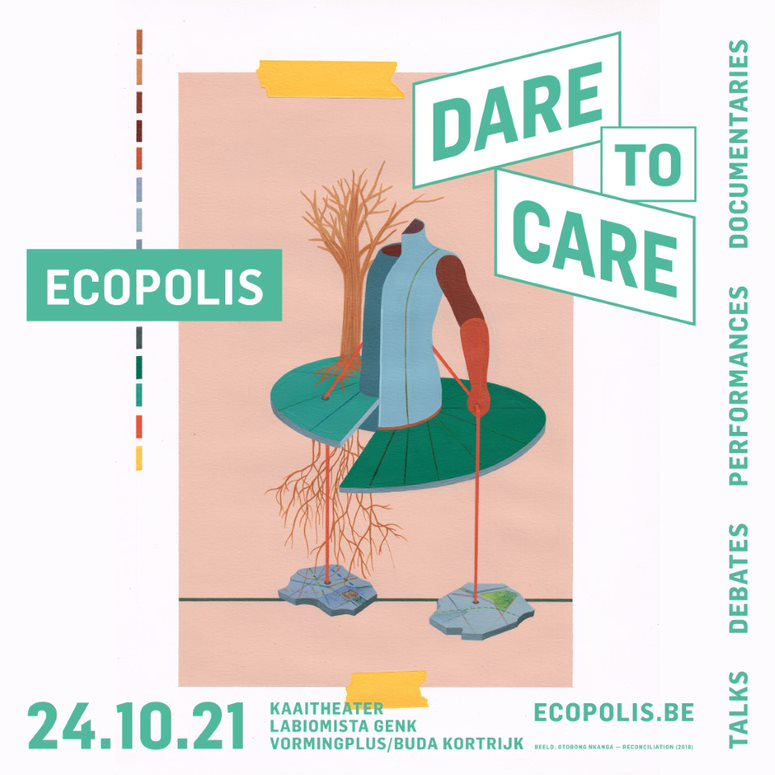
Ecopolis: Dare to Care

By

About the Event

The global Covid-19 crisis brought healthcare into the spotlight. But care extends beyond the strictly medical: it includes everything we do to preserve and restore the world. The erosion of the welfare state, the plundering of the Global South and the crossing of planetary boundaries are worrying developments. And what about the connection between the exploitation of man and of nature?
What if tomorrow we found the courage to truly care for all people and other earthlings, for our unique living world? Seeing nature merely as raw material for plundering man, and man as merely driven by competition: can we put that behind us? Can care be a new starting point, based on connectedness and generosity? Can care, as an emancipatory principle, underpin politics and economics?
Ecopolis makes room for these questions, and many more, during a day of lectures, conversations, workshops, literature and performance. The analyses and proposals come together from many perspectives: alert carers and emancipated people in need of care, inspiring researchers and committed artists, fellow citizens who start from the local context and guests who bring in experiences and wisdom from indigenous cultures and the Global South.
Because ecological challenges know no national or linguistic borders, Ecopolis is diverse, international and interactive.


Context

Ecopolis is the perfect annual day to meet people who care about a sustainable future. Because ecological challenges know no national or linguistic borders, Ecopolis is diverse, international and interactive.

Ecopolis invites Belgian and international authors to debate the transition towards a socio-ecological society. Inspiring books, documentaries and debates between writers, academics and civil society thinkers about ecology, economy and society are at the heart of this event.

Speakers:

Jason Hickel – economic anthropologist and author of the recent book Less is More – How Degrowth Will Save the World 

Benedikte Zitouni – lecturer in Sociology and head of CESIR (Centre for Sociological Intervention and Research) at the University of Saint-Louis in Brussels, specialized in ecofeminist perspectives 

Mieke Vogels – Flemish Minister of Welfare, Health, Equal Opportunities and Development Cooperation from 1999 to 2003 

Els Hertogen – director of 11.11.11, the Flemish coalition of international solidarity groups 

Malcom Ferdinand  University College London, author of A Decolonial Ecology: Thinking from the Caribbean World 

Moya de Feyter – author and poet, and founder of the Dutch language branch of Poets for the Planet 

John Mussington – Barbuda Farming Co-Op and Barbuda Land Rights Committee 

Olave Nduwanje – author, legal scholar, and activist 

Sien Volders – award winning author of novels including Oogst (2020), which describes the harrowing fate of East European migrant workers in the agricultural sector in Italy  

You can see the full list via this link. 


Programme:  

Theatre Hall 

11:00 – 12:30 An economy that cares for people and the planet 

  • With Jason Hickel, Sien Volders, and Koen Schoors 

12:30 – 13:45 Care in the arts: how a choreographic practice can also become a care practice 

  • With Jija Sohn, Lucy Wilke, and Julia Reist (Lands of Concert) 

13:45 – 15:15 The care home of the future 

  • With Anne Berquin, Fed Ingram, Mieke Vogels, and Luc Van Gorp 

15:15 – 15:30 Essay by Carolina Maciel de França 

15:30 – 17:00 Chasing the idyll: neo-colonialism disguised as charity 

  • With Olave Nduwanje, John Mussington, Gaea Schoeters, Malcom Ferdinand, and Line Algoed 

17:00 – 18:00 Closing debate: towards a caring society 

  • With Benedikte Zitouni, Kopano Maroga, Carolina Maciel de França, Els Hertogen, and Lidia Paz 

Forum 

12:30 – 13:45 Health workers and the climate crisis 

14:00 – 15:30 Poetry room: the climate poets 

15:30 – 17:00 The Book Forum 

Living: Slow Discussions 

13:45 Curator: Philsan Osman 

15:30 Unequal care work: a daily struggle 

18:00 The Work that (Re)Connects: experimenting with collective grief circles 

For more details on the programme, please check here. 


Practicalities: 

Date: October 24th, 2021.  

Location: Kaaitheater, Square Sainctelette 20, 1000 Brussels 

Language: there will be simultaneously translation into English, French, and Dutch. 

Tickets: on sale via this link 

We operate a “pay what you can” principle with a suggested price of 10 EUR. If you are able to pay a higher price, this helps make it possible for others to pay less. Thank you for your solidarity! 

You can subscribe to the GEF newsletter here to stay informed of this and other upcoming events.  


This event is organised by the Green European Foundation, with the support of Oikos and with the financial support of the European Parliament to the Green European Foundation.


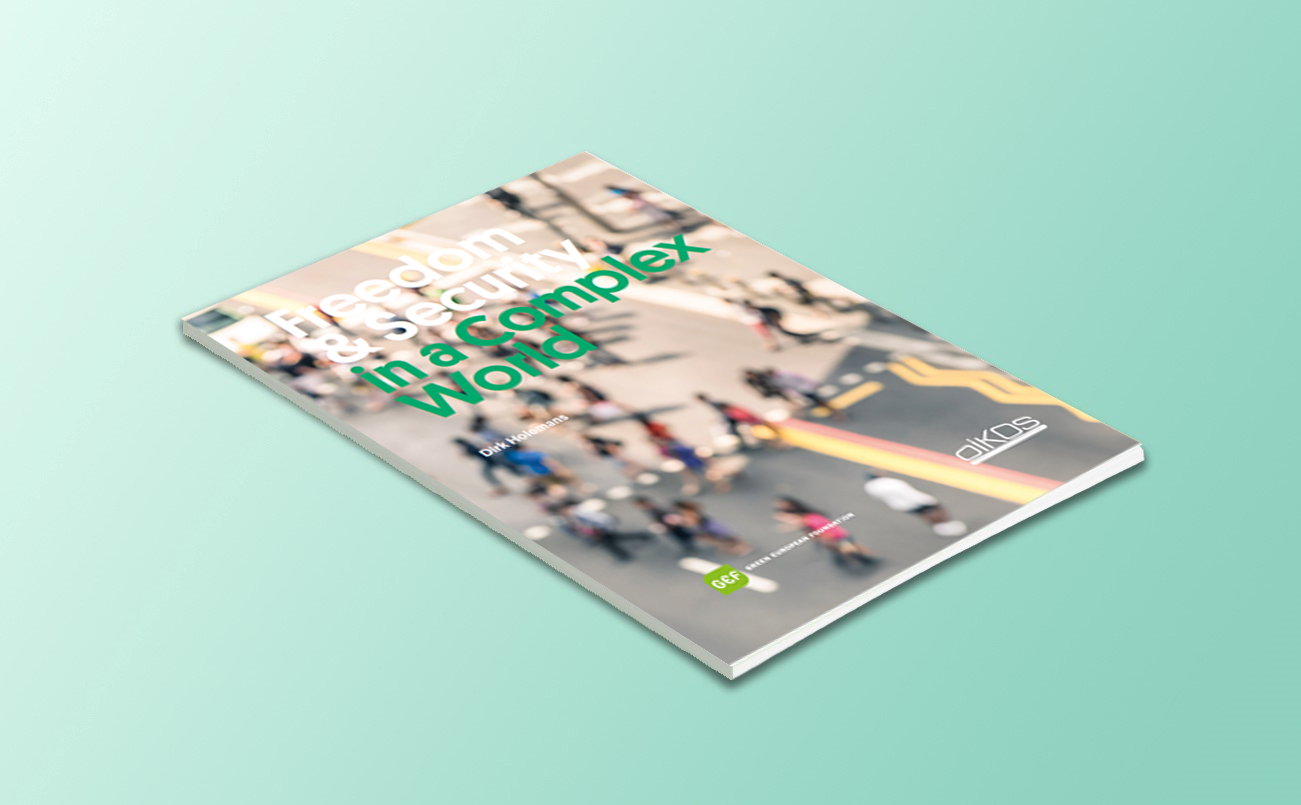
Freedom and Security in a Complex World (2021 edition)

By Uncategorized

Context

People all over the world are taking their future back into their hands. Together, they are taking initiatives in the fields of renewable energy, local food production, sharing tools, and so forth. This is the most hopeful movement of our time. Where the market and state fail, people are taking action. As free citizens, they are reinventing the collective, with open partnerships where personal development and social engagement go hand in hand. This observation seems to contradict what we experience every day. The system errors of our society model fill the newspapers: climate crisis, unstable banks, refugee flows. Accepted wisdom is that uncertainty is increasing. But both trends are happening, not by coincidence, at the same time.


Objectives

While examining the two interlinked concepts of Freedom and Security, this publication suggests that the answer needs to be the transformation into a socioecological society in the 21st century. It argues for the realisation of a societal project that strives for equal freedom for all people to flourish in security, within the boundaries of the planet, and proposes concrete steps towards it.


Download

Available in English here.

Available in French here.

Available in German here.

Available in Hungarian here.

Available in Spanish here.

Available in Macedonian here.

Available in Greek here.


This report presents a new and updated take on the 2017 version (Please see the English, French, German, Hungarian and Spanish editions from that year, which were part of the transnational project “A green transformation: Freedom and Security in uncertain times” ).

The 2021 report was developed in partnership with Oikos and with financial support from the European Parliament to the European Green Foundation. 

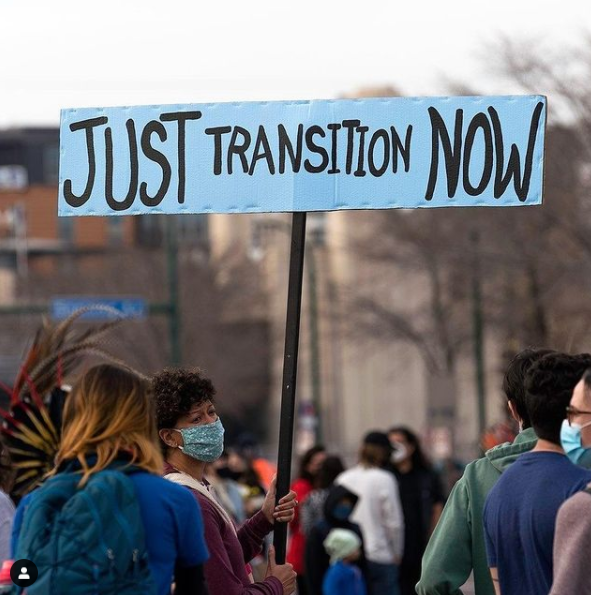
Call for Author: Youth Chapter for the Just Transition Book

By

About the Event

The chapter will be published in the Book on Just Transition produced as part of the multiannual and multipartner project carried out by the Green European Foundation, led by Oikos and participated by green European partners. It will be divided in five parts: (1) Setting the stage, (2) European regions on their way, (3) Just transition and the EU Green Deal, (4) Frontrunners showing the way, and (5) Conclusions. The Youth Chapter will open part 4.

We are looking for someone who can bring a fresh perspective and nuanced insights into the following questions:

  • How do young people take the future into their own hands?
  • How are grassroots movements changing the narrative and convincing politicians to push for a socially just transition?
  • How are young activists from marginalised communities and minority groups impacted by climate change, and how are they fighting for climate justice?
  • Why are current EU programmes such as Next Generation EU not good enough?
  • How has the pandemic transformed the efforts of grassroots activists and changed their methods to create impact?

We are looking for one or two young authors with a passion for writing who are interested in the topic and committed to unpack the relation between the work of activists everywhere in Europe and the political advancement towards a more sustainable, welcoming and fairer Europe.


Context

About the chapter:

  • The content of the chapter should have a strong focus on the role of youth, grassroots and marginalised and minority groups in achieving a better and more just transition away from fossil fuels towards a socially and environmentally sustainable future
  • The chapter should have a clear sub-structure (contextual introduction, main body divided in sub-sections and topics, summarising conclusion) and can include various formats (analysis, essays, case studies and/or interviews)
  • The chapter should support analysis with figures and examples from at least three European countries (including at least one non-EU)
  • The chapter should consist of 4000 to 6000 words
  • The contribution should be written in English
  • The remuneration for the writing of the chapter is EUR 500

We accept both individual and joint applications of maximum two authors to co-write the chapter. If you decide to apply with someone please send in only one joint application.

The writer(s) applying should:

  • Be interested and passionate about tactics, methods and narratives used by grassroots movements across Europe to achieve a socially just transition
  • Be determined in expanding their knowledge on the topic by doing research, following the work or contacting activists
  • (Possibly) have previous experience in writing extensive pieces
  • Feel comfortable in writing long texts in English

Timeline:

  • Send your application by 2nd April at 23:59 CET
  • You will be informed of the decision at the latest by 7th April (all applicants will be informed)
  • Start writing!
  • A first draft of the chapter should be sent in by the 7th of May
  • Wait for the feedback and comments of the FYEG Executive Committee
  • The final version of the chapter should be sent in by the 31st of May


Practicalities

To apply:

Please send the following to project.manager@fyeg.org by 2nd April @ 23:59 CET:

  • Your pitch for the chapter: a description of what you would like to write about (between 300 and 400 words)
  • A short mention of the structure and format you plan to use
  • A proposal for a concise title
  • Your CV (or CVs if two authors are applying)

Social Dividends as a Form of Basic Income

By

About the Event:

The COVID-19 pandemic has more than ever provoked the debate around Universal Basic Income as a potential policy solution to a host of challenges. Yet just as there is a diversity of arguments in support of basic income, there is a proliferation in models and pathways to implementation – each with its specific intricacies and consequences.

This one-hour webinar will explore some of these paths towards a basic income at the European level. Specifically, M.Soc.Sci Johanna Perkiö will present on social dividends as a potential form of basic income, based on her 2020 report for Vasemmistofoorumi (The Left Forum). Perkiö’s larger work has been on the history of discussions about UBI in Finnish society.

After the presentation, Lukas Korpelainen will comment on Perkiö’s findings and reflect further on the topic, followed by audience questions.

Context:

After gathering comprehensive expertise and setting up transnational networks through a three-year long project on universal basic income, GEF and its partners continue building on the outputs and successes of this work on the topic.

The transnational project ‘Change of Mindset – UBI, Climate and Social Change’ seeks to spark a stronger civil society dialogue to bring about the change of mindset needed to raise acceptance of universal basic income among the public and to deepen the debate on our conceptions of productivity and work. Together, we dive into the exploration of UBI as a tool of the urgently needed ecological transition and part of social security in a (post-)pandemic, climate change world.

Speakers:

Johanna Perkiö – project researcher at the University of Tampere and former chairperson of BIEN Finland

Comments by: Lukas Korpelainen – chairperson of the Finnish Greens’ social security working group and author of the GEF publication Basic Social Security 2030.

Practicalities:

This webinar will take place in English, and will be livestreamed to Facebook and YouTube. Participants can leave comments or questions via the chat. Register here to receive a reminder email.

UBI

European Positions on Unconditional Basic Income II

By

About the Event

At a time when many people have lost their jobs and the economic outlook is uncertain, an unconditional basic income (UBI) sounds tempting. In November, with the support of FREDA and the Green Future Academy Austria, GEF invited Barbara Prainsack to discuss her new book on an Unconditional Basic Income “Vom Wert des Menschen.”

To build further on that discussion, we are inviting new perspectives to the table. Bishop Benno Elbs brings in the perspective of Christian social teaching, Markus Koza brings in the trade union point of view, and Barb Jacobson will provide a European perspective with her precise knowledge of the international discussion.

Together, they will address key questions like: Is basic income a contemporary solution to our social and economic problems? Do national trials make sense or is European cooperation necessary? And can we even afford it?

Context

After gathering comprehensive expertise and setting up transnational networks through a three-year long project on universal basic income, GEF and its partners continue building on the outputs and successes of this work on the topic.

The transnational project ‘Change of Mindset – UBI, Climate and Social Change’ seeks to spark a stronger civil society dialogue to bring about the change of mindset needed to raise acceptance of universal basic income among the public and to deepen the debate on our conceptions of productivity and work. Together, we dive into the exploration of UBI as a tool of the urgently needed ecological transition and part of social security in a (post-)pandemic, climate change world.

Speakers

  • Barbara Prainsack – Professor of Political Science, University of Vienna, author
  • Benno Elbs – Bishop of the Diocese of Feldkirch
  • Barb Jacobson – Welfare Advisor, London
  • Markus Koza – green social speaker with union background

Moderation by Eva Häfele, social scientist

Practicalities:

This event will take place on Zoom and will be primarily in German, with some English consecutive translation. Please register in advance via this link.


Migration

Just Transition: Futureproof policies for work

By

About the Event:

The webinar will offer a space for debate among representatives of various organisations from both North and South on both sides of the Atlantic to discuss how just transition in Europe can be shaped through futureproof policies, for the benefit of decent working conditions and well being of all, both in the EU and at global level. Join this webinar to learn more about Just Transition.

Context:

JUST TRANSITION as transnational project aims to tackle the challenge of transforming from an extractive to a regenerative economy in a just and equitable way to find the necessary support among the population. It seeks to show that the green family, including Green European Foundation in its specific role, is a leading actor in the development of futureproof politics and policies, developed in a sensitive way that keeps in mind local specificities.  Project partners are working together in conducting research on the Just Transition and currently drafting a paper on its different dimensions.

In a world characterized by multi-level governance, just transition initiatives are needed at different levels: from companies and sectors, over cities and regions, to nations and the European Union. At all these levels, specific challenges, groups of stakeholders and power relations make clear that there is not a ‘one fits all’ model of just transition. This also shows the need to document cases at different levels, in different regions.

This webinar opens a series of three online events on JUST TRANSITION which will take place in November and December 2020.

Speakers:

  • Sean Sweney, CUNY School of Labour and Urban Studies
  • Liam McClelland, Federation of Young European Greens
  • Axelle van Wynsberghe, DiEM 25
  • Lyda Fernanda, Colombian economist, ex-TNI staff member

Moderated by: Vedran Horvat, Institute for Political Ecology

Programme:

17:00 – 17.10 Introduction: Vedran Horvat, IPE

17:10 – 17.25 Sean Sweney, CUNY School of Labour and Urban Studies

17:25 – 17:40 Liam McClelland, Federation of Young European Greens

17:40 – 17.55 Lyda Fernanda, Colombian economist, ex-TNI staff member

17.55 – 18.10 Axelle van Qynsberghe, DiEM 25

18:10 – 18.30 Discussion

Practicalities:

Monday, 30 November, 17:00-18:30

This is an online event, please join via the zoom link: https://us02web.zoom.us/j/89384973759

Language: English will be the main language of the event

—-

This event is organised by the Green European Foundation with the support of Institute for Political Ecology and with the financial support of the European parliament to the Green European Foundation

UBI

European Positions on Unconditional Basic Income

By

About the Event:

Barbara Prainsack’s new book on an Unconditional Basic Income “Vom Wert des Menschen” has received a lot of attention in recent weeks. At a time when many people have lost their jobs and the economic outlook is uncertain, an unconditional basic income (UBI) sounds tempting. The Green European Foundation, with the support of its Austria partner FREDA, has invited Barbara Prainsack to discuss her thoughts and basic theses with us.

In order to delve even deeper into the topic, we want to bring further perspectives to the table: Sabine Jungwirth (Federal Spokesperson Green Economy) brings her economic expertise and Barbara Huemer (Green Spokesperson for Women, Work, Employment, Human Resources, Science, Research & Development) shares her experiences.

European perspectives will be provided by Antje Schrupp from Germany, who has been dealing with the feminist aspects of a UBI for years, and by Francois Denuit, researcher and staff member of the European Parliament with a focus on an EU-wide UBI.

Context:

After gathering comprehensive expertise and setting up transnational networks through a three-year long project on universal basic income, GEF and its partners continue building on the outputs and successes of this work on the topic.

The transnational project ‘Change of Mindset – UBI, Climate and Social Change’ seeks to spark a stronger civil society dialogue to bring about the change of mindset needed to raise acceptance of universal basic income among the public and to deepen the debate on our conceptions of productivity and work. Together, we dive

into the exploration of UBI as a tool of the urgently needed ecological transition and part of social security in a (post-)pandemic, climate change world.

Speakers:

  • Barbara Prainsack – author of “Vom Wert des Menschen” (Austria)
  • Sabine Jungwirth – Federal Spokesperson Green Economy (Austria)
  • Barbara Huemer – Green Spokesperson for Women, Work, Employment, Human Resources, Science, Research & Development (Austria)
  • Antje Schrupp – journalist and political scientist (Germany)
  • Francois Denuit – researcher and staff member at the European Parliament (Belgium)

Moderation by Carlotta Weber (Strategy Manager at the Green European Foundation)

Programme:

19:00 – 19:10 Onboarding & Welcome (00:10)

19:10 – 19:20 Reading/Presentation by Barbara Prainsack (00:10)

19:20 – 20:10 Panel discussion

20:10 – 20:20 Input by Francois Denuit

20:20 – 20:30 Panel discussion

20:30 – 20:45 Audience Q&A (optional)

Practicalities:

This event will take place primarily in German.

The event will be streamed live on YouTube, please tune in here.

UBI

Basic Income as Part of the Green Recovery? (Warsaw)

By

About the Event:

In this fifth and last event of our UBI series, tackling both international and Polish questions and dimensions of the topic, we discuss whether and how Universal Basic Income has a part to play in plans for a Green Recovery. The event will be taking place in a hybrid format, with some participants and speakers in person and others joining online.

Context:

The Green European Foundation has been working and researching the topic of UBI for a few years as part of a transnational project involving many countries. This year, the project is entitled“ CHANGE OF MINDSET. Civil society dialogue around UBI, social justice and climate impact”. The Polish Green Foundation “Strefa Zieleni” joined the project, recognising that it was time to start a public debate on this in Poland as well – not only on UBI itself but as part of a broader conversation: what social security system is best adapted to the needs and expectations of Polish society in times of great instability and turmoil? This event series aims to foster that debate.

Speakers:

  • Paweł Szypulski – Greenpeace Polska (TBC)
  • Aleksander Temkin – “Europe, a Patient” initiative
  • Natalie Benett – former leader of the Green Party of England and Wales, Member of the House of Lords (online)
  • Alviina Alametsä – Finnish MEP, Greens/EFA (online)
  • Julen Bollain – economist, UBI researcher, member of the Basque Parliament in Spain (online)
  • Moderation and comments by Ewa Sufin-Jacquemart and Wojciech Kłosowski.

Practicalities:

This event will take place primarily in Polish. There is limited space for in person participants at Galeria BWA, so please register in advance here. The event starts at 18:00.

The event will also be streamed live on Youtube, please check the Facebook event page for a link.

How to Finance Universal Basic Income

By

About the Event:

In this fourth edition of our UBI webinar series, tackling both international and Polish questions and dimensions of the topic, we delve deeper into the question of how to finance a Universal Basic Income. What models exist, how do they differ, and what is the financial feasibility of this idea?

Context:

The Green European Foundation has been working and researching the topic of UBI for a few years as part of a transnational project involving many countries. This year, the project is entitled “CHANGE OF MINDSET. Civil society dialogue around UBI, social justice and climate impact”. The Polish Green Foundation “Strefa Zieleni” joined the project, recognising that it was time to start a public debate on this in Poland as well – not only on UBI itself but as part of a broader conversation: what social security system is best adapted to the needs and expectations of Polish society in times of great instability and turmoil?

This webinar series aims to foster that debate. We began with international webinars introducing the general concept of UBI, the European UBI, and the achievements of the GEF in promoting this debate, and we discussed UBI pilots in Europe and elsewhere. Then we narrowed down on the Polish perspective and prospects for implementation, which continues with this webinar on financing.

Speakers:

Prof. Monika Kostera – Professor of economy at the Jagiellonian University in Krakow

Rafał Woś – Economic journalist and opinion leader

Moderation and comments by Ewa Sufin-Jacquemart and Wojciech Kłosowski.

Practicalities:

This webinar will take place in Polish. It is open to anyone, but please register and join using this link. 

We will use the Zoom video conferencing platform. It is recommended to join the webinar via a PC. You do not need to install additional software. However, for the best user experience and full participation features, we recommend installing the Zoom Desktop App, which is free.

UBI

Polish Views on Unconditional Basic Income (Webinar)

By

About the Event:

After earlier webinars introducing the general concept of UBI, the European UBI, and the achievements of the GEF in promoting this debate, we discussed UBI pilots in Europe and elsewhere.

This time, in partnership with the Polish Basic Income Network, we will present UBI and similar concepts that are discussed in Poland and the prospects for implementing them in the country.

Context:

The Green European Foundation has been working and researching the topic of UBI for a few years as part of a transnational project involving many countries. This year, the project is entitled “CHANGE OF MINDSET. Civil society dialogue around UBI, social justice and climate impact”. The Polish Green Foundation “Strefa Zieleni” joined the project, recognising that it was time to start a public debate on this in Poland as well – not only on UBI itself but as part of a broader conversation: what social security system is best adapted to the needs and expectations of Polish society in times of great instability and turmoil?

On May 26th, the webinar “With UBI we would be less afraid of coronavirus” opened a series of four online meetings on this topic, organised by GEF with the support of Strefa Zieleni. Participants of the first webinar chose the topics of subsequent meetings, the third of which is an overview of the Polish perspectives on UBI and prospects for implementation.

Speakers:

  • Dr hab. Ryszard Szarfenberg – Political scientist, professor at the Faculty of Political Science and International Studies at the University of Warsaw. Leader of the Polish Basic Income Network and active populariser of the concept of Unconditional Basic Income in Poland.
  • Dr Jacek Warda – Political scientist, an expert in public management in local governments and author of the first Polish scientific article on the UBI: “Potential consequences of the implementation of a negative tax for the state’s social system” (2008). Member of the Polish Basic Income Network.
  • Dr Maciej Szlinder – doctor of humanities in the field of philosophy, sociologist, economist. Member of the Polish Basic Income Network, Basic Income Earth Network, Red Renta Básica. Author of the book “Unconditional basic income. A revolutionary reform of the society of the 21st century” (PWN, 2018).

Moderation and comments by Ewa Sufin-Jacquemart and Wojciech Kłosowski.

We regret that the guest speakers of this particular webinar are all men, as unfortunately, the Polish Basic Income Network is an entirely male initiative. GEF and Strefa Zieleni are committed to hosting diverse and balanced events and have ensured that the next webinar in this series will be dominated by excellent female speakers.

Programme:

The webinar will start at 18:00 CEST with a short video produced by the UBI transnational project partners.

Practicalities:

This webinar will take place in Polish for a Polish audience. It is open to anyone, but please register using this link: https://us02web.zoom.us/webinar/register/WN_ecc1VTOBS0WdsayiiuGCag

We will use the Zoom video conferencing platform. It is recommended to join the webinar via a PC. You do not need to install additional software. However, for the best user experience and full participation features, we recommend installing the Zoom Desktop App, which is free.

Between Theory and Practice – Experiments of Basic Income (Webinar)

By

About the Event:

Reflections and specific experiments have been ongoing for many years in the search for systemic solutions to provide people with the opportunity to meet basic life needs in times of instability, exacerbated amid junk contracts, rapid climate change and structural inequalities. Unconditional basic income is one such form, tested by certain public authorities, but also by non-governmental and research organisations, both in so-called developed countries as well as some countries of the global South.

This webinar focuses on the experiences of basic income in several countries – their goals and results, but also the political context of each case. A more general academic comparative view will complete a political and activist approach. We invited a European university researcher examining UBI experiments, their political and social context and overtones, but also a Kenyan Green politician from a so-called developing country where innovative social policies have been pursued both by the authorities and through the experiments of social aid and research organisations.

Context:

The Green European Foundation has been working and conducting research on the topic of UBI for a few years as part of a transnational project involving many countries. This year, the project is entitled “CHANGE OF MINDSET. Civil society dialogue around UBI, social justice and climate impact”.

On May 26th, the webinar “With UBI we would be less afraid of coronavirus” opened a series of four meetings on this topic, organised by GEF and with the support of Strefa Zieleni. Participants of the first webinar chose the topics of subsequent meetings, the first of which is an exploration of unconditional basic income experiments and derived social policy solutions in various countries.

Speakers:

  • Jurgen De Wispelaere – policy fellow at the Institute for Policy Research (University of Bath) and a visiting scholar at the Stockholm School of Economics in Riga.
  • Martin Ogindo – Party leader of the Green Congress of Kenya.
  • Moderation and comments by Ewa Sufin-Jacquemart and Wojciech Kłosowski.

Practicalities:

This is an open event accessible to an international audience. English-Polish translation will be provided.

We will use the Zoom video conferencing platform. It is recommended to join the webinar via a PC. You don’t need to install additional software. However, for the best user experience and full participation features, we recommend to install the Zoom Desktop App, which is free.

Please register and join the webinar via this link: https://us02web.zoom.us/webinar/register/WN_rM7YcboBRNmUC3brggoaAg

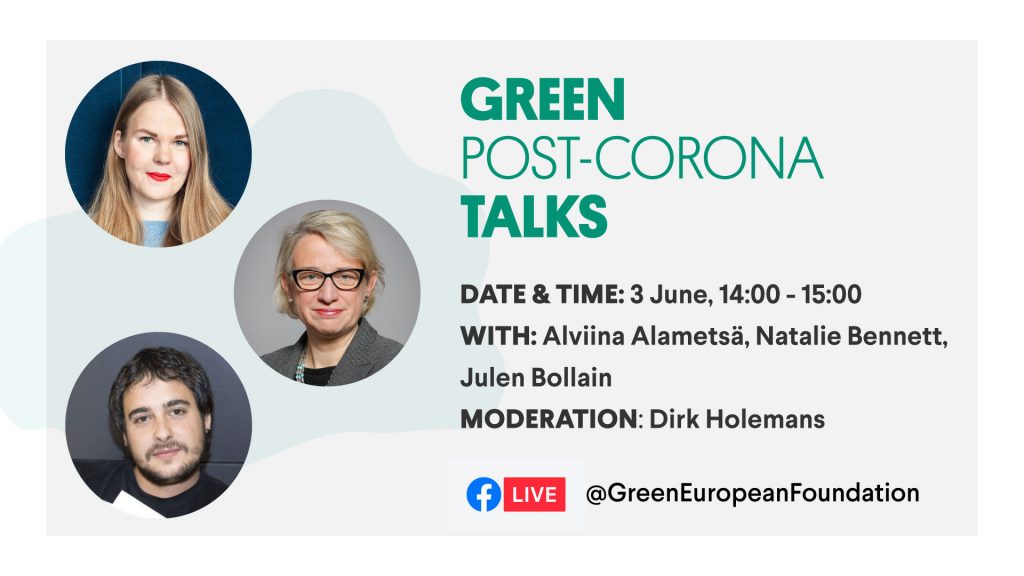
Green Post-Corona Talks with Alviina Alametsä, Natalie Bennett and Julen Bollain

By
The Green Post-Corona Talks with Alviina Alametsä, Natalie Bennett and Julen Bollain is another edition of GEF’s series of participatory online talks with inspiring guests offering an analysis on what is at stake in this crisis and what positive ideas and concepts there are for a green post-corona vision. This episode is organised in partnership with Visio.

Join our Facebook event to stay alert for the live stream.


About the event


The ongoing Covid-19 pandemic is having a grip on societies worldwide and will impact our lives long after the crisis is overcome. It is clear that we cannot continue with “business as usual,” but that we need to discuss positive ideas and concepts for a better, greener future and resilient societies now.

GEF is therefore hosting the Green Post-Corona Talks, a series of participatory online discussions with high-level experts, thinkers, and policy-makers, and the opportunity for participants to pose their most pressing questions to them live.

The talks will highlight what is currently at stake in the Corona crisis but also look beyond the period of the pandemic, and what possible solutions are already out there and can lend themselves to design the post-corona world.

The series will cover different themes from economy, over migration to gender, and bring in inspiring perspectives from all across Europe.

The project is implemented in cooperation with Oikos.


You can help us advancing forward-looking green ideas

to shape the Europe that we want! 


We rely on your generous contribution to continue putting together new, exciting Green Post-Corona Talks made extensively available to the general European public! So, please consider making a donation today, by clicking on this link.

UBI

With UBI, We Would Be Less Afraid of the Coronavirus Crisis (Webinar)

By

About the Event:

We would like to invite you to the first edition of a series of four webinars on the topic of universal basic income (UBI). This event series is organised for by the Green European Foundation, with the support of Fundacja Strefa Zieleni, and a grassroots initiative of Polish activists: “Community of Ideas”. It consists of two Polish and two international webinars.

One feature of our current unsustainable system is the massive, and rapidly growing, increase in inequalities – emphasizing feelings of insecurity and material instability for a growing share of the population, and especially among young people.

Even in the “old Europe” countries, with some of the most caring welfare state systems in the world, the growing trends of precarious work and increasing workforce poverty have grown too much to be thought of as marginal. The overwhelming feeling of social injustice often leads either to social unrest, like with the yellow vest movement in France, or to the development of populism and political authoritarianism, which we can observe, among other places, in Poland.

The past few years have seen research and some practical experiments in search of systemic answers to enable people to meet their basic needs – in times of structural inequalities and instability, due in part to this spread of precarious work and the destructive consequences of rapid climate change. The universal basic income (UBI) is one of the solutions on the table.

In this webinar, we take a look at the existing work GEF has done on UBI, where these ideas come from, and what they are based on. We will also discuss why this is a “green” concept, consistent with “green policy,” have an overview of the UBI reflections and experiments in different countries, and address its critics. Finally, we touch on GEF’s continuing research plans on the topic and go over the present efforts to introduce a pan-European basic income and other social security measures at the EU level.

Context:

The Green European Foundation has been working and conducting research on the topic of UBI for a few years as part of a transnational project involving many countries. This year, the project is entitled “CHANGE OF MINDSET. Civil society dialogue around UBI, social justice and climate impact”. The Polish Green Foundation “Strefa Zieleni” joined the project, recognizing that it was time to start a public debate on this in Poland as well – not only on UBI itself, but as part of a broader conversation: what social security system is best adapted to the needs and expectations of Polish society in times of great instability and turmoil?

Speakers:

François Denuit is an adviser to the Co-President of the Greens/EFA group in the EP Philippe Lamberts and scientific collaborator at the Université libre de Bruxelles. He wrote his PhD dissertation on the idea of a pan-European unconditional basic income.

Susanne Rieger is a Co-President of the GEF Board of Directors and a board member of the Catalan Green foundation, Fundació Nous Horitzons (FNH). Susanne has been working on topics such as political education, capacity building, as well as developing political and public discussions and communication structures on the European level for the past twenty years.

Wojciech Kłosowski is an expert, researcher, activist, author, lecturer and practitioner of social issues, local governance and social policy of cities. Wojciech is a founding member of the Zieloni 2004 party (today: Partia Zieloni).

Moderator : 

Ewa Sufin-Jacquemart is the director of the Fundacja Strefa Zieleni, a member of the GEF Board of Directors and coordinator of the Green Center of the Congress of Women.

Programme:

18:00 – 19:30

  • Welcome
  • Presentation by Susanne Rieger
  • Presentation by François Denuit
  • Summary and comments (in Polish) by Wojciech Kłosowski
  • Discussion

Practicalities:

This is an open event, aimed at an international audience. English-Polish translation will be provided.

Please use the following link to join the webinar (joining the webinar is preceded by registration).

When joining the webinar, you will have to complete a short registration form – so make sure to tune in early!

If you would like to read more about some of GEF’s existing work on UBI, please refer to the following publications:


This project is organised by the Green European Foundation with the support of Fundacja Strefa Zieleni and with the financial support of the European Parliament to the Green European Foundation.

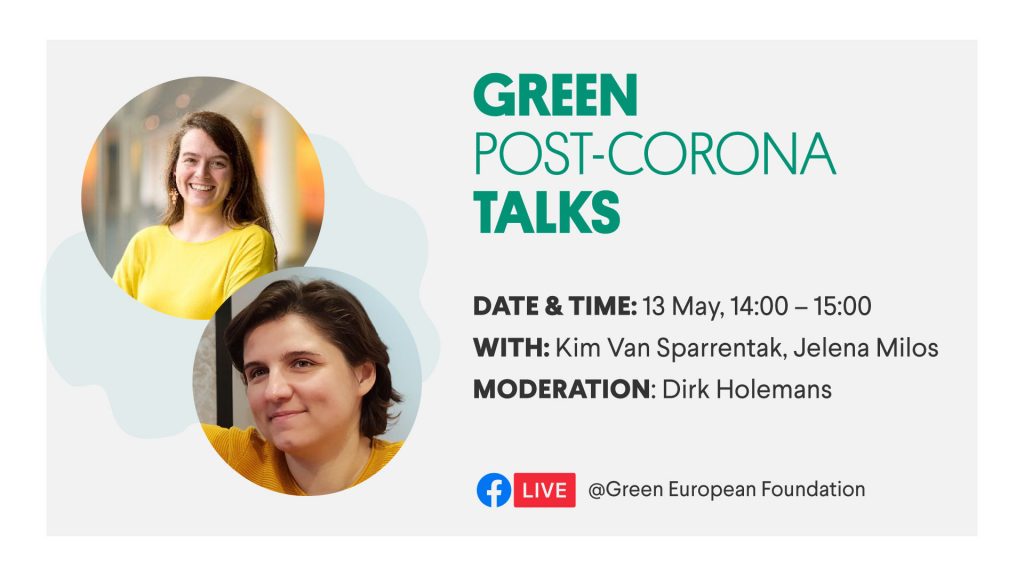
Green Post-Corona Talks with Kim Van Sparrentak and Jelena Milos

By
The Green Post-Corona Talks with Kim Van Sparrentak and Jelena Milos is another event from a series of participatory online talks with inspiring guests offering an analysis on what is at stake in this crisis and what positive ideas and concepts there are for a green post-corona vision.

Join our Facebook event to stay alert for the live stream.


About the event


The ongoing Covid-19 pandemic is having a grip on societies worldwide and will impact our lives long after the crisis is overcome. It is clear that we cannot continue with “business as usual,” but that we need to discuss positive ideas and concepts for a better, greener future and resilient societies now.

GEF is therefore hosting the Green Post-Corona Talks, a series of participatory online discussions with high-level experts, thinkers, and policy-makers, and the opportunity for participants to pose their most pressing questions to them live.

The talks will highlight what is currently at stake in the Corona crisis but also look beyond the period of the pandemic, and what possible solutions are already out there and can lend themselves to design the post-corona world.

The series will cover different themes from economy, over migration to gender, and bring in inspiring perspectives from all across Europe.

The project is implemented in cooperation with Oikos.


You can help us advancing forward-looking green ideas

to shape the Europe that we want! 


We rely on your generous contribution to continue putting together new, exciting Green Post-Corona Talks made extensively available to the general European public! So, please consider making a donation today, by clicking on this link.

social security

Basic Social Security 2030

By Uncategorized

This GEF report uses the case of Finland to investigate challenges in current social security models, and provides a reform roadmap to a new basic social security system, with basic income as a central element.

This report is an edited version of the Finnish Green Think Tank Visio’s report ‘Perusturva 2030,’ published for international readers. The report looks at the challenges faced by the Finnish system as well as the principles for solving these challenges, and offers proposals for action for the parliamentary term 2019-2023 and further into the 2020s. While the focus is on Finland, the principles for a better social security system are applicable to any so-called developed country, and the concrete stepping stones and microsimulations work as examples on how to find solutions regardless of the current system in a given country.

This translation was realised by the Green European Foundation as part of its transnational project on Basic Income, a topic that will be further explored in the 2020 project Change of Mindset – Civil Society dialogue around UBI, Social Justice and Climate Impact.

Just transition

It’s Not Just a Transition: Youth in Cities (Postponed)

By

We’re hosting an essential discussion on the role of Universal Basic Income in the just transition towards a carbon-neutral society, with focus on how this could help young people .

GEF, together with FYEG is holding a workshop in Barcelona, entitled ‘It’s Not Just a Transition: Youth in Cities’. The workshop will take place in two parts:

  1. Social justice perspective from each track implemented during the event (transport, urban development, energy). For each track, a vision for the future is previously imagined. In this session we link this vision to the vision for a more just city for the youth.
  2. Discussion on the role of UBI in the transition towards a carbon-neutral society, with focus on how this could help young people (1) realize their dreams/their vision for the future and (2) become more politically active. We will look into the B-Mincome experiment done in Barcelona.

The seminar kicks-off our 6-partner project ‘Change of Mindset – Civil Society dialogue around UBI, Social Justice and Climate impact‘, which aims to spark a stronger civil society dialogue to bring about the change of mindset needed to raise acceptance of universal basic income among the public and to deepen the debate on our conceptions of productivity and work.

Can’t attend the event? Follow us on Facebook and Twitter  to keep up-to-date with the discussions at the workshop.