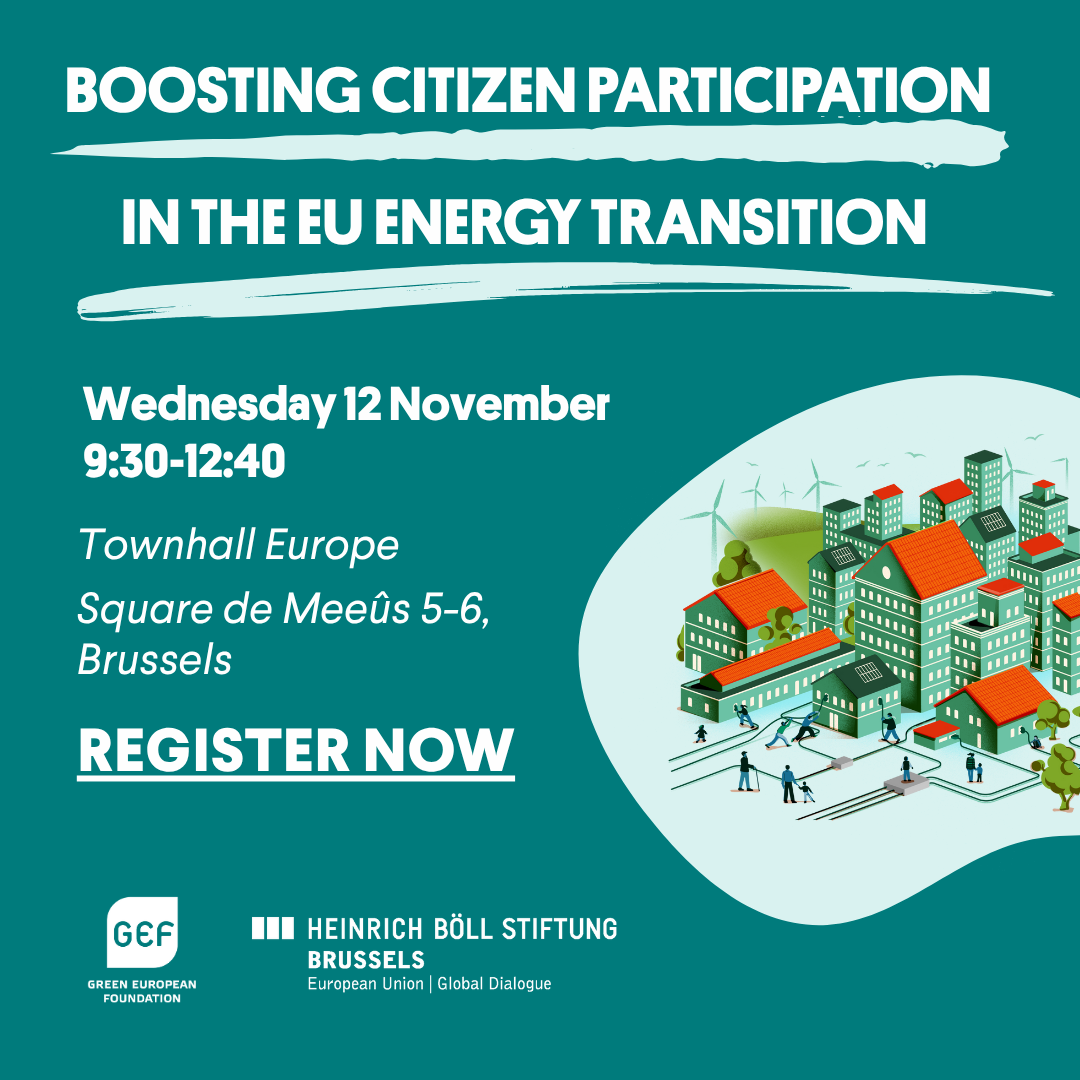
Boosting Citizen Participation in the EU Energy Transition

By

The EU is making significant progress in its energy transition. Yet many citizens still struggle with their energy bills. How can households better benefit from renewables roll out and energy savings?

About the event

Over the past 18 months, the Green European Foundation and Heinrich-Böll-Stiftung EU | Global Dialogue have worked with experts in energy and social policy to identify key areas where the EU could act to ensure that citizens and households are able to fully experience the benefits of the energy transition, in their homes, communities and pockets.  

A Knowledge Community of experts from EU institutions, local government, industry, consumer organisations, trade unions and think tanks have examined several existing and new tools in EU legislation to facilitate citizens’ engagement in the energy transition. This work has focused on three actionable areas: affordable and energy efficient housing; benefit sharing of renewable energy projects; and fair allocation of network costs.  

This launch event will serve as a platform to discuss the main findings with policymakers from the European Parliament and the European Commission, as well as experts in energy and social policy, and give the floor to testimonials from energy transition practitioners sharing on-the-ground experience. 

Register here

Agenda 

09:30 Welcome, introduction to the event and to the project 

  • Philippa Nuttall, Financial Times, moderator  
  • Laurent Standaert, Director, Green European Foundation 
  • Roderick Kefferpütz, Director, Heinrich-Böll-Stiftung EU | Global Dialogue
09:35
 
Key note: Promoting citizens’ access to the energy transition
Anne Katherina Weidenbach, Member of Cabinet of EU Commissioner for Energy & Housing
09:45
 
A Citizens Energy Package: What energy transition practitioners need
Local voices on concrete needs and expectations
09:55 Panel 1: Fair network tariffs: How can we fund grid build-out while incentivising innovation and protecting vulnerable households? 

  • Carmen Gimeno, Secretary General, GEODE Europe 
  • Raphael Hanoteaux, Deputy Secretary General, Council of European Energy Regulators 
  • Tom Lewis, Climate Action Network Europe, author ‘Fair network tariffs’ 
  • Bruno Tobback, MEP, S&D, Committee on Industry, Research and Energy 
10:40 Panel 2: Benefit sharing: Is sharing renewable energy profits with host communities a win-win? 

  • Michael Bloss, MEP, Greens/EFA, Committee on Industry, Research and Energy
  • Etienne Charbit, Réseau Cler, author ‘Improving benefit sharing of renewable energy projects’  
  • Vera Kissler (Policy Officer working on renewables and energy system integration, DG ENER)
  • Barbara Nicoloso (Director of Virage Énergie) 
11:25
 
Coffee break
11:40 Panel 3:Affordable and energy efficient homes: How do we make homes warm in winter, cool in summer and financially accessible? 

  • Ada Ámon, Budapest Climate Agency
  • Emily Bankert, Buildings Performance Institute Europe, author Affordable energy efficient homes
  • Mariangiola Fabbri, Member of Affordable Housing Task Force, European Commission
  • Mauricio Yrivarren, Climate Strategy & Partners 
12:30 Closing remarks 
12:40 Lunch 

Practicalities

Date: Wednesday 12th November, 9:30 – 12:40

Language: English

Register here


This event is organised by the Green European Foundation with the support of Heinrich Böll Stiftung and the financial support of the European Parliament to the Green European Foundation.

Post-growth Future(s): New Voices, Novel Visions

By Publications

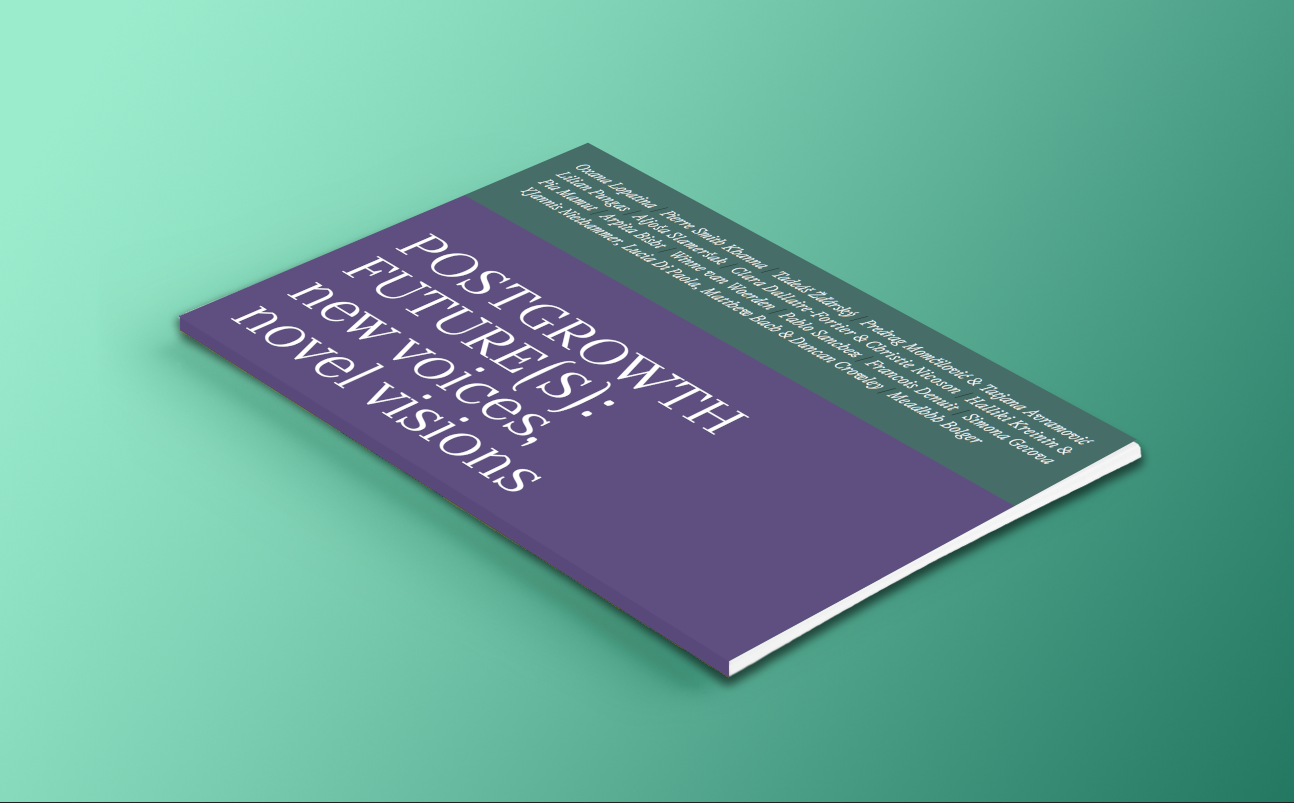
Growth is no longer a viable path, yet the idea of a post-growth society is still struggling to enter mainstream politics. Despite mounting ecological and social crises, policy discussions remain locked in outdated economic paradigms. However, recent years have marked a turning point, with post-growth thinking gaining momentum in European institutions, civil society, and academia.

The age of growth is behind us, but hardly anybody dares to admit it. […] In this publication, we say it loud and clear: growth is past tense. We need to engage now, without delay, in reimagining prosperity and wellbeing beyond growth

This publication brings together 20 authors from across Europe to explore what a future beyond growth could look like. Through diverse perspectives, it examines how post-growth ideas can reshape economic structures, social justice frameworks, and environmental policies. It also highlights how new voices (academics, activists, and policymakers) are translating these ideas into concrete political and policy action. By connecting emerging debates with real-world transformations, the publication contributes to strengthening the movement for a just and sustainable post-growth future.

This publication is part of the Green European Foundation’s work on post-growth in the scope of the project Post-Growth Future(s). It builds on discussions from key post-growth events, including the Beyond Growth Conference in Brussels and the International Degrowth Conference in Zagreb. The publication amplifies new ideas and connects them with the broader movement for systemic change.


This publication has been realized by the Green European Foundation with the support of  the Institute of Political Ecology and the Heinrich Böll Stiftung, as well as with the financial support of the European Parliament to the Green European Foundation. The European Parliament is not responsible for the content of this publication.

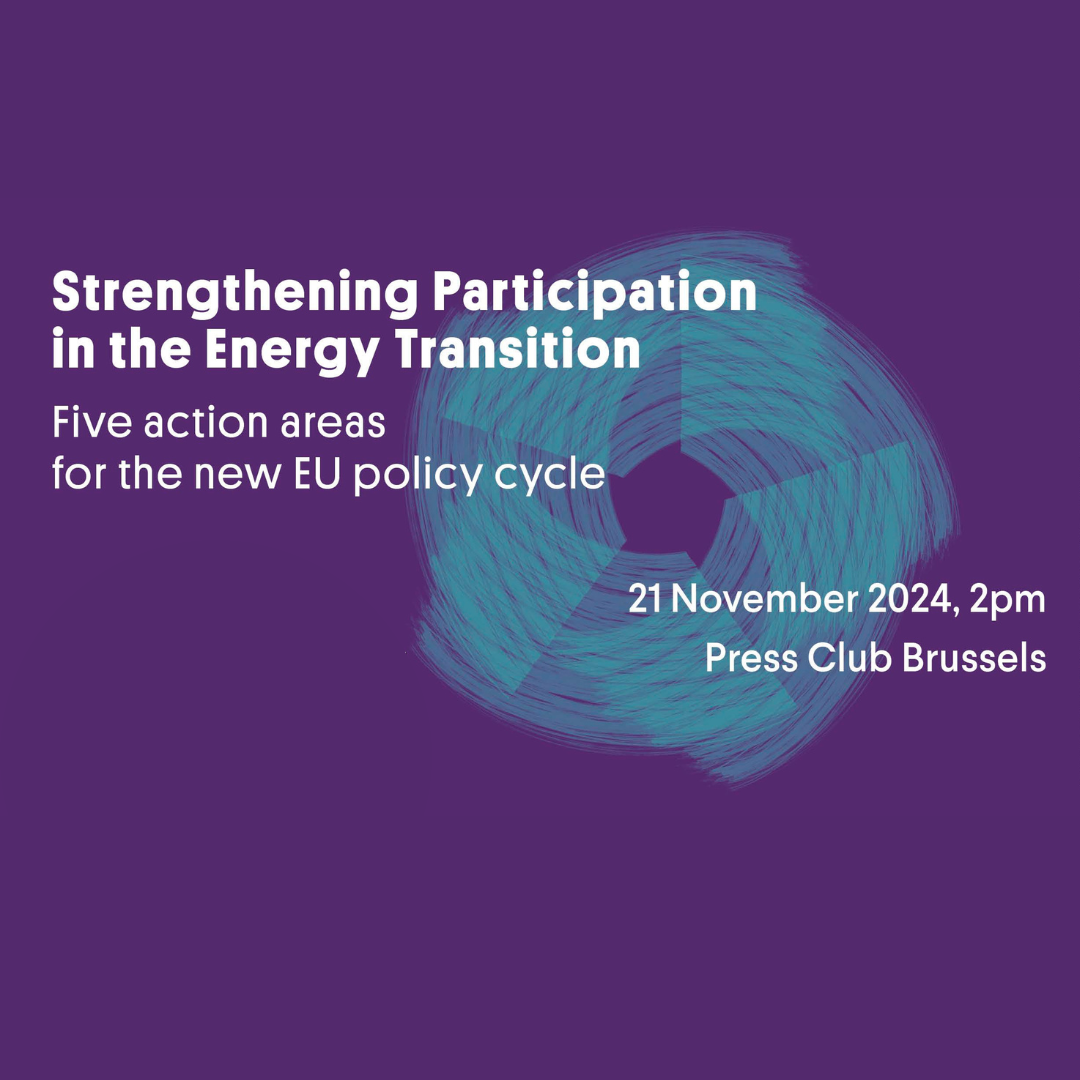
Strengthening Participation in the Energy Transition: Five action areas for the new EU policy cycle (Brussels)

By

About the event

Despite the surge in support for right and far-right parties in the European elections, polls show that European citizens continue to see climate as a top priority for the EU.  The transition to renewables can bring energy security and cheaper bills whilst being the only credible response to the climate crisis. But to be a success, the benefits need to reach everyone. This session will examine how ensure better participation and inclusion in the energy transition in the new EU mandate.  

Project background

Over the past year, the Heinrich-Böll-Stiftung European Union and the Green European Foundation have gathered a Knowledge Community of more than 30 energy and social policy experts from very diverse backgrounds. The group has developed a series of five briefs with recommendations for the EU’s new policy cycle, covering five action areas for boosting participation in the energy transition: energy sharing, electricity tariffs, renovation one-stop-shops, just transition governance and local transition management.  

At this launch event, the core authors from the Knowledge Community will present their key findings and discuss them with stakeholders from EU institutions, local government and civil society. 

Speakers

The event will feature interventions from the following speakers and be moderated by Philippa Nuttall, from the Financial Times’ Sustainability Views.

  • Benedetta Scuderi,MEP Greens/EFA, Italy 
  • Thomas Pellerin-Carlin, MEP S&D, France 
  • Ivo Schmidt, Acting Head of Unit, Chief Economist, DG Energy, European Commission 
  • Frank Siebern-Thomas, Head of Unit, Fair, Green, and Digital Transitions, DG for Employment, Social Affairs and Inclusion, European Commission 
  • MāraBerzina, SecretaryGeneral, Council of European Energy Regulators (CEER) 
  • Sorcha Edwards, Secretary General, Housing Europe 
  • Vincent Fristot, Vice-Mayor of Grenoble, Responsible for Energytransition
  • Ihsane Haouach, Energy expert and author, and Advisory Board Member for the Brussels-Capital Region Regulator for Electricity and Gas (Brugel) 
  • Laurens Rutten, Senior Energy Policy Officer, The European Consumer Organisation (BEUC) 

Programme

14:00 Welcome and introduction 
14:15 Fireside chat with Benedetta Scuderi MEP and Ivo Schmidt (DG ENER)
14:40 Panel 1: How to strengthen participation in the energy transition in the new EU policy cycle: just transition and multi-level governance 
15:35 Coffee break 
15:55 Panel 2: How to help households: tools for citizens’ fair participation in the EU’s energy transition  
16:50 Closing remarks, Frank Siebern-Thomas (DG EMPL)
17:00 Drinks reception 

Practicalities

Date and Time: 21st November, 2pm-5pm CET  

Location: The Press Club Brussels, Rue Froissart 95, 1040 Brussels  

Language:  English   

Registration: Please register in advance here (https://forms.monday.com/forms/cb2ddef2838c251f69a58c6d430d2655?r=use1 ) 


This event is co-organised by the Green European Foundation and Heinrich-Böll-Stiftung EU, with the financial support of the European Parliament and Heinrich-Böll-Stiftung EU to the Green European Foundation. The European Parliament is not responsible for the content of this event. 

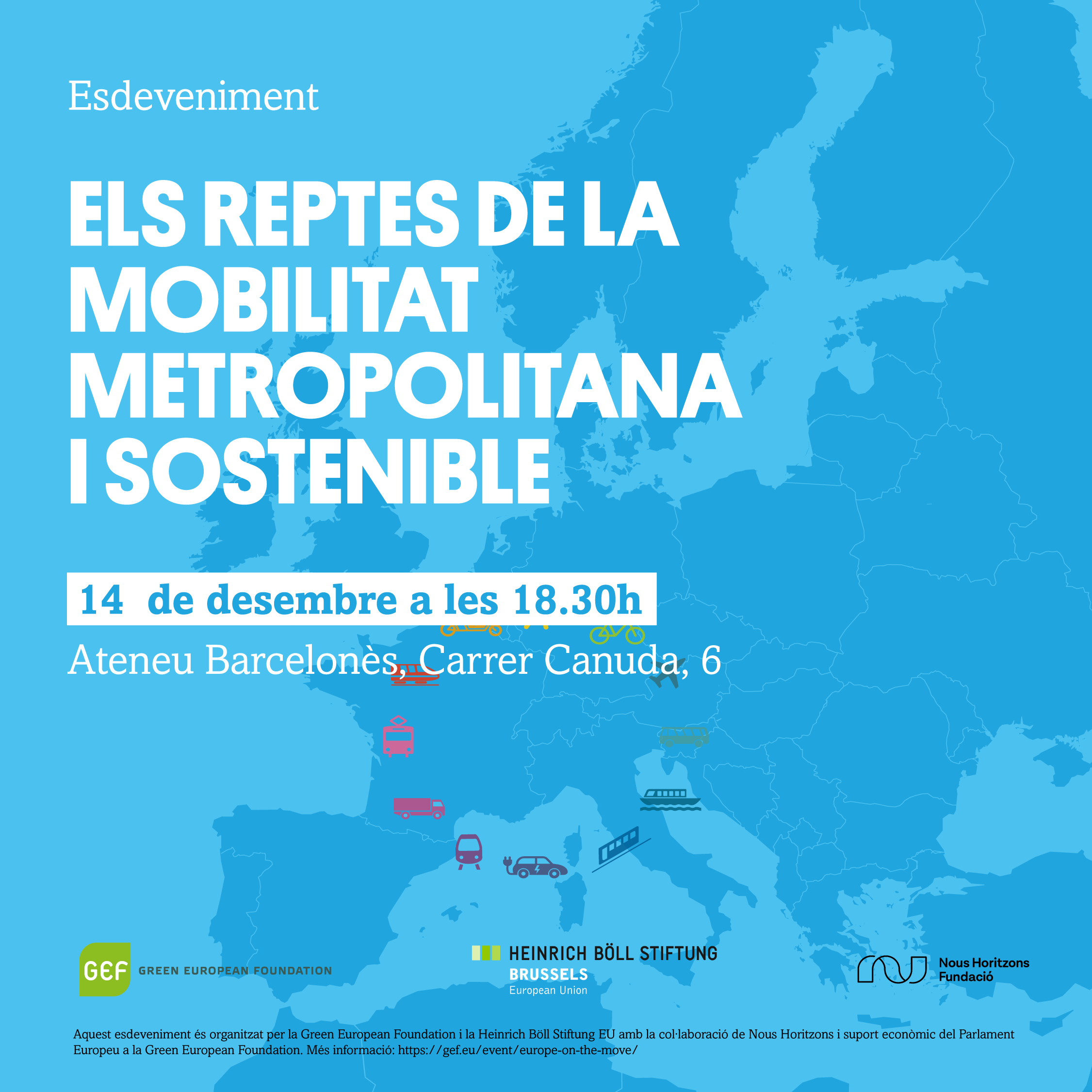
The Challenges of Metropolitan Sustainable Mobility

By

About the event

Sustainable mobility is a particular priority in metropolitan areas because of its impact on air quality, on the daily lives of millions of people and economic actors, and as an instrument of territorial cohesion. Public transport, cycling and walking are at the heart of a model that guarantees the right to sustainable mobility.

The Barcelona metropolitan area, with its population exceeding 3.5 million inhabitants, is a paradigmatic case in this debate, as it is an area that risks being sanctioned by the EU due to its poor air quality.

Within this context, what are the examples of good and bad practices of mobility? What are the challenges that lie ahead? Can we find successful sustainable urban mobility practices in other European cities?

These questions and possible answers will be the subject of this dynamic debate, bringing together diverse experts, academics, and local government actors.


Project background

This event is part of a series of debates entitled “Europe on the Move: Shaping the Future of Sustainable Mobility in the Iberian Peninsula” organised by the Green European Foundation and Heinrich Böll Stiftung EU with the support of Transición Verde, Instituto José Tengarrinha, Fundació Nous Horitzons, EcoPolítica and the financial support of the European Parliament to the Green European Foundation.

This series of debates aims to foster debate in Portugal and Spain around the future of mobility, bringing together relevant stakeholders from civil society, academia and politics to analyse and explore challenges and opportunities for the future of mobility and the Green Deal in Europe.


Speakers

  • Guille Lopez, Barcelona City Councillor and Promoter of the Eixample Breathe platform
  • Carme Miralles, Professor of Urban Geography at the UAB
  • Laura Campos, Montcada I Reixac City Councillor
  • Zeeger Ernsting, Amsterdam City Councillor


Practicalities

Date and Time: 14th December, 6:30pm CET

Location: Ateneu Barcelones, Carrer Canuda, 6

Registration: Prior registration is required – please register here.

Language:  Catalan with English simultaneous translation

Recommended reading: European Mobility Atlas


This event is organized by the Green European Foundation and Heinrich Böll Stiftung EU with the support of Fundació Nous Horitzons and the financial support of the European Parliament to the Green European Foundation.

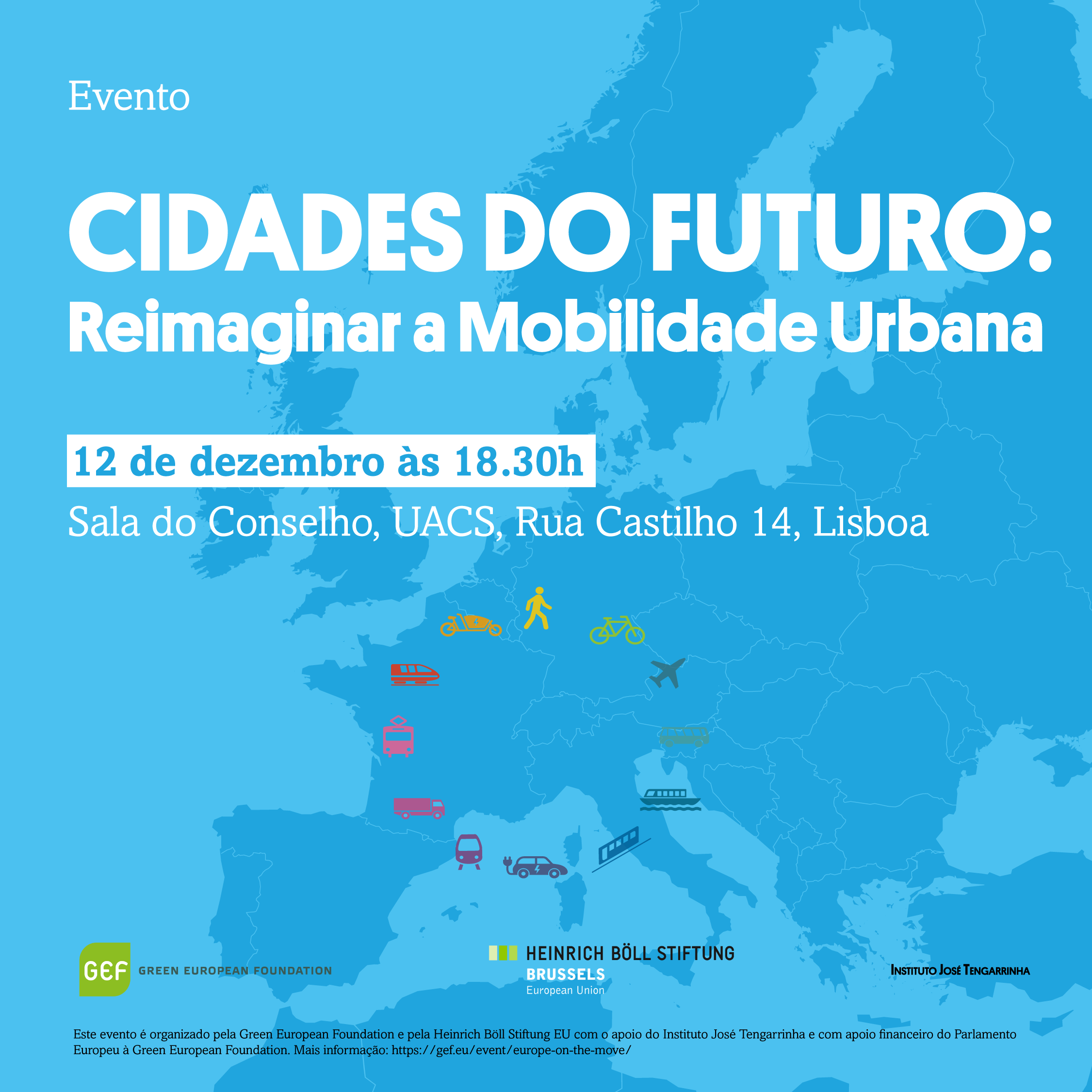
Moving to the Future: Reimagining Urban Mobility (Lisbon)

By

About the event

The present ecological crisis impels us to seek a change in the way we move, leading to increased efforts towards the decarbonisation of mobility. A mix of new and old solutions are key to change the urban mobility panorama, namely the electrification and the expansion of public transportation networks, and the creation of walking or cycling infrastructure to make active mobility attractive and pleasant. This change can also be seen as an opportunity to improve people’s lives by decreasing commuting time, improving the air quality, reducing noise, and promoting an active lifestyle. 

In a simple sentence, there is a need to shift the cities’ focus from cars to people. To achieve this, a new mindset that prioritises public transportation is needed, or “the social ideology of the motorcar”, as the philosopher André Gorz named it back in 1973. 

Sustainable mobility must not only encompass ecological considerations, but also needs to include an intersectional approach which takes gender and accessibility dimensions into account. As such, we will also speak about gender and accessibility, and dive into how to make daily commuting in metropolitan areas more sustainable, accessible, and inclusive. 

Project background

This event is part of “Europe on the Move: Shaping the Future of Sustainable Mobility in the Iberian Peninsula” event series, which aims to nurture the debate in Portugal and Spain around the future of mobility and the Green Deal, with a particular eye for the challenges and opportunities for sustainable mobility and how they relate to Iberian realities.  

Speakers

  • Manuel Banza, EMEL 
  • Carla Castelo, Local Councillor at Oeiras 
  • Rosa Félix, Instituto Superior Técnico 
  • Philipp Cerny, Chief Executive Editor of the European Mobility Atlas 
  • More to be announced 

Practicalities

Date and Time: 12th December, 6:30pm-8:30pm GMT 

Location: Sala do Conselho, UACS, Rua Castilho 14, Lisboa 

Language: The main languages of the event will be Portuguese and English, with simultaneous interpretation provided EN<>PT.   

Registration: N/A 

Other useful info: A recording will be uploaded to the GEF Youtube channel following the event. 

Recommended reading: 


This event is organised by the Green European Foundation and Heinrich Böll Stiftung EU with the support of Instituto José Tengarrinha and the financial support of the European Parliament to the Green European Foundation. 

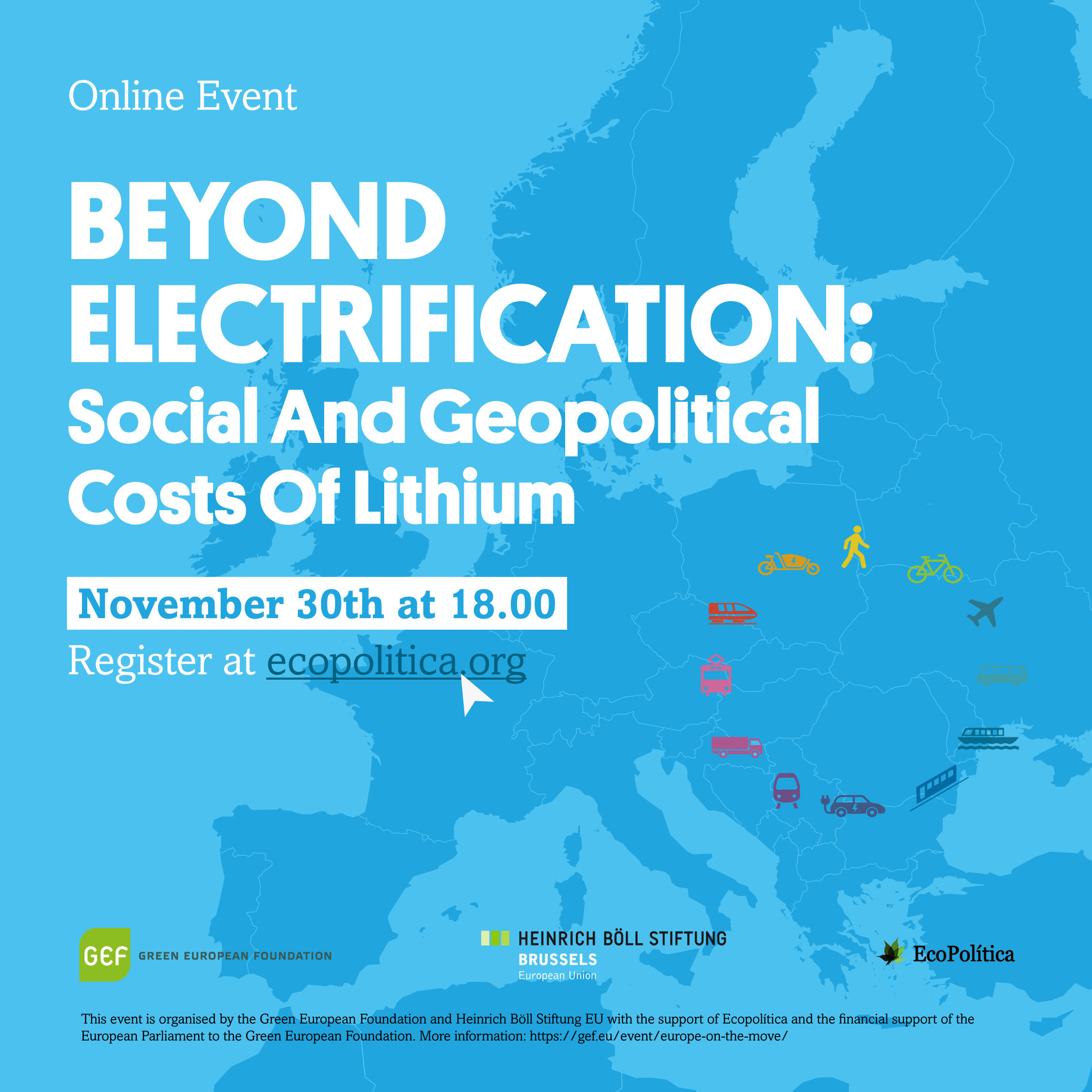
Beyond Electrification: Social and Geopolitical Costs of Lithium

By

About the event

The growing demand for electrification does not come without its own costs. Environmental, social and ethical considerations arise when taking into account the impact on local communities. To obtain the necessary resources, huge extractivist industries threaten to devastate entire regions. How can we resist them? Furthermore, electrification also poses some serious global issues. Can we move beyond our outdated electricity and mobility model without compromising social justice and the exploitation of the Global South?

This session will bring together voices and expertise from politics and civil society to expose the flaws and limitations of the current model of electrification at local, national and European levels. The aim of the event is to create a dynamic space for debate where we can explore ways to ensure a more sustainable and socially just electrified future.


Project background

This event is part of a series of debates entitled “Europe on the Move: Shaping the Future of Sustainable Mobility in the Iberian Peninsula” organised by the Green European Foundation and Heinrich Böll Stiftung EU with the support of Transición Verde, Instituto José Tengarrinha, Fundació Nous Horitzons, EcoPolítica and the financial support of the European Parliament to the Green European Foundation.

This series of debates aims to foster debate in Portugal and Spain around the future of mobility, bringing together relevant stakeholders from civil society, academia and politics to analyse and explore challenges and opportunities for the future of mobility and the Green Deal in Europe.


Speakers

  • Catalina Abell (moderator), EcoPolitica, expert in political communication and political processes.
  • Florent Marcellesi, former-MEP. Federal Co-Spokesperson of Verdes Equo.
  • Adriana Espinosa, Amigas de la Tierra (Friends of the Earth Spain). Responsible for the Area of Natural resources and Waste. Author of the next AdT inform on “Materials for the energetic and digital transition”.
  • Catarina Scarrott, Associação Unidos em Defesa de Covas do Barroso (UDCB) movement. Covas de Barroso is being targeted as a ‘sacrifice zone’ for lithium mining, and the local population, represented by the UDCB, is opposed.
  • Diego MarinPolicy Officer for Raw Materials and Resource Justice, European Environmental Bureau


Practicalities

Date and Time: 30th November, 6pm-7:30pm CEST

Location: Online

Language: The main languages of the event will be Spanish and English, with simultaneous interpretation provided EN<>SP.

Registration: Prior registration is required – Please register in advance here.

Recommended reading:


This debates series is organised by the Green European Foundation and Heinrich Böll Stiftung EU with the support of, EcoPolítica and the financial support of the European Parliament to the Green European Foundation.

New Mobility: Economy and Employment

By

About the event

The decarbonisation of mobility is one of the great challenges of the European Union. The transformation it entails is complex and not without its difficulties, but it can be an opportunity to reactivate the economy and generate employment. The latter is a particularly relevant aspect in maintaining social stability, especially at a time when populism and the extreme right are on the rise in Europe.

In this event, we seek to analyse the challenges and opportunities of zero-emission mobility in terms of the economy and employment in Spain, paying special attention to the bicycle sector from a gender perspective.

The event is a roundtable open to all those interested in mobility, especially members of organisations and platforms working on the issue, government officials, politicians, academia, and civil society associations. Our aim is to raise awareness of the employment opportunities associated with zero-emission transport and to promote the shift towards more sustainable mobility.

The event will be held via zoom platform, requiring prior registration.


Project background

This event is part of a series of debates entitled “Europe on the Move: Shaping the Future of Sustainable Mobility in the Iberian Peninsula” organised by the Green European Foundation and Heinrich Böll Stiftung EU with the support of Transición Verde, Instituto José Tengarrinha, Fundació Nous Horitzons, EcoPolítica and the financial support of the European Parliament to the Green European Foundation.

This series of debates aims to foster debate in Portugal and Spain around the future of mobility, bringing together relevant stakeholders from civil society, academia and politics to analyse and explore challenges and opportunities for the future of mobility and the Green Deal in Europe.


Speakers

  • Albert Vilallonga, geographer and mobility technician at ISTAS (Union Institute for Labour, Environment and Health). Author of the report on Zero-emission mobility.
  • Iria Vázquez, equity coordinator at ConBici, professor of sociology at the University of Vigo and expert in gender studies.
  • Philipp Cerny,Transport Policy Consultant. Chief Executive Editor of the EU Mobility Atlas.
  • Moderation: Pilar Calvo, board member of Transición Verde and expert in operational security and transportation


Practicalities

Date and Time: 11th December, 5:30pm – 7pm CET

Location: Online, via zoom.

Registration: Prior registration is required – please register here. The session will be recorded and made available on YouTube.

Language:  The main languages of the event will be Spanish.

Recommended reading: European Mobility Atlas


This event is organized by the Green European Foundation and Heinrich Böll Stiftung EU with the support of Fundación Transición Verde and the financial support of the European Parliament to the Green European Foundation.

Europe On the Move: Shaping the Future of Sustainable Mobility in the Iberian Peninsula

By

About

In the face of multiple crises – climate and energy, geopolitical, cost-of-living – the challenges and opportunities for sustainable mobility are complex and evolving. What implications do these challenges hold for the specific contexts of Portugal and Spain, within the wider context of the European Green Deal? And how can we safeguard a green and socially just mobility transition?

By putting a spotlight on these challenges while fostering a trans-European exchange on best practices, this event series seeks to nurture the debate in Portugal and Spain around the future of mobility. It seeks to bring together relevant stakeholders from civil society, academia, and politics to discuss and explore key questions, tensions, and opportunities for the future of mobility and the Green Deal in Europe.


Events

Our debates series will unfold in various locations across Portugal and Spain, hybrid, and online formats.


Reading material

The project is based on the Heinrich Böll Stiftung European Mobility Atlas, corresponding Portuguese and Spanish language versions, and associated booklet, Present and Future of Mobility in Spain, and the GEF Metals for a Green and Digital Europe – An Agenda for Action, and corresponding Portuguese and Spanish language versions.


This debates series is organised by the Green European Foundation and Heinrich Böll Stiftung EU with the support of Instituto José Tengarrinha, Transición Verde, Fundació Nous Horitzons, EcoPolítica and the financial support of the European Parliament to the Green European Foundation.

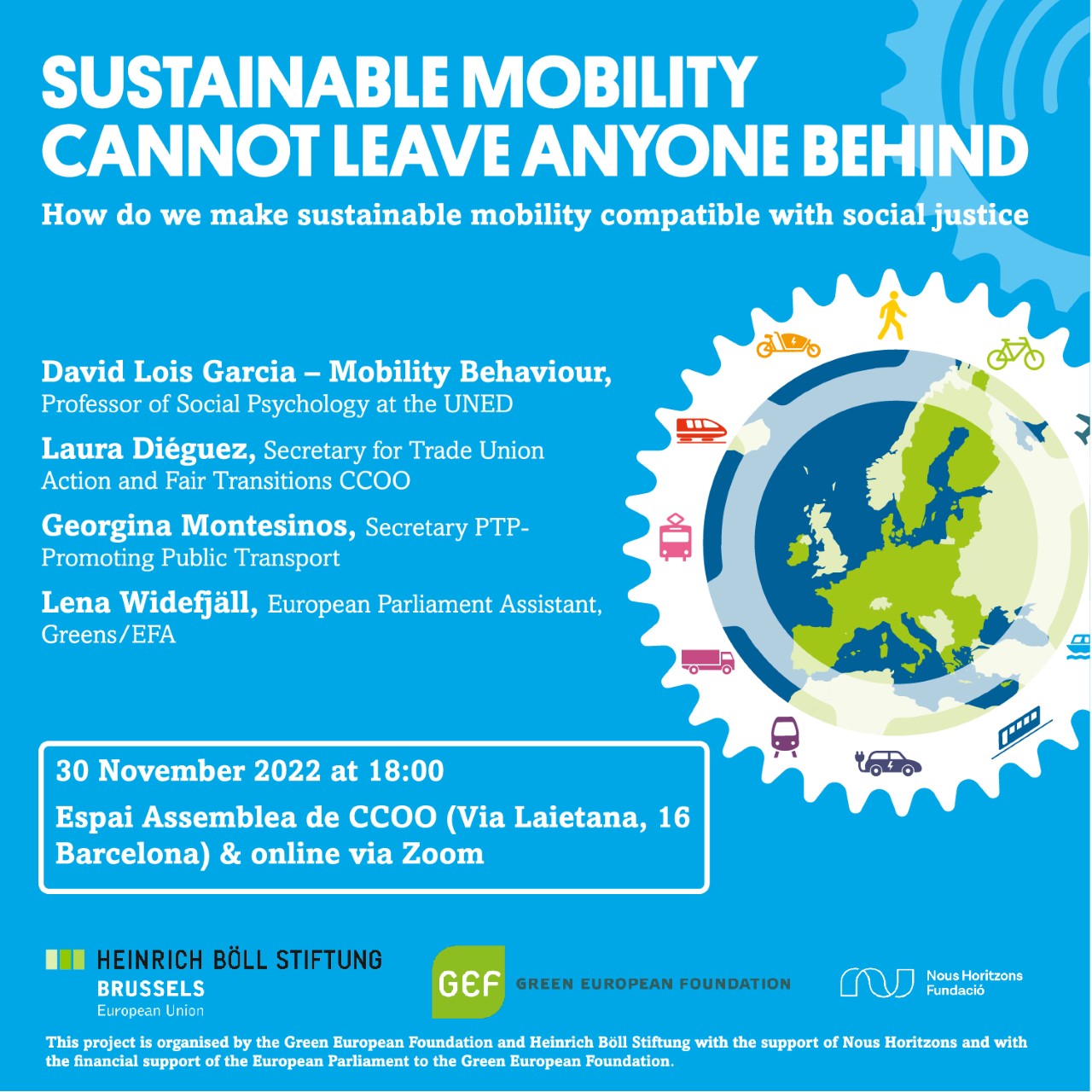
Sustainable Mobility Cannot Leave Anyone Behind

By

About the event

The EU is promoting policies and actions aimed at reducing pollution and improving air quality, especially in the transport sector and in large cities. In fact, the Court of Justice of the European Union has warned that failure by states to respond could lead to the withdrawal of funding from the EU budget. 

Urban tolls, low-emission zones and green taxation on car registrations are just some of the instruments that states, regions, and cities implement to make the polluter pays principle effective. But how can we mitigate the collateral effects of these measures on vulnerable groups such as workers dependent on private vehicles and those from lower socio-economic backgrounds? And how can we ensure that the ecological transition is just? 

To explore these important questions, join us for a lively debate bringing together experts, foundations, and organisations working on proposals for a just ecological transition.  

Speakers

  • David Lois, Mobility Behaviour, Professor of Social Psychology, Universidad Nacional de Educación a Distancia
  • Laura Dieguez, Secretary for trade union action and just transitions, Confederación Sindical de Comisiones Obreras 
  • Georgina Montesinos, Secretary of PTP (Promoció de Transport Públic)
  • Lena Widefjall, Parliamentary Assistant Greens/EFA

Moderator: Marc Rius: President, Nous Horitzons Foundation 

Practicalities

Date and Time: 30th November, 6pm-7:30pm CET

Location: This event will take place in person at the Headquarters of the Confederación Sindical de Comisiones Obreras in Barcelona and online via Zoom.  

LanguageThe main languages of the event will be Catalan and English, with simultaneous interpretation provided EN<>CAT.  

Registration: Please register in advance here!

Information in Catalan available here.


This project is organised by the Green European Foundation and Heinrich Böll Stiftung with the support of Fundació Nous Horitzons, and with the financial support of the European Parliament to the Green European Foundation.

Mobility in Rural Areas: An Unresolved Issue

By

Context

Rural depopulation is a challenge for Europe as it affects large areas of its territory, and Spain is no exception. This process has intensified in the last two decades. In Spain there are 6,827 municipalities with no more than 5,000 inhabitants, accounting for 12% of the total population. In the last decade, eight out of ten municipalities have lost their inhabitants, a total of 410,000 people. Ageing population, lack of basic services such as health, education, culture or transport, unemployment, and the shortage of housing are among the main challenges for staying or settling in a village.

One of the key factors in this situation, as we have already mentioned, is mobility. The absence of public transport means that dependence on the private car or on the solidarity of neighbours is fundamental. Going to the doctor, shopping, going to the bank or taking children to school can be a chore if you do not have a private car or are not able to use one. This is particularly serious for women and the elderly.

The bad situation of public transport in Spain, far from being reversed, has worsened in recent years. The conventional train, the least polluting transport system, has been progressively abandoned while large high-speed train lines have been promoted – after China we are the country with the most extensive high-speed train network in the world – a type of transport that is a minority, expensive, unprofitable, and inefficient, thus widening the inequality gap between geographies.

The search for realistic long-term solutions, adapted to each region and each community, which improve mobility in rural areas, is a social and environmental obligation and a lever to reverse the depopulation process by revitalising economic activity.

We are on the verge of a transition towards a low-carbon model of society, so it is urgent to work on strategies that make it compatible with the improvement of transport in the rural world.

About the event

We will hold this conference on rural mobility in El Burgo de Osma, a village in the province of Soria – the least densely populated province in Spain – to learn first-hand about the demands and proposals of its inhabitants on this issue. We will have examples of good practices and we will know what policies are being implemented in Spain and in the EU. We will be joined by the following speakers:

  • Juantxo López de Uralde, Member of the Spanish Parliament and Chair of the Committee on Ecological Transition and the Demographic Challenge
  • Marc Giménez, advisor on transport and tourism to the Greens/EFA Group in the European Parliament
  • Raquel Ramírez, El Colletero Association (Nalda – La Rioja)
  • Patxi Miranda, CEO of KUDEA Services
  • Moderator: Rosa M. Tristán, journalist


Practicalities

This is an in-person event taking place in El Burgo de Osma, Soria, Spain. It is open and free of charge, no prior registration is required.

The event will take place in Spanish. An event recording with subtitles in English will be made available following the event.

Audiovisual material

The event relates to the European Mobility Atlas, corresponding Spanish translation, and associated booklet, Present and Future of Mobility in Spain.


This project is organised by the Green European Foundation and Heinrich Böll Stiftung with the support of Transición Verde and El Hueco, and with the financial support of the European Parliament to the Green European Foundation.

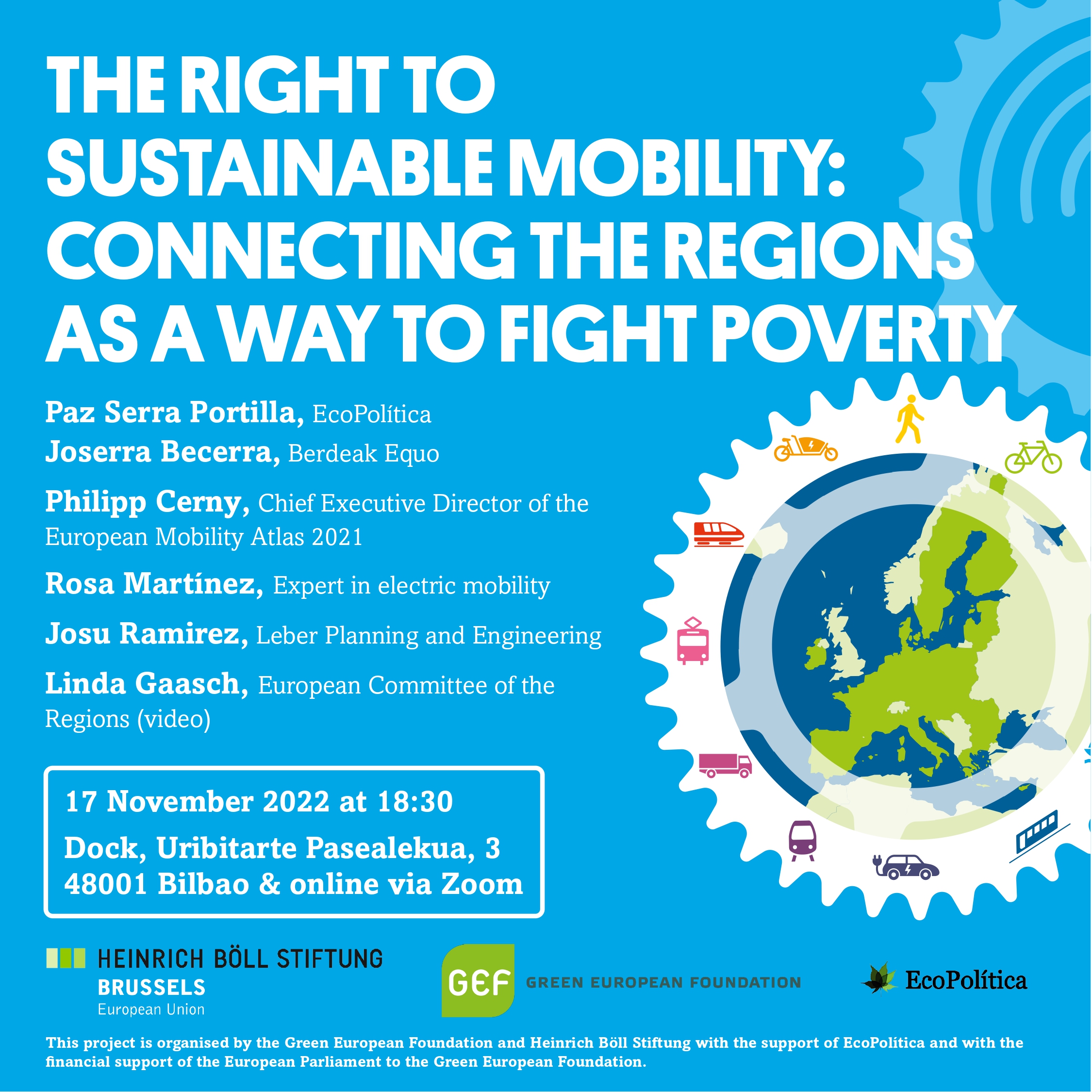
The Right to Sustainable Mobility: Connecting the Regions as a Way to Fight Poverty

By

Context

Mobility plays a fundamental role in people’s lives. The ease of movement not only favours the freedom to choose the place of residence and the exercise the right to work, but it is also essential to access basic public services such as education and health, as well as leisure and enjoyment of free time. It is, in short, a determining element of people’s well-being and their quality of life.

In this sense, the articulation of the subjective right to mobility in our societies, which guarantees all citizens equal conditions of access and use of mobility services, is becoming increasingly important. If mobility determines people’s quality of life, the impossibility of accessing sufficient mobility (due to physical or mental conditions, insufficient economic resources, or other factors) supposes not only a personal impediment, but also a breach of the constitutional principle of equality.

Throughout the 20th century, the economic system has linked this right with the use and enjoyment of the private car through an unprecedented cultural transformation. This has caused our towns and cities – and, ultimately, the geography in which we live – to be configured around the use and service of the private motor vehicle. No country in Europe has recognised the “right” to circulate and reach anywhere by car, and yet the car has usurped the routes traditionally used by pedestrians and other means of transport.

In fact, driving in a private car in a public space is a privilege rather than a right. Greenhouse gas emissions caused by automobiles, energy inefficiency, air and water pollution, noise, congestion of public space, accidents or the appropriation of the land are privileges associated with the enjoyment of the automobile, which are unaffordable and unsustainable for the planet, and harmful for people’s health and for society as a whole.

The war in Ukraine has accelerated the energy crisis caused by the progressive depletion of fossil fuels. However, the speed with which it has progressed has hit millions of people who use private vehicles for their daily commutes hard. According to official statistics from summer 2022, in Spain, 60% of drivers have limited the use of private vehicles, and 5% have stopped using them all together.

In this context, sustainable mobility is no longer simply a necessity to advance decarbonisation, it has now become the main alternative to tackle poverty linked to dependence on the private combustion car.

It is the obligation of local institutions to facilitate active mobility. Before the crisis, almost half of daily trips in the Basque Country were made on foot or by bicycle. However, facilitating the transfer of 40% of trips that are made by private vehicles requires adequate mobility planning at the municipal and regional levels to ensure minimum standards of safety, comfort, and accessibility. This situation turns non-motorised mobility into a high-risk exercise, instead of a routine habit.

On the other hand, public transport continues to be the main tool to guarantee everyone the right to move without distinction of physical, intellectual, economic capacity, or place of residence. In this sense, it is the obligation of local and regional authorities to act in a coordinated manner to ensure sufficient public transport coverage with minimum quality and sustainability standards, and with prices in line with the level of disposable income of users.

Lastly, we cannot forget the role that public policies will play in the coming decades, especially when it comes to reducing the demand for mobility, such as 15-minute city urban planning or land reuse policies. These will need to be combined with increased attention to rising property prices (which drive those with lower incomes to the periphery of cities), as well as addressing the social and cultural reconstruction of our way of life on a fairer and more sustainable basis.

Speakers

  • Paz Serra, EcoPolítica.
  • Joserra Becerra, Berdeak EQUO.
  • Philipp Cerny, Chief Executive Editor of the European Mobility Atlas 2021.
  • Rosa Martínez, Expert in electric mobility.
  • Josu Ramirez, Leber Planning and Engineering.
  • Linda Gaasch, European Committee of the Regions (video).

Practicalities

Date and Time:  Thursday 17 November, from 18:30 to 20:00 (CET).

Location: Hybrid event, Dock (Uribitarte Pasealekua, 3 Bilbao) and Zoom.

Language: The main language of the debate will be Spanish. Simultaneous interpretation will be provided ES<>EN.

The event is hybrid, open and free with prior registration through this form. Once registration has been completed, a confirmation email will be sent with the access details for joining the meeting.

Reading material

The event relates to the European Mobility Atlas, corresponding Spanish translation, and associated booklet, Present and Future of Mobility in Spain.


This project is organised by the Green European Foundation and Heinrich Boll Stiftung with the support of EcoPolítica and with the financial support of the European Parliament to the Green European Foundation.  

Just Transition for All?

By

About the event

This three-day seminar will serve as a place to discuss opportunities and limits of just transition and explore its transformative potential.

 During the seminar, we will:

  • provide a first approach to the concept of just transition,
  • discuss the role of trade unions and workers,
  • discuss the transfer from extractive to regenerative economy,
  • explore just transition to a European and global level in solidarity,
  • Link it to recovery plans and European Green deal,
  • Explore opportunities for decent jobs,
  • discuss specific conditions of just transition at European semi periphery

Also, we will dive much deeper into just transition in the transport sector, where we will learn and discuss under which conditions sustainable mobility can become an example of just transition policies.

We see this seminar as one milestone in a systemic approach to concepts and practices of just transition in this part of Europe, and an important milestone in establishing epistemic communities in this field.


This project is organised by the Green European Foundation with the support of the Institute for Political Ecology in cooperation with the Heinrich Böll Foundation, Prague office, and the European Climate Initiative with the financial support of the European Parliament to the Green European Foundation. The European Parliament is not responsible for the content of this event.
European Mobility Atlas

By Uncategorized

Context

Europe is the continent where multiple forms of transportation have been invented or brought to technological maturity. The free movement of persons has made Europe grow together and led to an ever-stronger sense of cohesion. Cross-border mobility is a prerequisite for a united EU and the experience of inter-connectedness on all levels. However, the Covid-19 pandemic has limited the freedom of movement extensively and shows the vulnerability of Europe as a place of constant movement. While air traffic decreased and the use of bicycles increased, there has also been a strong negative shift from shared transport to individual transport. If this change prevails, a great deal of earlier efforts to reduce GHG emissions in the transport sector will be nullified. If one thing is clear is that recovery packages to overcome the effects of the Covid-19 pandemic must be accompanied by a commitment to a sustainable transformation that avoids further carbon lock-in with a transport sector still largely powered by fossil fuels.

Objectives

Our European Mobility Atlas seeks to contribute to the efforts towards sustainable and just mobility in Europe. Thus, it covers a multitude of transport-related aspects relying on evidence-based research and highlighting concrete, tangible mobility solutions from across our continent. GEF is working together with Heinrich Böll Stiftung to Europeanise the debate on sustainable mobility on our continent. We are doing this by translating the English language version of the European Mobility Atlas to Spanish and Italian, as well as providing a series of infosheets on the mobility context in Spain.

With more and more people being mobile, Europe is a continent that needs to remain innovative in order to achieve the relevant climate goals. We need new technologies to align our mobility infrastructure and behaviour with the pressing challenges of the upcoming years. To save our climate, the European Green Deal has to be Europe’s first priority.

Download

Digital version in Spanish is available here.

Digital version in Italian is available here.

Digital version in Portuguese available here.

Complementary resources

Present and Future of Mobility in Spain (ES): available here.


These publications have been realised by the Green European Foundation in cooperation with Heinrich Böll Stiftung, and the financial support of the European Parliament to the Green European Foundation. The European Parliament is not responsible for the content of this publication
Recovering sustainably from the pandemic

By

The European Green Deal – Thinking Locally


The impact of the Covid 19 pandemic on Europe’s economy, health systems and democracy is enormous. In terms of European policy it will now be important to shape the economic construction in Europe in a socially and ecologically sustainable way. The policy fields of climate, energy, environment, digitalisation as well as economy, labour and social affairs must be thought together in the European Green Deal and shaped in such a way that social cohesion in Europe is strengthened. Germany, as the most populous and economically strongest country, will have to play a central role in this tour de force. The EU’s ability to act will continue to depend largely on the German government’s will to act. The Annual Conference on European Policy 2021 of the Heinrich Böll Foundation will therefore focus on the question of which European policy priorities the new German government should and must set after the federal elections in autumn 2021.

At this year’s annual conference on European policy, which will also take place online, European representatives from politics, science, political consultancy and civil society will analyse and discuss the current crisis and appropriate strategies to overcome it.

The focus is on the local dimension of the European Green Deal.

In many places, municipalities are seen as the new bearers of hope. Initiatives at the local level are already making a difference in many areas and are seen as potential drivers of the socio-ecological transformation, be it in the energy transition, sustainable mobility and infrastructure or in public space. We want to let some initiatives have their say and present good examples from practice that show the way forward and provide inspiration for imitation.

Speakers

  • Rasmus Andresen, MEP, EFA/Greens, Brussels
  • Dr. Franziska Brantner, German MP, Alliance90/The Greens, Berlin
  • Annika Hedberg, Head of Sustainable Prosperity for Europe Programme, European Policy Centre, Brussels
  • Dirk Holemans, Co-president of the Green European Foundation GEF, Brussels
  • Benedek Jávor, Representative of the City of Budapest, Brussels/Budapest
  • Ares Kalandides, Professor of Place Management, Manchester Metropolitan University, Manchester
  • Phoebe Koundouri, Professor, University of Economics and Business, Athens
  • Audrey Mathieu, EU Climate Policy Officer, Head of Berlin Office, Germanwatch, Berlin
  • Neil Makaroff, European Policy Officer, Reseau Action Climat, Paris
  • Bozena Ryszawska, Professor, Wroclaw University of Economics and Business, Wroclaw
  • Claude Turmes, Minister for Energy and Spatial Planning Luxembourg, Luxembourg
  • Dr. Ellen Ueberschär, President, Heinrich Böll Foundation, Berlin
  • Sanna Vesikansa, Deputy Mayor, for Social Services and Health Care, Helsinki

Practical information

Time: Thursday, 10 May 2020, 14.00 – 19.00 CEST

Conference languages: English/German with simultaneous translation

Full programme and registration:  See the Heinrich Böll Foundation website here

European Mobility in the context of Covid-19: Keeping the green steering wheel steady?

By

About the event

The challenges related to a sustainable transition of the European mobility sector were already manifold before the Covid-19 pandemic hit. Motorised mass transport has reached its limits, mass tourism has massive ecological and social impacts, and EU governments have not been acting fast enough to re-direct investments from a carbon-intensive transport sector to more climate-friendly means of transports, e.g. trans-European railways.

Measures to contain the spread of the virus have brought international transport and travel to periods of a near standstill in 2020. In their attempt to prevent a collapse of entire industries and subsequent mass unemployment, many governments had to bail out airline companies. At the same time, huge investments to re-stabilise the current automobile and airline industry are counterproductive to the European Commission’s aim of ‘accelerating the shift to sustainable and smart mobility’ as part of the European Green Deal.

With their joint online event the Heinrich-Böll-Stiftung European Union and the Green European Foundation would like to examine the impacts of the Covid-19 pandemic on European mobility. How can the EU ensure uninterrupted transport and supply chains, e.g. for medical equipment? What will be the opportunities and challenges of a progressing digitisation of European transport? How will the pandemic shape the future of free movement within the EU? What should international tourism look like in a post-Covid-19 world? How can a just transition of the mobility sector contribute to ambitious climate targets?

Speakers:

Georges Gilkinet, Deputy Prime Minister and Minister of Mobility and the National Railway Company, Belgian Federal Government

Matthew Baldwin, Deputy Director-General, Directorate-General for Mobility and Transport (DG MOVE), European Commission

Annika Degen, Director of EU Office Verband deutscher Verkehrsunternehmen (VDV)

Moderator: Martin Keim, Head of Programme – European Energy Transition, Heinrich-Böll-Stiftung European Union

——-

The event will be live-streamed on Facebook and YouTube.

The impacts of Covid-19 on the Western Balkans and the region’s political future

By

Context:

The COVID-19 pandemic not only hit the Western Balkan countries in a period of reacceleration of economic activity and put enormous pressure on the already fragile health systems in place, but also had a negative impact on the state of democracy in the region. In response to the outbreak of the virus, some governments relapsed into authoritarian tendencies increasing censorships and restricting the free flow of information. Cases of arbitrary arrest, surveillance, phone tapping, privacy breaches and other digital rights violations during imposed emergency legislation have become an increasing concern.

Furthermore, many experts suggest that the crisis has seriously hampered the EU’s influence in the region. Even though it finally mobilised a financial package amounting to 3.3 billion Euro to fight Covid-19 and its impact in the Western Balkans, the EU’s image in those countries deteriorated due to the initial lack of solidarity and hesitant response towards its neighbours in South-East Europe. Other global players such as China and Russia have been fast in offering assistance and investment to increase their own influence in the region. Often, their economic support goes hand in hand with campaigns to foster alternative narratives and populist sentiments.

Hence, with their joint online event, the Heinrich-Böll-Stiftung European Union and the Green European Foundation would like to address with the invited panellists what the latest developments amidst this crisis mean for the Western Balkans societies and what the implications for the region’s political future might be. What are the major impacts of the Covid-19 pandemic on the Western Balkans? How have the governments in the region handled the crisis so far? And, is it necessary for the EU to change its approach to the Western Balkans as reluctant and desultory commitments in the accession process are wearing out the EU’s good image in the region?

Speakers:

  • Lejla Gačanica, Independent legal counsel and researcher, Bosnia and Herzegovina
  • Liljana Popovska, former MP in the Macedonian Parliament and leader of Democratic Renewal of Macedonia (DOM), board member of the Green Institute, North Macedonia
  • Andrej Petrovski, Director of Tech/CERT at SHARE Foundation, Serbia

Moderator:

Simon Ilse, Office Director, Heinrich-Böll-Stiftung Serbia, Montenegro & Kosovo

——-

The event will be live-streamed on Facebook and YouTube.

What future for economic and monetary policy in the EU?

By

About the event

This second installment of the joint series “Worldwide Pandemic, European Responses” will look at the economic consequences of the ongoing COVID-19 pandemic and how it is shaping monetary and economic policies on the European level.

The event will discuss what the latest developments amidst this crisis could mean for the future of the EU. Will we see a further integration with a fiscal union following the monetary union? Or are those just extraordinary measures in extraordinary times, and the ECB policy will face massive challenges again in the future as suggested by a landmark ruling of Germany’s Constitutional Court in early May? What are the risks and what are the opportunities of the EU directly borrowing money at the financial markets, which would have to be paid back after the next long-term budget in 2027? What will this debt mean for the actual ‘next generation’ of the EU? Could this be a precedent for future crises to tackle and could an increased economic ‘firepower’ of the Commission revive public approval for the EU and its institutions?

Context

The COVID-19 pandemic has brought life to a standstill across the globe and the resulting halt in production, interrupted supply chains worldwide, and a drop in consumption have plunged our economies into a severe crisis. Within the EU, the countries hardest hit by the pandemic – Italy and Spain – were also among the member states that suffered most under the European debt crisis a decade ago. Immense efforts and support from financially stronger member states will be needed for their recovery.

To soften the economic and social fallout of the ongoing COVID-19 pandemic and after coordination and display of solidarity was initially lacking amidst the crisis, the European Commission presented its proposal for a major recovery plan, which includes a recovery fund entitled ‘Next Generation EU’ amounting to 750 billion euro alongside proposals to reinforce the long-term EU budget, the Multi-Annual Financial Framework 2021-2027, as well as an adjustment of its own work programme for the year 2020, prioritising recovery and resilience. Additionally, the European Central Bank announced in early June that it would boost its emergency support programme by 600 billion euro to 1.35 trillion euro. The support from the ECB comes on top of up to 540 billion euro in financial aid from Eurozone governments that includes credit lines from the euro bailout fund as well as the above-mentioned proposal by the European Commission.


Speakers

  • Ernest Urtasun, Member of the European Parliament Greens/EFA and member of the Economic and Monetary Affairs Committee of the European Parliament
  • Gabriele Michalitsch, economist & political scientist, lecturer at Vienna and Klagenfurt University & guest professor in Beijing, Budapest and Istanbul
  • Thierry Philipponnat, Head of research & advocacy at Finance Watch

Moderation: Jennifer Baker, Freelance EU Correspondent

The event will be live streamed on Facebook and YouTube.

Public Health and Societal Resilience: what role for the EU?

By

About the event

Which role will public health spending play within the Next Generation EU budget and the MFF 2021-2027, and how are those two interlinked? How can the general resilience of the EU and its members be strengthened, in light of other crises such as the climate crisis?

Context

This pandemic has exposed the fragility of the European Union as it led to uncoordinated, divergent approaches by the European Union’s member states, and the timidity of any solidarity between member states has prompted many citizens to question the general purpose of the European Union, particularly in times of crisis.

One of the reasons for the lack of coordination certainly lies in the fact that healthcare remains a competence of the member states. Although the EU’s role should be complementary to the member states’ policies, taking on a coordination role in the case of serious cross-border health risks, the individualistic approaches by the EU governments and the lack of information sharing about them made such coordination nearly impossible at the beginning of the pandemic.

As most member states are slowly easing lockdown measures with daily infection rates and casualties fortunately decreasing, the EU seems to slowly find its role in the crisis – having recently unveiled an unprecedented financial package as part of the European Commission’s recovery plan. It is underlined that one of the pillars of this budget will be to learn from the lessons of this crisis and hence rolls out a new Health programme (EU4Health) as well as increased resources for the EU’s disaster response rescEU.

Back in April, European Commission President Ursula von der Leyen suggested in an interview to combine the green deal climate plan with a “white deal” for healthcare, coined so subsequently by the media as white is usually the colour associated with healthcare. As the Commission is proposing, alongside the recovery package, to reinforce the EU long-term budget 2021-2027 and allow within it more flexibility, this could potentially mean that a substantial amount is being ring-fenced for healthcare spending.

Speakers

  • Petra de Sutter, Member of the European Parliament for the Greens/EFA group & Chair of the Committee on Internal Market and Consumer Protection
  • Ingrid Keller, from unit Crisis management and preparedness in health at the European Commission

Moderated by: Sarantis Michalopoulos, Network Editor EurActiv


The event will be live streamed on Facebook and Youtube.

Imagine Europe in 2049 – An Interactive Evening Debate with the Green European Journal (Brussels)

By

About the Event

The politics of tomorrow start with the politics of today.  

2019 has been a pivotal year in determining the future path of Europe and the world.  

In the year 2049, from the impacts of the climate crisis, to new technologies and ways of living, our politics and society will be radically different to what we know now. 

Yet this future is still open and up to us to decide. As we stand on the precipice of the next decade, now is the time to reflect on the past years and look ahead to envisage, design and embrace a brighter future for all.  

In the spirit of their edition 2049: Open Future released earlier this year, the Green European Journal, in partnership with the Heinrich-Böll-Stiftung, invite you to this exciting and interactive debate.  

We will bring together politicians with readers, activists and young people to discuss the future of Europe. In a year where young people more so than ever have been standing up for their futures, we will delve beyond institutions and treaties, to explore shared values and a collective vision for a hopeful horizon.  

The guest speakers will offer their own contributions to the discussion, with the opportunity for participants to give their own takes and insights on what they imagine for a future Europe.  

Guests

  • Moderation by Teo Comet – Teo is the former Secretary General of the Federation of Young European Greens and was elected to the board of the Green European Foundation in 2019. Teo also coordinates the Tilt platform for the European Greens.  
  • Anna Cavazzini – Anna was elected as a Greens/EFA MEP in 2019 for the German Greens, Bündnis 90/Die Grünen. In the European Parliament Anna works on international trade and the Green New Deal.
  • Francisco Guerreiro – elected as a Greens/EFA MEP in 2019 for the Portuguese People–Animals–Nature party, Pessoas-Animais-Naturez, PAN, Francisco is passionate about animal welfare, feminism and tackling climate change, working on fisheries and agriculture and rural development in the European Parliament.
  • Susanna Gionfra – a policy analyst for the Institute for European Environmental Policy, IEEP, Susanna has expertise in environmental economics and is currently working on Beyond GDP indicators and the links between production, environment and environmental policy.
  • Ioana Banach – Ioana is the deputy director of the Green European Foundation and has over ten years of experience in developing education and capacity building programmes as tools to promote political activism and citizens’ involvement in European democracy.

Practicalities

Drinks will be available after the debate.

The language of this debate will be English.

Entrance to the debate is free, but registration is required. Please register via this form found here.

Please find the Facebook Event Page for the debate here. 


About the Green European Journal & 2049: Open Future

Based in Brussels, the Green European Journal is the editorially independent publication of the Green European Foundation. The Green European Journaloffers analysis on current affairs, political ecology and the struggle for an alternative Europe, while working to create an inclusive, multilingual and independent media space.The Journal also publishes analysis, debates, interviews and podcasts on its website year-round, linked to current affairs and general topics of significance to the European green movement.
Visit our website and sign-up to our newsletter to receive updates on all of our latest content.

The edition 2049: Open Future goes beyond any one theme, featuring essays, stories and interviews, complemented with infographics, that look to the future to imagine the Europe(s) to be in 2049: from the evolution of the internet and reinvention of monetary systems to ideas for tomorrow such as Doughnut Economics and Universal Basic Income, to developing a circular fashion industry, rethinking mobility challenges and reflecting on the prospects of rewilding, to reshaping our lives and habits in the face of climate crisis.
Read the edition or download the full PDF version here. 

Congress of Young Europeans 2019 (Marseille)

By

About the Event

During the three-day Congress, 75 selected participants from across Europe will have the opportunity to come together and take advantage of different panels and interactive workshops. Panel debates and workshops at the congress are going to evolve around the strategies and experiences with fighting for climate and democracy in Europe and beyond. 

In addition to this, the Green European Foundation (GEF) will contribute to the congress with a pre-event online course, providing for a common knowledge base for all participants, as well as a platform for debates ahead of their trip to Marseille.

Programme

The final programme in full can be found here. 

Practicalities

Venue: Friche Belle de Mai – 41 Rue Jobin, 13003 Marseille: Google Maps location.
Accomodation :
Village Club du Soleil, 23 rue François Simon, 13003 Marseille: Google Maps location.

How to get there?

The Bus No. 6 ( https://www.marseille-airport.com//parkings-et-acces/acces/bus/marseille-centre ) will bring you from Marseille Airport to Marseille Saint Charles (Central Station). It leaves every 10 minutes and it takes you roughly 30 minutes to get to the Central Station. You can purchase tickets online, beforehand ( https://store.marseille.aeroport.fr/bus.html ), get them in ticket offices on the spot or even from the coach driver, if the ticket office happens to be closed.

From Saint Charles to our venue and your hotel, you can either walk ( ca. 20 mins) and you will pass by our venue on your way : https://goo.gl/maps/mPjuGqiKvVdiYJka6  OR you can take a bus (ca. 15 mins) https://goo.gl/maps/wkZxKnY2RkS7dUg86


This event is organised by the Green European Foundation in cooperation with the Heinrich Böll Foundation Paris.