Green Post Corona Talks: The Biodiversity Crisis

By

Context

The first phase of the COP15 on biodiversity took place in China in October. Despite the urgency and importance of the current biodiversity crisis, there has not been much coverage in the media, nor was there much public debate. Therefore we are hosting this event to foster a public debate around biodiversity.

This series include 4 webinars, each highlighting a different aspect of the biodiversity crisis as well as proposing different solutions, going from the current state of play, the COP15 and EU policies, to Indigenous movements and the connections between biodiversity loss, climate change and the COVID-19-crisis.

About the event

This series of webinars is open to everyone with an interest in biodiversity, to those who wish to learn about this topic and to those who want to restore life on our planet.

In each webinar, three experts in the field will present on the topic, followed by a panel discussion. There will also be the opportunity to ask questions and go into conversation with the speakers.


Webinar 1 (24 January): Declining Biodiversity, International Response, and views on the COP15 on Biodiversity

In the first webinar, we expand on the current state of play: how bad is biodiversity worsening, and how is the international community responding? This talk aims to address the key findings of the 2021 biodiversity COP, as well as the solutions that were proposed. We will also dive into expectations and hopes for the last sessions of the biodiversity COP15 in 2022.

Speakers

Ignace Schops is a well-known Belgian environmentalist. He is the Director of the Belgian NGO Regionaal Landschap Kempen en Maasland (RLKM), former President of EUROPARC federation –  the largest network on natural heritage in Europe – a full member of the EU chapter of the Club of Rome and a full member of the Rewilding Europe Circle.Ignace Schops was awarded the Goldman Environmental Prize in 2008, better known as the Green Nobel Prize. Since 2008 he was selected as ASHOKA fellow, a world-leading social entrepreneur.Due to his international work on biodiversity and social entrepreneurship he became an Honorary Doctor at the Hasselt University in 2011. In 2013 he became a member of the Climate Leadership Corps of Al Gore and later that year he was decorated as the “Commander of the Order of the Crown” by the Belgian King Filip. In 2021 he was awarded with the Etion Leadership Award.

Basile van Havre is a Co-Chair for the Convention on Biological Diversity’s Open-Ended Working Group for a Post-2020 Global Biodiversity Framework. He has over 27 years of experience working in Canada’s Environment Department. In addition to being Canada’s CBD focal point, his roles included Director General of Biodiversity and Partnerships and Director of Population Conservation and Management at the Canadian Wildlife Service, Chair of the CITES Elephant working group and CBD Discussions on Indigenous Knowledge and Repatriation, Co-Chair of the International Joint Commission on Great Lakes Water Quality Board, Director at the Meteorological Service of Canada.
Hilde Eggermont is a freshwater biologist by training (PhD and 8 years of postdoc on global change research at Ghent University Belgium). She is the Strategic Coordinator of the Belgian Biodiversity Platform, a national science-policy interface for biodiversity. She is also Chair and Coordinator of Biodiversa+ (the European Biodiversity Partnership) bringing together 74 research programmers and funders and environmental policy actors from 37 European and associated countries, as part of the European Biodiversity Strategy 2030. She also acts Belgian Focal Point for IPBES and as alternate IPBES Bureau Member. Other duties include her role as IUCN Councillor, and Global Director of WCMC Europe. Her main expertise focuses on science-policy interfacing; research programming; and biodiversity policy


Webinar 2 (7 February): Is the EU Biodiversity Strategy the plan we need?

In the second webinar, we inspect the EU’s role in biodiversity matters. Is the EU Biodiversity Strategy the plan we need? Is it realizable and sufficient? What about the proposed EU biodiversity law? How do green NGOs and Green Parties evaluate the EU’s actions?

Speakers
Hendrik Schoukens is a professor of environmental law at Ghent University and environmental lawyer at the bar of Brussels. He publishes regularly in both the general press as well as in scientific journals on topics such as nature protection, eco-restoration, climate change and environmental impact assessment. He is the author of several books on environmental law and sustainability in Flanders.
Stefan Leiner graduated in Forest Sciences in the University of Munich, Germany. Since he joined the European Commission, he has been dealing with international and EU forest and biodiversity policy issues. He has been the Head of the Nature unit in charge of the EU Birds and Habitats Directives and Natura 2000 and since 2015 he is heading the Natural Capital and Ecosystems Health unit which deals with the development and implementation of the EU Biodiversity Strategy (including the restoration of ecosystems, green infrastructure, business and biodiversity, the EU Regulation on invasive alien species and the EU pollinators initiative).

Riyong Kim is Head of Natural Capital and Ecosystems (NCE) at the EEA. She is responsible for the strategic development of the Agency’s work around biodiversity and ecosystems encompassing condition and trends in land and water environments, natural capital accounting as well as cross-cutting themes around food and production systems. Prior to joining EEA, Riyong led the programme on Decision Metrics and Finance at EIT Climate KIC. This work included developing a systems innovation approach to tackling short-termism and mainstreaming climate in financial markets in the EU. She has worked in environmental and climate policy closely with UN Environment and UNFCCC, and before that, led the work on developing the methodology for capturing environmental and forest resources under the Living Standards Measurement Survey with the UN FAO, CIFOR, and World Bank PROFOR, and for the regional ENPI-FLEG program with IUCN.


Webinar 3 (21 February): Expanding our scope beyond the EU: The role of Indigenous peoples in protecting biodiversity

In this session, we will explore biodiversity issues beyond Europe. Indigenous communities play a crucial role in protecting (and contributing to) biodiversity. While attention to these communities and the role they play in protecting the environment is increasing, they are still all too often ignored in policy-making processes. In this webinar, Indigenous speakers go into dialogue with NGOs protecting nature. 

Speakers

Raktima Mukhopadhyay is the Executive Director of  the Indian Institute of Bio Social Research (IBRAD). She has a PhD in Geography and more than 25 years of experience in designing and implementing different action research projects in forest, agriculture, horticulture and water with a focus on the engagement of indigenous communities in India. She has designed training modules for different stakeholders on Participatory Approaches to biodiversity and conducted trainings for the Indian Forest Service and other government department officials. She is also involved in policy dialogues with the senior government functionaries and in capacity building of the indigenous communities for institution building for biodiversity conservation and climate-resilient sustainable livelihood development.
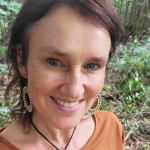
Else Demeulenaere is the Associate Director for Natural Resources, at the University of Guam’s Center for Island Sustainability. She leads a team of biologists and guides students to conduct research on endangered species, ethnobotany, forest and watershed restoration. Else holds a Master’s in Botany (Ecology) from the University of Ghent and a PhD in Biogeography, Ethnobotany, and Policy (Interdisciplinary Studies) from the University of Alaska Fairbanks in a joint program with the University and of Guam. She is an avid advocate for sustainable living and protecting Guam’s bio-cultural diversity. Her research focuses on the biogeography and traditional ecological knowledge of native plant species, social activism, and aims to find policies benefiting the protection of Guam’s ecosystems and its people.
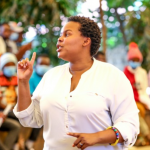
Simangele Msweli is a conservationist with an interest and experience in research, community engagement, youth engagement and policy development. At the African Wildlife Foundation, Simangele serves as the Senior Manager, Youth Leadership Program, where she manages and oversees AWF’s newly established program. She is primarily responsible for the 1) development and implementation of bespoke youth leadership programmes like the Top 100 African Youth Conservation Leaders, 2) unlocking professional opportunities for youth through but not limited to internships and capstone projects, as well as 3) strengthening African youth engagement in the Convention on Biological Diversity.

Daniel Kobei is the Founder and Executive Director of Ogiek Peoples’ Development Program (OPDP), a Kenyan-based NGO working to secure human and land rights of the indigenous Ogiek community and other Indigenous Peoples (IPs) across Kenya and Africa. He represents IPs under the umbrella of the International Indigenous Forum for Biodiversity (IIFB) under the Collaborative Partnership for Wildlife Management (CPW) set by Convention of Biological Diversity (CBD). He is also an IPs human rights defender and has led numerous high-level discussions on IPs in various forums across the world. He led the Ogiek to winning an eight-year legal battle over land and human rights abuses at the African Court on Human and Peoples’ Rights based in Arusha, Tanzania on May 26, 2017. He has been promoting the restoration of the Mau Forest Complex through Ogiek community involvement as a forest dwelling,hunter-gatherer community.


Webinar 4 (7 March): Biodiversity loss, climate change and the COVID-crisis: connected issues

In the last talk of this webinar series, we’ll look into the connections between biodiversity loss, climate change and the covid-crisis. These are not separate crises, and the solutions cannot be separate either. How can we, therefore, develop policies that provide an answer to all these urgent issues?

Speakers

Myriam Dumortier is a senior researcher at the Research Institute for Nature and Forests (INBO), focusing on the interaction between agriculture and biodiversity. She is interested in agro-ecological farming and in synergies between farming and nature conservation. She is member of the team Nature and Society. Myriam holds a Master and a PhD in Bioscience Engineering. During the 90’s, she worked in community forestry and rural development in South-Asia. From 2000 to 2010 she worked on the reporting of the state of nature at INBO and from 2010 to 2020 she was a policy officer at the European Commission developing and implementing the EU policy on invasive alien species. In 2020, she re-joined INBO to focus on agriculture. Since 2007 she is also a professor on forest and nature policy at Ghent University.
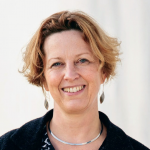
Mieke Schauvliege is a Member of Parliament for the Flemish Greens (Groens) in Belgium. Her ambition is to combat for a healthy living environment for everyone. The topics she covers are nature, biodiversity, spatial planning, the environment (water, air, soil) and waste policy. Mieke was the first MP to put the perfluorooctane sulfonate (PFOS) scandal in Flanders on the parliamentary agenda. On behalf of the Flemish Greens, she is a member of the parliamentary PFAS-PFOS investigation committee and of the Environment and Agriculture committees. She is a former director of the Parks and Public Gardens Department of the city of Ghent and is a bio-engineer by training.
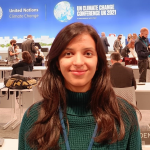
Snigdha Tiwari is a young environmental and human rights activist from India. She forayed into activism right from school, alongside her father, who himself happens to be an environmental activist and a prominent leader in the famous Chipko movement. Snigdha has been ardently working for myriad causes concerning human rights & environment in India for over a decade. She has been working actively with the first ever registered green party in India (Uttarakhand Parivartan Party) since she turned 18. Prior to that, she was an active member of the Uttarakhand Student Organization, Young Greens of India, whilst also being actively involved with youth movements across the country.


Practicalities

Time:  All sessions will take place from 7:30 PM to 9 PM CET

Registration: This is a free event, but requires registration.

Register your participation through this link.

Follow Live here

After the talks, there will be time for Q&A.


This event is organised by the Green European Foundation with the support ofOikos Think Tank and with the financial support of the European parliament to the Green European Foundation.  

Dare to Care: Ecofeminism as Inspiration

By

About the Event

The global Covid crisis brought healthcare into the spotlight. Care, however, extends beyond the strictly medical in that it includes everything we do to preserve and restore the world. The erosion of the welfare state, the plundering of the Global South and the crossing of planetary boundaries is alarming. There is also the link between the exploitation of people and of nature. Imagine we found the courage to truly care for all people and other earthlings, for our unique living world.  

Inspired by ecofeminists worldwide, the authors wonder: can care be a new starting point, based on connectedness and generosity? Can care, as an emancipatory principle, underpin politics and economics? 

In this webinar, we will dive deeper into the content of the essay, followed by a Q&A with the audience. 
 

Context

This is the last of four public webinars as part of the project “Feminists in the Climate Movement,” organised by GEF with the support of Visio, Green Economics Institute, Oikos, and Fundacja Strefa Zieleni. With a closed training programme for selected Feminist Climate Ambassadors as well as a series of public events, the project seeks to build capacity among (potential) climate leaders, while highlighting the gendered aspects and impacts of the climate crisis to a broader audience.   

Practicalities

Date and time: Monday, December 6th from 19:30 to 21:00 CET.  

Audience: This webinar will take place in English and is open to the general public.  

Registration: Please register in advance via this link.   


This event is organised by the Green European Foundation, with the support of Oikos and with the financial support of the European Parliament to the Green European Foundation. 

Feminists in the Climate Movement at the Green Hub

By

About the Event

Women and minorities are more likely to be affected by the consequences of climate change but are also the key people who can bring about change in their communities. Countries with more diversity in decision-making have more ambitious climate policies. But diversity doesn’t just magically happen  – it must be encouraged. Women and non-binary people need specific training to make change in traditionally male-dominated places of decision-making. 

This year, GEF has selected and supported a group of twenty Feminist Climate Ambassadors to do just that. We have also run a series of public events on the nexus of gender equality and the climate crisis, and are exploring ecofeminism and ethics of care as a potential framework for societal change. Our Green Hub programming continues this work! 

Programme:  

11:00 – 12:30 Ecofeminist Roundtable: Conversation Circle on Ecofeminist Experience, with the support of Oikos 

As individual selves, we are part of a web of relationships with both human and non-human others. Within ethics of care, we maintain nourishing and caring relationships.  

In this workshop, we discuss what this entails for us, and we put ethics of care into practice by creating a safe space for us to connect, tell our stories and listen to each other. There is space for self-expression and deep listening. 

The session will be completed by a moment of body-care (through breath work and movement). Care for our physical bodies supports the connection to ourselves and helps to solidify the connections between self and the self, self and the fellow participant, and ultimately towards self and the world we live in. 


15:00 – 17:00 Rethinking People, Planet and Profit with Feminist Climate Ambassadors, with the support of Visio 

Join GEF’s Feminist Climate Ambassadors to renew your thinking about the three dimensions of sustainability. The ambassadors and international experts offer you a new feminist lenses and facilitate constructive conversation on environmentalism, economy and climate policy & security. 

  • With our ambassadors Barbora Majdisova (Poland & Sweden), Louisa Mandt (Germany), Gabrielle Sousa e. Hiltmann (Brazil & Germany), Ana Díaz Vidal (Spain & Scotland), Claire Woods (Ireland), and Dilara Asardag (Cyprus & Finland). 
  • Additional speakers to be announced! 


17:00 – 19:00 Training for Feminists in the Climate Movement: How COP Works, with the support of Green Economics Institute 

This is a workshop to familiarise researchers, activists, and policy makers as to how they can make a difference and contribute to COP26 dialogues, with a particular eye on issues like gender equality and diverse decision making. We will start with introducing how the treaty works, what negotiations look like, and how different actors exert their influence. This is followed by an interactive workshop exploring participants’ own reflections and inputs. 

  • With Michelle Gale (Gender Progress); Jean Lambert (GPEW, former MEP); Dr. Alexandra Harrington (Global Institute for Health and Human Rights), Dorothy Nalubega (Ecological Party of Uganda, Global Greens), and Miriam Kennett (Green Economics Institute). Facilitated by Peg Alexander. 


Practicalities

Venue: Kirk Lounge at the COP26 Green Hub (The Renfield Centre – 260 Bath Street, Glasgow, UK). These events will be taking place entirely in person. 

Audience: Free and open to the general public, but pre-registration may be required and there is a maximum capacity for each session. 

Register: To learn more and sign up in advance, please check out this link. To sign up for the “How COP Works” training specifically, you can also do so here. 


Other material

Read the COP26 Feminist Climate Ambassadors statement here


This event is organised by the Green European Foundation with the support of Visio, Green Economics Institute, and Oikos, and with the financial support of the European Parliament to the Green European Foundation.  

Ecofeminist Round Table

By

About the Event:

 This discussion will be a curated safe space for participants to engage in a long-form dialogue and open-ended conversation based on the booklet: ‘Voor wie willen we zorgen?: Ecofeminisme als inspiratiebron’ (Who do we wish to care for? Ecofeminism as inspiration) 

We hope to create a stimulating environment to think and discuss about  the ethics of care and the importance for everyone to be listened and have a voice. Everyone is invited to engage with each other on their visions and versions of care.  

The session will be followed by bodywork as aftercare (breathing exercises, stretching etc.) to help solidify the connections between self and the self, self and the fellow participant, and ultimately towards self and the world we live in. All are welcome! 

Context:

Our second Ecofeminist round table takes place in Brussels, as part of the larger Ecopolis event. Ecopolis is the perfect annual day to meet people who care about a sustainable future. Because ecological challenges know no national or linguistic borders, Ecopolis is diverse, international, and interactive. 

Ecopolis invites Belgian and international authors to debate the transition towards a socio-ecological society. Inspiring books, documentaries and debates between writers, academics and civil society thinkers about ecology, economy and society are at the heart of Ecopolis. 

Speakers

This round table will be facilitated by Philsan Osman, who studies African Languages and Cultures at Ghent University. She is from Somalia and is an aspiring writer, activist, and community builder. 

Practicalities:

Ecopolis takes place onOctober 24th, 2021, at the Kaaitheater in Brussels. The ecofeminist round table is open to all participants of this event. 

Tickets are on saleviathis link. Please note that, in line with Brussels measures against COVID-19, a COVID-Safe Ticket will be required for entry. 


This round table is organised by the Green European Foundation, with the support of Oikos and the financial support of the European Parliament to the Green European Foundation. 

Budapest Forum – Building Sustainable Democracies

By

The past decade witnessed the emergence of several high-profile international events in the CEE region. The upcoming Budapest Forum is similar in aspiration to its regional counterparts, with its first edition focusing on the role of cities and local initiatives in building livable and sustainable democracies. Within this context, the Budapest Forum will also serve as a hub for the Pact of Free Cities city network, bringing together mayors and civic leaders from around Europe and beyond. Ideally, participants will leave the conference not only inspired and eager to create positive change in their respective fields, but also as parts of a new and vibrant network connecting prominent local stakeholders and experts across disciplines. You can find more information on the programme and speakers here.

About the event

Date: 16th September 

Time: 12:30-13:30 PM CET

Despite the rise of authoritarian forces on national scenes, many European cities are pursuing a green-progressive vision. For the Green European Foundation, these cities are a substantial source of inspiration for developing a positive narrative on the future of Europe. In this event, we take you on a small tour highlighting a few frontrunner cities that show that a transformation towards a socio-ecological society is possible and happening.

*part of GEF’s Cities as Places of Hope project

This 2021 project aims to bring together progressive and transformative trans-local city networks, to connect them and facilitate their exchanges, ultimately contributing to a positive narrative for the future of Europe. In autumn the project will continue with an inspiring public event in each country with a title ‘Talking about a Green City’ bringing together the broader green family of activists, civil society, new urban actors and the broader public. 

Visit the Green European Foundation’s stand during the three days of the Forum and interact with our GEF Staff Members. 


Budapest Forum programme

To learn more about the full programme of the Forum click here <<<


Speakers:

Dirk Holemans – Oikos Think Tank, Co-President Green European Foundation

Lana Pukanić– Institute for Political Ecology IPE

*further speakers will be announced shortly


Practicalities:

Where: In person (Central European University) & online

Time and date: 16th September

12:30-13:30 PM CET

Audience: attendees of the Budapest Forum & online participants

Registrations: Registrations are now open <<<


This event is organised by the Green European Foundation with the support of City of Budapest, Political Capital Institute, CEU Democracy Institute and with the financial support of the European Parliament to the Green European Foundation. The European Parliament is not responsible for the content of this event.

Transforming into a sustainable city: the green adventure of Ghent

By

About the event:

In the transformation into a socio-ecological society, frontrunner cities have become places of hope for implementing future-oriented policies and reconnecting with citizens. Moving beyond the experiment, they are implementing transitions such as the change from a car-based mobility system into one giving priority to bicycles and public transport, from a city full of concrete into a blue and green city that is a great place to stay and can cope with heat waves. This overall transformation enhances the quality of life for its inhabitants while taking responsibility for global challenges.

One of these inspiring cities is Ghent in Belgium. With the green party already strong in opposition, it entered city government in 2013. Since then, ambitious policies have been developed in fields such as mobility, energy, climate, food and housing. It shows that radical change is possible. For instance, a green mobility plan has led to a 17 per cent drop in car use while bicycle use has increased by more than 50 per cent. The city now also has a food policy and an ambitious social housing policy.
Green Vice-mayors Tine Heyse and Filip Watteeuw will talk about their ambitious policies, how they realize it and of course what their future plans are.

Part of the ‘Cities as Places of Hope’ series; a project launched in 2019 focusing on progressive city networks that are a key factor in the development of a positive narrative on the future of Europe. The project brings together partners from Spain, Croatia, Belgium, North Macedonia, Turkey and The Netherlands.


Practicalities:

Where: Online platform – ZOOM

Date and Time: Wednesday 30th June 17:00 – 18:30 PM CET

Audience: This event is an open digital seminar with the Cities as Places of Hope Project Partners, Local Councillors and the general public.

Registrations are now open: Preview – Online Survey Software | Qualtrics Survey Solutions <<<


This event is organised by the Green European Foundation with the support of Oikos Think Tank and with the financial support of the European parliament to the Green European Foundation.
Ecopolis: Dare to Care

By

About the Event

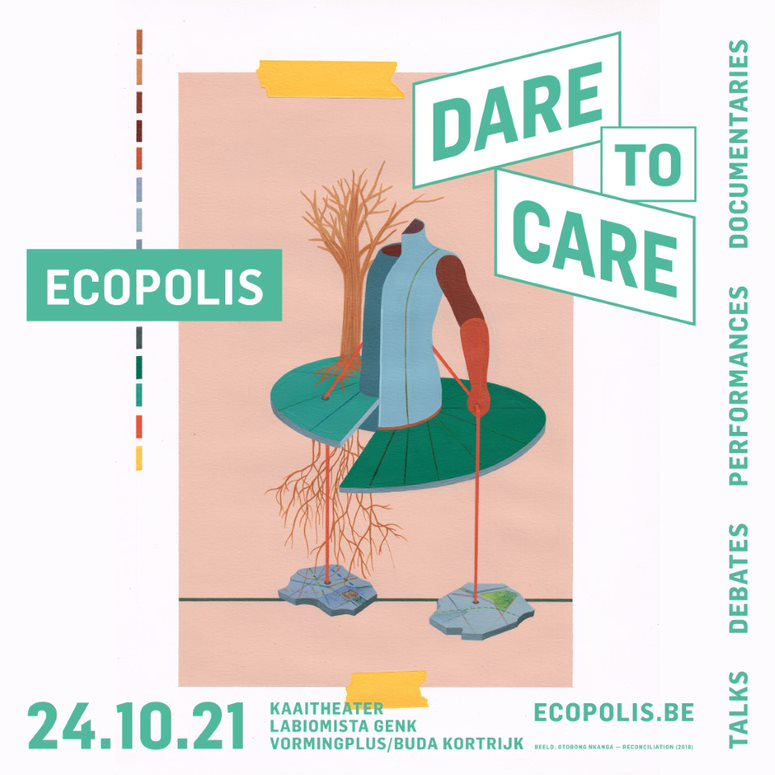
The global Covid-19 crisis brought healthcare into the spotlight. But care extends beyond the strictly medical: it includes everything we do to preserve and restore the world. The erosion of the welfare state, the plundering of the Global South and the crossing of planetary boundaries are worrying developments. And what about the connection between the exploitation of man and of nature?
What if tomorrow we found the courage to truly care for all people and other earthlings, for our unique living world? Seeing nature merely as raw material for plundering man, and man as merely driven by competition: can we put that behind us? Can care be a new starting point, based on connectedness and generosity? Can care, as an emancipatory principle, underpin politics and economics?
Ecopolis makes room for these questions, and many more, during a day of lectures, conversations, workshops, literature and performance. The analyses and proposals come together from many perspectives: alert carers and emancipated people in need of care, inspiring researchers and committed artists, fellow citizens who start from the local context and guests who bring in experiences and wisdom from indigenous cultures and the Global South.
Because ecological challenges know no national or linguistic borders, Ecopolis is diverse, international and interactive.


Context

Ecopolis is the perfect annual day to meet people who care about a sustainable future. Because ecological challenges know no national or linguistic borders, Ecopolis is diverse, international and interactive.

Ecopolis invites Belgian and international authors to debate the transition towards a socio-ecological society. Inspiring books, documentaries and debates between writers, academics and civil society thinkers about ecology, economy and society are at the heart of this event.

Speakers:

Jason Hickel – economic anthropologist and author of the recent book Less is More – How Degrowth Will Save the World 

Benedikte Zitouni – lecturer in Sociology and head of CESIR (Centre for Sociological Intervention and Research) at the University of Saint-Louis in Brussels, specialized in ecofeminist perspectives 

Mieke Vogels – Flemish Minister of Welfare, Health, Equal Opportunities and Development Cooperation from 1999 to 2003 

Els Hertogen – director of 11.11.11, the Flemish coalition of international solidarity groups 

Malcom Ferdinand  University College London, author of A Decolonial Ecology: Thinking from the Caribbean World 

Moya de Feyter – author and poet, and founder of the Dutch language branch of Poets for the Planet 

John Mussington – Barbuda Farming Co-Op and Barbuda Land Rights Committee 

Olave Nduwanje – author, legal scholar, and activist 

Sien Volders – award winning author of novels including Oogst (2020), which describes the harrowing fate of East European migrant workers in the agricultural sector in Italy  

You can see the full list via this link. 


Programme:  

Theatre Hall 

11:00 – 12:30 An economy that cares for people and the planet 

  • With Jason Hickel, Sien Volders, and Koen Schoors 

12:30 – 13:45 Care in the arts: how a choreographic practice can also become a care practice 

  • With Jija Sohn, Lucy Wilke, and Julia Reist (Lands of Concert) 

13:45 – 15:15 The care home of the future 

  • With Anne Berquin, Fed Ingram, Mieke Vogels, and Luc Van Gorp 

15:15 – 15:30 Essay by Carolina Maciel de França 

15:30 – 17:00 Chasing the idyll: neo-colonialism disguised as charity 

  • With Olave Nduwanje, John Mussington, Gaea Schoeters, Malcom Ferdinand, and Line Algoed 

17:00 – 18:00 Closing debate: towards a caring society 

  • With Benedikte Zitouni, Kopano Maroga, Carolina Maciel de França, Els Hertogen, and Lidia Paz 

Forum 

12:30 – 13:45 Health workers and the climate crisis 

14:00 – 15:30 Poetry room: the climate poets 

15:30 – 17:00 The Book Forum 

Living: Slow Discussions 

13:45 Curator: Philsan Osman 

15:30 Unequal care work: a daily struggle 

18:00 The Work that (Re)Connects: experimenting with collective grief circles 

For more details on the programme, please check here. 


Practicalities: 

Date: October 24th, 2021.  

Location: Kaaitheater, Square Sainctelette 20, 1000 Brussels 

Language: there will be simultaneously translation into English, French, and Dutch. 

Tickets: on sale via this link 

We operate a “pay what you can” principle with a suggested price of 10 EUR. If you are able to pay a higher price, this helps make it possible for others to pay less. Thank you for your solidarity! 

You can subscribe to the GEF newsletter here to stay informed of this and other upcoming events.  


This event is organised by the Green European Foundation, with the support of Oikos and with the financial support of the European Parliament to the Green European Foundation.


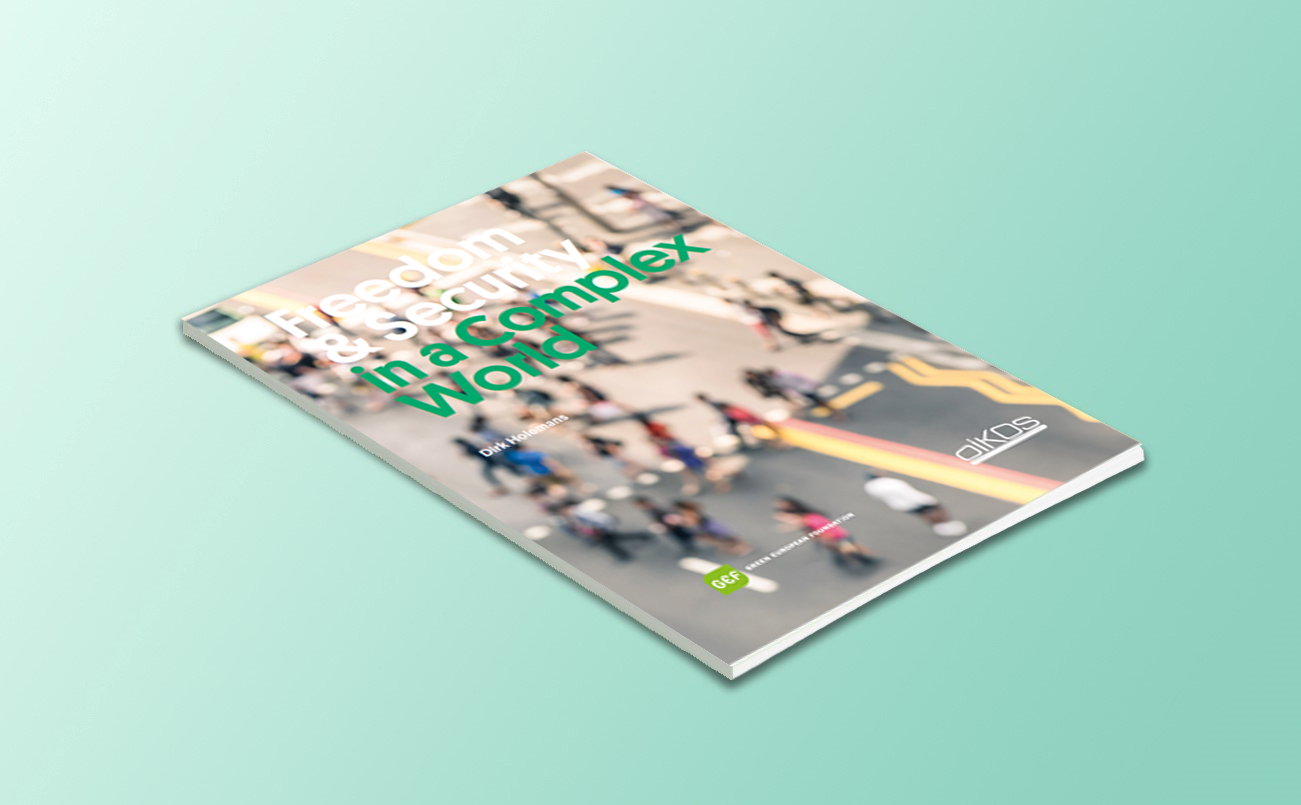
Freedom and Security in a Complex World (2021 edition)

By Uncategorized

Context

People all over the world are taking their future back into their hands. Together, they are taking initiatives in the fields of renewable energy, local food production, sharing tools, and so forth. This is the most hopeful movement of our time. Where the market and state fail, people are taking action. As free citizens, they are reinventing the collective, with open partnerships where personal development and social engagement go hand in hand. This observation seems to contradict what we experience every day. The system errors of our society model fill the newspapers: climate crisis, unstable banks, refugee flows. Accepted wisdom is that uncertainty is increasing. But both trends are happening, not by coincidence, at the same time.


Objectives

While examining the two interlinked concepts of Freedom and Security, this publication suggests that the answer needs to be the transformation into a socioecological society in the 21st century. It argues for the realisation of a societal project that strives for equal freedom for all people to flourish in security, within the boundaries of the planet, and proposes concrete steps towards it.


Download

Available in English here.

Available in French here.

Available in German here.

Available in Hungarian here.

Available in Spanish here.

Available in Macedonian here.

Available in Greek here.


This report presents a new and updated take on the 2017 version (Please see the English, French, German, Hungarian and Spanish editions from that year, which were part of the transnational project “A green transformation: Freedom and Security in uncertain times” ).

The 2021 report was developed in partnership with Oikos and with financial support from the European Parliament to the European Green Foundation. 

Call for Author: Youth Chapter for the Just Transition Book

By

About the Event

The chapter will be published in the Book on Just Transition produced as part of the multiannual and multipartner project carried out by the Green European Foundation, led by Oikos and participated by green European partners. It will be divided in five parts: (1) Setting the stage, (2) European regions on their way, (3) Just transition and the EU Green Deal, (4) Frontrunners showing the way, and (5) Conclusions. The Youth Chapter will open part 4.

We are looking for someone who can bring a fresh perspective and nuanced insights into the following questions:

  • How do young people take the future into their own hands?
  • How are grassroots movements changing the narrative and convincing politicians to push for a socially just transition?
  • How are young activists from marginalised communities and minority groups impacted by climate change, and how are they fighting for climate justice?
  • Why are current EU programmes such as Next Generation EU not good enough?
  • How has the pandemic transformed the efforts of grassroots activists and changed their methods to create impact?

We are looking for one or two young authors with a passion for writing who are interested in the topic and committed to unpack the relation between the work of activists everywhere in Europe and the political advancement towards a more sustainable, welcoming and fairer Europe.


Context

About the chapter:

  • The content of the chapter should have a strong focus on the role of youth, grassroots and marginalised and minority groups in achieving a better and more just transition away from fossil fuels towards a socially and environmentally sustainable future
  • The chapter should have a clear sub-structure (contextual introduction, main body divided in sub-sections and topics, summarising conclusion) and can include various formats (analysis, essays, case studies and/or interviews)
  • The chapter should support analysis with figures and examples from at least three European countries (including at least one non-EU)
  • The chapter should consist of 4000 to 6000 words
  • The contribution should be written in English
  • The remuneration for the writing of the chapter is EUR 500

We accept both individual and joint applications of maximum two authors to co-write the chapter. If you decide to apply with someone please send in only one joint application.

The writer(s) applying should:

  • Be interested and passionate about tactics, methods and narratives used by grassroots movements across Europe to achieve a socially just transition
  • Be determined in expanding their knowledge on the topic by doing research, following the work or contacting activists
  • (Possibly) have previous experience in writing extensive pieces
  • Feel comfortable in writing long texts in English

Timeline:

  • Send your application by 2nd April at 23:59 CET
  • You will be informed of the decision at the latest by 7th April (all applicants will be informed)
  • Start writing!
  • A first draft of the chapter should be sent in by the 7th of May
  • Wait for the feedback and comments of the FYEG Executive Committee
  • The final version of the chapter should be sent in by the 31st of May


Practicalities

To apply:

Please send the following to project.manager@fyeg.org by 2nd April @ 23:59 CET:

  • Your pitch for the chapter: a description of what you would like to write about (between 300 and 400 words)
  • A short mention of the structure and format you plan to use
  • A proposal for a concise title
  • Your CV (or CVs if two authors are applying)

Call for participants – Feminist Climate Ambassadors

By

About

Twenty ambassadors from across Europe will be appointed to participate in the six-month training program free of charge. The training starts at the end of March and has monthly online meetings, culminating in study trips to the European Parliament and Ecopolis in Brussels and COP26 in Glasgow in October-November. We encourage all ages and backgrounds to apply!

This online training is a part of the Feminists in the Climate Movement project, organised by GEF and its supporting partners Educational Centre Visio (Finland), Green Economics Institute (UK), Oikos (Belgium) and Fundacja Strefa Zieleni (Poland). Visio collaborates locally with Finnish Green Women’s association. The project promotes the growth of the green feminist movement across Europe.


Do you have what it takes?

  • You are passionate about making change
  • You are engaged in concrete action to promote sustainability, ideally with a gender equality lens
  • You wish to learn about advocacy, networking and campaigning
  • You want to identify and pursue your personal advocacy goals
  • You want to raise awareness for your cause
  • You want to meet other feminists working on similar projects in their regions
  • You are able to commit to a training programme: spending about 6-10 hours monthly on individual and group work, and attending activities listed below.


As an ambassador, you will receive…

  •  Training by international experts, facilitators and political leaders to define and achieve your own advocacy ambitions
  •  The possibility to develop your projects with an established mentor – industry leader, politician, campaign specialist, NGO leader…
  •  A toolkit to support your own work in your local project
  •  Support and visibility for your own goals via the Feminist Climate Ambassadors network
  •  Opportunity to participate in COP26 in Glasgow or visit the European Parliament and Ecopolis event in Brussels – travel and accommodation is covered by the training programme for one study trip per participant
  •  The right to use the title #FeministClimateAmbassador


Training activities:

  • Virtual training day 1 on Saturday March 27th 2021 (compulsory)
  • Webinar on Sunday March 28th 2021 (participation encouraged, recording will be available)
  • Webinar on Thursday April 8th 2021 (participation encouraged, recording will be available)
  • Virtual training day 2 on Saturday April 24th 2021 (compulsory)
  • Webinar on Saturday 8th May 2021 (participation encouraged, recording will be available)
  • Virtual training day 3 on Saturday 22nd May 2021 (compulsory)
  • Virtual training day 4 on Saturday 19th June 2021 (participation encouraged, no recording)
  • Webinar on Saturday 28th August 2021 (participation encouraged, recording will be available)
  • Virtual training day 5 on Saturday 4th September 2021 (compulsory)
  • Virtual training day 6 on Saturday 25th September 2021 (compulsory)
  • One study trip – should the Covid-19 pandemic allow –, either to the European Parliament and Ecopolis event in Brussels (22-24 October 2021) or COP26 in Glasgow (beginning of November)
  • As a participant to the Feminist Climate Ambassador training, you will also have the opportunity to attend a 3-day climate & feminism summer school free of charge on August (not compulsory.)

Apply

Deadline for submitting applications is March 10th 2021 at 12 (noon) CET. Applications will be reviewed by a jury of experts. Selected ambassadors will be contacted by March 15th 2021. Training will start on Saturday March 27th 2021 with a kick-off meeting. The virtual working space will open on April 1st, and will be available for the duration of the training for networking and exchanging ideas with fellow ambassadors and trainers.

Application Link


This project is organised by the Green European Foundation with the support of Visio, Green Economics Institute, Oikos, Fundacja Strefa Zieleni and with the financial support of the European Parliament to the Green European Foundation.

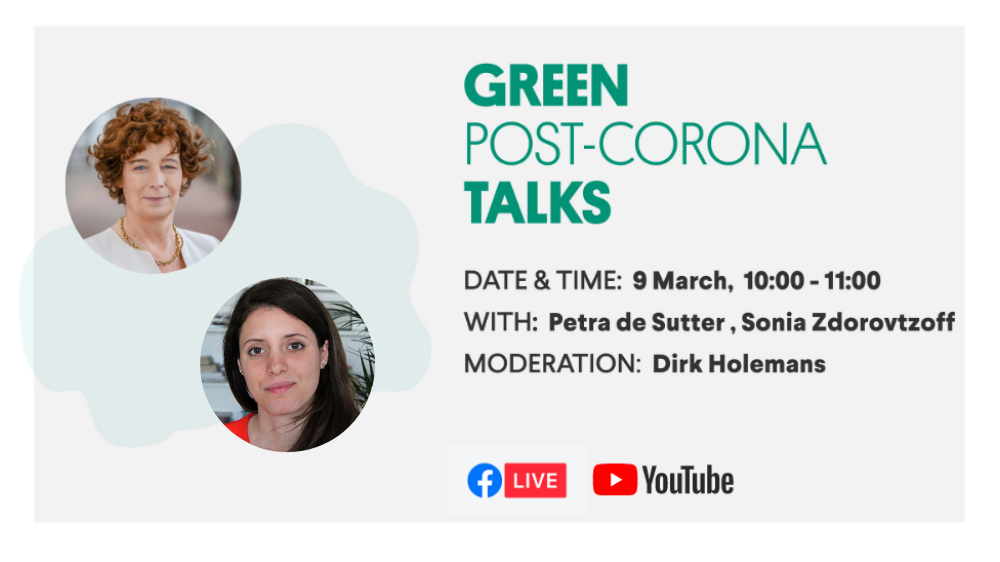
Green Post-Corona Talk with Petra de Sutter and Sonia Zdorovtzoff

By

The ongoing Covid-19 pandemic is having a grip on societies worldwide and will impact our lives long after the crisis is overcome. It is clear that we cannot continue with “business as usual,” but that we need to discuss positive ideas and concepts for a better, greener future and resilient societies now.


About the event


You can stream the talk on Facebook and YouTube.

GEF is hosting the Green Post-Corona Talks, a series of participatory online discussions with high-level experts, thinkers, and policy-makers, and the opportunity for participants to pose their most pressing questions to them live.

The talks will highlight what is currently at stake in the Corona crisis but also look beyond the period of the pandemic, and what possible solutions are already out there and can lend themselves to design the post-corona world.

The series will cover different themes from economy, over migration to gender, and bring in inspiring perspectives from all across Europe.

The project is implemented in cooperation with Oikos.


You can help us advancing forward-looking green ideas

to shape the Europe that we want! 


We rely on your generous contribution to continue putting together new, exciting Green Post-Corona Talks made extensively available to the general European public! So, please consider making a donation today, by clicking on this link.


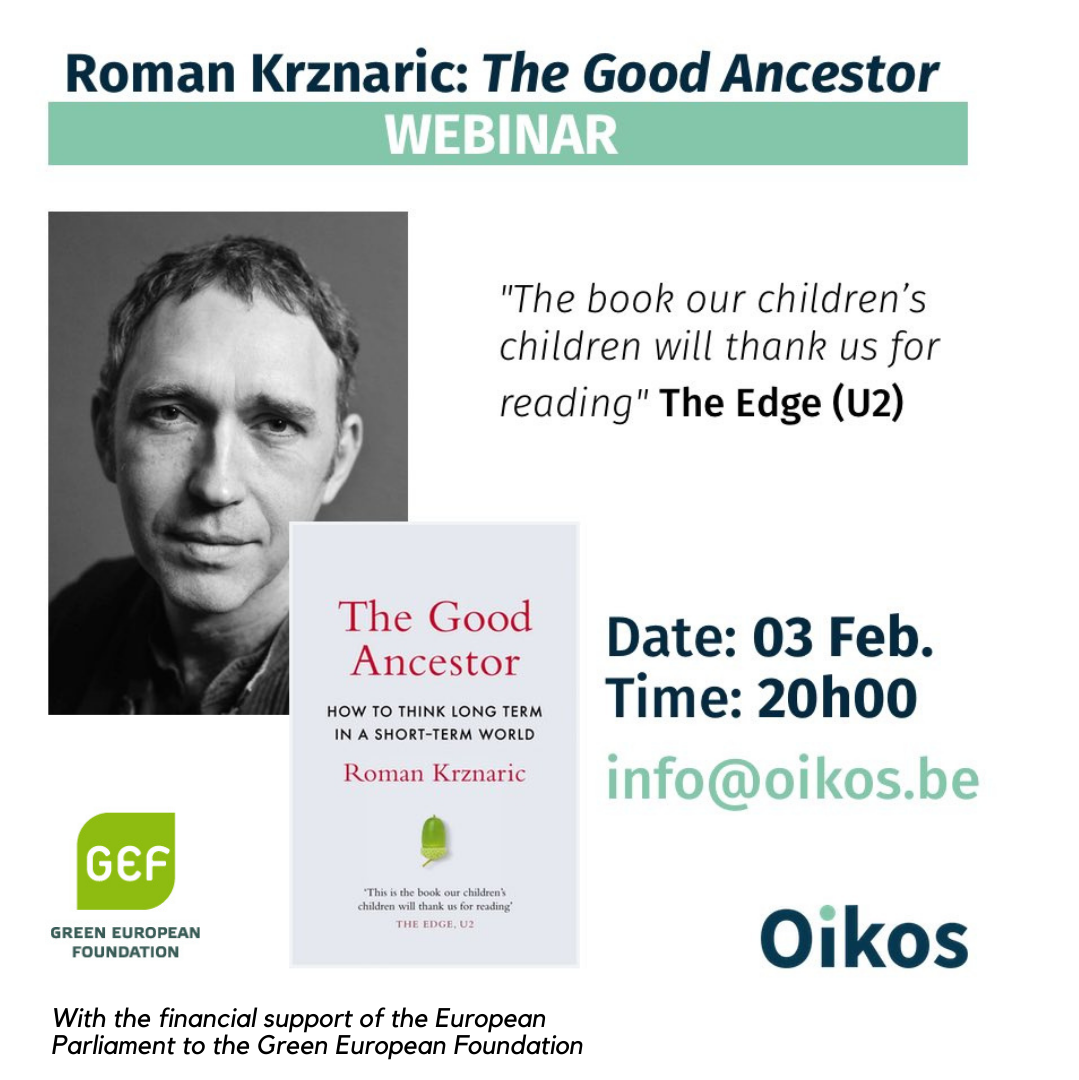
Just Transition – The Good Ancestor

By

About the event

The only way to move from an extractive economy to a regenerative one, is through a just transition. This means making sure that we leave nobody behind. This also means embracing solidarity with future generations. Just Transition is about shifting our perspective from short-termism to considering the planet we leave to our descendants. In his latest book The Good Ancestor, philosopher Roman Krznaric develops this core point magnificently. He dives into history and the human mind to show that we can think and plan in the long-term. How will the grandchildren of our grandchildren remember us?

Fortunately, more and more time rebels – the people who are fighting for intergenerational justice – are putting this holistic plea on the agenda. Drawing on radical innovations from around the world, Krznaric celebrates those who are reinventing democracy, culture and economics so that we all have the chance to become good ancestors and create a better tomorrow.

After the presentation, the author will be joined by Philsan Osman, student, aspiring writer and community builder for a discussion on past, present and future interdependence and solidarity.

Context:

JUST TRANSITION as transnational project aims to tackle the challenge of transforming from an extractive to a regenerative economy in a just and equitable way to find the necessary support among the population. It seeks to show that the green family, including Green European Foundation in its specific role, is a leading actor in the development of futureproof politics and policies, developed in a sensitive way that keeps in mind local specificities.

Speakers:

Roman Krznaric, philosopher and author of The Good Ancestor

Programme:

  • 20:00 – 20:40 Book presentation
  • 20:40 – 21:00 Discussion
  • 21:00 – 21:30 Q&A

Practicalities:

Please register via the following link.

To support the organisation of this webinar, please consider a contribution on account number BE07 8901 5430 1466 (BIC: VDSP BE 91 – vdk bank). Account name: Oikos Denktank.


This event is organised by the Green European Foundation with the support of Oikos Think Tank and with the financial support of the European Parliament to the Green European Foundation. The European Parliament is not responsible for the content of this webinar.
 

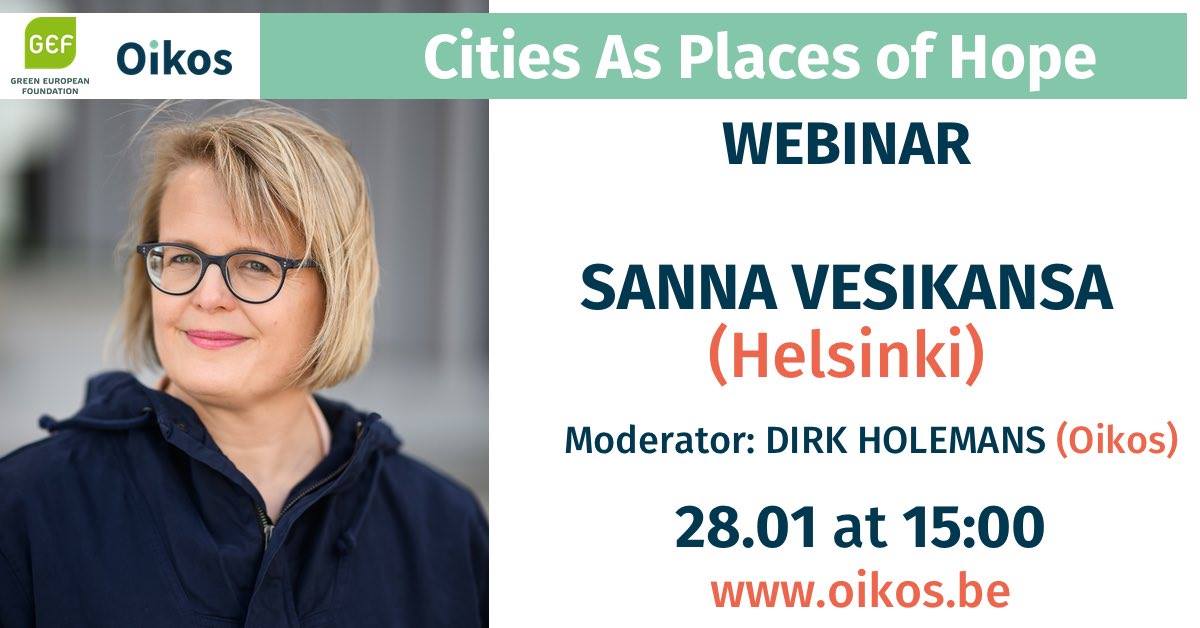
Cities as Places of Hope w/ Sanna Vesikansa

By

Context

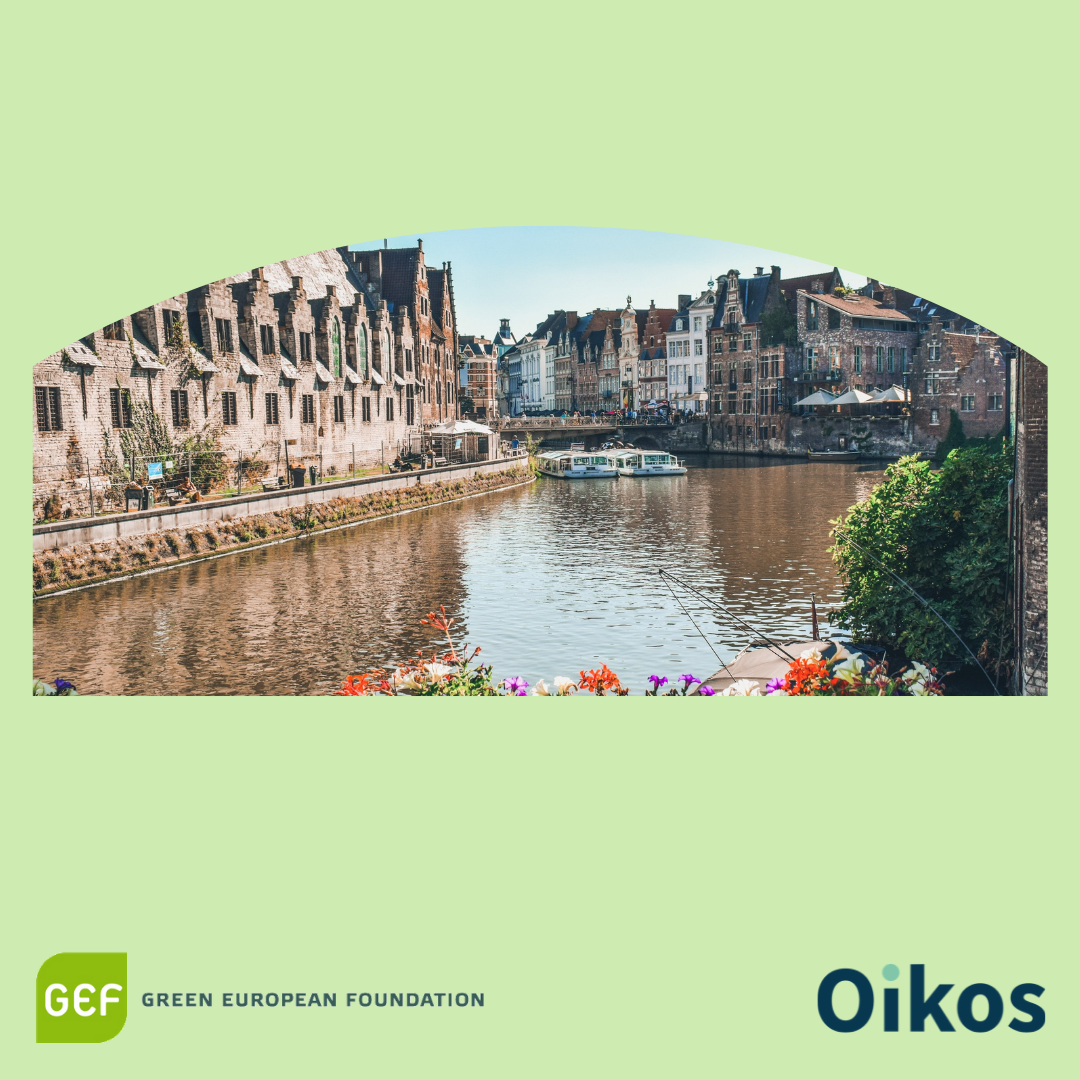
Part of the ‘Cities as Places of Hope’ series; a project launched in 2019 focusing on progressive city networks that are a key factor in the development of a positive narrative on the future of Europe. The project brings together partners from Spain, Croatia, Belgium, North Macedonia and Turkey.


About The Event

Together with Oikos and other European think tanks and foundations,  we’re shedding light on transformative green cities in Europe as engines of transition.
On 28 January at 15h we give the floor to Sanna Vesikansa who, as green Vice-Mayor of Helsinki, is campaigning for ambitious climate targets, mental health care and healthy food in the fight against inequality, among other things.


Practicalities

Language: English.
Please register via info@oikos.be and pay as you like:
Account number BE07 8901 5430 1466 (BIC: VDSP BE 91 – vdk bank).
Account name: Oikos Denktank.
This event is organised by the Green European Foundation with the support of Oikos Think Tank and with the financial support of the European Parliament to the Green European Foundation. The European Parliament is not responsible for the content of this webinar.
DOUGHNUT ECONOMY

By

About the Event

Creating social prosperity within the (ecological) boundaries of the planet: the doughnut model of British economist Kate Raworth is becoming increasingly popular in politics. After Amsterdam, also Brussels is committed to apply the theory for a more sustainable (local) society. On 22 January at 3 pm we talk with Kate Raworth, Barbara Trachte, State Secretary of the Brussels Capital Region, responsible for Economic Transition and Scientific Research, and Marieke Van Doorninck, alderwoman in Amsterdam for Sustainability and Spatial Planning.

Context

This webinar forms part of the Cities As Places of Hope transnational project, highlighting transformative green cities in Europe as engines of transition.

Speakers

Kate Raworth, Economist, Author of Doughnut Economics

Barbara Trachte, State Secretary of the Brussels Capital Region, responsible for Economic Transition and Scientific Research

Marieke Van Doorninck, alderwoman in Amsterdam for Sustainability and Spatial Planning

Moderator: Dirk Holemans (coordinator Oikos)

Practicalities

Facebook event: Webinar: Doughnut Economy in practice w/ Kate Raworth

Language: English with simultaneous translation in French.

Register by sending an email to info@oikos.be <<<

Pay as you like on account number BE07 8901 5430 1466 (BIC: VDSP BE 91 – vdk bank).

Account name: Oikos Denktank.

This webinar is organised by the Green European Foundation with the support of Oikos Think Tank and the financial support of the European Parliament to the Green European Foundation.
 

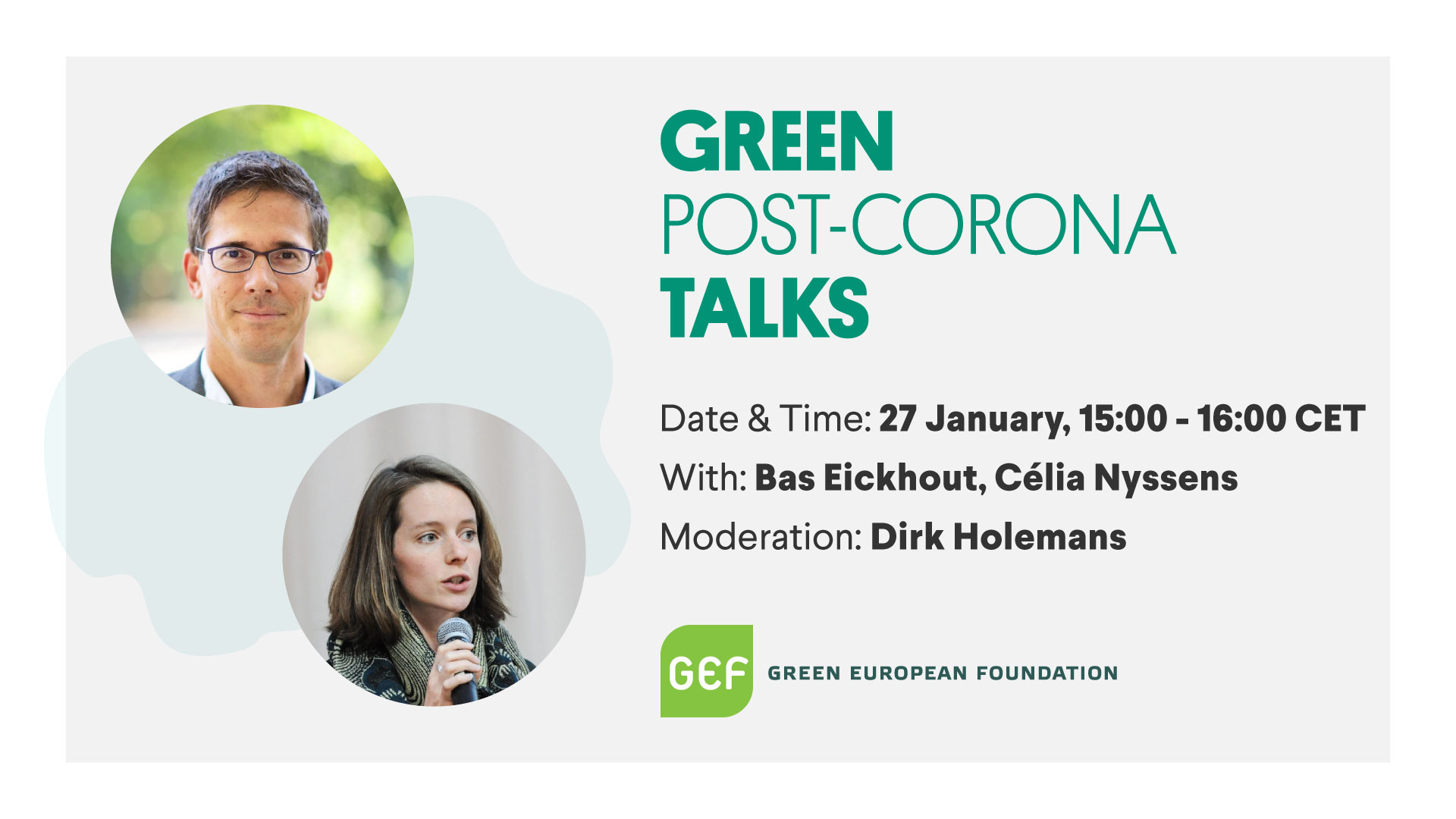
Green Post-Corona Talk with Bas Eickhout and Célia Nyssens

By

The Green European Foundation is hosting its Green Post-Corona Talks also in 2021 and invites Bas Eickhout, Greens/EFA member of the European Parliament and Célia Nyssens, Policy Officer for Agriculture, European Environmental Bureau, to discuss the latest developments around a reform of the Common Agricultural Policy (CAP) of the EU in line with the Green Deal, as well as to address the agreements made on the Multiannual Financial Framework 2021-2027 and the EU Climate Law, and what the prospects for a greener, fairer post-Covid EU are.

With: Bas Eickhout, Member of the European Parliament for the Greens/EFA Group and Vice-Chair of the Environment, Public Health and Food Safety Committee and Célia Nyssens, Policy Officer for Agriculture, European Environmental Bureau.

You can stream the talk on Facebook and YouTube.

About the event


The ongoing Covid-19 pandemic is having a grip on societies worldwide and will impact our lives long after the crisis is overcome. It is clear that we cannot continue with “business as usual,” but that we need to discuss positive ideas and concepts for a better, greener future and resilient societies now.

GEF is therefore hosting the Green Post-Corona Talks, a series of participatory online discussions with high-level experts, thinkers, and policy-makers, and the opportunity for participants to pose their most pressing questions to them live.

The talks will highlight what is currently at stake in the Corona crisis but also look beyond the period of the pandemic, and what possible solutions are already out there and can lend themselves to design the post-corona world.

The series will cover different themes from economy, over migration to gender, and bring in inspiring perspectives from all across Europe.

The project is implemented in cooperation with Oikos.


You can help us advancing forward-looking green ideas

to shape the Europe that we want! 


We rely on your generous contribution to continue putting together new, exciting Green Post-Corona Talks made extensively available to the general European public! So, please consider making a donation today, by clicking on this link.


Just Transition Framing Paper

By Uncategorized
This paper is part of the Green European Foundation’s Just Transition transnational project. The project looks into the question of transforming from an extractive to a regenerative economy in a just and equitable way to find the necessary support among the population. The project is focused on collecting and sharing insights on the development of future-proof politics and policies, developed in a sensitive way that keeps in mind local specificities. The project is on behalves of GEF coordinated by OIKOS (Belgium), with as project partners Green House Think Tank (UK), Institute for Political Ecology (Croatia); Sunrise (North-Macedonia), Transicion Verde (Spain), Networked and Federation of Young European Greens (FYEG) and Networked (Serbia). In the course of the project, the partners will implement activities in their countries to increase awareness of the importance of a Just Transition all over Europe. Eventually, the partners will compile a book on the subject to be published September 2021.


You can also read this publication in:


Between Extractivism and Decolonization: The European Hunger for Resources

By

About the Event:

In this event, we invite everyone to join our conversation about natural resources, extractivism and deep-sea mining. Our aim is both to inform and discuss with European and international citizens.

Context:

Opening up new mines is diametrically opposed to curbing our ecological greed and threatens mankind and the planet. Free trade leads to increased deforestation, land grabbing and violations of human rights, such as violence against indigenous communities. Deep-sea mining leads to ecological destruction in those few places on earth that have not yet been plundered by the growing economy.

If the EU focuses unilaterally on access to precious resources, there is a threat that a colonial exploitation logic will continue. The alternative is a real just transition, one that emphasizes on human rights and the provision of a good life for all within the boundaries of the planet.


Speakers:

Wies Willems, Broederlijk Delen

An Lambrechts, Greenpeace Belgium

Sarah Vanden Eede, WWF Belgium

Moderator: Dirk Holemans, Oikos


Programme:

Introduction by Wies Willems (20 min)

– An Lambrechts and Sarah Vanden Eede will then dive deeper into deep-sea mining (30 min)

– Q&A (30 min)


Practicalities:

Register your participation via info@oikos.be

This webinar will be held in Dutch.

Call for Action: More info on our Facebook event and website

——

This event is organised by the Green European Foundation with the support of Oikos Think Tank and with the financial support of the European Parliament to the Green European Foundation.
Don’t Just Look in the Mirror, Look at the System

By

Context:

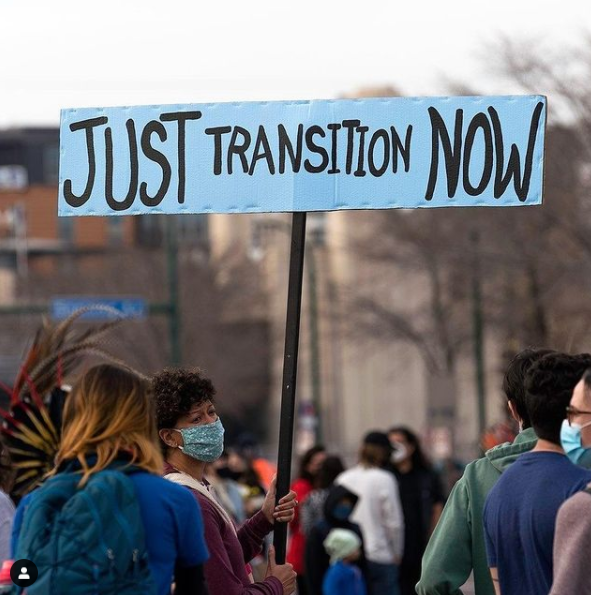
The Just Transition project has as its aim to inspire and inform citizens about the implications of a just transition to a highly sustainable economy, which involves more than technical measures. We need a new economic system that cares for people and the planet, in which all costs and benefits are fairly distributed. How do we sustainably transform our labour market? How do we make sure the transition to renewables is inclusive and equitable? These are some of the questions we try to answer.

About the Event:

In the last decades growing affluence has led to increased resource use and pollutant emissions. This puts a specific responsibility on the shoulder of affluent citizens. A global Just Transition is only possible if we say farewell to ecological gluttony. At the same time, it would wrong to translate this insight in the first place into individual responsibility. Just as you can’t eat healthy in a candy shop, our economies and cultures incite overconsumption and inhibit sustainable lifestyles. How to get rid of your car when there’s no good public transport, why would you change your diet when governments promote eating meat?

Without denying individual responsibility, the solution is found in collectives answers, structural changes of life provisioning systems that enable a good life for all within planetary boundaries.

Speakers:

Julia Steinberger, Professor of Societal Challenges of Climate Change at the University of Lausanne. She studies the relationships between the use of resources and performance of societies, researching how human well-begin can be realized within planetary boundaries. She is a Lead Author of the IPCC report.

Jaap Tielbeke, environmental editor of the Dutch progressive magazine De Groene Amsterdammer. He is also the author of the recent book ‘The Myth of the Green Consumer’ (in Dutch).

Practicalities:

Register your participation by emailing at info@oikos.be

—-

This event is organised by the Green European Foundation with the support of Oikos Think Tank and with the financial support of the European Parliament to the Green European Foundation.
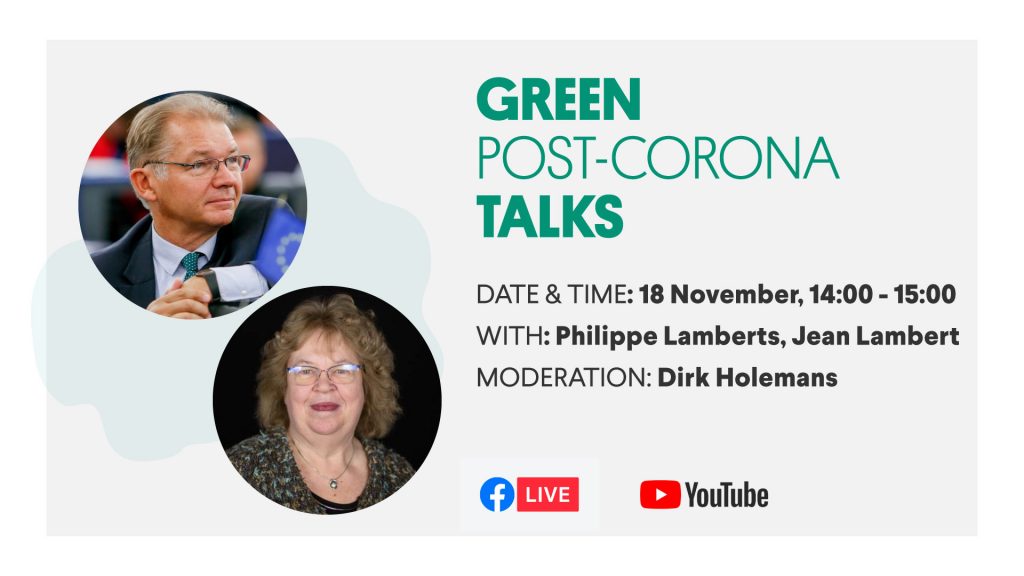
Green Post-Corona Talks with Philippe Lamberts and Jean Lambert

By

About the event

The Green Post-Corona Talks is a series of online talks launched by the Green European Foundation in collaboration with Oikos during the first wave of the COVID19 pandemic in Europe. The talks offer an analysis of what is at stake in the COVID crisis and bringing forward ideas and concepts for a green post-corona vision.

As the epidemiological situation in all European countries gets worse again, the continuous need for such discussions brought to the re-launch of the series. In this new episode with representatives of the European Green Party and the Greens/EFA group, the speakers will go back to the series kick off that took place in April 2020, to discuss the evolution of the crisis,  the developments in terms of EU cooperation and Green New Deal, and the consequences of these two waves of COVID-19 on European societies .

The event will be live-streamed on YouTube and Facebook and the audience will be able to interact with the speakers live. Join our Facebook event to stay alert for the live stream.

The ongoing Covid-19 pandemic is having a grip on societies worldwide and will impact our lives long after the crisis is overcome. It is clear that we cannot continue with “business as usual,” but that we need to discuss positive ideas and concepts for a better, greener future and resilient societies now.

GEF is therefore hosting the Green Post-Corona Talks, a series of participatory online discussions with high-level experts, thinkers, and policy-makers, and the opportunity for participants to pose their most pressing questions to them live.

The talks will highlight what is currently at stake in the Corona crisis but also look beyond the period of the pandemic, and what possible solutions are already out there and can lend themselves to design the post-corona world.

The series will cover different themes from economy, over migration to gender, and bring in inspiring perspectives from all across Europe.

The project is implemented in cooperation with Oikos.

You can help us advancing forward-looking green ideas to shape the Europe that we want! 

We rely on your generous contribution to continue putting together new, exciting Green Post-Corona Talks made extensively available to the general European public! So, please consider making a donation today, by clicking on this link.

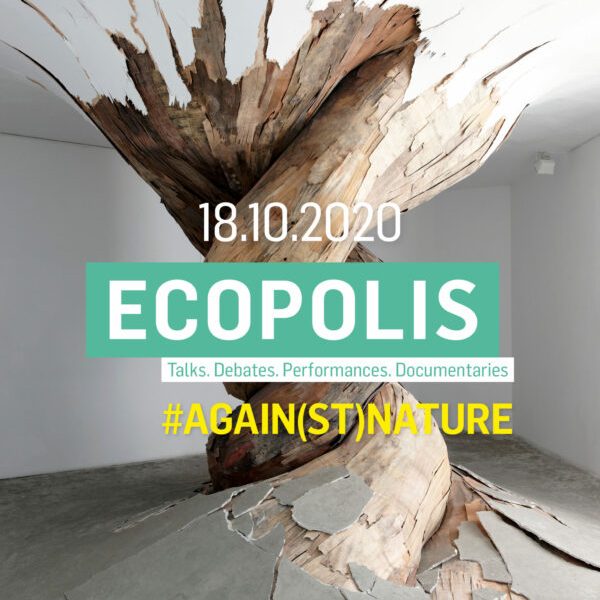
Ecopolis – Again(st) Nature (Brussels, Belgium)

By

About Ecopolis: 

Anno 2020. Nature is on fire, from Australia to the Ardennes. Forests are felled, no more insects on the windshield, concrete everywhere, a million species are in danger of extinction. A virus turns the world upside down. The exploitation of nature is threatening our existence. Vulnerable groups here and in the South are facing even harder times.

How much longer do we saw off the very branch that supports us? Or do we change course?

Ecopolis 2020 puts the finger on the pulse and looks ahead. What are the post-corona challenges? How do we feel part of nature again? How do we restore the balance? How does this support a vigorous climate and nature policy? Which transitions are necessary ― urban, agricultural, etc. ― for a society that respects people and nature? And gives everyone prospect of a good life.

Ecopolis 2020 is moving online, follow the event at home via livestream.

Due to the recent increase of coronavirus infections, we have had to take a difficult decision. This year’s edition will have no live audience, and will move entirely online. We will build a cosy studio on the Kaaitheater stage and stream the lectures and conversations directly to your living room, with opportunities for online interaction.

Speakers:

  • Jan Rotmans, Urgenda
  • Warda El-Kaddouri, De Groene Amsterdammer
  • Yousra Benfquih, University of Antwerp
  • Hans Van Dyck, UCLouvain
  • Tom Bauler, Université Libre de Bruxelles
  • Hendrik Schoukens, Ghent University
  • Anuna De Wever, climate activist
  • Eva Meijer, Wageningen University
  • Myriam Dumortier, Ghent University

And many more names to be announced!

Programme:

11:00 – 12:30 | Corona lessons for a resilient society

The corona crisis has taught us that you cannot just cut down forests or deal carelessly with animals endlessly. Outsourcing all production to low-wage countries is also no longer an option. How do we build resilient societies that are ecologically and socially durable?

A panel discussion with Myriam Dumortier (bio engineer and senior researcher at INBO), Koen Vannmechelen (contemporary conceptual artist), Jan Rotmans (transition thinker) and Christine Van Acker (writer).

12:30 – 14:00 | Meet the animal

For centuries we have been intrigued by animals and have used them in our stories. Who does not know Reynard the Fox? Only recently have we learned how small the differences between humans and animals are. What does an understanding relationship with animals with recognition of their own abilities mean?

A conversation that explores new paths with: Eva Meijer (writer, philosopher and artist), Hans Van Dyck (professor Behavioral Biology), Hendrik Schoukens (environmental lawyer), Lisa Tostado (Heinrich Böllstiftung, which recently released the Insect Atlas).

14:00 – 15:30 | Transition to a fair agro-ecology

Agricultural soils are eroding, biodiversity is declining alarmingly. Fortunately, we see new agro-ecological farmers emerge. Through short-chain they restore contact with consumers while also taking care of the surrounding nature. The challenge is to make these innovative practices the new normal.

A conversation with Yousra Benfquih (lawyer, poet and columnist), Louis De Jaeger (landscape architect) and others.

15:30 – 17:00 | Cities full of nature and the barren countryside

It is at odds with what we think: the city is full of nature and agricultural areas are increasingly turning into deserts. But there is work to be done everywhere. For example, green space in the city is unevenly distributed and there is a need for a different vision of open space with reinforced village centers.

With Paul Demets (poet), Els Vervloesem (transition architect) and Tom Bauler (ecological economist).

17:00 – 18:00 | Final debate

The starting point is the question posed by the French thinker Bruno Latour: Where can we land? How can we “ground ourselves” and take care of our living environment, while being open to the world?

With Warda El-Kaddouri (researcher and journalist), Anuna De Wever (climate activist), Olivier de Schutter (UN special rapporteur on extreme poverty and human rights) and Dirk Holemans (coordinator of Oikos – Think tank for socio-ecological change).


Labiomista, Genk

In 2019 artist Koen Vanmechelen launched LABIOMISTA, an evolving work of art situated on the foundations of a former zoo in Genk (BE).

Vanmechelen is one of the most versatile thinkers of these times. He works at the confluence of art, science, philosophy and community. LABIOMISTA is the embodiment of his artistic and philosophical vision. It is based on the belief in art as a driver of mutual understanding and as a guide in the search for answers to the major challenges of the 21st century, the relationship between nature and culture and in particular the development of sustainable communities.

The 24-hectare park is a permanent and evolving work of art, a garden of order and chaos, an arena of culture and nature. It invites, challenges and inspires. It is a hotbed for a wealth of new ideas, creations, projects and collaborations; and a meeting place for all the species of this world.

Exclusively, the Ecopolis conversation is hosted in the artist private studio. Seats are limited. With your Ecopolis ticket you also have free access to the park.


Programme:

10:00 – 19:00 | Labiomista visit (cancelled)

LABIOMISTA is open from 10:00 to 19:00. Visitors can visit the park prior to or following the talks and should count 2 hours.

12:30 – 14:00 | Ecopolis Brussels livestream

Meet the animal

14:00 – 16:00 | Talks & debates

  • Introduction to Ecopolis: Again(st) Nature
  • Introduction to LABIOMISTA, by Koen Vanmechelen
  • Are we necessary? The position of the human animal. Panel discussion with Koen Vanmechelen, Ignace Schops, Glenn Deliège and Lara Klaassen, moderated by Peter Dupont


Translab K at CC ‘t Schaliken, Herentals

13:30 – 15:30 | Softening with an eye for biodiversity

Building on their experiments on ‘softening with an eye for biodiversity’, VormingPlus invites Stijn Neuteleers (environmental philosopher), Tim Vekemans (architect) and Liesl Vanautgaerden (program director for spatial development at the Department of Environment of the Flemish Government).

15:30 – 18:00 | Ecopolis Brussels livestream

15:30 – 17:00   Cities full of nature and the barren countryside

17:00 – 18:00   Final debate


Practicalities:

Ecopolis goes on! Of course, we take into account the current circumstances and corona measures.

Ecopolis 2020 is moving online

Facebook event >> https://bit.ly/34E2VY0


Tickets

KAAITHEATER, BRUSSELS

– 10€ all day

– 5€ half-day (11h-14h or 14h-18h)

– 5€ livestream

BUY NOW.


LABIOMISTA, GENK

10€ all day, including visit to Labiomista and exclusive access to the studio

Tickets are available here.


TRANSLAB K ― CC ‘T SCHALIKEN, HERENTALS

Free but registration required.

Register via wannes@translabk.be.


How to find us?


ECOPOLIS 2020
Sunday 18 October 2020, 11:00 – 18:00
Kaaitheater, Sainctelettesquare 20, 1000 Brussels
Labiomista, Marcel Habetslaan 50, 3600 Genk
Translab K ― CC ‘t Schaliken, Grote Markt 35, 2200 Herentals
HOW TO GET TO KAAITHEATER
ON FOOT. At 15 min. walking distance from Brussel-Noordstation.
BIKE. Bike parking in front of the venue; Villo-station at Square Saincetlette (across the canal).
METRO. Stop at Ijzer/Yser (lines 2 and 6)
TRAM. Line 51.
BUS. Line 47 (MIVB) or lines 129, 190, 212, 213, 214, 230, 231, 232, 233, 235, 240, 241, 242, 243, 246, 250, 251, 260 and 355.
—————–

This event has been organised by the Green European Foundation with the support of Oikos and with the financial support of the European Parliament to the Green European Foundation. The European Parliament is not responsible for the content of this event.